12 lugares para conhecer Salvador (BA), escolhidos pelo guia Cidade Turismo.
Illustrative images. The pictures in this guide are illustrations based on the real place, not photographs, and may differ from it.
Para começar
Os 10 principais lugares Salvador
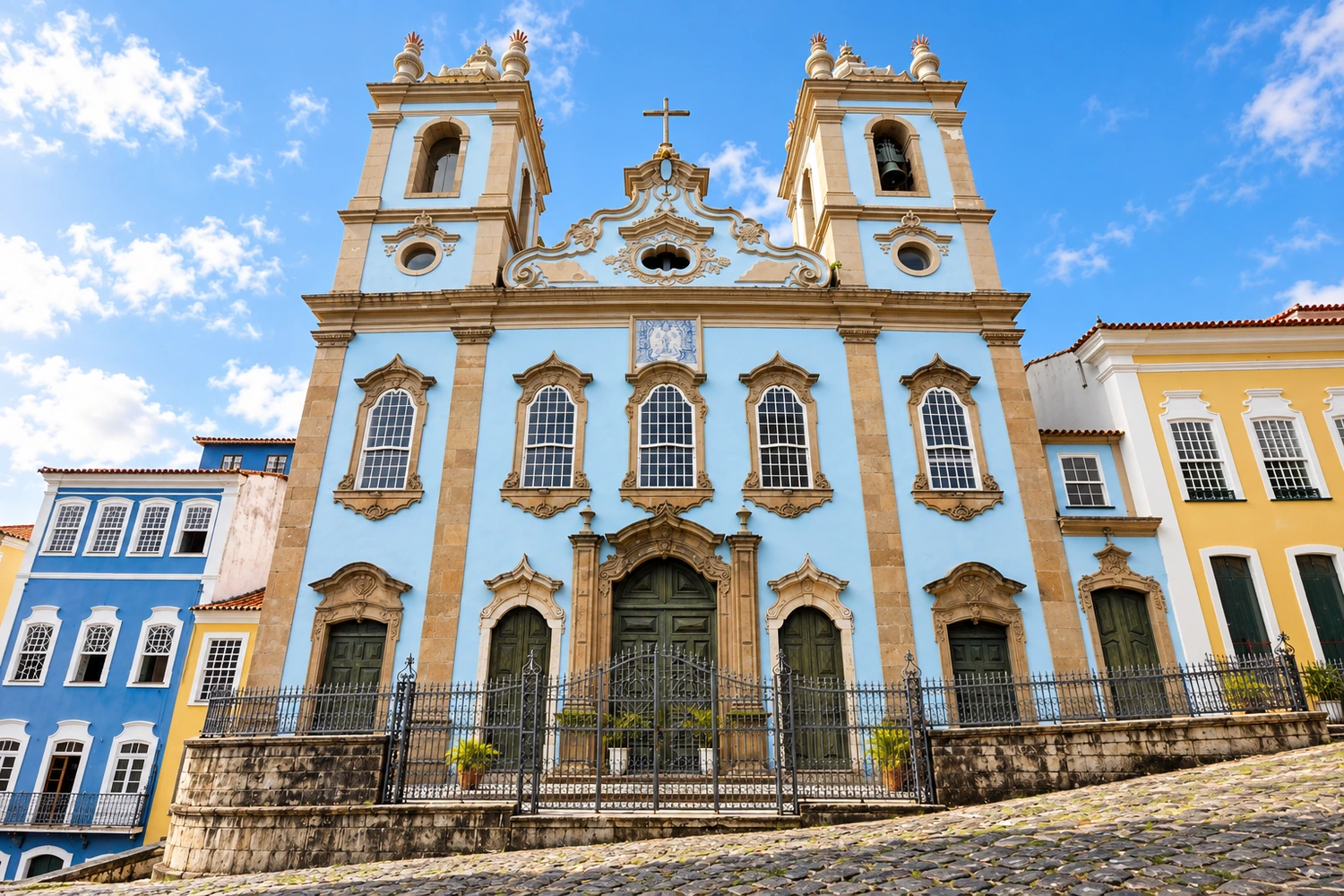
Pelourinho e Centro HistóricoAn ensemble of colonial townhouses and churches in the Cidade Alta, recognized by Unesco as a World Heritage Site in 1985.
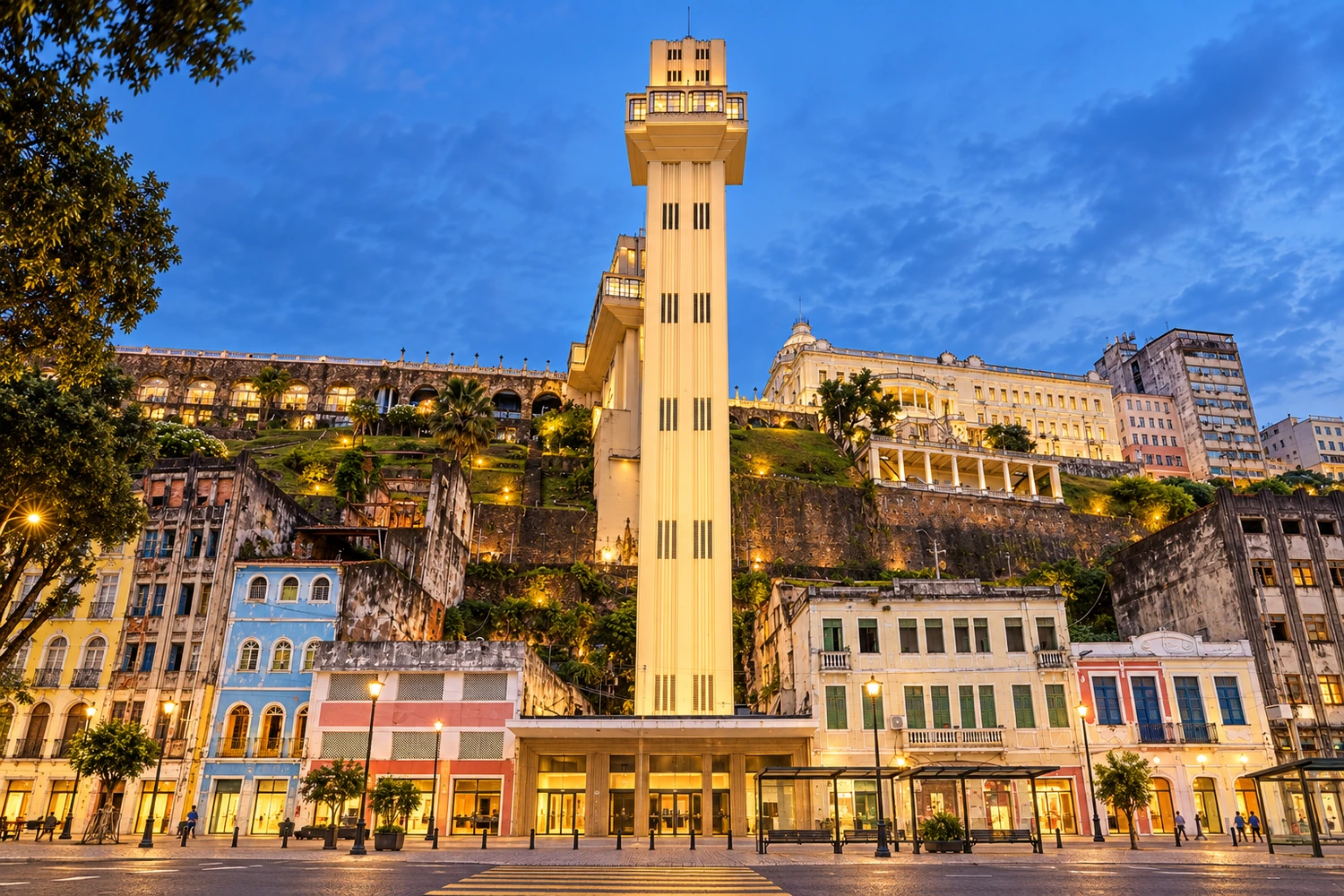
Elevador LacerdaOpened in 1873 as the Elevador Hidráulico da Conceição, it links Praça Cairu, in the Cidade Baixa, to Praça Tomé de Sousa, in the Cidade Alta.
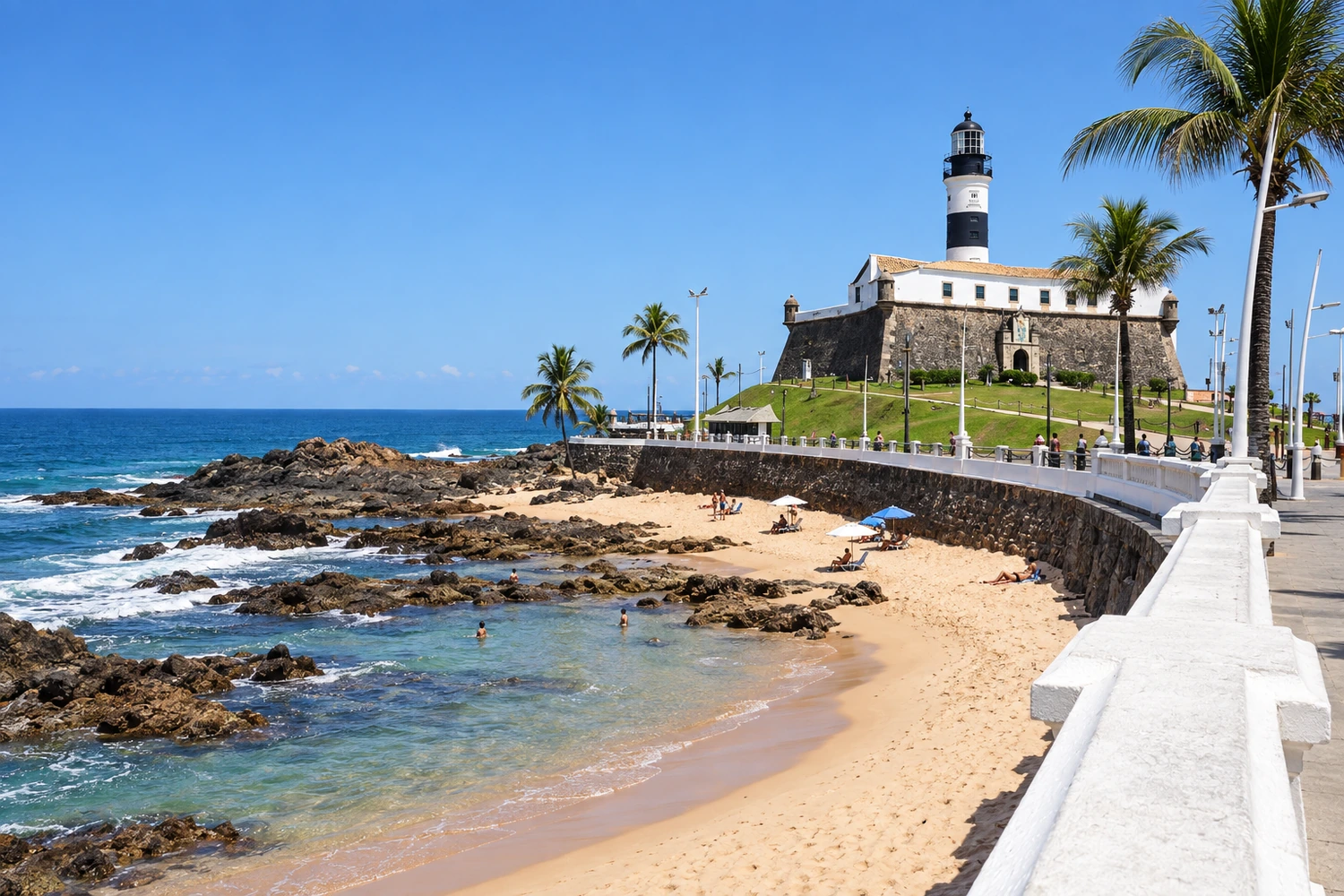
Farol da Barra e Forte de Santo AntônioAt the entrance to Baía de Todos-os-Santos, the fort's current structure was built between 1696 and 1702, and in 1698 it received the first lighthouse on the continent.
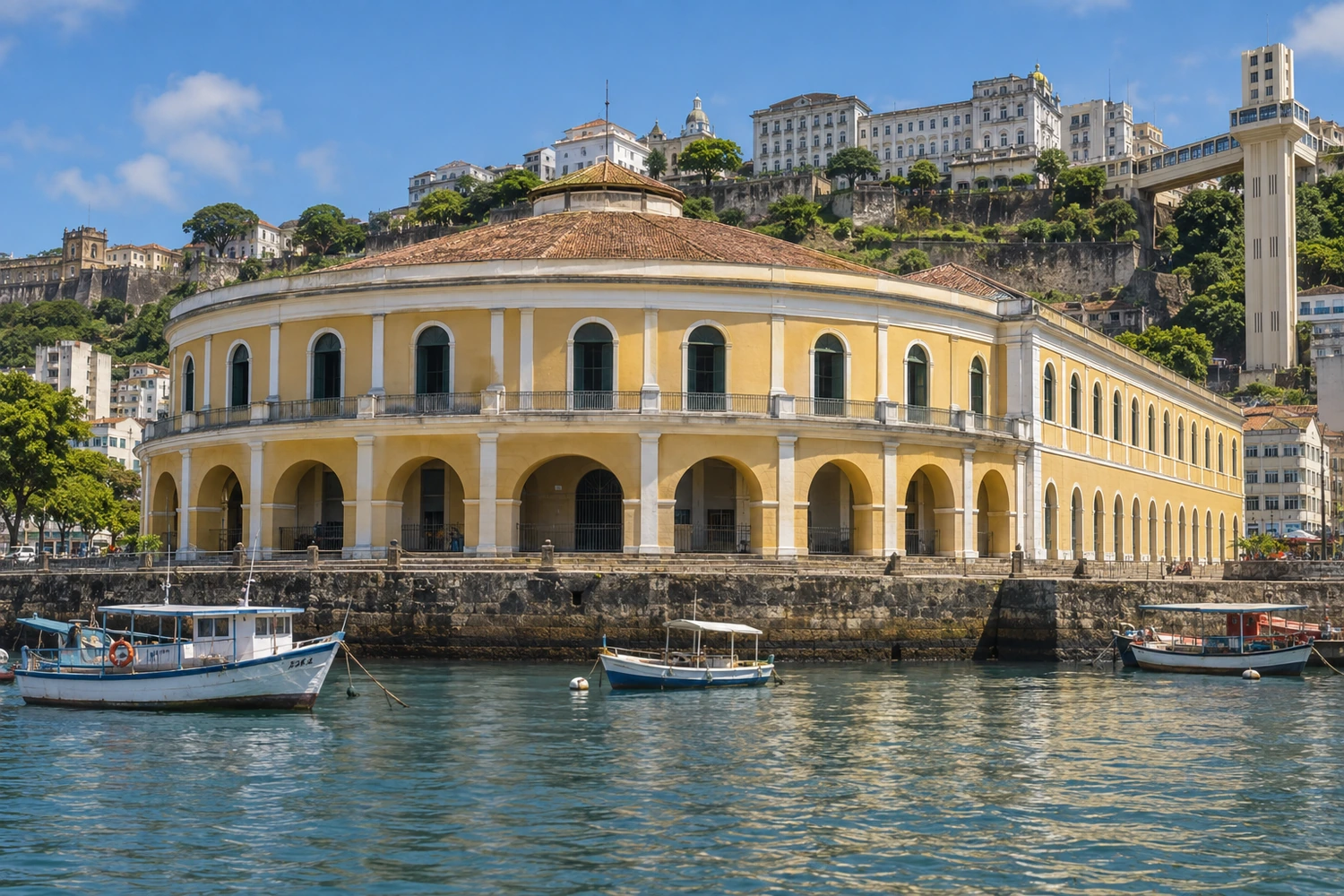
Mercado ModeloFounded in 1912, the market has been housed since 1971 in the former Customs House, a neoclassical building listed by Iphan in 1966.
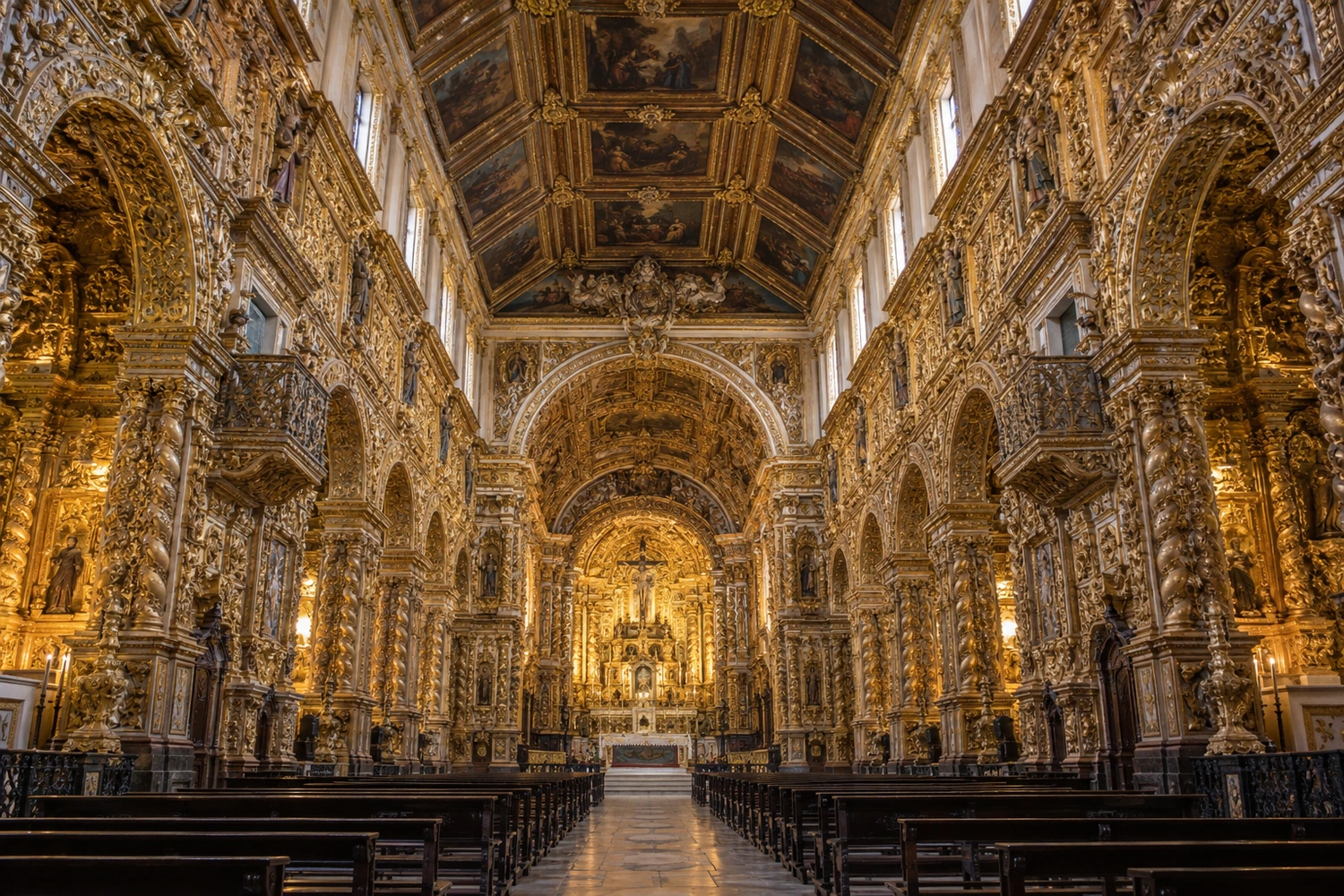
Igreja e Convento de São FranciscoWith construction officially begun in 1686, the Franciscan church has interior walls, columns and ceiling covered in gilded baroque woodwork.
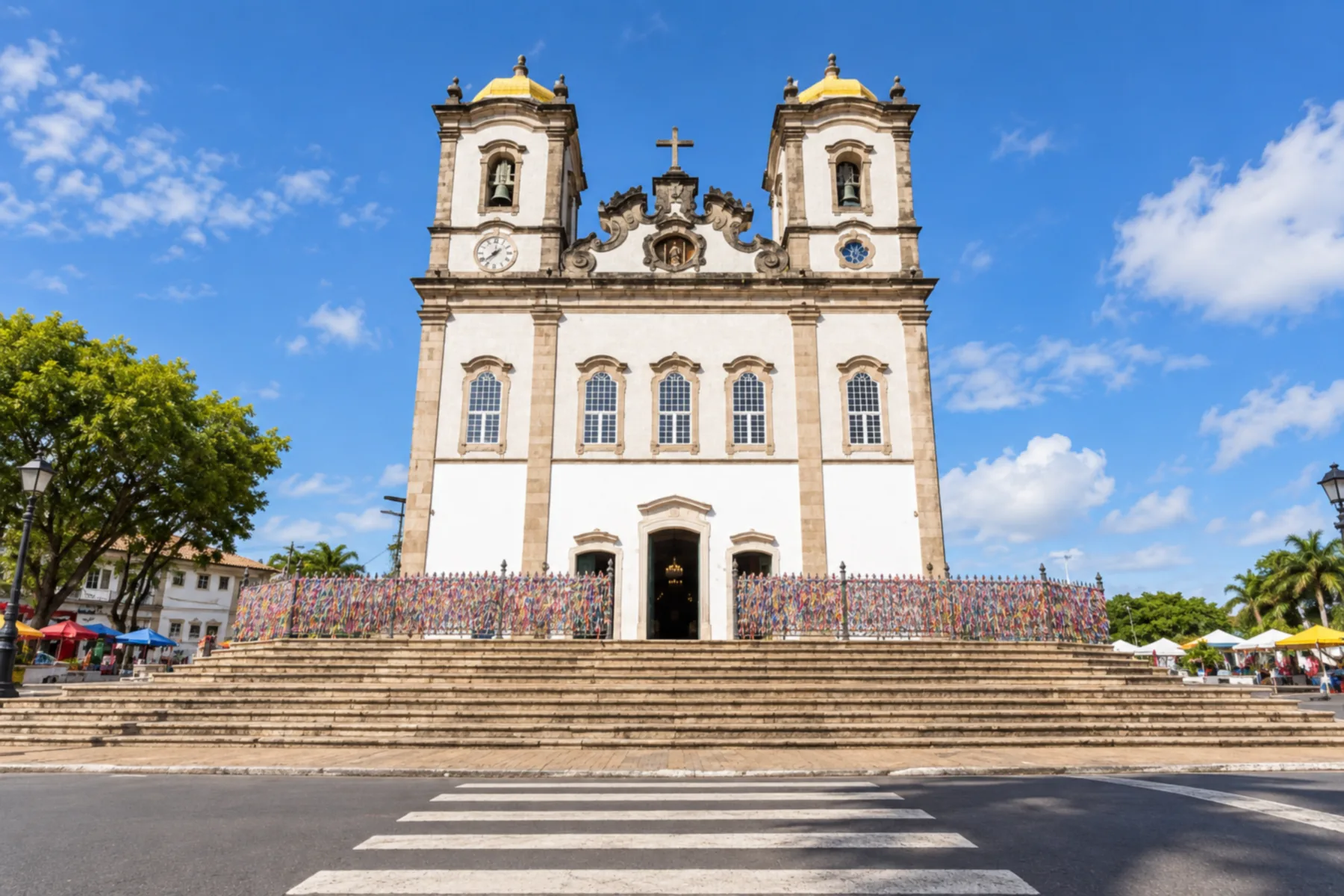
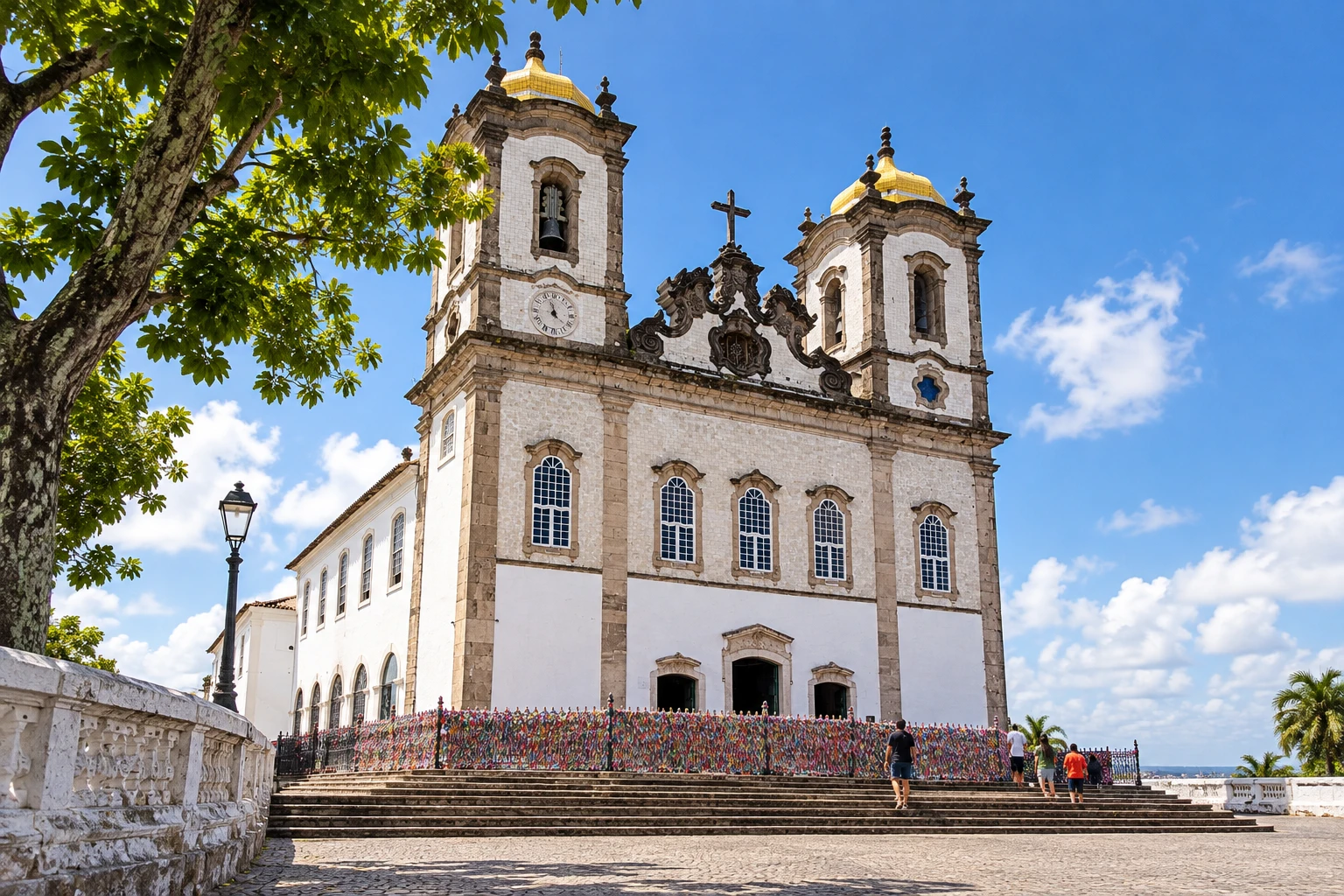
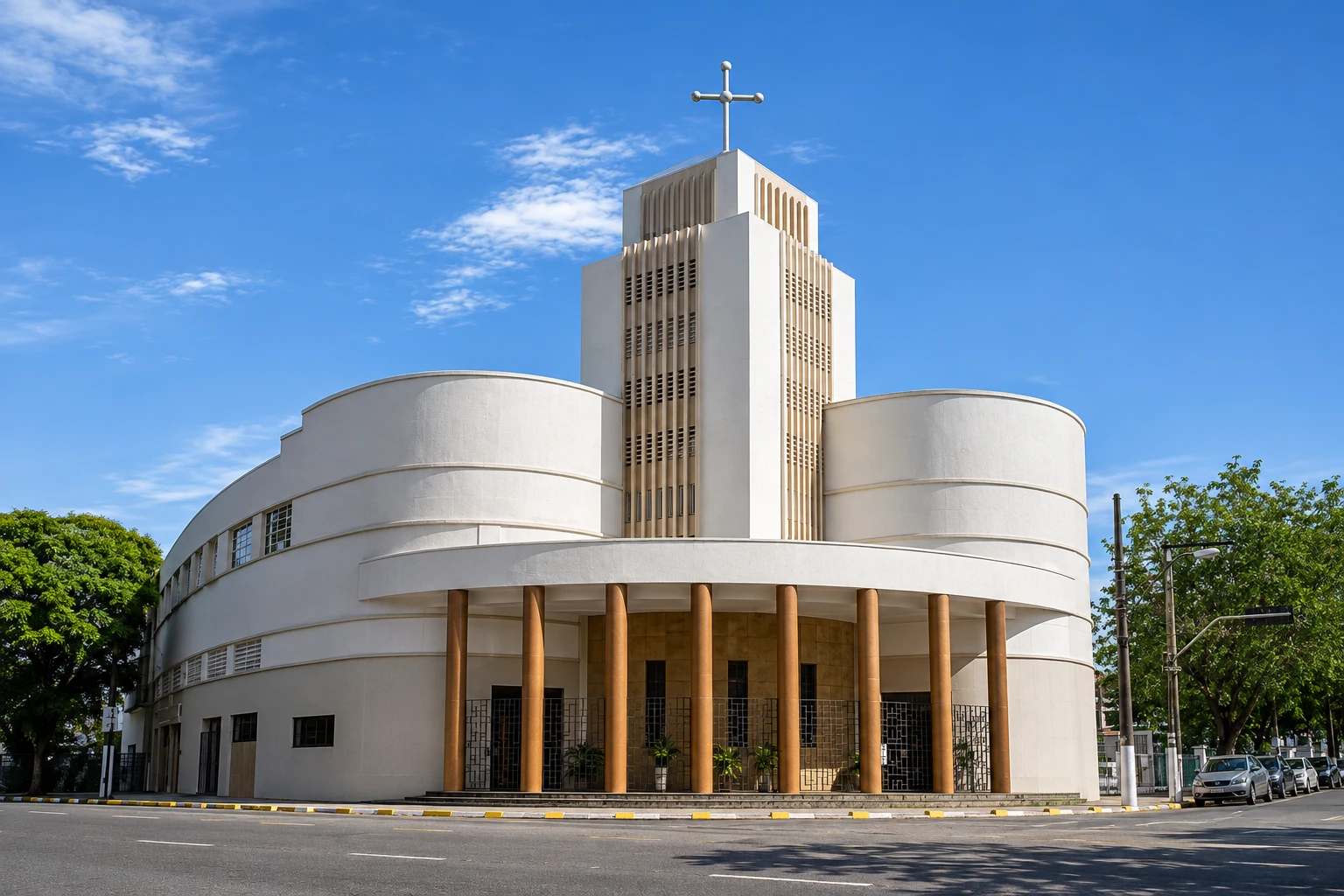
Igreja do Senhor do BonfimBuilt starting in 1745 on top of the Colina Sagrada, on the Península de Itapagipe, it is a symbol of Bahian religious syncretism and the origin of the Bonfim ribbons.
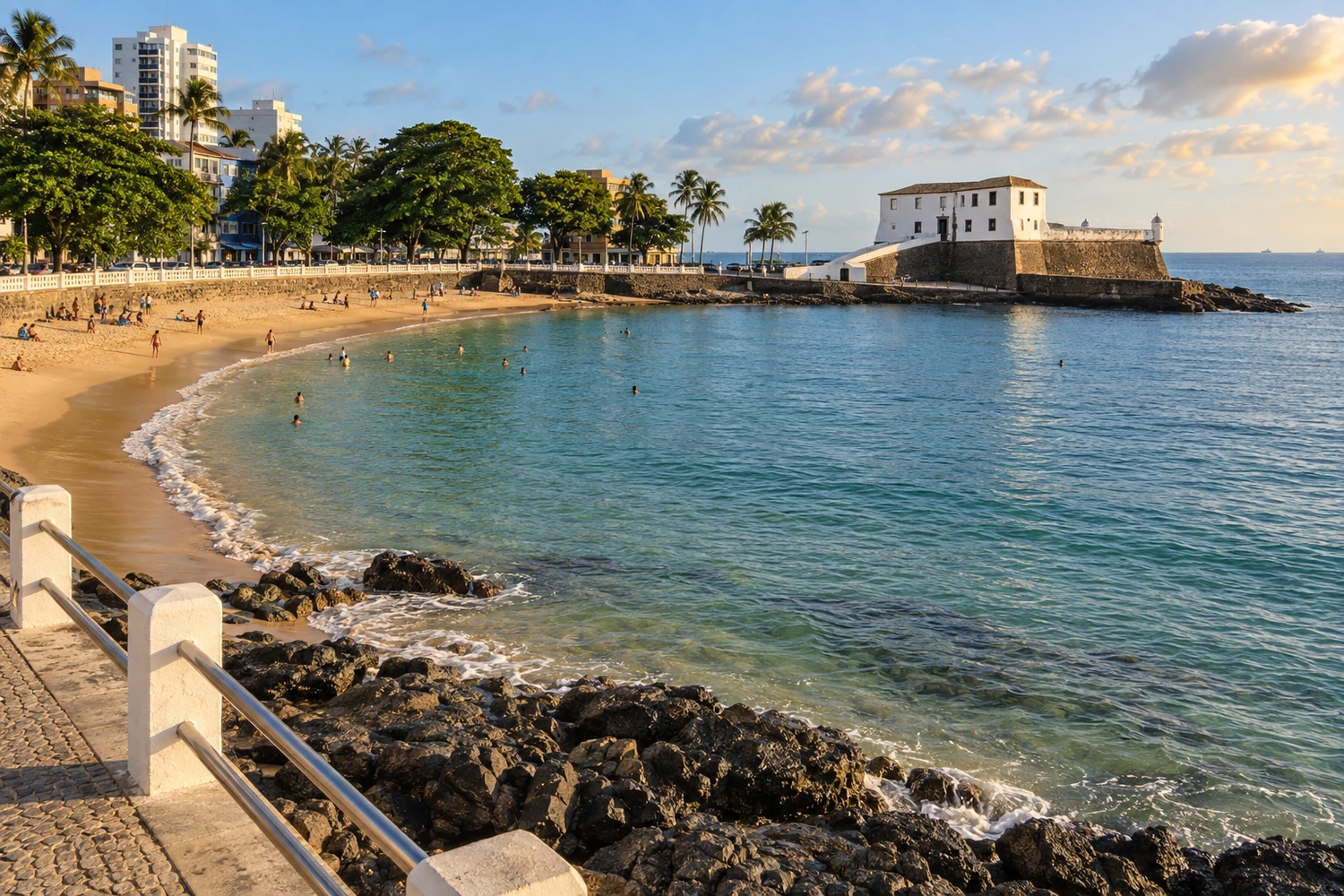
Praia do Porto da BarraA small cove with calm waters on Baía de Todos-os-Santos, where Tomé de Sousa, Brazil's first governor-general, came ashore.
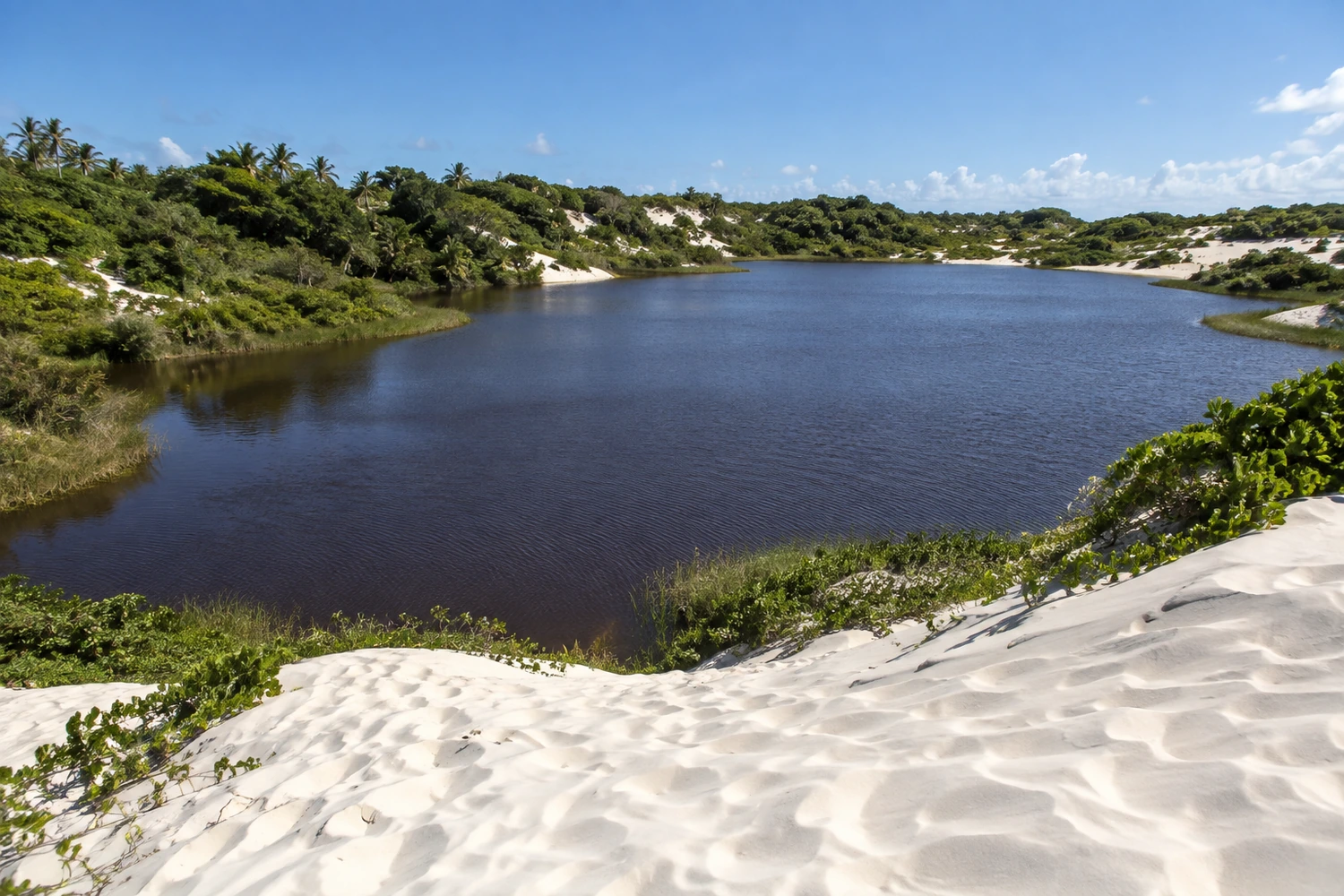
Lagoa do AbaetéA dark freshwater lagoon surrounded by white sand dunes in Itapuã, protected since 1993 by the Parque Metropolitano Lagoas e Dunas do Abaeté.
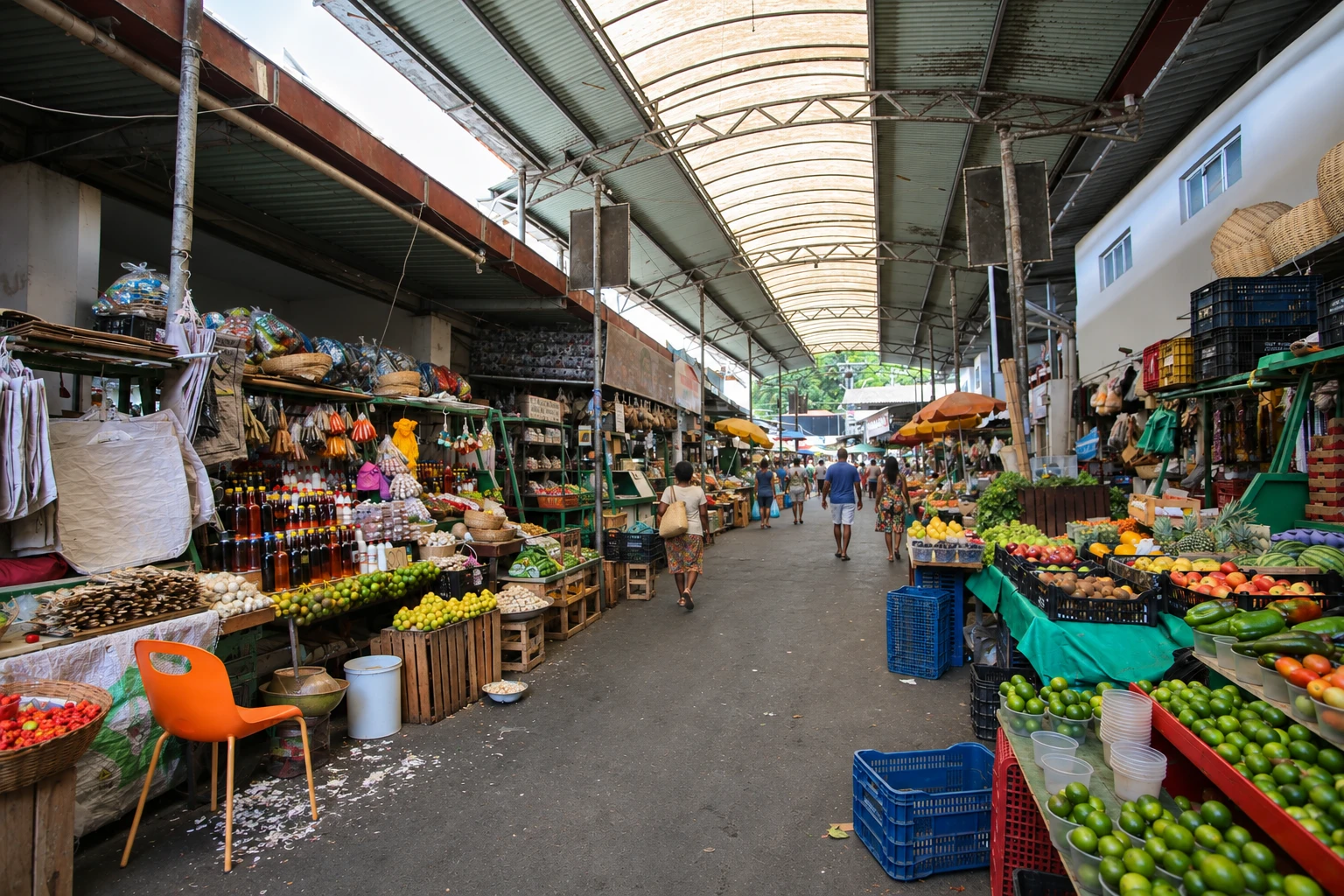
São Joaquim MarketThe large open-air market of Salvador, in Cidade Baixa, on the shores of the Bay of All Saints: fruits, flours, fish, spices, herbs and religious items for candomblé and umbanda.
An ensemble of colonial townhouses and churches in the Cidade Alta, recognized by Unesco as a World Heritage Site in 1985. Cobblestone slopes link Largo do Pelourinho to Terreiro de Jesus, surrounded by baroque churches such as the Cathedral.
Opened in 1873 as the Elevador Hidráulico da Conceição, it links Praça Cairu, in the Cidade Baixa, to Praça Tomé de Sousa, in the Cidade Alta. The current 72-meter tower dates from 1930 and was listed by Iphan in 2006.
At the entrance to Baía de Todos-os-Santos, the fort's current structure was built between 1696 and 1702, and in 1698 it received the first lighthouse on the continent. Since 1998 it has housed the Museu Náutico da Bahia, with underwater archaeology finds and nautical charts.
Founded in 1912, the market has been housed since 1971 in the former Customs House, a neoclassical building listed by Iphan in 1966. It gathers stalls of crafts and typical Bahian products at Praça Cairu, in the Cidade Baixa.
With construction officially begun in 1686, the Franciscan church has interior walls, columns and ceiling covered in gilded baroque woodwork. The convent cloister holds 18th-century Portuguese tile panels, next to Terreiro de Jesus.
Built starting in 1745 on top of the Colina Sagrada, on the Península de Itapagipe, it is a symbol of Bahian religious syncretism and the origin of the Bonfim ribbons. In January, the Lavagem do Bonfim (Washing of Bonfim) brings baianas (women in traditional Bahian dress) to wash the steps with scented water.
A small cove with calm waters on Baía de Todos-os-Santos, where Tomé de Sousa, Brazil's first governor-general, came ashore. It is known for the sunset over the sea, with views of Ilha de Itaparica (island) and the Forte de Santa Maria next to it.
A dark freshwater lagoon surrounded by white sand dunes in Itapuã, protected since 1993 by the Parque Metropolitano Lagoas e Dunas do Abaeté. It inspired songs by Dorival Caymmi and preserves the tradition of the washerwomen who worked on its shores.
A sanctuary on Largo de Roma in the Lower City, beside the social institutions founded by Sister Dulce. It holds the tomb of the first saint born in Brazil and has a memorial about her life.
The large open-air market of Salvador, in Cidade Baixa, on the shores of the Bay of All Saints: fruits, flours, fish, spices, herbs and religious items for candomblé and umbanda.
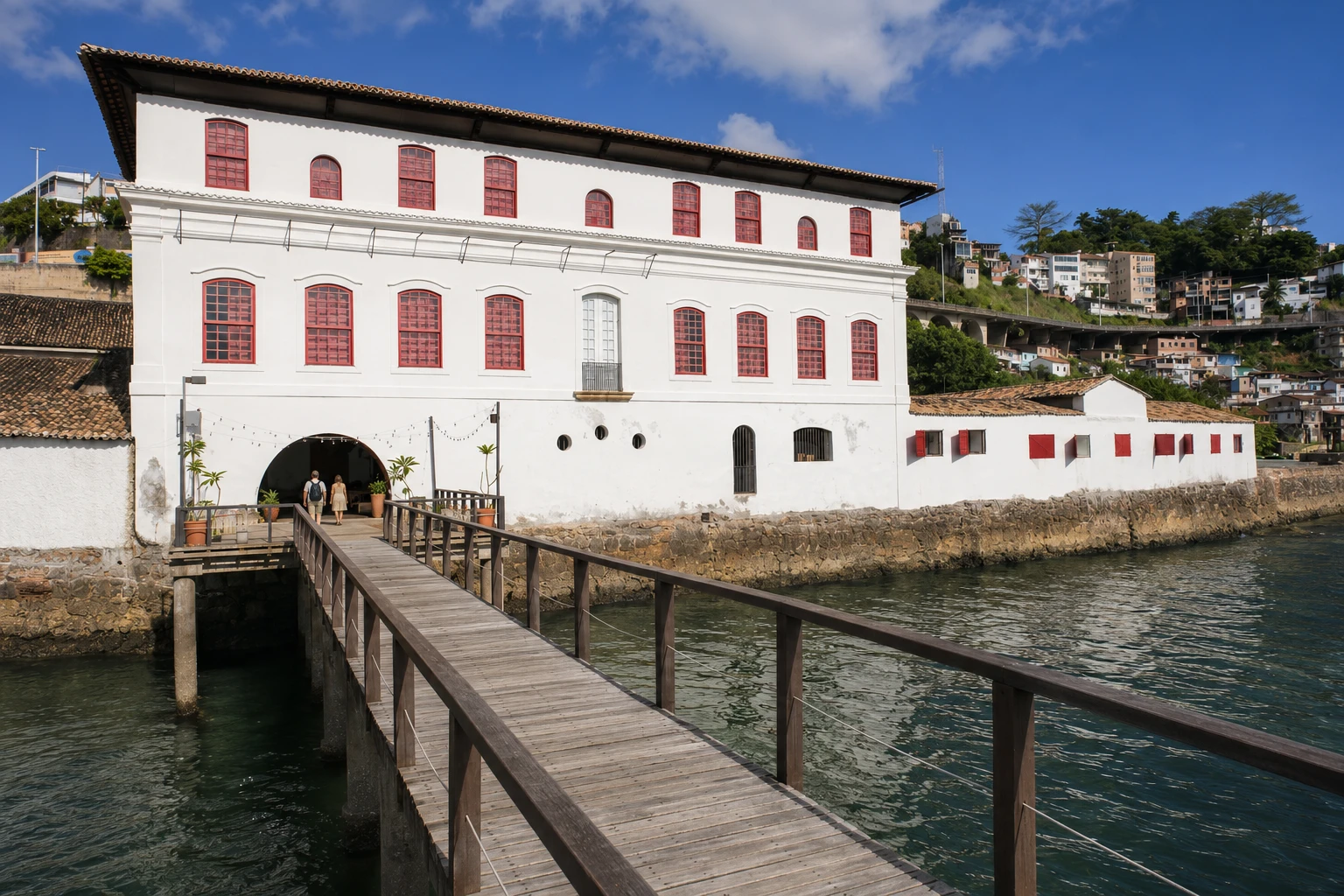
Modern art museum housed in the Solar do Unhão, a colonial complex on the shore of Baía de Todos-os-Santos restored by Lina Bo Bardi, with galleries, a sculpture park and views of the sunset over the bay.
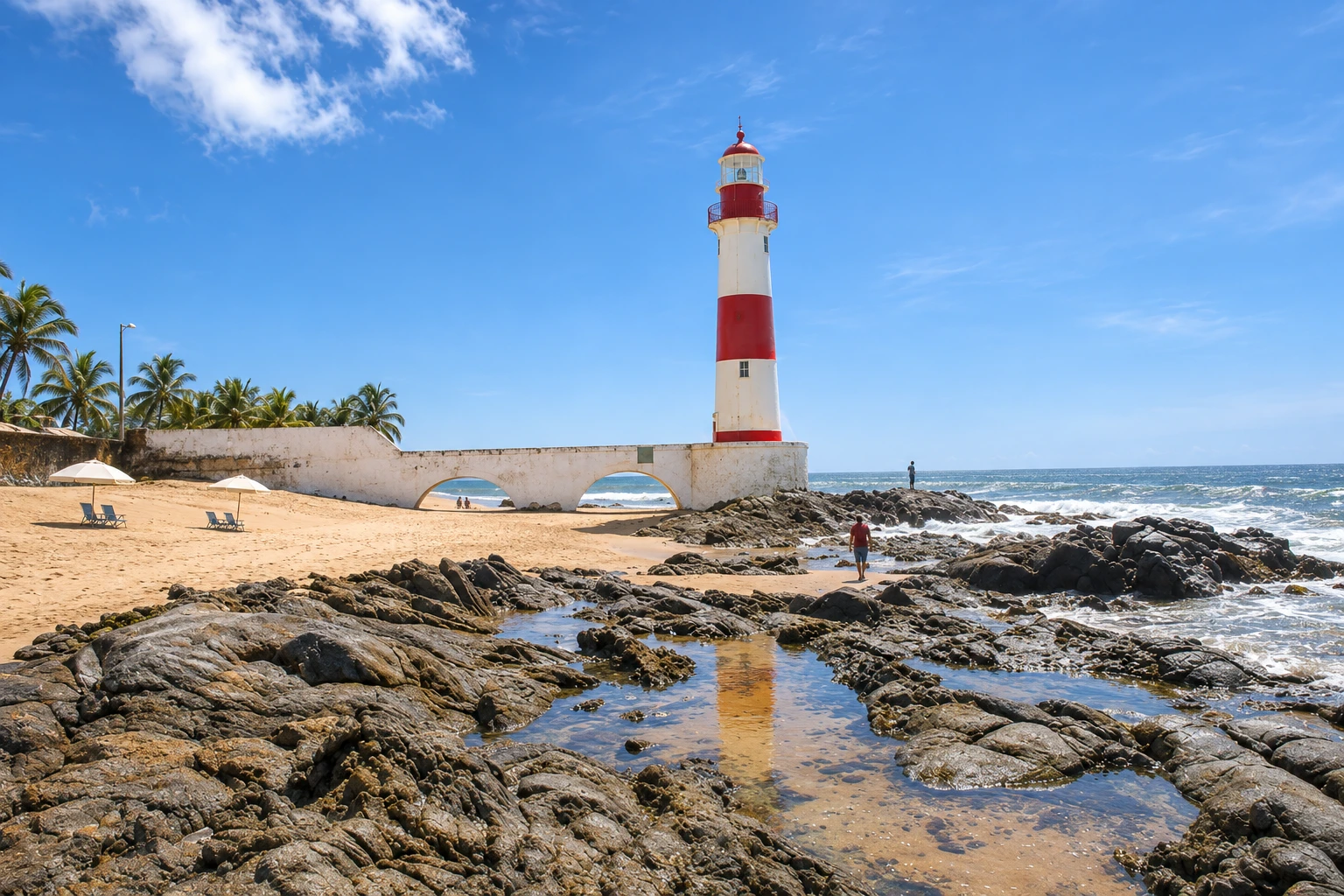
Beach in the Itapuã neighborhood, on Salvador’s northern waterfront, with the striped lighthouse from 1873, coconut palms, rocks and shallow natural pools at low tide.


 Antarctica
 Argentina
 Bolivia
 Chile
 Colombia
 Ecuador
 Falkland Islands (Malvinas)
 French Guiana
 Guyana
 Paraguay
 Peru
 Suriname
 Uruguay
 Venezuela
 Austria
 Belgium
 Croatia
 Denmark
 Finland
 France
 Germany
 Greece
 Hungary
 Iceland
 Ireland
 Italy
 Luxembourg
 Norway
 Poland
 Portugal
 Slovakia
 Slovenia
 Spain
 Sweden
 Switzerland
 the Czech Republic
 the Netherlands
 the United Kingdom
 Turkey
 Bermuda
 Canada
 Greenland
 Mexico
 Saint Pierre and Miquelon
 the United States
 the Dominican Republic
 Japan
 Egypt
 South Africa
 Australia
 Fiji
 New Zealand
 Papua New Guinea