

 Antarctica
 Argentina
 Bolivia
 Chile
 Colombia
 Ecuador
 Falkland Islands (Malvinas)
 French Guiana
 Guyana
 Paraguay
 Peru
 Suriname
 Uruguay
 Venezuela
 Albania
 Austria
 Belgium
 Croatia
 Denmark
 Finland
 France
 Germany
 Greece
 Hungary
 Iceland
 Ireland
 Italy
 Luxembourg
 Norway
 Poland
 Portugal
 Slovakia
 Slovenia
 Spain
 Sweden
 Switzerland
 the Czech Republic
 the Netherlands
 the United Kingdom
 Turkey
 Bermuda
 Canada
 Greenland
 Mexico
 Saint Pierre and Miquelon
 the United States
 the Dominican Republic
 Japan
 Egypt
 South Africa
 Australia
 Fiji
 New Zealand
 Papua New Guinea
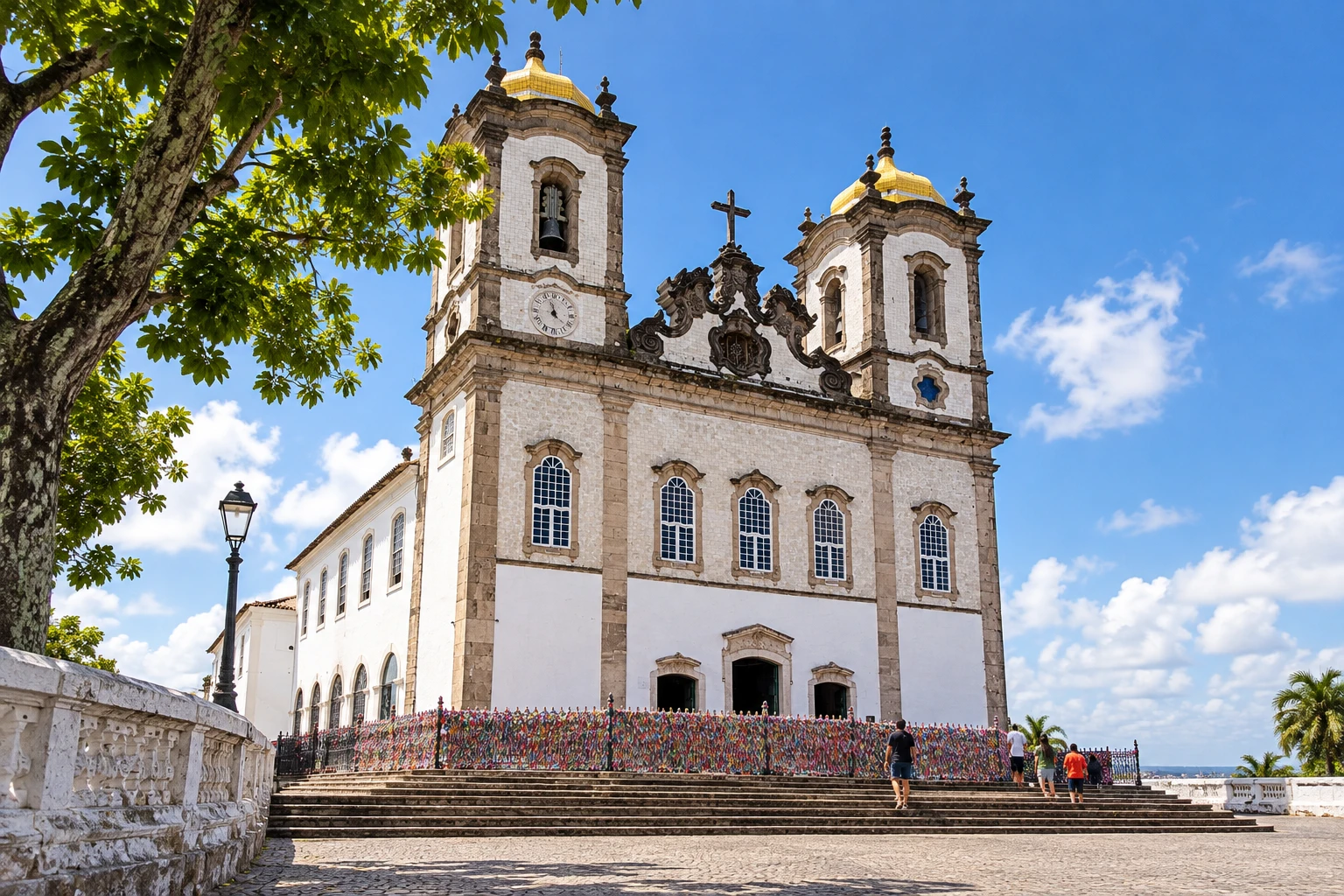
church · Salvador, BA
Igreja do Senhor do Bonfim
Built starting in 1745 on top of the Colina Sagrada, on the Península de Itapagipe, it is a symbol of Bahian religious syncretism and the origin of the Bonfim ribbons. In January, the Lavagem do Bonfim (Washing of Bonfim) brings baianas (women in traditional Bahian dress) to wash the steps with scented water.
Illustrative images. The pictures in this guide are illustrations based on the real place, not photographs, and may differ from it.


A look at the place
Igreja do Senhor do Bonfim in pictures
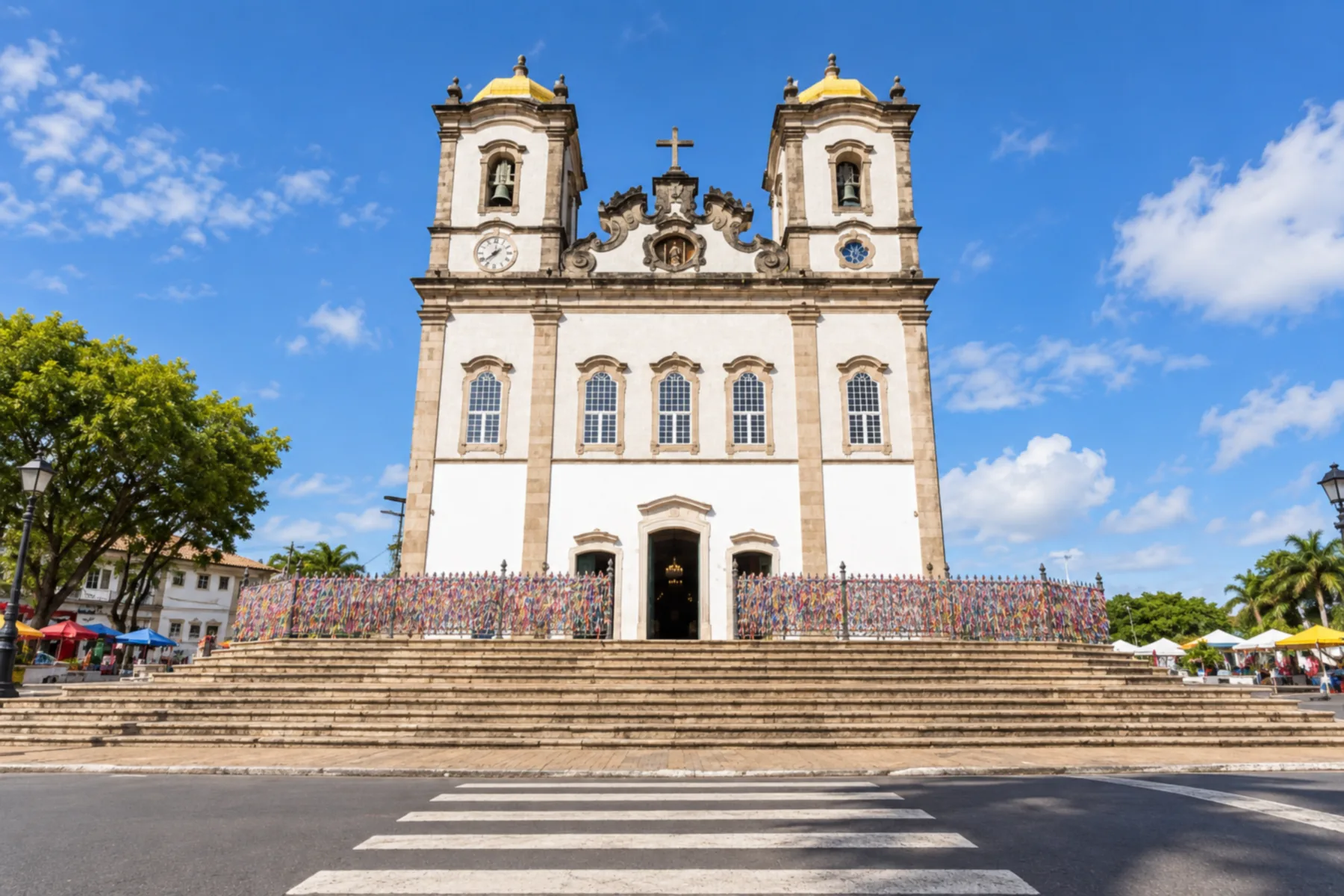
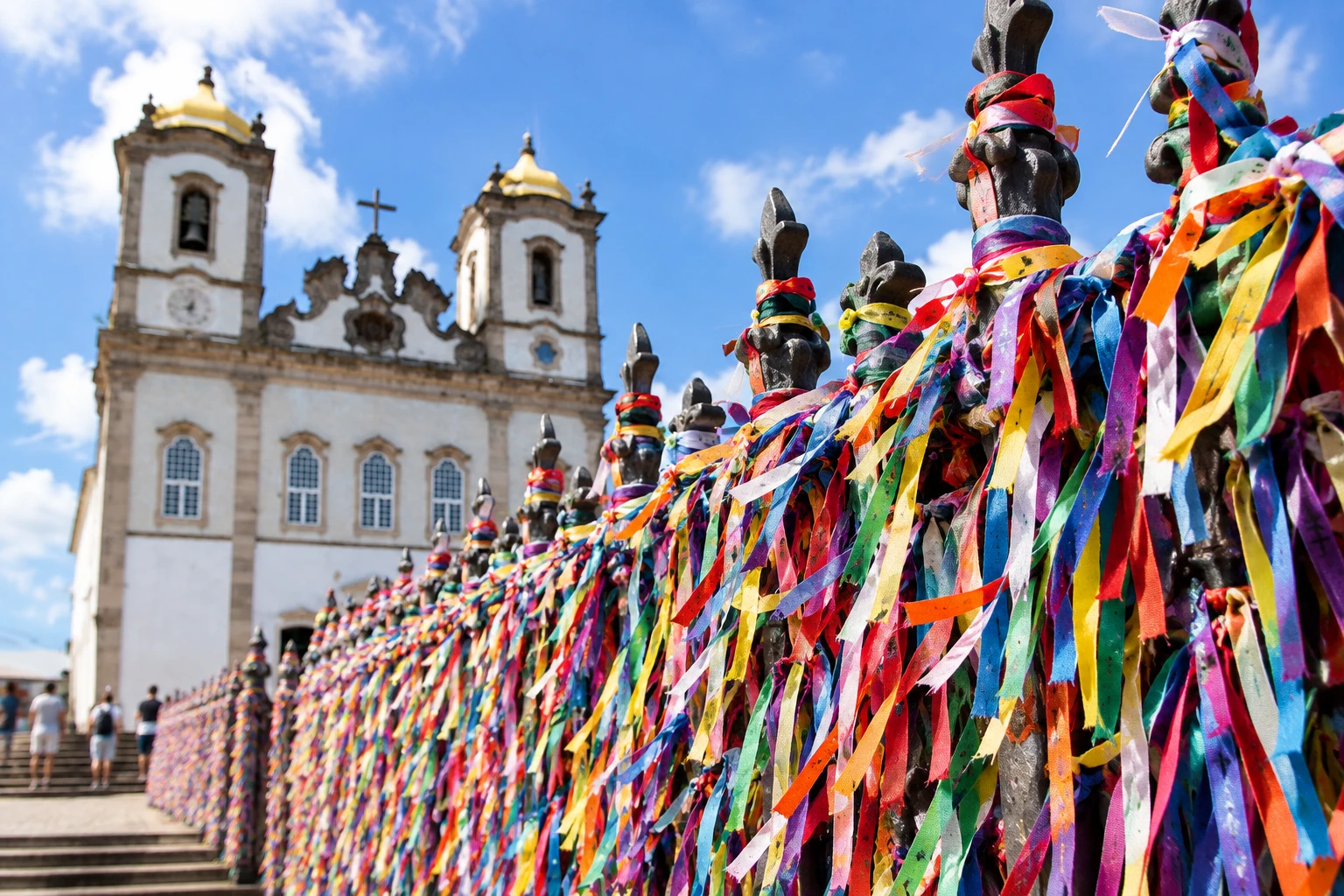
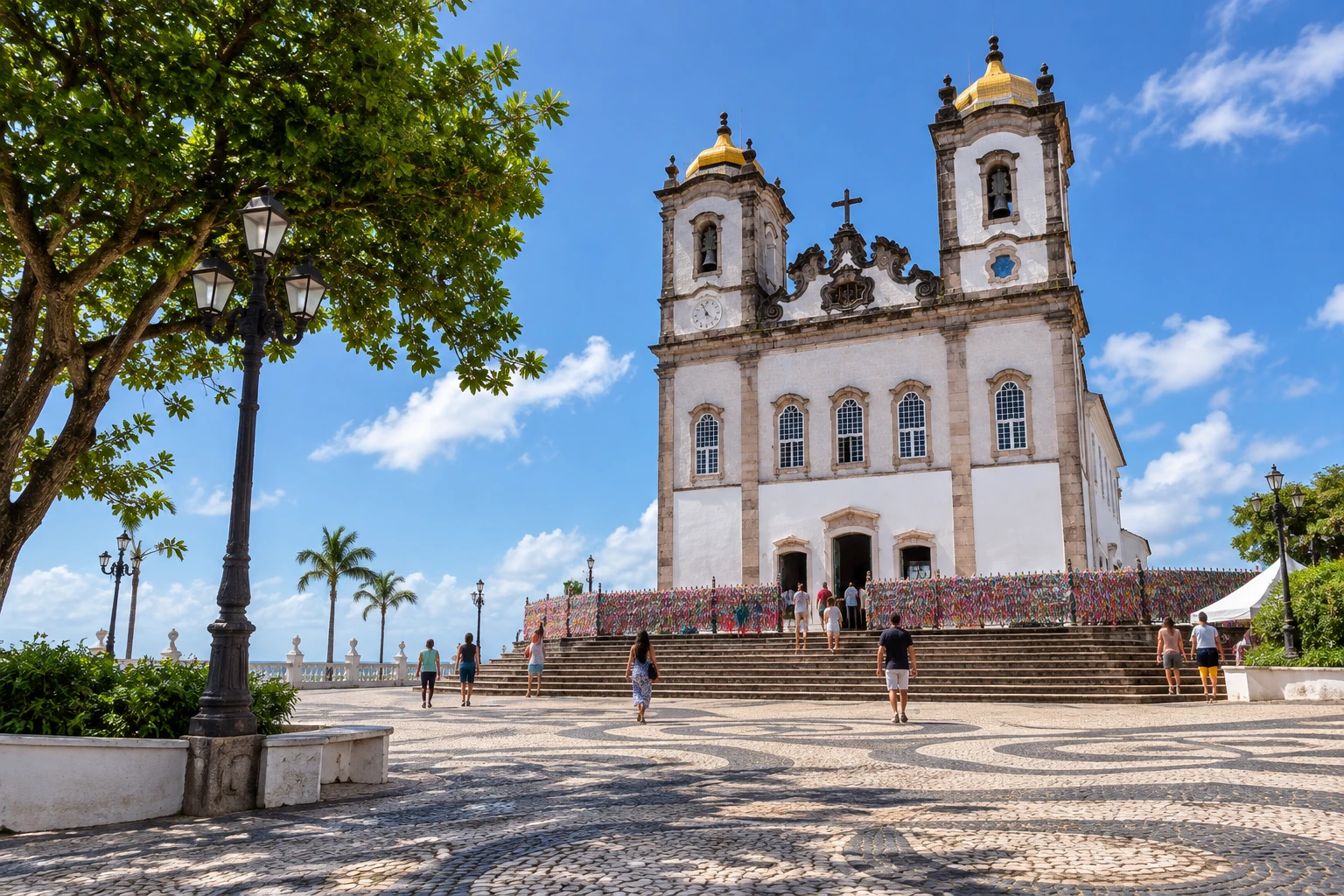
These pictures are illustrations based on the real place, not photographs. They may differ from the place.
Click the picture to enlarge it.
Discover
About Igreja do Senhor do Bonfim
The Igreja do Senhor do Bonfim is Salvador's most famous Catholic church and one of the greatest symbols of Bahian faith. It stands on top of the Colina Sagrada, on the Península de Itapagipe, in the Cidade Baixa. Today it is a basilica and sanctuary.
The story begins in 1745, when Portuguese captain Theodósio Rodrigues de Faria brought the image of the Senhor do Bonfim from Portugal, fulfilling a vow made during a storm at sea. The church was built from then on, in the 18th century. It became a basilica in 1927 and was listed by Iphan in 1938.
The facade has two bell towers with bulbous domes and Portuguese tiles on the lower part. In front is Largo do Bonfim, paved with Portuguese stone. Inside there are tile panels, gilded woodwork and a painted ceiling. The Sala dos Milagres holds thousands of ex-votos: pieces of wood, silver and other objects left as requests or thanks.
Bonfim is also the greatest symbol of religious syncretism in Bahia: in Candomblé (Afro-Brazilian religion), the Senhor do Bonfim is associated with Oxalá. That is the origin of the colorful ribbons, tied to the church railing while you make a wish. Every January, the Lavagem do Bonfim brings baianas in procession to the hill to wash the steps with scented water.
The visit is relaxed and suits any visitor. On Fridays, many worshippers wear white to Mass, and the church gets busier.
Before you go
Practical information
Cidade Turismo reviews its information regularly, but something may have changed. Check with the place before planning your trip.
How much time to set aside
An hour is enough to see the inside of the church and the Sala dos Milagres, tie on a ribbon and walk around the square.
Best time
Any time of year. In the morning it is less hot; on Fridays, the traditional Bonfim day, the church receives more worshippers dressed in white and gets busier. In January, during the Lavagem, the hill is packed.
How to get there
It is at Largo do Bonfim, in the Bonfim neighborhood, on the Península de Itapagipe (Cidade Baixa), about 8 km from the historic center. You can go by car, taxi or ride-hailing app, or by city bus headed to Bonfim.
Tip
Combine the visit with Ponta de Humaitá and Boa Viagem beach, nearby, to see Baía de Todos-os-Santos.
Official website
Your questions
Frequently asked questions about Igreja do Senhor do Bonfim
Is there an entrance fee at the Igreja do Bonfim?
No. Entry to the church is free. Check the hours on the sanctuary's official website.
How long does the visit take?
About an hour, including the Sala dos Milagres and the square in front.
Can I walk there from the Pelourinho?
It is not practical. The church is in the Cidade Baixa, about 8 km from the historic center. It is best to go by taxi, ride-hailing app or bus.
How does the Bonfim ribbon work?
The tradition is to tie the ribbon to the church railing, or around your wrist, while making wishes. It used to measure 47 cm, the length of the right arm of the Senhor do Bonfim statue.
When is the Lavagem do Bonfim?
Every year in January, on a Thursday. The baianas set out in procession from the Igreja da Conceição da Praia and wash the Bonfim steps with scented water.