

 Antarctica
 Argentina
 Bolivia
 Chile
 Colombia
 Ecuador
 Falkland Islands (Malvinas)
 French Guiana
 Guyana
 Paraguay
 Peru
 Suriname
 Uruguay
 Venezuela
 Austria
 Belgium
 Croatia
 Denmark
 Finland
 France
 Germany
 Greece
 Hungary
 Iceland
 Ireland
 Italy
 Luxembourg
 Norway
 Poland
 Portugal
 Slovakia
 Slovenia
 Spain
 Sweden
 Switzerland
 the Czech Republic
 the Netherlands
 the United Kingdom
 Turkey
 Bermuda
 Canada
 Greenland
 Mexico
 Saint Pierre and Miquelon
 the United States
 the Dominican Republic
 Japan
 Egypt
 South Africa
 Australia
 Fiji
 New Zealand
 Papua New Guinea
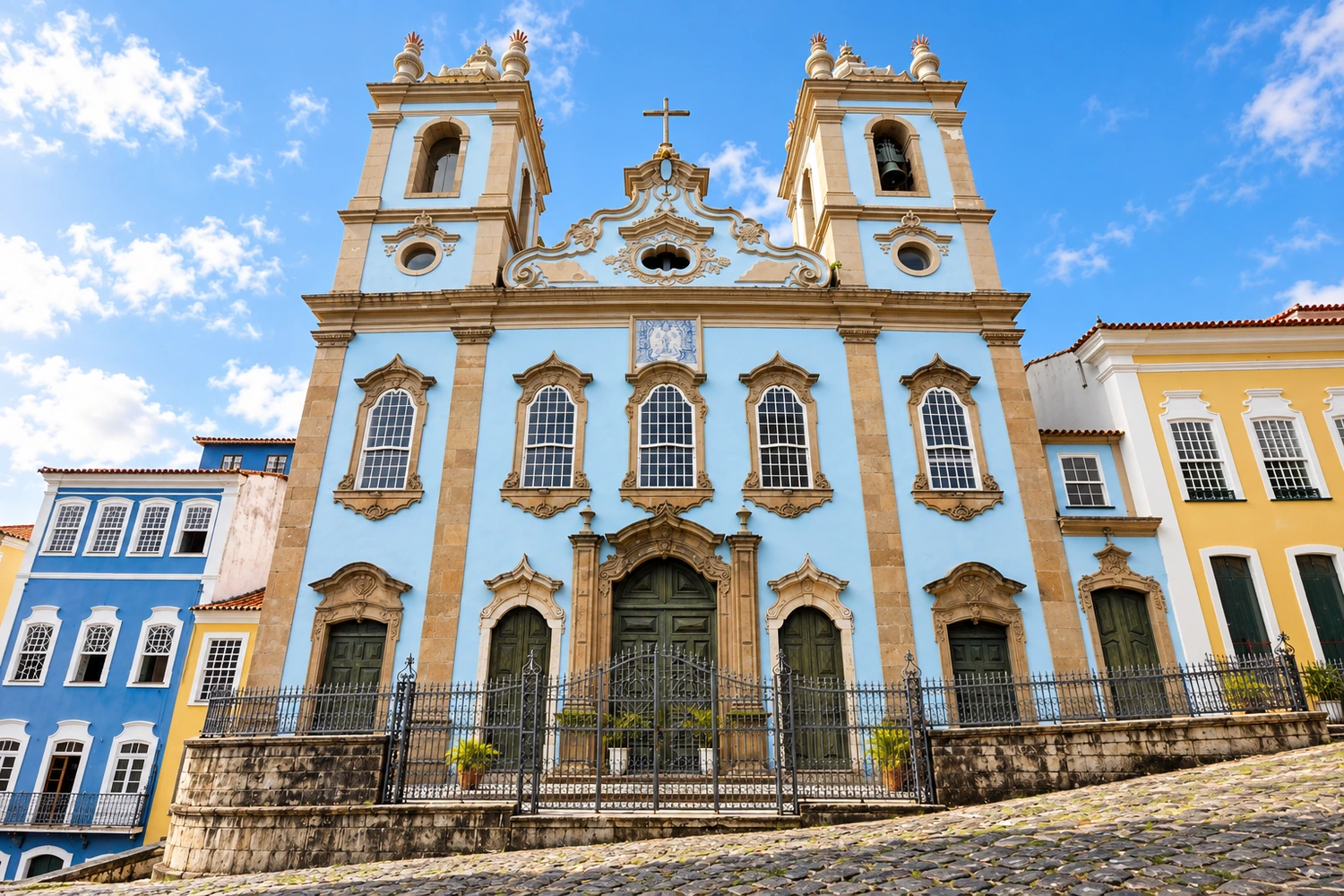
historic center · Salvador, BA
Pelourinho e Centro Histórico
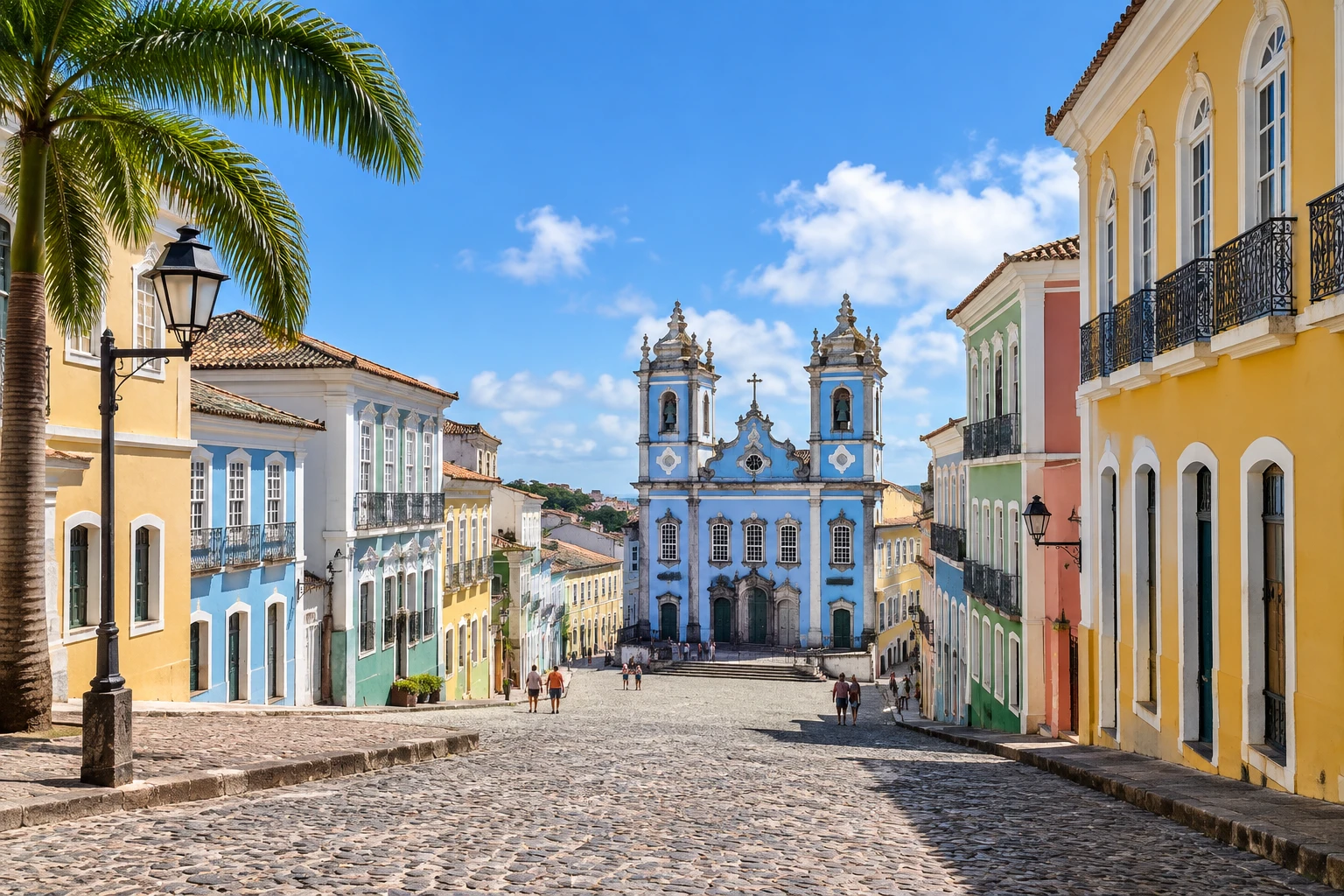
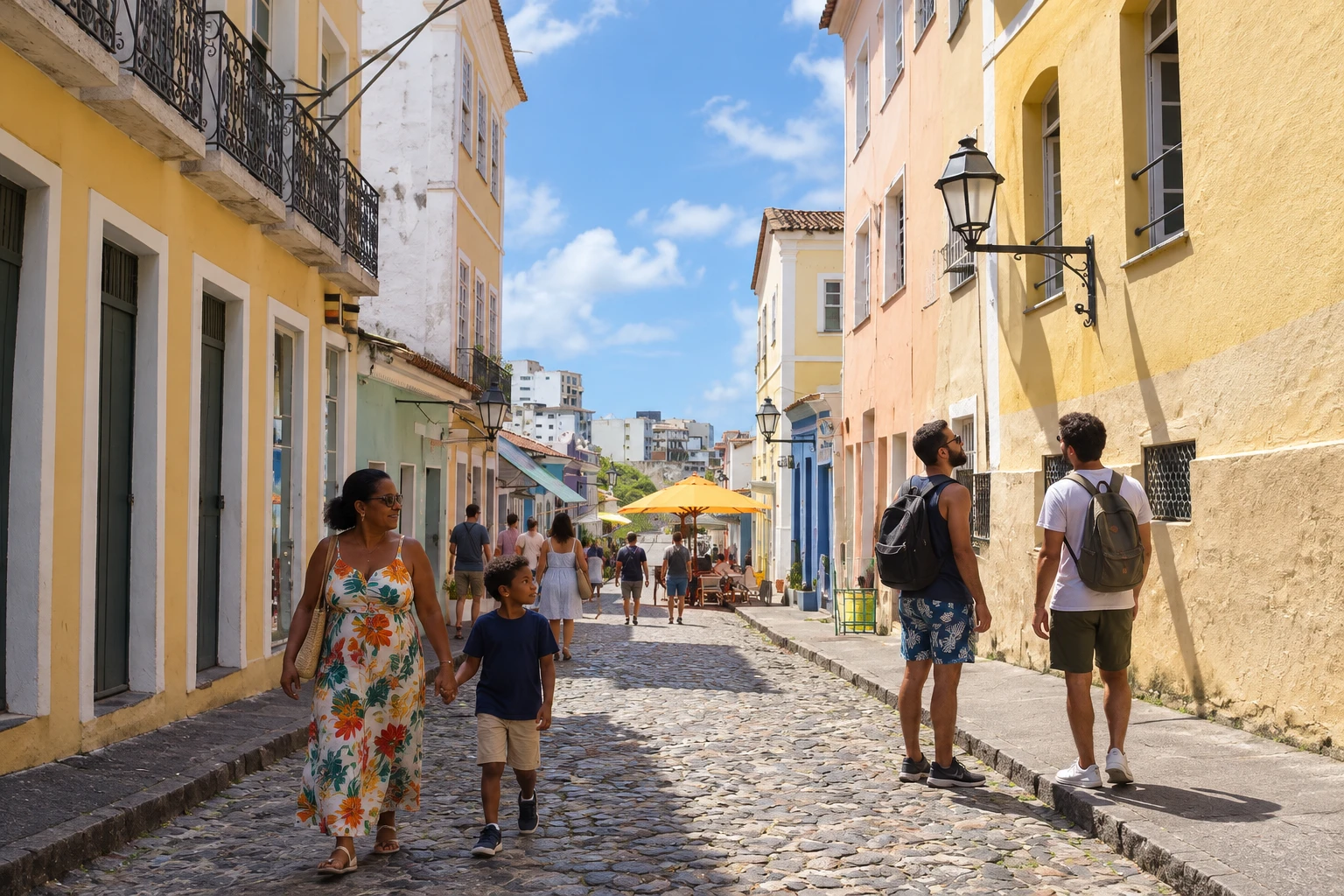
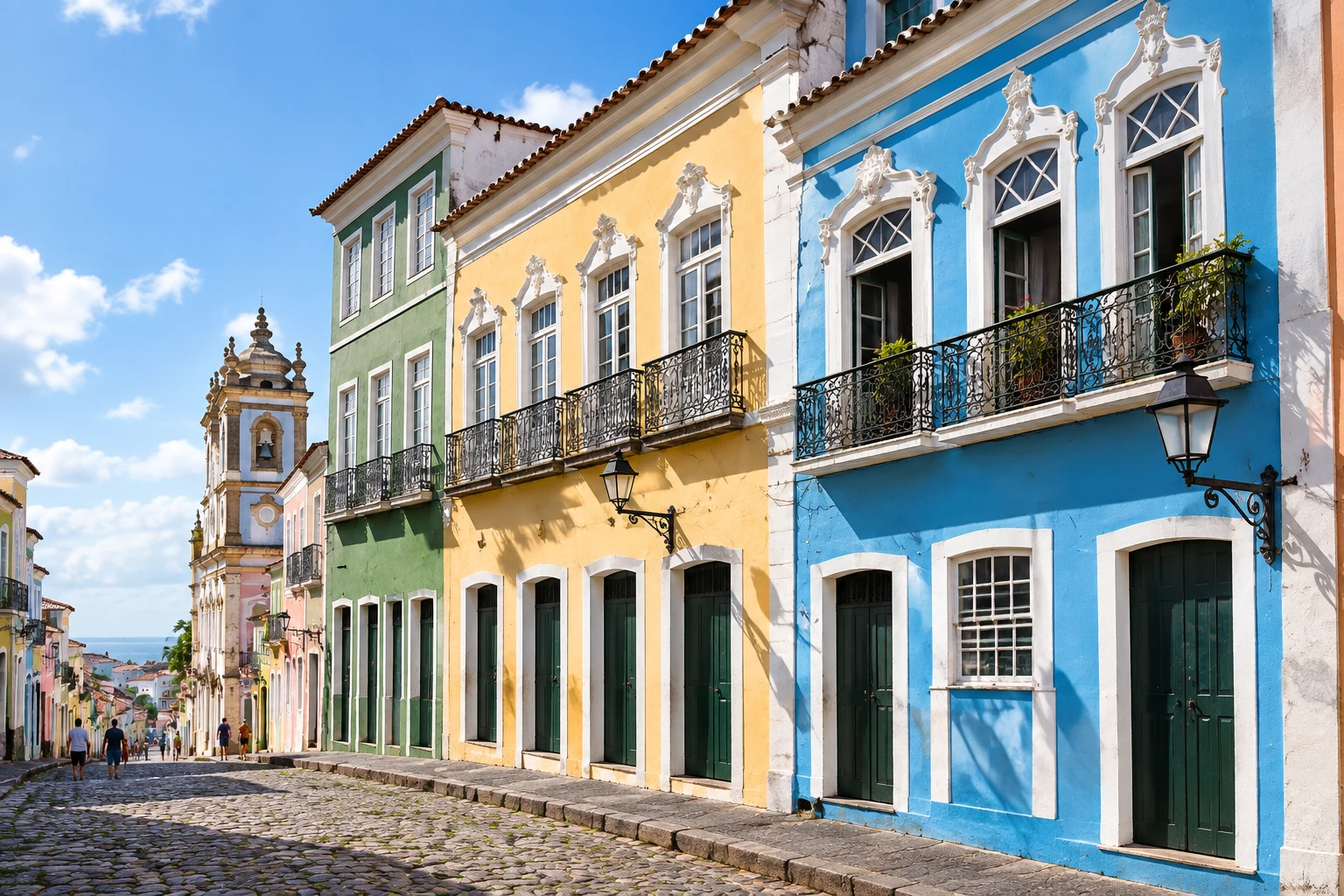
An ensemble of colonial townhouses and churches in the Cidade Alta, recognized by Unesco as a World Heritage Site in 1985. Cobblestone slopes link Largo do Pelourinho to Terreiro de Jesus, surrounded by baroque churches such as the Cathedral.
Illustrative images. The pictures in this guide are illustrations based on the real place, not photographs, and may differ from it.


A look at the place
Pelourinho e Centro Histórico in pictures
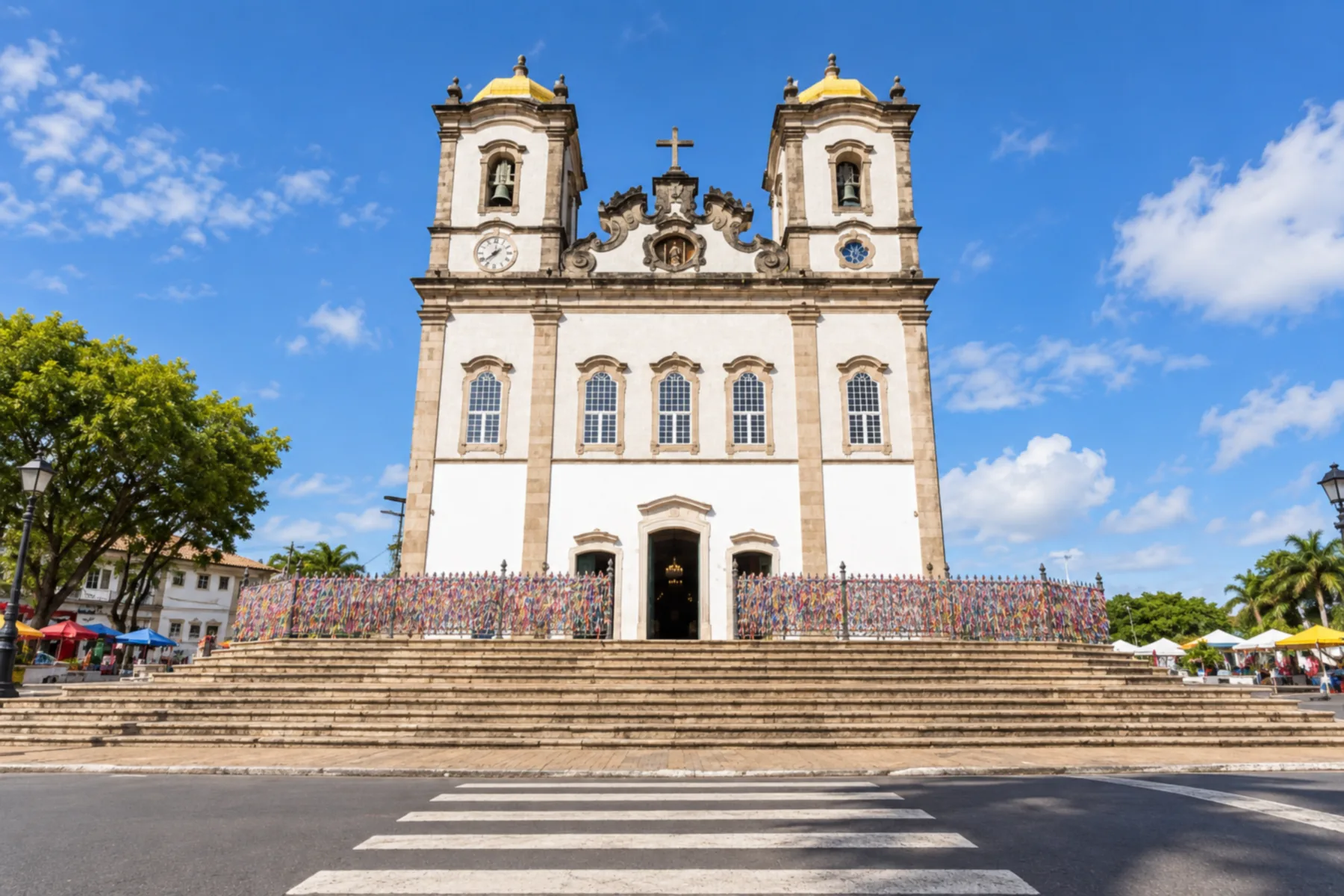
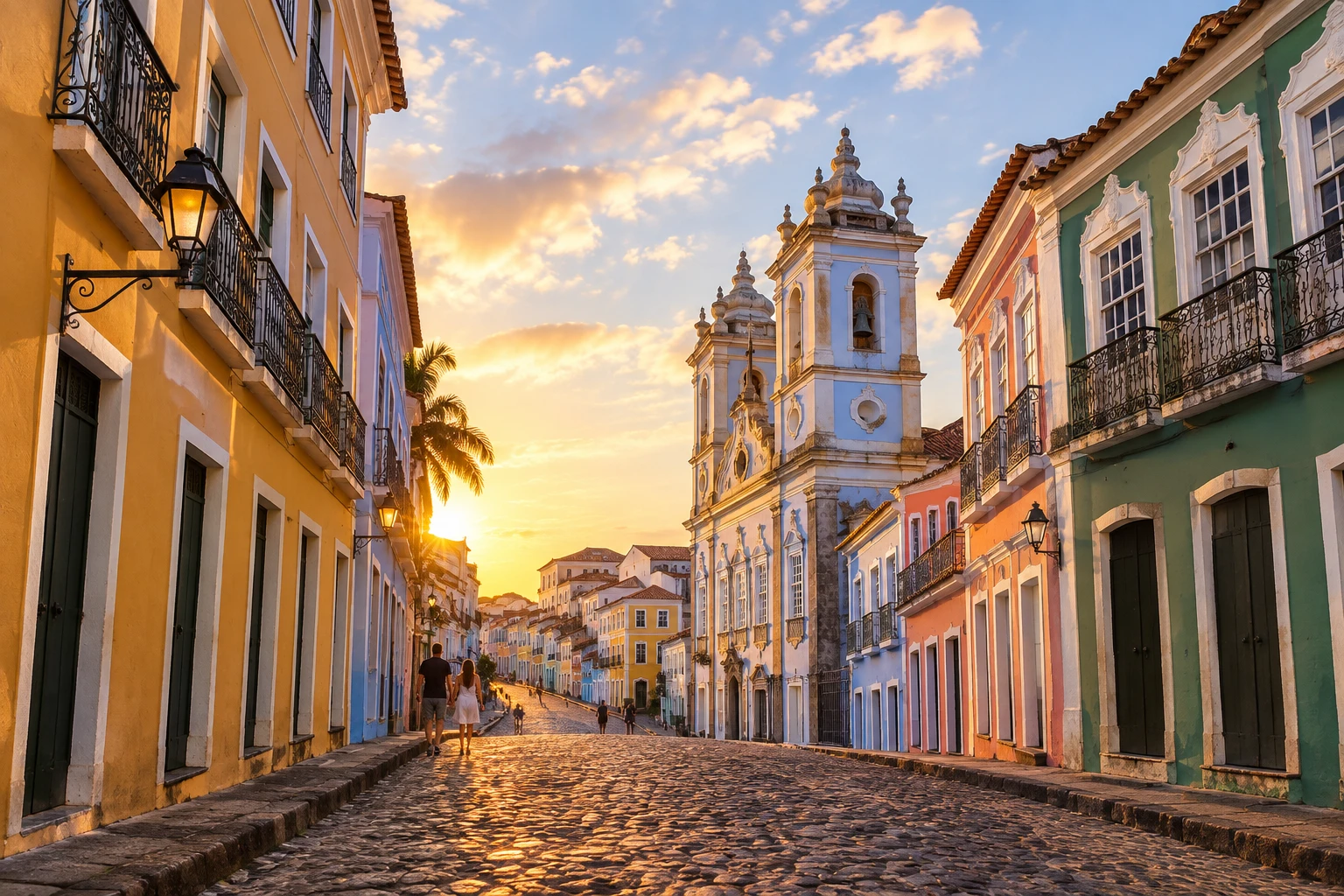
These pictures are illustrations based on the real place, not photographs. They may differ from the place.
Click the picture to enlarge it.
Discover
About Pelourinho e Centro Histórico
The Pelourinho is the heart of Salvador's Historic Center, in the Cidade Alta. It is an ensemble of colorful townhouses, churches and cobblestone streets that preserves the layout of the city founded in the 16th century. The Historic Center was declared a World Heritage Site by Unesco in 1985.
Salvador was Brazil's first capital, from 1549 to 1763. The name Pelourinho comes from the pillory, the post that stood in the central square, where enslaved people were publicly punished. Today many restored mansions house museums, cultural centers and studios.
You explore on foot. Largo do Pelourinho brings together the colorful houses, the blue-fronted Igreja de Nossa Senhora do Rosário dos Pretos and the Fundação Casa de Jorge Amado. Cobblestone slopes lead to Terreiro de Jesus, a square with a fountain surrounded by churches, including the Catedral Basílica. Next to it is Largo do Cruzeiro de São Francisco, with the Church and Convent of São Francisco.
Walking the streets is free; some churches and museums charge admission. The cobblestones and uphill stretches call for comfortable shoes and some stamina, and the uneven surface makes it hard for wheelchair users or anyone with a stroller.
Before you go
Practical information
Cidade Turismo reviews its information regularly, but something may have changed. Check with the place before planning your trip.
How much time to set aside
Half a day is enough to explore Largo do Pelourinho and Terreiro de Jesus at a relaxed pace and go into one or two churches; a full day lets you include museums.
Best time
You can go year-round. In the morning, when the churches and museums are open and less crowded and it is less hot. On Tuesdays the neighborhood is busier with the Terça da Bênção (Blessing Tuesday) Mass in the late afternoon.
How to get there
It is in the Cidade Alta, in Salvador's Historic Center. From the Cidade Baixa (Comércio, near the Mercado Modelo), take the Elevador Lacerda up to Praça Tomé de Sousa and walk along Rua da Misericórdia and through Praça da Sé to Terreiro de Jesus; Largo do Pelourinho is about a 700-meter walk away. From other neighborhoods, you can take a bus, taxi or ride-hailing car to the Praça da Sé area.
Tip
Wear shoes with sturdy soles: the cobblestone streets are steep and get slippery, especially after rain.
Your questions
Frequently asked questions about Pelourinho e Centro Histórico
Is there an entrance fee for the Pelourinho?
No. The streets and squares are public and free. Some churches and museums in the area charge admission.
How long does it take to see the Pelourinho?
Half a day is enough for Largo do Pelourinho, Terreiro de Jesus and one or two churches. With museums, set aside the whole day.
How do I get to the Pelourinho by the Elevador Lacerda?
The elevator links Comércio, in the Cidade Baixa, to Praça Tomé de Sousa, in the Cidade Alta. From there, walk along Rua da Misericórdia and through Praça da Sé; Largo do Pelourinho is about 700 meters away.
What is the best day to visit the Pelourinho?
Tuesday is one of the busiest days, because of the Terça da Bênção Mass in the late afternoon. To visit churches and museums at a relaxed pace, choose the mornings.
Is the Pelourinho a Unesco World Heritage Site?
Yes. Salvador's Historic Center, which includes the Pelourinho, has been a Unesco World Heritage Site since 1985.