

 Antarctica
 Argentina
 Bolivia
 Chile
 Colombia
 Ecuador
 Falkland Islands (Malvinas)
 French Guiana
 Guyana
 Paraguay
 Peru
 Suriname
 Uruguay
 Venezuela
 Austria
 Belgium
 Croatia
 Denmark
 Finland
 France
 Germany
 Greece
 Hungary
 Iceland
 Ireland
 Italy
 Luxembourg
 Norway
 Poland
 Portugal
 Slovakia
 Slovenia
 Spain
 Sweden
 Switzerland
 the Czech Republic
 the Netherlands
 the United Kingdom
 Turkey
 Bermuda
 Canada
 Greenland
 Mexico
 Saint Pierre and Miquelon
 the United States
 the Dominican Republic
 Japan
 Egypt
 South Africa
 Australia
 Fiji
 New Zealand
 Papua New Guinea
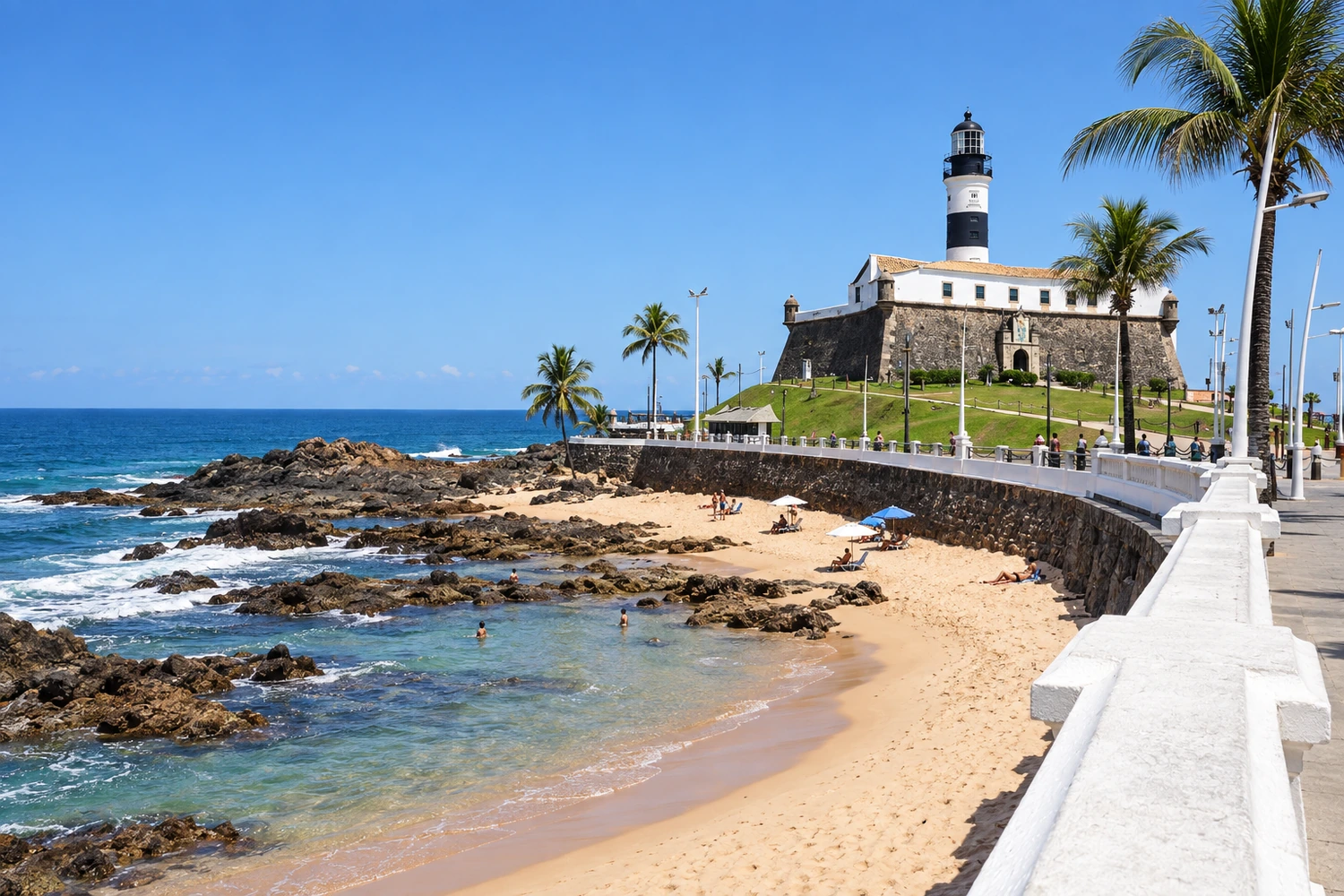
fort · Salvador, BA
Farol da Barra e Forte de Santo Antônio
At the entrance to Baía de Todos-os-Santos, the fort's current structure was built between 1696 and 1702, and in 1698 it received the first lighthouse on the continent. Since 1998 it has housed the Museu Náutico da Bahia, with underwater archaeology finds and nautical charts.
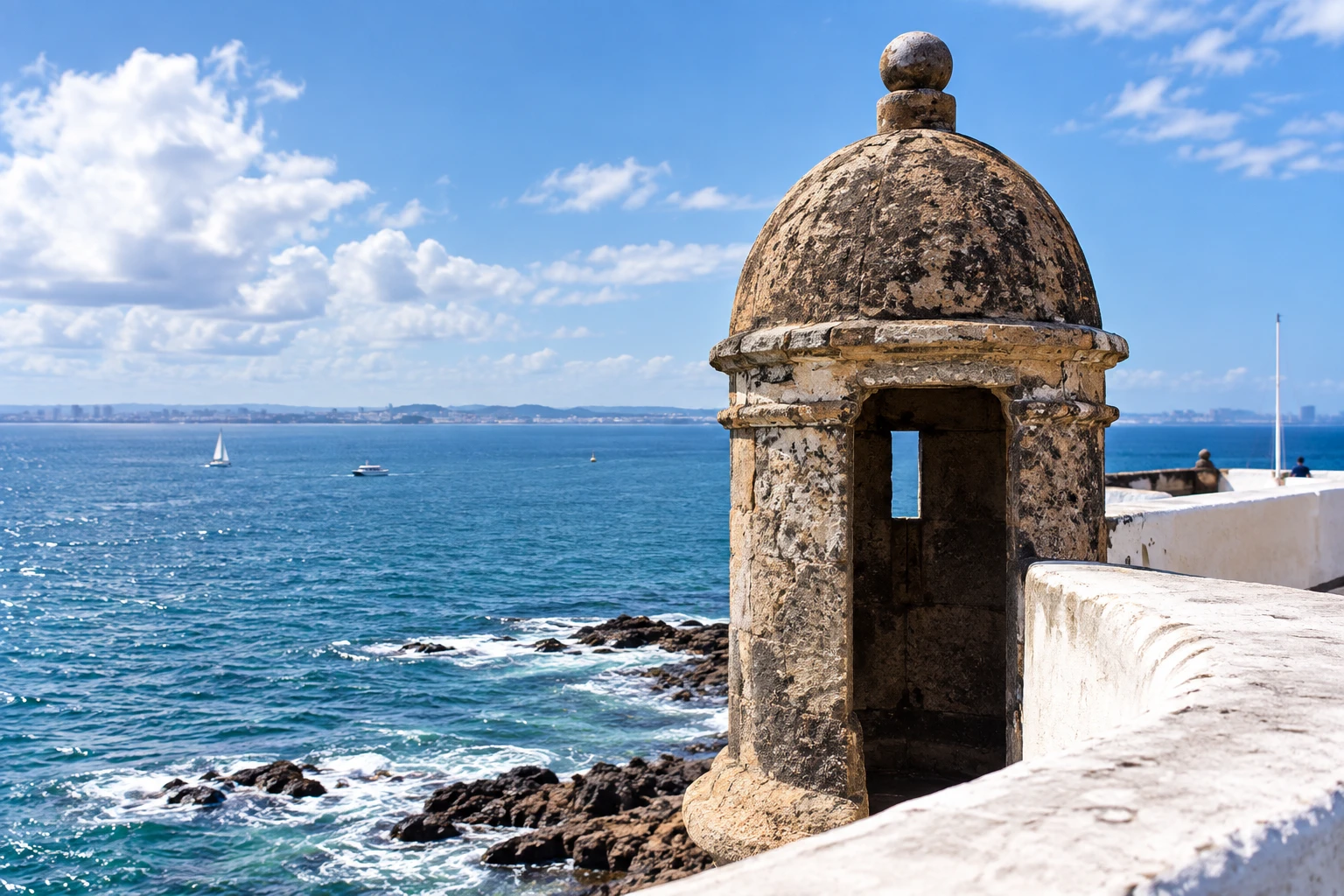
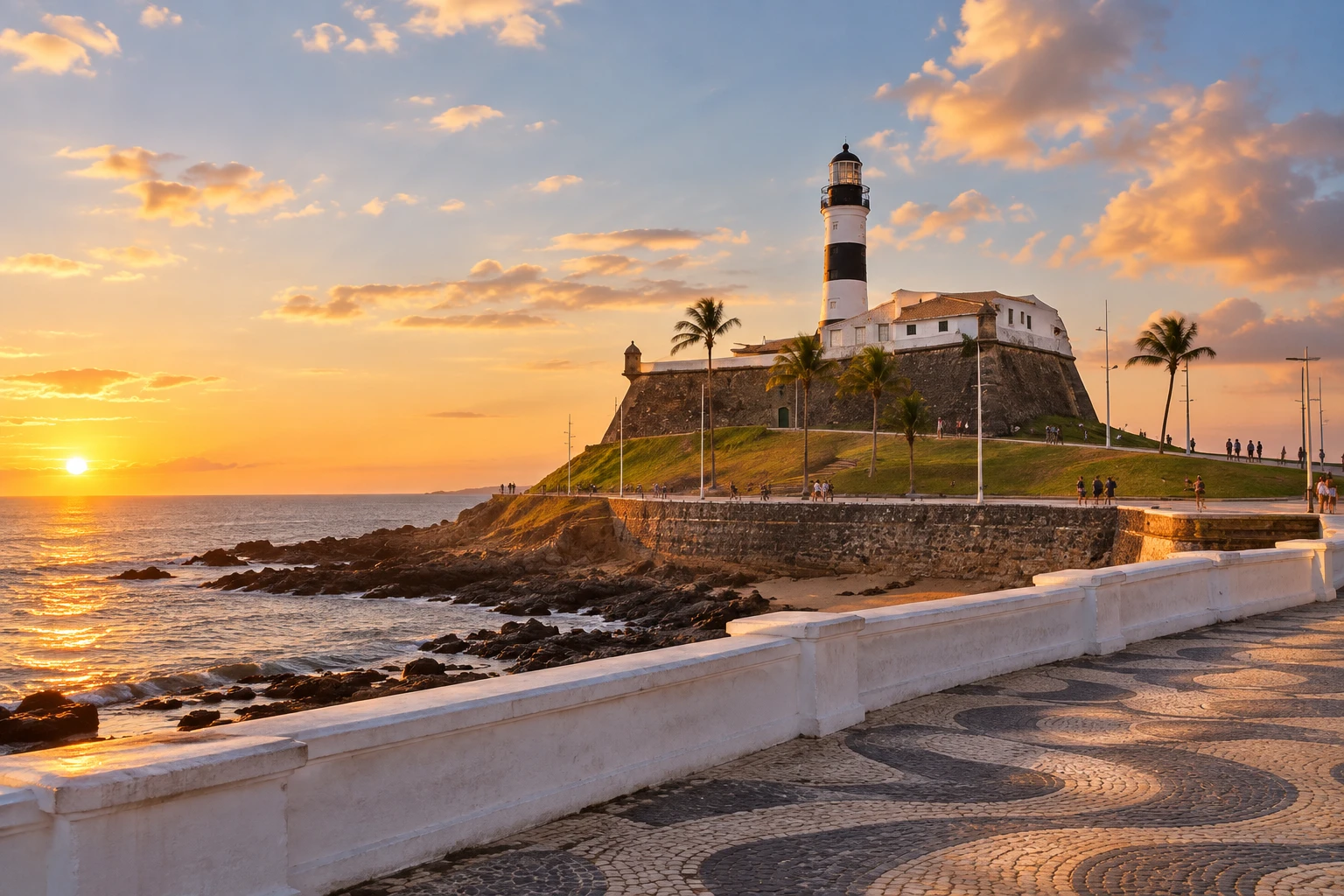
Illustrative images. The pictures in this guide are illustrations based on the real place, not photographs, and may differ from it.


A look at the place
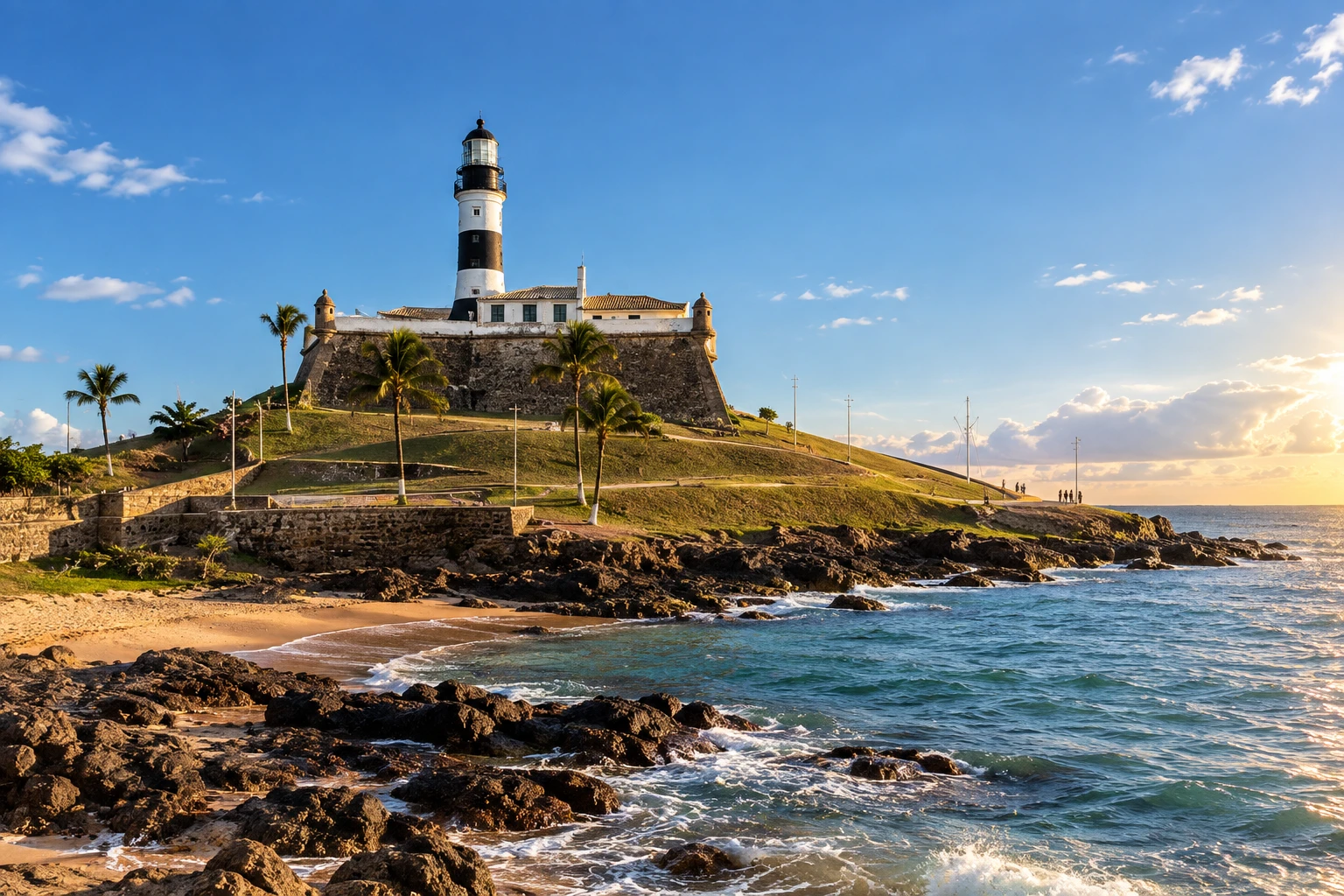
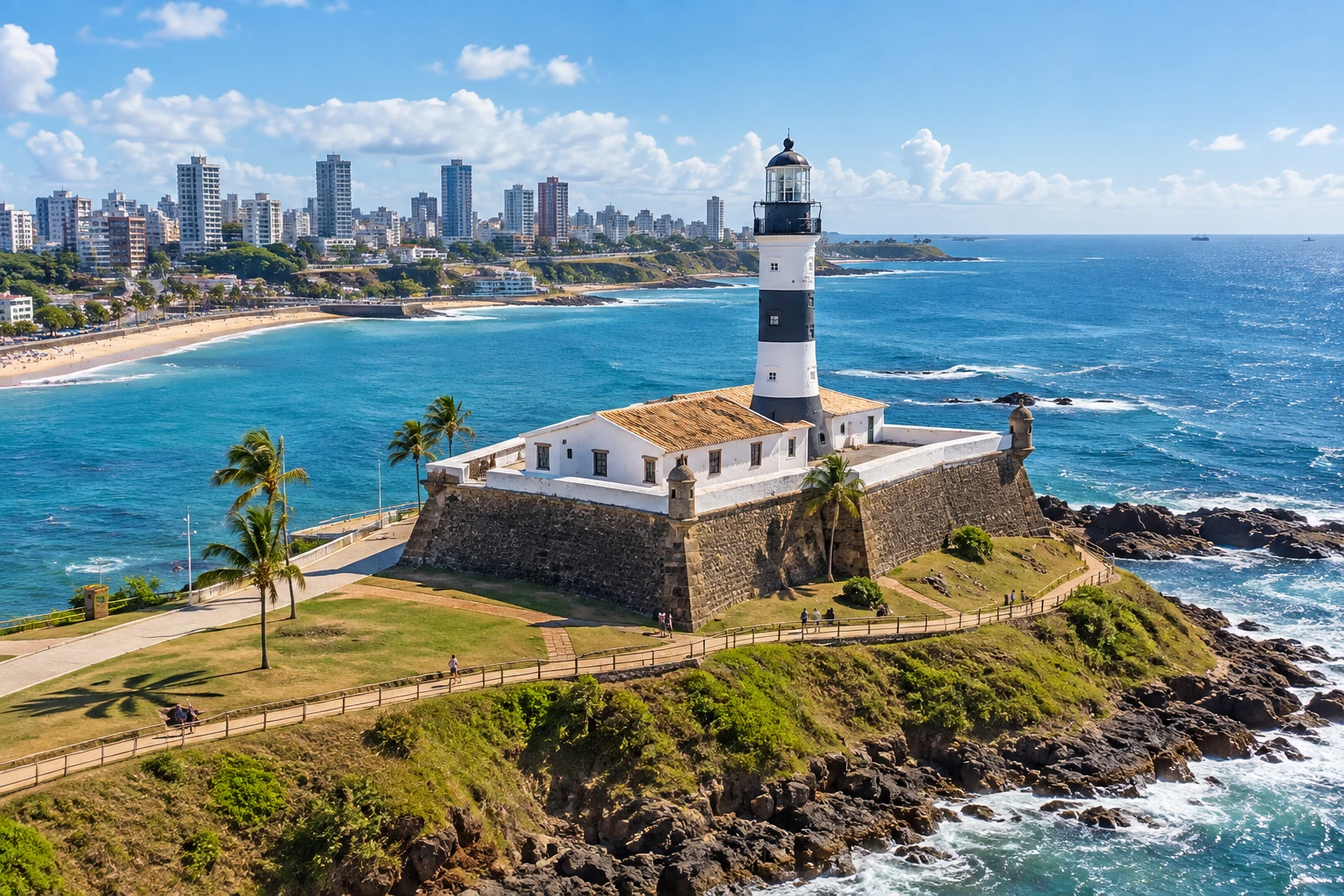
Farol da Barra e Forte de Santo Antônio in pictures
These pictures are illustrations based on the real place, not photographs. They may differ from the place.
Click the picture to enlarge it.
Discover
About Farol da Barra e Forte de Santo Antônio
The Farol da Barra is Salvador's signature landmark. It sits at the southern tip of the city, at the entrance to Baía de Todos-os-Santos, inside the Forte de Santo Antônio da Barra. The fort houses the Museu Náutico da Bahia.
The fort's current structure was built between 1696 and 1702. In 1698 it received the first lighthouse on the continent. The masonry tower you see today, with black and white stripes, was inaugurated in 1839. The fort and lighthouse have been listed by Iphan since 1938.
The museum displays navigation instruments, models and miniatures of vessels, finds from underwater archaeology and pieces from the galleon Santíssimo Sacramento, which sank off the Bahian coast. There are also exhibitions on the history and geography of the bay.
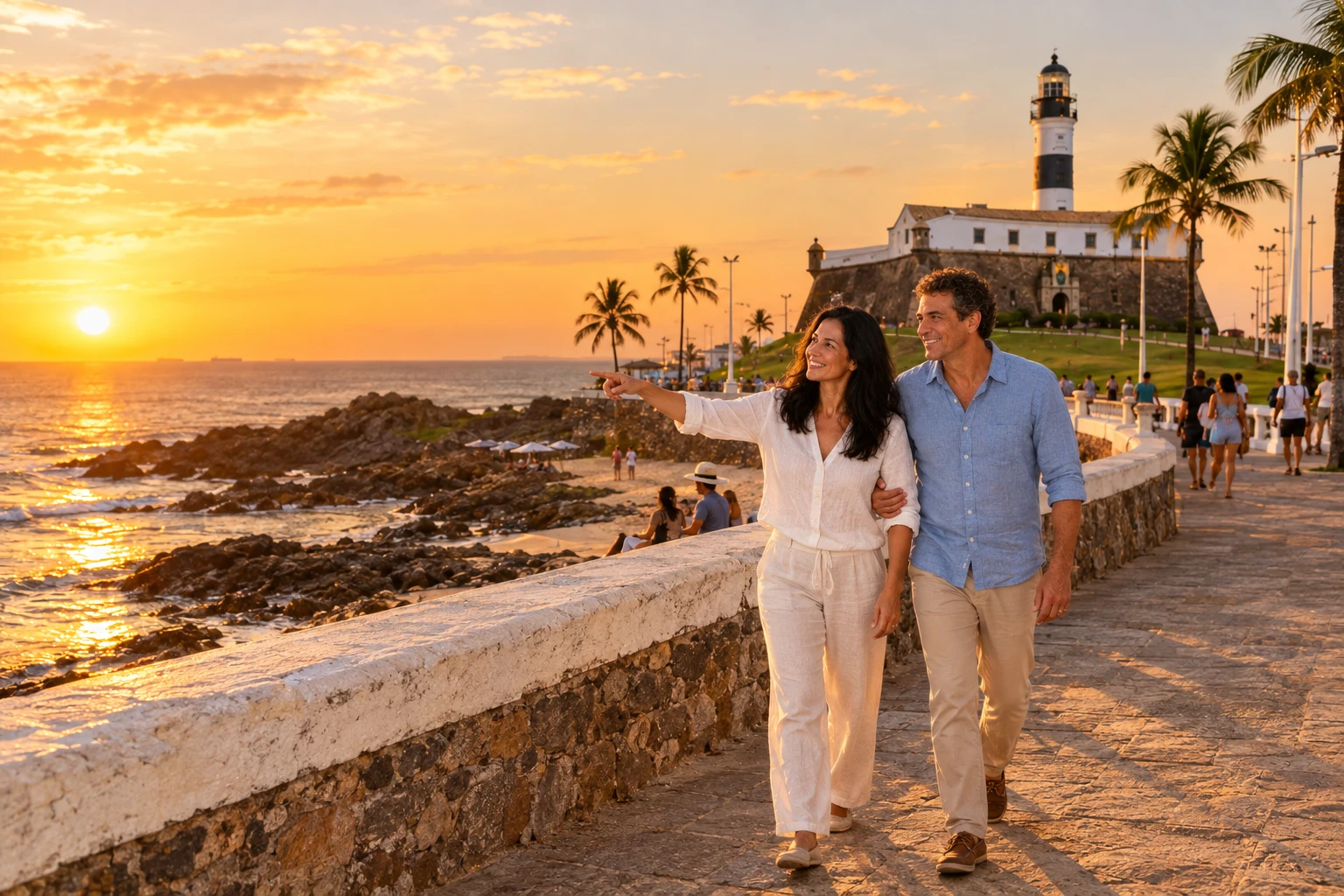
Outside, the square and the ramparts around the fort are free and become a natural viewpoint. From there you see the open sea on one side and the bay on the other. In the late afternoon, many people gather there to watch the sun set over the sea.
Before you go
Practical information
Cidade Turismo reviews its information regularly, but something may have changed. Check with the place before planning your trip.
How much time to set aside
An hour and a half is enough to see the museum at a relaxed pace and walk around the fort's ramparts.
Best time
Late afternoon, at any time of year, to watch the sunset over the sea from the square and the ramparts.
How to get there
It is at Largo do Farol da Barra, in the Barra neighborhood, on Salvador's southern waterfront. Get there by bus, taxi or ride-hailing app via Avenida Sete de Setembro, which links downtown to Barra. From Porto da Barra you can walk along the waterfront.
Tip
Arrive before sunset to visit the museum, then stay outside on the ramparts to watch the sun drop into the sea.
Official website
Travelers' photos
Farol da Barra e Forte de Santo Antônio through the eyes of those who went
Your questions
Frequently asked questions about Farol da Barra e Forte de Santo Antônio
Is there an entrance fee at the Farol da Barra?
The outdoor area, with the square and the ramparts, is free. Admission to the Museu Náutico da Bahia, inside the fort, is paid. Check prices and hours on the official website.
What is inside the Forte de Santo Antônio da Barra?
The Museu Náutico da Bahia, with navigation instruments, ship models, underwater archaeology finds and pieces from the galleon Santíssimo Sacramento.
How long does the visit take?
About an hour and a half for the museum and a walk around the ramparts. If you stay for the sunset, you will usually spend the late afternoon there.
What is the best time to go to the Farol da Barra?
Late afternoon. The sun sets over the sea, and the square around the fort becomes a big viewpoint.
Is the Farol da Barra the first lighthouse in Brazil?
Yes. In 1698 the fort received the first lighthouse on the continent. The current tower, with black and white stripes, dates from 1839.