Hazelnut walk: 5 km through the history of central Hasselt
From Visit Hasselt tourist office on Maastrichterstraat Self-guided walk 2 to 3 hours Morning or afternoon Easy, about 5 km on level ground
Look down to follow Hasselt's historical walk. Metal studs set into the pavement mark the route for about 5 km. Each bears a raised hazelnut, the city's symbol, positioned to point you in the right direction. Plaques on the facades explain the buildings, monuments, and artworks you pass.
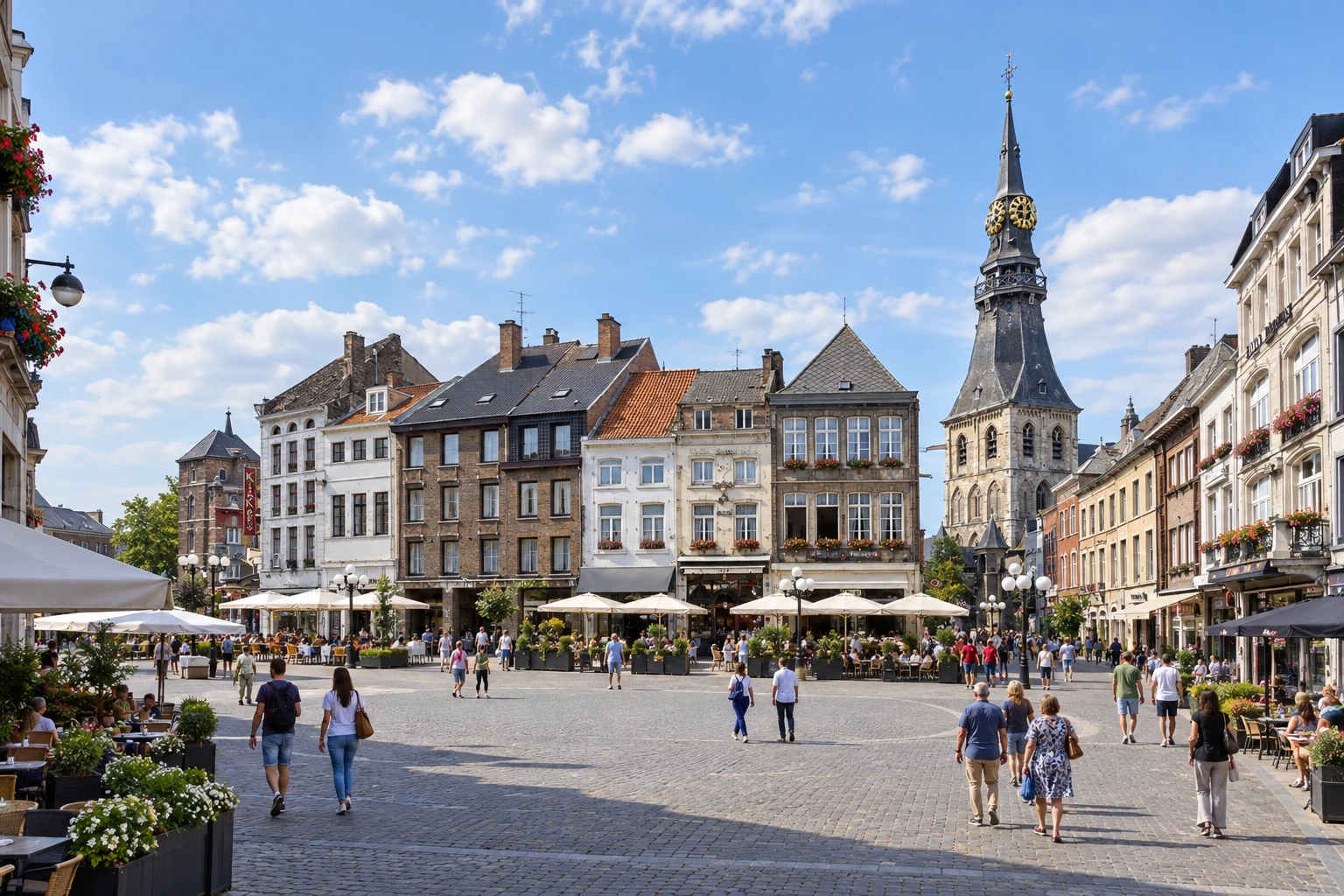
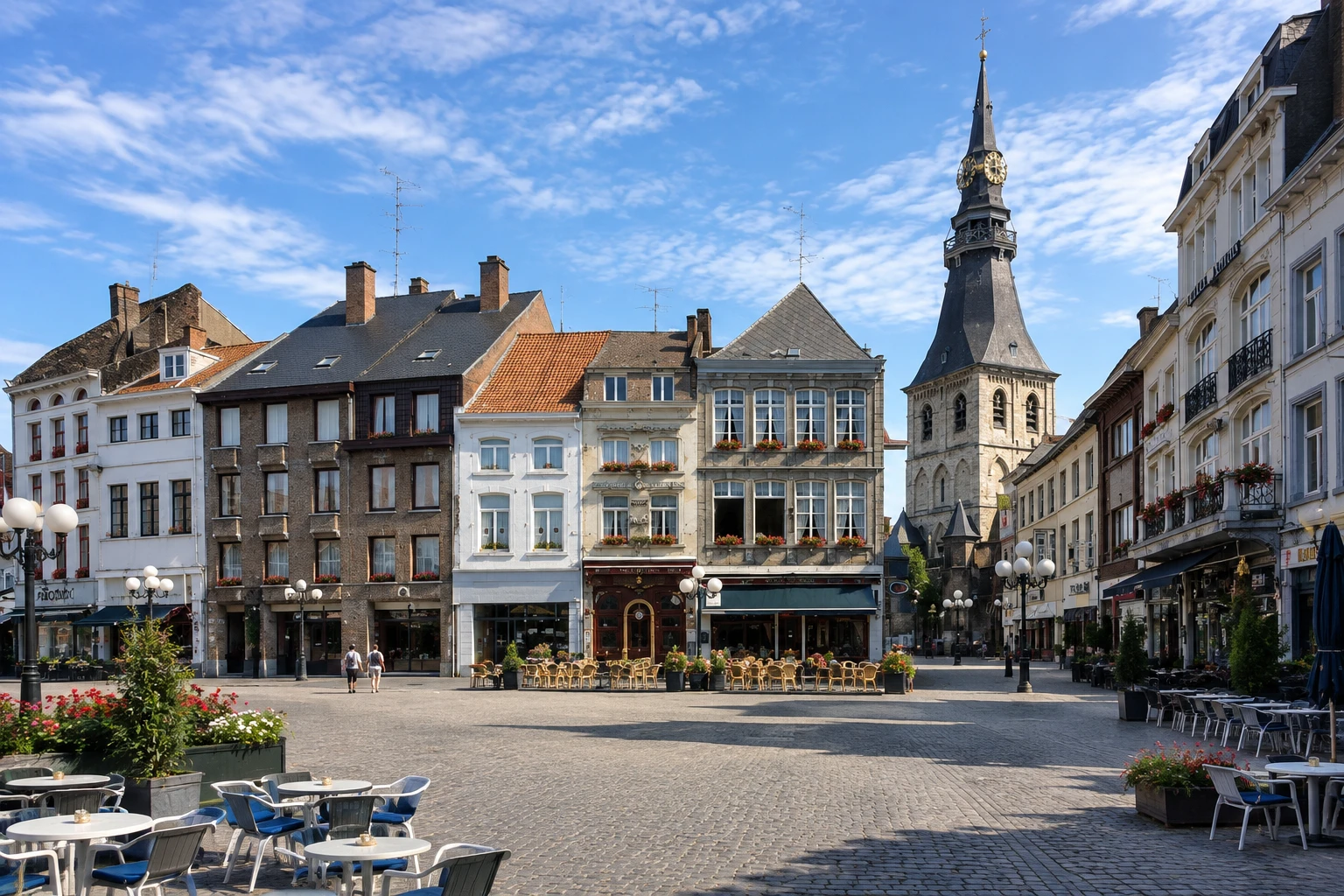
The walk takes in the places that shaped Hasselt. The Grote Markt is the main square, with the familiar statue of Hendrik and Katrien. The square around the Sint-Quintinuskathedraal is the oldest part of town. The first church stood here beside the Helbeek stream in the eighth century. The Virga Jessebasiliek appears quite suddenly between neighboring buildings. You'll also find narrow passages such as Kadettensteegje, an alley the tourist office counts among the center's hidden corners.
The whole route stays inside or beside the Groene Boulevard, the tree-lined ring around the center, so it's hard to lose your way.
For more background, buy the walking booklet at the tourist office. It includes a city map, the route, and a full description in English, French, German, and Flemish. A free map, Smaakmaker Spraakmaker, suggests individual stops to put together your own walk.
Stops: Grote Markt, Hendrik en Katrien, Sint-Quintinuskathedraal, Virga Jessebasiliek, Kadettensteegje, Groene Boulevard.
Includes: Self-guided walk with no admission charge. The tourist office sells the route booklet and distributes the Smaakmaker Spraakmaker map for free. Museums and the cathedral tower charge separately.
Tip: Start at the tourist office for a map. On Tuesday or Friday mornings, add the market on Kolonel Dusartplein. Visitors with limited mobility can book a walk with the city guides that avoids uneven paving and hills.
Best time: Year-round. Outdoor seating on Grote Markt and Zuivelmarkt is open from May to September.
Downtown churches: the cathedral, the carillon tower, and Virga Jesse
From Sint-Quintinuskathedraal On foot About 2 hours Morning or afternoon Moderate (168 steps in the tower)
Three churches a few minutes' walk apart tell the story of religious devotion in Hasselt.
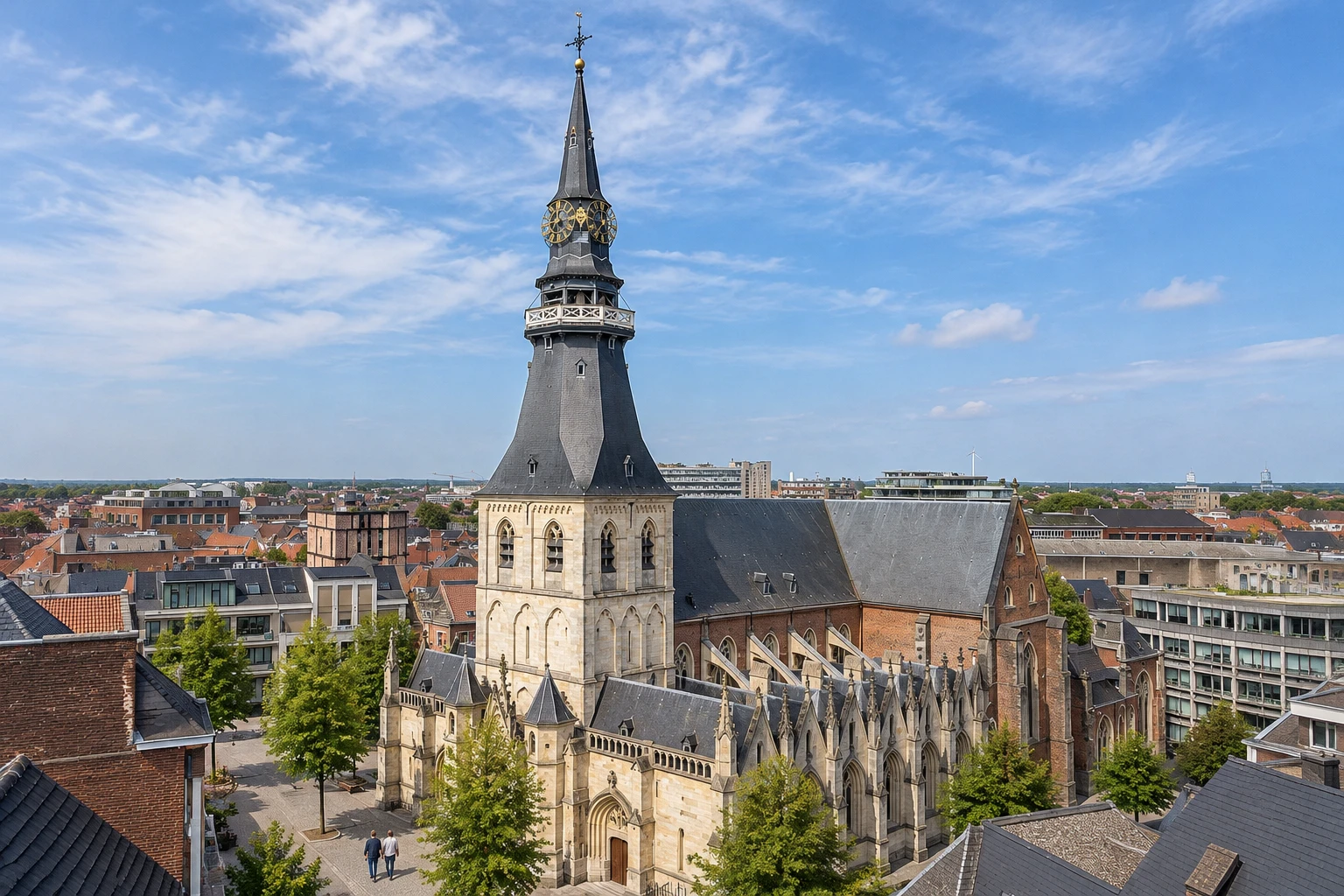
The Sint-Quintinuskathedraal (St. Quentin's Cathedral) occupies the site of the town's first church. Centuries of building produced today's Gothic structure. It became a cathedral only in 1967, when the diocese of Hasselt was created. Look inside and out for the Niehoff organ, a painting from Herkenrode Abbey, and the gargoyles. The cathedral's most famous object, a 12th-century monstrance described as the oldest known, is on display at Het Stadsmus, the city museum.
The tower is part of the visit. Its carillon plays melodies heard downtown every hour. Climb 168 steps from the ground floor for the widest view of the city, passing exhibits on bells, clocks, and carillons. Book the climb in advance, individually or as a group.
The Virga Jessebasiliek holds the 14th-century statue of the Virga Jesse, carried through decorated streets every seven years in a tradition maintained since 1682 and recognized as Flemish intangible heritage. This is the third church on the site. The original chapel partly collapsed in 1727, and a bomb nearly destroyed its successor in November 1944. It was rebuilt over the following six years. Look for the Baroque high altar by sculptor Jean Delcour and the mausoleums of two Herkenrode abbots.
The Minderbroederskerk is known as the paterkeskerk. Here lies Father Valentinus Paquay, the Heilig Paterke, who ministered in Hasselt for fifty years and was beatified in 2003. A small museum next door tells his story.
Stops: Sint-Quintinuskathedraal, Beiaardtoren, Virga Jessebasiliek, Minderbroederskerk.
Includes: The churches are free. Reserve the carillon tower climb, which may cost extra. Check current prices.
Tip: Reserve the tower ahead and visit all three churches outside Mass times. The cathedral's monstrance is at Het Stadsmus a few blocks away, closed on Mondays.
Best time: Year-round. Clear days offer the longest views from the tower.
The beguinage district: Begijnhof, Z33 and the Jenevermuseum
From Hasselt Beguinage On foot About 3 hours Afternoon Easy
On the eastern side of downtown, a single block brings together buildings from the time of the beguines, contemporary architecture, and a working distillery.
The Begijnhof was home to the beguines, women who lived in a religious community without taking nuns' vows. In Hasselt they lived and worked here until 1886. The complex became a cultural venue in 1938, and the following year its church, thirteen houses, gatehouse, and garden were protected as a monument. The church was destroyed in 1944. Its surviving tower marks the courtyard. The garden is a quiet corner of downtown, open to anyone who wants to study, rest, or simply walk through.
Z33, the house for contemporary art, design, and architecture, occupies a new building by architect Francesca Torzo that fits like a puzzle piece between the beguinage and the neighboring museum. The outer wall uses diamond-shaped bricks. Inside, Torzo plays with proportions, sightlines, and light, alternating large galleries with small spaces. Exhibitions change throughout the year, and the Z33 café terrace faces the garden.
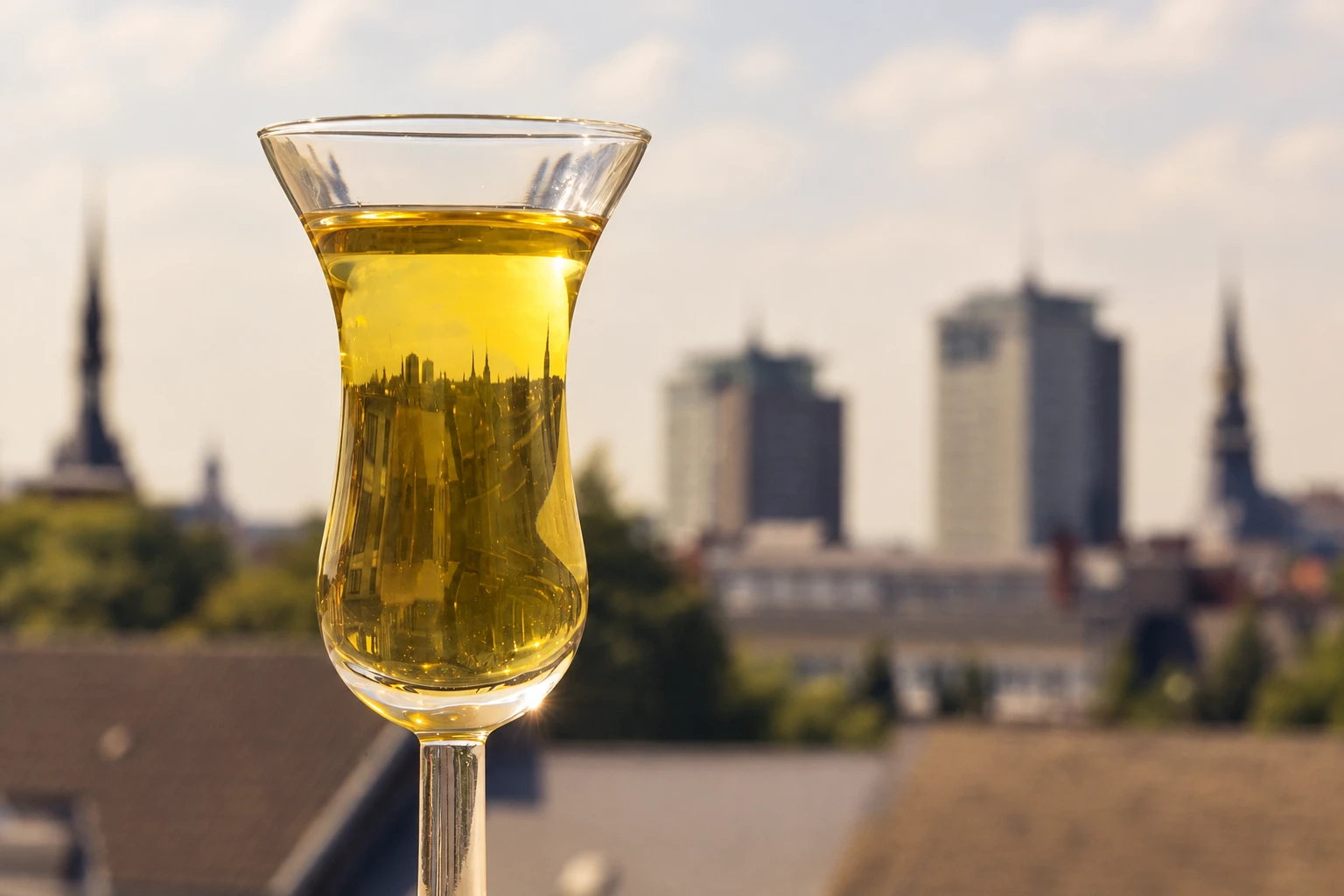
Next door, the Jenevermuseum follows jenever production from grain to glass and explores the drink's role in city life. There are stills, antique bottles, and interactive exhibits, ending in the tasting room.
Stops: Begijnhof, Z33, Jenevermuseum.
Includes: The beguinage courtyard and garden are free to enter. Z33 and the Jenevermuseum each charge admission, and both are included in the HasPas city pass. Check current rates.
Tip: Save the Jenevermuseum for last because of the tasting and try small pours. City museums usually close on Mondays.
Best time: Year-round. The Jenever Festival fills downtown on the third weekend of October.
Street art and the KunstRoute, with murals, sculptures and Villa Verbeelding
From Visit Hasselt tourist office on Maastrichterstraat On foot with a map or app 2 to 3 hours Morning or afternoon Easy (5.5 km on level ground)
More than 60 street artworks decorate Hasselt's walls, and the number keeps growing. A map highlights a selection, with tips and favorite addresses from residents. It's produced by SAGA, the local organization that develops and looks after the city's street and graphic art. A good starting point is the corner of Badderijstraat and Zuivelmarkt, with a mural by Studio Giftig.
For a broader look at art in Hasselt, follow the KunstRoute, a 5.5 km walk with three themes: street art, visual arts, and illustration. It takes in public works such as Panamarenko's Batapillo and Piet Stockmans' Het Waterpad, passes galleries and studios, and reaches Z33, the contemporary art center beside the beguinage.
The third theme leads to Villa Verbeelding, the house of illustration. Each room has a different exhibition on books and images and how words and drawings bring out the best in each other. Adults and children can both enjoy it.
The SAGA Street & Graphic Art app guides you to street and contemporary art in Hasselt and across Limburg. Follow a ready-made walking or cycling route or create your own. For company, book a two-hour guided street art tour in Flemish or English.
Stops: Zuivelmarkt, Badderijstraat, Z33, Villa Verbeelding.
Includes: This is a free, self-guided walk. Pick up the street art map and the KunstRoute guide free at the tourist office. Museums also carry the street art map. Villa Verbeelding charges separate admission and is included in the HasPas. Guided tours charge a guide fee per group. Check current prices.
Tip: Download the map or app before leaving, as the works have no signs. The art changes over time. A wall may have a new mural from one year to the next.
Best time: April to October, with long days and drier weather.
Inside the Japanese Garden: the torii gate, ceremonial house and teahouse
From Japanese Garden entrance on Gouverneur Verwilghensingel On foot or by bike from downtown About 2 hours Morning or afternoon Easy
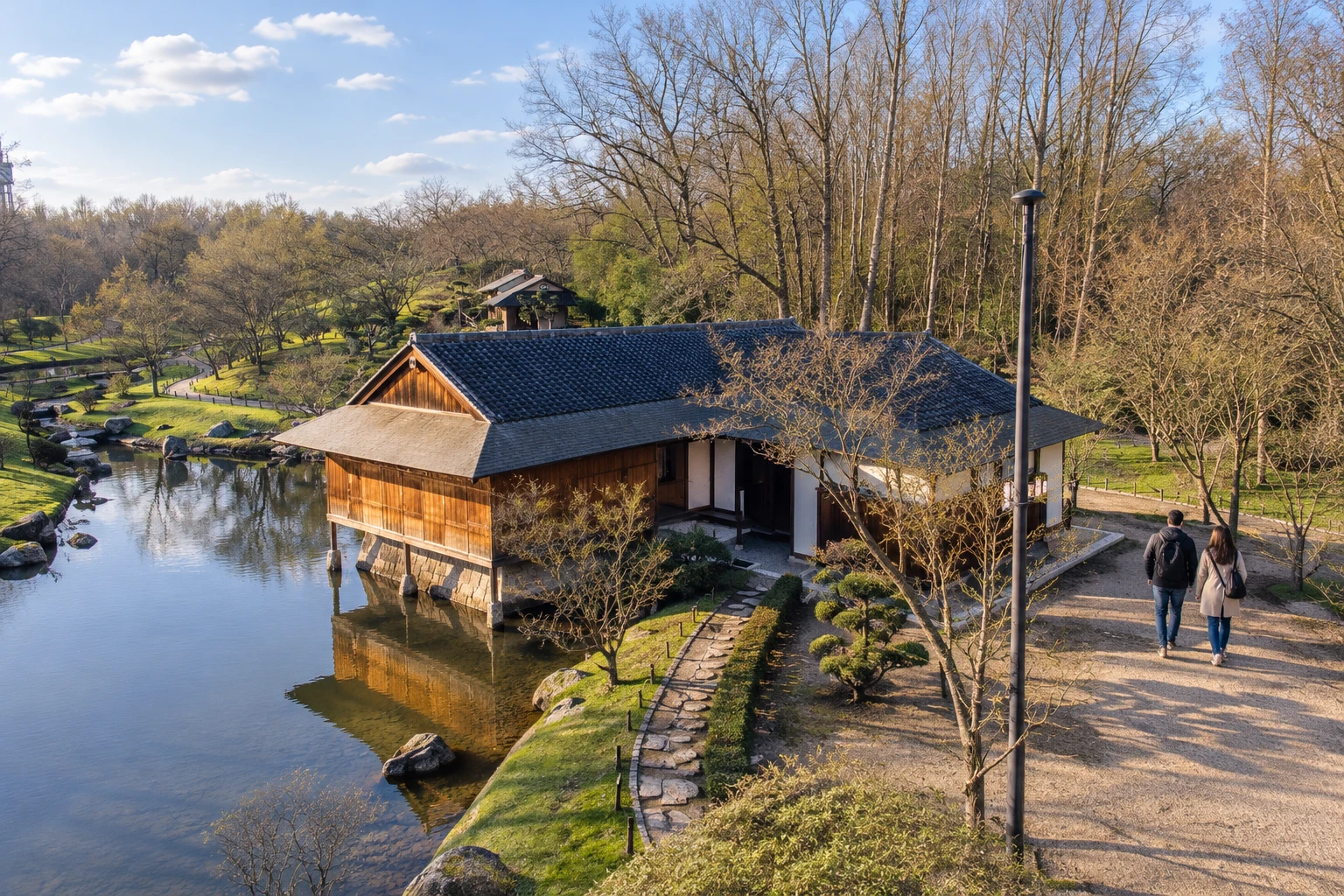
Hasselt's Japanese garden grew out of its friendship with Itami, a Japanese city known for sake. The friendship agreement was signed on April 5, 1985. On its fifth anniversary Hasselt gave Itami a tower carillon with 43 bronze bells. Itami reciprocated with the garden, described as the largest of its kind in Europe.
The visit starts before the ticket office. In the parking area, pass beneath the torii, the gate that marks the entrance to a Shinto shrine and the transition from ordinary to sacred space in Japanese tradition. Inside, a path winds between waterfalls, ponds, and stones.
The ceremonial house is called Kōrokan, meaning a place of rest and shelter for travelers. It's built entirely of natural materials: stone, wood, bamboo, clay, and paper, with clay and copper roofing tiles. The entrance hall is the only room where shoes are worn. In the living room, tatami mats cover the floor and sliding doors open toward the garden, inviting you to admire the landscape from indoors. Atop one of the artificial hills representing Japan's mountains stands the Jyushoan teahouse, simple and dimly lit, with walls thin enough to hear birdsong and the wind.
Along the way you can ring the Peace Bell, installed in 2016 to mark 150 years of relations between Belgium and Japan. A small Shinto shrine faces it. About 190 koi swim in the ponds, and you can feed them. The garden has 225 Japanese cherry trees and five ume, Japanese apricot trees whose white flowers open before the cherry blossoms.
Stops: Japanese Garden, Torii, Kōrokan, Jyushoan, Kapermolenpark.
Includes: The garden charges admission and is included in the HasPas. Workshops, tea ceremonies and festivals have their own dates. Check current rates.
Tip: The garden opens Tuesday through Sunday and closes on Mondays. On holidays it opens only in the afternoon. Weekends and blossom season get crowded. For a quieter visit, come on a weekday morning. Download the walking guide before you go.
Best time: The season runs from March through October. Cherry trees usually bloom between mid-March and April. October brings the chrysanthemum festival and fall colors.
Herkenrode Abbey, the Cistercian nuns’ enclosure and the herb garden
From Central Hasselt Bike, car or bus to Kuringen 3 to 4 hours Morning or afternoon Easy (walks from 1 km to 9.2 km)
In Kuringen, part of Hasselt and a short distance from its center, the Abdijsite Herkenrode preserves the remains of a great Cistercian complex, the first women's abbey in the historic Low Countries. Over six centuries it helped shape the region's religious, social, economic, and cultural life. Its support, for example, made it possible to dig the fishponds that now form De Wijers.
The Experience Center tells this story chronologically through the lives of the women who lived here, from periods of plenty and splendor to years of war, illness, and violence. For a lighter take, join a tour led by a guide playing Joséphine de Gondrécourt, the last abbess, who has plenty of stories to tell.
On the site of the abbey church, lost to fire about two centuries ago, stands Clausura, a weathering-steel artwork by the duo Gijs Van Vaerenbergh. The structure traces the vanished church's outline in the air. You can walk inside and look out through the steel plates.
The Herb and Inspiration Garden explores how different peoples and cultures have used plants over time. A guide can explain its design. Tree-lined avenues offer easy strolls, and four marked walks ranging from 1 km to 9.2 km lead through orchards of tall fruit trees, wet meadows, hedges, and ponds. The abbey is known as the gateway to De Wijers.
Try the apple juice produced here and the beer that bears the abbey's name.
Stops: Abdijsite Herkenrode, Clausura, Kruidentuin, Kuringen, De Wijers.
Includes: The avenues and walking paths are free. The Experience Center and herb garden charge admission. Walking maps are sold at the visitor center. Check current prices.
Tip: Bikes can be reserved for pickup at the abbey, a convenient starting point for the lakes of De Wijers. Check opening days before visiting.
Best time: April to October, with the herb garden in bloom and dry trails.


 Brazil
 Antarctica
 Argentina
 Bolivia
 Chile
 Colombia
 Ecuador
 Falkland Islands (Malvinas)
 French Guiana
 Guyana
 Paraguay
 Peru
 Suriname
 Uruguay
 Venezuela
 Austria
 Croatia
 Denmark
 Finland
 France
 Germany
 Greece
 Hungary
 Iceland
 Ireland
 Italy
 Luxembourg
 Norway
 Poland
 Portugal
 Slovakia
 Slovenia
 Spain
 Sweden
 Switzerland
 the Czech Republic
 the Netherlands
 the United Kingdom
 Turkey
 Bermuda
 Canada
 Greenland
 Mexico
 Saint Pierre and Miquelon
 the United States
 the Dominican Republic
 Japan
 Egypt
 South Africa
 Australia
 Fiji
 New Zealand
 Papua New Guinea