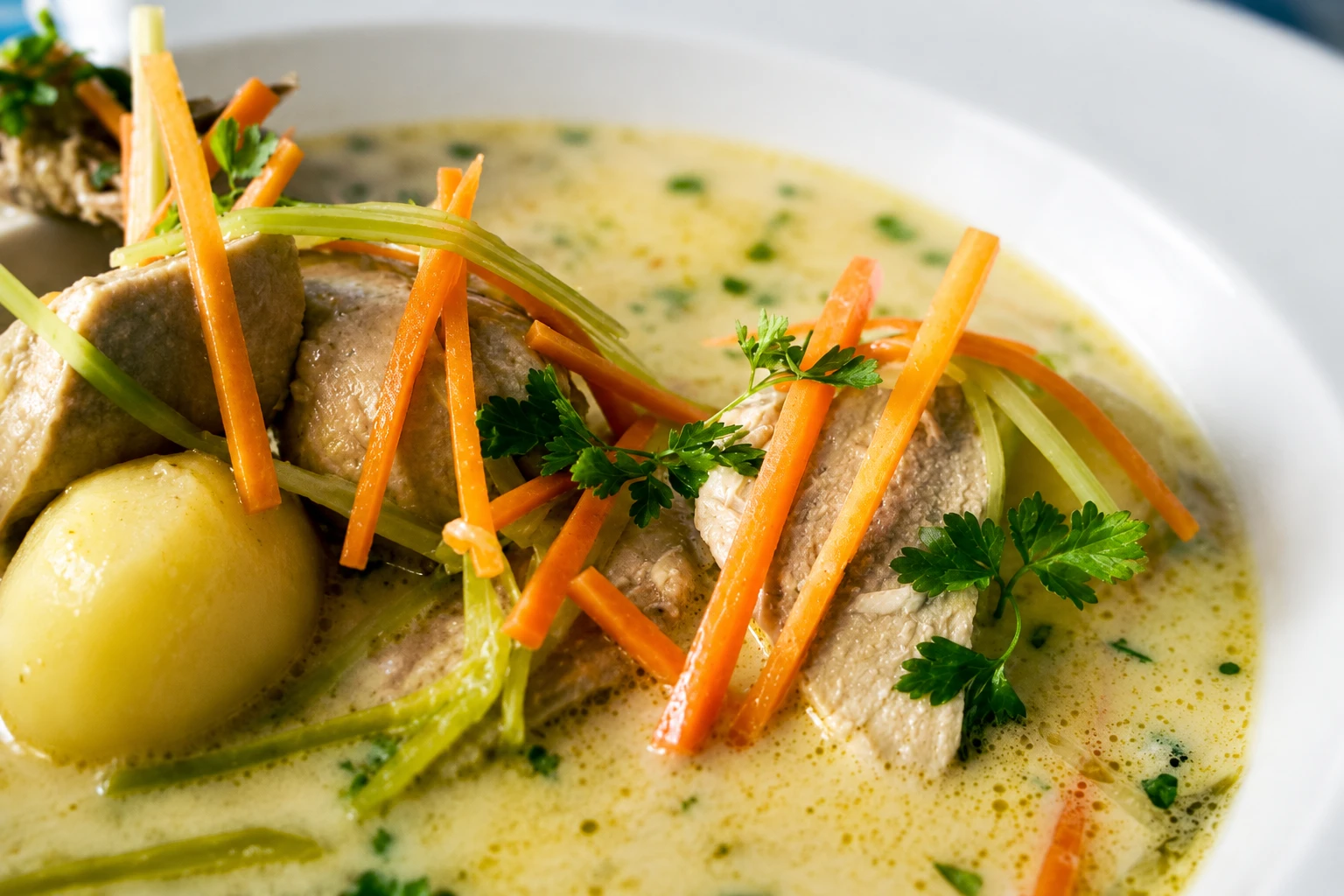
Gentse waterzooi
Creamy stew from Ghent, with a broth thickened by cream, vegetables like carrot, leek and celery, potato and chicken. The earliest versions were made with river fish, and fish still appears in some of the city’s kitchens.
Antarctica
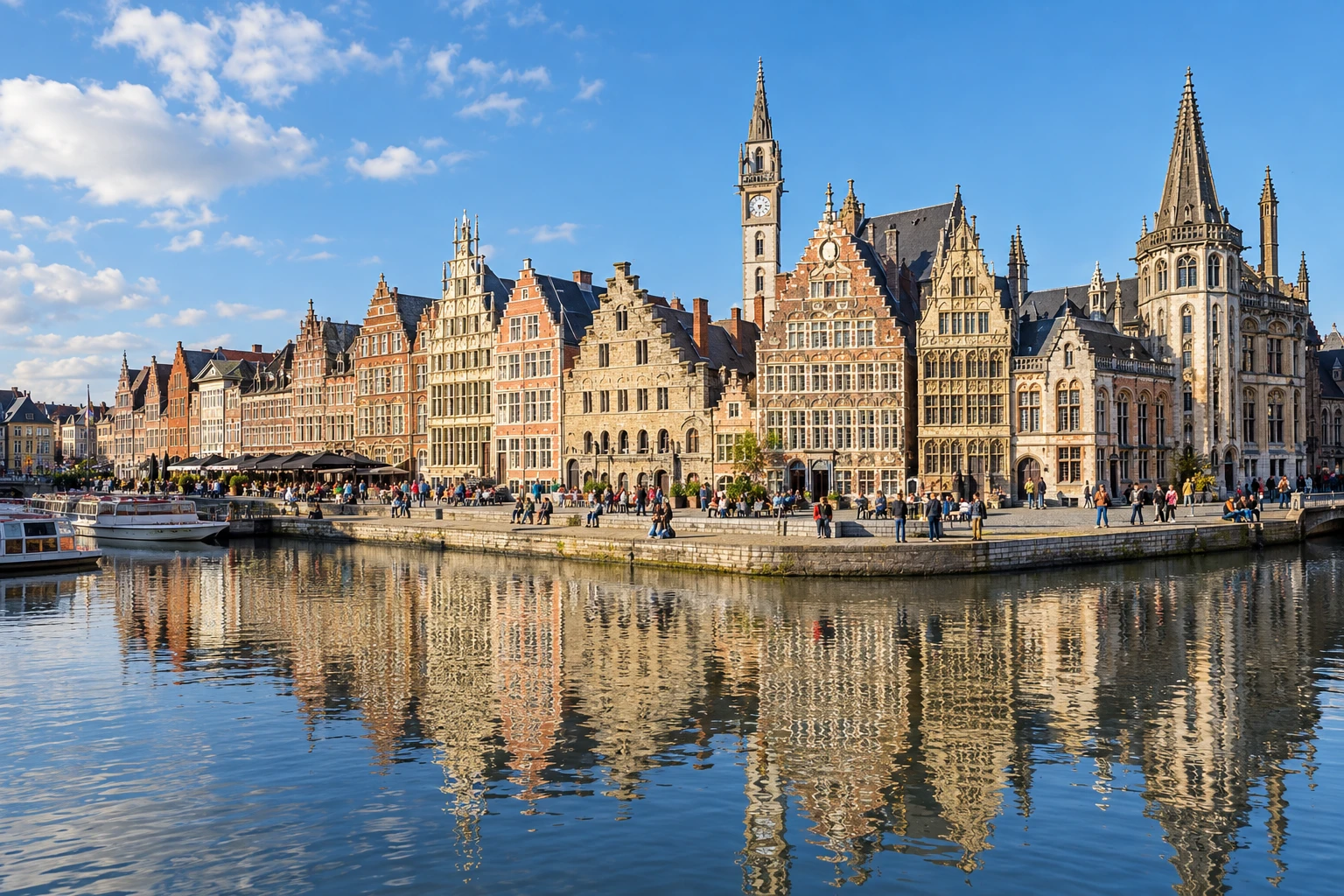
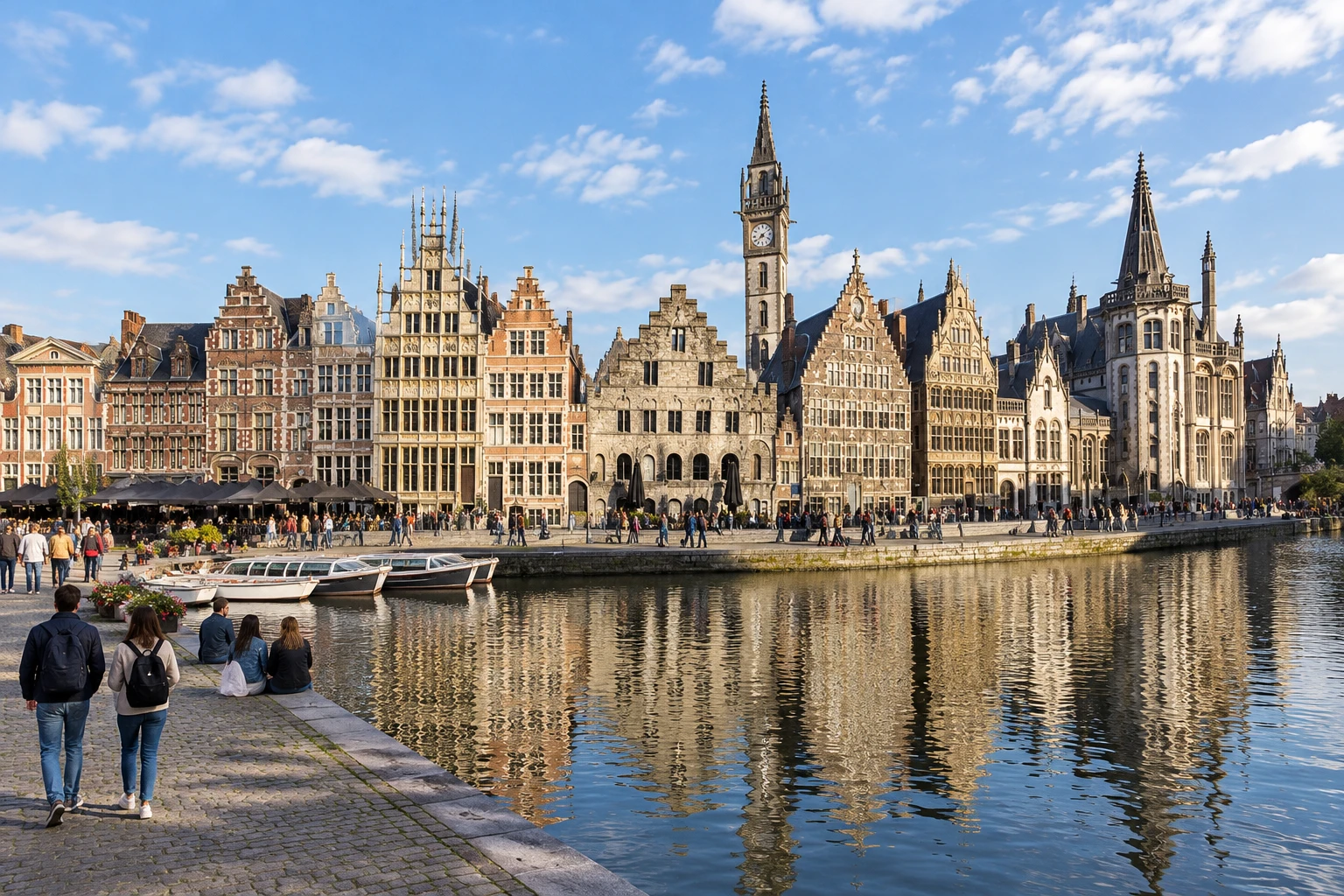
In the photo: Graslei de Gante
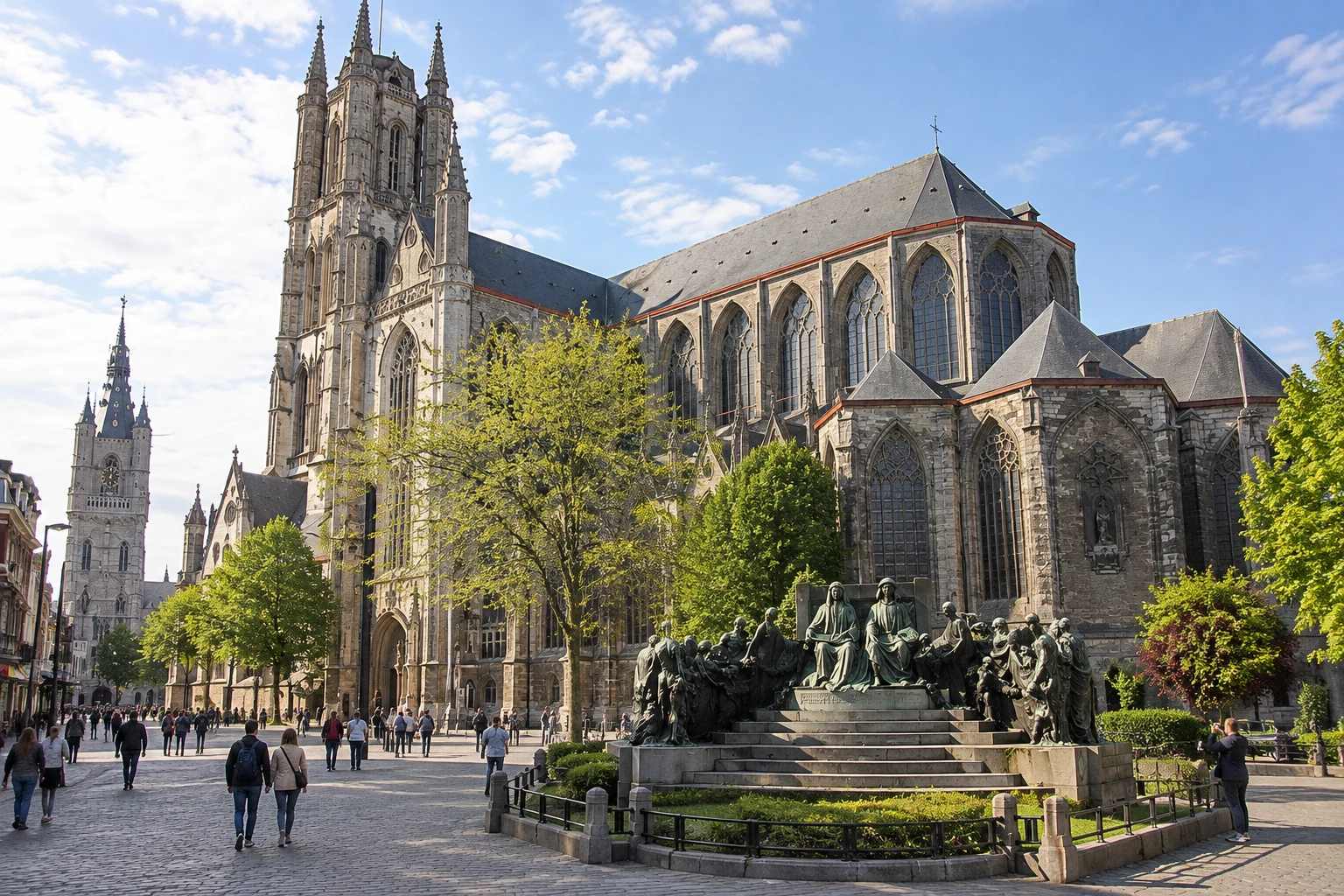
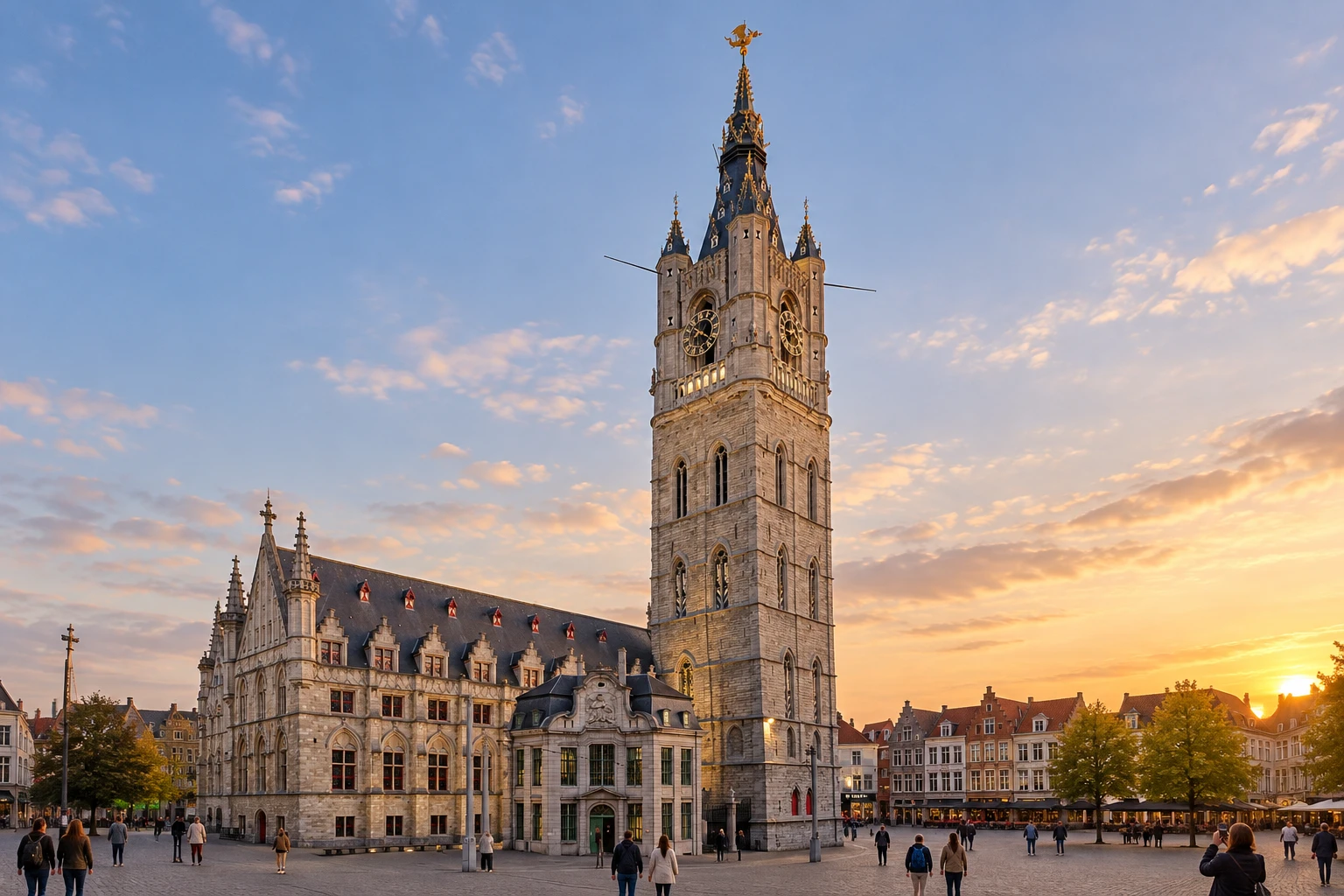
Illustrative images. The pictures in this guide are illustrations based on the real place, not photographs, and may differ from it.
The city
Gante is the capital of East Flanders, a university city at the confluence of the Leie and Escalda rivers. Flemish is spoken, the Dutch spoken in Belgium, and English is widely used. The center brings together the Sint-Baafskathedraal, with the Van Eyck altarpiece, the Belfort, the Sint-Niklaaskerk, the Gravensteen castle, the Graslei and Korenlei quays, the Patershol neighborhood and the Vrijdagmarkt. Near the station are the MSK (fine arts) and the Citadelpark.
30 places to stay in Ghent.
30 places to eat in Ghent.
The city's hotels and restaurants on the map.
how to get there · how many days · itinerary · questions
Flavors of Belgium
Festivals and events
Dates change every year: check this year's date before you travel.
The local experience
Gothic cathedral of Gante, where the altarpiece The Adoration of the Mystic Lamb by the Van Eyck brothers, completed in 1432, is displayed. It also houses a painting by Rubens and a rococo pulpit in oak and marble.
Medieval tower of 91 metres in the middle of Gante's center, with a golden dragon on top and a carillon of 53 bells. It is a UNESCO World Heritage site and offers views over the city's roofs and towers.
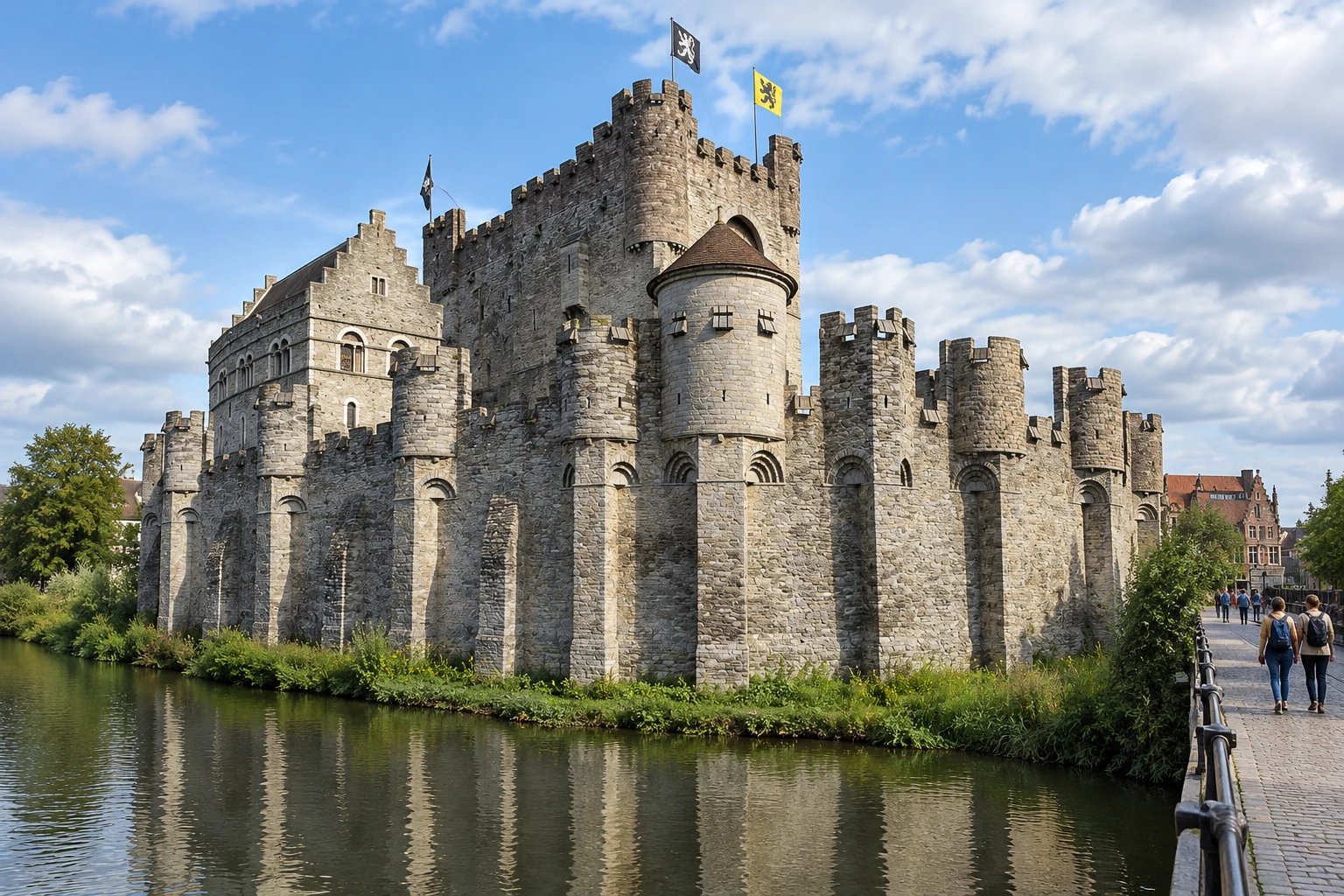
Castle of the Counts of Flanders, from 1180, surrounded by a moat fed by the river Leie. The visit goes through the keep, the courtroom halls, a collection of torture instruments and reaches the ramparts.
The two quays of Ghent's old medieval port, opposite each other on the river Leie, with guild houses, stepped gables and tables along the water. Many pleasure boats depart from there.
Before you go
Ghent – Belgium Capital
Approximate distances. Check flights and bus, train or boat schedules before you travel.
By train: Gante is about half an hour from Bruxelas and less than half an hour from Bruges, with several departures per hour. There is a direct line from Bruxelas airport to Gent-Sint-Pieters station. From there, trams 1 and 3 take you to the center in a few minutes. Connections to Brazil usually involve a stopover in another European city. Check before booking.
One day is enough to see the cathedral, the Belfort, the Gravensteen and the quays. Two days allow you to include the MSK, a boat trip, the Patershol at night and the Vrijdagmarkt without rushing. Many people stay in Gante and make day trips to Bruges or Bruxelas.
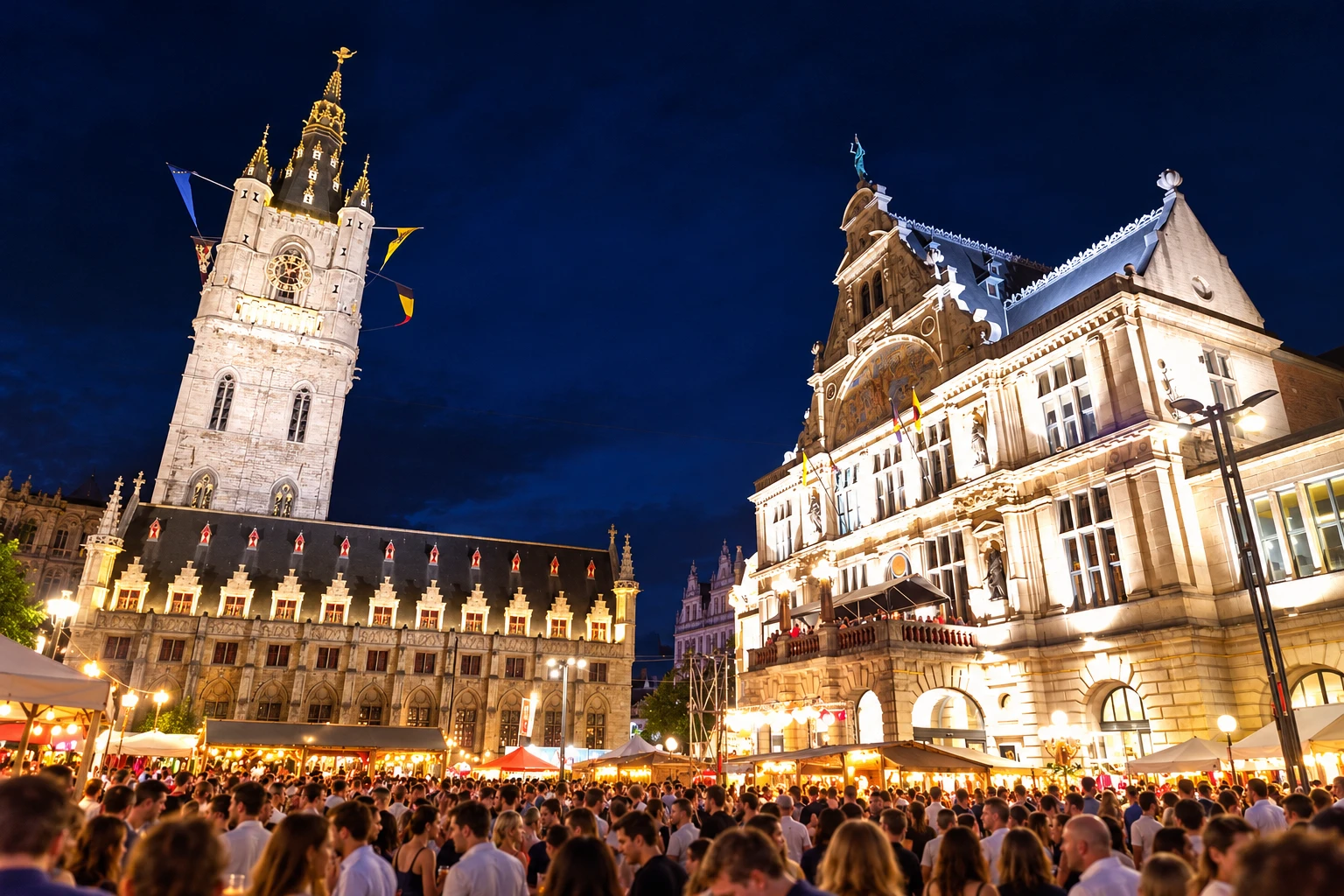
From May to September the days are long and the quayside terraces fill up. In July the Gentse Feesten take place, ten days of festivities in the center, with the city packed. From December to early January, the Christmas market usually occupies the Sint-Baafsplein, the Botermarkt and the Korenmarkt. Winter is cold, humid and it gets dark early.
The seasons shown are the most usual ones; nature doesn't always follow the calendar.
No need. The center is compact, with restricted traffic and a low-emission zone, and everything can be done on foot or by tram. Trains link Gante to Bruges, Bruxelas and Antuérpia frequently. A car only makes sense for exploring villages in East Flanders.
Suggested itinerary
Built with the places on this page. No rush: it's paced so you have time to see them.
Arrive early at the Sint-Baafskathedraal to see the Lam Gods in the visitor center, with a timed entry. Then cross the square and climb the Belfort to see the center from above.
Pass by the Sint-Niklaaskerk at the Korenmarkt and head to the Gravensteen with the audio guide. On the way out, walk through the lanes of the Patershol and along the Kraanlei to the Vrijdagmarkt.
Take a boat tour departing from Graslei or Korenlei and then go up onto the Sint-Michielsbrug for the photo of the three aligned towers.
Return to Patershol to dine at one of the neighborhood's restaurants and finish with a walk along the lit Graslei.
Day 1
Start at the Sint-Baafskathedraal, with the altarpiece and the augmented-reality route. Then climb the Belfort and see the Roland bell in the square next door.
Enter the Sint-Niklaaskerk on the Korenmarkt and walk to the Gravensteen for the full visit, finishing on the walls.
Go down to the quays, cross the Grasbrug and the Sint-Michielsbrug, and sit on the Graslei low wall, as the locals do.
Dine in Patershol, with a reservation, and return via the Kraanlei to see the façades reflected in the Leie.
Day 2
If it's Friday or Saturday, see the Vrijdagmarkt market. Pass by Grootkanonplein to see the Dulle Griet and explore the shops on Serpentstraat.
Head to the Museum voor Schone Kunsten, with works by Bosch, Rubens and Ensor, and walk through Citadelpark. Those who like contemporary art can continue to S.M.A.K., opposite.
Return to the center and take the boat tour on the Leie, which passes by the Gravensteen and the back of Patershol.
Walk from the Korenmarkt to the Sint-Baafsplein to see the three towers lit up and try a Belgian beer at a café on the Vrijdagmarkt.
Check before you go. Opening hours and days change, and places may close for renovations, holidays or events. This itinerary is a suggestion from Cidade Turismo, not a commitment: plan yours by checking directly with each place you intend to visit.
Before you go
You can do both: they're less than half an hour apart by train. Gante is larger, university-centered and has nightlife, and has the Lam Gods and the Gravensteen. Bruges is smaller and more geared to tourism. Many travelers sleep in Gante and visit Bruges in a day.
Trams 1 and 3 depart from in front of the station and reach the center in a few minutes, running frequently. On foot it's about 2 km to the Korenmarkt, roughly a 30-minute walk.
Flemish, as the Dutch spoken in Belgium is called. Signs and menus are in Flemish, but English is widely used in shops and museums. French is less common than in Brussels.
For those planning to visit several paid attractions in one or two days, it usually pays off. It includes entries such as the Belfort, the Gravensteen and museums, as well as city public transport. The cathedral's altarpiece requires a timed reservation. Compare with your itinerary before buying.
In July, for ten days, starting on the Friday before the third Sunday of the month. The entire center becomes a stage for concerts and street theatre, and accommodations fill up early.
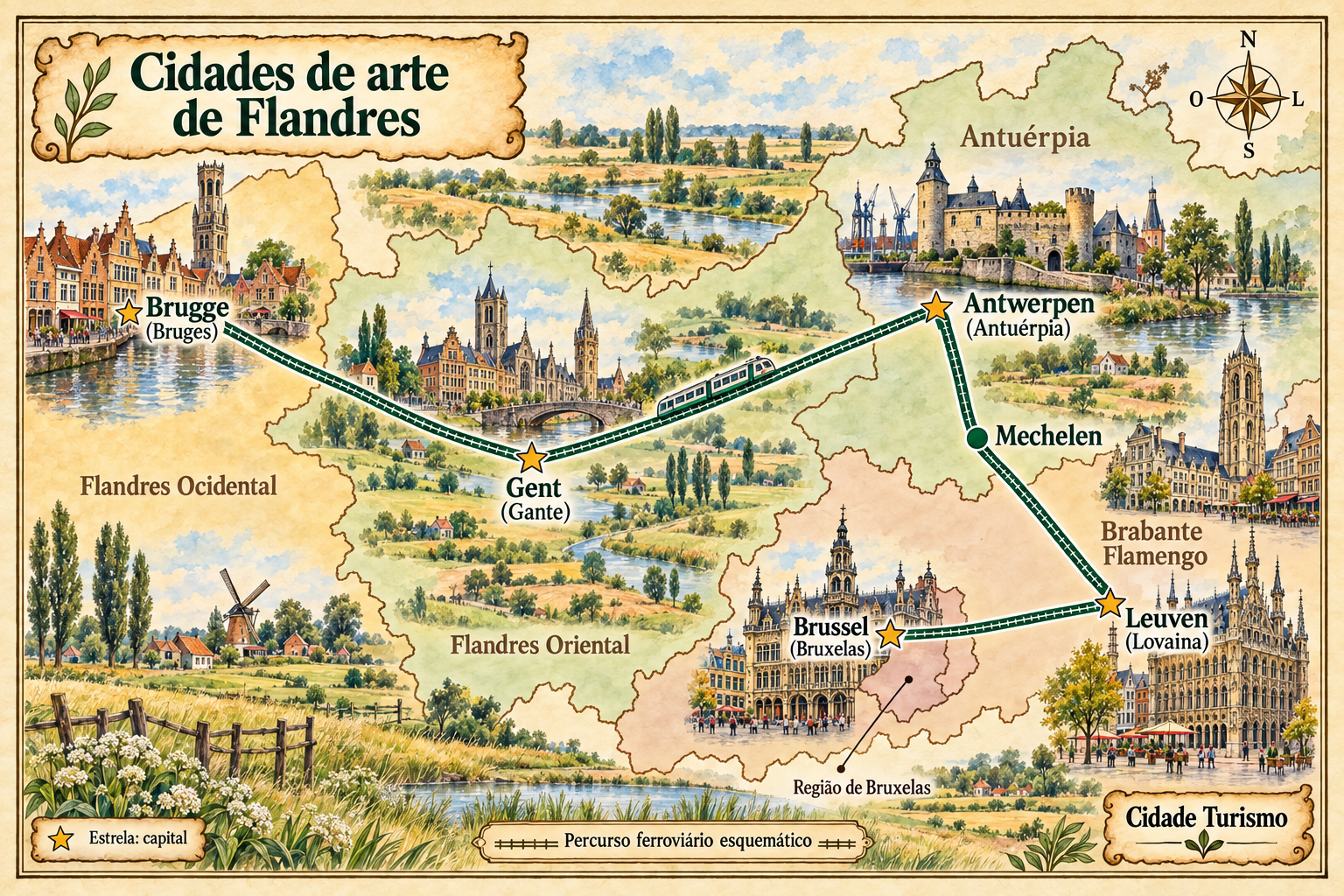
Routes in Belgium
Six historic cities linked by train: Brussels, Leuven, Mechelen, Antwerp, Ghent and Bruges, with Flemish painting, cathedrals and medieval centres less than an hour apart.