Square
Market Square
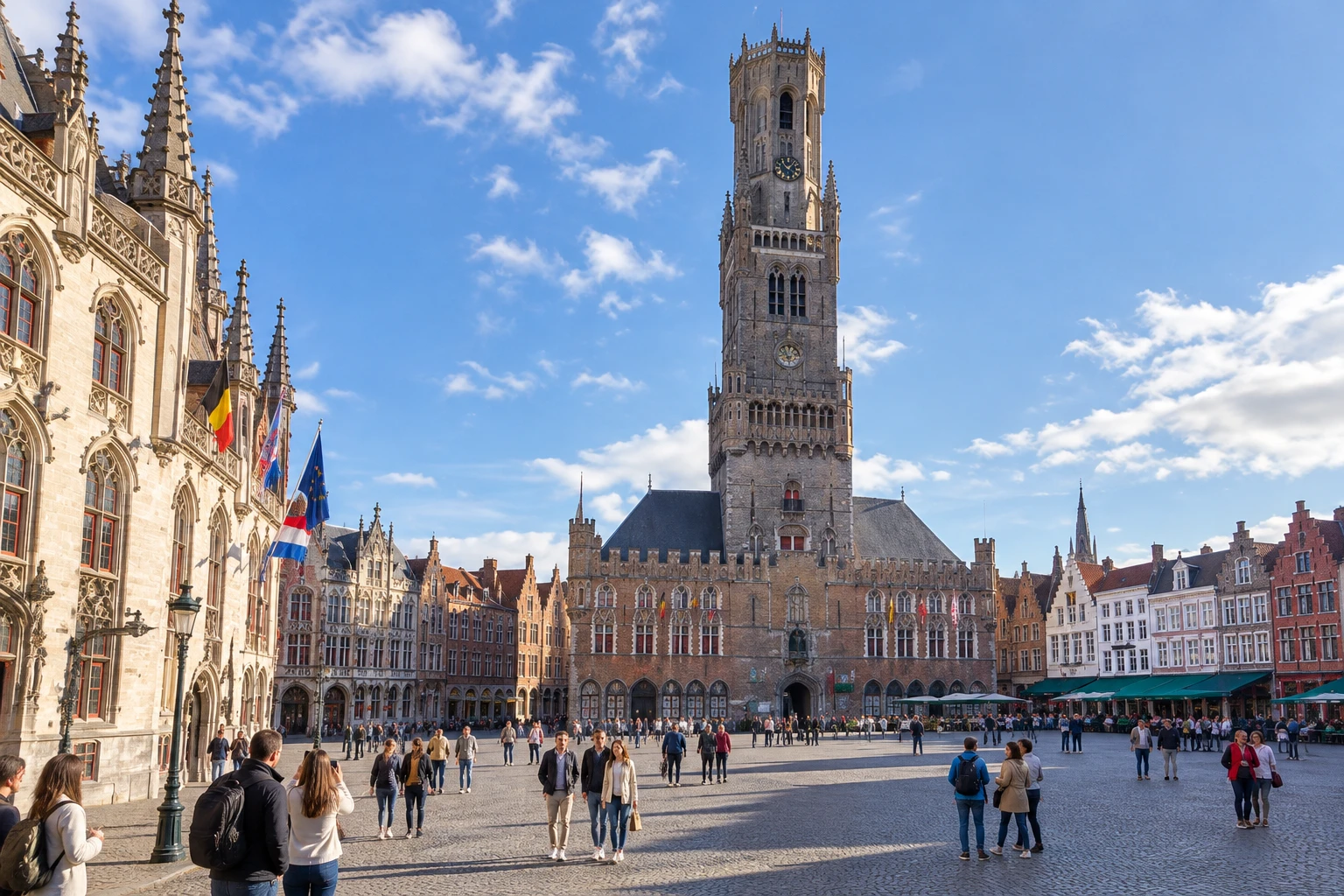
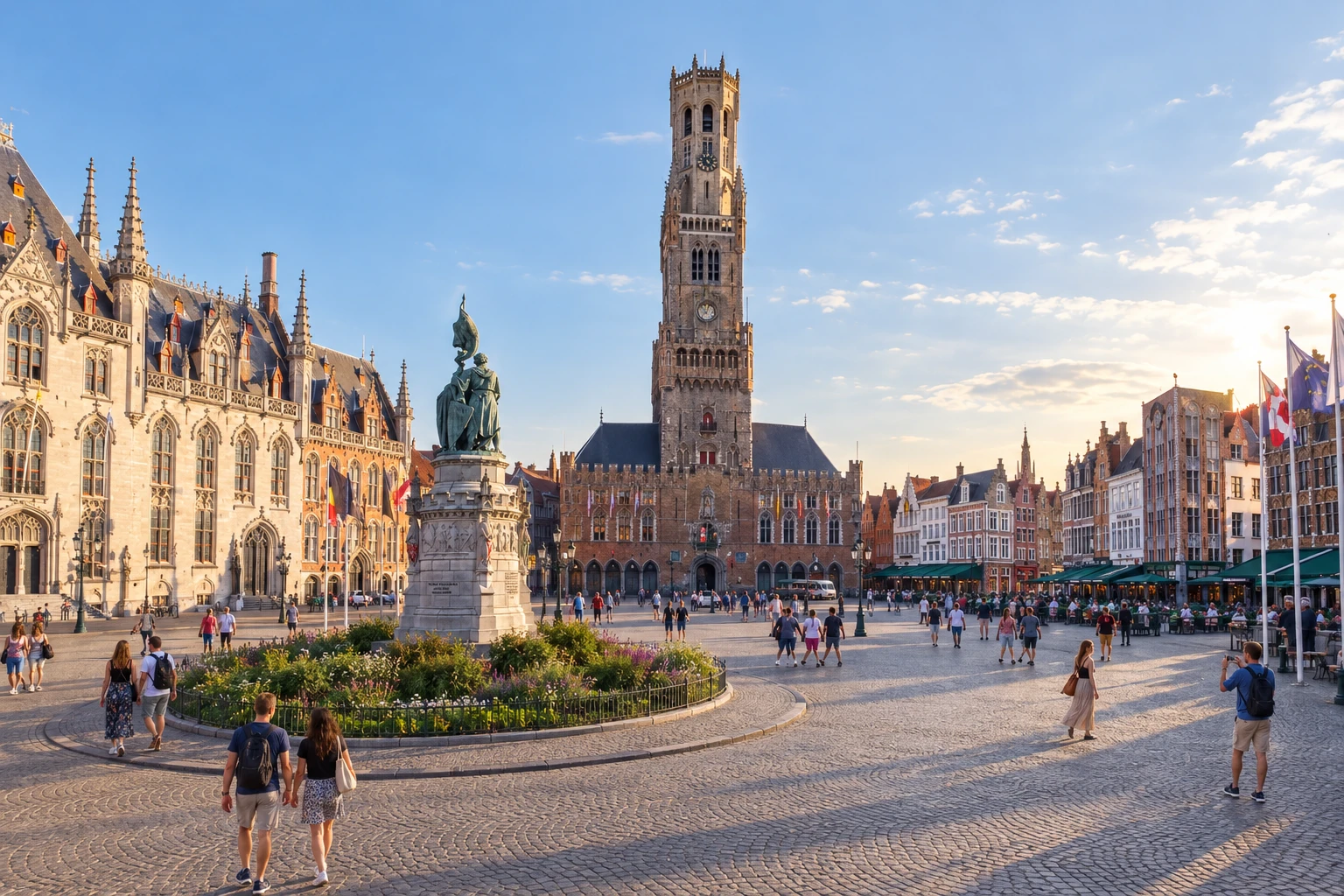
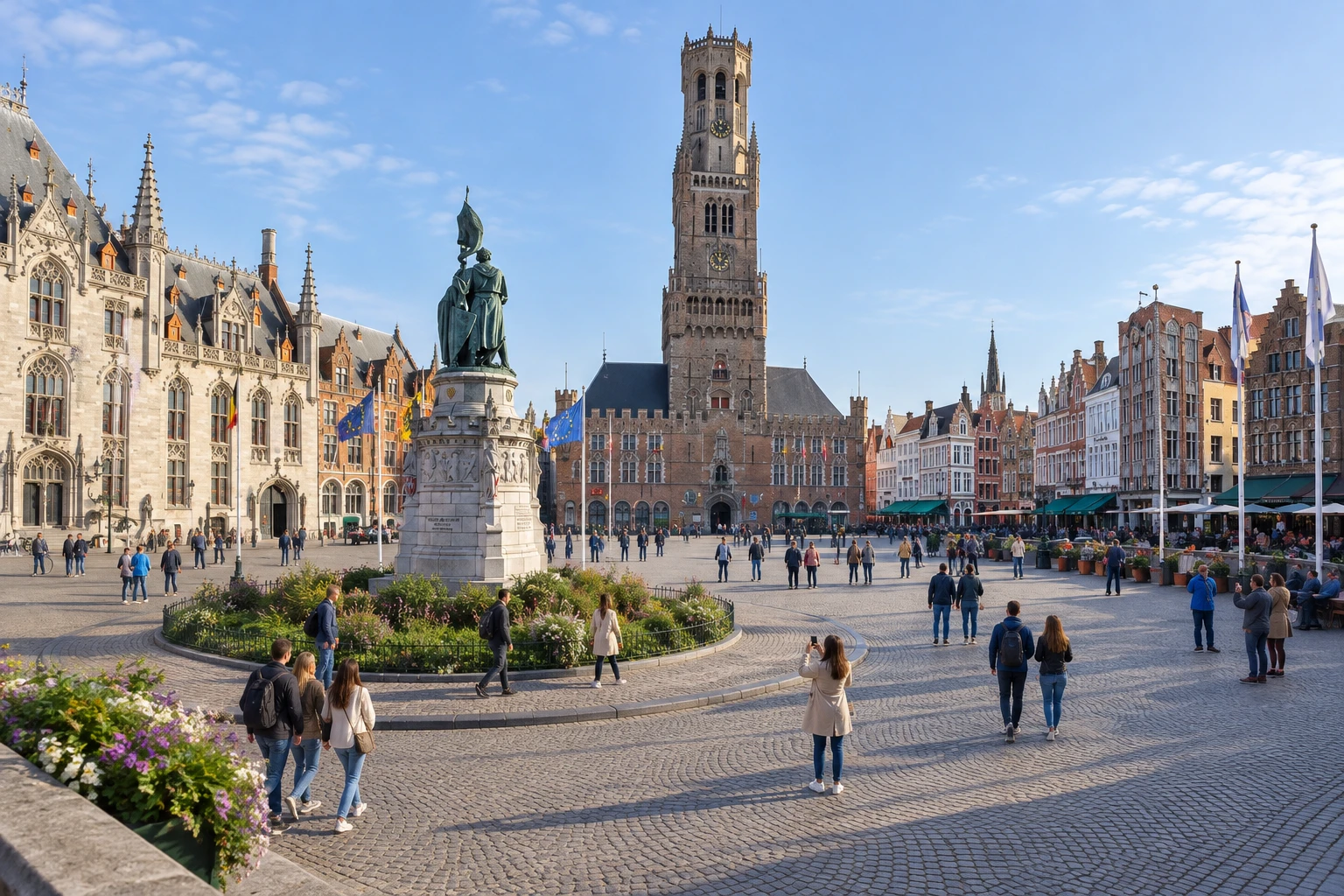
The central square of Bruges, lined with houses with stepped gables, overlooked by the Belfort and the neo-Gothic provincial palace. Starting point for nearly all walking tours.

 Search
 Brazil
 Antarctica
 Argentina
 Bolivia
 Chile
 Colombia
 Ecuador
 Falkland Islands (Malvinas)
 French Guiana
 Guyana
 Paraguay
 Peru
 Suriname
 Uruguay
 Venezuela
 Albania
 AustriaBelgium
 Croatia
 Denmark
 Finland
 France
 Germany
 Greece
 Hungary
 Iceland
 Ireland
 Italy
 Luxembourg
 Norway
 Poland
 Portugal
 Slovakia
 Slovenia
 Spain
 Sweden
 Switzerland
 the Czech Republic
 the Netherlands
 the United Kingdom
 Turkey
 Bermuda
 Canada
 Greenland
 Mexico
 Saint Pierre and Miquelon
 the United States
 the Dominican Republic
 JapanTurkey
 Egypt
 South Africa
 Australia
 Fiji
 New Zealand
 Papua New Guinea
West Flanders
16 places to visit Bruges (Belgium), chosen by the Cidade Turismo guide.
Illustrative images. The pictures in this guide are illustrations based on the real place, not photographs, and may differ from it.
To start
One by one
The central square of Bruges, lined with houses with stepped gables, overlooked by the Belfort and the neo-Gothic provincial palace. Starting point for nearly all walking tours.
13th-century tower on the Markt, 83 metres high with 366 steps to the top. Along the way you pass the medieval treasury room and the carillon of 47 bells; from up there you can see the whole city.
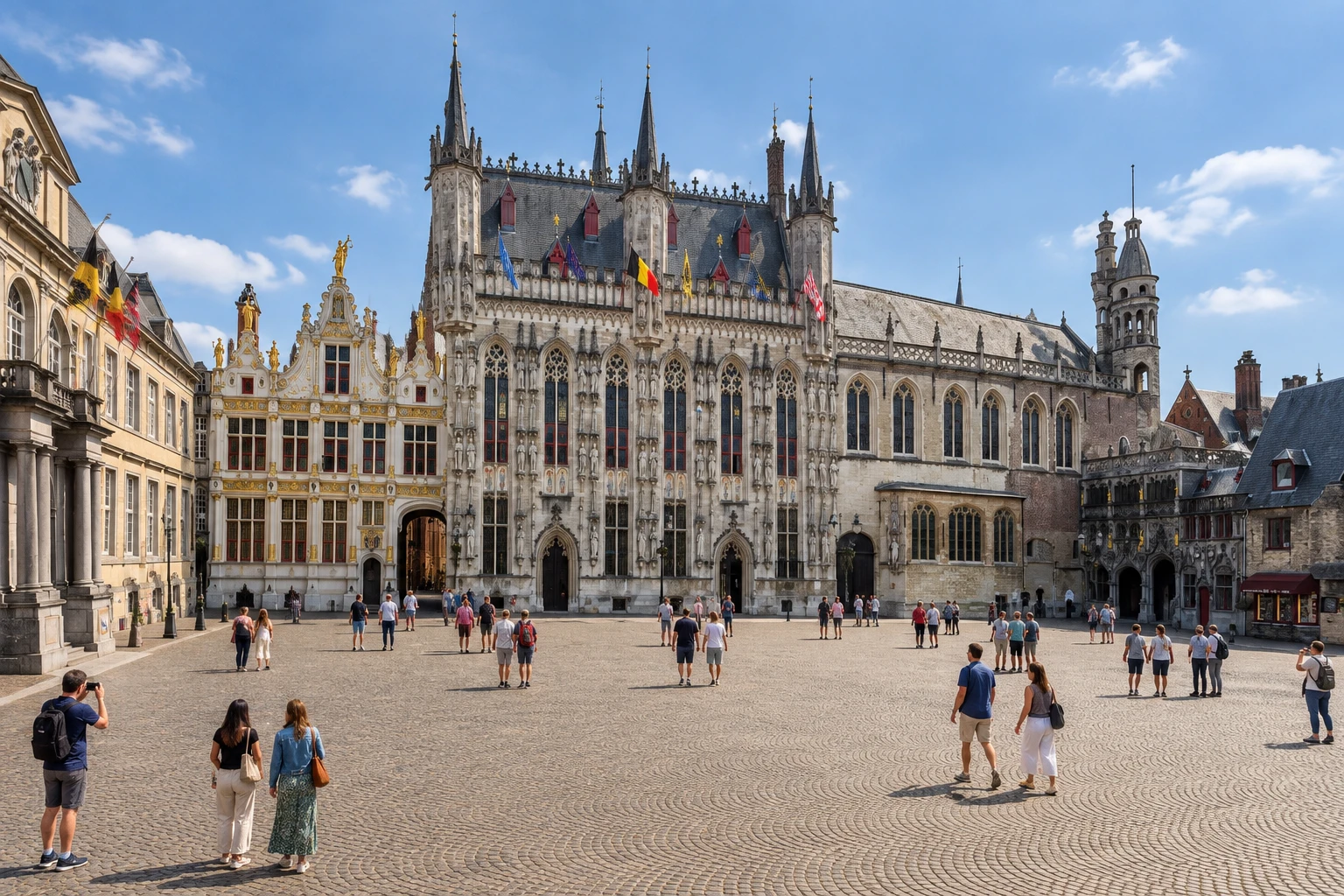
Square next to the Markt where Bruges was born, with the Gothic town hall, the former Brugse Vrije courthouse and the Basílica do Sangue Sagrado at one corner.
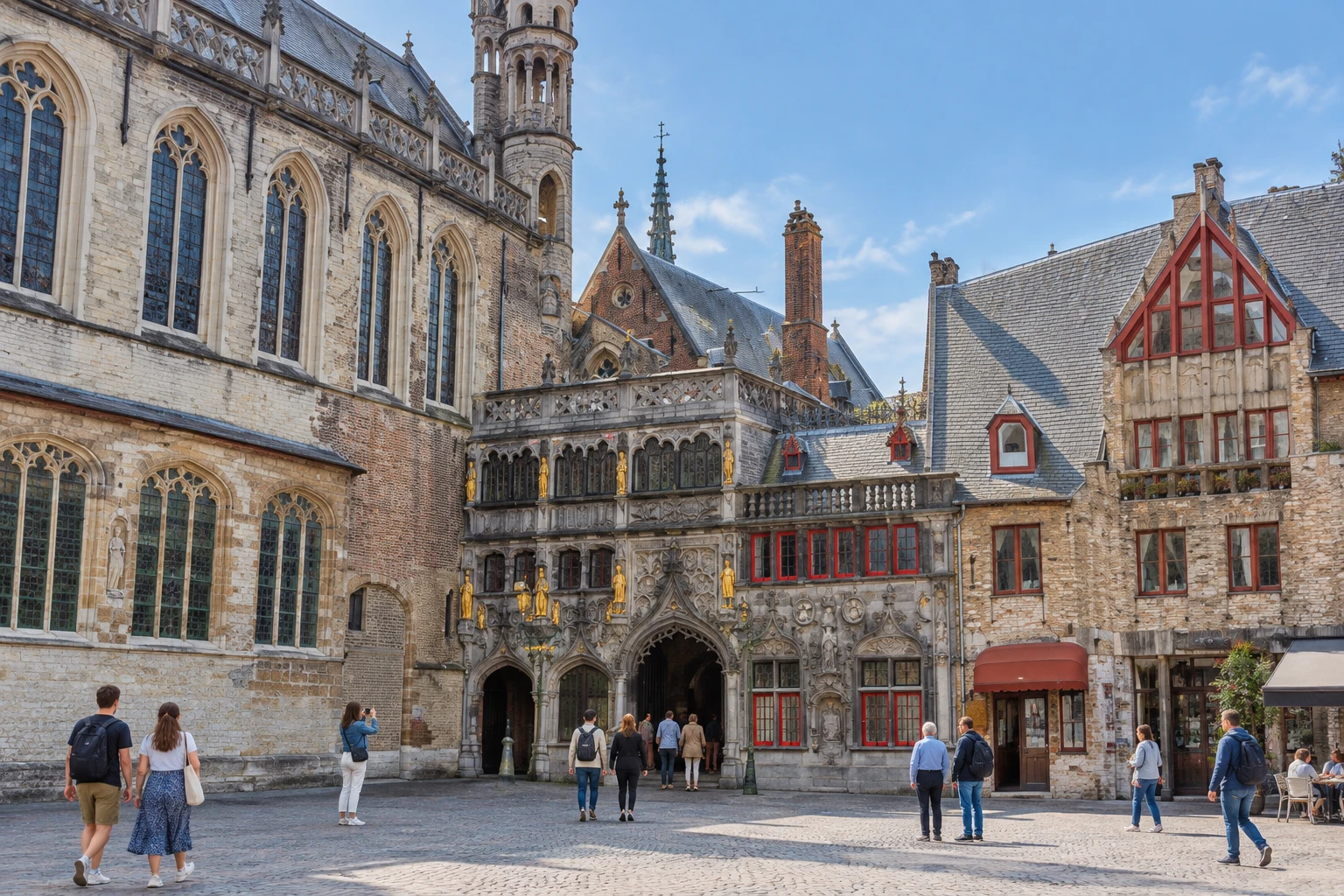
Two-chapel basilica on the Burg: below, the Romanesque chapel of São Basílio from the 12th century; above, the neo-Gothic chapel that houses the relic of the Holy Blood.
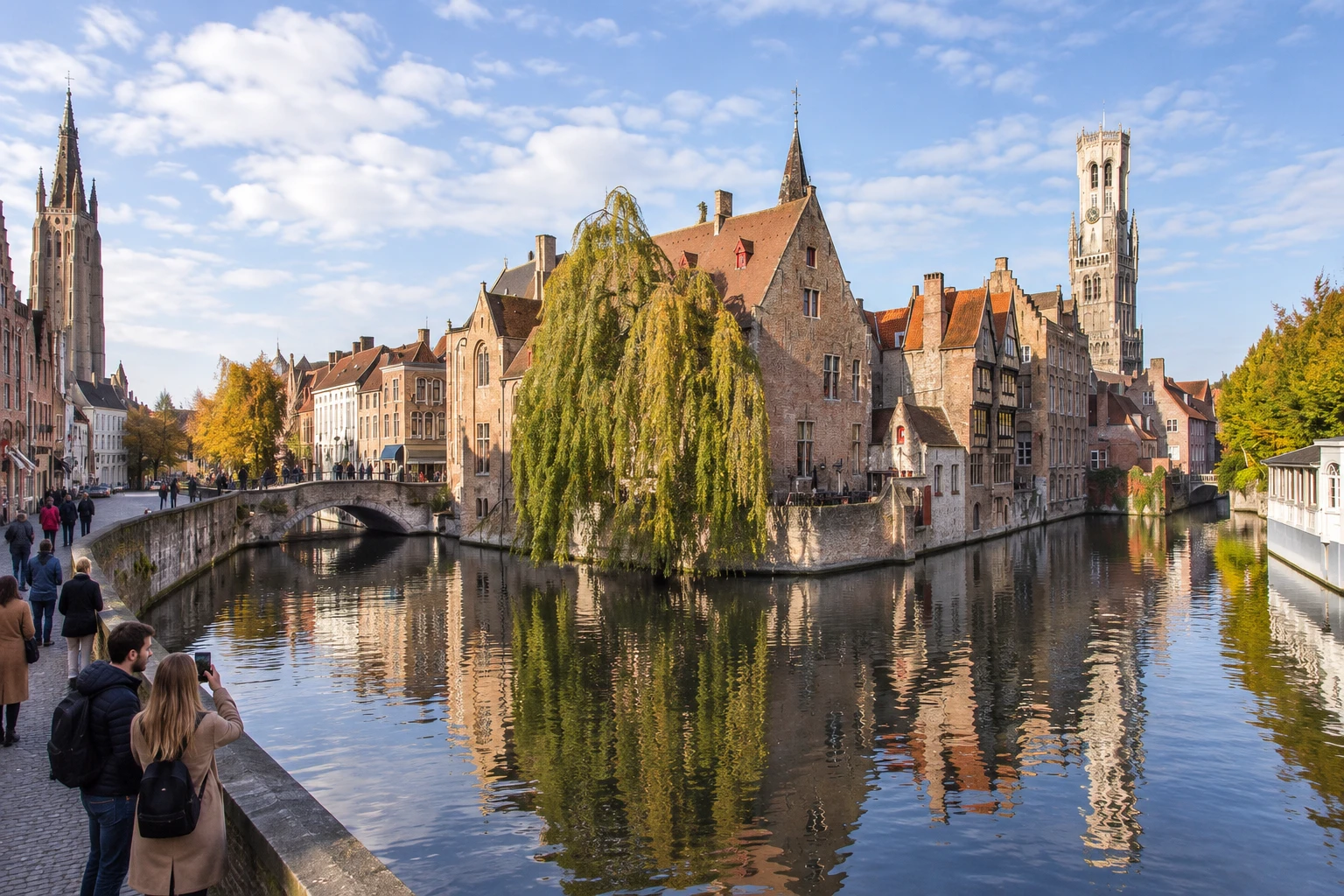
Half-hour open-boat rides along the central canals, the Reien, departing from five quays between the Burg and the Onze-Lieve-Vrouwekerk. The season runs from early March to mid-November.
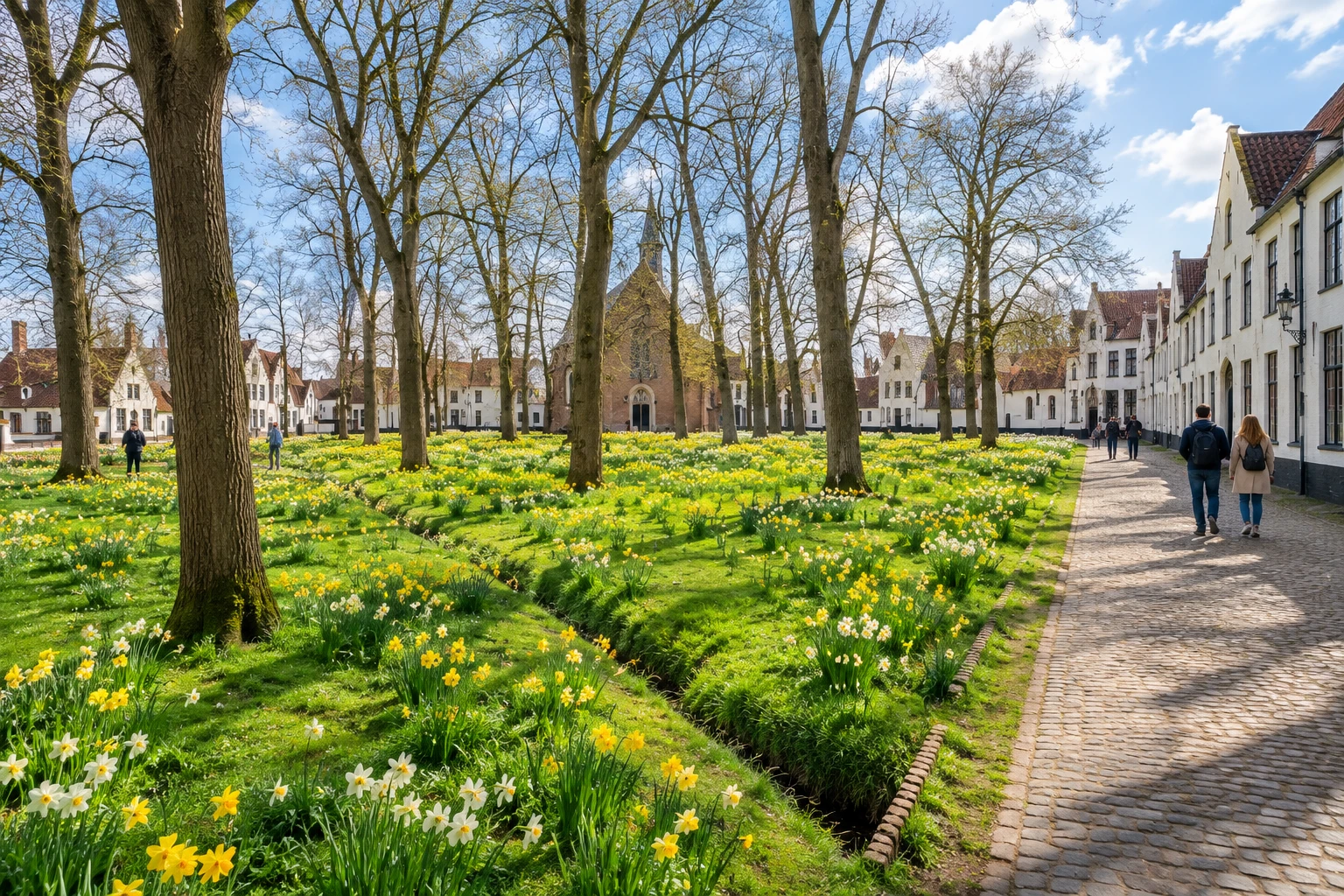
Group of white houses around a lawn with trees, founded around 1245 for the beguines. A UNESCO World Heritage Site, it asks visitors to be quiet.
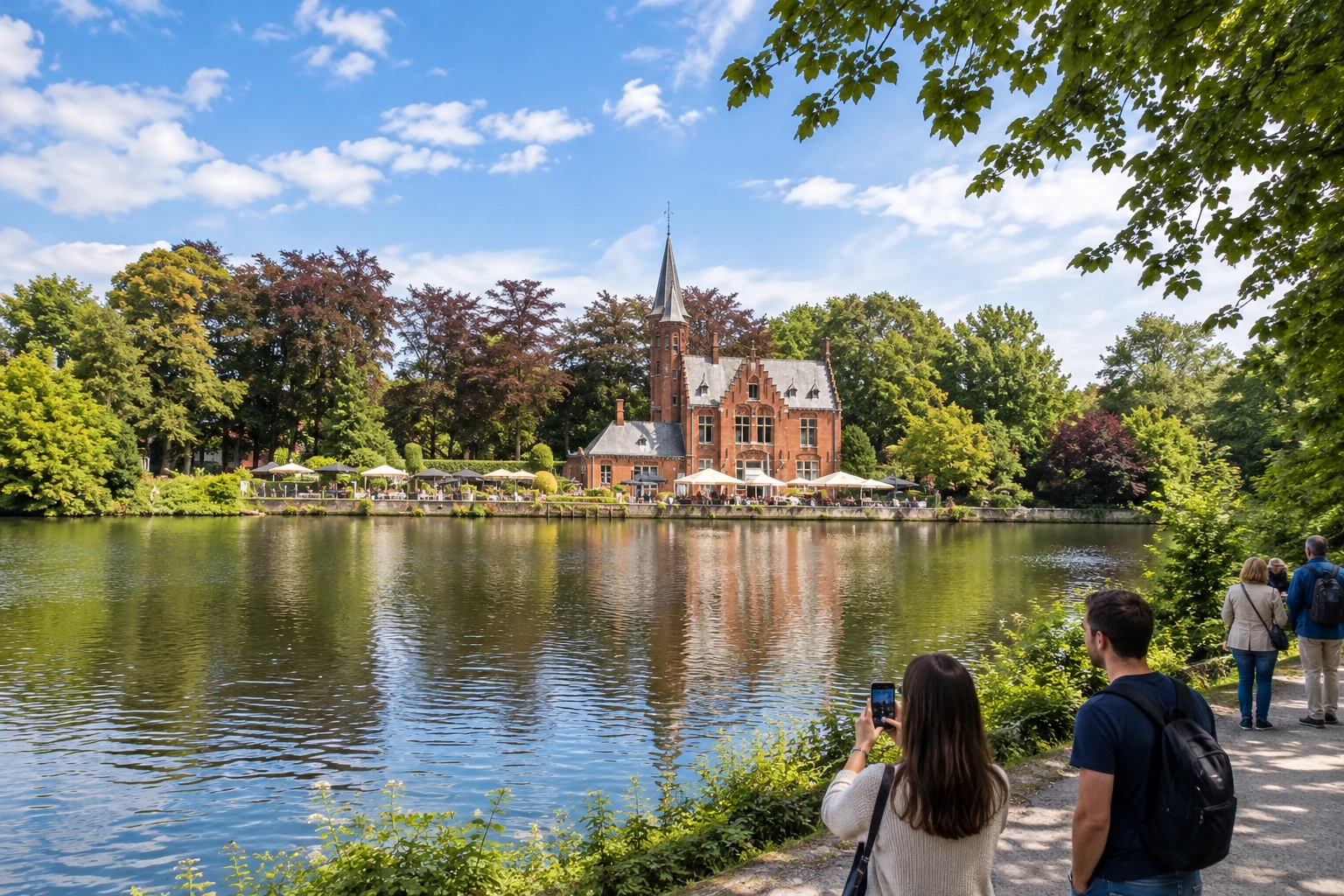
Lake south of the center, with swans, the 16th-century lock house and the surrounding Minnewaterpark. It's adjacent to the Begijnhof.
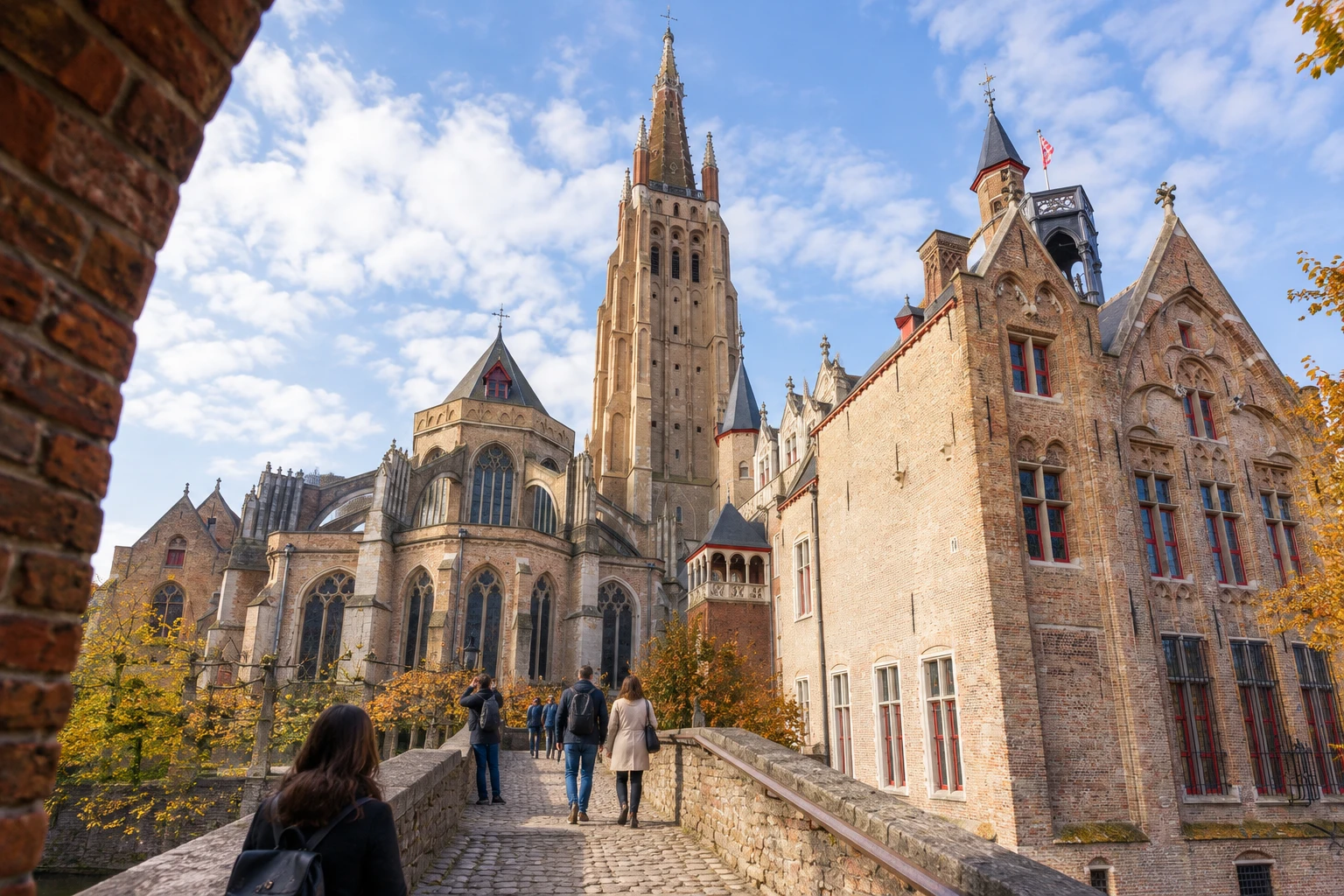
Church with a 115-metre brick tower, the tallest in Bruges. It houses the Madonna and Child, a marble sculpture by Michelangelo, and the tombs of Charles the Bold and Mary of Burgundy.
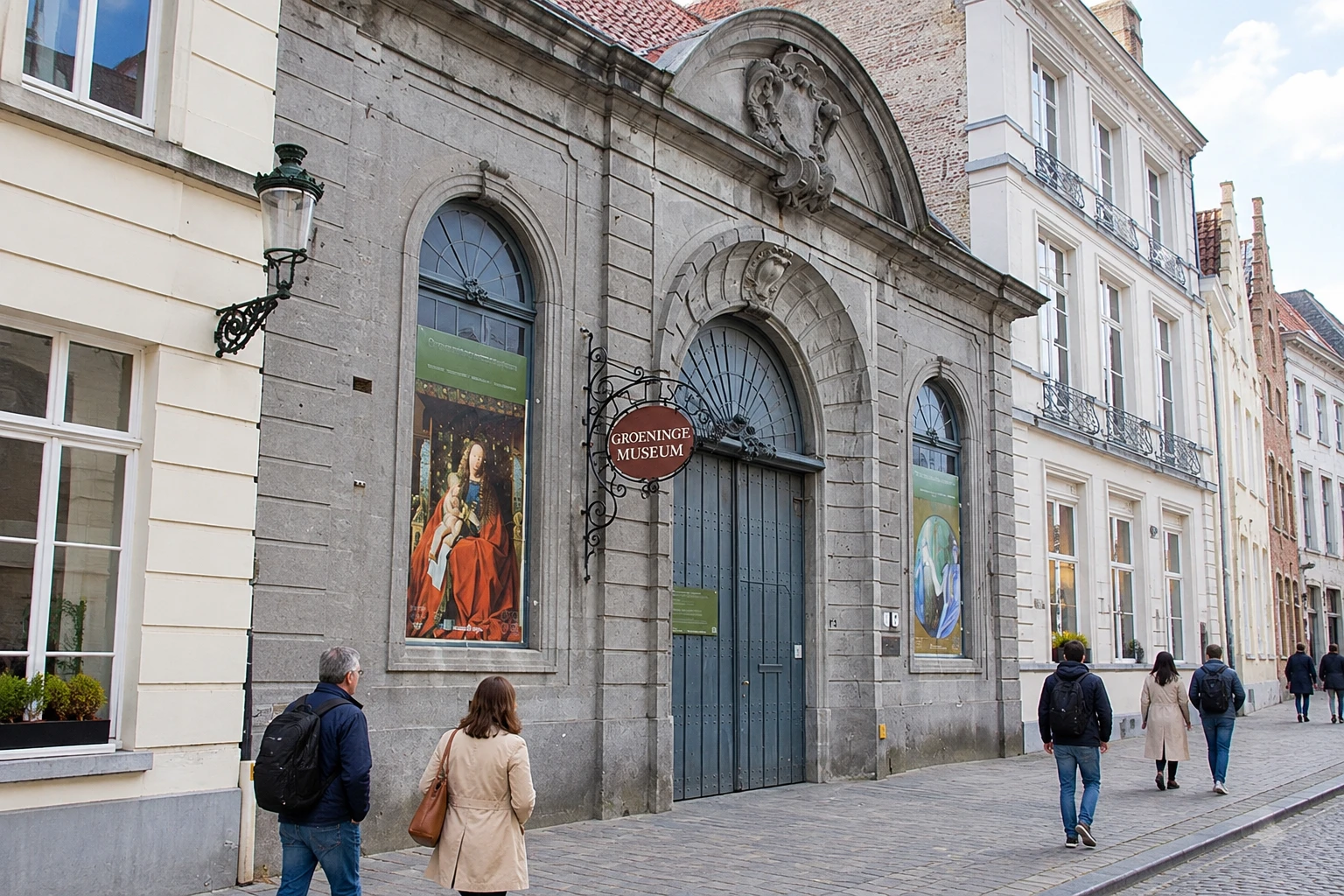
Bruges' municipal museum of fine art, on the Dijver, with six centuries of Belgian painting and a collection of Flemish Primitives: Jan van Eyck, Hans Memling, Hugo van der Goes, Gerard David and the Last Judgment from the workshop of Hieronymus Bosch.
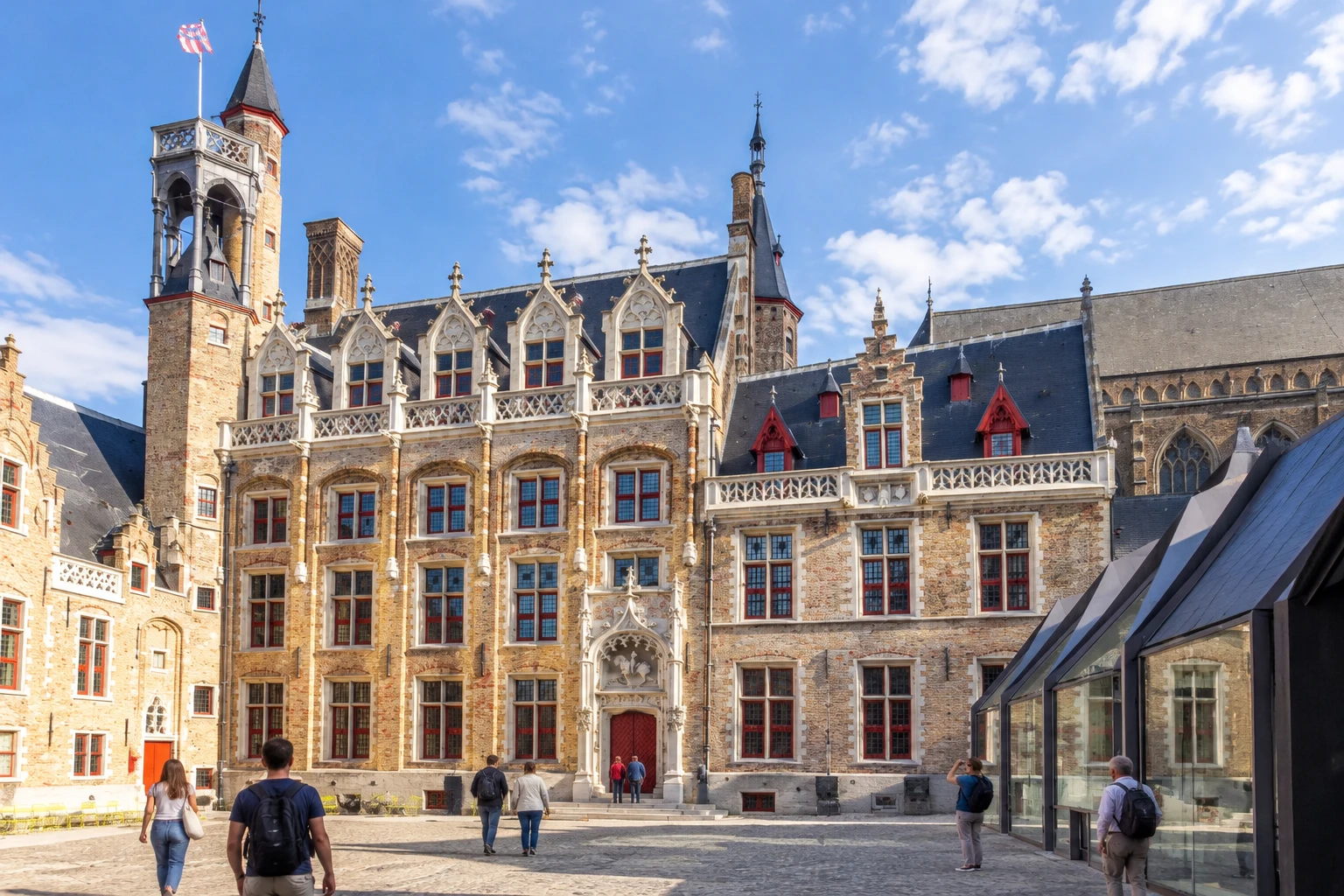
Urban palace of the lords of Gruuthuse, on the Dijver next to the Onze-Lieve-Vrouwekerk. It showcases five centuries of Bruges' history in tapestries, stained glass, wooden sculptures, lace and manuscripts, and has an oratory that opens onto the choir of the neighbouring church.
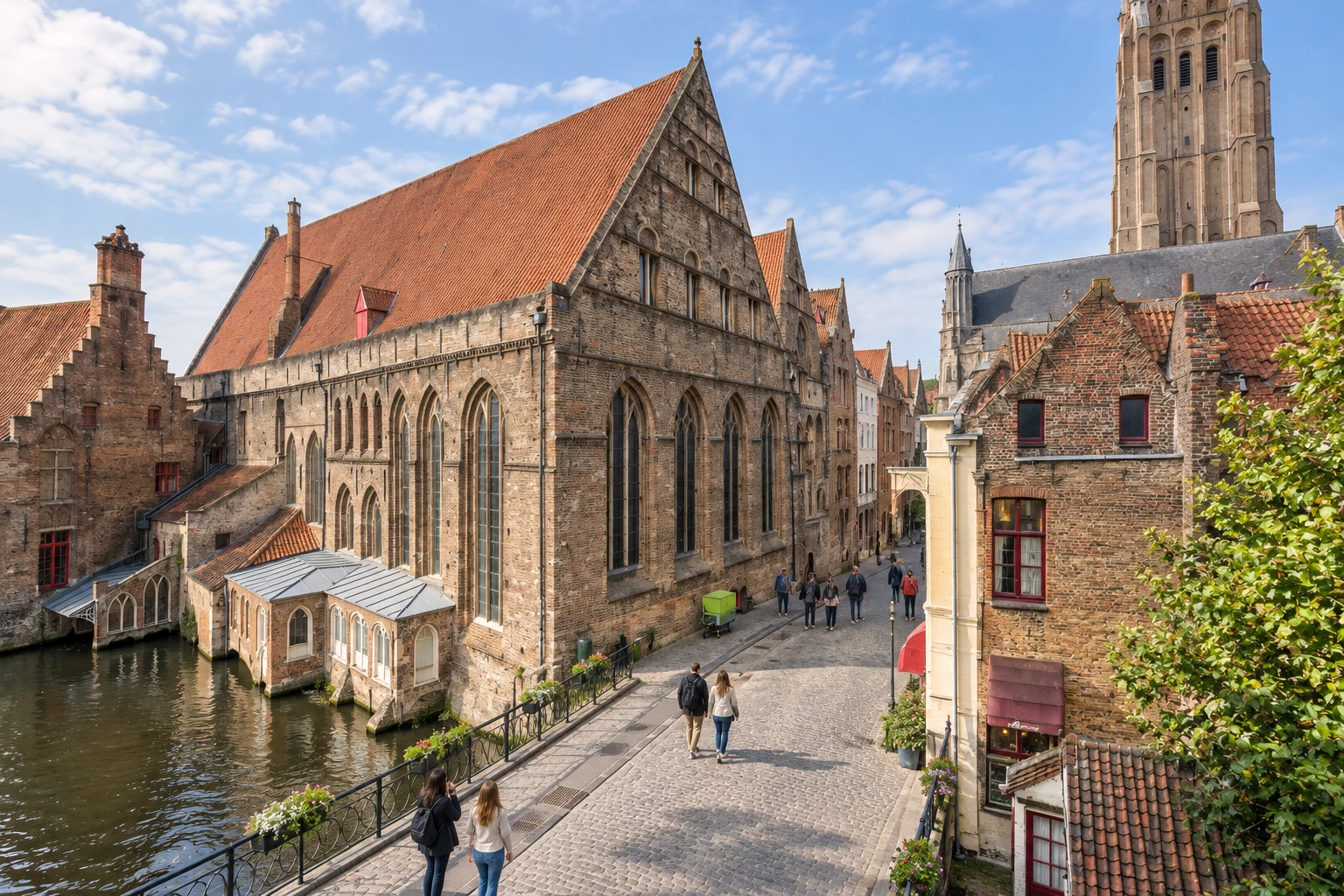
Former medieval hospital in Bruges, on Mariastraat, converted into a museum. It houses works by Hans Memling painted for the hospital itself, such as the Relicário de Santa Úrsula, as well as a 17th-century pharmacy and an attic with oak beams.
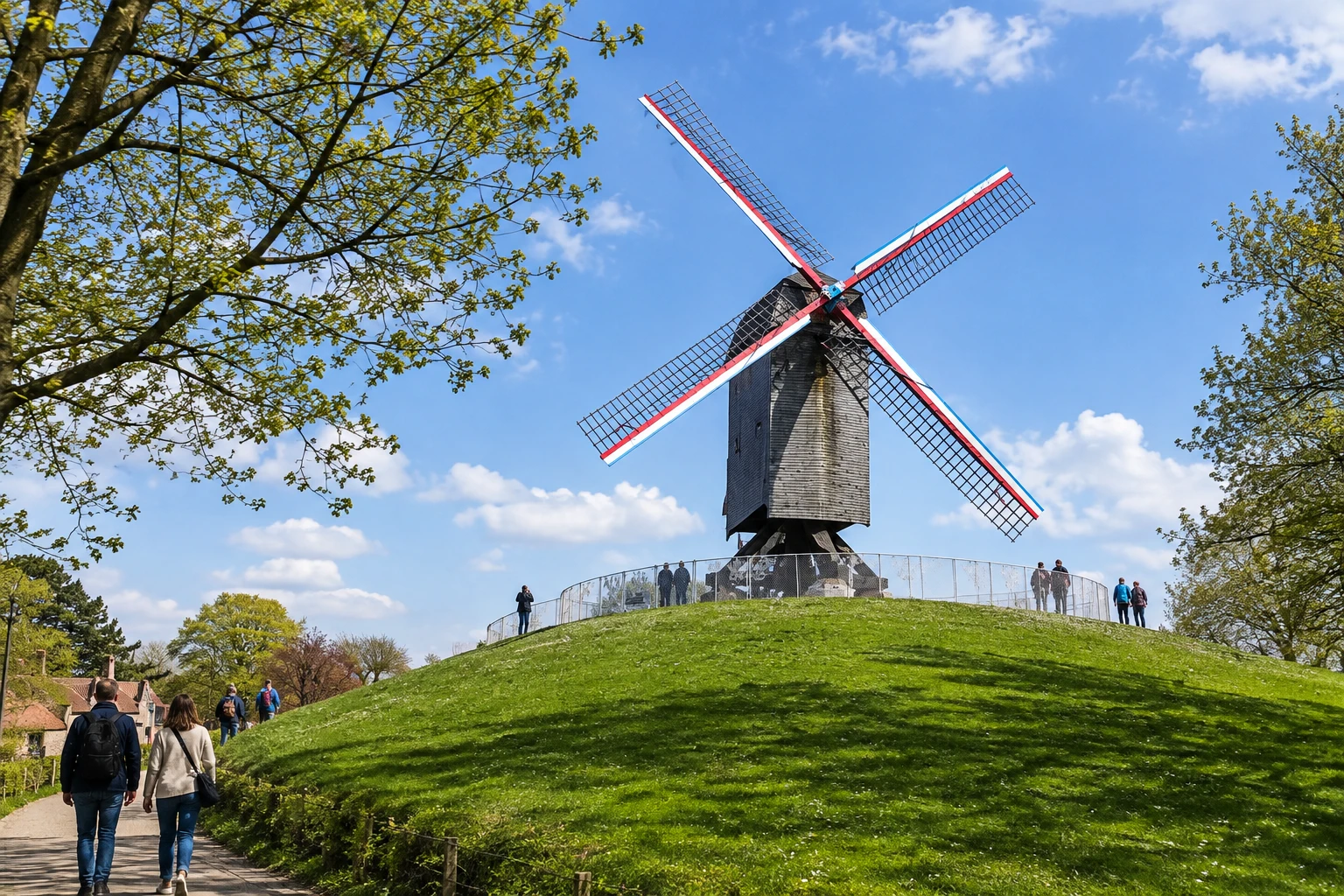
A wooden windmill from 1770 sitting on the old Kruisvest city wall, in the east of Bruges. It still grinds grain and, with favorable wind, shows the mechanism in operation; from the top of the stairs you can see the green belt of the ramparts.
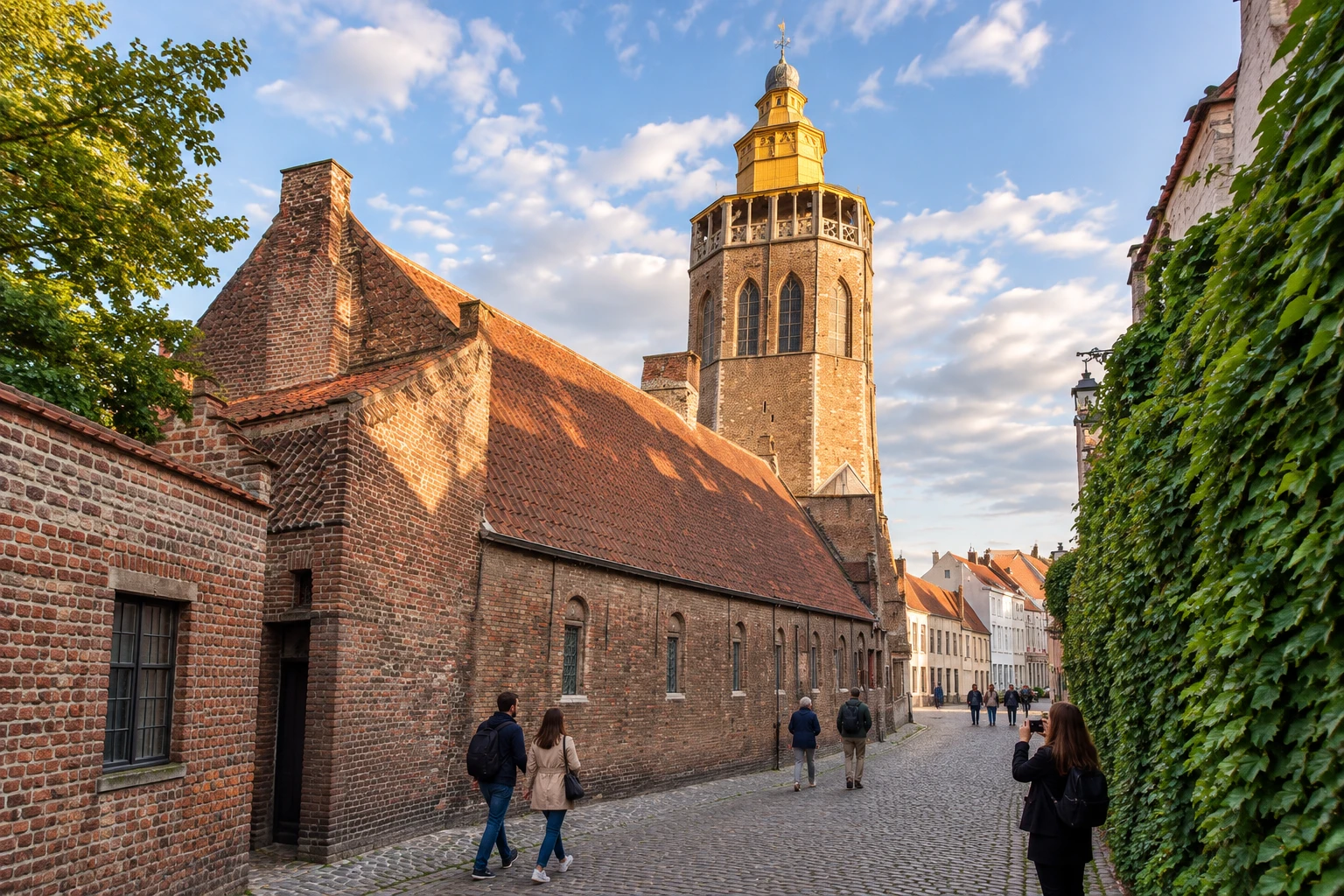
Private chapel of the Adornes family, merchants of Genoese origin, built from 1428 and inspired by the Holy Sepulchre of Jerusalem. It houses the tomb of Anselm Adornes and his wife, a crypt with a replica of Christ’s tomb and a museum in the former almshouses.
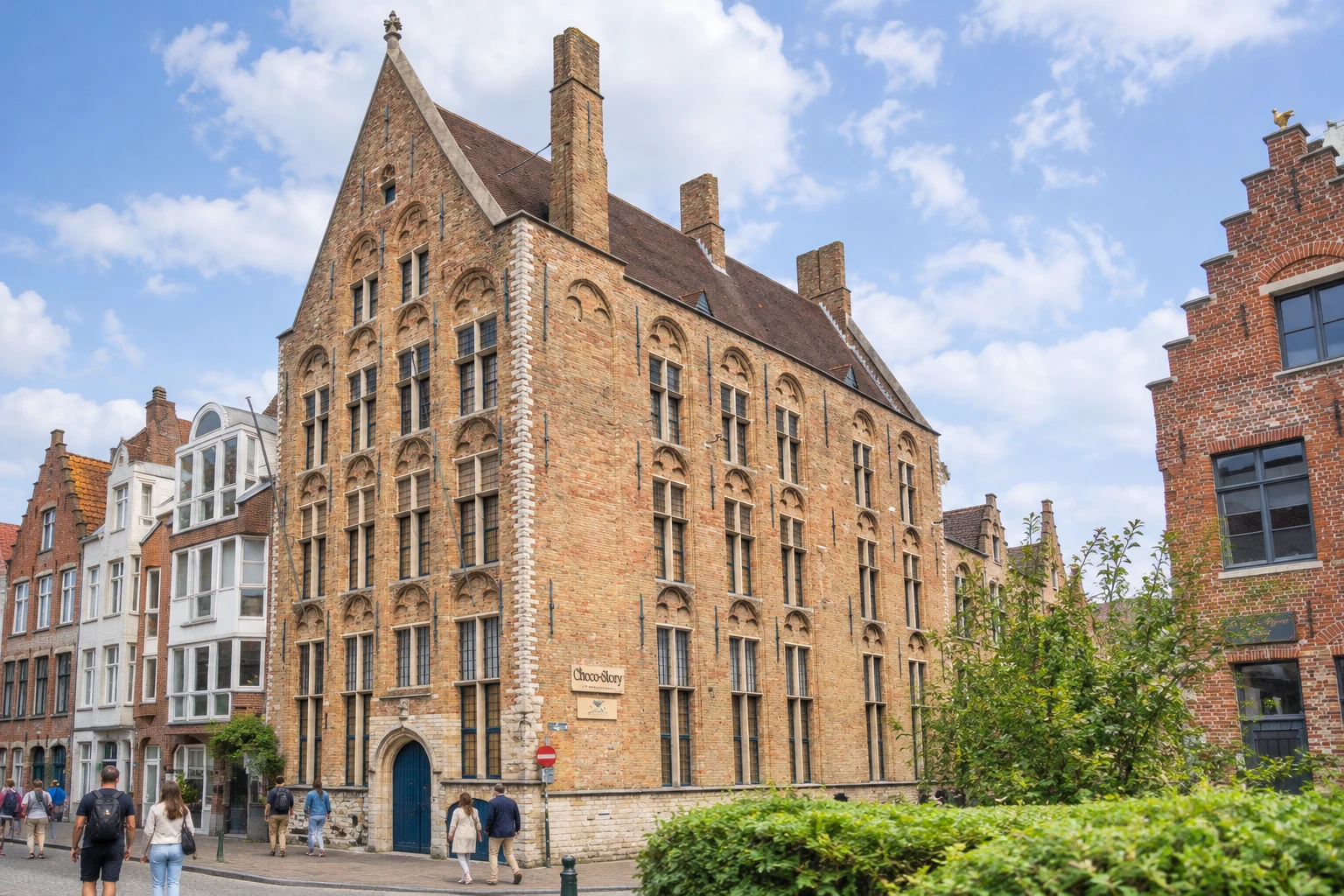
Chocolate museum in a 16th-century house just a few steps from the Markt. It tells the story of cacao from the Mayas and Aztecs to Belgian pralines and ends with a demonstration of chocolate-making.
Family-run brewery operating in central Bruges since 1856, located on the Walplein. The guided tour goes through the brewhouse and old equipment and climbs to the roof, with 360-degree views over the city.
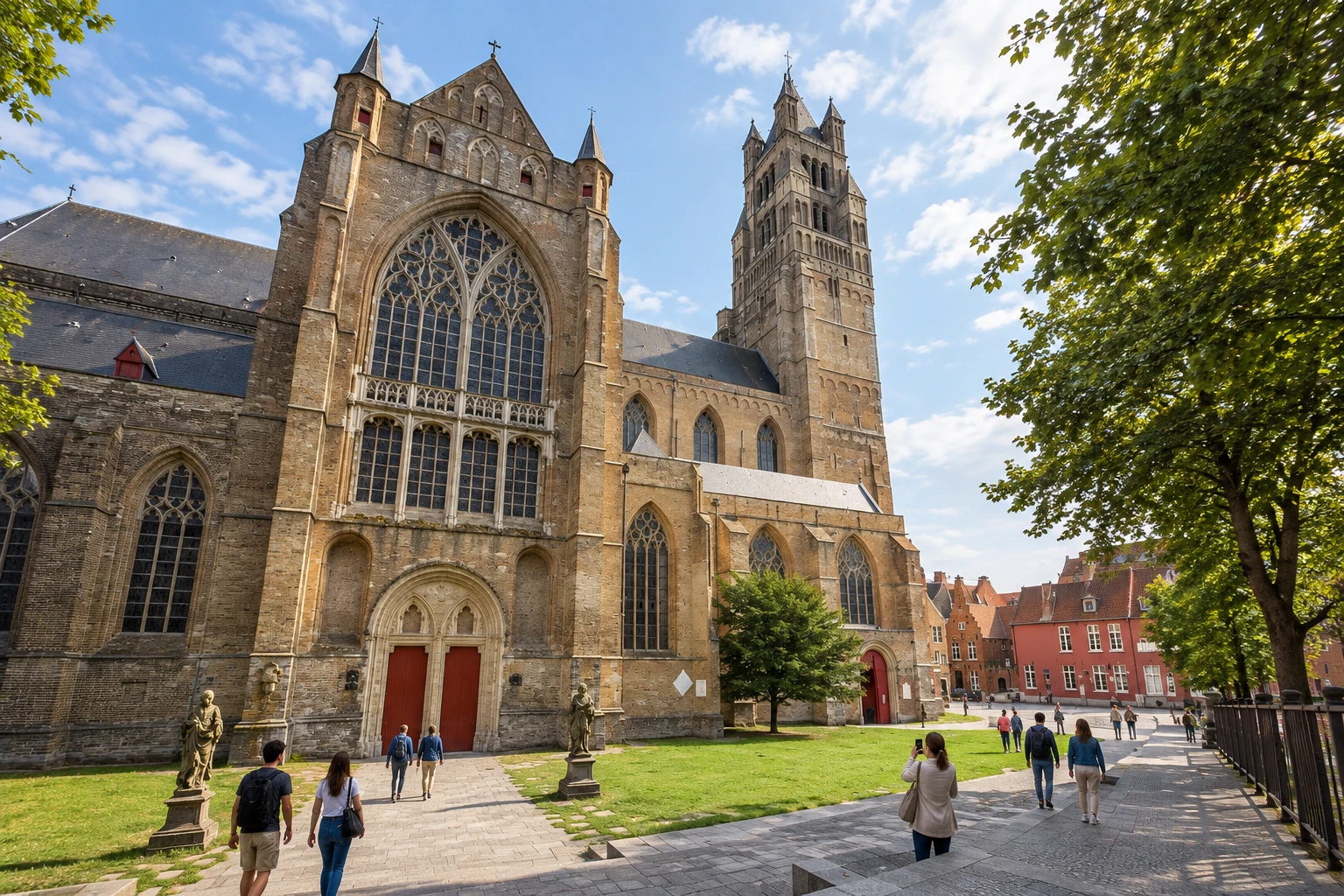
Bruges cathedral since 1834, on Steenstraat between the Markt and 't Zand. A medieval-origin brick church with a fortress-like tower, 18th-century Brussels tapestries and a baroque organ.
To plan