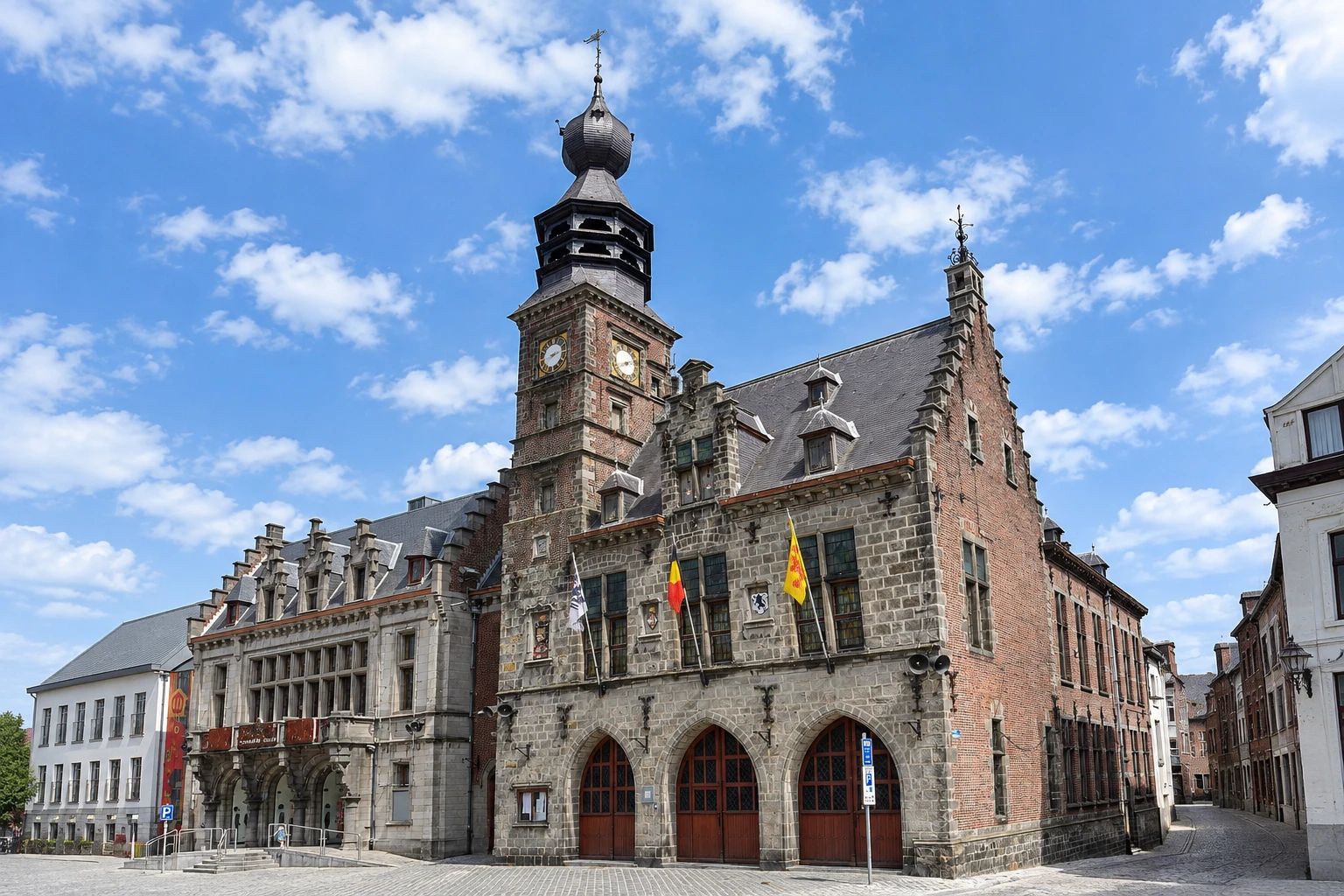
Mons and Tournai

Hainaut

Mons and Tournai

Two towns in Hainaut with a UNESCO-listed beffroi: Mons, of the Doudou, of Van Gogh and of the Grand-Hornu, and Tournai, of the cathedral's five towers and the Pont des Trous over the Escalda.

Wallonia

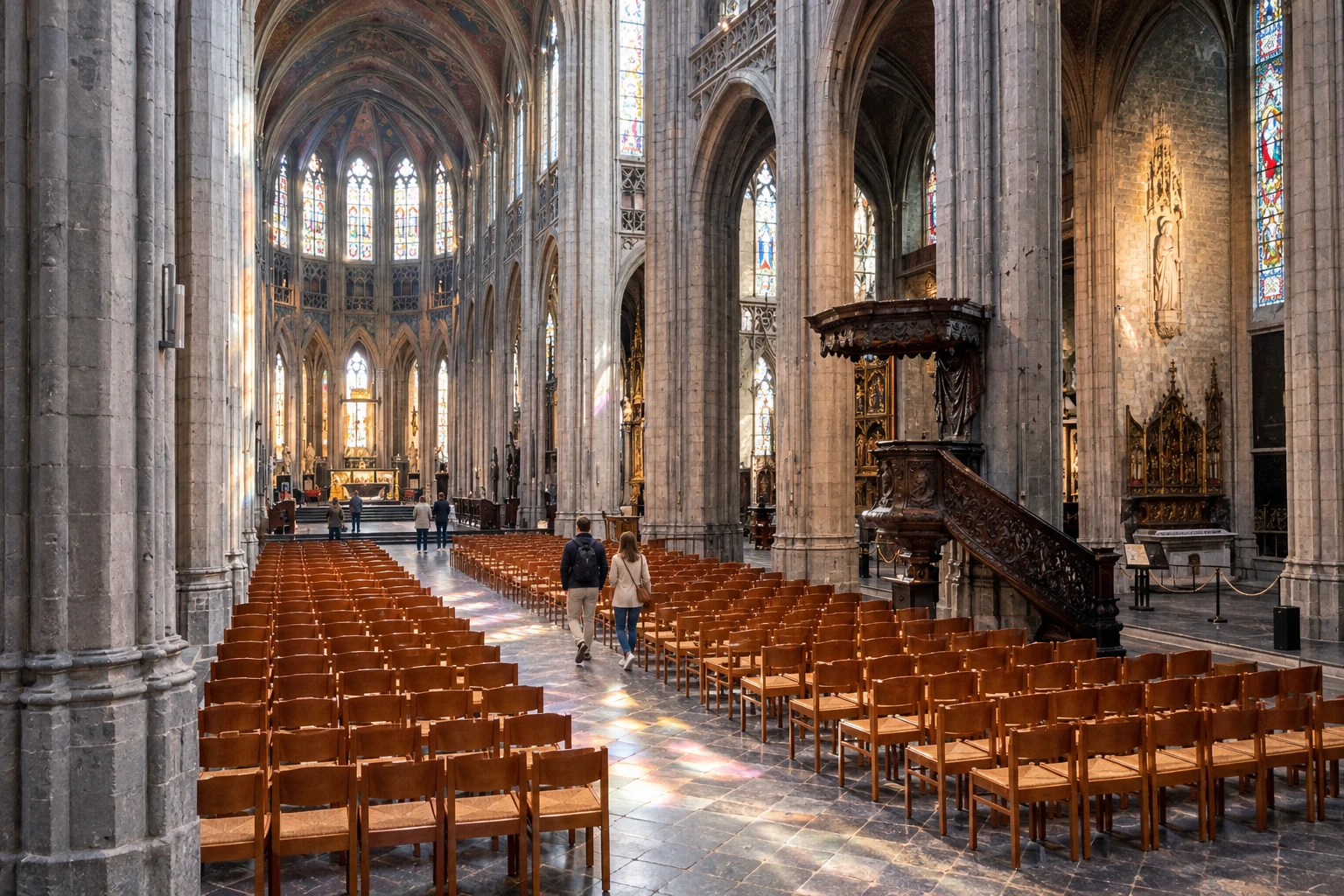
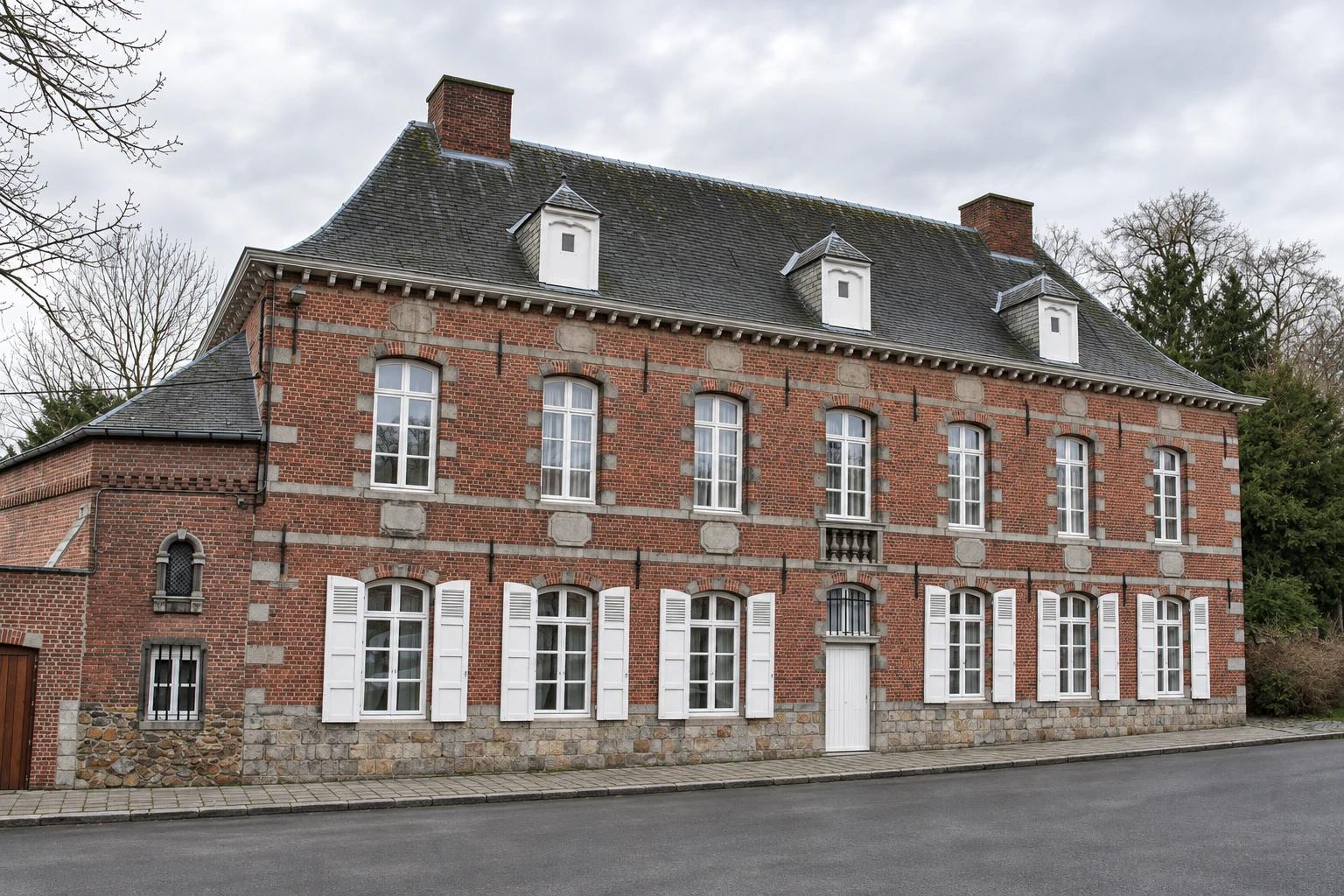
In the photo: Collégiale Sainte-Waudru, Mons

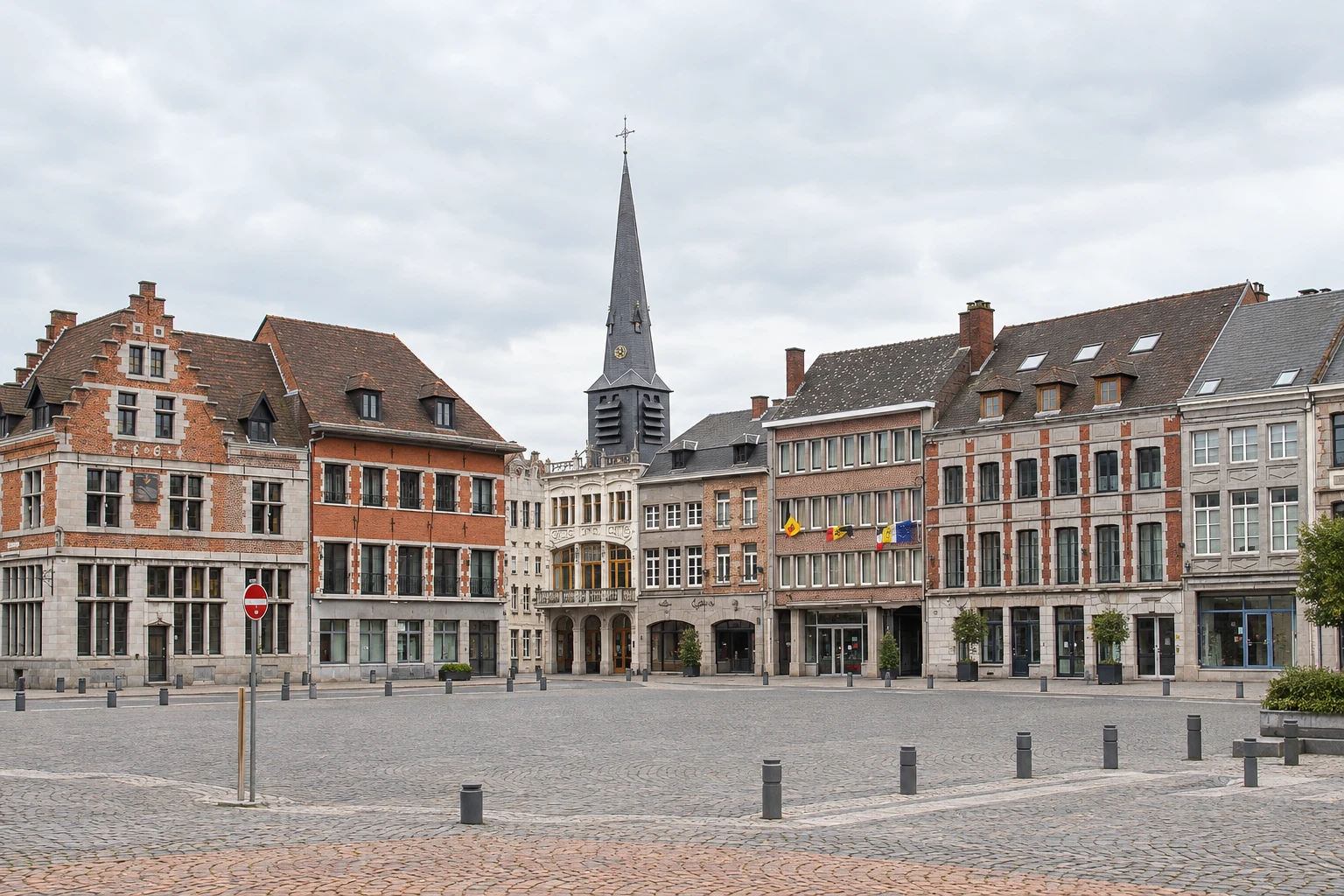
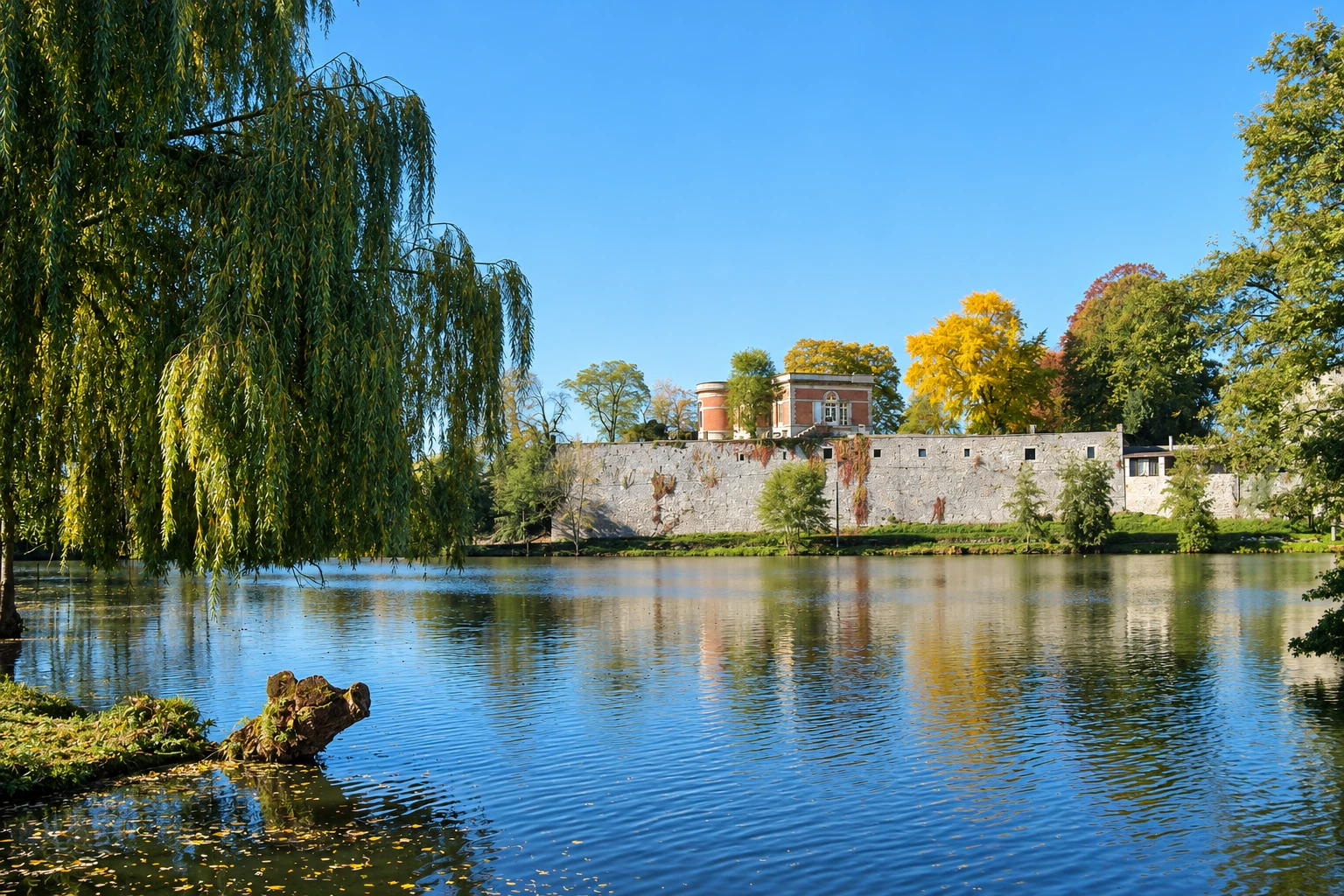
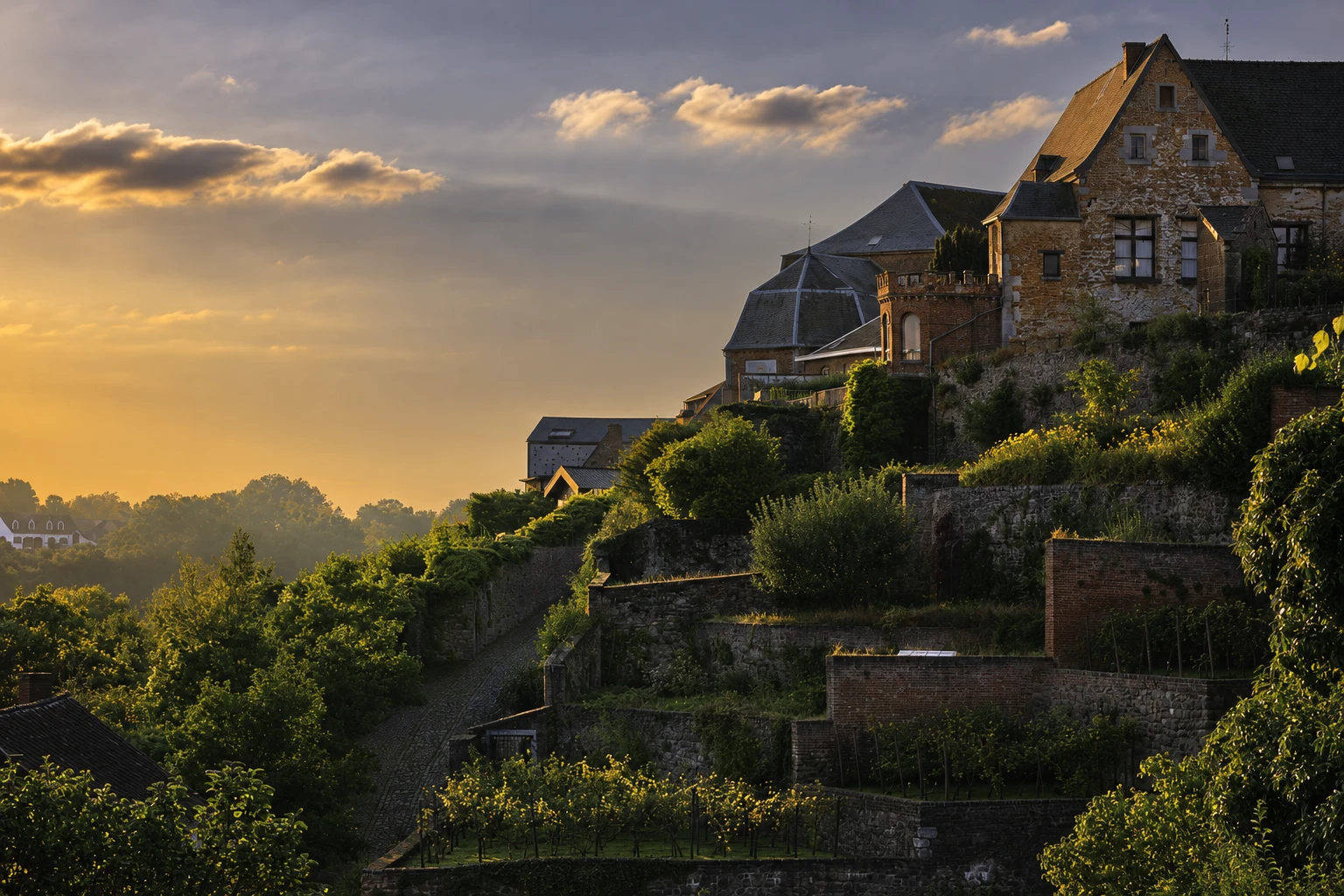
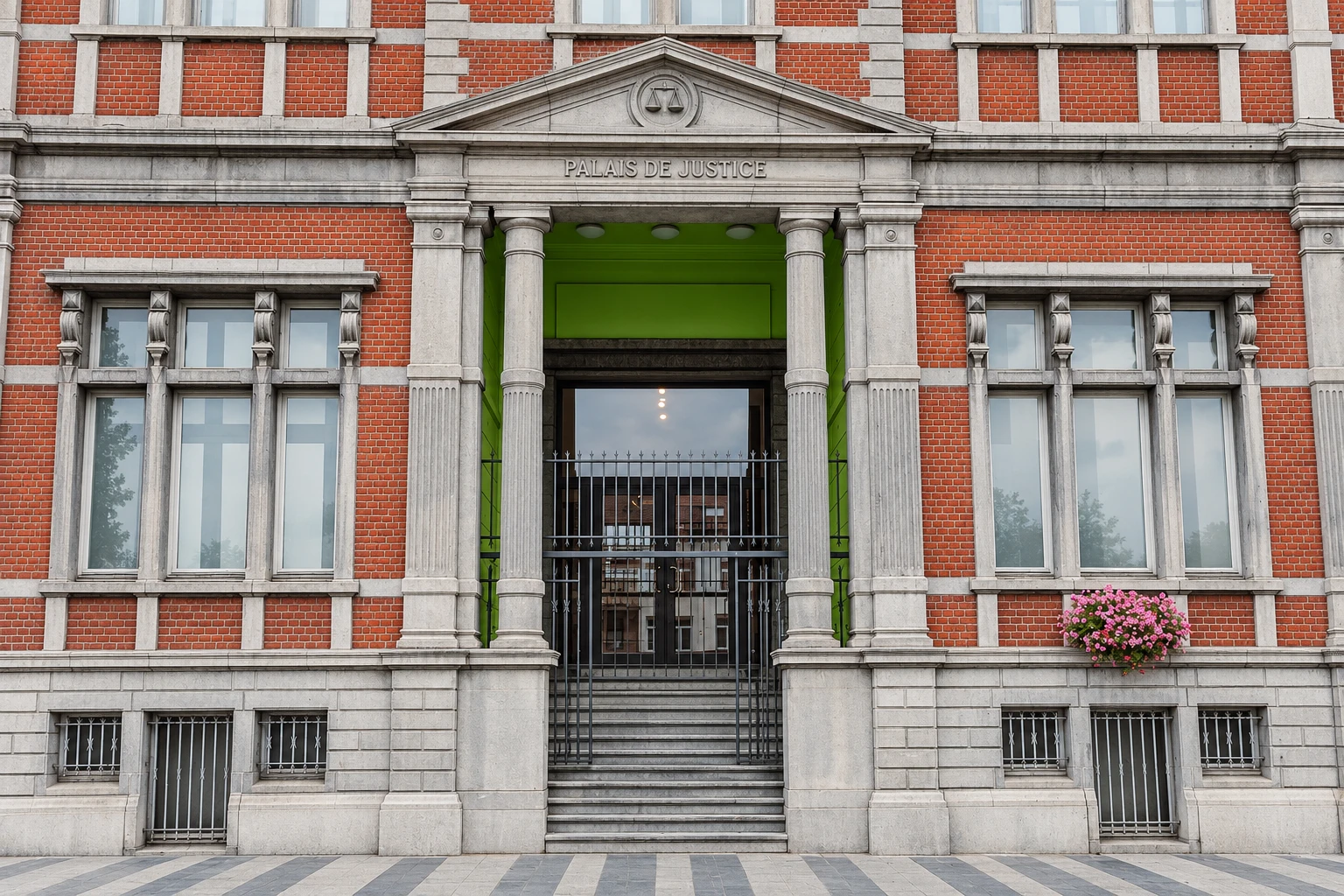
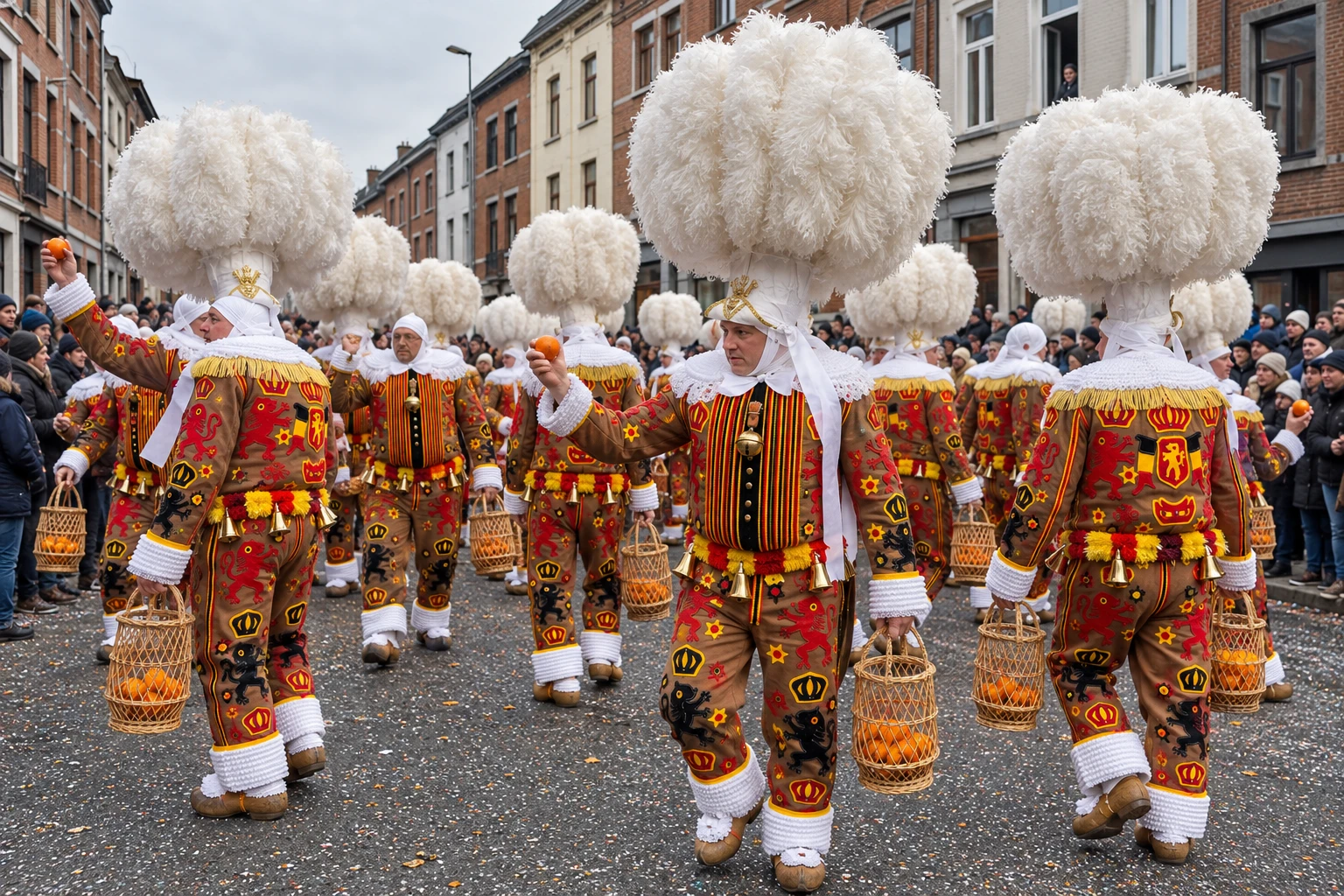
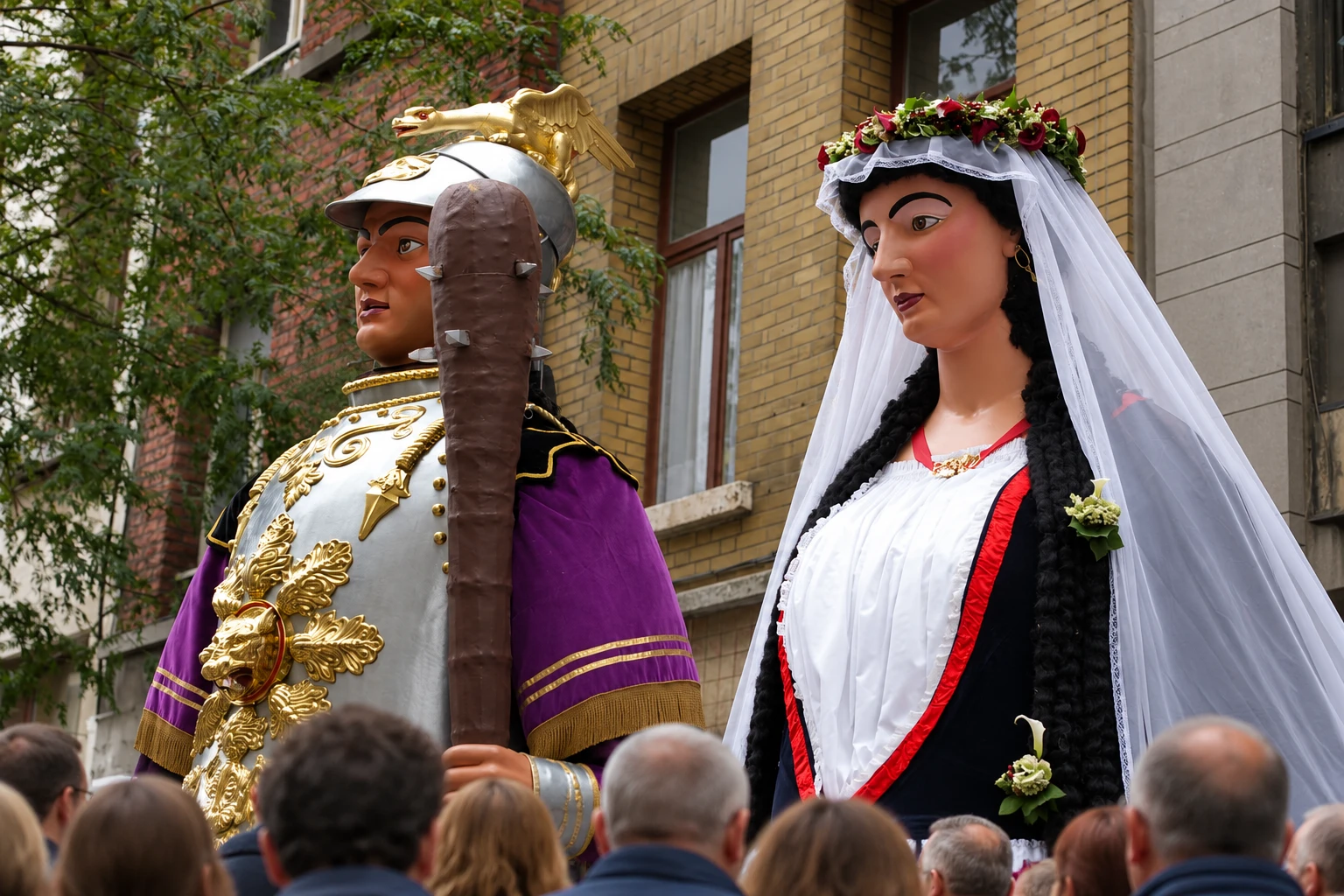
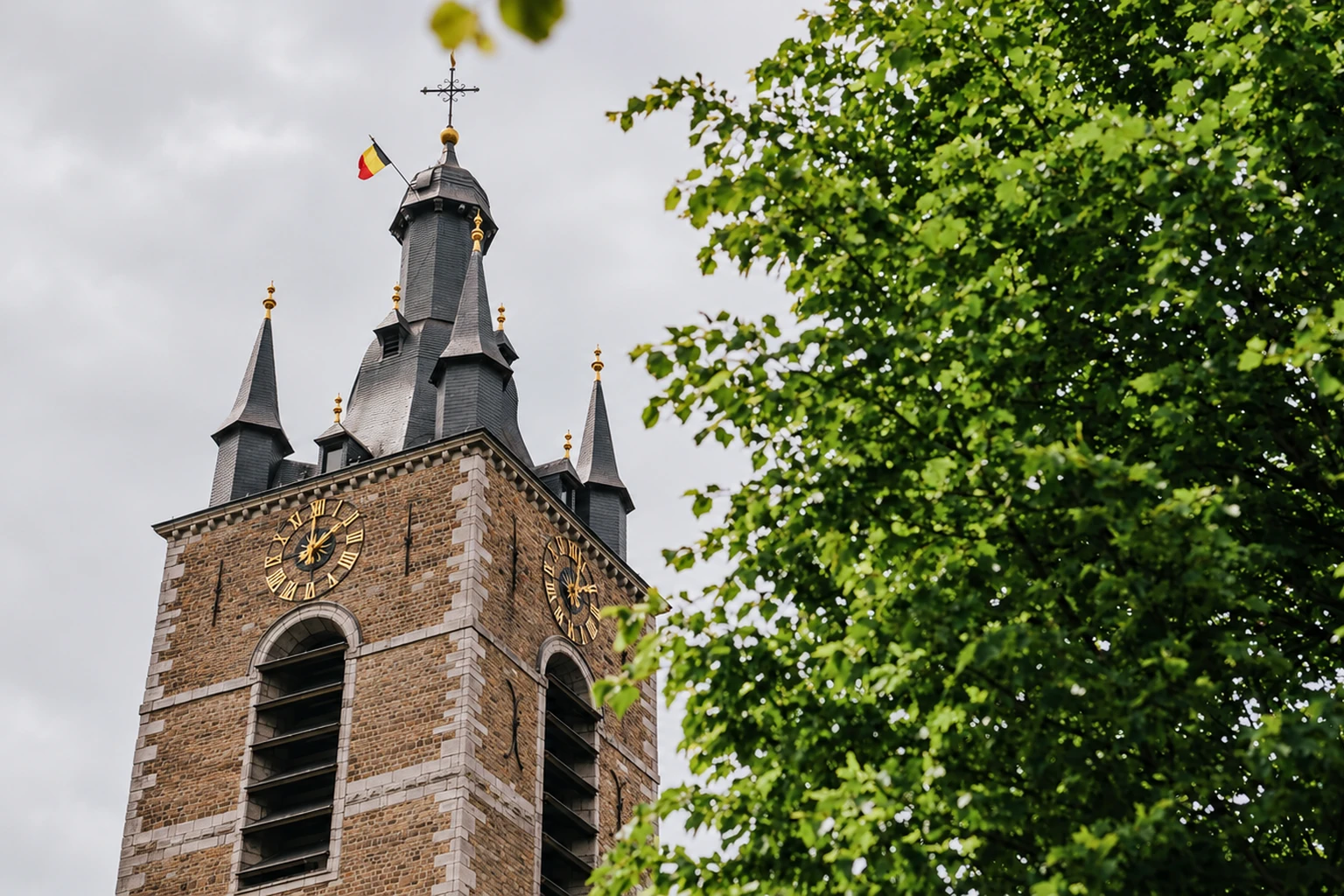
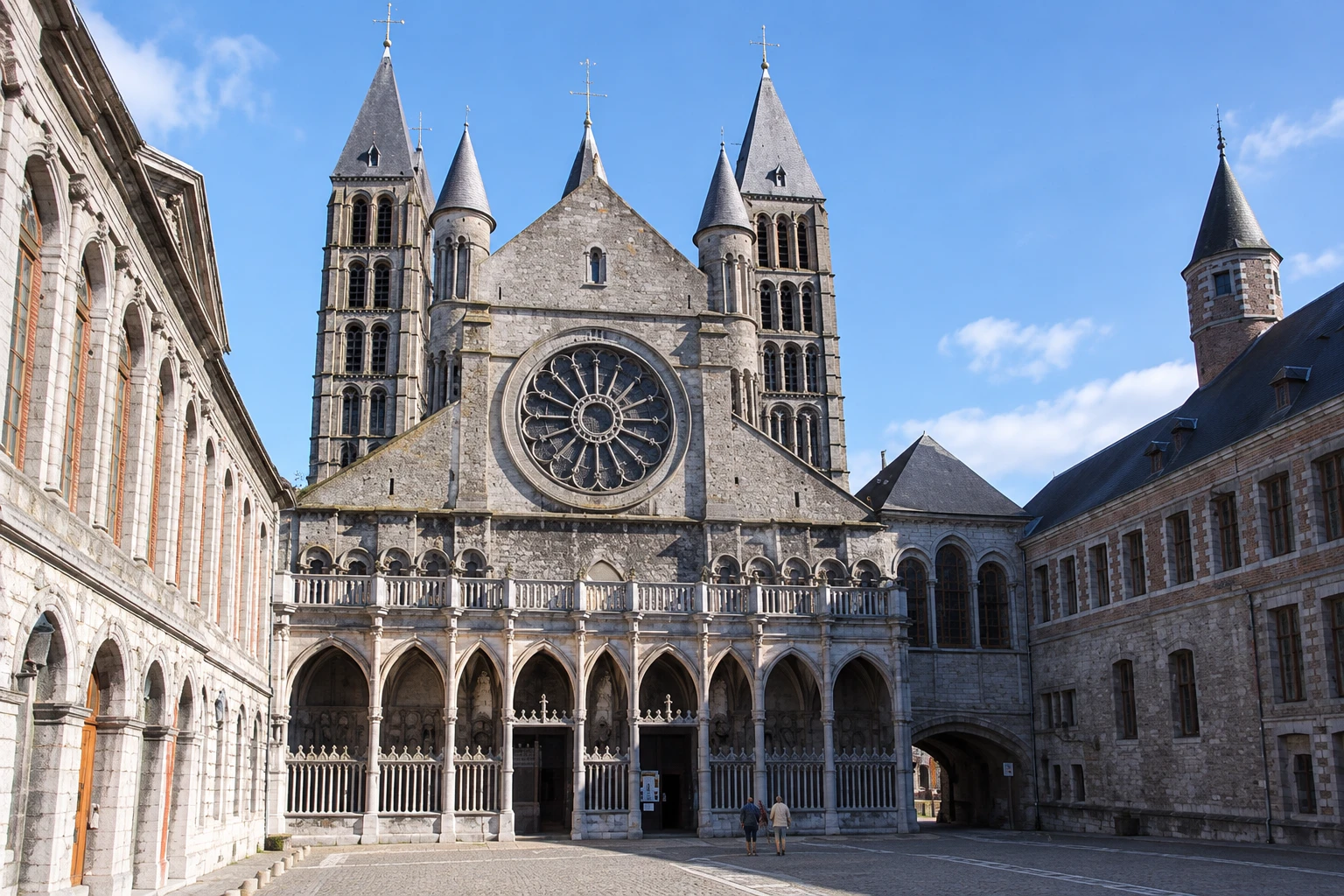
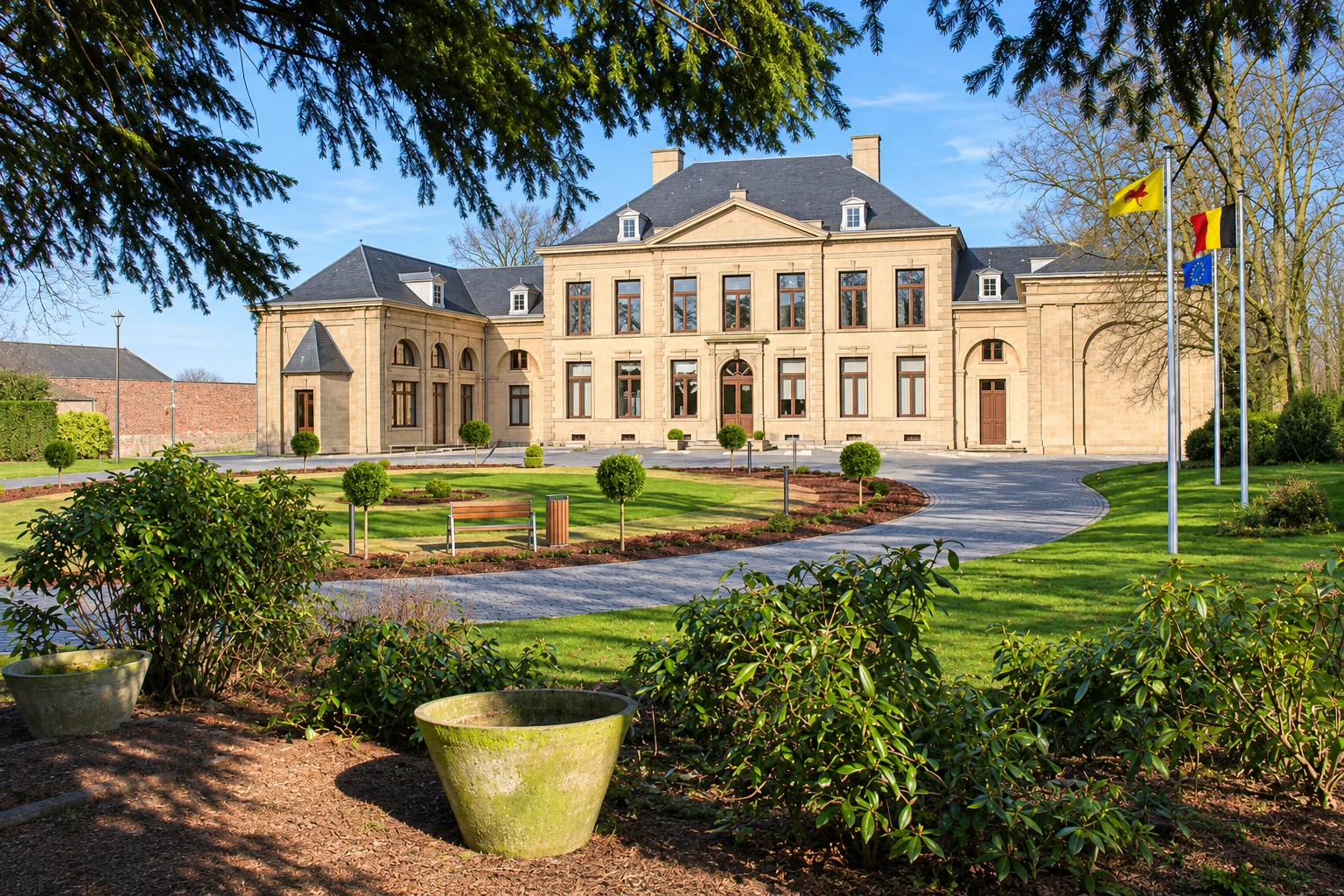
Illustrative images. The pictures in this guide are illustrations based on the real place, not photographs, and may differ from it.

Get it on Google Play

Get to know the place

A region to enjoy
at your own pace.

Mons and Tournai are in Hainaut, the province in the west of Wallonia, the part of Belgium where French is spoken. Both are about an hour by train from Brussels and roughly 50 km from each other, which makes it possible to see both on the same trip, by train or by car.

Mons, the provincial capital, has a Grand-Place surrounded by cafés, the only Baroque beffroi in Belgium, and the Collégiale Sainte-Waudru, from which the Car d'Or procession departs each year during the Doudou festival. Around the town are traces of the Borinage, the old coal basin: the house where Vincent van Gogh lived in Cuesmes, the mining complex of the Grand-Hornu and, much earlier, the flint mines of Spiennes, dug around 6,000 years ago.

Tournai is one of the oldest cities in the country. It was the capital of the Franks in the 5th century, and Clovis was born there. The cathedral of Notre-Dame, with five towers in a row, combines a Romanesque nave and a Gothic choir. Next to it, the beffroi from the late 12th century is the oldest in Belgium. On the banks of the Escalda, the Pont des Trous is a fortified 13th-century gate that still crosses the river.

Museums also carry weight in a visit: the Mundaneum, the paper archive that tried to classify all the world's knowledge, the BAM and the Mons Memorial Museum in Mons; the Musée des Beaux-Arts designed by Victor Horta and the tapestry museum in Tournai. Half an hour from Mons, the Pairi Daiza zoo occupies the grounds of a former Cistercian abbey in Brugelette.

This destination brings together 9 cities: Mons, Tournai, Binche, Ath, Beaumont, Thuin, Fleurus, Le Roeulx, La Louvière.

Share: WhatsApp
Traveler, share your experiences through photos Up to 5 photos of each place you visited.

One destination, many paths

The cities on this trip

Start with one city or combine several in your itinerary.

Where Mons and Tournai is The star marks the capital, Mons.
MonsTournaiBincheAthBeaumontThuinFleurusLe RoeulxLa Louvière

Outlines: © NGI-IGN, AdminVector, CC BY 4.0. Adapted by Cidade Turismo.

How to get there: Mons and Tournai

Brussels Airport (BRU), in Zaventem · 76 km to Mons

Brussels South Charleroi Airport (CRL), in Charleroi · 45 km to Mons

The usual gateway is Brussels Airport, in Zaventem; Charleroi airport is about 45 km from Mons. Flights from Brazil typically involve a connection in another city. Check before buying. From Brussels, SNCB trains run to Mons and to Tournai in about an hour, and there are trains between the two towns.

Suggested arrival point: Mons

Mons
Hainaut · Mons and Tournai Capital Suggested arrival point

Mons

Mons, Bergen in Flemish, is the capital of Hainaut and is French-speaking. The center climbs the hill around the Grand-Place, the Hôtel de Ville with the lucky monkey and the Beffroi de Mons, a UNESCO World Heritage site, up to the Collégiale Sainte-Waudru, the starting point of the Doudou. Museums include the Mundaneum, the BAM and the Mons Memorial Museum. In the surroundings are the Maison Van Gogh in Cuesmes, the flint mines of Spiennes, the Grand-Hornu and, in Brugelette, the Pairi Daiza zoo.

Tournai
Hainaut · Mons and Tournai

Tournai

Tournai, Doornik in Flemish, is one of the oldest cities in Belgium; it was the capital of the Franks and French is spoken there. The centre revolves around the Cathédrale Notre-Dame, with five towers, and the Beffroi de Tournai, both UNESCO World Heritage sites, and the triangular Grand-Place. On the banks of the Escalda is the Pont des Trous, a medieval gate over the river. The museums are the Musée des Beaux-Arts, designed by Victor Horta, and the TAMAT, dedicated to tapestry.

Festivals and events

Festivals Mons and Tournai

Dates change every year: check this year's date before you travel.

Festival calendar in Belgium

The local experience

Things to do in Mons and Tournai

Thuin · Hainaut · Monument

Thuin Belfry

17th-century campanile on the Place du Chapitre, included in the ensemble of belfries recognized by UNESCO. The climb goes past the bells and the carillon.

Explore Thuin Belfry

Binche · Hainaut · Square

Grand-Place of Binche

Binche’s central square, with the town hall of Gothic arcades and the 35 m belfry, which is part of the Belfries of Belgium and France inscribed as a UNESCO World Heritage Site.

Explore Grand-Place of Binche

See 23 more places in Mons and Tournai

To choose before you go

Tours in Mons and Tournai

Where each tour starts, how long it takes, how it is done, what is included and the price range.

Grand-Place of Mons, Hôtel de Ville and the Singe du Grand-Garde

From Mons city centre On foot about 1 hour 30 minutes morning easy (streets with uphill sections)

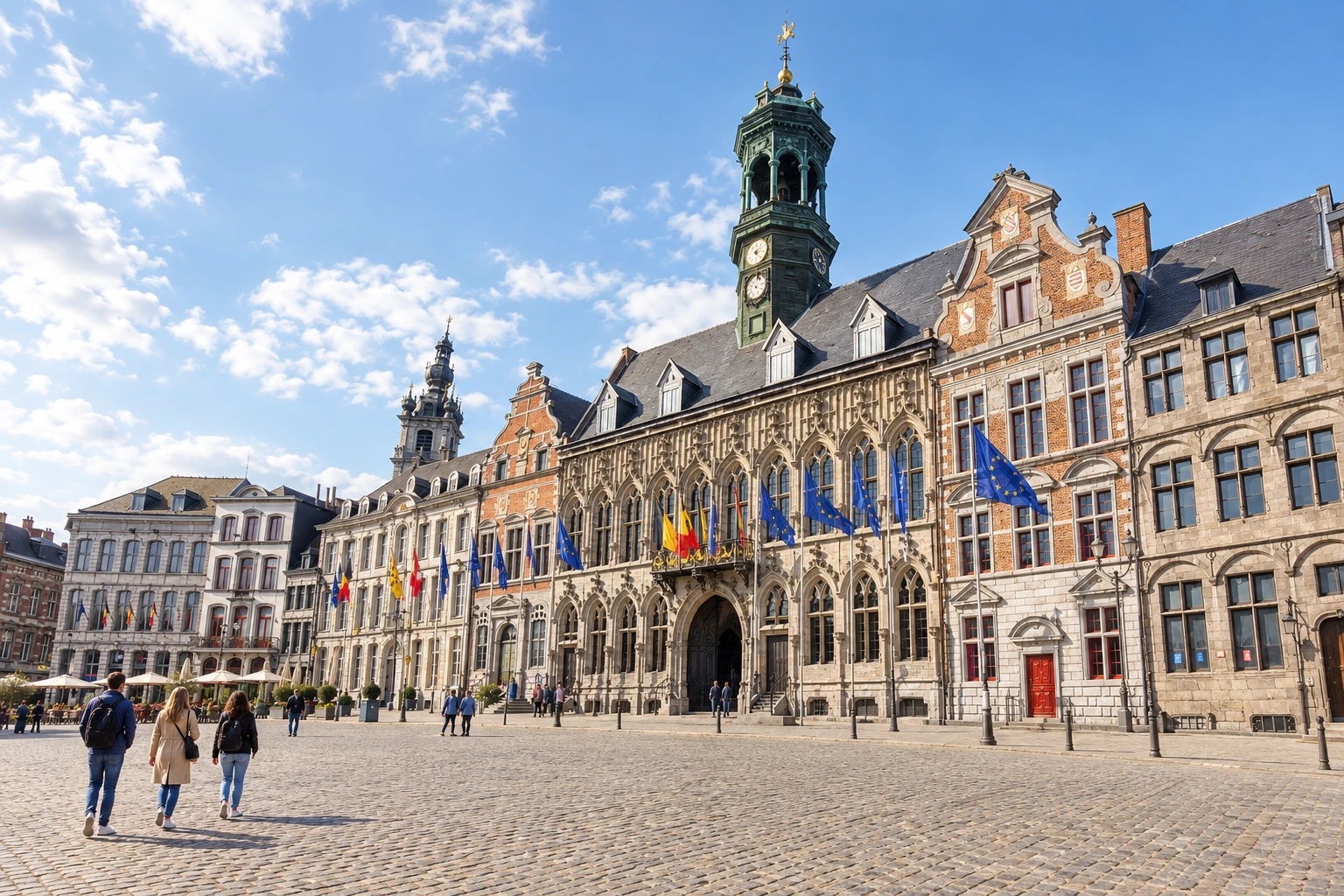
Mons (Bergen in Flemish) is the capital of the province of Hainaut, in Wallonia, the French-speaking part of Belgium. The historic centre sits on a hill, and the Grand-Place is halfway up the slope, surrounded by listed old houses, cafes and brasseries. The main building on the square is the Hôtel de Ville, the town hall. In 1323 Count William I authorized a "Maison de la Paix" there; the building was restored in 1479 by architect Mathieu de Layens and extended through the 18th century. The façade is Brabantine Gothic, with a Louis XVI–style balcony above the portal and a belfry added in the 18th century. To the left of the entrance stands the Singe du Grand-Garde, a small iron monkey several centuries old. No one knows exactly where it came from: some say it was a blacksmith’s masterpiece, a pillory for naughty children, or the sign of a tavern. Since 1930 it has been the city’s amulet: tradition calls for passing your left hand over the monkey’s head and making a wish, which is why the head is lighter and more worn than the body. Through the central portal you reach the town hall’s inner courtyard. Next to the Grand-Place is the Jardin du Mayeur, which houses the Musée du Doudou.

Stops: Grand-Place of Mons, Hôtel de Ville of Mons, Singe du Grand-Garde, Jardin du Mayeur.

Includes: Self-guided walk around the square and the town hall courtyard. The tourist office, on the Grand-Place itself, sells the Mons Card and organizes guided tours.

Tip: Start the day at the tourist office on the Grand-Place to pick up a map and buy the Mons Card, which grants entry to several city museums. Be prepared to queue patiently to touch the macaque: many people do the same on weekends.

Best time: Year-round. On the weekend of Trinity, between May and June, the square hosts the Combat dit Lumeçon; in December there are usually Christmas stalls.

Beffroi de Mons: the Baroque belfry with panoramic elevator

From Mons city centre On foot (hill climb) about 1 hour morning easy (elevator to the viewpoint)

The Beffroi de Mons sits at the highest point of the city, atop the hill, and is 87 m high. It was built between 1662 and 1669 in the Baroque style to a design by Mons architect Louis Ledoux, and is quite different from the Gothic belfries of Flanders. It is part of the group of belfries of Belgium and France recognized by UNESCO as a World Heritage Site. The visit begins at the Maison du Patrimoine UNESCO, where the reception and ticket office are located. Inside the tower an interpretation centre tells the history of the belfry with multimedia panels, the “windows of time”, and objects from the city’s collections. A panoramic elevator rises to the viewpoint, which offers views over Mons city centre and the surrounding plain. The carillon has 49 bells and is played in concerts throughout the year. The tower stands beside the Parc du Château, a garden on the hilltop, and the Chapelle Saint-Calixte, the chapel that completes the ensemble.

Stops: Beffroi de Mons, Parc du Château, Chapelle Saint-Calixte, Maison du Patrimoine UNESCO.

Includes: Self-guided visit to the interpretation center, with elevator to the viewpoint, taking about 45 minutes. There is a separate paid ticket, included with the Mons Card. Check the current schedule.

Tip: Generally open Tuesday through Sunday. Go on a clear day to enjoy the view and walk down the lanes to the Collégiale Sainte-Waudru nearby. On the first Sunday of the month admission is free.

Best time: All year round, preferably on a clear day. From May to September the long days make it easy to combine the belfry and the park.

Collégiale Sainte-Waudru and the Car d'Or

From Mons city center On foot about 1 to 2 hours afternoon easy

The Collégiale Sainte-Waudru is Mons’ main church, dedicated to the saint who founded the city. Construction began in 1450 and dragged on for 241 years, until 1691, in Brabantine Gothic style. The Latin-cross plan is roughly 115 m long. The planned tower, which would have reached 190 m, never rose above the roofline, and people of Mons still say “it’s the tower of Sainte-Waudru” about something that never finishes. Inside, the 21 16th-century stained-glass windows stand out, including the five at the back of the choir donated by Emperor Maximilian I, and the alabaster sculptures by Jacques Du Broeucq, a Renaissance artist, which came from a jubé (a screen between the nave and the choir) destroyed in 1797 and are now scattered around the church. Above the high altar sits the reliquary of Sainte-Waudru, gilded brass, dated 1887. The collegiate also houses the Car d'Or, a wooden carriage covered with gold leaf in Louis XVI style from the late 18th century. It carries the reliquary through the city on Trinity Sunday during the Doudou. The Treasury, in the former chapter house, holds religious goldsmithing pieces from the 12th century onward.

Stops: Collégiale Sainte-Waudru, Car d'Or, Trésor de Sainte-Waudru, Place du Chapitre.

Includes: Entry to the church is free. The Treasury has its own opening hours and a separate paid ticket, included on the Mons Card. Check the current schedule.

Tip: The collegiate church is a few minutes’ walk from the station. During masses, parts of the church may be closed to visitors. Look at the Rampe Sainte-Waudru, the slope beside it: the Car d'Or climbs that route on the Sunday of the Doudou.

Best time: All year. On Trinity weekend, between May and June, the reliquary is taken down from the altar and carried in procession.

Grand-Place and Beffroi of Tournai (Doornik)

From Tournai city centre On foot about 2 hours afternoon moderate (257 steps, no elevator)

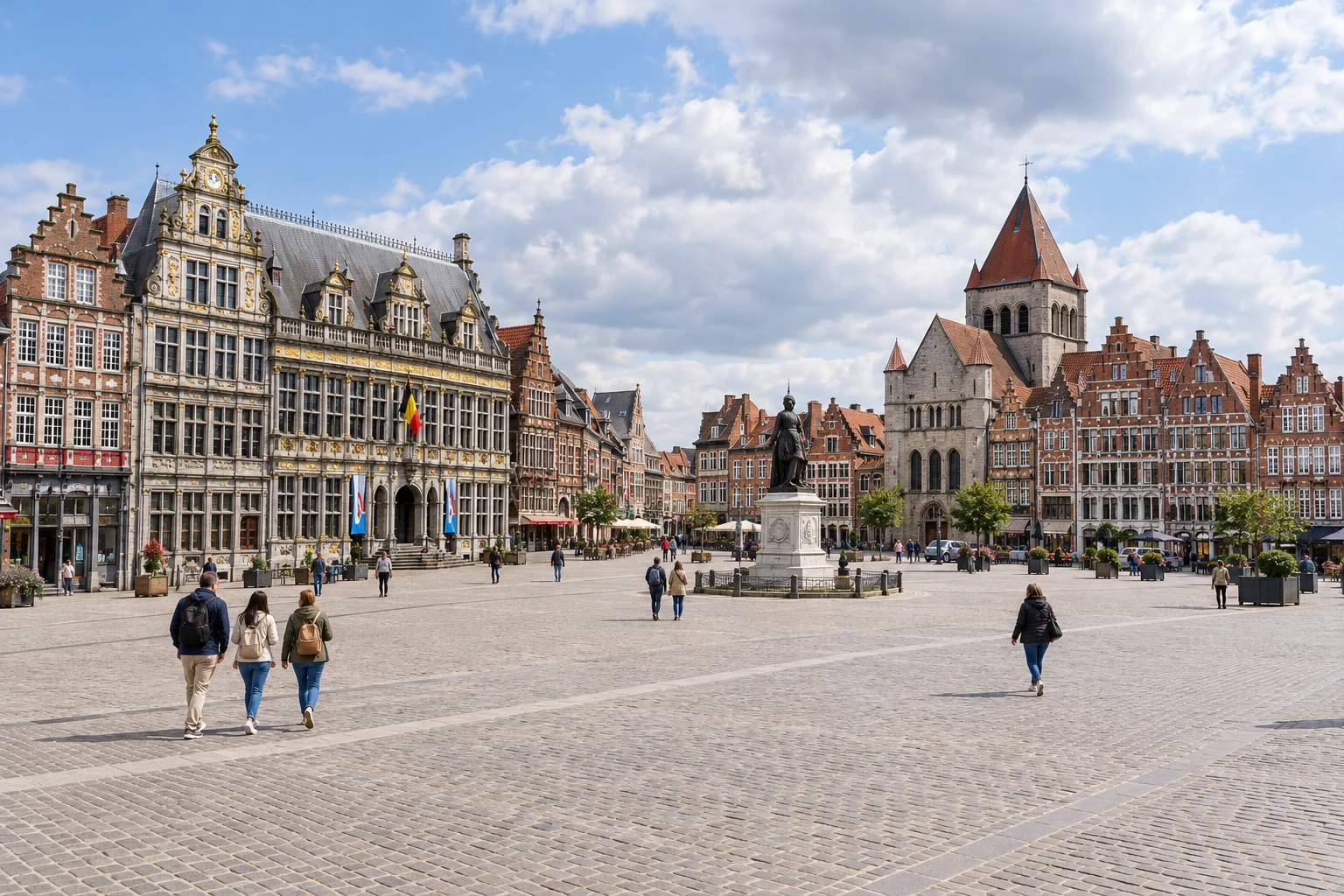
Tournai (Doornik in Flemish) sits on the banks of the Escaut, the river Flemish speakers call the Schelde, near the French border. In Roman times it was called Tornacum, and in the 5th century it was the capital of the Franks under King Childeric I, whose tomb was found in the town in 1653. The Grand-Place is triangular because several old roads met there. Around it are the Halle aux Draps, the former cloth market from 1610 in a Renaissance style, rebuilt in 1881; the Église Saint-Quentin, a Romanesque church dating to about 1200; and a statue of Marie-Christine de Lalaing, who defended the town in 1581. In the centre of the square are a series of ground-level fountains. In a corner of the square rises the Beffroi of Tournai, begun around 1188 in the 12th century, at 72 meters high. It is part of the Belfries of Belgium and France recognized by UNESCO. The ascent is by a spiral staircase: the first balcony, with a 360-degree view and orientation tables, is reached after 142 steps; the second, after 257 steps, passing the large bell, the Bancloque. Along the way there is a room about the tower’s history, the old cells and the bell ringer’s room, from which you can watch the carillon play.

Stops: Grand-Place of Tournai, Beffroi of Tournai, Halle aux Draps, Église Saint-Quentin.

Includes: Self-guided walk around the square. The belfry has a separately ticketed entrance, included in city passes (City Pass). Check the current price list.

Tip: The belfry usually opens only in the afternoon, Tuesday to Sunday, and is not wheelchair accessible. The visit takes about 40 minutes. On Sundays the carillon plays in the afternoon; it can be heard from the bell ringer’s room or from the square itself.

Best time: Year-round. From April to October the carillon plays on Sunday afternoons; in December the square usually hosts a Christmas village and an ice-skating rink.

Cathédrale Notre-Dame de Tournai: the five towers

From Tournai city center On foot about 1 hour morning easy

The Cathédrale Notre-Dame de Tournai has been on UNESCO’s World Heritage list since 2000 and is visible from afar because of its five Romanesque towers, each about 83 m tall. It combines two styles: the Romanesque nave and transept from the 12th century, consecrated in 1171, and the Gothic choir, rebuilt from 1243 and dedicated in 1255, about 36 m high. Overall, the building is roughly 134 m long. On August 14, 1999, a tornado hit central Tournai and exposed structural problems, especially in one tower, which became tilted. Since then the cathedral has been undergoing a long-term restoration in stages: stabilizing the Gothic choir, replacing roofs, cleaning the stone walls, repairing stained glass, and installing a new floor, largely of Tournai stone. For that reason, parts of the interior are often closed while each stage is carried out. Along the fences around the worksite, an outdoor exhibition tells the story, the architecture and the phases of the restoration, and the tourist office shows a film about the cathedral. Walk all the way around the exterior to see the towers from different angles, from the Place de l'Évêché and the Grand-Place.

Stops: Cathédrale Notre-Dame de Tournai, Place de l'Évêché, Grand-Place de Tournai.

Includes: Entry to the cathedral is free in the areas open to visitors. The exhibition on the restoration is located outside and can be seen at any time.

Tip: Before you go, check with the Tournai tourist office which interior areas are open. There are no visits during Masses. The tourist office runs a guided walk of about 1 hour through the UNESCO quarter, including the cathedral, the belfry and the Grand-Place.

Best time: All year round. On the weekend of the Grande Procession in September the cathedral is the focus of the celebrations.

Doudou (Ducasse de Mons): the procession of the Car d'Or and the Combat called Lumeçon

From Mons center On foot about 4 hours on the main Sunday morning easy (crowds and long standing periods)

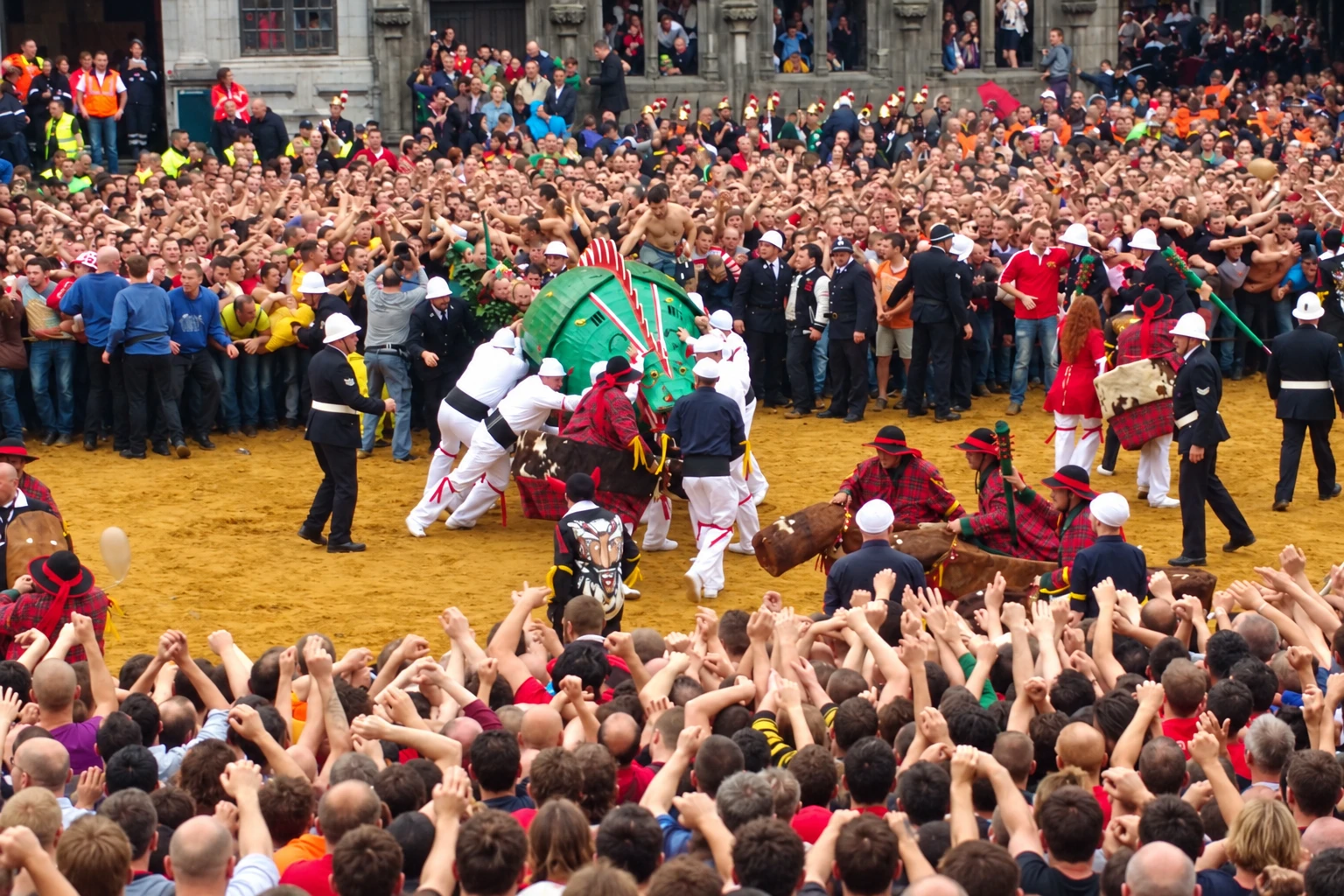
The Doudou is Mons’s major festival and takes place every year on Trinity weekend, which falls between May and June. In 2005, the Ducasse de Mons was recognized by UNESCO as a masterpiece of the oral and intangible heritage of humanity. The name comes from the music that plays continuously during the celebration. On Saturday, the shrine of Sainte-Waudru is taken down from the collegiate church altar and handed to the mayor. On Sunday morning, the Procession du Car d'Or carries the shrine through the streets on the golden carriage, pulled by horses, accompanied by about 1,600 costumed participants. Around midday, the Car d'Or climbs the Rampe Sainte-Waudru, a steep slope; legend says that if it does not climb it in one go the town will have bad luck, and the crowd helps to push. Shortly after, on the Grand-Place, the Combat dit Lumeçon begins: Saint George, on horseback, fights the dragon for about 30 minutes. Around them are the Chinchins, the Hommes blancs, who carry the dragon, and the Diables, who taunt the audience. Spectators try to pull hairs from the dragon’s tail, which bring good luck. The festival continues for about a week, with concerts, a street fair and, the following Sunday, the children’s Lumeçon.

Stops: Collégiale Sainte-Waudru, Rampe Sainte-Waudru, Grand-Place de Mons, Car d'Or.

Includes: The streets and the Grand-Place are freely accessible. There is a wheelchair-accessible grandstand sold by the tourist office, and café terraces that require reservations.

Tip: Arrive early at the Grand-Place for the Lumeçon: the square fills up and the combat is viewed standing, shoulder to shoulder. With small children, prefer to watch the procession from a point along the route. During the festival week, book everything in advance.

Best time: Once a year, on Trinity weekend, between May and June. The date changes each year: confirm before making plans.

See 13 more tours

Pont des Trous and the Escaut quays

From Tournai city center On foot about 1 hour 30 minutes afternoon easy

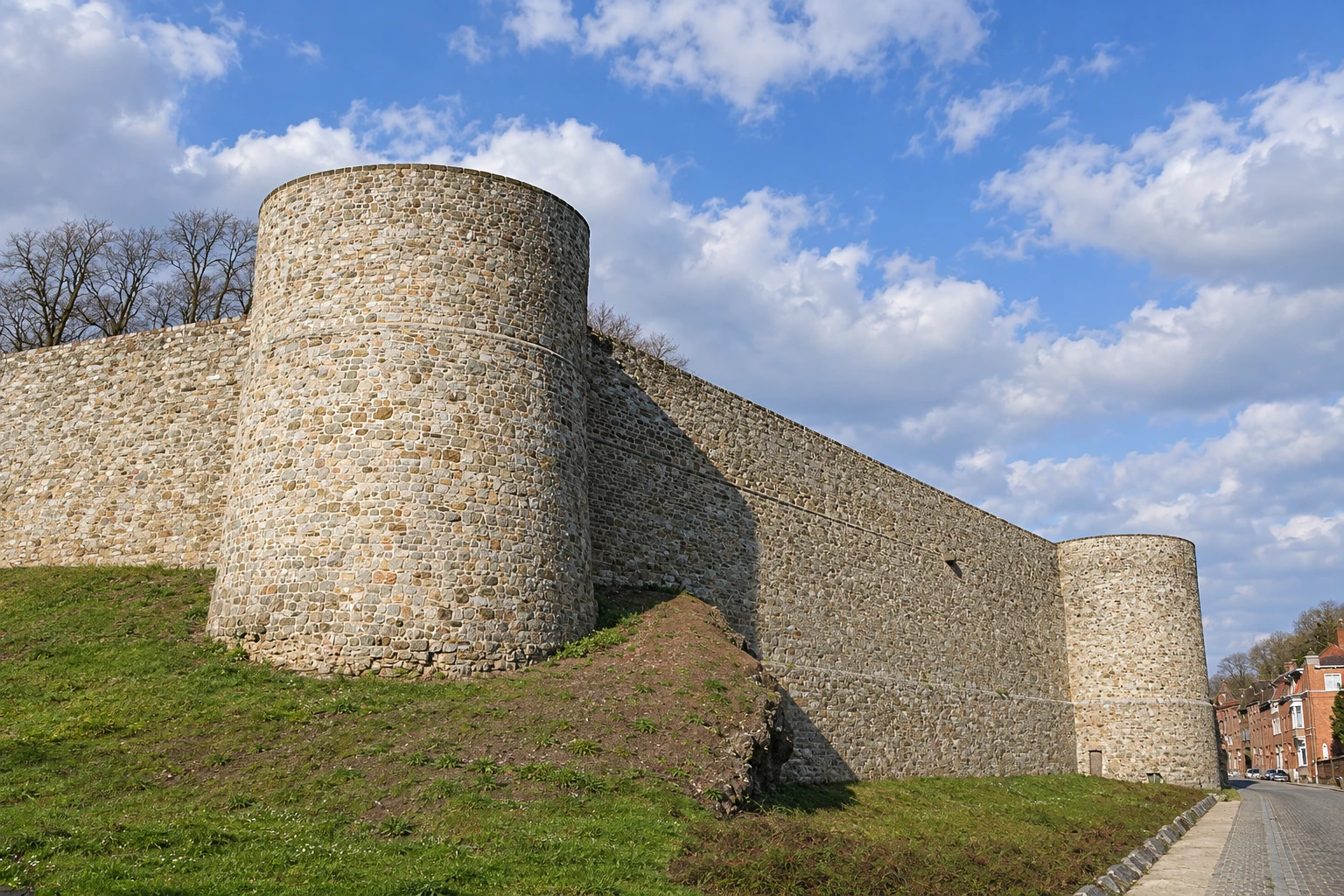
The Pont des Trous is a fortified bridge over the Escaut that was part of Tournai’s second city wall, which had 18 gates. Construction took nearly 50 years: the tower on the left bank, the Tour du Bourdiel, dates from 1281, and the tower on the right bank, the Tour de la Thieulerie, was completed in 1304. Between them, huge grilles could be lowered at any time to block the passage of boats. The name comes from a nearby lock that locals called "Les Trous" (the holes). In 1948 the waterway arch was raised by 2.40 meters to let ships pass. Later, as vessels grew even larger, the three arches were dismantled and rebuilt higher, while the medieval towers remain standing. The best way to see the bridge is to walk along the Escaut quays, which total about 2.7 km. The Quai des Salines has listed historic facades, and the Quai Sakharov lies on the opposite side of the bridge. In summer, the tourist office runs guided tours of about 1 hour 30 minutes that go up onto the wall between the two towers.

Stops: Pont des Trous, Escaut, Quai des Salines, Quai Sakharov, Tour du Bourdiel, Tour de la Thieulerie.

Includes: Free walk along the quays. The guided tour of the bridge, in summer, requires a separate paid ticket and departs on the Quai Sakharov side. Check the current schedule.

Tip: Do the visit at dusk, when the light strikes the towers. There is an audio route along the river, “L'Escaut vous raconte...”, offered by Tournai tourism. Combine it with the Grand-Place, a few minutes' walk away.

Best time: All year round, on dry days. Guided visits to the bridge usually take place in the European summer.

Mons Memorial Museum and the Saint-Symphorien military cemetery

From Mons city centre On foot to the museum; by car or taxi to Saint-Symphorien about 3 hours morning easy

Mons has a long military history, and the Mons Memorial Museum tells that story from the perspective of those who lived it. The museum is housed in the former Machine à Eau, the building that supplied water to the whole city between 1871 and 1961. The permanent exhibition, covering 1,200 m², spans from the Middle Ages to the 20th century, with items selected from the city's roughly 5,000 military objects, letters, notebooks and testimonies from British, American, Canadian, Belgian and German soldiers and civilians. The texts are in French, Dutch and English. On August 23, 1914, the German army attacked British troops at Mons at the start of World War I. About 4,000 Commonwealth soldiers escaped the encirclement, and the legend of the "Angels of Mons" was born, said to have shown the way to the soldiers. Southeast of the town, the St Symphorien Military Cemetery was created by the German army in 1916 and contains 284 German soldiers and 229 Commonwealth soldiers. It is the resting place of John Parr, considered the first Commonwealth soldier killed in action in the war, and George Lawrence Price, a Canadian, killed on November 11, 1918, the day of the armistice, considered the last. The cemetery has a garden-like feel, with trees and paths among the graves. Visit quietly and respectfully.

Stops: Mons Memorial Museum, St Symphorien Military Cemetery, Saint-Symphorien.

Includes: The museum has a separate paid admission, included on the Mons Card; texts in three languages and guides in braille. Entry to the cemetery is free. Check the current price list.

Tip: The museum is closed on Mondays and the visit takes about 1 hour 30 minutes. For Saint-Symphorien, access is easier by car or taxi. On the first Sunday of the month the museum does not charge admission.

Best time: All year round. On November 11, the anniversary of the armistice, the date carries special significance in the region.

Grand-Hornu: former mining complex, MACS and CID

From Mons Car or taxi (about 10 km) about 3 hours afternoon easy

Grand-Hornu is in Hornu, in the municipality of Boussu, about 10 km west of Mons center, in the Borinage region, which was built on coal mining. It is a former mining complex constructed between 1810 and 1830 by Henri De Gorge, a merchant from Lille, with designs by architects François Obin and later Bruno Renard. In 2012 it was inscribed on UNESCO’s World Heritage list, together with three other sites, as part of the Major Mining Sites of Wallonia. The heart of the complex is the Cour Ovale, a large oval courtyard surrounded by the industrial buildings, within a large quadrilateral, with the former stables and the engine room. Around it, De Gorge built a workers’ village of 425 houses on six straight, wide streets. Mining ceased in 1954; the site was restored and belongs to the province of Hainaut. In the former engineers’ building is the MACS, the contemporary art museum of the Federation Wallonia-Brussels, designed by architect Pierre Hebbelinck. The CID, the centre for innovation and design, occupies another part of the complex. Both host temporary exhibitions that change throughout the year.

Stops: Grand-Hornu, Cour Ovale, MACS, CID, Hornu, Boussu.

Includes: The ticket grants access to the site and exhibitions, with guided tours included at some times and an audio guide available for rent. The Mons Card provides a discount. Check the current price list.

Tip: Open Tuesday to Sunday; closed on Mondays and on some year-end public holidays. There is a café and a shop on site. Also walk the streets of the workers’ village outside the complex. On the first Sunday of the month there is no admission fee.

Best time: All year round, Tuesday to Sunday.

Musée du Doudou

From Mons center On foot about 1 hour afternoon easy

If you cannot be in Mons on the Trinity weekend, you can learn about the Doudou at the Musée du Doudou, in the Jardin du Mayeur next to the Grand-Place. The museum follows the legend of Saint George and the dragon and explains the Ducasse de Mons, recognized by UNESCO in 2005, with large panels and interactive features. The exhibition looks at the festival from several angles: history, anthropology, science, art, religion and city life. Items include Saint George’s gilded lance, the dragon’s teeth and medallions, dragons from other periods and the seal of Sainte-Waudru. The texts are in French, Dutch and English, and there are adapted materials and braille guides for people with visual impairments.

Stops: Musée du Doudou, Jardin du Mayeur, Grand-Place de Mons.

Includes: Separate paid admission; included on the Mons Card. Check the current pricing.

Tip: Usually open Tuesday to Sunday. Visit before going to the Grand-Place and the Collégiale Sainte-Waudru: it makes it easier to recognize the festival locations. On the first Sunday of the month, admission is free.

Best time: All year. During the week of the Doudou, between May and June, opening hours may change.

Musée des Beaux-Arts de Tournai, by Victor Horta

From Tournai center On foot about 1 hour 30 minutes morning easy

The Musée des Beaux-Arts de Tournai was designed by Victor Horta, the Belgian Art Nouveau architect. The earliest drawings date from 1907. The theft of the Mona Lisa in Paris led Horta to change the plan so that a guard in the central hall could see every room; World War I delayed the work, and the museum opened in 1928. The building has a shape reminiscent of a turtle and blends Art Nouveau and modernism, with Art Deco influence. A large sculpture hall at the center is surrounded by smaller painting rooms, topped by glass domes that let in natural light. The collection began with the modern art holdings of Brussels patron Henri Van Cutsem and includes two works by Édouard Manet. The museum is located in the Enclos Saint-Martin, next to the town hall park, which occupies the site of the former Benedictine abbey of Saint-Martin.

Stops: Musée des Beaux-Arts de Tournai, Enclos Saint-Martin, Hôtel de Ville de Tournai.

Includes: Admission paid separately, included in some city passes. Check the current price table.

Tip: Closed on Mondays; on Sundays it opens only from late morning. On the first Sunday of the month, Tournai museums do not charge admission. The Muséum d'Histoire naturelle is in the same courtyard as the town hall, a few steps away.

Best time: All year round, Tuesday to Sunday.

Mundaneum: Paul Otlet's paper archive

From Mons city centre On foot about 1 hour 30 minutes afternoon easy

The Mundaneum preserves the project of two Belgian lawyers, Paul Otlet and Henri La Fontaine, who from 1895 tried to gather and classify all the world's knowledge, with world peace as their goal. La Fontaine received the Nobel Peace Prize. They developed the Universal Decimal Classification, used in libraries, and assembled more than 12 million index cards and documents. In 1934, Otlet imagined a network of "electric telescopes" to consult interconnected documents, and for this reason many people see the Mundaneum as a precursor of the internet. The collection is part of UNESCO's Memory of the World programme. The museum operates in an old department store from the 1930s, on Rue de Nimy, in the centre of Mons. The visit displays part of the archive and temporary exhibitions on topics related to information, peace and the history of ideas.

Stops: Mundaneum, Rue de Nimy.

Includes: Admission paid separately; the Mons Card gives a discount. Check the current price table.

Tip: It is usually open Wednesday through Sunday, with a lunch break on weekdays. On the first Sunday of the month admission is free. Worthwhile for those who like libraries, history and technology.

Best time: All year round, Wednesday to Sunday.

Maison Van Gogh in Cuesmes

From Mons By car or taxi to Cuesmes, in the municipality of Mons about 2 hours, including travel time morning easy

Vincent van Gogh lived in the Borinage, the mining region around Mons, from December 1878 to October 1880, first working as a preacher among the miners. In Cuesmes, now part of the municipality of Mons, he stayed in 1880 at the house of the miner Charles Decrucq and his wife Jeanne, sharing the room with the couple’s children. It was at that time, around August 1880, that he decided to become an artist: he drew scenes of the area, and two sketches he gave to Decrucq have been preserved. The visit starts in the garden, goes through a renovated pavilion and continues through the small house. A sound installation places the painter and his work in the context of the 19th‑century Borinage, its mines and the life of the workers.

Stops: Maison Van Gogh, Cuesmes, Borinage.

Includes: Separate paid admission, included on the Mons Card; children up to 12 years old free. Check the current price table.

Tip: The house is small and closes early, mid‑afternoon; it is open Tuesday to Sunday. Combine with Grand-Hornu, also in the Borinage, on the same day. On the first Sunday of the month there is no admission fee.

Best time: All year round, Tuesday to Sunday.

Le CAP: Musée des Beaux-Arts de Mons and Maison des Collections

From Mons city centre On foot about 2 hours afternoon easy

Le CAP is Mons’s cluster of art and history museums, on a side street off the Grand-Place. It brings together three spaces: the Musée des Beaux-Arts, formerly known as BAM; the Maison des Collections; and the Jardin du Poirier Beurré. The Musée des Beaux-Arts hosts temporary exhibitions, some featuring works from the city collections and others with major international names. Exhibitions have included Van Gogh, Niki de Saint Phalle, Roy Lichtenstein, Joan Miró and Auguste Rodin, as well as the Mons School. The Maison des Collections occupies the renovated house of Jean Lescarts and tells the story of Mons, from prehistory to the present day, with about a hundred items from the municipal collections, in French. The Jardin du Poirier Beurré houses a collection of carved stones, a resting area and permaculture beds.

Stops: Le CAP, Musée des Beaux-Arts de Mons, Maison des Collections, Jardin du Poirier Beurré, Rue Neuve.

Includes: Separate paid admission; higher price for international exhibitions; the Mons Card gives a discount. Check the current price table.

Tip: The Musée des Beaux-Arts opens only during exhibitions: check what’s on before you go. It generally operates Tuesday to Sunday. On the first Sunday of the month admission is usually free.

Best time: All year round, during exhibition periods.

SILEX'S: the Neolithic flint mines of Spiennes

From Mons Car or taxi (about 6 km) about 2 to 3 hours afternoon easy; moderate for the descent to the well

At Spiennes, about 6 km southeast of Mons, Neolithic people dug shafts to extract flint, the stone used to make axes and other tools. The mines were active from roughly 4300 to 2200 BCE, and the shafts reach over 10 meters deep. In 2000 the site was inscribed on the UNESCO World Heritage list. SILEX'S is the visitor center on the site. The museum shows how flint was extracted and worked, with original tools, ancient pieces and replicas; outside, a photo display presents recent finds. Four waymarked trails cross the surrounding fields, with maps available at reception. The highlight is the guided descent into a Neolithic mining shaft of up to 10 meters, down a vertical ladder and wearing a helmet, in groups of up to 12 people.

Stops: SILEX'S, Spiennes, Minières néolithiques de Spiennes.

Includes: Separate paid ticket; included on the Mons Card. The descent to the well is guided, requires mandatory reservation, and is only for those over 10 years old. Check the current schedule.

Tip: Book the visit and the descent by phone before you go. Descents usually take place in the afternoon on weekends and holidays and, during Belgian school holidays, from Thursday to Sunday. Wear clothes that can get dirty and sturdy footwear.

Best time: In season, generally from April to November, Tuesday to Sunday. Confirm opening dates.

MuFIm: Musée de Folklore et des Imaginaires de Tournai

From Tournai city centre On foot about 1 hour 30 minutes afternoon easy (several stairs)

The MuFIm, the museum of folklore and the imaginary of Tournai, occupies a 17th-century Tournai house a few steps from the Grand-Place. There are 23 rooms that tell life in the city from 1800 to today. Along the way you encounter staged scenes, such as a cotton stocking maker at work, a funeral carriage and an old French fries trailer, as well as works by 20th-century and contemporary artists. On the top floor there is a replica of the 1701 model of Tournai, commissioned by Louis XIV, king of France, showing the fortified city. A tablet helps locate the buildings that still exist.

Stops: MuFIm, Réduit des Sions, Grand-Place de Tournai.

Includes: Separate paid admission, included in some city passes. Check the current price list.

Tip: Closed on Mondays; on Sundays it opens only from late morning. On the first Sunday of the month, the museums in Tournai do not charge admission. Those interested in military history can continue to the Musée d'Histoire militaire, also near the Grand-Place.

Best time: All year round, from Tuesday to Sunday.

Muséum d'Histoire naturelle and Vivarium of Tournai

From Tournai city centre On foot about 1 hour 30 minutes morning easy

The Muséum d'Histoire naturelle of Tournai was founded in 1828, when the region belonged to the United Kingdom of the Netherlands, and opened to the public in 1829. Since 1839 it has occupied the former brewery of the Saint-Martin abbey, in the main courtyard of the town hall. The gallery of taxidermied animals keeps the feel of a 19th‑century cabinet of curiosities. Among the exhibits is an elephant brought to Belgium in 1839, recognised as a “treasure” by the Fédération Wallonie‑Bruxelles. The vivarium houses fish, spiders, amphibians and reptiles in recreated habitats. Outside, a scientific garden contains enclosures and a greenhouse of tropical butterflies. The museum is a member of the European Association of Zoos and Aquaria and takes part in breeding programmes for threatened species.

Stops: Muséum d'Histoire naturelle of Tournai, Hôtel de Ville de Tournai, Rue Saint-Martin.

Includes: Separate paid admission; included in some city passes. Check the current pricing.

Tip: Good program with children and for a rainy day. Closed on Mondays; on Sundays it opens only from late morning. On the first Sunday of the month, admission is free.

Best time: All year round, Tuesday through Sunday.

TAMAT: tapestry and textile arts museum of Tournai

From Tournai city centre On foot about 1 hour afternoon easy

TAMAT, the tapestry and textile arts museum of Tournai, is housed in a neoclassical building on Place Reine Astrid, near the Grand-Place, and opened in 1990. The permanent display has old tapestries from the 15th and 16th centuries and modern works by Dubrunfaut, Somville and Deltour from the Forces Murales group, which helped renew tapestry in the 20th century. The top floor shows works by contemporary artists using fabric. The museum also has a restoration workshop and cares for the textile collection of the city, the province of Hainaut and the Fédération Wallonie‑Bruxelles.

Stops: TAMAT, Place Reine Astrid.

Includes: Separate admission fee; under‑18s do not pay outside school hours. Check the current schedule.

Tip: Closed on Mondays and at lunchtime; in winter, also on Sunday mornings. On the first Sunday of the month admission is free.

Best time: All year round, from Tuesday to Sunday.

Pairi Daiza, in Brugelette

From Mons Car or train to Cambron-Casteau and 1.2 km on foot around 7 hours full day easy (a lot of walking)

Pairi Daiza is a large zoological park and garden in Brugelette, between Mons and Ath. It covers about 80 hectares on the former estate of the Cistercian abbey of Cambron, enclosed by a wall of roughly 3 km. The park is divided into ten themed “worlds”, with gardens and more than a thousand species of animals, which are not always on view. It is a full‑day outing, aimed mainly at families with children and at people who enjoy gardens.

Stops: Pairi Daiza, Brugelette, Cambron-Casteau.

Includes: Paid admission purchased separately online. Activities and meals are charged extra. Check the current price table.

Tip: By train, the station is Cambron-Casteau, about 1.2 km from the entrance, roughly a 15–20 minute walk; at weekends there are hourly trains on the line linking Mons and Ath. If you buy the ticket online, SNCB gives a discount on the train fare. Wear comfortable shoes.

Best time: The park is open year‑round. From April to September, the long days allow more to be enjoyed; during Belgian school holidays the park becomes busy.


Day by day

3, 5 and 7-day itinerary in Mons and Tournai

Suggestions to plan the trip. Change the order of the days according to the weather and tour availability.

3 days · Mons and Tournai in three days: belfries, Sainte-Waudru and the five towers

For For those with limited time who want the essentials of both towns, all on foot and by train, based in Mons. · Based in Mons
  1. Day 1 · Arrival and Grand-Place of Mons

    Arrive at Brussels Airport and take the train to Mons, about 1 hour 10 minutes on the direct train. After dropping off your luggage, stroll the Grand-Place of Mons, visit the Hôtel de Ville and see the Singe du Grand-Garde at a relaxed pace to recover from the flight. Stop by the tourist office to buy the Mons Card. In the evening, dine at a brasserie around the square.

  2. Day 2 · Beffroi, Sainte-Waudru and Musée du Doudou

    In the morning, climb the Beffroi of Mons and enjoy the view from the lookout. Walk down to the Collégiale Sainte-Waudru and see the Car d'Or. In the afternoon, visit the Musée du Doudou in the Jardin du Mayeur and, if you have time, the Mundaneum. Avoid Monday: most museums are closed.

  3. Day 3 · A day in Tournai

    Take the train to Tournai, about 30 minutes on the direct train. In the morning, see the Cathédrale Notre-Dame de Tournai from the outside and in its open areas, and the Musée des Beaux-Arts de Tournai by Victor Horta. In the afternoon, visit Tournai’s Grand-Place and Beffroi and finish at the Pont des Trous, walking along the Escaut river quays. Return to Mons by train in the early evening.

5 days · Mons, Tournai and the Borinage in five days: Van Gogh, mines and memory
For For those who want both towns at a relaxed pace, the history of the Borinage coal mines, Van Gogh’s footsteps and First World War memory. · Based in Mons
  1. Day 1 · Arrival and Grand-Place of Mons

    Arrive via Brussels Airport and take the train to Mons, about 1 hour 10 minutes on the direct train. In the afternoon, stroll through Mons’s Grand-Place, the Hôtel de Ville and the Singe du Grand-Garde at a relaxed pace. Buy the Mons Card at the tourist office.

  2. Day 2 · Beffroi, Sainte-Waudru and Musée du Doudou

    In the morning, climb the Beffroi of Mons and walk down to the Collégiale Sainte-Waudru, with the Car d'Or. After lunch, visit the Musée du Doudou and then the Mundaneum or the CAP, depending on the exhibition on display.

  3. Day 3 · War memory and Van Gogh

    In the morning visit the Mons Memorial Museum and go by car or taxi to the Saint-Symphorien military cemetery, allowing time to walk in silence among the graves. In the afternoon, go to the Maison Van Gogh in Cuesmes, which closes in the mid-afternoon.

  4. Day 4 · A day in Tournai

    Train to Tournai, about 30 minutes. In the morning, see the Cathédrale Notre-Dame de Tournai and the Musée des Beaux-Arts de Tournai. In the afternoon climb the Beffroi of Tournai, which opens only in the afternoon, and walk to the Pont des Trous along the Escaut quays. Return to Mons at night.

  5. Day 5 · Grand-Hornu and return

    Go by car or taxi to Grand-Hornu, about 10 km from Mons, and walk the Cour Ovale, the workers' village and the MACS and CID exhibitions. Return to Mons and take the train to Brussels Airport, allowing about 1 hour 10 minutes and extra time for boarding.

7 days · Mons and Tournai in seven days: belfries, museums, flint mines and Pairi Daiza
For For those who want to get to know both towns well, including Tournai’s museums, the Spiennes flint mines and a day at Pairi Daiza; good for families. · Based in Mons (4 nights) and Tournai (2 nights)
  1. Day 1 · Arrival and Grand-Place of Mons

    Land at Brussels Airport and take the train to Mons; the direct train takes about 1 hour 10 minutes. In the afternoon, see Mons’s Grand-Place, the Hôtel de Ville and the Singe du Grand-Garde at a leisurely pace. Purchase the 48-hour Mons Card at the tourist office.

  2. Day 2 · Beffroi, Sainte-Waudru and Musée du Doudou

    In the morning, climb the Beffroi of Mons and walk down to the Collégiale Sainte-Waudru, with the Car d'Or. In the afternoon, visit the Musée du Doudou and finish at the CAP, with the exhibition at the Musée des Beaux-Arts and the Maison des Collections.

  3. Day 3 · War memory and Mundaneum

    In the morning visit the Mons Memorial Museum and the Saint-Symphorien military cemetery by car or taxi. In the afternoon return to the center for the Mundaneum. If it is Trinity weekend, between May and June, swap the plan for the Doudou.

  4. Day 4 · Borinage: Van Gogh, Grand-Hornu and Spiennes

    In the morning go to the Maison Van Gogh in Cuesmes and continue by car or taxi to Grand-Hornu, with the Cour Ovale and MACS. From April to November, swap Grand-Hornu for SILEX'S in Spiennes, and book in advance the descent to the Neolithic shaft in the afternoon.

  5. Day 5 · Pairi Daiza

    Spend the day at Pairi Daiza in Brugelette, between Mons and Ath. Go by car or train to Cambron-Casteau, about 1.2 km from the entrance. Buy tickets online. In the evening, return to Mons.

  6. Day 6 · Arrival in Tournai: cathedral, Grand-Place and Beffroi

    Take the train to Tournai, in about 30 minutes. In the morning, see the Cathédrale Notre-Dame de Tournai and the Musée des Beaux-Arts de Tournai. In the afternoon, climb the Beffroi de Tournai, visit the Grand-Place and, at the end of the day, walk to the Pont des Trous along the banks of the Scheldt.

  7. Day 7 · Tournai museums and return

    In the morning, visit the MuFIm and the Muséum d'Histoire naturelle et Vivarium de Tournai, or the TAMAT, depending on your preferences. After lunch, take the train to Brussels Airport; some schedules require a change in Brussels; allow about 1 hour to Brussels and extra time for boarding.

Best time to go

When to go: Mons and Tournai month by month

From May to September the days are long and outdoor visits are easier. The Doudou usually falls between late May and mid-June, on the Trinity Sunday weekend. The Spiennes mines welcome visitors from April. In winter, from December to February, it is cold and it gets dark early, but museums and churches remain open.

The seasons shown are the most usual ones; nature doesn't always follow the calendar.

January High rain

cold winter · short days

European winter, with seasons reversed compared to Brazil. In Mons and Tournai, average highs are near 6 °C and lows around 1 °C, with rain on about 13 days. It can freeze and snow, without guarantee. It gets dark by mid-afternoon. In the first days of the month Mons often still has the Christmas stalls on the Grand-Place. Museums are the month's main activity; most close on Mondays.

February Some rain

late winter · quiet museums

Still winter: average highs around 7 °C and lows of 1 °C in both cities, with rain on about 11 to 12 days. Days begin to lengthen but remain short. A quiet month for the museums of Mons and Tournai, such as the Mundaneum and the Musée des Beaux-Arts de Tournai. The Spiennes mines remain closed.

March Some rain

cold spring · Tournai Carnival

Start of the European spring, still cold: average highs around 11 °C and lows of 2 to 3 °C, with rain on about 11 days. The Carnival of Tournai takes place on the third Saturday before Easter, usually in March. At the end of the month daylight saving time begins, and the difference with Brasília becomes 5 hours.

April Low rain

driest month · season begins

The driest month of the year: about 45 mm of rain over roughly 9 days, with average highs near 15 °C and lows of 4 to 5 °C. Days get longer. SILEX'S in Spiennes typically opens the season. In Tournai, Good Friday, in March or April, features the large flower fair, and the belfry carillon resumes playing on Sunday afternoons.

May Some rain

spring · Doudou possible

Mild spring: average highs around 19 °C and lows of 8 °C, with rain on about 10 days. Days are long. When Trinity falls in May, the Doudou takes over Mons at the end of the month, with the Car d'Or procession and the Combat dit Lumeçon. In Tournai, Ascension Day usually brings city festivities.

June Some rain

long days · Doudou possible

Start of the European summer: average highs around 22 °C and lows of 11 °C, with rain on about 10 days. It gets dark very late, which helps to fit museums and walks into the same day. When Trinity falls in June, the Doudou takes place that month: the city fills up and you need to book everything in advance.

July Some rain

European summer · long days

Warmest month: average highs around 24 °C and lows of 13 °C, with about 70 to 75 mm of rain over roughly 10 days, often in showers. School holidays in Belgium and across Europe. On July 21, the Belgian national holiday, Tournai holds a celebration in the city park.

August Some rain

showers · carillon on Sundays

Heat similar to July: average highs around 24 °C and lows of 13 °C, with about 80 mm of rain over roughly 10 days. School holidays: museums and Pairi Daiza get busier. In Tournai, the carillon plays on Sunday afternoons, and tourism runs guided visits to the Pont des Trous and the UNESCO neighborhood.

September Low rain

end of summer · Grand Procession

End of the European summer: average highs around 20 °C and lows of 10 °C, with rain on about 10 days. Fewer people than in July and August. On the second weekend of the month, Tournai holds the Grande Procession, a tradition since 1092, with about a thousand people carrying reliquaries and images from the city's churches.

October Some rain

autumn · end of daylight saving time

European autumn: average highs around 15 °C and lows around 7 °C, with rain on about 11 days. Days shorten quickly and park trees turn yellow. At the end of the month daylight saving time ends, and the difference with Brasília returns to 4 hours. In Tournai, the month includes the art event Art in the City.

November High rain

short days · armistice

Late autumn, gray and wet: average highs around 10 °C and lows of 4 °C, with rain on about 12 to 14 days. It gets dark in the late afternoon. On November 11, the day of the 1918 armistice, the date has significance in Mons, where George Lawrence Price is buried in the Saint-Symphorien cemetery. The Spiennes mines close for the season.

December High rain

winter · Christmas markets

European winter, with seasons reversed compared to Brazil. Average highs around 7 °C and lows of 1 to 2 °C, with about 90 mm of rain over roughly 14 days, the wettest month. It gets dark by mid-afternoon. Mons usually sets up Christmas stalls on the Grand-Place and an ice rink on Place Léopold; Tournai sets up the Christmas village and an ice rink on the Grand-Place.

Plan the journey

How to get there: Mons and Tournai

From Brazil by plane

Connections from Brazil are via a stopover in another European city. Confirm before booking. The most commonly used gateway is Brussels Airport (BRU), in Zaventem on the outskirts of Brussels, with a train station under the terminal and direct trains to Mons. Brussels South Charleroi Airport (CRL), about 45 km from Mons, mainly serves low-cost carriers within Europe; from there a shuttle bus takes about 45 minutes to Mons, with frequent departures.

From Brussels and the airport by train

The SNCB/NMBS train is the most practical way to arrive. From Brussels Airport there are direct trains to Mons in about 1 hour 10 minutes; other departures require a change. Tickets departing from the airport carry an additional fee, charged with the fare. From Brussels there are frequent direct trains to Mons in about 55 minutes, and to Tournai in roughly 1 hour. Between Mons and Tournai, the direct train takes around 30 minutes; other services require a change. On weekdays, some trains from Tournai continue direct to Brussels Airport.

By train from Paris, London, Amsterdam or Cologne

Tournai is about 25 km from Lille, France. From Lille-Flandres station, SNCB trains reach Tournai in around 25 minutes, and on weekdays the same line continues to Mons. Lille-Europe, about a 10-minute walk from Lille-Flandres, serves TGVs from Paris (about 1 hour from Paris-Nord) and from Paris-Charles de Gaulle airport, as well as the Eurostar from London, which takes roughly 1 hour 20 minutes. From Paris there is also the OUIGO Train Classique, a conventional train linking Paris-Nord to Bruxelles-Midi with a stop in Mons, three times a day each way. From London, Amsterdam or Cologne, the alternative is to take Eurostar or ICE to Bruxelles-Midi and change for Mons or Tournai. Compare timetables and connections before buying.

By car

The E19 links Brussels to Mons in about 1 hour and continues toward France, headed for Paris, roughly 250 km from Mons. The E42 connects Tournai to Mons; they are about 50 km apart, and the road continues to Charleroi, Namur and Liège. From Brussels to Tournai, the A8/E429 leaves Halle and reaches the city by road in about 90 km. From Lille, the A27/E42 takes you to Tournai in around 25 km. A car makes excursions outside the centers easier: Grand-Hornu, about 10 km west of Mons; SILEX'S in Spiennes, about 6 km southeast; the Saint-Symphorien cemetery; and Pairi Daiza in Brugelette. In the historic centers, leave the car in a car park and walk.

How to get around Mons and Tournai

Both historic centers are explored on foot. In Mons, the station, designed by Santiago Calatrava as a walkway over the tracks, is a few minutes' walk from the Grand-Place, the Collégiale Sainte-Waudru and the Belfry; the center sits on a hill with uphill streets. TEC buses link Mons with neighboring towns and the Borinage. The Mons Card, for 24 or 48 hours, provides entry to the Belfry, the Musée du Doudou, the Mons Memorial Museum, the Maison Van Gogh, SILEX'S and the Treasure of Sainte-Waudru, discounts at Grand-Hornu, the Mundaneum and the CAP, and bike rental subject to availability. In Tournai, the station is close to the center, and the Grand-Place, the cathedral, the museums and the Pont des Trous are all a few minutes' walk from each other.

Documents, language and time zone

Brazilians enter Belgium with a valid passport. Entry requirements for Europe can change: confirm before traveling. For minors, check the requirements before you go. Mons and Tournai are in Wallonia, where French is spoken; in Flemish the cities are called Bergen and Doornik. English is common in the larger museums. Belgium uses Central European Time and observes daylight saving time from late March to late October. The difference from Brasília is +4 hours in European winter and +5 hours in European summer.

Tickets and reservations

The museums in Mons and Tournai charge admission, and most close on Mondays; in Tournai the municipal museums open only from late morning on Sundays. In both cities, several museums offer free admission on the first Sunday of the month. The Belfry (Beffroi) of Tournai opens only in the afternoon. The descent to the Neolithic well at SILEX'S requires a phone reservation and only admits visitors over 10 years old. For the Doudou, the accessible grandstand is sold by the Mons tourist office. Pairi Daiza sells tickets online. Churches, squares, the docks of the Scheldt and the Saint-Symphorien cemetery have free access. Check the current schedule before you go.

Your base to explore

Where to stay and where to eat

Before you go

Practical information

A little planning leaves more time to enjoy the journey.

When to go

From May to September the days are long and outdoor visits are easier. The Doudou usually falls between late May and mid-June, on the Trinity Sunday weekend. The Spiennes mines welcome visitors from April. In winter, from December to February, it is cold and it gets dark early, but museums and churches remain open.

The seasons shown are the most usual ones; nature doesn't always follow the calendar.

How many days to stay

Two days for Mons: one for the center (Grand-Place, beffroi, Sainte-Waudru and a museum) and another for the surroundings, such as Cuesmes, Spiennes and the Grand-Hornu. Pairi Daiza requires a full day on its own. Tournai fits into a single day, by train from Mons or from Brussels. With three or four days you can see everything without rushing.

Which city to stay in

Mons is the most practical base: the historic center, between the Grand-Place and the Collégiale Sainte-Waudru, puts almost everything within walking distance, and the station is a few minutes' walk away. Travelers arriving by train can also stay near Mons station. In Tournai, the center around the Grand-Place and the cathedral has accommodation a short walk from the banks of the Escalda. For those who prefer not to change hotels, Brussels can serve as a base for day trips to both towns.

Respect the place

Take your trash with you, follow the signs and support local businesses. In natural areas, follow the visiting guidelines.

Beyond the guide

Your questions

Frequently asked questions about Mons and Tournai

Can you do Mons and Tournai as a day trip from Brussels?

Each town fits into a day trip by train, since the journey takes about an hour. Doing both in the same day is rushed: it's best to stay overnight in Mons, see the center at a relaxed pace and visit Tournai the next day by train. Check train times before you go.

Do I need a car?

For the centers of Mons and Tournai, no: both towns are walkable from the station. A car helps for Mons's surroundings, such as the Spiennes mines and the Grand-Hornu, which have TEC buses but less frequently. Pairi Daiza has a train station just over 1 km from the entrance.

When is the Doudou?

The Ducasse de Mons, known as the Doudou, usually takes place on the Trinity Sunday weekend, between late May and mid-June. On Sunday the Car d'Or procession takes place and, on the Grand-Place, the fight between Saint George and the dragon, called Lumeçon. The town gets very crowded: book accommodation well in advance.

What language is spoken?

French. In Flemish, the Dutch spoken in Belgium, Mons is called Bergen and Tournai is called Doornik, names that appear on signs and station boards in the north of the country. Larger museums have texts in English; in small cafés and shops, a few words of French help.

What is the time difference with Brazil?

Belgium is 4 hours ahead of Brasília in the European winter and 5 hours ahead in the European summer, from late March to late October. The seasons are reversed: summer runs from June to August, and winter, from December to February, has short days.

Routes in Belgium

Mons and Tournai is on the Napoleon Route from Beaumont to Waterloo

From the first encampment at Beaumont to the Waterloo battlefield, follow the markers of the June 1815 campaign in Wallonia.

Explore the Napoleon Route from Beaumont to Waterloo

Routes in Belgium

Mons and Tournai is on the Boat lifts and canal locks of La Louvière

Bike loop between the historic canal and the modern canal, from Thieu to La Louvière, returning via the Sart aqueduct.

Explore the Boat lifts and canal locks of La Louvière
Explore other destinations Search by state and city