Mons

Hainaut Capital

Mons

In the destination Mons and Tournai.

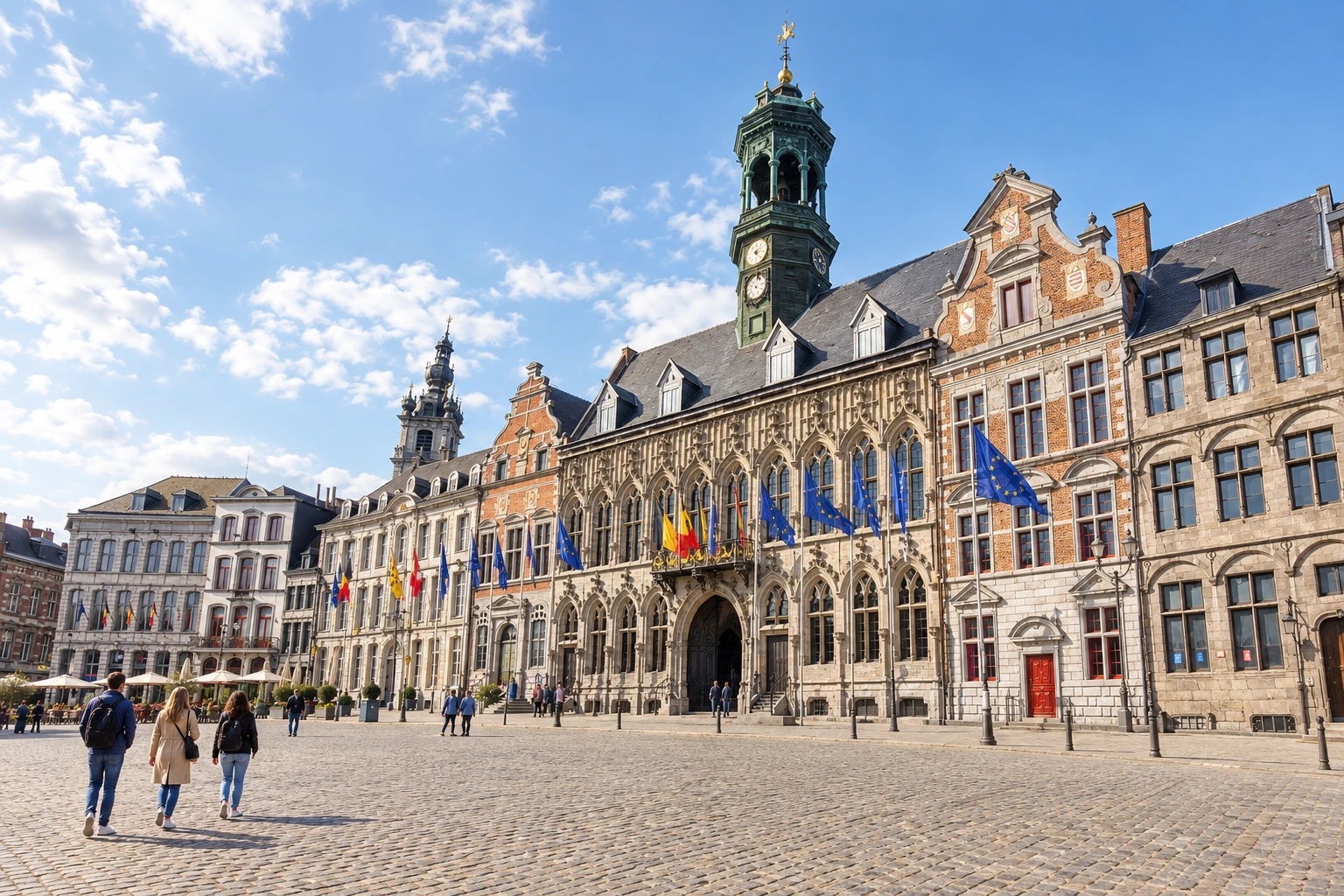
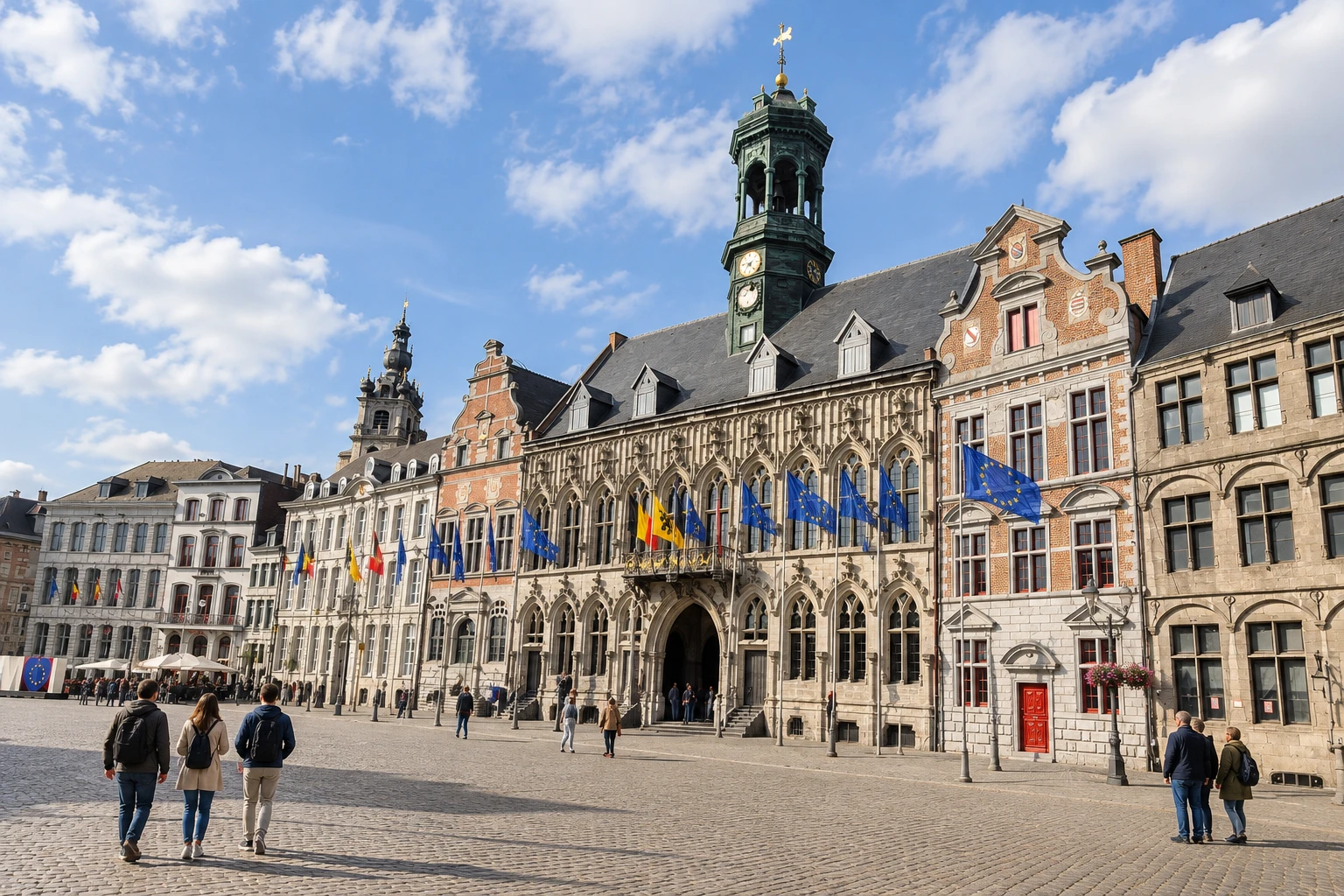
In the photo: Grand-Place and Hôtel de Ville, Mons

Illustrative images. The pictures in this guide are illustrations based on the real place, not photographs, and may differ from it.

Get it on Google Play

The city

What to expect from Mons.

Mons, Bergen in Flemish, is the capital of Hainaut and is French-speaking. The center climbs the hill around the Grand-Place, the Hôtel de Ville with the lucky monkey and the Beffroi de Mons, a UNESCO World Heritage site, up to the Collégiale Sainte-Waudru, the starting point of the Doudou. Museums include the Mundaneum, the BAM and the Mons Memorial Museum. In the surroundings are the Maison Van Gogh in Cuesmes, the flint mines of Spiennes, the Grand-Hornu and, in Brugelette, the Pairi Daiza zoo.

Mons lies in Wallonia in southern Belgium, about an hour from Brussels and less than 10 km from the French border. The capital of Hainaut Province, it has nearly 100,000 residents. People speak French here. The Flemish name, Bergen, means “hills” and refers to the five hills along the Haine River valley. The nearly circular old town occupies one of them. Streets climb from all sides to the belfry at the summit.

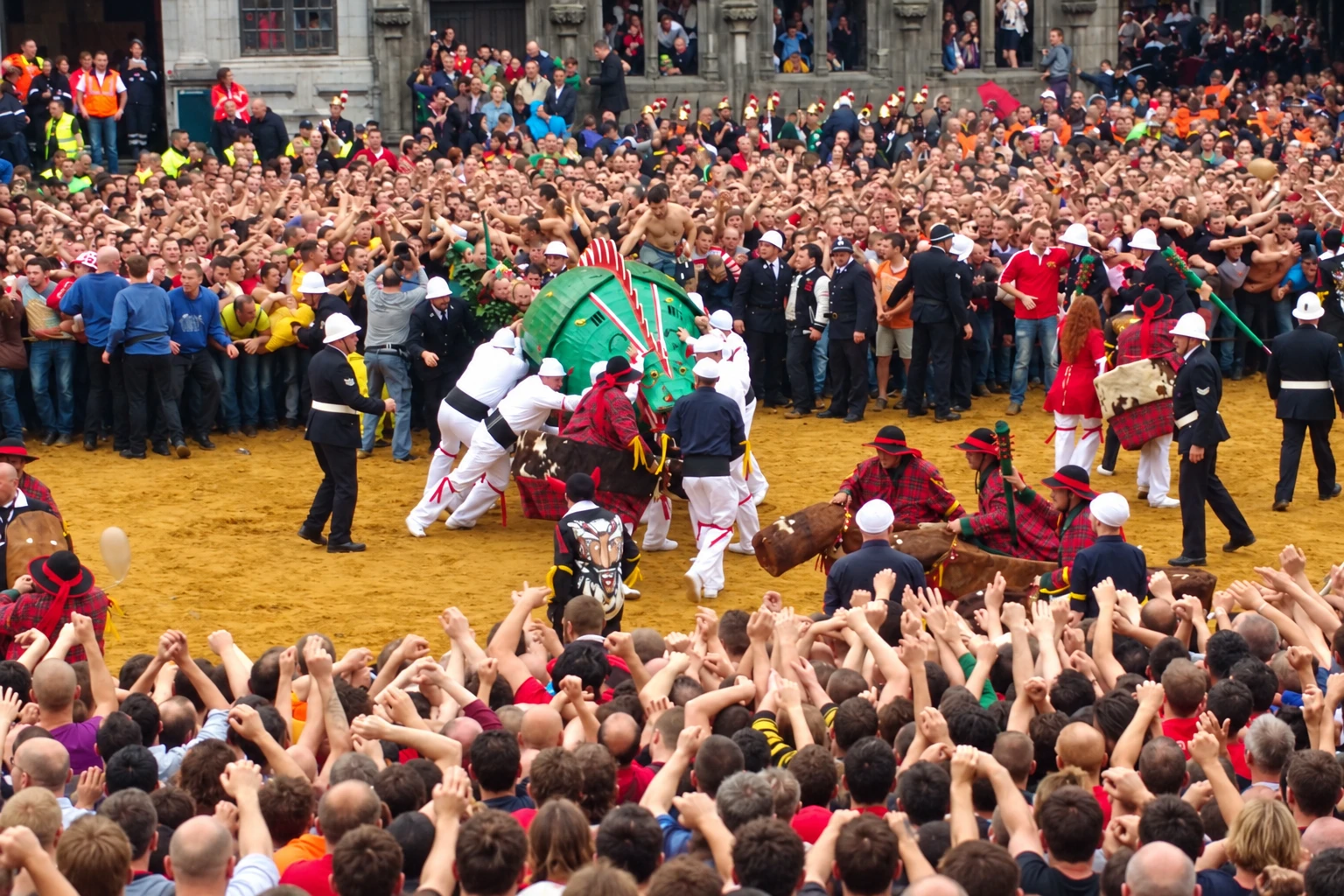
Mons grew up in the seventh century around an oratory founded by Waudru, a Merovingian noblewoman who was later canonized. For centuries it was the capital of the counts of Hainaut. Landmarks from that history include the Collégiale Sainte-Waudru, the Grand-Place with its Gothic town hall, and the 87-meter belfry, the only Baroque belfry in Belgium. The belfry forms part of a UNESCO World Heritage Site. The city's festival, the Ducasse de Mons, known as the Doudou, is on UNESCO's intangible heritage list.

The old town's neighborhoods are close together. At the foot of the hill, near the station designed by Santiago Calatrava, are Place Léopold and the collegiate church. Halfway up is the Grand-Place with the town hall, the lucky iron monkey, cafés, and the tourist office. At the summit are the belfry and Parc du Château, with remains of the counts' castle. To the north, Rue de Nimy is home to the Mundaneum, the Art Nouveau Maison Losseau, and Église Sainte-Élisabeth. On Rue Neuve, CAP brings together the city's art and history museums. A ring of avenues follows the old city walls, of which the Tour Valenciennoise and the casemates at Place Nervienne survive.

Mons is also a university city. Its year as European Capital of Culture in 2015 left new museums and more than a hundred street murals. The municipality covers a large area and includes several former villages: Cuesmes, where Vincent van Gogh lived and decided to become an artist, Spiennes with its Neolithic flint mines, Saint-Symphorien with its World War I military cemetery, and Havré with its ducal castle. Grand-Large marina lies at the junction of two canals. The former coal-mining region of the Borinage begins to the west.

Mons has the temperate climate of northwestern Europe. Winter, from December to February, is cold and damp, with average highs near 6°C, short days, and frequent rain. Spring starts out cold and turns mild in May, at around 19°C. Summer, from June to August, brings average highs of 22°C to 24°C, long days, and showers. Gray skies return in October. April is usually the driest month and December the wettest.

One day gives you time for the Grand-Place, the belfry, and the collegiate church. With two or three days you can add museums and places beyond the center. Most museums close on Mondays. On Trinity weekend, in May or June, the Doudou takes over the whole city. It's the busiest time of year, and some museums change their hours.

Share: WhatsApp

Where to stay

19 places to stay in Mons.

Where to eat

30 places to eat in Mons.

Map of Mons

The city's hotels and restaurants on the map.

Festivals and events

Festivals Mons

Dates change every year: check this year's date before you travel.

Festival calendar in Belgium

The local experience

Things to do in Mons

Mons · Belgium · Square

Grand-Place de Mons

Mons's main square, featuring the 15th-century Gothic Hôtel de Ville, the lucky monkey on the façade and, beyond, the Jardin du Mayeur and the Musée du Doudou. It is the stage for the Lumeçon combat.

Explore Grand-Place de Mons

Mons · Belgium · Tower

Belfry of Mons

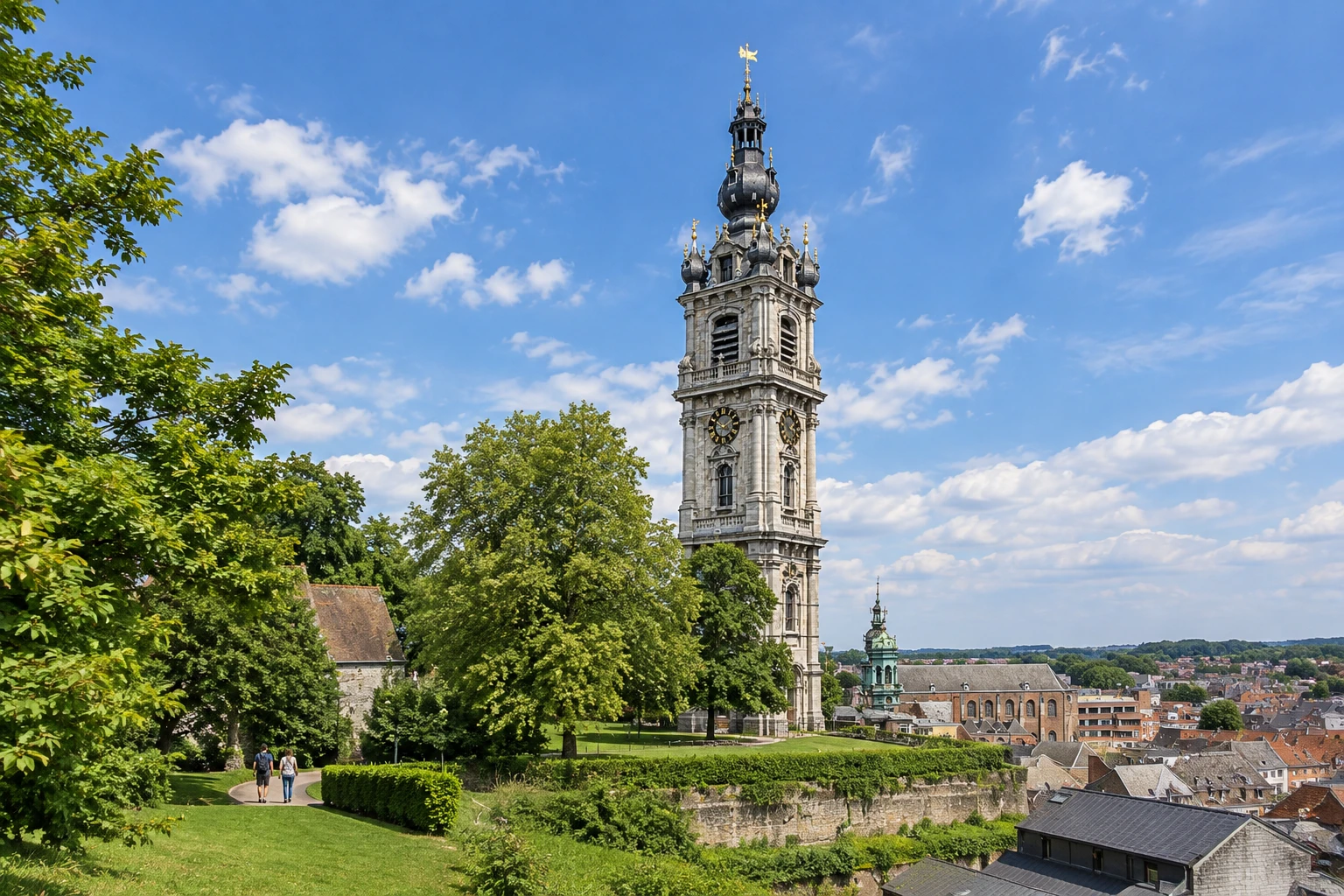
The only Baroque beffroi tower in Belgium, at 87 metres with 49 bells, sitting atop the Mons hill. A UNESCO World Heritage site, it has an interpretation centre and a panoramic lift to the viewing platform.

Explore Belfry of Mons

Mons · Belgium · Museum

Van Gogh House

The house in Cuesmes where Vincent van Gogh lived from 1879 to 1880, in the Borinage, when he turned from preaching to painting. The route starts in the garden and ends with a sound installation about the mining region.

Explore Van Gogh House

See 6 more places in Mons

To choose before you go

Tours in Mons

Where each tour starts, how long it takes, how it is done, what is included and the price range.

From the station to the Grand-Place via the Collegiate Church of Sainte-Waudru

From Mons railway station Self-guided walk About 2 hours Morning Easy, with an uphill section

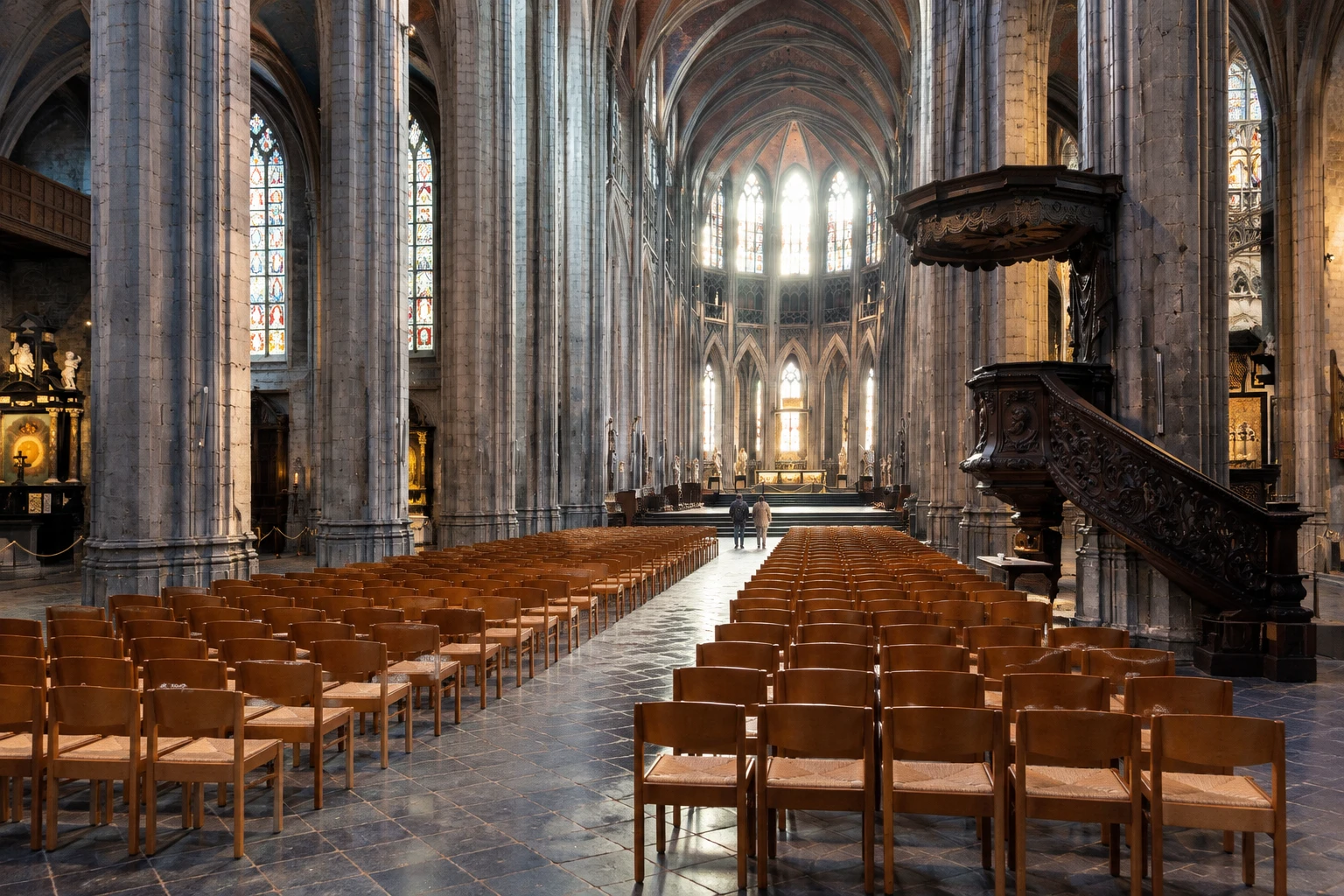
If you arrive by train, your introduction to Mons begins at the station. Designed by Spanish architect Santiago Calatrava, the building forms a white footbridge over the tracks, linking the old center with the new neighborhood on the other side. The city exit opens onto Place Léopold, where the climb into town begins. The first stop is the Collégiale Sainte-Waudru, just uphill from the station. Work began with the choir in 1450 and continued for more than a century and a half. The church belonged to the chapter of the canonesses of Sainte-Waudru, who envisioned a 190-meter tower. The first stones were laid in 1549, but the tower was never built. The church has a Latin cross plan and 29 chapels. Inside, look for the early 16th-century stained glass, the alabaster statues and reliefs by Mons sculptor Jacques Du Brœucq in the choir and transept, and the saint's two reliquaries, one holding her body and the other her head. The Car d'Or, the painted and gilded wooden carriage that carries her reliquary through town on Doudou Sunday, stays in the church year-round. The treasury in the former chapter room displays religious metalwork, manuscripts, and the textiles that once wrapped the relics. Leave by Place du Chapitre and continue uphill through the shopping streets to the Grand-Place, the heart of the old town, where you'll find the town hall and tourist office.

Stops: Gare de Mons, Place Léopold, Collégiale Sainte-Waudru, Trésor de Sainte-Waudru, Place du Chapitre, Grand-Place de Mons.

Includes: The collegiate church is free. The Trésor charges separate admission, included with the Mons Card. Check current prices.

Tip: The collegiate church opens daily, but the choir is closed to visitors during Mass. The Trésor usually opens only in the afternoon, Tuesday through Sunday. To see it, reverse the route and walk down from the Grand-Place to the station at day's end. Check ahead.

Best time: Year-round. On Trinity weekend in May or June, the Car d'Or procession starts at the collegiate church.

Inside the Hôtel de Ville, Salle Saint-Georges, and Jardin du Mayeur

From Grand-Place, Mons On foot. A ticket is required to visit the town hall rooms. About 1 hour 30 minutes Morning or early afternoon Easy

Café terraces and facades ranging from Gothic to Neoclassical line the Grand-Place. The main building is the Hôtel de Ville, the 15th-century Gothic town hall. It has one upper floor and a small bell tower added in the 18th century. Beside the entrance is the Singe du Grand-Garde, an iron monkey. Tradition says rubbing its head with your left hand brings good luck. You can visit the interior of the town hall. The tour takes in the Salle des Mariages, with an Italian ceiling from 1682, the council chamber with its Rance marble fireplace, and the Salle des Sacquiaux. This former guardroom, where the city keys were kept, has a large 16th-century fireplace. Continue to the Salon des Portraits and the Grands Salons with their period decor, then the mayor's ceremonial office in one of the oldest parts of the building. Adjoining the town hall is the Salle Saint-Georges, a Baroque chapel built in 1601 for the city magistrates. Part of the 14th-century apse survives. It now hosts temporary exhibitions. Cross the courtyard to the Jardin du Mayeur, the garden behind the town hall. Laid out between 1930 and 1936, it has century-old beech, linden, and chestnut trees. The Ropieur fountain, dating from 1937, depicts a mischievous boy from Mons splashing passersby. You can hear the belfry's carillon from the garden, and the Musée du Doudou is in the same complex.

Stops: Grand-Place de Mons, Hôtel de Ville de Mons, Singe du Grand-Garde, Salle Saint-Georges, Jardin du Mayeur, Fontaine du Ropieur.

Includes: The square, courtyard, and garden are free. The town hall rooms and exhibitions at Salle Saint-Georges charge separate admission. Check current prices.

Tip: The town hall usually welcomes visitors Sunday through Thursday, closing Fridays and Saturdays for weddings. Visits pause during the Doudou festivities in May or June. Check at the tourist office on the square.

Best time: Year-round, outside the weeks of the Doudou festivities. A Christmas market fills the square in December.

At the top of the hill: the belfry, Parc du Château and Chapelle Saint-Calixte

From Grand-Place, Mons On foot, uphill 1½ to 2 hours Morning or afternoon Easy, with a short slope and an elevator in the tower

The highest point in Mons was once the site of the counts of Hainaut's castle. Today it's a park with the city belfry at its center. There are four places to visit: the Maison du Patrimoine UNESCO, which houses reception and the ticket office, the park, the belfry, and the Chapelle Saint-Calixte. The Maison du Patrimoine UNESCO occupies the Maison Espagnole. It introduces about thirty UNESCO-recognized sites, monuments, and traditions in Hainaut, including those in and around Mons. The 17th-century belfry stands 87 meters tall. It's Belgium's only Baroque belfry and has been on the World Heritage List since 1999. Inside, multimedia screens and objects from the city collections tell the tower's story. An elevator takes you to the lookout over the old town rooftops and the surrounding plain. The carillon has 49 bells. The Parc du Château around the belfry preserves parts of the fortress: stretches of the first wall, the ruins of the main tower, the 14th-century Tour César, once a castle gate linking the park to the street below, and the 11th-century Chapelle Saint-Calixte. At the edge of the park is a bust of Charles Plisnier, the locally born author who won the Prix Goncourt in 1937.

Stops: Maison du Patrimoine UNESCO, Mons Belfry, Parc du Château, Tour César, Chapelle Saint-Calixte.

Includes: Climbing the belfry requires a ticket, included in the Mons Card. The park is free to enter on opening days. Check current rates.

Tip: The belfry and park usually open Tuesday through Sunday. Tower admission is free on the first Sunday of the month. Choose a clear day, then follow the lanes downhill to the Jardin du Mayeur or the collegiate church.

Best time: Year-round, preferably on a clear day. May through September brings longer days and more time to explore the park.

Rue de Nimy: Mundaneum, Maison Losseau and Église Sainte-Élisabeth

From Grand-Place, Mons On foot 2 to 3 hours Afternoon Easy

Rue de Nimy runs north from the Grand-Place, bringing together three very different sights within a few blocks. The first is Église Sainte-Élisabeth. Built in 1516, the church caught fire during a religious festival in 1714. Reconstruction gave it a tower, completed in 1720, and an interior that combines the original Gothic pillars with a Baroque upper section. It houses the reliquary and the lances of St. George used in the Doudou, along with a 1778 organ. Almost next door is the Maison Losseau, the home of Mons lawyer Léon Losseau, remodeled in the Art Nouveau style. Floral designs cover the mosaics, stained glass, paneling, inlaid wood floors, chandeliers, and furniture. The house is listed as an exceptional heritage site of Wallonia. An interpretation center tells the story of its owner, his medal collection, and his discovery of the original edition of Rimbaud's Une Saison en enfer. Upstairs is a center dedicated to the literature of Hainaut. Farther along is the Mundaneum, the archive of Paul Otlet and Henri La Fontaine. At the turn of the 20th century, the two Belgians set out to collect and classify all the world's knowledge in the pursuit of peace. La Fontaine won the Nobel Peace Prize. The venue hosts temporary exhibitions and displays part of the UNESCO-recognized card catalog.

Stops: Rue de Nimy, Église Sainte-Élisabeth, Maison Losseau, Mundaneum.

Includes: The church is free to enter. Maison Losseau and the Mundaneum charge separate admission, with discounts for Mons Card holders. Check current rates.

Tip: Maison Losseau usually opens only Friday through Sunday afternoons and closes on holidays. The Mundaneum opens Wednesday through Sunday. To see both on one day, aim for Friday, Saturday or Sunday afternoon. Check ahead.

Best time: Year-round. A good choice for a rainy day.

CAP and Artothèque, the history of Mons through the city’s collections

From Grand-Place, Mons On foot 2 to 3 hours Morning or afternoon Easy

CAP brings together three connected museum spaces on Rue Neuve, steps from the Grand-Place. The Maison des Collections occupies Jean Lescarts' renovated house and traces the history of Mons from prehistoric times to the present. About a hundred objects from the municipal collections are arranged by theme and period. It's a good place to get to know the city before heading out on foot. The Musée des Beaux-Arts opens for temporary exhibitions and has no permanent display. Some shows draw on the city's collections and regional artists, others feature major international names. Between the two museums, the Jardin du Poirier Beurré is free to enter from Rue Neuve. Its name comes from a pear variety developed in 1759 at the foot of Mont Panisel, one of the hills of Mons. The garden has a botanical section with sculptures and plants connected to local history, a permaculture vegetable garden, and a pavilion where you can sit. Finish at the Artothèque in the former Ursuline convent chapel. It houses objects from the municipal collections that aren't on display elsewhere and gives you a behind-the-scenes look at collection storage, restoration, and digitization. You can book a tour with a curator.

Stops: CAP, Musée des Beaux-Arts de Mons, Maison des Collections, Jardin du Poirier Beurré, Artothèque.

Includes: Maison des Collections and the Artothèque charge admission, included in the Mons Card. The Musée des Beaux-Arts has a separate ticket, discounted with the card. The garden is free. Check current prices.

Tip: Check what's on at the Musée des Beaux-Arts before visiting. It closes between exhibitions. The Maison des Collections usually opens Tuesday through Sunday and the Artothèque Thursday through Sunday. Admission to city museums is free on the first Sunday of the month.

Best time: Year-round, depending on the exhibitions.

Musée François Duesberg and MUMONS: Empire-era clocks and science

From Collégiale Sainte-Waudru On foot About 2 hours Afternoon Easy

Two small museums in the lower part of the center reveal lesser-known sides of Mons. The Musée François Duesberg stands on Square Franklin Roosevelt near the collegiate church, in the late 19th-century former national bank building. A couple assembled this private collection over a lifetime, focusing on decorative arts from 1775 to 1825. The highlight is one of the world's leading collections of clocks with exotic themes, made between 1795 and 1815. Some pieces depict scenes from novels of the day, such as Paul and Virginia. You'll also see Paris and Brussels porcelain, silverware, French gilt bronzes, and cameos. MUMONS, the University of Mons museum, occupies the former Visitation convent chapel at the corner of Place du Parc. Its motto is “science, arts, and curiosities.” Changing exhibitions draw on university collections ranging from rare books and maps to early scientific instruments.

Stops: Musée François Duesberg, Square Franklin Roosevelt, MUMONS, Place du Parc.

Includes: The two museums charge separate admission. The Mons Card gives a discount at MUMONS. Check current rates.

Tip: The Musée François Duesberg opens only a few afternoons a week, usually Tuesday, Thursday, Saturday, and Sunday. MUMONS usually closes on Tuesdays and Saturdays and opens only in the afternoon on Sundays and holidays. Thursday and Sunday afternoons are when their hours overlap. Check before visiting.

Best time: Year-round.

See 6 more tours

L'Art habite la Ville: murals between the station and the collegiate church

From Place Léopold, opposite the station Self-guided walk About 1 hour 30 minutes Morning or afternoon Easy, 3.5 km

More than a hundred street murals decorate the center of Mons and its outlying neighborhoods. They're part of L'Art habite la Ville (“Art Lives in the City”), a municipal project that invites Belgian and international artists to paint gable ends and walls on ordinary streets away from the main monuments. The tourist office suggests four walking routes. The easiest for train travelers is a nearly level 3.5 km loop between the station and the Collégiale Sainte-Waudru. Start at Place Léopold and follow Rue des Capucins, where three painted facades stand just a few doors apart. Continue to Boulevard Sainctelette on the ring road, then head back into the center via Place du Béguinage. Murals on the final stretch reflect local history: a portrait of the painter Anto Carte and the artwork Lucie et les papillons on Square Franklin Roosevelt, a tribute to the sculptor Jacques Du Brœucq on Rue du Chapitre, and Andrea Ravo Mattoni's scene of Sainte Waudru and her daughters visiting prisoners on Place du Chapitre. The other three routes range from 2.4 to 2.8 km and explore Place du Parc, the Messines neighborhood, and the area on the Nimy-Miroir circuit.

Stops: Place Léopold, Rue des Capucins, Boulevard Sainctelette, Place du Béguinage, Square Franklin Roosevelt, Place du Chapitre.

Includes: Free street walk. The tourist office on the Grand-Place distributes a map of the artworks.

Tip: Pick up a map at the tourist office or download the route before leaving. Several murals are easy to miss on side streets. The murals change over time and some may have been replaced.

Best time: Year-round on dry days. April to September offers more daylight.

Fortified Mons: Tour Valenciennoise, the casemates, and Mons Memorial Museum

From Central Mons On foot About 3 hours Morning or afternoon Easy

Mons was a stronghold for centuries, and traces of its defenses survive around the edges of the center. The oldest is the Tour Valenciennoise on Rue des Arbalestriers. Built in 1359 with walls four meters thick, it's the only surviving tower of the medieval city walls. Two levels have been restored, with a metal walkway on the outside. The last fortifications date from 1814 to 1830, when Mons belonged to the Kingdom of the Netherlands. The surviving casemates at Place Nervienne were built to shelter soldiers during a siege. Twelve large arches line the 168-meter facade of brick and blue stone. The adjoining military bakery also survives. Its roof is now the Jardin suspendu, a small grove with a vegetable garden and children's huts, tended by residents. Barracks from the same period, now called the Carré des Arts, house a college of the arts. Finish at the Mons Memorial Museum in the Machine à Eau, the city's former pumping station built in 1870 and 1871. The permanent exhibition follows the region's military history from the Middle Ages to the 20th century. It draws on a collection of some 5,000 objects, along with letters, notebooks, and firsthand accounts from soldiers and civilians. It's a good place to learn about the battle on August 23, 1914, and the city's liberation in November 1918.

Stops: Tour Valenciennoise, Carré des Arts, Casemates de la Place Nervienne, Jardin suspendu, Mons Memorial Museum.

Includes: The streets, tower exterior, and casemates square are free. Mons Memorial Museum charges admission, included in the Mons Card. Check current prices.

Tip: The museum usually opens Tuesday through Sunday. Allow about 1½ hours. The Jardin suspendu opens only on Sundays from late March to mid-October. Museum admission is free on the first Sunday of the month.

Best time: Year-round. The Jardin suspendu opens on Sundays from late March to mid-October.

Cuesmes, the Maison Van Gogh and the Héribus slag heap

From Central Mons Car, taxi or city bus to Cuesmes About 3 hours, including travel Morning Easy, moderate on the climb up the slag heap

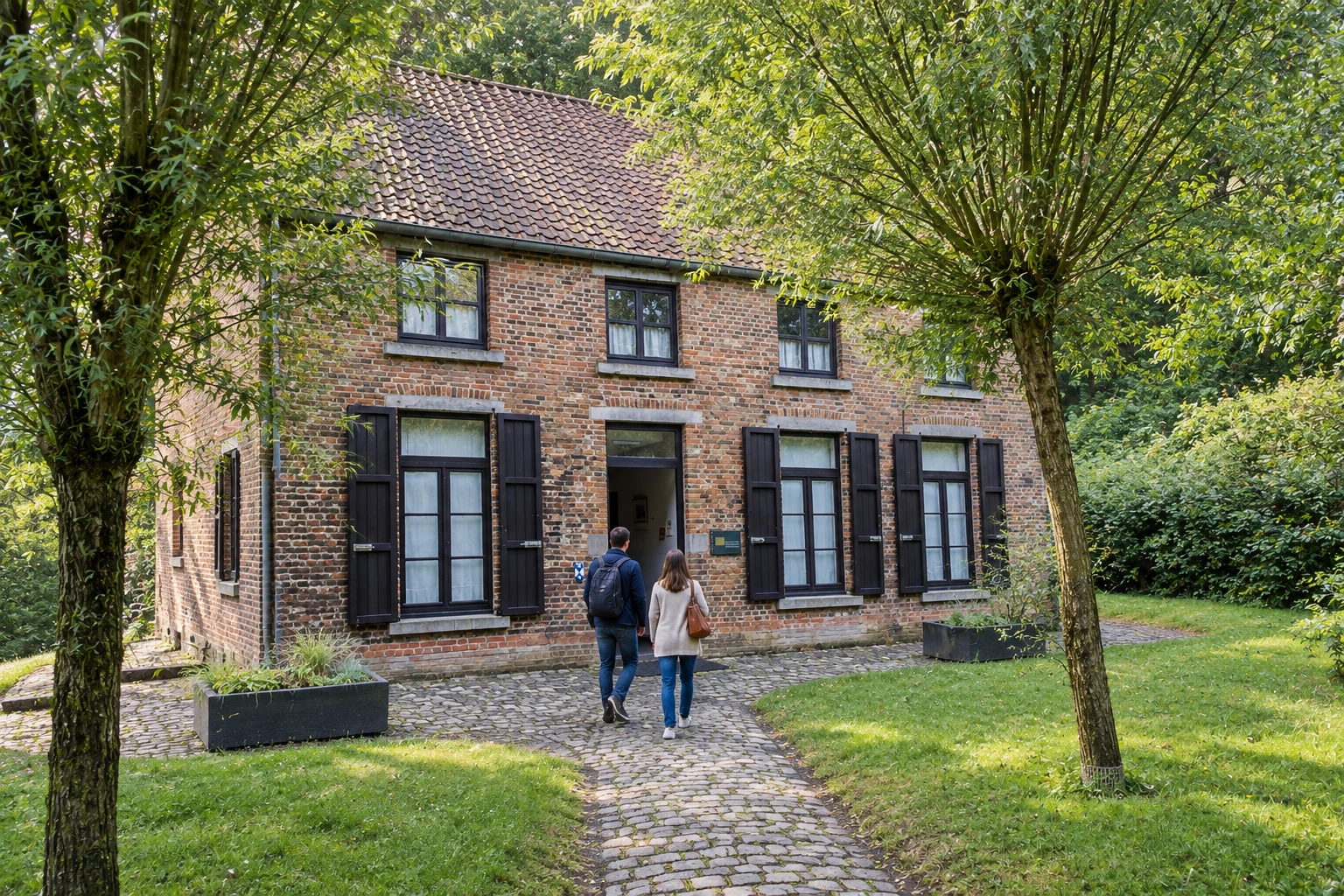
Cuesmes is a former mining village that now belongs to Mons, outside the old town. Vincent van Gogh lived in the Borinage from December 1878 to October 1880, first as a preacher among the miners of Wasmes, then in a small room in a workers' house in Cuesmes. It was here that he gave up preaching and turned to drawing. The Maison Van Gogh, also known as the Maison du Marais, preserves the house. Start in the garden, pass through a pavilion, and enter the modest house, where the displays give a sense of its resident's life. A sound installation at the end places the artist and his work in the world of the Borinage's 19th-century mines and workers. East of Cuesmes, the Terril de l'Héribus is a hill of waste rock from a coal mine that operated from 1908 to 1968. A hill of rock left over from mining is known locally as a terril. Several paths lead to the summit through woodland on one side and fields that bloom from spring to late summer on the other. From the top you can see the belfry on the hill of Mons, the Trouille River plain, and the row of spoil heaps across the Borinage known as the Chaîne Boraine. To follow the painter's footsteps farther, visit the Van Gogh house in Wasmes and the Marcasse mining site in neighboring Colfontaine.

Stops: Maison Van Gogh, Cuesmes, Terril de l'Héribus.

Includes: Van Gogh House charges admission, included in the Mons Card. A separate pass combines Van Gogh sites across the Borinage. The spoil heap is free to climb. Check current prices.

Tip: The house usually opens Tuesday through Sunday and closes in midafternoon, with last entry earlier. Wear sturdy shoes for the spoil heap and avoid wet days, when the paths become slippery.

Best time: Year-round for the house. Visit the slag heap from April to September for wildflowers and longer days.

Spiennes and Saint-Symphorien: Neolithic mines and a military cemetery

From Central Mons Car or taxi 4 to 5 hours Afternoon Easy overall, moderate on the descent into the well

Two former villages southeast of the center, now part of Mons, have UNESCO-listed sites you can combine on a single drive. In Spiennes, about 6 km from the center, Neolithic miners dug shafts to extract flint for tools. The SILEX'S visitor center stands over the site. Original tools and replicas show how the stone was extracted and worked, and an outdoor photography exhibition presents recent archaeological finds. The main draw is a guided descent into a mine shaft up to 10 meters deep, a visit of about 1 hour and 30 minutes. Four marked trails lead through the surrounding fields. At Saint-Symphorien, the German army established a military cemetery in 1916 on land provided by naturalist Jean Houzeau de Lehaie. Its German and British sections have similar numbers of graves, a rare feature that has made it a symbol of reconciliation. Buried here are the first and last British soldiers killed in World War I, as well as soldiers who fought in the battle of August 1914 and the liberation of Mons in November 1918. The cemetery joined the World Heritage List in 2023 with other burial sites on the Western Front. It's a place for quiet reflection. Please visit in silence.

Stops: SILEX'S, Spiennes, St Symphorien Military Cemetery, Saint-Symphorien.

Includes: SILEX’S charges admission, included in the Mons Card. The guided descent into the shaft costs extra. The cemetery is free to visit. Check current rates.

Tip: Book both the SILEX'S visit and the underground tour by calling the tourist office. The descent is for visitors over 10, in small groups, usually on weekend and holiday afternoons. Wear sturdy shoes and clothes you can get dirty.

Best time: SILEX’S opens seasonally, usually from April through November. The cemetery is open year-round.

Havré, the dukes’ castle and the flower gardens

From Central Mons Car or taxi to Havré About 3 hours, including travel Afternoon Easy

Havré is one of the former villages now part of Mons, east of the center. Its castle dates to 1266 and passed in 1518 to the Croÿ family, who turned the medieval fortress into a residence. In the 17th century, Charles Alexandre de Croÿ restored the complex, which welcomed visitors including the painters Rubens and Van Dyck. The castle declined after the Revolution and was abandoned in 1839. Today the ruins have been stabilized. The castle has been protected since 1936 and is maintained by a volunteer association that has worked on its restoration since the late 1970s. During the summer season, the courtyard and exhibition rooms in the Tour des Gardes open on weekend and holiday afternoons. Step through the gatehouse arch to explore the 6,000-square-meter flower gardens, opened to the public in 2002. They began as a rose garden. After two winters of hard frost, they were redesigned to mix roses and perennials, with one section laid out in straight lines and the other in English-style curves. About half the original 252 rose varieties survive, each labeled, alongside some 360 species and varieties of perennials. Benches in the shade of the trees look out on the towers.

Stops: Château des Ducs d'Havré, Tour des Gardes, Jardins fleuris du Château d'Havré, Havré.

Includes: The exhibition rooms at the Tour des Gardes charge separate admission. Check current prices and garden access arrangements.

Tip: The gardens and castle open in the afternoons from mid-May to September. The castle may close for private events. Check ahead.

Best time: Mid-May to September, when the gardens are open. The castle usually hosts a Christmas market in December.

Parc du Waux-Hall and Grand-Large: green space and water near downtown

From Central Mons Walk to Waux-Hall, then cycle or drive to Grand-Large 2 to 3 hours Morning or late afternoon Easy

When the weather is good, two outdoor spaces offer a break between museums. The Parc du Waux-Hall is a short walk from the center. It dates to the 18th century and takes its English name from the pleasure gardens where the middle classes went for walks at the time. It has century-old trees, winding paths, ponds with ducks and swans, flower beds, and children's play areas. It's open year-round from dawn to dusk. Grand-Large, 2 km from the center, is an 80-hectare lake where the Canal du Centre meets the Nimy-Blaton Canal. These canals link the waterways of northern Europe to those of France. On the shore are the Mons marina with 157 berths, a boating club offering canoeing, rowing, sailing, and stand-up paddleboarding, and a public pool. Visitors can walk along the water, watch the boats, or go cycling. Mons is part of the Vhello network, whose numbered junctions let you plan your own cycling route through Hainaut. The tourist office also suggests themed rides in and around the city.

Stops: Parc du Waux-Hall, Grand-Large, Port de plaisance de Mons, Canal du Centre, Canal Nimy-Blaton.

Includes: The park and the shore of the Grand-Large are free to visit. Bike rental and water activities cost extra. Check current rates.

Tip: The tourist office and marina rent a limited number of bikes. The Mons Card includes a bike loan, subject to availability. Reserve ahead, particularly on sunny weekends.

Best time: April through October, for longer days and mild temperatures.

Day by day

1, 2 and 3-day itinerary in Mons

Suggestions to plan the trip. Change the order of the days according to the weather and tour availability.

1 day · One day in Mons: from the station to the hilltop

For Day-trippers arriving by train from Brussels, Tournai or Lille · Based in Mons
  1. Day 1 · Downtown on foot

    Arrive by train in the morning and start with the station itself, designed by Santiago Calatrava. Walk uphill to the Collégiale Sainte-Waudru just above it to see Jacques Du Brœucq's alabasters, the stained glass, and the Car d'Or. Continue uphill to the Grand-Place, rub the head of the town hall's iron monkey with your left hand, and cross the courtyard to the Jardin du Mayeur. Pick up a map at the tourist office. Have lunch on the square or in the surrounding streets. Then head up to the belfry. The ticket office is in the Maison du Patrimoine UNESCO, and an elevator takes you to the lookout. Walk through the Parc du Château between the Tour César and the Chapelle Saint-Calixte. In the late afternoon, choose a museum according to the day of the week: the Mundaneum or the Maison Losseau on Rue de Nimy, the Maison des Collections on Rue Neuve, or the Musée du Doudou by the town hall. Walk back down to the station past the collegiate church. Avoid Mondays, when almost everything closes.

2 days · Two days in Mons: downtown, the museums and Van Gogh in Cuesmes
For Overnight visitors who want to see more than the Grand-Place · Based in Mons
  1. Day 1 · The collegiate church, Grand-Place and belfry

    Spend the morning walking from the station to the Grand-Place via the Collégiale Sainte-Waudru. If the town hall is open for visits, go inside to see its salons and the Salle des Sacquiaux, then rest in the Jardin du Mayeur. In the afternoon, climb to the belfry and the Parc du Château. On the way down, follow Rue de Nimy to Église Sainte-Élisabeth and the Mundaneum. Have dinner at a brasserie in the center.

  2. Day 2 · Cuesmes and the city museums

    In the morning, head to Cuesmes for the Maison Van Gogh, which closes in midafternoon. If the weather is clear and you feel like a climb, head up the Terril de l'Héribus for a view over Mons. Back in town, spend the afternoon at CAP, visiting the Maison des Collections and the current exhibition at the Musée des Beaux-Arts, or walk past the Tour Valenciennoise to the Mons Memorial Museum. On Thursday or Sunday, the Musée François Duesberg and MUMONS are open in the afternoon.

3 days · Three days in Mons: downtown, wartime history and the surrounding villages
For Travelers who want to take their time exploring the city, including Spiennes, Saint-Symphorien and Havré · Based in Mons
  1. Day 1 · The historic center

    Start at the Collégiale Sainte-Waudru and head uphill to the Grand-Place for the Hôtel de Ville, the Salle Saint-Georges, and the Jardin du Mayeur. If you plan to visit several museums, buy the Mons Card at the tourist office. Spend the afternoon at the belfry and Parc du Château, then visit the Musée du Doudou to learn about the city's festival. End the day with part of the mural walk between the collegiate church and the station.

  2. Day 2 · Rue de Nimy, museum collections and fortifications

    In the morning, visit the Maison des Collections and the Jardin du Poirier Beurré on Rue Neuve. Add the Artothèque if you're here Thursday through Sunday. After lunch, explore Rue de Nimy, stopping at Église Sainte-Élisabeth, the Maison Losseau, and the Mundaneum. Finish on the edge of the center with the Tour Valenciennoise, the casemates at Place Nervienne, and the Mons Memorial Museum. The Parc du Waux-Hall is nearby if the weather is good.

  3. Day 3 · Cuesmes, Saint-Symphorien and Spiennes

    Set aside the day to explore the municipality's villages by car or taxi. Visit the Maison Van Gogh in Cuesmes in the morning. Continue to Saint-Symphorien military cemetery for a quiet walk among the graves. In the afternoon, if it's open for the season, visit SILEX'S in Spiennes. Book the descent into the Neolithic mine shaft in advance. On weekend afternoons from mid-May through September, Havré is another option, with its ducal castle and flower gardens. Outside the SILEX'S season, return to the center for a museum you missed. If you have another day, Tournai is about 30 minutes away by train.

Best time to go

When to go: Mons month by month

The seasons shown are the most usual ones; nature doesn't always follow the calendar.

January High rain

Winter · Mons Cœur en Neige through early this month

Winter brings average highs near 6°C, lows of 1°C, and rain on about 13 days. Frost is possible, and it sometimes snows. It gets dark in midafternoon. The Grand-Place Christmas market and the Place Léopold skating rink usually stay open through the first weekend of the month. Then the city quiets down, making this a good time for museums and cafés. SILEX'S and the Havré gardens are closed.

February Some rain

Late winter · Quiet museums

It's still winter, with average highs near 7°C, lows of 1°C, and rain on about 11 to 12 days. The days gradually lengthen. This is the quietest month to see the Mundaneum, the Maison des Collections, the Mons Memorial Museum, and the collegiate church without waiting in line. Bring a raincoat. The stone streets downtown get wet.

March Some rain

Early spring · Ducasse de Messines

Spring gets off to a cold start, with average highs near 11°C, lows of 2 to 3°C, and rain on about 11 days. On the Sunday closest to March 25, the Messines neighborhood celebrates its ducasse, a patron saint's festival that has grown into a weeklong flower fair. At the end of the month, the Jardin suspendu reopens on Sundays and European daylight saving time begins.

April Low rain

Driest month · Season opens at SILEX’S

This is usually the driest month of the year, with about 45 mm of rain over roughly nine days, average highs near 15°C, and lows of 4 to 5°C. SILEX'S in Spiennes usually opens for the season, with descents into the mine shaft on weekends. The longer days give you time to combine the belfry, Parc du Château, and a walk past the murals.

May Some rain

Spring · Doudou when Trinity Sunday falls in May

Spring is mild, with average highs near 19°C, lows of 8°C, and rain on about ten days. The flower gardens and castle at Havré open from the middle of the month. When Trinity Sunday falls in May, the Doudou takes place late in the month, with the Car d'Or procession and the Lumeçon fight on the Grand-Place. The town hall closes to visitors during the festival weeks, and some museums close on the main Sunday.

June Some rain

Long days · Doudou when Trinity Sunday falls in June

Early summer brings average highs near 22°C, lows of 11°C, and rain on about ten days. It stays light well into the evening. When Trinity Sunday falls in June, this is the month of the Doudou. The city fills up, so book accommodations well in advance. Outside the festival, it's a good time to climb the Terril de l'Héribus, visit Grand-Large, or see the roses at Havré, usually in bloom.

July Some rain

Summer · Festival au Carré in the first half of the month

This is the warmest month, with average highs near 24°C, lows of 13°C, and about 70 to 75 mm of rain over roughly ten days, often in showers. In the first half of the month, the Carré des Arts hosts Festival au Carré, a performing arts festival. Belgian schools are on vacation. The café terraces on the Grand-Place stay busy until late, and the Spiennes mine offers underground tours on more days of the week.

August Some rain

Summer · Anniversary of the Battle of Mons on August 23

Temperatures are much like July's, with average highs near 24°C, lows of 13°C, and about 80 mm of rain over roughly ten days. Schools are on vacation. The Battle of Mons took place on August 23, 1914, making its anniversary a particularly meaningful time to visit the Mons Memorial Museum and Saint-Symphorien cemetery. Havré remains open on weekend afternoons.

September Low rain

Late summer · Final weeks of the season at Havré

Late summer brings average highs near 20°C, lows of 10°C, and rain on about ten days. There are fewer visitors than in July and August. Students return to the university, livening up the cafés downtown. This is the last month of the season for Havré's flower gardens and castle. It's a good time to walk the mural route, stroll through the Parc du Waux-Hall, or climb the Terril de l'Héribus.

October Some rain

Fall · Season ends at the Jardin suspendu

Fall brings average highs near 15°C, lows of 7°C, and rain on about 11 days. The days shorten quickly and the trees in the Parc du Château and Waux-Hall change color. The Jardin suspendu closes in the middle of the month, and European daylight saving time ends later in the month. Museums keep their usual Tuesday-to-Sunday schedule.

November High rain

Armistice Day on November 11 · Foire d’automne

Late fall is gray and damp, with average highs near 10°C, lows of 4°C, and rain on about 12 to 14 days. November 11, the anniversary of the 1918 armistice, holds particular significance in a city liberated in the final hours of the war. The Foire d'automne usually brings carnival rides to the Grand-Place and Place Léopold for several weeks. SILEX'S closes for the season.

December High rain

Mons Cœur en Neige: Christmas market and ice skating

Winter brings average highs near 7°C and lows of 1 to 2°C. Around 90 mm of rain falls over about 14 days, making this the wettest month. From early December to early January, Mons Cœur en Neige sets up some fifty Christmas stalls on the Grand-Place, a covered skating rink on Place Léopold, and food stalls on the Marché aux Herbes. Havré Castle usually holds its own Christmas market.

Plan the journey

How to get there: Mons

By air via Brussels Airport and Charleroi

Mons has no airport. Belgium's main hub, Brussels Airport (BRU) in Zaventem, is about 76 km away. Direct trains from the station beneath the terminal reach Mons in about 1 hour and 10 minutes. At other times, change in Brussels.

Brussels South Charleroi Airport (CRL) is the closest, about 45 km away, and mainly serves low-cost flights within Europe. A shuttle bus reaches Mons in about 45 minutes. Alternatively, take a bus to Charleroi station, then a train.

Lille in France and Liège also have airports you can use. Travelers arriving from another continent usually fly into Brussels or Paris and continue by train. Compare connections and confirm them before booking.

By train from Brussels, Tournai, Lille and Paris

The train is the easiest way to arrive. SNCB, the Belgian railway company, runs frequent direct trains from Brussels Central and Midi stations, taking about 55 minutes. Direct trains from Tournai take about 30 minutes. Charleroi, Namur, and Liège also have direct connections on the line across Wallonia.

From Lille in France, direct trains take about 1 hour and 10 minutes. A conventional train from Paris Gare du Nord to Brussels stops in Mons, about 3 hours from Paris. Alternatively, take a high-speed train to Lille or Brussels and change to a Belgian train. From London, take the Eurostar to Brussels or Lille and change there.

Mons station is about 1 km from the Grand-Place, roughly a 15-minute walk, mostly uphill. Check times and connections before traveling.

By bus

TEC, Wallonia's public transit operator, runs buses from Mons to regional cities including Charleroi, La Louvière, and Tournai, as well as towns in the Borinage. Trains are faster on most of these routes, but buses reach villages without a station.

International long-distance buses stop in Mons on routes from cities including Paris, Lille, and Amsterdam. The main stops are near the train station, a short walk from the center. Check schedules ahead of time, as frequency varies by day of the week.

By car on the E19 and E42

The E19 highway links Brussels to Mons in about 1 hour and continues into France. Paris is about 250 km away, a drive of 2 hours and 30 minutes to 3 hours on the French A1 and then the E19. Lille is about 75 km away, roughly 50 minutes on the A27 and E42, and Calais is about 190 km away. The E42 passes through Tournai, about 50 km from Mons, and runs toward Charleroi, Namur, and Liège in the opposite direction.

Old town streets are narrow and many are pedestrian-only. Park and continue on foot. Paid public parking is available near the center and free parking on the outskirts. A car is especially useful for Spiennes, Saint-Symphorien, and Havré within the municipality, and for Grand-Hornu, about 10 km west.

Getting around Mons

The compact center is easy to explore on foot. The Grand-Place, the belfry, and the collegiate church are just minutes apart, and many streets are pedestrian-only. The hills and stone paving can be tiring, so wear comfortable shoes. The tourist office on the Grand-Place has maps and suggests themed walks.

TEC city buses serve Mons and the surrounding area, with stops near the sights. Taxi stands are at the station and at Les Grands Prés shopping center across the tracks. At night it's best to book ahead.

The city has bike lanes, and the tourist office rents bikes. The 24- or 48-hour Mons Card, sold at the tourist office, covers admission to the belfry, Maison des Collections, Artothèque, Musée du Doudou, Mons Memorial Museum, Maison Van Gogh, SILEX'S, Salle Saint-Georges, and Trésor de Sainte-Waudru. The card also gives discounts at other museums and lets you borrow a bike, subject to availability.

Your questions

Frequently asked questions about Mons

What is Mons' train station?

Gare de Mons, the new station designed by architect Santiago Calatrava, is about 1 km from the Grand-Place, a roughly 15-minute walk, almost all uphill.

What is the monkey on the Hôtel de Ville?

It is a small iron statue attached to the Hôtel de Ville façade, the Singe du Grand-Garde. Tradition says that whoever passes their left hand over its head will have good luck for a year. The statue's origin is unknown; the custom was invented in 1930.

Can you see Mons and Pairi Daiza on the same trip?

Yes, but on separate days. Pairi Daiza is in Brugelette, about 25 km from Mons, and the visit takes a full day. By train, Cambron-Casteau station on the Mons–Ath line is a little over 1 km from the entrance.

Do Mons museums open on Mondays?

Generally, no. The beffroi, the BAM, the Musée du Doudou, the Mons Memorial Museum and the Maison Van Gogh usually close on Mondays, and the Mundaneum also closes on Tuesdays. The Collégiale Sainte-Waudru is open every day. Check before you go.

What to eat in Mons?

The cuisine is Walloon: carbonade (meat stewed in beer), fries, cheeses and abbey beers and beers from small Hainaut breweries. During the Doudou festival, stalls sell street food. Lunch is typically served from noon to 2 pm.

How many days should I spend in Mons?

One day covers the highlights downtown: the collegiate church, Grand-Place, belfry, and one museum. Two days leave time for Rue de Nimy, CAP, and the Van Gogh House in Cuesmes. With three days, add Spiennes, Saint-Symphorien, and Havré outside the center. If you have only one day, avoid Monday, when most museums close.

What is the Mons Card?

This city sightseeing pass is valid for 24 or 48 hours and sold at the tourist office on the Grand-Place. It covers the belfry, Maison des Collections, Artothèque, Musée du Doudou, Mons Memorial Museum, Van Gogh House in Cuesmes, SILEX'S, Salle Saint-Georges, and Trésor de Sainte-Waudru. It gives discounts at the Musée des Beaux-Arts, Mundaneum, Maison Losseau, MUMONS, and Grand-Hornu. A bike loan is included, subject to availability. Check current prices.

Is Mons hilly?

Yes. The center sits on a hill. It's about a 15-minute uphill walk from the station to the Grand-Place, then another short climb from the upper end of the square to the belfry. Distances are short, but the paving is stone. If walking is difficult, take a taxi to the upper town and explore downhill. The belfry has an elevator to the lookout.

What can I do in Mons on a rainy day?

There are enough museums for several rainy days. The main choices are the Maison des Collections, which tells the city's history, the Mons Memorial Museum, the Mundaneum, and the Musée du Doudou. The Art Nouveau Maison Losseau and the François Duesberg decorative arts museum open only on certain afternoons. Sainte-Waudru Collegiate Church and the town hall rooms round out the options. It rains in every season, so keep an indoor plan handy.

Is Mons a good place to visit with children?

Yes. Downtown favorites include the belfry elevator, the monkey on the Grand-Place, the Ropieur fountain, and MUMONS, the university science museum. Parc du Waux-Hall has play equipment and duck ponds. The Jardin suspendu, open Sundays from late March to mid-October, has huts and a vegetable garden. Only children over 10 can descend the Neolithic mine shaft at Spiennes. Pairi Daiza, the zoo in Brugelette, is about 25 km away and needs a full day.

What UNESCO heritage can I see in Mons?

Four designations fall within the municipality. The belfry belongs to the Belfries of Belgium and France, on the World Heritage List since 1999. The Neolithic flint mines at Spiennes were listed in 2000, and Saint-Symphorien Military Cemetery in 2023 with other World War I burial sites. The Ducasse de Mons, known as the Doudou, was recognized as intangible heritage in 2005. The Mundaneum card index also appears on the Memory of the World Register, and the Grand-Hornu World Heritage Site is in neighboring Boussu.

Can I visit the interior of Mons Town Hall?

Yes, with a ticket. The tour includes historic rooms such as the Salle des Mariages and Salle des Sacquiaux, the former guardroom. The town hall usually opens Sunday through Thursday, closing Fridays and Saturdays for weddings. Visits pause during the Doudou festivities in May or June. The courtyard and Jardin du Mayeur are free. Check with the tourist office before visiting.

Where can I see Mons from above?

The best-known lookout is the belfry, at the highest point downtown, reached by elevator. The surrounding Parc du Château also overlooks the rooftops and plain. Outside the center, walk up dirt paths on the Terril de l'Héribus, a former mining spoil heap east of Cuesmes. It faces the hill of Mons and the line of spoil heaps across the Borinage.

How do I get from Charleroi Airport to Mons?

Brussels South Charleroi Airport is about 45 km from Mons. The direct airport shuttle takes about 45 minutes. You can also take an airport bus to Charleroi station and continue by train. By car, use the E42 highway. Check schedules in advance, particularly if your flight arrives late.

Why is Mons called Bergen in Flemish?

The two names mean much the same thing. Mons comes from Latin and means “hill,” while Bergen is the Flemish plural, “hills.” The city lies among five hills on the edge of the Haine Valley, and the old center occupies one of them. Look for Bergen on road and station signs in northern Belgium.

Where can I see the street art murals in Mons?

More than a hundred murals from the L'Art habite la Ville project are spread across downtown and the surrounding villages. The tourist office has a map and four walking routes. The handiest is a 3.5 km loop between the station and Sainte-Waudru Collegiate Church via Rue des Capucins, Boulevard Sainctelette, and Square Franklin Roosevelt. Other routes explore Place du Parc, the Messines neighborhood, and the Nimy-Miroir circuit.

Can I rent a bike in Mons?

Yes. The tourist office rents conventional and electric bikes, and Grand-Large marina has a few bikes for rent. The Mons Card includes a conventional bike loan if one is available. The city connects to Vhello, a numbered junction network for planning routes across Hainaut. Watch for hills and stone paving downtown. Cycling is easier on the outskirts and along the canals.

What is Christmas like in Mons?

Mons Cœur en Neige runs from early December to early January. The Grand-Place hosts a Christmas market with about fifty stalls and a carousel. Place Léopold opposite the station has a covered ice rink and fairground, and Marché aux Herbes has food and drink stalls. A small sightseeing train links the three on weekends. Dates vary each year, so check ahead.

What is Van Gogh's connection to Mons?

Vincent van Gogh lived in the Borinage mining district around Mons from December 1878 to October 1880. He came as a preacher, lived first in Wasmes and then in Cuesmes, and decided here to devote himself to drawing. You can visit his house in Cuesmes, within Mons. The Wasmes house and Marcasse mining site are in neighboring Colfontaine. A pass covers these sites.

When do Mons museums offer free admission?

On the first Sunday of the month several museums offer free entry, including the belfry, Maison des Collections, Artothèque, Mons Memorial Museum, and Salle Saint-Georges. Young children enter several museums free. Free Sundays are busier, particularly at the belfry. Check the list and conditions before visiting.

Traveler, share your experiences through photos Up to 5 photos of each place you visited.
See the destination Mons and Tournai Find another city