Nürnberger Lebkuchen
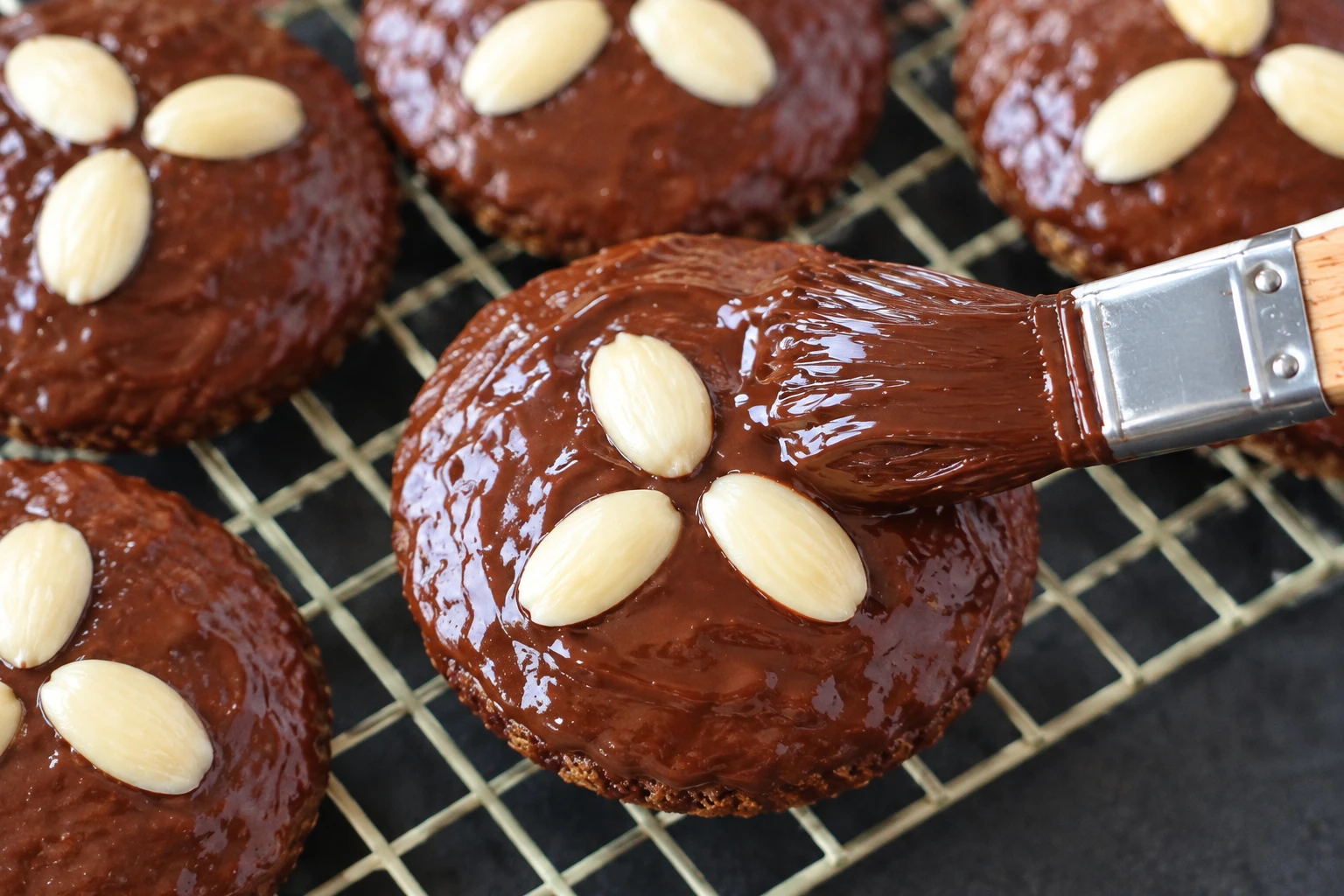
Honey cake with spices, walnuts and almonds, often baked on a thin wafer and covered with chocolate or icing. It has a protected geographical indication since 1996 and may only be made within Nuremberg.
Antarctica
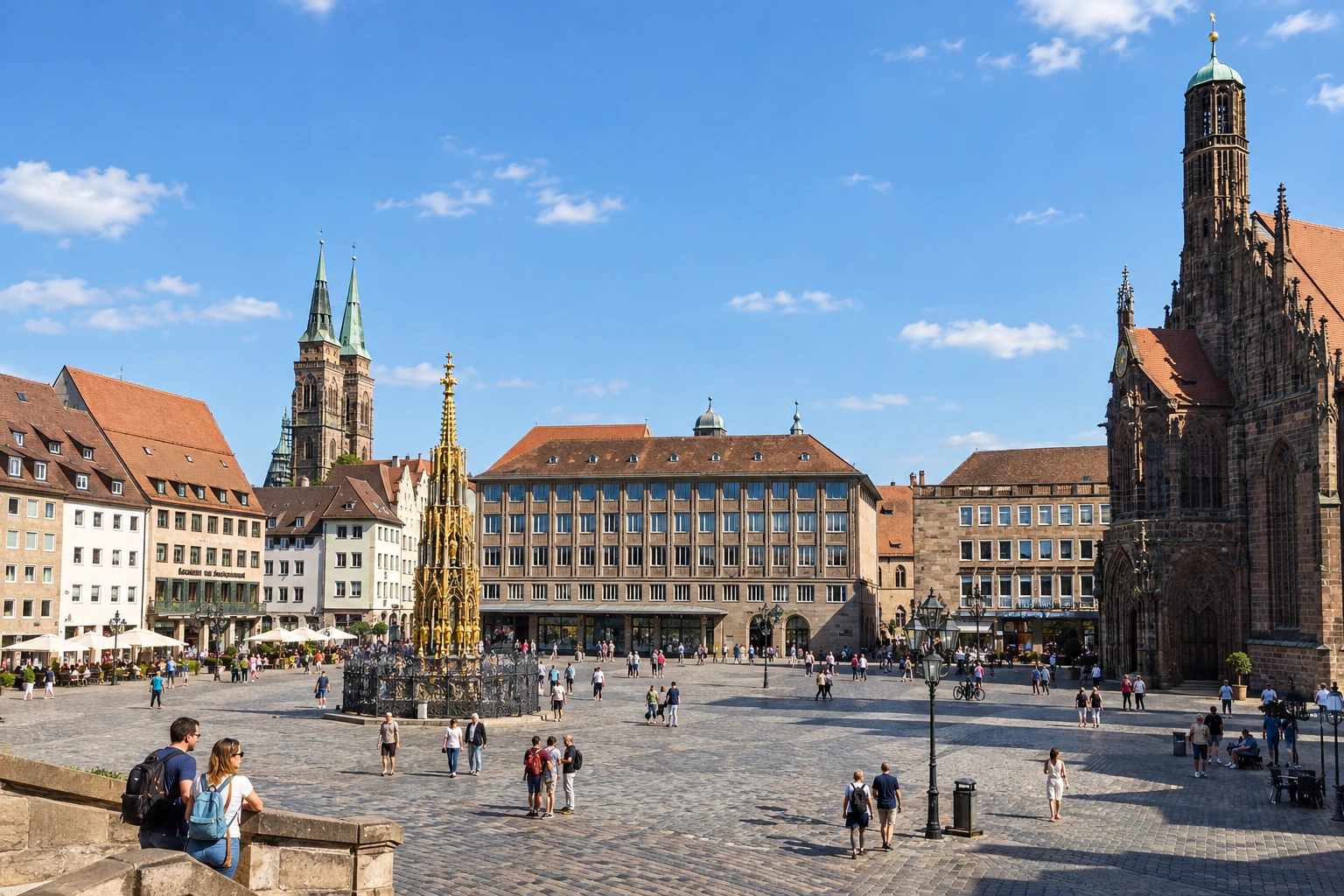
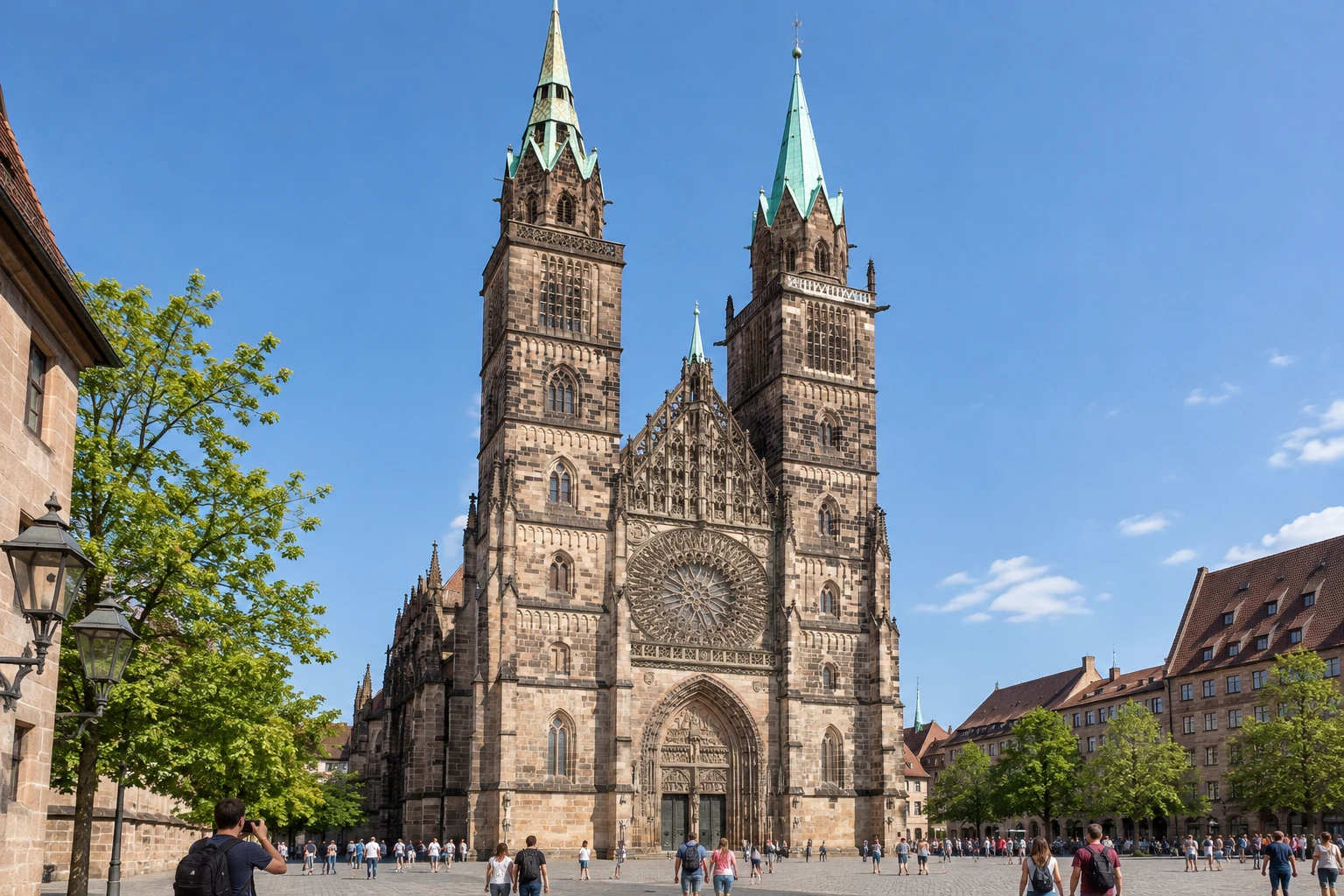
In the photo: Hauptmarkt, Nuremberg
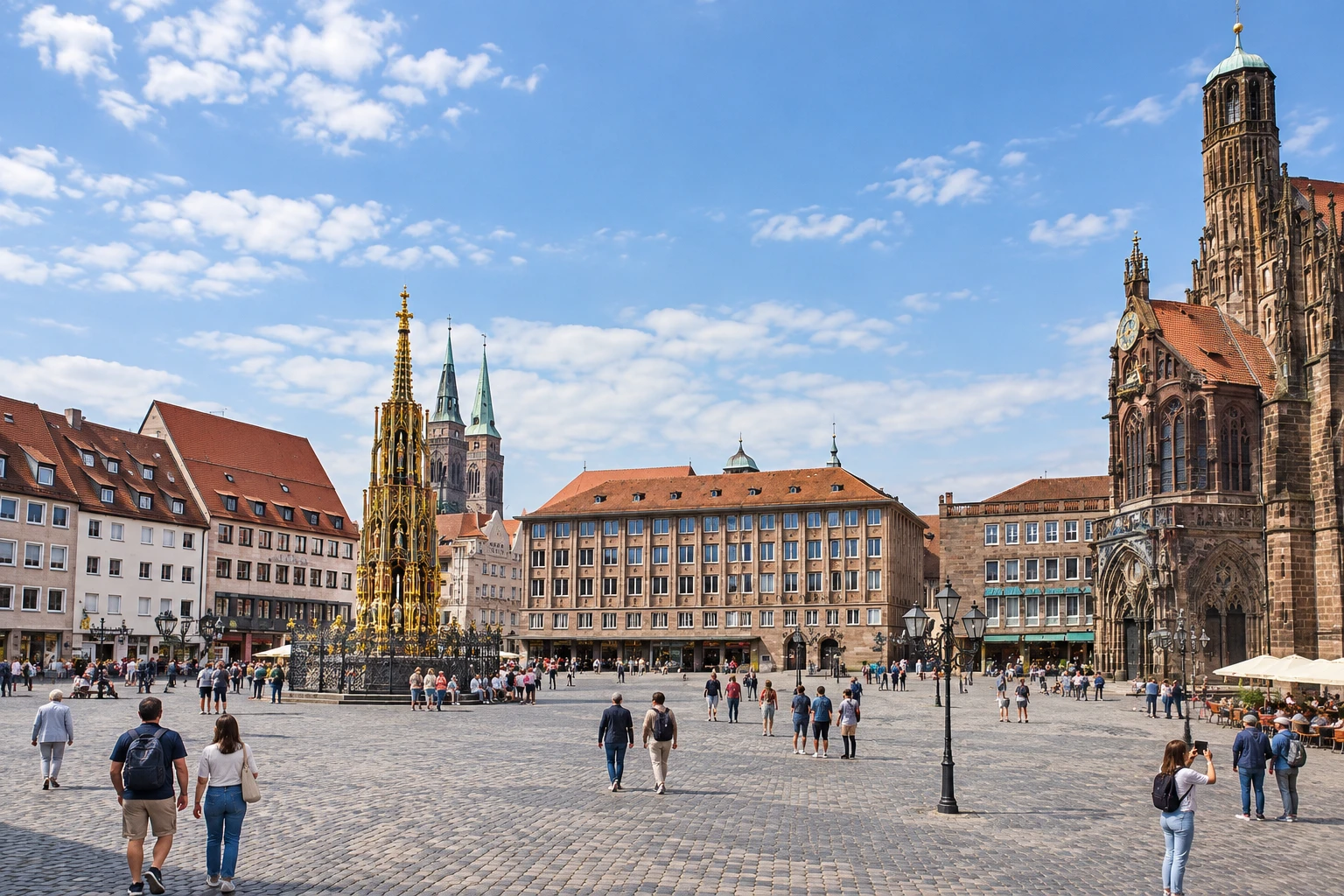
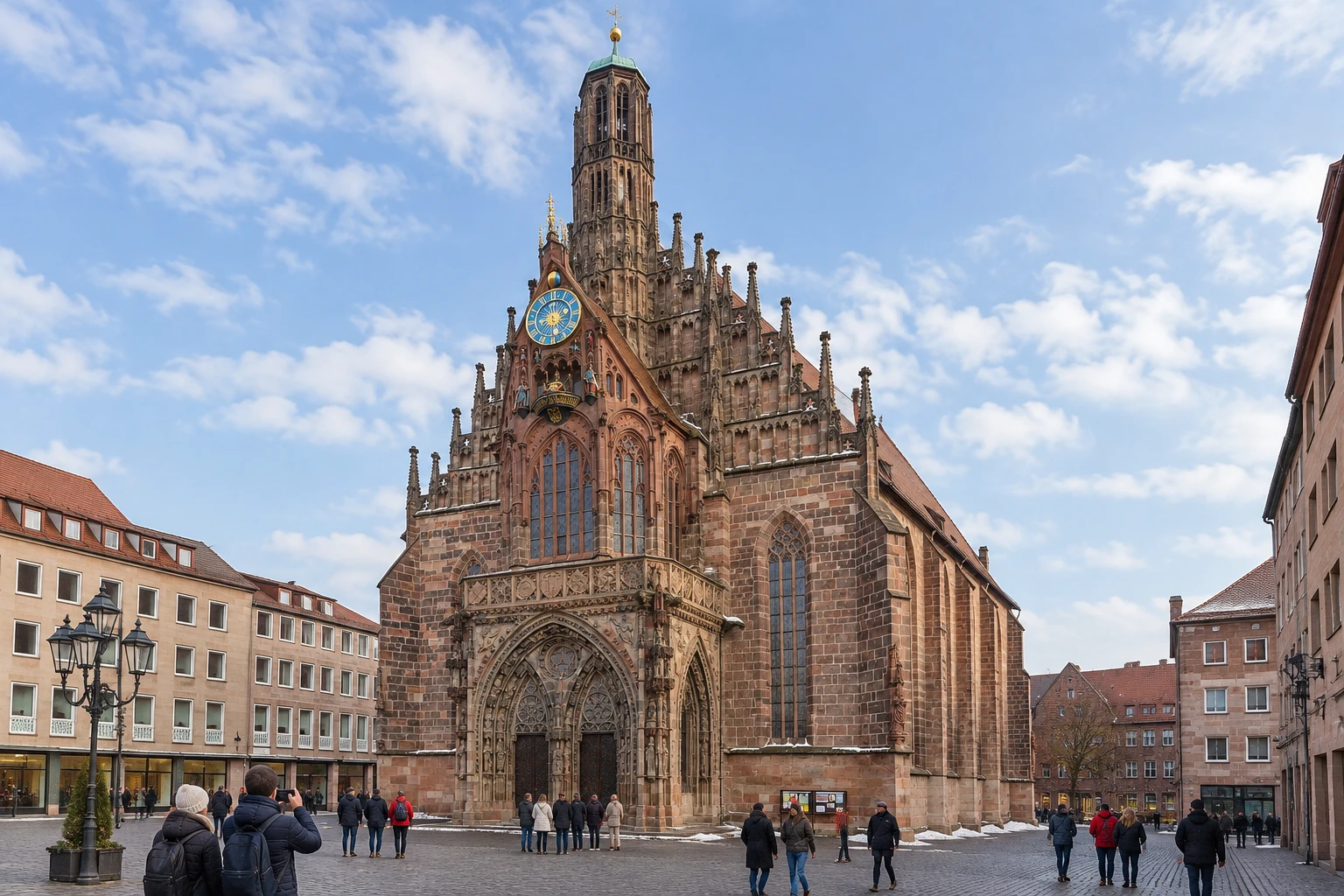
Illustrative images. The pictures in this guide are illustrations based on the real place, not photographs, and may differ from it.
The city
Second-largest city of Baviera, in the Francônia region, Nuremberg has an old town surrounded by walls and crossed by the Pegnitz river. Above stands the Kaiserburg, the imperial castle; below, the Hauptmarkt, the Gothic churches of St. Sebald, St. Lorenz and the Frauenkirche, Albrecht Dürer's house and the Germanisches Nationalmuseum. The city also preserves the memory of Nazism and the 1945 trials, at the Dokumentationszentrum and the Memorium Nürnberger Prozesse.
There's no accommodation in the guide yet in Nuremberg.
Tem hotel, pousada ou casa de temporada aqui? Cadastre a suaThere are no restaurants in the guide yet in Nuremberg.
Know a good one? Recommend it to usHotéis e restaurantes da cidade no mapa.
how to get there · how many days · itinerary · questions
Flavors of Germany

Honey cake with spices, walnuts and almonds, often baked on a thin wafer and covered with chocolate or icing. It has a protected geographical indication since 1996 and may only be made within Nuremberg.

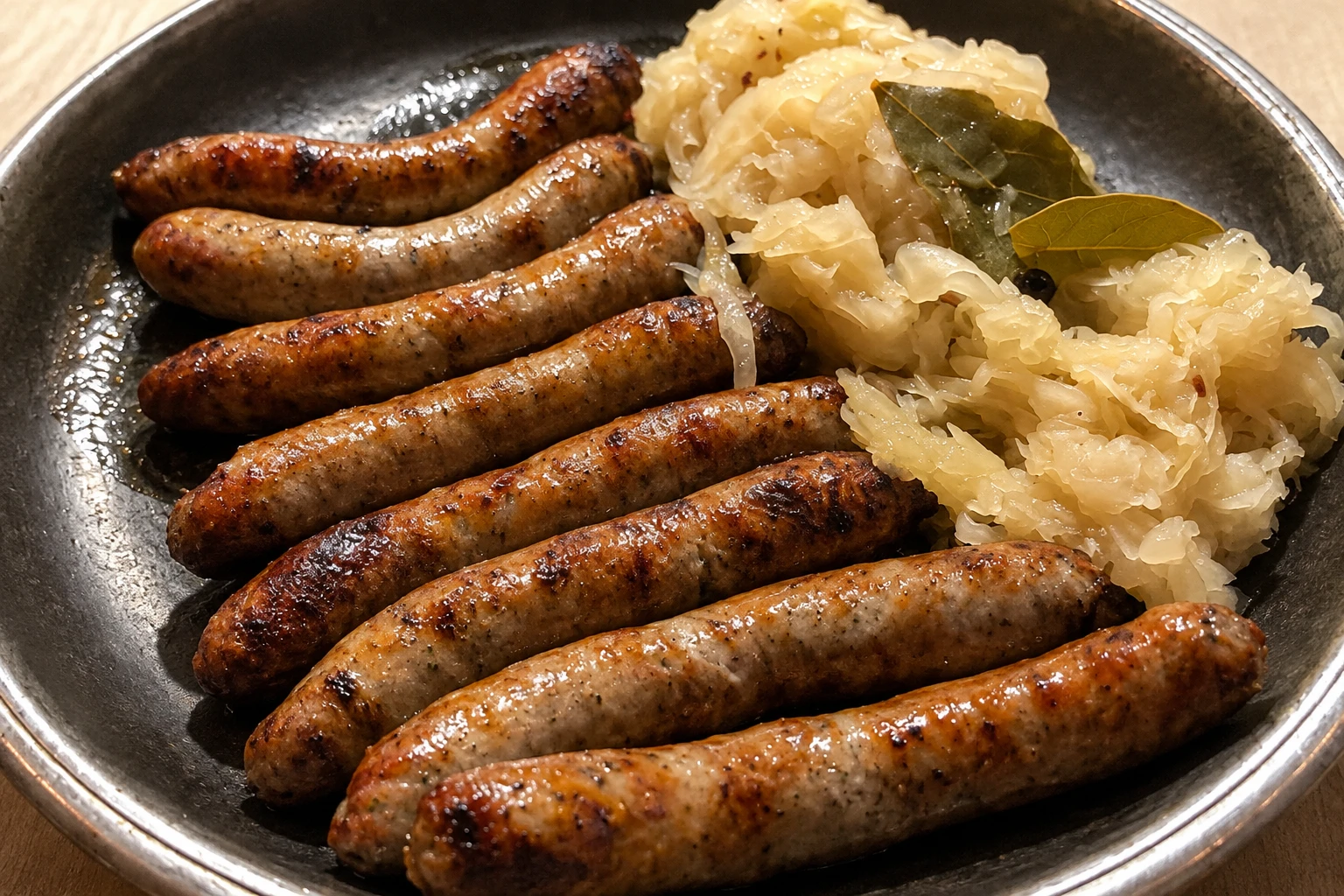
Pork sausages 7 to 9 centimeters long, seasoned with marjoram and grilled, served by the dozen with sauerkraut or inside a roll. They have protected geographical indication since 2003 and may only be made in Nuremberg.
The local experience
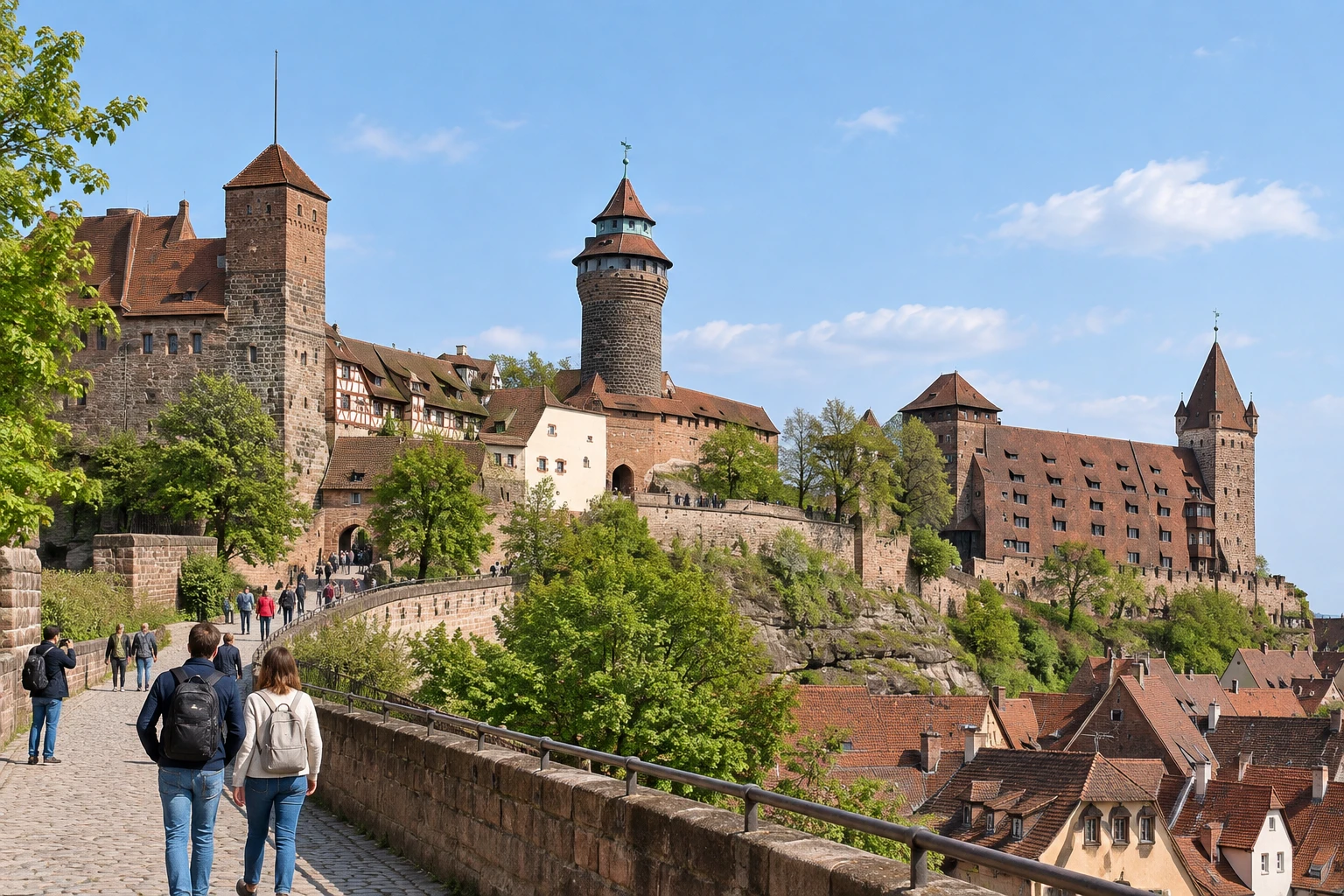
Imperial castle on a sandstone rock at the northern edge of the old town. It has the Palas with an exhibition about the Holy Roman Empire, the double Romanesque chapel, the deep well and wide views over the city's roofs.
Central square of Nuremberg, with a daily market, the golden Schöner Brunnen and the façade of the Frauenkirche. This is where the Christkindlesmarkt, the city's Christmas market, usually takes place.
Gothic 14th‑century church on the Hauptmarkt, built at the command of Emperor Charles IV. On the façade is the Männleinlaufen, a clock with figures that move at noon.
Large Gothic church on the south side of the Pegnitz, with two towers, a rose window of about 9 meters, and works by Veit Stoss and Adam Kraft in the chancel.
Before you go
Nuremberg – Germany Destination Nuremberg and Bamberg about 170 km from Munich
Approximate distances. Check flights and bus, train or boat schedules before you travel.
Connections to Brazil usually require a transfer in another city. Check before you buy. O aeroporto de Nuremberg (NUE) is about 7 km from the center and is linked to the central station by the U2 metro line. Many people arrive by train: from Munique the ICE takes a little over an hour; there are also direct ICEs from Frankfurt and from Berlim. The Nürnberg Hauptbahnhof (Hbf, estação central) is adjacent to the wall, a few minutes' walk from the old town.
One day is enough for the old town: castle, Hauptmarkt, the churches and Dürer's house. With two days you can include the Germanisches Nationalmuseum, which needs several hours, and the 20th-century history sites: the Dokumentationszentrum on the former Nazi rally grounds, and the Memorium at the Palácio da Justiça. Adding a day trip to Bamberg, which is less than an hour by train, the ideal is three days.
From May to September the days are long and the center's streets become lively; summer runs from June to August. The Christkindlesmarkt, the Christmas market on the Hauptmarkt, usually runs from late November until December 24 and fills the city. Winter, from December to February, is cold and has short days. The seasons are reversed compared with Brasil, and the time difference is 4 or 5 hours ahead of Brasília, depending on the time of year.
The seasons shown are the most usual ones; nature doesn't always follow the calendar.
No. The old town is best explored on foot, and the metro (U-Bahn), tram and buses of the integrated network reach the aeroporto, the Dokumentationszentrum and the Memorium. Bamberg, Würzburg and other towns in Francônia have frequent trains. A car is only useful for itineraries into the countryside, and parking in the old town is difficult.
Suggested itinerary
Built with the places on this page. No rush: it's paced so you have time to see them.
Go up early to the Kaiserburg to see the Palas, the double chapel and the Tiefer Brunnen. Descend via the Tiergärtnertor square to the house of Albrecht Dürer and continue along the Weißgerbergasse, with its half-timbered houses.
Arrive at the Hauptmarkt before noon for the Männleinlaufen, the clock of the Frauenkirche. See the Schöner Brunnen, enter St. Sebald and cross the Pegnitz to St. Lorenz, with the Englischer Gruß by Veit Stoss.
Walk to the Henkersteg, the covered wooden bridge next to the Trödelmarkt island, and follow the riverbank. The light at the end of the day on the houses along the bank makes for good photos.
Try the Nürnberger Rostbratwürste, small thin sausages served on the griddle or with sauerkraut, in one of the central taverns. For dessert, a Lebkuchen, the city's gingerbread.
Day 1
Start with the imperial castle and the wall viewpoint over the rooftops. Then visit the house where Dürer lived and worked, with the reconstructed engraving workshop.
At noon, watch the Männleinlaufen at the Frauenkirche. Pass the Schöner Brunnen, enter St. Sebald, with the saint's bronze tomb, and cross the river to St. Lorenz.
Return to the north side and walk along the Weißgerbergasse, the street of the old tanners. Finish at the Henkersteg, the executioner's bridge, and on the banks of the Pegnitz.
Dine in a Bratwurst tavern and walk through the illuminated center. At the end of November and in December, the Christkindlesmarkt usually occupies the Hauptmarkt.
Day 2
Reserve the morning for the largest museum of cultural history in Germany, in the former Carthusian monastery. Enter via the Straße der Menschenrechte, the street of columns with the human rights.
Take the tram or the S-Bahn to the former Nazi rally grounds. The exhibition is in the unfinished Kongresshalle; afterwards, walk outdoors along the shore of the Dutzendteich lake.
Take the metro to the Palácio da Justiça and see Saal 600, where in 1945 the trial of the main Nazi war criminals began. Check the closing time before you go.
Return to the center via the Königstor and pass through the Handwerkerhof, a courtyard of workshops next to the wall. End with a dinner near the Hauptmarkt or on the banks of the Pegnitz.
Check before you go. Opening hours and days change, and places may close for renovations, holidays or events. This itinerary is a suggestion from Cidade Turismo, not a commitment: plan yours by checking directly with each place you intend to visit.
Before you go
Yes. The ICE between Munique and Nuremberg takes a little over an hour, and the central station is next to the old town. In one day you can see the Kaiserburg, the Hauptmarkt and the churches. To include the Germanisches Nationalmuseum or the 20th-century memorial sites, it's worth staying at least one night.
The U2 metro line departs from the aeroporto itself and reaches the Nürnberg Hauptbahnhof in about 10 minutes. From the station, the old town is a few steps away, on the other side of the wall. Buy the ticket at the machine before boarding.
The Christkindlesmarkt usually opens on the Friday before the first Sunday of Advent, in late November, and runs until December 24, on the Hauptmarkt. The opening features the Christkind's prologue, read from the balcony of the Frauenkirche. Weekends are very busy: watch your belongings and, if possible, go on a weekday.
Yes, to understand German history. The Dokumentationszentrum, on the former grounds of the Nazi party rallies, explains how the regime used the city as a stage. The Memorium Nürnberger Prozesse is in the Palácio da Justiça, where the main Nazi leaders were tried from 1945 onward. These are places of memory: visit with respect and avoid posed photos.
The city is known for Nürnberger Rostbratwürste, short thin sausages served in six, eight or twelve on the griddle, or three in a bun (Drei im Weggla). Lebkuchen, a honey cake with spices, is sold year-round and features heavily at Christmas. Franconian beer is also part of the local table.
Cross-border routes
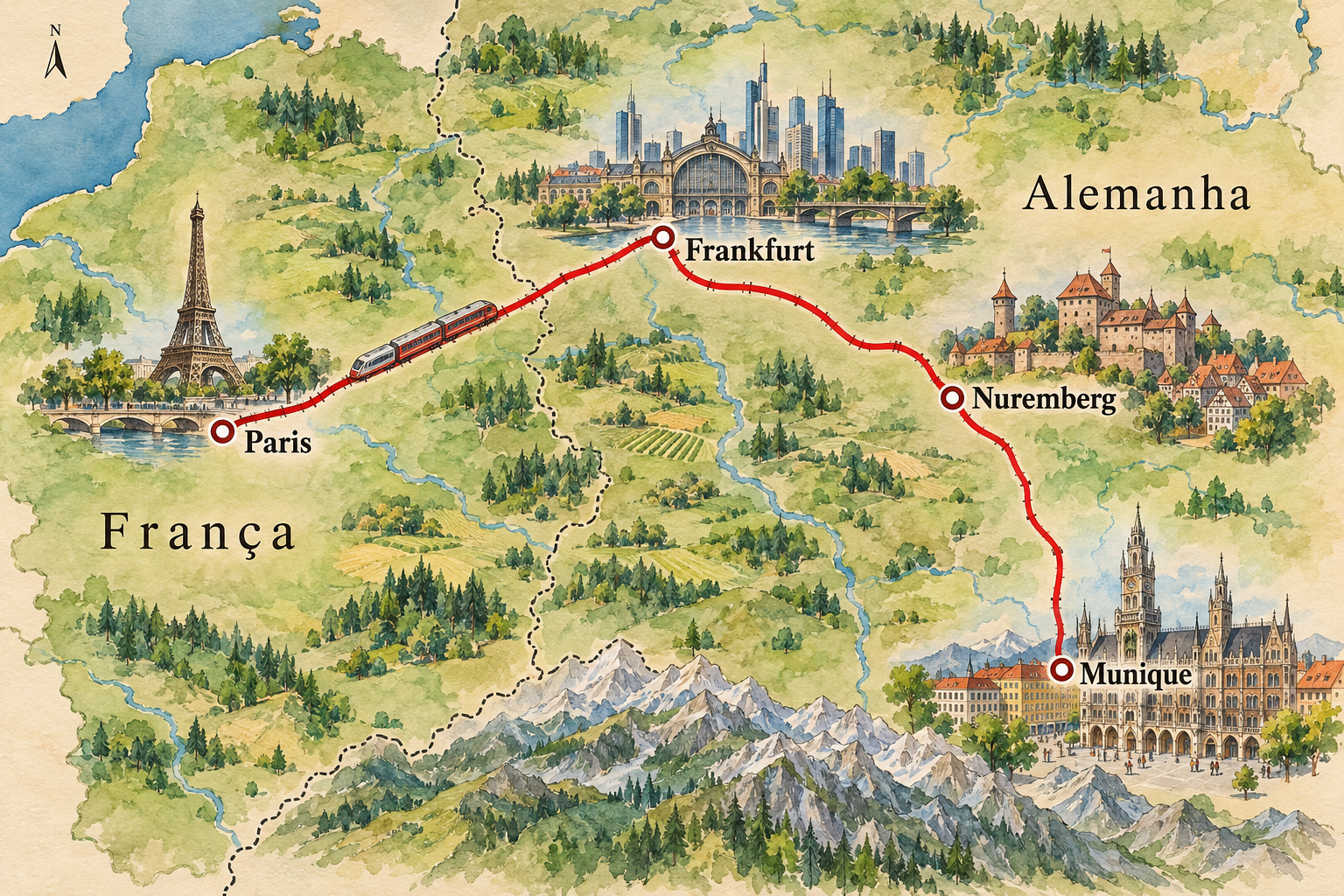
By train from Paris to Munich via Frankfurt and Nuremberg: TGV and ICE connect France with southern Germany from central station to central station.