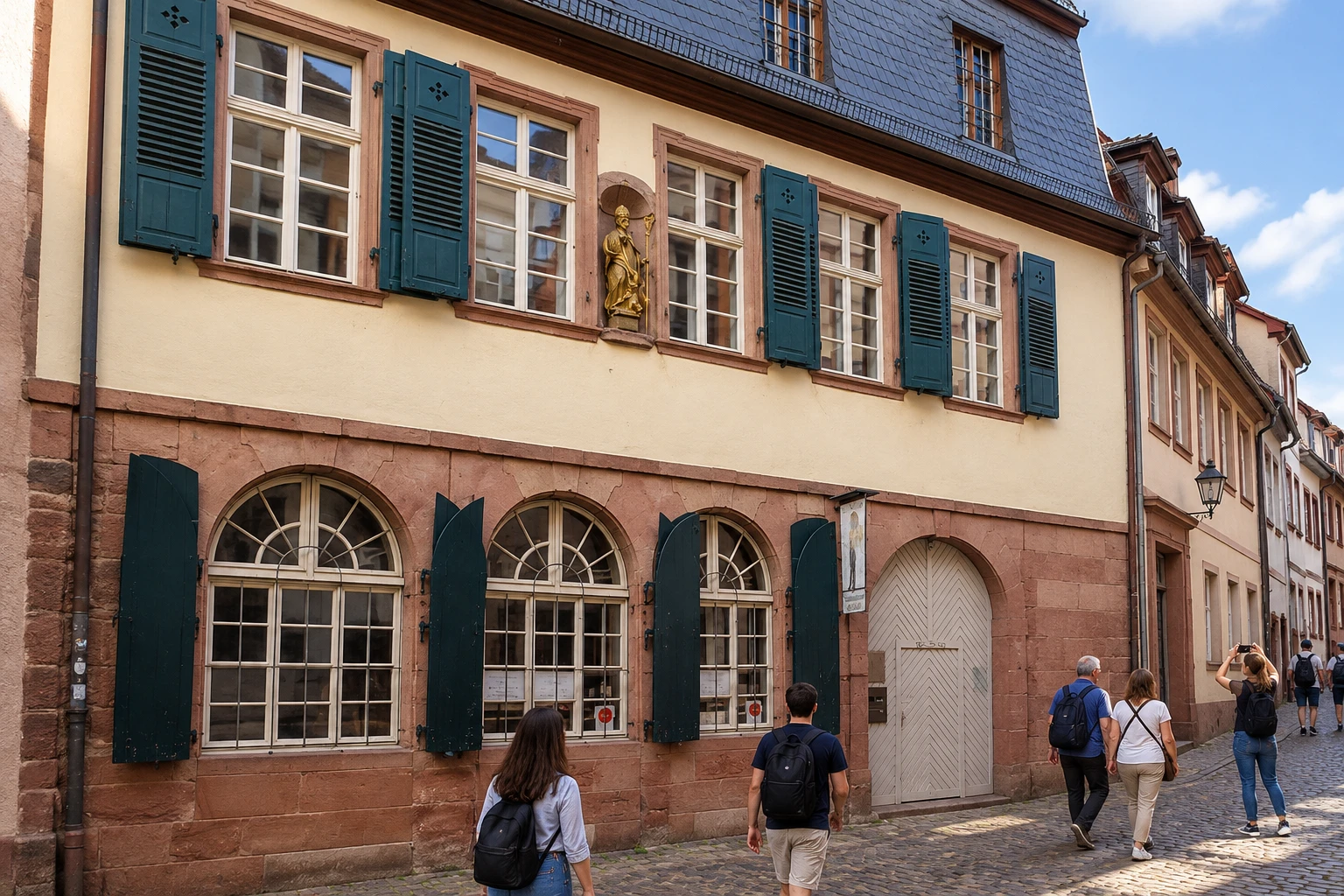
8 places to visit Heidelberg (Germany), chosen by the Cidade Turismo guide.
Illustrative images. The pictures in this guide are illustrations based on the real place, not photographs, and may differ from it.
To start
The 8 main places Heidelberg
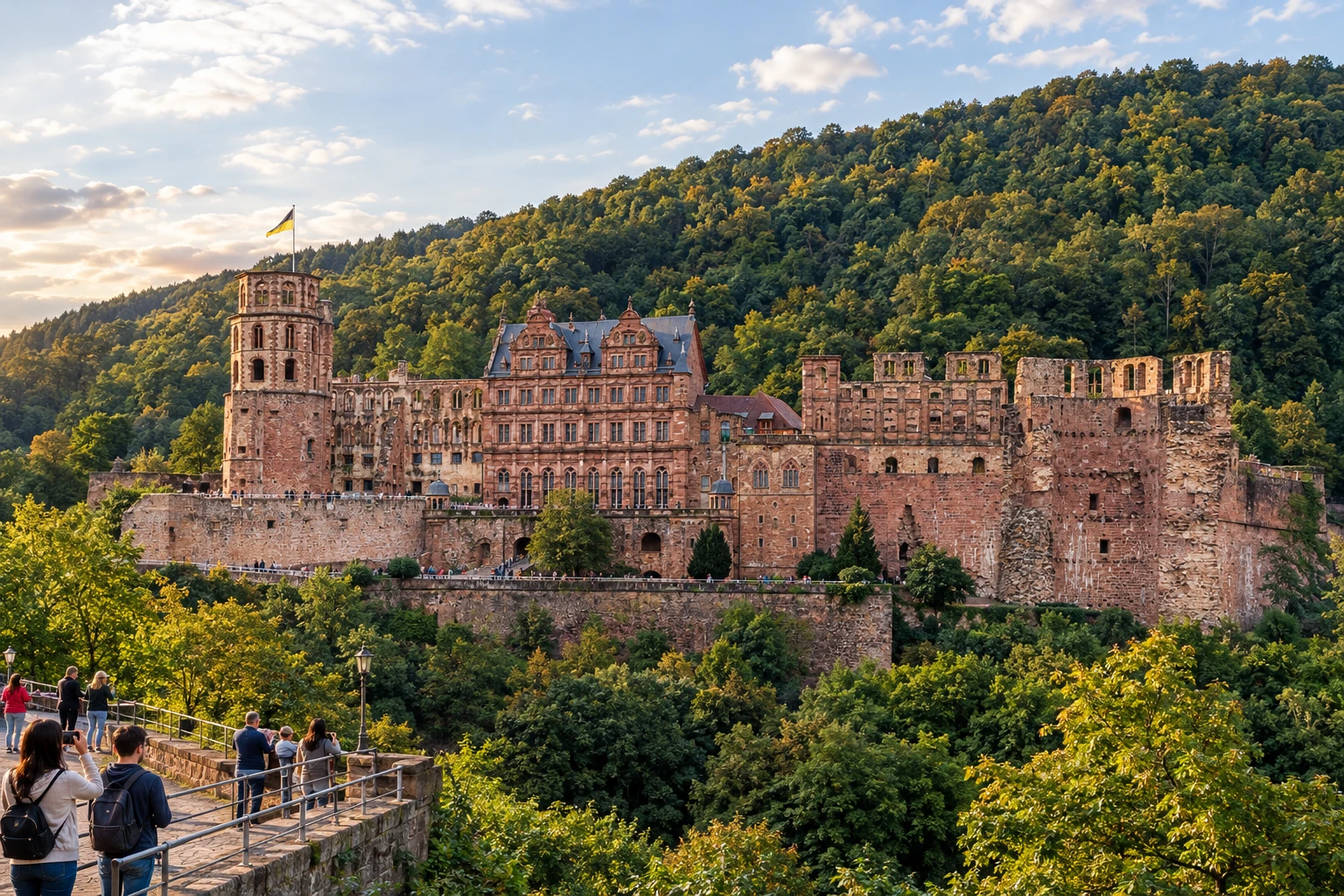
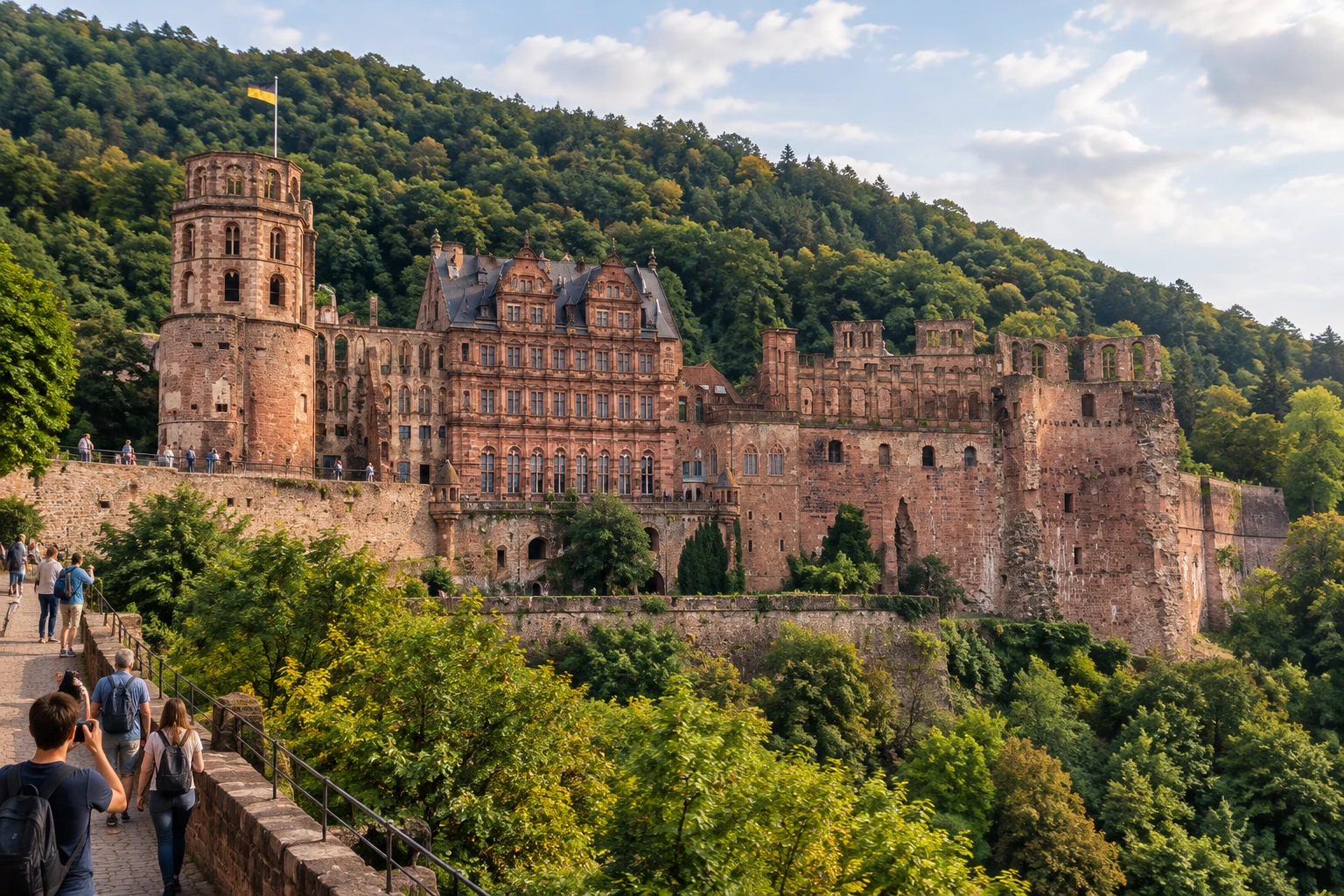
Heidelberg CastleA red sandstone ruin on the slope of the Königsstuhl above the Altstadt.
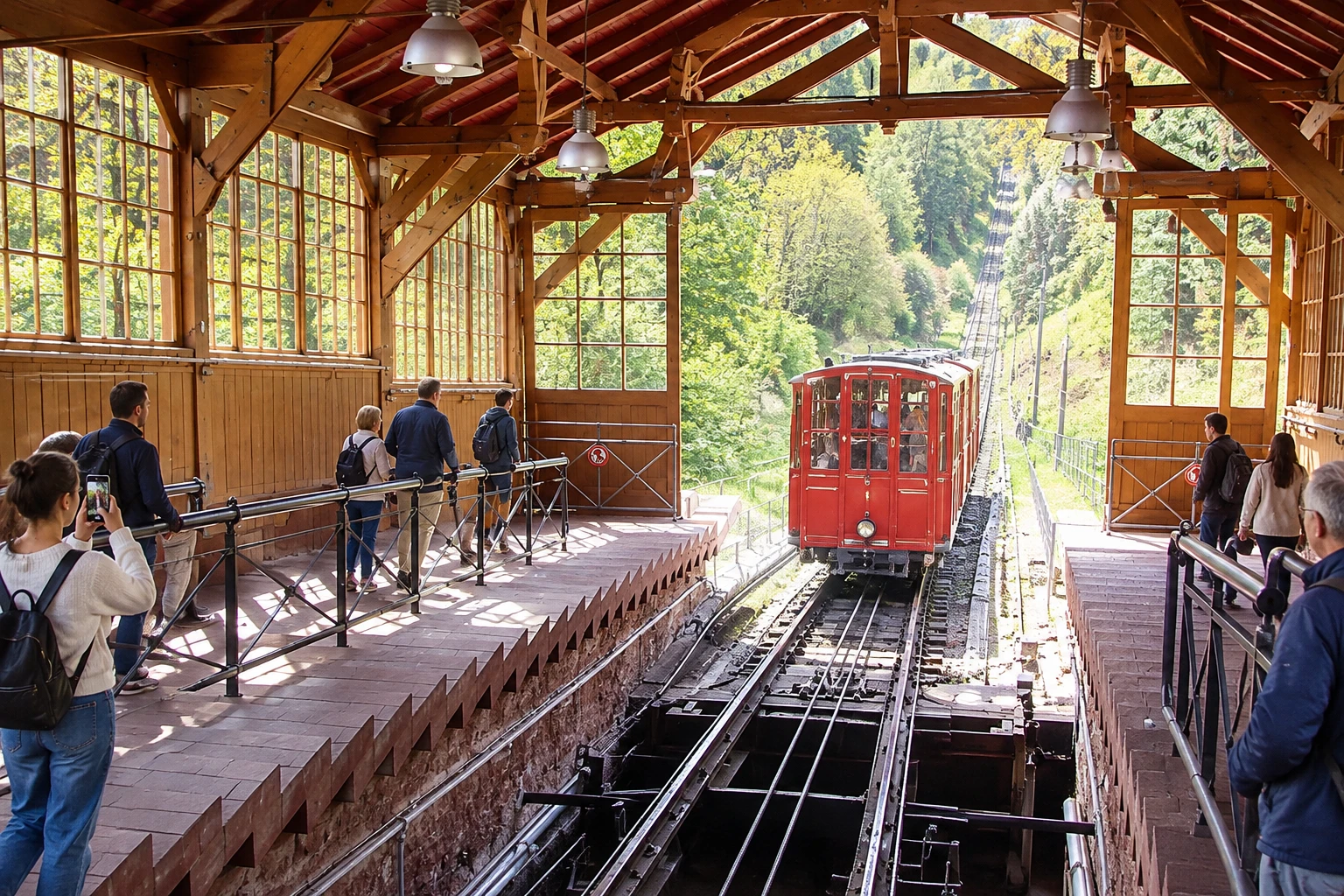
Heidelberg Mountain RailwayFunicular that departs from Kornmarkt in the Altstadt, stops at the castle and continues to the Molkenkur.
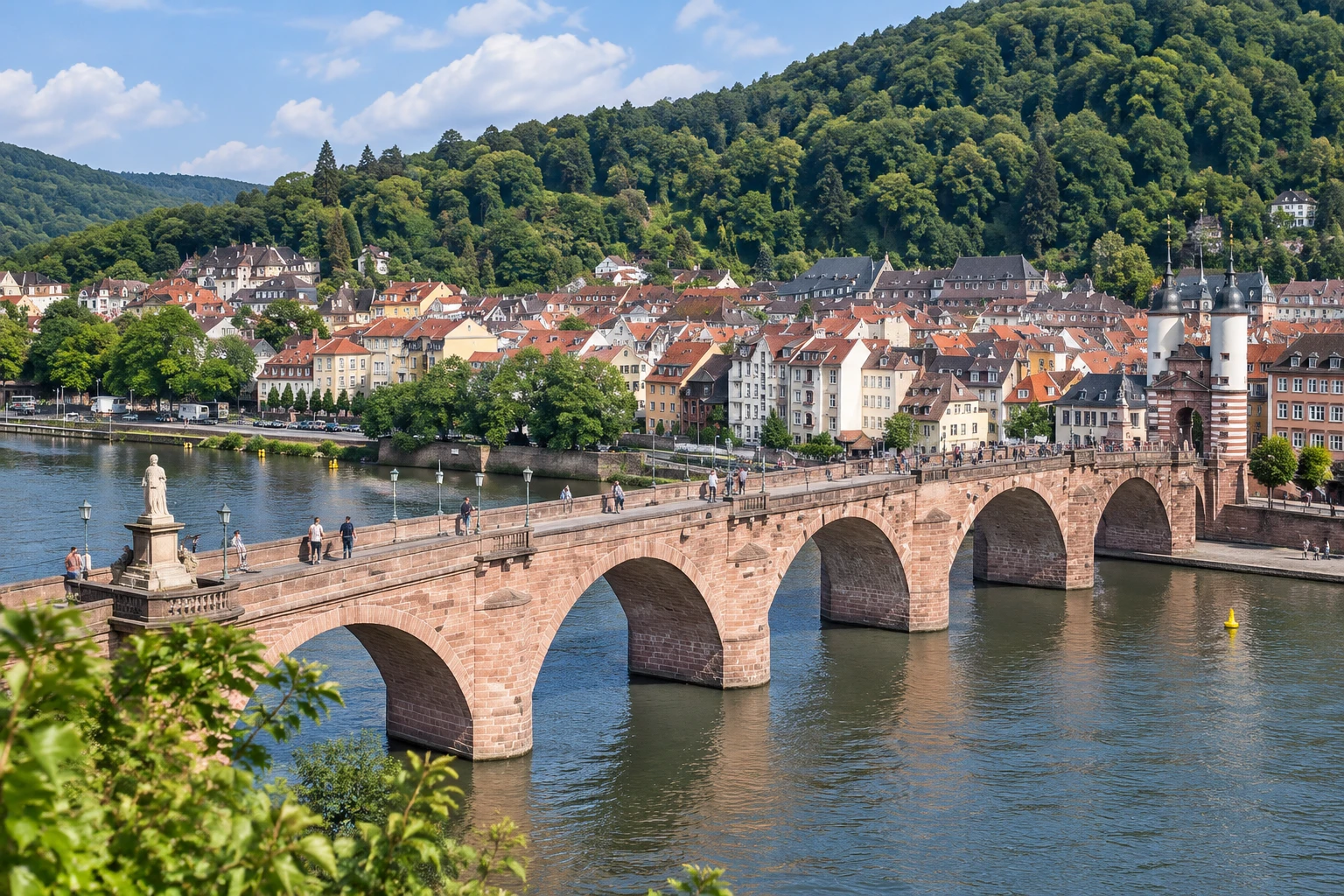
Old BridgeStone bridge over the Neckar, from 1788, with a medieval two-towered gate at the Altstadt end and the bronze statue of the monkey (Brückenaffe).
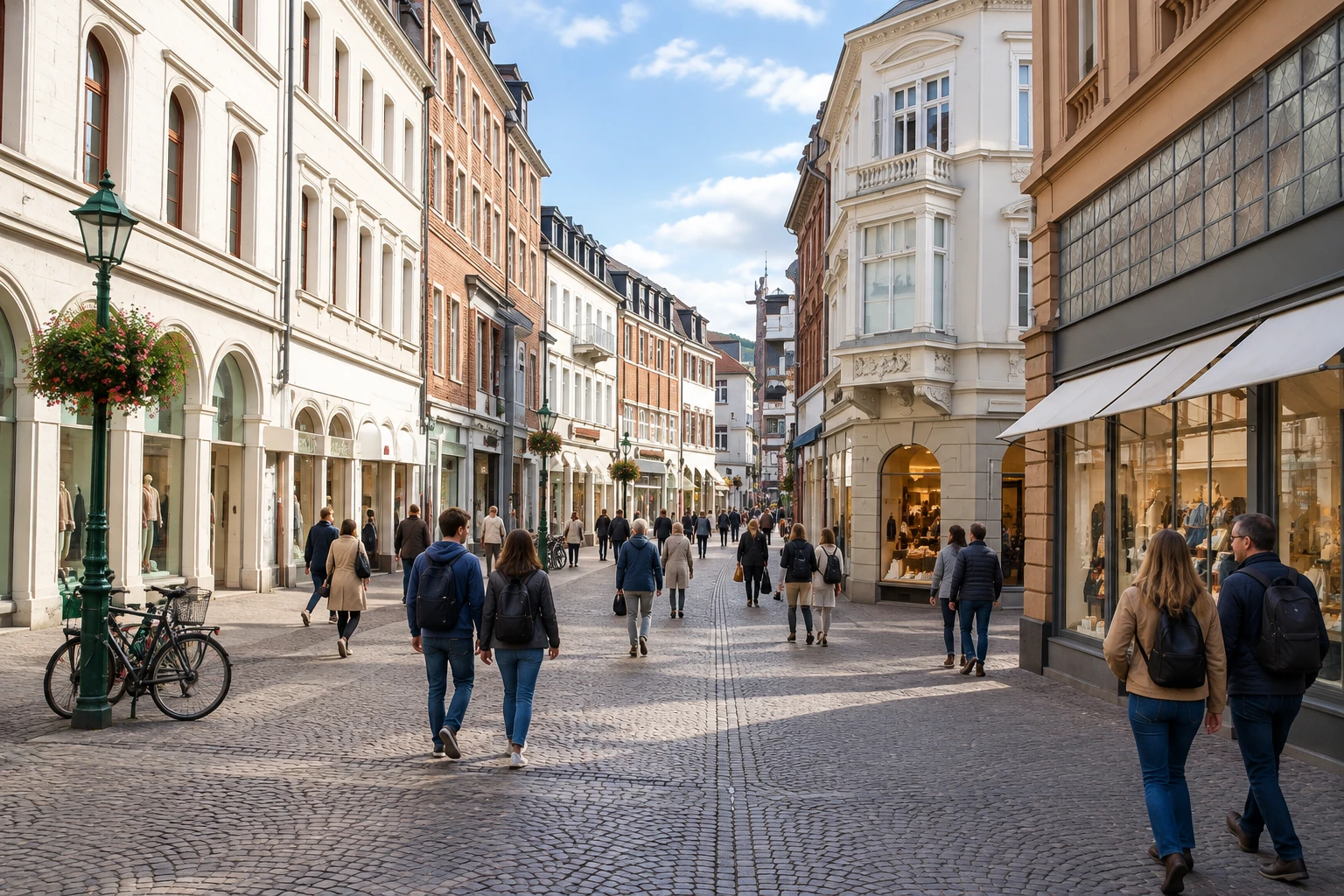
Old Town and HauptstraßeHeidelberg's old town, between the Neckar and the hill, with the Hauptstraße, a 1.6 km pedestrian street between Bismarckplatz and Karlstor, and the squares Marktplatz, Kornmark...
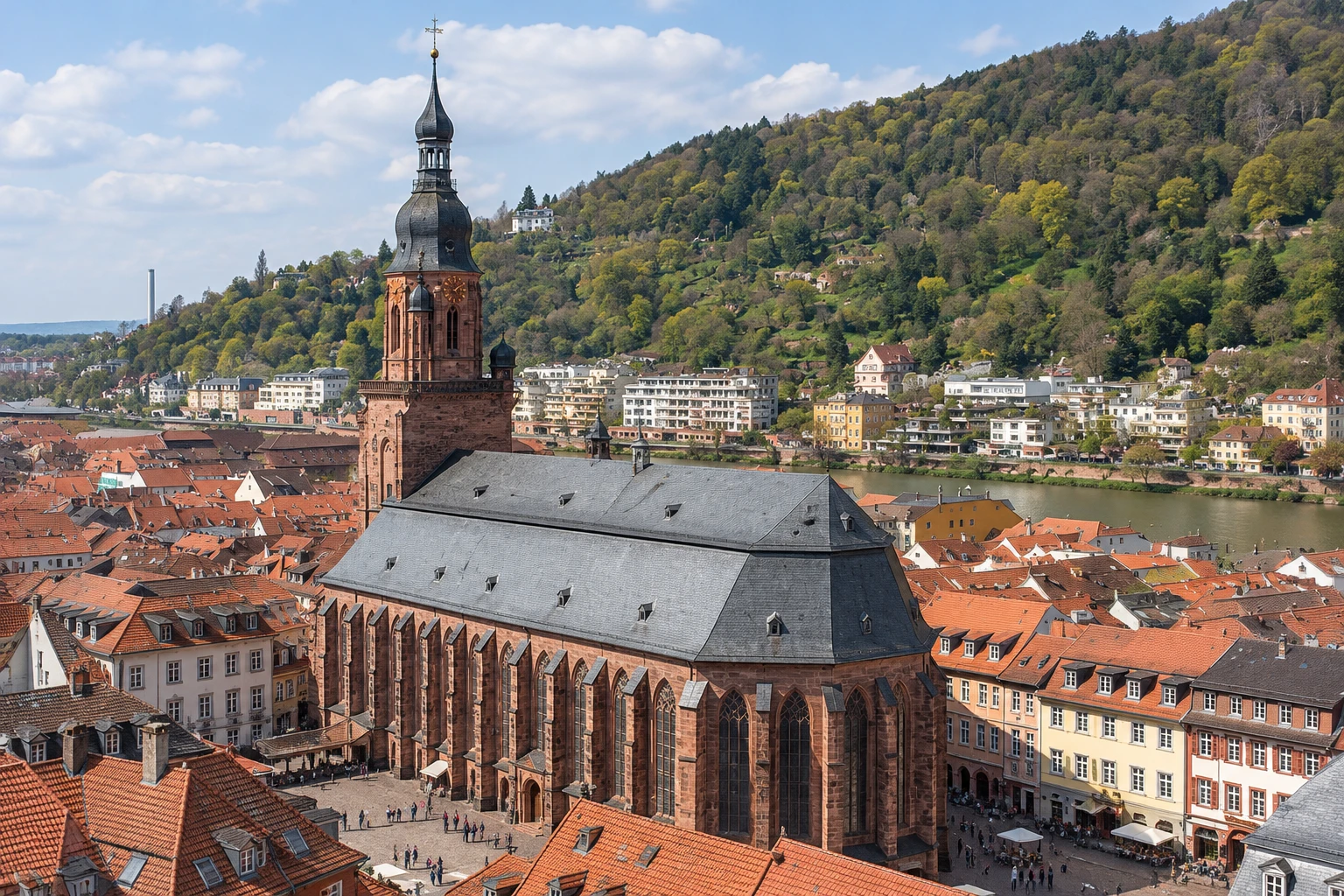
Church of the Holy SpiritGothic church in the Marktplatz, begun in 1398, which housed the Bibliotheca Palatina and contains the tomb of King Ruprecht.
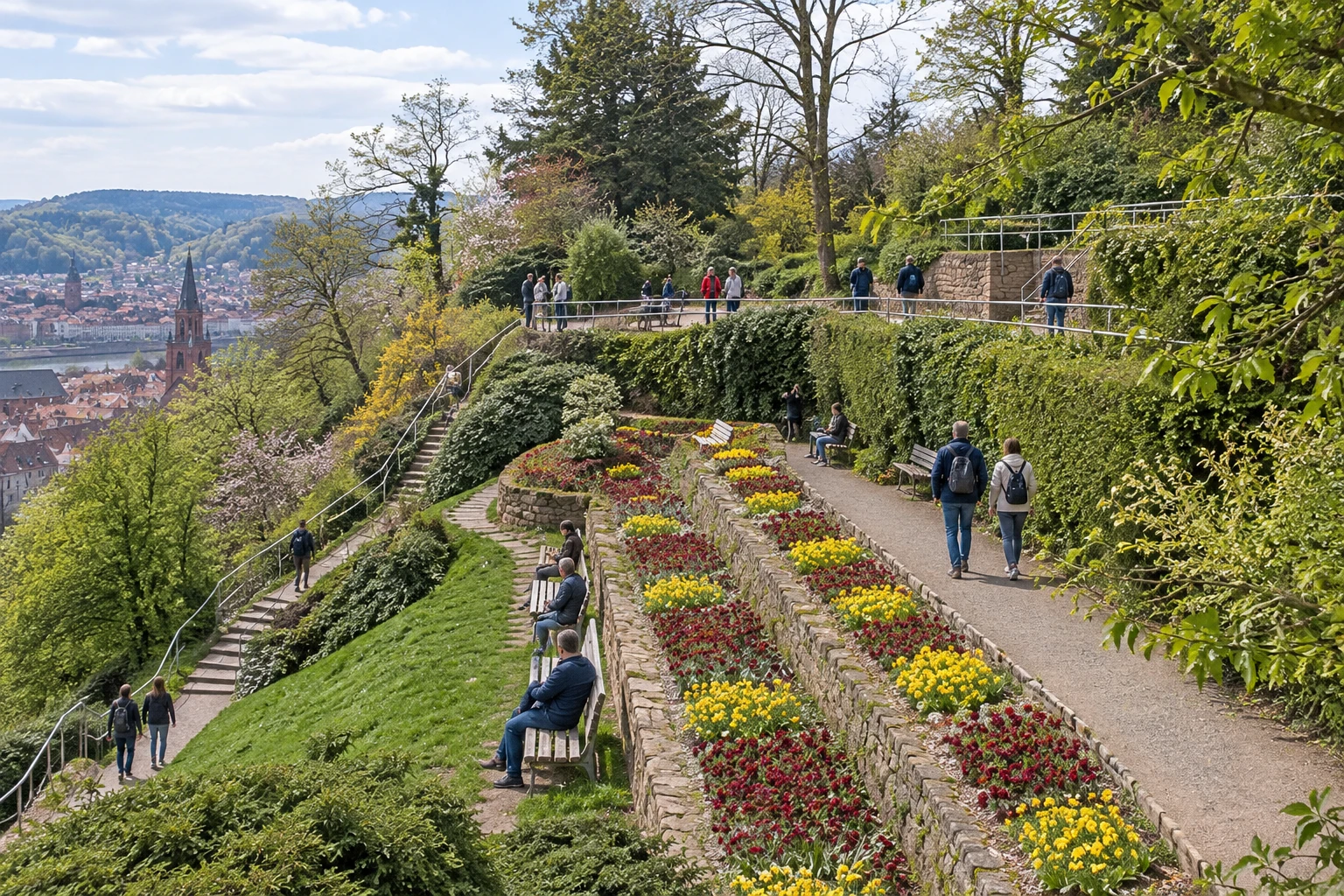
Philosophers' WalkPath along the slope on the north bank of the Neckar, facing the Altstadt and the castle.
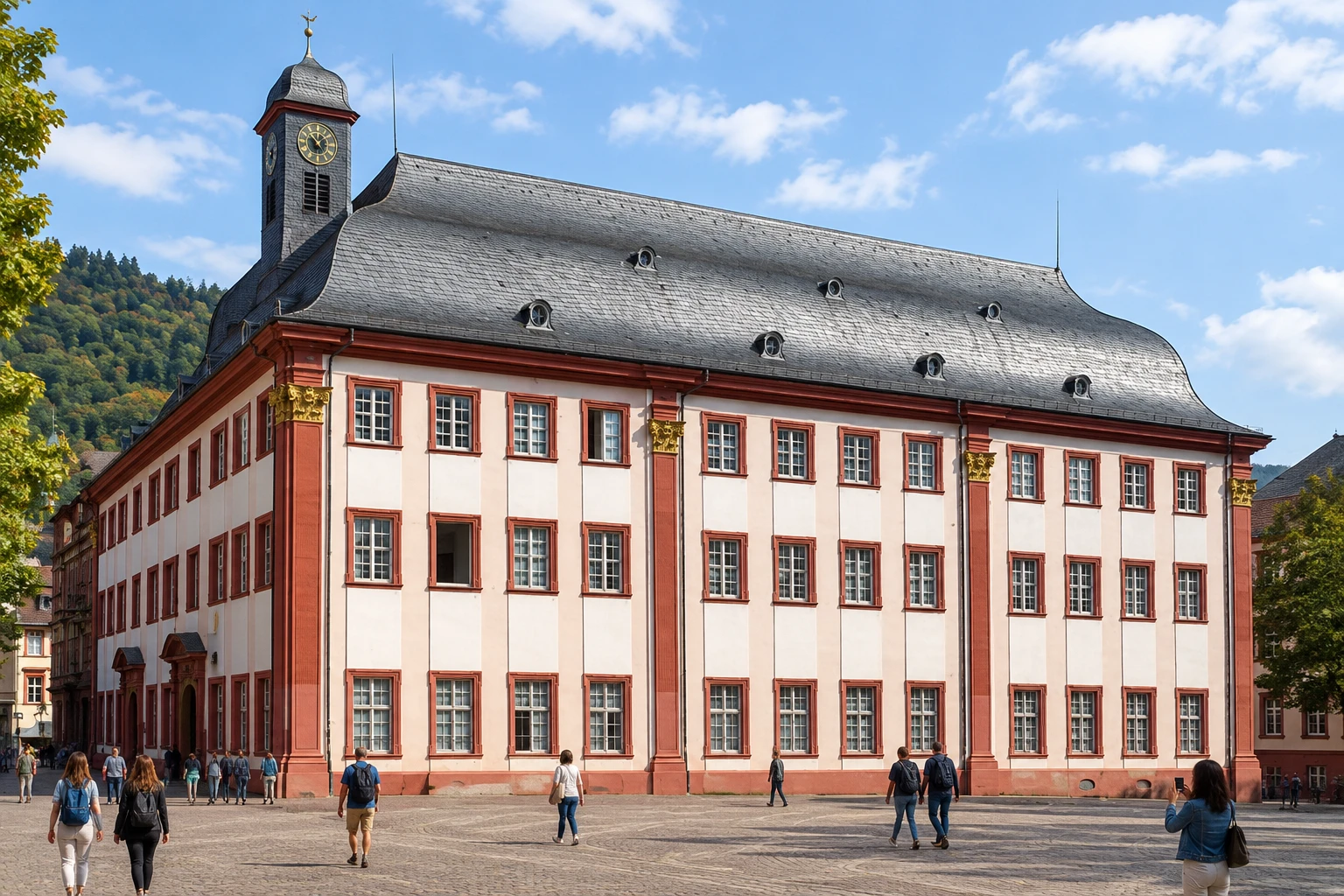
Heidelberg University MuseumMuseum of the University of Heidelberg, the oldest in present-day Germany, founded in 1386.
Student PrisonThe old prison of the Universität de Heidelberg, where students served sentences for rowdiness, duels or disrespect.
A red sandstone ruin on the slope of the Königsstuhl above the Altstadt. It contains Gothic and Renaissance palaces, the giant wine barrel (Großes Fass), the Deutsches Apotheken-Museum and a terrace with views over the Neckar.
Funicular that departs from Kornmarkt in the Altstadt, stops at the castle and continues to the Molkenkur. There you change to the upper section, with old-style wooden carriages, which climbs to the Königstuhl hill at 568 meters.
Stone bridge over the Neckar, from 1788, with a medieval two-towered gate at the Altstadt end and the bronze statue of the monkey (Brückenaffe). From the middle of the bridge you can see the castle above the town's roofs.
Heidelberg's old town, between the Neckar and the hill, with the Hauptstraße, a 1.6 km pedestrian street between Bismarckplatz and Karlstor, and the squares Marktplatz, Kornmarkt and Universitätsplatz.
Gothic church in the Marktplatz, begun in 1398, which housed the Bibliotheca Palatina and contains the tomb of King Ruprecht. For over two centuries it had a wall dividing Catholics and Protestants. The tower has a viewing platform.
Path along the slope on the north bank of the Neckar, facing the Altstadt and the castle. You climb via the Schlangenweg, a stairway trail between stone walls that starts at the Alte Brücke.
Museum of the University of Heidelberg, the oldest in present-day Germany, founded in 1386. It is housed in the Alte Universität, a Baroque building on Universitätsplatz, and includes the Aula, the university's ceremonial hall.
The old prison of the Universität de Heidelberg, where students served sentences for rowdiness, duels or disrespect. The five cells, from 1823, have walls and ceilings covered with drawings, names and verses by the inmates.


 Brazil
 Antarctica
 Argentina
 Bolivia
 Chile
 Colombia
 Ecuador
 Falkland Islands (Malvinas)
 French Guiana
 Guyana
 Paraguay
 Peru
 Suriname
 Uruguay
 Venezuela
 Albania
 Austria
 Belgium
 Croatia
 Denmark
 Finland
 France
 Greece
 Hungary
 Iceland
 Ireland
 Italy
 Luxembourg
 Norway
 Poland
 Portugal
 Slovakia
 Slovenia
 Spain
 Sweden
 Switzerland
 the Czech Republic
 the Netherlands
 the United Kingdom
 Turkey
 Bermuda
 Canada
 Greenland
 Mexico
 Saint Pierre and Miquelon
 the United States
 the Dominican Republic
 Japan
 Egypt
 South Africa
 Australia
 Fiji
 New Zealand
 Papua New Guinea