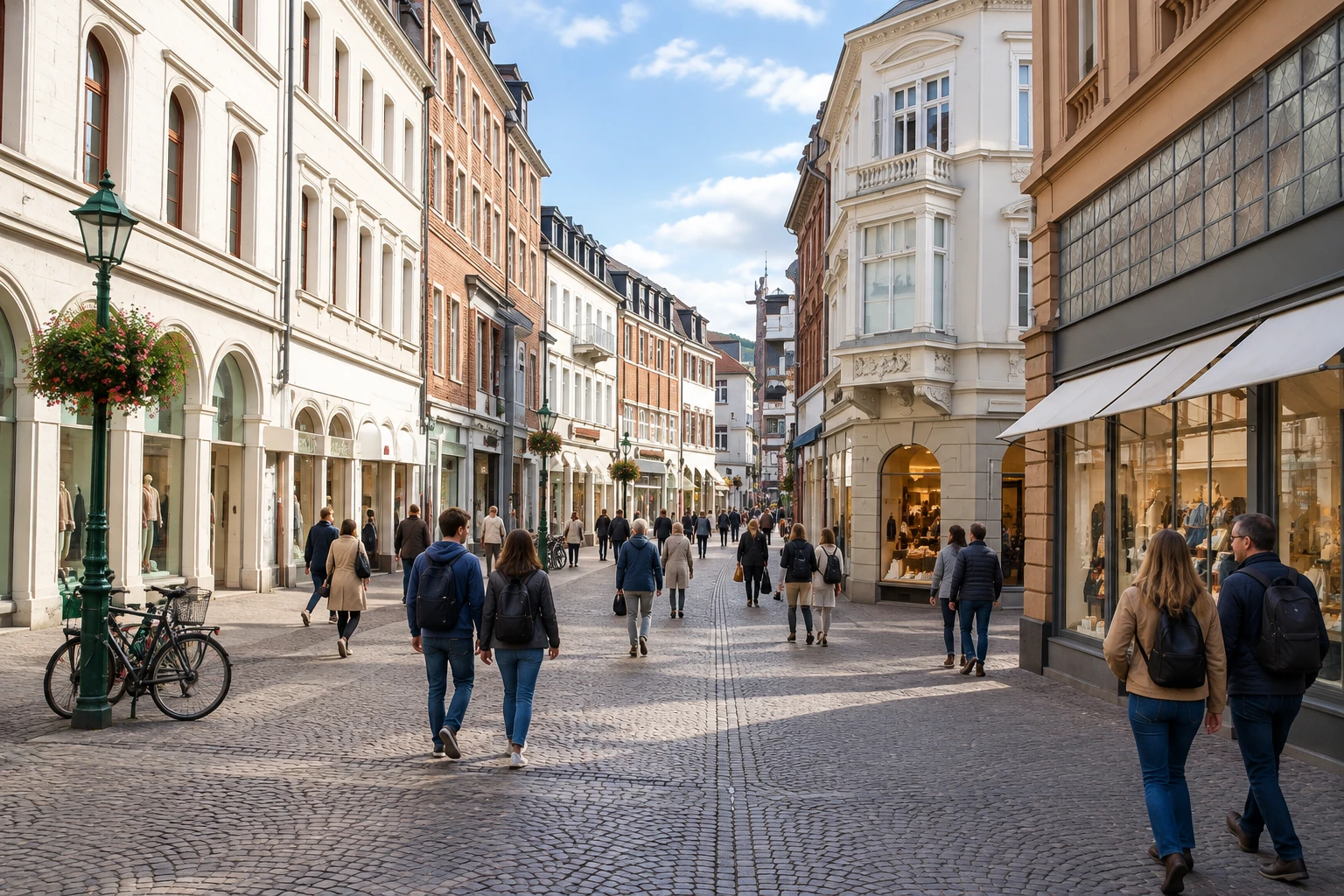
Illustrative images. The pictures in this guide are illustrations based on the real place, not photographs, and may differ from it.
The city
What to expect from Heidelberg.
University city on the banks of the Neckar, about an hour by train from Frankfurt. The ruined castle (Heidelberger Schloss) dominates the hillside, and the Bergbahn funicular climbs to it and to the Königstuhl. Below lie the Altstadt, with the Hauptstraße and the Heiliggeistkirche, the Alte Brücke over the river, the Alte Universität with its museum and the Studentenkarzer, and on the other side of the Neckar the Philosophenweg, with the classic view of the town.
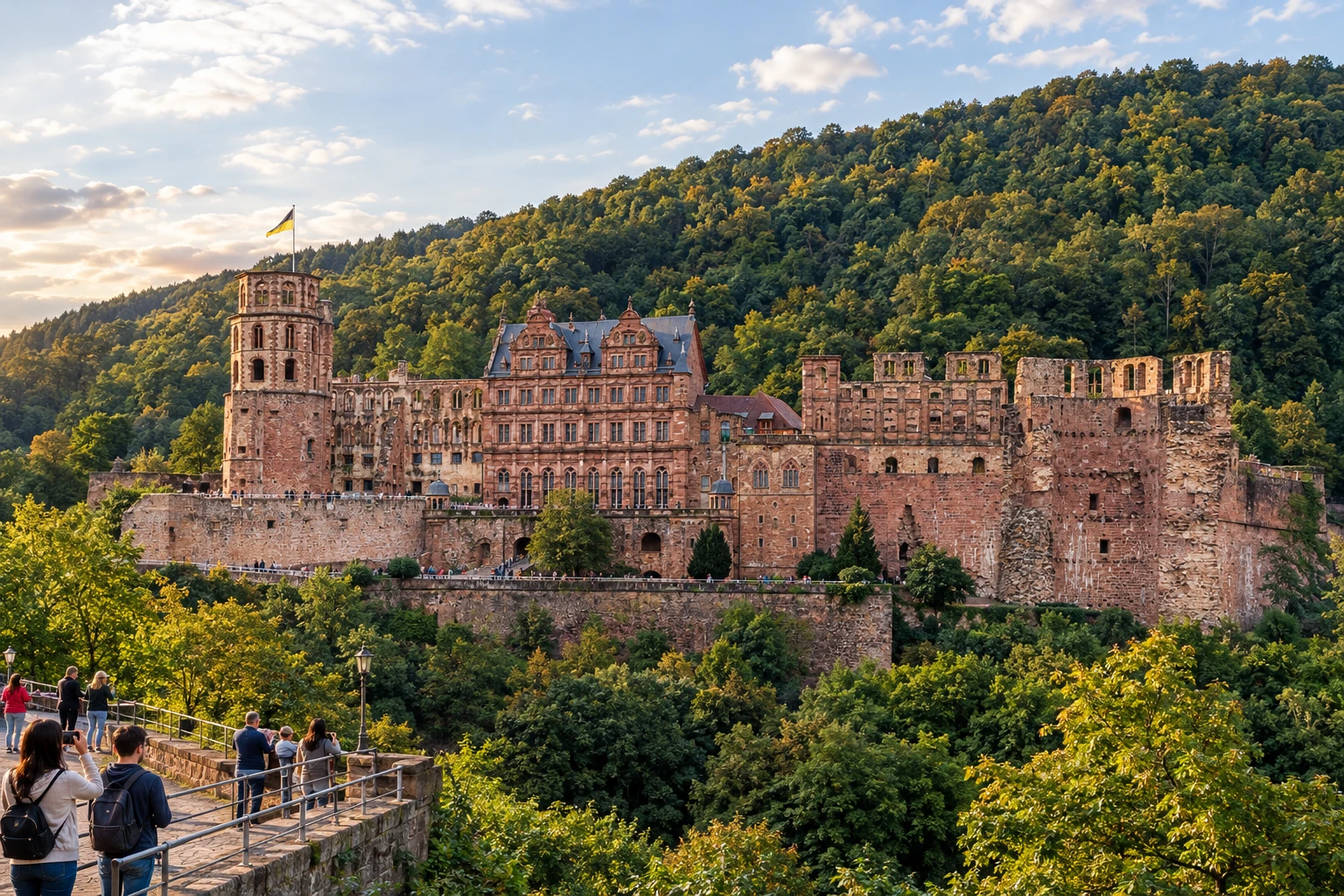
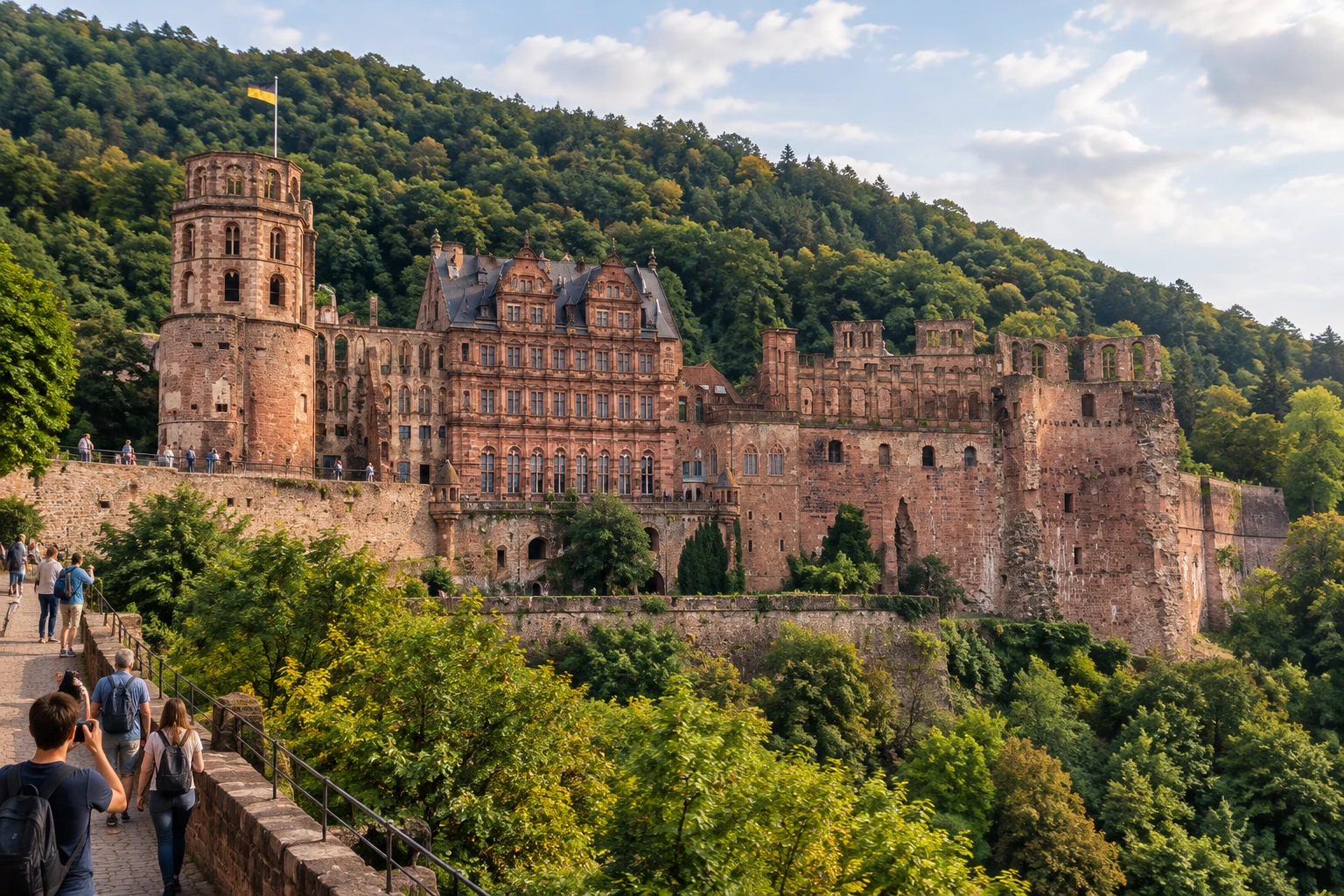
A red sandstone ruin on the slope of the Königsstuhl above the Altstadt. It contains Gothic and Renaissance palaces, the giant wine barrel (Großes Fass), the Deutsches Apotheken-Museum and a terrace with views over the Neckar.
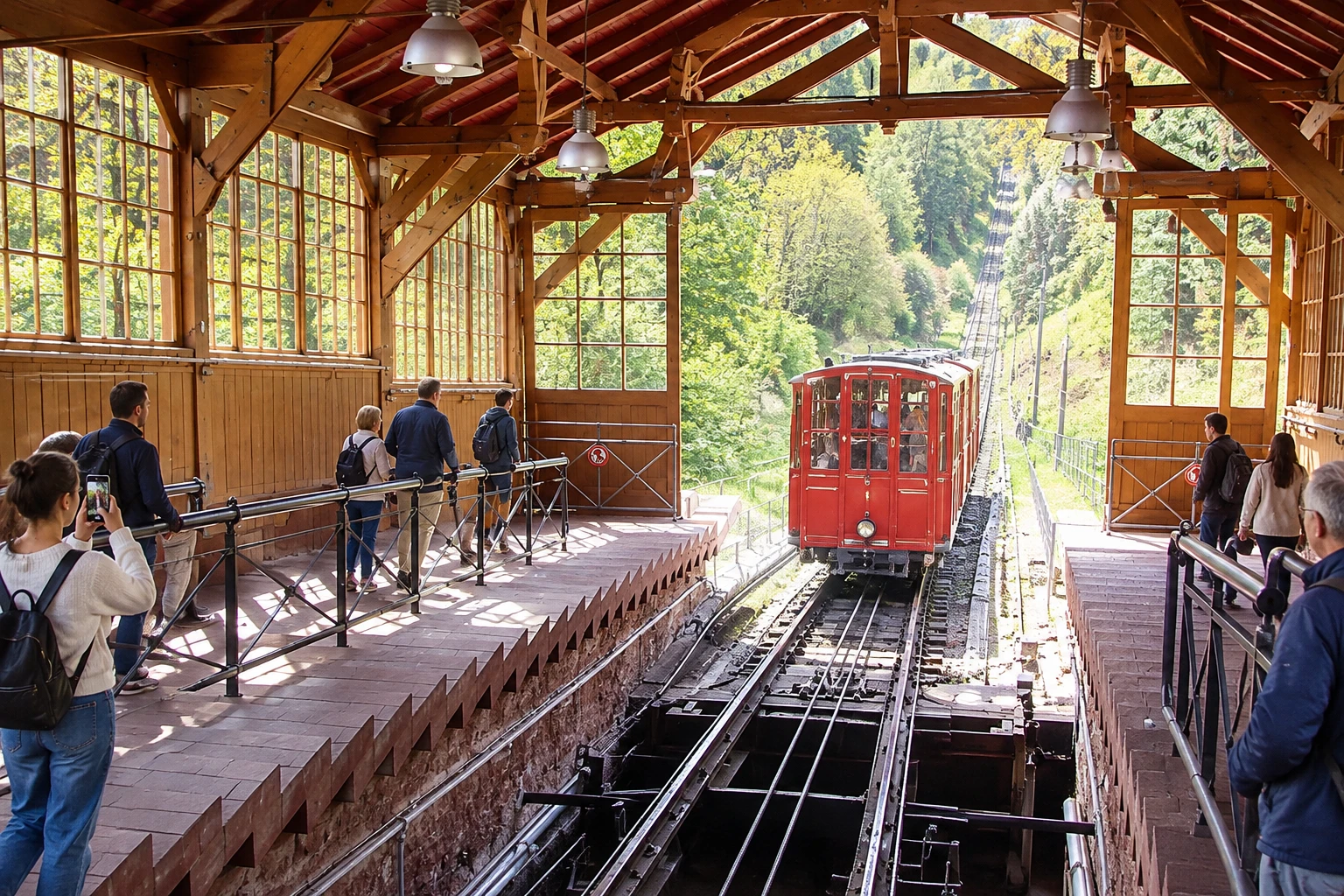
Funicular that departs from Kornmarkt in the Altstadt, stops at the castle and continues to the Molkenkur. There you change to the upper section, with old-style wooden carriages, which climbs to the Königstuhl hill at 568 meters.
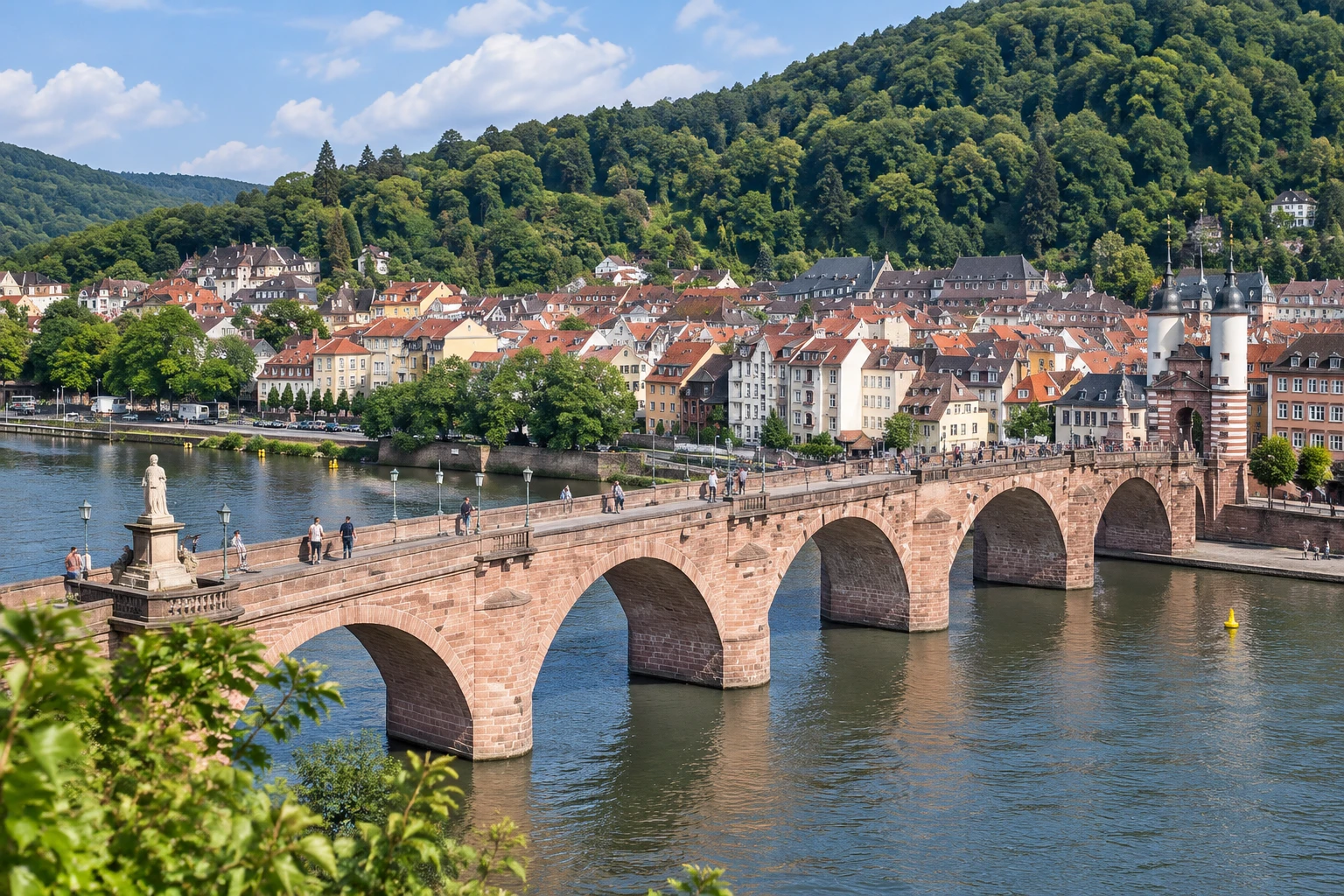
Stone bridge over the Neckar, from 1788, with a medieval two-towered gate at the Altstadt end and the bronze statue of the monkey (Brückenaffe). From the middle of the bridge you can see the castle above the town's roofs.
Heidelberg's old town, between the Neckar and the hill, with the Hauptstraße, a 1.6 km pedestrian street between Bismarckplatz and Karlstor, and the squares Marktplatz, Kornmarkt and Universitätsplatz.
Flughafen Frankfurt am Main (FRA)Frankfurt am Main · 87 km
Heidelberg Hauptbahnhof3 km
Approximate distances. Check flights and bus, train or boat schedules before you travel.
Connections from Brazil usually involve a stop in another city. Check before you buy. The most used airport is Frankfurt (FRA). From there, the train to Heidelberg Hauptbahnhof takes about an hour, almost always with a change in Mannheim. The station is about 3 km from the Altstadt: take the tram or bus to Bismarckplatz or to the Rathaus/Bergbahn stop.
How many days
A full day is enough for the castle, the Altstadt, the Alte Brücke and the Philosophenweg. With two days there's time to go up the Königstuhl, visit the Alte Universität and the Studentenkarzer at leisure, and walk along the Neckar. Many people do Heidelberg as a day trip from Frankfurt.
When to go
From April to October the days are longer, and walks along the Philosophenweg and the castle gardens are more enjoyable. Summer (June to August) is the busiest season. In winter it's cold and gets dark early; the Christmas market usually runs from late November until near Christmas, spread across several squares in the Altstadt.
The seasons shown are the most usual ones; nature doesn't always follow the calendar.
Do you need a car?
No. Everything in the center is within walking distance, and trams and buses connect the main station to the Altstadt. The Bergbahn funicular goes up to the castle and the Königstuhl. Drivers will encounter an environmental zone (Umweltzone) and narrow streets in the old town; it's best to leave the car in a parking garage and continue on foot.
Suggested itinerary
An order that works
Built with the places on this page. No rush: it's paced so you have time to see them.
One day in Heidelberg
manhã
Bergbahn and Heidelberg Castle
Start early at the Kornmarkt station of the Bergbahn and ride up to the castle stop. See the courtyard, the Renaissance façades, the giant wine barrel (Großes Fass), the Deutsches Apotheken-Museum and the terrace overlooking the town.
tarde
Altstadt, Heiliggeistkirche and Alte Universität
Walk down to the Marktplatz, go into the Heiliggeistkirche and follow the Hauptstraße. At the Universitätsplatz, visit the Alte Universität, with its museum and the Aula, and the Studentenkarzer on the street behind.
fim de tarde
Alte Brücke and Philosophenweg
Cross the Alte Brücke through the gate with twin towers, climb the Schlangenweg and walk along the Philosophenweg with the late-afternoon light hitting the castle and the roofs of the Altstadt.
noite
Dinner in the Altstadt
Return to the Altstadt for dinner in the streets around the Marktplatz and the Untere Straße. At night the illuminated castle looks impressive from the Neckar's bank and from the Alte Brücke itself.
2 days in Heidelberg
Day 1
manhã
Heidelberg Castle at leisure
Go up by the Bergbahn or on foot via the Burgweg steps. Take the guided tour of the interior if it's scheduled, and allow time for the garden and the terrace overlooking the Altstadt.
tarde
Königstuhl via the historic Bergbahn
From the castle, take the Bergbahn to the Molkenkur and change to the upper section, with wooden carriages, up to the Königstuhl, at 568 meters. Up there there's a viewpoint and forest trails.
fim de tarde
Marktplatz and Heiliggeistkirche
Back in the Altstadt, enter the Heiliggeistkirche and, if the tower is open, climb the steps to the viewpoint. Then walk through the Marktplatz and the Kornmarkt.
noite
Neckar riverside
Have dinner in the Altstadt and finish with a walk along the Neckar bank to the Alte Brücke, with the castle lit up in the background.
Day 2
manhã
Alte Universität and Studentenkarzer
Start at the Universitätsplatz: the university museum and the Aula in the Alte Universität, then the cells of the Studentenkarzer, covered in drawings and inscriptions made by the students who were imprisoned there.
tarde
Hauptstraße end to end
Walk the Hauptstraße, a 1.6 km pedestrian street between Bismarckplatz and the Karlstor, with churches, shops, cafés and side streets down to the river.
fim de tarde
Alte Brücke and Philosophenweg
Cross the Alte Brücke, pass the monkey statue (Brückenaffe), climb the Schlangenweg and follow the Philosophenweg to the philosophers' garden, with the city view.
noite
Brewery or student tavern
To finish, dine in one of the old taverns in the Altstadt, tied to the tradition of student associations, with dishes from the regional cuisine of the Palatinate and Baden.
Check before you go. Opening hours and days change, and places may close for renovations, holidays or events. This itinerary is a suggestion from Cidade Turismo, not a commitment: plan yours by checking directly with each place you intend to visit.
Before you go
Frequently asked questions
Can Heidelberg be done as a day trip from Frankfurt?
Yes. The train takes about an hour, with most departures requiring a change in Mannheim. Leave early to visit the castle before the tour groups and return in the evening. To see the Königstuhl and the university museums without rushing, it's worth staying overnight.
How to get from the main station to the old town?
Heidelberg Hauptbahnhof is about 3 km from the Marktplatz. Trams and buses run to Bismarckplatz, at the start of the Hauptstraße, and some continue to the Rathaus/Bergbahn stop beside the funicular station. Validate your ticket when the machine requests it.
Do you need to go up to the castle by funicular?
It's not mandatory. The walk up the Burgweg steps from the Kornmarkt takes about 15–20 minutes. The Bergbahn funicular spares the effort and goes to the Molkenkur and the Königstuhl. Check before you go whether the castle ticket includes the Bergbahn ride.
Was Heidelberg destroyed in World War II?
No. Heidelberg was one of the few large German cities to come through the war almost unscathed, so the Altstadt retains its layout and many old buildings. The most visible exception is the Alte Brücke: two piers were blown up by the withdrawing German army in March 1945, and the bridge was rebuilt with donations and reopened in 1947.
Are shops open on Sundays?
As in most of Germany, most shops are closed on Sundays. Restaurants, cafés, the castle and tourist sites are usually open. Many small places still prefer cash, so carry some.


 Brazil
 Antarctica
 Argentina
 Bolivia
 Chile
 Colombia
 Ecuador
 Falkland Islands (Malvinas)
 French Guiana
 Guyana
 Paraguay
 Peru
 Suriname
 Uruguay
 Venezuela
 Austria
 Belgium
 Croatia
 Denmark
 Finland
 France
 Greece
 Hungary
 Iceland
 Ireland
 Italy
 Luxembourg
 Norway
 Poland
 Portugal
 Slovakia
 Slovenia
 Spain
 Sweden
 Switzerland
 the Czech Republic
 the Netherlands
 the United Kingdom
 Turkey
 Bermuda
 Canada
 Greenland
 Mexico
 Saint Pierre and Miquelon
 the United States
 the Dominican Republic
 Japan
 Egypt
 South Africa
 Australia
 Fiji
 New Zealand
 Papua New Guinea