Konya etliekmek
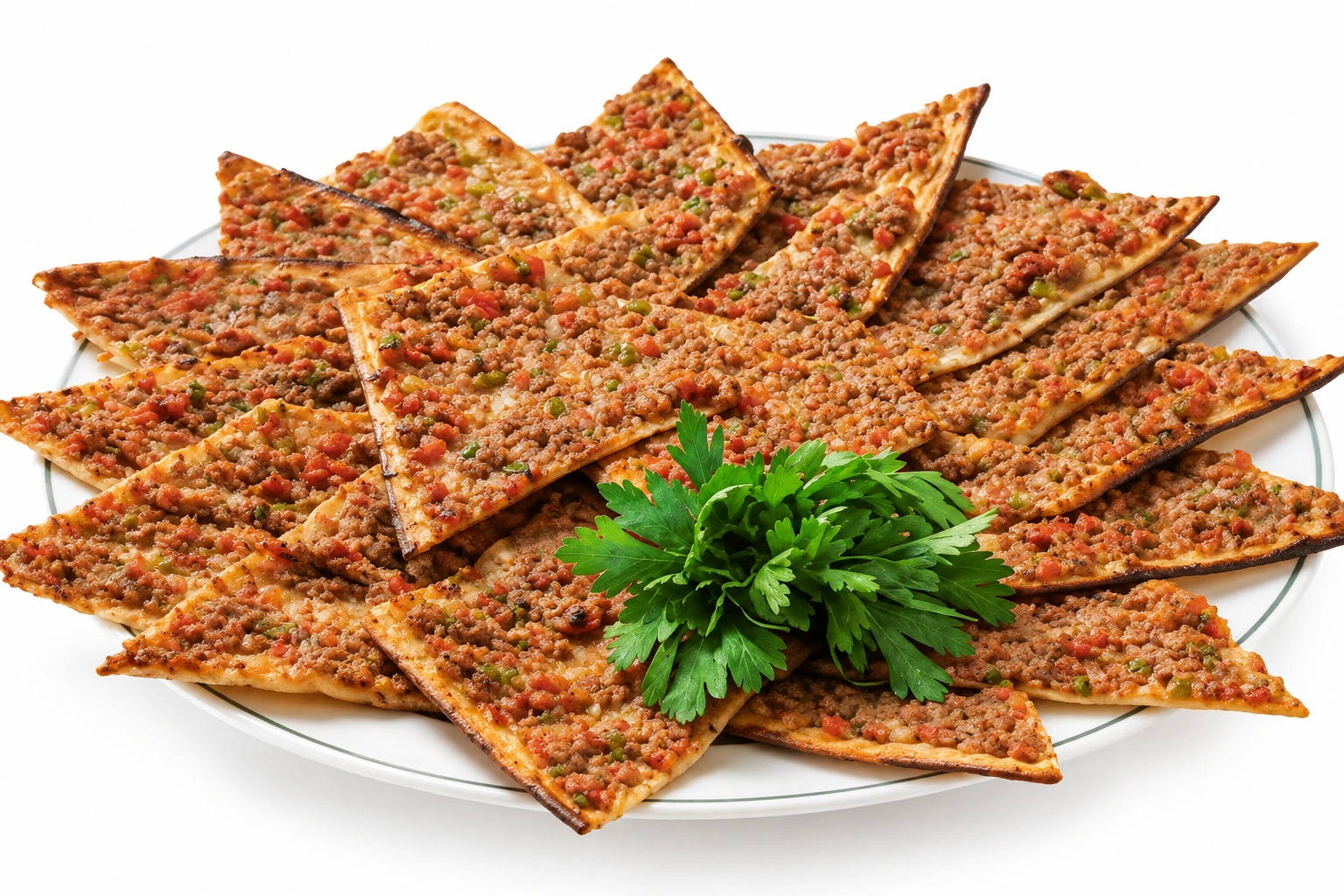
Very thin dough, nearly a meter long, topped with minced meat, tomato, pepper and onion and baked in a wood-fired stone oven: Konya's etliekmek is served cut into pieces.
Antarctica
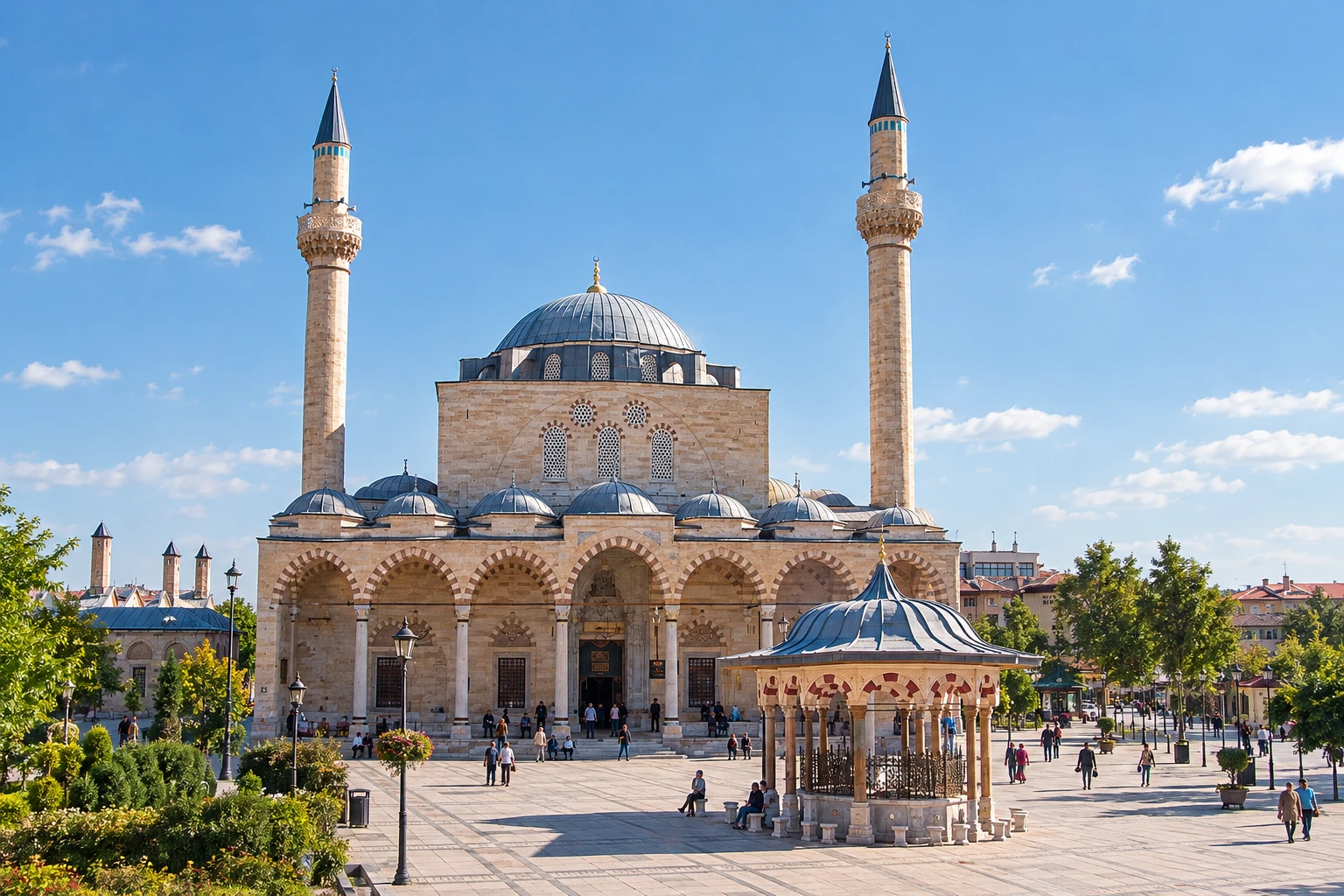
In the photo: Selimiye Mosque, Konya
Illustrative images. The pictures in this guide are illustrations based on the real place, not photographs, and may differ from it.
The city
Konya’s main visitor attraction is the Mevlana Museum, associated with the poet Rumi and the Mevlevi tradition. The old Karatay madrasa showcases Seljuk art; outside the urban core, Çatalhöyük takes the itinerary to the Neolithic settlement.
There's no accommodation in the guide yet in Konya.
Tem hotel, pousada ou casa de temporada aqui? Cadastre a suaThere are no restaurants in the guide yet in Konya.
Know a good one? Recommend it to usHotéis e restaurantes da cidade no mapa.
how to get there · how many days · itinerary · questions
Flavors of Turkey
The local experience
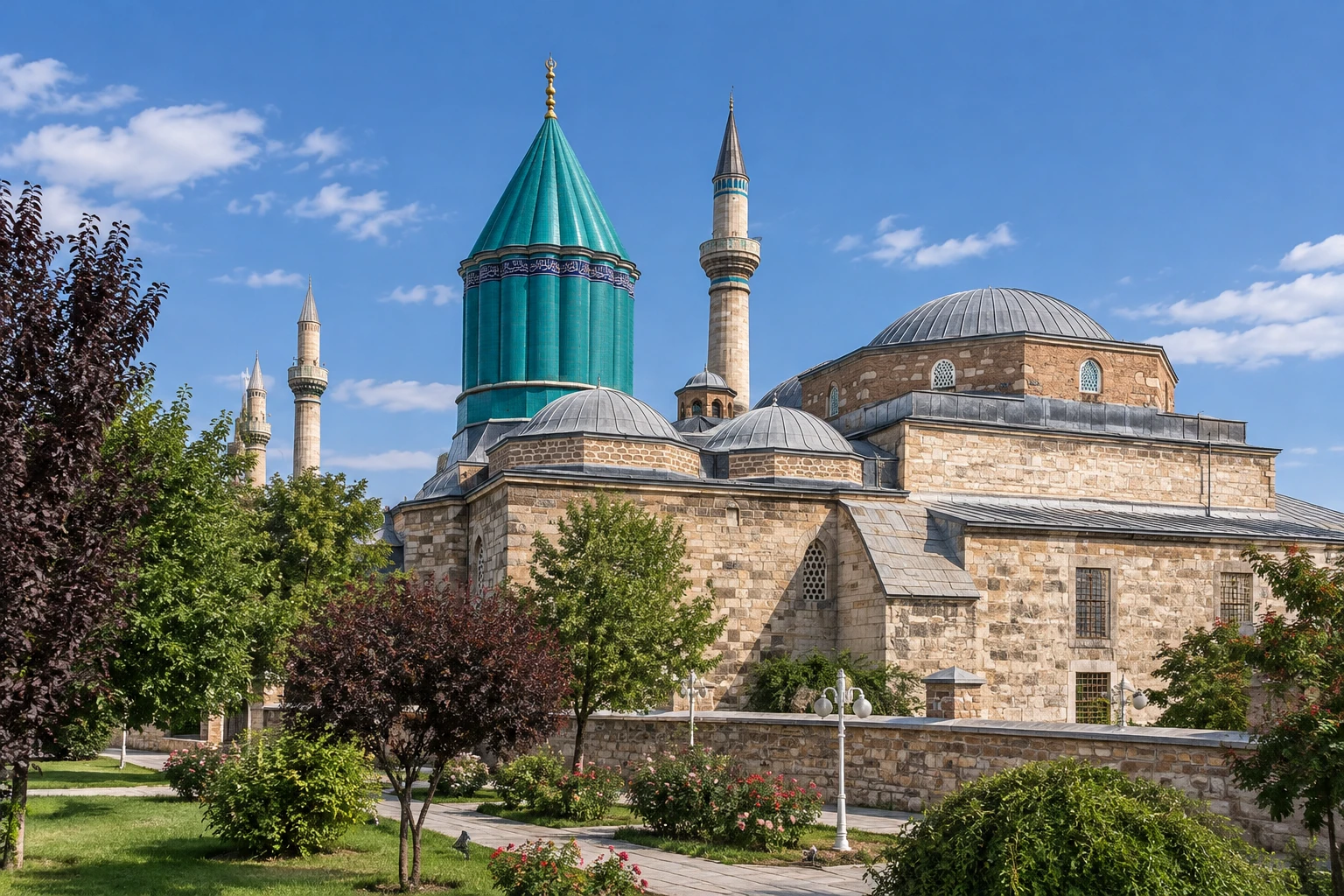
Rumi’s mausoleum and mevlevi tradition spaces in a complex topped by a turquoise dome in central Konya.
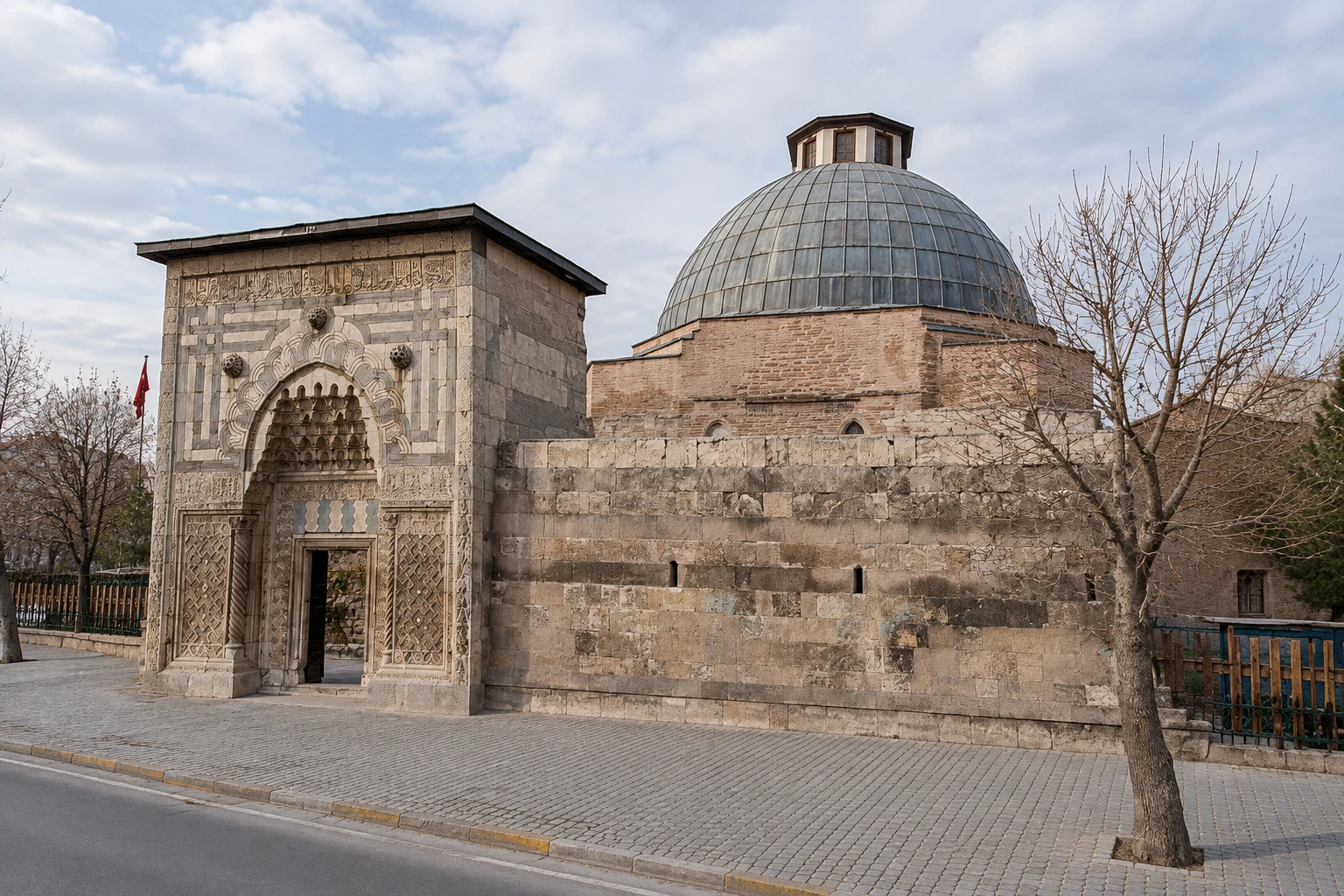
Former Seljuk religious school, with ceramic decoration and architecture organized around a courtyard.
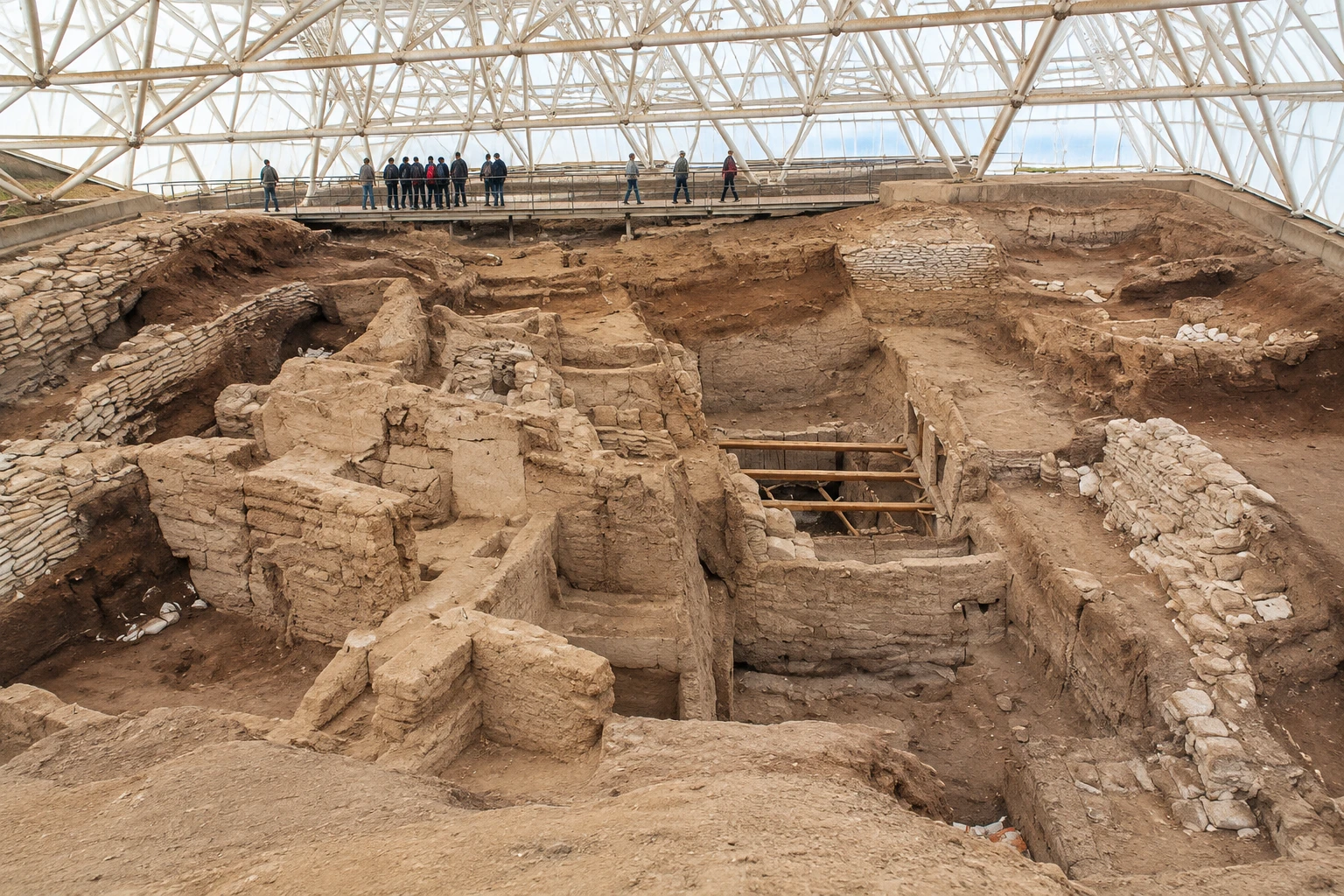
Clustered houses and occupation layers reveal the life of a Neolithic community on the Konya plateau.
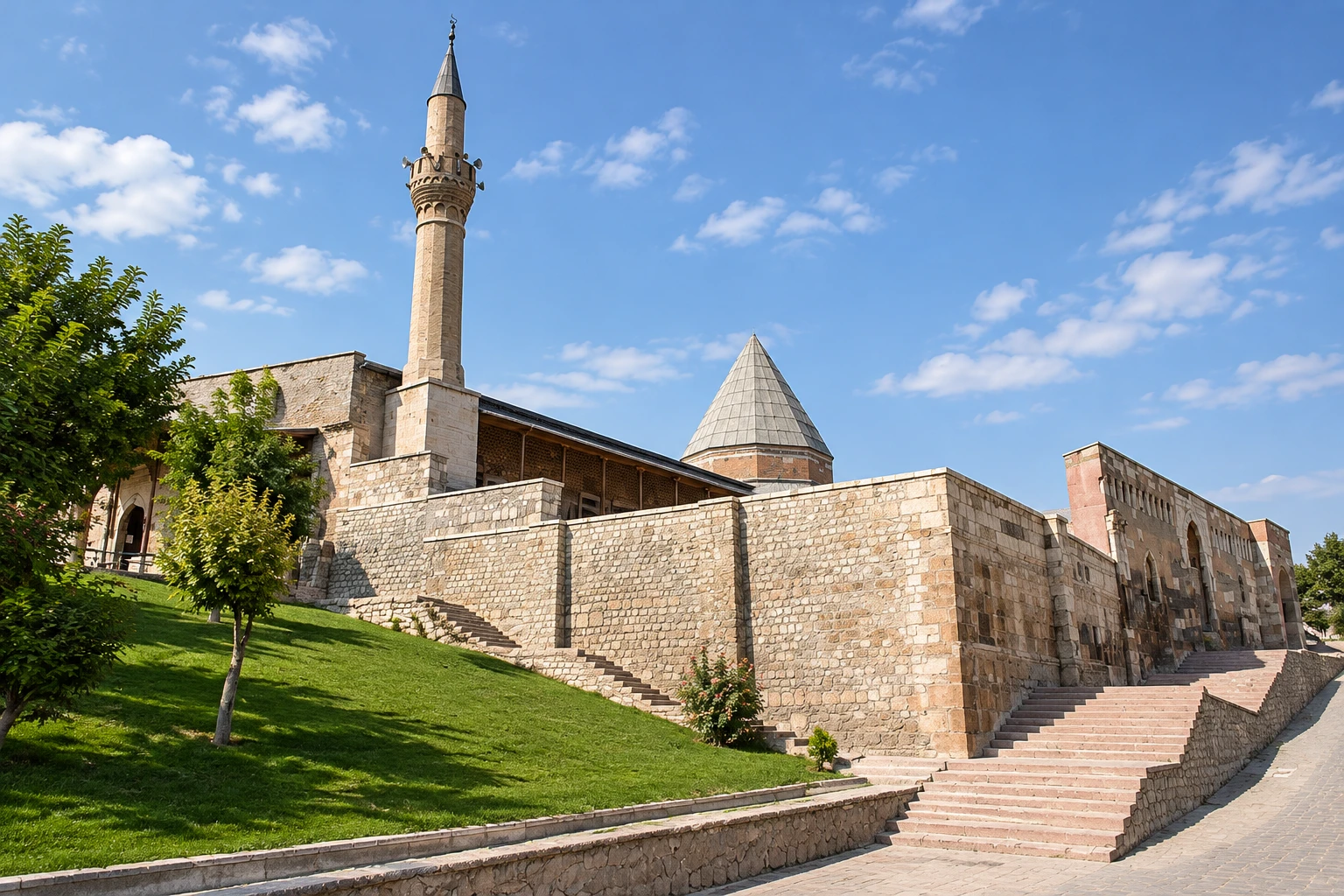
A mosque associated with the Seljuk period occupies Konya’s central hill, featuring worship spaces and historic architecture.
Before you go
Konya – Turkey Capital
Approximate distances. Check flights and bus, train or boat schedules before you travel.
Arrive at KYA airport or Konya railway station. Taxi and public transport continue to the center; check the platform or terminal corresponding to the train you booked.
Two days in the city; three including the Çatalhöyük excursion.
In Konya, April to June and September to October generally favor the city center and Çatalhöyük. July and August are dry and hot; from December to March it can be quite cold. For the sema, the cultural calendar also guides the choice.
The seasons shown are the most usual ones; nature doesn't always follow the calendar.
In the city of Konya, public transport and walking serve the center. The archaeology in the surrounding area requires planning the road portion.
Suggested itinerary
Built with the places on this page. No rush: it's paced so you have time to see them.
Visit Rumi’s mausoleum and the spaces of the Mevlana Museum, observing the flow of visitors and pilgrims.
Reserve the afternoon for Karatay Medrese. Allow 45 minutes to an hour and a half.
Return to Konya’s core with time to observe the streets and the landscape, without adding a long transfer at the end of the outing.
Dine in the area where you are staying in Konya and confirm transport for the next leg.
Day 1
On a two-day stay, first learn Rumi’s history at the Mevlana complex, without linking entry to attending a ceremony.
Continue through the Alâeddin quarter and the Karatay madrasa, paying attention to the tilework and the building’s function.
After visiting the indoor spaces, take a walk on Konya’s central hill, depending on the weather and the mosque’s access.
End this urban day with a meal and confirmation of transport to the Neolithic settlement of Çatalhöyük.
Day 2
On the second day continue to Çatalhöyük by road. Book the tour of the settlement and the interpretation resources before returning to Konya.
Complete the planned visits for this leg and return to base in Konya with organized transport, not scheduling another long outing at the end of the day.
Check before you go. Opening hours and days change, and places may close for renovations, holidays or events. This itinerary is a suggestion from Cidade Turismo, not a commitment: plan yours by checking directly with each place you intend to visit.
Before you go
The mausoleum and the sema ceremony are organized separately. Check the schedule for the performance you want and treat the museum as a separate visit.
One day allows you to focus on the Mevlana Museum, Karatay and the Alâeddin area. Çatalhöyük requires an extra outing by road; with that visit, two days provide a better distribution.
Central visits can be grouped on foot and linked by public transport. For Çatalhöyük, combine a driver, a tour or a car, because the site is not part of the city's walking circuit.
The architecture and tile collection of Karatay, the Alâeddin mosque and Rumi’s historical context support the visit. Religious programming is not a requirement to get to know the city.