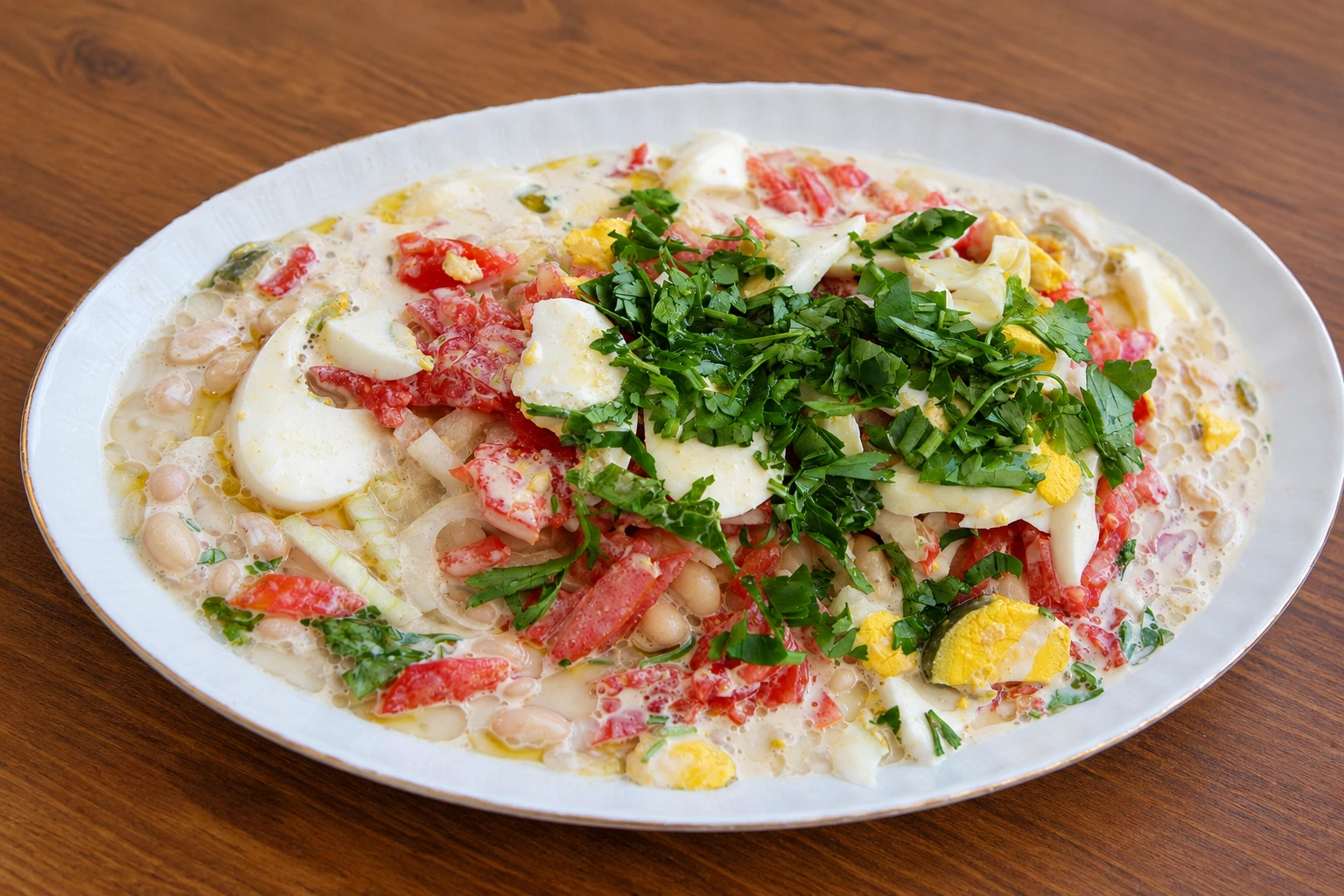
Antalya piyazı
Small white beans with tahini tarator sauce, garlic, lemon and vinegar, boiled egg, tomato and parsley: in other regions piyaz is a salad; in Antalya, it is a main course.
Antarctica
Province · Antalya and the Turkish Riviera
Antalya is the Turkish Riviera: the historic center of Kaleiçi, Side, Alanya, Kemer, Kaş and Kalkan, the Lycian ruins of Patara, Myra and Kekova, and the Roman theatre of Aspendos.
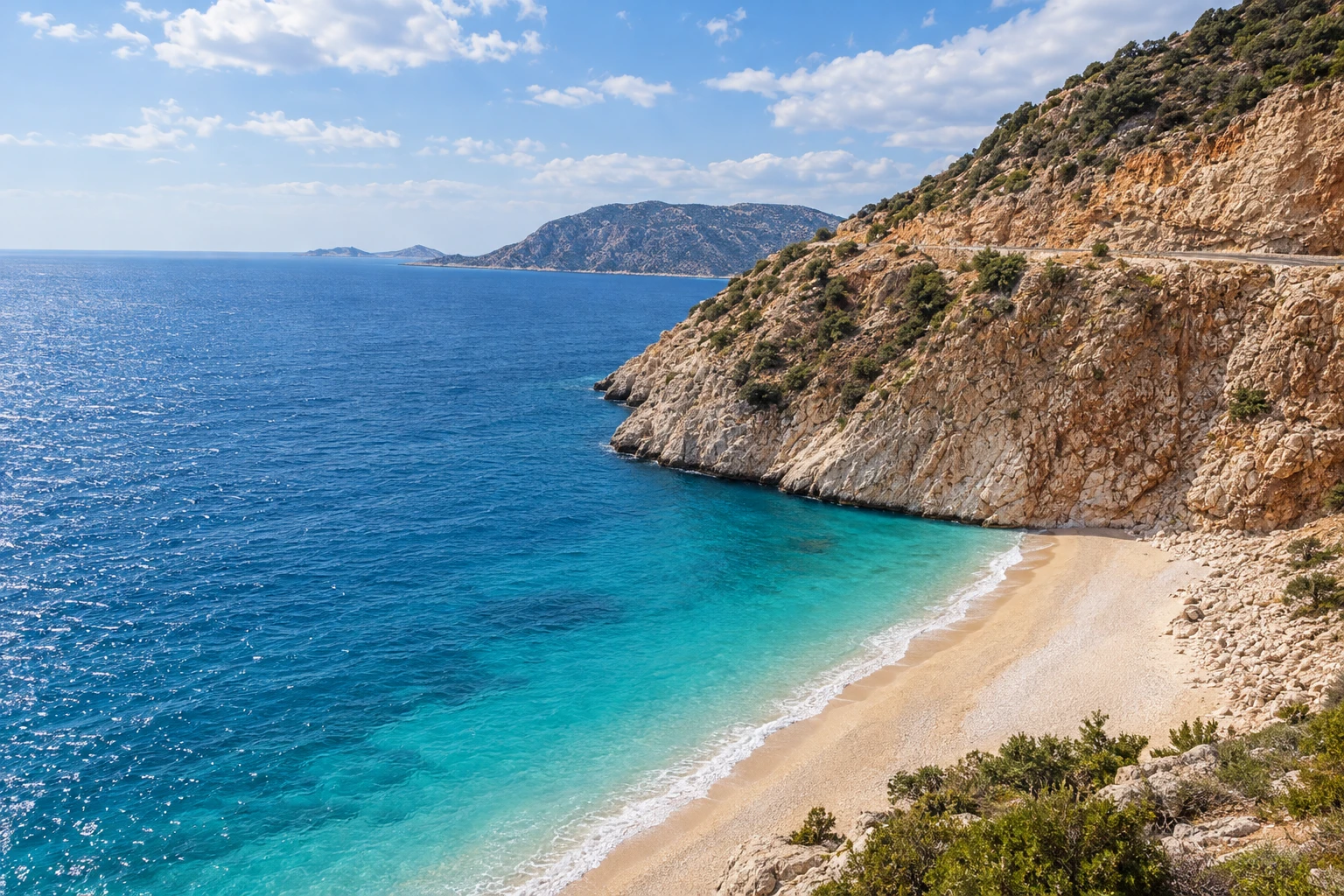
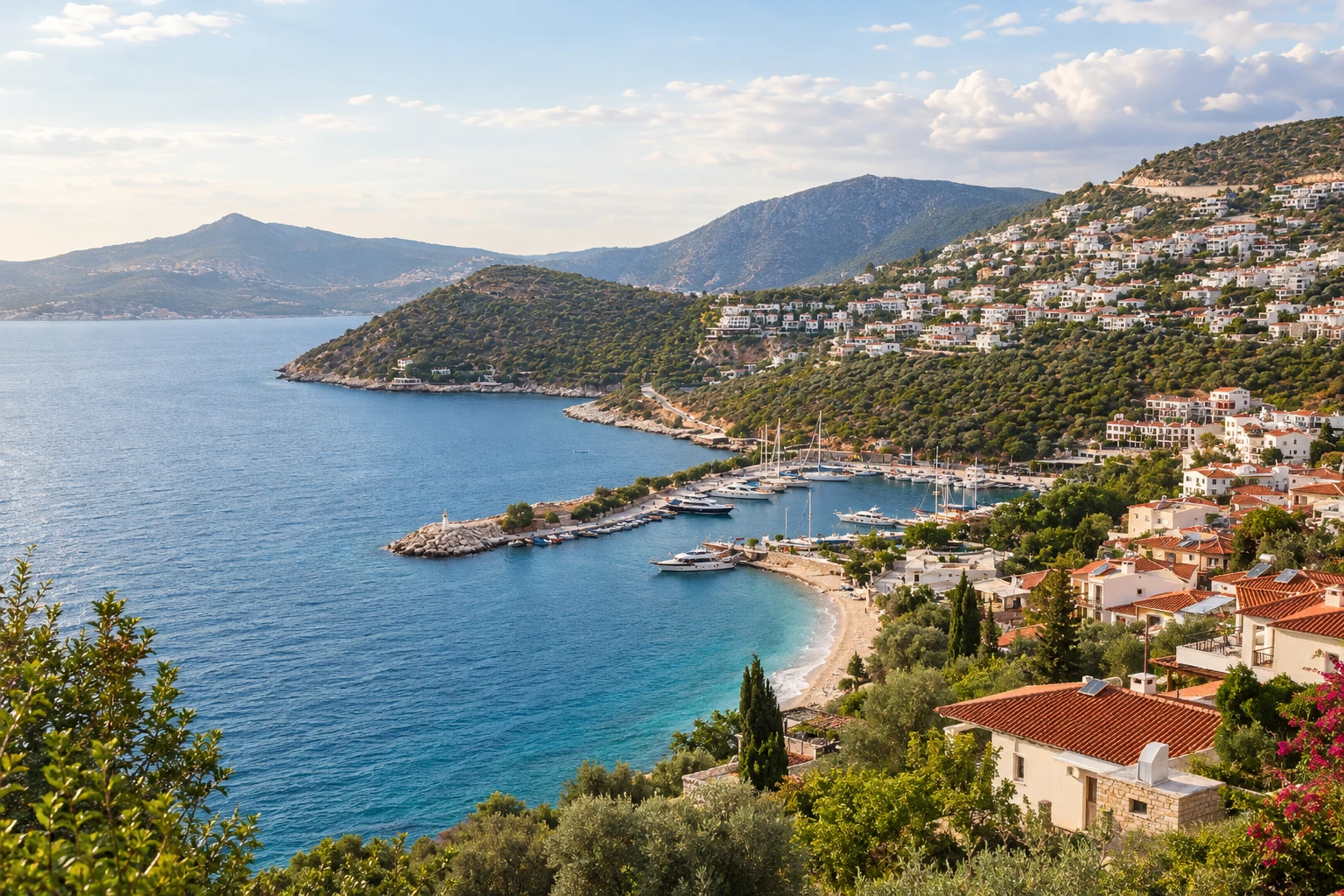
In the photo: Kaputaş Beach, between Kaş and Kalkan (Antalya)
Illustrative images. The pictures in this guide are illustrations based on the real place, not photographs, and may differ from it.
Province
The province of Antalya (Antália) occupies the Mediterranean coast at the foot of the Taurus Mountains, from Kaş past Alanya. It is Turkey’s main beach hub, with mountains descending to the sea, gorges, waterfalls and ancient towns along the coastline.
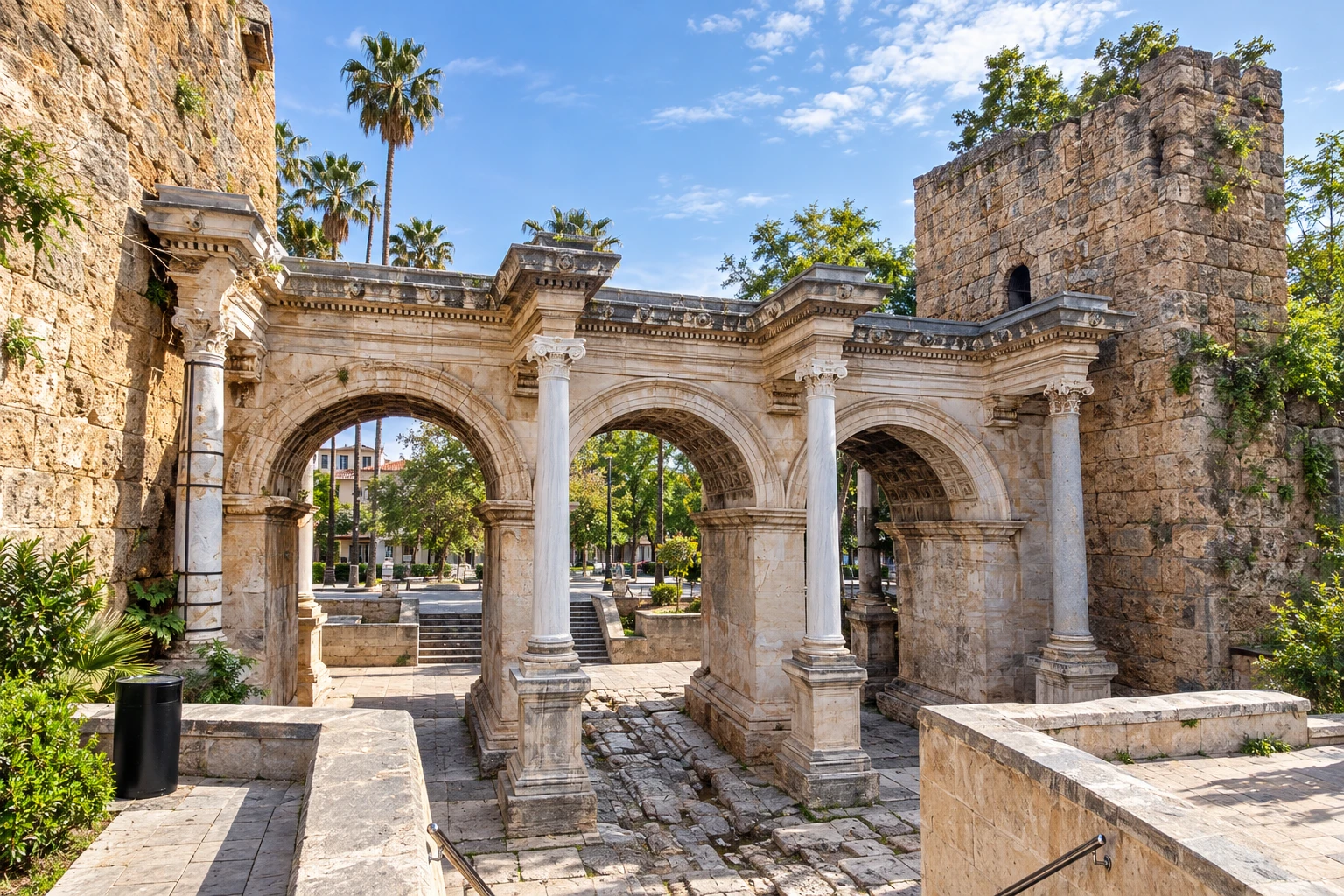
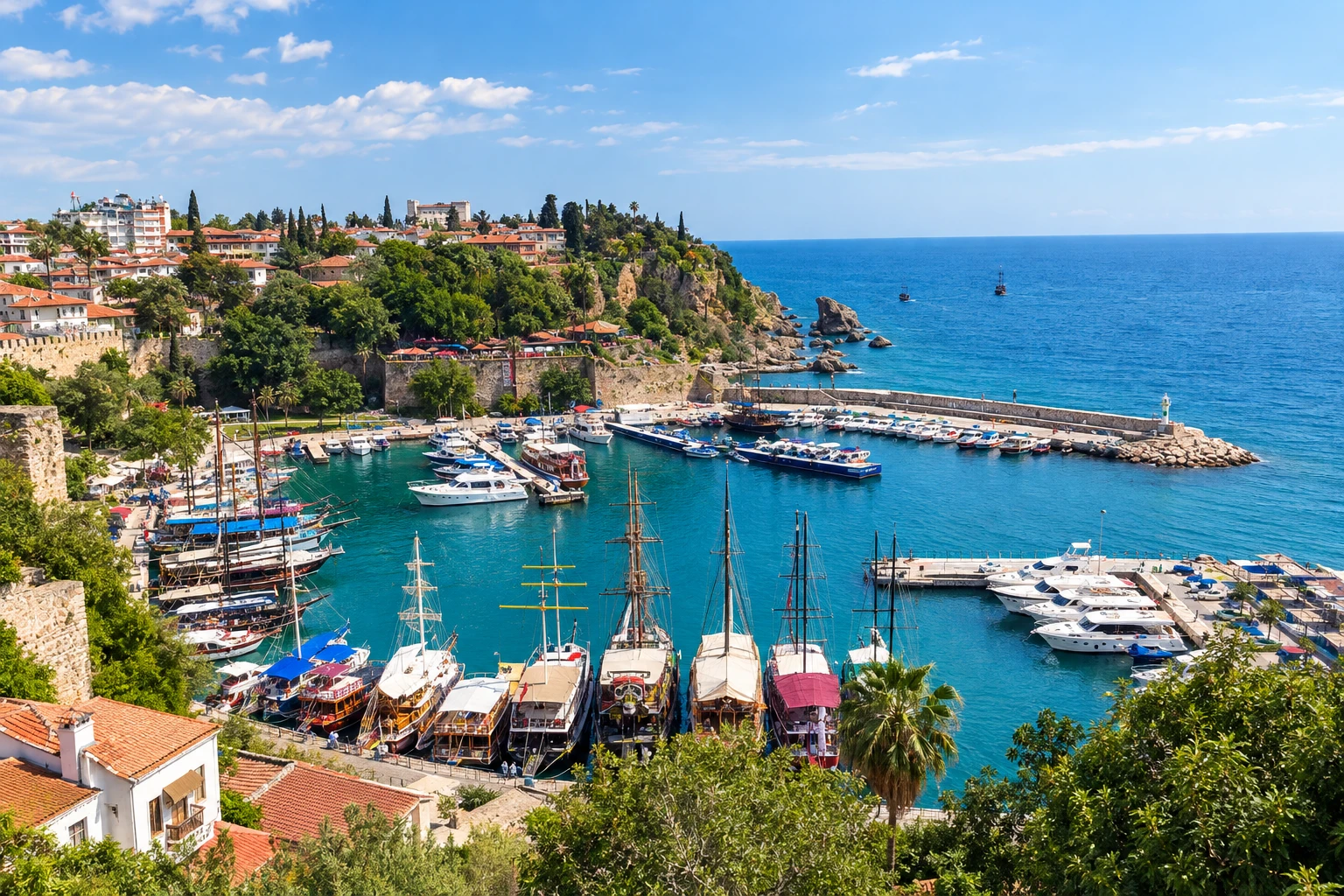
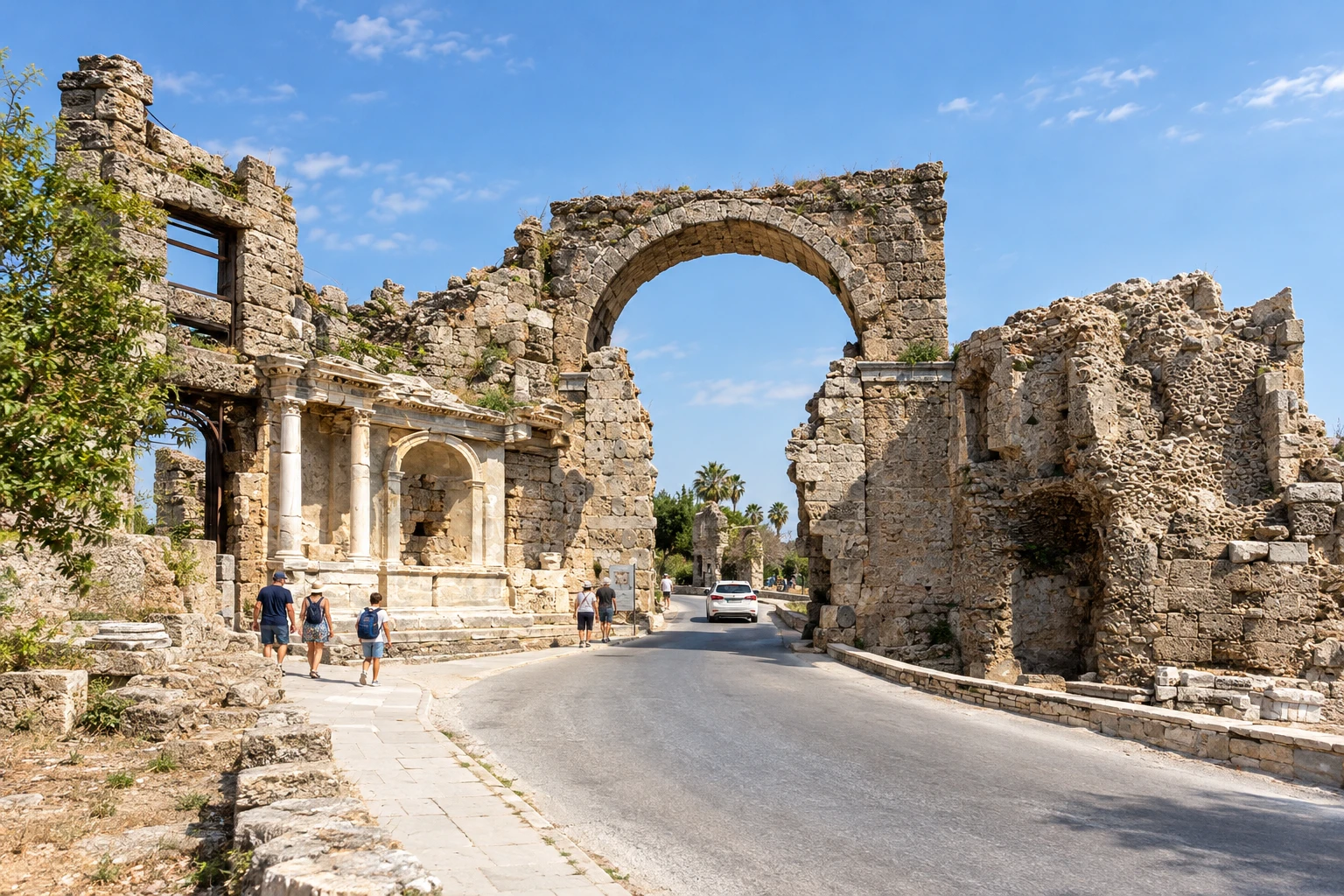
The capital, Antalya, has the historic center of Kaleiçi, with its walls, the old harbor and Hadrian’s Gate, Konyaaltı Beach and the Düden waterfalls. Nearby are Perge and Termessos in the mountains, and Aspendos, whose Roman theatre is one of the best preserved in the ancient world.
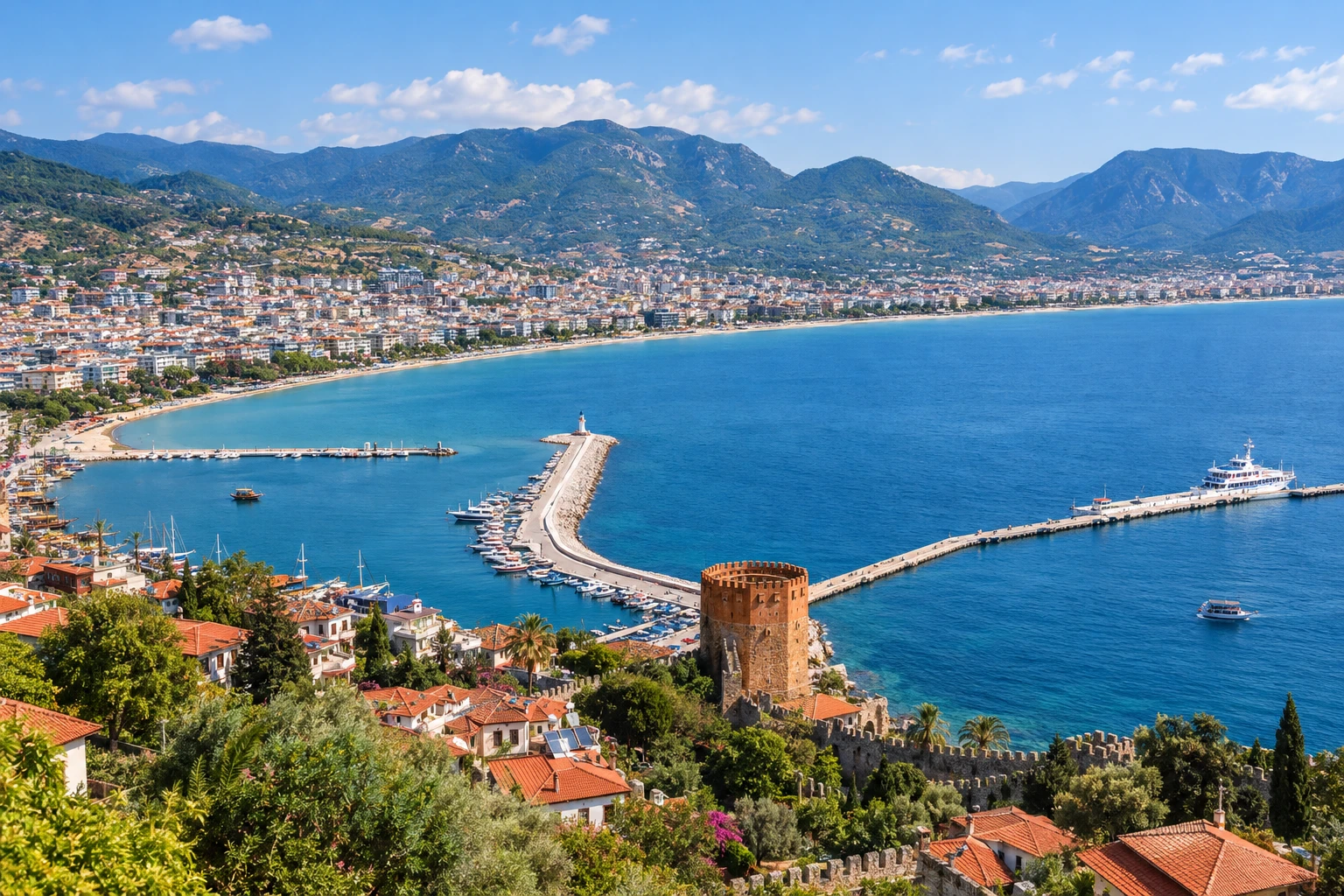
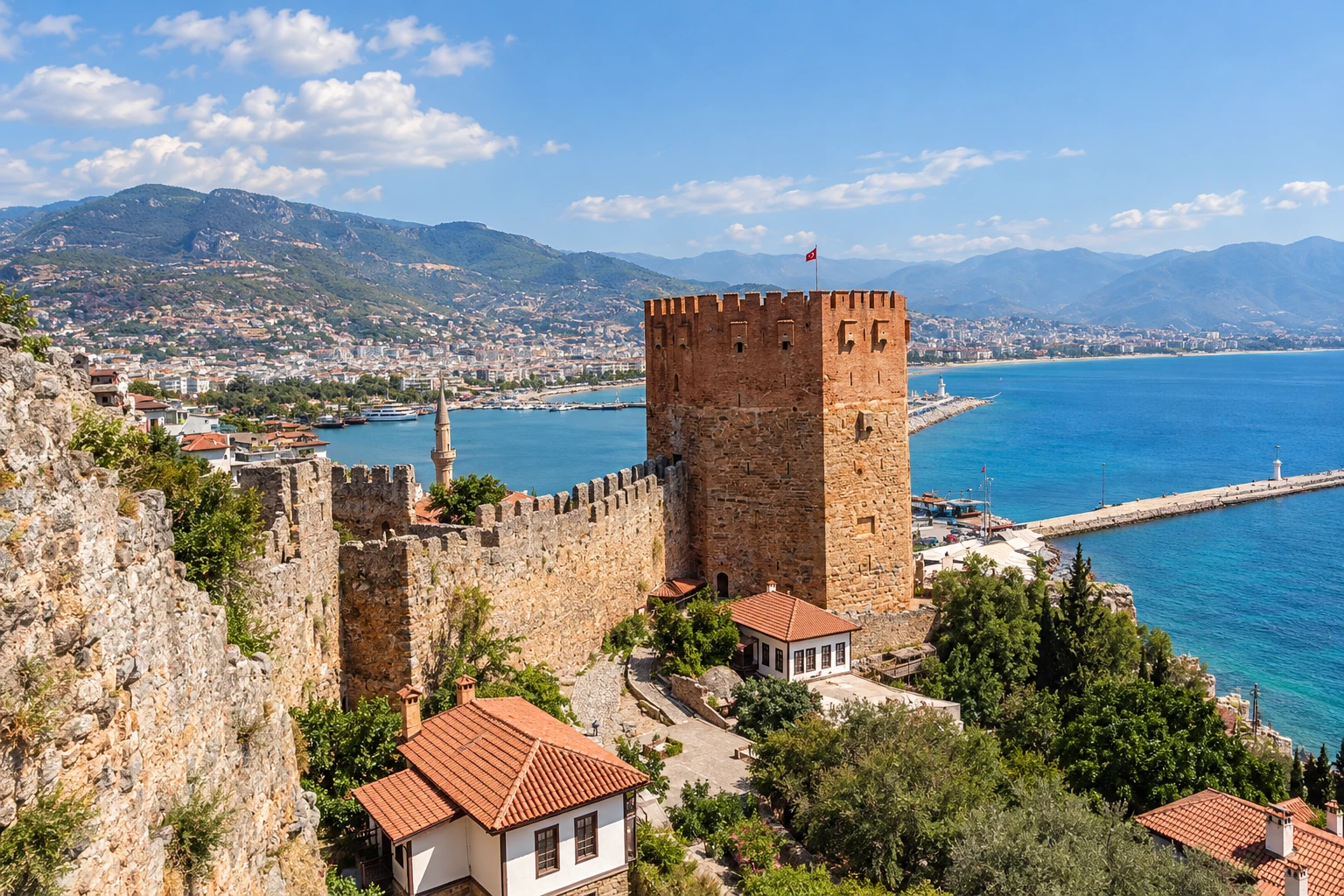
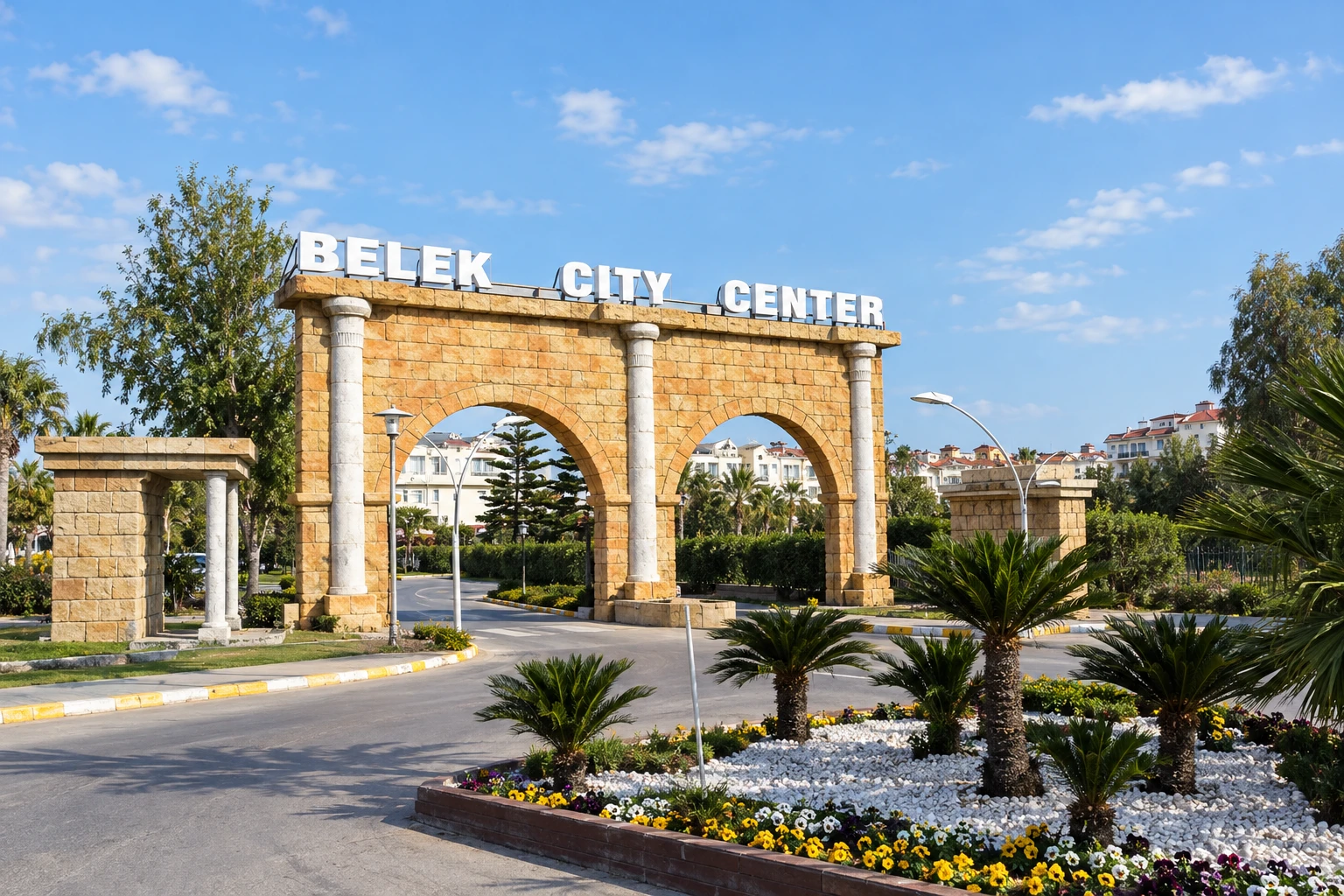
To the east, Belek hosts resorts and golf courses, and Side has Roman ruins, such as the Temple of Apollo, by the sea. Further on, Alanya has the fortress on the headland, the Red Tower and Cleopatra Beach.
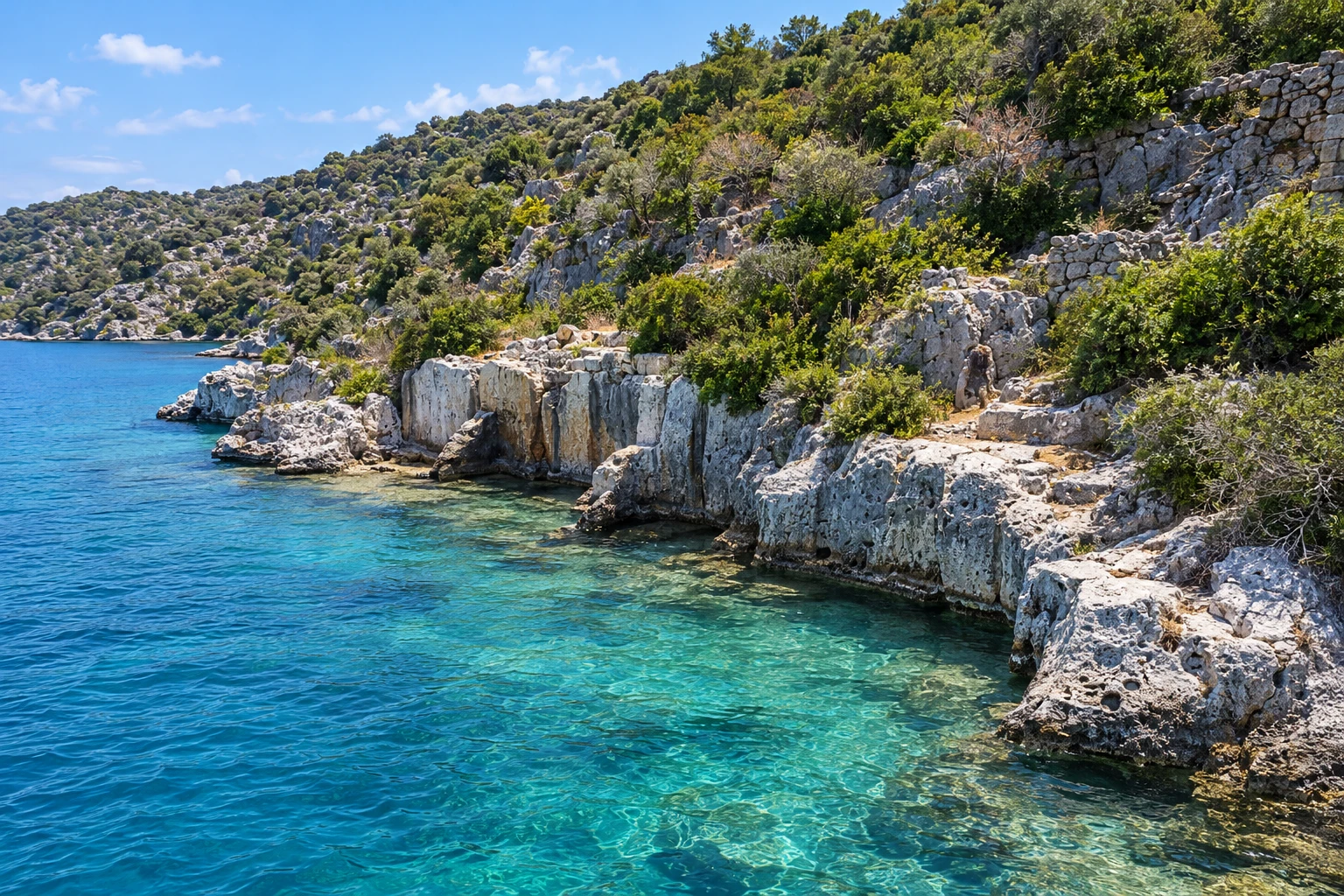
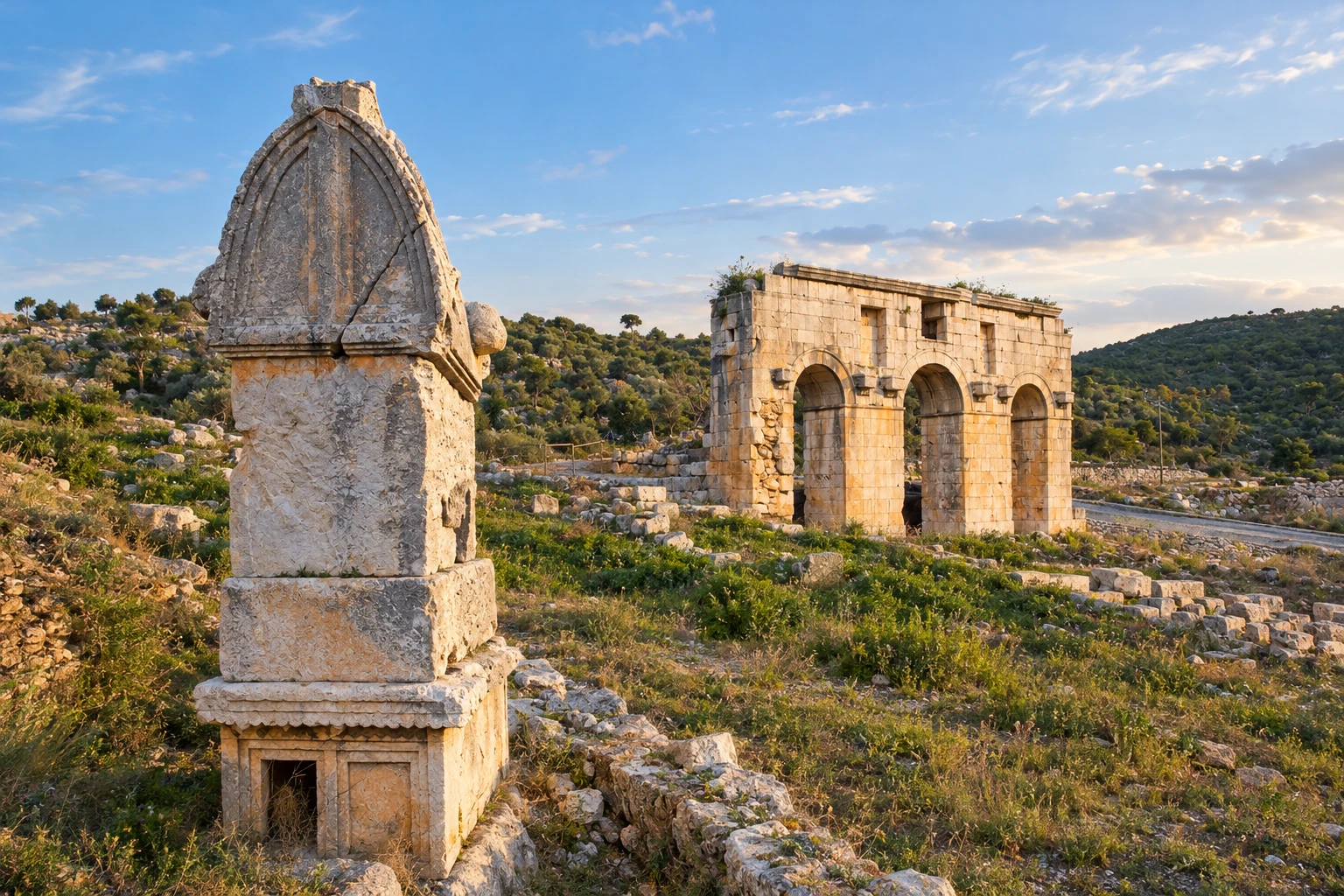
To the west, Kemer and Çıralı sit between sea and mountains, near Faselis, Olympos and the flames of Yanartaş. The Lycian coast continues through Demre, with Myra and the church of Saint Nicholas, the submerged town of Kekova accessed from Üçağız, and Kaş, Kalkan and the long beach of Patara, near Xanthos and Letoon, UNESCO sites. The Lycian Way (Likya Yolu), a long-distance trail, runs this stretch.
On the plain, Antalya’s piyaz, a white-bean salad with tahini, şiş köfte and the plain’s fruits: oranges, pomegranates and Alanya’s bananas.

Flavors of Turkey
Destinations
Cities

Antalya (Antalya) is the gateway to the Turkish Riviera. Kaleiçi occupies the old core above the harbour; the modern city stretches along the cliffs and the Konyaaltı beach. Perge lies inland nearby and allows you to understand the layout of a Pamphylian city.

Alanya is a Mediterranean resort with a fortified peninsula between beaches. The castle dominates the terrain; the red tower marks the old harbor. Cleopatra Beach lies on the west side, integrated with the town and the Damlataş area.

Belek is arranged between the urban core, the golf courses and the beach strip with resorts. It is a seaside base for relaxation on the Mediterranean and a gateway to Aspendos, inland in Serik. Time is usually split between the coast and an archaeological outing.

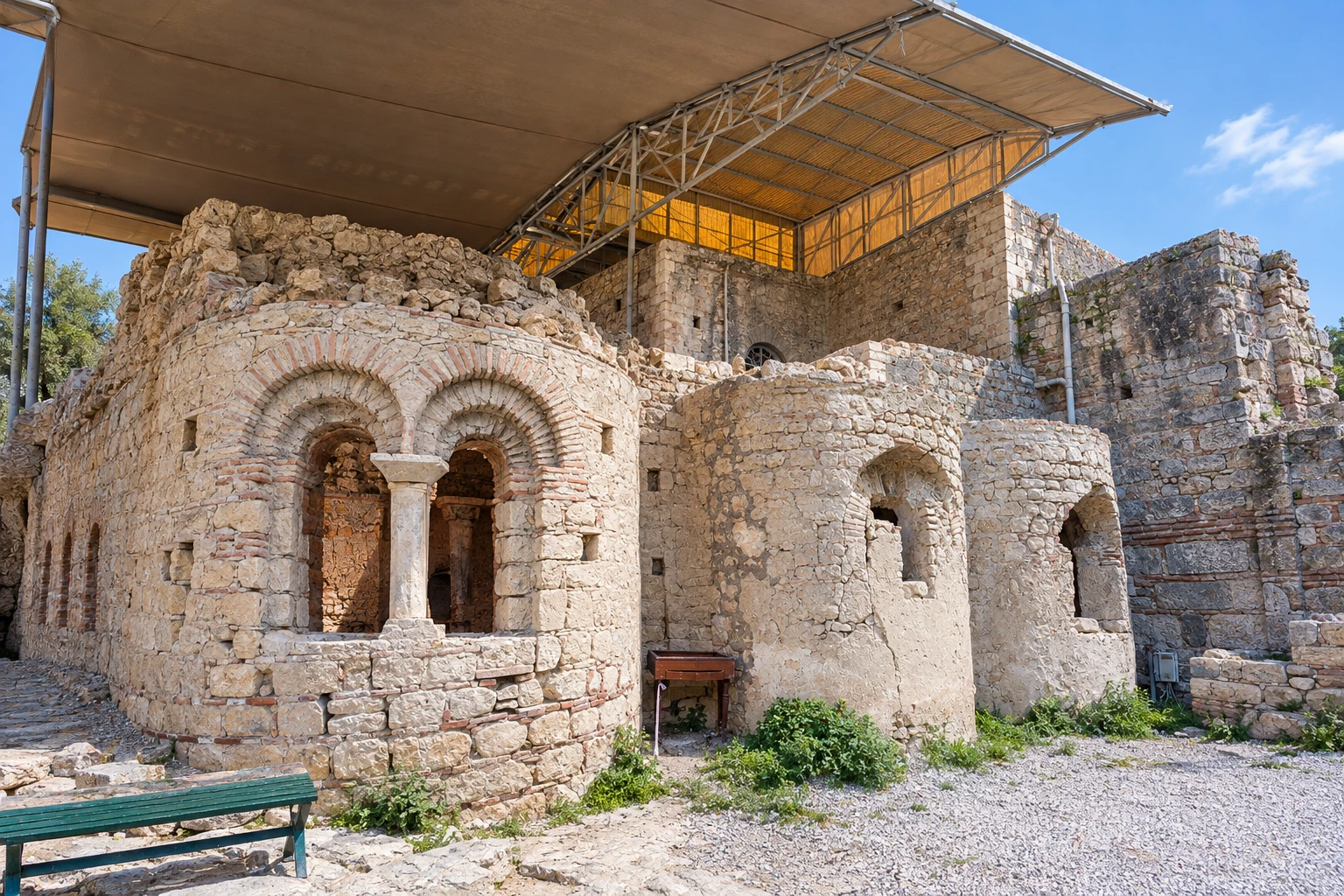
Demre contains the town center linked to ancient Mira and the memorial museum of St. Nicholas. Rock-cut tombs and a theatre form an archaeological visit separate from the historic church. The town is also connected with coastal departures to Kekova, which need their own transfer and sailing time.

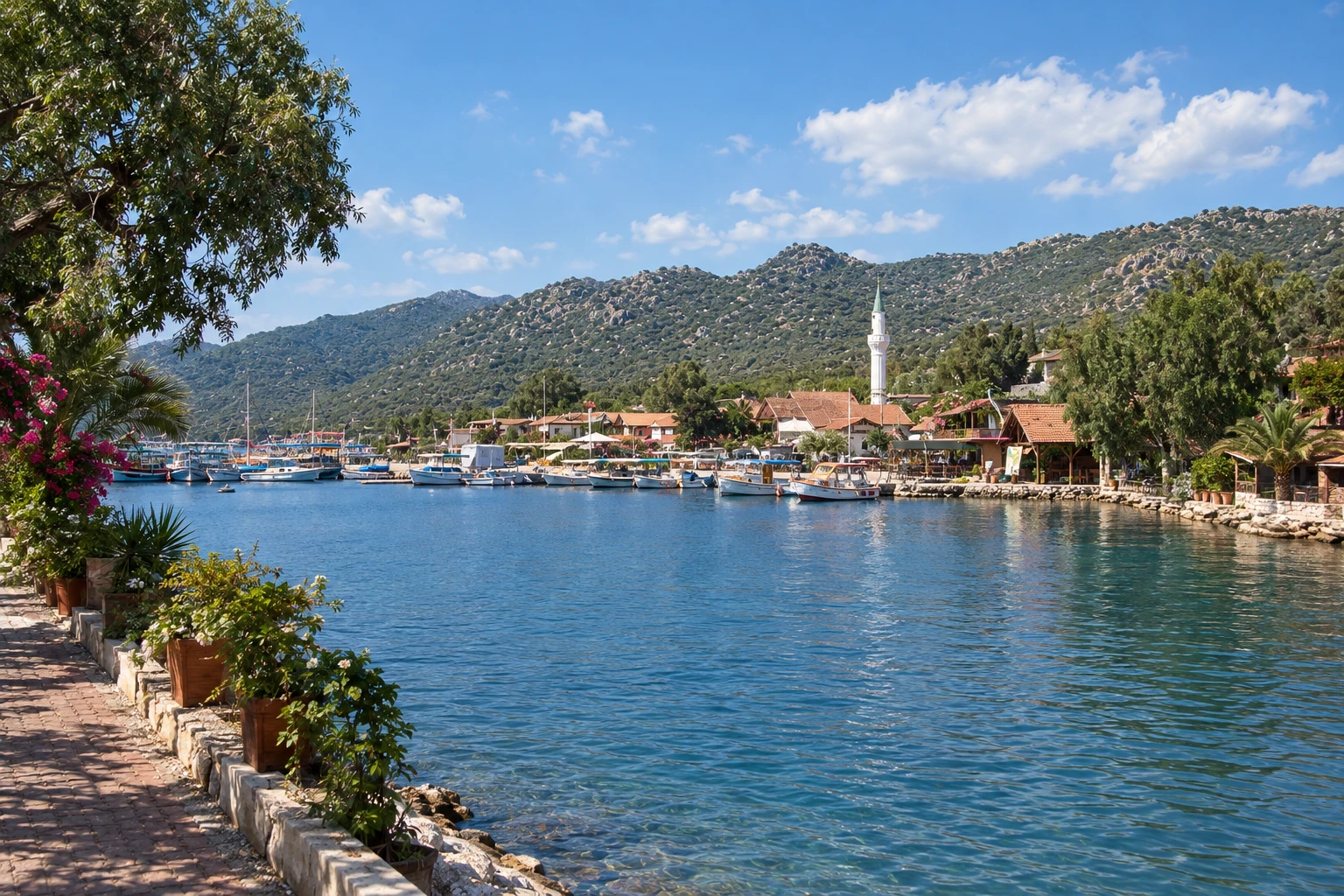
Kalkan is a coastal settlement of hillside streets, with traditional houses and a small harbor. Kaputaş lies on the road in another stretch of the coast and requires descending stairs. The town can serve as a base to combine an urban stroll, the beach, and trips to the Patara valley, taking into account the terrain and travel distances.

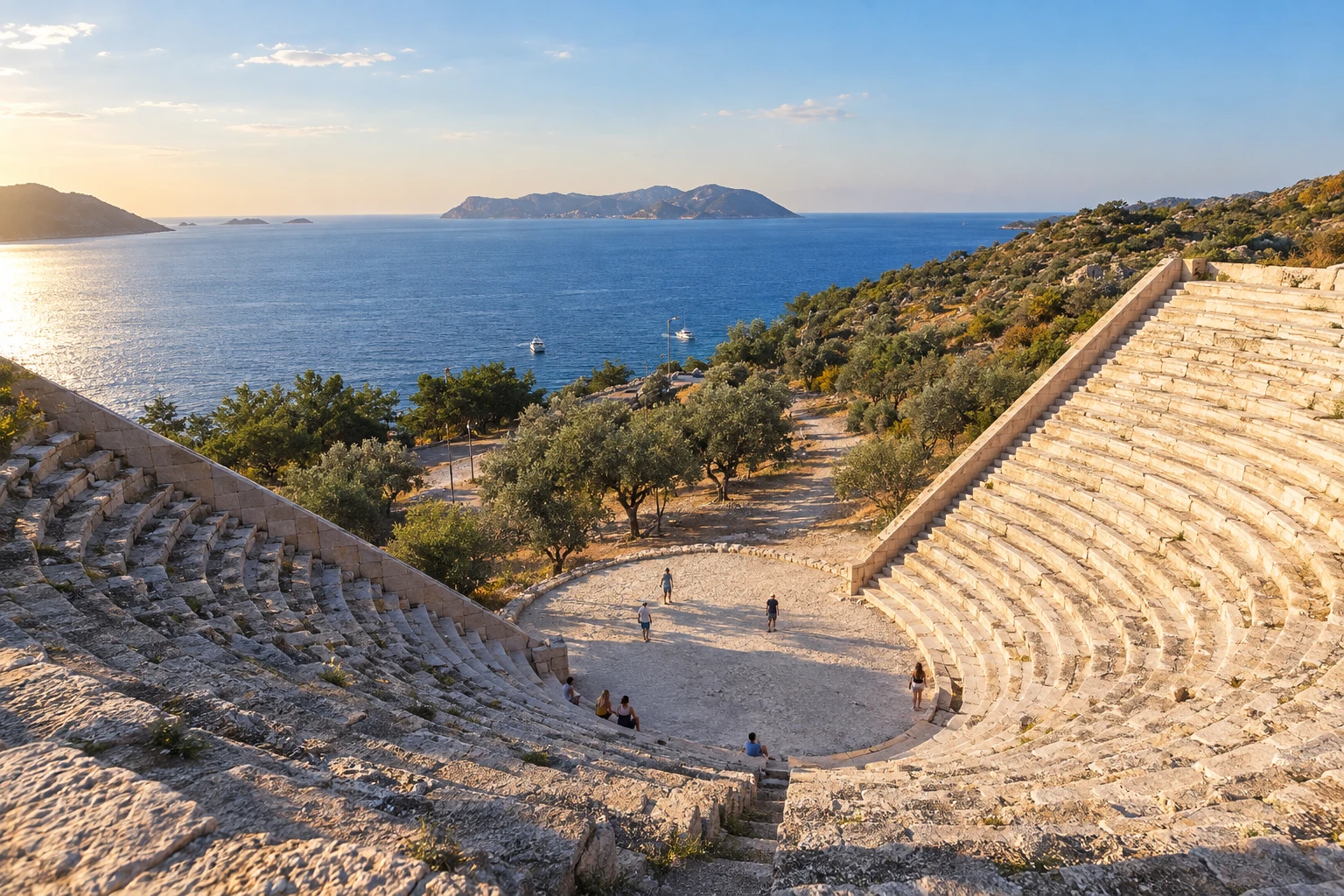
Kaş is a base on the Lycian coast, with hillside streets and remains of Antiphellos adjacent to the urban core. The theater helps relate the ancient city to the sea. Kalkan, Patara, Kekova and Demre expand the itinerary in different directions and scales, and should be spread across several days.

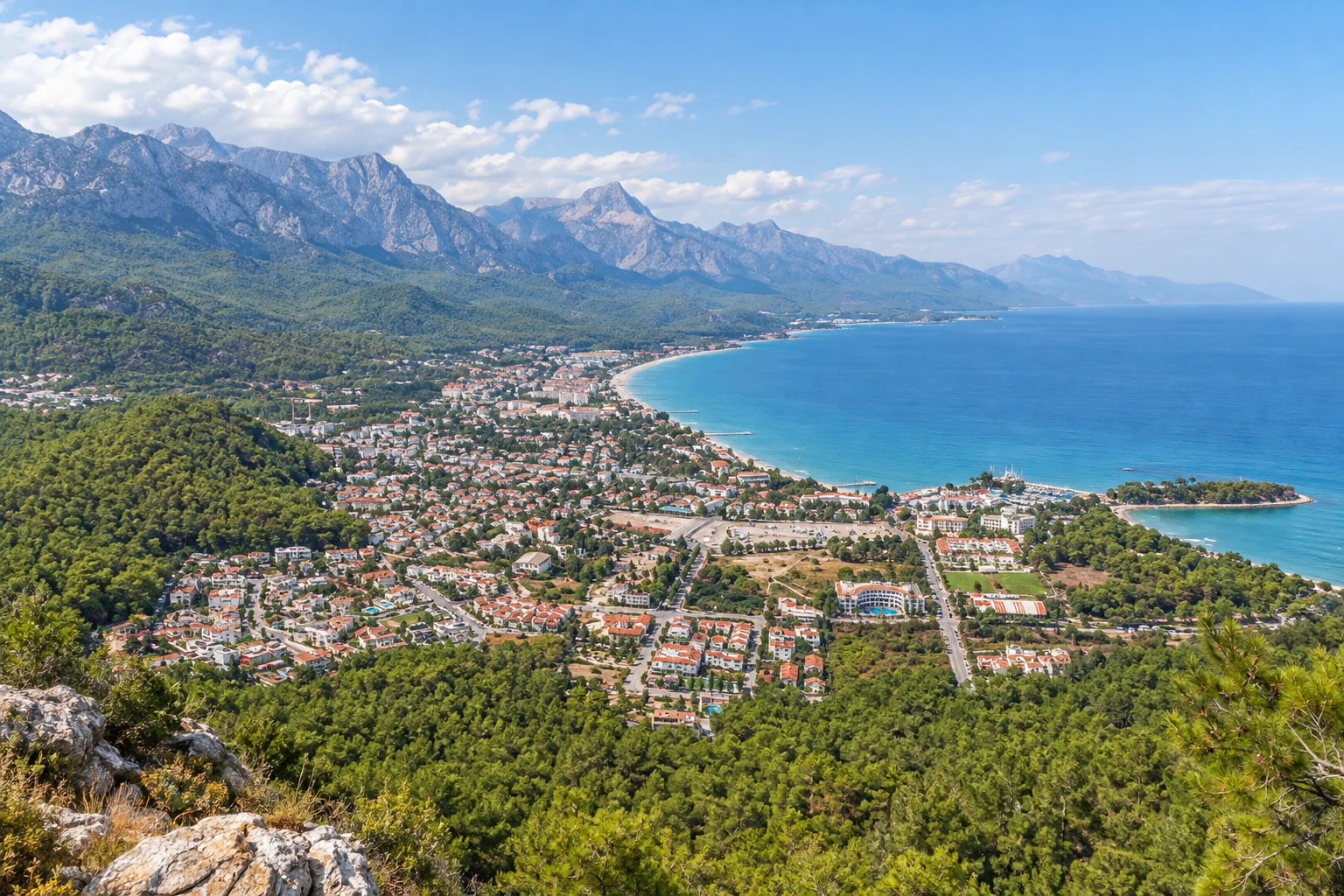
Kemer occupies a strip of coastline between the Mediterranean and the slopes of the Taurus Mountains. The town is a beach and accommodation base for visiting Phaselis, where ancient harbors, ruins and coves share the same stretch of coast.

Gelemiş is the base nucleus for the ancient city and Patara beach. Ruins and the stretch of sand are different activities that deserve their own time. Xanthos and Letoon broaden the reading of Lycia in a regional circuit; Letoon is on the Muğla side, although the excursion can start from Gelemiş.

Side occupies a peninsula where promenades and modern buildings coexist with ruins of Pamphylia. The columns of the Temple of Apollo stand by the sea. Accommodation also spreads along the beaches on both sides of the old town core.

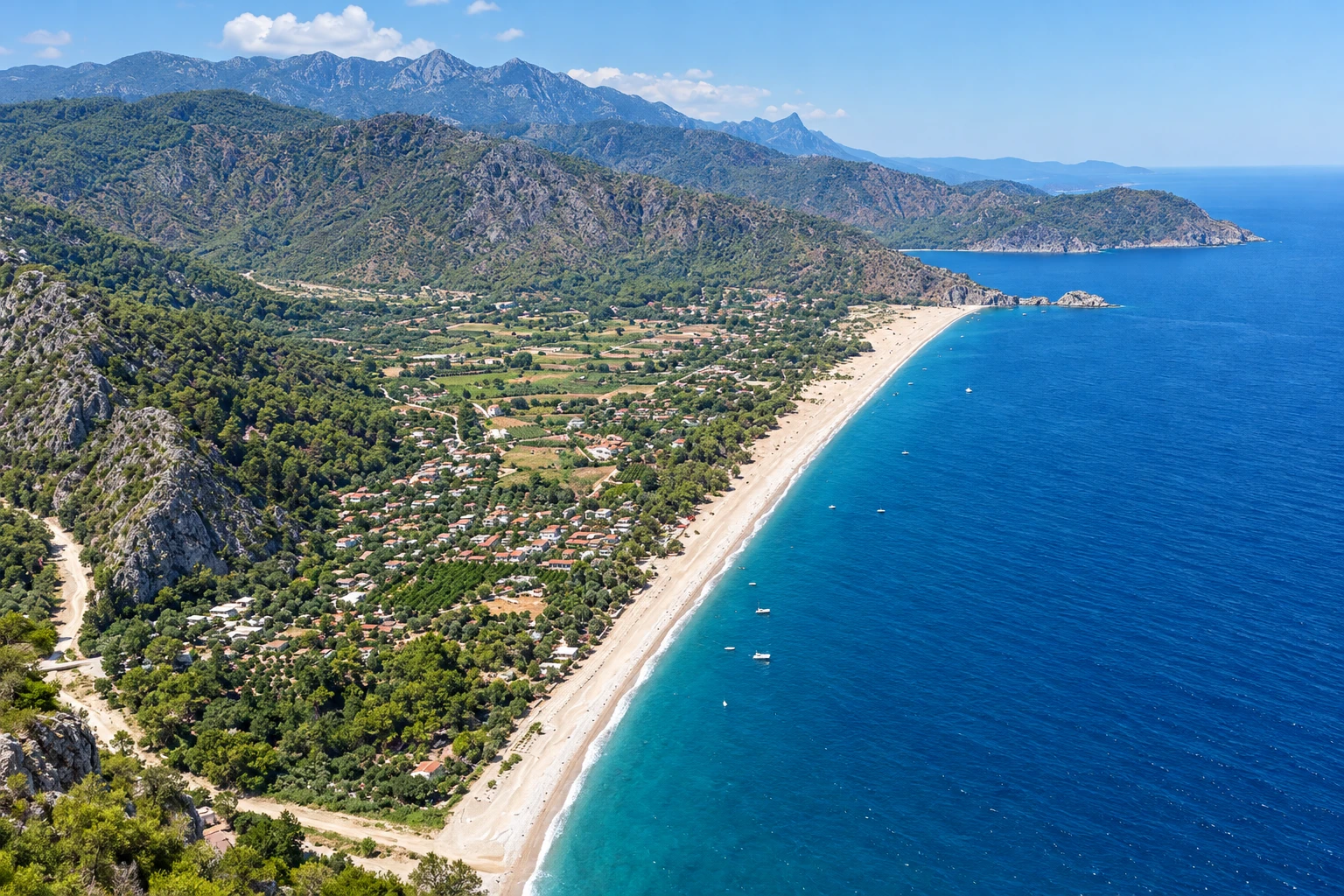
Çıralı has a long beach at the foot of mountains, with accommodations scattered among orchards and local streets. Olympos lies at the southern end of the same coastal strip, while Yanartaş occupies the slope to the north. The village serves those who want to combine beach, hiking and archaeology.

Üçağız is a coastal settlement of Demre used as an embarkation reference for Kekova. The navigation allows observation of remains along the water and may include Kaleköy and the castle of Simena. The composition of the tour and disembarkation time need to be confirmed, rather than relying on all stops under the circuit's generic name.
May, June, September and October usually have milder temperatures for combining beach and ruins. July and August are very hot and busy, at the height of the beach season. From November to March there is more rain; the coast generally has a mild winter, and the Taurus Mountains can have snow.
Antalya Airport (AYT) handles domestic and international flights, many seasonal in summer, and Gazipaşa–Alanya Airport (GZP) serves Alanya. Confirm before booking. From Antalya Airport, the tram and buses go to the city, and transfers run to Belek, Side and Kemer. Long-distance buses depart from Antalya’s terminal to Kaş, Kalkan, Fethiye and the rest of the country; Kaş is also near Dalaman Airport (DLM) in Muğla.
Beyond the guide
Your questions
In the capital, Kaleiçi puts the historic center within walking distance, and Konyaaltı and Lara are on the beach. Belek, Side and Kemer have resorts; Kaş and Kalkan, smaller towns, are closer to the Lycian ruins and Kekova.
By boat, from Üçağız or from Kaş. The trip passes over the ruins in the sea and stops at Simena (Kaleköy), with the castle above. Swimming over the submerged ruins is not allowed; the boat points out stops for swimming.
A week allows you to split the trip between the capital, with Perge and Aspendos, Side or Alanya, and the Lycian coast from Kaş to Patara. With less time, pick one base and take day trips.
Yes. Besides daytime visits, the theatre usually hosts performances in summer, such as the opera and ballet festival. Check the schedule before you go.
It is a marked trail of more than 500 km between Fethiye and Antalya, passing through Patara, Kaş, Demre and Olympos. You can do single-day sections, more common in spring and autumn.