Lucerne · Lucerne · Historic monument
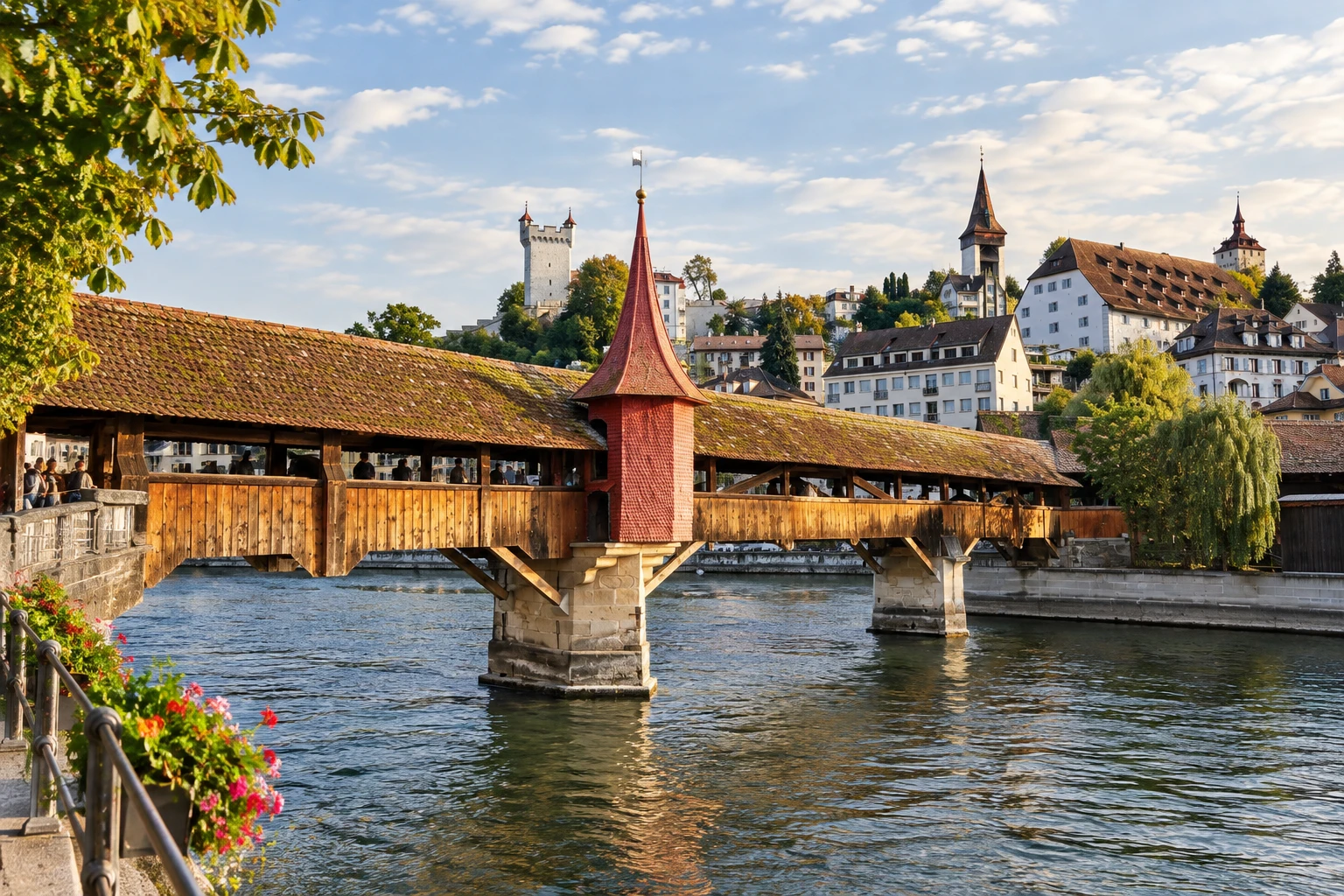
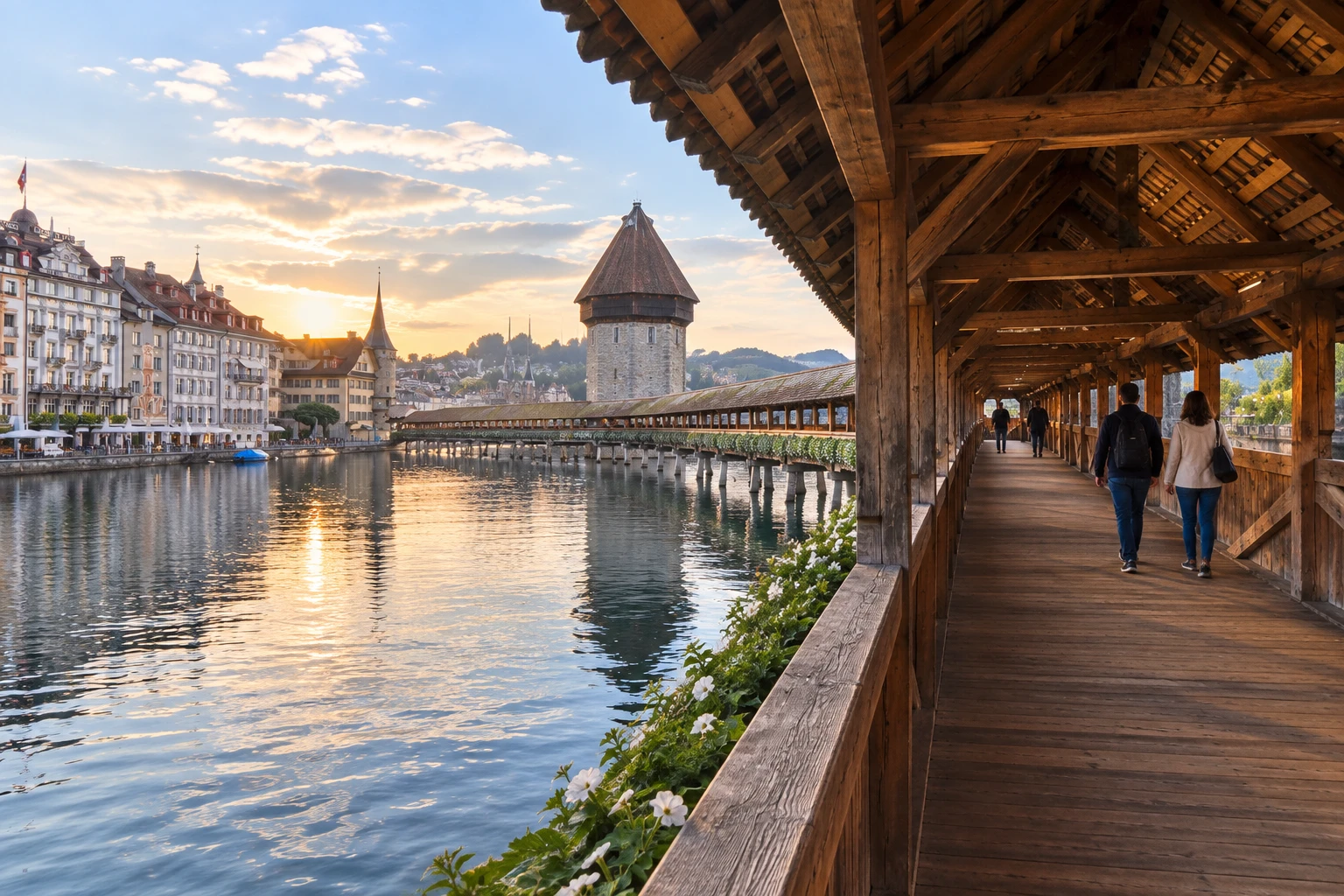
Chapel Bridge
Covered wooden bridge over the river Reuss, built around 1365, with 17th-century paintings on the ceiling and the octagonal Wasserturm tower beside it.

 Search
 Brazil
 Antarctica
 Argentina
 Bolivia
 Chile
 Colombia
 Ecuador
 Falkland Islands (Malvinas)
 French Guiana
 Guyana
 Paraguay
 Peru
 Suriname
 Uruguay
 Venezuela
 Austria
 Belgium
 Croatia
 Denmark
 Finland
 France
 Germany
 Greece
 Hungary
 Iceland
 Ireland
 Italy
 Luxembourg
 Norway
 Poland
 Portugal
 Slovakia
 Slovenia
 Spain
 SwedenSwitzerland
 the Czech Republic
 the Netherlands
 the United Kingdom
 Turkey
 Bermuda
 Canada
 Greenland
 Mexico
 Saint Pierre and Miquelon
 the United States
 the Dominican Republic
 JapanTurkey
 Egypt
 South Africa
 Australia
 Fiji
 New Zealand
 Papua New Guinea
Lucerne · Obwalden
22 places to visit and 16 tours, chosen by the Cidade Turismo guide.
Updated
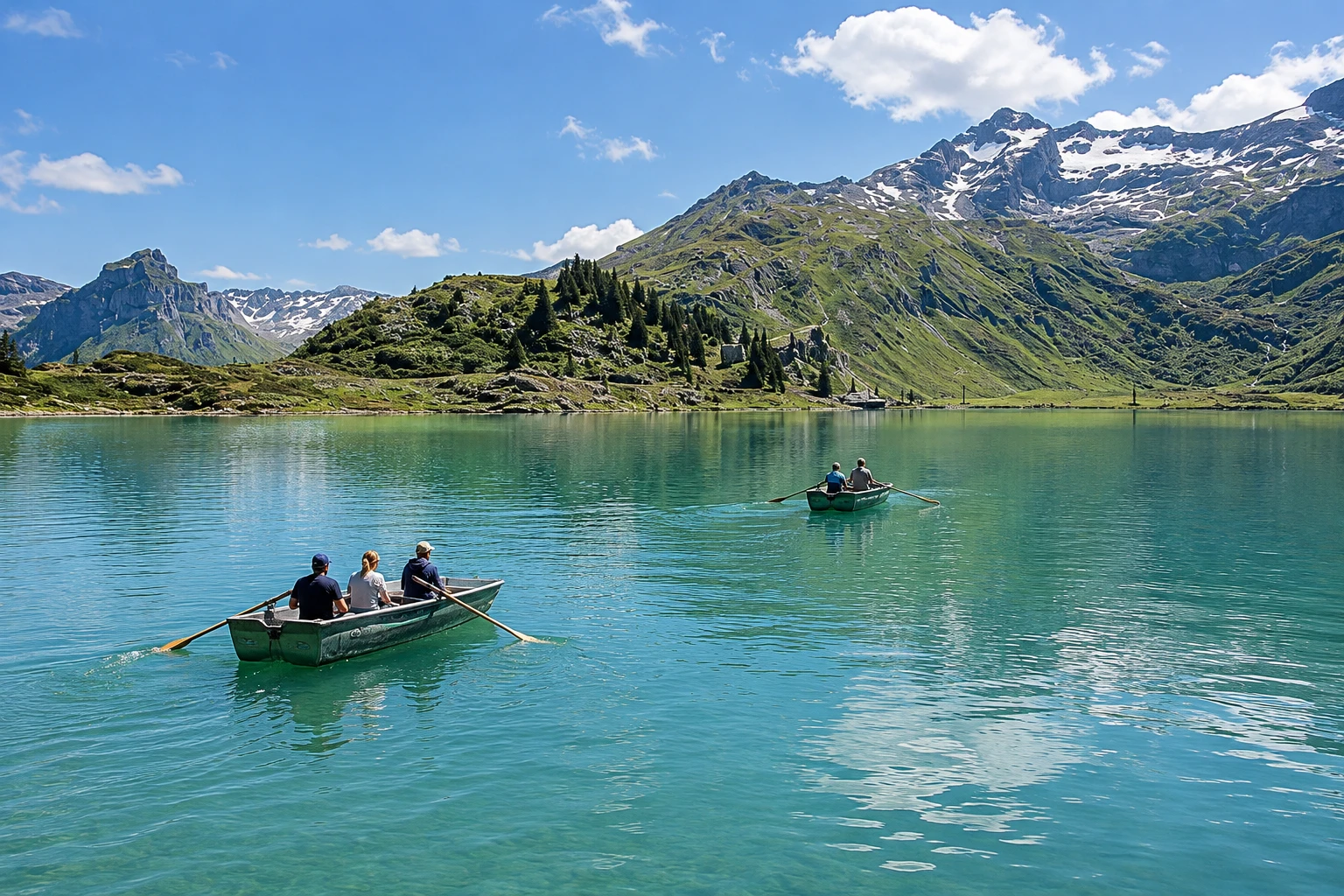
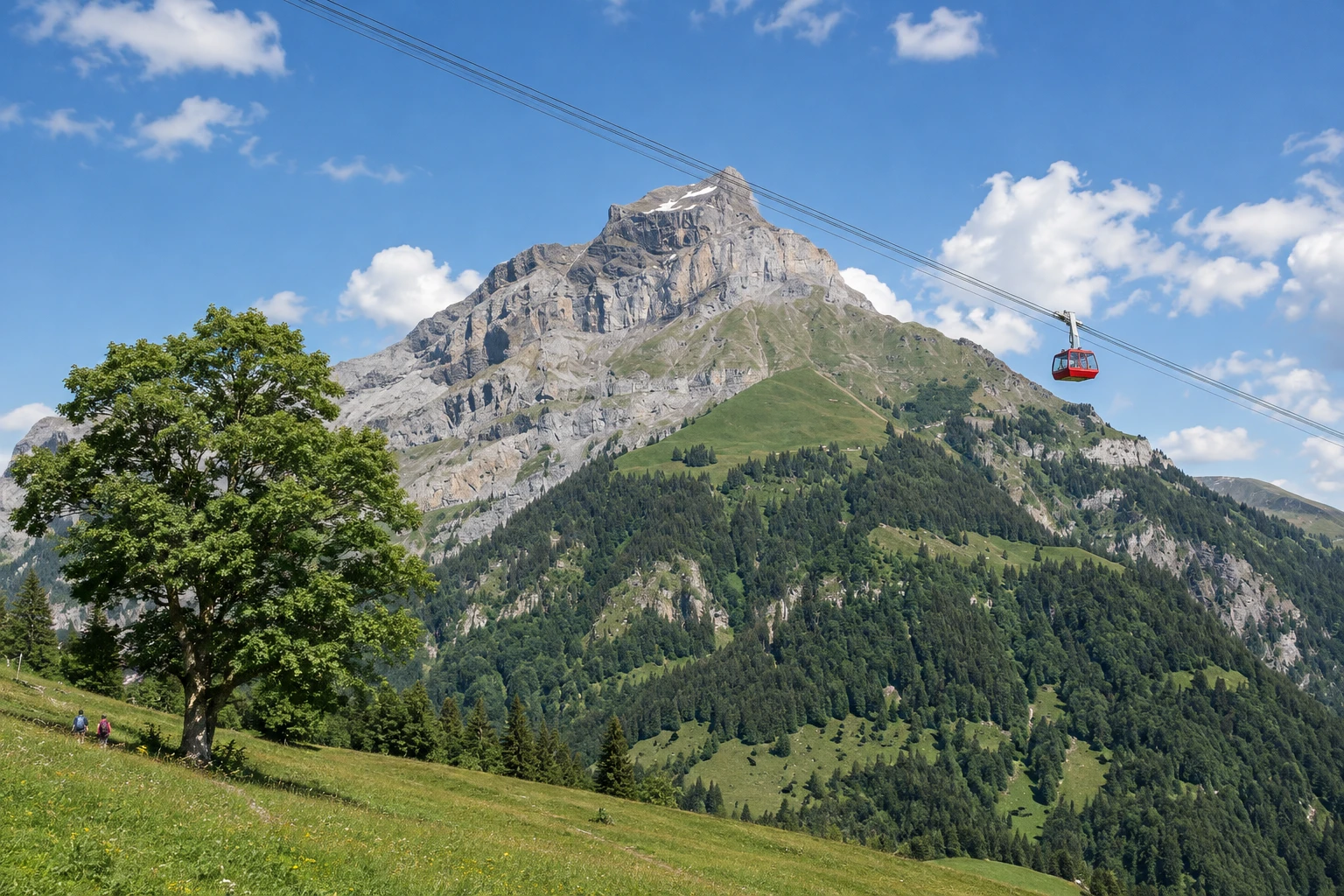
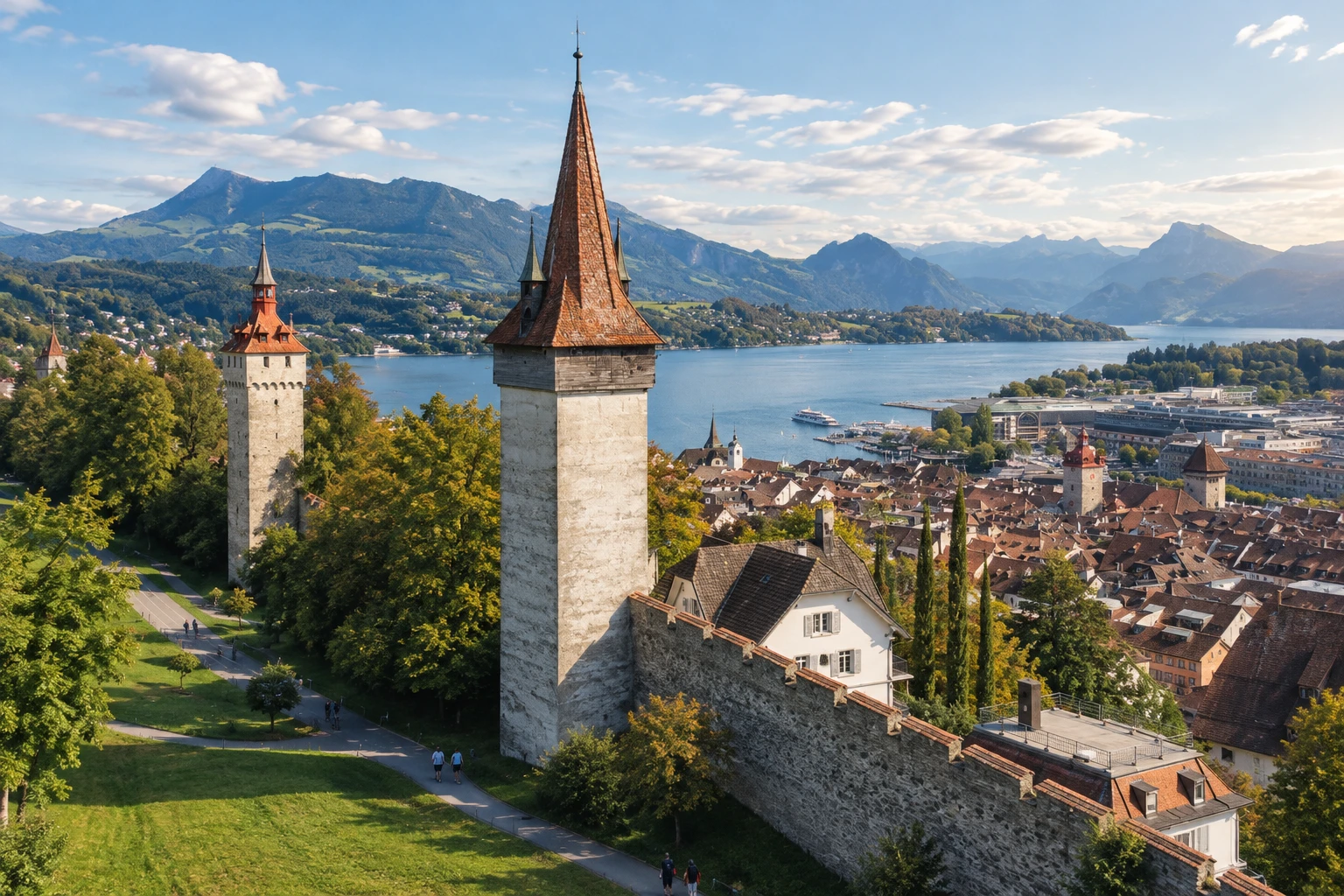
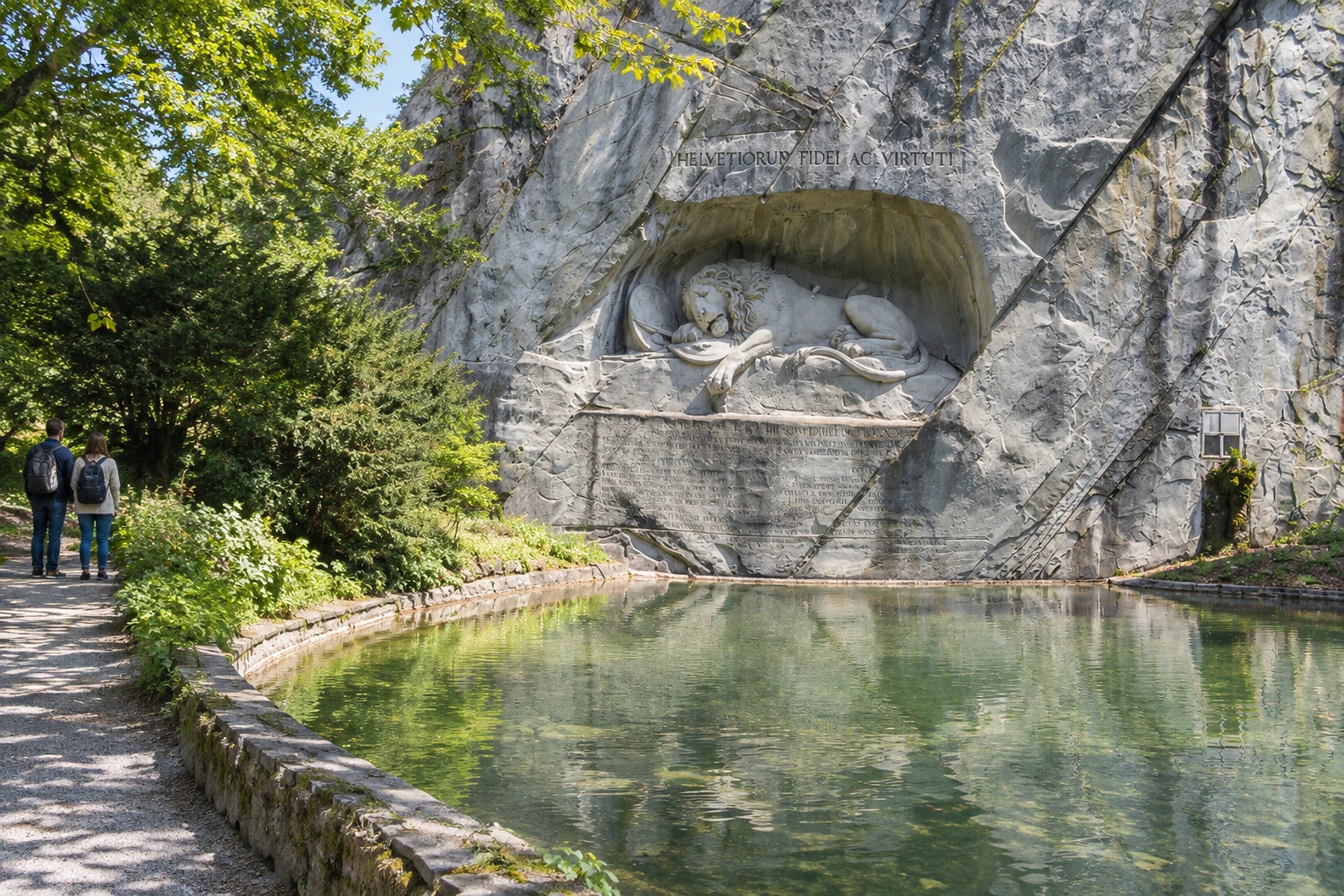
Illustrative images. The pictures in this guide are illustrations based on the real place, not photographs, and may differ from it.
To start
One by one
Covered wooden bridge over the river Reuss, built around 1365, with 17th-century paintings on the ceiling and the octagonal Wasserturm tower beside it.
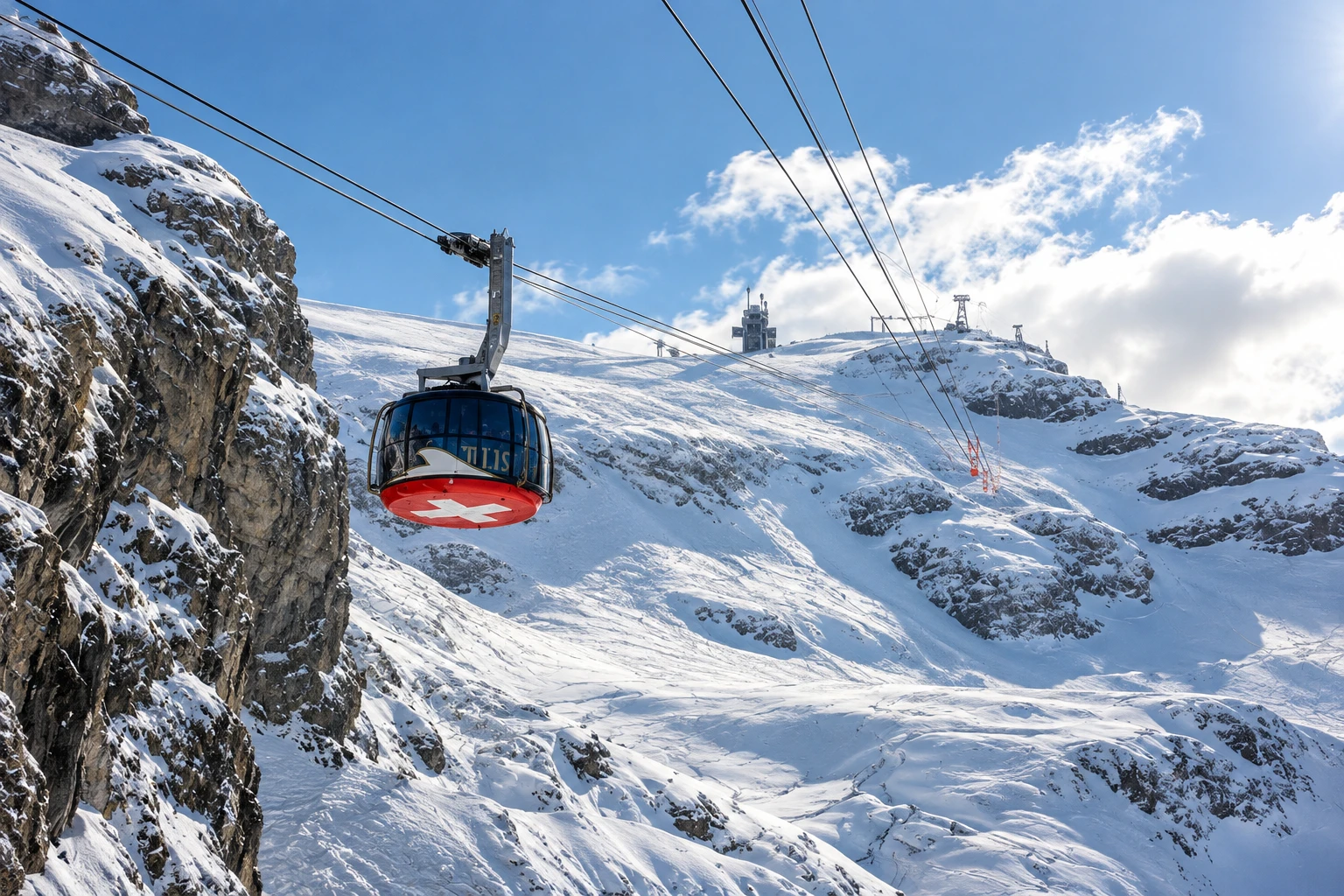
Mountain of 3,238 m above Engelberg, with a year-round glacier, a station at 3,020 m reached by the rotating Titlis Rotair cable car, the Cliff Walk, the Glacier Cave and the Ice Flyer.
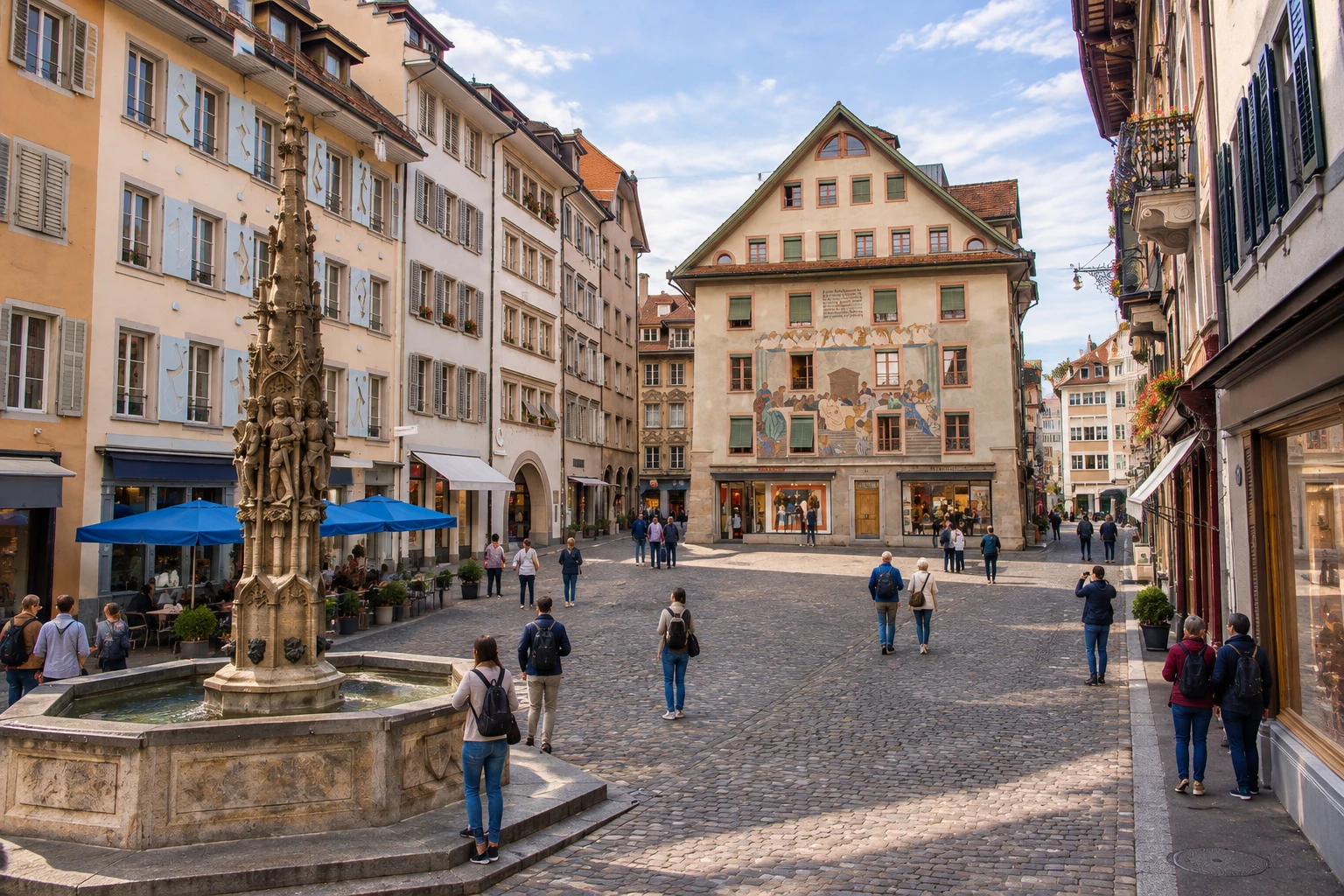
The medieval centre on the right bank of the Reuss, with the Kornmarkt and the old Rathaus, the Weinmarkt and its 1481 fountain, the Hirschenplatz and streets of painted façades.
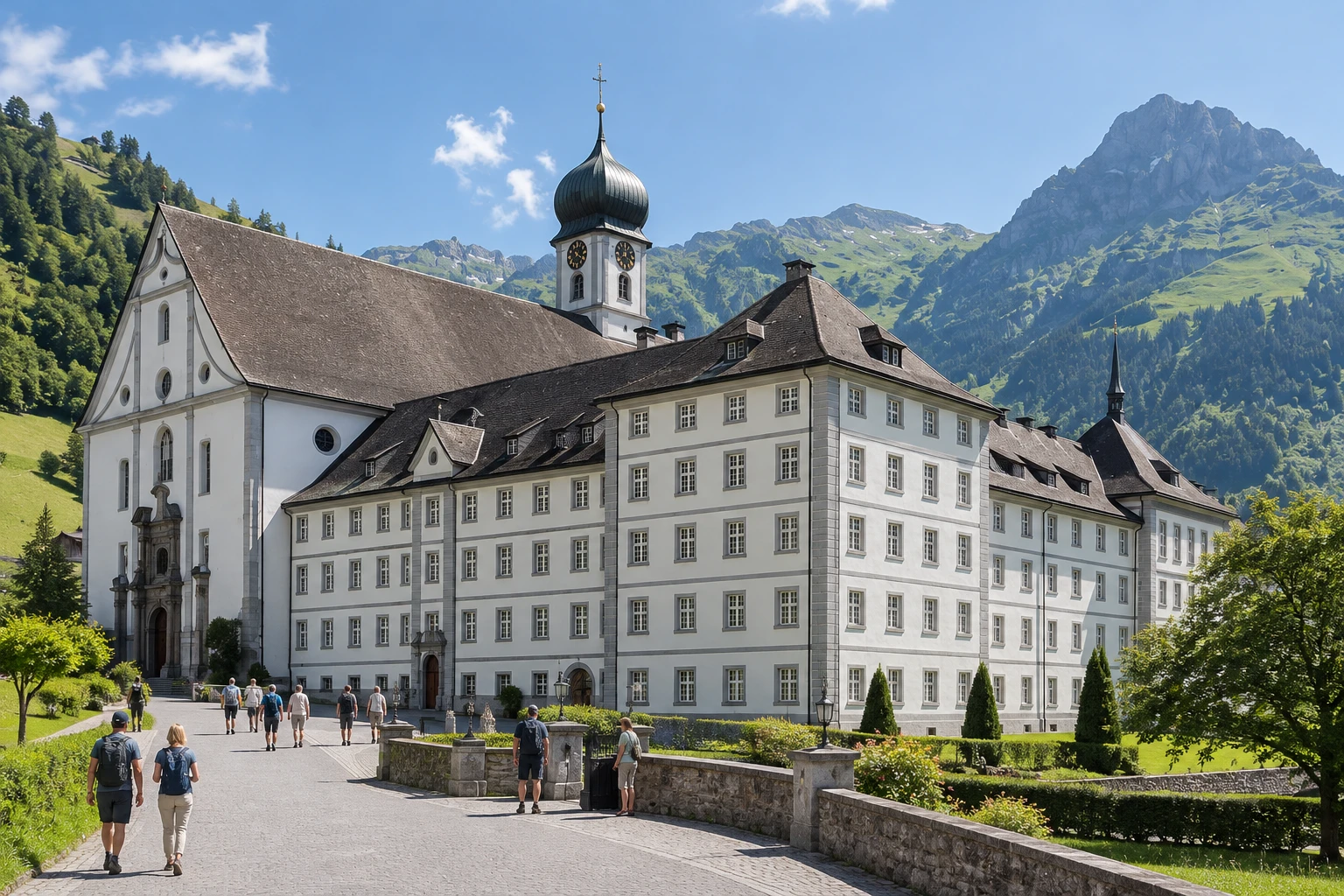
Benedictine monastery founded in 1120, rebuilt after the 1729 fire, with a baroque church, an organ with 137 stops and a cheese dairy open to visitors in the courtyard.
Lucerne’s second covered bridge, 81 m long, with the Totentanz (Dance of Death) painting series made in the 17th century by Kaspar Meglinger and a small chapel in the middle.
Lake at about 1,760 m, at the intermediate station on the way up to Titlis, with a path around it, views of the glacier and access to the Jochpass at 2,207 m.
Mountain area on the north slope of the valley, facing Titlis, with a cable car to Ristis at about 1,600 m, a chairlift to the Härzlisee and the Brunnihütte refuge at 1,860 m.
Section of Lucerne's old city wall, about 870 m long with nine towers, four of them open from April to October, offering views over the roofs, the lake and the Alps.
Wounded lion carved in 1820 and 1821 into a rock wall, 10 m long, in memory of the Swiss Guards killed at the Palácio das Tulherias in Paris in 1792.
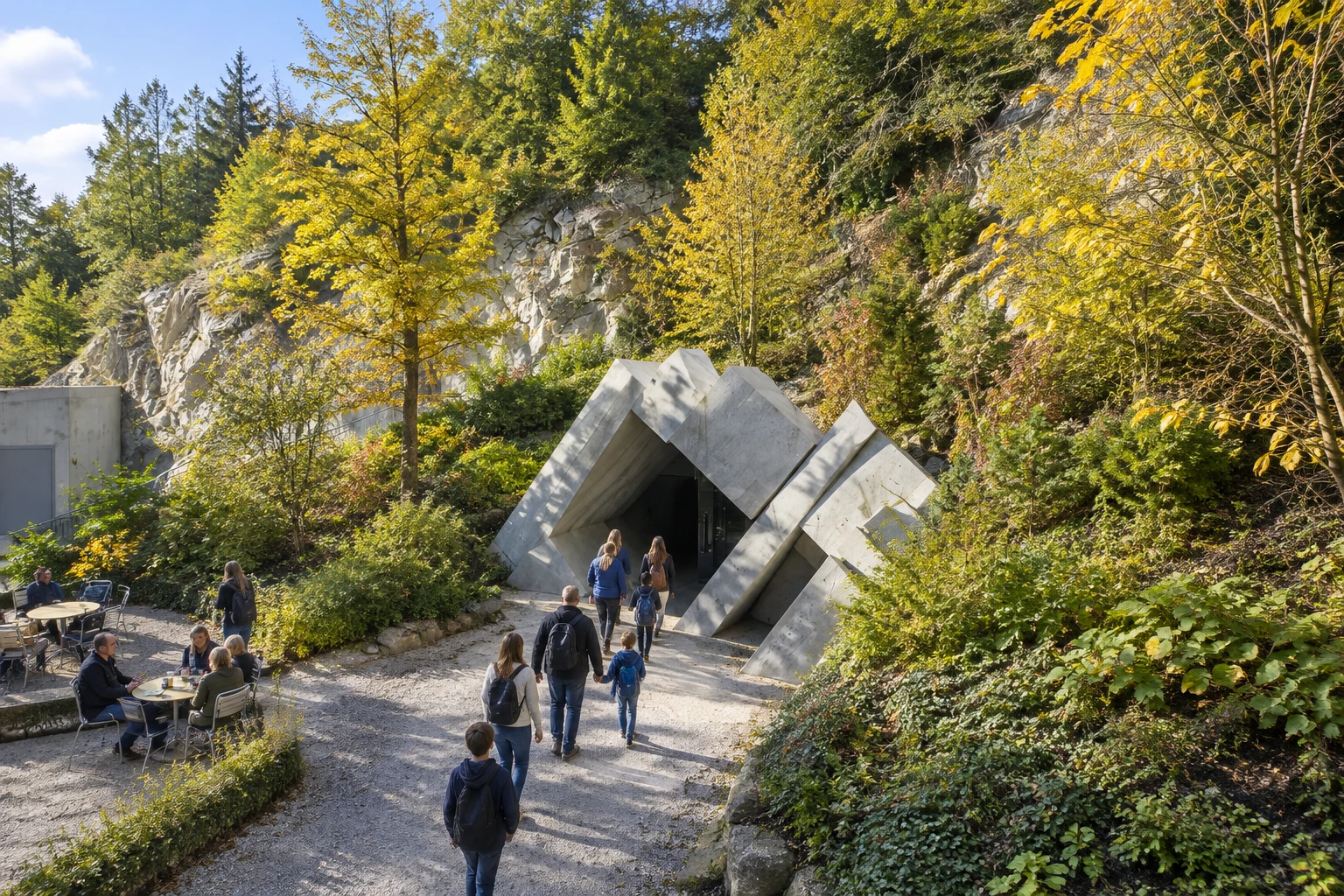
Stone kettles carved by a glacier about 20,000 years ago, discovered in 1872, with a museum, a mirror maze, rock galleries and an observation tower.
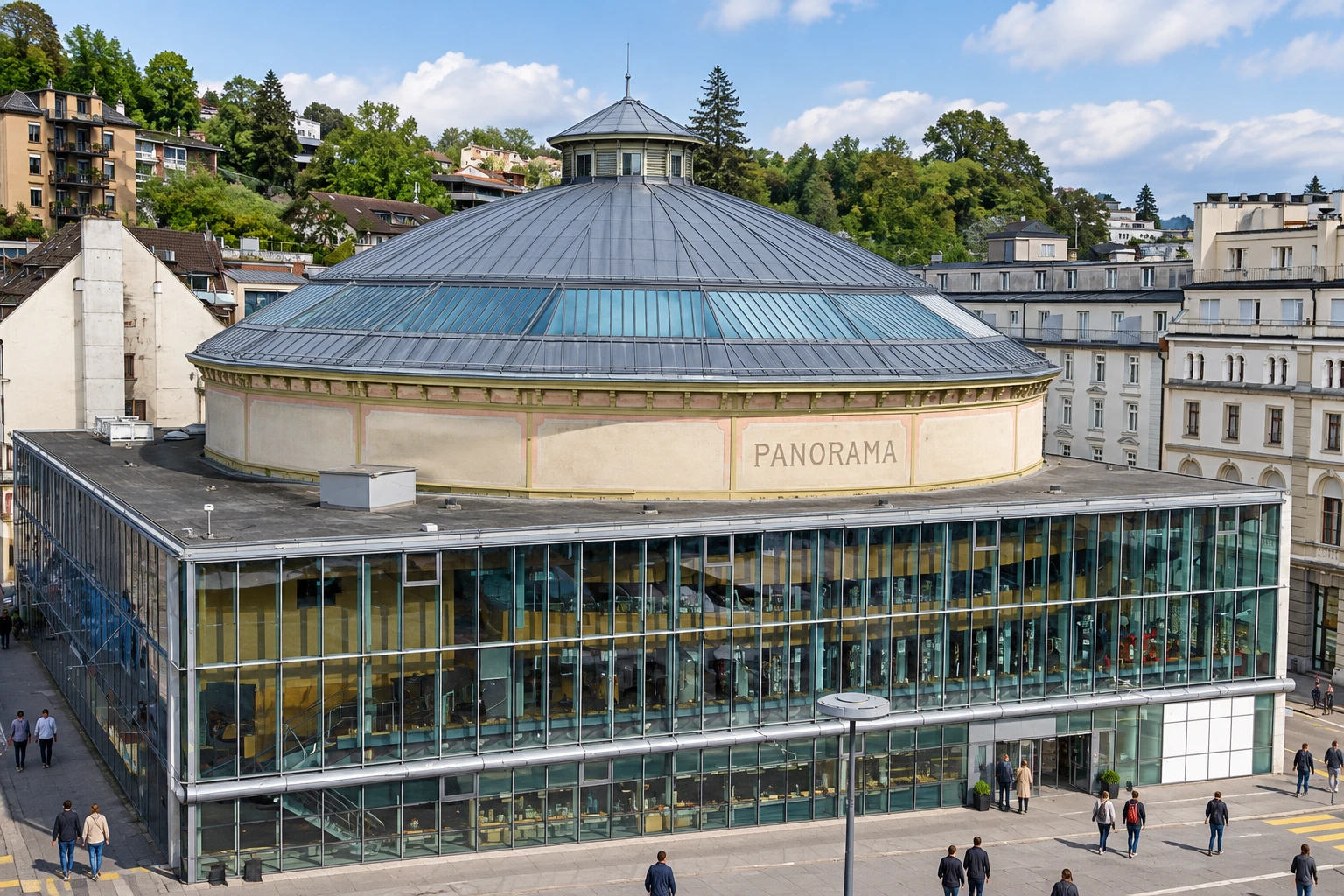
A 112 m circular painting by Édouard Castres from 1881, showing the arrival in Suíça of General Bourbaki's French army in 1871, in a round building near the Leão.
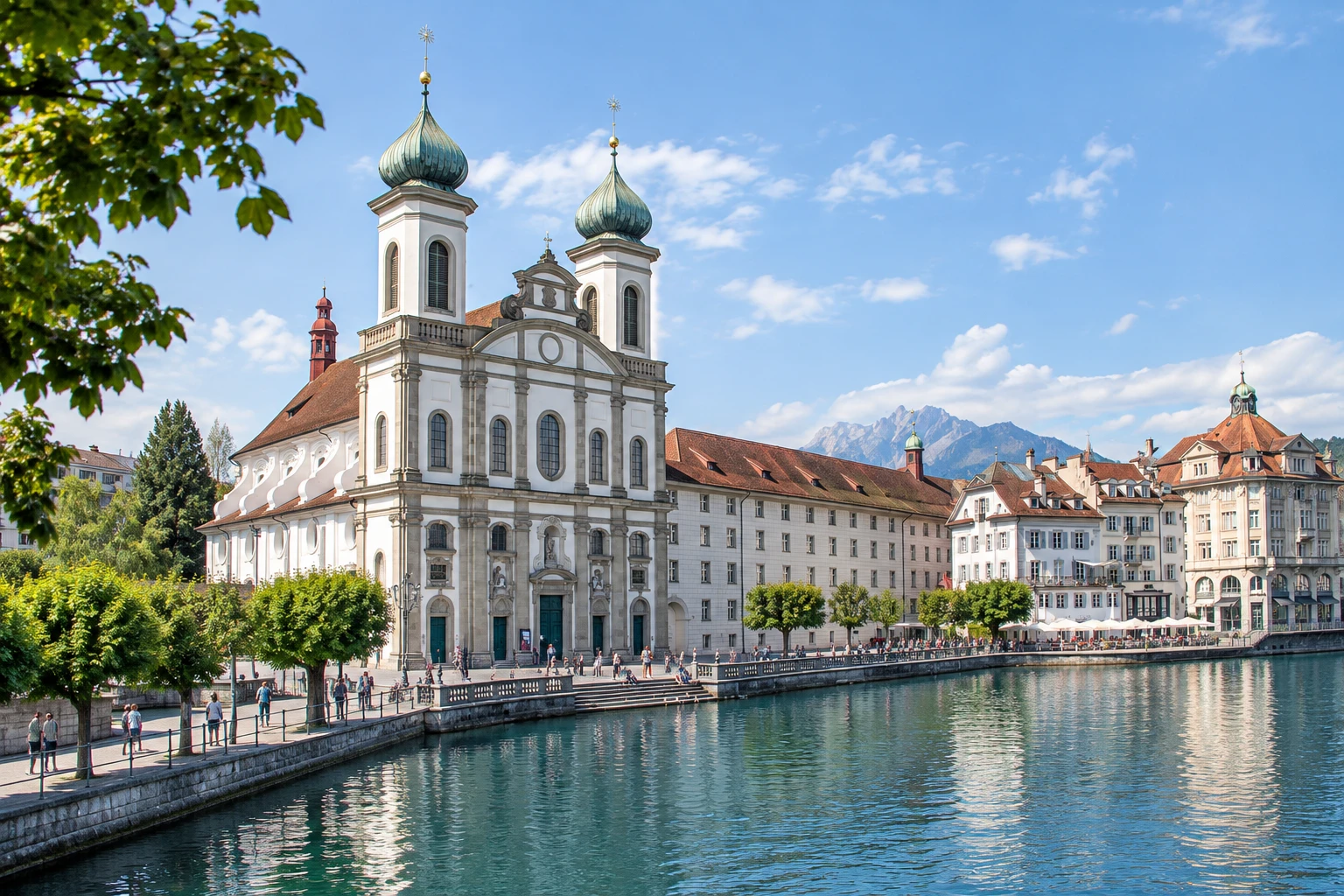
Jesuit church built from 1666 to 1677 on the left bank of the Reuss, the first large Baroque church in Suíça, with a white and gold interior and two domed towers.
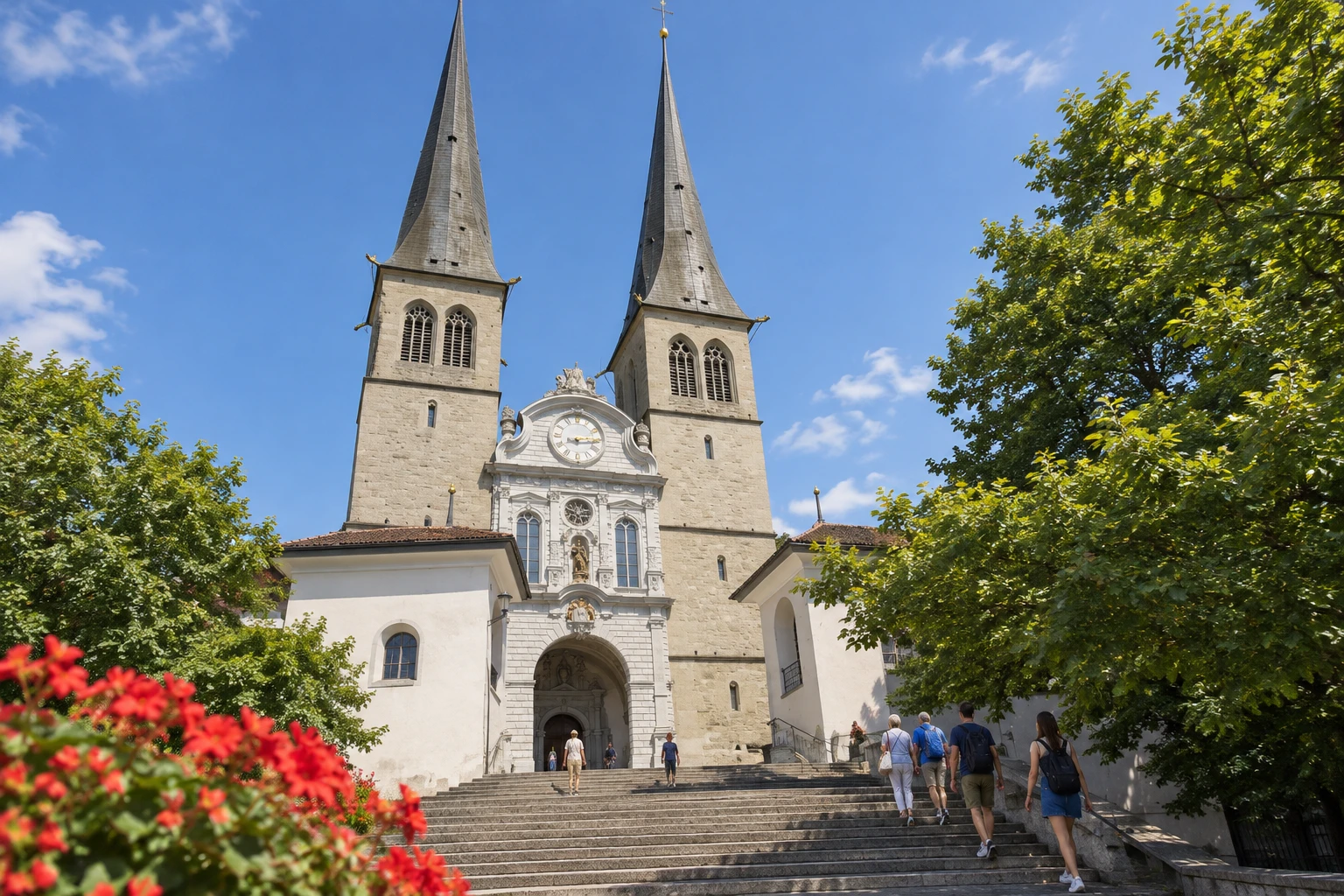
Church of São Leodegário, rebuilt from 1633 to 1639 in Renaissance style after a fire, with medieval towers of 69 m, an arcaded cemetery and a large 17th‑century organ.
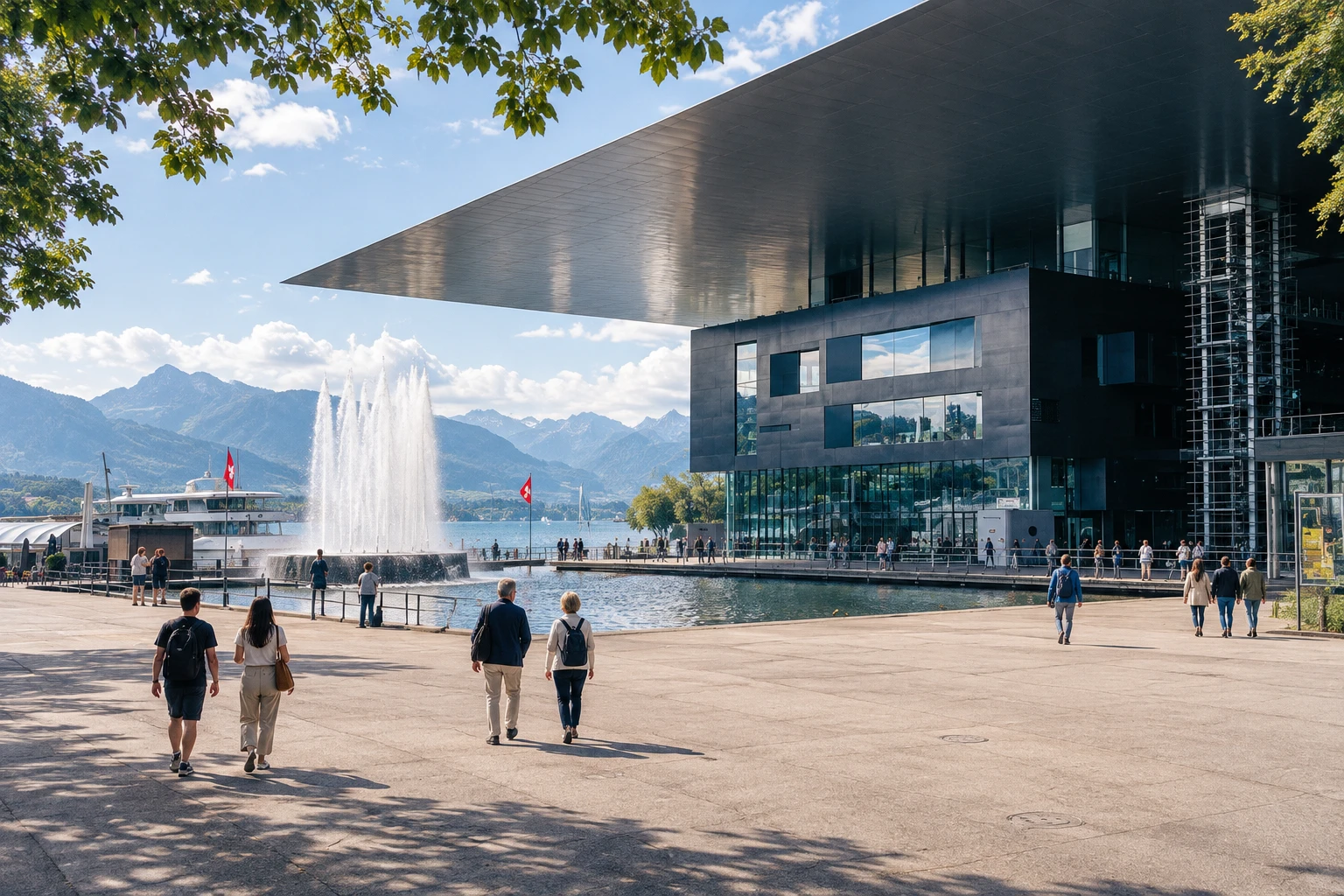
Culture and congress center designed by Jean Nouvel, on the lakeside, with a 45 m cantilevered roof, a concert hall with acoustics by Russell Johnson and the Kunstmuseum Luzern.
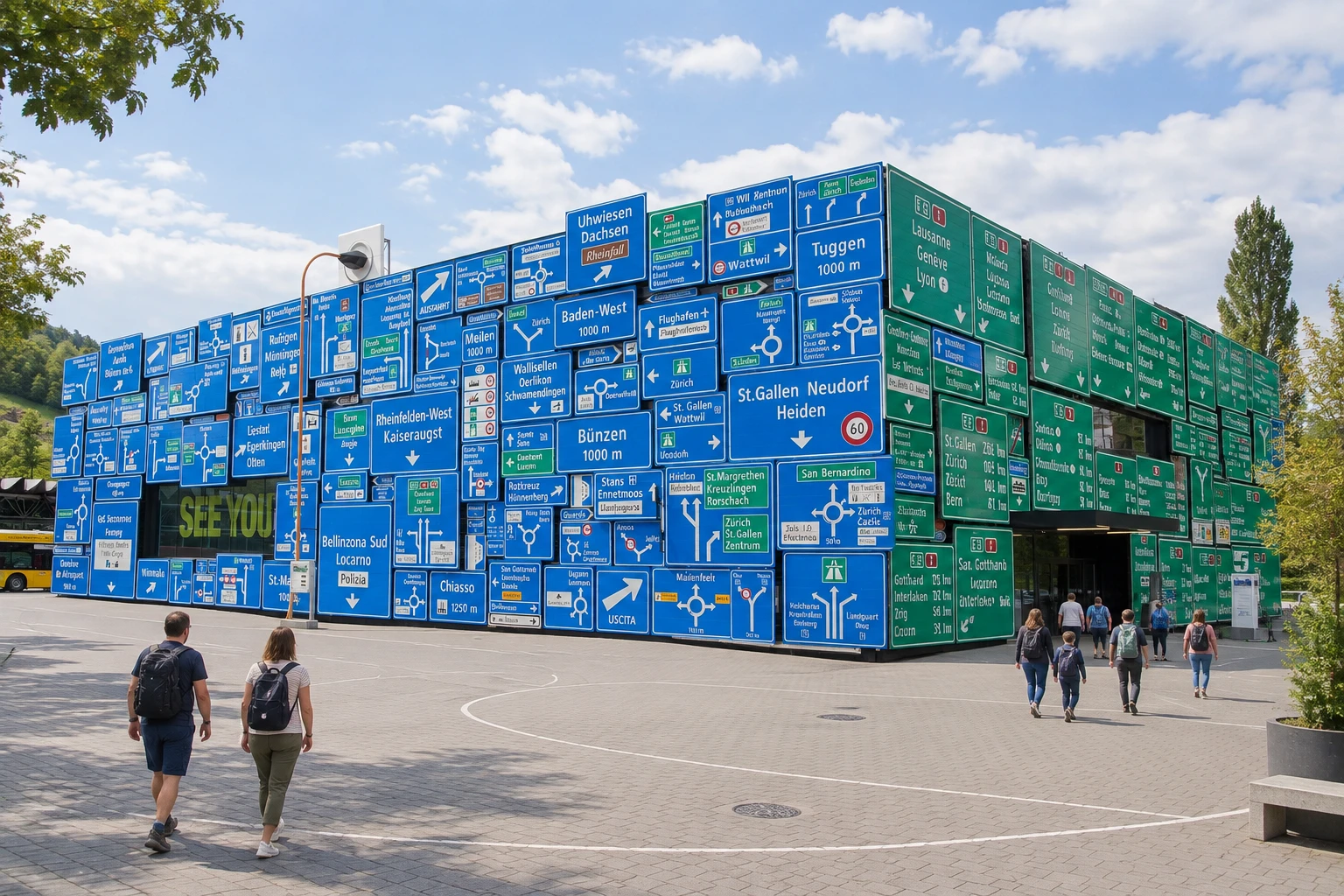
Museu Suíço dos Transportes, opened in 1959 on the lakefront, with trains, cars, airplanes, boats and cable cars, a planetarium, a large-screen cinema and an exhibition about chocolate.
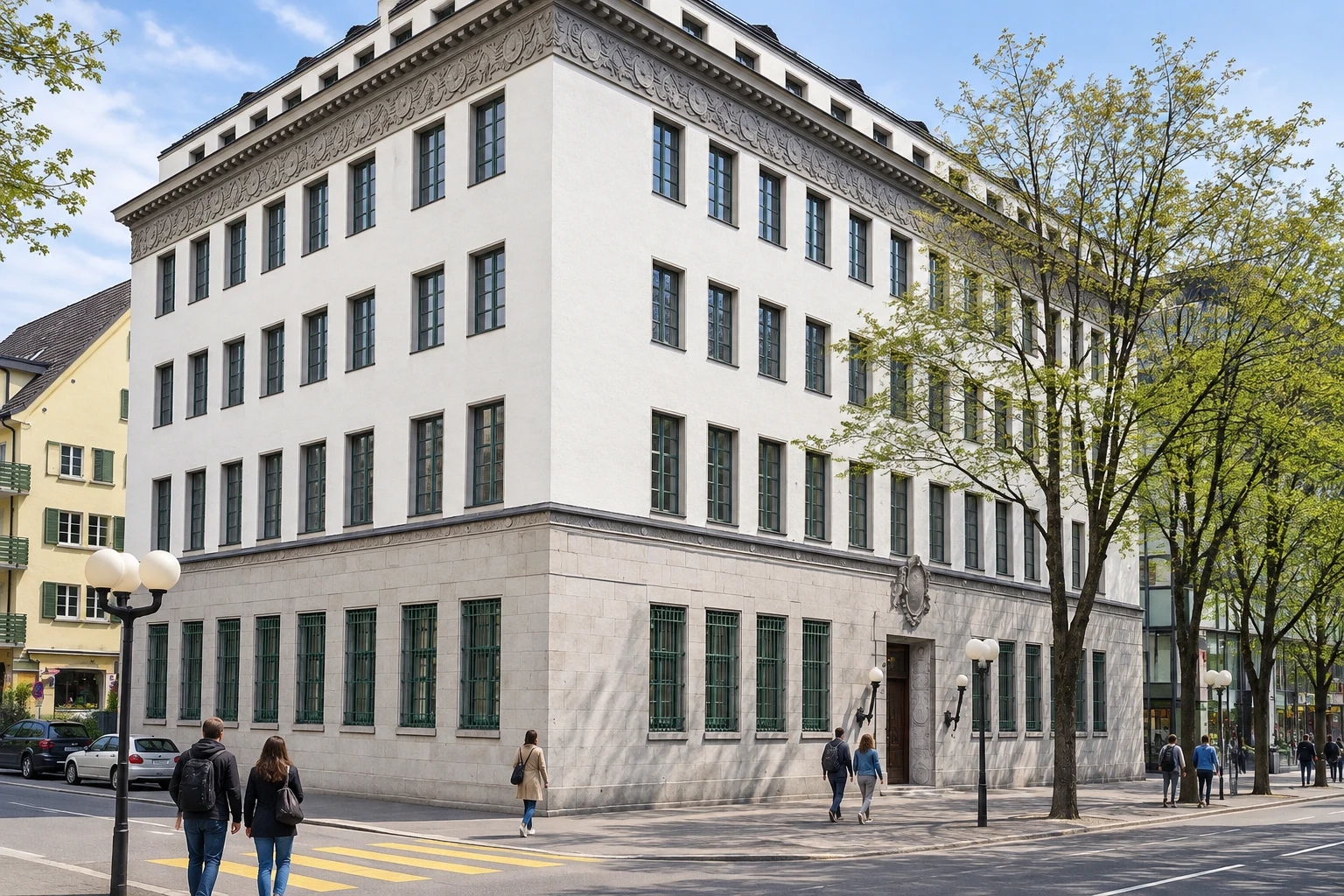
Modern art museum in a former 1922 bank, with around 180 works by Picasso and 125 by Paul Klee, as well as Monet, Pissarro, Seurat and others, gathered by Siegfried and Angela Rosengart.
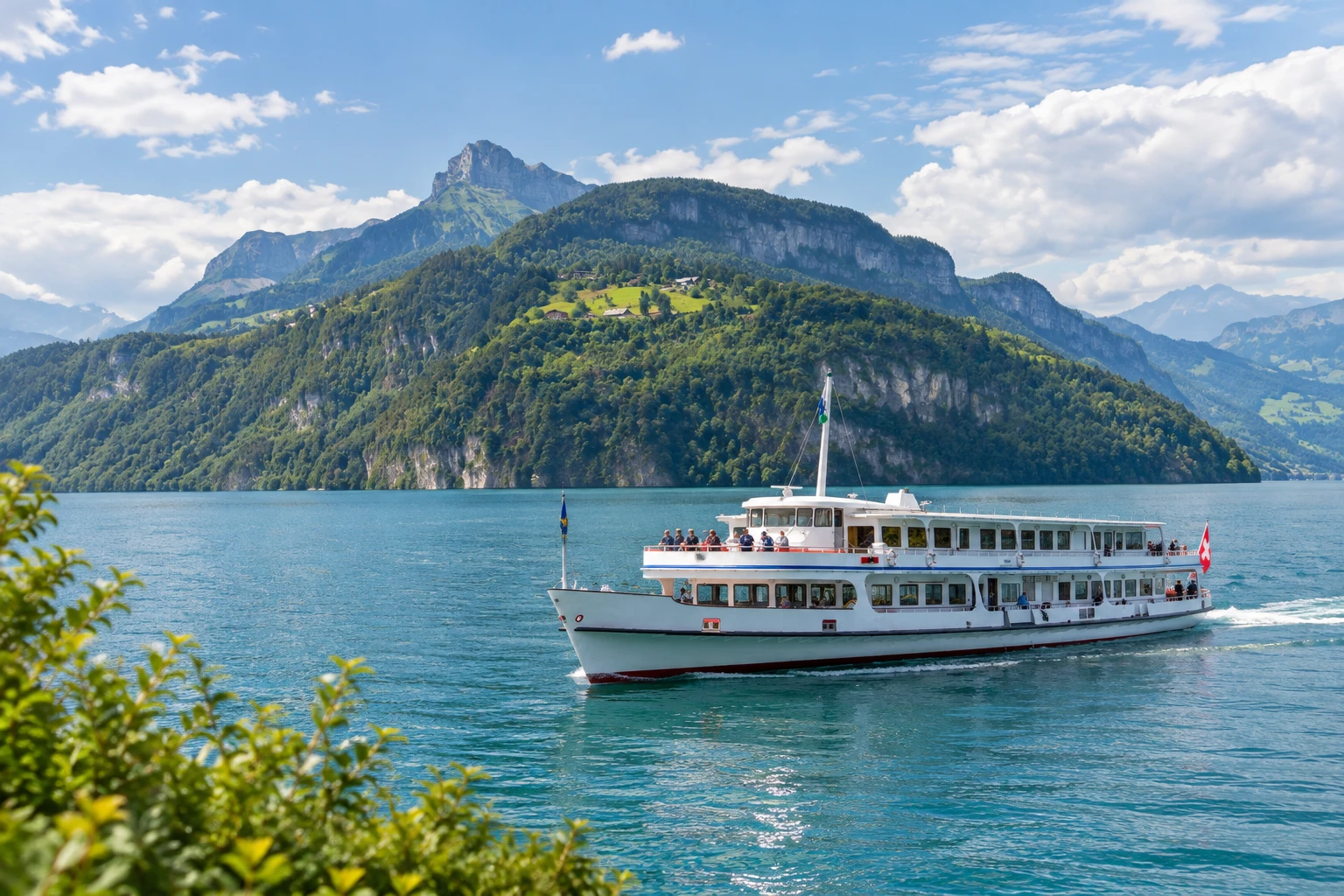
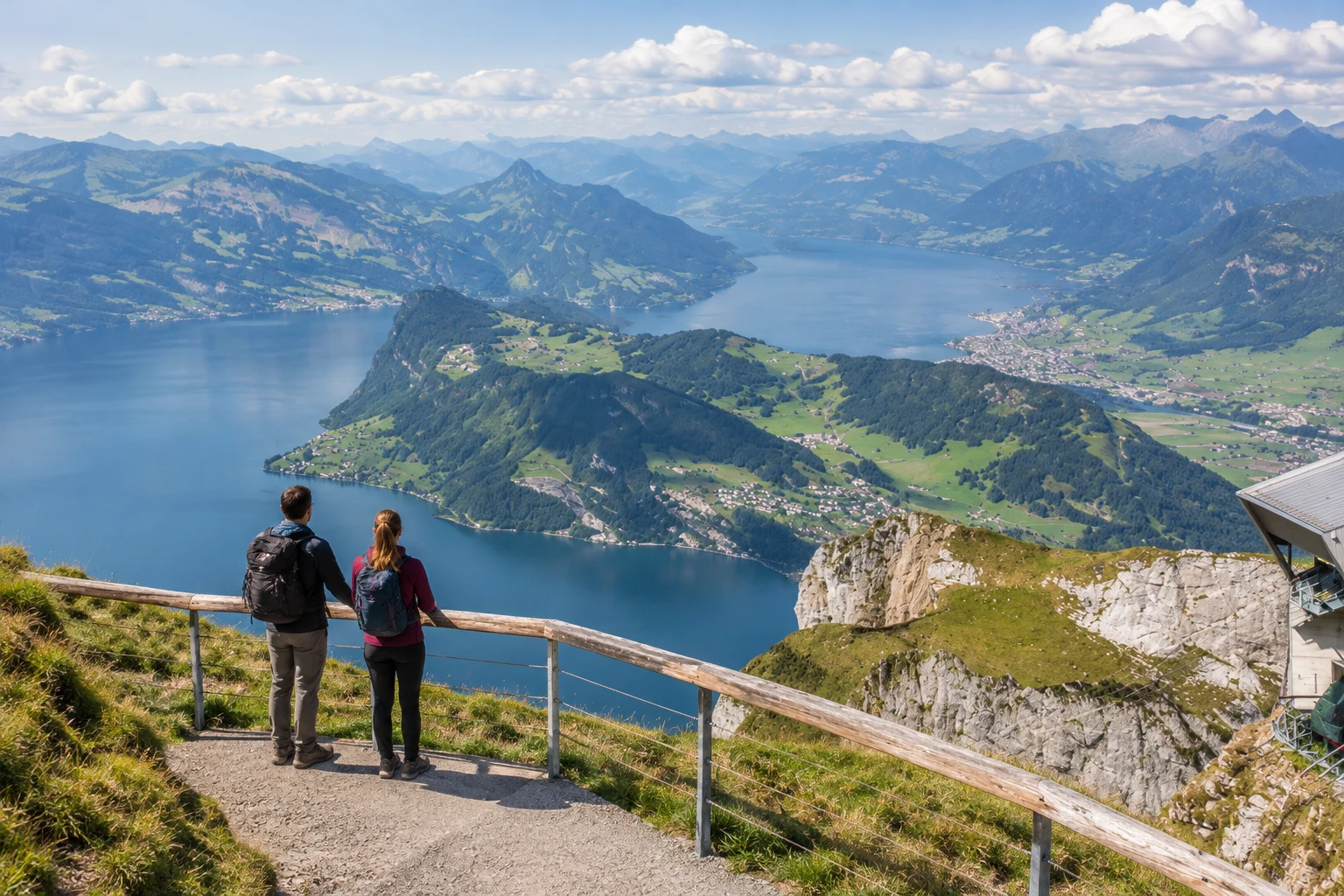
The Lake of the Four Cantons, with indented shores among mountains, is navigated by SGV boats, including five paddle steamers built between 1901 and 1928.
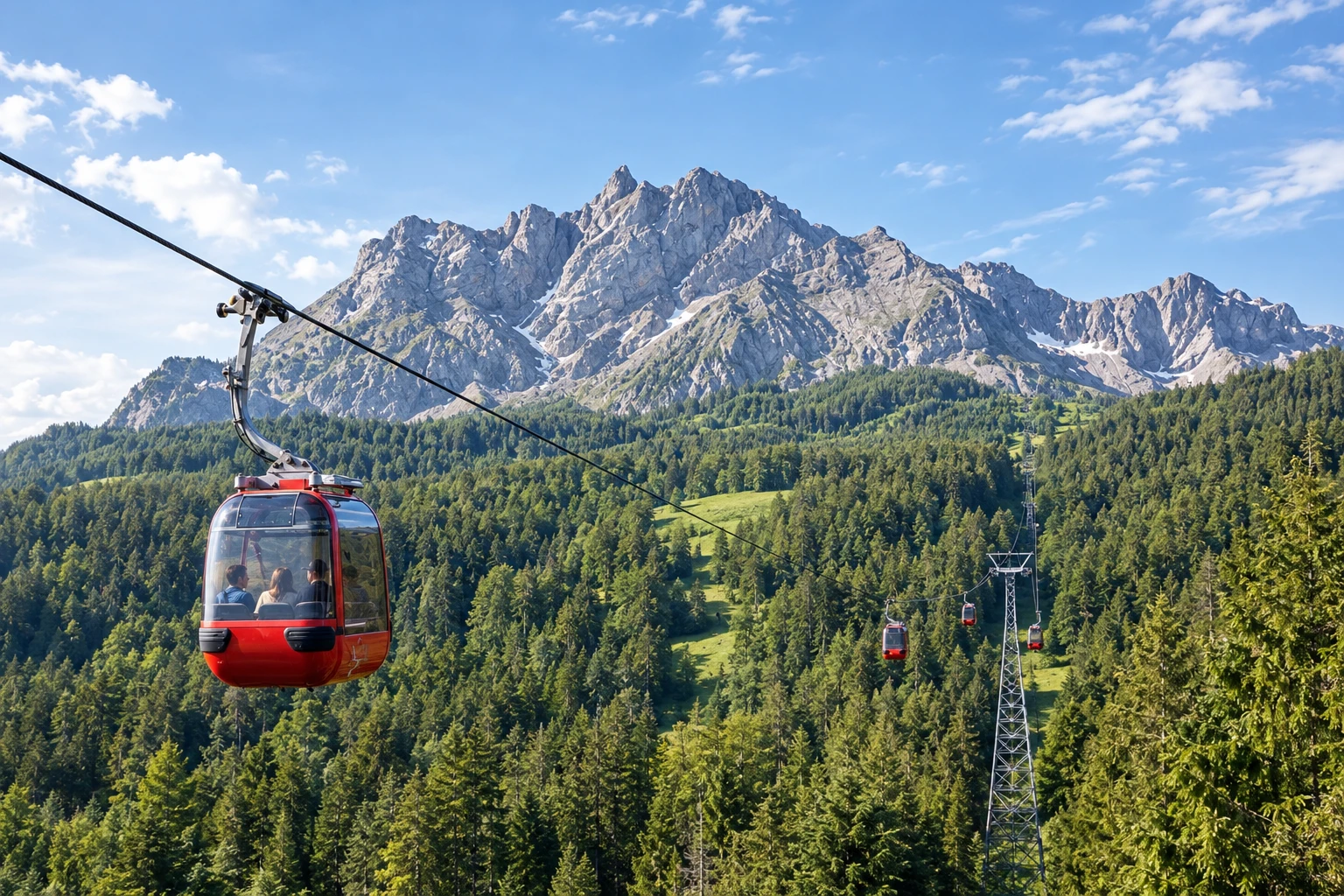
Mountain south of Lucerna, with a cogwheel railway dating from 1889 and gradients up to 48%, the Dragon Ride cable car and a gondola to Kriens; at the top, viewpoints and trails above 2,000 m.
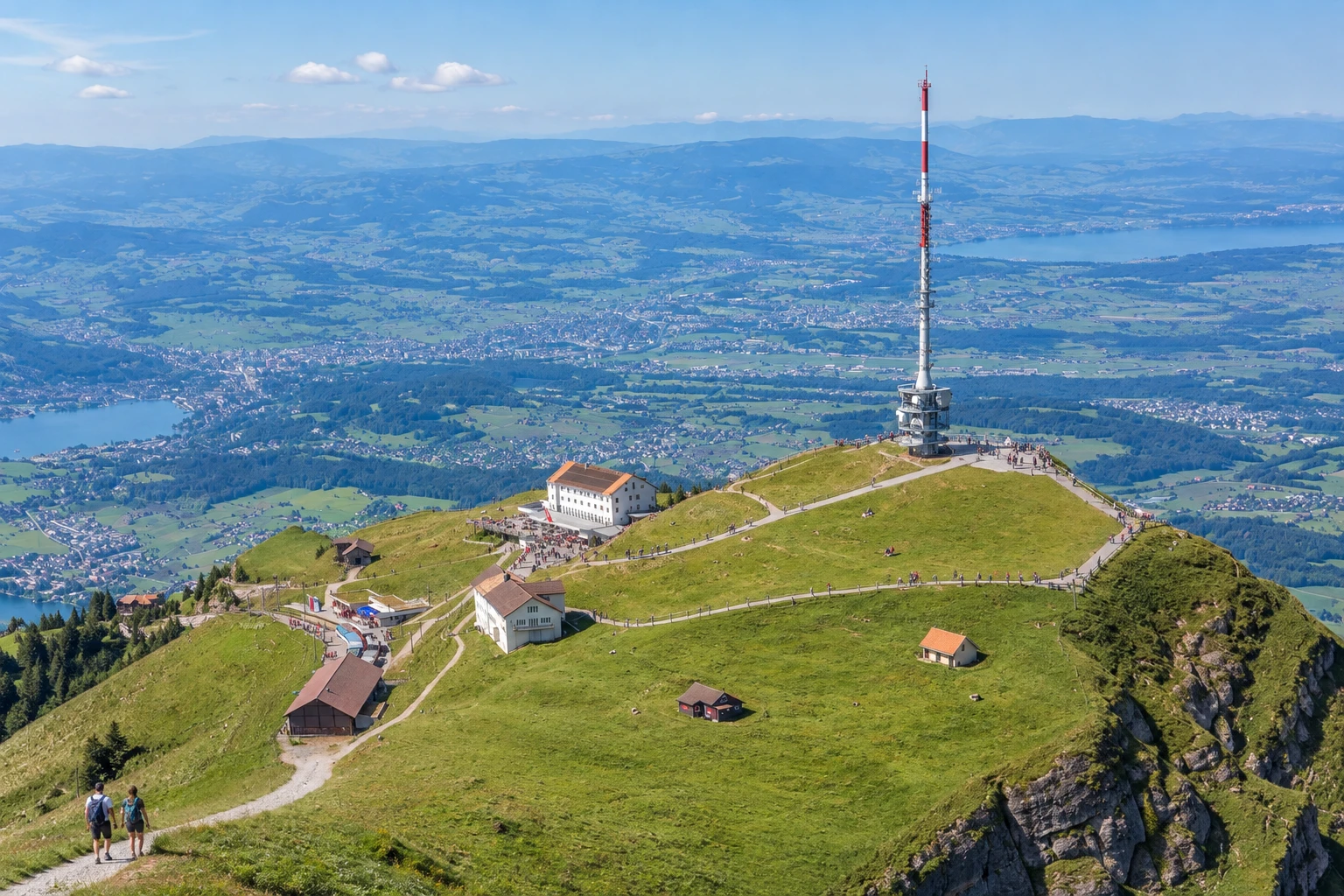
Massif between the lakes of Lucerne, Zug and Lauerz, with its summit at Rigi Kulm, 1,797 m, served by the first mountain railway in Europe, opened in 1871.
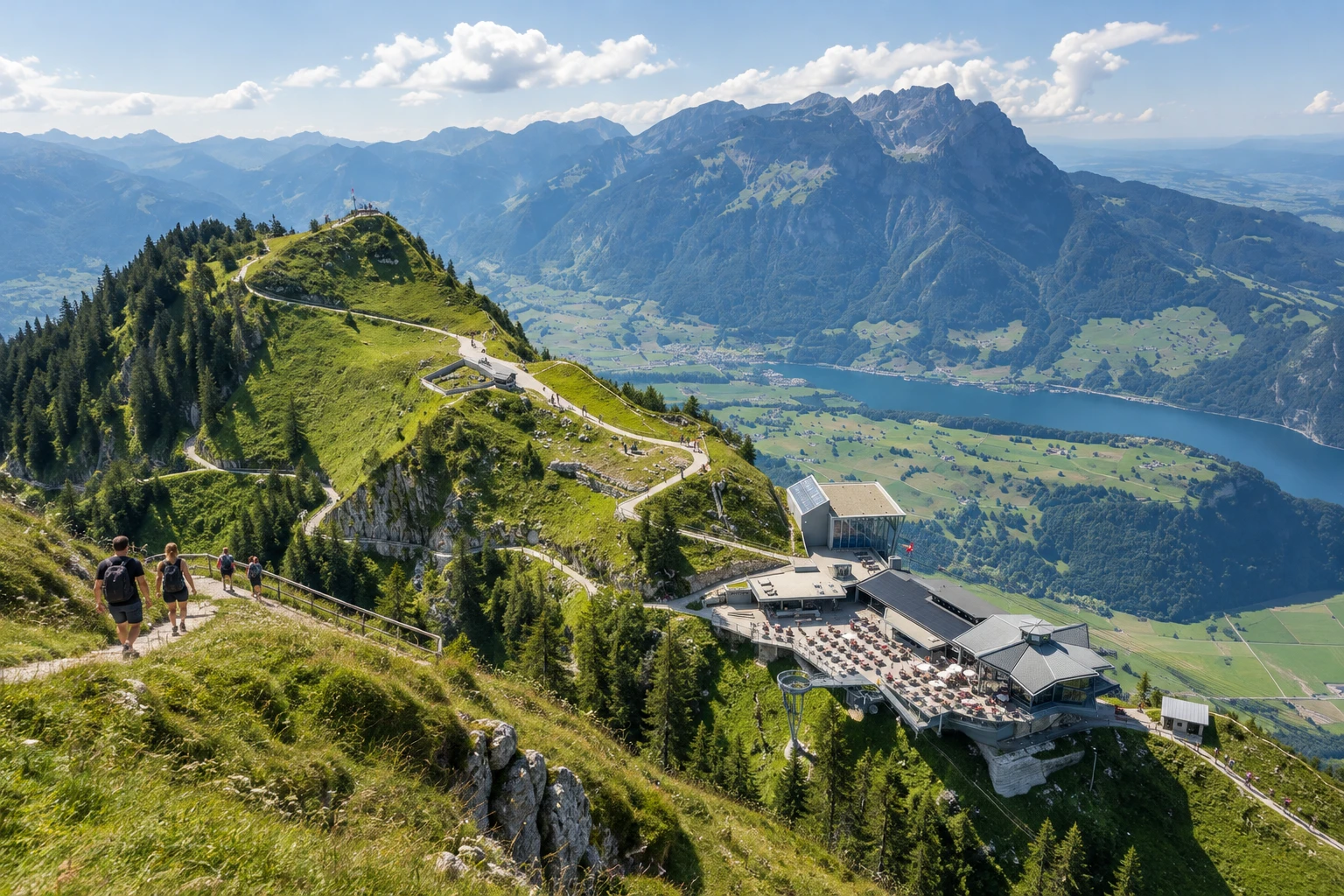
Mountain of 1,898 m above Stans, with a wooden-wagon funicular from 1893 and the CabriO cable car, two-storey with an open top, that reaches the summit where a rotating restaurant is located.
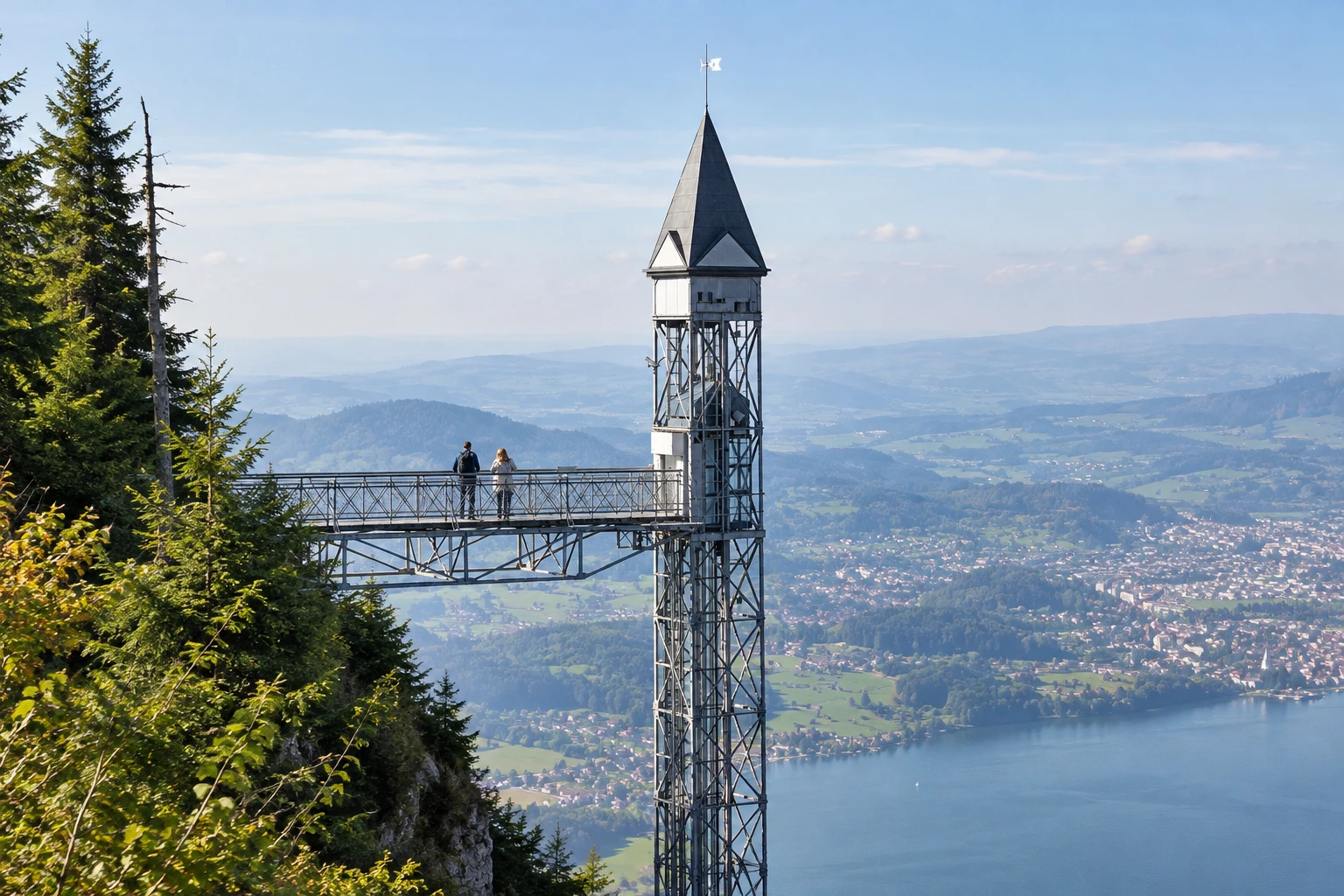
Promontory over the lake, reached by boat and an 1888 funicular, with the Felsenweg path on the slope and the Hammetschwand elevator, which rises 153 m outdoors to 1,132 m.
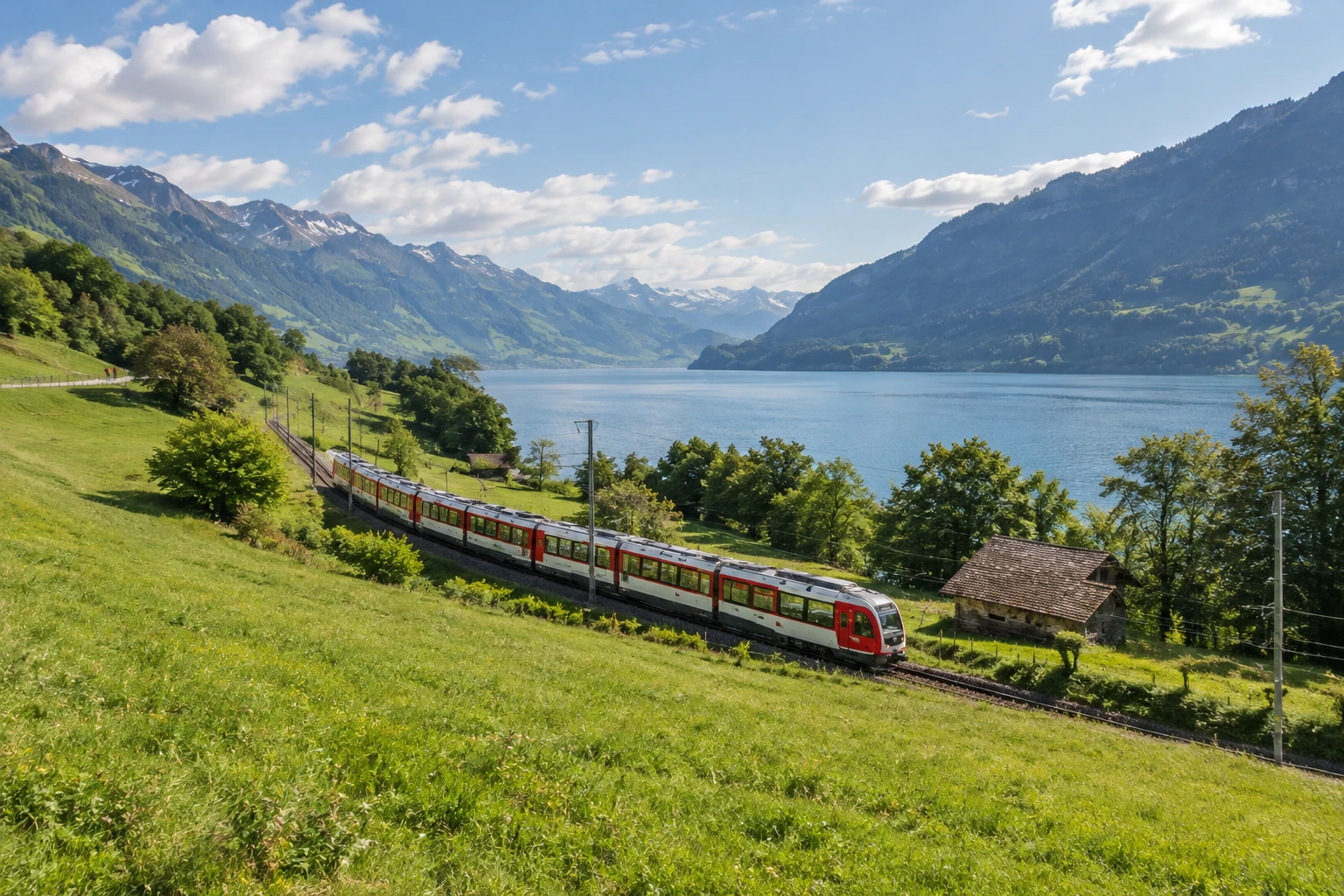
Zentralbahn train that links Lucerne to Interlaken in about 1 hour 50 minutes, climbing the Brünig Pass at 1,008 m and passing Lakes Sarnen, Lungern and Brienz.
To choose before you go
The details of each tour (where it leaves from, what it includes, the best time) are in the complete guide.
Get your questions answered
The guide's itineraries cover 3, 5 and 7 days: in 3 days, old town, lake and Pilatus; Luzern and the mountains in 5 days; Lucerne and the mountains in 7 days, with two nights in Engelberg.
Arrival and old town. The overnight flight from Brazil arrives in the morning at Zürich. From the airport station (Zürich Flughafen), the train takes about 1 hour and 10 minutes to Luzern, usually direct. Drop off your luggage and visit Luzern’s old town: Kapellbrücke, Wasserturm, the Altstadt squares and the Spreuerbrücke. In the late afternoon, if it’s April to October, go up to the Museggmauer. Turn in early because of the time difference.
It generally rains less from January to March and in November. The rainiest months are usually from May to August. The guide covers each month, with the weather and what changes on the tours.
To plan