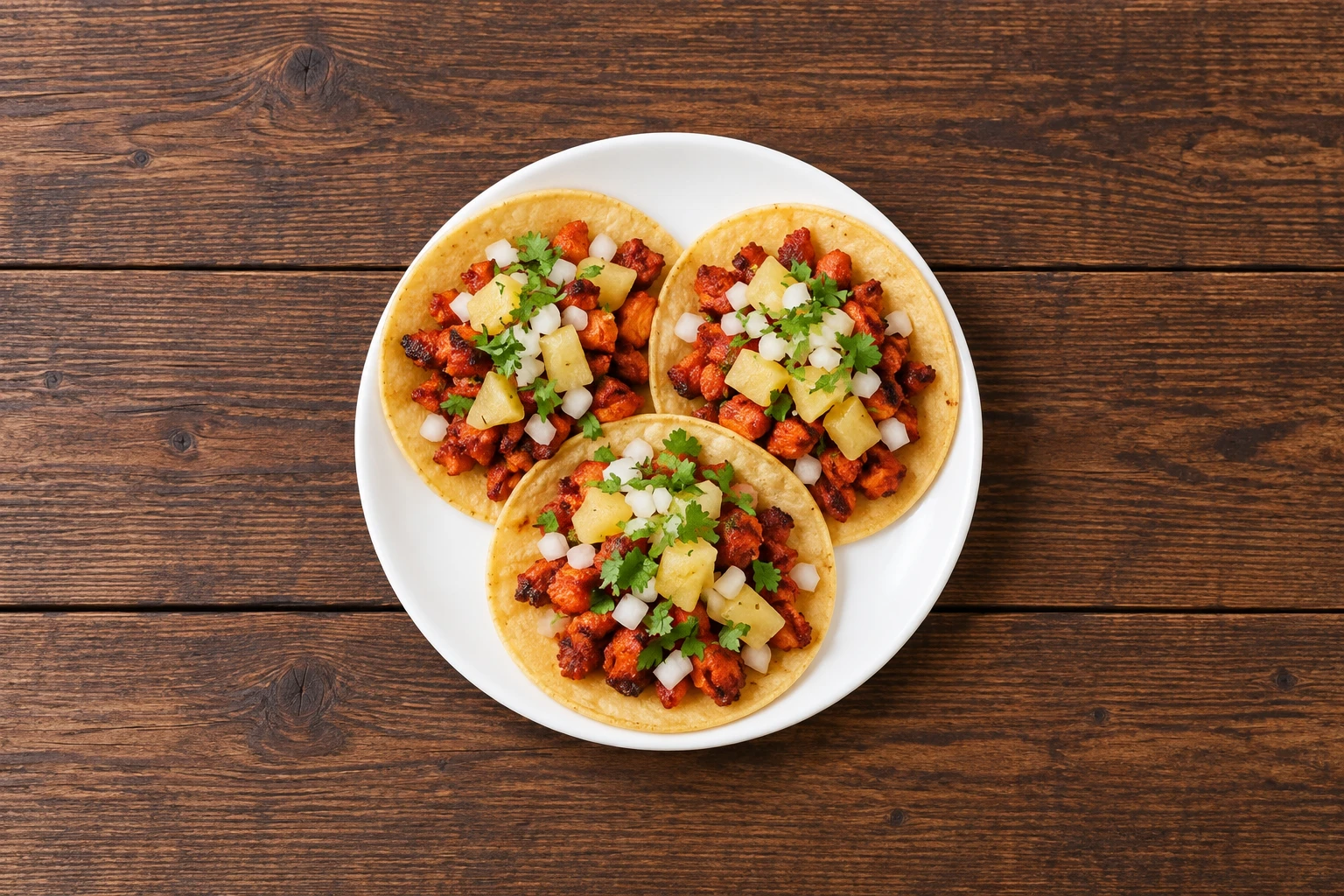
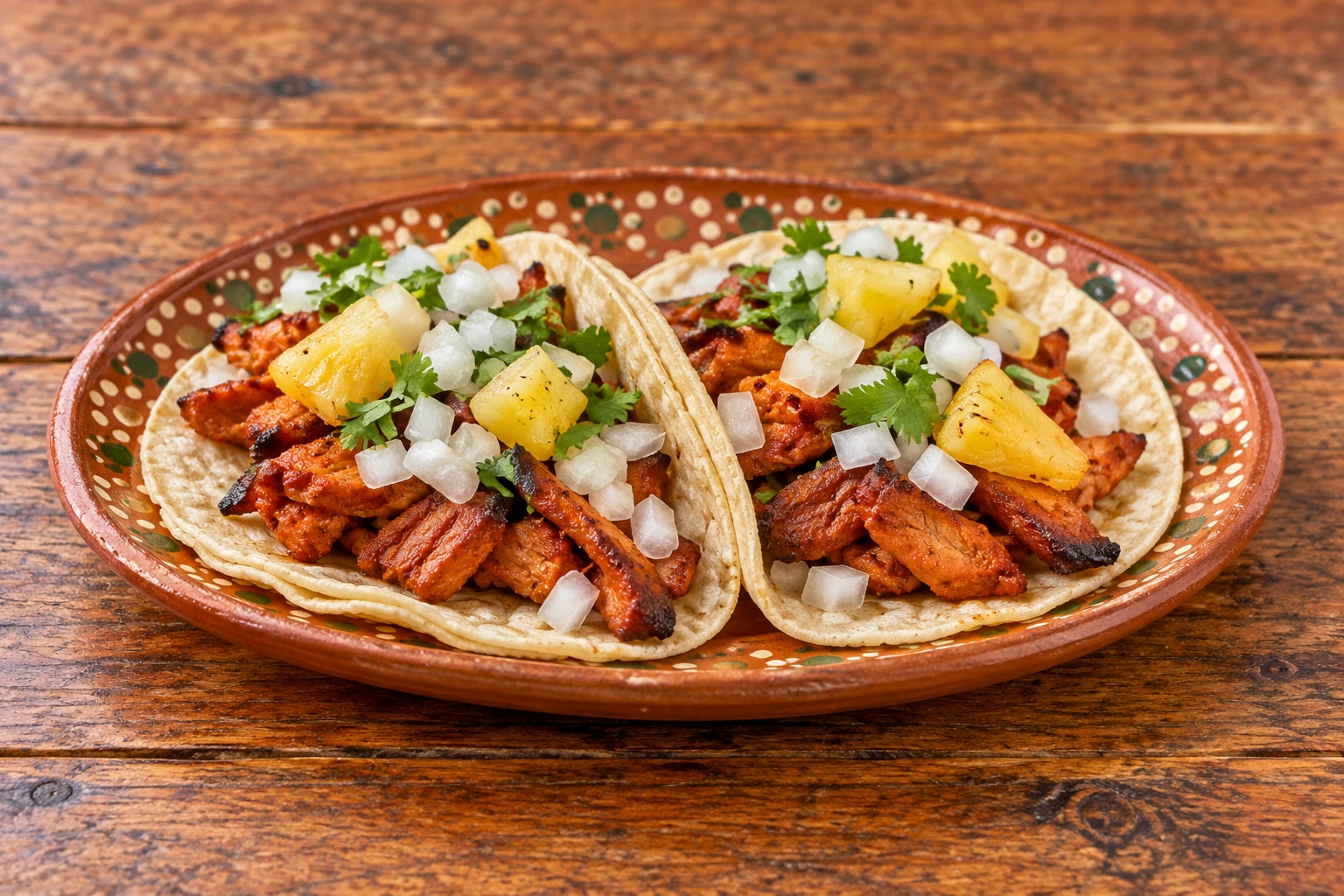
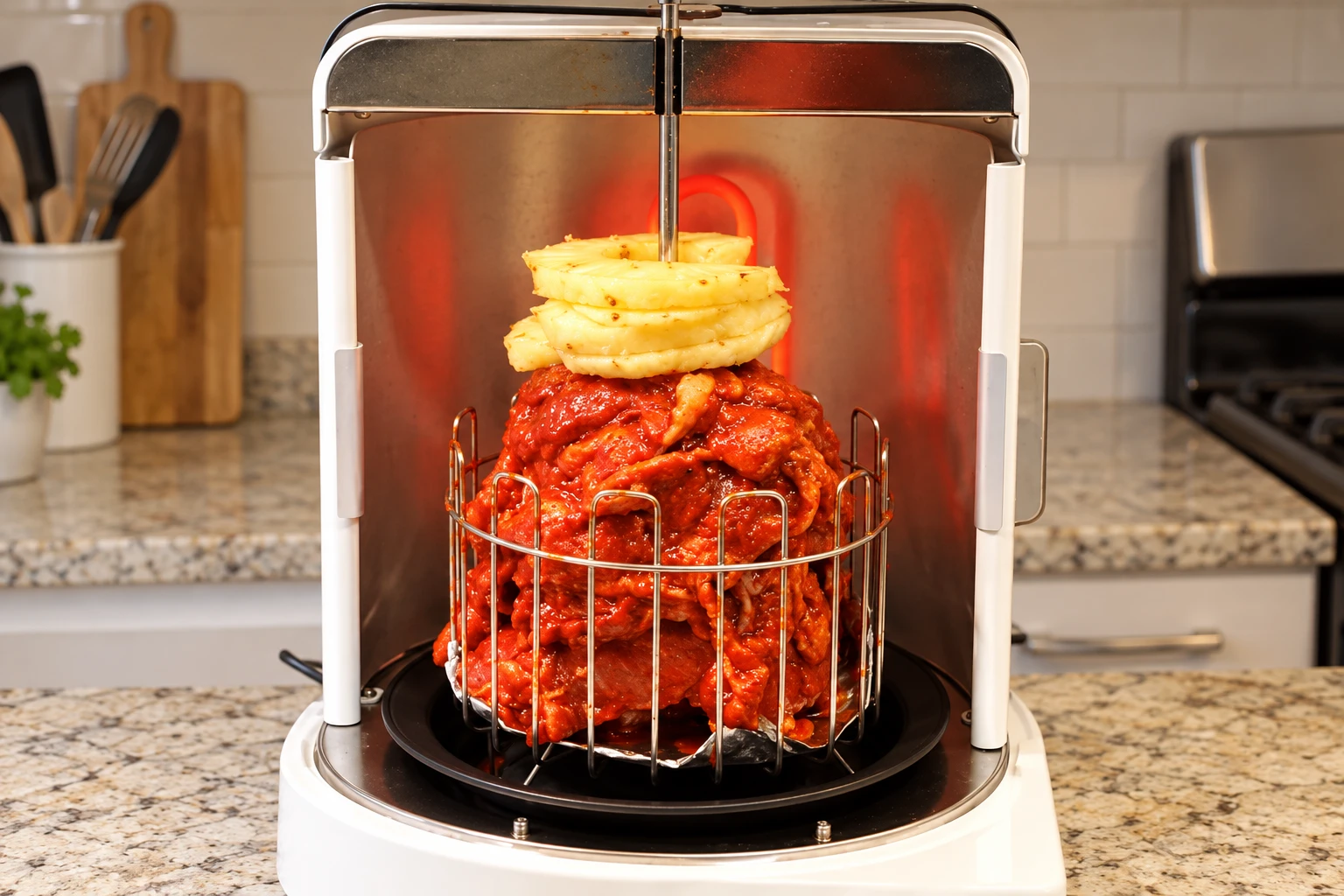
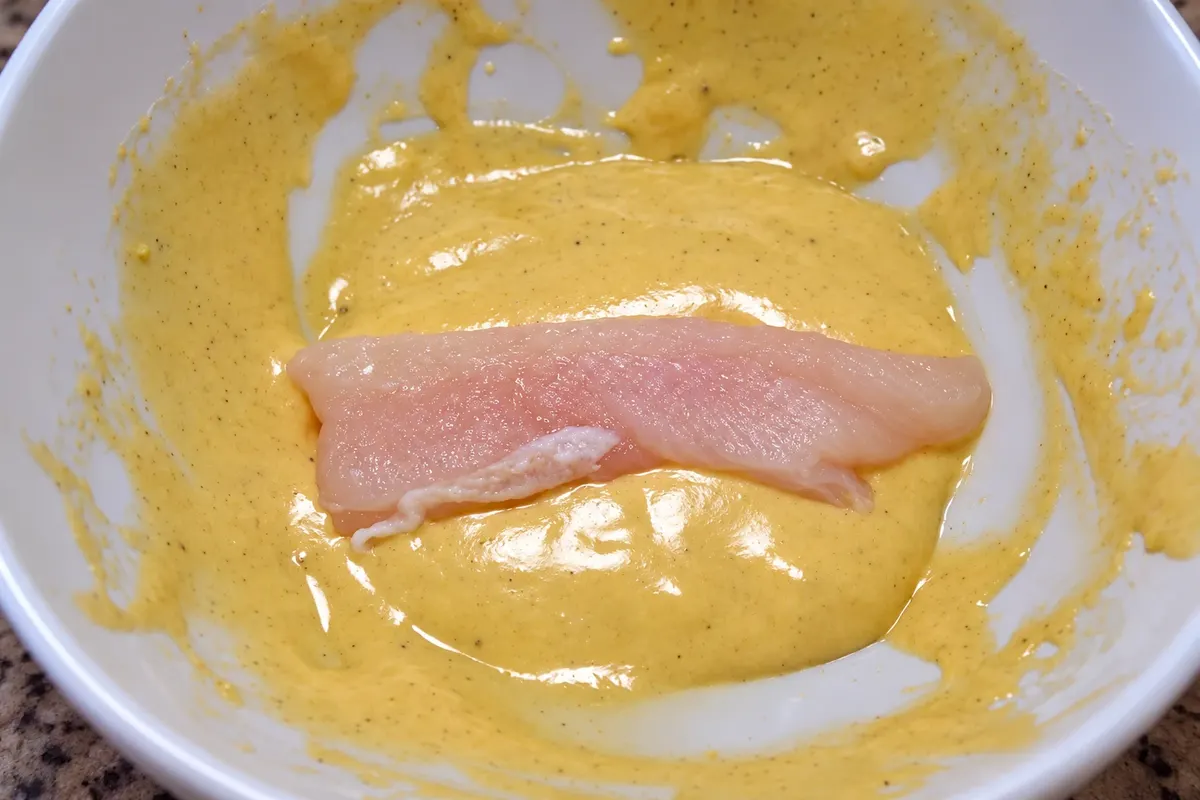
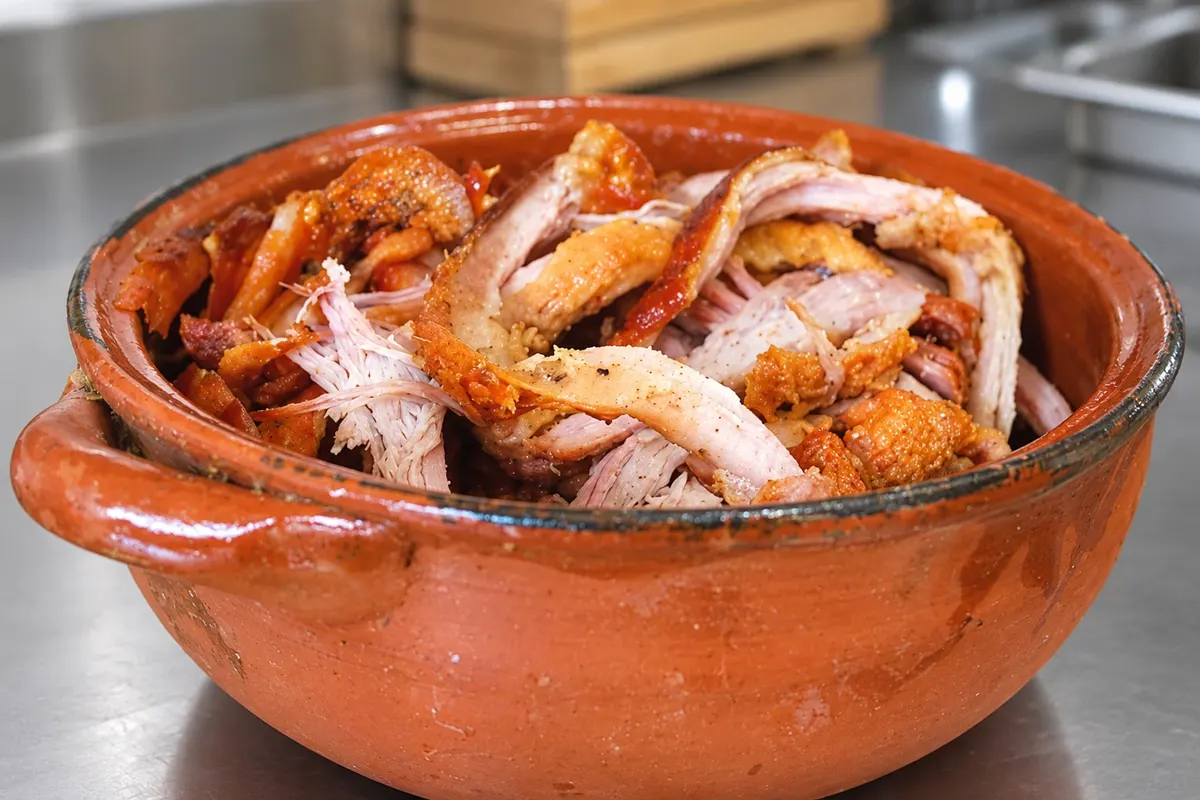
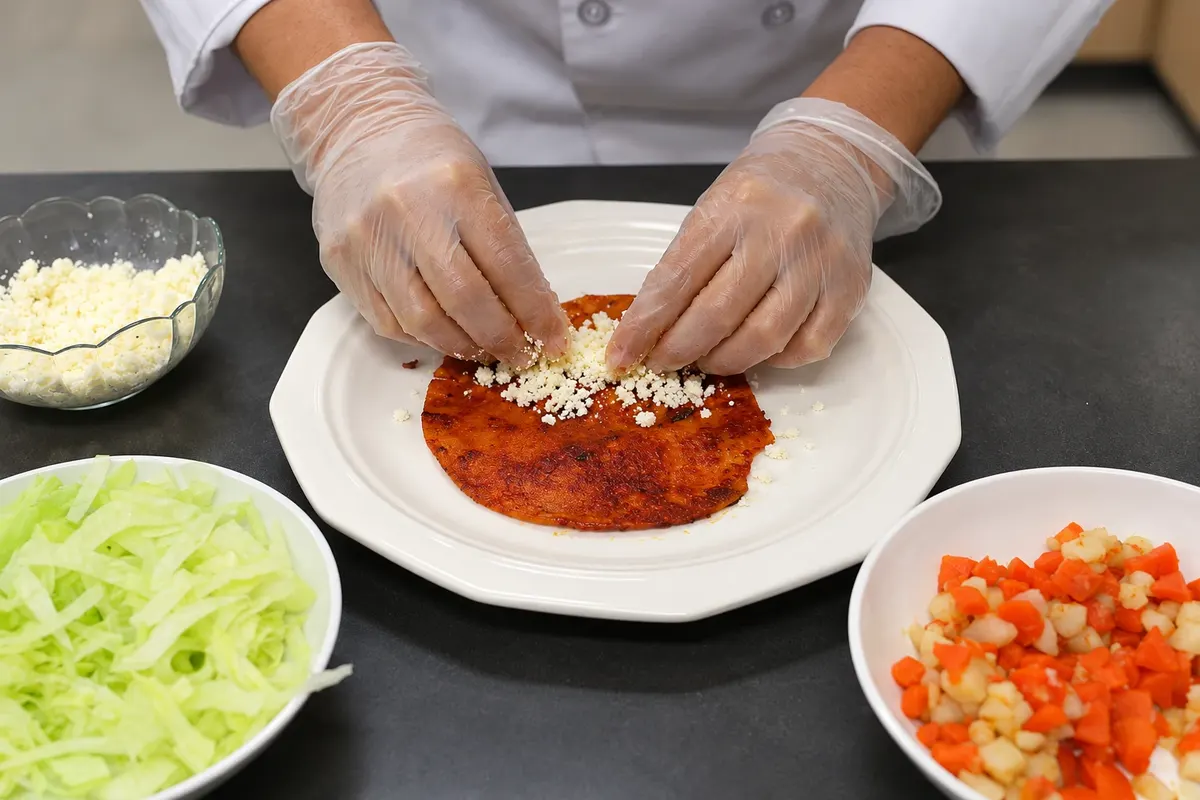
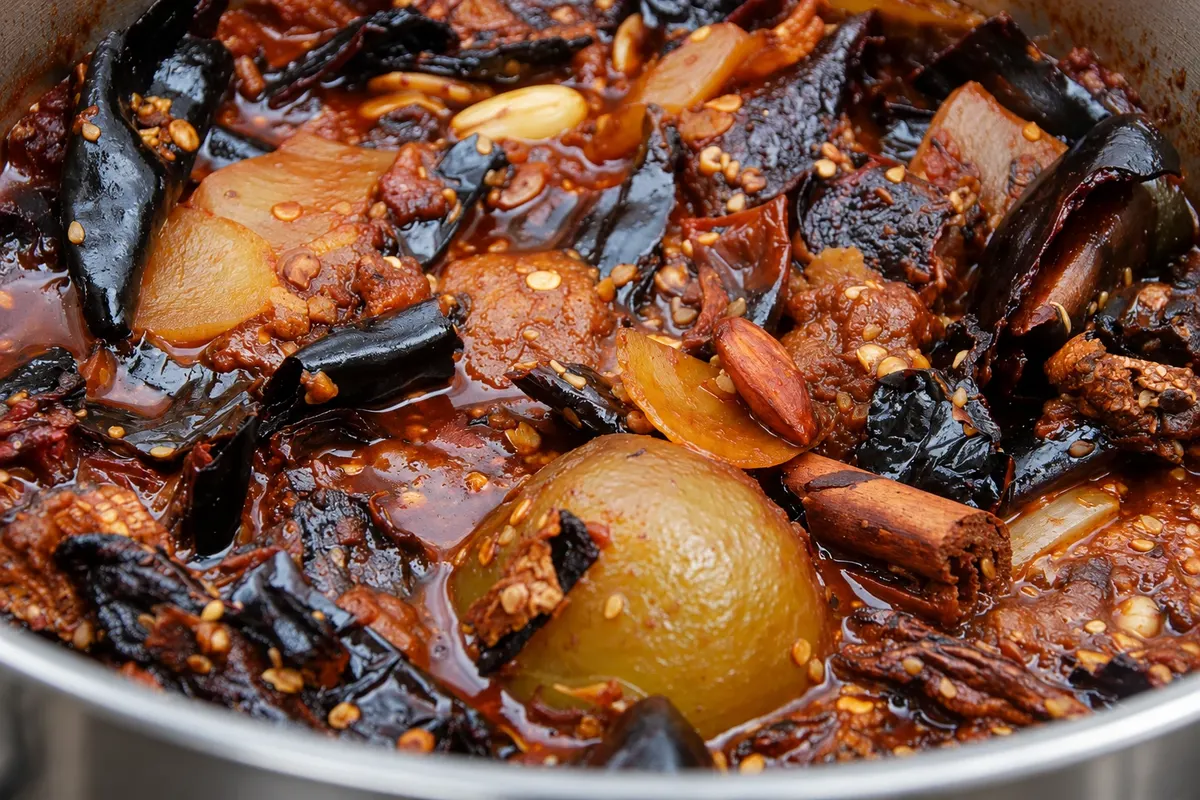
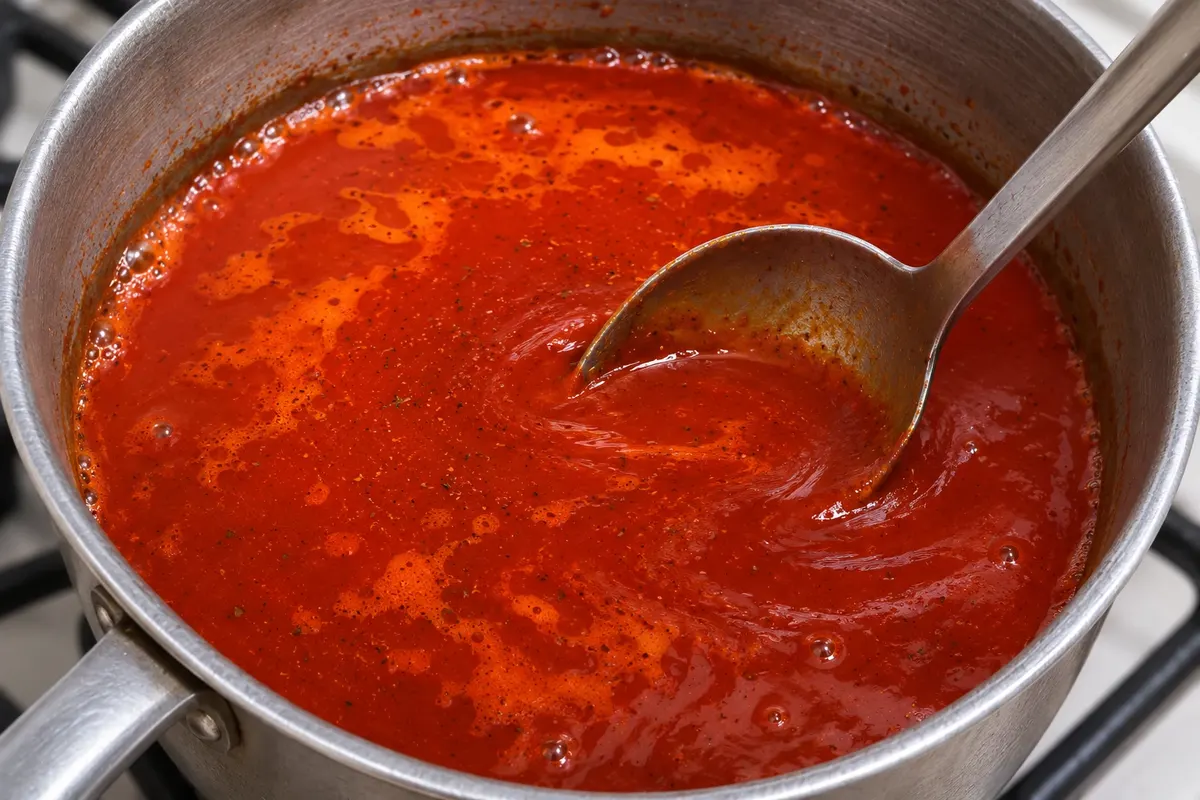
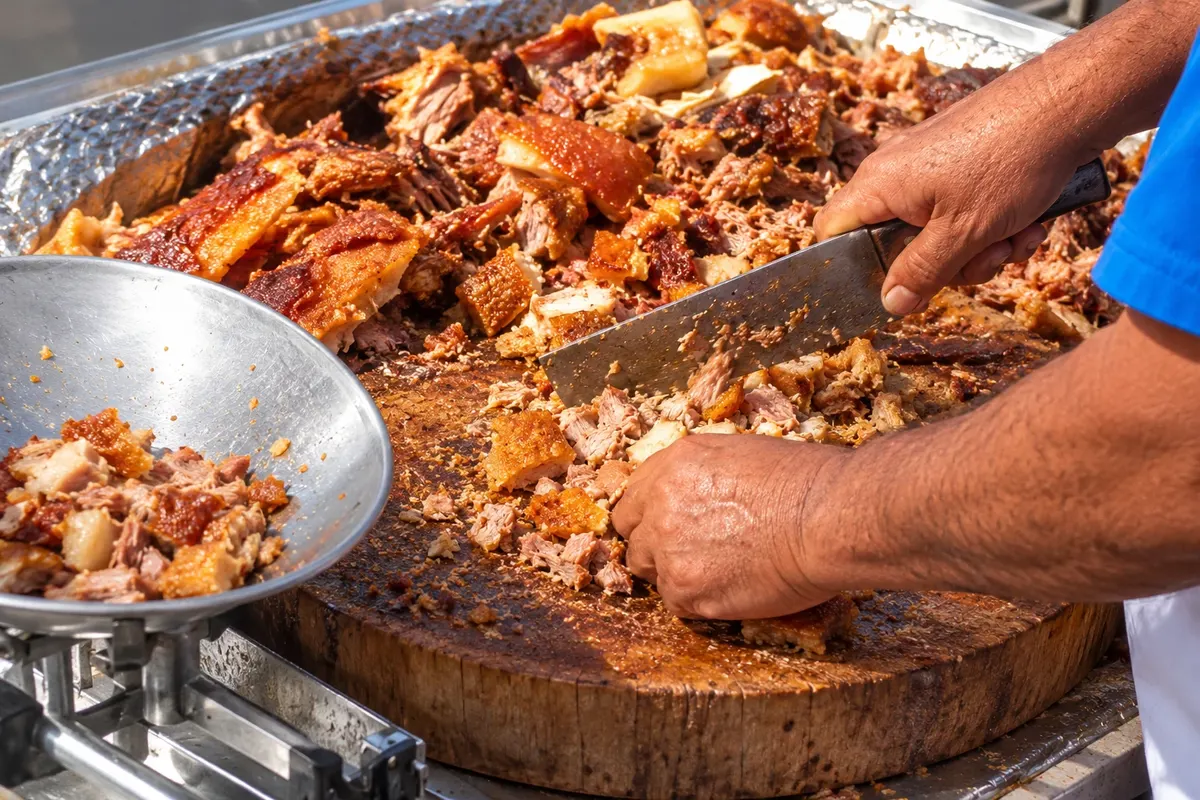
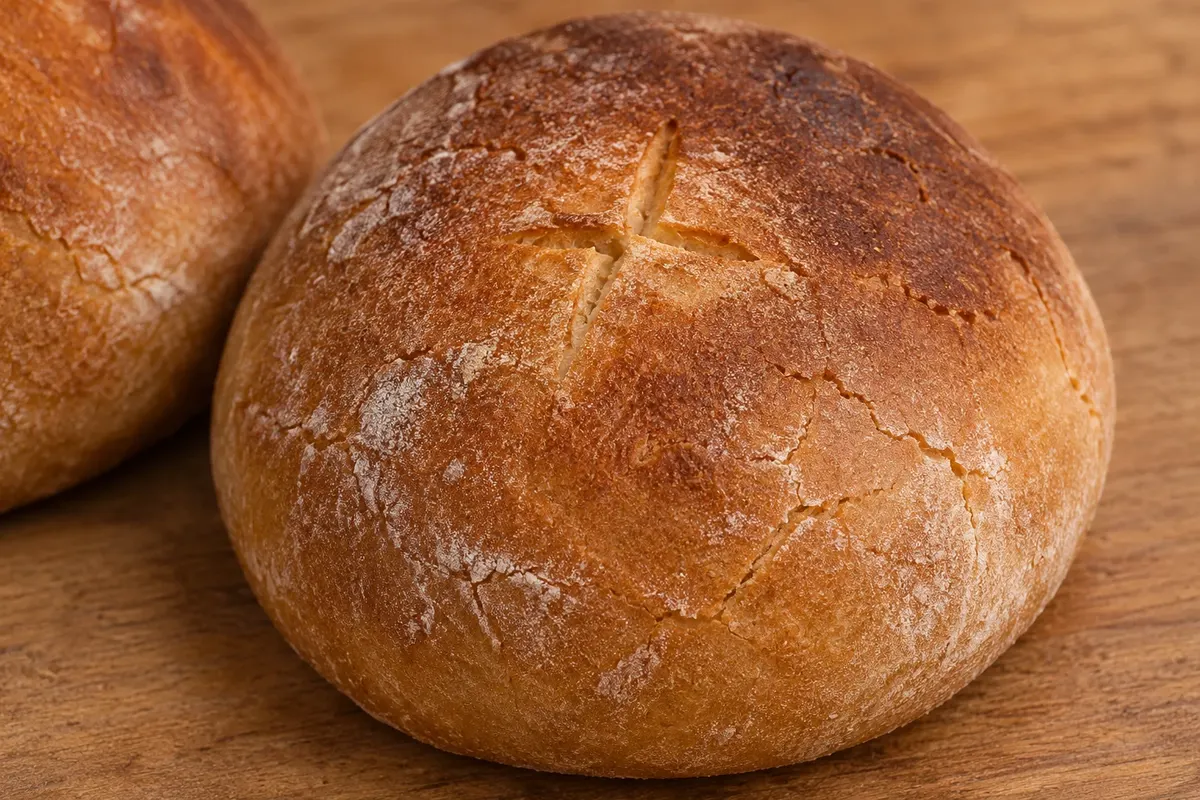
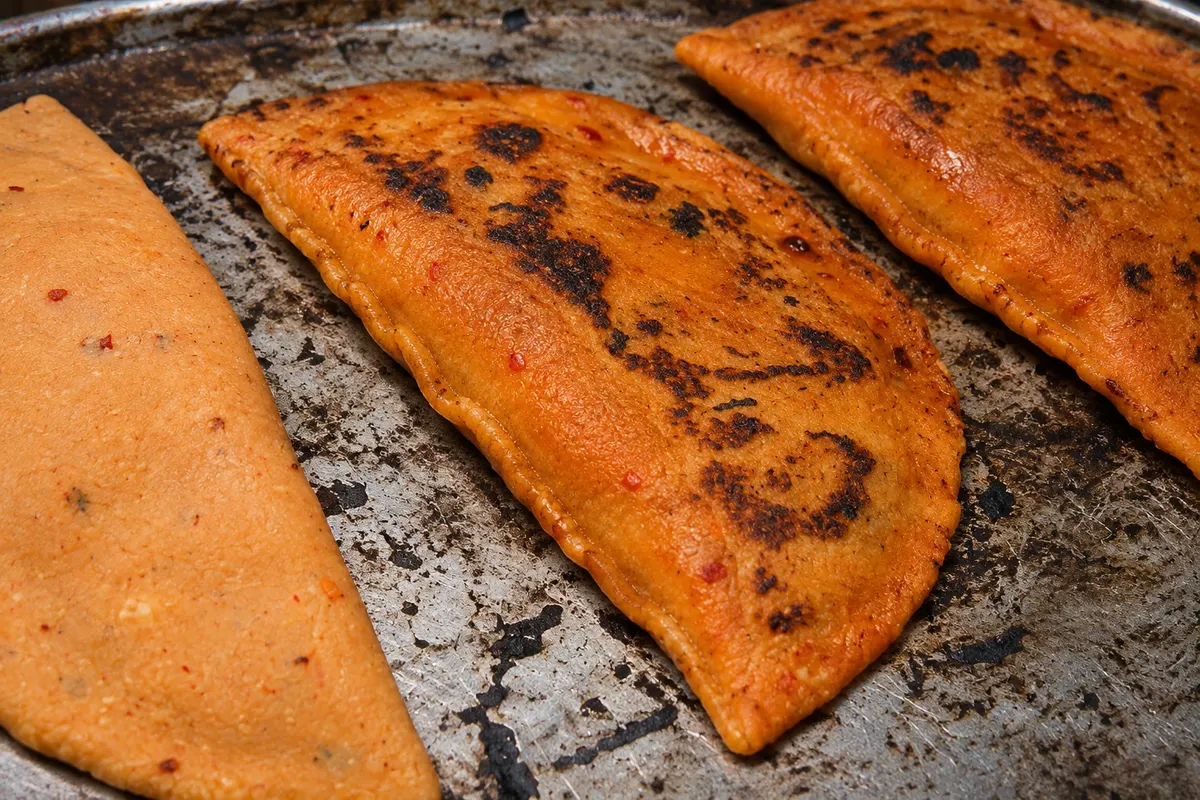
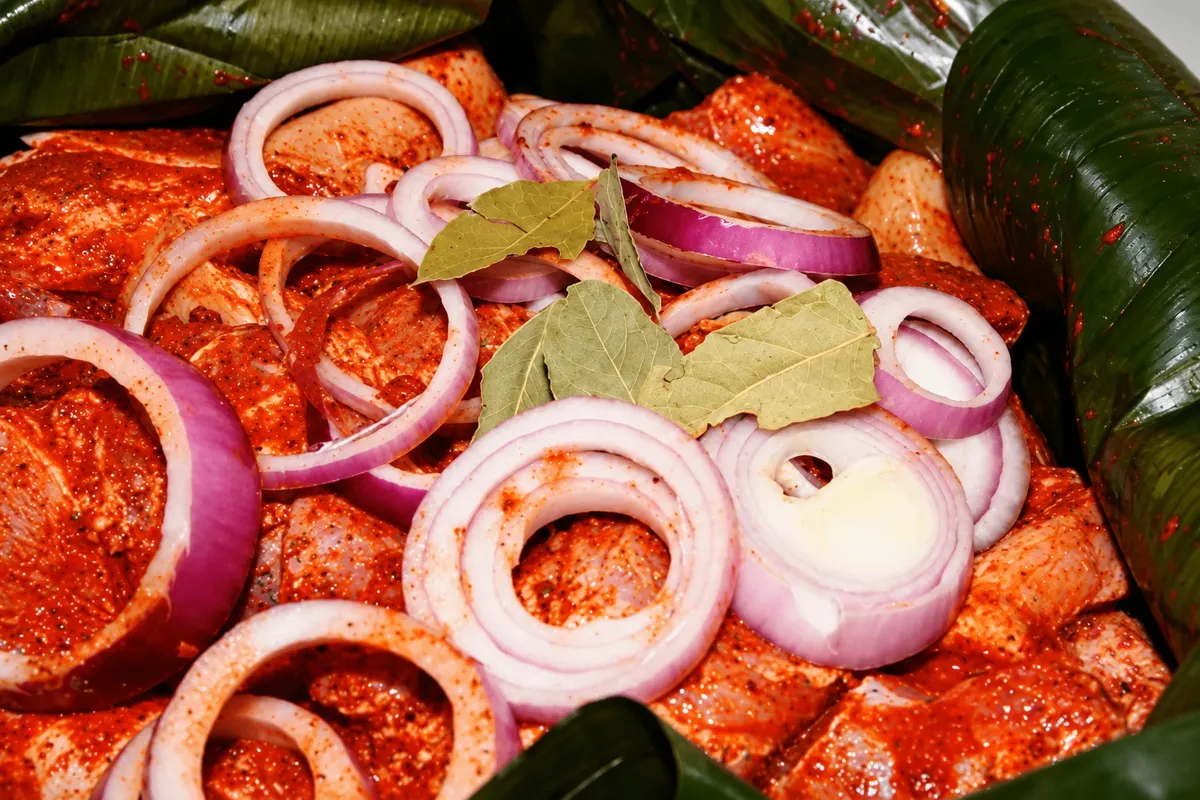
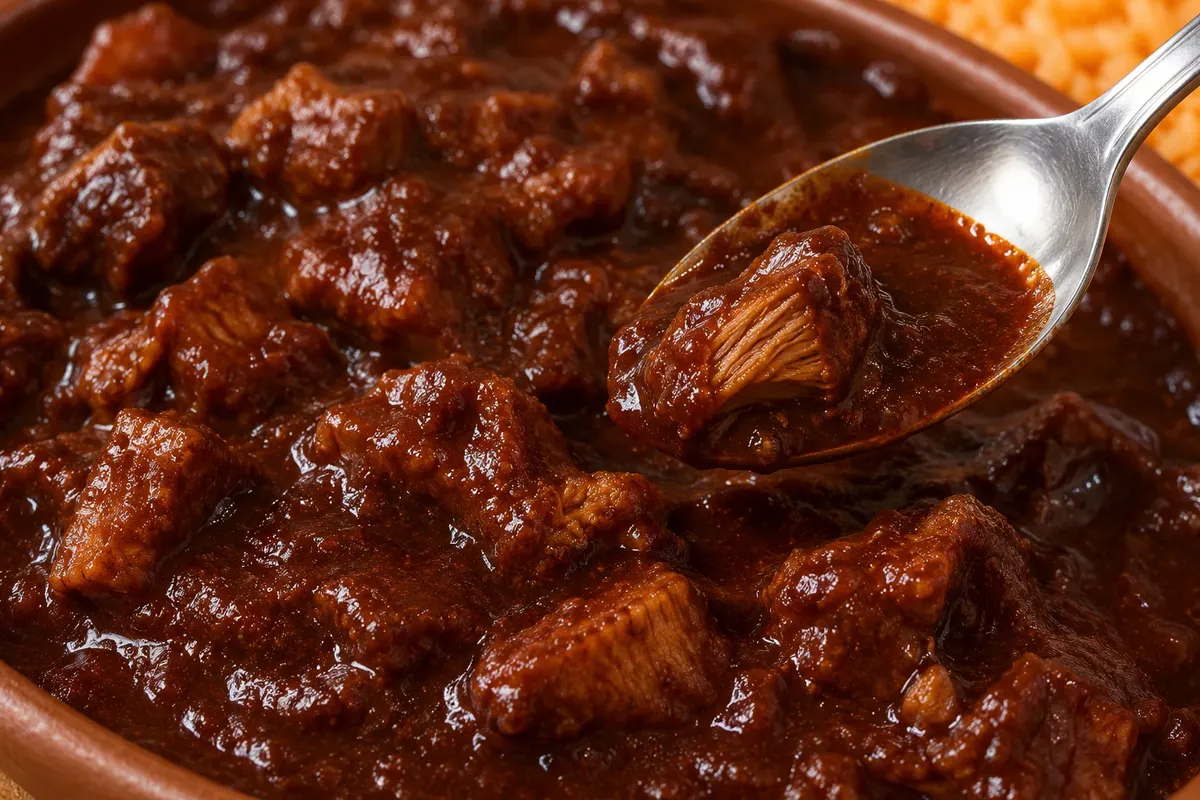
Tacos al pastor are made from thin slices of pork marinated in a dried-chile adobo and stacked on a vertical spit called a trompo. The spit turns in front of a heat source; the taquero slices off the outer, browned layer directly onto small corn tortillas, and often tops them with a piece of pineapple roasted on the top of the trompo.
The vertical-spit technique arrived in Mexico with immigrants from the former Ottoman Empire, especially Lebanese, in the early decades of the 20th century. In the 1920s and 1930s, in Puebla, they began selling what were called tacos árabes: spit-roasted meat served in an Arab bread similar to pita.
In Mexico City, from the 1950s and 1960s, local taquerías swapped lamb for pork, added the chile adobo and started serving the meat in corn tortillas with pineapple. Two taquerías in the capital claim to have created this version; sources do not agree, and the safest statement is that it originated in Mexico City taquerías of that era.
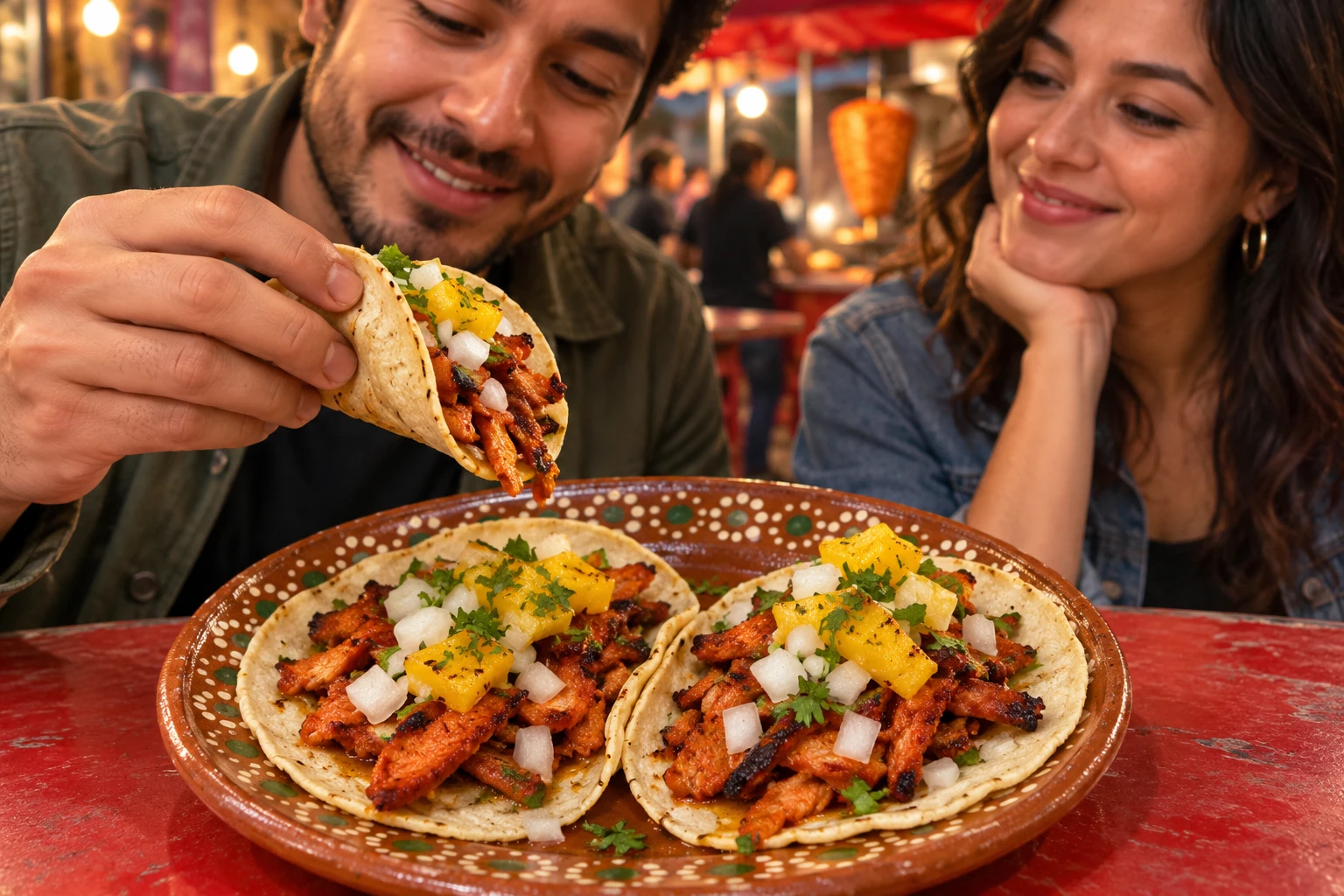
Today tacos al pastor are found across the city, from street stalls to neighborhood taquerías, and have spread throughout the country. In the north, a similar preparation is called tacos de trompo or adobada. It’s nighttime, stand-up food, ordered by the piece at the trompo.


 Brazilija
 Antarktika
 Argentina
 Bolivija
 Čile
 Kolumbija
 Ekvator
 Gvajana
 Francoska Gvajana
 Falklandski otoki (Malvini)
 Paragvaj
 Peru
 Surinam
 Urugvaj
 Venezuela
 Nemčija
 Avstrija
 Belgija
 Hrvaška
 Danska
 Slovaška
 Slovenija
 Španija
 Finska
 Francija
 Grčija
 Nizozemska
 Madžarska
 Irska
 Islandija
 Italija
 Luksemburg
 Norveška
 Poljska
 Portugalska
 Združeno kraljestvo
 Češka
 Švedska
 Švica
 Turčija
 Bermudi
 Kanada
 Združene države Amerike
 Grenlandija
 Sveta Peter in Mihael
 Dominikanska republika
 Japonska
 Južnoafriška republika
 Egipt
 Avstralija
 Fidži
 Nova Zelandija
 Papua Nova Gvineja