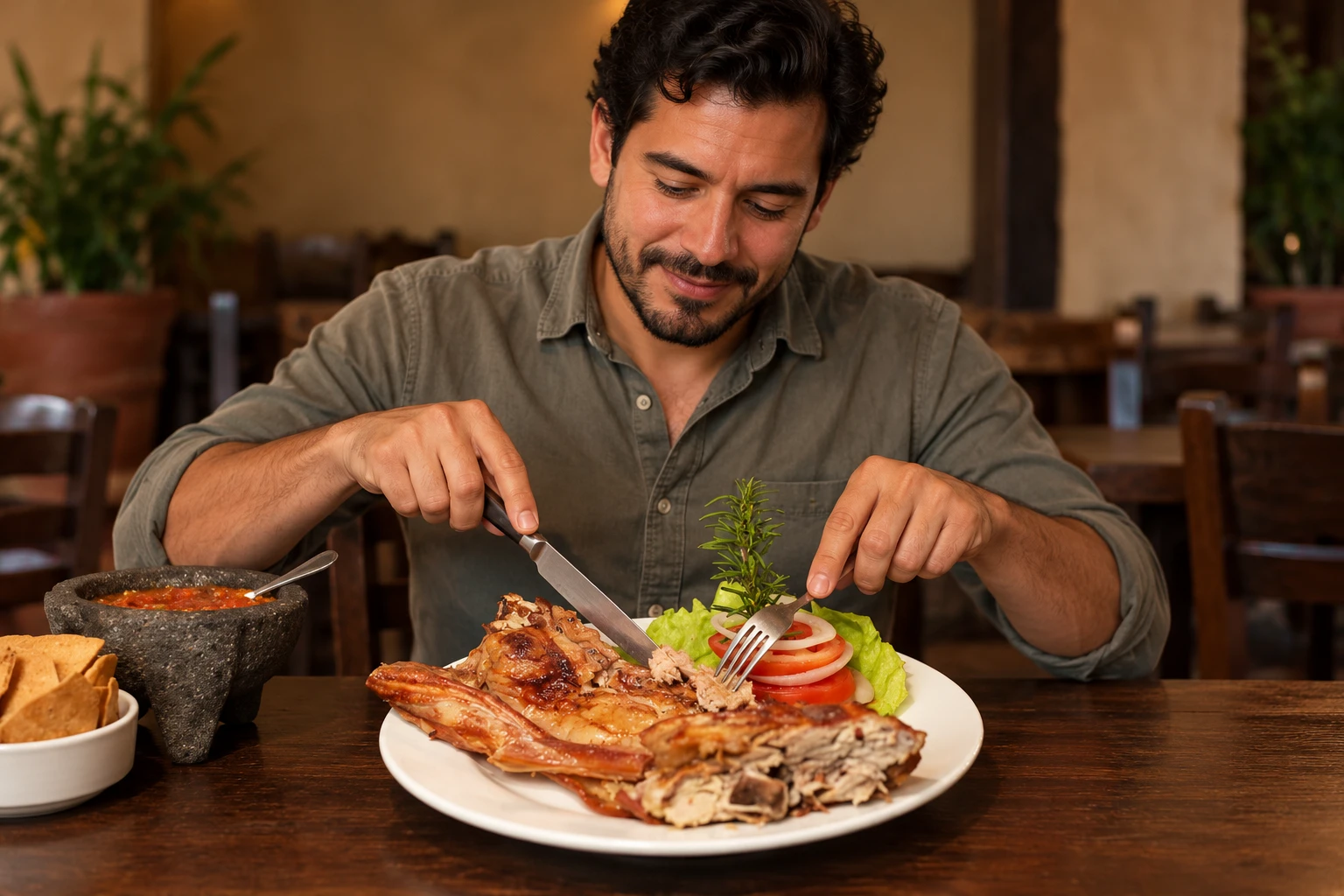
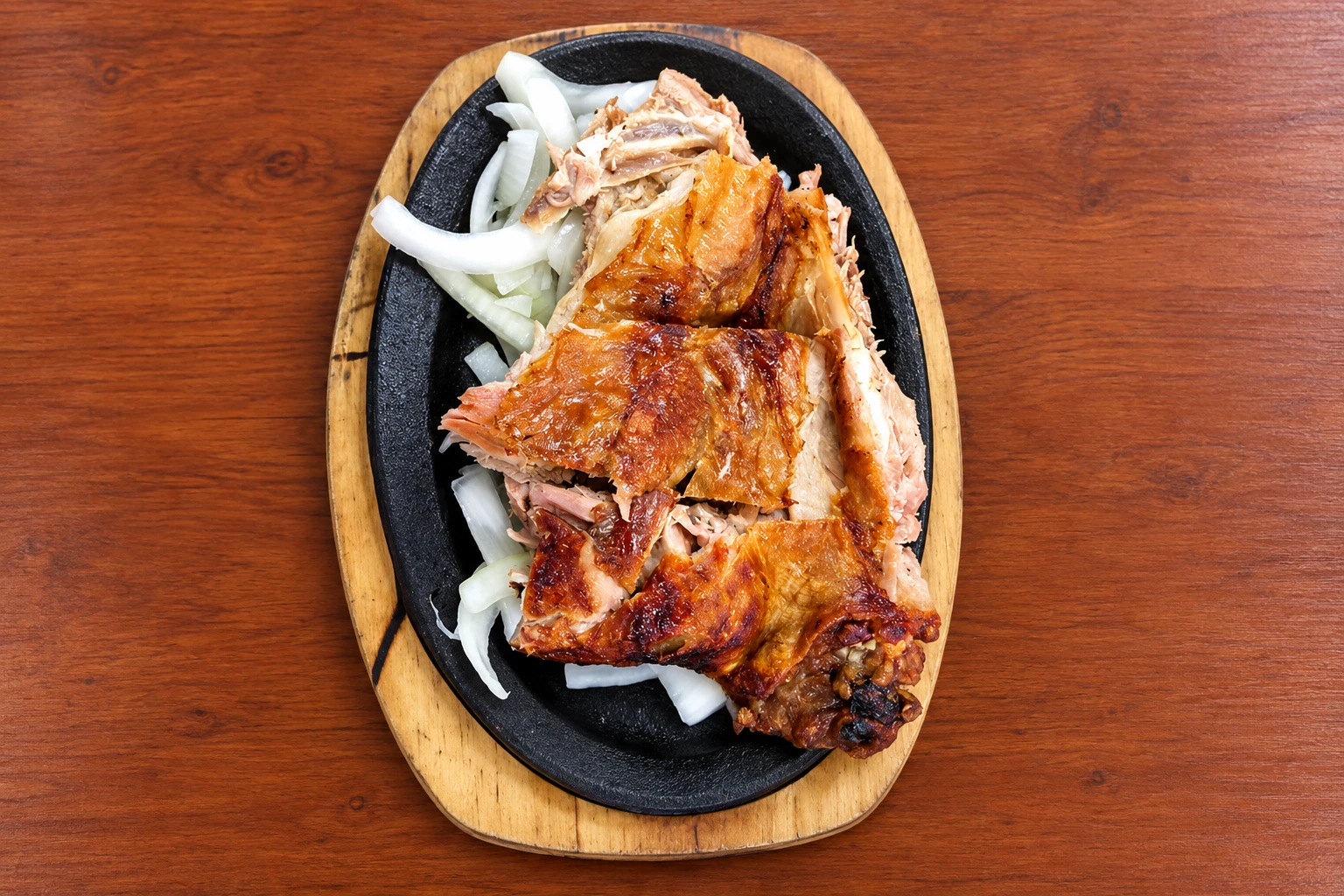
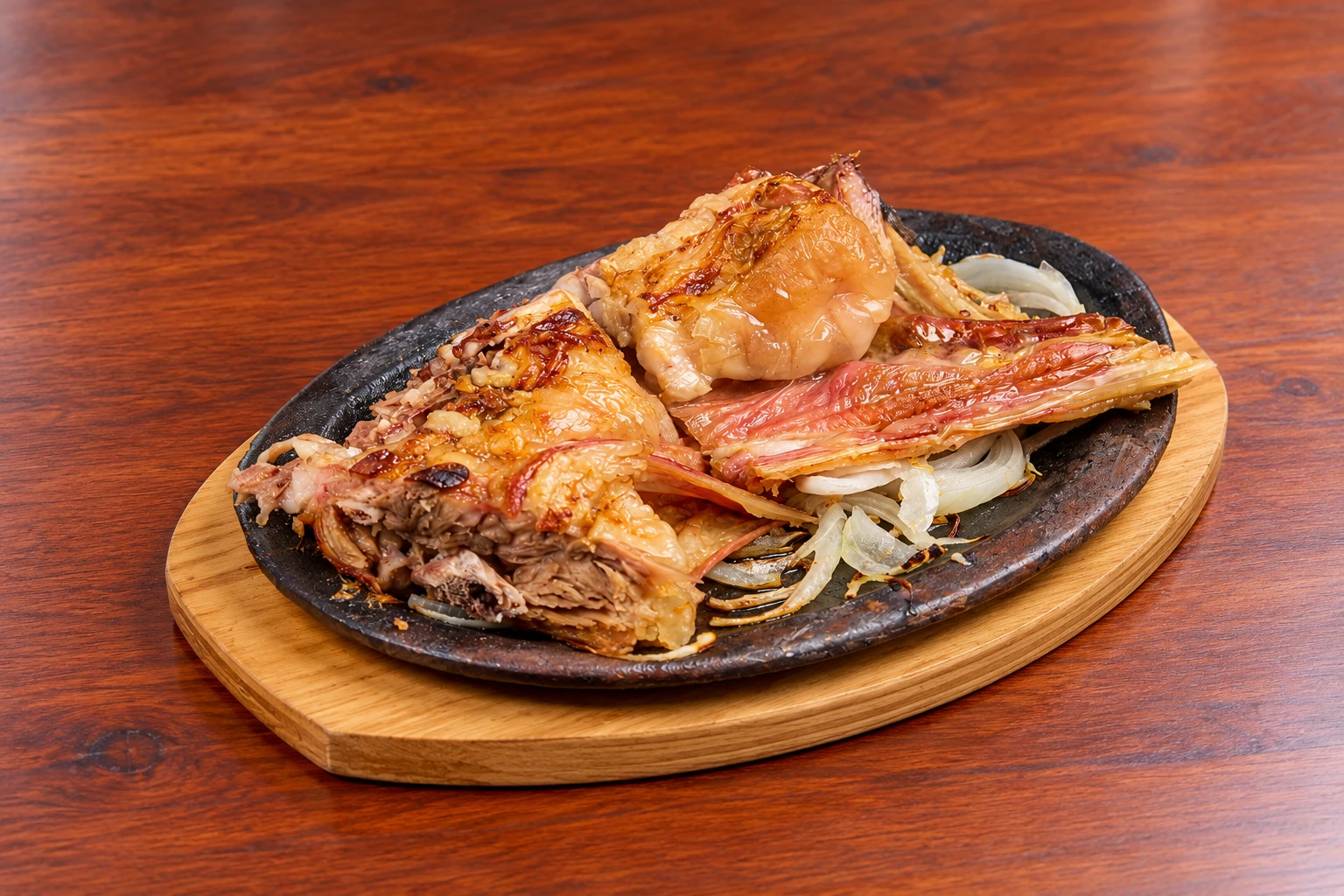
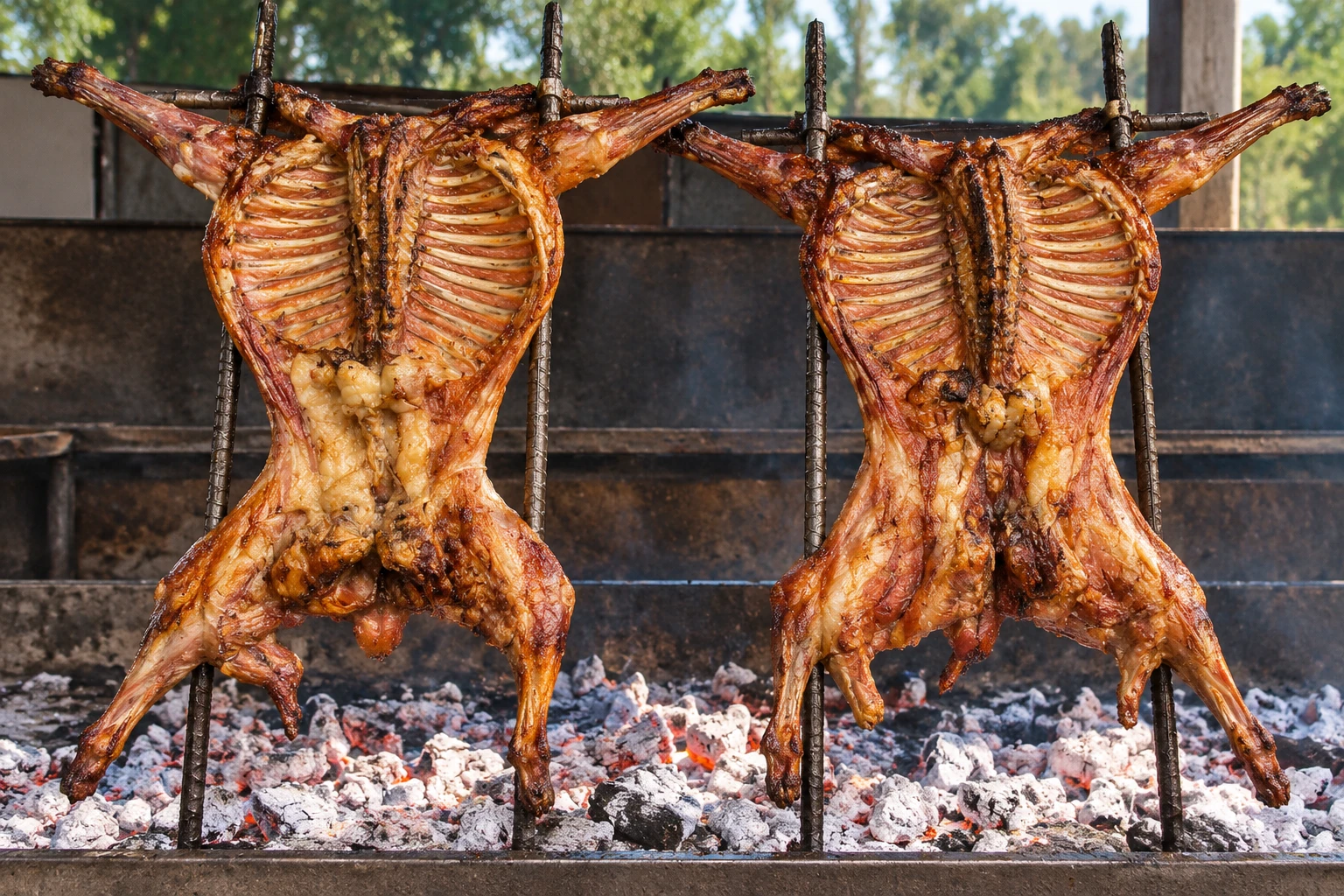
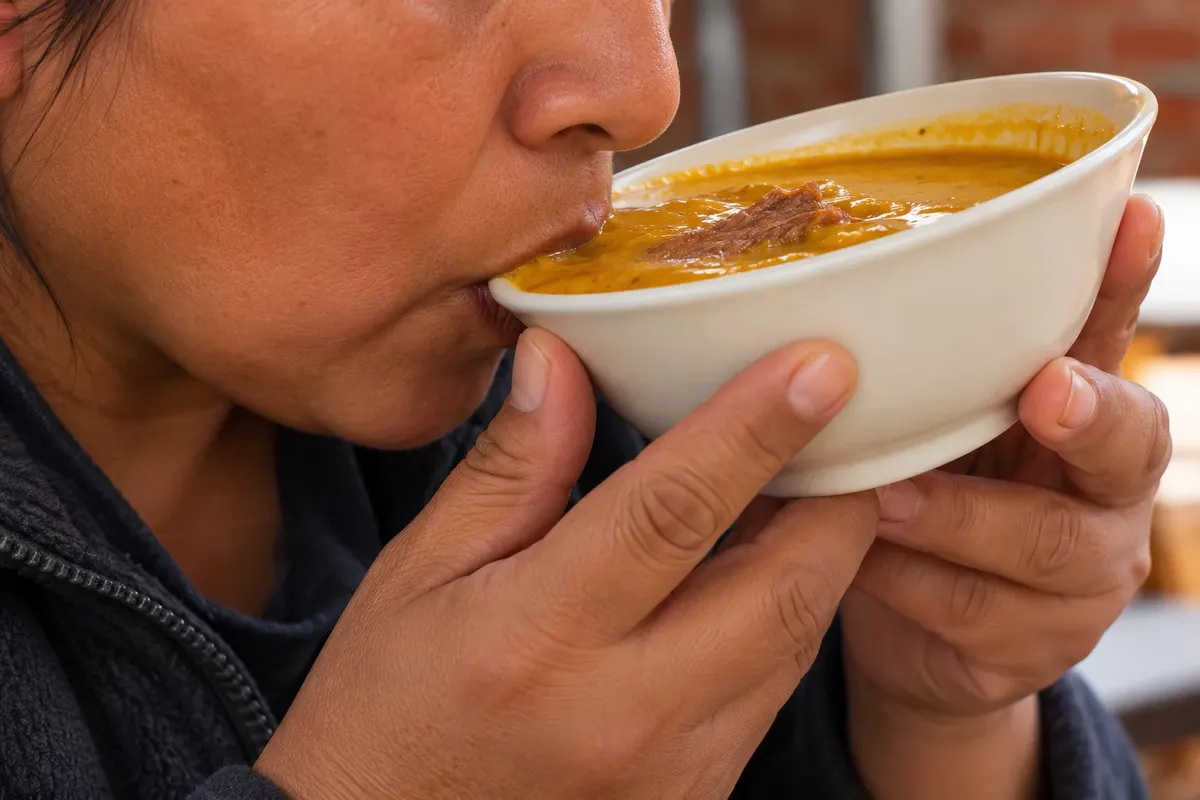
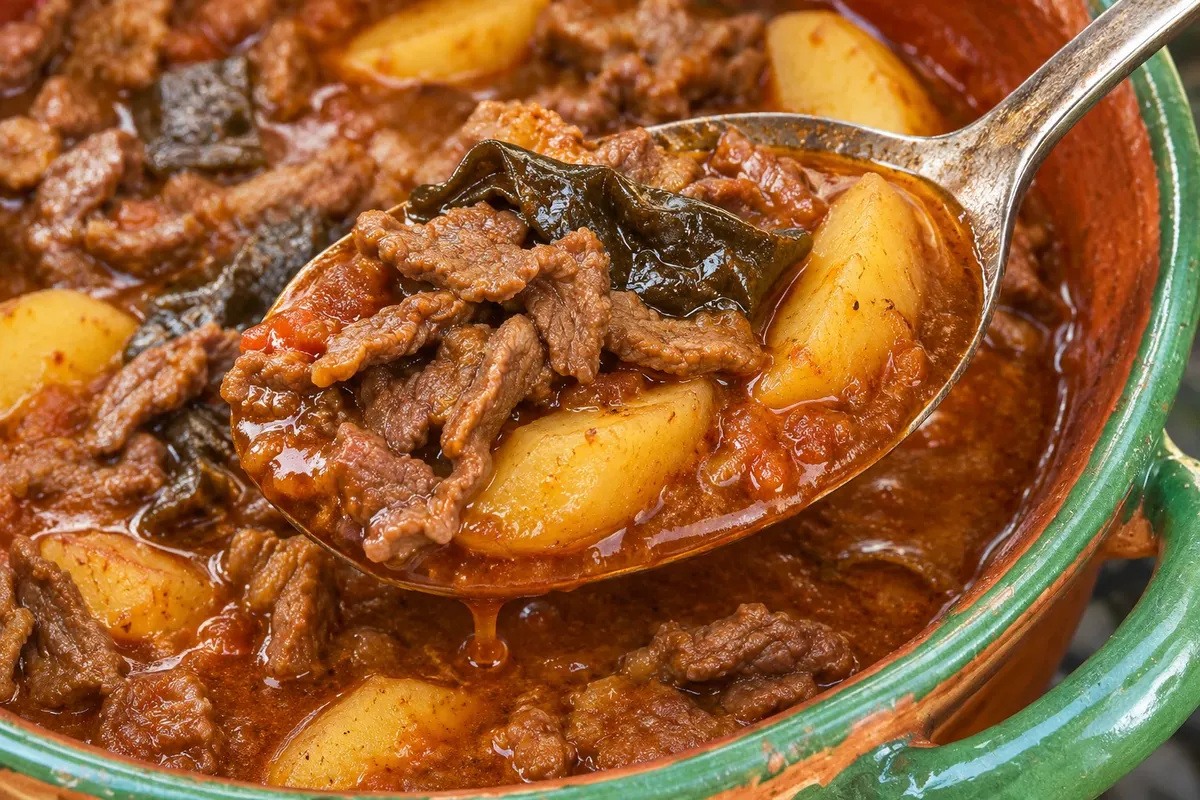
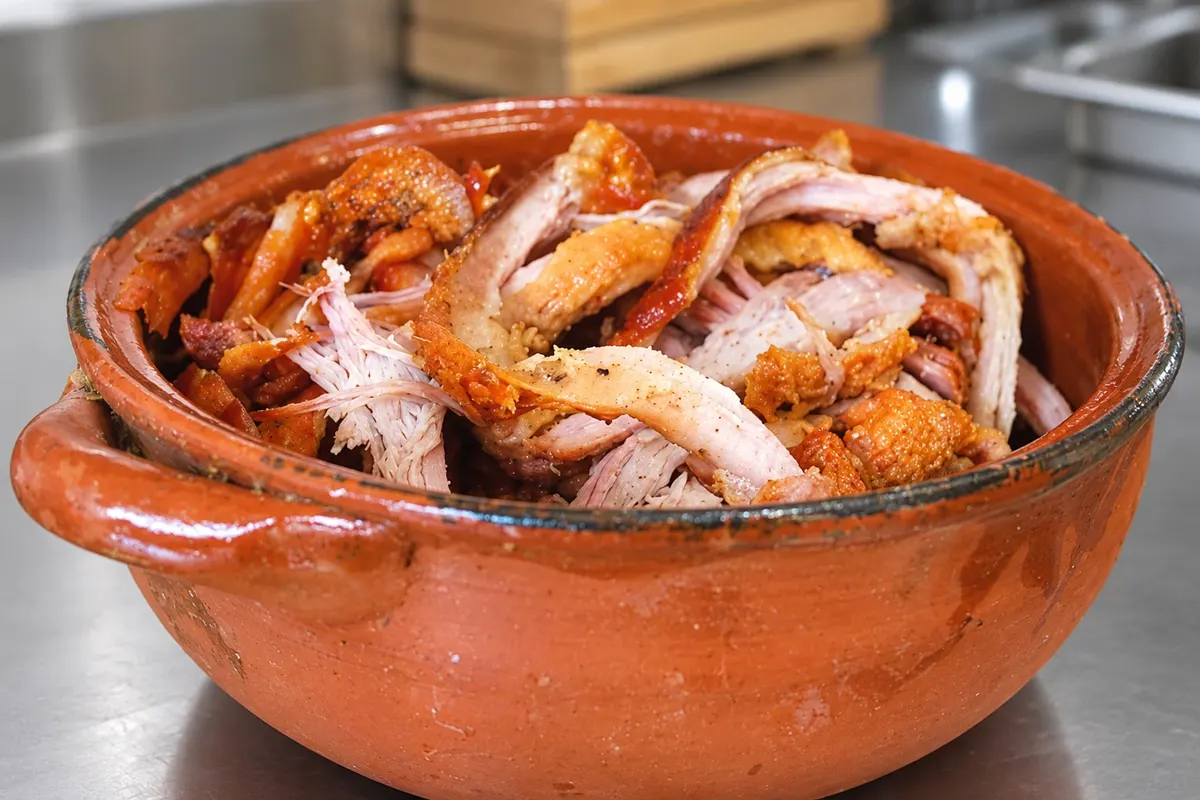
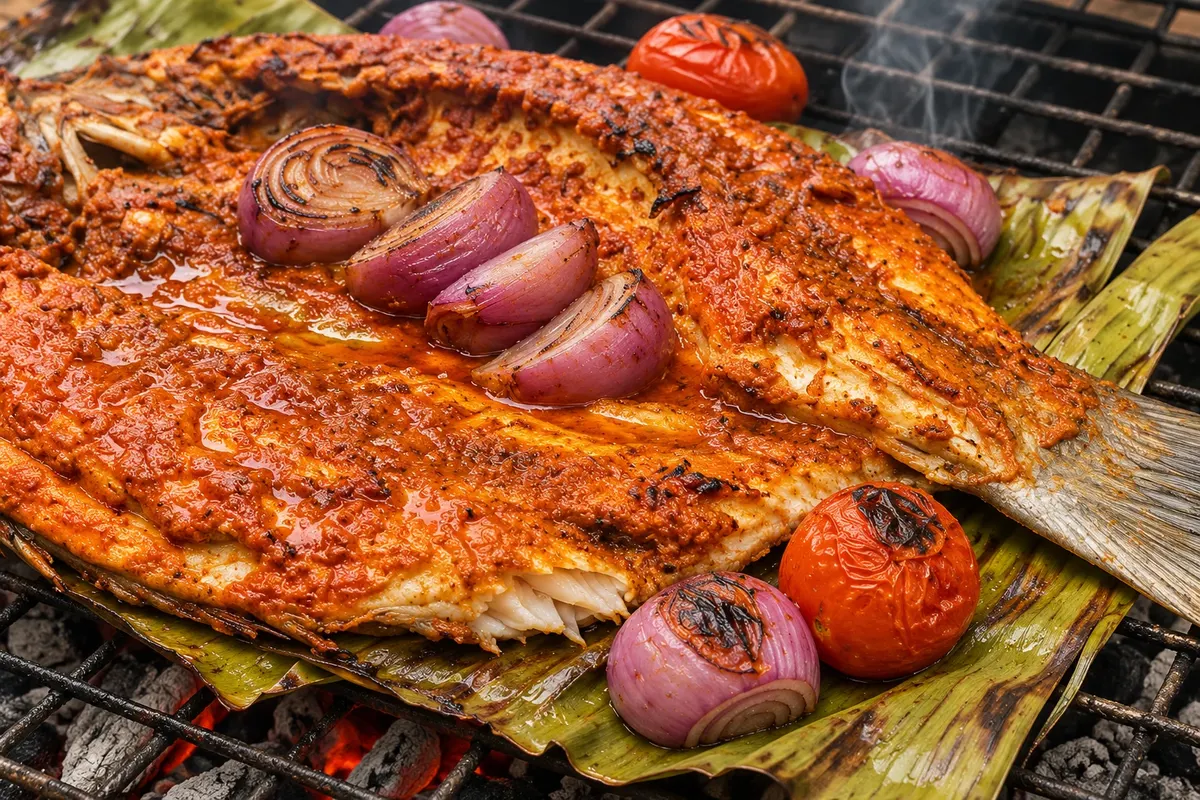
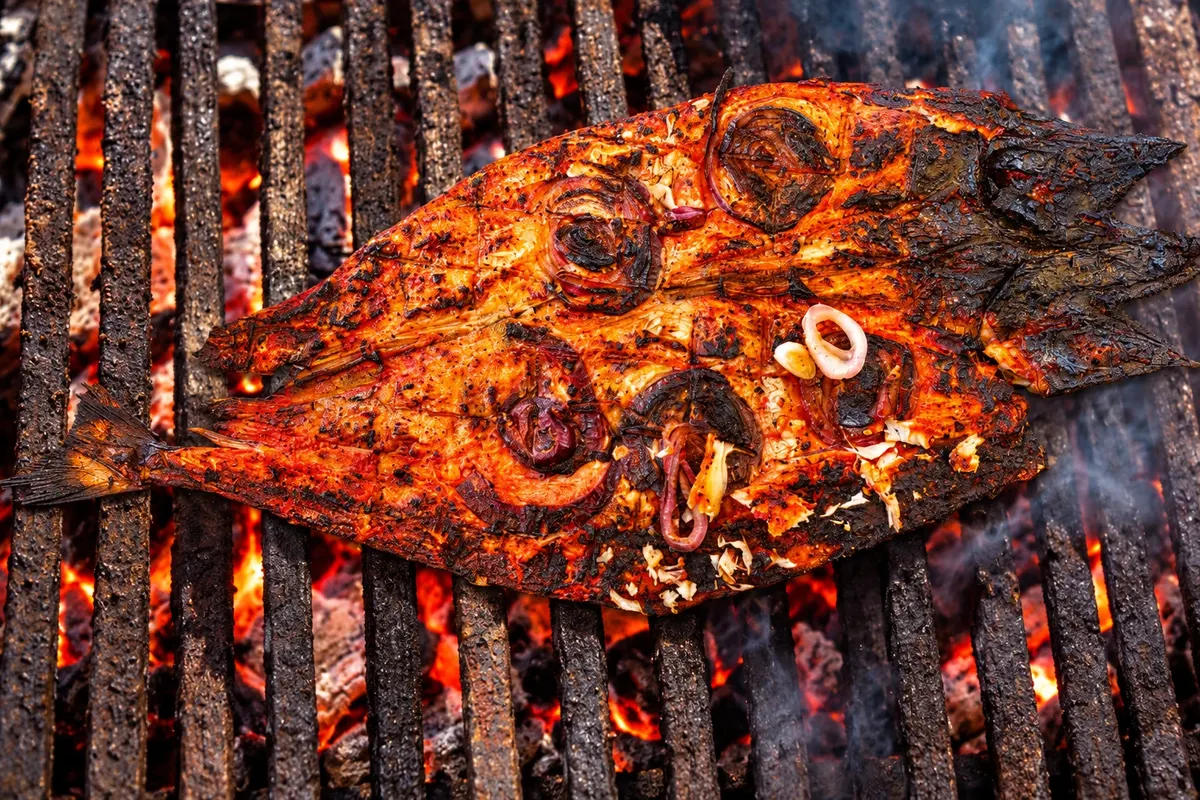
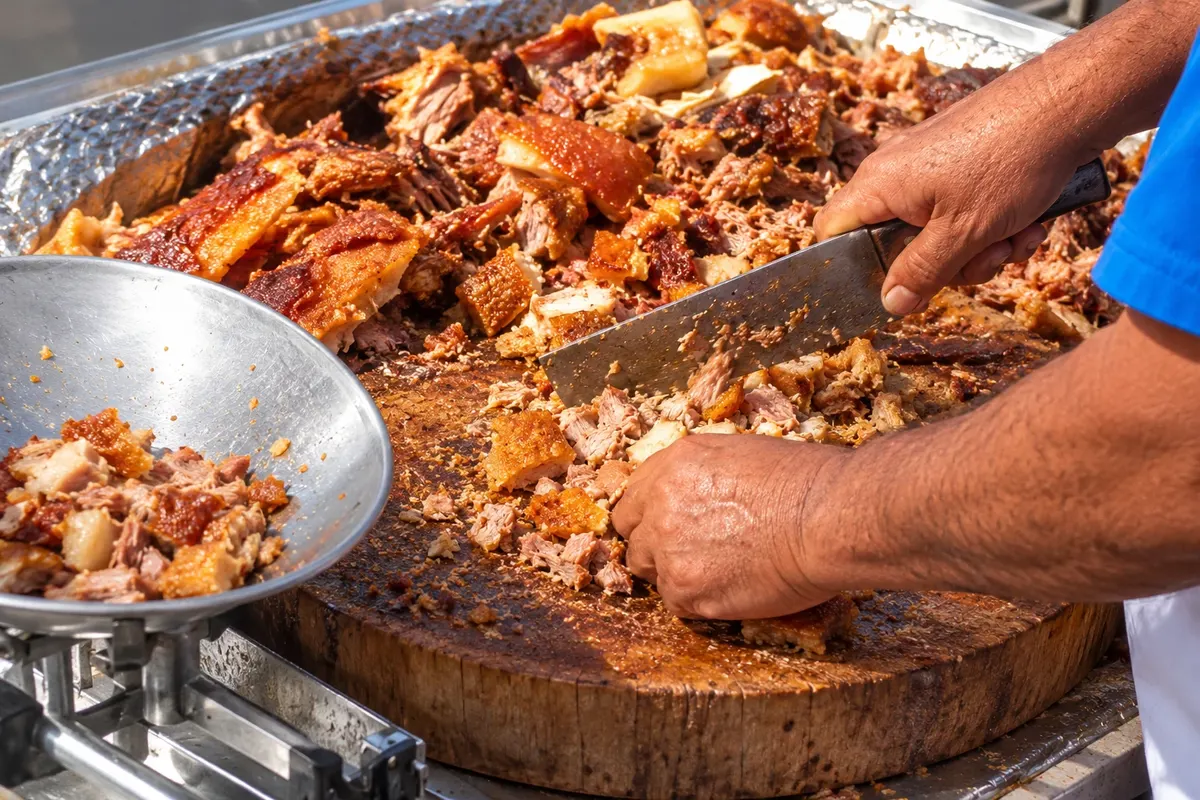
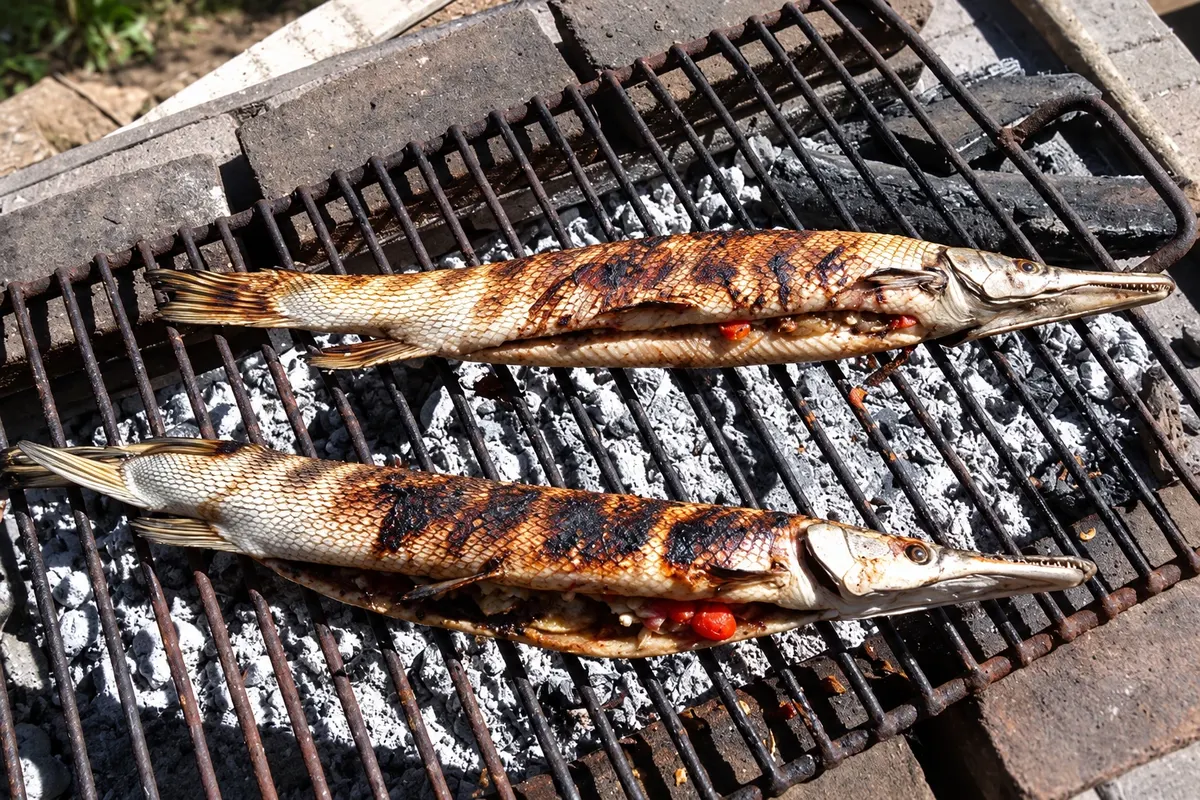
Cabrito al pastor is a young milk-fed goat, split open, seasoned with salt and impaled on a stake or iron rod, set upright beside the embers, from wood or charcoal. Slowly roasted for hours and turned from time to time, it develops a toasted skin and tender meat. Seasoning is minimal: the flavor comes from the meat and the fire.
The Nuevo León Secretariat of Tourism, together with the state committee for the protection of traditional gastronomy, includes cabrito al pastor on the state’s gastronomic routes, in the northern region, in Sabinas Hidalgo and other municipalities, and in the Monterrey metropolitan area. The routes describe it as an inheritance of ranching tradition and of the grilling techniques of the semi-arid lands.
It is said that goat raising and the taste for cabrito arrived with colonizers of the northeast of New Spain in the 16th century, among them families of Sephardic Jewish origin. This is a version spread by chroniclers and journalists, without documentary proof.
Besides cabrito al pastor, Nuevo León cuisine prepares cabrito al horno, cabrito fritada and cabrito in sauce. In Monterrey, specialized restaurants keep the skewered cabritos in view around the embers.


 Brazilija
 Antarktika
 Argentina
 Bolivija
 Čile
 Kolumbija
 Ekvator
 Gvajana
 Francoska Gvajana
 Falklandski otoki (Malvini)
 Paragvaj
 Peru
 Surinam
 Urugvaj
 Venezuela
 Nemčija
 Avstrija
 Belgija
 Hrvaška
 Danska
 Slovaška
 Slovenija
 Španija
 Finska
 Francija
 Grčija
 Nizozemska
 Madžarska
 Irska
 Islandija
 Italija
 Luksemburg
 Norveška
 Poljska
 Portugalska
 Združeno kraljestvo
 Češka
 Švedska
 Švica
 Turčija
 Bermudi
 Kanada
 Združene države Amerike
 Grenlandija
 Sveta Peter in Mihael
 Dominikanska republika
 Japonska
 Južnoafriška republika
 Egipt
 Avstralija
 Fidži
 Nova Zelandija
 Papua Nova Gvineja