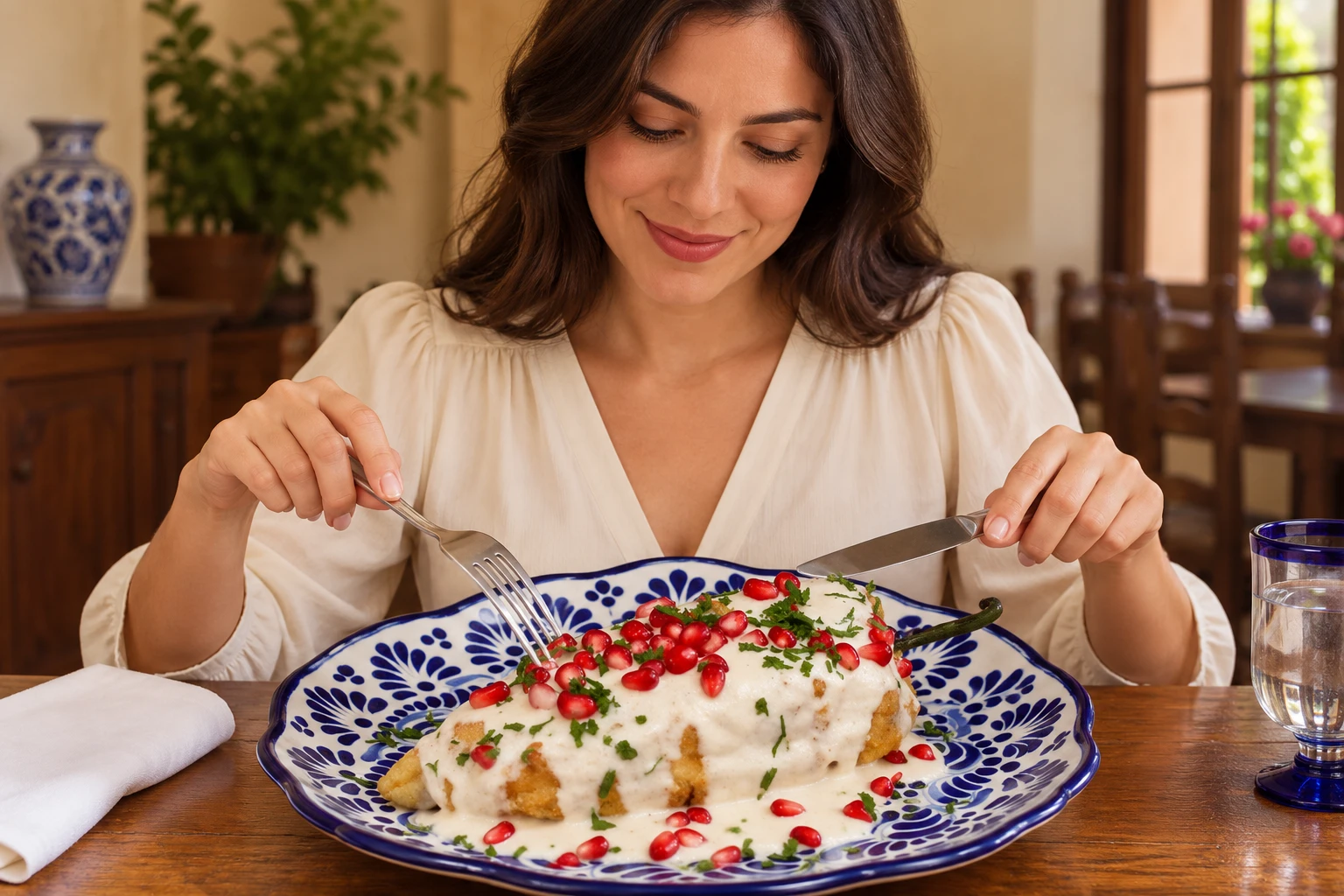
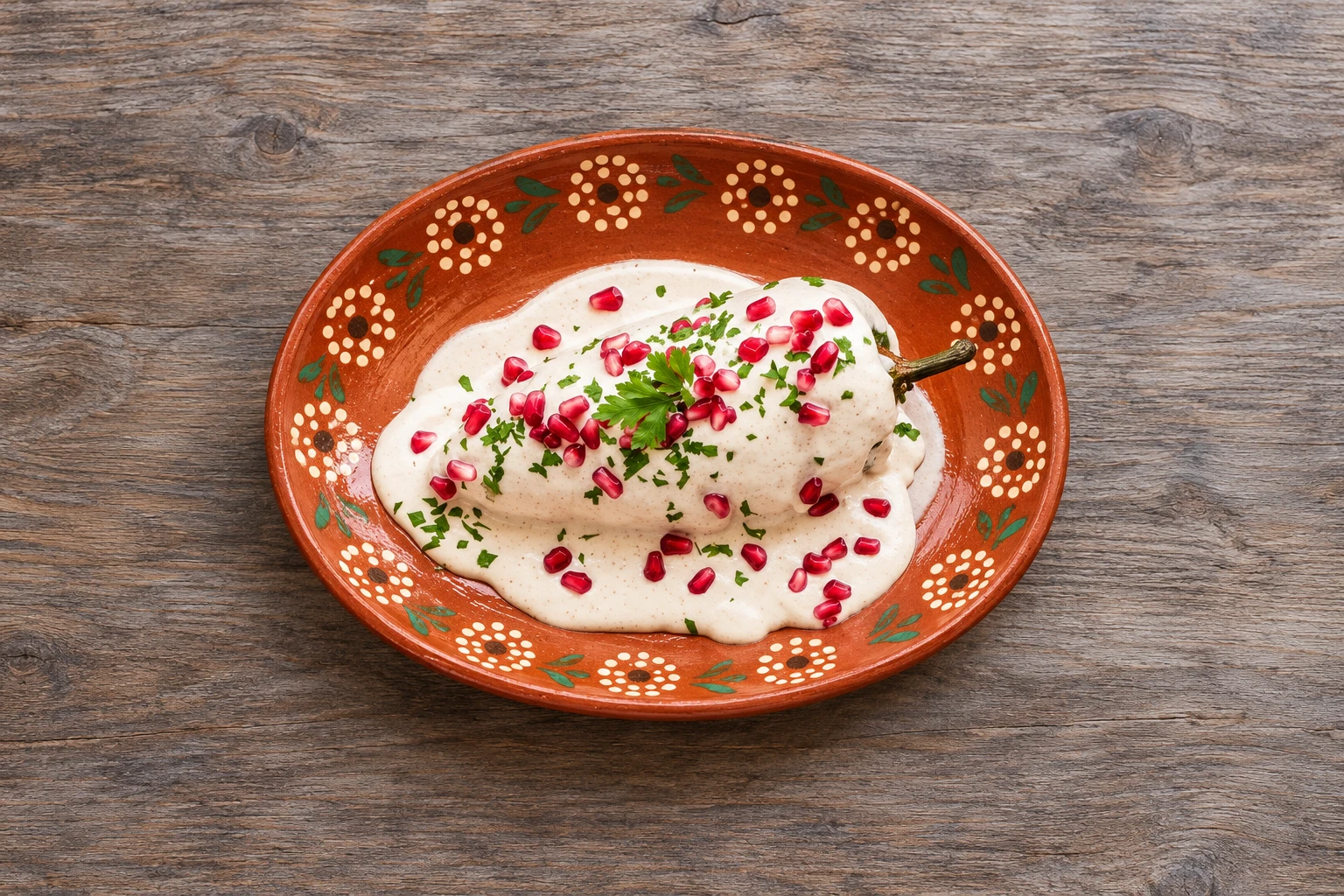
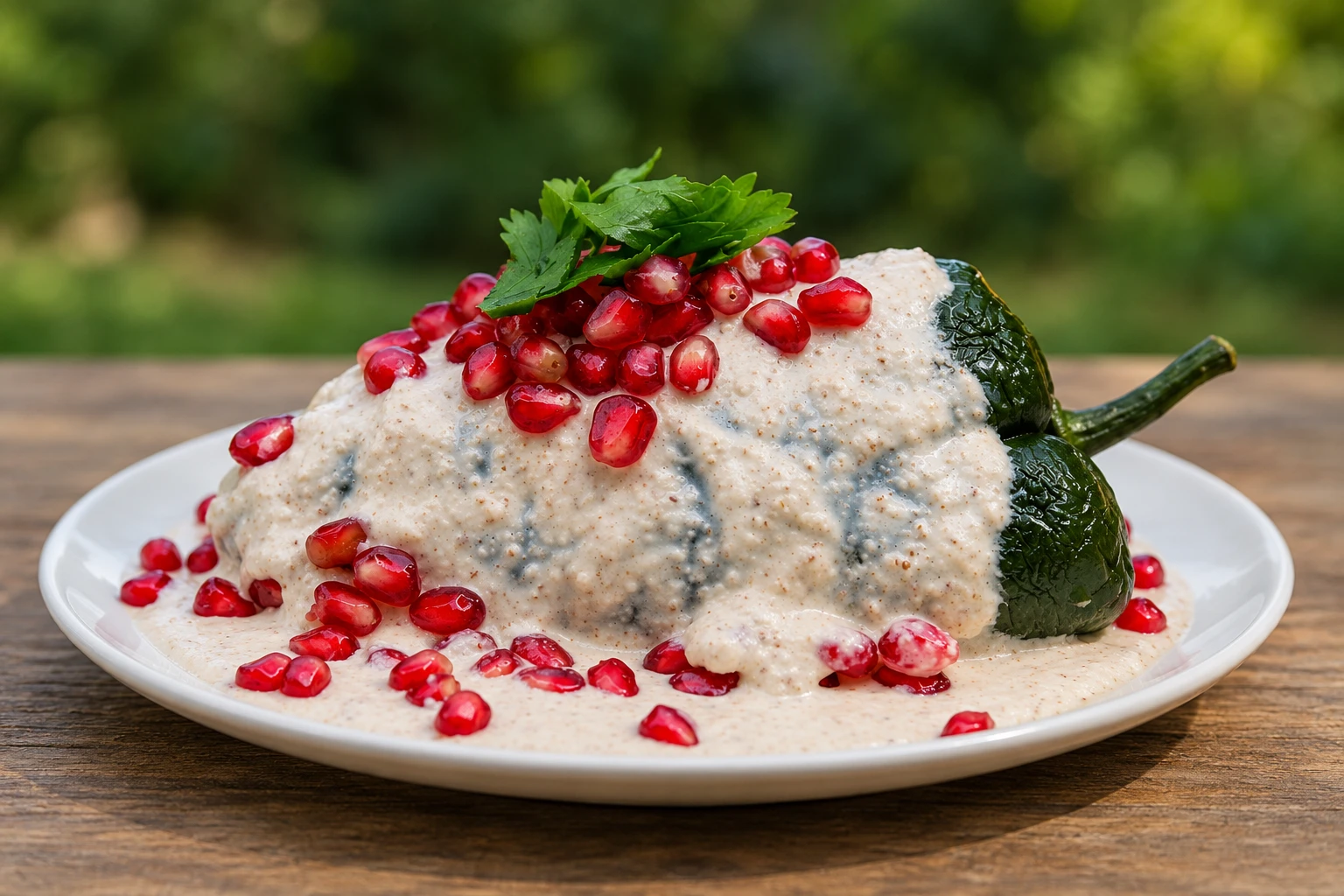
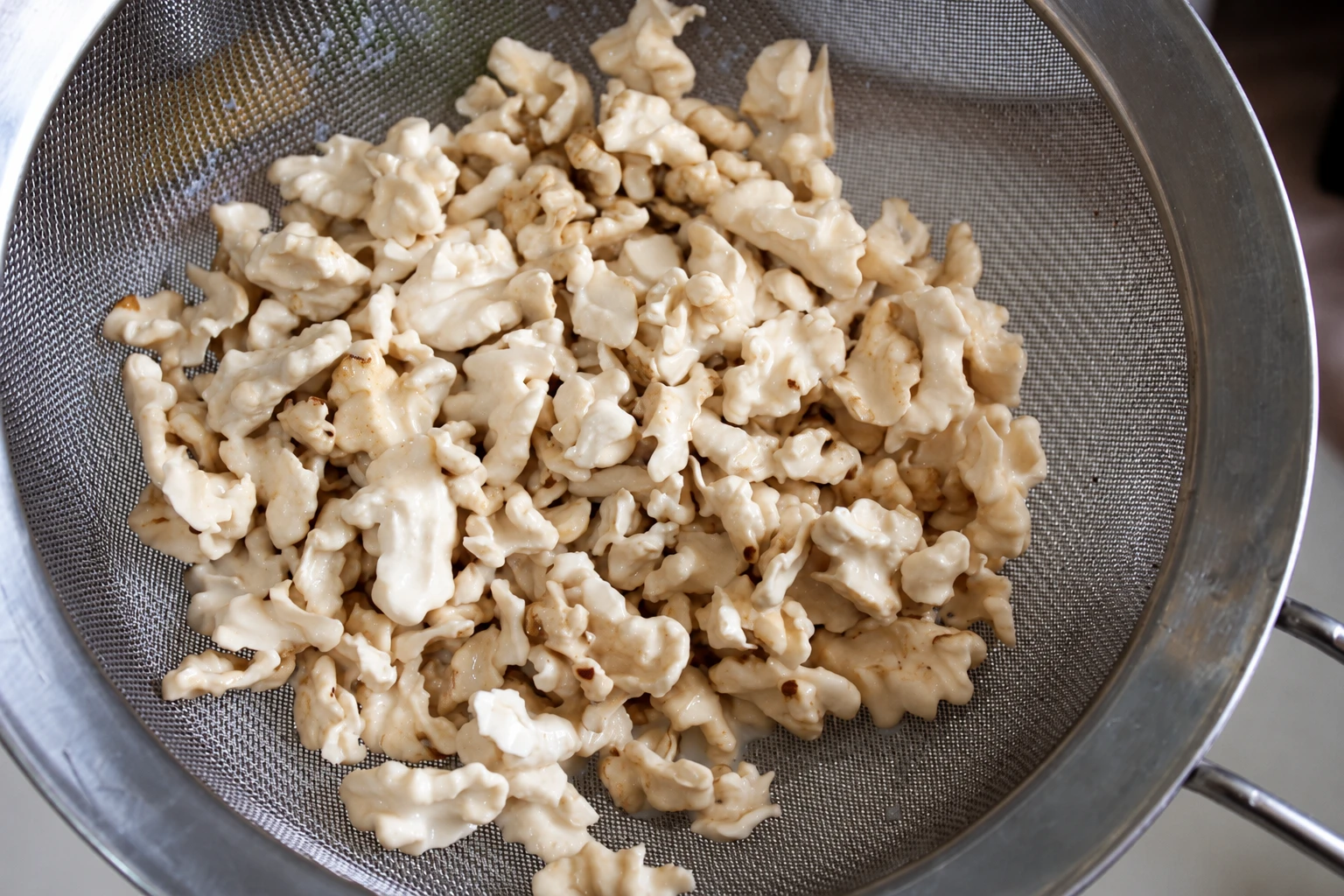
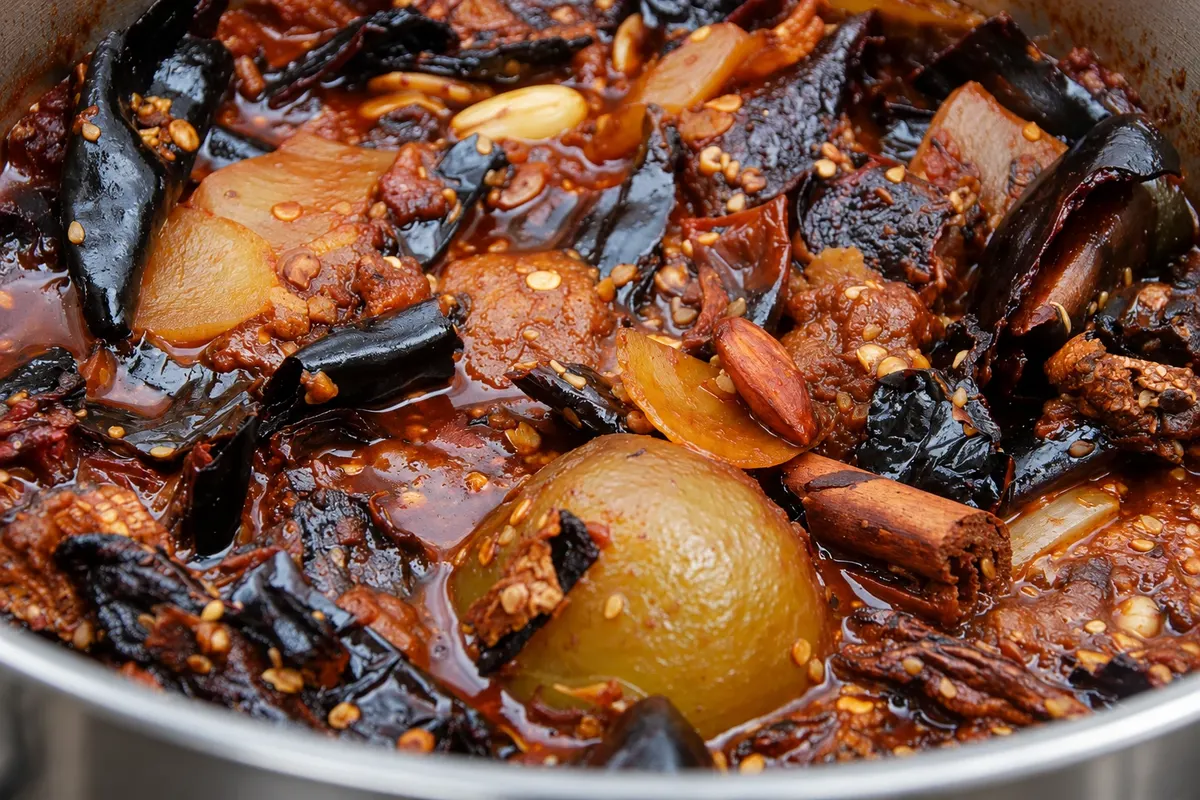
Chiles en nogada are poblano chiles—large green peppers, roasted and peeled—stuffed with a picadillo of pork or mixed meat, cooked with fruits such as peach, pear and apple, plus almonds and raisins. On top goes the nogada, a creamy sauce made from fresh walnuts, and finally pomegranate seeds and parsley leaves. The green, white and red recall the Mexican flag.
The most told version says the dish was created in Puebla in August 1821 by nuns in a city convent to honor Agustín de Iturbide, who passed through after signing the agreements that led to independence. Historians such as Alberto Peralta and archaeologist Eduardo Merlo of INAH in Puebla consider this story a myth: there is no document that confirms it.
Sources show the dish’s elements existed earlier and gradually came together. Sweet picadillos and walnut sauces already existed in colonial cuisine, and recipes for stuffed chiles with nogada appear in 19th-century cookbooks.
Chiles en nogada are a seasonal dish: fresh walnuts, fruits and pomegranates in the Puebla region ripen between July and September. It is in those months, and especially near the independence celebrations in September, that the dish appears on tables and in the city’s restaurants.


 Brazilija
 Antarktika
 Argentina
 Bolivija
 Čile
 Kolumbija
 Ekvator
 Gvajana
 Francoska Gvajana
 Falklandski otoki (Malvini)
 Paragvaj
 Peru
 Surinam
 Urugvaj
 Venezuela
 Nemčija
 Avstrija
 Belgija
 Hrvaška
 Danska
 Slovaška
 Slovenija
 Španija
 Finska
 Francija
 Grčija
 Nizozemska
 Madžarska
 Irska
 Islandija
 Italija
 Luksemburg
 Norveška
 Poljska
 Portugalska
 Združeno kraljestvo
 Češka
 Švedska
 Švica
 Turčija
 Bermudi
 Kanada
 Združene države Amerike
 Grenlandija
 Sveta Peter in Mihael
 Dominikanska republika
 Japonska
 Južnoafriška republika
 Egipt
 Avstralija
 Fidži
 Nova Zelandija
 Papua Nova Gvineja