1 city

 Search
 Brazil
 Antarctica
 Argentina
 Bolivia
 Chile
 Colombia
 Ecuador
 Falkland Islands (Malvinas)
 French Guiana
 Guyana
 Paraguay
 Peru
 Suriname
 Uruguay
 Venezuela
 Austria
 Belgium
 Croatia
 Denmark
 Finland
 France
 Germany
 Greece
 Hungary
 Iceland
 Ireland
 Italy
 Luxembourg
 Norway
 Poland
 Portugal
 Slovakia
 Slovenia
 Spain
 Sweden
 Switzerland
 the Czech Republic
 the Netherlands
 the United Kingdom
 Turkey
 Bermuda
 Canada
 Greenland
 Mexico
 Saint Pierre and Miquelon
 the United Statesthe Dominican Republic
 JapanTurkey
 Egypt
 South Africa
 Australia
 Fiji
 New Zealand
 Papua New Guinea
Province · East Coast: Punta Cana and La Romana
La Altagracia is the eastern tip of the island and the country’s most visited province: Punta Cana, Bávaro, Cap Cana and Uvero Alto, Isla Saona and, in Higüey, the basilica of the Dominican patroness.
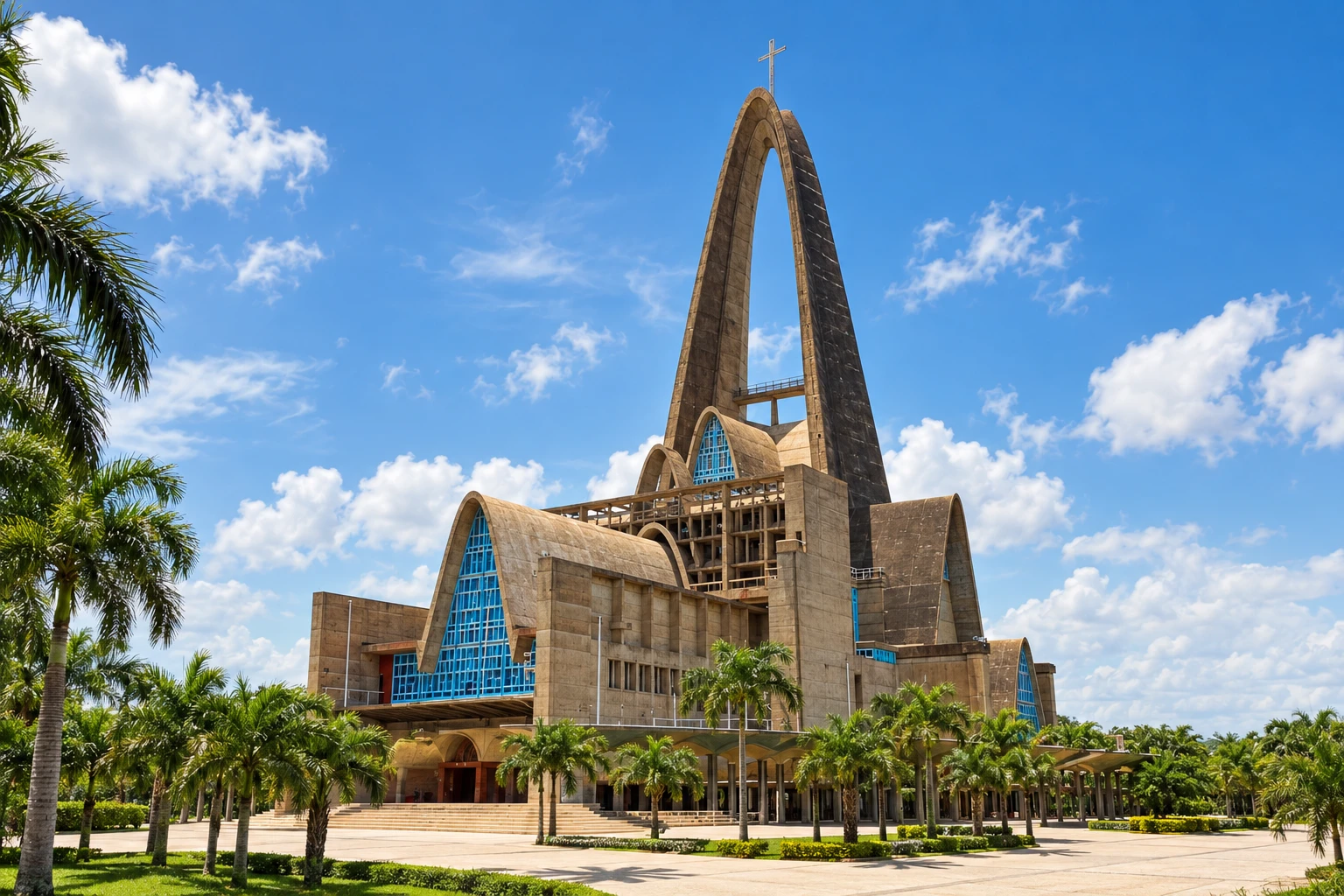
In the photo: Basílica de Nuestra Señora de la Altagracia, in Higüey (La Altagracia)
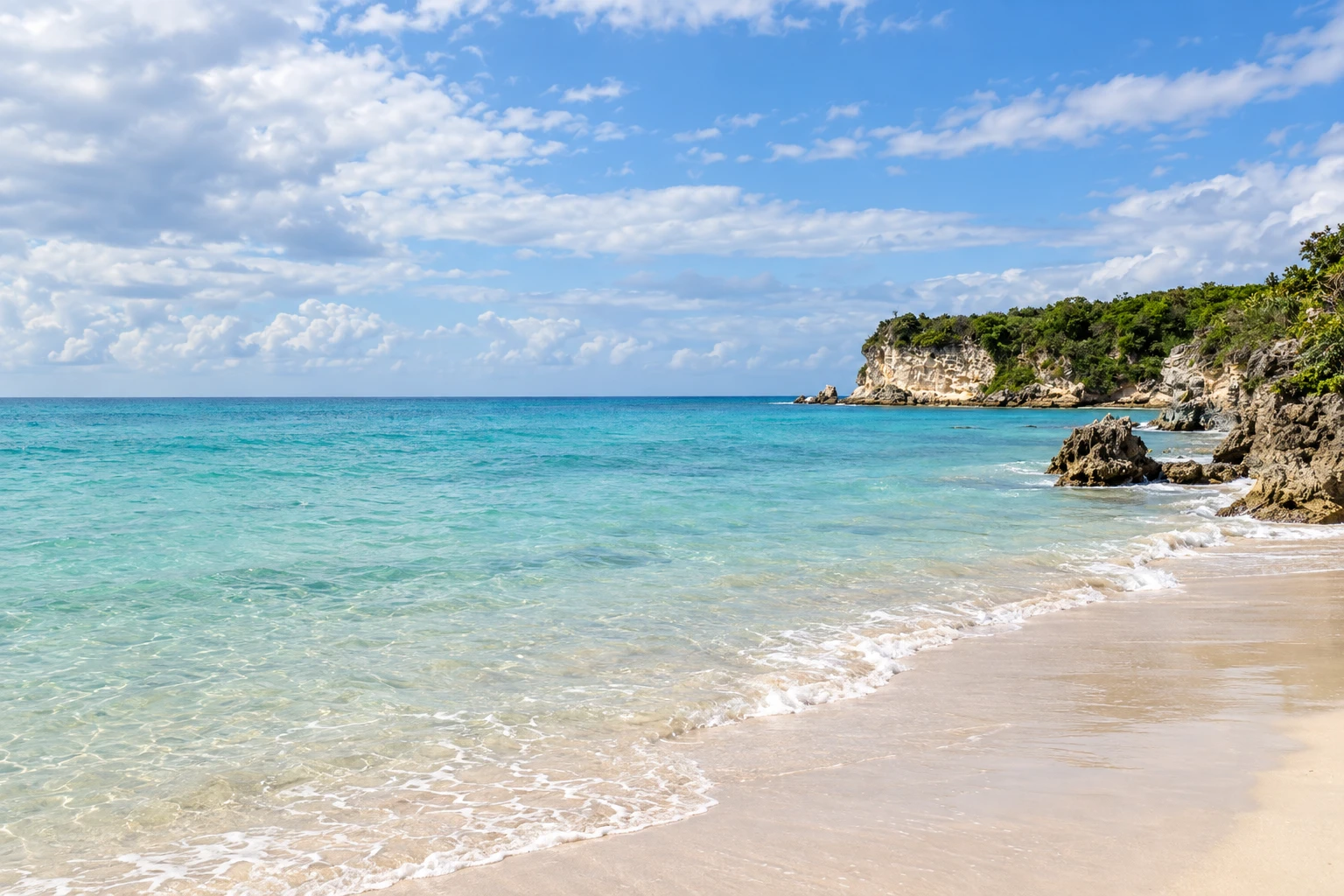
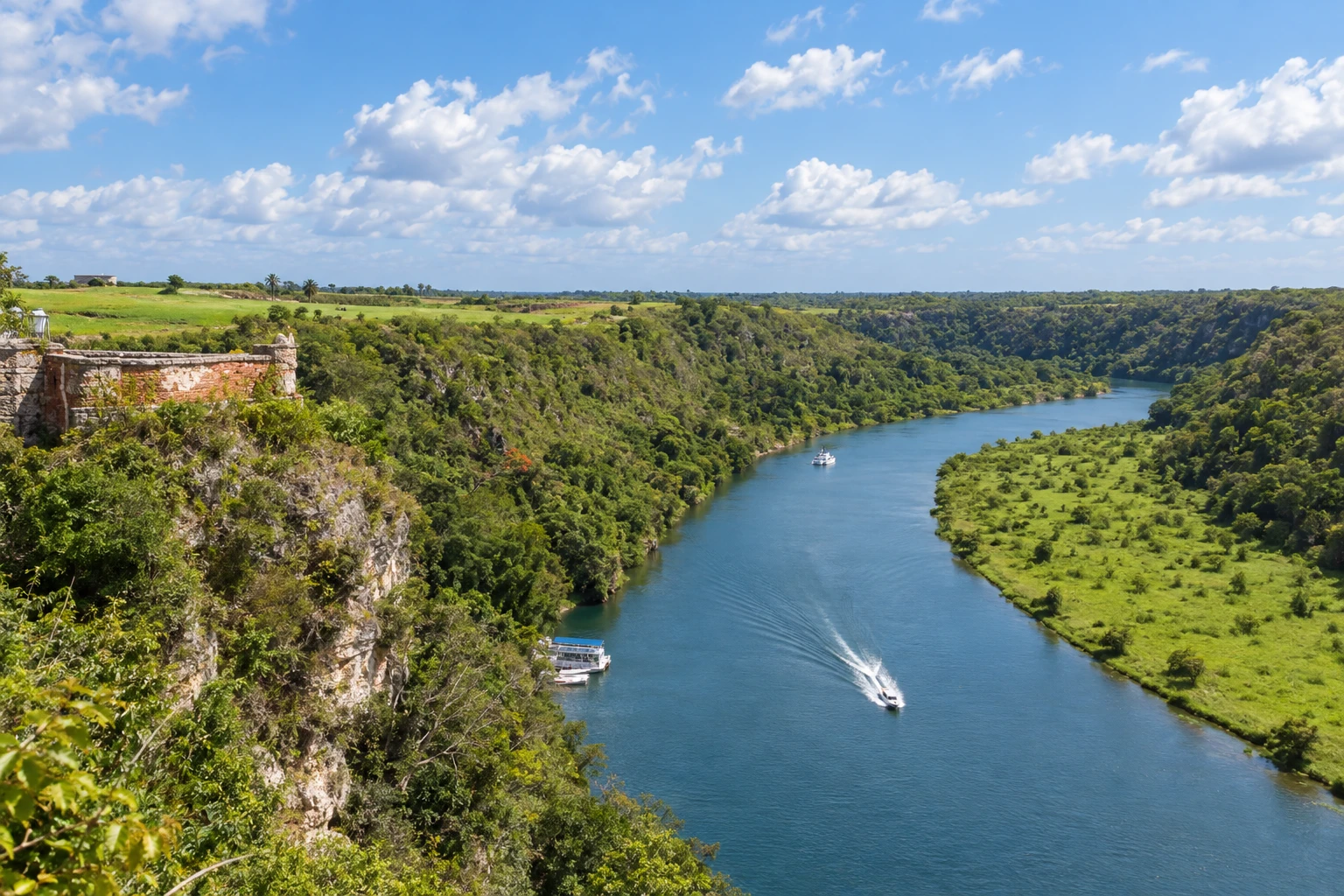
Illustrative images. The pictures in this guide are illustrations based on the real place, not photographs, and may differ from it.

Province
La Altagracia is the easternmost province of the Dominican Republic, bordered by the Atlantic to the northeast and the Caribbean Sea to the south. It is a limestone plain covered with dry forest, sugarcane fields and pastures, with a coastline of tens of kilometers of white sand and coconut palms. In recent decades this coast has become one of the largest tourist hubs in the Caribbean, and most foreign visitors to the country arrive here.
The guide lists the Punta Cana and Bávaro destination in the province, including the towns of Punta Cana, Bávaro, Cap Cana, Uvero Alto and Higüey. Bávaro hosts most of the hotels and the most famous beach; Cap Cana has the marina, Juanillo beach and the Hoyo Azul, a natural pool at the base of a cliff; to the north, Playa de Macao and Uvero Alto face open sea and waves. Near the airport, the Ojos Indígenas reserve preserves freshwater lagoons in the middle of the forest.
Higüey, the capital, is the religious heart of the country. The Basílica de Nuestra Señora de la Altagracia, built of concrete with an arch about 80 meters wide, houses the image of the Dominican patroness and receives pilgrims from across the country, especially on January 21. Further south, the fishing village of Boca de Yuma and Ponce de León’s house in San Rafael del Yuma recall the early colonial period.
Isla Saona, the country’s largest island, also belongs to the province and is part of Cotubanamá National Park. Boats depart from Bayahibe, on the border with La Romana, and the guide treats the island, including the village of Mano Juan, within the La Romana and Bayahibe destination.
Destinations
Cities
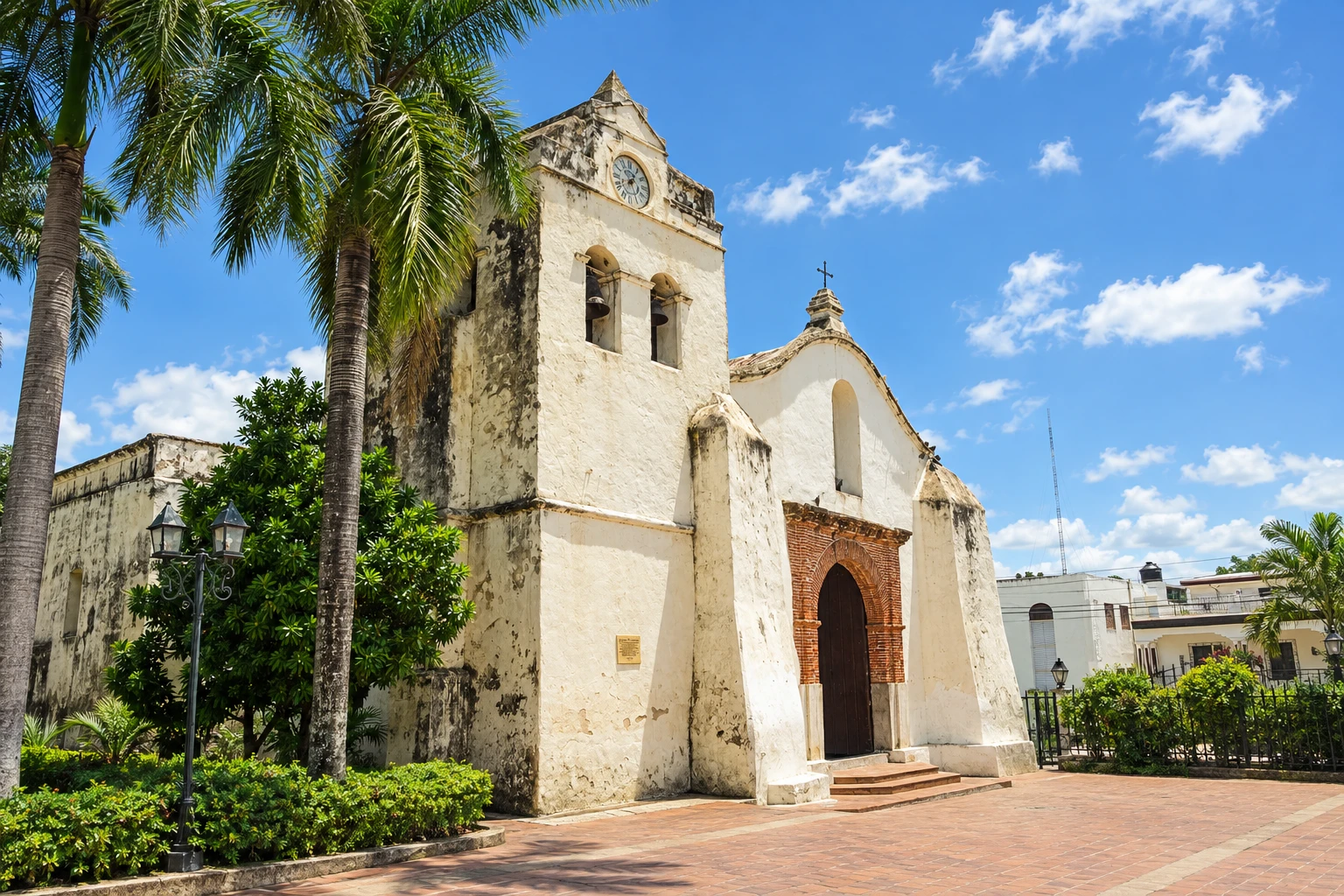
Higüey is the capital of La Altagracia province and the real city behind the beaches of Punta Cana, with shops, markets and traffic. It is home to the Basílica de Nuestra Señora de la Altagracia, a modern-architecture church with a concrete arch about 80 meters high, a pilgrimage center for the whole country, especially on January 21.
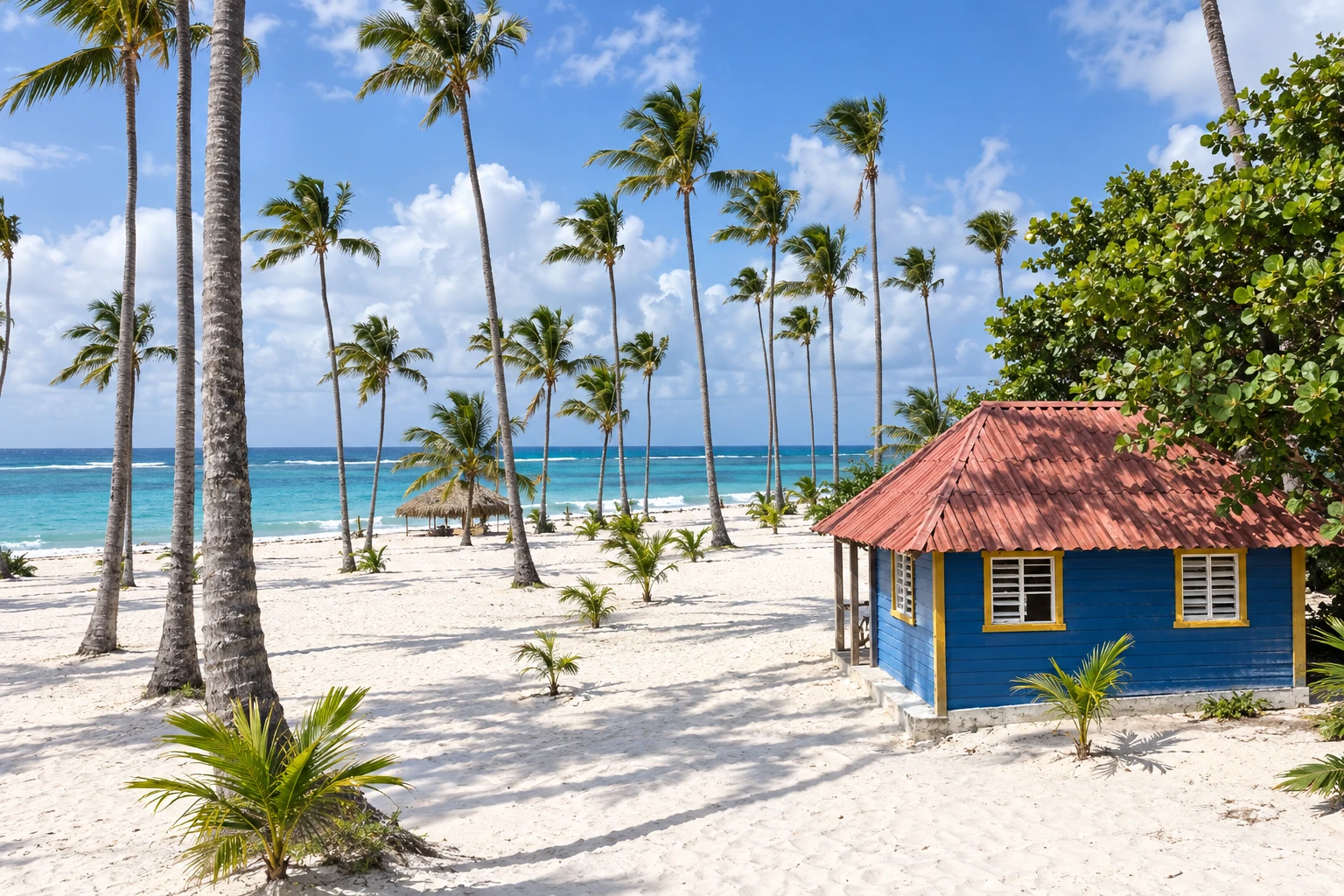
Bávaro is the tourist heart of the east coast: a stretch of about 10 km of white sand beach and calm sea, with most of the region’s hotels and, behind them, an urban center with shops, restaurants and housing. Playa Bávaro is the country’s most famous beach, and the village of El Cortecito and the Los Corales neighborhood are the places to eat out and see the beach without a hotel wristband.
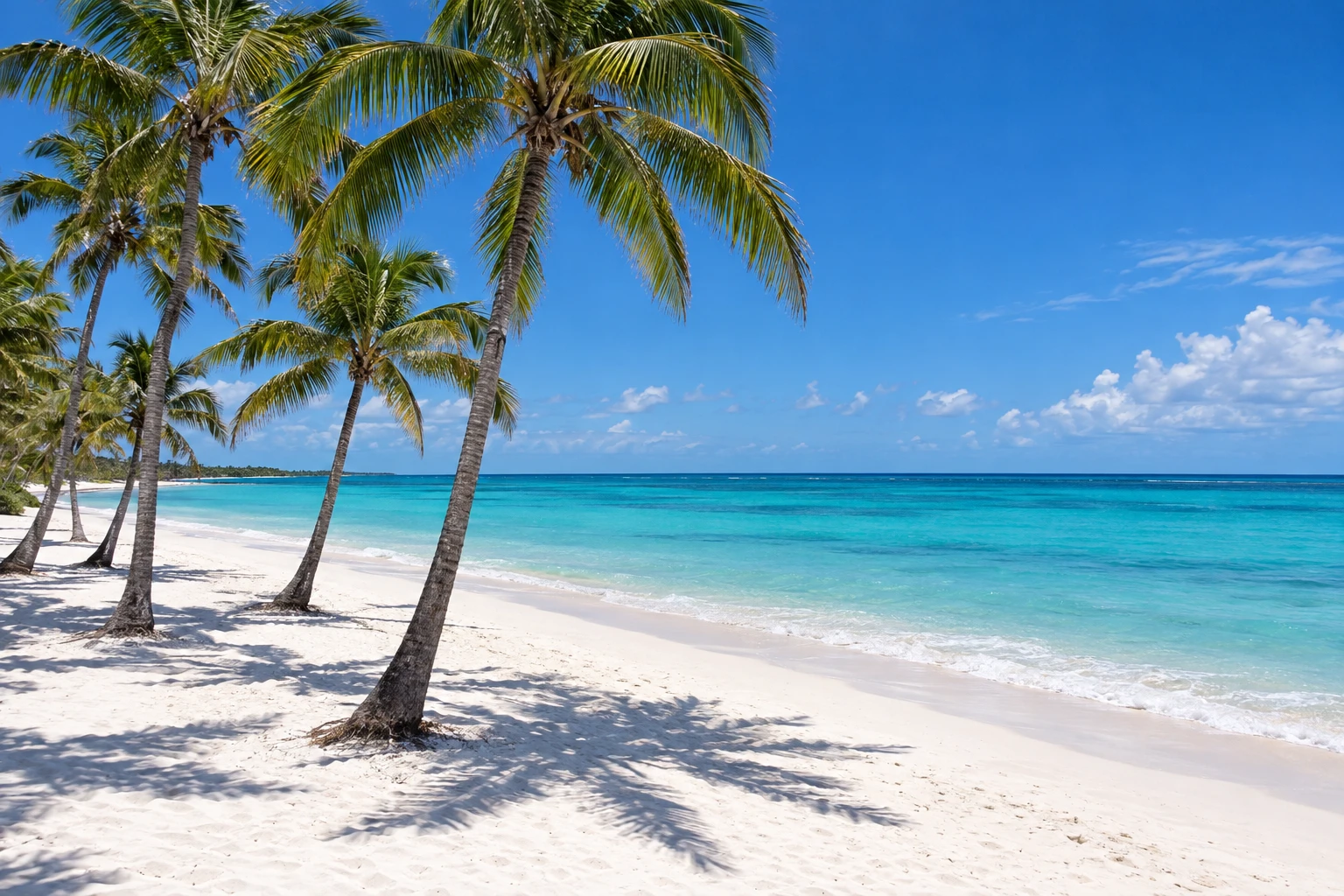
Cap Cana is a high-end residential resort at the southern end of the Punta Cana area, with a marina, golf courses, Juanillo Beach with very clear water, and the Hoyo Azul, a natural turquoise pool at the foot of a rock cliff inside an adventure park. It is the most exclusive and expensive area of the east coast.
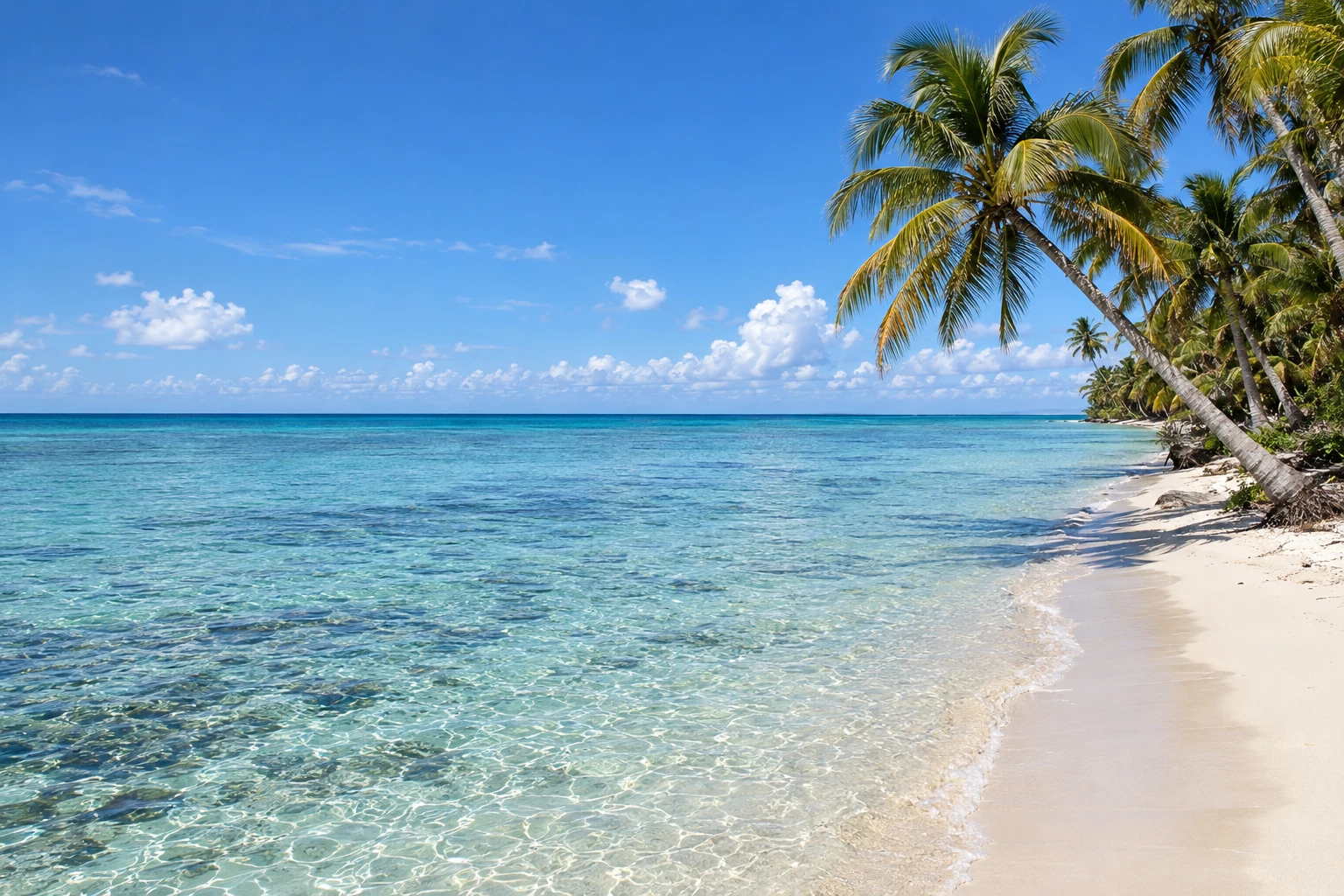
Mano Juan is the fishing village of Isla Saona, the country’s largest island, inside Parque Nacional Cotubanamá. It has small colorful wooden houses, a long white-sand beach with coconut palms, and a sea turtle protection center. It’s the quietest part of the island, for those who want to stay beyond the day trip and see the natural pool out at sea.
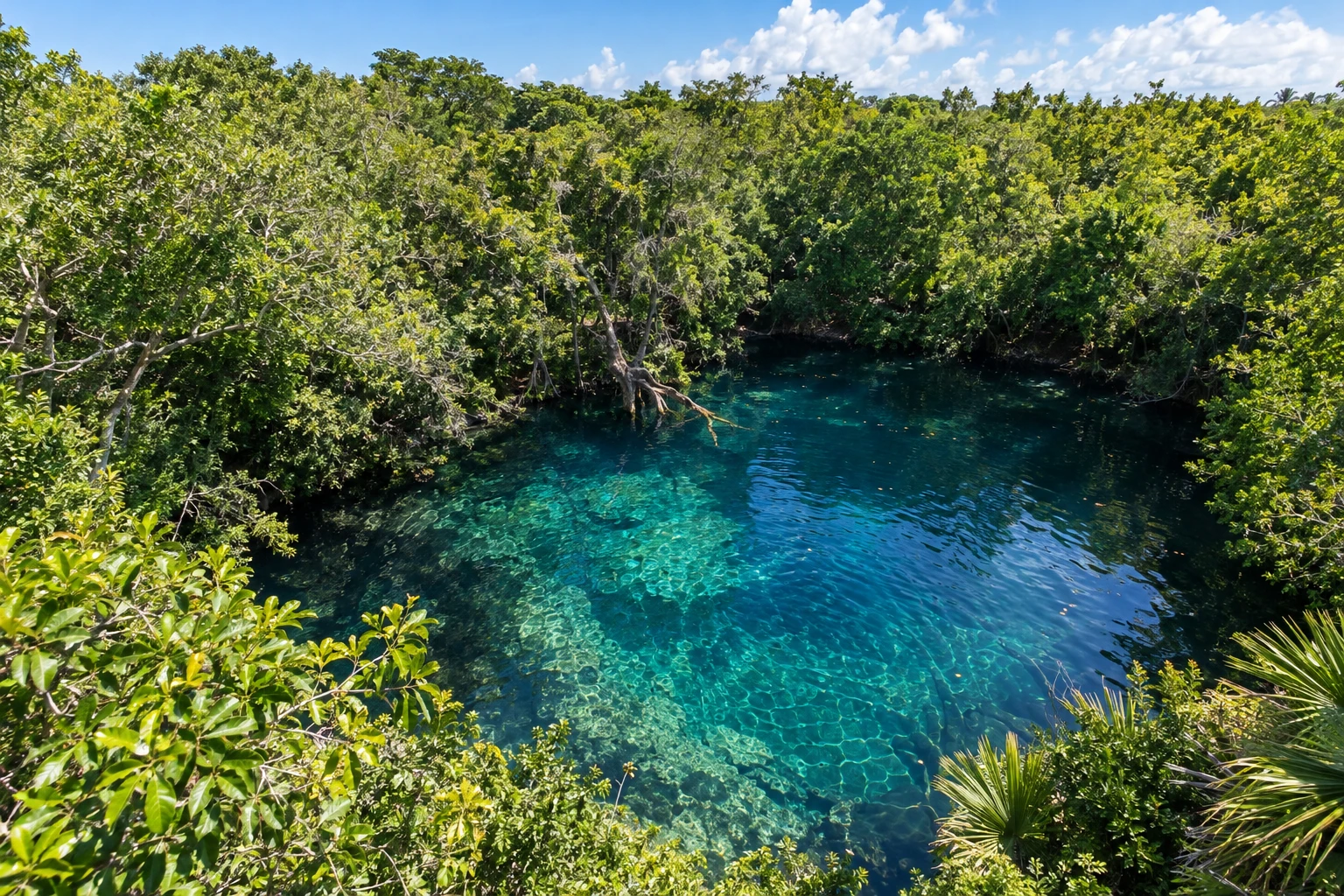
Punta Cana is the eastern tip of the island, beside the international airport that gave the whole region its name. It has reef-protected, calm-sea beaches, residential complexes, golf courses and the Ojos Indígenas reserve, with freshwater lagoons in the middle of the forest. More residential and quieter than Bávaro, it’s well located for those who want a quick transfer from the airport before heading to Cap Cana or excursions.
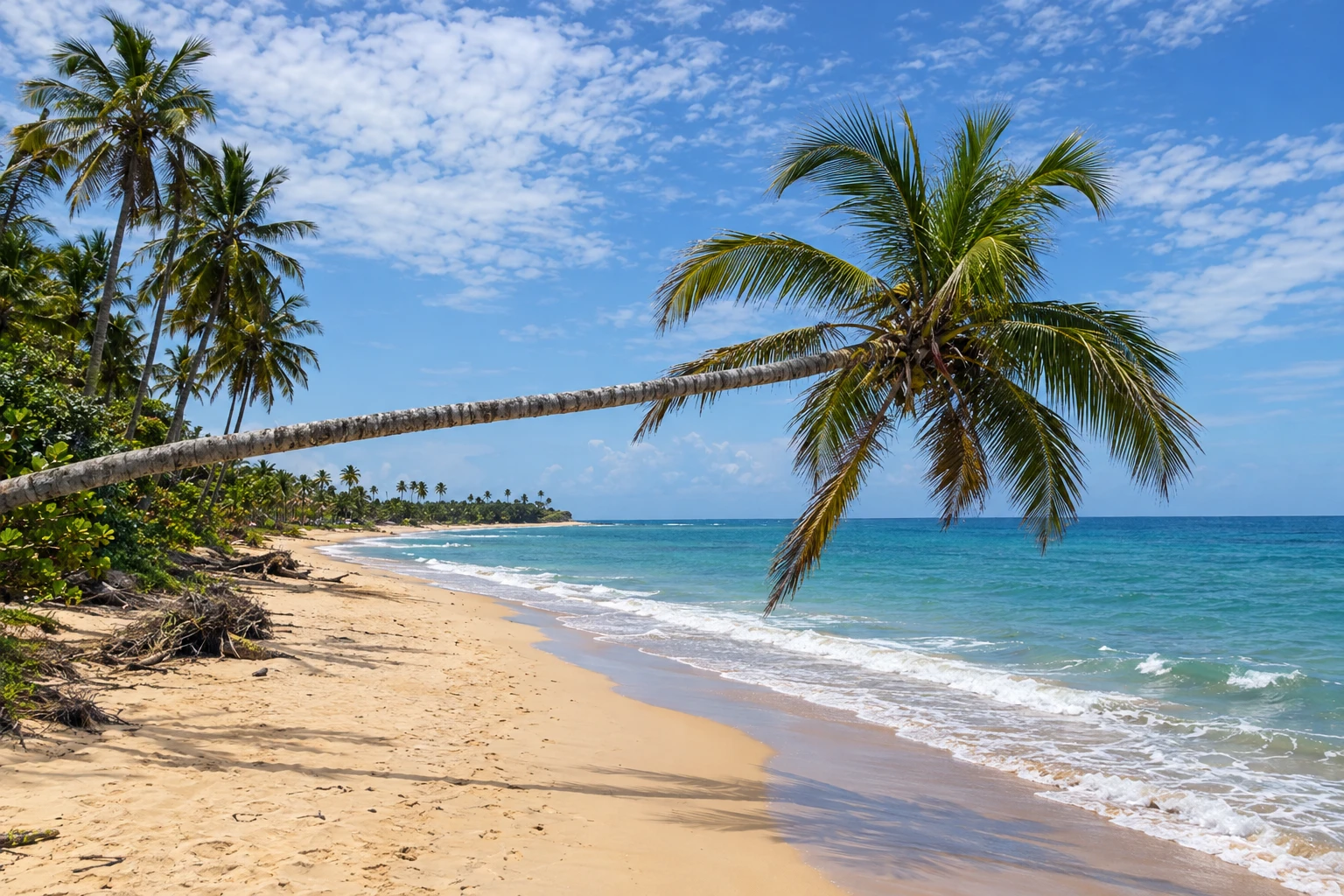
Uvero Alto is the northern tip of the Punta Cana coast, more isolated and tranquil, with beaches open to the Atlantic, waves and large hotels scattered among coconut palms. Just to the south is Playa Macao, one of the prettiest on the east coast, with golden sand, blue sea and low cliffs, where surfing is also practiced.
From December to April it usually rains less and the breeze cools things; this is high season, with more people and busy bookings. In May and early June the weather is often still good, with hotels quieter. June to November is the hurricane season in the east, with heavier rain from August to October. On January 21, Higüey hosts the major pilgrimage of the Altagracia.
Punta Cana International Airport (PUJ) is located within the province and is the country’s busiest airport, with flights from many countries and transfers to the coastal hotels. From Santo Domingo, the highway reaches Higüey in about two hours and Bávaro in two and a half hours, with regular buses. For Isla Saona, boats depart from Bayahibe, about an hour from Punta Cana.
Beyond the guide
Your questions
In La Altagracia, whose capital is Higüey. Punta Cana names the entire eastern coast, from Cap Cana to Uvero Alto.
The Basílica de Higüey, the Ojos Indígenas reserve, the Hoyo Azul in Cap Cana, Playa de Macao and, on a full-day excursion, Isla Saona.
About 45 minutes by car. There are local buses from Bávaro, and many tours include the basilica.
Yes. The island belongs to the province and is part of Cotubanamá National Park, but boats depart from Bayahibe, on the border with La Romana.
The dry season, from December to April, is the most popular. To get good weather with fewer crowds, May and early June are good bets.