10 places to visit, chosen by the Cidade Turismo guide.
Illustrative images. The pictures in this guide are illustrations based on the real place, not photographs, and may differ from it.
To start
The 10 main places Oxford and the Cotswolds
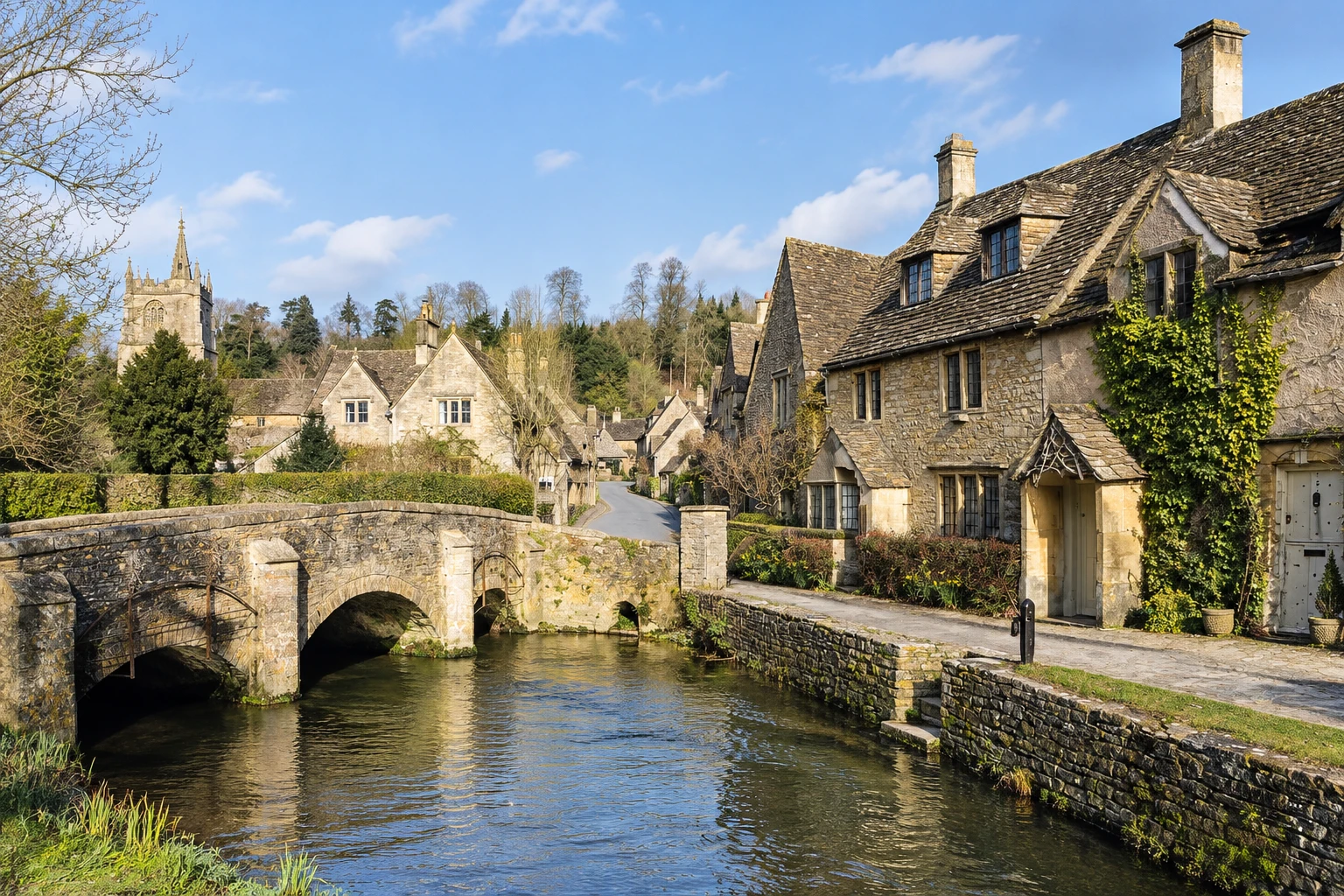
Castle Combe · Castle CombeThe Wiltshire village in the By Brook valley, with the 14th-century market cross, stone Cotswold houses, the church of Santo André and the bridge over the stream, seen from the...
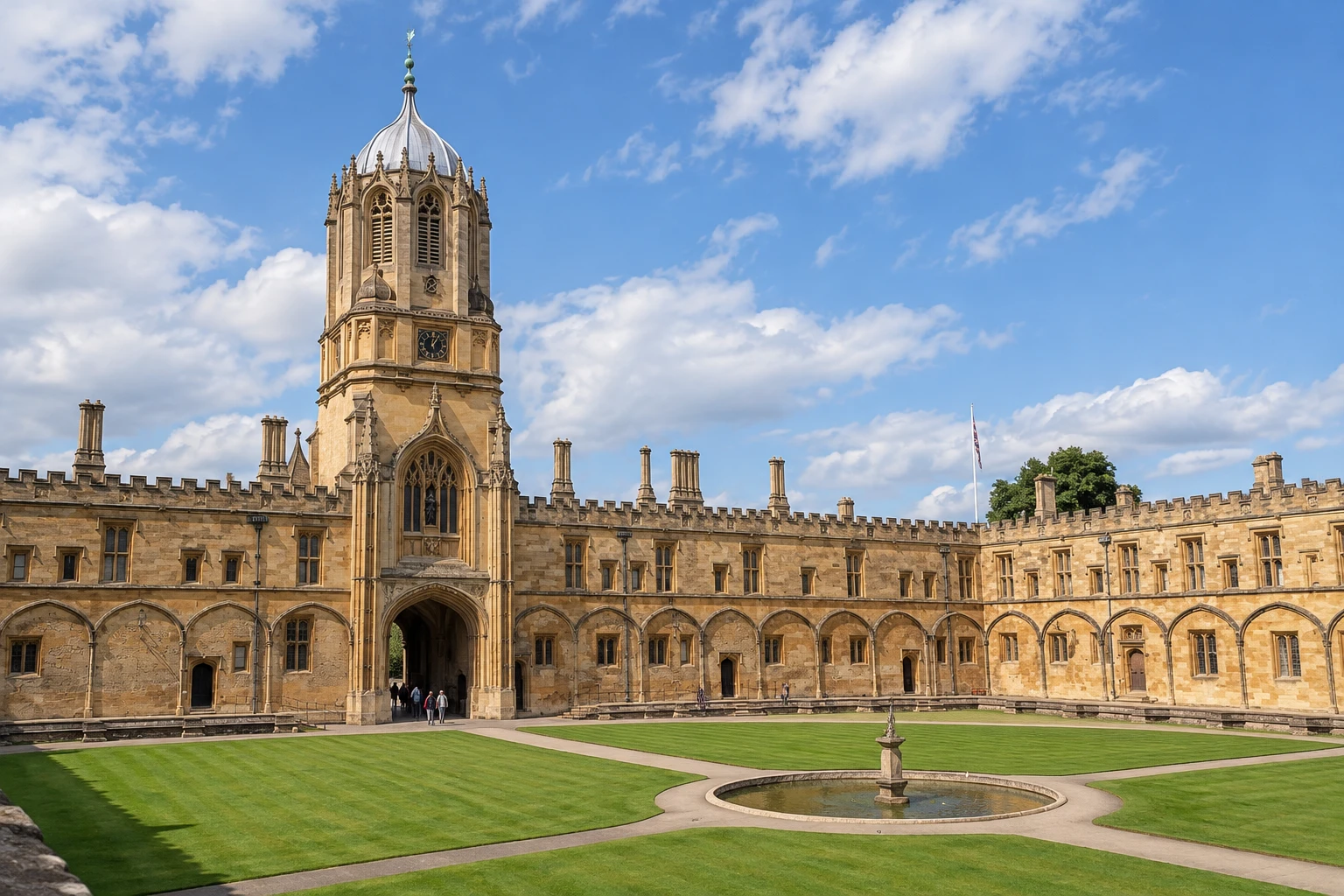
Christ Church · OxfordThe largest college in Oxford, founded in 1546 by Henry VIII, with the Tom Quad, Christopher Wren’s Tom Tower, the Great Hall that inspired Hogwarts’ dining hall and the Catedra...
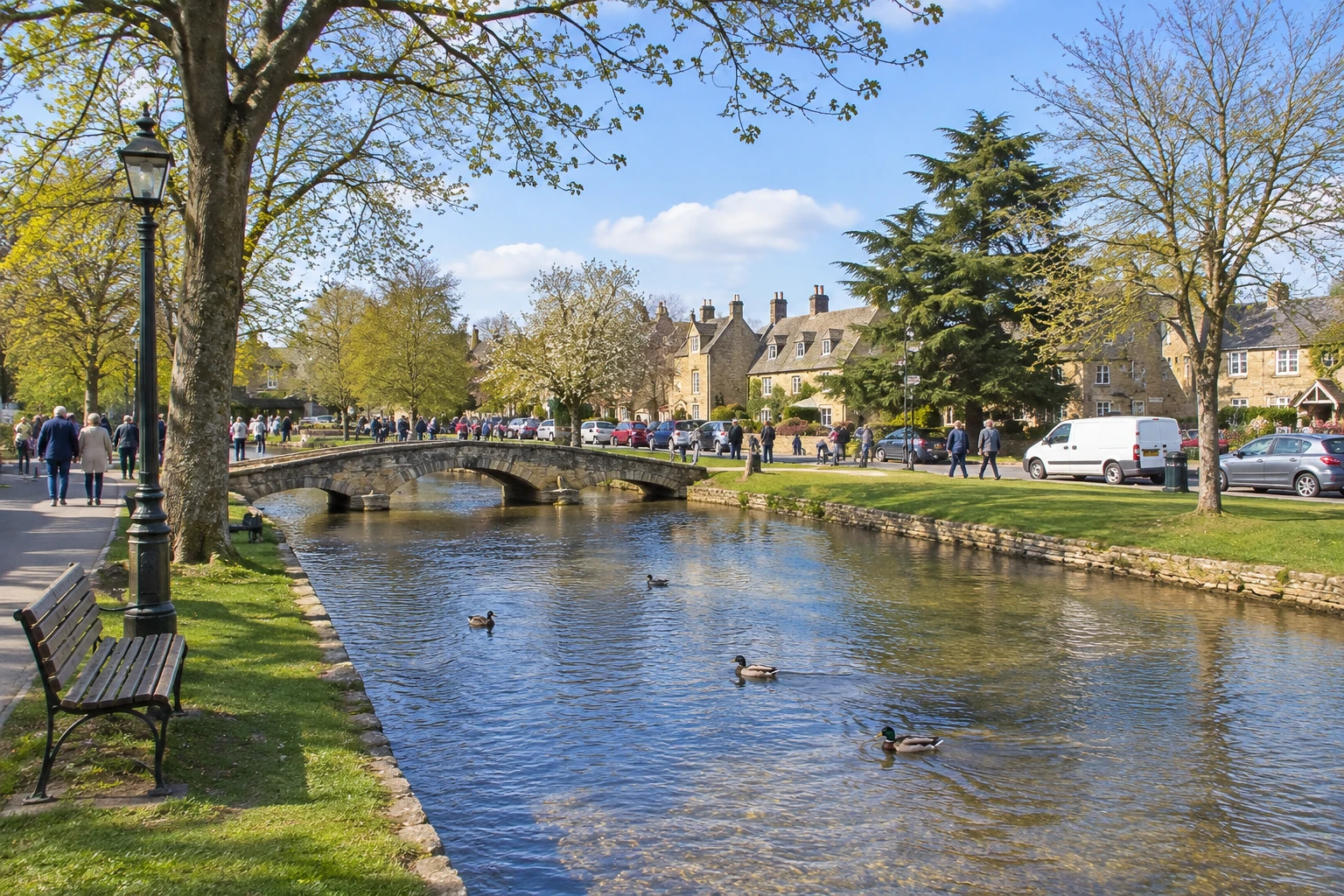
River Windrush in Bourton-on-the-Water · Bourton-on-the-WaterThe shallow river that crosses the centre of Bourton-on-the-Water under five low stone bridges, between lawns and honey-coloured limestone houses, in the heart of the Cotswolds.
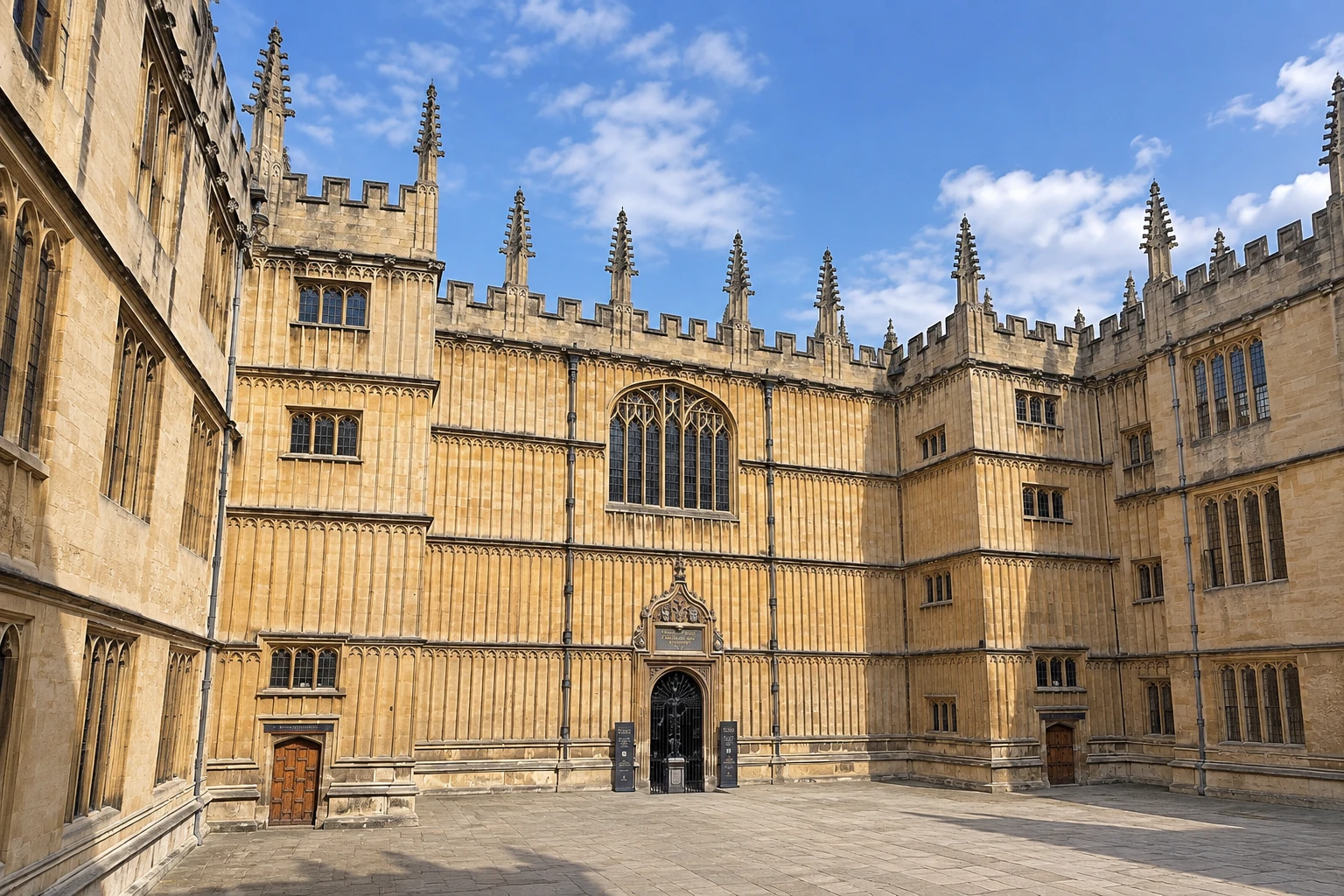
Bodleian Library · OxfordThe main library of the University of Oxford, opened in 1602, with the medieval Divinity School, the Duke Humfrey's Library and the Schools’ quad.
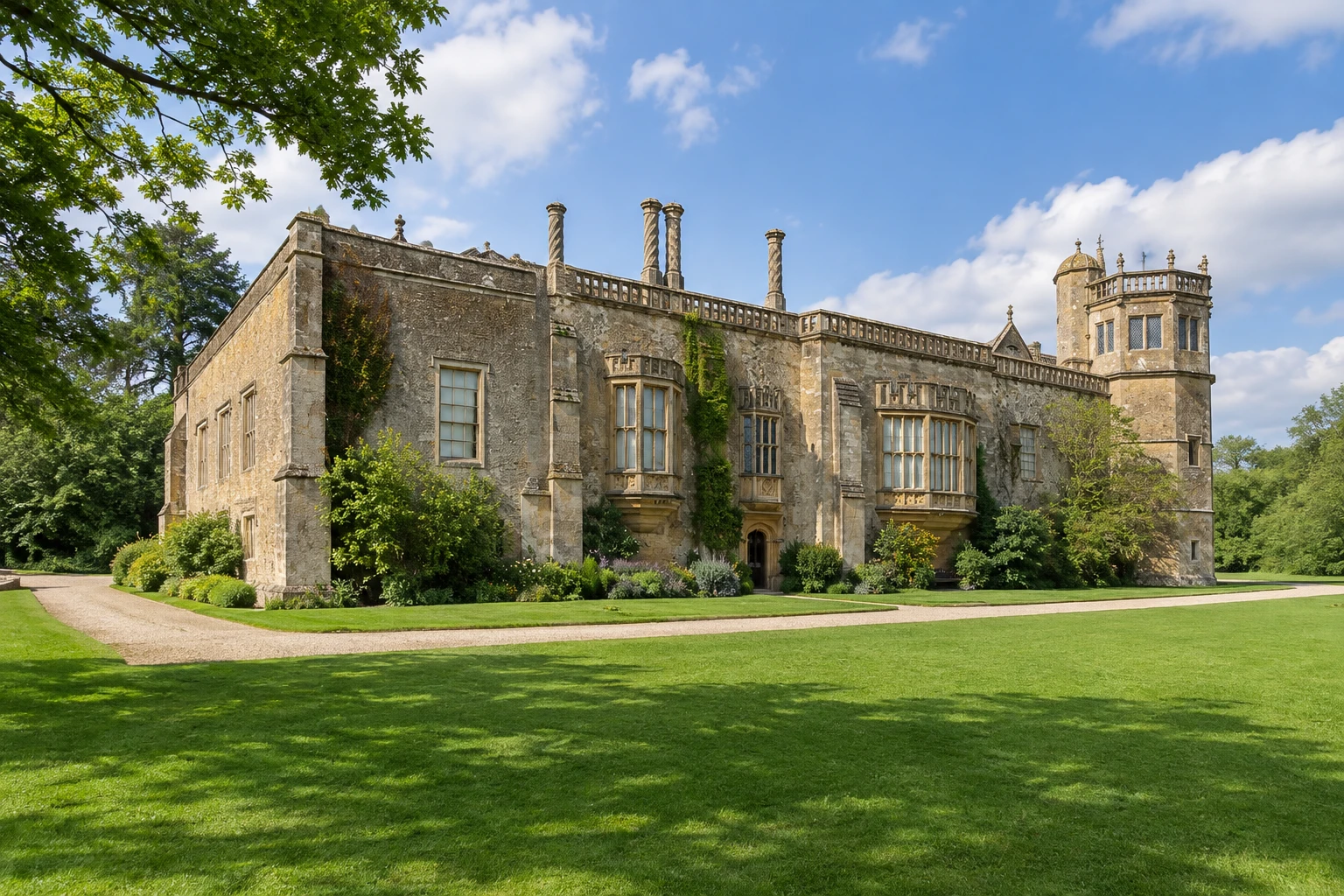
Lacock Abbey · Castle CombeThe medieval abbey turned country house in Lacock, 15 km from Castle Combe, where William Henry Fox Talbot made the earliest known photographic negative.
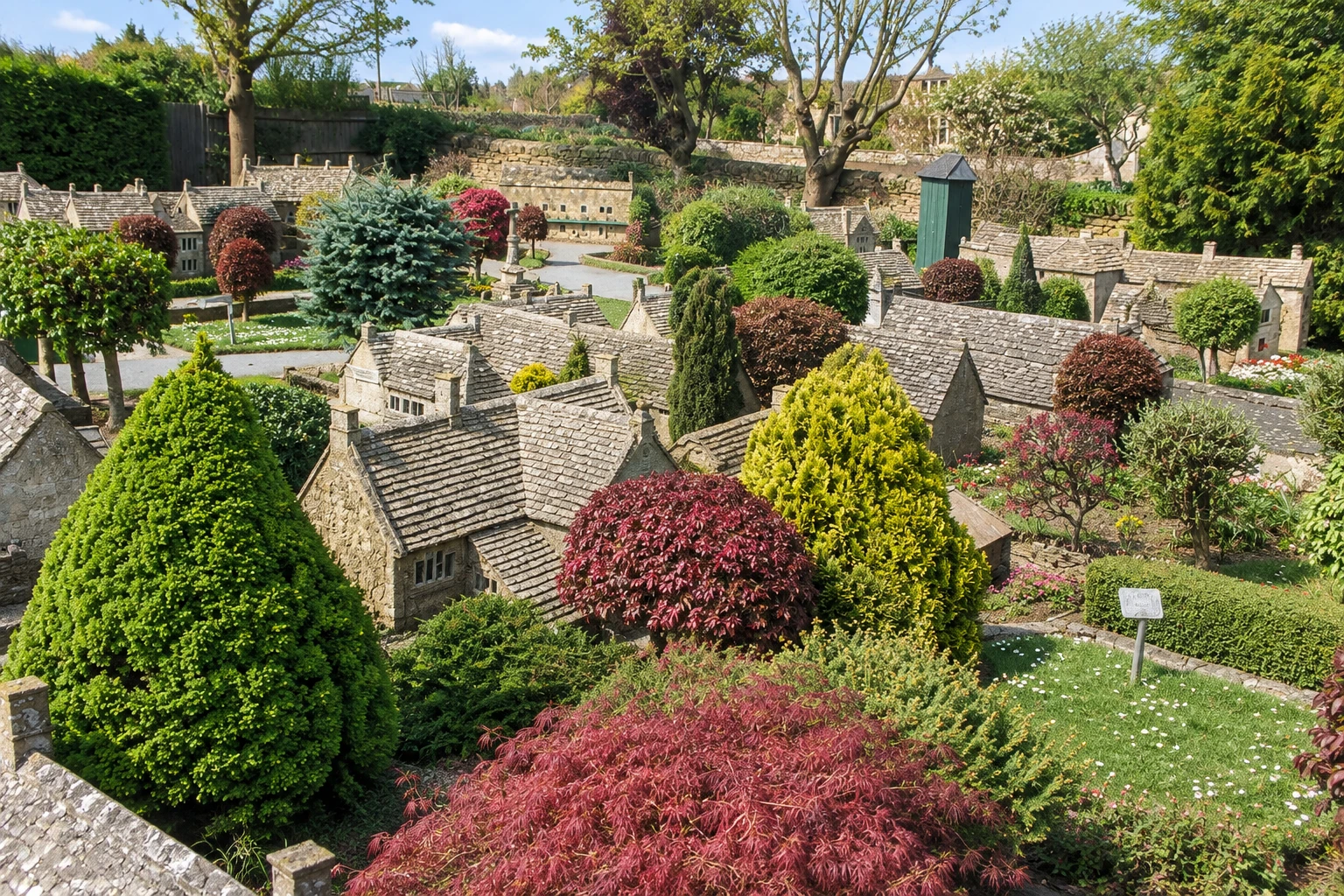
The Model Village · Bourton-on-the-WaterThe stone model of Bourton-on-the-Water at 1:9 scale, built in the 1930s by local craftsmen in the garden of the pub Old New Inn, including the river, the bridges and the villag...
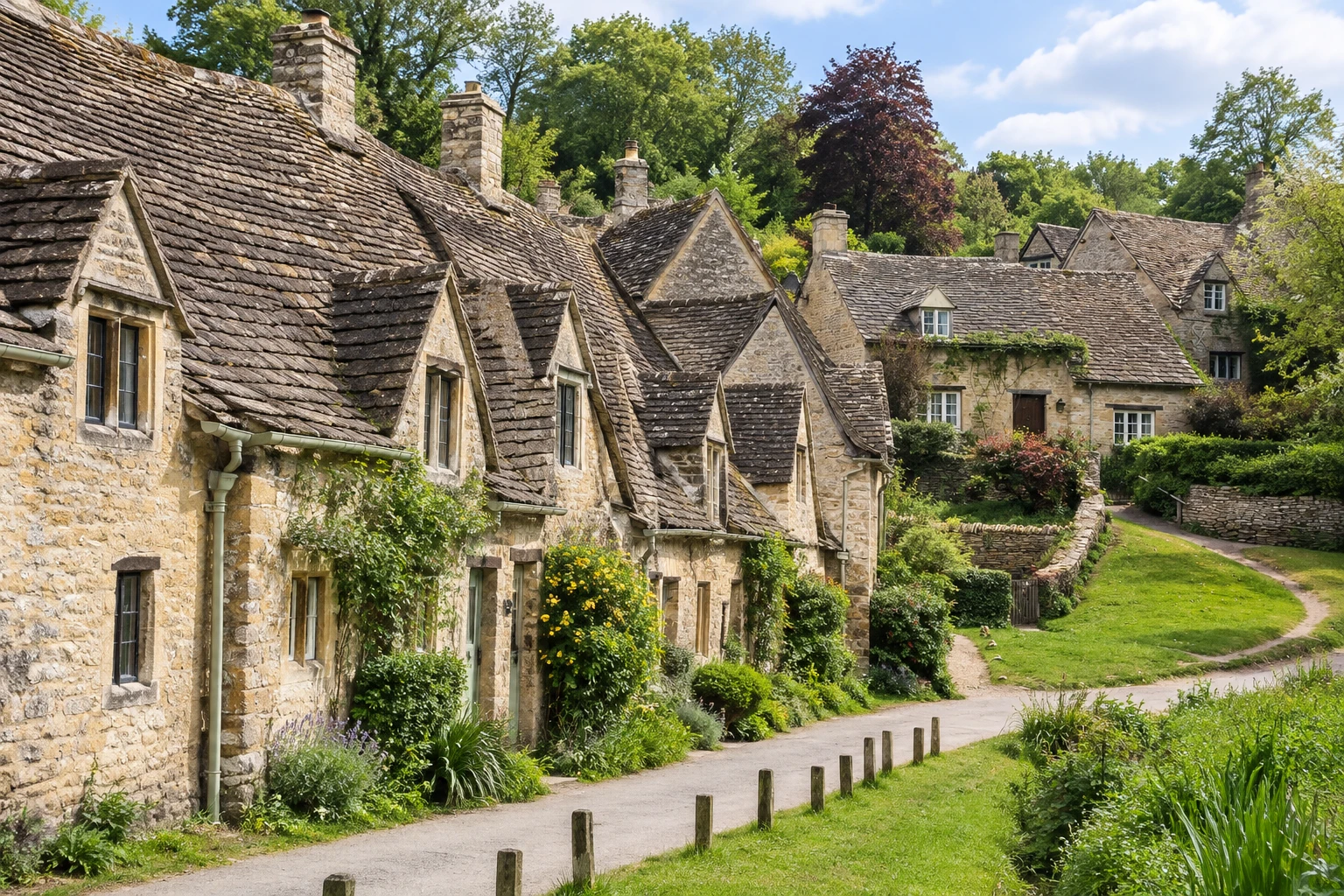
Arlington Row · Bourton-on-the-WaterThe row of 17th-century weavers' cottages in Bibury, 15 km from Bourton, on the banks of the Coln stream, one of the most iconic images of the Cotswolds.
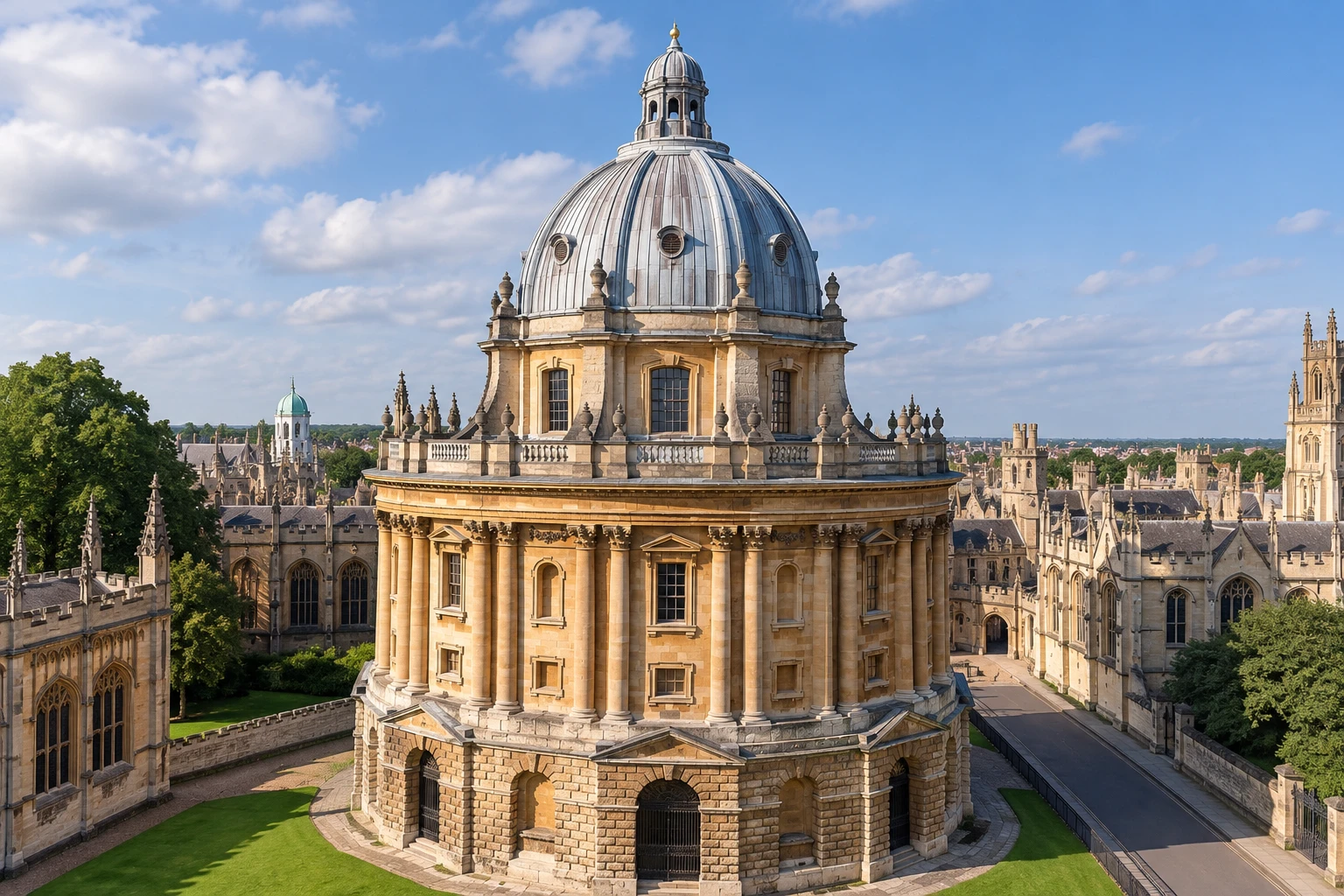
Radcliffe Camera · OxfordThe Palladian rotunda of 1749 at the center of Radcliffe Square, a symbol of Oxford and a reading room of the Biblioteca Bodleiana.
Ashmolean Museum · OxfordThe University of Oxford's museum of art and archaeology, opened in 1683, with Egyptian and Greek antiquities, Guy Fawkes' lantern, drawings by Michelangelo and Raphael, and Eur...
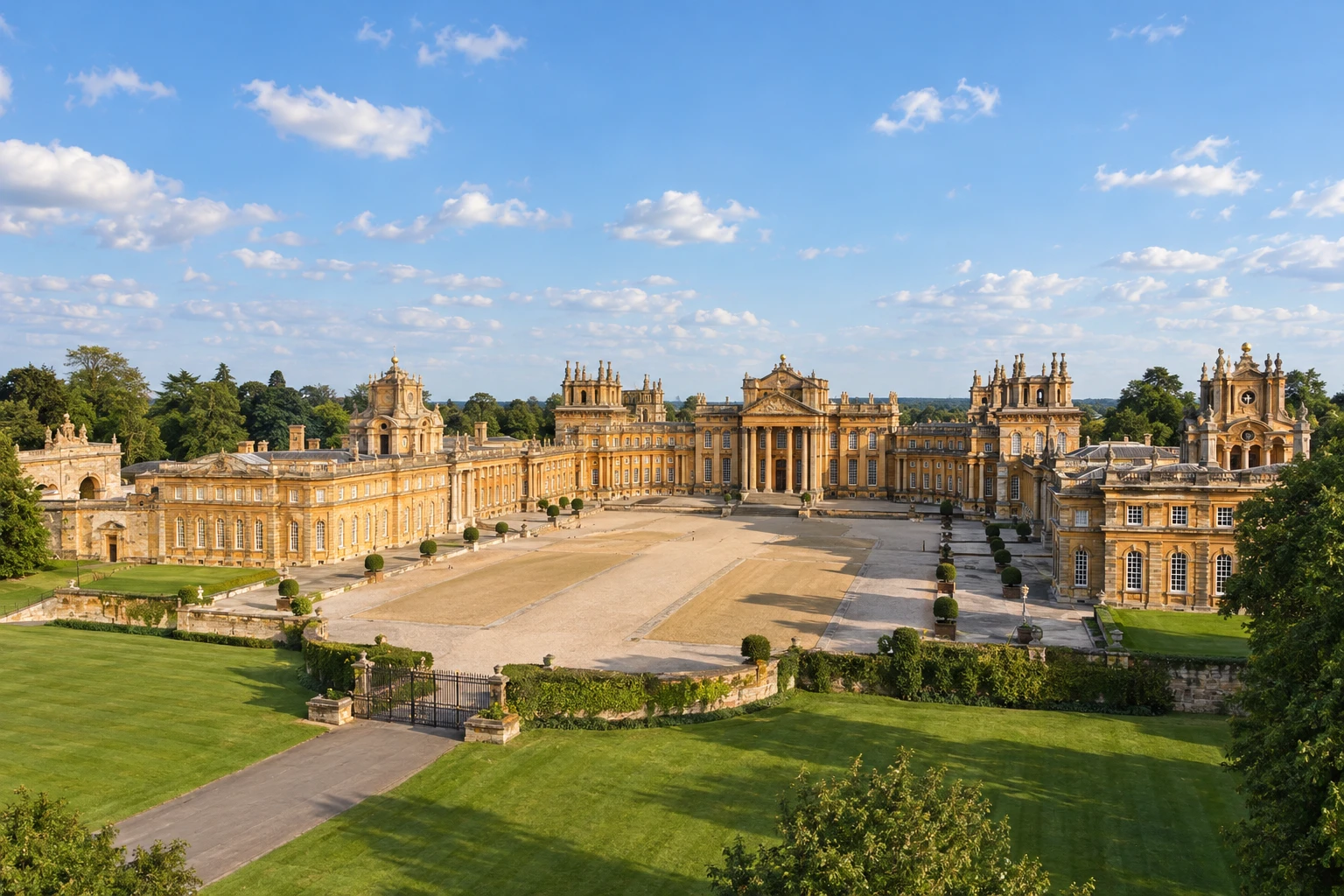
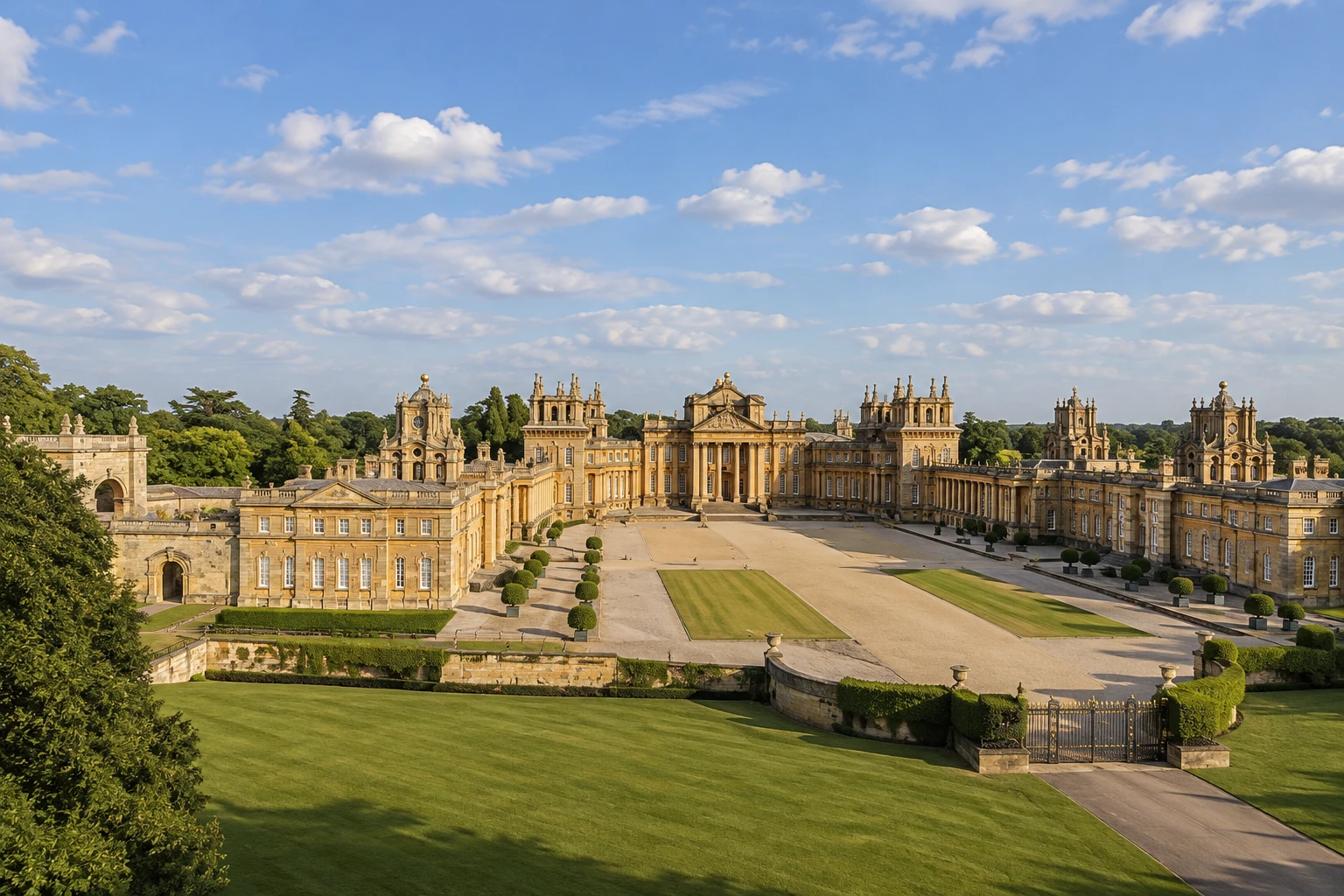
Blenheim Palace · OxfordThe baroque palace of the Dukes of Marlborough in Woodstock, 13 km from Oxford, where Winston Churchill was born, with a park designed by Capability Brown, a lake and formal gar...
The Wiltshire village in the By Brook valley, with the 14th-century market cross, stone Cotswold houses, the church of Santo André and the bridge over the stream, seen from the top of the High Street.
The largest college in Oxford, founded in 1546 by Henry VIII, with the Tom Quad, Christopher Wren’s Tom Tower, the Great Hall that inspired Hogwarts’ dining hall and the Catedral de Oxford, which also serves as the college chapel.
The shallow river that crosses the centre of Bourton-on-the-Water under five low stone bridges, between lawns and honey-coloured limestone houses, in the heart of the Cotswolds.
The main library of the University of Oxford, opened in 1602, with the medieval Divinity School, the Duke Humfrey's Library and the Schools’ quad. Interior visits are guided and on timed entry.
The medieval abbey turned country house in Lacock, 15 km from Castle Combe, where William Henry Fox Talbot made the earliest known photographic negative. The surrounding village belongs to the National Trust.
The stone model of Bourton-on-the-Water at 1:9 scale, built in the 1930s by local craftsmen in the garden of the pub Old New Inn, including the river, the bridges and the village church.
The row of 17th-century weavers' cottages in Bibury, 15 km from Bourton, on the banks of the Coln stream, one of the most iconic images of the Cotswolds. It belongs to the National Trust.
The Palladian rotunda of 1749 at the center of Radcliffe Square, a symbol of Oxford and a reading room of the Biblioteca Bodleiana. Inside access is only by guided tour.
The University of Oxford's museum of art and archaeology, opened in 1683, with Egyptian and Greek antiquities, Guy Fawkes' lantern, drawings by Michelangelo and Raphael, and European painting. Admission to the permanent collection is usually free; check in advance.
The baroque palace of the Dukes of Marlborough in Woodstock, 13 km from Oxford, where Winston Churchill was born, with a park designed by Capability Brown, a lake and formal gardens. UNESCO World Heritage Site.


 Brazil
 Antarctica
 Argentina
 Bolivia
 Chile
 Colombia
 Ecuador
 Falkland Islands (Malvinas)
 French Guiana
 Guyana
 Paraguay
 Peru
 Suriname
 Uruguay
 Venezuela
 Albania
 Austria
 Belgium
 Croatia
 Denmark
 Finland
 France
 Germany
 Greece
 Hungary
 Iceland
 Ireland
 Italy
 Luxembourg
 Norway
 Poland
 Portugal
 Slovakia
 Slovenia
 Spain
 Sweden
 Switzerland
 the Czech Republic
 the Netherlands
 Turkey
 Bermuda
 Canada
 Greenland
 Mexico
 Saint Pierre and Miquelon
 the United States
 the Dominican Republic
 Japan
 Egypt
 South Africa
 Australia
 Fiji
 New Zealand
 Papua New Guinea