Oslo · Norway · Opera house
Oslo Opera House
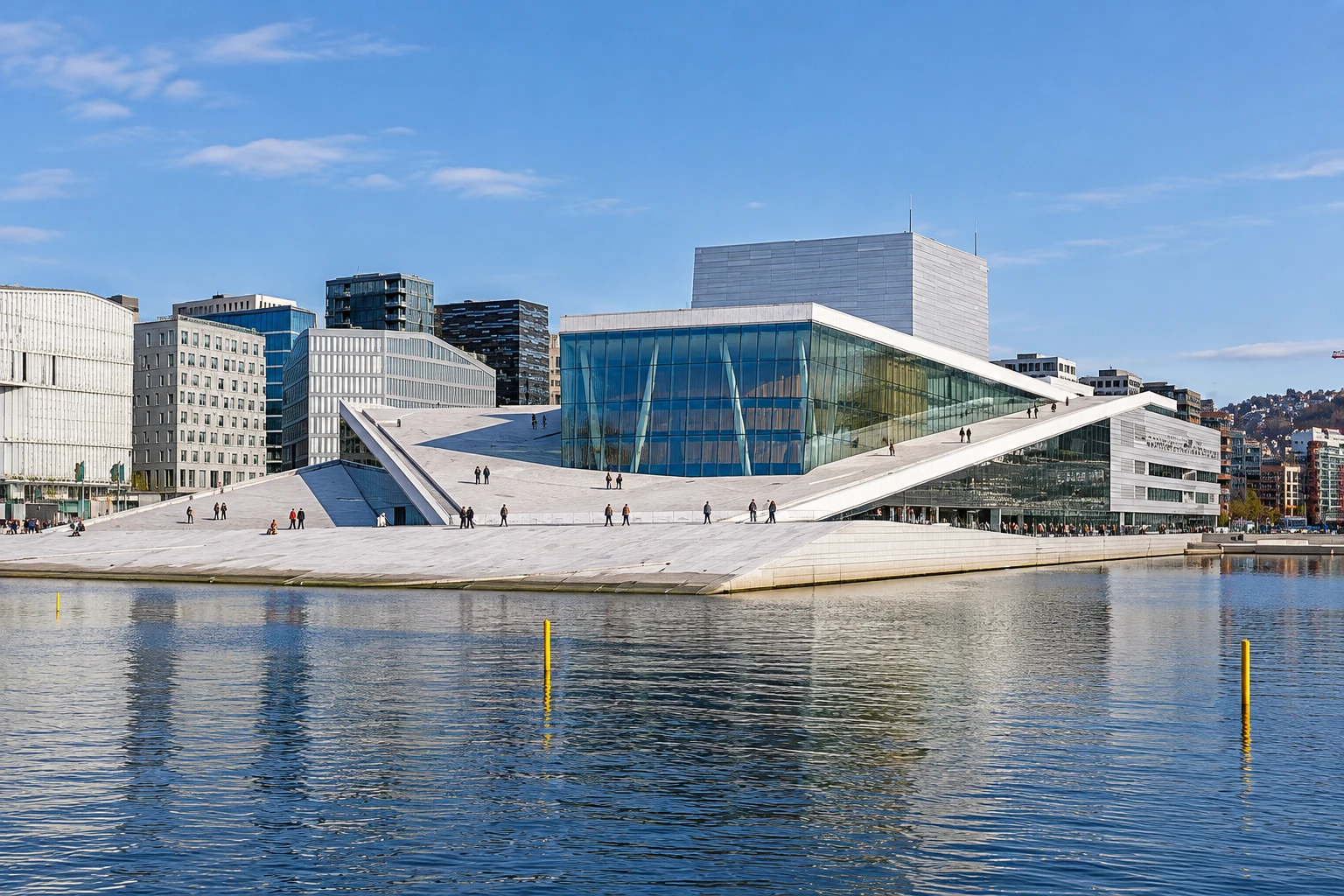
The home of the Opera and National Ballet in the bay of Bjørvika: the white marble roof slopes down to the water and can be walked to the top, with views of the fjord and the city.

 Search
 Brazil
 Antarctica
 Argentina
 Bolivia
 Chile
 Colombia
 Ecuador
 Falkland Islands (Malvinas)
 French Guiana
 Guyana
 Paraguay
 Peru
 Suriname
 Uruguay
 Venezuela
 Austria
 Belgium
 Croatia
 Denmark
 Finland
 France
 Germany
 Greece
 Hungary
 Iceland
 Ireland
 Italy
 LuxembourgNorway
 Poland
 Portugal
 Slovakia
 Slovenia
 Spain
 Sweden
 Switzerland
 the Czech Republic
 the Netherlands
 the United Kingdom
 Turkey
 Bermuda
 Canada
 Greenland
 Mexico
 Saint Pierre and Miquelon
 the United States
 the Dominican Republic
 JapanTurkey
 Egypt
 South Africa
 Australia
 Fiji
 New Zealand
 Papua New Guinea
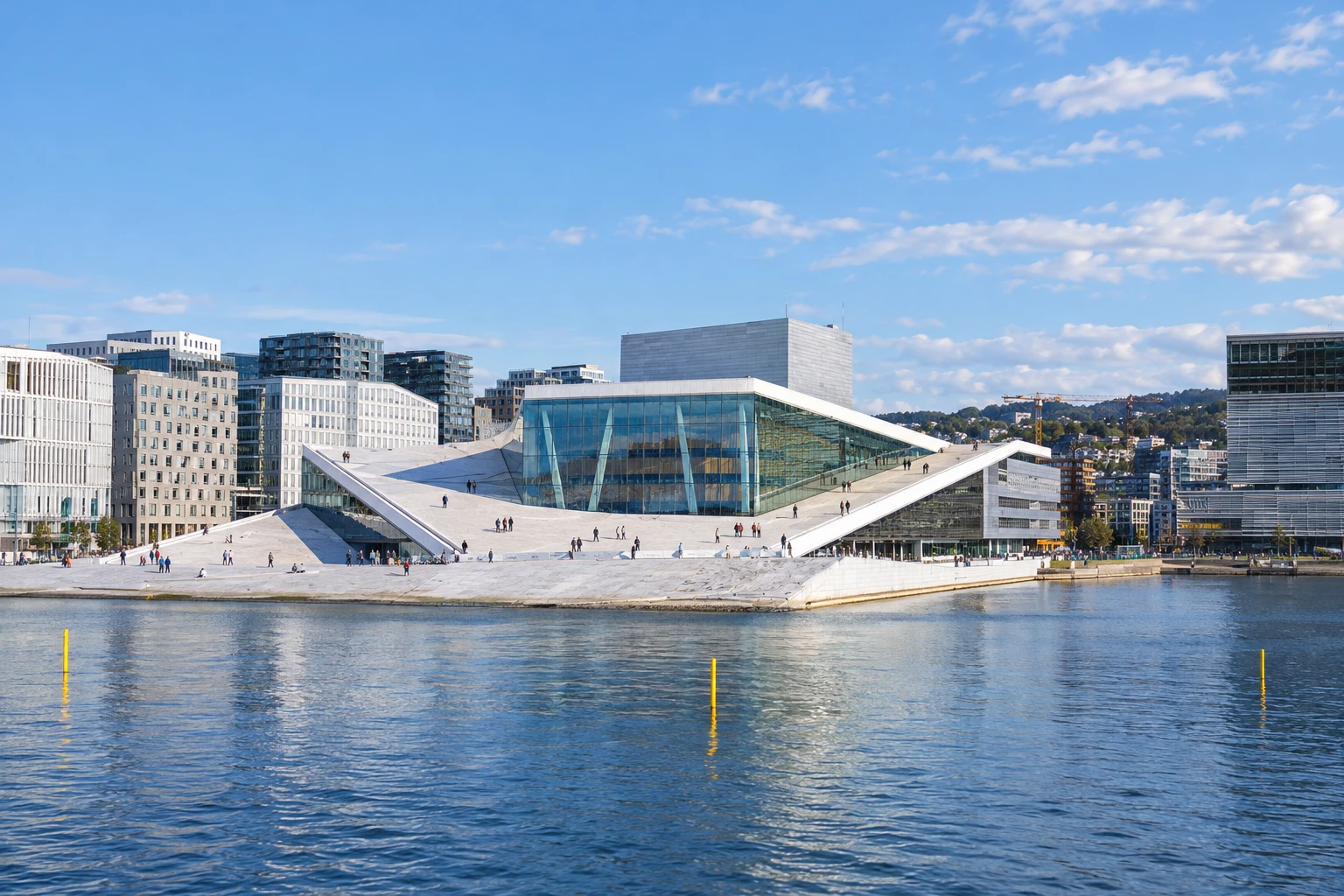
In the photo: Ópera de Oslo
Illustrative images. The pictures in this guide are illustrations based on the real place, not photographs, and may differ from it.

The city
Oslo is the capital of Norway, at the end of the Oslofjord, with a compact center between the central station, Karl Johans gate and the harbor. It brings together the Ópera with a walkable roof, the MUNCH, the Museu Nacional, the fortress of Akershus, Parque Vigeland and, in Bygdøy, the Fram, Kon-Tiki and Folklore museums. It is the country's main gateway.
There's no accommodation in the guide yet in Oslo.
Tem hotel, pousada ou casa de temporada aqui? Cadastre a suaHotéis e restaurantes da cidade no mapa.
how to get there · how many days · itinerary · questions
The local experience
The home of the Opera and National Ballet in the bay of Bjørvika: the white marble roof slopes down to the water and can be walked to the top, with views of the fjord and the city.
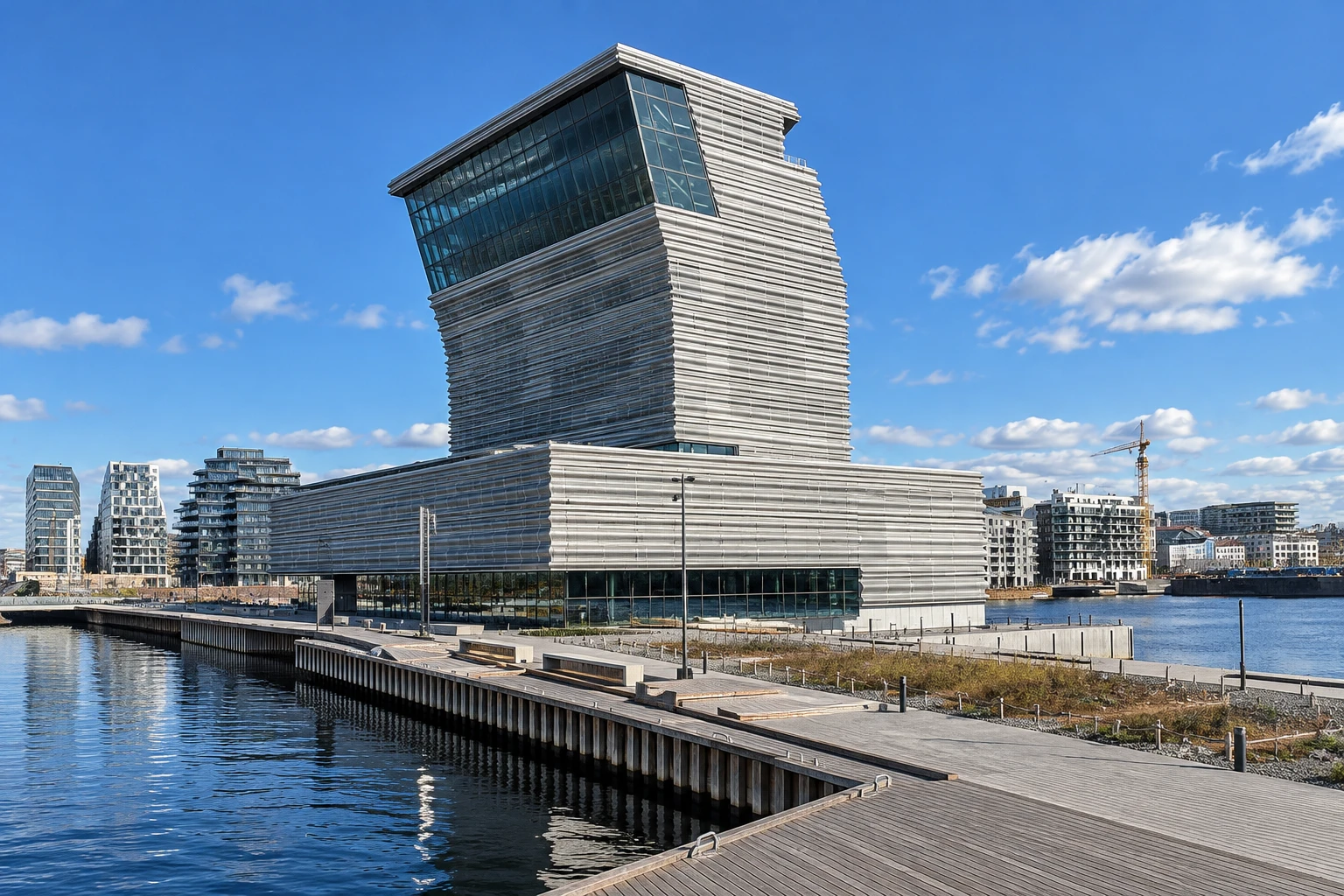
The Museu de Edvard Munch in Bjørvika, in a 13-storey building on the fjord edge: paintings, prints and drawings by the artist, with versions of The Scream and of the Frieze of Life series, and a terrace at the top.
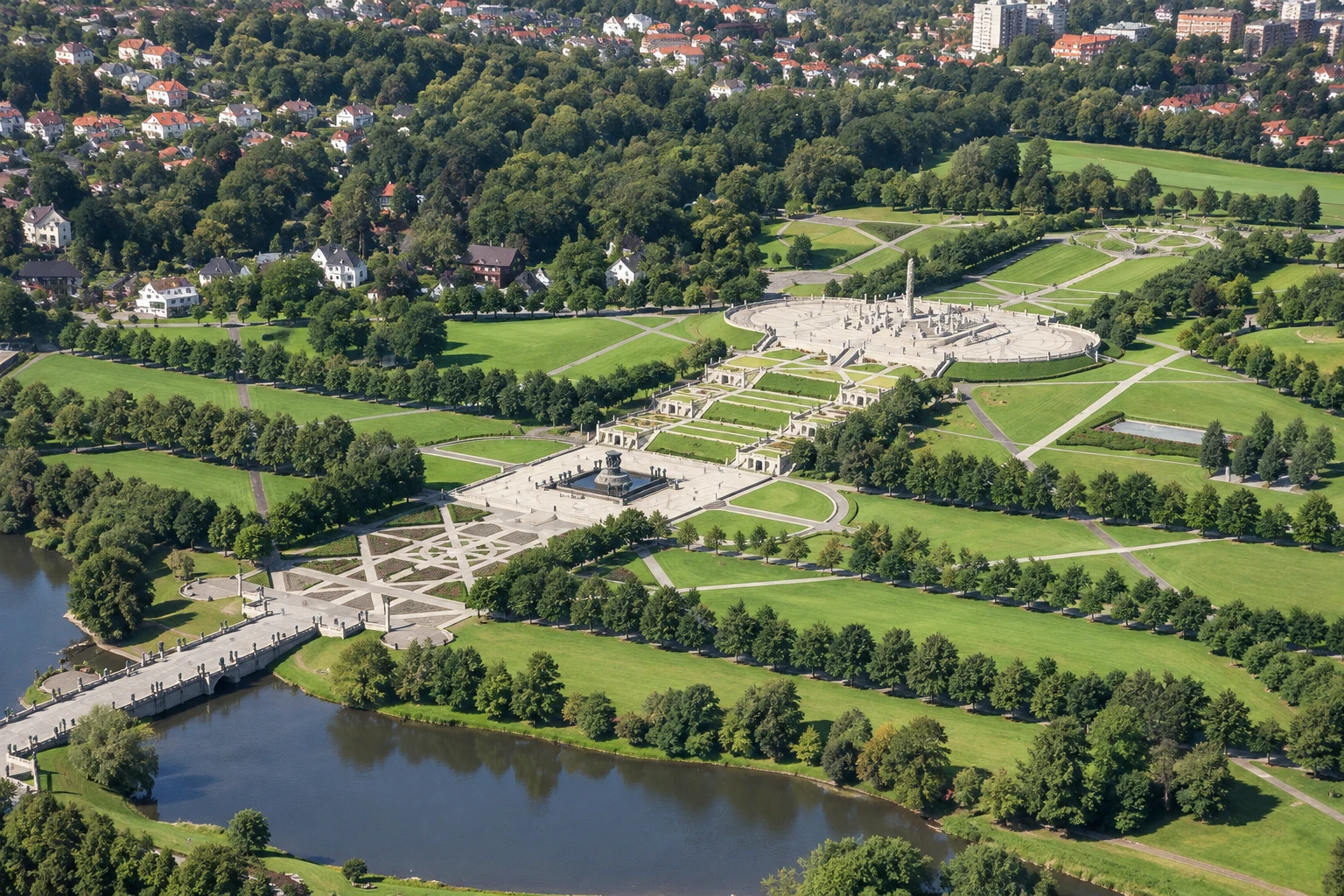
Gustav Vigeland's life's work inside Parque Frogner: more than 200 bronze and granite sculptures on the cycle of human life, featuring the bridge of figures, the fountain and the Monolith of 121 bodies.
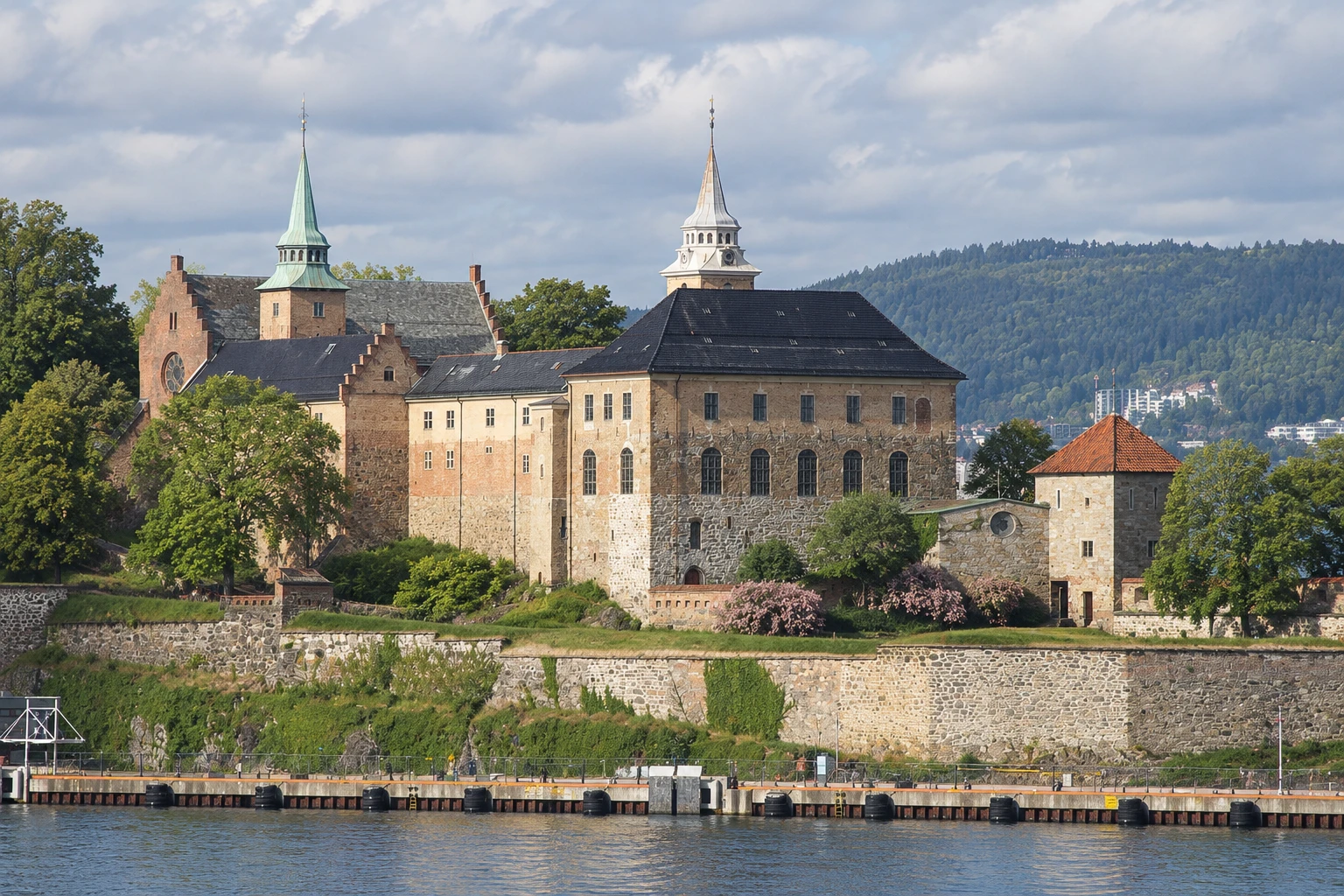
The medieval fortress that has guarded Oslo's harbour since the late 13th century, with a Renaissance castle, walkable ramparts, the royal mausoleum and the Museu da Resistência.
Before you go
Oslo – Norway Capital
Approximate distances. Check flights and bus, train or boat schedules before you travel.
Connections to Brazil are usually via another city. Check before booking. Oslo Gardermoen airport is about 50 km away; the train reaches the central station in about 20 minutes. From Bergen the railway crosses the mountains in about 7 hours. There are trains to Trondheim and Stockholm and overnight ferries to Copenhagen and Kiel.
Two days for Bjørvika, Akershus, the center, Parque Vigeland and Bygdøy. Three days to include the Museu Nacional, Holmenkollen and a boat among the islands. On return from the fjords, an extra night usually helps before the flight.
From May to September days are usually long and mild, with boats to Bygdøy and the islands. June and July have light until near midnight. From December to February it is usually below freezing, with snow and about six hours of daylight; the museums operate normally.
The seasons shown are the most usual ones; nature doesn't always follow the calendar.
No. The center is walkable, and metro, tram, bus and harbor boats use the same ticket. Holmenkollen is 30 minutes by metro; Bygdøy, 15 by bus. There is urban tolling and little parking in the center.
Suggested itinerary
Built with the places on this page. No rush: it's paced so you have time to see them.
Start with the roof of the Ópera and then go to the MUNCH next door, with the Munch exhibition and the terrace on top.
Walk to the fortress of Akershus along the walls, go down to the City Hall for the murals and take the boat or the bus to Bygdøy, with the Fram and the Kon-Tiki.
Return to the centre and take the tram to Parque Vigeland to follow the axis of sculptures to the Monolith.
Dine on the waterfront at Aker Brygge or in Tjuvholmen, with the harbour lit up and, in summer, daylight lasting late.
Day 1
Opera and MUNCH as a first stop, with time for the terrace and the escalators.
Akershus along the walls, City Hall and Museu Nacional, with the Munch room and 19th-century landscapes.
Walk up Karl Johans gate to the Palácio Real and cross the palace park.
Dine in Grünerløkka, a neighbourhood of cafés and bars, 15 minutes by tram from the centre.
Day 2
Boat or bus to Bygdøy: Museu do Folclore, with the Gol church, and then Fram and Kon-Tiki.
Return via Parque Frogner and walk among Vigeland's sculptures to the Wheel of Life.
Take the metro to Holmenkollen for the ski jump ramp and the view over the fjord from above.
Go down to dine on the waterfront at Aker Brygge and walk to Tjuvholmen.
Check before you go. Opening hours and days change, and places may close for renovations, holidays or events. This itinerary is a suggestion from Cidade Turismo, not a commitment: plan yours by checking directly with each place you intend to visit.
Before you go
The Norwegian krone. Cards are accepted for almost everything, including transport, and some places do not accept cash.
Oslo is usually four hours ahead of Brasília and five hours ahead during European summer time, from late March to late October.
Norwegian, but English is widely spoken in hotels, restaurants, museums and on public transport.
The metro, trams, buses and harbour ferries use the same ticket, bought via an app or machines. A ticket is valid for a set period and there are 24-hour and multi-day passes.
It's the most common starting point: the train to Bergen passes through Myrdal, where you change for the Flåm railway on the Sognefjord.