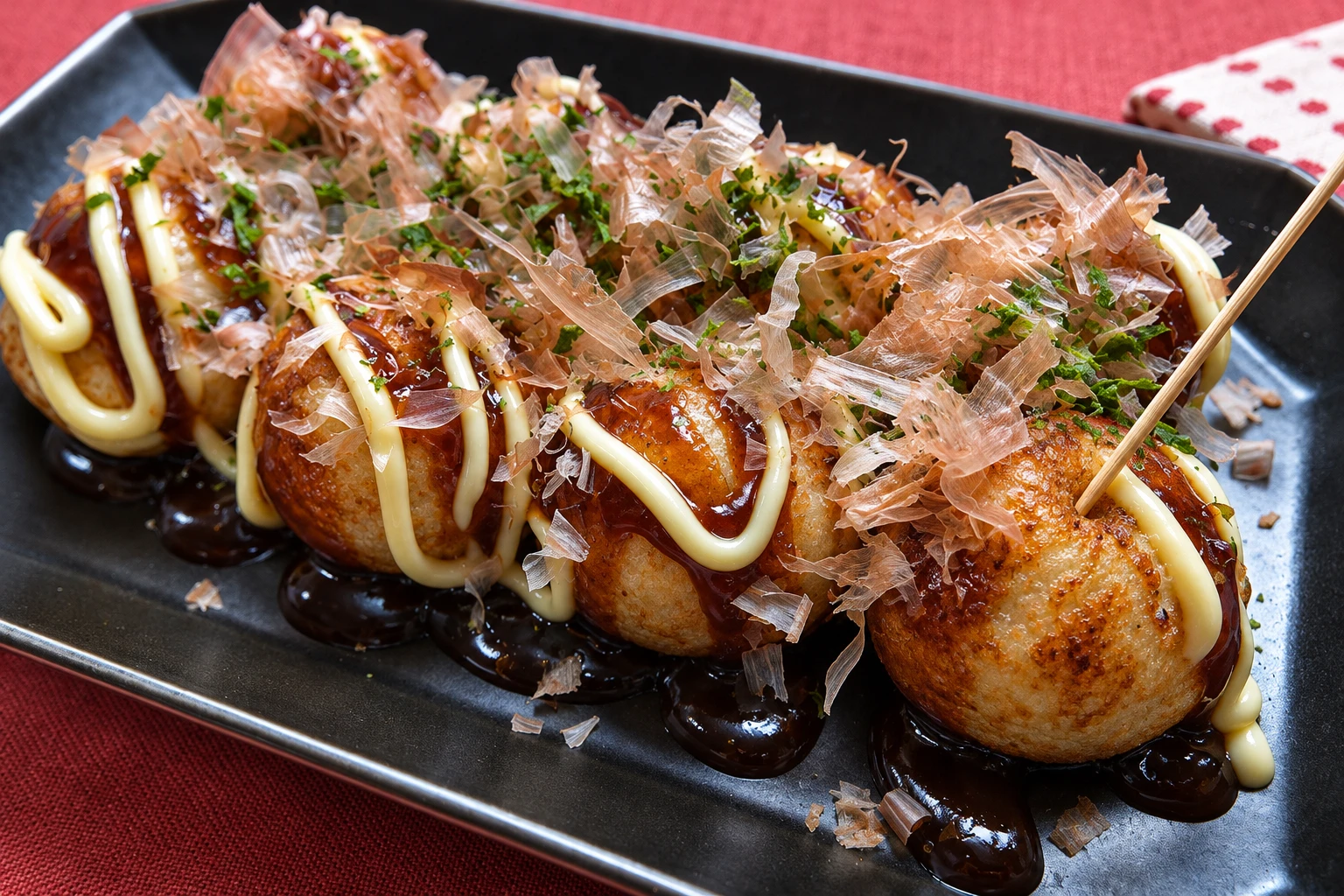
Takoyaki
Dough balls made from flour, egg and dashi with pieces of octopus, cooked on a griddle with round hollows and topped with sauce, mayonnaise, seaweed and dried bonito flakes. It’s Osaka’s best-known flavor.
Antarctica
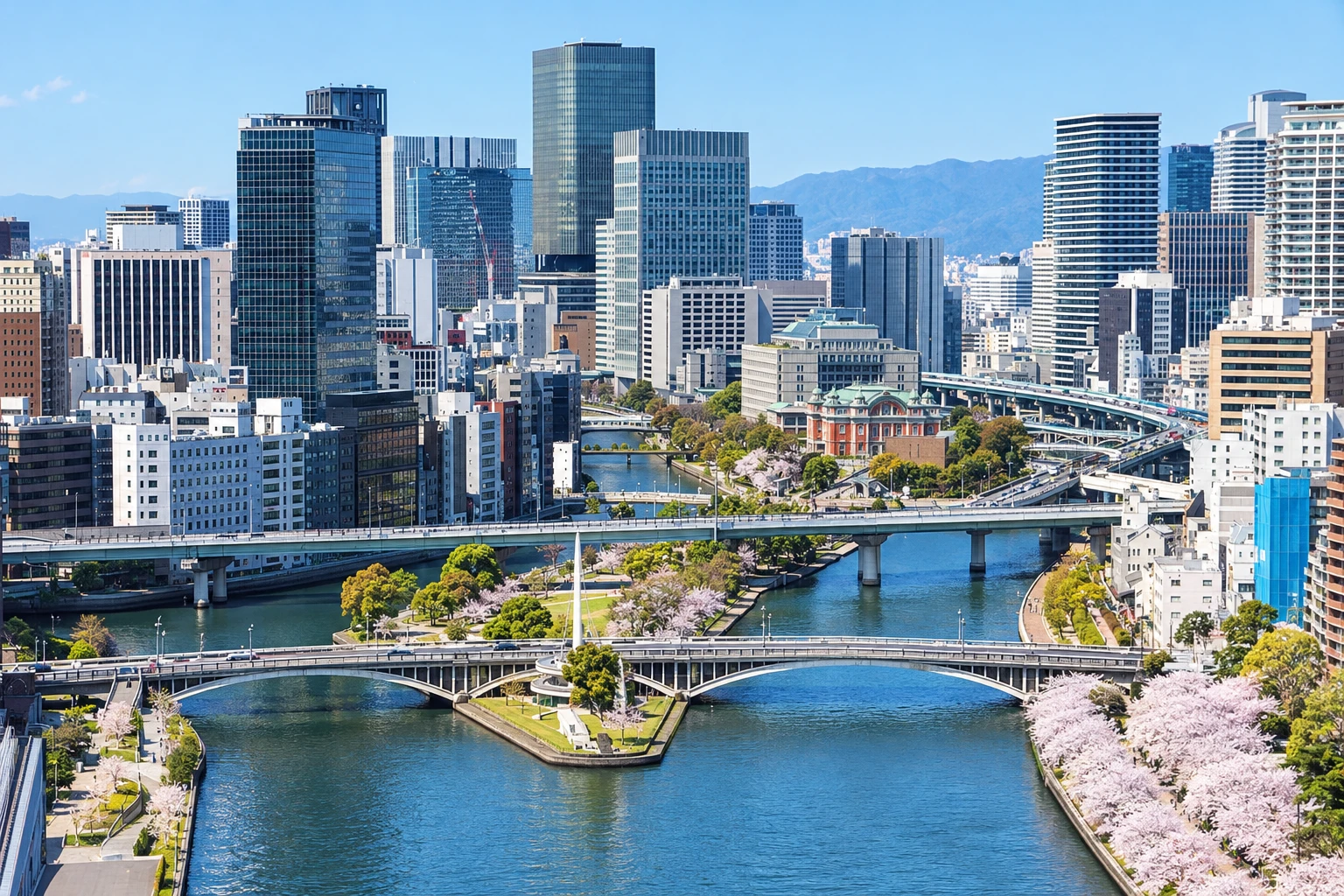
In the photo: Nakanoshima, in Osaka.
Illustrative images. The pictures in this guide are illustrations based on the real place, not photographs, and may differ from it.
The city
Osaka is the major commercial city of western Japan and the street food capital. Hideyoshi’s castle sits in a park in the center; Dotonbori and Kuromon Market concentrate takoyaki, okonomiyaki and seafood; Shinsekai preserves the Tsutenkaku Tower and a 1950s feel; the Umeda Sky Building has an observation terrace. It is a gateway via Kansai Airport and a base for Kyoto, Nara, Kobe and Himeji.
There's no accommodation in the guide yet in Osaka.
Tem hotel, pousada ou casa de temporada aqui? Cadastre a suaThere are no restaurants in the guide yet in Osaka.
Know a good one? Recommend it to usHotéis e restaurantes da cidade no mapa.
how to get there · how many days · itinerary · questions
Flavors of Japan
The local experience
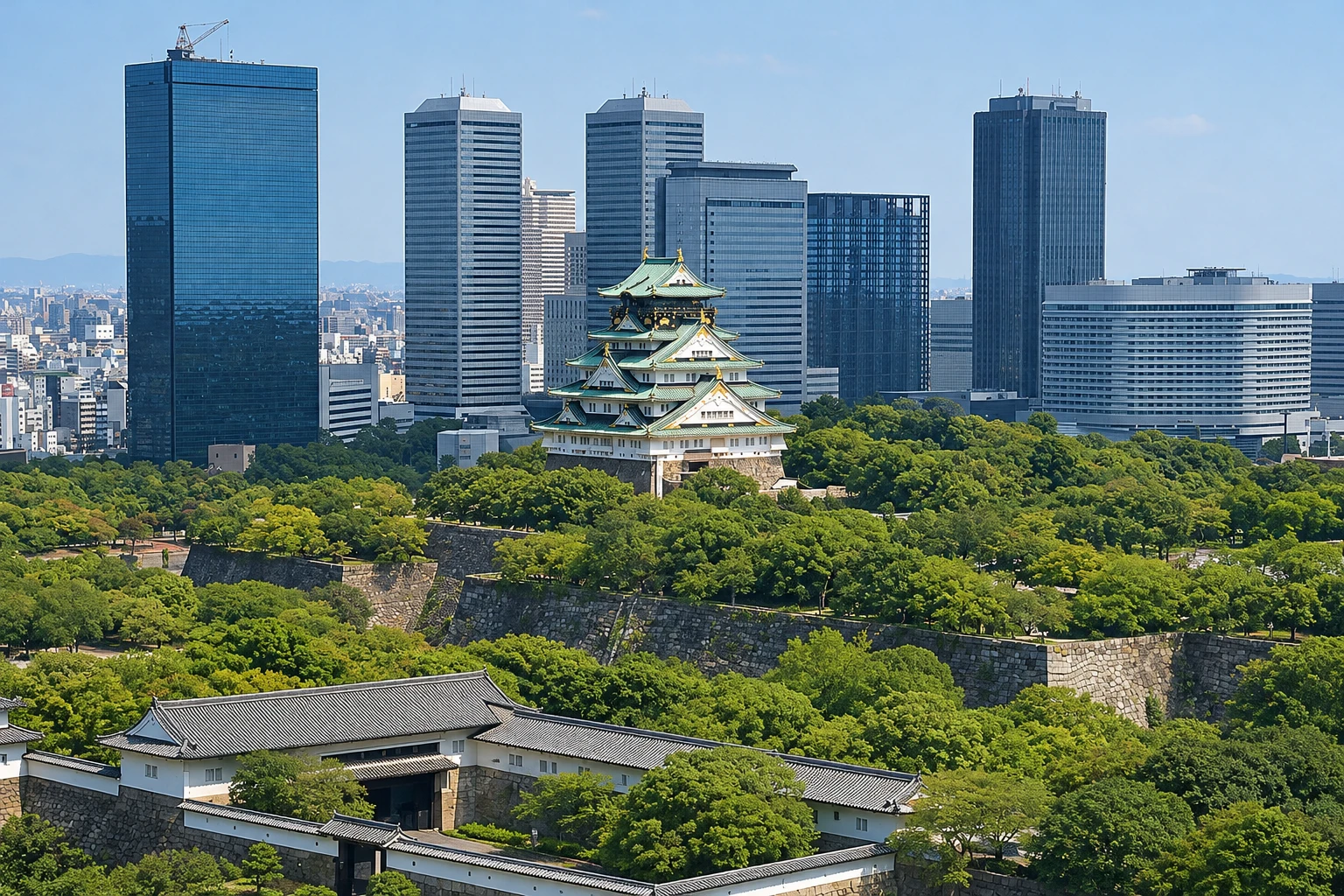
The white-and-gold tower on the site of Toyotomi Hideyoshi’s fortress, with a museum about the castle’s history, an observation deck and a large park surrounded by moats and stone walls.
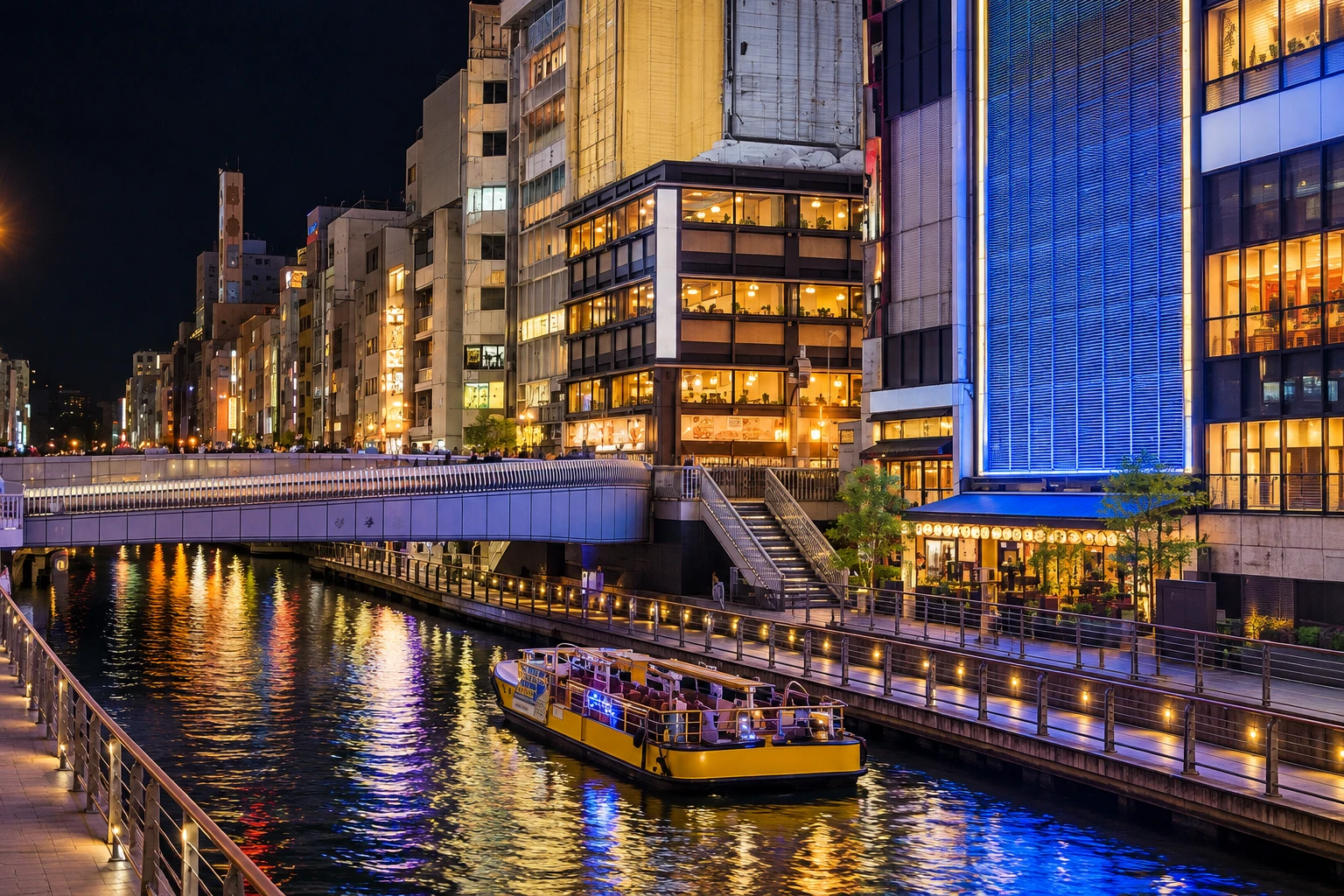
The canal and the Minami street with giant illuminated signs, the Glico running man sign, takoyaki stalls and restaurants — the heart of Osaka’s street food.
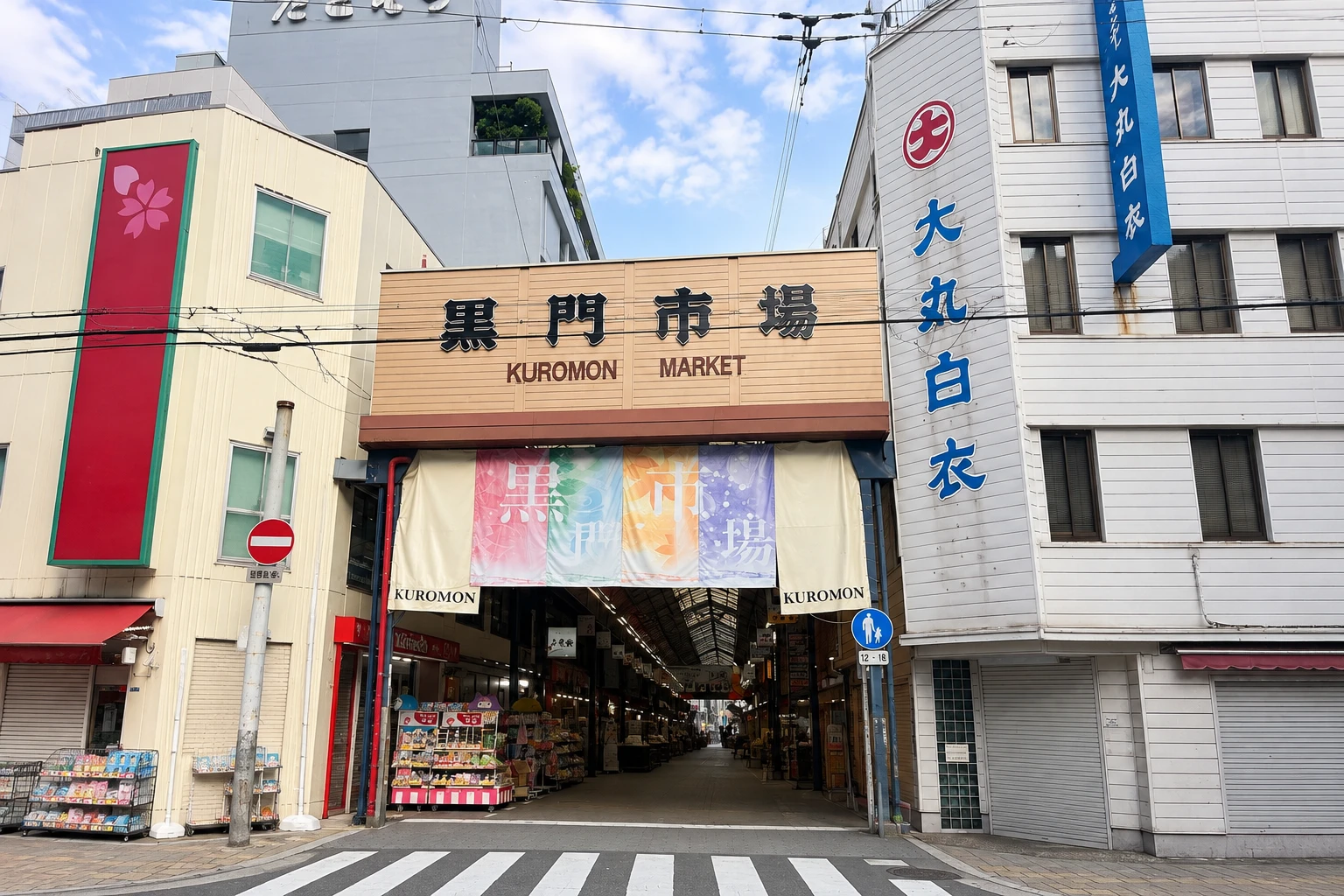
A covered street of stalls selling fish, seafood, meats, fruits and preserved foods, called Osaka’s “kitchen,” with snacks to eat on site.
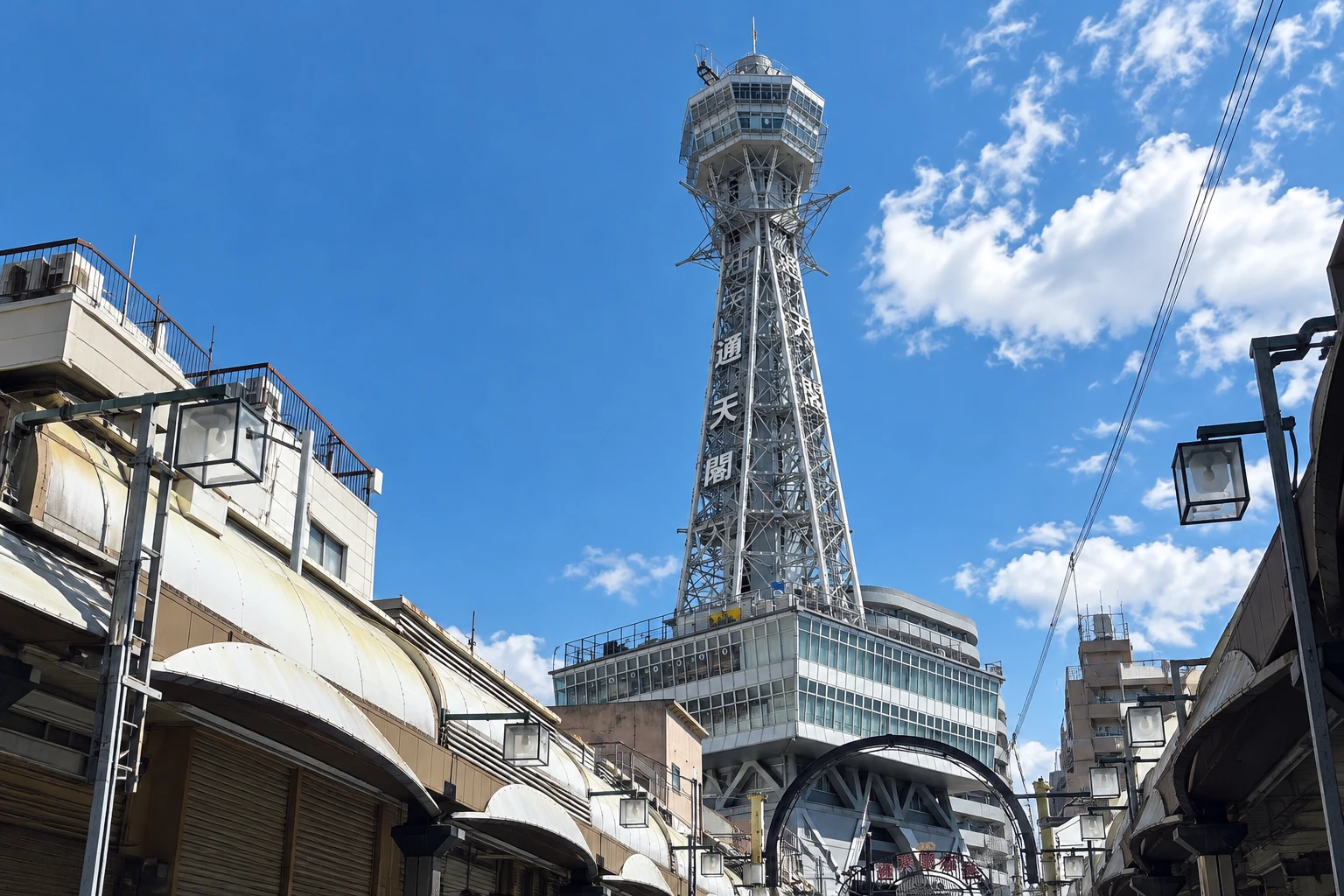
The retro neighborhood in southern Osaka, with the Tsutenkaku tower, the Billiken statue, old signage and kushikatsu restaurants.
Before you go
Osaka – Japan Capital
Approximate distances. Check flights and bus, train or boat schedules before you travel.
From Kansai Airport, the Nankai Rapi:t reaches Namba in about 35 to 40 minutes, and the JR Haruka reaches Tennoji and Shin-Osaka. Itami Airport is about 30 minutes by bus from Umeda. The shinkansen stops at Shin-Osaka, which is connected to Osaka and Umeda stations by JR and the subway.
Two days are enough for the two centers, Kita and Minami, and the castle. The third day covers the southern part of the city and the bay. Because day trips are short, Osaka can serve as a base for four or five days in the region.
Spring and autumn have mild days; the castle’s cherry trees usually bloom from late March to early April. In July, the Tenjin Matsuri brings boats and fireworks to the river. Summer is hot and humid. In December and January the streets of Umeda and Nakanoshima often feature light displays.
The seasons shown are the most usual ones; nature doesn't always follow the calendar.
No. Subway, trains and buses cover the whole city, and central traffic is heavy. ICOCA and Suica cards work on all lines.
Suggested itinerary
Built with the places on this page. No rush: it's paced so you have time to see them.
Start in the castle park, enter through the Otemon gate, and go up to the tower’s museum and observation deck.
Have lunch at Kuromon Market and then head to Shinsekai, with the Tsutenkaku Tower and kushikatsu restaurants.
Finish in Dotonbori with the signs lit, Ebisu Bridge and takoyaki from the stalls.
Day 1
Visit the park and castle tower, with its museum and observation deck.
Head to Kita, browse the shops in Umeda and go up to the Umeda Sky Building at sunset.
Dine in the retro subterranean lane beneath the Umeda Sky Building.
Day 2
Take a train to Sumiyoshi Taisha and cross the Sorihashi Bridge.
Return by the Hankai tram to Shinsekai and stop by Kuromon Market.
Finish in Dotonbori and on the cobbled lane of Hozen-ji.
Check before you go. Opening hours and days change, and places may close for renovations, holidays or events. This itinerary is a suggestion from Cidade Turismo, not a commitment: plan yours by checking directly with each place you intend to visit.
Before you go
Osaka Castle in the morning, Kuromon Market and Shinsekai in the afternoon, and Dotonbori at night.
Takoyaki, okonomiyaki, kushikatsu and the seafood cuisine of Kuromon Market. Dotonbori and Shinsekai concentrate the restaurants.
The ICOCA card, from JR West, and other rechargeable cards like Suica and PASMO, pay for subway, trains and buses.
By JR, from Osaka to Kyoto in about 30 minutes on the rapid train; by Hankyu or Keihan to central Kyoto; or by shinkansen from Shin-Osaka in about 15 minutes.
In Namba or Shinsaibashi, near the food and with trains to Kansai Airport, or in Umeda, near Osaka and Shin-Osaka stations, good for day trips.