Nara · Japan · Temple
Tōdai-ji (Todai-ji)
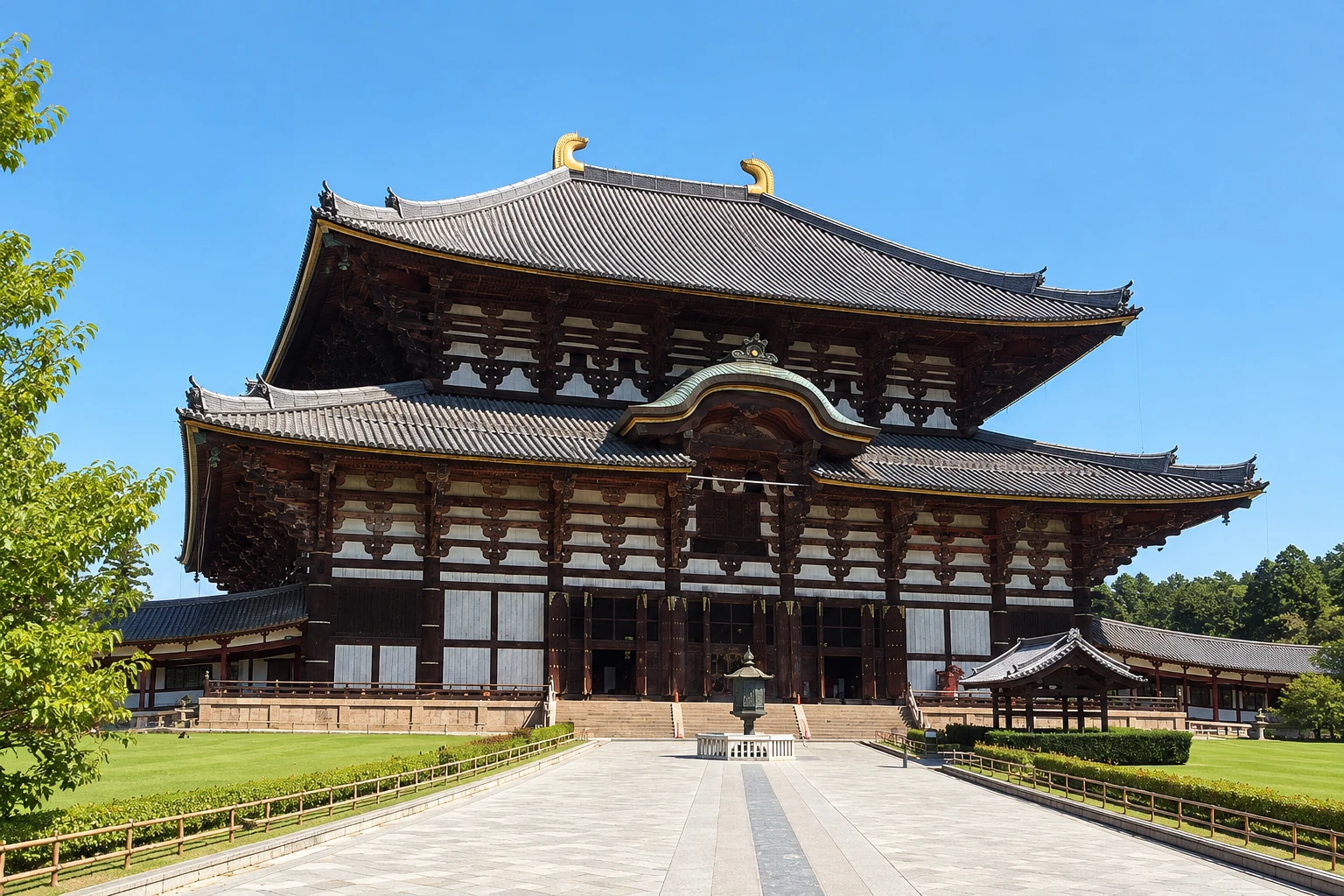
Nara’s great temple, with the Great Bronze Buddha inside one of the world’s largest wooden buildings and the Nandaimon gate with its guardians; World Heritage site.

 Search
 Brazil
 Antarctica
 Argentina
 Bolivia
 Chile
 Colombia
 Ecuador
 Falkland Islands (Malvinas)
 French Guiana
 Guyana
 Paraguay
 Peru
 Suriname
 Uruguay
 Venezuela
 Austria
 Belgium
 Croatia
 Denmark
 Finland
 France
 Germany
 Greece
 Hungary
 Iceland
 Ireland
 Italy
 Luxembourg
 Norway
 Poland
 Portugal
 Slovakia
 Slovenia
 Spain
 Sweden
 Switzerland
 the Czech Republic
 the Netherlands
 the United Kingdom
 Turkey
 Bermuda
 Canada
 Greenland
 Mexico
 Saint Pierre and Miquelon
 the United States
 the Dominican RepublicJapanTurkey
 Egypt
 South Africa
 Australia
 Fiji
 New Zealand
 Papua New Guinea
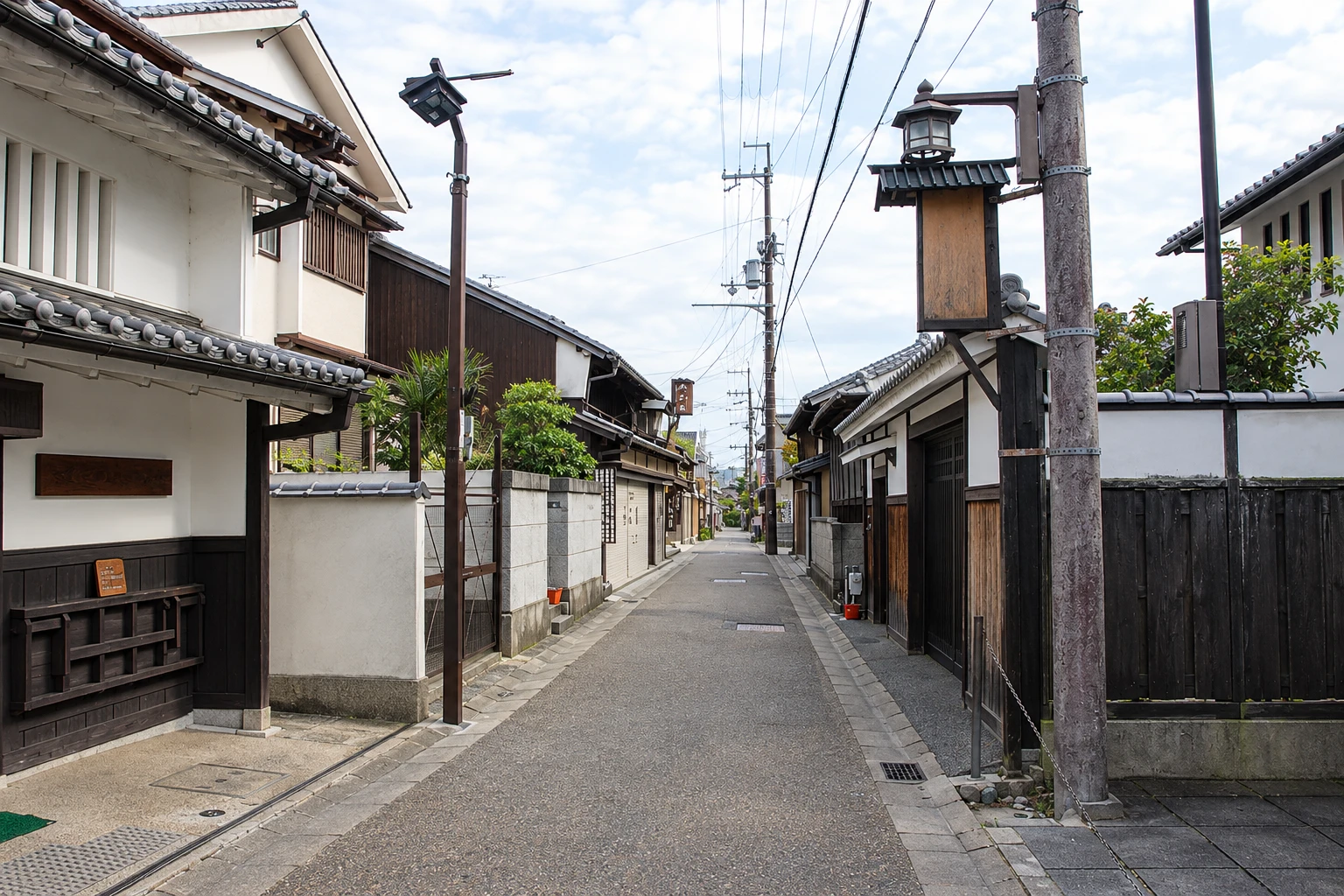
In the photo: Street in Naramachi, Nara.
Illustrative images. The pictures in this guide are illustrations based on the real place, not photographs, and may differ from it.

The city
Nara was Japan’s capital in the 8th century and preserves World Heritage temples and shrines gathered in the large park east of the city. Tōdai-ji houses the Great Buddha; Kasuga Taisha has thousands of lanterns; Kōfuku-ji has a museum of Buddhist sculptures. More than a thousand deer roam the park. The streets of Naramachi preserve merchant houses, and Hōryū-ji lies to the southwest.
There's no accommodation in the guide yet in Nara.
Tem hotel, pousada ou casa de temporada aqui? Cadastre a suaHotéis e restaurantes da cidade no mapa.
how to get there · how many days · itinerary · questions
The local experience
Nara’s great temple, with the Great Bronze Buddha inside one of the world’s largest wooden buildings and the Nandaimon gate with its guardians; World Heritage site.
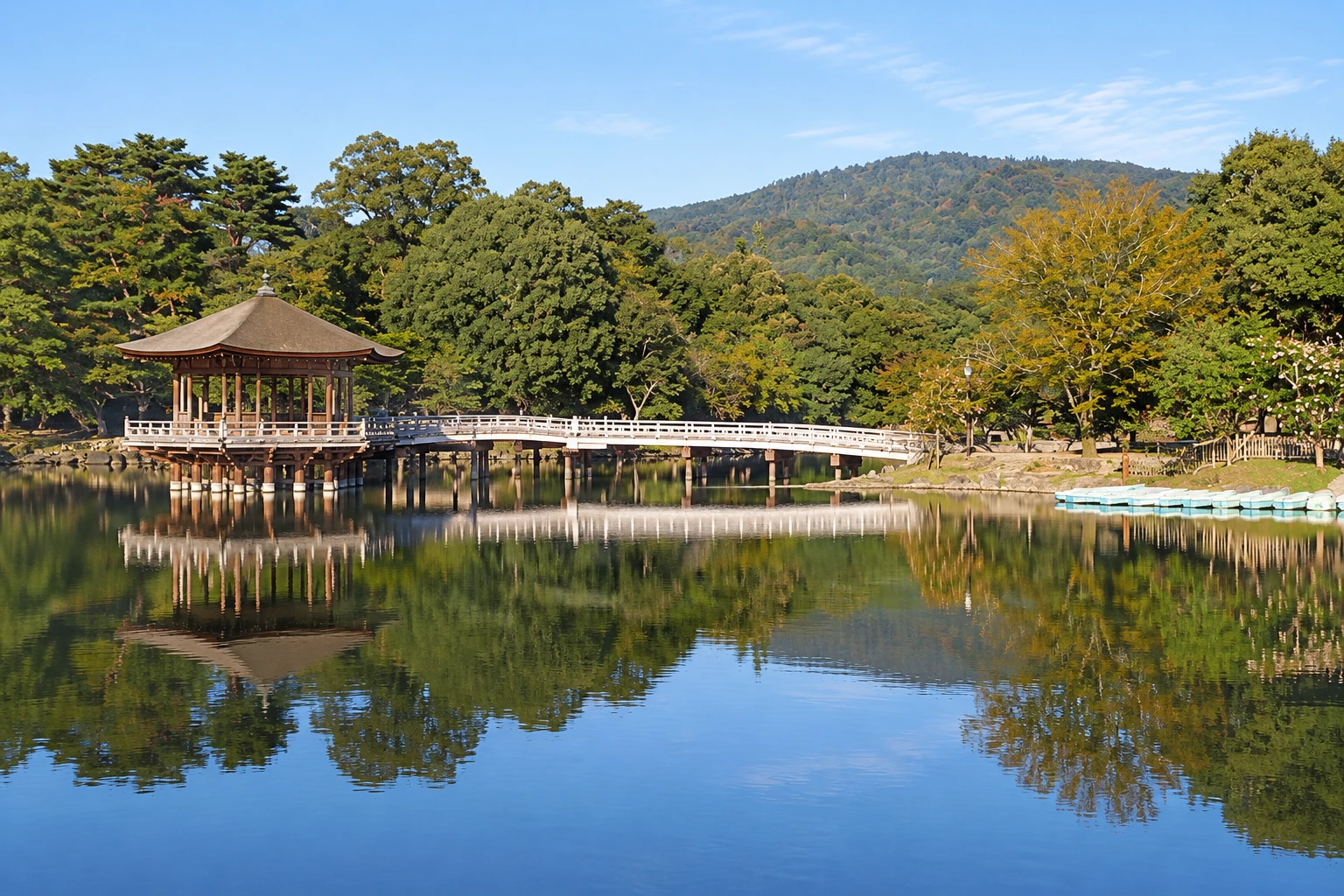
The large park east of Nara, with lawns, woods and lakes, more than a thousand free-roaming deer and the city’s main temples and museums.
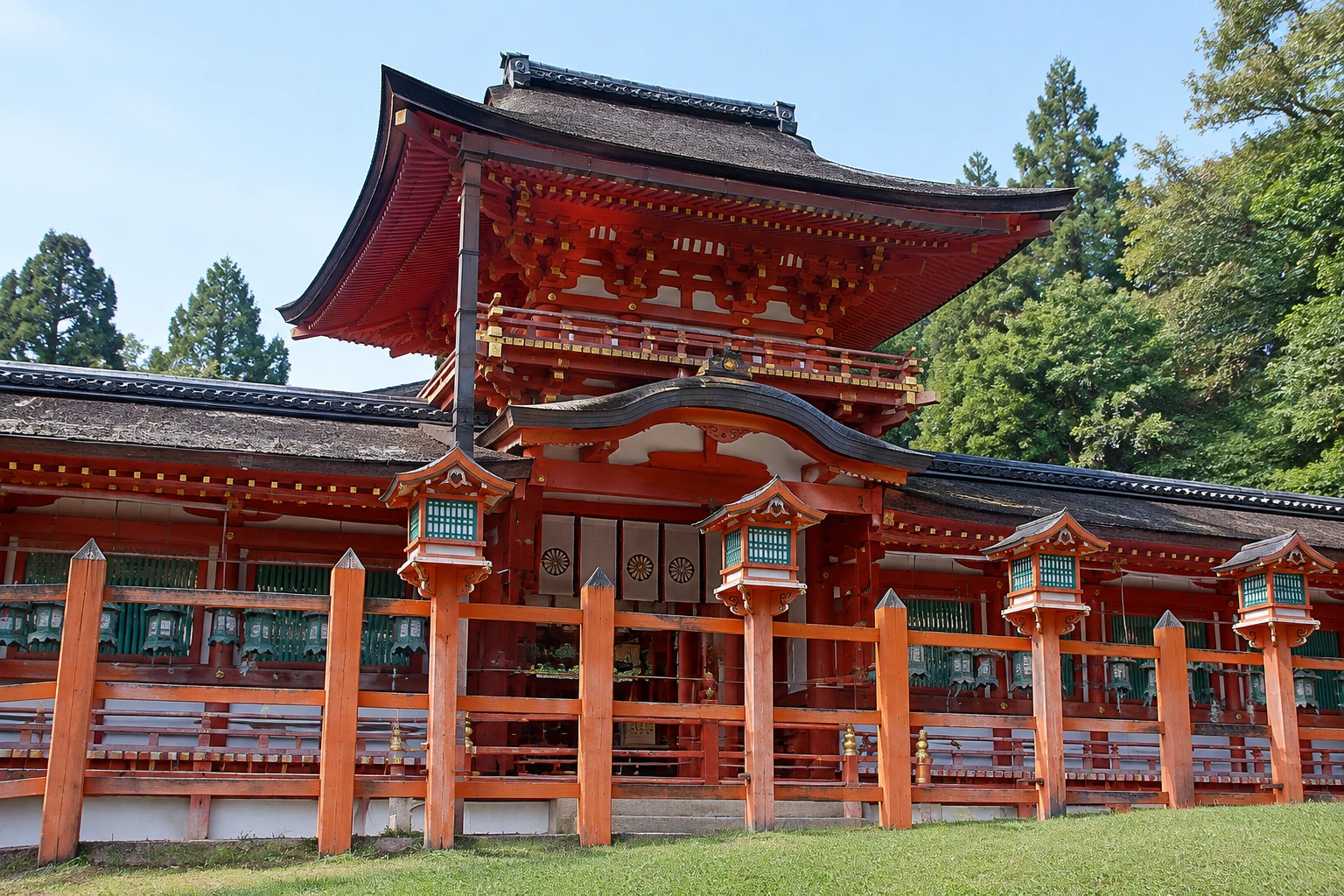
The red shrine of the Fujiwara family in the Mount Kasuga forest, with about 3,000 stone and bronze lanterns; World Heritage site.
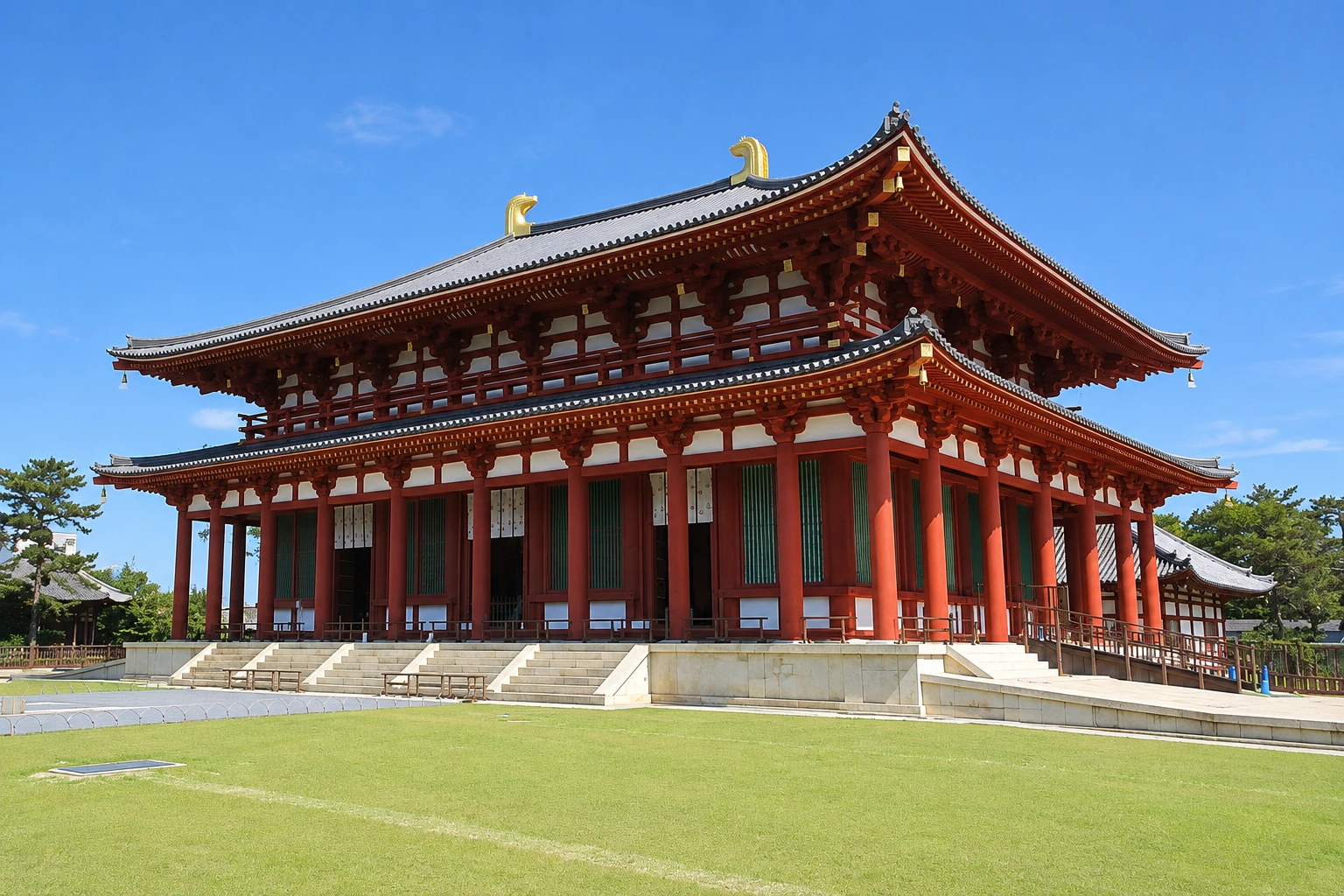
The Fujiwara family temple at the entrance to Nara Park, with the Central Golden Hall, the East Golden Hall and a museum of Buddhist sculpture including the Ashura; World Heritage site.
Before you go
Nara – Japan Capital
Approximate distances. Check flights and bus, train or boat schedules before you travel.
Kintetsu-Nara Station, the closest to the park, is the terminus for Kintetsu trains coming from Namba and Kyoto. JR Nara serves JR trains from Osaka, Tennōji and Kyoto. Direct buses make the trip from Kansai Airport in about 1h30.
One day for Tōdai-ji, the park, Kasuga Taisha and Kōfuku-ji. With one night, include Naramachi, the Nara National Museum and Hōryū-ji, plus the park when it’s empty early in the morning.
April, for the cherry blossoms, and November, for the maples, are the most popular months. May and October are also pleasant. Kasuga Taisha’s lantern festival is in early February and mid-August, and the burning of Mount Wakakusa takes place in January.
The seasons shown are the most usual ones; nature doesn't always follow the calendar.
No. The park and Naramachi are walkable, and circular buses link the stations to the temples. For Hōryū-ji, train and bus are enough.
Suggested itinerary
Built with the places on this page. No rush: it's paced so you have time to see them.
Start at Kōfuku-ji and the Ashura statue museum and follow through the park, among the deer, to Tōdai-ji and the Great Buddha.
Climb up to Nigatsu-dō for the view and follow the lantern path to Kasuga Taisha.
Descend to Naramachi for dinner among the wooden houses of the old merchants.
Day 1
Arrive at Tōdai-ji when it opens, before the tour groups, and then climb to Nigatsu-dō.
Visit Kasuga Taisha, the Manyo Botanical Garden and the Isuien and Yoshikien gardens.
Day 2
Take the train to Hōryū-ji and explore the west and east areas and the treasure hall.
Return to Nara, visit the Kōfuku-ji museum and finish in Naramachi.
Check before you go. Opening hours and days change, and places may close for renovations, holidays or events. This itinerary is a suggestion from Cidade Turismo, not a commitment: plan yours by checking directly with each place you intend to visit.
Before you go
Kōfuku-ji and Tōdai-ji in the morning, Nigatsu-dō and Kasuga Taisha in the afternoon, and Naramachi at the end of the day, all on foot through the park.
At small stalls scattered throughout Nara Park that sell shika senbei, the only food permitted for the animals.
It is the old merchant district south of Kōfuku-ji, with narrow wooden houses, craft shops, cafés and small museums.
Kakinoha-zushi, sushi wrapped in persimmon leaves, kuzu, a sweet made from the root, and the local sake. Naramachi has restaurants and confectionery shops.
Yes. The freely roaming deer in the park, the large gates and the hole in the Todai-ji pillar usually please children. Be careful with the deer when you have crackers in your hand.