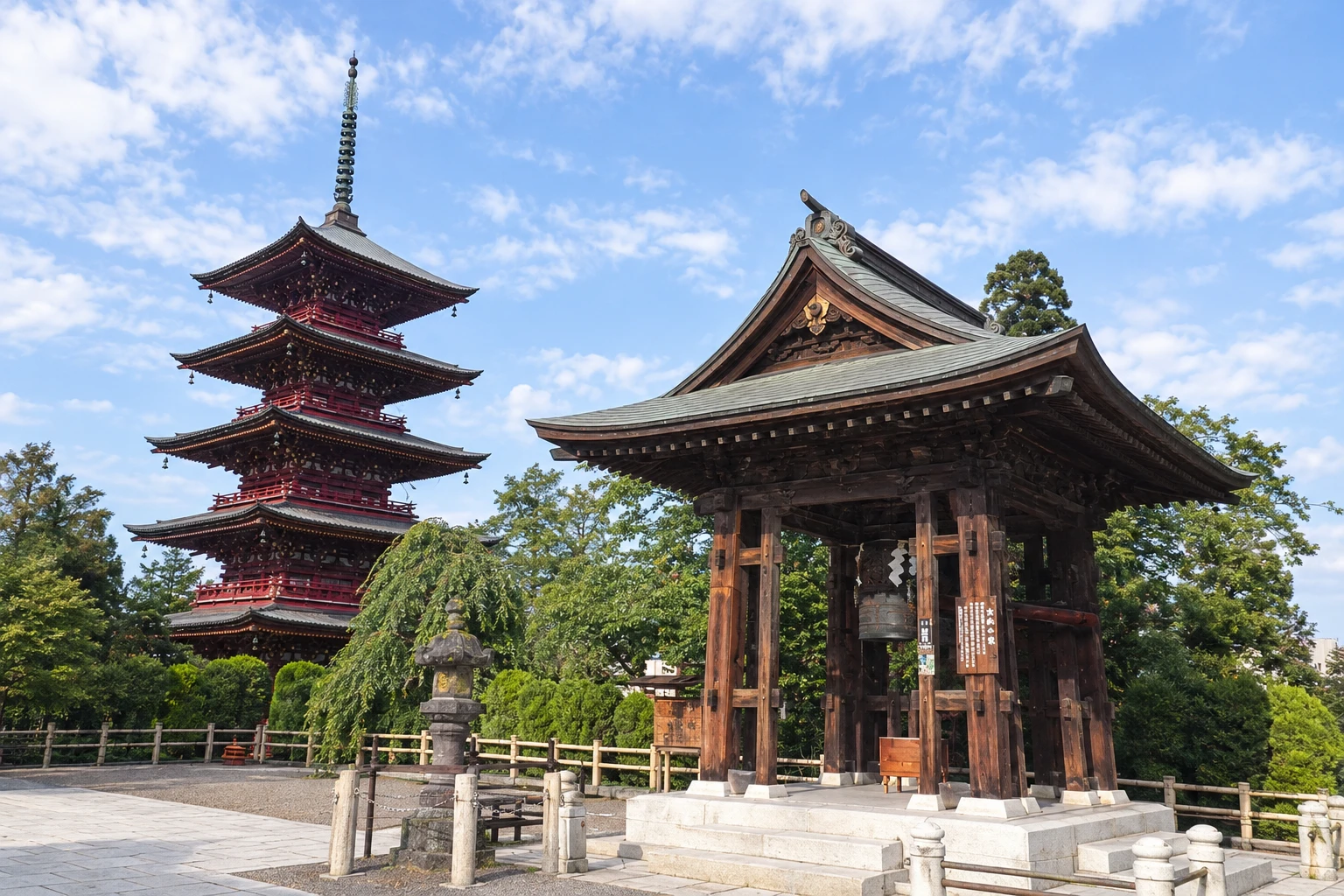
In the photo: Pagoda and gate of Saisho-in Temple, in Hirosaki.
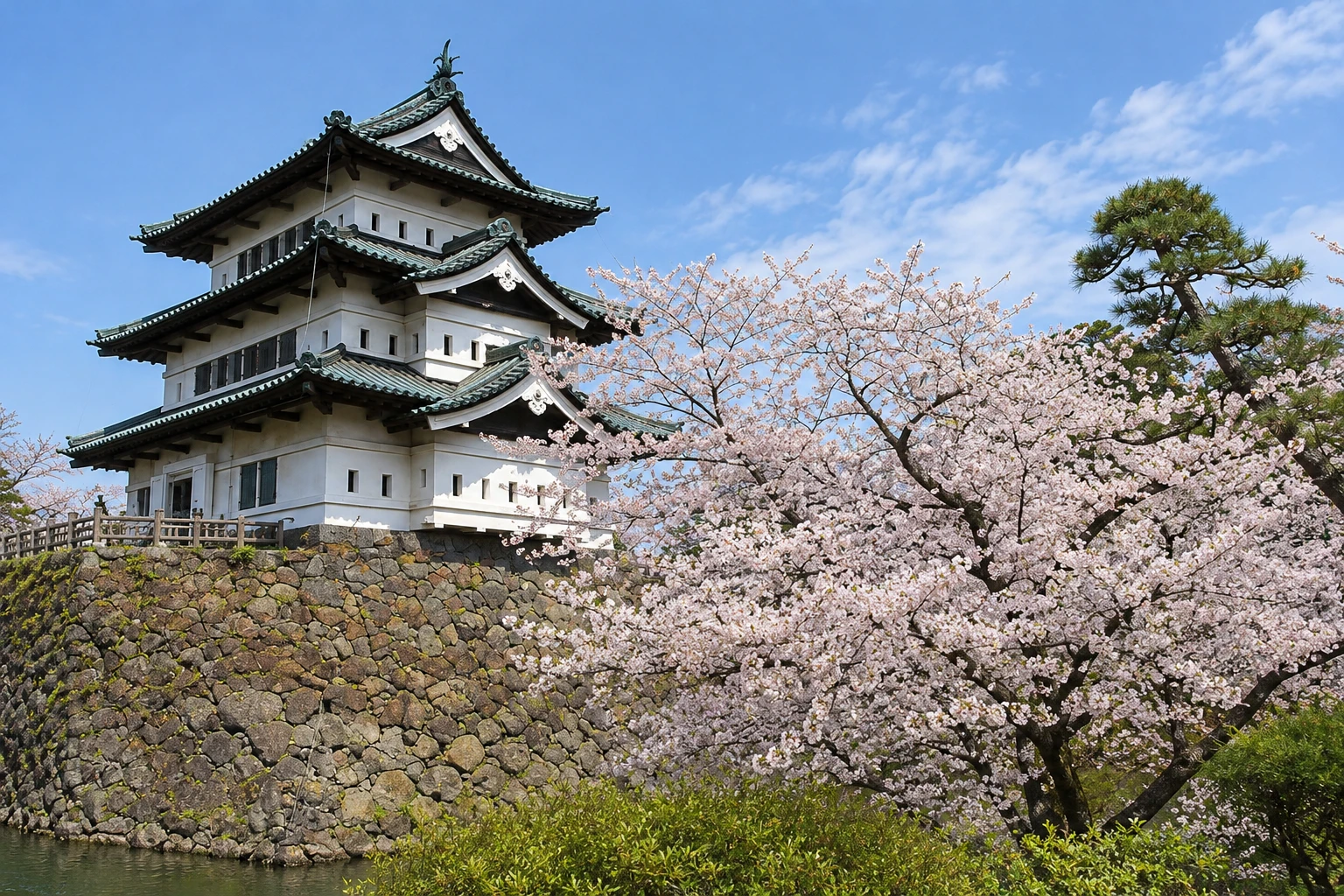
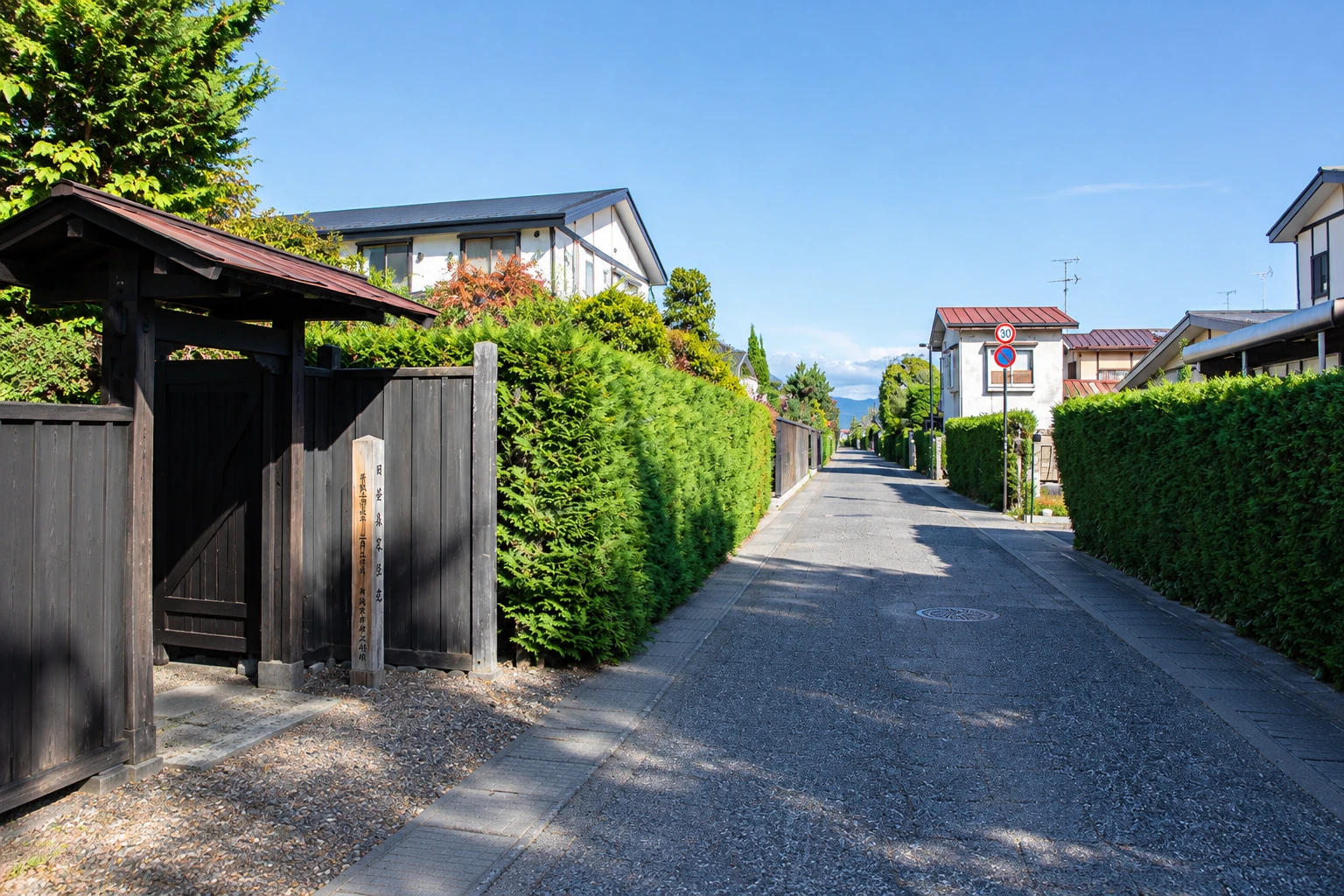
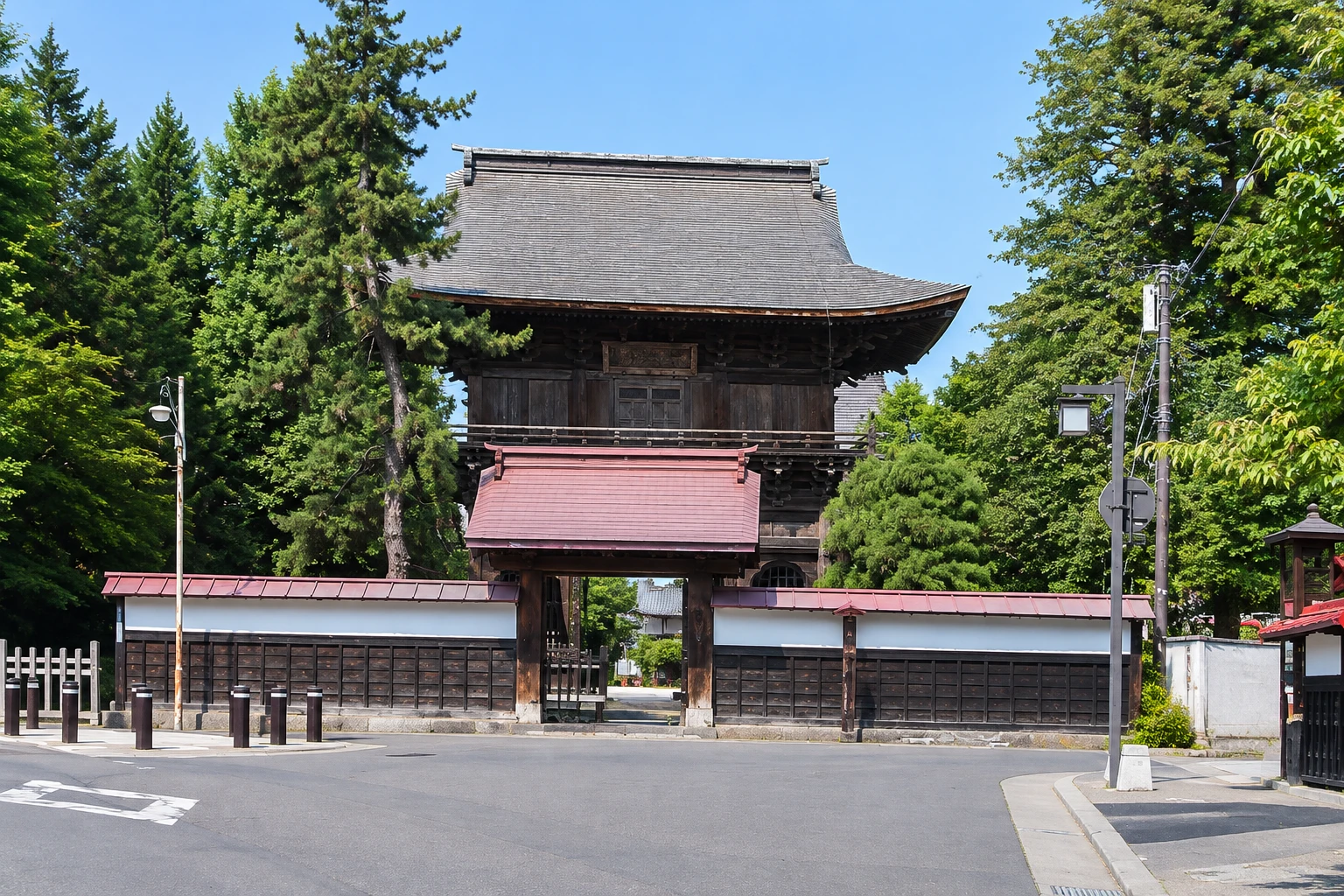
Illustrative images. The pictures in this guide are illustrations based on the real place, not photographs, and may differ from it.
The city
What to expect from Hirosaki.
Hirosaki is the former seat of the Tsugaru clan, in western Aomori, at the foot of Mount Iwaki. It has the castle, with one of Japan’s twelve remaining original keeps, set in a park with thousands of cherry trees; the samurai district of Nakacho; Zenrin Avenue, with its Sōtō school temples; and European-style Meiji-era buildings. It is the center of the country’s largest apple-producing region.
The Tsugaru clan castle, with an original 1810 keep, gates, moats and Edo-period walls, set in a park of about 50 hectares with more than 2,500 cherry trees and the Fujita Garden beside it.
The Tsugaru family’s Zen temple at the end of Zenrin Street, with a two-story gate from 1629 and mausoleums of the clan lords, on a street with thirty-three Soto school temples.
Approximate distances. Check flights and bus, train or boat schedules before you travel.
Hirosaki Station is served by trains from Shin-Aomori (the shinkansen) in about 35 minutes, and from Aomori Station in about 45 minutes. Aomori Airport is about 33 km away, with a direct bus taking roughly one hour. There are overnight buses to Tokyo.
How many days
One day covers the castle park, the Nakacho district and the temple street. With two days, you’ll have time for the Western-style buildings, the apple-related sights and Mount Iwaki.
When to go
The castle-park cherry trees usually bloom around late April to early May. August features the Neputa festival, with fan-shaped floats. October and November bring autumn foliage and the apple harvest. In winter, from December to March, it snows heavily, and the castle hosts a snow-lantern festival in February.
The seasons shown are the most usual ones; nature doesn't always follow the calendar.
Do you need a car?
No. The center is walkable and served by circular buses that run from the station, and bikes are available to rent in season. A car is useful only for Mount Iwaki and for the Shirakami area to the west.
Suggested itinerary
An order that works
Built with the places on this page. No rush: it's paced so you have time to see them.
One day in Hirosaki
manhã
Castle park
Enter the park through the east gate, cross the moats and reach Hirosaki Castle’s keep. Also visit the Fujita Garden next to the park.
tarde
Nakacho district
Walk to the samurai neighborhood of Nakacho, north of the castle, and go inside the houses open to visitors, set behind hedges.
fim de tarde
Zenrin Street and Chosho-ji
Head to Zenrin Street to the southwest, with its thirty-three Zen temples, and finish at the gate of Chosho-ji.
noite
Apples and music
Taste apple cider and apple sweets in the center and, if available, watch a Tsugaru shamisen performance in a restaurant.
Check before you go. Opening hours and days change, and places may close for renovations, holidays or events. This itinerary is a suggestion from Cidade Turismo, not a commitment: plan yours by checking directly with each place you intend to visit.
Before you go
Frequently asked questions
Is Hirosaki Castle original?
The three-story keep, from 1810, is one of the twelve original castle keeps remaining in Japan, as are some gates and corner towers. The walls and moats also date from the Edo period.
Can you visit Hirosaki as a day trip from Aomori?
Yes. The train takes about 45 minutes from Aomori Station and 35 minutes from Shin-Aomori. One day is enough for the castle, Nakacho and the temple street.
What is Hirosaki’s Neputa?
It is Hirosaki’s summer festival in early August, with illuminated fan-shaped floats painted with warriors on the front and female figures on the back. It differs from Aomori’s Nebuta, which features sculptural floats.
Where to try Hirosaki apples?
At cafés and shops in the center, which sell pies, ciders and juices. In autumn, from September to November, nearby orchards offer fruit picking and shops stock many varieties.


 Brazil
 Antarctica
 Argentina
 Bolivia
 Chile
 Colombia
 Ecuador
 Falkland Islands (Malvinas)
 French Guiana
 Guyana
 Paraguay
 Peru
 Suriname
 Uruguay
 Venezuela
 Austria
 Belgium
 Croatia
 Denmark
 Finland
 France
 Germany
 Greece
 Hungary
 Iceland
 Ireland
 Italy
 Luxembourg
 Norway
 Poland
 Portugal
 Slovakia
 Slovenia
 Spain
 Sweden
 Switzerland
 the Czech Republic
 the Netherlands
 the United Kingdom
 Turkey
 Bermuda
 Canada
 Greenland
 Mexico
 Saint Pierre and Miquelon
 the United States
 the Dominican Republic
 Egypt
 South Africa
 Australia
 Fiji
 New Zealand
 Papua New Guinea