Monterosso al Mare · Italy · Beach
Fegina Beach
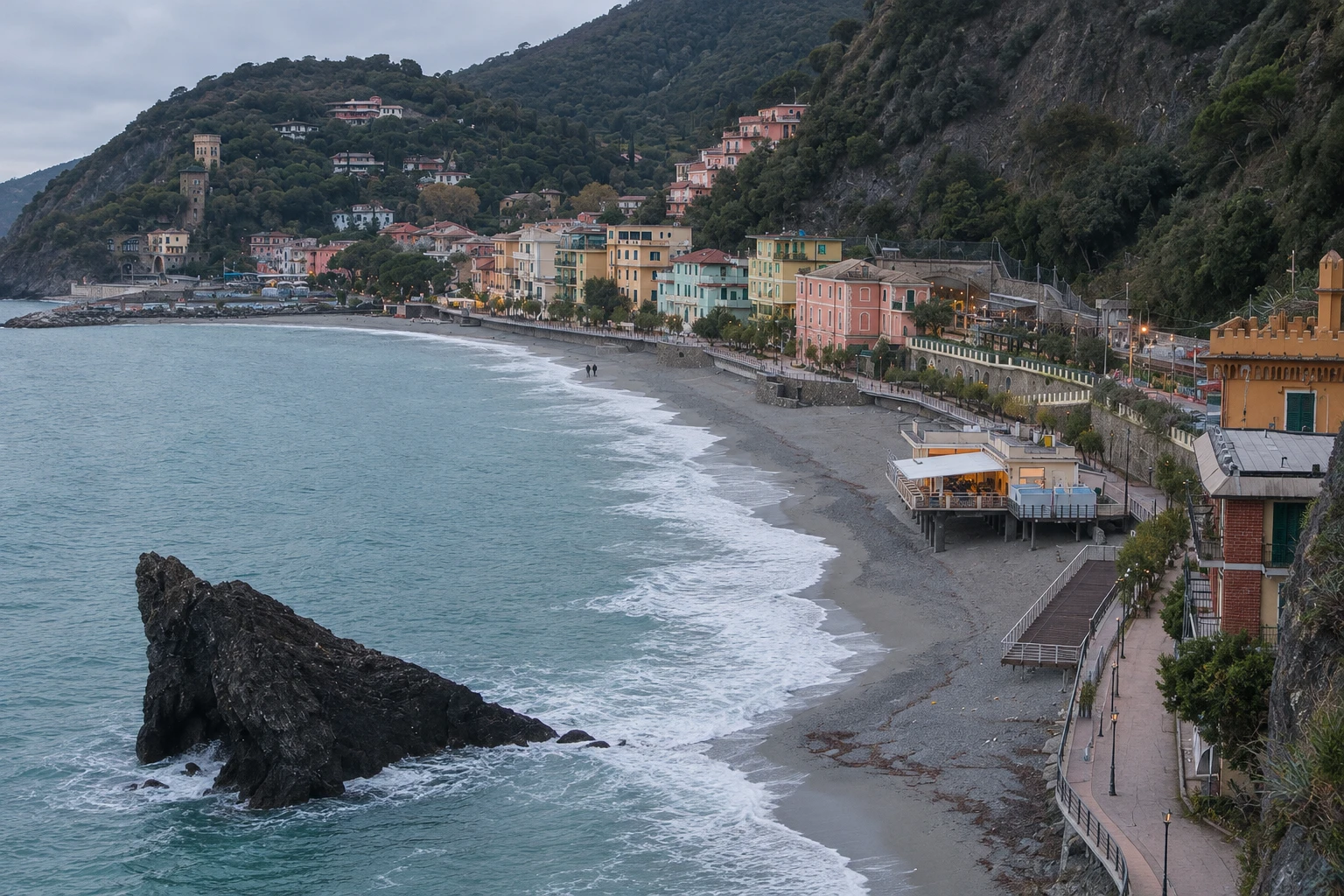
The longest beach in the Cinque Terre, in front of Monterosso station, with coarse sand and pebbles and stretches with umbrellas belonging to establishments.

 Search
 Brazil
 Antarctica
 Argentina
 Bolivia
 Chile
 Colombia
 Ecuador
 Falkland Islands (Malvinas)
 French Guiana
 Guyana
 Paraguay
 Peru
 Suriname
 Uruguay
 Venezuela
 Austria
 Belgium
 Croatia
 Denmark
 Finland
 France
 Germany
 Greece
 Hungary
 Iceland
 IrelandItaly
 Luxembourg
 Norway
 Poland
 Portugal
 Slovakia
 Slovenia
 Spain
 Sweden
 Switzerland
 the Czech Republic
 the Netherlands
 the United Kingdom
 Turkey
 Bermuda
 Canada
 Greenland
 Mexico
 Saint Pierre and Miquelon
 the United States
 the Dominican Republic
 JapanTurkey
 Egypt
 South Africa
 Australia
 Fiji
 New Zealand
 Papua New Guinea
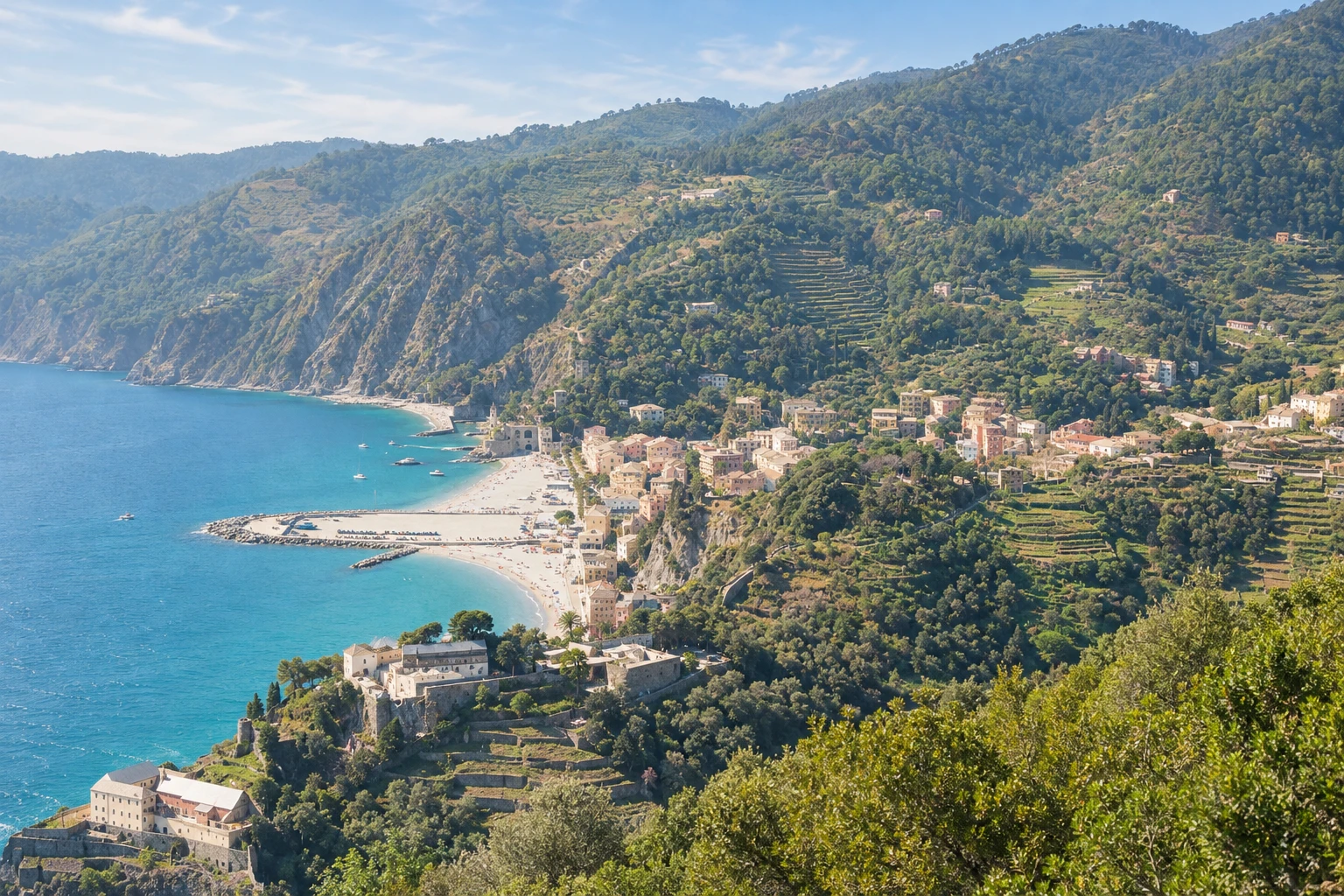
In the photo: Panorama of Monterosso al Mare, Cinque Terre
Illustrative images. The pictures in this guide are illustrations based on the real place, not photographs, and may differ from it.

The city
Monterosso al Mare is the westernmost and most populous village of the Cinque Terre. It has two parts: Fegina, with the station and the longest beach in the region, where the statue of the Gigante stands, and the old town, with the Gothic church of San Giovanni Battista. Between them, on the hill, is the Convento dei Cappuccini.
Monterosso al Mare occupies a small bay at the western end of the Cinque Terre, enclosed by Punta Mesco on one side and Punta Corone on the other. It has the most space of the five villages. Unlike its neighbors tucked between rocks, Monterosso has level seafront streets, stretches of beach and a train station a few steps from the sand.
Colle di San Cristoforo divides the town in two, with a short pedestrian tunnel linking the two sides. To the west is Fegina, the newer resort area with the station, promenade, longest beach and, at the far end, the Statua del Gigante, a concrete Neptune from 1910. To the east is the old center, which grew at the mouth of the Buranco stream. Its landmarks include the parallel streets Via Roma and Via Vittorio Emanuele, tree-shaded Piazza Garibaldi and the church of San Giovanni Battista with its facade of light and dark bands. On the hill between the two districts are the Convento dei Cappuccini, the cemetery occupying the old castle site and, on the point above the sea, Torre Aurora, a 16th-century Genoese watchtower.
Beyond the beach, Monterosso is a starting point for walks. From the Gigante statue, a trail climbs to Punta Mesco, the ruins of the Sant’Antonio hermitage and a view of the entire Cinque Terre coast. From the end of Via Roma, an old mule track leads to the Santuario di Nostra Signora di Soviore, mentioned in a document from 1225. From Punta Corone, the Sentiero Verde Azzurro heads to Vernazza through lemon groves and terraced vineyards. In season, scheduled boats leave the fishermen’s pier for the other villages and Portovenere.
The village is also associated with Nobel Prize-winning poet Eugenio Montale, who spent his youthful summers in Fegina. Monterosso’s landscape appears in his verse, and the national park often organizes literary walks to places in his poems.
The year has two rhythms. From June through September, swimming season brings a busy beach and crowded trains in the middle of the day. In July and August, set out very early on the largely unshaded trails. April, May, early June and late September usually have pleasant hiking temperatures. From October through December rain is more frequent, and trails close on weather alert days. Winter is quiet, with some restaurants and accommodations closed.
At the table, Monterosso is known for anchovies caught by lampara light and preserved in salt, and for lemons grown on the terraces, alongside Ligurian pesto and focaccia and Cinque Terre wine.
30 places to stay in Monterosso al Mare.
20 places to eat in Monterosso al Mare.
Hotéis e restaurantes da cidade no mapa.
The local experience
The longest beach in the Cinque Terre, in front of Monterosso station, with coarse sand and pebbles and stretches with umbrellas belonging to establishments.
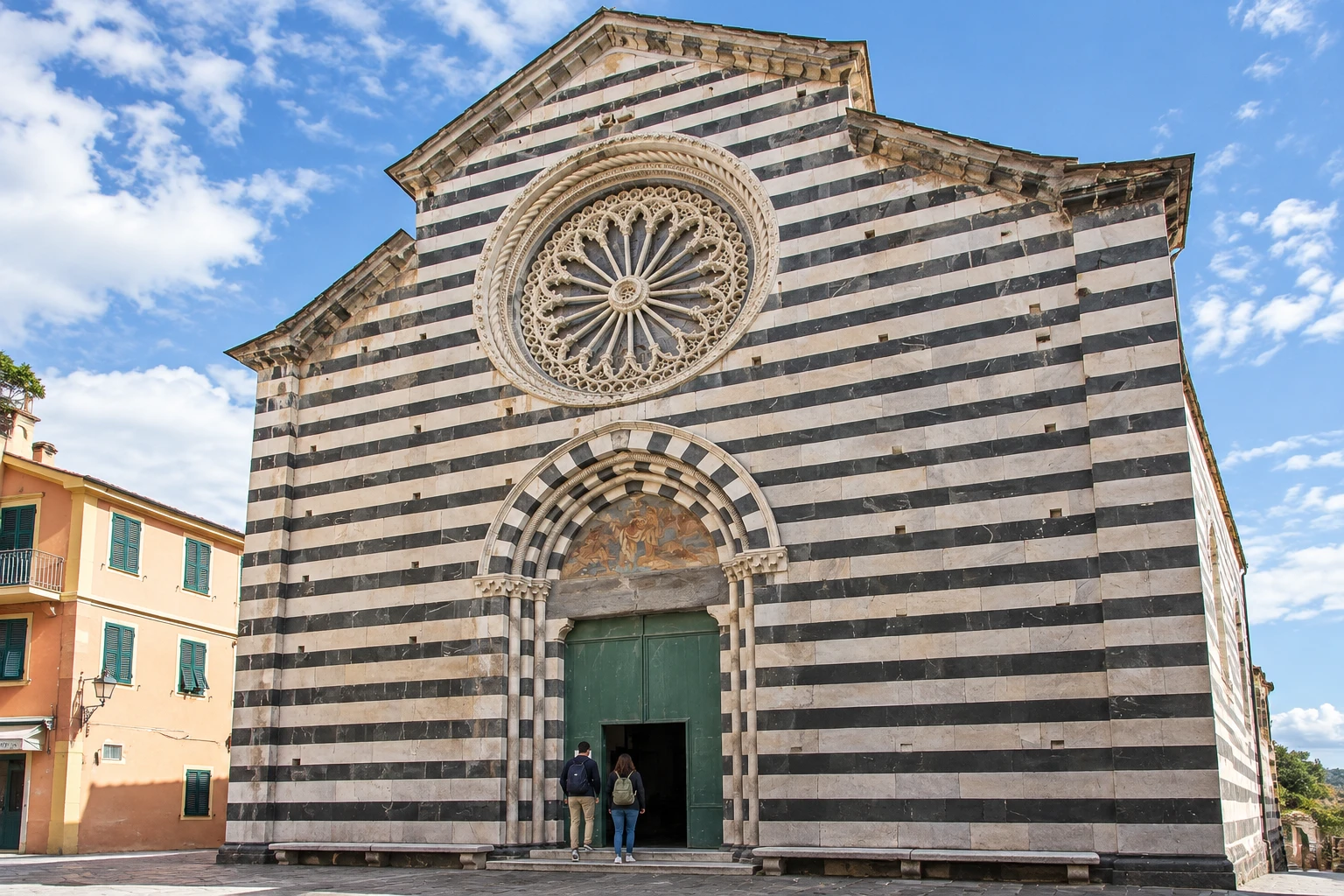
Gothic church of Monterosso's old town, built between 1282 and 1307, with a façade of white and black stripes and a marble rose window.
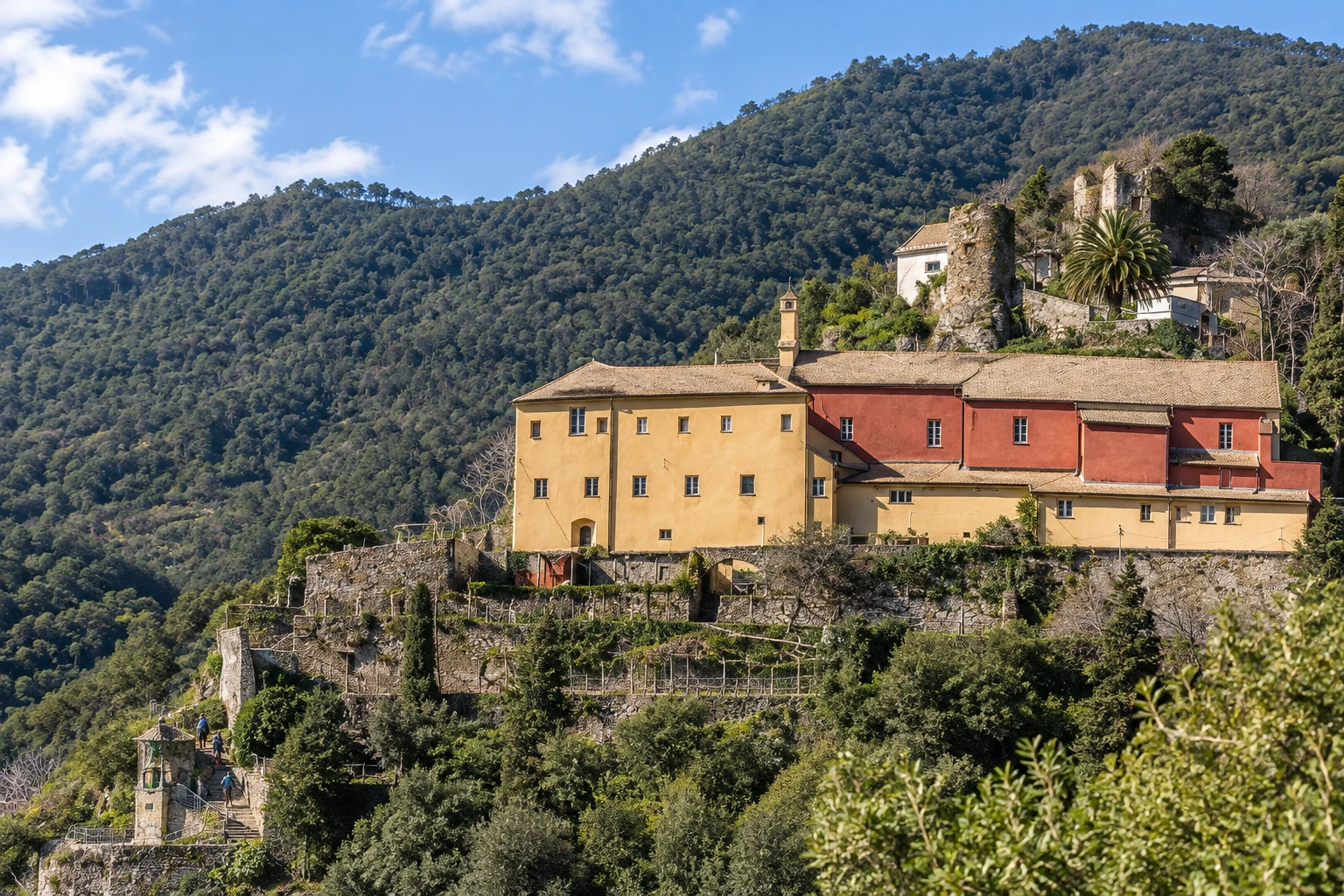
17th-century Franciscan convent on the hill between Fegina and the old town, with the church of San Francesco and a Crucifixion attributed to Van Dyck.
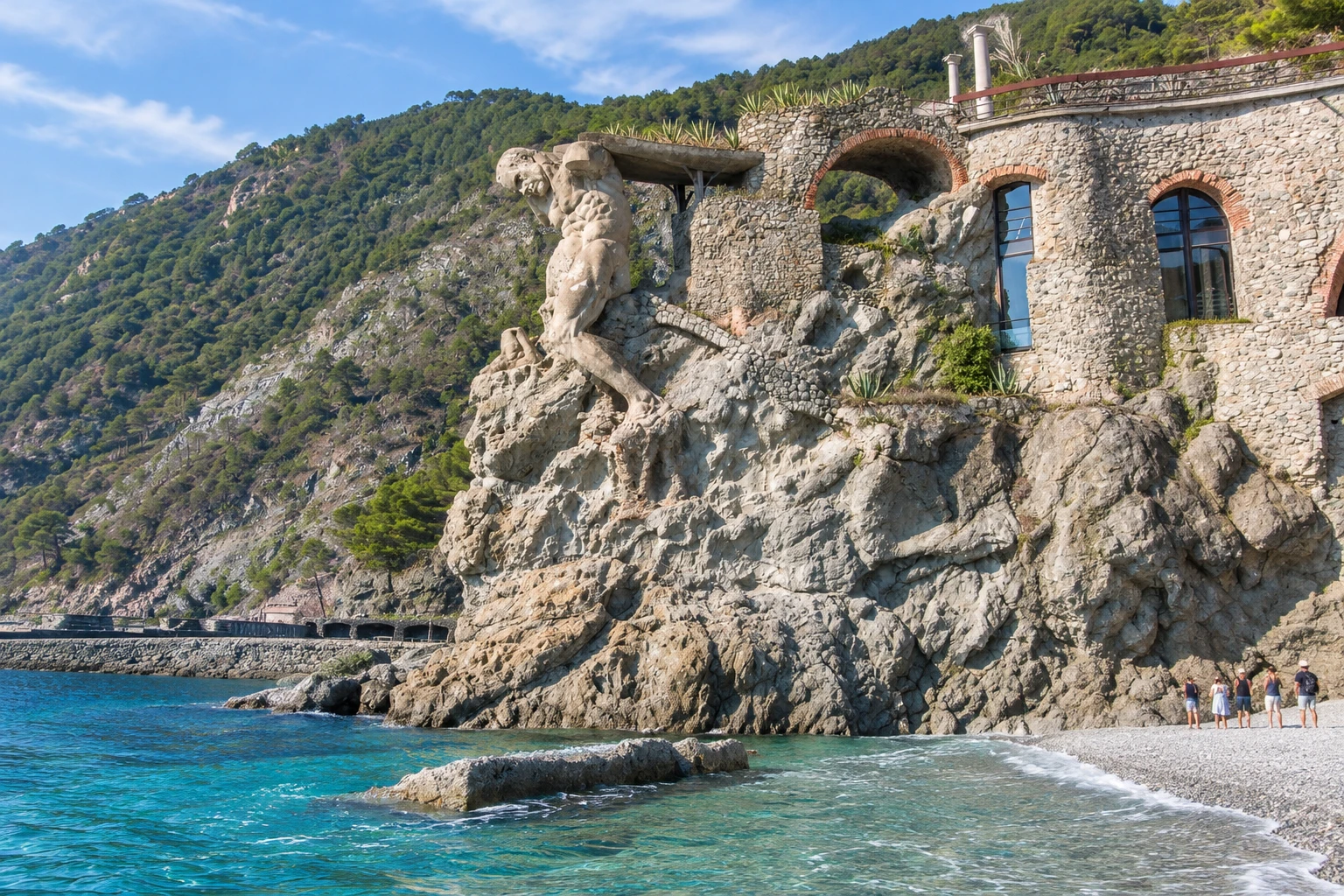
14-metre concrete statue representing Netuno, attached to a rock at the western end of Fegina beach, from 1910.
To choose before you go
Where each tour starts, how long it takes, how it is done, what is included and the price range.
Monterosso’s old center grew at the mouth of the Buranco stream and climbs the valley in narrow, steep lanes. The main streets, Via Roma and Via Vittorio Emanuele, run parallel inland from the sea. Around them are shops selling anchovies, lemons and pesto, focaccia bakeries and restaurant tables. Tree-shaded Piazza Garibaldi is the meeting place. The church of San Giovanni Battista, built between 1282 and 1307, has horizontal bands of light and dark stone and a large marble rose window with delicate tracery. The lunette above the portal has an 18th-century fresco of the Baptism of Jesus. The tall bell tower beside it was once a watchtower. The interior was remodeled in the Baroque era, when the baptismal font was made. A few steps away are two confraternity oratories: Santa Croce, dating to the 16th century, and the Baroque Santa Maria di Porto Salvo, formerly the Oratory of Death and Prayer, with a facade remodeled in 1922. Follow Via Roma uphill to its end for the start of trail 509, the old staircase through olive and lemon groves to the Soviore sanctuary. Downhill the street ends at the small old town beach and the fishermen’s pier, where boats depart.
Stops: Chiesa di San Giovanni Battista, Piazza Garibaldi, Via Roma, Via Vittorio Emanuele, Oratorio di Santa Croce, Oratorio di Santa Maria di Porto Salvo.
Includes: Self-guided outing. The churches are free to enter.
Tip: Cover your shoulders and knees to enter the church. The streets are still quiet early in the morning. Groups arrive by train and boat around midday.
Best time: Year-round. From November to March, some businesses close or reduce their hours.
Colle di San Cristoforo is the hill separating the old center from Fegina. On the headland above the sea stands Torre Aurora, a watchtower and defensive post built by the Republic of Genoa in the 16th century against corsair raids. You can see its exterior from the promenade and the climb. The Salita dei Cappuccini leads up to the friary. The Capuchins planted a cross in 1618 on land donated by the people of Monterosso. The foundation stone was laid the following year, and in 1622 they moved into the twelve-cell friary, with vegetable plots on several levels, a church and a forecourt. The church was consecrated to St. Francis of Assisi. Expelled twice in the 19th century, the friars returned in 1895. The complex was restored after a bombing in 1945. The vegetable garden and terraced lemon grove remain in cultivation. The left chapel in San Francesco holds a Crucifixion that some attribute to Flemish painter Anthony van Dyck, though it may be by a local artist. The right chapel has an 18th-century altarpiece of the Immaculate Conception by Genoese painter Giuseppe Palmieri. From the forecourt you can see the two parts of the village on either side of the hill. Higher up, the cemetery occupies much of the former castle site. Parts of the Genoese fortification’s walls remain.
Stops: Convento dei Cappuccini, Chiesa di San Francesco, Torre Aurora, Monterosso Cemetery (site of the old castle).
Includes: Self-guided visit. Church admission is free. The convent relies on donations and offers guided tours.
Tip: Friars still live at the convent. Keep quiet and check that the church is open to visitors. Climb in late afternoon as the sun drops over Punta Mesco.
Best time: Year-round. In summer, go early or late in the afternoon.
Fegina is the part of Monterosso that grew as a summer resort west of the Capuchin hill. The train station faces the sea and the promenade follows Spiaggia di Fegina, the longest beach in the Cinque Terre. It has coarse sand and small pebbles, with umbrella concessions alternating with free sections. Walk west to the end of the beach for the Statua del Gigante. This 14-meter reinforced-concrete Neptune was created in 1910 by architect Francesco Levacher and sculptor Arrigo Minerbi. Leaning against a rocky spur, it once supported the shell-shaped terrace of Villa Pastine. It lost parts in World War II bombing and became a village symbol. The trail to Punta Mesco begins at its foot. Fegina also has ties to Eugenio Montale. The Nobel Prize-winning poet spent childhood holidays here with his family at the house known as Villa Montale, a private home visible only from outside. Also in Fegina is the small 17th-century church of Santa Maria Nascente, formerly a private chapel, with two ceramic statues by Emanuele Luzzati on the exterior. The national park often organizes literary walks to places in the poems, such as Punta Mesco. In the opposite direction, the pedestrian tunnel reaches the old center in a few minutes.
Stops: Spiaggia di Fegina, Statua del Gigante, Chiesa di Santa Maria Nascente, Villa Montale.
Includes: Self-guided outing. Beach clubs charge for chairs and umbrellas. Some stretches of beach are free to use.
Tip: The free beach sections fill early in July and August. Cinque Terre Card holders can ask at the park information point about seasonal themed walks.
Best time: June to September for swimming. The promenade is worth a walk year-round.
Punta Mesco is the headland enclosing Monterosso’s bay to the west. Trail 590 begins with a gentle climb at the foot of the Statua del Gigante, turns inland and rises first by stairs and then along a stretch of paved road. Beyond the fork at a hotel, it enters Mediterranean vegetation of pine, strawberry trees and heather. Steps alternate with dirt path up to the junction with the route to Levanto and trail 591. A few hundred meters farther along 590 are the ruins of the 11th-century Sant’Antonio del Mesco hermitage in a holm oak grove. This is the end of the route, just over 300 meters above sea level. The final stretch opens up views of the Cinque Terre coast and its string of villages. Just beyond stands the Semaforo, an abandoned military signal station. The park lists an uphill time of one hour and 15 minutes and rates it as a hiking trail. Return the same way or continue down to Levanto on trail 591. The headland is a special conservation area with holm oak and cork oak woods and lies on a migratory bird route.
Stops: Statua del Gigante, Punta Mesco, Eremo di Sant'Antonio del Mesco, Semaforo.
Includes: Self-guided trail. Ask the park before setting off whether this section requires a Cinque Terre Card on your travel date.
Tip: Fill your bottle at the fountain in Fegina. There are no others along the route. Bring water, a hat, and hiking shoes. The park requires suitable footwear and settled weather. Trails close during weather alerts.
Best time: April to June and September to October. In July and August, go very early.
This crossing combines the climb to Punta Mesco with the descent to the neighboring town of Levanto to the west, outside the Cinque Terre and the northern gateway for regional trains. From Fegina, trail 590 climbs to the ruins of the Sant’Antonio del Mesco hermitage in an hour and 15 minutes, according to the park. From there, allow another two hours and 15 minutes on trail 591 to Levanto. The path climbs slightly, passes a small observation tower and turns seaward, with views of the coast between the headland and Levanto. The surface is rocky in places and follows the edge of a pine wood badly damaged by pests. Halfway along is Case Lovara, a former farm restored by FAI, the Italian heritage foundation, with the surrounding land under cultivation again. On nearly level ground the trail passes Rocca Spaccata, then descends through holm oak woodland. Near the end it leaves the national park, follows a short stretch of paved road and enters Levanto between houses and fields. Levanto has a broad beach and a station on the same line. The train returns to Monterosso in a few minutes.
Stops: Punta Mesco, Eremo di Sant'Antonio del Mesco, Case Lovara, Rocca Spaccata, Levanto.
Includes: Self-guided trail. The return train costs extra unless covered by the Cinque Terre train card, valid between La Spezia and Levanto.
Tip: Set out early and bring water for the entire walk. There are no fountains beyond Fegina. Check trail conditions with the park and confirm the return train before setting off.
Best time: April to June and September to October. In summer, start at dawn.
The Soviore sanctuary stands high above Monterosso within the municipality. According to the national park, it is Liguria’s oldest sanctuary, mentioned in a document from 1225. It grew in importance during the Black Death in 1348 when it began sheltering pilgrims. Trail 509 follows the historic mule track between the village and the sanctuary. It leaves the Sentiero Verde Azzurro near Torre Aurora, follows Via Roma and takes the old stairway at its end through terraced olive groves and lemon gardens. Farm tracks, sometimes paved with concrete, have replaced parts of the route. Near the road crossing, a small altar with an iron cross recalls the Good Friday procession that followed the path. A few shrines from the Stations of the Cross survive. Beyond the paved road, the path enters chestnut and acacia woodland with large stone steps and a spring. It reaches the Cappella del Ritrovamento, built where tradition says the image venerated at the sanctuary was found in 740. Shortly afterward you reach the forecourt, surrounded by old cypresses and holm oaks. The church holds sailors’ votive offerings, an old organ and a 15th-century wooden Madonna. The complex offers seasonal lodging for visitors and pilgrims. The park gives a distance of about 2.75 kilometers and an uphill time of an hour and a half to an hour and 45 minutes. You can also arrive by road.
Stops: Santuario di Nostra Signora di Soviore, Cappella del Ritrovamento, Via Roma, Torre Aurora.
Includes: Self-guided trail. The church is free to enter.
Tip: The entire route climbs uphill. Bring water and hiking shoes. The sanctuary's feast days are July 7, marking the discovery of the image, and August 15.
Best time: Spring and fall. In summer, start early. The first stretches have little shade.
The roughly 3.5-kilometer section between Monterosso and Vernazza is the most popular part of the Cinque Terre coastal trail, the Sentiero Verde Azzurro, also called the Sentiero Azzurro. The park estimates about two hours and rates it for experienced hikers. Expect long stairways, narrow sections and exposed passages. From Monterosso the path starts east of the old center toward Punta Corone, with a view of the village, Colle di San Cristoforo, the friary and San Francesco. A long staircase climbs between tall stone walls protecting terraced vineyards and old lemon groves. Short ascents and descents through Mediterranean vegetation follow, crossing damp stream valleys. One stream, the Acquapendente, drops into the sea in a waterfall visible only by boat. On Costa Mesorano, a lookout among olive trees marks the high point on the Vernazza side. One of the small monorail trains used to work the vineyards reaches it. The final steep descent passes above Vernazza’s church and houses and ends on the harbor square. Return to Monterosso in a few minutes by train or, in season, by scheduled boat.
Stops: Punta Corone, Costa Mesorano, Vernazza.
Includes: During the season the Cinque Terre Card is required and checked at the entrance. The return train or boat costs extra, unless you have the card that includes train travel.
Tip: Check the park website on the day for trail and access updates. Weather alerts and maintenance can close sections, and the Monterosso entrance may change. Hiking shoes are required. Flip-flops and sandals are not permitted.
Best time: April to June and September to October. In July and August, go only in the early morning.
Scheduled boats leave the fishermen’s pier in the old center for the other Cinque Terre villages except Corniglia, which has no harbor. Service usually runs daily from spring to fall, generally April through October, when sea conditions allow. The boat reveals what the train, mostly underground, hides: the park’s 18 kilometers of rocky coastline, its coves and cliffs, vineyard terraces climbing the slopes and the villages seen head-on, with houses in pink, yellow and orange and striped church facades. It is also a way back from Vernazza after the hike. The route continues to Portovenere after 18 kilometers on the water. The village stands on a rocky spur opposite Palmaria, Tino and Tinetto islands and has the church of San Pietro from 1277, Byron’s Grotto, the castle and the church of San Lorenzo. Boats run from there to Palmaria, while in the other direction the line serves Levanto. Allow a full day for Portovenere from Monterosso. Licensed smaller boats offer private coastal trips from the same pier.
Stops: Monterosso fishermen’s quay, Vernazza, Manarola, Riomaggiore, Portovenere.
Includes: Buy separate boat tickets per leg or for the day. The Cinque Terre Card doesn't cover them. Agree on a price with the boat operator for private trips.
Tip: Rough seas can cancel the boat or prevent calls at certain villages. Check the operator's notices the morning you travel. The Pro Loco office on the station's ground floor has the day's departures.
Best time: April to October. Boats fill up in July and August.
Day by day
Suggestions to plan the trip. Change the order of the days according to the weather and tour availability.
Get off the train in Fegina and walk west along the promenade to the Statua del Gigante at the far end of the beach. Return along the waterfront. In summer, take your first swim now before the beach fills. Cross the pedestrian tunnel to the old center and climb Colle di San Cristoforo, taking in Torre Aurora, the Salita dei Cappuccini, the church of San Francesco with the Crucifixion attributed to Van Dyck, and the forecourt overlooking both sides of the village. Descend for lunch in the old center and try the Monterosso anchovies. Then visit San Giovanni Battista on Piazza Garibaldi and the two oratories, and explore Via Roma and Via Vittorio Emanuele. Spend the late afternoon on the small old town beach or return to Fegina to watch the sun drop over Punta Mesco. Check your return train before dinner.
Begin in the old center while the streets are empty, taking in Piazza Garibaldi, San Giovanni Battista, the oratories and Via Roma. Climb to the Convento dei Cappuccini via Torre Aurora for views of both parts of the village. Eat lunch in the center and spend the afternoon in Fegina, between the beach and promenade, walking as far as the Statua del Gigante. If you are interested in Eugenio Montale, look for the exterior of Villa Montale and the church of Santa Maria Nascente. Dine in the old center. The village grows quieter once the last boat leaves.
Set out early from the Gigante on trail 590 to Punta Mesco, the Sant’Antonio hermitage ruins and the Semaforo, overlooking the entire Cinque Terre coast. Allow about two and a half hours round-trip. Alternatively, if the section is open, follow the Sentiero Verde Azzurro to Vernazza in about two hours and return by train or boat. After lunch, relax on the beach or, in season, take a scheduled boat from the fishermen’s pier to see the villages from the sea. Stop at one and return by train.
Take a day to explore Monterosso at leisure. Start in Fegina with the promenade, Statua del Gigante and places associated with Montale. Walk through the tunnel to the old center and climb Colle di San Cristoforo for Torre Aurora, the Convento dei Cappuccini and, higher up, the cemetery on the former castle site. In the afternoon, visit San Giovanni Battista and the oratories, wander the central streets and spend the late afternoon on the beach.
Check the park website early to see whether the Sentiero Verde Azzurro is open. Climb the steps through vineyards and lemon groves and continue to Vernazza, about two hours away. Have lunch there. Return by scheduled boat for a view of the coast if the sea allows, or take the train back in a few minutes. With time and energy, use the rest of the afternoon to stop at another village along the same rail line. If the trail is closed, walk to Levanto via Punta Mesco instead and return by train.
Choose a morning hike. For an inland walk, take trail 509 from the end of Via Roma up the old mule track to the Santuario di Nostra Signora di Soviore through olive and lemon groves and a chestnut wood. Allow around three hours round-trip plus time for the visit. For sea views, trail 590 climbs from the Gigante to Punta Mesco and the ruins of the Sant’Antonio hermitage. If you have the energy, continue to Levanto and return by train. Reserve the final afternoon for the beach and for shopping in the old center for salted anchovies and lemon products.
Best time to go
The seasons shown are the most usual ones; nature doesn't always follow the calendar.
Winter · Quiet village
At Genoa and Pisa, the nearest weather stations with long records, averages range from 7°C to 9°C, with about 68 to 76 mm of rain. The sea is cold and some Monterosso restaurants and accommodations close. Trains run as usual, though less frequently than in summer. With a coat and rain gear, you can explore the village and, on dry days, the trails.
Winter · Clear days between weather fronts
At Genoa and Pisa, the nearest weather stations with long records, averages range from 7.4°C to 9.6°C, with about 58 to 63 mm of rain. Clear days between weather fronts suit the climb to the friary or Punta Mesco. Visitor numbers are low. Check what is open before booking.
Early spring
At Genoa and Pisa, the nearest weather stations with long records, averages rise to 10–12°C, with around 60 to 74 mm of rain. Accommodations and restaurants reopen gradually, and scheduled boats generally resume between late March and April. Temperatures are comfortable for the Soviore and Punta Mesco trails.
Easter · Scheduled boats return
At Genoa and Pisa, the nearest weather stations with long records, averages range from 13°C to 14.6°C, with about 65 to 84 mm of rain. Showers can close trails for a day. The sea is still cold. Easter and the April 25 holiday bring the first surge of visitors, so reserve accommodations ahead.
Lemon Festival
At Genoa and Pisa, the nearest weather stations with long records, averages range from 17°C to 18°C, with about 58 to 62 mm of rain. Long days and mild temperatures suit the trail to Vernazza and the crossing to Levanto. The Lemon Festival usually takes place in May. Weekends are busy.
Anchovy festival · Feast of patron saint John the Baptist (June 24)
At Genoa and Pisa, the nearest weather stations with long records, averages range from 21°C to 22°C, with about 41 to 51 mm of rain. Beach season begins in Fegina. The anchovy festival usually takes place in June, and the 24th is the feast of the patron saint, St. John the Baptist. The trails start to feel hot by late morning.
Feast of the Meeting at Soviore (July 7)
At Genoa and Pisa, the nearest weather stations with long records, averages range from 24°C to 25°C, with about 26 to 32 mm of rain. The beach is busy and trains are packed around midday. Set out very early on the largely unshaded trails. The park may restrict access during hot hours. On July 7 the Soviore sanctuary celebrates the feast commemorating the discovery of its sacred image.
Feast of the Soviore sanctuary (August 15)
At Genoa and Pisa, the nearest weather stations with long records, averages range from 24°C to 25°C, with about 41 to 48 mm of rain and thunderstorms late in the month. This is the busiest month, so reserve accommodations well ahead. The sea is generally warm. The Soviore sanctuary celebrates its feast on August 15, the Ferragosto holiday.
Salted Anchovy Festival · Grape harvest
At Genoa and Pisa, the nearest weather stations with long records, averages range from 20°C to 22°C, with about 100 to 116 mm of rain in short, heavy storms. The sea stays warm and hiking temperatures become pleasant again. The salted anchovy festival usually takes place in September, during the grape harvest on the terraces. Trails close on weather alert days.
Fall · Montale literary walks
At Genoa and Pisa, the nearest weather stations with long records, averages range from 16°C to 17.6°C, with about 129 to 150 mm of rain and occasional very heavy downpours in Liguria. Clear spells between weather fronts bring a quieter village. Scheduled boats reduce or end their sailings. In fall the park often arranges walks to places associated with Montale.
Wettest month
At Genoa and Pisa, the nearest weather stations with long records, averages range from 11.6°C to 13°C, with about 131 to 200 mm of rain. This is the wettest month on this coast and trails close frequently. Many businesses take a winter break. Come if you want a quiet village and can adapt your plans to the weather.
Winter · Christmas in the village
At Genoa and Pisa, the nearest weather stations with long records, averages range from 7.7°C to 10°C, with about 88 to 99 mm of rain. Days are short and the village quiet, with some businesses closed. Trains connect Monterosso to the other villages, and Manarola’s illuminated Nativity scene, lit from December 8, is just a few stops away.
Plan the journey
Monterosso has no airport. The closest are Pisa (PSA), about 114 kilometers away, and Genoa (GOA), around 99 kilometers away. From either, continue by train.
From Pisa, the train takes about an hour to La Spezia. Change there for a Cinque Terre regional train to Monterosso, another 20 to 25 minutes. From Genoa the coastal line passes through Monterosso. Check that your train stops in the village.
If you arrive in Italy through Milan or Rome, continue by train. Milan to La Spezia takes about three hours and Rome to La Spezia around 3½ to 4 hours. From Brazil, usual routes go through Rome or Milan, or connect in another European city for Pisa or Genoa. Check before purchasing.
Monterosso station is in Fegina opposite the beach on the Genoa–Pisa coastal line. Of the Cinque Terre villages it has the most long-distance service. InterCity trains from cities such as Milan, Genoa and Livorno stop here alongside regional trains.
From La Spezia Centrale, the southern gateway to the Cinque Terre, the trip takes 20 to 25 minutes. Levanto, the northern gateway, is the next stop a few minutes away. Cinque Terre regional trains stop at all five villages, with 4 to 6 minutes between stops and more frequent service from April through October. From Florence allow about three hours with a change.
Fegina beach is right outside the station. The old center is a few minutes’ walk along the promenade and through the pedestrian tunnel. The Pro Loco tourist office on the station’s ground floor offers maps and luggage storage. Validate your regional ticket before boarding.
Take the A12 highway between Genoa and Livorno, then narrow, slow mountain roads down to the coast. Monterosso is about 89 kilometers from Genoa.
Car access to the center is restricted. Paid parking at the village entrance has more spaces than in the other four villages but fills in season. Everything in Monterosso is accessible on foot.
The most practical option is to park near the station in La Spezia or in Levanto and continue by train. On the A12, La Spezia is about 110 kilometers from Genoa and 80 from Pisa.
In season, generally April through October, scheduled boats connect La Spezia, Lerici, Portovenere, the Cinque Terre villages except Corniglia, and Levanto. In Monterosso they stop at the old town fishermen’s pier. Summer departures also run to the Cinque Terre from Tuscan ports such as Viareggio.
Boats work for both arrival and sightseeing, but service depends on the sea. Waves can cancel departures or cause boats to skip certain villages. Tickets are separate from the Cinque Terre Card. Check notices for the day before counting on the service.
Explore Monterosso on foot. Fegina and the old center have level waterfronts linked by a pedestrian tunnel. Only the climb to the friary, cemetery and trails involves hills and stairs.
Regional trains are the everyday way to reach the other villages. Vernazza is the next stop, and even the farthest, Riomaggiore, is only a few stops away. In season, scheduled boats are the scenic alternative.
The Cinque Terre Card has two versions. Trekking covers paid trails and park buses. Treno adds unlimited train travel between La Spezia and Levanto. Buy online or at stations. Trails close during weather alerts, so check their status on the park website before setting out. The Pro Loco office at the station sells bus tickets and provides boat departure information.
Your questions
It has the longest stretch of beach in the Cinque Terre, in Fegina, with coarse sand and pebbles. In the old town there is another smaller beach.
Yes. It's the village with the most accommodation, and the regional train takes you to the other four within a few minutes.
By train in a few minutes, or by boat in season, which usually runs from spring until early November. The trail between the two villages may be closed by the park: check the situation on the day.
Italy is 4 or 5 hours ahead of Brasília, depending on the time of year.
Yes, as in many Italian towns, a tourist tax is charged at accommodation.
One day covers Fegina, the Capuchin monastery and the old town, with time for the beach. With two days, add a hike to Punta Mesco or Vernazza. Three days give you time to climb to the Soviore sanctuary and take a boat trip, using Monterosso as a base for the other four villages.
Fegina is the newer, western part of town, with the train station, promenade, longest beach and Statue of the Giant. The old town to the east has narrow lanes, the Church of San Giovanni Battista, shops and the boat pier. A pedestrian tunnel links the two in a few minutes on foot.
It’s in Fegina, opposite the beach. The old town is a few minutes’ walk along the promenade and through the pedestrian tunnel. There’s a tourist information office on the station’s ground floor.
It’s the flattest of the Cinque Terre villages. The Fegina waterfront and the main streets of the old town are step-free. Stairs and slopes start on the climb to the Capuchin monastery and on the hiking trails.
Yes. According to the national park, trail 590 climbs from the Statue of the Giant to Punta Mesco in about 1 hour 15 minutes. From there, trail 591 descends to Levanto in about 2 hours 15 minutes. The return train ride takes only a few minutes. Bring water and check trail conditions before setting out.
On foot, take trail 509 from the end of Via Roma. The old mule track climbs steadily for 1 hour 30 minutes to 1 hour 45 minutes. The sanctuary is also accessible by road.
Yes, in season for the Sentiero Verde Azzurro section to Vernazza. Passes are checked at the entrance. Rules for other trails and the dates when fees apply can change. Check the national park website before you go.
The monastery’s Church of San Francesco is usually open to visitors, and the friars organize guided tours. It’s a working religious community. Check before walking up and keep your voice down.
Anchovies are the village specialty, fresh or preserved in salt. Lemons grow on the surrounding terraces. Pesto, focaccia and Cinque Terre wines round out a meal, including Sciacchetrà, a dessert wine.
Montale was an Italian poet who won the Nobel Prize in Literature. He spent vacations with his family in Fegina as a young man, and Monterosso’s landscape appears in his poetry. The family home is private but can be seen from outside. The national park often organizes literary walks to places mentioned in his poems.
Rain closes the trails and may suspend boat services. Explore the old town’s churches and oratories, the monastery, shops and restaurants, or take the train to another village. When a weather alert is in effect, follow notices from the park and the municipality.
The Pro Loco tourist office on the ground floor of the train station offers luggage storage. Check its hours for your travel dates, especially in winter.
Routes in Italy
Five villages on the Ligurian coast connected by train, from Monterosso al Mare to Riomaggiore, with stops at Vernazza, Corniglia and Manarola.