Cinque Terre

Liguria

Cinque Terre

Five fishing villages clinging to the cliffs of Ligúria, connected by train, boat and trails through terraced vineyards.

North

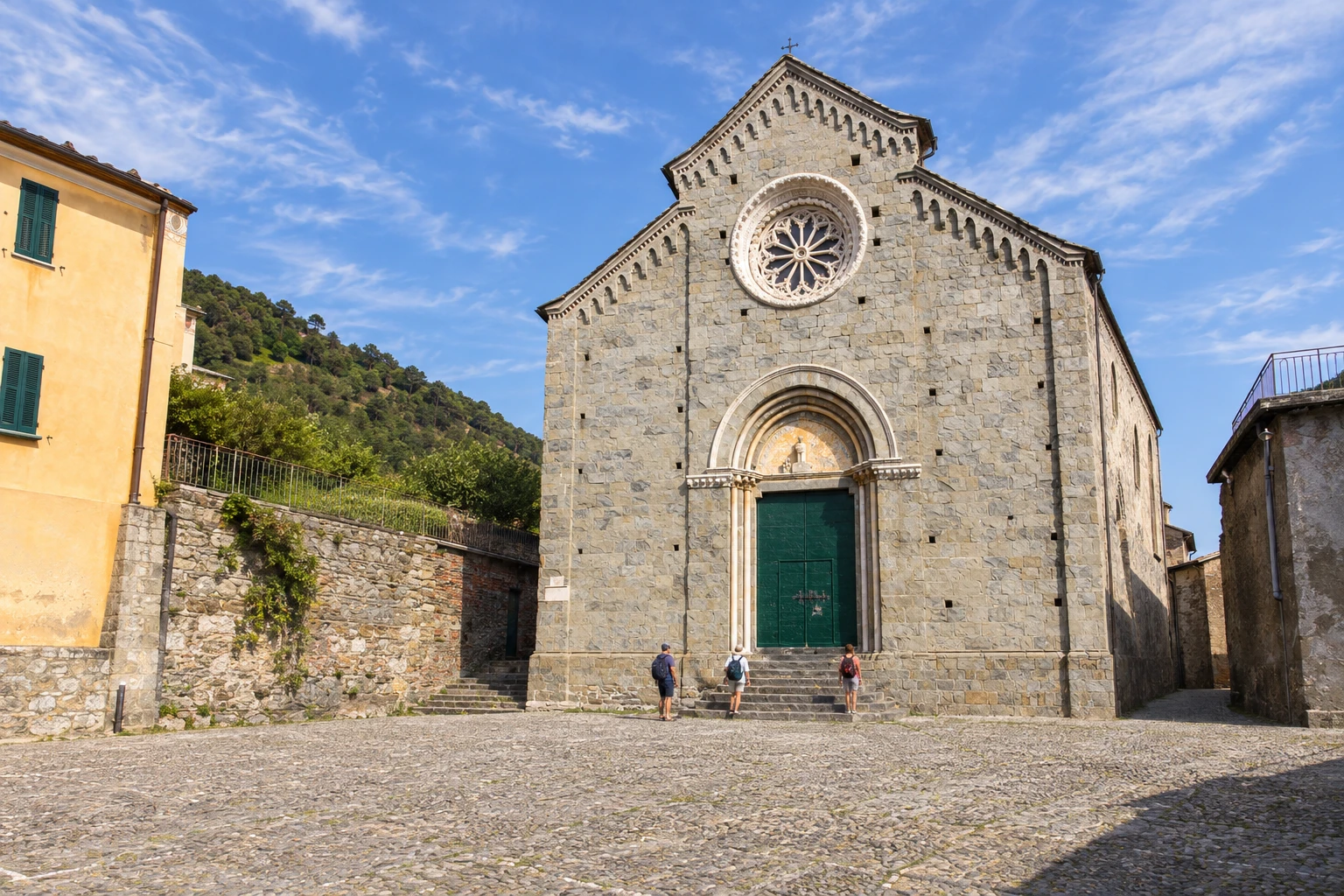
In the photo: Church of San Pietro, Corniglia, Cinque Terre

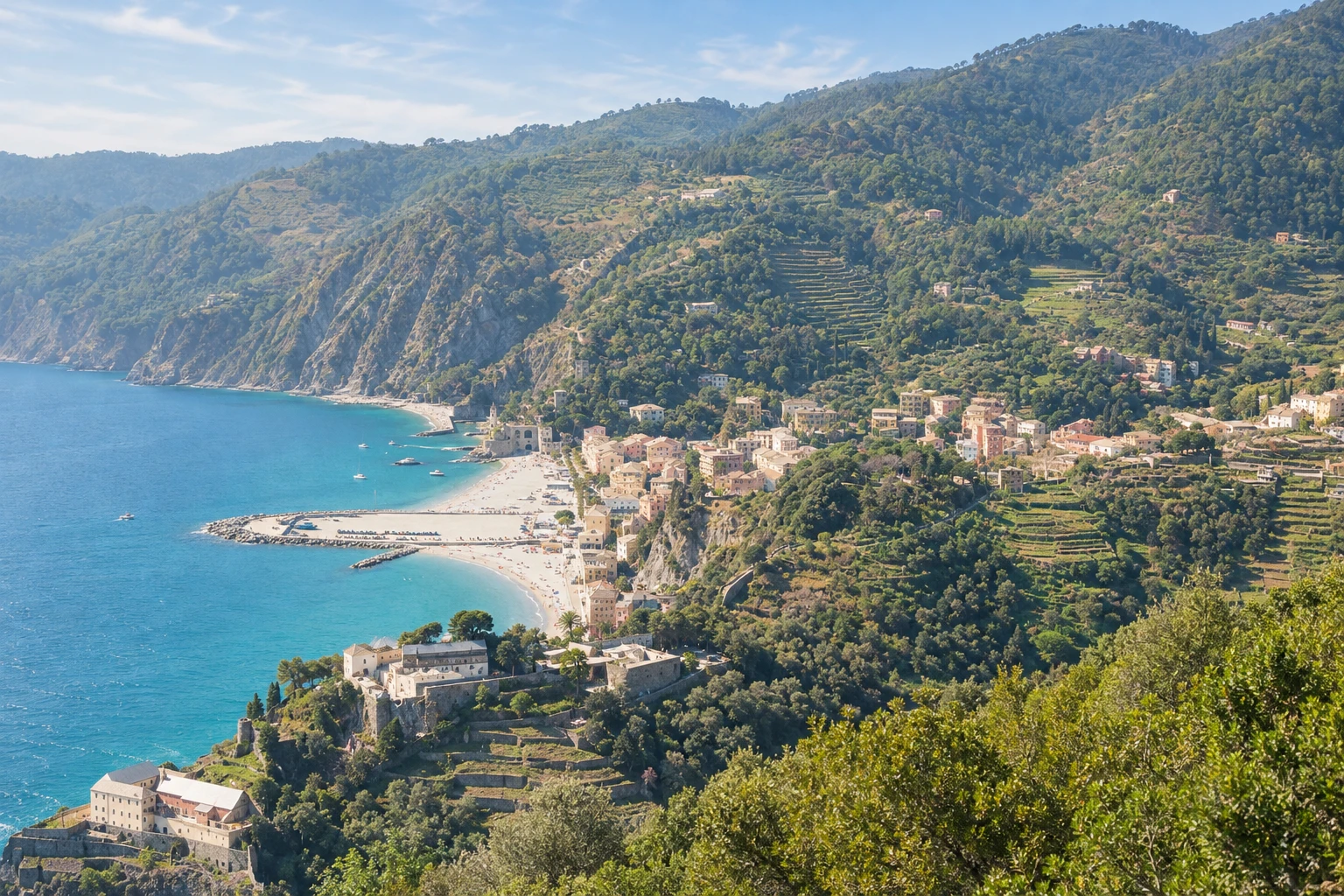
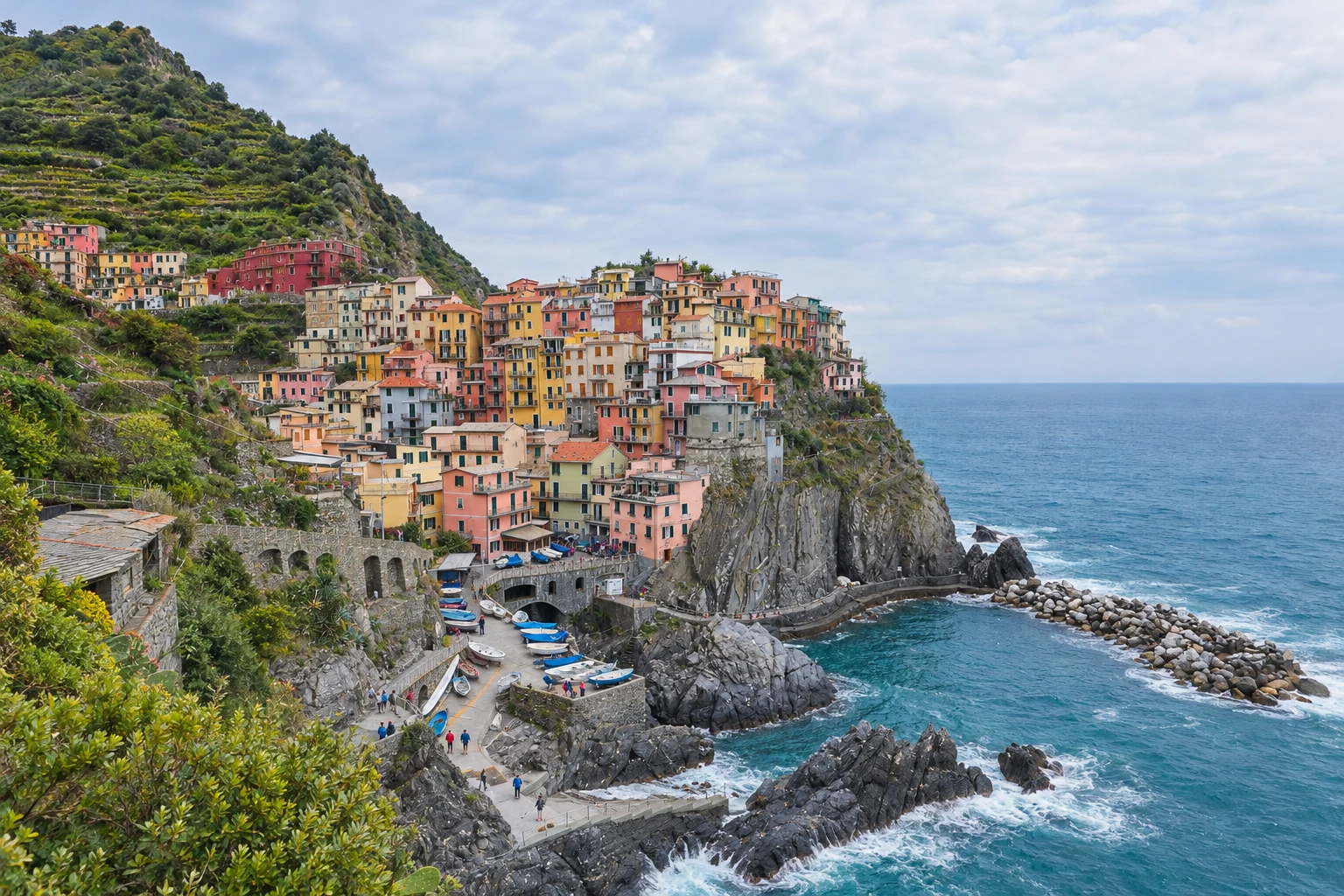
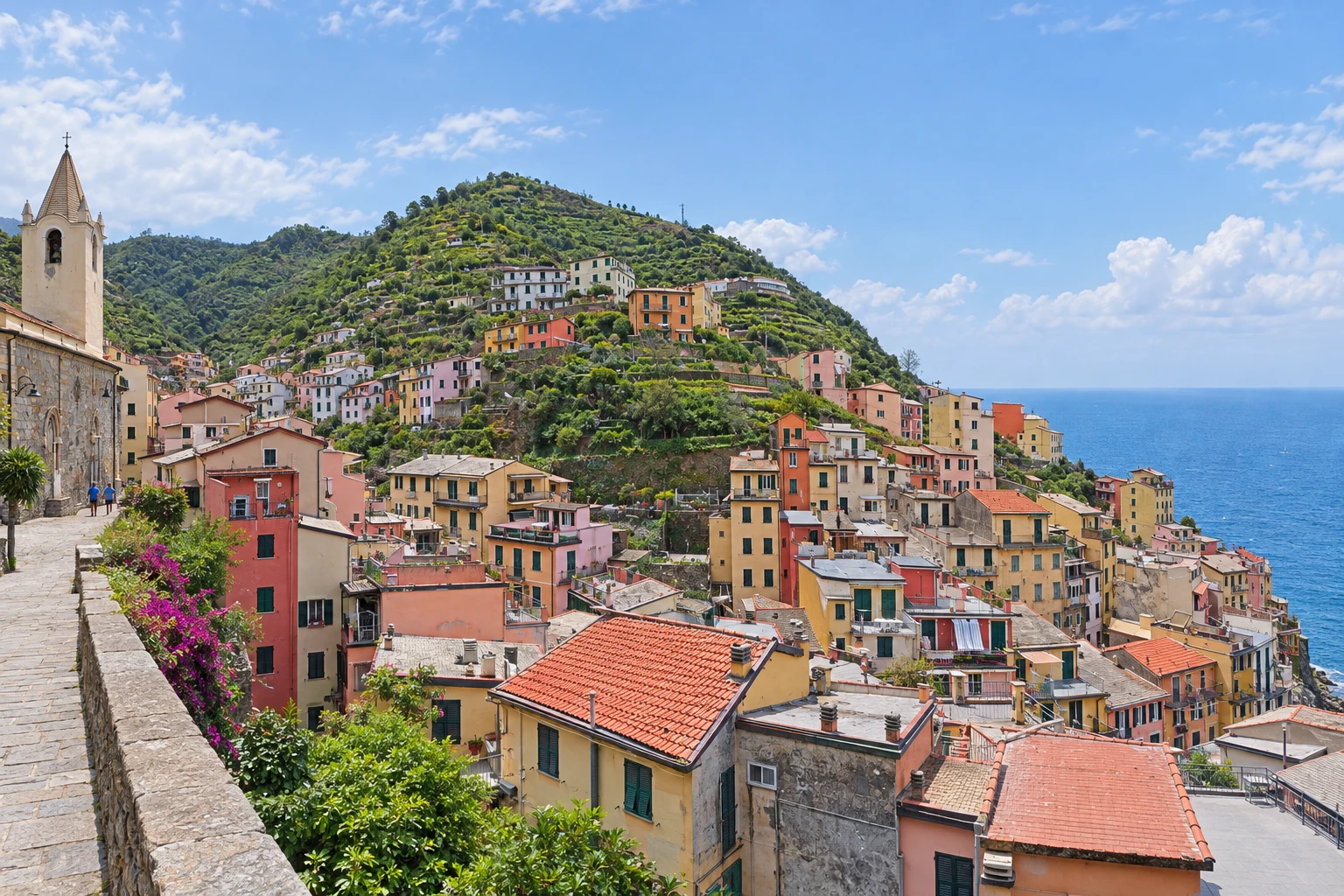
Illustrative images. The pictures in this guide are illustrations based on the real place, not photographs, and may differ from it.

Get it on Google Play

Get to know the place

A region to enjoy
at your own pace.

Cinque Terre (five lands) is the name of five villages on the coast of Ligúria in northwest Italy: Monterosso al Mare, Vernazza, Corniglia, Manarola and Riomaggiore. They are squeezed between the sea and steep slopes, along roughly 12 km of coastline between Levanto and La Spezia.

The landscape was hand-built. For centuries locals raised dry-stone walls to create terraces of vineyards and olive trees on the slopes. For that reason the region is part of the Cinque Terre National Park and, together with Portovenere and the islands Palmaria, Tino and Tinetto, was declared a UNESCO World Heritage Site in 1997.

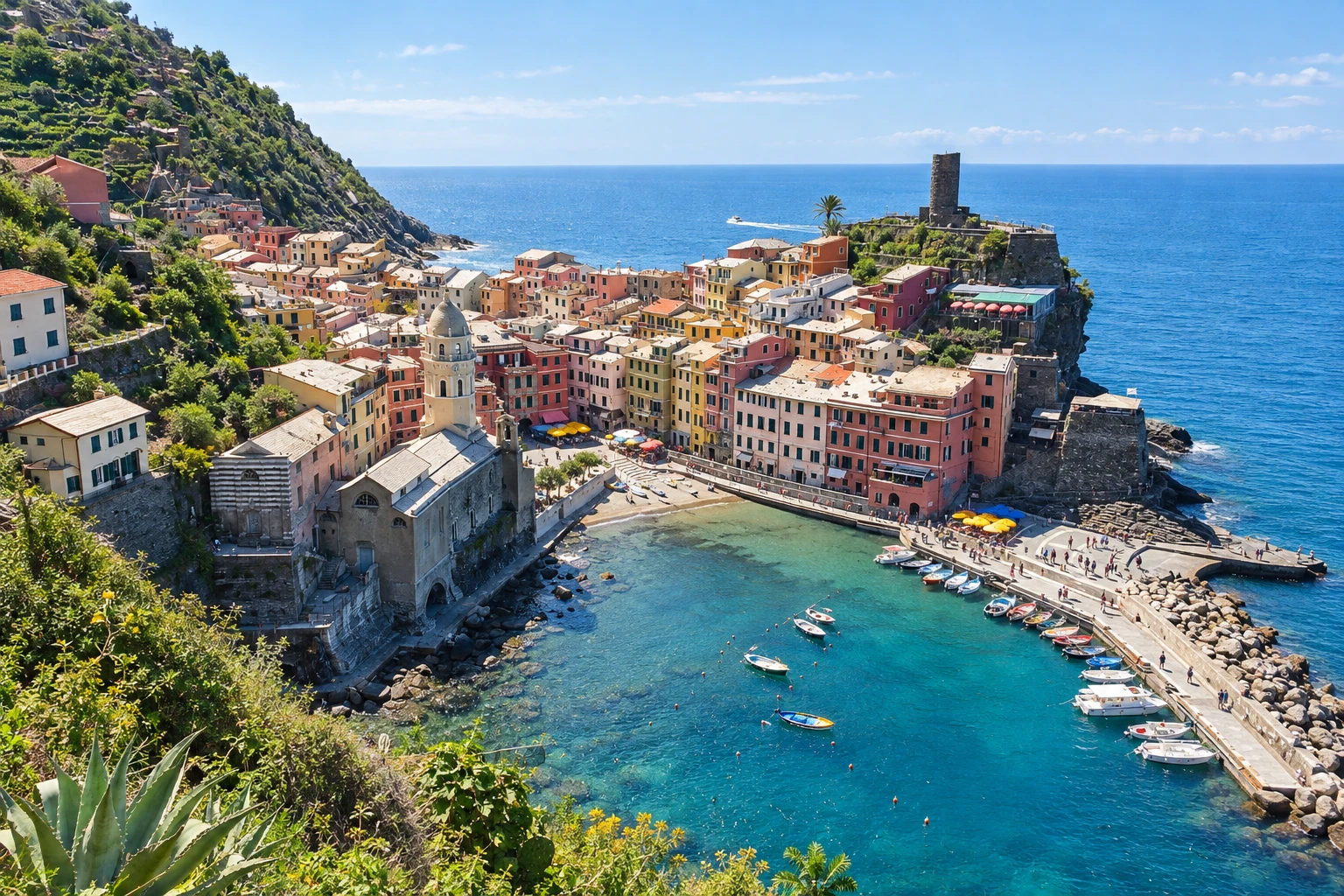
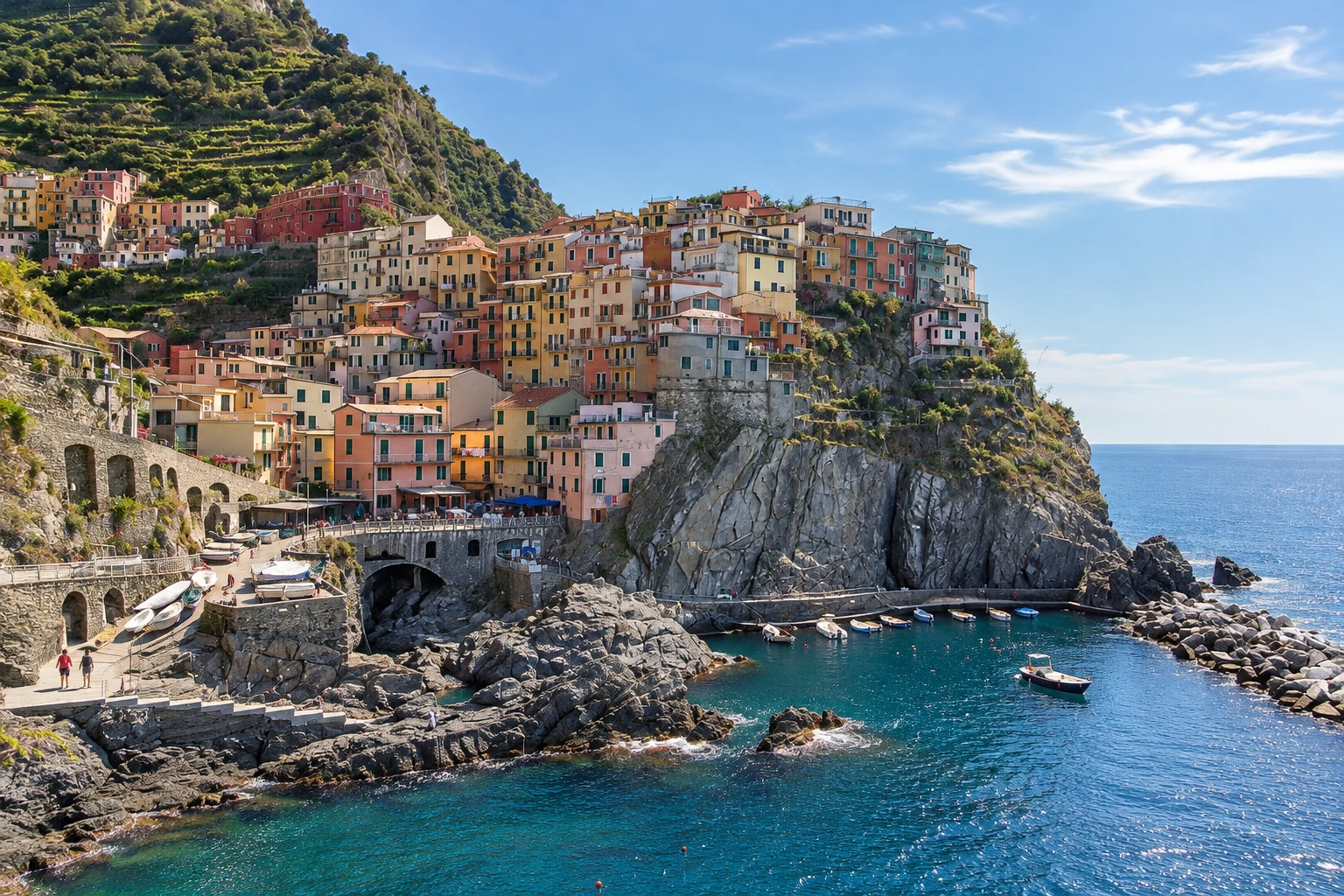
Each village has its own feel. Monterosso is the largest and the only one with a long beach. Vernazza has a small harbor protected by a castle. Corniglia sits atop a promontory about 90 meters above the sea and is the only village that doesn't reach the water. Manarola and Riomaggiore descend through narrow valleys to small harbors surrounded by colorful houses.

For Brazilians, the central point is the regional train: it links the five villages with La Spezia and Levanto in a few minutes and serves as the area's metro. A car is of little use because vehicle access to the villages is very limited. In season, boats connect the villages by sea, and the park's trails link them on foot, depending on the condition of each section.

This destination brings together 4 cities: Monterosso al Mare, Manarola, Riomaggiore, Vernazza.

Share: WhatsApp
Traveler, share your experiences through photos Up to 5 photos of each place you visited.

One destination, many paths

The cities on this trip

Start with one city or combine several in your itinerary.

Where Cinque Terre is The star marks the nearest capital, Genoa.
GenoaMonterosso al MareManarolaRiomaggioreVernazza

Outlines: ISTAT, limites administrativos 2026, CC BY 4.0. Adapted by Cidade Turismo.

How to get there: Cinque Terre

Aeroporto di Pisa-San Giusto Galileo Galilei (PSA), in Pisa · 114 km to Monterosso al Mare

Aeroporto di Genova Cristoforo Colombo (GOA), in Gênova · 99 km to Monterosso al Mare

Connections from Brazil usually require a transfer in another city. Confirm before buying. The most common route is to take a train to La Spezia (from Pisa, Florença, Gênova or Milan) and there catch the regional train that stops at the five villages and continues to Levanto. The nearest airports are Pisa and Gênova.

Suggested arrival point: Monterosso al Mare

The local experience

Things to do in Cinque Terre

Vernazza · Liguria · Castle

Doria Castle

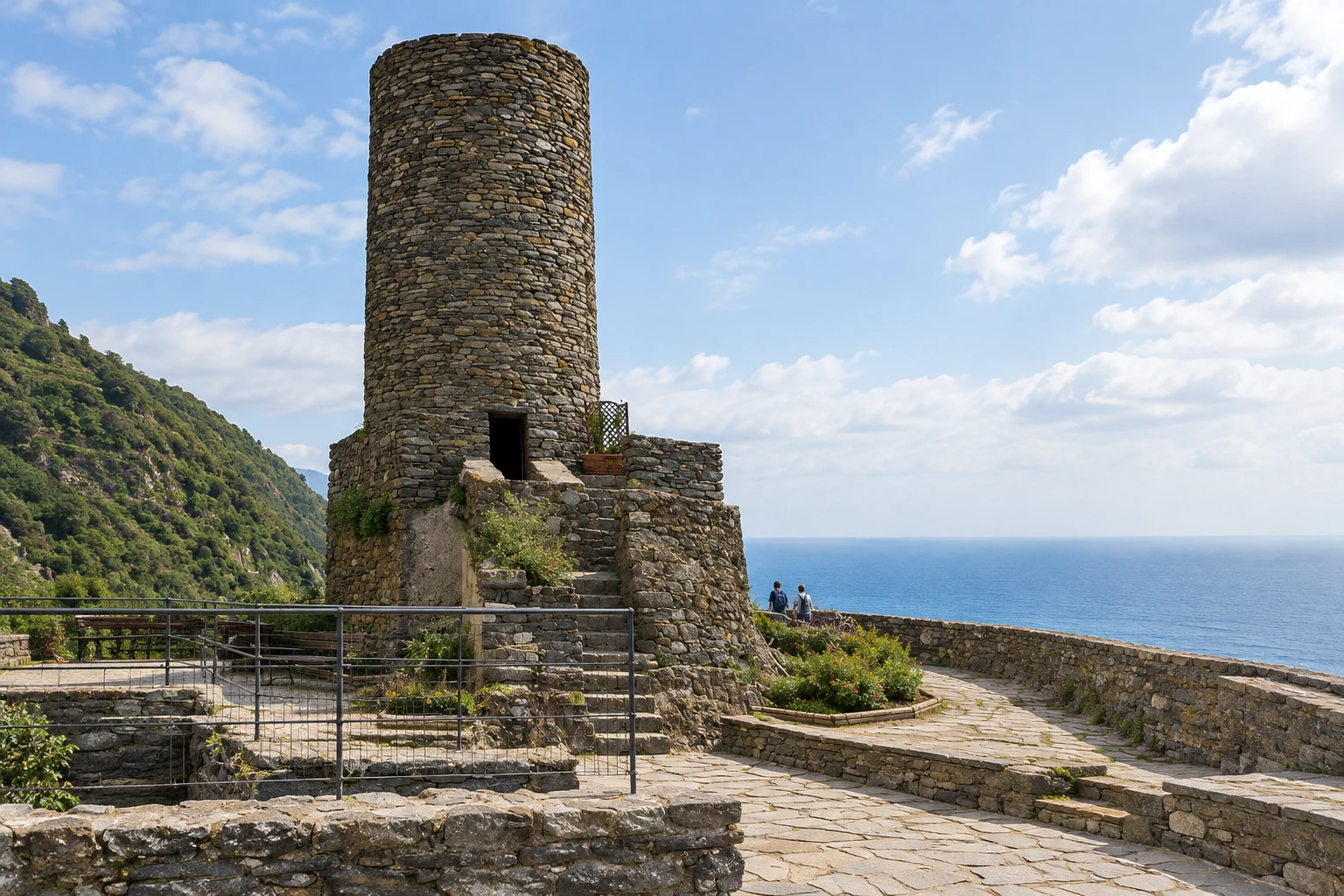
Medieval fortress on the rock that closes Vernazza's harbor, with a cylindrical tower that is the oldest part and offers views over the village and the coast.

Explore Doria Castle

Monterosso al Mare · Liguria · Beach

Fegina Beach

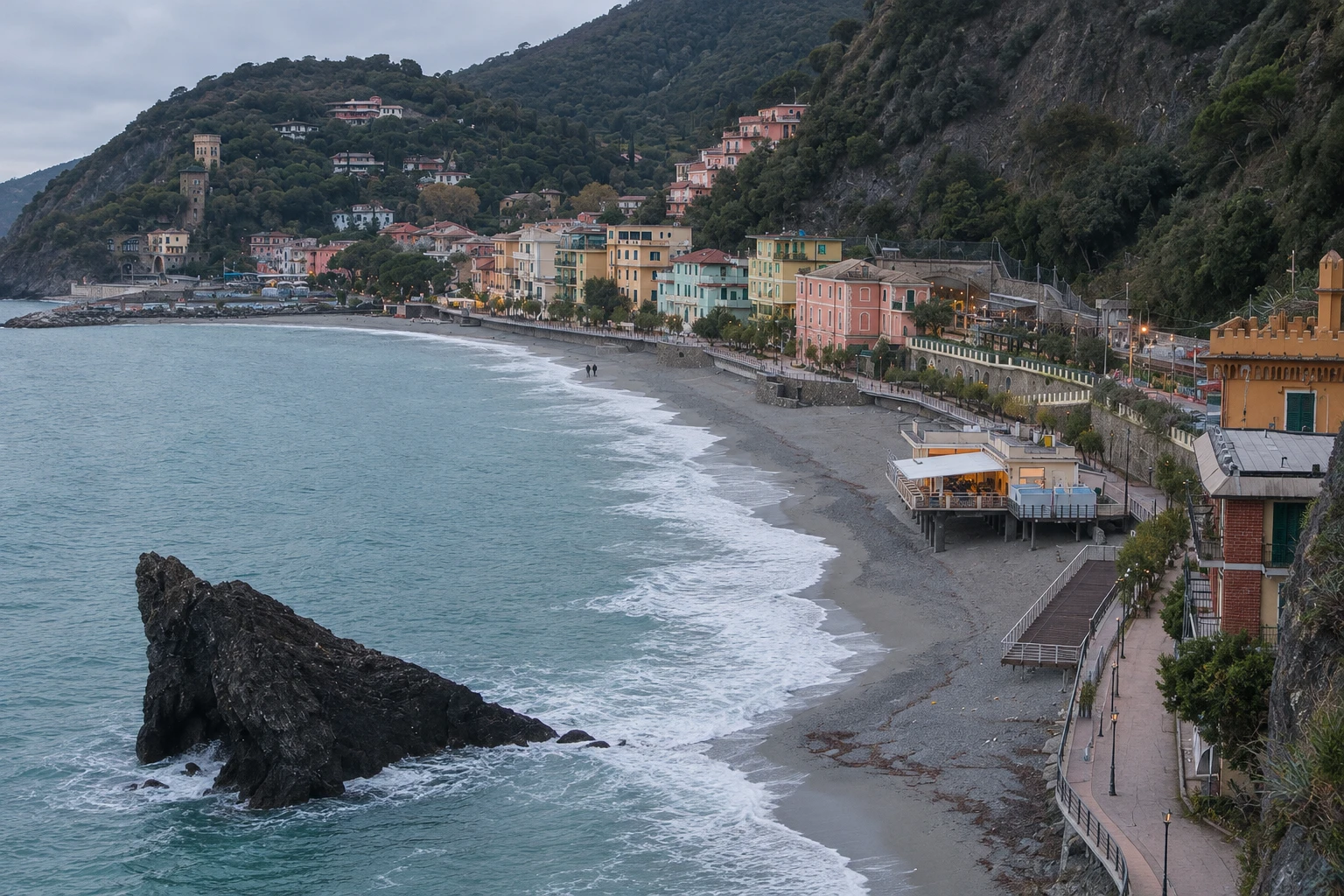
The longest beach in the Cinque Terre, in front of Monterosso station, with coarse sand and pebbles and stretches with umbrellas belonging to establishments.

Explore Fegina Beach

Riomaggiore · Liguria · Trail

Via dell'Amore

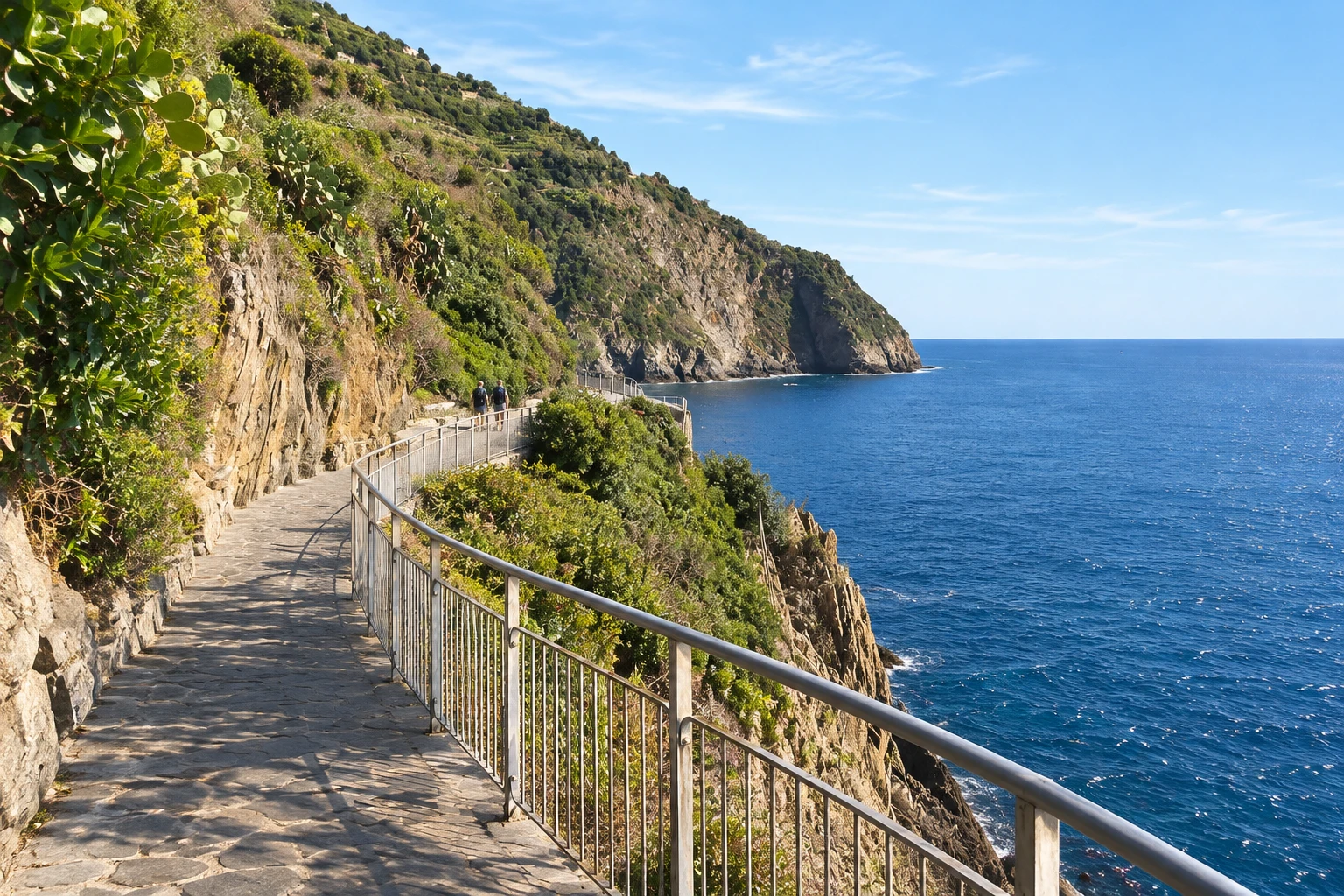
Pedestrian path carved into the rock above the sea between Riomaggiore and Manarola, traversed one-way, with a reserved time slot and the Cinque Terre Card.

Explore Via dell'Amore

See 9 more places in Cinque Terre

To choose before you go

Tours in Cinque Terre

Where each tour starts, how long it takes, how it is done, what is included and the price range.

Cinque Terre train: the five villages in one day

From La Spezia Centrale or Levanto Regional train stopping at all five villages about 8 hours full day easy (steps and slopes in the villages)

The Cinque Terre are the five villages of colorful houses clinging to the Ligurian coast, listed as a UNESCO World Heritage Site in 1997, linked by a regional train that runs mostly through tunnels between La Spezia and Levanto: Riomaggiore, Manarola, Corniglia, Vernazza and Monterosso al Mare, from south to north, 4 to 6 minutes apart by train. The Cinque Terre Express stops at all of them in high season, with 20–30 minute intervals. Riomaggiore has the Marina di Riomaggiore, the harbor where boats are pulled up onto the street; Manarola has the Punta Bonfiglio viewpoint, from which you get the classic photo of the village at sunset; Corniglia is the only one without a harbor, on top of a promontory, with the Lardarina staircase of 382 steps from the station (or a bus); Vernazza has the harbor square with the Chiesa di Santa Margherita d'Antiochia, from 1318, with an octagonal tower over the sea; and Monterosso is the largest, with the Spiaggia di Fegina, the only extensive sandy beach. You can see all five in one day, but two or three visited at a relaxed pace are more rewarding.

Stops: Marina di Riomaggiore, Punta Bonfiglio, Corniglia, Chiesa di Santa Margherita d'Antiochia, Spiaggia di Fegina.

Includes: Regional train paid separately; the Cinque Terre Card with train (Treno MS) includes unlimited travel between La Spezia and Levanto, the paid trails, village buses and toilets, for 1, 2 or 3 days. Villages have no entrance fee.

Tip: Buy the Cinque Terre Card with train option on the park website and validate it on first use. Start at the village farthest from your base and return stopping along the way; platforms at the stations are short and become crowded between 11:00 and 16:00. Check the station boards to see which trains stop at Corniglia and Manarola (not all do).

Best time: From April to October the train runs frequently; in winter service is reduced and some restaurants close.

Sentiero Azzurro: trail from Monterosso to Vernazza

From Monterosso al Mare (station) Marked coastal trail about 2 hours morning moderate (steps, 200 m ascent)

The Sentiero Azzurro (Blue Trail, SVA or 592) is the coastal path linking the five villages; the section between Monterosso and Vernazza, about 3.5 km, is the most walked and the most exposed to the sea: it starts at the end of Monterosso beach, climbs stone steps between olive trees and terraced vineyards up to about 200 m, with the whole coast in view, and descends into Vernazza, which appears suddenly with its harbor, the church tower and the Castello Doria, the 15th-century lookout tower that can be climbed. The Vernazza–Corniglia section, 3.4 km, is similar with fewer people. Both sections require the Cinque Terre Card and are controlled at the entrances; the Corniglia–Manarola section has been closed for years due to landslides, and Manarola–Riomaggiore is the Via dell'Amore, with its own rules. The trail closes under heavy rain alerts; the park posts notices on its website.

Stops: Spiaggia di Fegina, Chiesa di Santa Margherita d'Antiochia, Castello Doria.

Includes: Trail with separate fee: the Cinque Terre Card (Trekking or Treno MS) is required on paid sections. Castello Doria has a small admission fee.

Tip: Leave the village before 9:00, bring water, a hat and hiking shoes (sandals and light trainers are barred by park rangers); the trail has no shade during hot hours. Check the park website on the day to see if the section is open: it closes under weather alerts. On strong sunny summer days the park may restrict the direction of the trail.

Best time: From April to June and September to October; in July and August start very early; in winter the trail is usually open without charge but may be closed due to rain.

Via dell'Amore: the walkway between Riomaggiore and Manarola

From Riomaggiore (station) Seaside walkway with ticket about 30 minutes morning or late afternoon easy

The Via dell'Amore (Path of Love) is a roughly 1 km walkway carved into the rock above the sea between Riomaggiore and Manarola, opened in the 1930s as a route for railway workers and nicknamed by couples from the two villages; it was closed from 2012 to 2024 after a landslide and reopened with protective nets, timed entry and a limited number of people per slot. The route is flat, with benches, the padlock tunnel and views of the cliffs and the open sea; the stations of the villages lie at both ends. It is the easiest stretch on the coast for those not hiking, and the only one that runs continuously at the water’s edge. Access rules (times, direction, people limits, separate ticket or inclusion in the Cinque Terre Card) have changed from season to season: check before you go.

Stops: Via dell'Amore, Marina di Riomaggiore, Punta Bonfiglio.

Includes: Access with ticket and reserved time slot (via the park website; in some seasons included with the Cinque Terre Card, in others requiring a separate ticket). Closed during weather alerts.

Tip: Book your time slot on the park website a few days in advance, especially from April to October; enter via Riomaggiore in the morning and via Manarola late in the afternoon to keep the sun at your back. Padlocks are no longer allowed.

Best time: From April to October with reserved time slots; in winter check whether it is open.

Manarola: Punta Bonfiglio and the vineyard trail to Volastra

From Manarola (station) Walk in the village and terrace trail about 3 hours late afternoon moderate (300 m ascent to Volastra)

Manarola is the village of houses stacked above the stone harbor, where boats are lifted by crane and people sunbathe on the rocks. Punta Bonfiglio, the promontory with the cemetery and a small park, is the viewpoint of the best-known Cinque Terre photo, with the whole village lit at sunset. The Sentiero 506 Manarola–Volastra climbs by stairs and trails among vineyards terraced with dry stone up to Volastra, the village at 335 m where the wine Sciacchetrà is produced, with the Romanesque church of Our Lady of Health; from Volastra, path 586 continues along the high route to Corniglia, about 2 hours, offering the most open views of the coast and without the crowds of the Sentiero Azzurro, and is the detour used while the lower Corniglia–Manarola section is closed. In Manarola’s streets, Mario Andreoli’s illuminated nativity lights the hill from December to January.

Stops: Punta Bonfiglio, Sentiero 506 Manarola–Volastra, Corniglia.

Includes: Free walk; trails 506 and 586 have no charge. Park bus Manarola–Volastra paid separately (included in the Cinque Terre Card).

Tip: Take the park bus up to Volastra and walk down, or do the route the other way late in the afternoon to reach Punta Bonfiglio at sunset. Bring water: there are no fountains on the route.

Best time: From April to October; Punta Bonfiglio is worth visiting year-round at dusk.

Monterosso al Mare: beach, old town and the Capuchin convent

From Monterosso al Mare (station) Beach and walk about 3 hours afternoon easy

Monterosso al Mare, the northernmost village and the only flat one, is divided in two by the San Cristoforo promontory, crossed by a tunnel: on the Fegina side, the Spiaggia di Fegina, a sandy beach with umbrellas belonging to businesses and free stretches, and at its end the Statua del Gigante, a 14 m concrete Neptune from 1910 that once supported a terrace and lost its arms in bombings and the sea; on the old-town side, the narrow lanes (carrugi) with anchovy and lemon shops, and the Chiesa di San Giovanni Battista, from 1307, with a striped facade of white and dark green marble and a rose window. Above the promontory is the Convento dei Cappuccini, from 1619, with the church of San Francesco, a Crucifixion attributed to Van Dyck and a terrace overlooking both beaches; the climb takes 15 minutes via Via Roma. Monterosso is the most practical base for those who want the beach and the trail to Vernazza.

Stops: Spiaggia di Fegina, Chiesa di San Giovanni Battista, Convento dei Cappuccini, Statua del Gigante.

Includes: Free beach in sections; chairs and umbrellas charged separately. Church and convent free of charge.

Tip: The free beach is on the headlands; arrive early in July and August. From the station, Fegina beach is immediate; the old town is 5 minutes away through the tunnel. The Lemon Festival is in May and the anchovy festival in June and September.

Best time: June to September for swimming; the village is worth visiting from April to October.

Riomaggiore: the castle and the marina

From Riomaggiore (station) Village walk about 2 hours late afternoon moderate (hills and steps)

Riomaggiore, the southernmost village, climbs in steps up the gorge of the river that gives it its name, with colorful tower-houses and the Via Colombo, the main street, descending to the Marina di Riomaggiore, the tiny port between rocks where boats are hauled up to the street and from which sightseeing boats depart; the viewpoint to the left of the harbor, via the rock staircase, has the classic view of the village. Above, the Castello di Riomaggiore, dating from 1260 and with two round towers, is a lookout over the sea and valley, used for exhibitions and weddings. The church of San Giovanni Battista, from 1340, is in the upper part, near the station. From the marina a short trail climbs to the Torre Guardiola, a birdwatching post, and the longer path continues to Portovenere along the high route (trail 593, 5 hours).

Stops: Castello di Riomaggiore, Marina di Riomaggiore.

Includes: Village with no entrance fee; castle has a small ticket. Sightseeing boat rides charged separately.

Tip: Arrive at the marina in the late afternoon to see the village lit by the sun, and dine on Via Colombo. The painted tunnel links the station to the village in 3 minutes.

Best time: All year; boats operate from April to October.

See 4 more tours

Coastal scheduled boat: from the villages to Portovenere

From Monterosso, Vernazza, Manarola or Riomaggiore (pier) Scheduled boat service about 1 h 30 (one leg) to 4 hours (day) afternoon easy

The scheduled boat operated by the Consorzio Marittimo Turistico 5 Terre Golfo dei Poeti links La Spezia, Portovenere, Riomaggiore, Manarola, Vernazza, Monterosso and Levanto from March to November, with multiple trips daily, and it is the only way to see the five villages head‑on, as they were meant to be seen: from the sea, with vineyard terraces rising up to 500 m. Corniglia has no port and is excluded. Portovenere, outside the Cinque Terre but within the same National Park on the tip of the Golfo dei Poeti, has the church of San Pietro (1277), striped black and white on the rocks, Byron’s grotto and the three islands (Palmaria, Tino and Tinetto); the boat link to Riomaggiore takes 30 minutes. On rough-sea days service is suspended and boats do not call at Vernazza and Manarola.

Stops: Portovenere, Marina di Riomaggiore, Spiaggia di Fegina.

Includes: Tickets per leg or day passes (round trip with stops), paid separately; not included with the Cinque Terre Card.

Tip: Take the train one way and the boat back, or take the boat to Portovenere and the bus from there to La Spezia. Check the consortium’s website to see if the boat is operating that day: rough seas cancel service, and this is common in spring and autumn.

Best time: From April to October; boats are crowded in July and August.

Vernazza: the harbor, the castle and the trail to the Reggio sanctuary

From Vernazza (station) Village walk and trail about 3 hours morning moderate (300 m climb to the sanctuary)

Vernazza is the village with the only natural harbor in the Cinque Terre: Piazza Marconi opens onto the cove, with the Chiesa di Santa Margherita d'Antiochia, from 1318, built on the rocks with the apse facing the square and a 40 m tower, and on the other side the Castello Doria, a 15th-century circular watchtower with a viewpoint over the harbor and coast, a 5-minute climb by stairs. Via Roma, the main street, rises from the square to the station past focaccia and pesto shops. If you want to get away from the crowds, the trail to the Santuario di Nostra Signora di Reggio climbs in 45 minutes to 1 hour via stone steps and olive groves up to the 1248 church, surrounded by century-old plane trees, with sea views, and the park bus provides a circular return. Vernazza was rebuilt after the 2011 floods and landslides, and plaques on the walls mark the height of the mud.

Stops: Castello Doria, Chiesa di Santa Margherita d'Antiochia.

Includes: Village free of charge; Castello Doria has a small entrance fee; the park bus is included in the Cinque Terre Card.

Tip: Arrive early: Vernazza is the village that gets most crowded at midday. The viewpoint on the Sentiero Azzurro toward Monterosso, a 10-minute climb, gives you the photo of the harbor from above. Small beach behind the square and another pebbly one through a hole in the rock at the end of Via Roma.

Best time: From April to October; the village is accessible year-round.

Corniglia: the elevated village and the Lardarina stairway

From Corniglia (station) Village walk about 2 hours morning moderate (382 steps or bus)

Corniglia is the middle village and the only one of the five without direct sea access: it stands 100 m high on a promontory of vineyards, and from the station you go up the Lardarina, the staircase of 382 steps in 33 flights, or by the park bus. It is the smallest and quietest, with the Via Fieschi, the main street, leading to the Santa Maria terrace at the end of the village, with three sides facing the sea and the other villages in the distance; the church of San Pietro, from 1334, has a Carrara marble rose window. Below the village, the pebble beach of Guvano is reached by a trail. From Corniglia depart the two sections of the Sentiero Azzurro: to Vernazza (open, with Card) and to Manarola (closed for years, replaced by the higher path via Volastra). It’s the ideal stop if you want to sit on a terrace with a view without the lines of the other villages.

Stops: Corniglia, Punta Bonfiglio.

Includes: Village free to enter; the park bus station–village is included with the Cinque Terre Card or paid separately.

Tip: Take the bus up and walk down via the Lardarina. Go mid‑morning, between the big tour groups. The gelaterias on Via Fieschi make the local honey gelato.

Best time: All year; in winter the village is almost empty.

Portovenere and the island of Palmaria: the Gulf of Poets

From La Spezia (bus 11/P) or boat from the villages Round-trip by bus or boat about 5 hours full day easy (steps in the church)

Portovenere, at the western tip of the Gulf of La Spezia, the Golfo dei Poeti (Byron and Shelley lived nearby), is the village of tall narrow tower-houses lined along the quay, with the medieval gate, the church of San Pietro, from 1277, of striped marble on the rocks, with a loggia open to the sea and the Grotta di Byron below, and the Castello Doria above, with walls and views to the islands. Palmaria, the island opposite, 5 minutes by boat, has trails, two beaches (Pozzale and Cala Fornace) and the fort; the three-island boat tour passes the blue grotto of Palmaria and Tino, with the abbey, which is open only one day a year. It is a National Park and UNESCO site together with the Cinque Terre, but it lies outside the Cinque Terre Card. The bus from La Spezia takes 30 minutes along the coastal road.

Stops: Portovenere.

Includes: ATC bus paid separately; boat to Palmaria and island tour paid separately; castle and church with a small fee or free entry.

Tip: Combine with the Cinque Terre scheduled boat: from Riomaggiore to Portovenere is 30 minutes by sea. For Palmaria, bring water and sneakers; the trail back across the island takes 2 to 3 hours.

Best time: From April to October; in July and August the village is crowded on weekends.

Day by day

2, 3 and 5-day itinerary in Cinque Terre

Suggestions to plan the trip. Change the order of the days according to the weather and tour availability.

2 days · Cinque Terre in 2 days: the five villages and one hike

For If you come from Florence, Pisa or Genoa and want to see the villages at a relaxed pace, with one hike. · Based in Monterosso al Mare, Riomaggiore or La Spezia (more hotels and trains)
  1. Day 1 · Arrival and the southern villages

    Arrival at La Spezia Centrale (from Pisa about 1 hour; from Florence 2 h 20; from Genoa 1 h 10). Cinque Terre Card with train. Riomaggiore, with the castle and the marina; Via dell'Amore during the reserved time until Manarola; Corniglia in the afternoon, by bus and the Lardarina; sunset at Punta Bonfiglio in Manarola.

  2. Day 2 · Trail and the northern villages

    Train to Monterosso early; Sentiero Azzurro to Vernazza, with Castello Doria and lunch at the harbor; afternoon on Fegina beach and in Monterosso’s old town, with the Capuchin convent; return by regular boat service, if the sea allows.

3 days · Cinque Terre in 3 days: trails, sea and Portovenere
For If you want to hike and also see the coast by boat. · Based in Monterosso or Vernazza, for trails; La Spezia as an alternative
  1. Day 1 · Riomaggiore, Manarola and Corniglia

    Arrival and Cinque Terre Card. Riomaggiore in the morning, Via dell'Amore reserved until Manarola, lunch and Punta Bonfiglio; Corniglia in the afternoon via the stairway; night in Monterosso or Vernazza.

  2. Day 2 · Sentiero Azzurro

    Monterosso–Vernazza trail early, with Castello Doria; after lunch, Vernazza–Corniglia or the climb to the sanctuary of Reggio; return by train; swim at Fegina at the end of the day.

  3. Day 3 · Boat and Portovenere

    Regular coastal boat to Portovenere, with the church of San Pietro and Palmaria; return to La Spezia by bus and train to the next destination.

5 days · Cinque Terre in 5 days: each village at a relaxed pace
For If you make the Cinque Terre your base for a week of sea and trails, without a car. · Based in Monterosso or Manarola, 4 nights; arrive via La Spezia
  1. Day 1 · Arrival and Monterosso

    Arrival at La Spezia and train to Monterosso. Afternoon on Fegina beach, old town and climb to the Capuchin convent; sunset at the Giant.

  2. Day 2 · Vernazza on foot

    Sentiero Azzurro Monterosso–Vernazza early; Castello Doria and lunch at the harbor; hike to the sanctuary of Reggio in the afternoon; return by train.

  3. Day 3 · Corniglia and Manarola

    Train to Corniglia, the village and the Santa Maria terrace; high trail via Volastra to Manarola (or bus), among the vineyards; Punta Bonfiglio at sunset.

  4. Day 4 · Riomaggiore and Via dell'Amore

    Via dell'Amore during the reserved time, from Manarola to Riomaggiore; castle, marina and swimming from the rocks; return by regular boat to the villages at the end of the afternoon.

  5. Day 5 · Portovenere and Palmaria

    Regular boat to Portovenere; church of San Pietro, castle and crossing to Palmaria for the beach; return to La Spezia by bus and train.

Best time to go

When to go: Cinque Terre month by month

Spring (April to June) and early autumn (September and October) usually have pleasant temperatures for walking. Summer, from June to August, is hot and when the villages are busiest. In winter (December to February) many services reduce hours and the boats stop. The seasons are reversed compared to Brazil.

The seasons shown are the most usual ones; nature doesn't always follow the calendar.

January Some rain

winter · empty villages

Winter. At the Genoa and Pisa San Giusto stations (the nearest with 1991–2020 normals): average 7 to 9 °C and about 68 to 76 mm of rain. Cold sea, trails open without charge but subject to closures from rain, boats stopped; half the restaurants closed. For those who want the villages empty, bring a coat and rain cape.

February Some rain

winter · almond trees

Winter. At the Genoa and Pisa San Giusto stations (the nearest with 1991–2020 normals): average 7.4 to 9.6 °C and about 58 to 63 mm of rain. Clear days between fronts; mimosas and almond trees bloom on the terraces. Low activity; the regional train runs less frequently than in summer.

March Some rain

spring beginning · boats returning

Early spring. At the Genoa and Pisa San Giusto stations (the nearest with 1991–2020 normals): average 10 to 12 °C and about 60 to 74 mm of rain. Trails reopen with a fee and the scheduled boat usually returns at the end of the month. European daylight saving time starts on the last Sunday: 4 hours difference from Brasília.

April Some rain

spring · Easter and trails

Spring. At the Genoa and Pisa San Giusto stations (the nearest with 1991–2020 normals): average 13 to 14.6 °C and about 65 to 84 mm of rain, in downpours that can close trails for a day. Flowers on the terraces, sea still cold. Easter and April 25 bring the first peak; book the Via dell'Amore.

May Some rain

spring · trail season

Full spring. At the Genoa and Pisa San Giusto stations (the nearest with 1991–2020 normals): average 17 to 18 °C and about 58 to 62 mm of rain. Long days, ideal temperature for the Sentiero Azzurro, sea beginning to accept swimming. Lemon Festival in Monterosso. High traffic on weekends.

June Low rain

summer · sea bathing

Summer. At the Genoa and Pisa San Giusto stations (the nearest with 1991–2020 normals): average 21 to 22 °C and about 41 to 51 mm of rain. Warm sea, crowded beaches in Monterosso, trails getting hot from 11 a.m. Anchovy festival in Monterosso; Corpus Christi with flower carpets. Trains and platforms crowded at midday.

July Low rain

summer · heat and crowds

Summer. At the Genoa and Pisa San Giusto stations (the nearest with 1991–2020 normals): average 24 to 25 °C and about 26 to 32 mm of rain. Strong sun on exposed trails: the park sometimes restricts the Sentiero Azzurro during the hottest hours. Do hikes at 7 a.m. and use the sea in the afternoon; boats are full.

August Low rain

summer · Ferragosto

Summer. At the Genoa and Pisa San Giusto stations (the nearest with 1991–2020 normals): average 24 to 25 °C and about 41 to 48 mm of rain, with storms at the end of the month. It’s the busiest month, with Ferragosto on August 15; book train, Via dell'Amore and boat. The sea is usually at its best for swimming.

September High rain

late summer · harvest and warm sea

Late summer. At the Genoa and Pisa San Giusto stations (the nearest with 1991–2020 normals): average 20 to 22 °C and about 100 to 116 mm of rain, in short, heavy downpours. Sea still warm, trails with pleasant temperatures, Sciacchetrà harvest on the terraces. High activity in the first half of the month. On alert days the trails close.

October High rain

autumn · rain and golden light

Autumn. At the Genoa and Pisa San Giusto stations (the nearest with 1991–2020 normals): average 16 to 17.6 °C and about 129 to 150 mm of rain, with days of very heavy rain in Liguria. Between fronts, clear golden days, with villages quieter; boats stop running at the end of the month. European daylight saving time ends on the last Sunday: 5 hours difference from Brasília.

November High rain

autumn · rainiest month

Late autumn. At the Genoa and Pisa San Giusto stations (the nearest with 1991–2020 normals): average 11.6 to 13 °C and about 131 to 200 mm of rain, the rainiest month of the year on the Ligurian coast, with risk of landslides and trail closures. Boats stopped, reduced train service. Only for those who want the villages with nobody around.

December High rain

winter · Manarola nativity scene

Winter. At the Genoa and Pisa San Giusto stations (the nearest with 1991–2020 normals): average 7.7 to 10 °C and about 88 to 99 mm of rain. The illuminated nativity scene of Manarola, with hundreds of figures on the hillside, is lit on December 8 and stays up until the end of January. Quiet villages, trails open without charge when there is no alert.

Plan the journey

How to get there: Cinque Terre

From Brazil by plane: via Rome, Pisa or Genoa

There is no direct flight from Brazil to Liguria. You get there via a direct flight from São Paulo or Rio to Rome Fiumicino and trains to La Spezia (about 3 h 30 to 4 h, with a change in Pisa or a direct Intercity), or via a flight with a connection in another European city to Pisa (PSA), 1 hour by train from La Spezia, or to Genoa (GOA), 1 h 10. Confirm before you buy.

By train: La Spezia, Levanto and the Cinque Terre Express

La Spezia Centrale is the southern gateway to the Cinque Terre and Levanto the northern gateway; between them the regional train (Cinque Terre Express in high season) stops at the five villages, with 4 to 6 minutes between each. To La Spezia: Pisa about 1 hour, Florence about 2 h 20 (regional with change in Pisa), Genoa about 1 h 10, Milan about 3 h, Rome about 3 h 30 to 4 h (direct Intercity or Frecciarossa to Pisa or Florence). The regional ticket between the villages has its own park-zone pricing; the Cinque Terre Card with train (Treno MS) covers unlimited travel between La Spezia and Levanto. Always validate before boarding.

By car: leave it in La Spezia or Levanto

The villages are practically closed to cars: Riomaggiore, Manarola and Vernazza have small parking lots up above, far from the center and full in season; Monterosso has a bit more; Corniglia almost none. The coastal road (SP370) is narrow and slow. The most practical option is to leave the car in La Spezia (parking near the station) or in Levanto and use the train. Via the A12 (Genoa–Livorno), La Spezia is about 110 km from Genoa, 80 km from Pisa, 160 km from Florence (via the A11 and A12) and 230 km from Milan (A7 and A12).

How to get around the Cinque Terre

Train between the villages (see above), on foot via the trails, scheduled boat from March to November (not included in the Card) and the park’s electric buses, which link the stations to the higher parts (Corniglia, Volastra, Reggio) and are covered by the Card. The Cinque Terre Card exists in two versions: Trekking (paid trails, bus, toilets) and Treno MS (all that plus unlimited train travel La Spezia–Levanto), for 1, 2 or 3 days, sold online and at stations. The paid trails (Monterosso–Vernazza–Corniglia) have inspectors at the entrance; the others are free. In yellow or red weather alerts, the trails close.

Documents and time zone for Brazilians

Italy is in the Schengen area: Brazilians enter with a valid passport, without a visa for tourism up to 90 days. Entry requirements for Europe can change: confirm before traveling. On entry you may be asked for a return ticket, proof of where you will stay and means to cover your stay; travel insurance with medical coverage is required for the Schengen area. Minors traveling without both parents: confirm requirements before you go. The time zone is Central European Time (CET): Italy is 4 hours ahead of Brasília during European daylight saving time, from late March to late October, and 5 hours the rest of the year. The plug is the two- or three-round-pin type, 230 V.

Park fees and rules

Cinque Terre Card: mandatory on the paid sections of the Sentiero Azzurro; the Via dell'Amore has access with scheduled times and rules that change each season (separate ticket or included in the Card). The park prohibits flip-flops and open shoes on the trails, with fines, and may limit trail access on extreme heat days. The municipalities charge a tourist tax per night, paid at your accommodation. Check the current table and rules on the park website before you go.

Your base to explore

Where to stay and where to eat

Before you go

Practical information

A little planning leaves more time to enjoy the journey.

When to go

Spring (April to June) and early autumn (September and October) usually have pleasant temperatures for walking. Summer, from June to August, is hot and when the villages are busiest. In winter (December to February) many services reduce hours and the boats stop. The seasons are reversed compared to Brazil.

The seasons shown are the most usual ones; nature doesn't always follow the calendar.

How many days to stay

Two days allow you to see the five villages at a relaxed pace, using the train and, in season, the boat. With three days there's time for a hike, for Portovenere and for unhurried meals. A day trip from Florença, Pisa or Gênova is possible but tiring and leaves little time in each village.

Which city to stay in

Staying overnight in one of the villages lets you enjoy mornings and evenings when there are fewer visitors. Monterosso has more accommodation and a beach; Vernazza, Manarola and Riomaggiore have houses and rooms on streets with many steps. La Spezia, a few minutes by train, offers more options and serves as a practical base. Levanto, at the other end of the line, is a quieter alternative. In the villages, expect steps and travel light.

Respect the place

Take your trash with you, follow the signs and support local businesses. In natural areas, follow the visiting guidelines.

Beyond the guide

Your questions

Frequently asked questions about Cinque Terre

How to get to the Cinque Terre from Brazil?

Connections from Brazil usually involve a transfer in another city. Confirm before booking. From Brazil the most common route is via Milan or Rome and then by train to La Spezia. From Milan the journey typically takes about 3 hours; from Rome, about 4 hours, sometimes with a change. In La Spezia you catch the regional train to the villages.

How many days should I reserve for the Cinque Terre?

Two days is a good minimum to see the five villages without rushing. Three days allow for a hike, Portovenere and more time at sea in summer. In a single day you can get an impression by choosing two or three villages.

Do I need a car?

No. Vehicle access to the villages is very limited, parking is outside the centers and small. The regional train between La Spezia and Levanto links the five villages frequently, and the trip between neighboring villages usually takes only a few minutes.

What is the best time to visit?

April to June and September to October usually offer good weather for walking and less heat. July and August are hot and crowded. Boats between the villages typically operate from spring until early November; in winter, rely only on the train.

Is a day trip possible from Florença or from Gênova?

Yes, by train. From Florença to La Spezia the journey usually takes between 2 and 2.5 hours, often with a change in Pisa. From Gênova, about 1.5 hours. Since the round trip takes up much of the day, it's ideal to spend at least one night in the area.

What is the Cinque Terre Card?

It's the national park card. The Trekking version gives access to the park's paid trails, such as the Sentiero Azzurro, and the Treno version also includes the regional train between La Spezia and Levanto. The Via dell'Amore requires the card and a time reservation. Check options and rules before you go.

Routes in Italy

Cinque Terre is on the Cinque Terre by train

Five villages on the Ligurian coast connected by train, from Monterosso al Mare to Riomaggiore, with stops at Vernazza, Corniglia and Manarola.

Explore the Cinque Terre by train
Explore other destinations Search by state and city