Tuscany

Tuscany

Tuscany

Pisa, Siena, San Gimignano and Lucca: medieval towers, whole stone squares and vineyard-covered hills a short train or bus ride from Florença.

Central

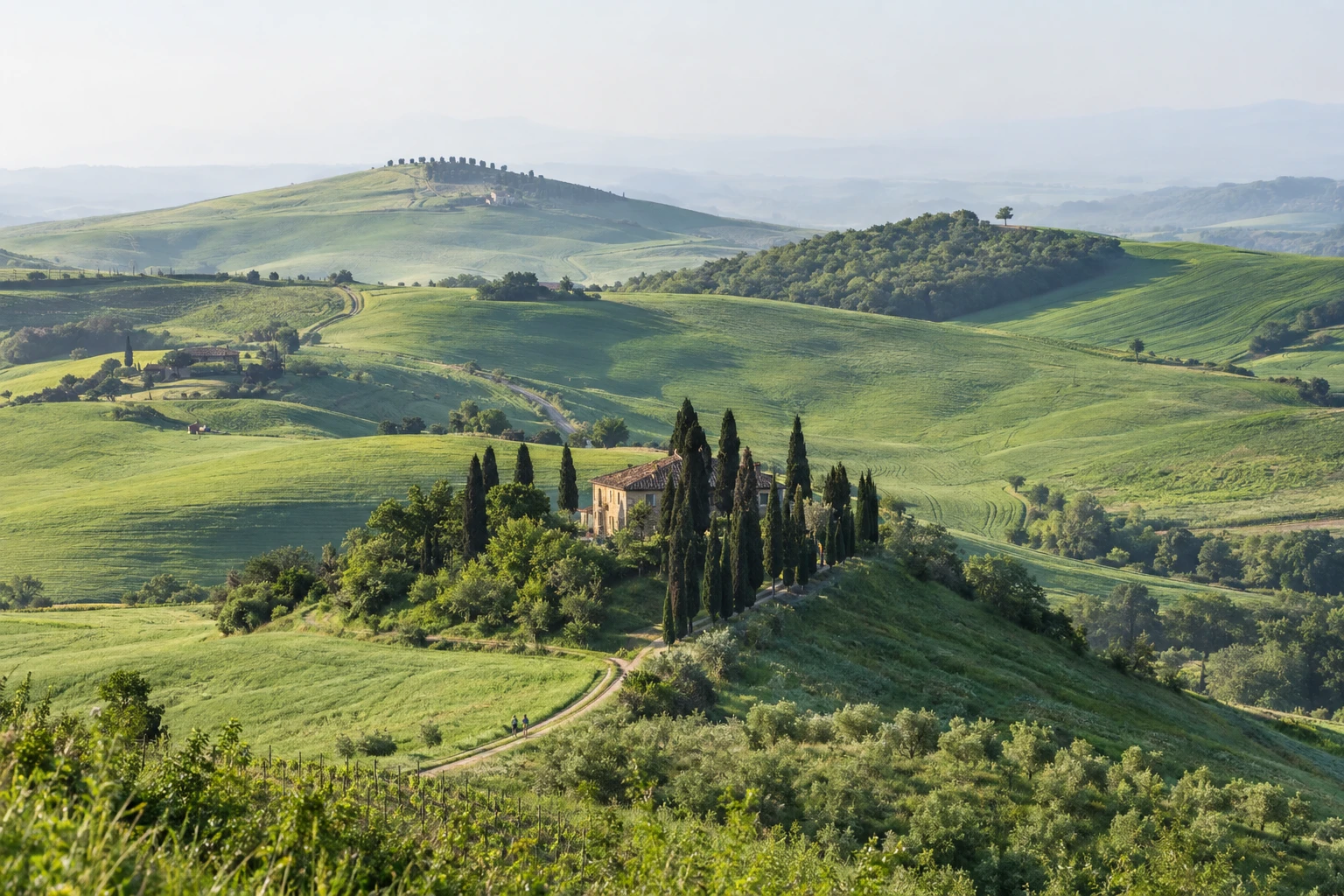
In the photo: Val d’Orcia, Toscana

Illustrative images. The pictures in this guide are illustrations based on the real place, not photographs, and may differ from it.

Get it on Google Play

Get to know the place

A region to enjoy
at your own pace.

Toscana, in central Italy, is the region whose capital is Florença. Around it lie smaller towns that keep the medieval layout almost intact: Pisa, Siena, San Gimignano and Lucca. All are a little over an hour from Florença and can be visited on day trips or by spending one or two nights in each.

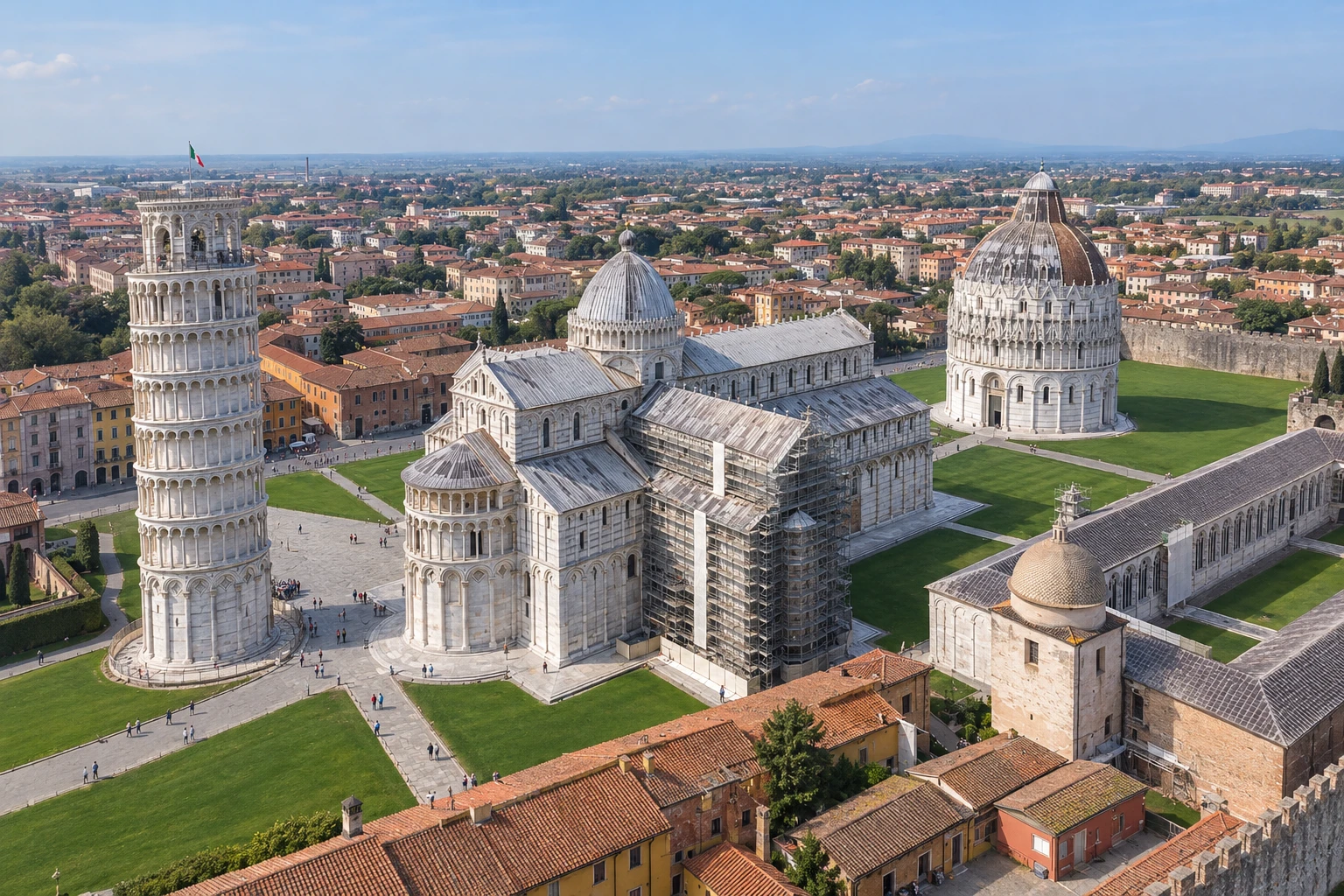
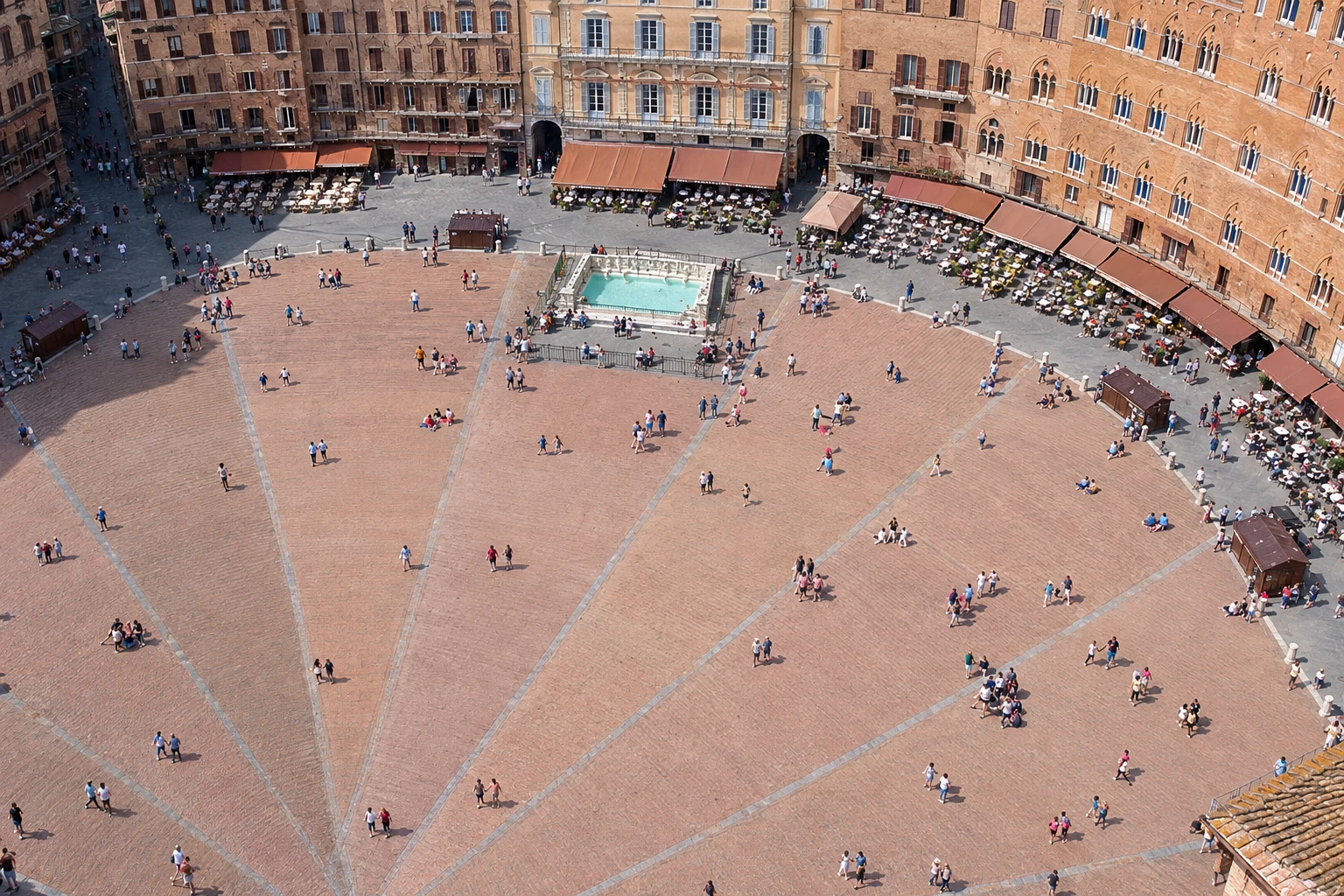
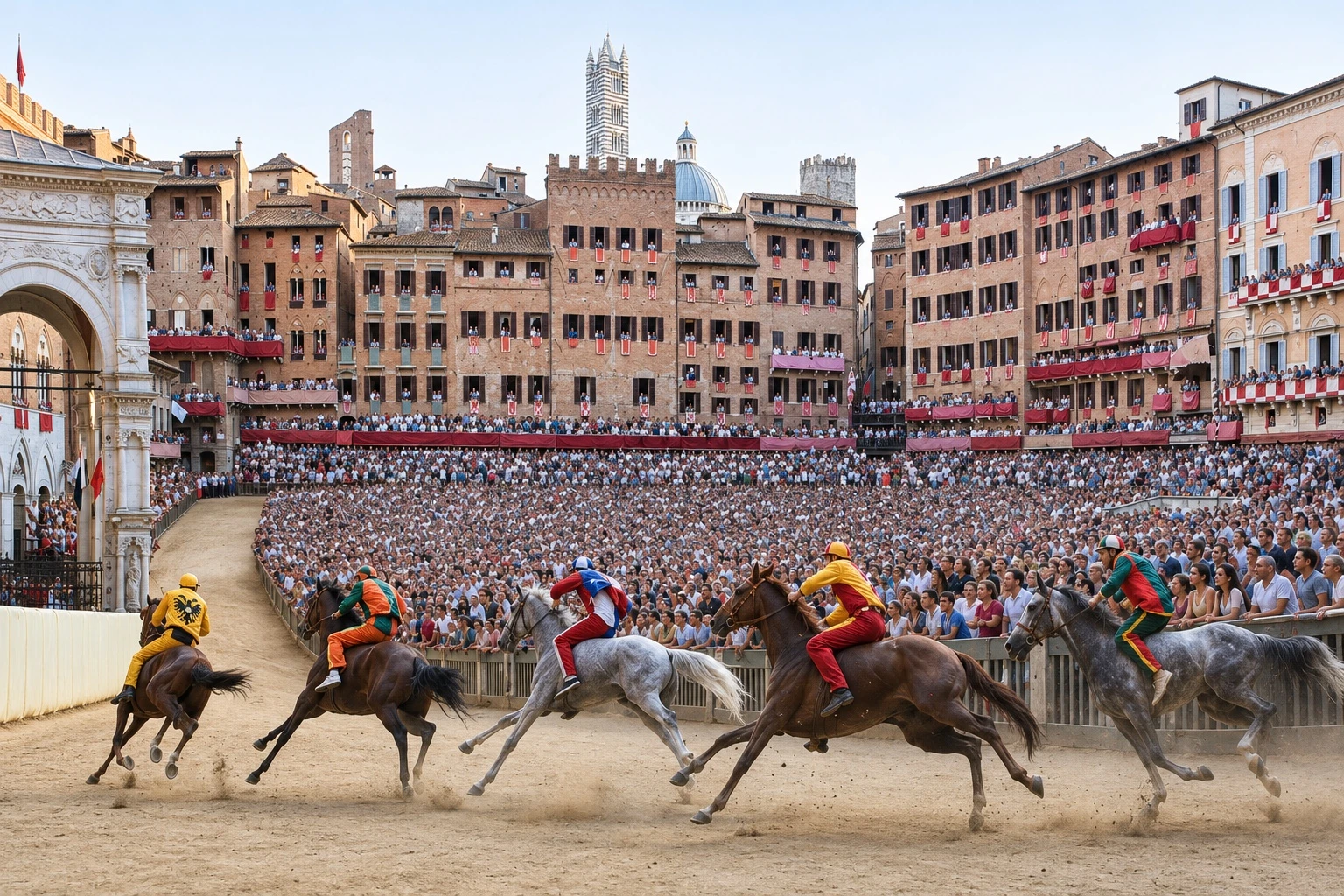
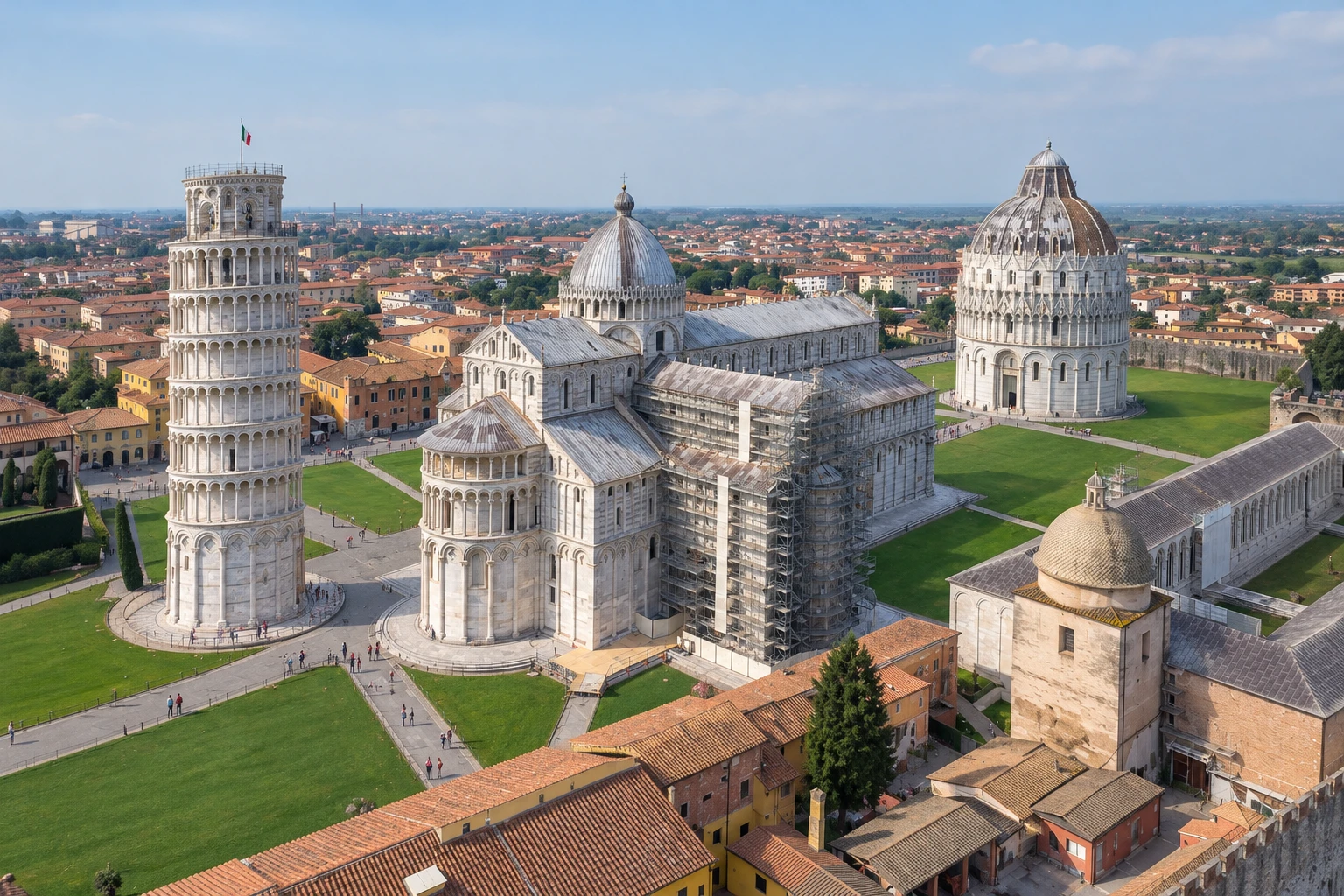
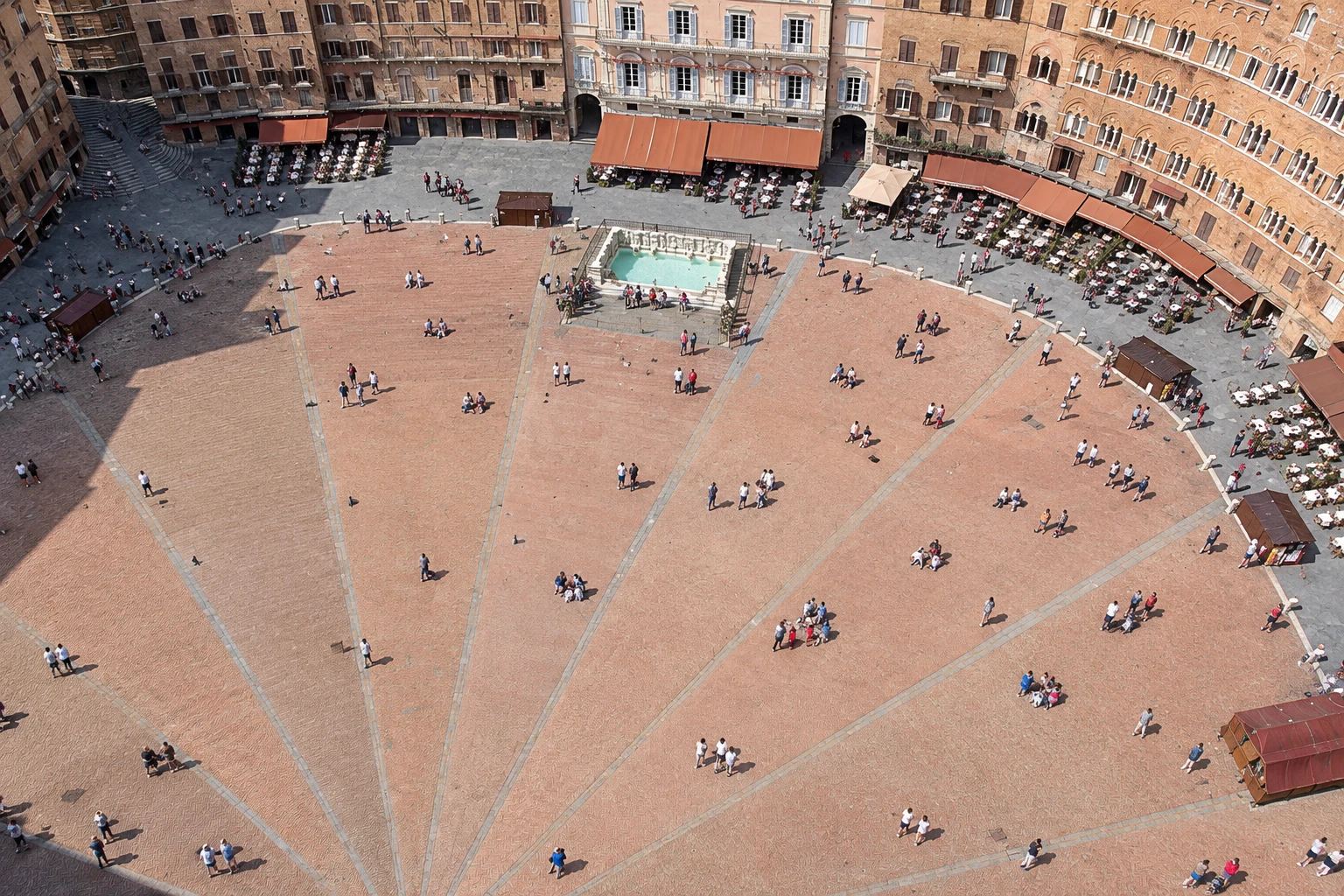
Pisa brings together on the Piazza dei Miracoli the leaning tower, the cathedral, the baptistery and the monumental cemetery, a complex that is a UNESCO World Heritage Site. Siena revolves around the Piazza del Campo, where the Palio takes place, the horse race between the city's neighborhoods, and has a cathedral of white-and-black striped marble.

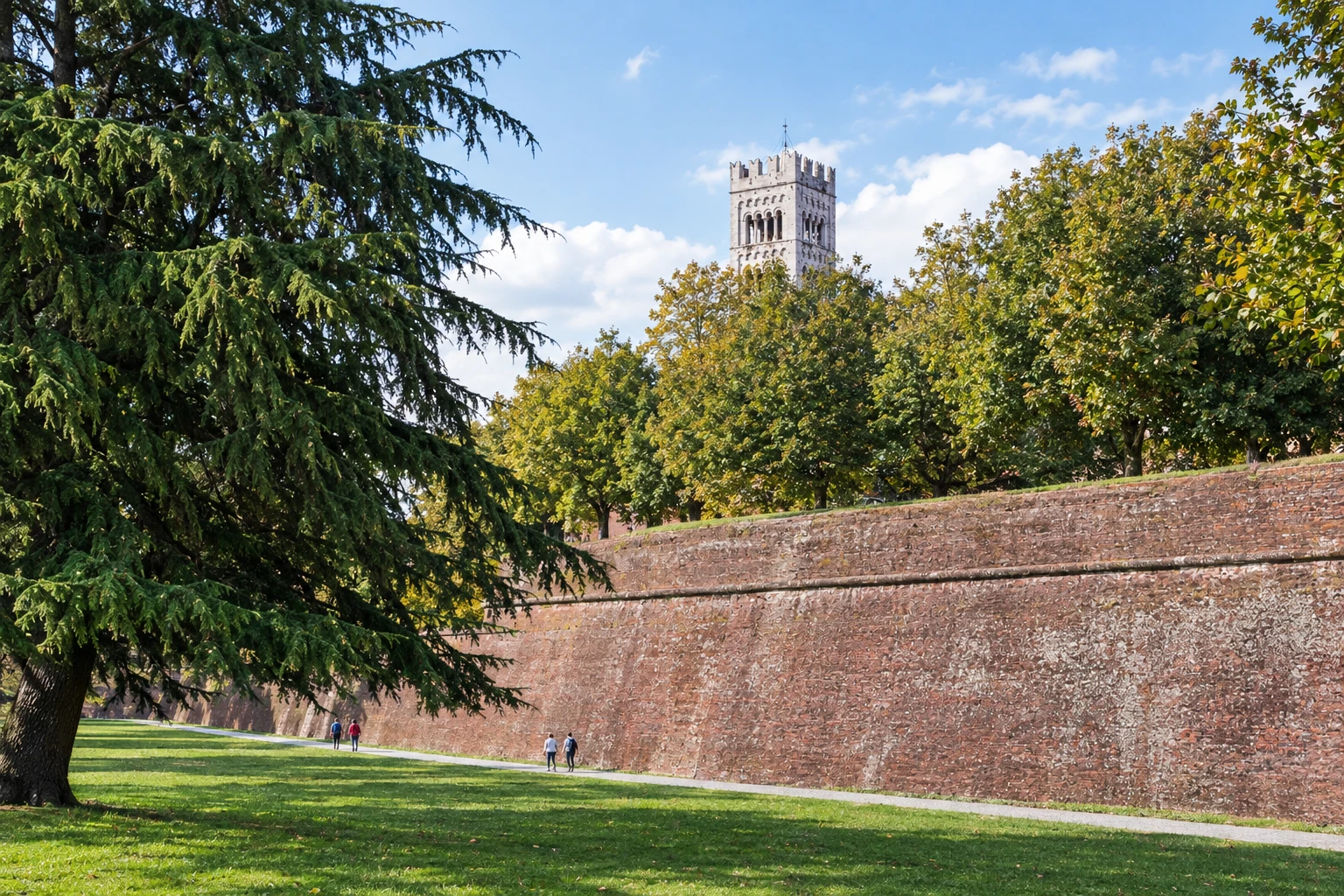
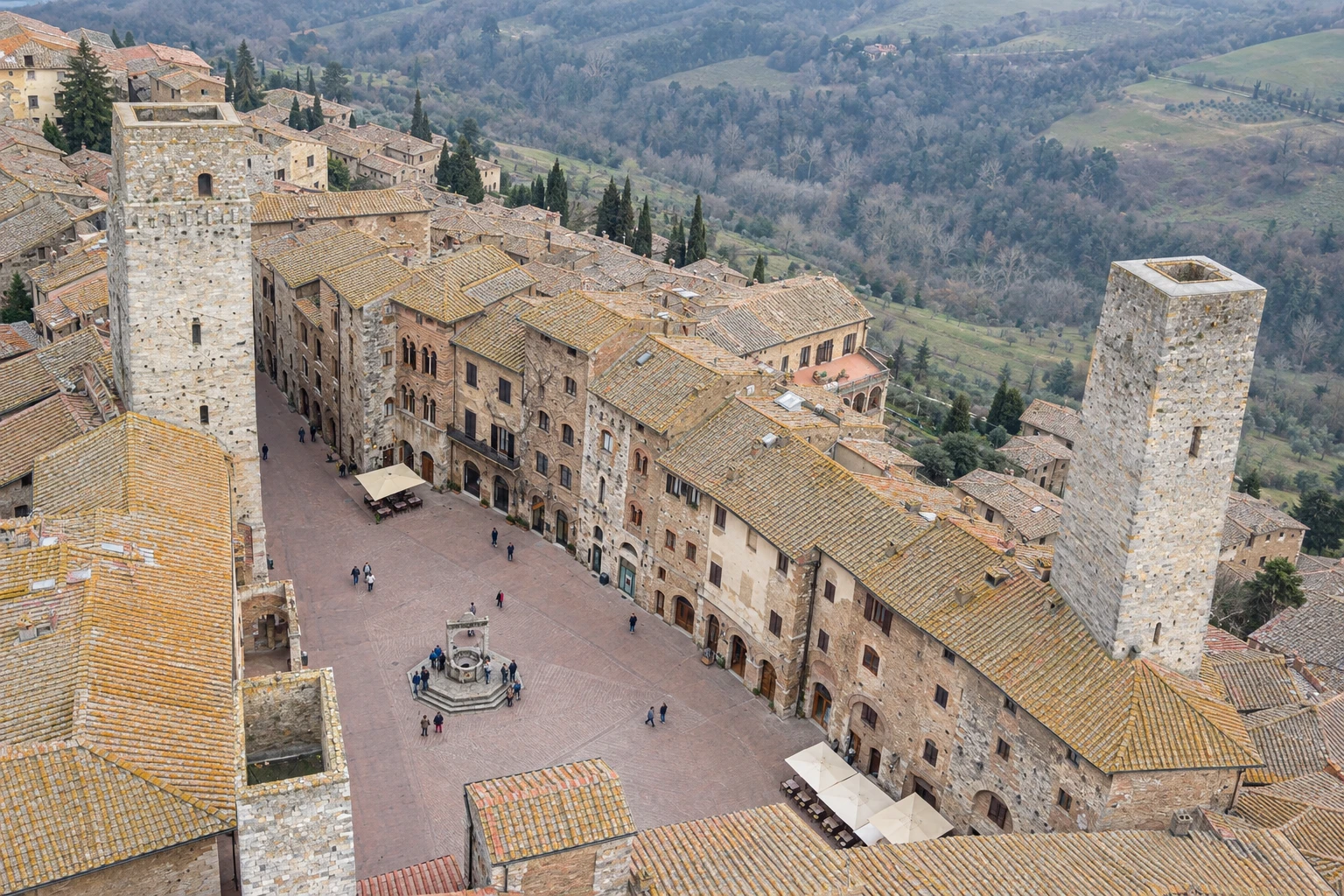
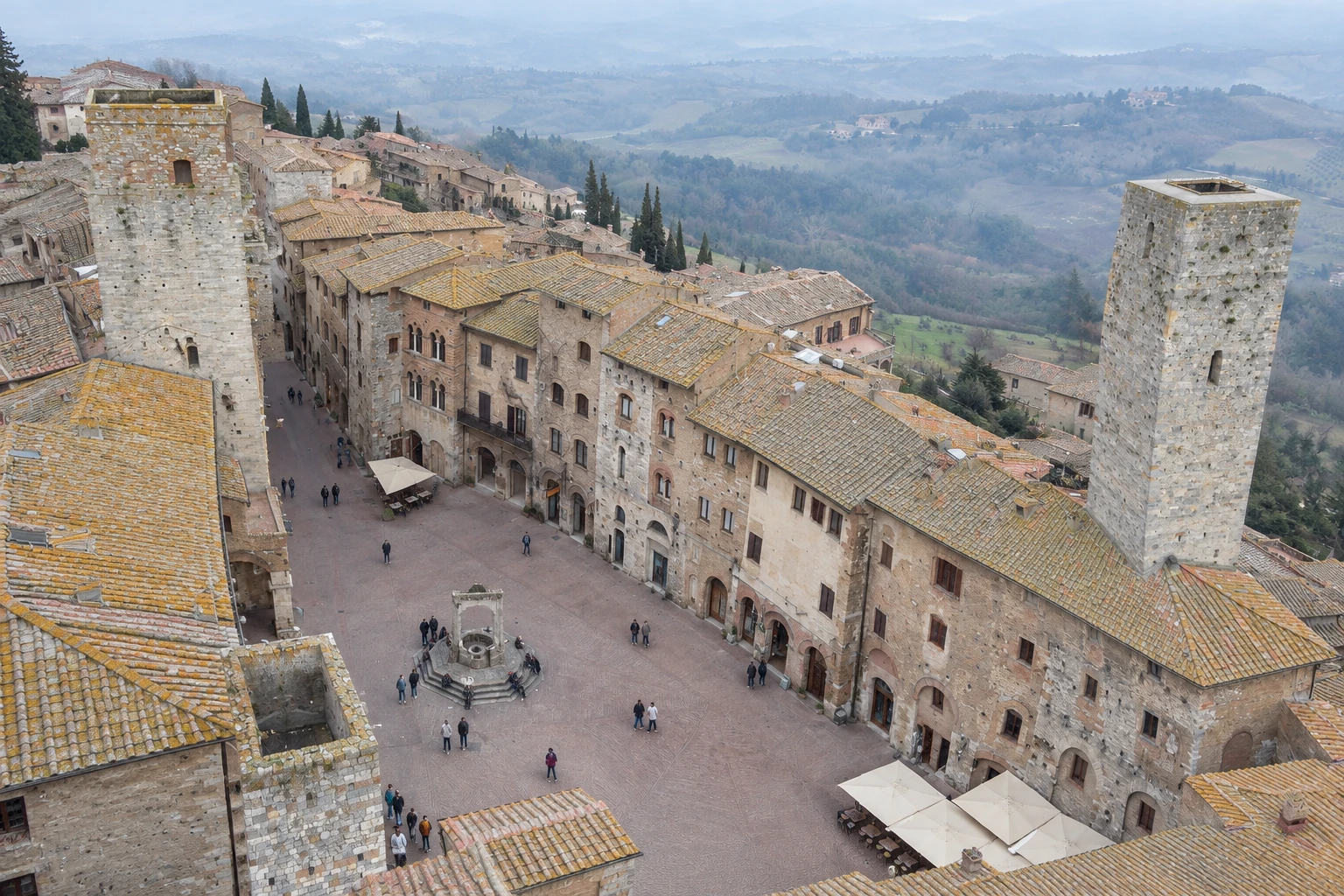
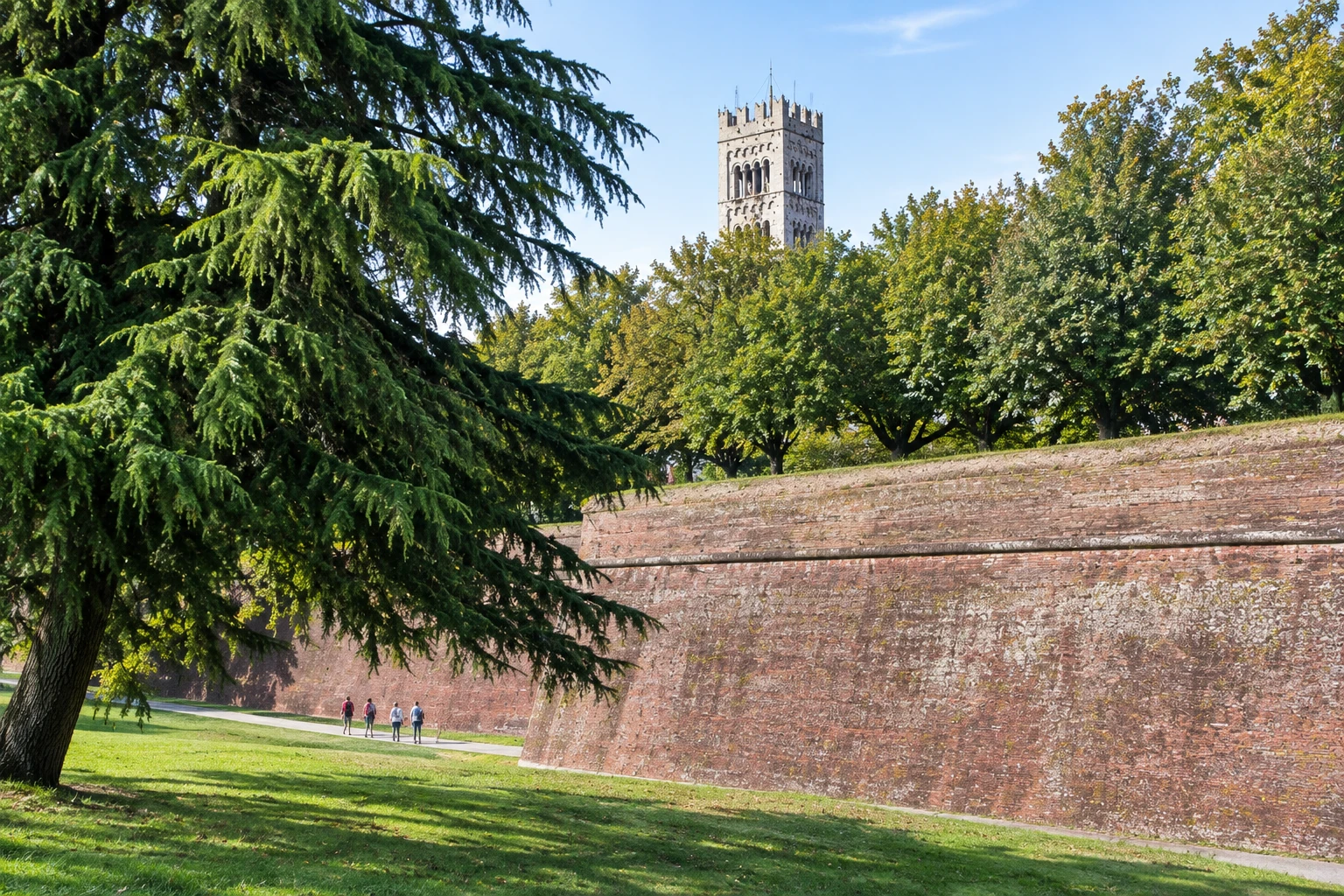
San Gimignano is the town of towers: of the dozens raised by wealthy families in the Middle Ages, about fourteen still stand on the hill. Lucca is entirely enclosed by wide Renaissance walls, which have become a tree-lined promenade for walking and cycling.

Between one town and another the hills appear with cypresses, olive trees and vineyards. South of Siena lie the Val d'Orcia, Pienza, Montalcino and Montepulciano, land of Brunello and Vino Nobile. For Brazilians, Italy is 4 or 5 hours ahead of Brasília, depending on the time of year, and the seasons are reversed compared with Brazil.

This destination brings together 4 cities: Pisa, Lucca, San Gimignano, Siena.

Share: WhatsApp
Traveler, share your experiences through photos Up to 5 photos of each place you visited.

One destination, many paths

The cities on this trip

Start with one city or combine several in your itinerary.

Where Tuscany is The star marks the nearest capital, Florence.
FlorencePisaLuccaSan GimignanoSiena

Outlines: ISTAT, limites administrativos 2026, CC BY 4.0. Adapted by Cidade Turismo.

How to get there: Tuscany

Aeroporto di Pisa Galileo Galilei (PSA) · 3 km to Pisa

Connections from Brazil usually involve a stopover in another city. Check before buying. The most used entry point is Pisa airport; Florença's airport also receives flights from Europe. From Rome or Milan, take a high-speed train to Florença and from there regional trains to Pisa and Lucca or buses to Siena and San Gimignano.

Suggested arrival point: Pisa

San Gimignano
Tuscany · Tuscany

San Gimignano

San Gimignano is a walled village atop a hill between Florence and Siena, known for the medieval towers that still mark the skyline: about fourteen remain standing. The historic centre is a UNESCO World Heritage site. The two neighbouring squares, the Piazza della Cisterna and the Piazza del Duomo, contain the Collegiata, covered in frescoes, and the Palazzo Comunale, from which you can climb the Torre Grossa. Around the village, vineyards produce Vernaccia di San Gimignano.

Festivals and events

Festivals Tuscany

Dates change every year: check this year's date before you travel.

Festival calendar in Italy

The local experience

Things to do in Tuscany

Pisa · Tuscany · Square

Square of Miracles

The lawn where the leaning tower, the cathedral, the baptistery and the Camposanto stand, a complex in white marble that is a UNESCO World Heritage Site.

Explore Square of Miracles

See 22 more places in Tuscany

To choose before you go

Tours in Tuscany

Where each tour starts, how long it takes, how it is done, what is included and the price range.

Pisa: Piazza dei Miracoli, Tower, Duomo, Baptistery and Camposanto

From Pisa Centrale station (20 min on foot) or Pisa San Rossore (5 min) Walk with climb to the tower about 3 hours morning moderate (294 steps in the tower)

The Piazza dei Miracoli (Square of Miracles), a UNESCO site, brings together Pisa’s four white marble monuments on a walled lawn. The Torre di Pisa (Tower of Pisa), the bell tower begun in 1173, started leaning during construction because of soft ground and today is about 4 degrees tilted, after stabilization completed in 2001; you climb in 30-minute slots via 294 steps, with a view over the square. The Cattedrale di Santa Maria Assunta, dating from 1063, is the model of Pisan Romanesque, featuring the pulpit by Giovanni Pisano and the lamp that, legend says, inspired Galileo, who was born in the city. The Battistero di San Giovanni, the largest in Italy, has acoustics that guards demonstrate by singing, and the pulpit by Nicola Pisano from 1260. The Camposanto Monumentale, the cloistered cemetery with soil brought from Golgotha, houses frescoes of the Triumph of Death, restored after the 1944 fire.

Stops: Piazza dei Miracoli, Torre di Pisa, Cattedrale di Santa Maria Assunta, Battistero di San Giovanni, Camposanto Monumentale.

Includes: Tower with separate paid admission and timed entry (online reservation recommended; children under 8 do not ascend). Cathedral free entry with timed ticket collection; Baptistery, Camposanto and museums require separate payment, with combined tickets available.

Tip: Book the tower on the Opera della Primaziale Pisana website in advance, especially from April to October. Reach the square via Pisa San Rossore, the nearest station, or on foot from Pisa Centrale along Via Santa Maria. A mid-morning is enough for the square; the city has the Arno River and Piazza dei Cavalieri for the rest.

Best time: All year. On June 16 and 17, the Luminara and the Gioco del Ponte fill the city.

Pisa beyond the tower: Piazza dei Cavalieri and the Lungarni

From Piazza dei Miracoli Walk about 1 h 30 min afternoon easy

Leaving the tower square via Via Santa Maria, you reach Piazza dei Cavalieri, Pisa’s political center in the Middle Ages, redesigned by Vasari in 1562 for the Knights of Saint Stephen: the Palazzo della Carovana, with its sgraffito façade, houses the Scuola Normale Superiore, the elite university founded by Napoleon; the Palazzo dell'Orologio links the towers where Count Ugolino died of starvation, an episode told by Dante. Borgo Stretto, the arcaded street, descends to the Arno River. The Lungarni di Pisa, the riverbanks, feature palaces with yellow and ochre façades, the small Gothic church of Santa Maria della Spina (1230) at the water’s edge, the Palazzo Blu with exhibitions, and the Ponte di Mezzo, from which you can see the river bend. This is the Pisa of residents and students, away from the souvenir shops.

Stops: Piazza dei Cavalieri, Lungarni di Pisa.

Includes: Free walk, no charge. Palazzo Blu has paid admission for exhibitions.

Tip: Do this stretch in the late afternoon, after the tower square, and finish the day by the river; the Via San Martino, on the other side of the bridge, has local trattorias. In June, the banks host the Luminara with thousands of candles.

Best time: All year.

Lucca: the walls circuit and the historic centre

From Lucca station (5 min from the walls) Walk or bike on the walls about 4 hours full day easy (flat cycle path)

The Mura di Lucca (Lucca walls), built between 1504 and 1645 and never used in battle, encircle the town for 4.2 km with 11 bastions, and in the 19th century were turned into a tree-lined promenade along the top, with plane trees and a cycle path, from which you can see the roofs and towers; walking the circuit takes about an hour, by bike 20 minutes. Inside, the Piazza dell'Anfiteatro, the oval square built over the seating of the Roman amphitheater, with cafés in the arcades; the Cattedrale di San Martino, with its asymmetric façade, the Volto Santo (the wooden crucifix that legend says was carved by Nicodemus) and the tomb of Ilaria del Carretto by Jacopo della Quercia; the Chiesa di San Michele in Foro, with a marble-column façade that rises above the roof, and the Torre Guinigi, 45 m high, with holm oaks planted atop, offering views over the whole town. Lucca is Puccini’s hometown; he was born on Via di Poggio.

Stops: Mura di Lucca, Piazza dell'Anfiteatro, Cattedrale di San Martino, Chiesa di San Michele in Foro, Torre Guinigi.

Includes: Walls free of charge; bike rental paid separately. Torre Guinigi, cathedral (part) and museums have separate paid admissions.

Tip: Rent a bike near Porta Santa Maria and cycle the walls in the morning; descend to the Piazza dell'Anfiteatro for lunch. The Lucca Summer Festival, in June and July, sets up a stage in Piazza Napoleone, and Lucca Comics, at the end of October, fills the city for five days.

Best time: All year; April to October for cycling the walls.

Puccini Museum: the composer's birthplace in Lucca

From Piazza Cittadella, Lucca House-museum about 1 hour morning or afternoon easy

The Puccini Museum - Casa natale occupies the apartment in Corte San Lorenzo where Giacomo Puccini was born in 1858, into a family of five generations of musicians for the Lucca cathedral. The rooms hold the Steinway piano on which he composed Turandot, autograph scores, letters, the Metropolitan’s Turandot costume, his coat and personal belongings, and his writing desk; the museum presents the composer’s life between Lucca, Milan and Torre del Lago, 25 km away, where he lived by Lake Massaciuccoli and where the open‑air Puccini Festival takes place every summer. In the square in front is a bronze statue of the seated composer, with a cigarette. The nearby church of San Paolino is where Puccini played the organ at age 14.

Stops: Puccini Museum - Casa natale.

Includes: Separate paid admission (ticket office on site or online). Audio guide included in some options.

Tip: Combine it with a walk through central Lucca; in July and August, opera fans can attend the Puccini Festival in Torre del Lago, reachable by bus or train to Viareggio. The museum closes on some days in winter: check ahead.

Best time: All year.

San Gimignano: the medieval towers

From Siena or Florence (bus with change in Poggibonsi) or car Walk in a walled town about 3 hours morning or late afternoon moderate (218 steps in Torre Grossa)

The Centro storico di San Gimignano, a UNESCO World Heritage site, preserves 14 of the 72 towers that 13th‑century families built to display power, giving the town the nickname “medieval Manhattan.” You enter through the Porta San Giovanni and climb up to the triangular Piazza della Cisterna, with the 1273 well at its center, and the Piazza del Duomo beside it. The Collegiata di Santa Maria Assunta, the main church, has walls entirely covered with 14th‑century frescoes: the Old and New Testament scenes in the naves, the Last Judgment by Taddeo di Bartolo and the chapel of Santa Fina by Ghirlandaio. The Palazzo Comunale and Torre Grossa, from 1311, at 54 m the tower that dominates the rest, contain the Sala di Dante, where the poet spoke in 1300, the art gallery and the climb to the top, with the other towers and the Vernaccia vineyards around. The town relies on day visitors: early morning and after 18:00, when buses leave, it shows a different face.

Stops: Centro storico di San Gimignano, Piazza della Cisterna, Collegiata di Santa Maria Assunta, Palazzo Comunale and Torre Grossa.

Includes: Self‑guided walk. Collegiata and Torre Grossa require separate paid tickets (there is a combined civic museums ticket).

Tip: Spend a night in San Gimignano or arrive before 10:00; at midday the main street gets crowded. The Rocca di Montestaffoli, up above, is the free viewpoint. The gelateria on Piazza della Cisterna has a line because it has won awards; there are others.

Best time: From April to October; winter is quiet and some shops close.

Siena: Piazza del Campo, Palazzo Pubblico and Torre del Mangia

From Piazza del Campo Walk with tower climb about 3 hours morning or afternoon moderate (400 steps in the tower)

Piazza del Campo (Field Square) is the shell-shaped square, sloped and divided into nine brick segments in honor of the Government of the Nine, which ruled Siena from 1287 to 1355; twice a year, on July 2 and August 16, it hosts the Palio, the horse race between the contrade (districts) that lasts 90 seconds and drives the city year-round. At the lowest point, the Palazzo Pubblico, the Gothic town hall from 1297, houses the Museo Civico, with Simone Martini’s Maestà and Ambrogio Lorenzetti’s Allegories of Good and Bad Government from 1338, the first major civic-themed painting in Europe. The Torre del Mangia, from 1348, at 88 m, climbs by 400 steps to views of the entire square, the hills and the Duomo; the number of people at the top is limited. The Fonte Gaia, at the high end of the square, features copies of Jacopo della Quercia’s reliefs.

Stops: Piazza del Campo, Palazzo Pubblico, Torre del Mangia.

Includes: Square free of charge. Museo Civico and Torre del Mangia have separate paid admissions (combined ticket; the tower has timed entry and sells out on busy days).

Tip: Buy the tower ticket at the box office right when it opens, because time slots sell out. For the Palio, the stands are sold months in advance by the shops around the square; the center of the square is free, but people enter hours beforehand. In the weeks leading up to the Palio there are live rehearsals ('prove'), which are easier to watch.

Best time: All year. July 2 and August 16 (Palio) fill the city; in the days before there are rehearsals and the contrade dinners in the streets.


See 4 more tours

Duomo di Siena, Libreria Piccolomini and the Facciatone

From Piazza del Duomo, Siena Cathedral, museum and viewpoint about 2 h 30 morning or afternoon moderate (narrow staircase of the Facciatone)

The Duomo di Siena (Cathedral of Siena), in white and dark green striped marble, was completed in 1264 and was to be enlarged to become the largest temple in Italy in the 14th century, a project abandoned after the plague of 1348: the unfinished nave remained, the Duomo Nuovo, whose façade, the Facciatone, is now a viewpoint over the city. Inside: the floor of 56 inlaid marble panels, created by 40 artists over two centuries, fully uncovered only for a few months each year; the pulpit by Nicola Pisano, from 1268; the chapel with Donatello's Saint John the Baptist; the Cappella Chigi by Bernini; and the Libreria Piccolomini, with Pinturicchio's 1502 frescoes on the life of Pope Pius II, with colors intact. The Museo dell'Opera houses Duccio's Maestà from 1311 and provides access to the Facciatone; the Baptistery behind contains the font by Ghiberti and Donatello; the crypt has 13th-century frescoes.

Stops: Duomo di Siena.

Includes: Separate paid admission, with a combined ticket (Opa Si Pass: cathedral, Libreria, museum, Facciatone, baptistery and crypt), valid for three days; the Facciatone operates in limited-capacity time slots. During the period when the floor is uncovered (generally late August to October) the entrance may have a separate price.

Tip: Buy the Opa Si Pass on the Opera della Metropolitana website and reserve a timeslot for the Facciatone. To see the marble floor fully uncovered, plan your trip for September or October and check the dates on the website. The Porta del Cielo, a visit to the roofs, requires a separate ticket.

Best time: All year; the floor is usually uncovered from late August to October.

Santa Maria della Scala: the millenary hospital of Siena

From Piazza del Duomo, Siena (in front of the cathedral) Museum about 1 h 30 afternoon easy

The Santa Maria della Scala, opposite the Duomo, was one of the first hospitals in Europe, founded around the year 1000 for pilgrims on the Via Francigena, and it operated as a hospital until the 1990s; today it is a complex of museums on multiple levels excavated into the hill. The Pellegrinaio, the former ward for patients, contains the 15th-century fresco cycle showing life in the hospital (doctors, wet nurses, patients); on the lower levels are the original reliefs from the Fonte Gaia by Jacopo della Quercia, the Archaeological Museum in the old storerooms, the oratory of Santa Caterina della Notte where the saint used to pray, and the Chapel of the Mantle. It’s a place without long lines that gives a better sense of medieval Siena than many palaces.

Stops: Santa Maria della Scala.

Includes: Separate paid admission (ticket office on site or online).

Tip: Go in the early afternoon, when tour groups leave the Duomo; the museum has benches and shade, good for the heat. Ask for the map: the levels are confusing.

Best time: All year.

Monteriggioni: the walled castle and towers

From Siena (bus 130) or car via the SR2 Short round-trip excursion about 1 h 30 min afternoon easy

Monteriggioni, 15 km from Siena, is the most intact walled village in Tuscany: a 570 m ring of walls with 14 towers, built by Siena between 1213 and 1219 as a lookout against Florence, atop a hill. Dante compares the towers to giants in the Inferno of the Divine Comedy. Inside there is a square, the church of Santa Maria Assunta, a few houses and restaurants; the walk is along the top of the walls, in two sections open to visitors, with the hills and the Via Francigena below, and a small museum of medieval armor. The visit fits into an hour; on the second weekend of July the Festa Medievale fills the village with costumed performers. It’s a natural stop between Siena and San Gimignano.

Stops: Monteriggioni.

Includes: Village free to enter; access to the walls and museum requires a small ticket. Bus fare paid separately.

Tip: Without a car, the Autolinee Toscane bus 130 (Siena–Poggibonsi) stops on the road, a 10-minute walk from the gate. By car, there is parking below the village. Combine it with San Gimignano on the same day.

Best time: All year; from April to October the walls are open every day.

Val d'Orcia: Pienza, Montalcino and Montepulciano

From Siena (by car via SR2 and SP146) or bus 112 to Montalcino Day trip by car through the hills about 8 hours full day easy (hills/steep streets in the towns)

Val d'Orcia, south of Siena, is the wheat‑covered rolling hills, rows of cypresses and white roads inscribed by UNESCO—the classic postcard landscape of Tuscany. Pienza was remade by Pope Pius II, who was born there, between 1459 and 1462 as the Renaissance “ideal town”: the square with the cathedral, Palazzo Piccolomini with its hanging garden and loggia over the valley, and streets named for Amor and Fortuna; it is also the town of pecorino cheese. Montalcino, the walled village with the 1361 fortress, is home to Brunello wine; the Abbazia di Sant'Antimo, 10 km away, is a Romanesque abbey in an olive‑filled valley where monks sing Gregorian chant. Montepulciano sits on a hillcrest and climbs along the Corso to the Piazza Grande, with the Palazzo Comunale (tower climb) and the cathedral; below is the temple of San Biagio by Sangallo. Wineries receive visitors by reservation; the tour is the focus, and the driver should not taste.

Stops: Pienza, Montalcino, Montepulciano.

Includes: Car or bus at extra cost. Palazzo Piccolomini, Montalcino fortress, Montepulciano tower and wineries have tickets or reservations payable separately.

Tip: By car, do Pienza in the morning, Montepulciano at lunchtime and Montalcino with the Abbazia di Sant'Antimo in the afternoon, via the SP146 and SR2; the cypress viewpoint is on the SP146 between San Quirico and Pienza. Without a car, bus 112 links Siena to Montalcino (about 1 h 10) and there are day tours departing from Siena.

Best time: From April to June the hills are green and dotted with poppies; July is golden wheat; in September and October it’s harvest time.

Day by day

3, 5 and 7-day itinerary in Tuscany

Suggestions to plan the trip. Change the order of the days according to the weather and tour availability.

3 days · Tuscany in 3 days: Pisa, Lucca and Siena

For For those based in Florence who want the three most visited towns of the region, using train and bus connections. · Based in Florence or Siena, using regional trains and buses
  1. Day 1 · Pisa and Lucca

    Train from Florence to Pisa (about 1 hour): Piazza dei Miracoli with the tower reserved; Piazza dei Cavalieri and the Lungarni. 30-minute train to Lucca: ride the city walls by bike, Piazza dell'Anfiteatro and Torre Guinigi; return to Florence (1 h 20) or overnight in Lucca.

  2. Day 2 · Siena

    Bus 131 from Florence to Siena (1 h 15) or train from Lucca. Piazza del Campo, Torre del Mangia at the opening, Museo Civico; Duomo with the Libreria Piccolomini and the Facciatone in the afternoon; Santa Maria della Scala if time allows; overnight in Siena.

  3. Day 3 · San Gimignano and Monteriggioni

    Bus from Siena to San Gimignano with a change in Poggibonsi (or by car): Collegiata, Torre Grossa and Piazza della Cisterna in the morning; Monteriggioni on the way back; return to Siena or Florence at the end of the day.

5 days · Tuscany in 5 days: art towns and Val d'Orcia
For For those who want to see the towns and spend one day in the hills, with a car only for the final part. · Based in 2 nights in Lucca or Pisa, 3 nights in Siena
  1. Day 1 · Pisa

    Arrival in Pisa by train (from Florence 1 hour; from Pisa airport, PisaMover). Piazza dei Miracoli with the tower reserved, Piazza dei Cavalieri and the Lungarni; overnight in Pisa or Lucca.

  2. Day 2 · Lucca

    Full day in Lucca: cycle the city walls in the morning, San Martino Cathedral, San Michele in Foro, Torre Guinigi and the Puccini Museum; dinner at Piazza dell'Anfiteatro.

  3. Day 3 · Siena

    Train or bus to Siena in the morning. Piazza del Campo, Palazzo Pubblico and Torre del Mangia; Duomo, Libreria Piccolomini and Facciatone in the afternoon; walk through the contrade at dusk.

  4. Day 4 · San Gimignano and Monteriggioni

    Rental car in Siena or bus: San Gimignano early in the morning, Monteriggioni in the afternoon, returning via the walls; back to Siena for Santa Maria della Scala at the end of the day.

  5. Day 5 · Val d'Orcia

    By car: Pienza, the cypress viewpoint, Montepulciano and Montalcino with the Abbazia di Sant'Antimo; return to Siena or continue to Rome via the A1 (Chiusi, 1 hour from Montepulciano, has trains to Rome).

7 days · Tuscany in 7 days: from Pisa to Val d'Orcia at a relaxed pace
For For those with a week and a car in the second half for the hills. · Based in Lucca (2 nights), Siena (3 nights), Val d'Orcia (2 nights, in Pienza or Montepulciano)
  1. Day 1 · Pisa

    Arrival and day at Piazza dei Miracoli, with the tower reserved, the Baptistery and the Camposanto; late afternoon on the Lungarni; 30-minute train to Lucca to sleep.

  2. Day 2 · Lucca

    Cycle the walls, cathedral, San Michele, Torre Guinigi, Puccini Museum; free afternoon wandering the streets of shops and antique dealers; evening at Piazza dell'Anfiteatro.

  3. Day 3 · Siena

    Train from Lucca to Siena (about 2 h, with a change in Empoli) or bus in the morning. Afternoon at Piazza del Campo, with the climb up Torre del Mangia at the available slot and the Museo Civico, with the Allegories of Good and Bad Government; walk through the contrade streets at dusk and overnight in Siena.

  4. Day 4 · Siena: Duomo and hospital

    Duomo, Libreria Piccolomini, Facciatone and Baptistery in the morning; Santa Maria della Scala in the afternoon; walk through Siena's contrade with the contrade museums, when open.

  5. Day 5 · San Gimignano and Monteriggioni

    Pick up the car in Siena. San Gimignano very early, before the tour buses: Collegiata, Torre Grossa and the Rocca; lunch at Piazza della Cisterna. Monteriggioni in the afternoon, with a walk along the walls; night in Siena or already in Pienza, in the Val d'Orcia.

  6. Day 6 · Val d'Orcia: Pienza and Montepulciano

    Pienza in the morning, with the Palazzo Piccolomini; cypress viewpoint on the SP146; Montepulciano in the afternoon, with the Piazza Grande and San Biagio; night in the Val d'Orcia.

  7. Day 7 · Montalcino and Sant'Antimo

    Montalcino, the fortress and the Abbazia di Sant'Antimo in the morning; Bagno Vignoni, the thermal square, on the way; return the car in Siena, Chiusi or Florence and train to the next destination.

Best time to go

When to go: Tuscany month by month

April to June and September to October usually have mild temperatures and long days. From June to August it's very hot and the towns get crowded; Siena's Palio is on July 2 and August 16. From December to February is winter, colder and with less activity.

The seasons shown are the most usual ones; nature doesn't always follow the calendar.

January Some rain

winter · empty towns

Winter. At the Pisa San Giusto and Firenze Peretola stations, normals 1991–2020: average 6.9 °C in Pisa and 6.6 °C in Florence (minimums near 2 °C) and about 60 to 68 mm of rain. Morning frost on the hills, occasional snow in Siena. Empty towns, towers with no lines; San Gimignano and Pienza with some shops closed. Heavy coat.

February Some rain

winter · Viareggio Carnival

Winter. At the Pisa San Giusto and Firenze Peretola stations, normals 1991–2020: average 7.4 °C in Pisa and about 63 mm of rain. The Carnevale di Viareggio, on the coast near Lucca, parades floats on the Sundays in February and early March. Low activity in the towns.

March Some rain

spring beginning · almond trees

Spring beginning. At the Pisa San Giusto and Firenze Peretola stations, normals 1991–2020: average 10.2 to 10.7 °C and about 60 mm of rain. Hills turning green, days lengthening. European summer time started on the last Sunday: 4 hours ahead of Brasília.

April Some rain

spring · Easter and green hills

Spring. At the Pisa San Giusto and Firenze Peretola stations, normals 1991–2020: average 13 to 14 °C and about 65 mm of rain, falling in showers. It’s the start of the season: green hills with poppies in the Val d'Orcia, villas and gardens reopening. Easter and April 25 fill Siena and San Gimignano.

May Some rain

spring · poppies in the Val d'Orcia

full spring. At the Pisa San Giusto and Firenze Peretola stations, normals 1991–2020: average 17 to 18 °C and about 62 mm of rain. Green wheat, poppies and the cypresses of the classic photos; long days for Lucca’s walls and towers. High activity on weekends.

June Low rain

summer · Luminara and festivals

Summer. At the Pisa San Giusto and Firenze Peretola stations, normals 1991–2020: average 21 to 22.6 °C and about 41 to 45 mm of rain. Afternoon heat in the stone towns; the Val d'Orcia turns golden. On June 16, Pisa’s Luminara lights the banks of the Arno with candles; Lucca hosts the Summer Festival. Book towers and the Facciatone.

July Low rain

summer · Palio di Siena

Summer. At the Pisa San Giusto and Firenze Peretola stations, normals 1991–2020: average 24 to 25.4 °C, with highs exceeding 32 °C inland, and about 25 to 32 mm of rain. On July 2, the Palio di Siena: the city fills up days in advance. Walk early, visit museums in the afternoon; in the hills, wheat is harvested.

August Low rain

summer · Palio and Ferragosto

Summer. At the Pisa San Giusto and Firenze Peretola stations, normals 1991–2020: average 24 to 25.4 °C and about 37 to 41 mm of rain, with storms at the end of the month. On August 16, the second Palio di Siena; on August 15, Ferragosto, with shops closed. It’s the busiest month in the villages and on Val d'Orcia roads; the pavement of Siena Cathedral often begins to be uncovered at month’s end.

September Some rain

end of summer · harvest and Duomo pavement

End of summer. At the Pisa San Giusto and Firenze Peretola stations, normals 1991–2020: average 20 to 21 °C and about 67 to 100 mm of rain, concentrated in storms. It’s harvest month in the Chianti, Montalcino and Montepulciano, and the marble pavement of Siena Cathedral is often uncovered. Warm days and cool nights; high activity.

October High rain

autumn · chestnuts and Lucca Comics

Autumn. At the Pisa San Giusto and Firenze Peretola stations, normals 1991–2020: average 16 °C and about 105 to 129 mm of rain, with days of heavy rain. Ploughed hills in brown tones, chestnuts and new olive oil at markets; the Lucca Comics & Games, at the end of the month, fills Lucca for five days. European daylight saving time ends on the last Sunday: 5 hours difference to Brasília.

November High rain

autumn · wettest month

Late autumn. At the Pisa San Giusto and Firenze Peretola stations, normals 1991–2020: average 11 to 11.6 °C and about 115 to 131 mm of rain, the wettest month. Day 1 is a public holiday. Quiet towns, empty museums, white truffle fairs in San Miniato and San Giovanni d'Asso. Waterproof shoes for the cobbles.

December High rain

winter · Christmas in the villages

Winter. At the Pisa San Giusto and Firenze Peretola stations, normals 1991–2020: average 7 to 7.7 °C and about 81 to 88 mm of rain. Christmas markets in Montepulciano (in the fortress) and in the squares of Siena and Lucca, usually running from late November to early January; living nativity scenes in the villages. Between Christmas and New Year the towns fill up again.

Plan the journey

How to get there: Tuscany

From Brazil by plane: via Rome, Pisa or Florence

There is no direct flight from Brazil to Tuscany. You arrive via the direct flight from São Paulo or Rio to Rome Fiumicino and the high-speed train to Florence (about 1 h 30) or the regional/Intercity to Chiusi, Grosseto and Pisa; or via a flight with a connection in another European city to Pisa (PSA), the region’s most used airport, linked to Pisa Centrale station by the PisaMover in 5 minutes, or to Florence Peretola (FLR), with the T2 tram to the station. Confirm before purchasing.

By train: regional services between the towns

Trenitalia regional trains link the towns without reservation: Florence–Pisa about 1 hour; Pisa–Lucca 30 minutes; Florence–Lucca 1 h 20; Florence–Siena 1 h 30 (with a change at Empoli); Lucca–Siena about 2 h (via Empoli); Siena–Chiusi (for Rome and the Val d'Orcia) about 1 h 30. San Gimignano, Monteriggioni, Pienza and Montalcino do not have stations: reach them by bus (Autolinee Toscane) or by car. Siena station is outside the walls, with escalators up to the center. Validate regional tickets before boarding.

By bus: Siena, San Gimignano and Val d'Orcia

Autolinee Toscane is the regional company: the 131 express bus Florence–Siena (about 1 h 15, departs from Florence station and arrives at Piazza Gramsci, inside Siena); San Gimignano with a change at Poggibonsi, from Siena or Florence (about 1 h 30); Monteriggioni on the 130; Montalcino on the 112 (about 1 h 10 from Siena); Pienza and Montepulciano on the 112 with a connection, with few services per day; Volterra from Siena or Colle Val d'Elsa. Tickets at tabaccherie, in the app or on board with a surcharge. On Sundays service is much reduced: check the timetable for the day.

By car: roads, strade bianche and ZTL

The car is the way to reach the Val d'Orcia, the Chianti and the villages without stations. Main roads: A1 (Florence–Rome, with exits at Valdichiana for Montepulciano and Chiusi), the Firenze–Siena superhighway (toll-free, about 1 hour), the A11 Florence–Pisa–Lucca and the SR2 Cassia from Siena to the Val d'Orcia. All walled towns have ZTL (limited traffic zones) with cameras: entering without authorization incurs a fine, sent by the rental company; park in lots outside the walls (in Siena, Il Campo and Santa Caterina have escalators; in San Gimignano, P1 to P4). The 'strade bianche' of the Val d'Orcia are gravel and rental companies may restrict them; drive slowly.

Tickets and reservations

Leaning Tower of Pisa: timed reservation on the Opera della Primaziale Pisana website. Torre del Mangia: box office on the day—arrive at opening. Siena Cathedral (Duomo): Opa Si Pass on the Opera della Metropolitana website, with a slot for the Facciatone. Collegiata and Torre Grossa in San Gimignano, Villa Monastero and wineries: box office on site or reservation. Palio di Siena (July 2 and August 16): grandstand tickets sold by shops on the square months in advance; the square itself is free. Cities charge a tourist tax per night, paid at accommodation. Check the current table.

Documents and time zone for Brazilian travelers

Italy is in the Schengen area: Brazilian citizens enter with a valid passport, without a visa for tourism up to 90 days. Entry requirements for Europe may change: confirm before traveling. On arrival you may be asked for a return ticket, proof of where you will stay and means to support your stay; travel insurance with medical coverage is required for the Schengen area. Minors traveling without both parents: check requirements before you go. The time zone is Central European Time (CET): Italy is 4 hours ahead of Brasília during European daylight saving time, from late March to late October, and 5 hours ahead the rest of the year. The outlet is the two- or three-round-pin type, 230 V.

Your base to explore

Where to stay and where to eat

Before you go

Practical information

A little planning leaves more time to enjoy the journey.

When to go

April to June and September to October usually have mild temperatures and long days. From June to August it's very hot and the towns get crowded; Siena's Palio is on July 2 and August 16. From December to February is winter, colder and with less activity.

The seasons shown are the most usual ones; nature doesn't always follow the calendar.

How many days to stay

Using Florença as a base, allow one day for Pisa, one for Lucca and one for Siena, with San Gimignano on the way or as a separate day. Those who want to see the Val d'Orcia hills and Monteriggioni need one or two more days, preferably by car. Spending a night in Siena or San Gimignano lets you see the squares without the daytime tour groups.

Which city to stay in

Florença is the most practical base, because of the number of trains and buses to the other towns. In Pisa, the area between Pisa Centrale station and the Arno river makes connections easy; near the Piazza dei Miracoli it is quieter at night. In Siena, the historic center within the walls makes everything walkable, but hilly. In Lucca, staying inside the walls lets you cycle early in the morning. For the hills, agriturismos (farm stays) around Siena and in the Val d'Orcia are the option for those traveling by car.

Respect the place

Take your trash with you, follow the signs and support local businesses. In natural areas, follow the visiting guidelines.

Beyond the guide

Your questions

Frequently asked questions about Tuscany

How do I get to Toscana from Brazil?

Connections from Brazil usually involve a stopover in another city. Check before buying. Pisa airport is the most used to enter the region and is a few minutes from the city's central station. Another option is to fly to Rome or Milan and continue by high-speed train to Florença: from Rome it's about 1 hour 30 minutes and from Milan about 2 hours.

Can you visit Pisa, Siena, San Gimignano and Lucca on day trips from Florença?

Yes. Pisa and Lucca have frequent regional trains departing from the Firenze Santa Maria Novella station, with journeys of about 1 to 1.5 hours; it's even possible to combine both in the same day. Siena has direct buses and trains in just over an hour. San Gimignano has no station: you go by train or bus to Poggibonsi and from there by local bus. Doing Siena and San Gimignano on the same day is rushed without a car.

Do I need to rent a car in Toscana?

For the towns in this itinerary, no: train and bus suffice. A car helps for the hills, for the Val d'Orcia, Pienza, Montalcino, Montepulciano and Monteriggioni, where public transport is scarce. The historic centers of all these towns have ZTL, a limited-traffic zone closed to outside cars: leave the car in parking lots outside the walls, because cameras record the entry and the fine arrives later.

How many days should I reserve for Toscana besides Florença?

Three to five days. One day for Pisa, one for Lucca, one for Siena and half or a full day for San Gimignano. With one or two extra days and a car, you can tour the Val d'Orcia and the small wine towns south of Siena.

What's the best time to travel around Toscana?

Spring, from April to June, and early autumn, from September to October, usually have pleasant weather for walking the hills. September and October are also grape-harvest season in the hills. Summer, June to August, is hot and crowded, and winter, December to February, is cold with fewer tourists.

How do regional trains between the towns work?

Trenitalia regional trains have no reserved seats and cost the same at any time. The ticket can be digital, in the company's app or website, or paper, bought at the station machines; paper tickets must be validated in the platform machines before boarding. Check the station screen for which platform (binario) the train departs from.

Cross-border routes

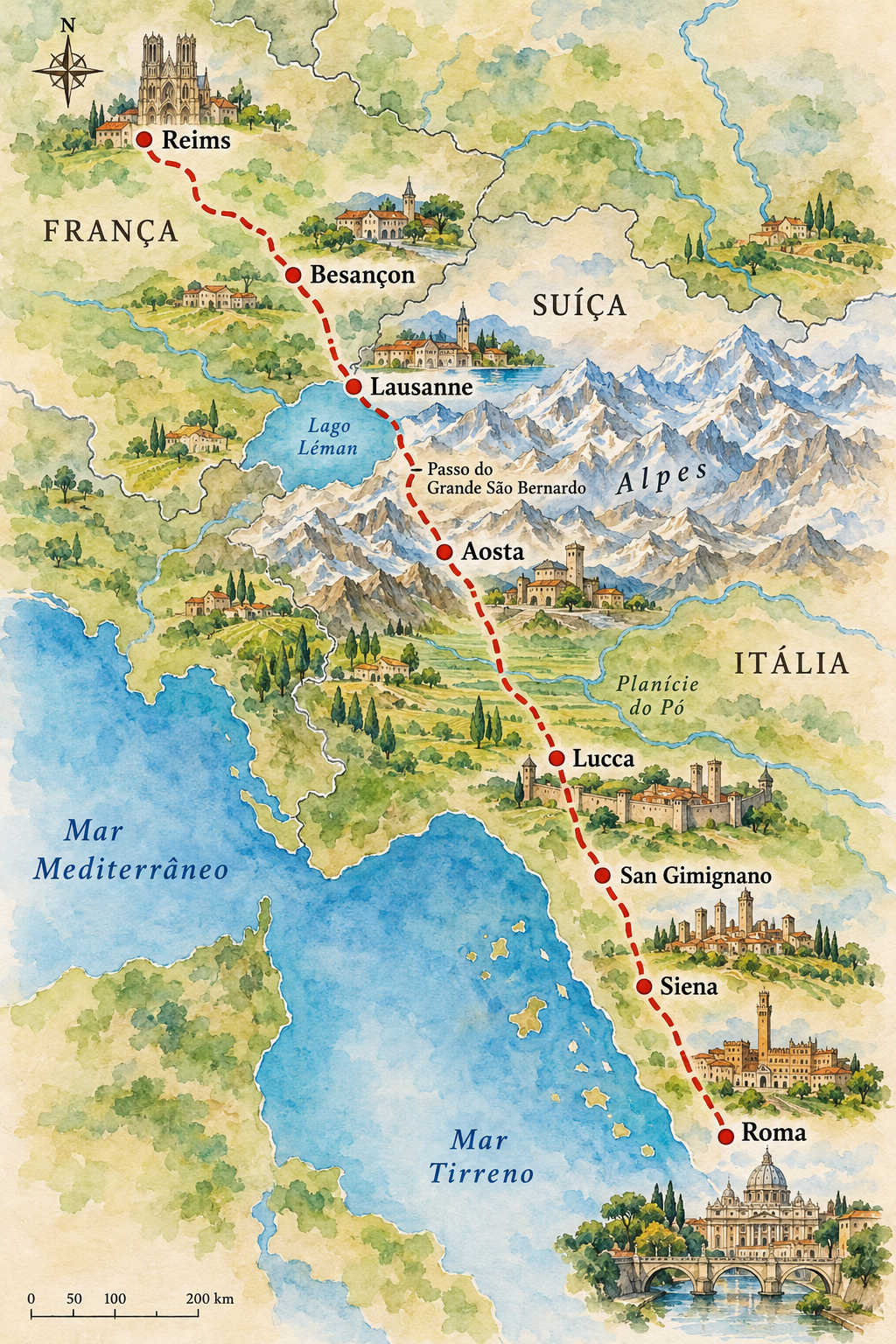
Tuscany is on the Via Francigena on foot: from Canterbury to Rome

The ancient pilgrims’ route to Rome: from Canterbury Cathedral, through France and Switzerland, over the Alps via the Great St Bernard Pass and through Tuscany to St. Peter’s Square.

Illustrative map, not to scale. Tap a city to open its page.
Illustrated map of Via Francigena on foot: from Canterbury to Rome
Explore other destinations Search by state and city