Dublin coddle
Stew of pork sausage, bacon, potato and onion, slowly cooked in a covered pot in a clear broth. It is the working‑class food of Dublin and appears in references to the city in the work of James Joyce.
Antarctica
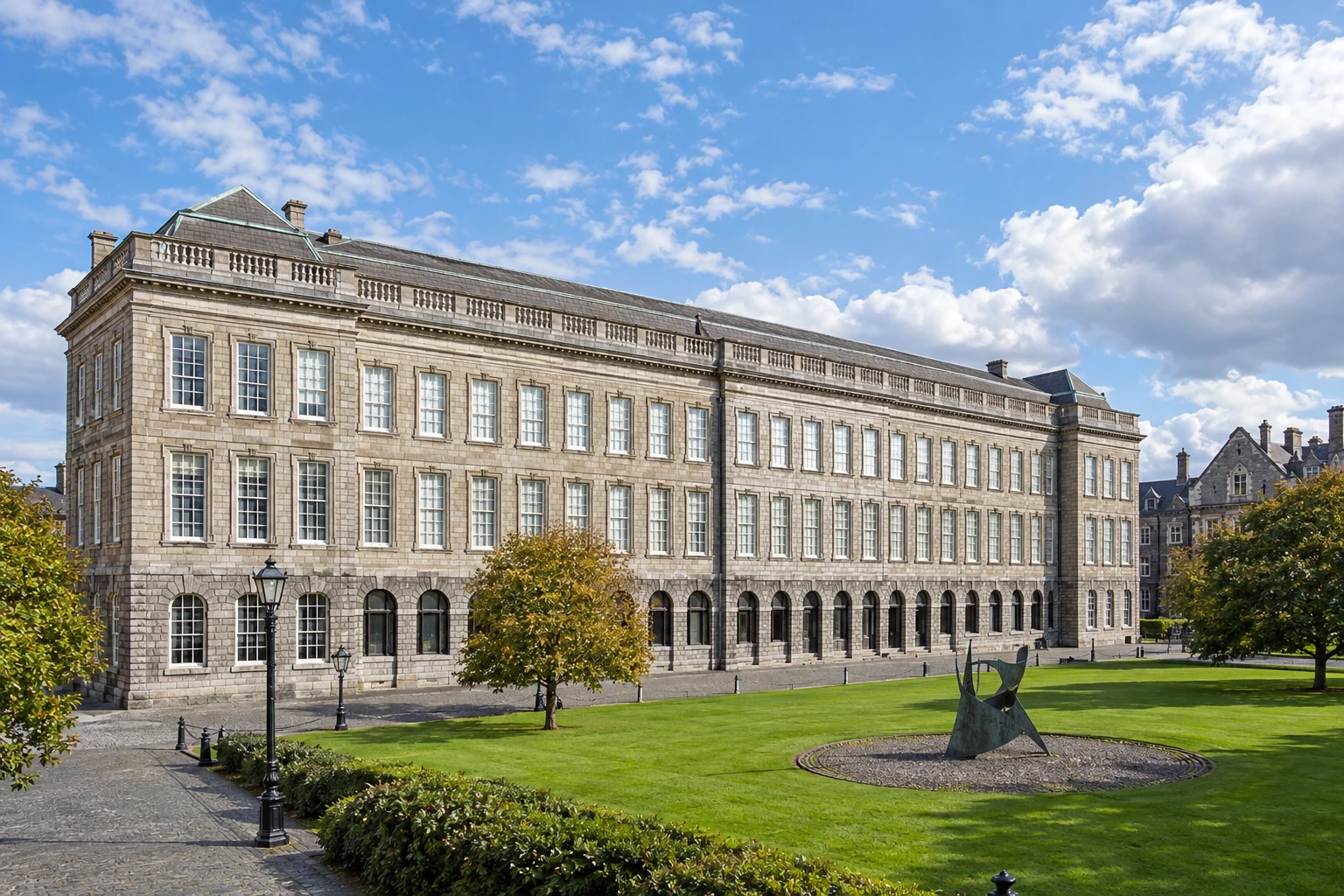
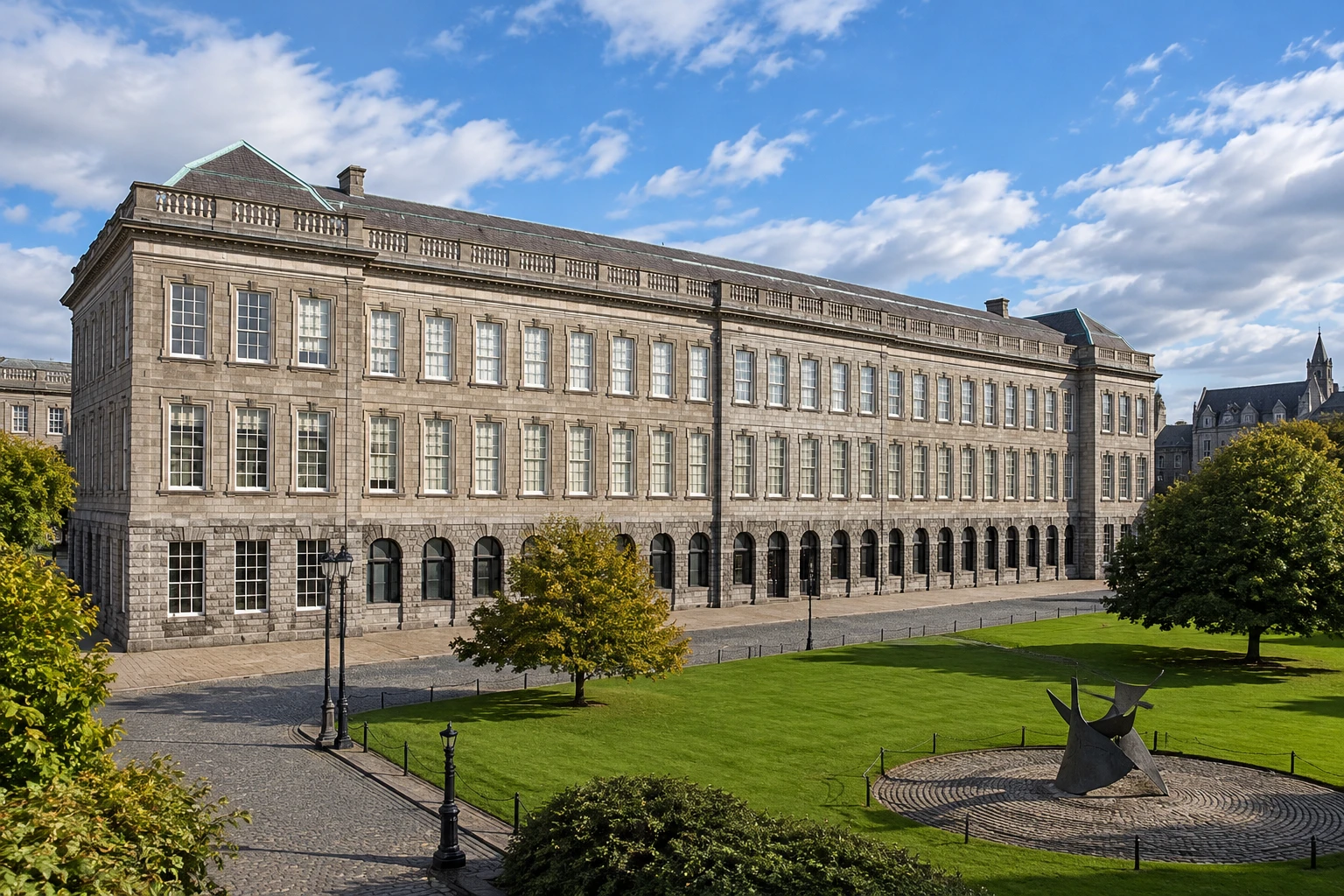
In the photo: Old Library, Trinity College Dublin
Illustrative images. The pictures in this guide are illustrations based on the real place, not photographs, and may differ from it.
The city
Dublin is the capital of Ireland, cut through by the River Liffey. South of the river are Trinity College with the Book of Kells, Dublin Castle and the Chester Beatty, the cathedrals of Christ Church and São Patrício, Temple Bar and the Ha'penny Bridge, the National Museum of Archaeology and St Stephen's Green. To the west are the Guinness Storehouse and Kilmainham Gaol; on the docks is the EPIC museum. The DART train reaches Howth, and Glendalough is accessible by car or tour.
There's no accommodation in the guide yet in Dublin.
Tem hotel, pousada ou casa de temporada aqui? Cadastre a suaThere are no restaurants in the guide yet in Dublin.
Know a good one? Recommend it to usHotéis e restaurantes da cidade no mapa.
how to get there · how many days · itinerary · questions
Flavors of Ireland
The local experience
The oldest university in Ireland, founded in 1592, houses the Book of Kells, an illuminated manuscript of the Gospels from around the year 800, and the Long Room, the 65-metre hall of the Old Library.
Explore Trinity College Dublin – Book of Kells and Old Library
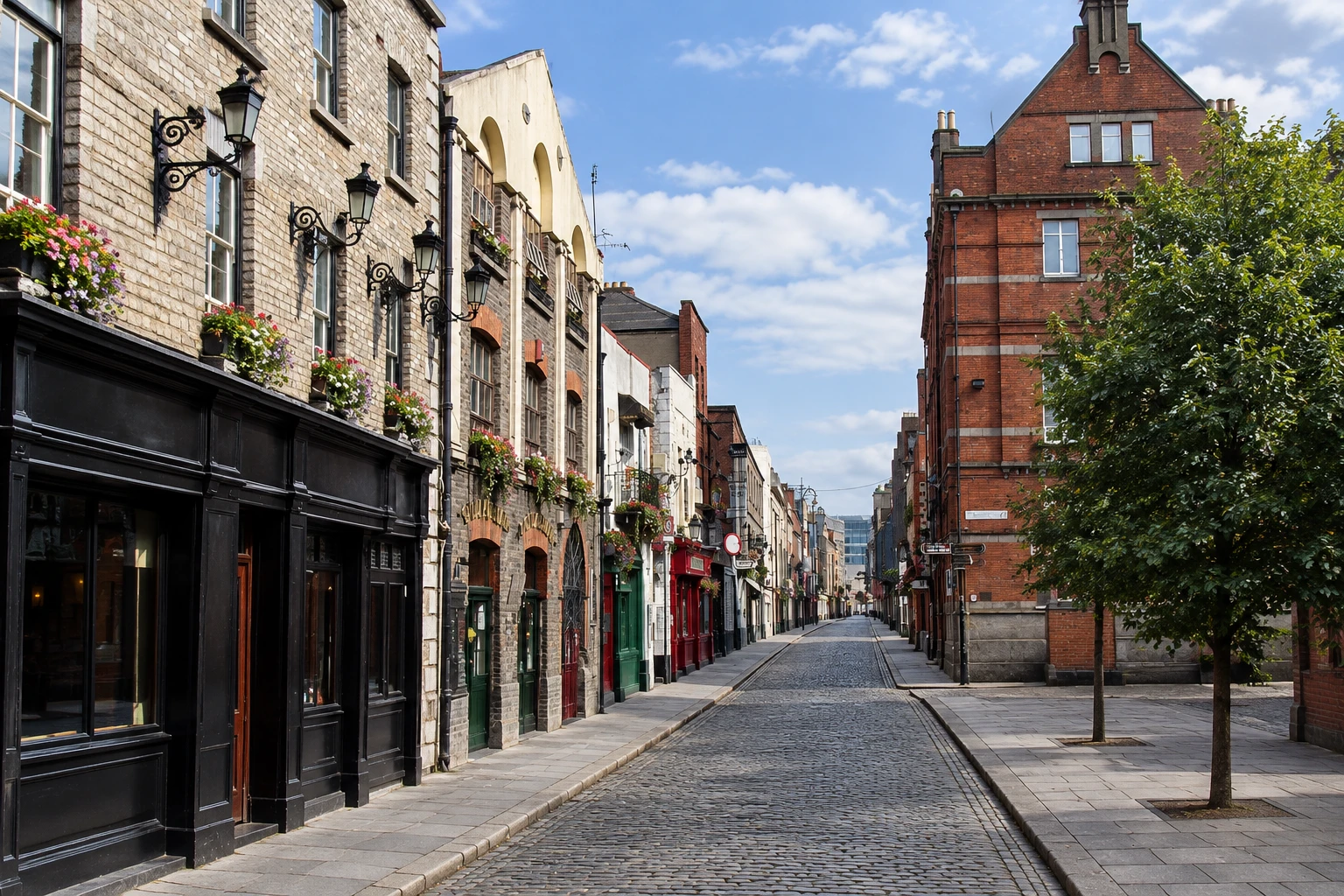
The neighbourhood of cobbled streets between Dame Street and the River Liffey, with live-music pubs, galleries, the Saturday food market and the Ha'penny Bridge, the iron bridge from 1816.
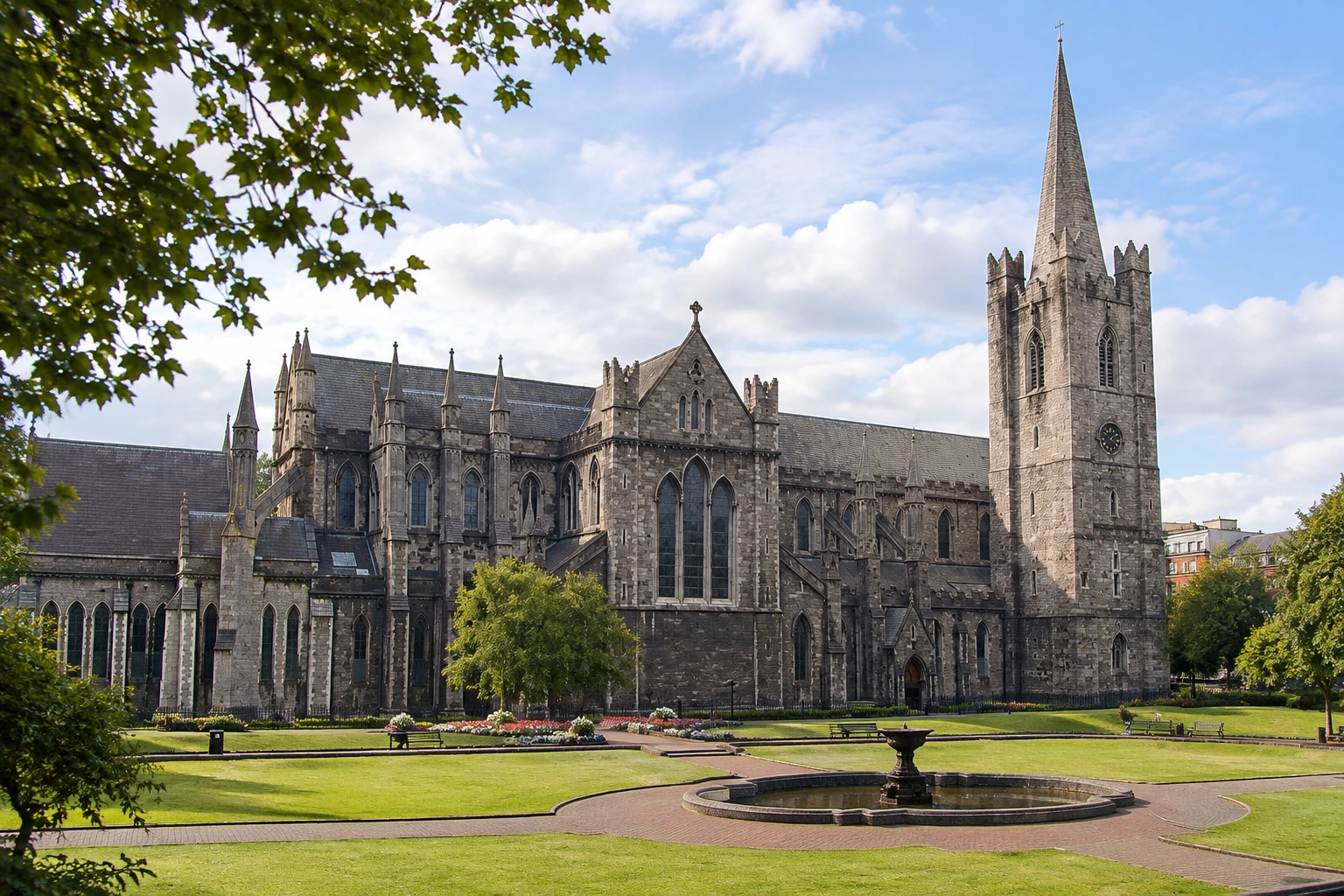
The largest church in Ireland, founded in 1191 beside the well where, by tradition, St Patrick baptized. Jonathan Swift, author of Gulliver's Travels, served as dean here and is buried in the nave.
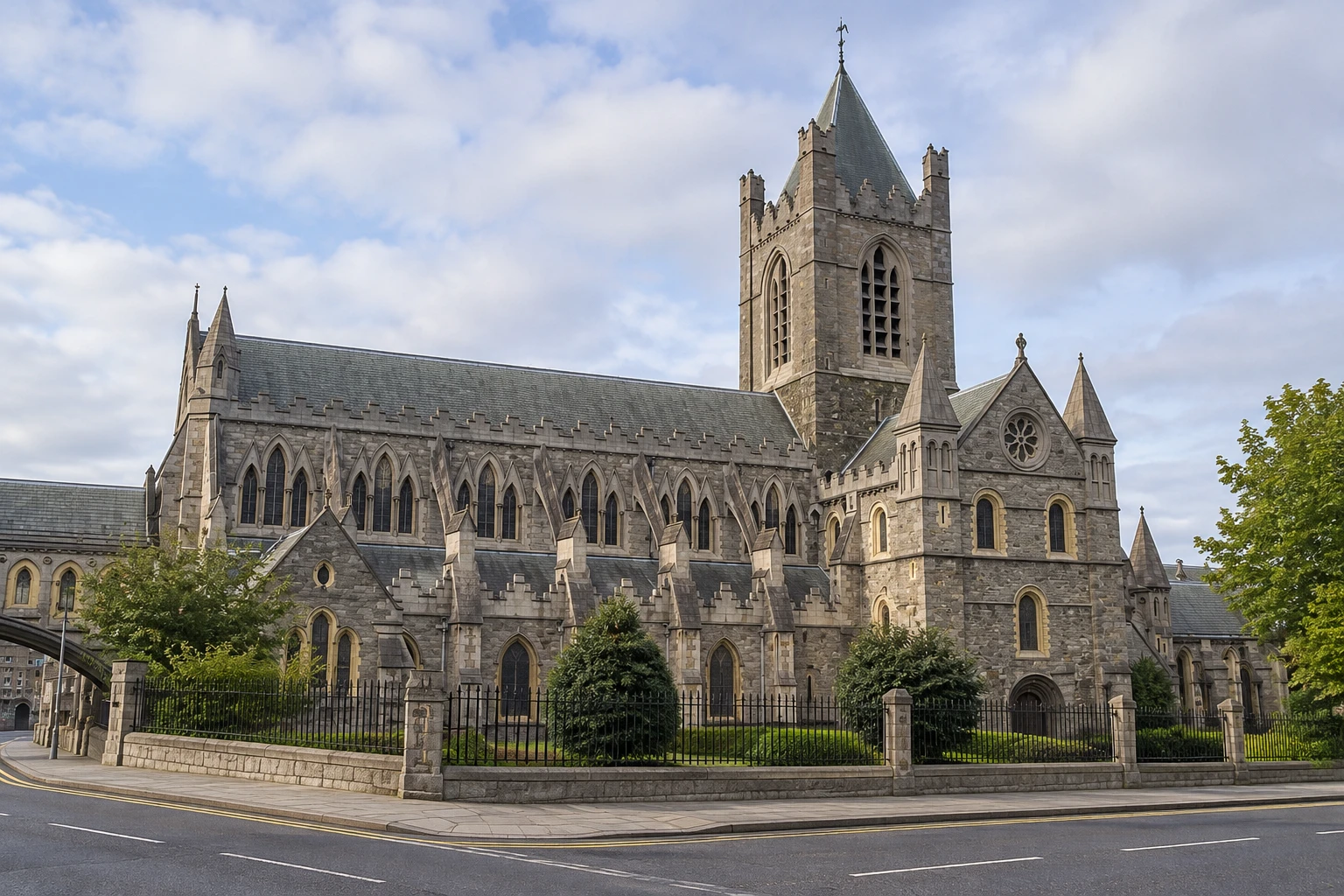
Dublin's oldest cathedral, founded around 1030 by the Viking king Sitric and rebuilt by the Normans, with one of the largest medieval crypts in Ireland and Great Britain.
Before you go
Dublin – Ireland Capital
Approximate distances. Check flights and bus, train or boat schedules before you travel.
Connections with Brazil are usually via another European city. Check before booking. Dublin Airport (DUB) is about 10 km from the centre; express and regular buses take 30 to 45 minutes, and taxis are available at the exits. The country's trains arrive at Heuston and Connolly stations, and long-distance buses use Busáras, next to Connolly.
Three days for the historic centre, the museums, the prison of Kilmainham and the Guinness Storehouse. With a fourth day, include Howth; with a fifth, Glendalough. For those heading inland, two nights on arrival and one on departure are usually enough.
From May to September the days are long and temperatures usually range between 15 and 20 °C; it’s the busiest time. April and October tend to be quieter. In winter, from November to February, it gets dark around 4:30 pm, but the museums stay open. St. Patrick's Day, March 17, fills the city with parades and celebrations. Bring a raincoat any month.
The seasons shown are the most usual ones; nature doesn't always follow the calendar.
No. The centre is walkable, and buses, the Luas tram and the DART train serve the neighbourhoods, Howth and the airport. Parking in the centre is difficult. A car only makes sense for Glendalough or for exploring the interior; remember that in Ireland you drive on the left, with the steering wheel on the right.
Suggested itinerary
Built with the places on this page. No rush: it's paced so you have time to see them.
Start at Trinity College in the time slot reserved for the Book of Kells and the Long Room. Walk through the university courtyards and exit onto Nassau Street.
Walk up Dame Street to Castelo de Dublin and the Chester Beatty. Continue on foot to Christ Church and, five minutes to the south, Catedral de São Patrício.
Return along Grafton Street, the pedestrianised street, to St Stephen's Green. On the way back, cross the Liffey via the Ha'penny Bridge.
Have dinner in Temple Bar or in the surrounding streets and look for a pub with traditional music. Pubs usually have live music from around 9 pm.
Day 1
Book of Kells and the Long Room in the first time slot, then a walk around the courtyards of Trinity College.
National Museum of Archaeology on Kildare Street, with Irish gold and the bog bodies. Afterwards, St Stephen's Green park.
Walk down Grafton Street to the Liffey and cross the Ha'penny Bridge to see the river at sunset.
Dinner and live music in the pubs of Temple Bar.
Day 2
Guided tour of the Kilmainham prison, with a time slot reserved in advance. It is 3 km from the centre, by bus or taxi.
A 20-minute walk from Kilmainham, the Guinness Storehouse, with the glass-fronted bar at the top and views over the city.
Return on foot along Thomas Street to Christ Church and Catedral de São Patrício.
Dine in the streets between South Great George's Street and Camden Street, with restaurants offering various cuisines.
Day 3
State Apartments of Castelo de Dublin and, in the same courtyard, the manuscript collection of the Chester Beatty.
Walk along the north bank of the Liffey to the docks: the famine memorial, the ship Jeanie Johnston and the EPIC museum.
Take the DART to Howth for the harbour, the seals on the pier and the start of the cliff walk.
Have seafood at Howth harbour before returning by train to the centre.
Check before you go. Opening hours and days change, and places may close for renovations, holidays or events. This itinerary is a suggestion from Cidade Turismo, not a commitment: plan yours by checking directly with each place you intend to visit.
Before you go
Express buses and regular services depart from outside terminals 1 and 2 and reach the centre in 30 to 45 minutes, depending on traffic. There are also taxis and ride-hailing cars. There is no train or metro to the airport.
On March 17 there is a parade in the centre and festivities for several days. The city gets very busy and hotels often book up well in advance; if you prefer quieter streets, avoid the date.
There are buses, the Luas tram with its green and red lines, and the DART train, which runs along the coast from Howth to Greystones. The rechargeable Leap card works on all three. The centre, however, is small and walkable.
Earlier than in Brazil: restaurants typically serve dinner between 6:00 pm and 9:00 pm, and many kitchens close around 9:30 pm. Pubs stay open later, but not all serve food in the evenings.
Dublin is 3 hours ahead of Brasília in Irish winter time and 4 hours ahead during daylight saving time, from the end of March to the end of October.
Cross-border routes
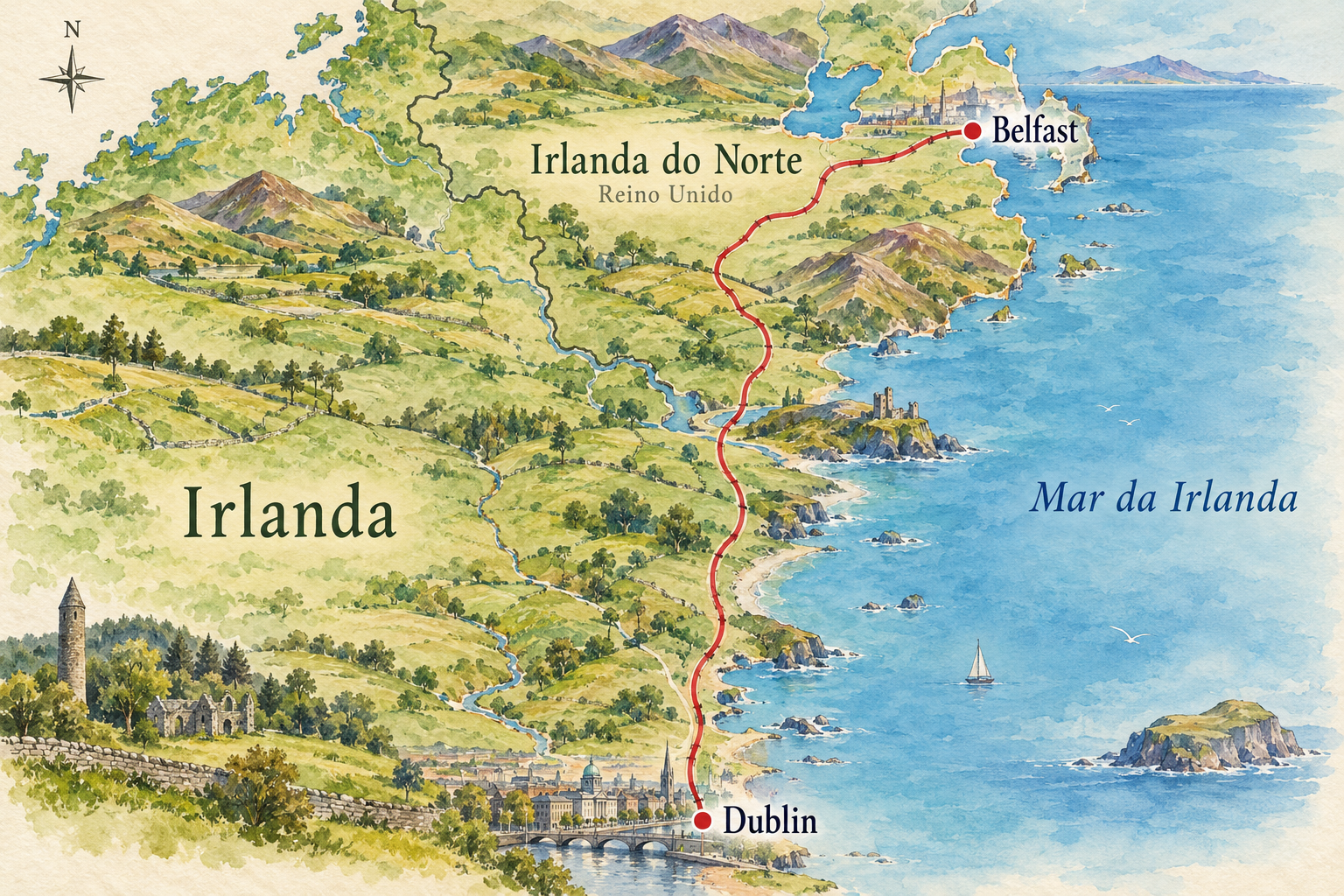
Two capitals on the island of Ireland in about two hours by train, along the Irish Sea coast, with no border control on the way.