Szeged

Csongrád-Csanád Capital

Szeged

In the destination Szeged.

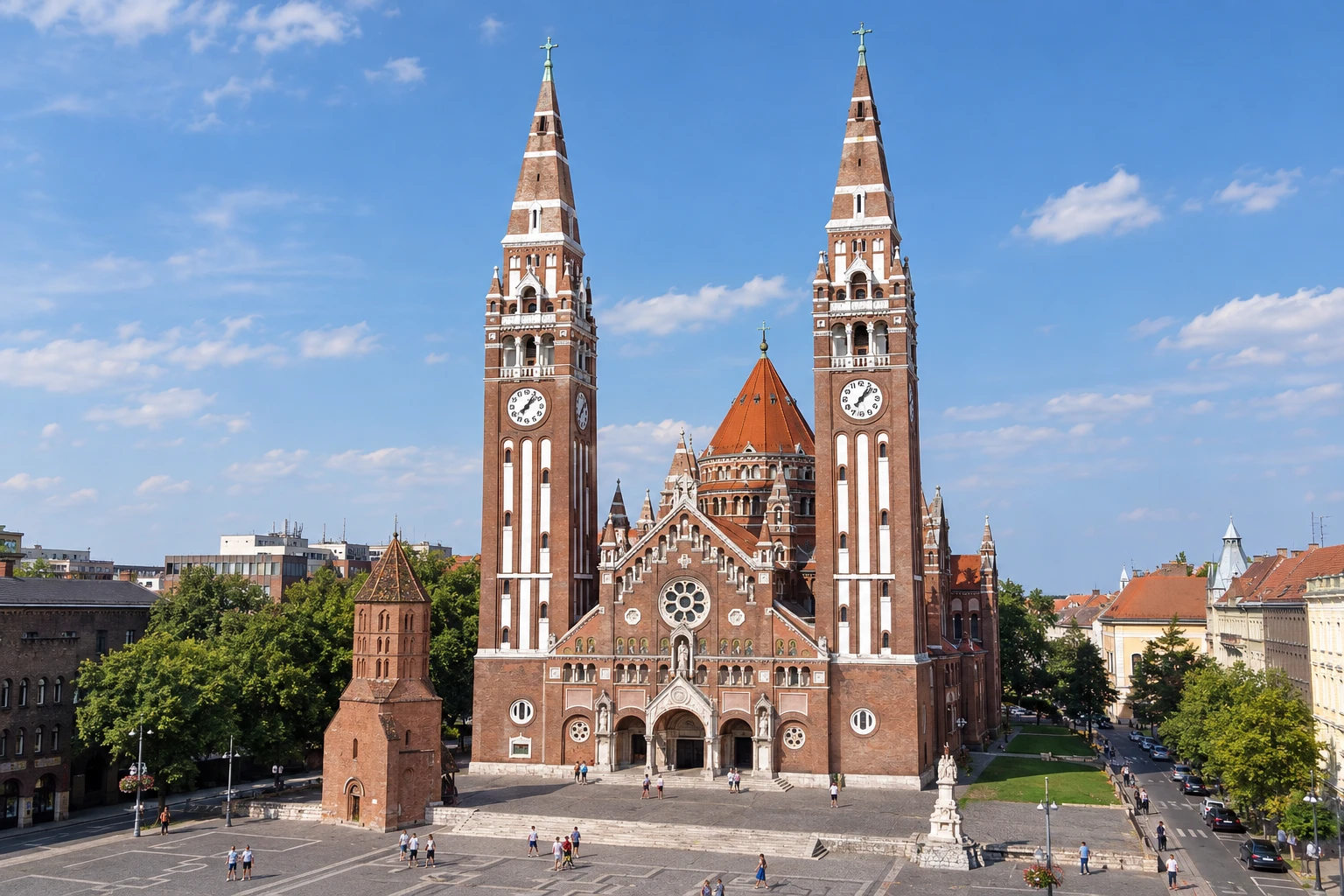
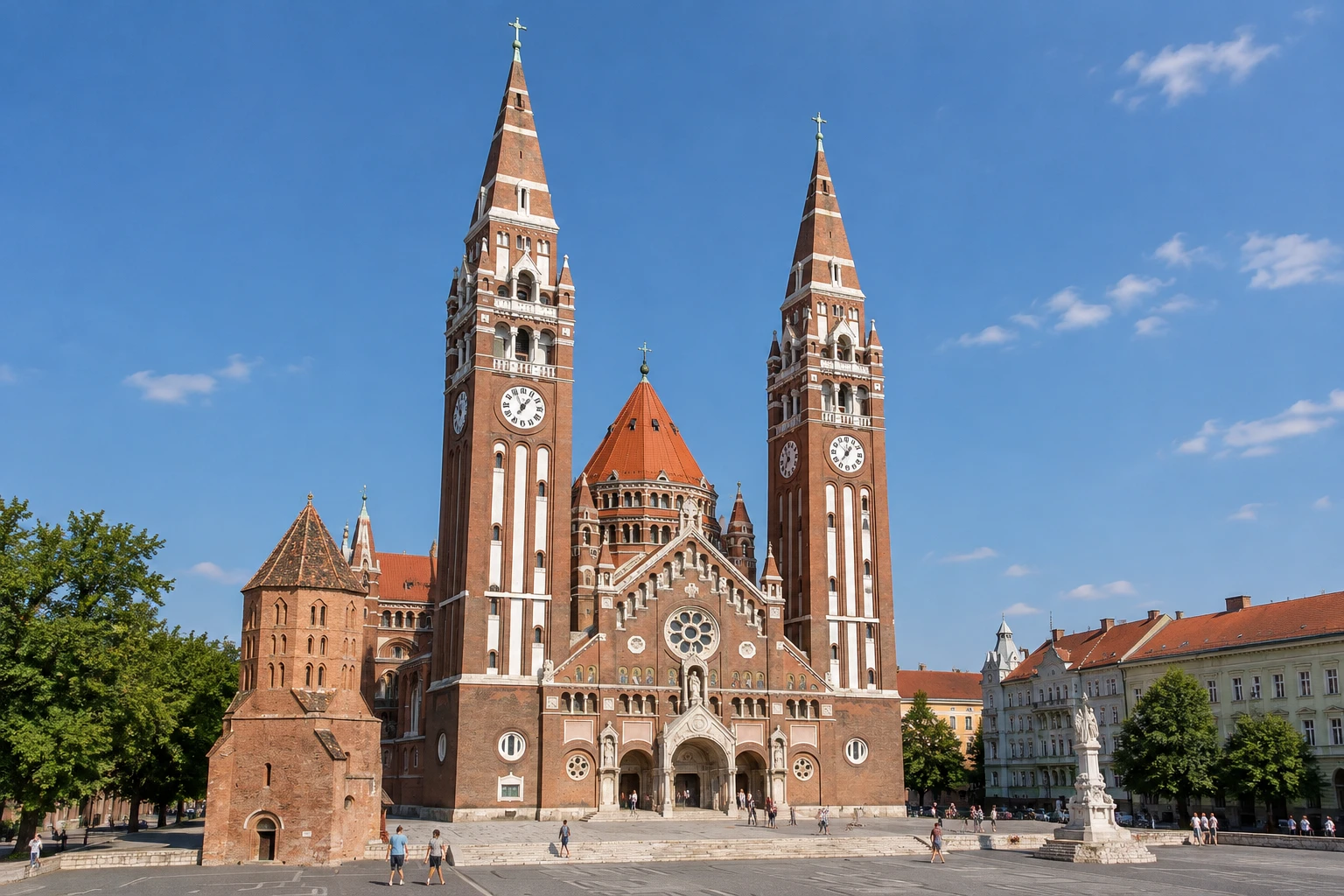
In the photo: Szegedi Dóm

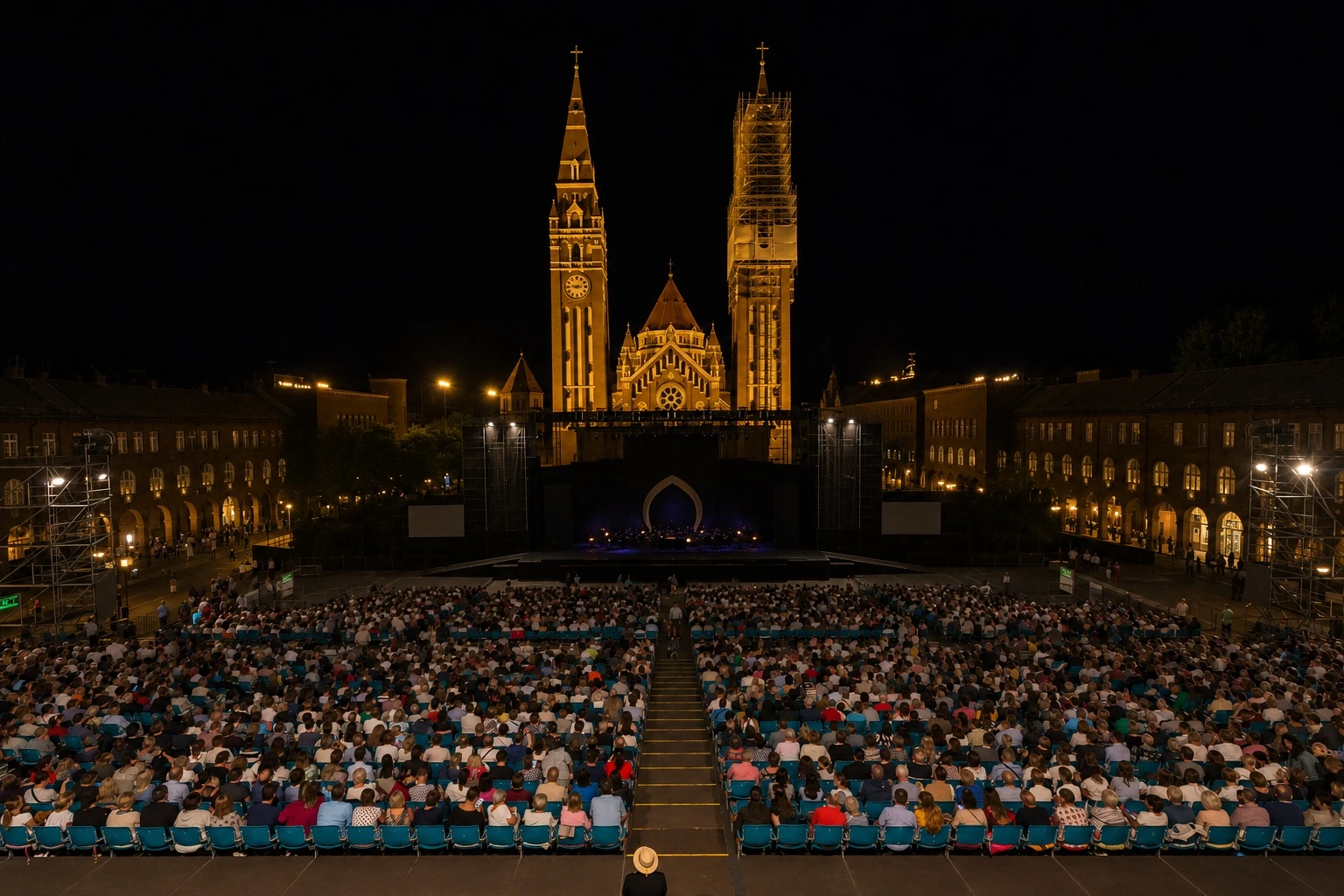
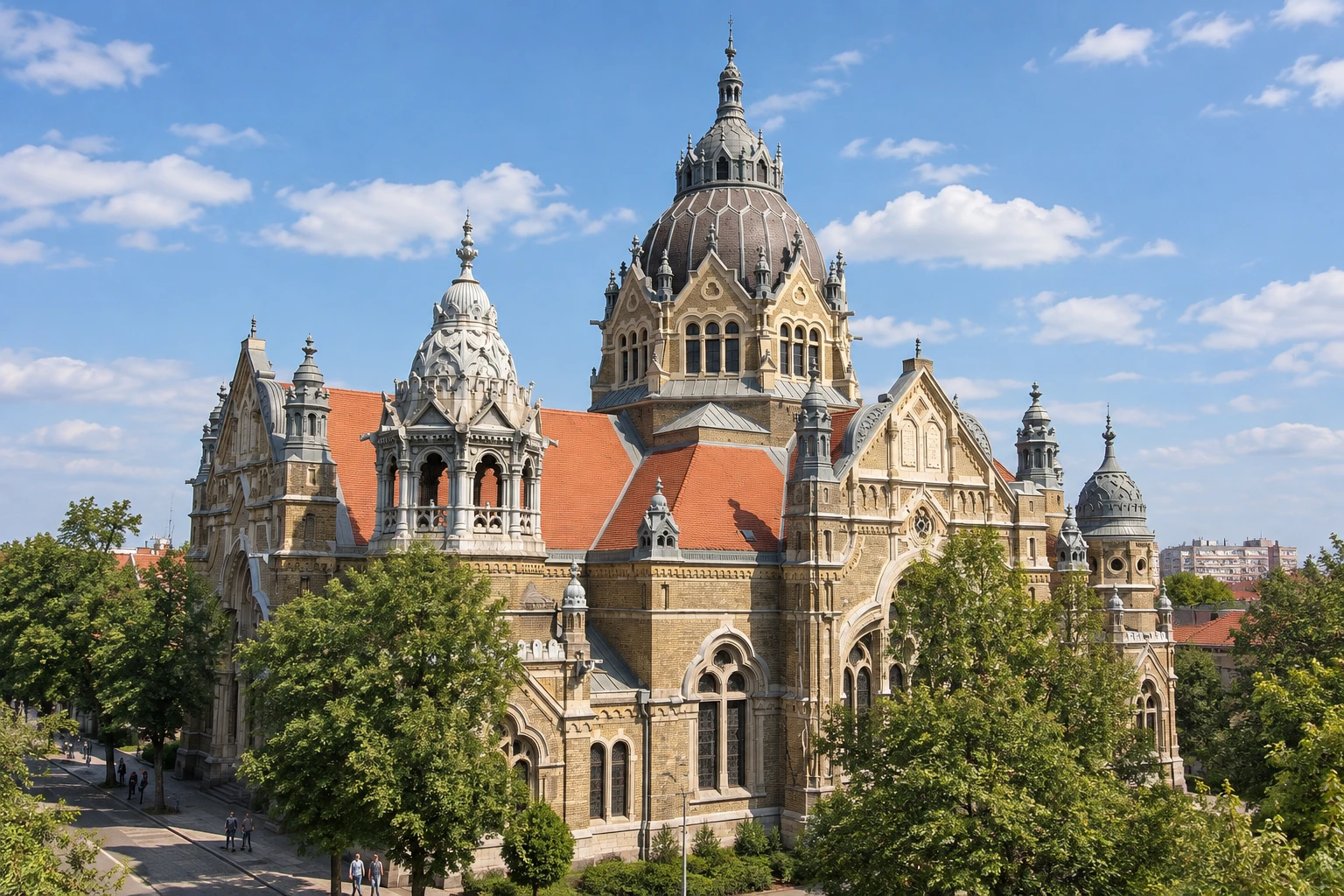
Illustrative images. The pictures in this guide are illustrations based on the real place, not photographs, and may differ from it.

Get it on Google Play

The city

What to expect from Szeged.

Szeged is organized along the Tisza on the Great Plain. The votive church and its square, the New Synagogue and the Reök Palace display different architectures. The Ferenc Móra Museum adds archaeology and regional culture near the river.

Szeged is Hungary’s third-largest city and the seat of Csongrád-Csanád County. It lies in the southern Great Plain, about 170 kilometers from Budapest, on both banks of the Tisza just downstream from the mouth of the Maros, near the Serbian and Romanian borders. This flat university town gets so many sunny days that it is known as the City of Sunshine.

The city you see today grew out of a catastrophe. In 1879 the Tisza flooded and destroyed almost the entire medieval town. During reconstruction, planners laid out the center in rings and avenues, raised the squares and lined the streets with eclectic palaces and, around the turn of the century, buildings in the Secession style, Hungary’s Art Nouveau. A staircase window at City Hall preserves the promise that Szeged would be more beautiful than before.

You can explore the center, Belváros, on foot. From Széchenyi tér, with its City Hall and old plane trees, cross Klauzál tér and follow pedestrian Kárász utca to Dugonics tér, the university square. A few minutes away is Dóm tér, with the twin-towered Votive Church, built to fulfill a vow made after the flood, the Dömötör Tower, the oldest building in town, and the arcades of the National Pantheon. In summer the square becomes the stage for the Szeged Open-Air Festival.

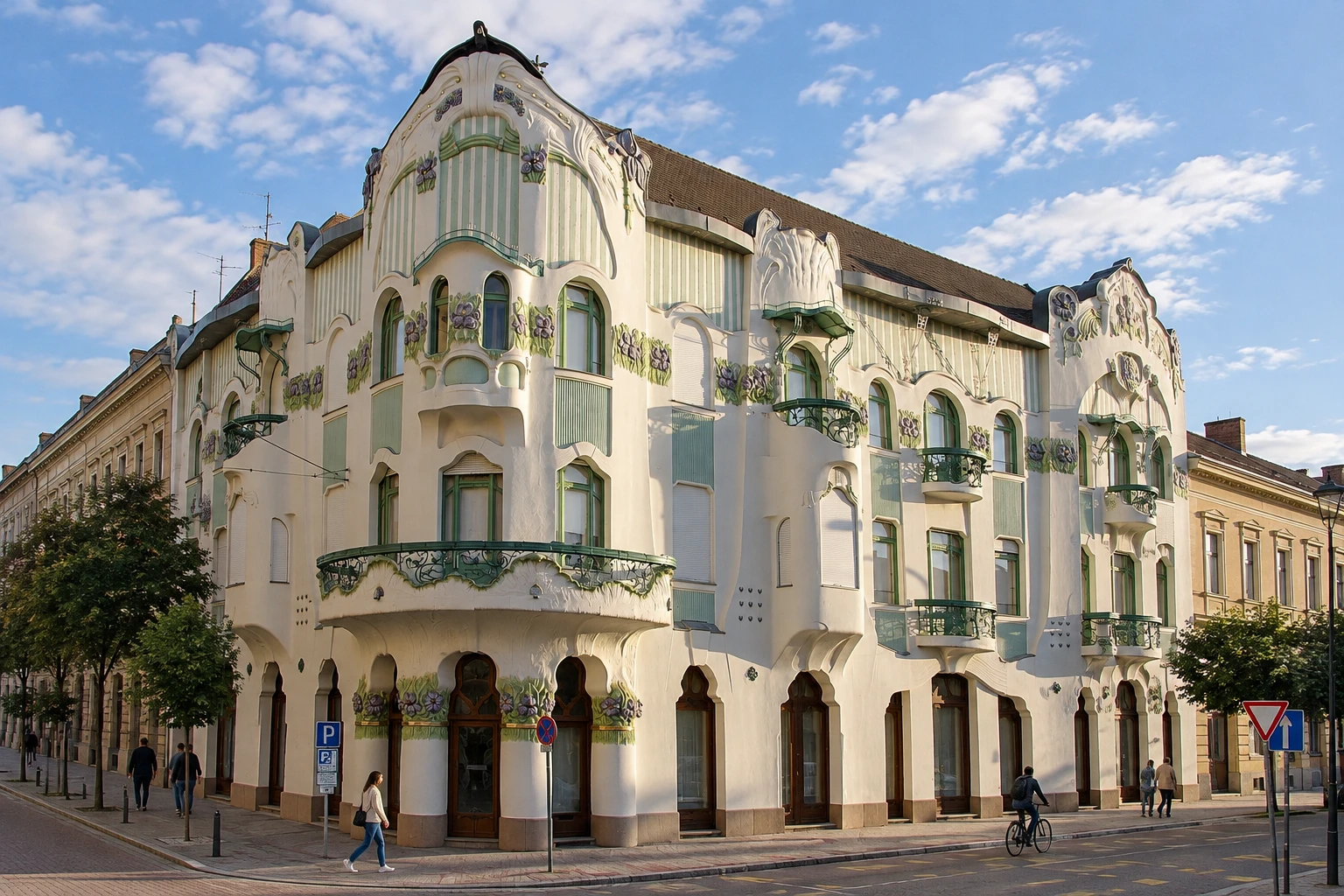
Secession architecture is another reason to visit. Look for Reök Palace, its white facade decorated with blue water lilies, the New Synagogue with its glass dome and stained glass, and the palaces and houses around the inner ring road. The Ferenc Móra Museum and the remains of the brick castle stand by Belvárosi Bridge.

Across the river lies Újszeged, the newer part of town, with Erzsébet liget park, the Napfényfürdő Aquapolis baths, the university botanical garden and river beaches. South of the center, Alsóváros preserves its Franciscan church and monastery and houses with sunburst gables. Szeged paprika was first grown in the monastery garden. The former villages of Kiskundorozsma, with its windmill, and Tápé, known for reed weaving, now belong to the city.

The climate is continental. From December through February it is cold, with averages near 0°C, short days and little rain. It is a season for museums, thermal baths and, in December, Advent on Dóm tér. Spring warms up quickly, and May brings Szeged Day celebrations. Summers are hot, with average highs near 29°C in July and August and showers in June. This is the season for open-air theater and the river. September and October are generally mild, with festivals celebrating wine and fish soup.

Highlights include Dóm tér and the climb up the church tower, the interior of the New Synagogue, Reök Palace, a walk among the Secession palaces, the Ferenc Móra Museum, a late afternoon beside the Tisza and a bowl of halászlé, the paprika-seasoned fish soup that is the city’s specialty.

Share: WhatsApp

Where to stay

30 places to stay in Szeged.

Where to eat

30 places to eat in Szeged.

Mapa de Szeged

Hotéis e restaurantes da cidade no mapa.

Flavors of Hungary

To try Szeged

Discover other flavors of Hungary

Festivals and events

Festivals Szeged

Dates change every year: check this year's date before you travel.

Festival calendar in Hungary

The local experience

Things to do in Szeged

Szeged · Hungary · Art gallery

Reök Palace

Secession-style Hungarian building with vegetal motifs on the façade, used as an exhibition space.

Explore Reök Palace

To choose before you go

Tours in Szeged

Where each tour starts, how long it takes, how it is done, what is included and the price range.

Dóm tér: the Votive Church, its tower and dome, and Dömötör Tower

From Dóm tér, downtown On foot 2 to 3 hours Morning or afternoon Easy, with 302 steps in the tower

After the 1879 flood, the city vowed to build a great Catholic church. Construction finally began in 1913, with Ernő Foerk adapting Frigyes Schulek’s design. The church was consecrated on October 24, 1930. Hungary’s fourth-largest church blends Romanesque, Gothic and Byzantine elements. Inside, look for the 9,040-pipe organ, János Fadrusz’s Christ on the Cross, which won a prize at the 1900 Paris World’s Fair, and the mosaic showing the Virgin in a shepherd’s felt cloak and embroidered Szeged slippers. The visitor center is below ground. From here you can climb 302 steps with three rest landings to the west tower lookout at 46 meters. There is also an exhibition about the construction of the church and square, and the crypt houses the diocese’s liturgical collection, including metalwork and textiles from the 15th through 18th centuries. Tours to the dome lookout at 34 meters depart at set times and pass through the attic for a look at the roof structure. In front of the church is Dömötör Tower, Szeged’s oldest building. Its foundations date to the 11th century, its Romanesque lower section to the 12th and its Gothic stories to the 13th. Conversion to a baptistery with frescoes by Vilmos Aba-Novák saved it from demolition. Above the door is the 12th-century Stone Lamb, the oldest sculpture in the city. Béla Rerrich designed the 12,000-square-meter square, built between 1928 and 1930. Beneath the arcades, the National Pantheon has more than a hundred statues of figures from Hungarian history, science and the arts. Opposite the church entrance, a musical clock sends wooden professors and students on parade twice a day. On the north side, near the river, the Baroque Serbian church, consecrated in 1778, has a Rococo iconostasis.

Stops: Votive Church (Szegedi Dóm), Cathedral Visitor Center, Tower observation deck, Dome observation deck, Dömötör Tower, National Pantheon, Musical clock, Serbian Orthodox Church.

Includes: The church is free. The tower, dome lookout, Dömötör Tower, and exhibitions charge admission, with individual and combined tickets. Check current prices at the visitor center.

Tip: The visitor center closes Mondays. The musical clock stops during the Open-Air Festival, when temporary stands occupy the square. The Serbian Orthodox church opens only by phone appointment.

Best time: Year-round. In July and August the square hosts the festival stage. From late November to Christmas it hosts the Advent market.

Walking downtown via Széchenyi tér, Klauzál tér, Kárász utca and Dugonics tér

From Tourinform office on Széchenyi tér On foot About 2 hours Morning or afternoon Easy

Széchenyi tér, the largest square in the center, covers more than 50,000 square meters and has old plane trees, magnolias and statues. In the 13th century the castle walls ran through here, with a drill ground and market on the open land in front. The current City Hall is the third on the site. When the square was raised after the flood, the building sat too low, so Ödön Lechner and Gyula Pártos added a floor and the slender tower. Emperor Franz Joseph opened it in 1883. The center staircase window records his words that Szeged would be more beautiful than before. The phoenix on the pediment symbolizes the city’s rebirth, and the Bridge of Sighs was built for the emperor and his entourage on their visit to the rebuilt city. Nearby on Stefánia, the Szeged National Theater of 1883 has a semicircular facade designed by the Viennese architects Fellner and Helmer. The restoration of Klauzál tér and pedestrian Kárász utca earned a Europa Nostra award in 2004. The palaces blend Classicism, Eclecticism and Secession. A bronze statue of Lajos Kossuth on the square recalls his final speech in Hungary, delivered from the balcony of Kárász House. This is the stretch for pastry shops and cafés with outdoor tables. Kárász utca ends at Dugonics tér, the university square. The statue of András Dugonics, author of the first Hungarian novel, was the city’s first statue in a public space. The fountain opposite, a local meeting place, marked the flood’s centenary. A statue of the poet Attila József, who studied here, stands outside the rector’s building. On the corner of Kárász utca, figures of dancing women crown the dome of Ede Magyar’s Ungár-Mayer Palace.

Stops: Széchenyi tér, City Hall (Városháza), Bridge of Sighs, Szeged National Theater, Klauzál tér, Kárász utca, Dugonics tér, Ungár-Mayer Palace.

Includes: Self-guided outing. The tourist office also arranges paid guided walks by reservation and Hungarian-language town hall tours with advance registration.

Tip: The town hall interior is accessible only by guided tour from the tourist office a few days each week. The office stores luggage during opening hours, handy if you're visiting for the day.

Best time: Year-round. Széchenyi tér hosts the Wine Festival in May, and the squares host Advent events in December.

The Secession trail: from Reök Palace to the water tower

From Dugonics tér On foot About 2 hours, without going inside the buildings Morning or afternoon Easy

Rebuilding after the 1879 flood made Szeged a city of palaces. Around the turn of the century many followed the Secession style, the Hungarian version of Art Nouveau. The tourist office suggests a route of about two hours that you can follow independently. Start at Ede Magyar’s Ungár-Mayer Palace, on the corner of Dugonics tér and Kárász utca. The same Szeged-born architect designed Reök Palace in 1907 for hydraulic engineer Iván Reök. Water inspired the blue water lilies on the white facade, balcony railings shaped like aquatic plants and undulating walls. Built as apartments, it now houses the Regional Arts Center, with temporary exhibitions, concerts and chamber theater. The exhibitions charge admission. A separate ticket covers the staircase and palace visit. Continue to Lipót Baumhorn’s New Synagogue, passing Goldschmidt Palace, which lost its decoration in a 1950s renovation, and the Reformed Palace, also by Ede Magyar. On Szent István tér stands a 1904 water tower designed by Szilárd Zielinski, the country’s first in reinforced concrete. It still works. Inside is a Foucault pendulum and at the top a lookout. Busts around it honor architects who transformed the city. The final stretch takes in Móricz House, with Zsolnay ceramics and wrought-iron balconies, and Gróf Palace, with three facades and two towers, both by Ferenc Raichle. Mihály Erdélyi’s Deutsch Palace incorporates Hungarian folk art motifs.

Stops: Ungár-Mayer Palace, Reök Palace (Reök-palota), New Synagogue, Goldschmidt Palace, Reformed Palace, Water tower on Szent István tér, Móricz House, Gróf Palace, Deutsch Palace.

Includes: Self-guided walk to see the facades. Reök exhibitions, the synagogue interior and the water tower charge separate admission. The tourist office’s guided walk costs extra and must be booked a week ahead.

Tip: Reök Palace closes on Mondays. The water tower opens only on certain Saturdays from May through September. Check the date before visiting. Save the synagogue for a day when you can go inside.

Best time: Year-round. Morning and late-afternoon light bring out the facades.

New Synagogue and Old Synagogue

From Jósika utca, downtown On foot 1 to 1½ hours Morning Easy

Architect Lipót Baumhorn designed the early 20th-century New Synagogue with guidance from the scholarly chief rabbi Immánuel Löw. Hungary’s second-largest synagogue seats 1,340 people beneath a dome 48.5 meters high. Its eclectic style draws heavily on Secession and Moorish design. On the triumphal arch, the commandment to love your neighbor as yourself appears in Hebrew and Hungarian. Löw is credited with the inclusion of Hungarian. Ivory, gold and blue dominate the interior. Look up to see the centerpiece, a glass dome, and stained glass from Manó Róth’s workshop. Other details include the Jerusalem marble that caps the altar, the Ark door made of acacia from the Nile region, the candelabras and paintings of plants mentioned in the Bible. The acoustics make the synagogue a venue for organ concerts. The garden opens with the building. A few steps away on Hajnóczy utca, the Lipovszky brothers built the Old Synagogue in the Classical style between 1837 and 1843. Beside the entrance, plaques in Hungarian and Hebrew mark the water level during the 1879 flood. They appear low because the street was raised afterward. The building now hosts performances, including the summer THEALTER theater festival.

Stops: New Synagogue (Szegedi Új Zsinagóga), Synagogue garden, Old Synagogue.

Includes: The New Synagogue charges admission. Check current rates. Guided tours in Hungarian or English cost extra and must be booked at least three days ahead.

Tip: The synagogue closes on Mondays, Saturdays and Jewish holidays and closes early on Fridays. Ticket sales end shortly before closing. Check the calendar before you go.

Best time: Year-round. It usually closes for a few days between Christmas and early January.

Móra Ferenc Museum, Castle Museum and Black House

From Roosevelt tér beside Belvárosi Bridge On foot 3 to 4 hours for all three Morning or afternoon Easy

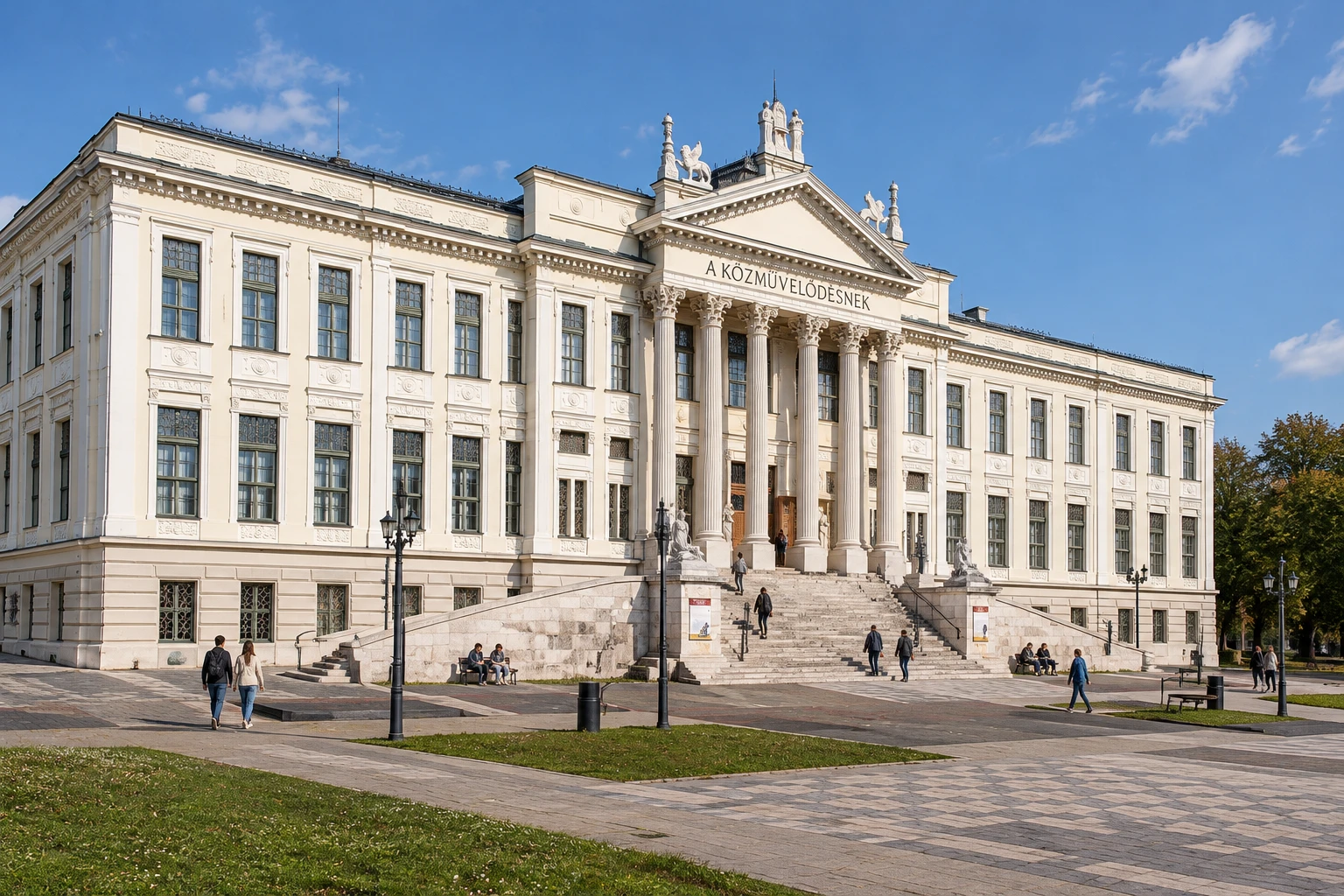
The Palace of Public Culture of 1896 is the most striking building from Szeged’s construction boom for Hungary’s millennium. The pale neoclassical building faces the Tisza, with Corinthian columns supporting a pediment above the entrance. Built for the city library and museum, it bears the name of Ferenc Móra, a writer and journalist who directed it from 1917 to 1934, conducted ethnographic fieldwork and excavated local archaeological sites. The museum displays ethnography, natural history and fine art from Szeged and the surrounding area, alongside major temporary exhibitions. A separate ticket gives access to the rooftop lookout. Móra Park, in front of the steps, has a fountain and statues of two former directors, Móra and István Tömörkény. Behind the museum are the remains of Szeged Castle. Built in the second half of the 13th century, it was the largest brick fortress on the Great Plain and the setting of the Peace of Szeged in 1444. It became a prison after the Turkish occupation. Following the flood, residents demolished it to reuse its bricks in reconstruction. The surviving section of the Maria Theresa Gate now houses the Castle Museum, with an exhibition on the fortress, witch trials, highwaymen and the great flood. The courtyard displays carved Romanesque, Gothic, Renaissance and Baroque stones. Its floor shows the city’s level before the ground was raised. The Kass Gallery is next door. A few blocks away on the corner of Somogyi utca, the Black House of 1857 is an English Romantic building that served as a trading house and casino. Its name recalls its once-dark exterior. It houses the museum’s history exhibitions. All four corners of this intersection survived the flood.

Stops: Móra Ferenc Museum (Móra Ferenc Múzeum), Museum observation deck, Móra Park, Castle Museum (Vármúzeum), Kass Gallery, Black House (Fekete Ház).

Includes: Admission is charged. You can buy tickets for individual sites or a combined ticket for the museum, the Castle Museum and the Black House. Check current rates.

Tip: The museum houses usually open daily, with shorter hours on event days and closures for a few days around Christmas and New Year’s. They’re a good choice in rainy weather or intense heat.

Best time: Year-round.

The Tisza riverfront and Újszeged, from the bridge to Erzsébet liget and the river beaches

From Belvárosi Bridge, beside the Ferenc Móra Museum On foot or by bike 2 to 4 hours Afternoon Easy

The Tisza is Hungary’s longest river. It rises in the eastern Carpathians and joins the Danube in Serbia. Straightening its course in the 19th century made it navigable and drained the floodplain for farming. The water also flowed faster, and the 1879 flood became the greatest tragedy in Szeged’s history. The city’s rings and avenues date from the reconstruction. Cross Belvárosi Bridge for views of the city center on one side and the trees of Újszeged on the other. Just beyond the bridge is Erzsébet liget, the city’s largest park at 15 hectares. The land lay wild until 1858, when an imperial officer and his soldiers made it into a garden. Large plane trees line the main axis, and old lindens, oaks and maples dot the lawns. There is a running track, exercise equipment, the smaller stage of the Open-Air Festival and, near the bridge, the neo-Gothic Church of St. Elizabeth. The river beaches are on the Újszeged bank. Lapos has changing rooms, showers, loungers, beach volleyball courts and a café. Swim within the buoys under lifeguard supervision. Next door, Partfürdő combines a beach and campground. Farther upstream near the mouth of the Maros, Sárga beach has a marked swimming area, changing rooms and a bar. The Holt-Maros, a former arm of the Maros cut off in 1860, runs through the neighborhood, with more than 4 kilometers of reed-lined banks. In season, sightseeing boats usually depart from the quay below Roosevelt tér to show you the city from the water and take you to the mouth of the Maros. On the downtown bank, Felső Tisza-part has kayak, canoe and board rentals.

Stops: Tisza River, Belvárosi Bridge, Erzsébet liget, St. Elizabeth’s Church, Lapos Beach, Partfürdő, Holt-Maros, Sárga Beach.

Includes: Self-guided outing. The park and Sárga Beach are free. Loungers, sightseeing boats, and kayak rentals cost extra.

Tip: The beaches operate in summer, depending on weather and river levels. Swim only within the marked areas. Sightseeing boats run seasonally. Check departures before relying on them.

Best time: May to September for the river. The park and bridge are worth seeing year-round, and the plane trees turn color in fall.


See 6 more tours

Szeged’s baths, from Anna fürdő to Napfényfürdő Aquapolis

From Tisza Lajos körút for Anna, or Torontál tér in Újszeged for Aquapolis On foot, by tram or by bus 3 hours to half a day Morning, afternoon or evening Easy

Szeged has two thermal bathhouses, one on each side of the river. Anna fürdő stands on the inner ring road in the center. Antal Steinhardt and Adolf Lang designed the white, eclectic building with Eastern details in 1896 as the city’s public baths. Its name came later, from the nearby spring. Drilled in 1927, the Anna artesian well draws water at 51°C from a depth of 944 meters. It was the first hot-water well on the southern Great Plain. Dezső Patzauer first bottled the water and named it after his daughter. Locals fill their bottles at the Anna-kút fountain at a busy intersection, and the water is used in drinking cures. The baths have thermal pools, a wellness area with saunas, treatment facilities and evening bathing on certain nights of the week. Napfényfürdő Aquapolis in Újszeged is a year-round complex with 4,400 square meters of water and enough to fill a day. The adventure area has 13 slides totaling about 1,000 meters. The two longest, 223 and 272 meters, start from a 30-meter tower with an elevator. There is an outdoor wellness pool, rapids, whirlpools and cascades, medicinal pools, outdoor swimming pools and a quiet area with saunas, a steam bath and a salt room. The medicinal water comes from the Dóra wells, drilled from 1958 onward to depths of more than 1,500 meters.

Stops: Anna fürdő, Anna-kút (Anna Spring), Napfényfürdő Aquapolis.

Includes: Admission fees vary by section and visiting period. Check the current prices at each venue.

Tip: Bring swimwear, flip-flops, and a towel. Anna is usually quieter in the morning. At Aquapolis, the slides open later on weekdays than on weekends. Check the hours for the area you want to visit.

Best time: Year-round. It's the most popular outing in winter. The outdoor pools at Aquapolis are best from May to September.

Alsóváros, the Franciscan church and monastery, and the sunburst houses

From Mátyás király tér in Alsóváros On foot, by tram or by bus from the center 2 to 3 hours Morning or afternoon Easy

Alsóváros, the lower town south of the center, preserves the oldest part of Szeged still in use. Observant Franciscans settled here in 1444. Between 1480 and 1503 they built the late Gothic Church of Our Lady of the Snows using material from a 12th-century church. The Baroque tower over the choir dates to 1730, the Baroque interior to the early 18th century. There are two images of the Virgin, one carved for the high altar by Friar Antal Graff and the other a Black Madonna whose original is in Częstochowa, Poland. The church and monastery form Hungary’s second-largest religious complex still serving its original purpose. The visitor center occupies the monastery. The visit traces the medieval complex’s history, displays religious art including 15th-century Gothic choir stalls, and introduces the daily life of the friars who follow the Rule of St. Francis. The garden holds old stones from the church and a herb plot. Szeged paprika was first cultivated in the monastery garden in the 16th century and still grows in its beds. The rays surrounding the Eye of God on the high altar inspired the triangular gables of the neighborhood’s sunburst houses. One restored example on Nyíl utca, the Alsóváros country house, displays objects used between the world wars and explores life on the southern Great Plain. It commemorates Sándor Bálint, a local ethnographer who studied the region’s religious customs.

Stops: Alsóváros Church (Our Lady of the Snows), Franciscan Visitor Center, Monastery garden, Alsóváros Folk House (Alsóvárosi Tájház).

Includes: Admission fee. Check current prices. Hungarian-language guided tours of the church and monastery run on selected Saturdays from April to October. English tours require reservations.

Tip: The visitor center and rural house have limited opening days, and the house closes Sundays and Mondays. Arrange your visit by phone, especially outside summer. The train station is near Alsóváros.

Best time: April to October, when guided visits run and the garden is planted.

University botanical garden in Újszeged

From Central Szeged By bus, bike, or car 1 hour 30 minutes to 2 hours Morning or afternoon Easy

When the university of Kolozsvár moved to Szeged in 1922, the city donated land in Újszeged for a botanical garden. The founding director, István Győrffy, brought the first plants. The garden still belongs to the university and serves as a teaching and research collection open to the public. The beds display plants systematically, including agricultural crops, herbs and plants grown for dyes, fiber and food. The garden also helps conserve protected species. Its most unusual feature is the Indian lotus. Introduced more than 80 years ago, it thrived in the artesian-fed lake and now forms Central Europe’s largest outdoor population. During the warmer months the tropical butterfly house, orchid greenhouse and fern house open with a break in the middle of the day. The greenhouses sometimes close on Mondays for plant care. It is a leisurely, shady outing to combine with the baths or river beaches on this side of the Tisza.

Stops: University of Szeged Botanical Garden (Füvészkert), Indian lotus pond, Greenhouses, Tropical butterfly house.

Includes: Admission fee. Check current prices. Tickets cost more for some events.

Tip: The ticket office closes half an hour before the garden. The garden usually closes in late December and early January. The greenhouses and butterfly house open only during the warmer season.

Best time: May to September for the greenhouses and butterfly house. The garden opens almost year-round.

Szeged Zoo (Szegedi Vadaspark)

From Central Szeged By bus, bike, or car 3 to 4 hours Morning or afternoon Easy

Szeged Zoo covers 45 wooded hectares about 2.5 kilometers from the center. It is large for a city of this size, and you can easily spend much of the day here. The animals are grouped by continent in enclosures designed to resemble their native habitats. The zoo emphasizes education, nature protection and breeding endangered species through international conservation programs. Less common animals include the giant anteater, tamarins, the fossa and the clouded leopard. Meerkats, giraffes, Asian elephants and Indian rhinoceroses are among the favorites. The zoo opens almost every day of the year, with longer hours in summer and shorter hours from November through March. There are educational activities, scheduled animal feedings and occasional evening visits. It is a long walk around the grounds. Wear comfortable shoes and carry water during the hotter months.

Stops: Szeged Zoo (Szegedi Vadaspark).

Includes: Admission is charged. A family ticket is available. Check current prices.

Tip: In summer, arrive early before it gets hot. In winter, the zoo closes earlier as daylight hours shorten.

Best time: April through October. Also open in winter, with shorter hours.

Kiskundorozsma windmill

From Central Szeged By bus or car 2 hours, including travel time Afternoon Easy

Kiskundorozsma grew out of a settlement of fishermen’s huts and appears as Durusma in a document from 1237. A family of that name founded a Benedictine monastery here that was destroyed in the Mongol invasion. The village was resettled in the 14th century and had a stone church by 1478. The 1879 flood reached it too. Administratively, it is part of Szeged. Windmills are the local landmark. The first went up in the early 19th century, and a hundred years later 23 were operating in the area. The one you can visit remained in operation the longest. Built by András Czékus in 1821, it ground grain until 1920 and animal feed afterward. Waterlogged, it collapsed in the late 1960s and was rebuilt using the original materials. It later fell again and was restored once more. The mill became known throughout Hungary through a song by Pista Dankó about the wind falling still and the mill of Dorozsma standing idle. A statue of Dankó stands downtown on Stefánia. The visit is short and fits well if you have a third day in town or are traveling by car.

Stops: Kiskundorozsma Windmill (Dorozsmai szélmalom), Kiskundorozsma.

Includes: Admission fee. Check current prices.

Tip: The mill closes on Mondays. Most other days it opens for only part of the day, usually in the afternoon. Call before leaving downtown.

Best time: April to October.

Sightseeing train ride through downtown and Újszeged

From Széchenyi tér stop Trackless sightseeing train 45 minutes Morning or afternoon Easy

The sightseeing train makes a 45-minute circuit of Szeged and is a good way to get your bearings before exploring on foot. Multilingual commentary describes the buildings, streets, squares and the city’s history. It departs from Széchenyi tér and passes Klauzál tér, the Square of the Martyrs of Arad and the Heroes’ Gate. It continues through Alsóváros, returns along the inner ring road and Dugonics tér, then passes Reök Palace, the Anna-kút fountain and the water tower on Szent István tér. After the upper town and Stefánia, it crosses Belvárosi Bridge to Újszeged and returns to Széchenyi tér. It is a good choice with children, on a very hot day or if you prefer less walking. You can see how far apart the neighborhoods are and choose where to return on foot.

Stops: Széchenyi tér, Klauzál tér, Aradi vértanúk tere, Heroes’ Gate, Alsóváros, Dugonics tér, Reök Palace, Anna-kút, Szent István tér, Stefánia, Belvárosi Bridge, Újszeged.

Includes: Tickets are sold at the stop. Check current fares and accepted payment methods.

Tip: The sightseeing train runs seasonally, usually starting in May, with hourly departures and a midday break. Check the timetable before going to the stop.

Best time: May through early fall.

Day by day

1, 2 and 3-day itinerary in Szeged

Suggestions to plan the trip. Change the order of the days according to the weather and tour availability.

1 day · One day in Szeged: the squares, Votive Church and Secession architecture

For Day-trippers from Budapest and travelers passing through on their way to Serbia or Romania · Based in Downtown Szeged (Belváros)
  1. Day 1 · From the flood vow to the lilies of Reök Palace

    Start on Széchenyi tér with City Hall, the Bridge of Sighs and the plane trees. The tourist office here offers luggage storage. Continue through Klauzál tér and along Kárász utca to Dugonics tér, stopping for coffee at a pastry shop. Before lunch, visit the New Synagogue. It closes early and is closed Mondays and Saturdays. On the way back, take time to look at the facade of Reök Palace and go inside if the exhibition interests you. Have lunch downtown. For paprika-seasoned fish soup, try one of the specialists near the bridge. In the afternoon, head to Dóm tér. Visit the Votive Church, climb the tower on a clear day and see Dömötör Tower, the Pantheon beneath the arcades and the musical clock. Walk to the Tisza, see the exterior of the Ferenc Móra Museum and the castle remains, then cross Belvárosi Bridge to the entrance of Erzsébet liget. If you have time before your train, finish at Anna fürdő, which offers evening bathing on certain nights.

2 days · Two days in Szeged: monuments on day one, the river, museum and baths on day two
For Visitors who want time to explore the interiors and both sides of the Tisza · Based in Downtown Szeged (Belváros)
  1. Day 1 · Downtown, the synagogue and Dóm tér

    In the morning, follow Széchenyi tér, Klauzál tér and Kárász utca to Dugonics tér. Then visit the New Synagogue and walk a few steps to see the exterior of the Old Synagogue and its flood-level markers. After lunch, follow the Secession route to Reök Palace for the staircase and exhibition, the Szent István tér water tower, Móricz House, Gróf Palace and Deutsch Palace. In the late afternoon, head to Dóm tér for the Votive Church, the tower or dome lookout, Dömötör Tower and the Pantheon. In summer, check the Open-Air Festival program and book your ticket ahead. Have dinner downtown.

  2. Day 2 · The museum, the Tisza and the thermal waters

    Set aside the morning for the Ferenc Móra Museum and use the combined ticket for the Castle Museum and the Black House. Climb to the museum lookout to see the river. Have fish soup near the bridge. Cross to Újszeged for a walk through Erzsébet liget. In summer, spend the afternoon at a river beach or on a boat trip if there is a departure. In colder months, or to give your legs a rest, visit Napfényfürdő Aquapolis on this side of the river or Anna fürdő downtown. If you prefer gardens, choose the university botanical garden, also in Újszeged.

3 days · Three days in Szeged: across the city from Alsóváros to Kiskundorozsma
For Travelers using Szeged as a base in the southern Great Plain or visiting with children · Based in Downtown Szeged (Belváros)
  1. Day 1 · Downtown, the synagogue and Dóm tér

    Spend the first day in the historic center. In the morning, explore Széchenyi tér, City Hall, Klauzál tér, Kárász utca and Dugonics tér, then visit the New Synagogue before lunch. In the afternoon, follow the Secession route from Reök Palace. End the day on Dóm tér at the Votive Church, its tower and Dömötör Tower. In season, spend the evening at the Open-Air Festival or Advent market.

  2. Day 2 · Museums, the river and Újszeged

    Spend the morning at the Ferenc Móra Museum, Castle Museum and Black House. Have lunch near Belvárosi Bridge. In the afternoon, explore Újszeged, with Erzsébet liget, the botanical garden and a river beach in summer, or Napfényfürdő Aquapolis year-round. With children, you can swap the garden for the zoo across town and save the baths for the evening.

  3. Day 3 · Alsóváros, the zoo or the windmill

    Spend the morning in Alsóváros at the Franciscan church and monastery, visitor center and country house with its sunburst gable. Arrange visits that require reservations ahead of time. Stop at the Mars tér market for paprika, vegetable and flower stalls, busiest in the early morning. In the afternoon, choose the zoo, the Kiskundorozsma windmill, which opens only in the afternoon most days, or the sightseeing train in season. If you have a car, another option for day three is Ópusztaszer, about 25 kilometers away, with its National Historical Heritage Park and Feszty Panorama. This is a full-day outing outside the city.

Best time to go

When to go: Szeged month by month

The seasons shown are the most usual ones; nature doesn't always follow the calendar.

January Low rain

Museums, thermal baths and theater

The coldest month averages close to 0°C, with highs around 3°C, lows of -3°C, about 27 mm of rain or snow and few hours of sunshine. Head indoors to the Ferenc Móra Museum, Reök Palace, the synagogue or the baths. Anna fürdő and Napfényfürdő Aquapolis keep regular hours. Some sights close in the first days of the month, so check ahead.

February Low rain

Theater and concert season

It is still winter, with average highs of 6°C, lows of -2°C and about 30 mm of precipitation. Days start to lengthen and the sun appears more often. It is a good month for museums, the baths and performances at the National Theater. Wear a heavy coat for walks downtown. Distances are short.

March Low rain

Longer opening hours at the Botanical Garden

Spring arrives, with average highs of 12 °C, lows near 1 °C and around 30 mm of rain. On sunny days, outdoor tables return to the squares. The Botanical Garden extends its hours, and a warm layer is enough for the Secession architecture walk.

April Low rain

Guided tours in Alsóváros from April

Mild days bring average highs of 18 °C, lows of 6 °C and about 37 mm of rain. It’s one of the most pleasant months to walk through the squares. Saturday guided tours resume at the Franciscan church in Alsóváros.

May Some rain

Szeged Day (May 21) · Wine Festival on Széchenyi tér · Bridge Fair

Highs average 23°C and lows 11°C, with around 61 mm of rain in showers. Szeged Day on May 21 brings the Wine Festival to Széchenyi tér, artisans to courtyards and events to Dóm tér. The sightseeing train starts running, the water tower opens on Saturdays and the butterfly house opens at the botanical garden. Reserve accommodations ahead for the festivities.

June High rain

Szőreg Rose Festival in late June

Early summer brings average highs of 27°C, lows of 14°C and the year’s highest rainfall, about 75 mm, in late-afternoon storms. River beaches and outdoor pools open. During the rose festival in the Szőreg district, growers open their fields to visitors.

July Some rain

Szeged Open-Air Festival on Dóm tér · THEALTER

Hot and sunny, with average highs of 29°C, lows of 16°C, around 62 mm of rain and the most sunshine hours of the year. Grandstands go up on Dóm tér for opera, musicals and dance at the Open-Air Festival. The independent THEALTER theater festival takes place late in the month. Walk in the morning, save museums and baths for the hottest hours and buy tickets ahead.

August Some rain

Open-Air Festival · SZIN music festival in late August

The hottest month brings average highs of 29°C, lows of 16°C and about 44 mm of rain. Performances continue on Dóm tér. Late in the month the SZIN music festival takes over the Tisza riverbank in Újszeged and fills the city. The river, beaches and Aquapolis are at their busiest.

September Some rain

Tisza Fish Festival, usually early in the month · Bortér wine festival on Dóm tér

The heat eases, with average highs of 24°C, lows of 11°C and about 49 mm of rain. Usually early in the month, cauldrons line the Tisza riverbank for the fish soup festival. In mid-September, Dóm tér becomes a wine square with jazz and blues. The river beaches close for the season.

October Some rain

Crane migration at Fehér-tó, with guided outings

Mild fall weather brings average highs of 18°C, lows of 7°C and about 45 mm of rain. The plane trees change color and the city grows quieter. At Fehér-tó, the alkaline lake beside the E75, guided outings let you watch migrating cranes arrive at dusk. Museums and baths keep regular hours.

November Low rain

Advent celebrations begin on Dóm tér late in the month

It gets cold quickly, with average highs of 11°C, lows of 2°C, about 37 mm of rain, fog and little sunshine. The zoo and gardens shorten their hours. At the end of the month the Advent market opens on Dóm tér with a Ferris wheel with enclosed cabins, and lights go up in the downtown squares.

December Low rain

Szeged Advent through Christmas Eve

Expect cold weather, with average highs of 4°C, lows of -2°C and about 39 mm of rain or snow. These are the shortest days of the year. Dóm tér, Klauzál tér and Dugonics tér have markets, mulled wine and events through Christmas Eve. Check ahead for closures at museums, the synagogue and the botanical garden on certain days between Christmas and New Year.

Plan the journey

How to get there: Szeged

By air via Budapest

Szeged has no scheduled commercial flights, only an airfield for small planes. Visitors arriving from farther away generally use Budapest Ferenc Liszt International Airport and continue overland.

Budapest–Szeged trains stop at Ferihegy railway station, which serves the airport, so you can board without traveling into central Budapest. By car, the M5 from the airport to Szeged takes 1½ to 2 hours.

Across the border, Timișoara Airport in Romania is about an hour away by car, but has no direct public transportation to Szeged.

From another continent, the journey to Budapest usually involves a connection in a European city. Confirm flights and connections before buying.

By train from Budapest and nearby cities

The train is the simplest way to arrive. Hourly Budapest–Szeged trains depart from Nyugati station, stop at Ferihegy and take about two hours.

Szeged station is on Indóház tér, near Alsóváros, about 2 kilometers from downtown. Trams and buses connect it to the central squares. The concourse has luggage storage for ticket holders.

A tram-train connects Szeged with nearby Hódmezővásárhely. Regional routes also serve Makó, Röszke and Kiskunfélegyháza.

Check times and buy your ticket before traveling, especially on festival weekends.

By bus

Regional buses connect Szeged with towns and villages in the county and other southern Hungarian cities. The bus station is on Mars tér beside the market, a short walk from the center.

Long-distance international buses also stop in Szeged, an option if you are coming from Serbia, Romania or elsewhere in the region.

From Budapest, trains are usually more convenient and frequent. Check timetables and stops before traveling.

By car

Szeged is about 170 kilometers south of Budapest on the M5 highway, part of European route E75, which continues to the Serbian border at Röszke. The M43 branches off the M5 near the city for Makó and the Romanian border. Hungarian highways require a vignette (matrica), which you must buy before entering.

Downtown street parking is paid during the day on weekdays and on some streets on Saturday mornings. Color-coded zones have time limits. Pay at a meter within your zone or by phone. There is a parking garage on the inner ring road and a lot near the beach on the Újszeged side, with public transportation to the center.

You can explore downtown without a car. One is useful for reaching the Kiskundorozsma windmill, Fehér-tó and places outside the city such as Ópusztaszer, about 25 kilometers away.

Getting around on foot, by tram and by bike

The center is flat and compact. Dóm tér, the synagogue and the museum are all a few minutes’ walk from Széchenyi tér.

Trams, trolleybuses and buses serve the station, Alsóváros, Újszeged, the zoo and outlying neighborhoods. The same ticket works on all three. Buy it at ticket counters and kiosks or, usually, on board. The city transit company has a trip planner.

Cycling works well on the flat terrain. There are about 63 kilometers of bike paths and covered bike racks beside terminals.

Call a taxi by phone or app. In season, a sightseeing train makes a 45-minute circuit from Széchenyi tér. If you are passing through, you can leave luggage at the station or tourist office.

Your questions

Frequently asked questions about Szeged

Is the city the seat of Csongrád-Csanád?

Szeged is the county seat; the full county name should be preserved.

Are the votive church and the synagogue in the same complex?

They are distinct buildings, in different parts of the center.

Does the Reök Palace require a whole afternoon?

The façade is a short architectural stop; the exhibition can extend the visit.

Do two days allow visiting the city without a car?

The four main activities can be combined on foot and by public transport.

Can I visit Szeged on a day trip from Budapest?

Yes. Trains leave Budapest hourly and take about 2 hours. Start early and you can see the central squares, the New Synagogue, Reök Palace, and Dóm tér with the Votive Church. The museums, baths, and Újszeged will have to wait. Stay at least one night to explore the interiors at a more relaxed pace.

How do I get from Budapest Airport to Szeged?

Budapest–Szeged trains stop at Ferihegy station, which serves Liszt Ferenc Airport, so you can bypass central Budapest. Driving via the M5 motorway takes 1½ to 2 hours. Check train times and how to get from your terminal to the station before traveling.

Why is Szeged called the City of Sunshine?

It has some of Hungary's highest annual sunshine hours. It lies in the country's lowest, flattest region, in the southern Great Plain, where summer is long and bright. The sun also features in folk architecture: the traditional sunbeam houses of Alsóváros have gables decorated with rays.

What was the Great Flood of 1879?

In 1879 the Tisza broke through the defenses and destroyed almost the entire city. With help from several European capitals, Szeged rebuilt on a plan of rings and avenues, raised its squares, and built the palaces you see downtown. The Votive Church fulfilled a pledge made after the flood. Plaques, including those at the Old Synagogue, mark the water level. The Castle Museum tells the story.

Can I climb the Votive Church tower?

Yes. The west tower has a lookout 46 m up, reached by 302 steps with three landings for a rest. The dome has a viewpoint at 34 m, with visits at scheduled times, and Dömötör Tower stands on the square. Buy tickets at the visitor center beneath the church, which closes on Mondays. Check visiting days and current prices before going.

Does the New Synagogue open every day?

No. It closes on Mondays, Saturdays, and Jewish holidays, closes early on Fridays, and usually takes a break between Christmas and early January. Admission is charged. Guided tours in Hungarian or English require at least three days' notice. Check the calendar before planning your visit.

Where can I visit thermal baths in Szeged?

There are two options. Anna fürdő occupies an 1896 building downtown and has thermal pools, saunas, and bathing after dark on selected evenings. Napfényfürdő Aquapolis in Újszeged is a large complex with medicinal pools, a wellness area, and year-round waterslides. Both charge admission by section. Check current prices.

Can I swim in the Tisza River in Szeged?

Yes, at official beaches within the areas marked by buoys. In Újszeged, Lapos Beach has lifeguards, changing rooms, and showers. Partfürdő is also here, and Sárga Beach lies upstream from the mouth of the Maros. Beaches operate in summer, depending on weather and river levels. Stay out of the water outside marked areas.

What should I eat in Szeged?

The specialty is Szeged halászlé, a soup of river fish such as carp and catfish cooked with onions and plenty of paprika. Try it at fish restaurants near the bridge and along the Tisza. Ground paprika and Szeged salami are the best-known local products. Mars tér market sells strings of paprika peppers. For something sweet, try the pastry shops on Klauzál tér and Kárász utca.

When is the Szeged Open-Air Festival?

In July and August. Temporary stands on Dóm tér seat about 4,000 people facing the Votive Church for opera, musicals, theater, and dance. There's also a stage in Újszeged. The tradition dates to 1931. Popular performances sell out, so buy tickets and book accommodation ahead.

Is Szeged a good destination with children?

Yes. The zoo covers 45 wooded hectares, Napfényfürdő Aquapolis has slides and pools for all ages, and the botanical garden opens its butterfly house in the warmer months. Downtown, children often enjoy the musical clock on Dóm tér and the sightseeing train. In summer there are river beaches. In December, the Advent market has a Ferris wheel.

Where can I go birdwatching near Szeged?

Fehér-tó is Hungary's largest alkaline lake. Converted into fishponds, it is now protected as part of Kiskunság National Park. Some 280 bird species have been recorded here. The birdwatching trail is almost 2 km long and can only be visited with a guide. In fall, organized outings watch cranes at dusk. Arrange your visit with the national park in advance.

What can I visit around Szeged?

Ópusztaszer, about 25 km away, has a national heritage park with the Feszty Panorama and an open-air museum. Allow a day. A tram-train links Szeged to Hódmezővásárhely. Regional trains from Szeged serve Makó, known for its onions. Röszke, on the Serbian border, has a private paprika museum. These outings beyond the city are easier by car.

Where should I stay in Szeged?

For walking, stay in Belváros, the center between Széchenyi tér and Dóm tér, where the sights are a few minutes apart. Greener Újszeged, across the bridge, is close to Aquapolis and the river beaches. Staying near the station makes arrival easy, but allow for the tram ride to the squares. Book ahead for July, August, and the May festivals.

Traveler, share your experiences through photos Up to 5 photos of each place you visited.
See the destination Szeged Find another city