Maastricht · the Netherlands · Square
Vrijthof
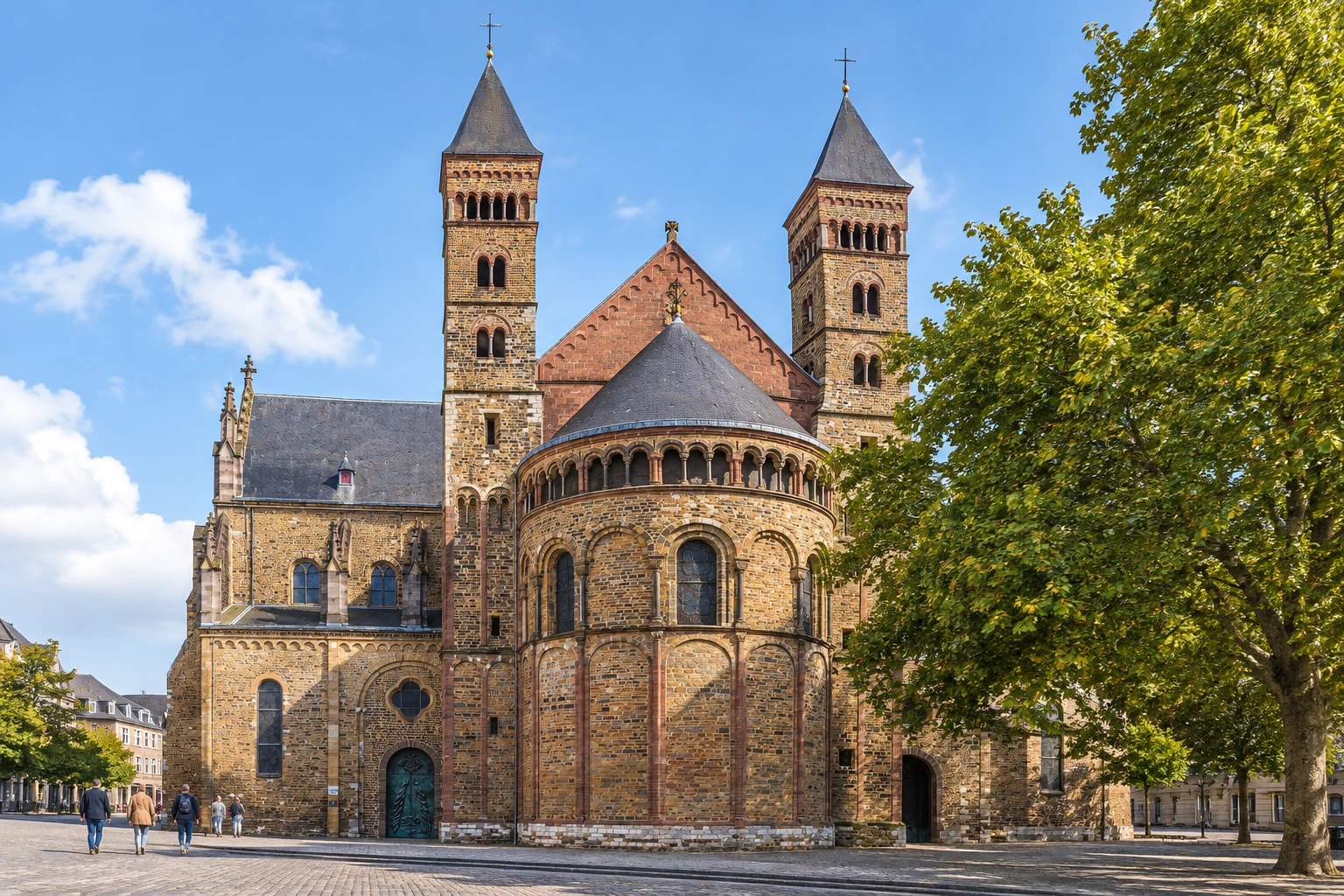
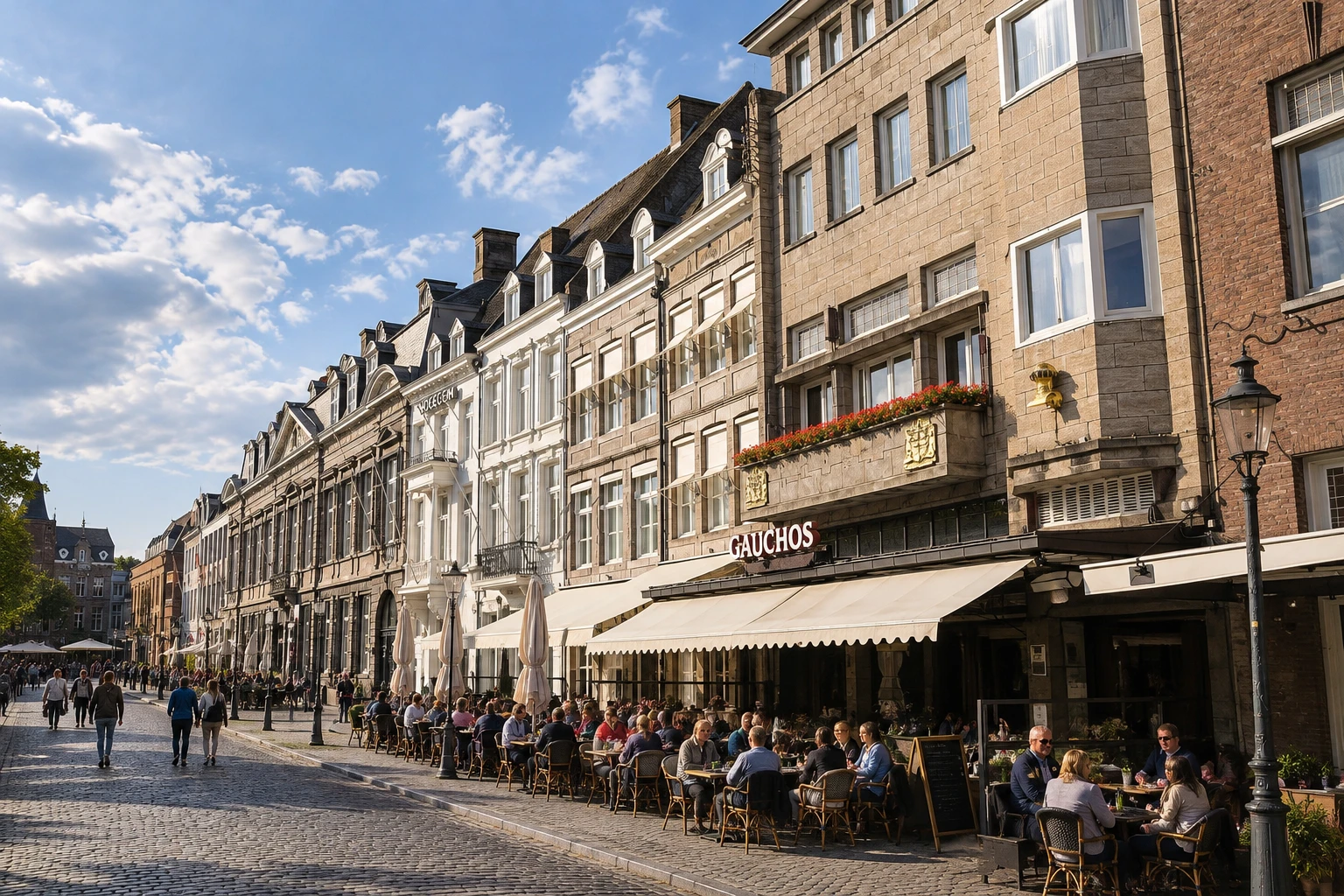
The largest square in Maastricht's center, flanked by the Basiliek van Sint Servaas and the Sint-Janskerk, with outdoor seating and the stage for the city's festivities.

 Search
 Brazil
 Antarctica
 Argentina
 Bolivia
 Chile
 Colombia
 Ecuador
 Falkland Islands (Malvinas)
 French Guiana
 Guyana
 Paraguay
 Peru
 Suriname
 Uruguay
 Venezuela
 Austria
 Belgium
 Croatia
 Denmark
 Finland
 France
 Germany
 Greece
 Hungary
 Iceland
 Ireland
 Italy
 Luxembourg
 Norway
 Poland
 Portugal
 Slovakia
 Slovenia
 Spain
 Sweden
 Switzerland
 the Czech Republicthe Netherlands
 the United Kingdom
 Turkey
 Bermuda
 Canada
 Greenland
 Mexico
 Saint Pierre and Miquelon
 the United States
 the Dominican Republic
 JapanTurkey
 Egypt
 South Africa
 Australia
 Fiji
 New Zealand
 Papua New Guinea
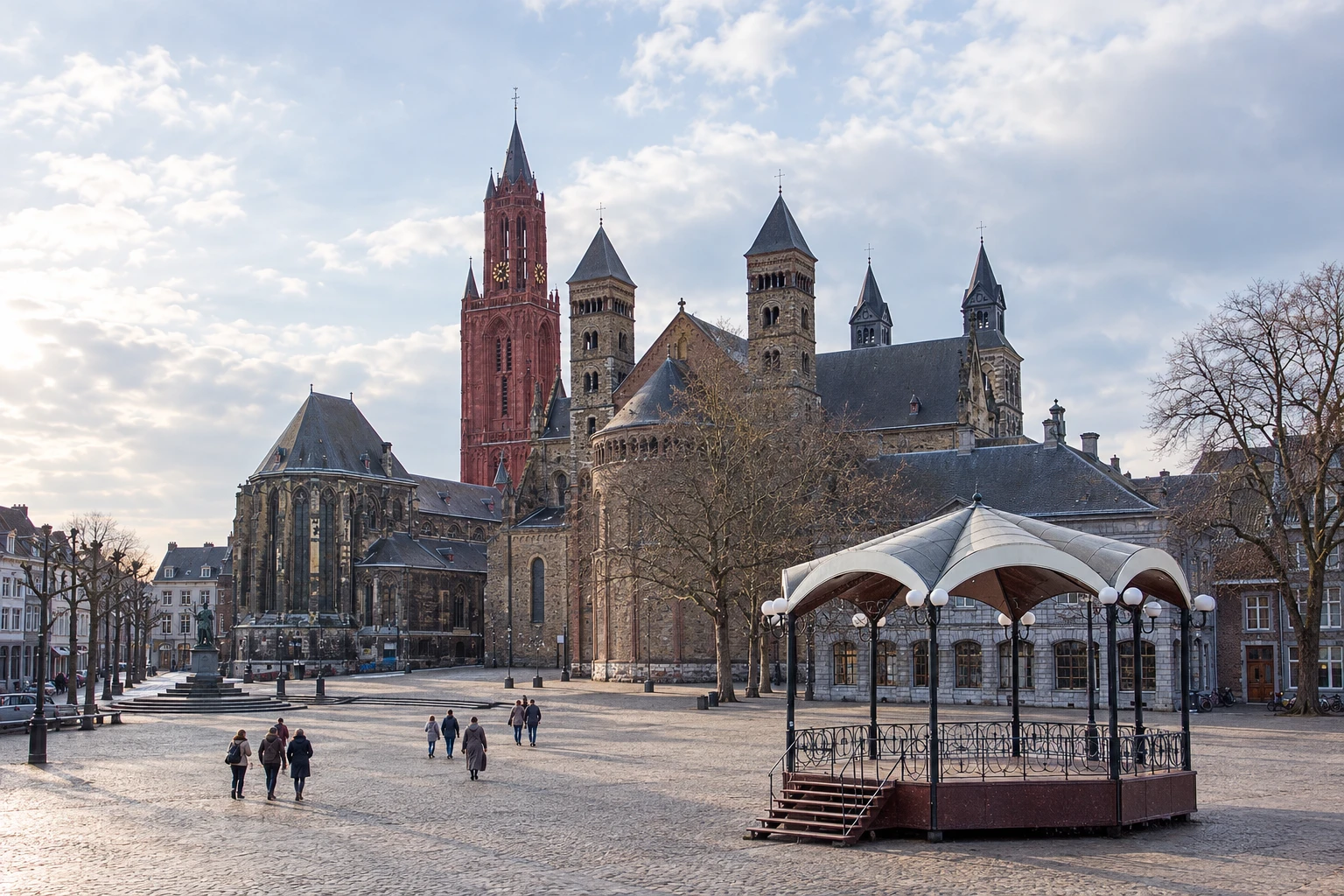
In the photo: Vrijthof, Maastricht
Illustrative images. The pictures in this guide are illustrations based on the real place, not photographs, and may differ from it.

The city
Capital of Limburgo, at the extreme south of Holanda, between Bélgica and Alemanha. The centre brings together the Vrijthof, the Basiliek van Sint Servaas, the Sint-Janskerk with its red tower, the Onze Lieve Vrouwebasiliek, a bookstore inside a Gothic church, the Markt and the medieval bridge over the Maas. To the south are the Helpoort, the caves and the Fort Sint-Pietersberg; nearby are Valkenburg and the three-border point.
There's no accommodation in the guide yet in Maastricht.
Tem hotel, pousada ou casa de temporada aqui? Cadastre a suaThere are no restaurants in the guide yet in Maastricht.
Know a good one? Recommend it to usHotéis e restaurantes da cidade no mapa.
how to get there · how many days · itinerary · questions
The local experience
The largest square in Maastricht's center, flanked by the Basiliek van Sint Servaas and the Sint-Janskerk, with outdoor seating and the stage for the city's festivities.
Romanesque basilica from the 11th and 12th centuries, built over the tomb of Saint Servatius and considered the oldest church still standing in the Netherlands. It houses a treasury with medieval reliquaries.
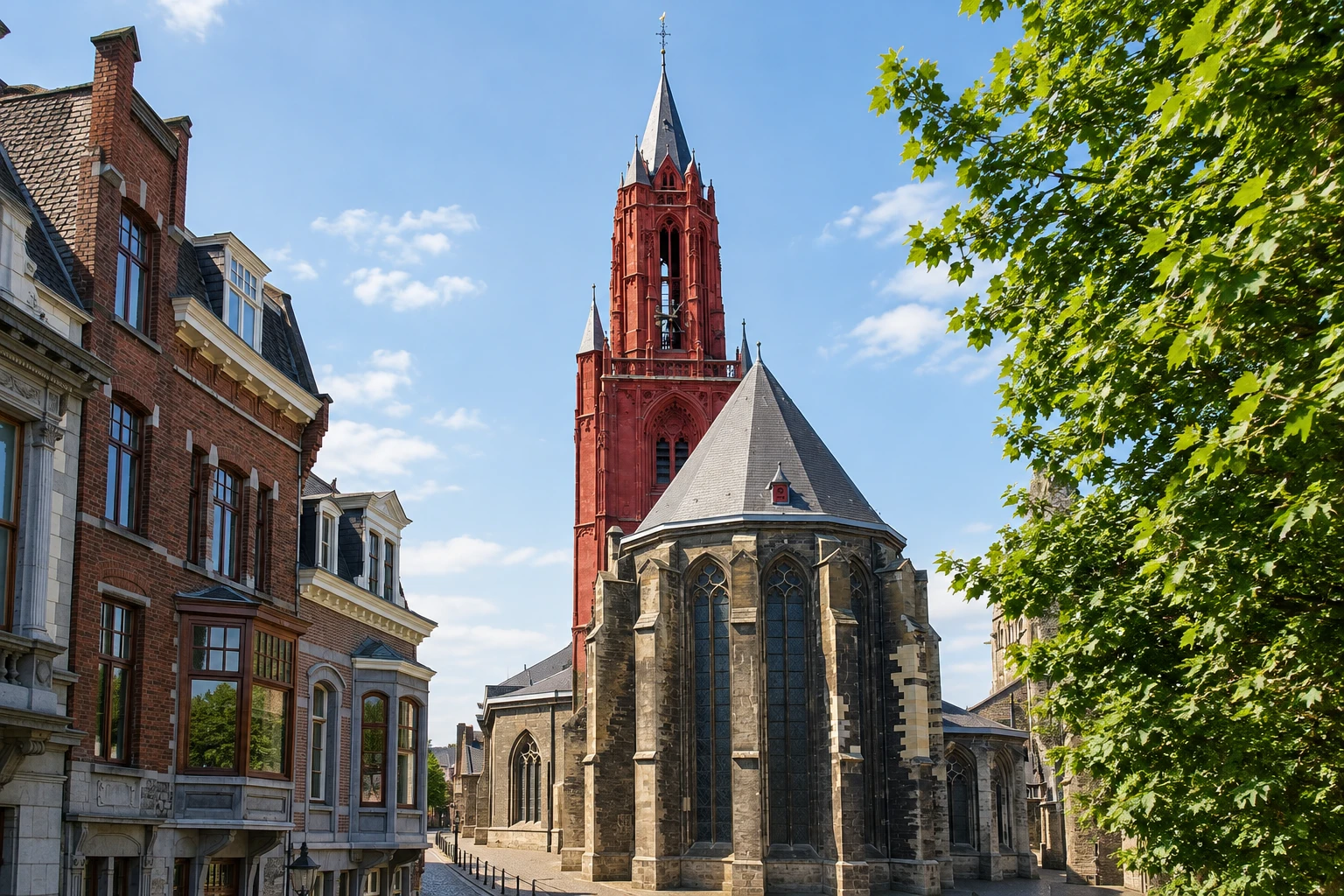
Protestant Gothic church next to the Basiliek van Sint Servaas, with a 79-metre red tower—the tallest in Maastricht—that can be climbed in season.
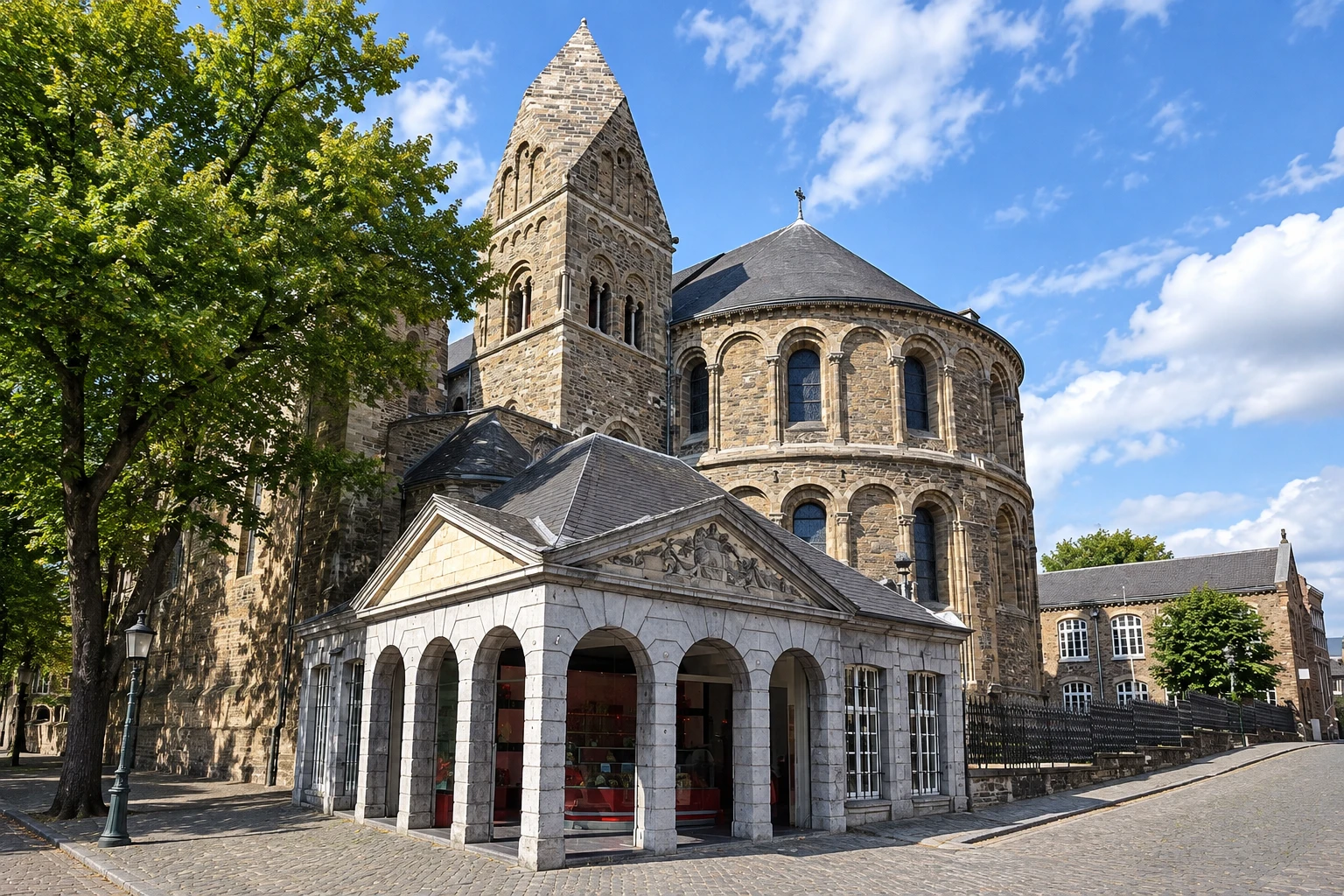
Romanesque basilica in the centre of Maastricht, known for its fortress-like west façade, carved capitals and the chapel of the Sterre der Zee, the Star of the Sea, an image much venerated in the city.
Before you go
Maastricht – the Netherlands Capital
Approximate distances. Check flights and bus, train or boat schedules before you travel.
Connections from Brasil usually involve a stopover in another city. Check before booking. From Schiphol, where the train station is inside the terminal, or from Amsterdã, the train takes about 2h30 to Maastricht station, on the east bank of the river. From there to the Vrijthof is about one kilometre on foot, crossing the Sint Servaasbrug. Transport accepts contactless payment (OVpay); check beforehand.
One day is enough for the historic centre on foot. Two days allow you to include the Sint-Pietersberg caves, Fort Sint Pieter, the casemates and a museum. Three or four days leave time for Valkenburg aan de Geul, the three-border point in Vaals and a trip to Liège or Aachen.
From May to September the days are long; summer runs from June to August, with concerts at Vrijthof. Winter, from December to February, has short, cold days, and from mid-November to the end of December Christmas markets usually operate. Carnival, in February or March, is the city's biggest celebration. It rains at any time of year. The Netherlands is 4 or 5 hours ahead of Brasília, depending on the season, and dinner starts early, around 6:00 PM.
The seasons shown are the most usual ones; nature doesn't always follow the calendar.
Not for the city: the center is compact and flat beside the river, and the bicycle (fiets) is the local way to get around; be careful when riding in the bike lanes. Valkenburg has a train. A car is useful for getting to Vaals, the vineyards and the hills of southern Limburg, where buses are less frequent.
Suggested itinerary
Built with the places on this page. No rush: it's paced so you have time to see them.
Start at Vrijthof, the largest square in the center. Visit the Basiliek van Sint Servaas and its treasury, with medieval reliquaries. Next door, the Sint-Janskerk has the red tower; during the climbing season, from late March to late October, go up to see the city from above.
Walk to the Boekhandel Dominicanen, the bookshop inside a Gothic church. Then the Markt, with the 17th-century town hall. Continue down to the Onze Lieve Vrouwebasiliek, Romanesque, with the Sterre der Zee chapel and the cloister.
Walk through the Jekerkwartier to the Helpoort, the oldest city gate in the Netherlands, and follow the stretches of wall along the Jeker stream. Finish at the river Maas, crossing the Sint Servaasbrug to Wyck and returning along the bank.
Have dinner around Vrijthof or the Markt; note that kitchens usually open from 6:00 PM. Try vlaai, the typical Limburg tart, for dessert. The churches and the bridge are lit up at night.
Day 1
Start the day at Vrijthof. Enter the Basiliek van Sint Servaas and its treasury, and then Sint-Janskerk, the Protestant church with the red tower right next door; the tower climb usually operates from late March to late October.
Pass by the Boekhandel Dominicanen, continue to the Markt and the town hall, and finish at the Onze Lieve Vrouwebasiliek, with the Sterre der Zee chapel, the cloister and the tree-lined square in front.
Cross the Maas via the Sint Servaasbrug, a 13th-century stone bridge, and explore Wyck, the neighborhood on the east bank, with small shops and cafés. Return across the bridge with views of the center.
Choose a restaurant in Vrijthof or on the nearby streets. In summer the square usually hosts concerts; from late November to late December the Christmas market.
Day 2
Climb to the Sint-Pietersberg hill, south of the center. Take the guided tour of the Grotten Noord, galleries opened in the rock over centuries, and follow with a visit to Fort Sint Pieter, dating from 1701, with views over the Maas valley. Book in advance.
Walk down through the Jekerkwartier to the Helpoort and the city walls. Choose a museum: the Natuurhistorisch Museum, with mosasaur fossils, is in the neighborhood itself; the Bonnefanten, an art museum, is on the other side of the river.
If there is a tour at the scheduled time, enter the Kazematten, defense tunnels opened between 1575 and 1825 under the Waldeckpark. Check the dates: they are not open every day. If there is no tour, walk through the park and along the old fortifications.
For a change from the center, dine in Wyck, on the other side of the river, near the station. Before or after, a walk along the Maas bank shows the churches and the bridge lit up.
Check before you go. Opening hours and days change, and places may close for renovations, holidays or events. This itinerary is a suggestion from Cidade Turismo, not a commitment: plan yours by checking directly with each place you intend to visit.
Before you go
About 2h30, on NS trains with frequent departures. Schiphol station is inside the airport terminal. In Maastricht, the train arrives at the station on the east bank of the river, about one kilometer from Vrijthof.
Yes. The historic center is compact: from Vrijthof to the Markt, to the Onze Lieve Vrouwebasiliek and the Helpoort are a few minutes' walk. Only the caves and Fort Sint Pieter, on the hill to the south, require a longer walk of about half an hour, or a bus.
It is the treaty signed in the city in 1992 that created the European Union in its current form and prepared the way for the euro. That's why the name Maastricht appears so often in European history books.
Dutch (Nederlands), and on the street you'll also hear the local Maastricht dialect. English is widely spoken, and because of the proximity to Belgium and Germany many people understand French and German. Useful words: markt is the market square, kerk is church and grot is cave.
Yes. Liège, in Belgium, is about half an hour by train, and Aachen, in Germany, less than an hour by train or bus. Check timetables in advance and bring your passport.
No. The galleries are a dark maze and are only entered with a guide, in tours of about an hour. Book in advance, bring a jacket because the temperature inside stays low year-round, and wear closed-toe shoes.