

 Brazil
 Antarctica
 Argentina
 Bolivia
 Chile
 Colombia
 Ecuador
 Falkland Islands (Malvinas)
 French Guiana
 Guyana
 Paraguay
 Peru
 Suriname
 Uruguay
 Venezuela
 Albania
 Austria
 Belgium
 Croatia
 Denmark
 Finland
 France
 Germany
 Hungary
 Iceland
 Ireland
 Italy
 Luxembourg
 Norway
 Poland
 Portugal
 Slovakia
 Slovenia
 Spain
 Sweden
 Switzerland
 the Czech Republic
 the Netherlands
 the United Kingdom
 Turkey
 Bermuda
 Canada
 Greenland
 Mexico
 Saint Pierre and Miquelon
 the United States
 the Dominican Republic
 Japan
 Egypt
 South Africa
 Australia
 Fiji
 New Zealand
 Papua New Guinea
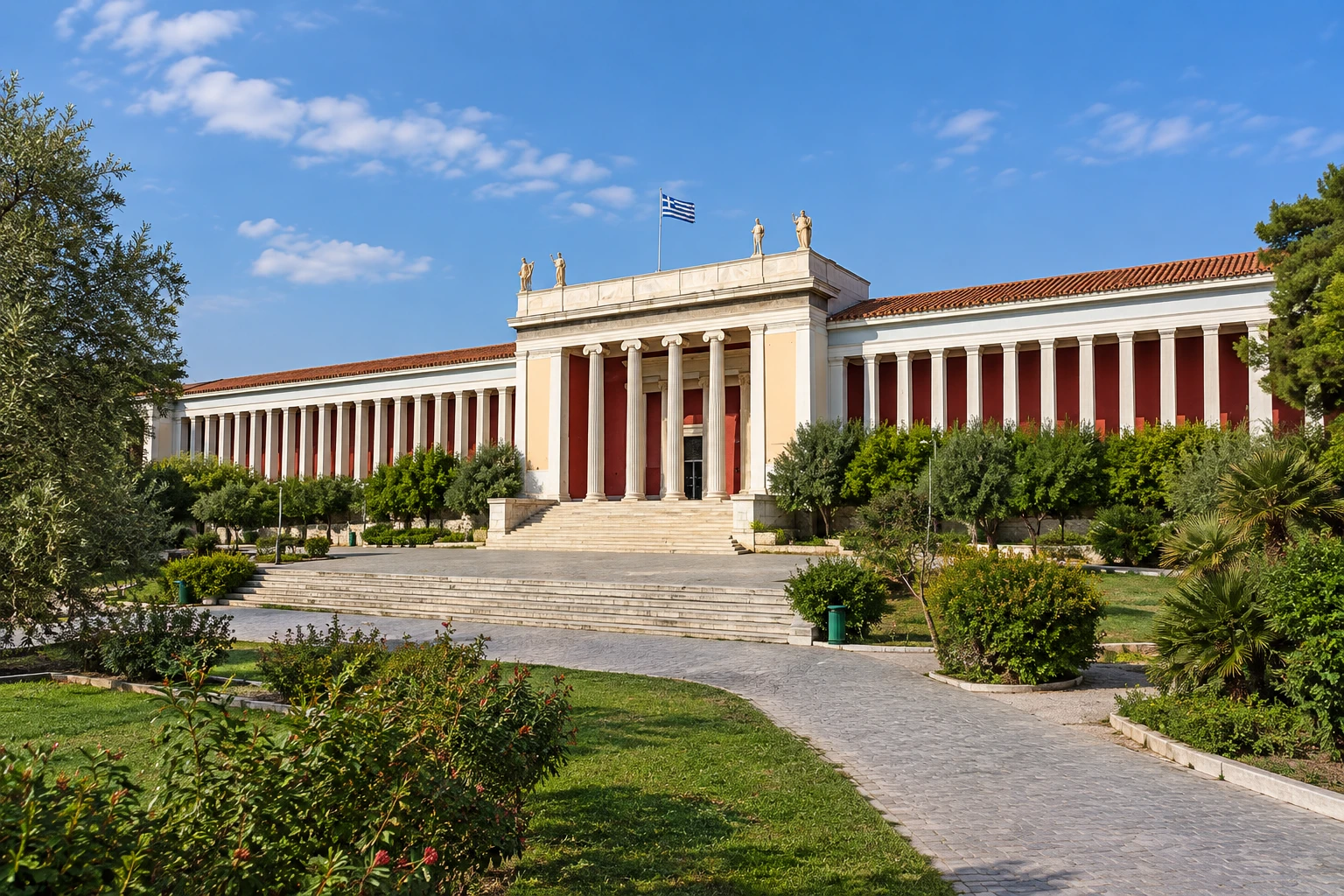
Museum · Athens, Greece
National Archaeological Museum (Ethniko Archaiologiko Mouseio)
The largest archaeological museum in Grécia, with the Mask of Agamemnon, the Anticítera mechanism, the Artemísion bronzes and the frescoes from Santorini, housed in a neoclassical building near praça Omonia.
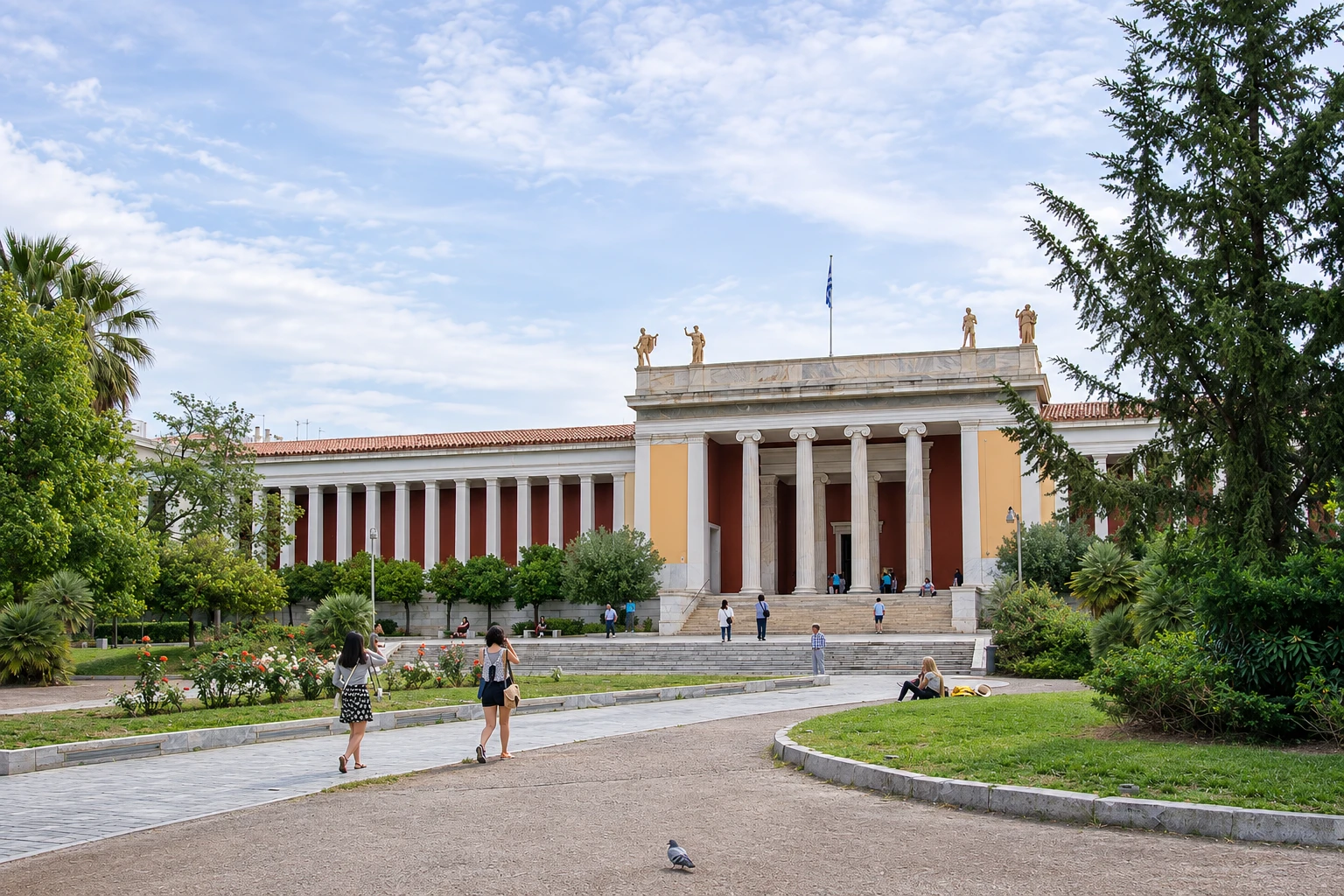
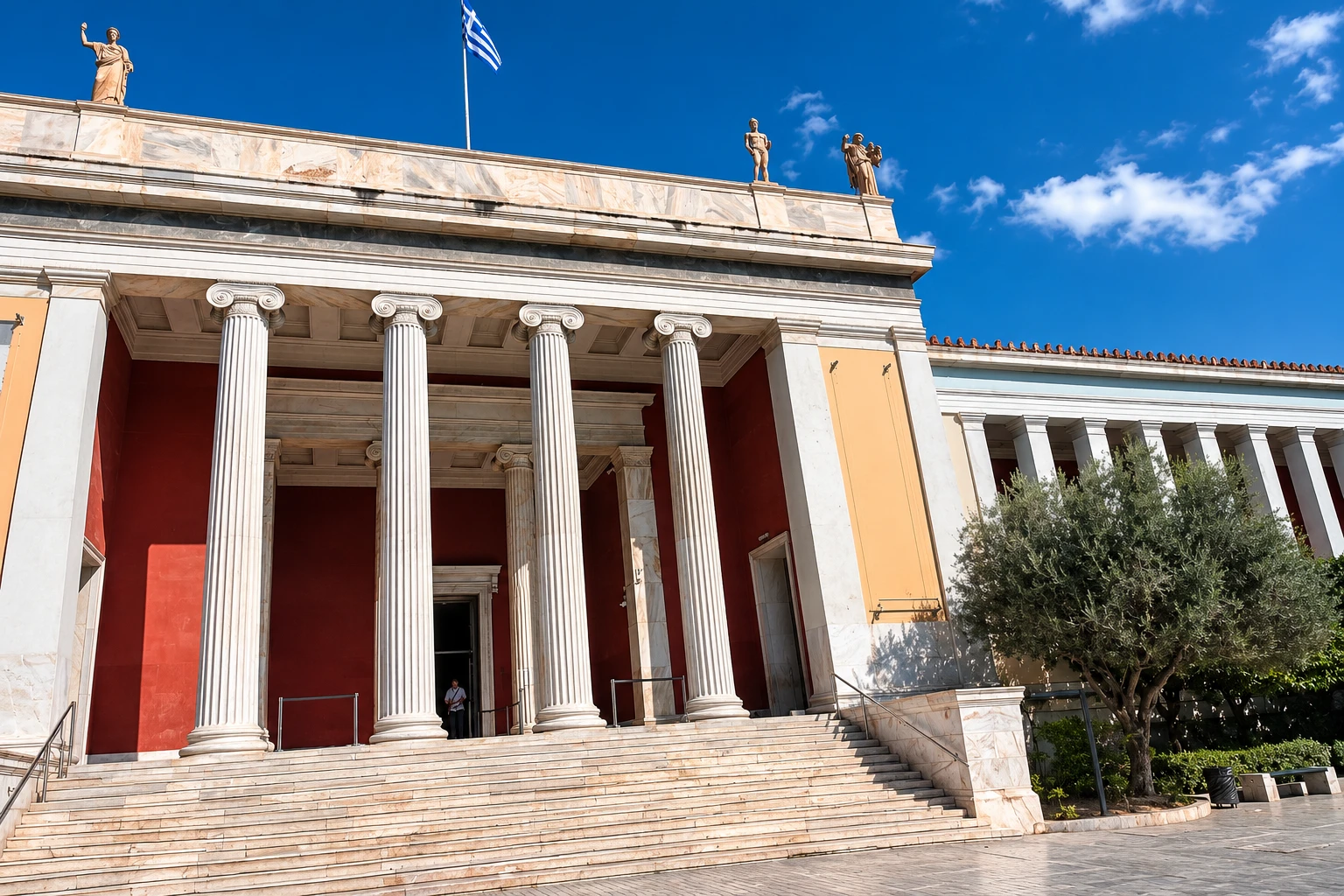
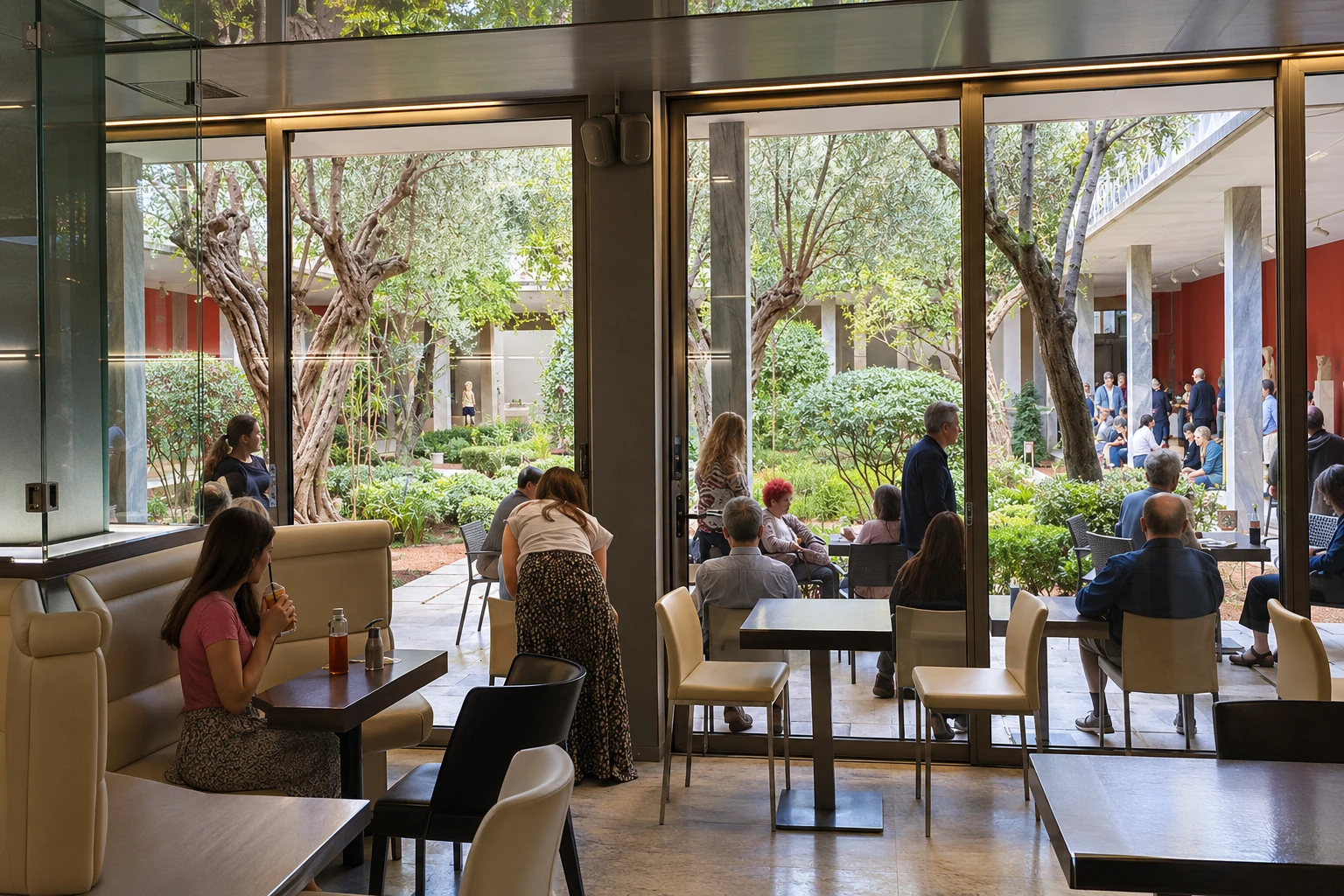
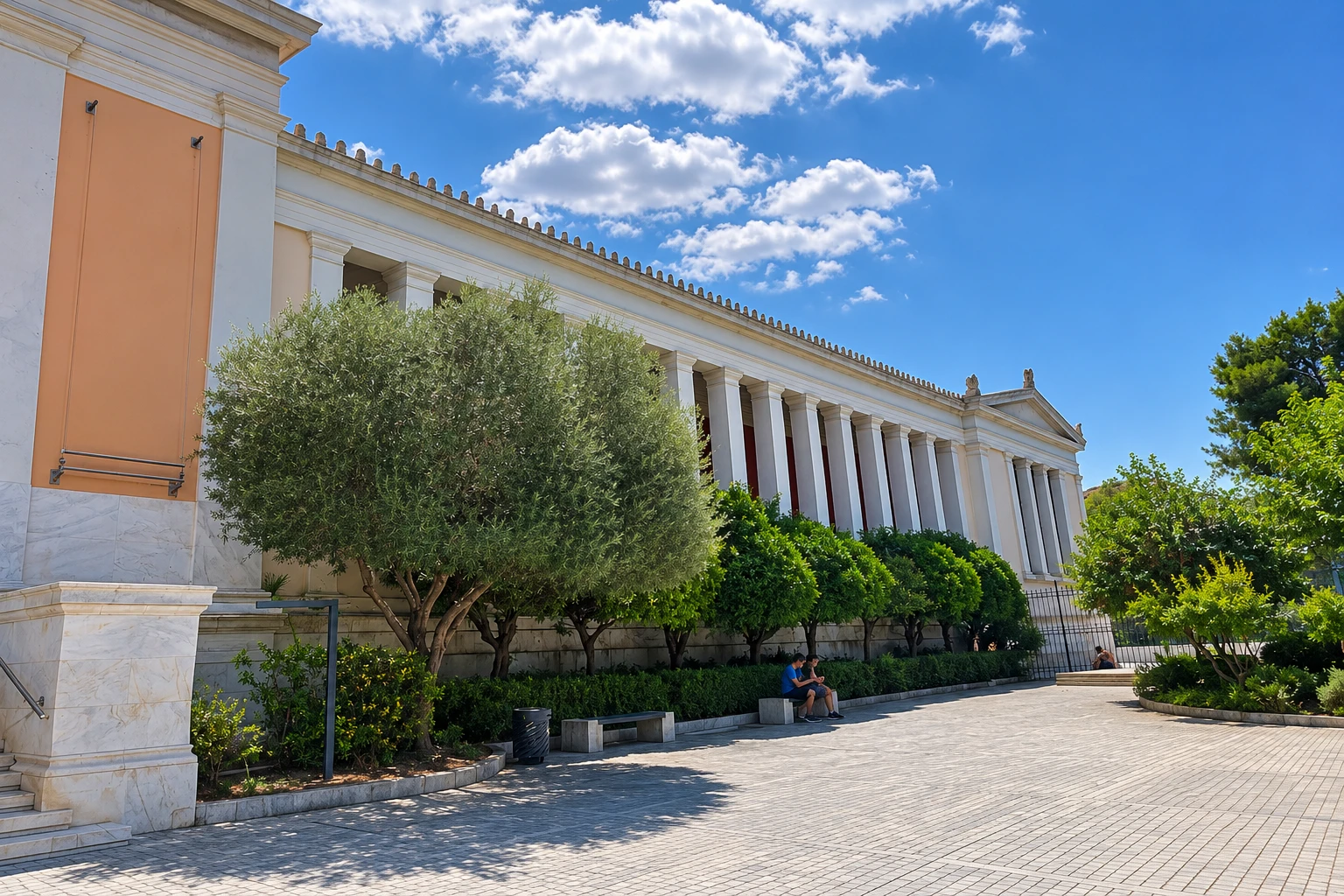
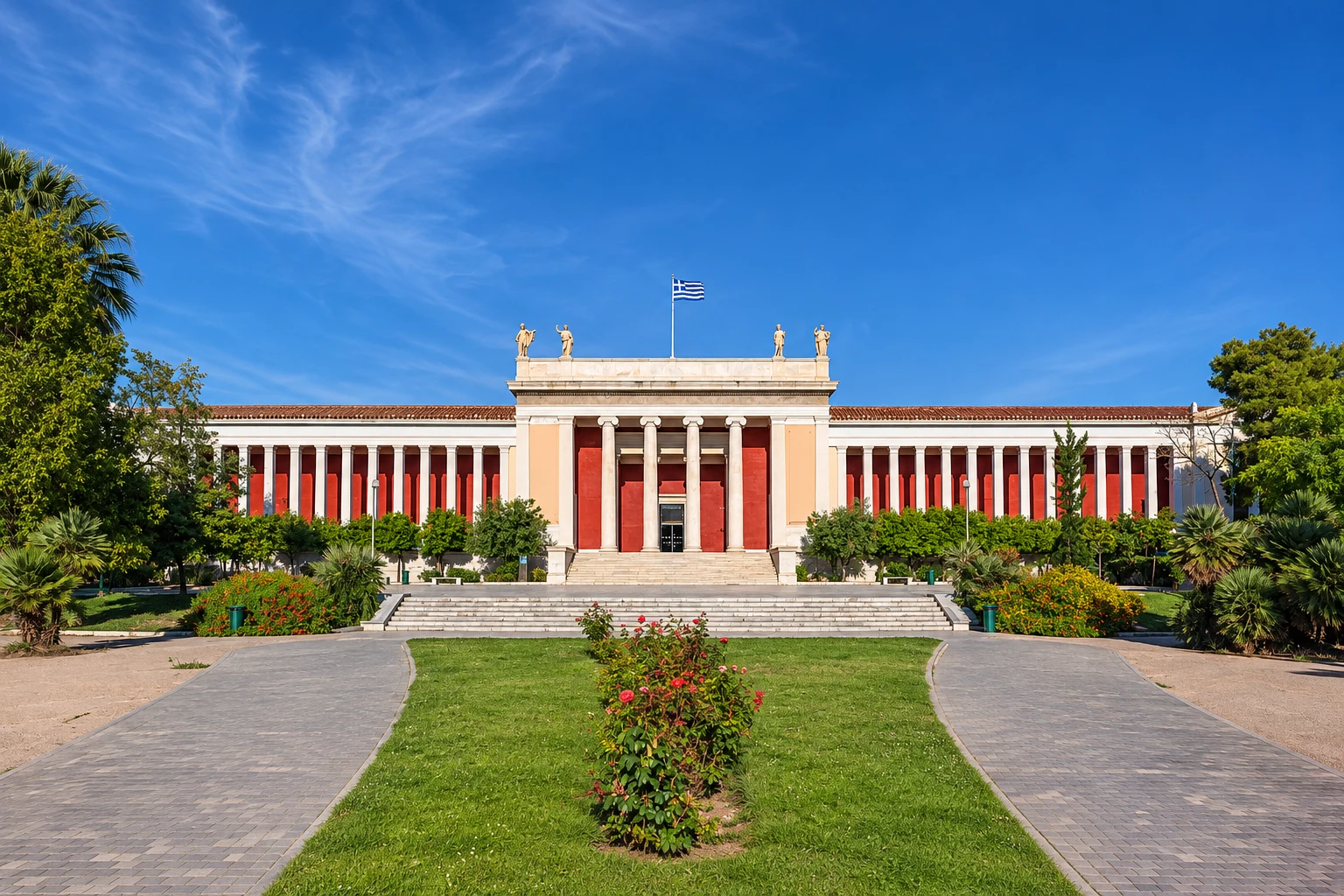
Illustrative images. The pictures in this guide are illustrations based on the real place, not photographs, and may differ from it.

A look at the place
National Archaeological Museum (Ethniko Archaiologiko Mouseio) in pictures
These pictures are illustrations based on the real place, not photographs. They may differ from the place.
Click the picture to enlarge it.
Discover
About National Archaeological Museum (Ethniko Archaiologiko Mouseio)
The Museu Arqueológico Nacional houses the most important finds from excavations across Greece, from prehistory to the end of Antiquity. It was founded in 1829, shortly after independence, and since 1889 has occupied a neoclassical building on rua Patission (28 Oktovriou), about a 15-minute walk from praça Omonia. It is the museum that explains what you later see at the sites: Micenas, Santorini, the Cícladas, the Acrópole.
The prehistoric collection, in the entrance rooms, includes the gold from the Mycenaean tombs excavated by Heinrich Schliemann, with the so-called máscara de Agamenon and the Vaphio cups, the marble figurines of the Cícladas and the frescoes from Akrotiri, the Bronze Age town buried by the Santorini volcano. The sculpture collection follows Greek art in order: the archaic kouroi, the bronze Poseidon or Zeus found in the sea off Artemísion, the boy on a horse (the Jóquei de Artemísion), the Efebo de Anticítera and the funerary reliefs from the Kerameikos Cemetery.
The Anticítera mechanism, a bronze astronomical gear from the 2nd century BC recovered from a shipwreck in 1901, has its own room with explanations of what it calculated. There are also collections of pottery, bronzes, jewelry and an Egyptian collection, one of the largest outside Egypt. The inner garden has a café.
The government has approved an underground expansion of the museum, with works planned for the coming years. The building remains open during the works, but rooms may be relocated; check before you go if you want to see a specific piece.
Before you go
Practical information
Cidade Turismo reviews its information regularly, but something may have changed. Check with the place before planning your trip.
How much time to set aside
Two to three hours for the prehistoric and sculpture collections and the Anticítera mechanism. A whole day for those who love archaeology.
Best time
In the morning, right at opening, when the rooms with the máscara de Agamenon are empty. It's an ideal visit for a summer afternoon, with air conditioning. In high season it opens at night on some days; outside that period hours are reduced. Check ahead.
How to get there
Metro line 1 (green), Viktoria or Omonia stations, about a 10-minute walk. From praça Syntagma, bus along rua Patission or a 25-minute walk via rua Panepistimiou. Trolleybuses 2, 4, 5, 9 and 11 stop in front.
Tip
Start with the Mycenaean rooms on the right of the entrance, then follow the sculptures in chronological order; leave the pottery for last. The Anticítera mechanism is on the first floor and it's worth reading the panels. The neighborhood around is a popular shopping area and gets empty at night: exit onto rua Patission and take the metro at Viktoria.
Official website
Your questions
Frequently asked questions about National Archaeological Museum (Ethniko Archaiologiko Mouseio)
en: Is the Mask of Agamemnon really from Agamemnon?
Probably not. The gold mask was found by Schliemann in 1876 in a Mycenaean tomb and named by him; today it is dated to the 16th century BC, about three centuries before the time traditionally assigned to the Trojan War. The name stuck.
en: What is the mechanism of Anticítera?
A set of bronze gears from the 2nd century BC, recovered from a shipwreck near the island of Anticítera in 1901, that calculated positions of the Sun, the Moon and eclipses. It is considered the oldest known analog computer. It is displayed in a dedicated room, with reconstructions.
en: Is the museum far from the tourist centre?
About 2 km from Syntagma square and 1.5 km from Monastiraki. It’s easy to reach by metro (Viktoria or Omonia) or on foot in 25 minutes along rua Panepistimiou.
en: Is it worth visiting the museum before or after Micenas and Santorini?
Before, if you can. the most important finds from both places are here, not in the local museums: the gold from Mycenaean tombs and the frescoes from Akrotiri. Visiting the museum first helps imagine the sites as they were.