

 Brazil
 Antarctica
 Argentina
 Bolivia
 Chile
 Colombia
 Ecuador
 Falkland Islands (Malvinas)
 French Guiana
 Guyana
 Paraguay
 Peru
 Suriname
 Uruguay
 Venezuela
 Albania
 Austria
 Belgium
 Croatia
 Denmark
 Finland
 France
 Germany
 Hungary
 Iceland
 Ireland
 Italy
 Luxembourg
 Norway
 Poland
 Portugal
 Slovakia
 Slovenia
 Spain
 Sweden
 Switzerland
 the Czech Republic
 the Netherlands
 the United Kingdom
 Turkey
 Bermuda
 Canada
 Greenland
 Mexico
 Saint Pierre and Miquelon
 the United States
 the Dominican Republic
 Japan
 Egypt
 South Africa
 Australia
 Fiji
 New Zealand
 Papua New Guinea
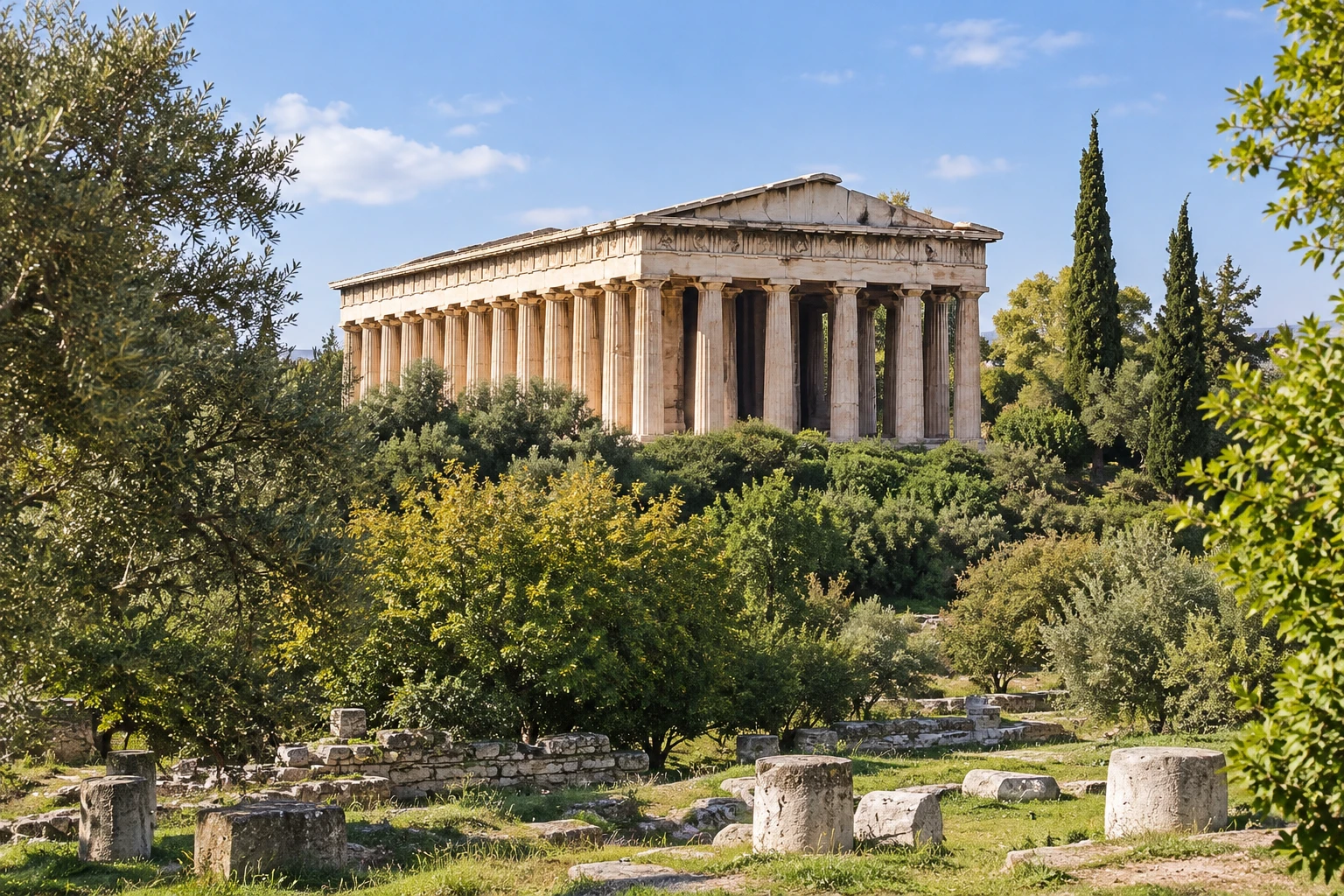
Archaeological site · Athens, Greece
Ancient Agora of Athens (Archaia Agora)
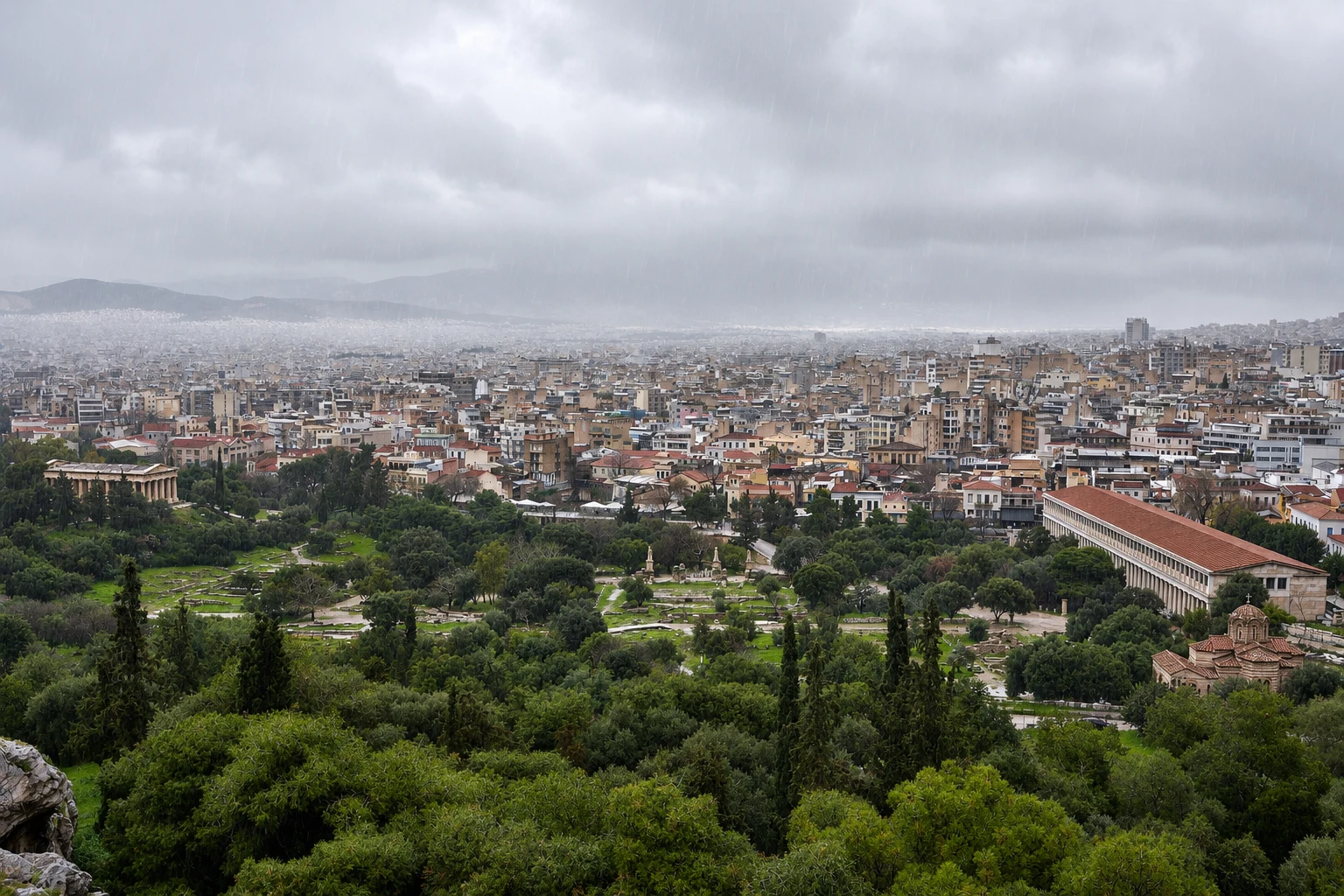
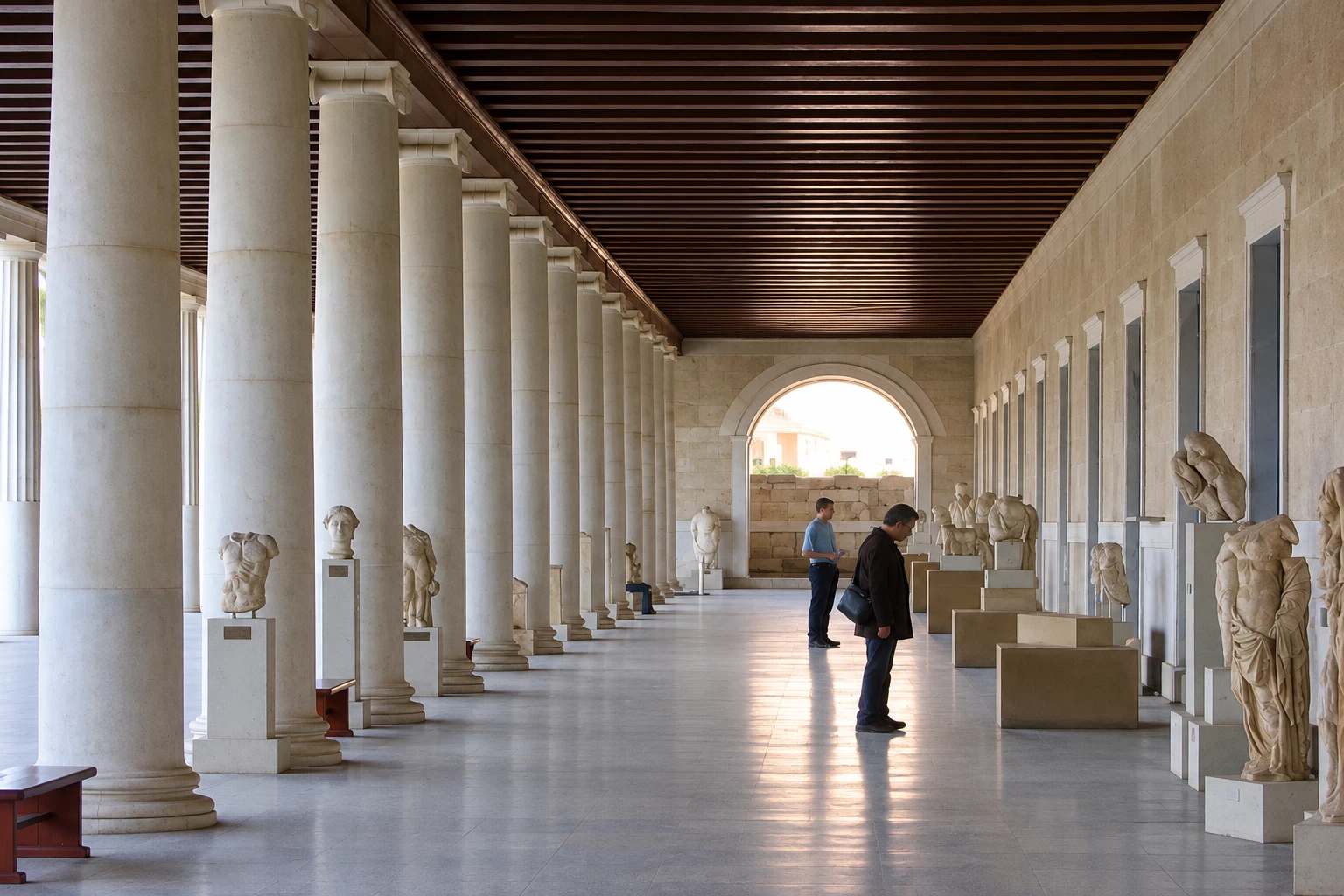
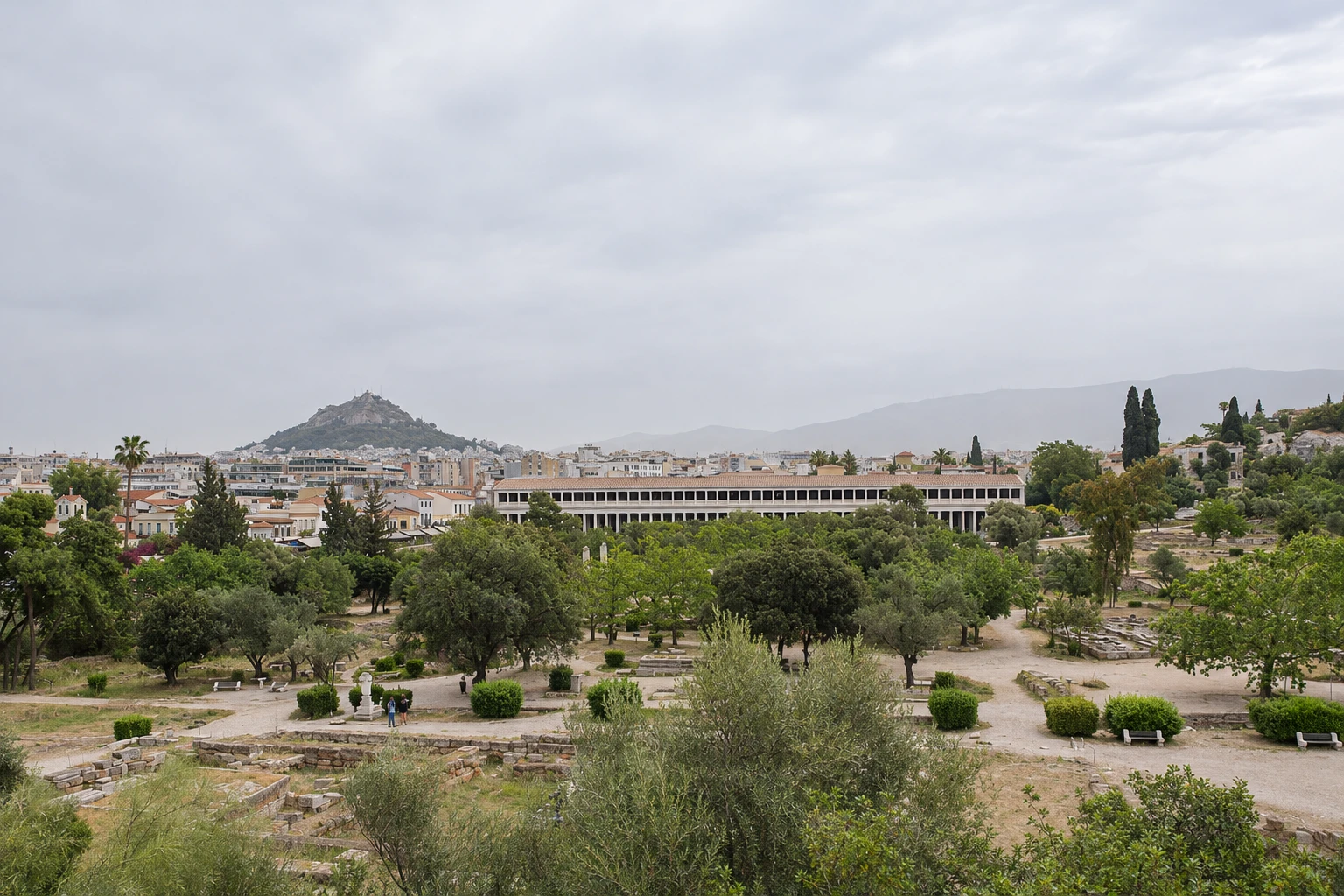
The public square of classical Atenas, at the foot of the Acrópole, with the Templo de Hefesto, one of the best-preserved Greek temples, and the reconstructed Stoa de Átalo, which houses the site's museum.
Illustrative images. The pictures in this guide are illustrations based on the real place, not photographs, and may differ from it.

A look at the place
Ancient Agora of Athens (Archaia Agora) in pictures
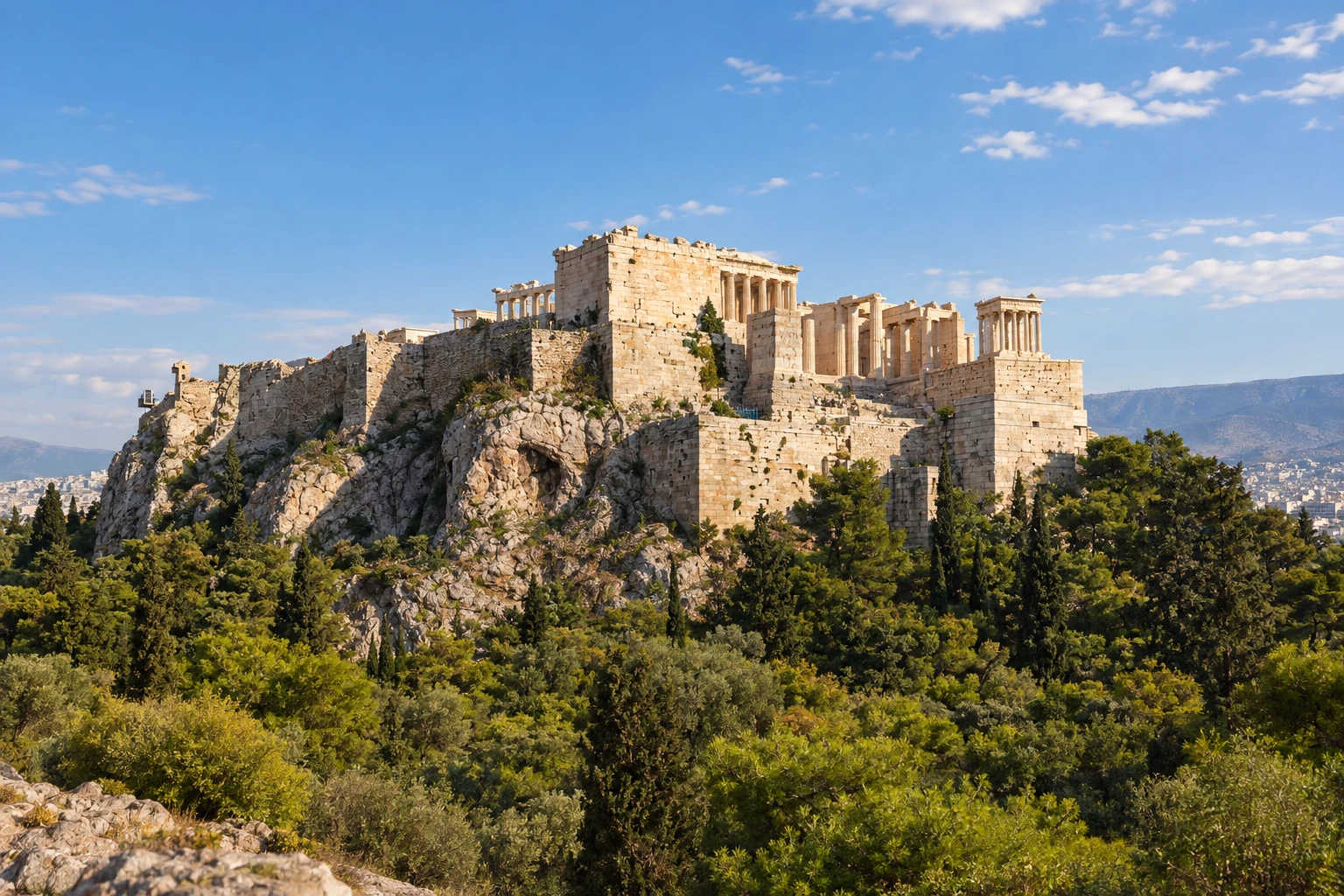
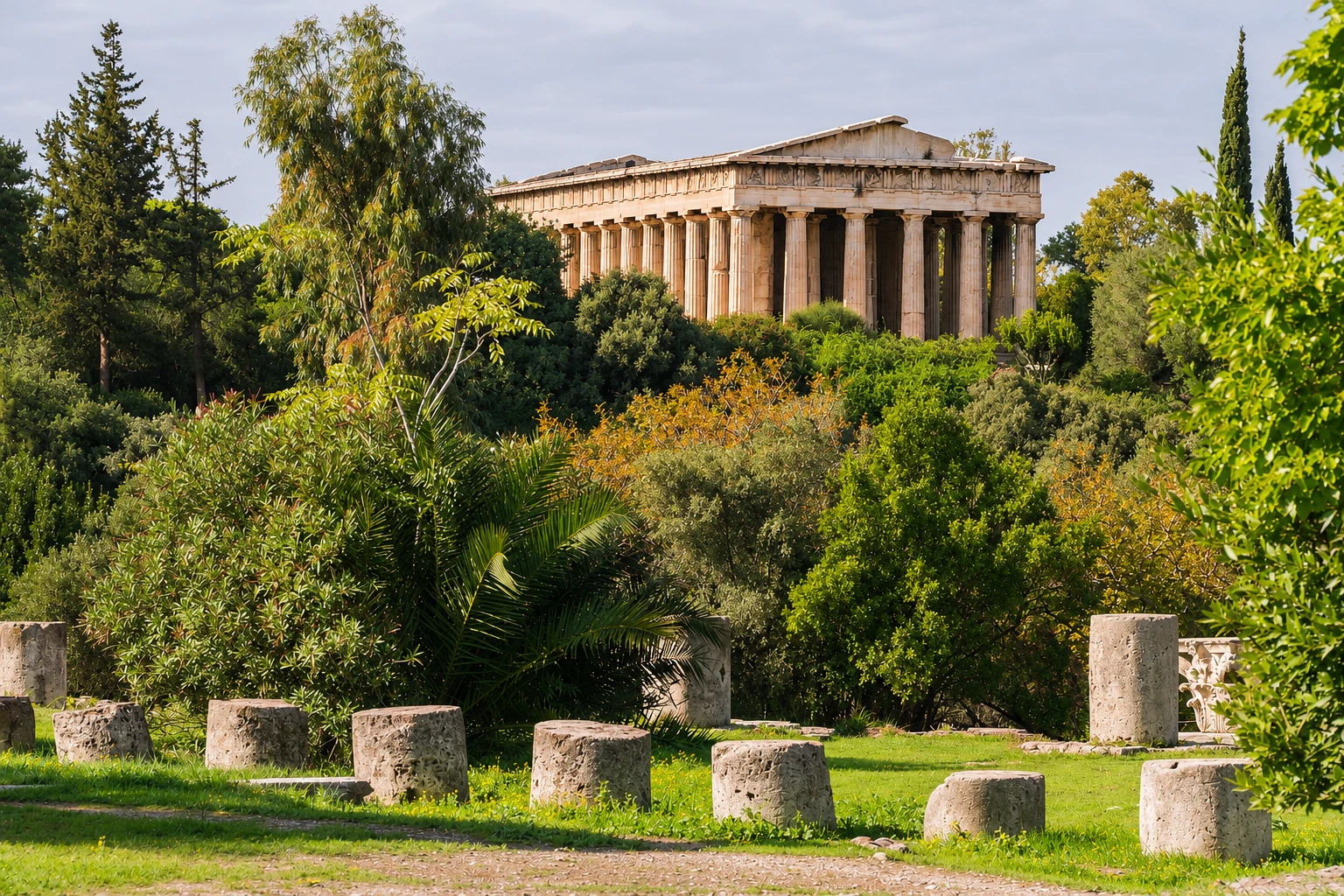
These pictures are illustrations based on the real place, not photographs. They may differ from the place.
Click the picture to enlarge it.
Discover
About Ancient Agora of Athens (Archaia Agora)
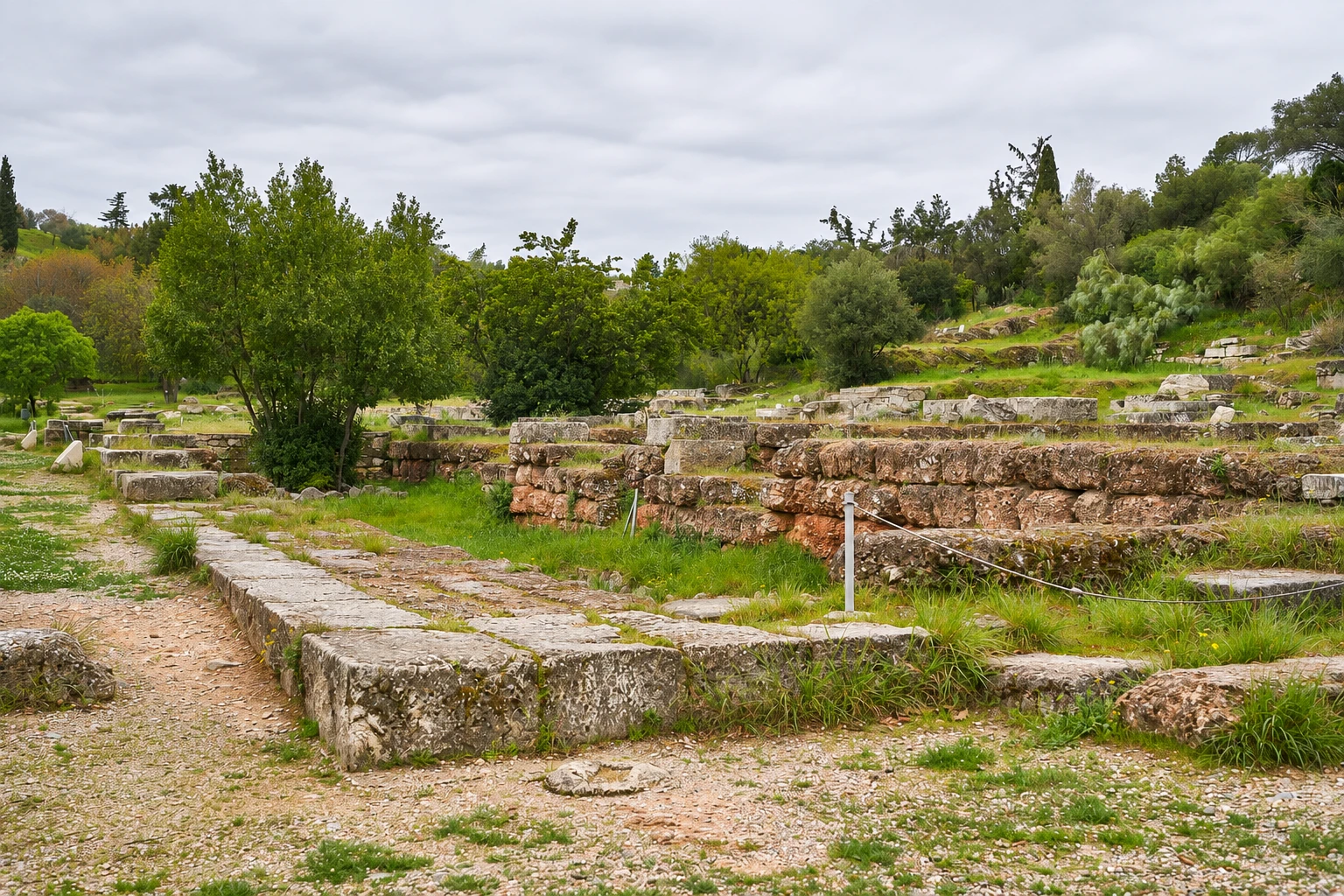
The Ágora Antiga (Archaia Agora) was the center of public life in Atenas: it held the city council, the courts, the markets and the temples, and it was where Socrates conversed with the Athenians. The site, northwest of the Acrópole, is a large, tree-filled area between the Monastiraki neighborhood and the hill of Thissio, crossed by the Via Panatenaica, the procession route that climbed up to the Partenon.
Two buildings stand out. The Templo de Hefesto (Hefaisteion), from the 5th century BC, is the most complete Doric temple in Greece: it remained standing because it was the church of Saint George from the 7th to the 19th century. It sits atop a small hill on the west side of the site, with views of the Acrópole. On the east side, the Stoa de Átalo, a two-story covered gallery built in the 2nd century BC by King Átalo II of Pérgamo, was reconstructed in the 1950s by the Escola Americana de Estudos Clássicos and houses the Museu da Ágora Antiga.
The museum displays what was found in the excavations about democracy and everyday life: the juror-selection machine (kleroterion), the pottery voting tokens used to vote for the exile of a citizen (ostraka), the clepsydra that timed speeches in the courts, as well as vases, coins and inscriptions. On the grounds, plaques indicate where the Bouleuterion (council house), the Tholos, the Odeão de Agripa and the Igreja dos Santos Apóstolos — a 10th-century Byzantine church that still stands — were located.
The site is large and shaded by many trees, which makes it more pleasant in the heat than the Acrópole. The ground is dirt and uneven stone.
Before you go
Practical information
Cidade Turismo reviews its information regularly, but something may have changed. Check with the place before planning your trip.
How much time to set aside
From an hour and a half to two hours, including the museum of the Stoa de Átalo and the climb to the Templo de Hefesto.
Best time
Early in the morning or in the two hours before closing. It is one of the shadiest sites in the center, so it works well for summer afternoons when the Acrópole is unbearable. Reduced hours in winter; check ahead.
How to get there
Main entrance on rua Adrianou, a 3-minute walk from Monastiraki station (metro lines 1 and 3) and the flea market. There is a second entrance on the south side, on rua Apostolou Pavlou, near Thissio and the climb to the Acrópole.
Tip
First go up to the Templo de Hefesto from the west side, then descend along the Via Panatenaica to the Stoa de Átalo, leaving the museum for last, in the cooler part of the visit. Check whether there is a combined ticket with the Acrópole and other sites before buying separate admissions. The pedestrian stretch of rua Adrianou along the fence has cafés with views of the site and the Acrópole.
Your questions
Frequently asked questions about Ancient Agora of Athens (Archaia Agora)
en: What is the difference between the Ancient Agora and the Roman Agora?
The Ancient Agora is the classical Greek square, larger and older, with the Temple of Hephaestus and the Stoa of Attalos. The Roman Agora, 300 metres to the east, was built in the time of Augustus as a marketplace and is smaller, with the Tower of the Winds. They are separate sites with separate tickets.
en: Is the Temple of Hephaestus better preserved than the Partenon?
Yes. It still has its roof, columns and much of its walls, because it was used as a church for over a thousand years. You cannot enter it, but you can walk around the colonnade.
en: Is the Agora museum included in the ticket?
Yes. The Museu da Ágora Antiga, in the Stoa of Attalos, is part of the site and is included on the same ticket.
en: Does the Ancient Agora have shade?
A fair amount, by Athens standards: there are olive trees, cypresses and the covered gallery of the Stoa of Attalos. Still, bring water and a hat.