Bayeux · France · Cathedral
Bayeux Cathedral
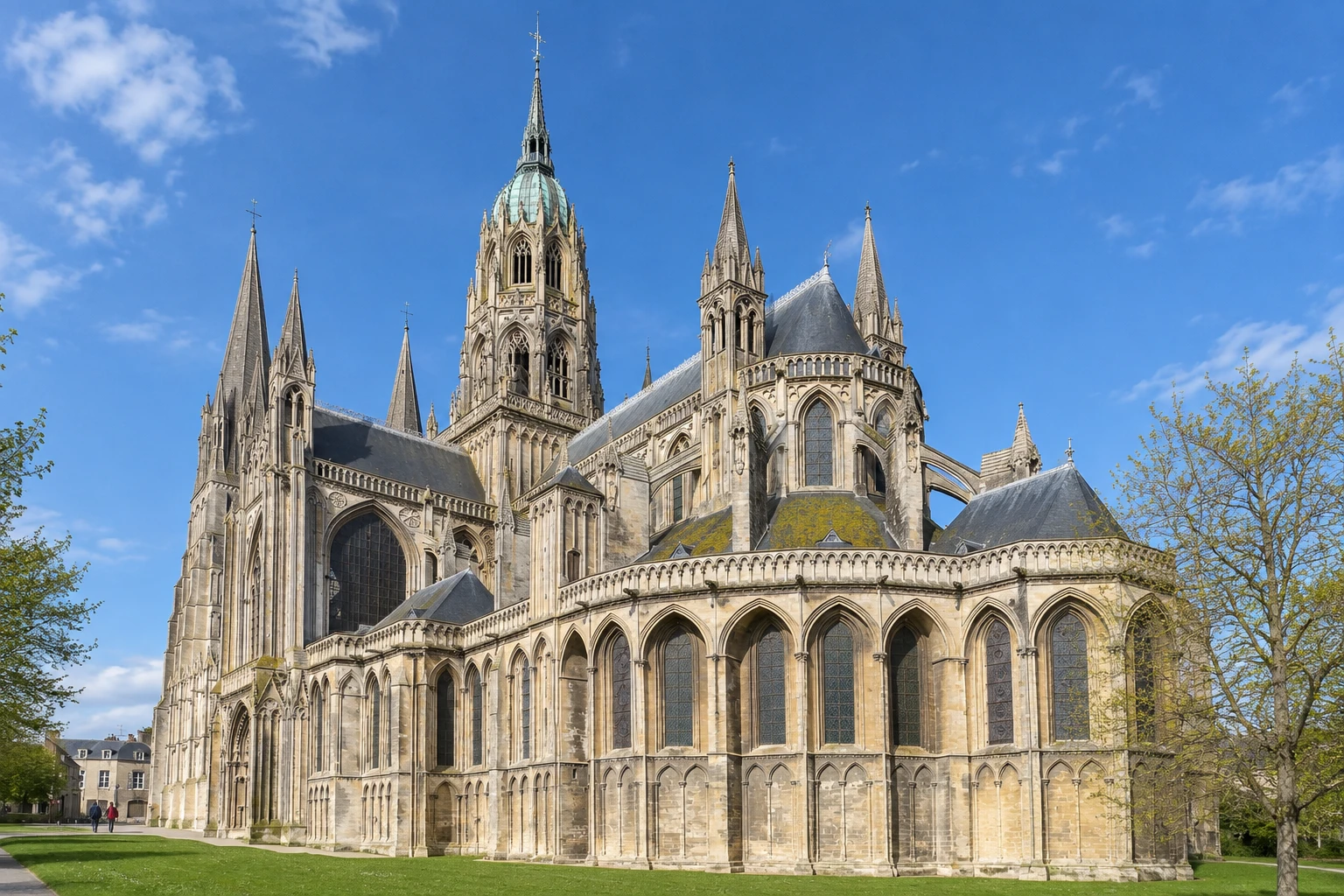
Romanesque and Gothic cathedral consecrated in 1077 in the presence of William the Conqueror. For centuries it housed the Tapeçaria de Bayeux.

 Search
 Brazil
 Antarctica
 Argentina
 Bolivia
 Chile
 Colombia
 Ecuador
 Falkland Islands (Malvinas)
 French Guiana
 Guyana
 Paraguay
 Peru
 Suriname
 Uruguay
 Venezuela
 Austria
 Belgium
 Croatia
 Denmark
 FinlandFrance
 Germany
 Greece
 Hungary
 Iceland
 Ireland
 Italy
 Luxembourg
 Norway
 Poland
 Portugal
 Slovakia
 Slovenia
 Spain
 Sweden
 Switzerland
 the Czech Republic
 the Netherlands
 the United Kingdom
 Turkey
 Bermuda
 Canada
 Greenland
 Mexico
 Saint Pierre and Miquelon
 the United States
 the Dominican Republic
 JapanTurkey
 Egypt
 South Africa
 Australia
 Fiji
 New Zealand
 Papua New Guinea
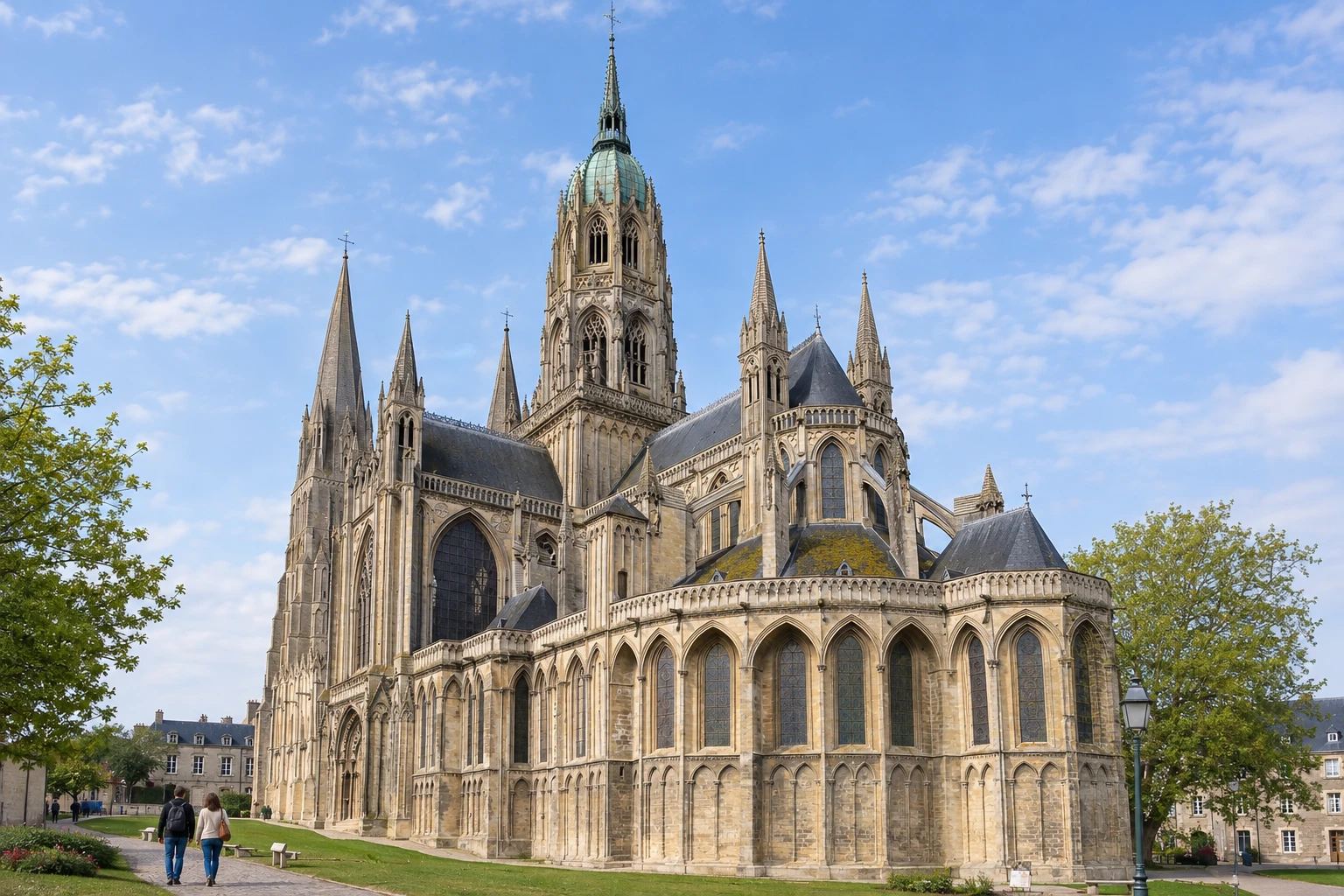
In the photo: Cathédrale Notre-Dame de Bayeux
Illustrative images. The pictures in this guide are illustrations based on the real place, not photographs, and may differ from it.

The city
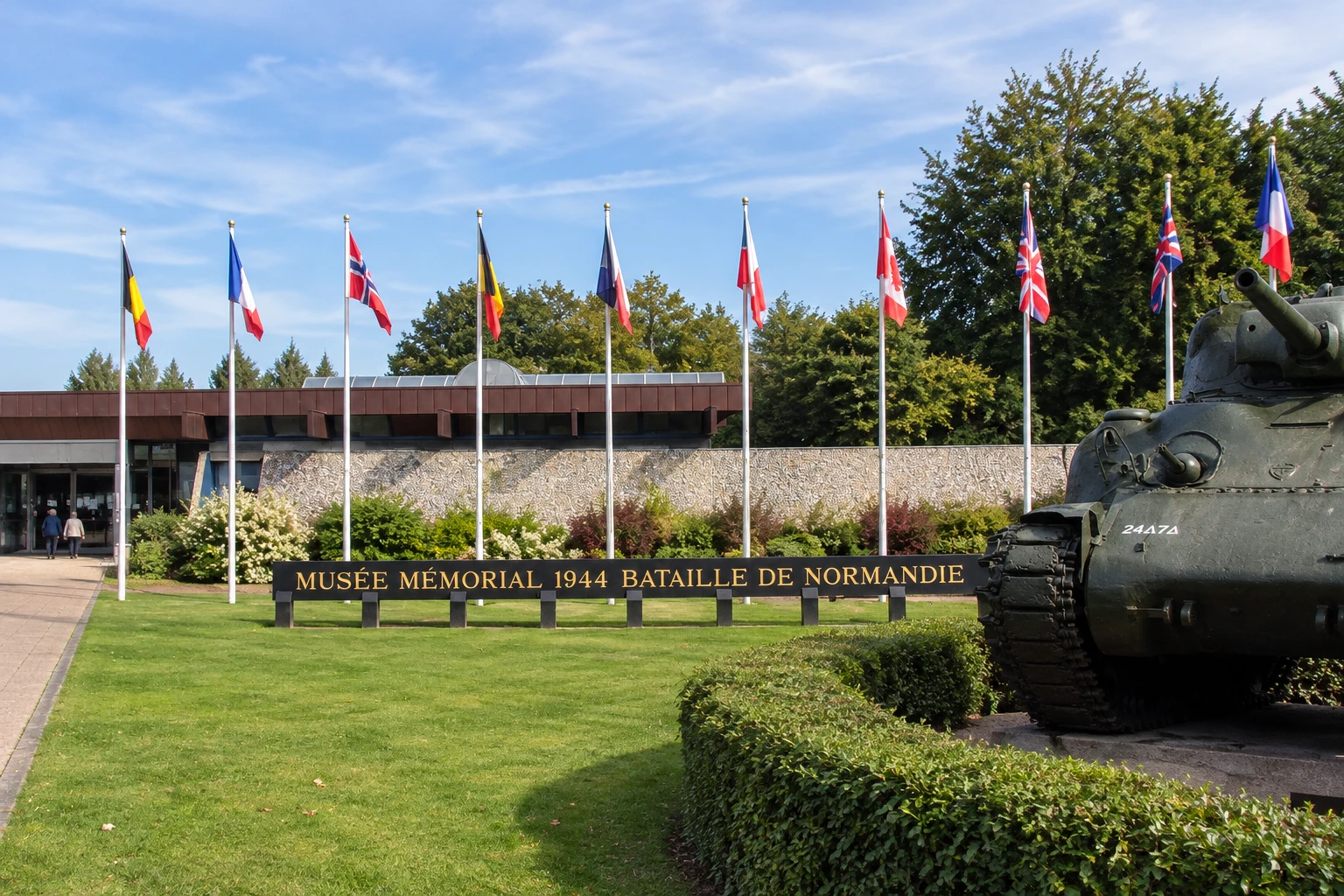
A medieval town that escaped the 1944 bombings, Bayeux has a Romanesque and Gothic cathedral and the Musée Mémorial de la Bataille de Normandie, and is the most practical base for the D-Day beaches: Omaha Beach, the American Cemetery at Colleville-sur-Mer, Pointe du Hoc, the Musée du Débarquement in Arromanches, the Centre Juno Beach and the Mémorial de Caen.
There's no accommodation in the guide yet in Bayeux.
Do you run a hotel, guesthouse or vacation rental here? List itThere are no restaurants in the guide yet in Bayeux.
Know a good one? Recommend it to usThe city's hotels and restaurants on the map.
how to get there · how many days · itinerary · questions
The local experience
Romanesque and Gothic cathedral consecrated in 1077 in the presence of William the Conqueror. For centuries it housed the Tapeçaria de Bayeux.
Bayeux's municipal museum about the Battle of Normandia, from June to August 1944, with vehicles, uniforms and an archival film. It is opposite the British military cemetery.
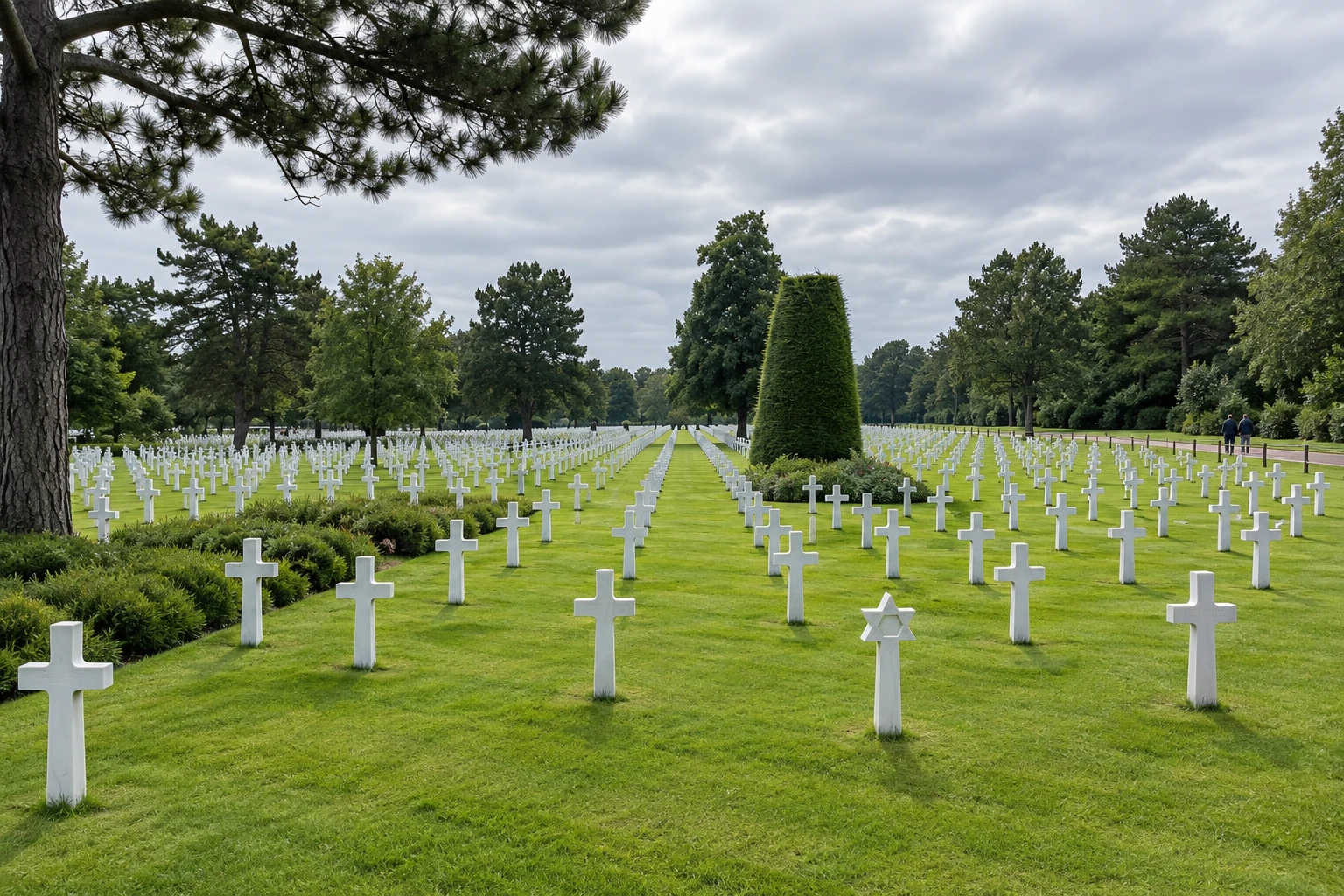
American military cemetery above Omaha Beach, in Colleville-sur-Mer, with about 9,400 graves of soldiers killed on D-Day and in subsequent operations. Entry is free.
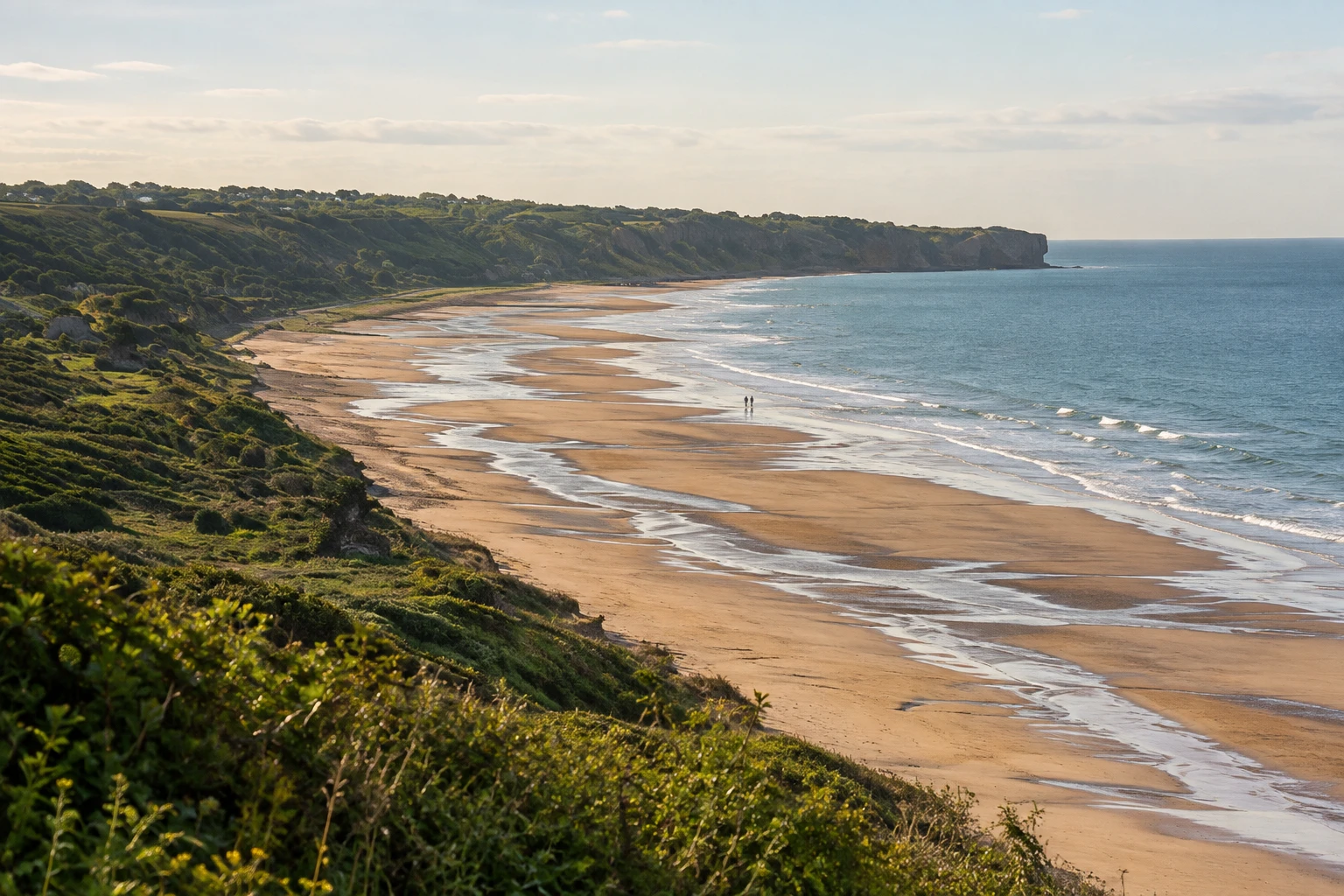
One of the five landing beaches of 6 June 1944, between Vierville-sur-Mer and Colleville-sur-Mer, where American troops suffered the heaviest losses on D-Day.
Before you go
Bayeux – France Destination Normandy and Mont-Saint-Michel about 160 km from Rouen
Approximate distances. Check flights and bus, train or boat schedules before you travel.
By train, from Paris-Saint-Lazare to Gare de Bayeux in about two hours, sometimes with a change at Caen. The station is roughly a 15-minute walk from the centre. By car, Bayeux is about 160 km from Rouen and 30 km from Caen.
Half a day is enough for the cathedral and the town centre. For the D-Day beaches, allow a full day for the American sector (Omaha, the cemetery, Pointe du Hoc) and another for Arromanches, Juno and the Mémorial de Caen.
From April to October, when museums have extended opening hours and the days are long. Around June 6 there are ceremonies for the anniversary of D-Day, with many visitors and accommodation in high demand. In the European winter some museums close or reduce their hours.
The seasons shown are the most usual ones; nature doesn't always follow the calendar.
For Bayeux town center, no. For the D-Day beaches, a car makes a big difference: the sites are spread over about 80 km of coast and the regional bus is infrequent. The alternative without a car is guided tours departing from Bayeux and Caen.
Suggested itinerary
Built with the places on this page. No rush: it's paced so you have time to see them.
Start with the Cathedral of Notre-Dame de Bayeux and the Romanesque crypt. Walk along rue Saint-Martin and the banks of the river Aure.
Visit the Musée Mémorial de la Bataille de Normandie and cross the road to the British military cemetery.
Head to Arromanches-les-Bains, about 10 km away, and see from the viewpoint the remains of the Mulberry harbour in the sea.
Return to Bayeux for dinner. Order a dish with cream from Normandia and, to accompany it, cider or pommeau.
Day 1
Visit the cathedral and the Musée Mémorial de la Bataille de Normandie to understand the sequence of the fighting.
After lunch, go to the Musée du Débarquement de Arromanches and continue to the Centre Juno Beach in Courseulles-sur-Mer.
Walk along the beach at Courseulles and see the bunkers of Parque Juno, if there is a guided tour.
Have dinner in the historic center, which is quiet at night.
Day 2
Set out early for the Pointe du Hoc, about 30 km away, and walk among the craters and casemates.
Continue down to Vierville-sur-Mer and Saint-Laurent-sur-Mer to set foot on Omaha Beach and see the sculpture Les Braves.
Visit the Cemitério Americano de Colleville-sur-Mer and the visitor center. Stay for the flag ceremony, one hour before closing.
Return to Bayeux for dinner. Those with an extra day can reserve a morning for the Mémorial de Caen.
Check before you go. Opening hours and days change, and places may close for renovations, holidays or events. This itinerary is a suggestion from Cidade Turismo, not a commitment: plan yours by checking directly with each place you intend to visit.
Before you go
The most practical way is a guided tour departing from Bayeux or Caen. There are regional buses along the coast, but with few schedules; check in advance.
Bayeux is smaller, has a medieval center and is closer to Omaha and Pointe du Hoc. Caen is larger, with more trains and accommodation, and is closer to Juno and Sword.
Two days allow you to see the American side (Omaha, cemetery, Pointe du Hoc) and the British and Canadian side (Arromanches, Juno, Mémorial de Caen).
It is June 6, 1944, when the Allies landed on five beaches in Normandia, beginning the liberation of Western Europe in World War II.