

 Brazil
 Antarctica
 Argentina
 Bolivia
 Chile
 Colombia
 Ecuador
 Falkland Islands (Malvinas)
 French Guiana
 Guyana
 Paraguay
 Peru
 Suriname
 Uruguay
 Venezuela
 Albania
 Austria
 Belgium
 Croatia
 Denmark
 Finland
 Germany
 Greece
 Hungary
 Iceland
 Ireland
 Italy
 Luxembourg
 Norway
 Poland
 Portugal
 Slovakia
 Slovenia
 Spain
 Sweden
 Switzerland
 the Czech Republic
 the Netherlands
 the United Kingdom
 Turkey
 Bermuda
 Canada
 Greenland
 Mexico
 Saint Pierre and Miquelon
 the United States
 the Dominican Republic
 Japan
 Egypt
 South Africa
 Australia
 Fiji
 New Zealand
 Papua New Guinea
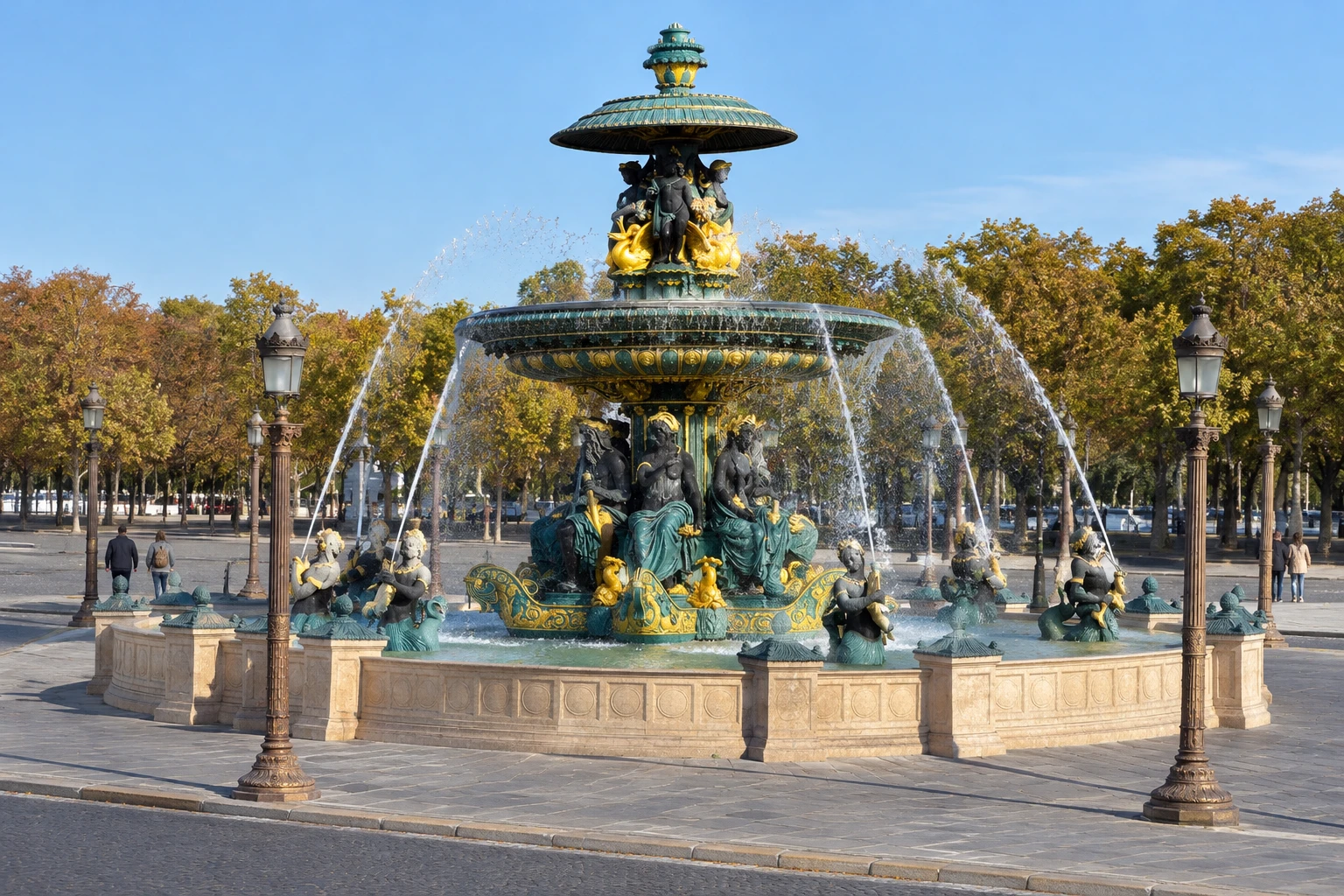
Square · Paris, France
Place de la Concorde
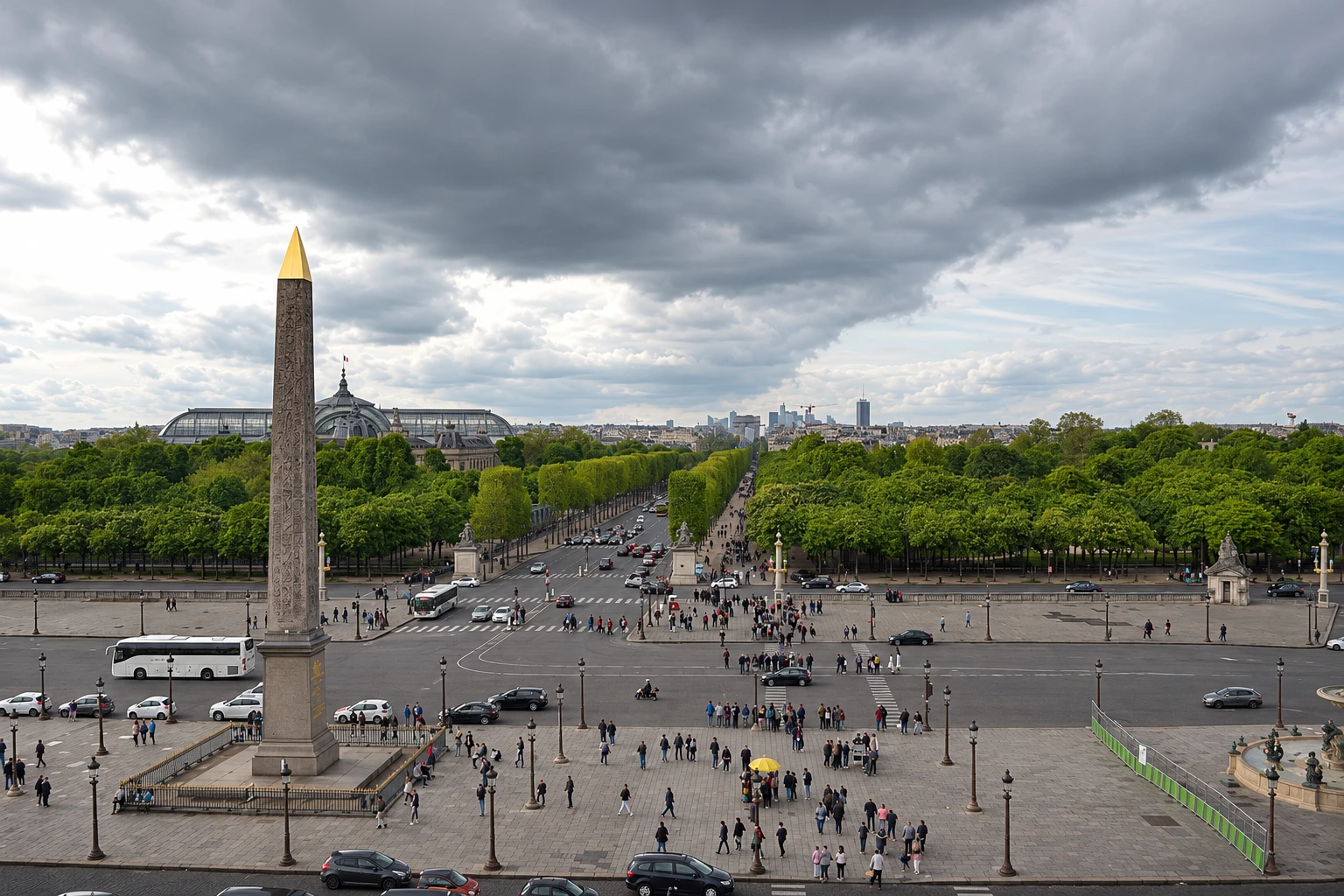
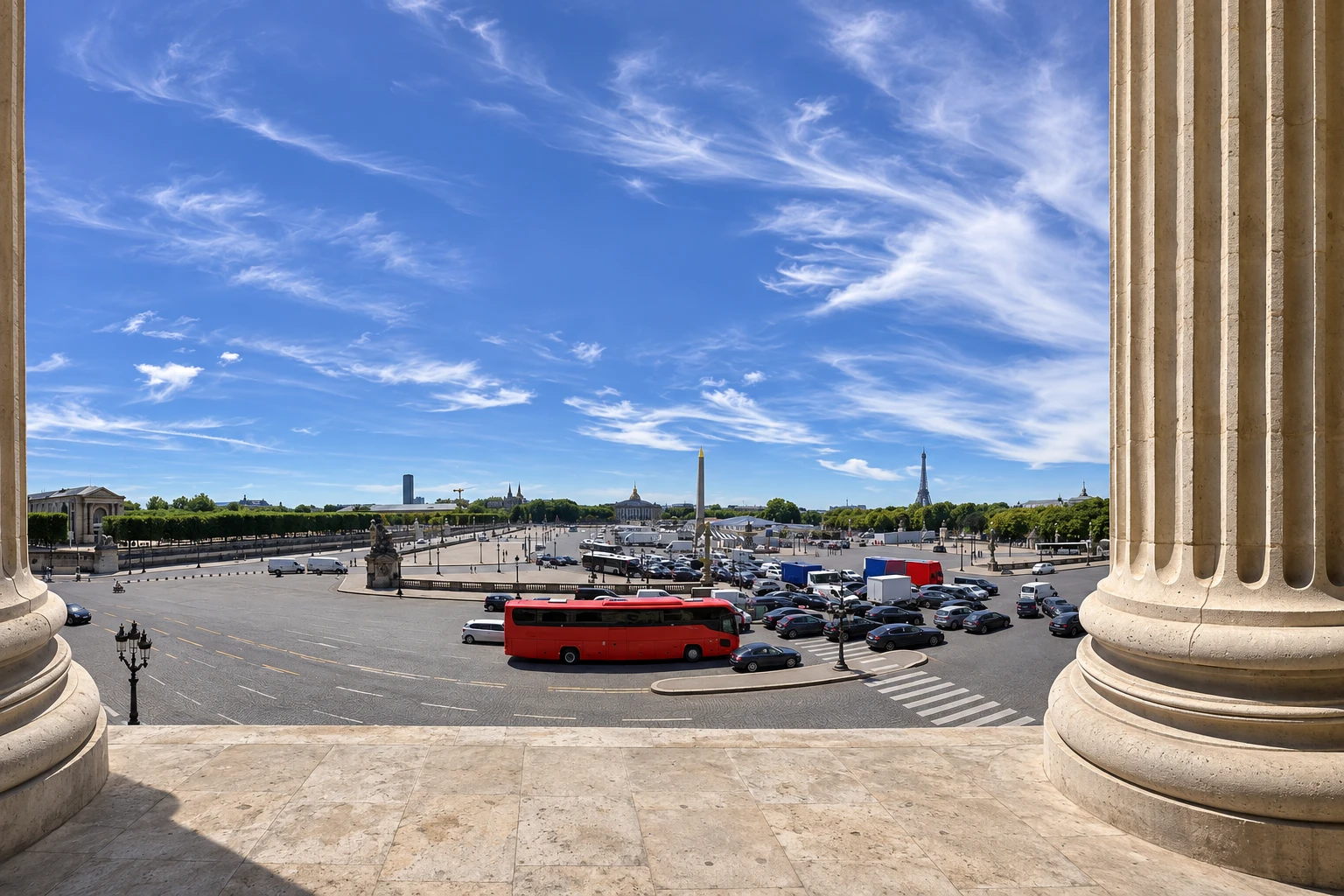
The largest plaza in Paris, between the Jardin des Tuileries and the Champs-Élysées. In the center stands the obelisk of Luxor, about 3,300 years old; it was there that Louis XVI was guillotined in 1793.
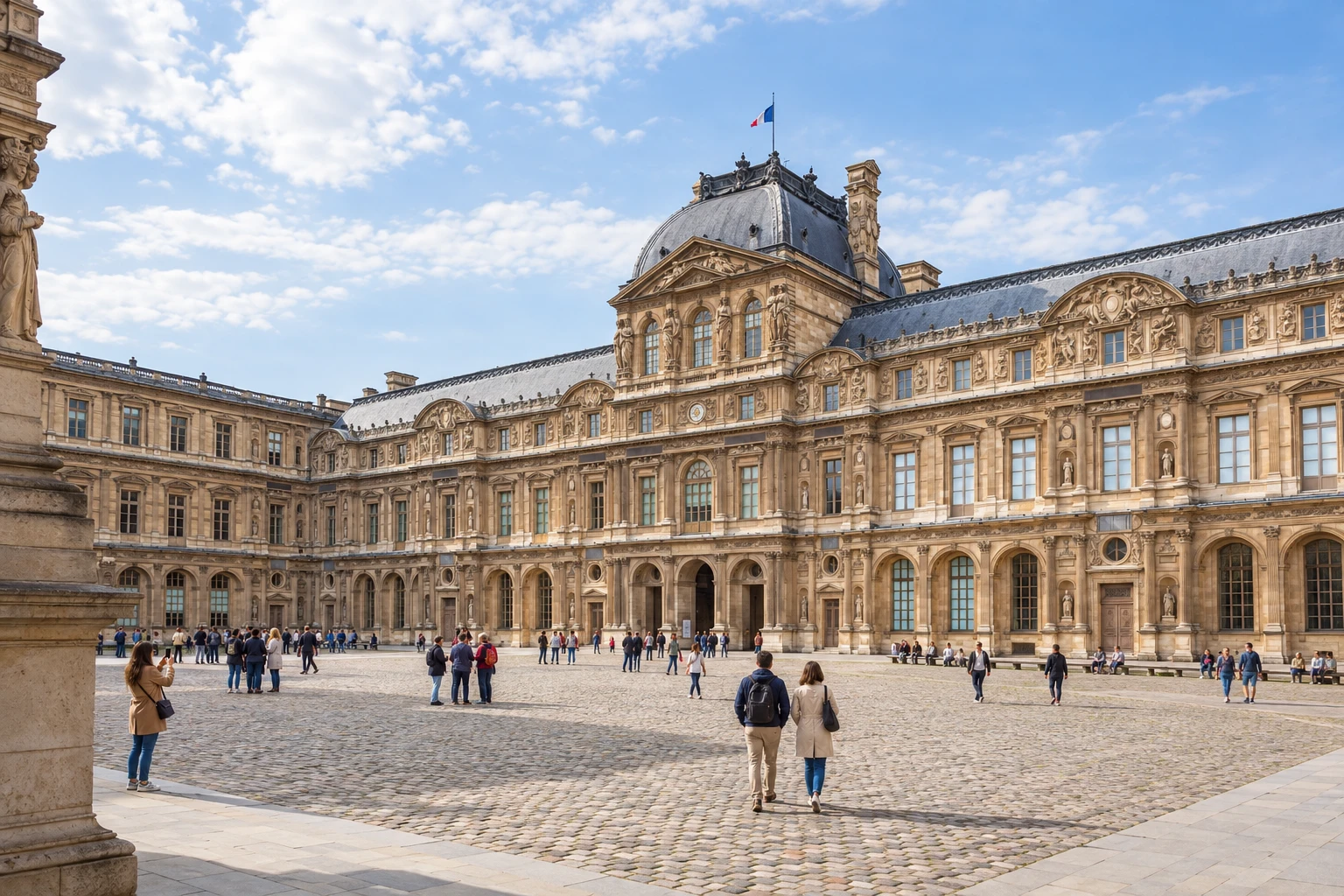
Illustrative images. The pictures in this guide are illustrations based on the real place, not photographs, and may differ from it.

A look at the place
Place de la Concorde in pictures
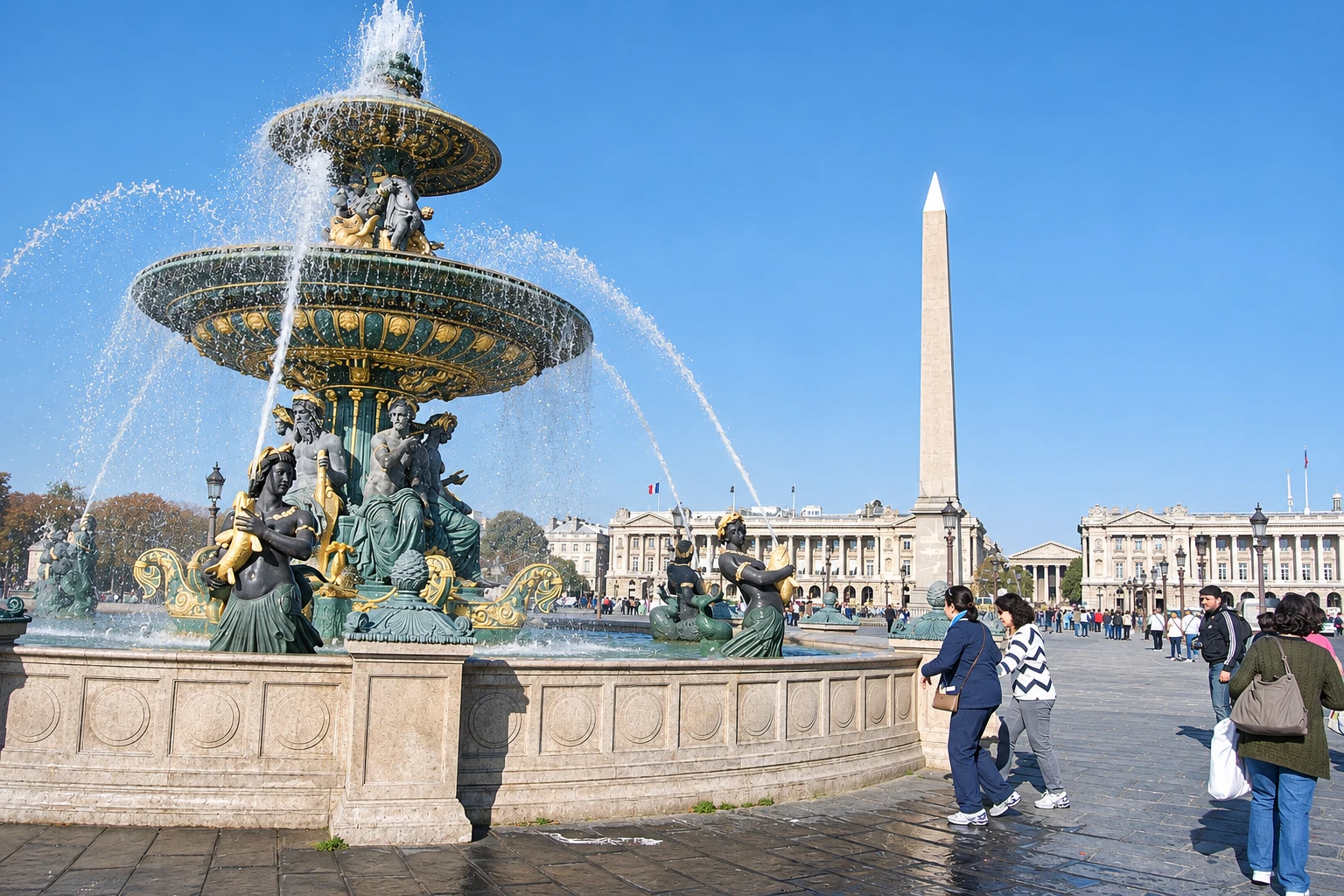
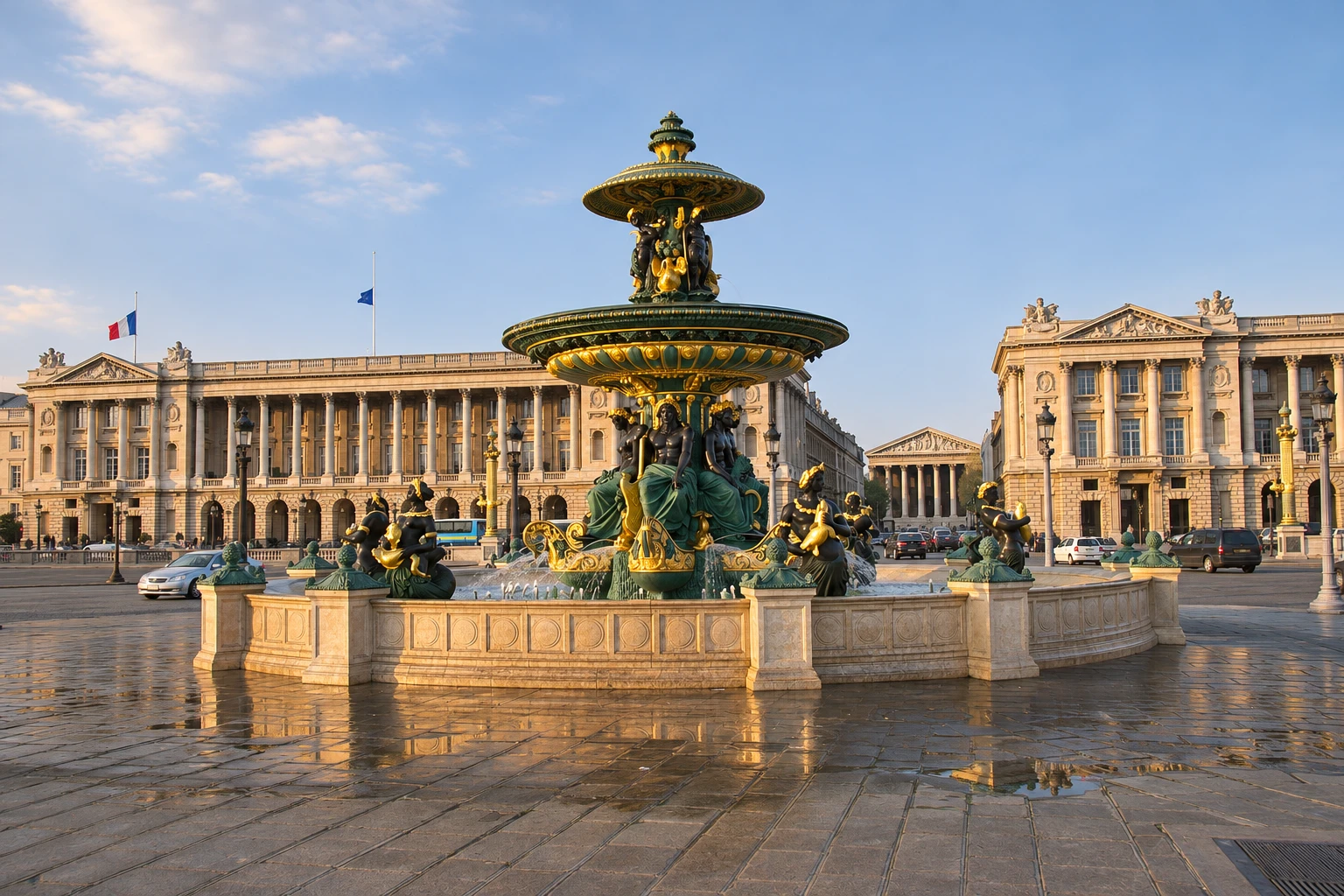
These pictures are illustrations based on the real place, not photographs. They may differ from the place.
Click the picture to enlarge it.
Discover
About Place de la Concorde
The Place de la Concorde was planned by the architect Ange-Jacques Gabriel and completed in 1772, originally named Place Louis XV. At about 7.6 hectares, it is the largest square in Paris. During the Revolution it became the Place de la Révolution, and it was there that Louis XVI was guillotined on 21 January 1793, followed by Marie Antoinette and hundreds of others.
In the center is the obelisk of Luxor, of pink granite, about 3,300 years old and some 23 meters tall including its base. It came from the temple of Luxor in Egypt, offered to France by the viceroy Mehmet Ali; it arrived in Paris in 1833 and was erected in 1836. The hieroglyphs recount the reign of the pharaoh Ramses II.
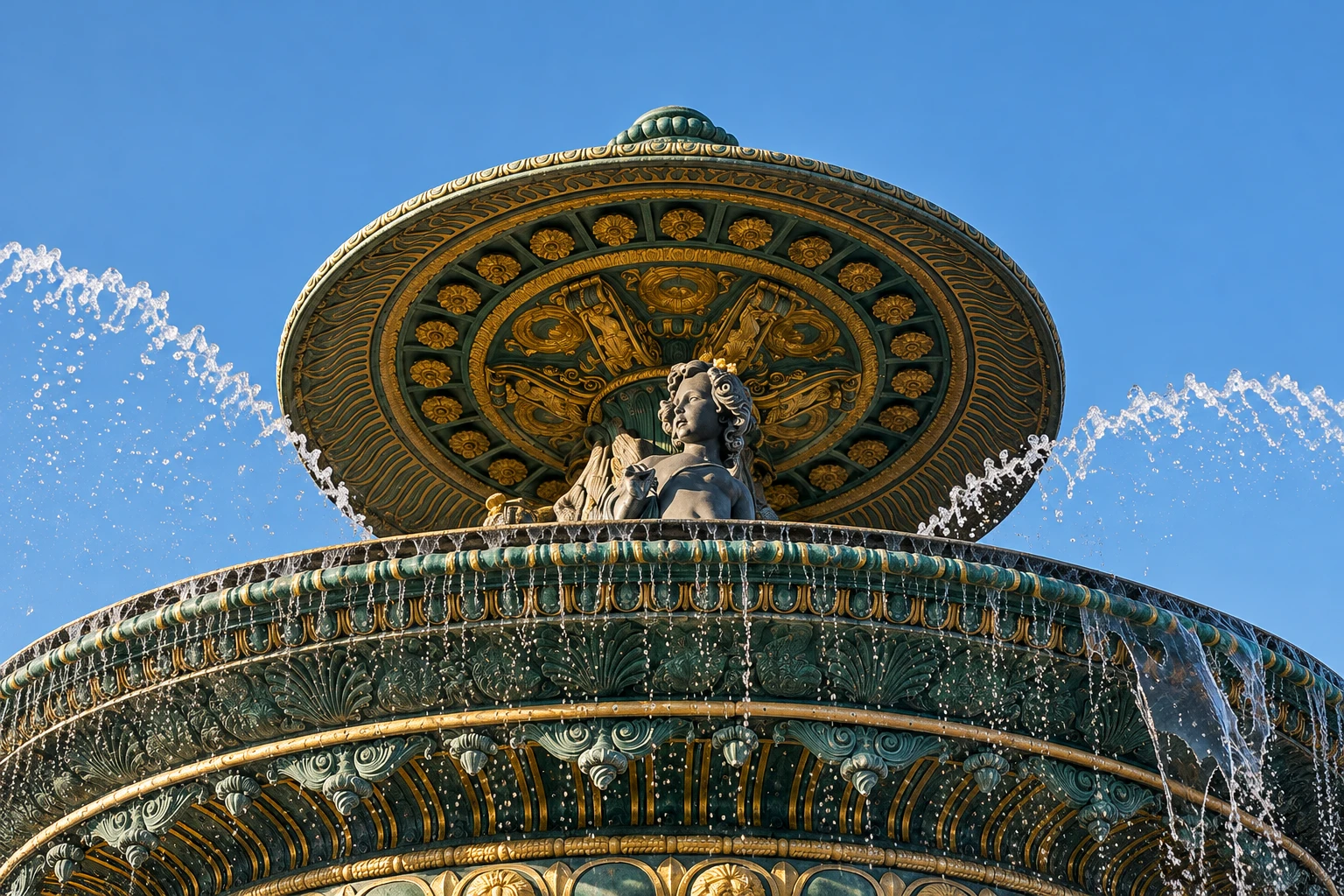
On either side of the obelisk are the Fountains of the Seas and the Rivers, dating from 1840. On the north side are two twin palaces designed by Gabriel; on the east side is the Hôtel de la Marine, which was the headquarters of the Navy and is now open to visitors.
From the middle of the square you can see four Paris landmarks: the Arc de Triomphe at the end of the Champs-Élysées, the Louvre behind the Tuileries, the church of the Madeleine to the north and the National Assembly on the other side of the Seine.
Before you go
Practical information
Cidade Turismo reviews its information regularly, but something may have changed. Check with the place before planning your trip.
How much time to set aside
20 to 30 minutes for the square. The Hôtel de la Marine requires about 1 additional hour.
Best time
In the late afternoon and at night, when the fountains and the obelisk are illuminated and the view reaches the Arc de Triomphe. Traffic around the square is heavy throughout the day.
How to get there
Concorde metro (lines 1, 8 and 12), right at the square. On foot, it is at the west exit of the Jardin des Tuileries and at the end of the Champs-Élysées.
Tip
Cross only at the pedestrian crossings and with the green light: traffic around the square moves fast. The square links well into a walk that begins at the Louvre, passes the Tuileries and climbs the Champs-Élysées up to the arch.
Your questions
Frequently asked questions about Place de la Concorde
What is the obelisk on the Place de la Concorde?
It is the Luxor Obelisk, made of granite, about 3,300 years old, brought from Egypt in the 19th century and erected in the square in 1836. The hieroglyphs refer to the pharaoh Ramses II.
Where were Marie Antoinette and Louis XVI executed?
At the Place de la Concorde, then called the Place de la Révolution. Louis XVI was guillotined in January 1793 and Marie Antoinette in October of the same year.
Can you visit the Hôtel de la Marine?
Yes. The palace on the north side of the square, the former headquarters of the Navy, has 18th-century salons open to visitors, with an admission ticket. Check the opening times before you go.
How to combine the Concorde with other sightseeing?
It lies between the Jardin des Tuileries and the Champs-Élysées. A common walking route goes from the Louvre to the Tuileries, crosses the Concorde and ascends the avenue to the Arc de Triomphe.