Paris · France · Monument
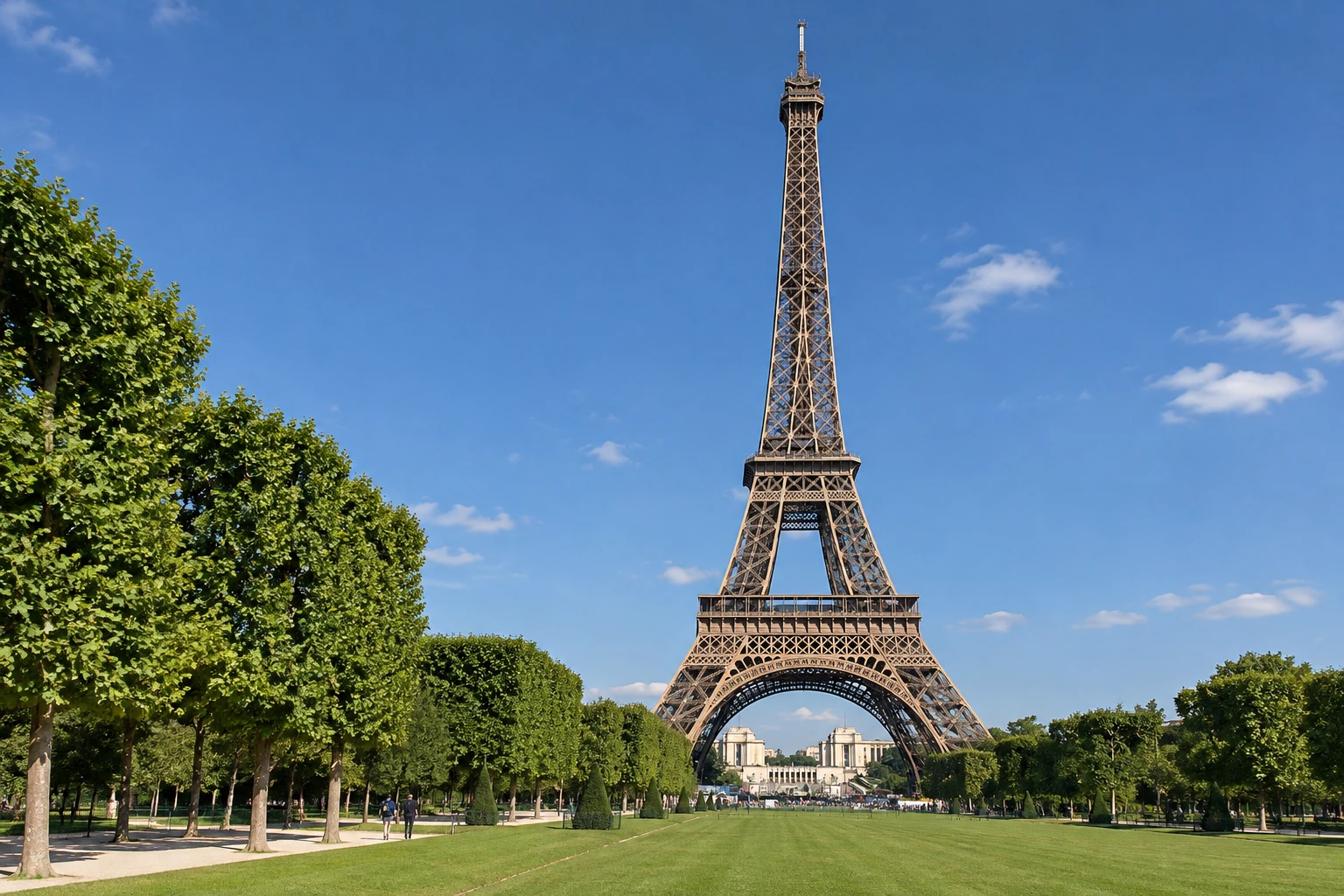
Eiffel Tower
The 330-metre iron tower built for the 1889 Exposition Universelle, on the banks of the Seine in the Champ-de-Mars. Elevators and stairs take you to the levels and to the top, at 276 metres.

 Search
 Brazil
 Antarctica
 Argentina
 Bolivia
 Chile
 Colombia
 Ecuador
 Falkland Islands (Malvinas)
 French Guiana
 Guyana
 Paraguay
 Peru
 Suriname
 Uruguay
 Venezuela
 Austria
 Belgium
 Croatia
 Denmark
 FinlandFrance
 Germany
 Greece
 Hungary
 Iceland
 Ireland
 Italy
 Luxembourg
 Norway
 Poland
 Portugal
 Slovakia
 Slovenia
 Spain
 Sweden
 Switzerland
 the Czech Republic
 the Netherlands
 the United Kingdom
 Turkey
 Bermuda
 Canada
 Greenland
 Mexico
 Saint Pierre and Miquelon
 the United States
 the Dominican Republic
 JapanTurkey
 Egypt
 South Africa
 Australia
 Fiji
 New Zealand
 Papua New Guinea
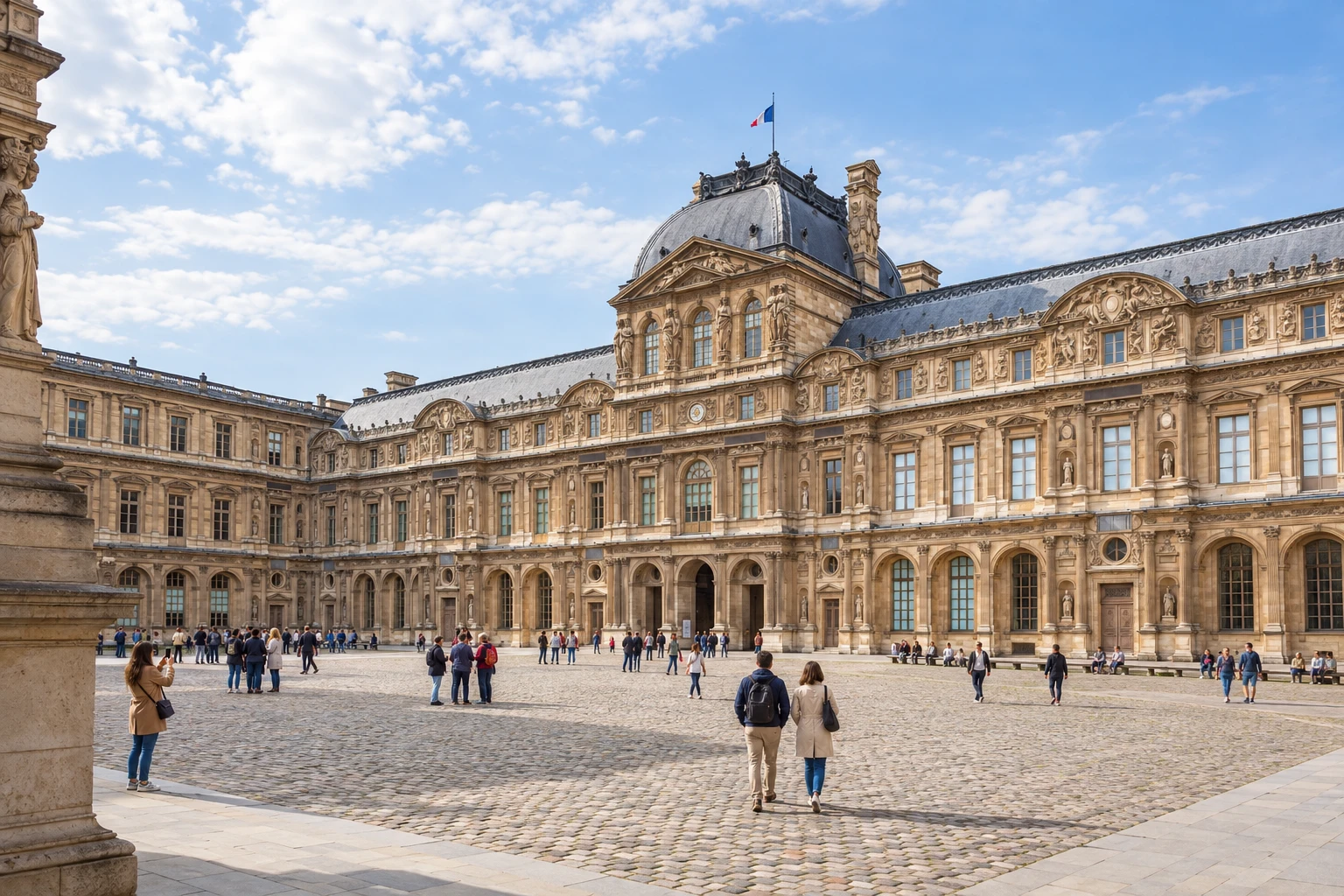
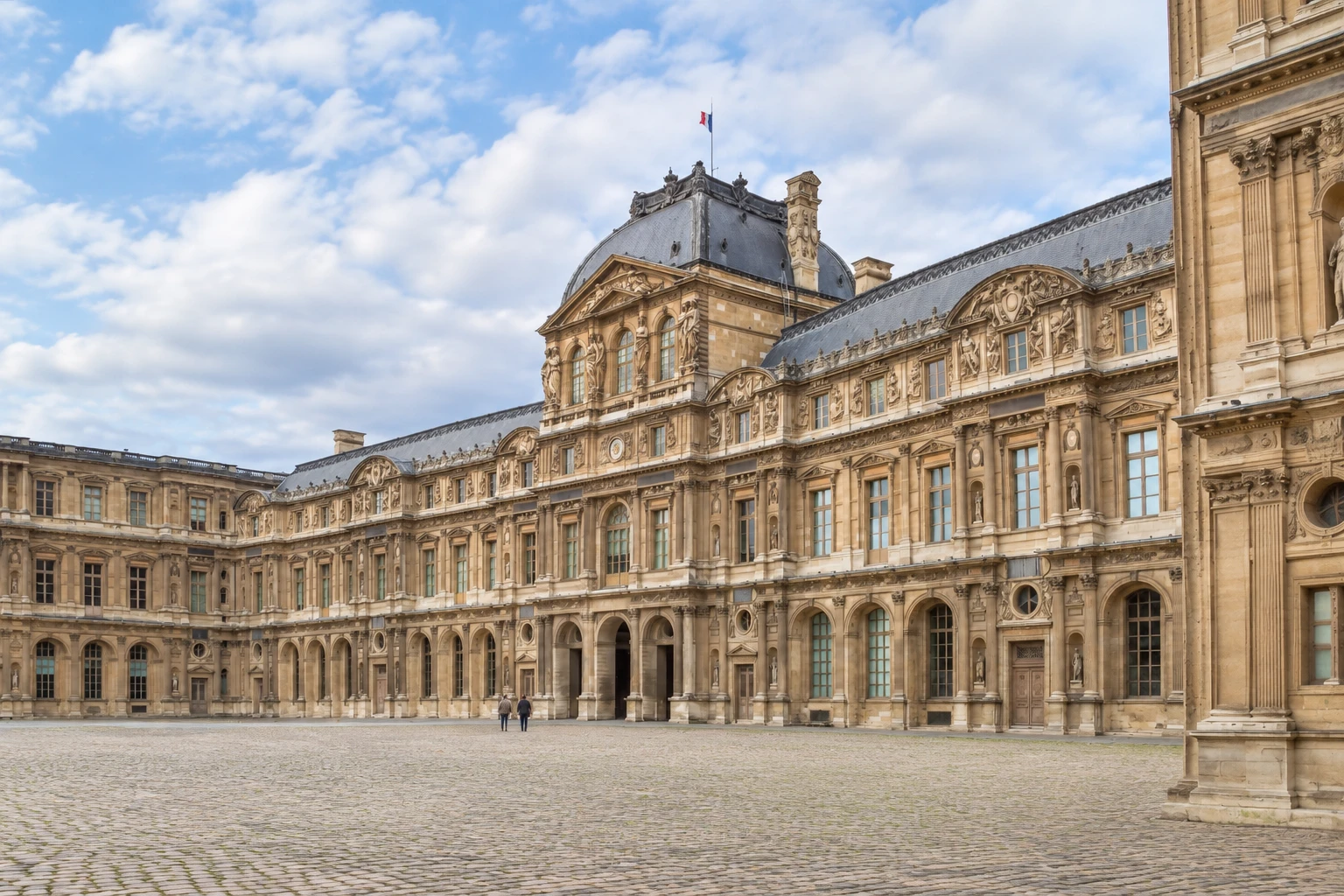
In the photo: Cour Carrée of the Palais du Louvre · Paris
Illustrative images. The pictures in this guide are illustrations based on the real place, not photographs, and may differ from it.

The city
Capital of France, on the banks of the Seine. On the Île de la Cité are Notre-Dame, the Sainte-Chapelle and the Conciergerie; on the right bank, the Louvre, the Tuileries, the Concorde, the Champs-Élysées and the Arc de Triomphe, the Marais and Montmartre; on the left bank, the Tour Eiffel, the Musée d'Orsay, the Invalides, the Quartier Latin and the Jardin du Luxembourg.
There's no accommodation in the guide yet in Paris.
Do you run a hotel, guesthouse or vacation rental here? List itThere are no restaurants in the guide yet in Paris.
Know a good one? Recommend it to usThe city's hotels and restaurants on the map.
how to get there · how many days · itinerary · questions
The local experience
The 330-metre iron tower built for the 1889 Exposition Universelle, on the banks of the Seine in the Champ-de-Mars. Elevators and stairs take you to the levels and to the top, at 276 metres.
Former palace of the kings of France, converted into a museum in 1793. It houses the Mona Lisa, the Venus de Milo and the Winged Victory of Samothrace, among tens of thousands of works on display. The main entrance is through the glass pyramid.
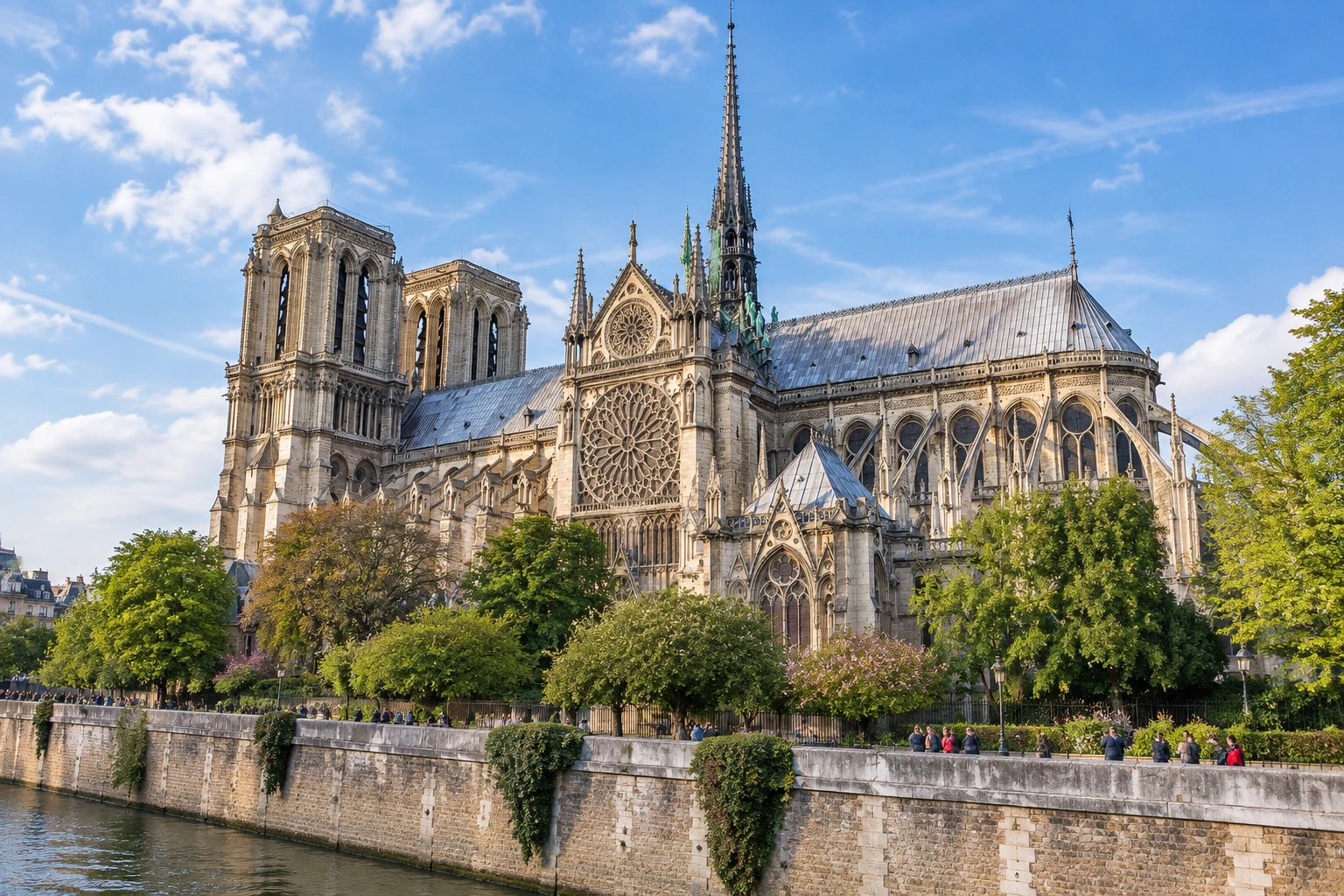
Gothic cathedral begun in 1163 on the Île de la Cité, with three large medieval rose windows. Entrance to the nave is free; the climb to the towers, with 424 steps, requires a reservation.
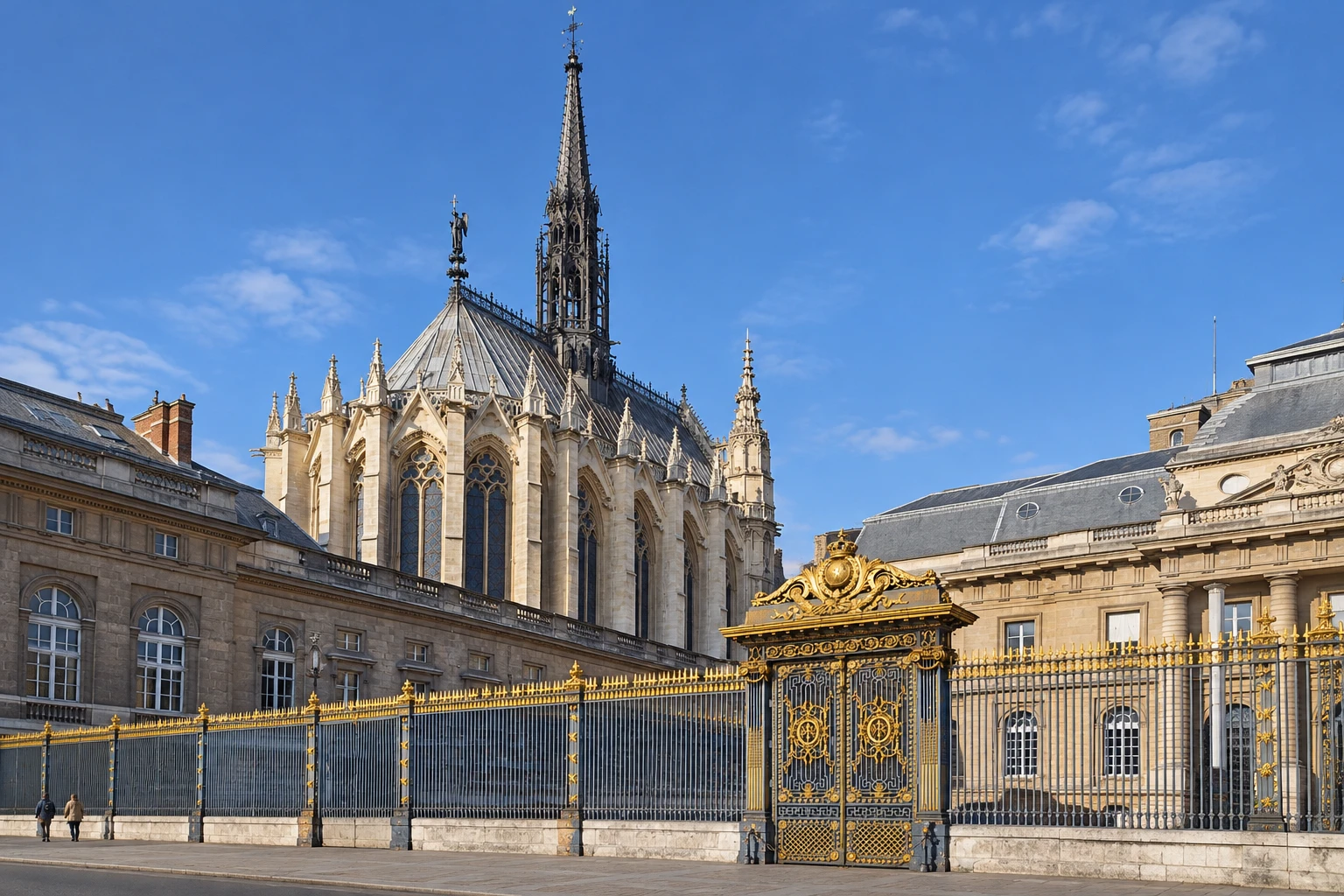
Gothic chapel consecrated in 1248, built by Louis IX to house the Crown of Thorns. The upper chapel has 15 large stained-glass windows with biblical scenes that cover almost all the walls.
Before you go
Paris – France Capital
Approximate distances. Check flights and bus, train or boat schedules before you travel.
International flights arrive at Paris-Charles de Gaulle (CDG), to the north, and Paris-Orly (ORY), to the south. Connections with Brazil may be direct or with a stopover, depending on the season and the airline. Confirm before purchasing. From CDG, the RER B goes to the center; from Orly, metro line 14 and the Orlyval. TGVs from other French cities arrive at the main gares.
Three days for the main highlights: Louvre, Tour Eiffel, Île de la Cité, Champs-Élysées, Marais and Montmartre. With four or five days you can add the Musée d'Orsay, the Invalides, the Quartier Latin, a boat trip on the Sena and a day trip to Versalhes. Museum lovers can stay a week.
From April to June and in September and October the weather is usually mild. July and August are hot and crowded, with daylight until around 22:00. From December to February it is cold, it gets dark in the late afternoon and there are Christmas decorations; museum lines tend to be shorter. The seasons are reversed compared with Brazil.
The seasons shown are the most usual ones; nature doesn't always follow the calendar.
No. The metro has stations near almost everything, the RER goes to the airports, to Versalhes and to Disneyland Paris, and buses complete the network. Driving in the city is slow, parking is difficult and expensive, and there are circulation restrictions for older cars.
Suggested itinerary
Built with the places on this page. No rush: it's paced so you have time to see them.
Start early at Notre-Dame with a reserved entry, and walk to the Sainte-Chapelle, five minutes away, while daylight illuminates the stained-glass windows. If you have time, the Conciergerie is next door.
Cross the Sena to the Louvre with a timed entry, and focus on one wing, such as Denon, with the Mona Lisa and the Winged Victory of Samothrace. Then relax in the chairs of the Jardin des Tuileries and make your way to the Place de la Concorde.
Walk up the Avenue des Champs-Élysées to the Arc de Triomphe, or take the metro on line 1. From the arch's terrace you can see the city lighting up, and in the late afternoon there is the ceremony of the Unknown Soldier's flame.
Go down to the Trocadéro via metro line 6 and see the Tour Eiffel lit up across the Sena. After dark, the lights sparkle at the start of each hour. Dine near the Champ-de-Mars.
Day 1
Spend the morning on the Île de la Cité: Notre-Dame right at opening, the Sainte-Chapelle with its stained glass, and the Conciergerie, where Marie Antoinette was imprisoned. The three are a few minutes' walk from each other.
Have lunch on the right bank and enter the Louvre with a timed ticket. Choose two wings, such as Denon and Sully, to see the Mona Lisa, the Venus de Milo and the Egyptian antiquities.
Cross the Jardin des Tuileries to the Musée de l'Orangerie to see Monet's Water Lilies, if there's still visiting time. Then head to the Place de la Concorde and the obelisk.
Board a sightseeing boat on the Sena, which passes the Tour Eiffel, the Louvre and Notre-Dame lit up. Boats depart from several quays, such as the one at the Tour Eiffel and the Pont de l'Alma; check schedules.
Day 2
Go up the Tour Eiffel at the first time slot with a reserved ticket. Then cross the Pont d'Iéna to the Trocadéro for the classic photo of the tower.
Follow the left bank to the Musée d'Orsay, with the Impressionists, or to the Invalides, with Napoleon's tomb. On the way back, cross the Pont Alexandre III and pass by the Petit Palais.
Take the metro to Anvers or Abbesses, go up to the Sacré-Cœur by the funicular and walk to the Place du Tertre, where painters gather. From the basilica's steps you can see a large part of the city, from the centre to the Tour Montparnasse.
Dine at a bistro on the streets of Montmartre, near Rue Lepic or Place des Abbesses. On the way down, pass by Boulevard de Clichy to see the Moulin Rouge façade lit up.
Day 1
Notre-Dame at opening with a reservation, then the Sainte-Chapelle and the Conciergerie. If you booked the Notre-Dame towers, fit the climb in here: it's 424 steps.
A whole afternoon at the Louvre with a timed entry. Start in the Denon wing and continue to Sully and Richelieu as your energy allows. Exit via the Arc de Triomphe du Carrousel.
Walk through the Jardin des Tuileries to the Place de la Concorde. From the centre of the square you can see the Luxor obelisk, the Champs-Élysées, the Madeleine and the National Assembly.
Take a boat ride on the Sena at night with the monuments illuminated. Confirm the boarding point and schedule before you go.
Day 2
Go up the Tour Eiffel at the first time slot and then cross to the Trocadéro, with the frontal view of the tower and the Palais de Chaillot.
Choose between the Invalides, with Napoleon's tomb, and the Musée d'Orsay, with the Impressionists. Then cross the Pont Alexandre III and enter the Petit Palais, whose permanent collection is free.
Walk up the Champs-Élysées to the Arc de Triomphe. Watch the flame ceremony and go up to the terrace to see the 12 avenues radiating from the Étoile.
If you have a ticket, see a ballet at the Palais Garnier. If not, admire the opera's illuminated façade and dine in the grand boulevards area.
Day 3
Start at the Place des Vosges and visit the Musée Carnavalet, whose permanent collection is free, or the Musée Picasso Paris. Finish on the Rue des Rosiers.
Have lunch in the Marais and cross the Sena via Île Saint-Louis to the Quartier Latin. Pass by the Panthéon and relax in the Jardin du Luxembourg, next to the Palais du Luxembourg.
Take the metro to Abbesses and walk up through Montmartre to the Sacré-Cœur and the Place du Tertre. The basilica's staircase offers one of the broadest views of Paris.
Go down to the Canal Saint-Martin, near République, and dine at one of the riverside restaurants. In summer, Parisians sit on the quays until late.
Check before you go. Opening hours and days change, and places may close for renovations, holidays or events. This itinerary is a suggestion from Cidade Turismo, not a commitment: plan yours by checking directly with each place you intend to visit.
Before you go
Both work well. Charles de Gaulle, to the north, handles most international flights and has the RER B to the centre. Orly, to the south, is closer to the city and has metro line 14 and the Orlyval.
The same ticket is valid for the metro, the RER within Paris, buses and trams. You can buy it at station machines or load it onto a card or your phone via the official app. For the airports and for Versailles the ticket is different; check fares before you go.
Each museum has its own day: the municipal ones, like the Carnavalet and the Petit Palais, and the Musée Picasso close on Mondays; the Louvre and the Orangerie close on another weekday. Check each museum's website before planning your itinerary.
In summer, from June to August, it gets dark around 10:00 p.m. In winter, from December to February, before 6:00 p.m. That significantly affects late-afternoon plans.
Paris is 4 or 5 hours ahead of Brasília, depending on the time of year.
Cross-border routes
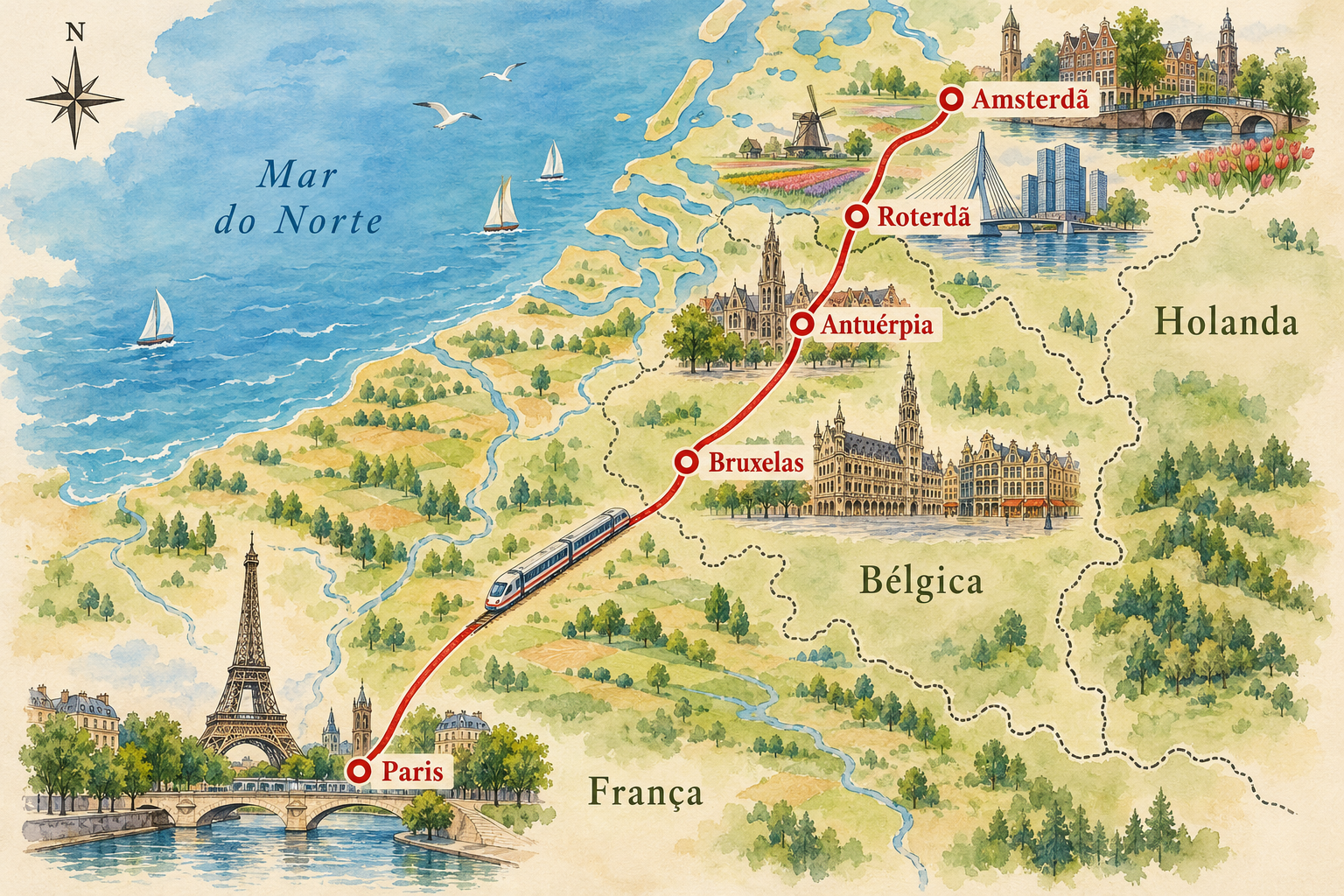
By train through the centers of Paris, Brussels, Antwerp, Rotterdam and Amsterdam: three countries in just over three hours, from central station to central station.
Cross-border routes
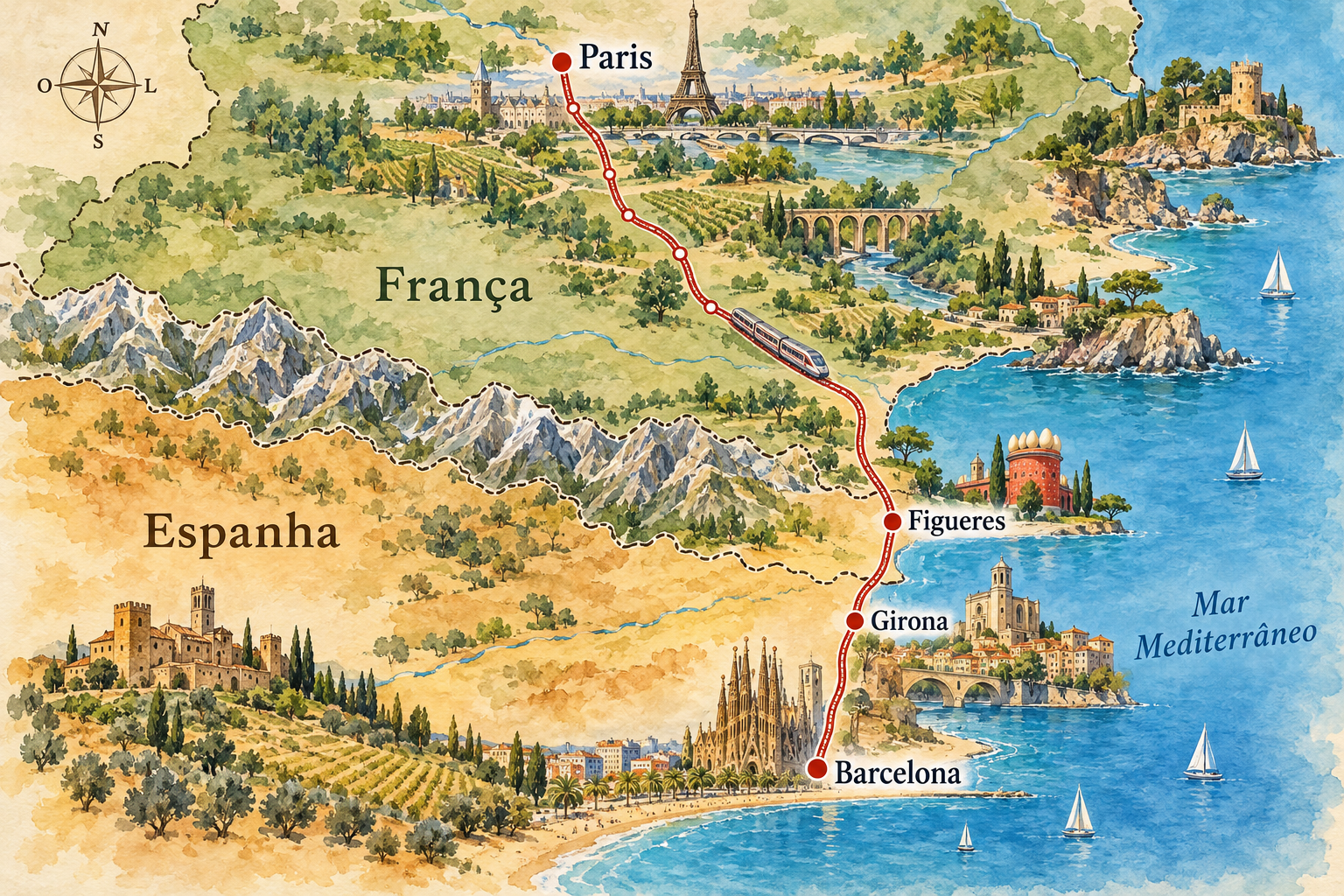
By train from Paris to Barcelona, crossing southern France and the Pyrenees, with stops in Figueres and Girona: from central station to central station in about six and a half hours.
Cross-border routes
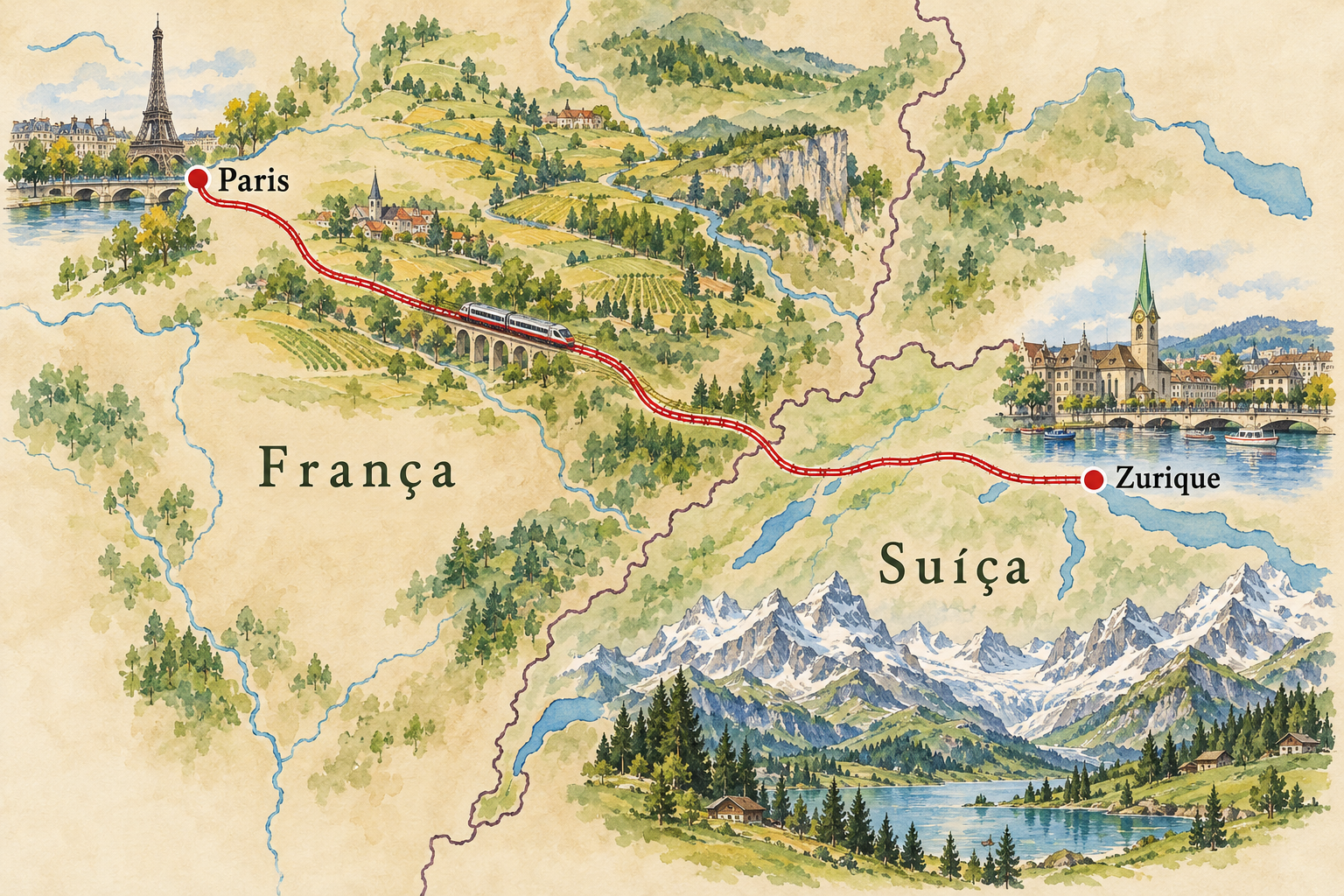
By train from Paris to Zurich in about four hours, without changing: from Gare de Lyon to the center of Switzerland’s largest city, passing through Alsace and Basel.
Cross-border routes
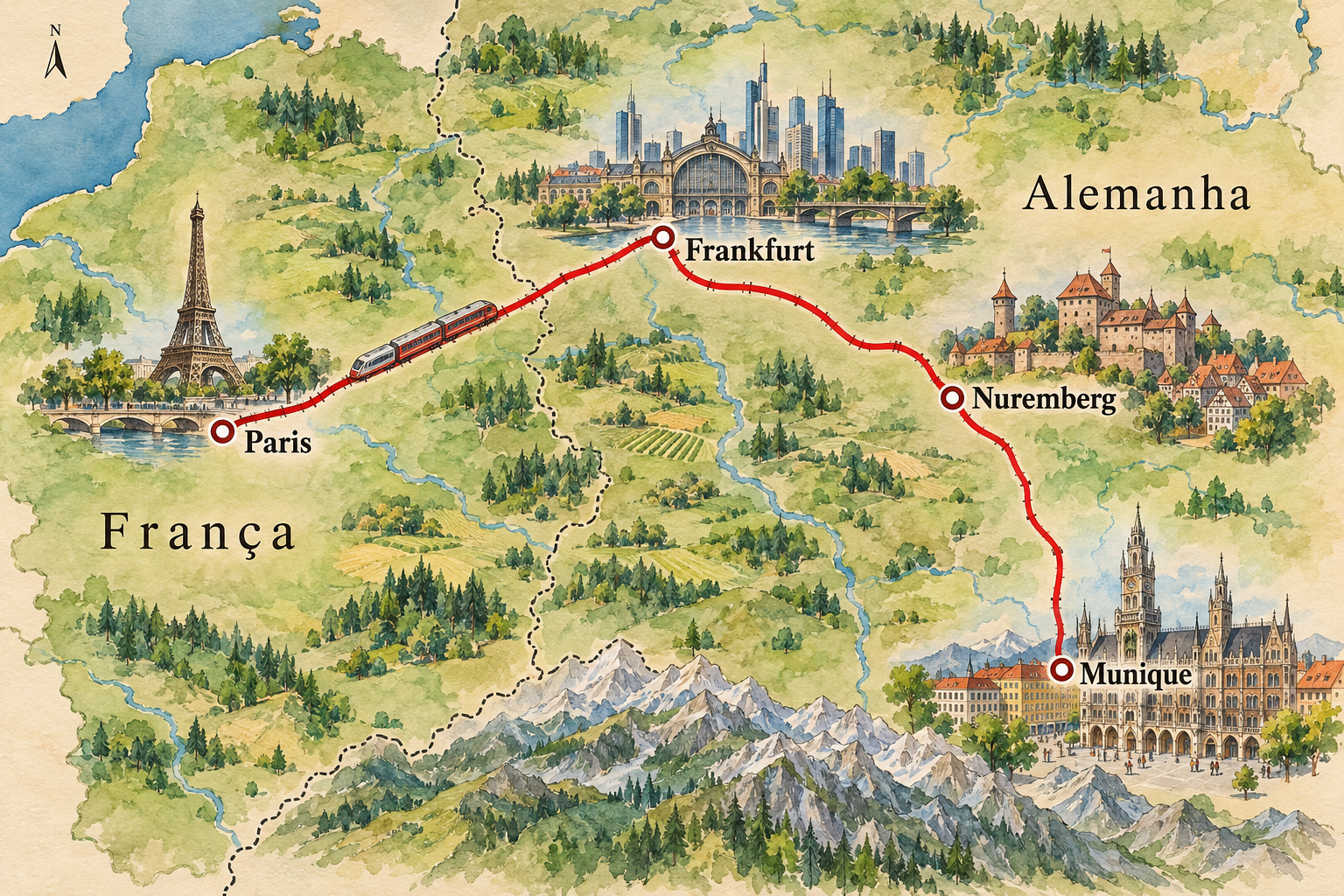
By train from Paris to Munich via Frankfurt and Nuremberg: TGV and ICE connect France with southern Germany from central station to central station.
Cross-border routes
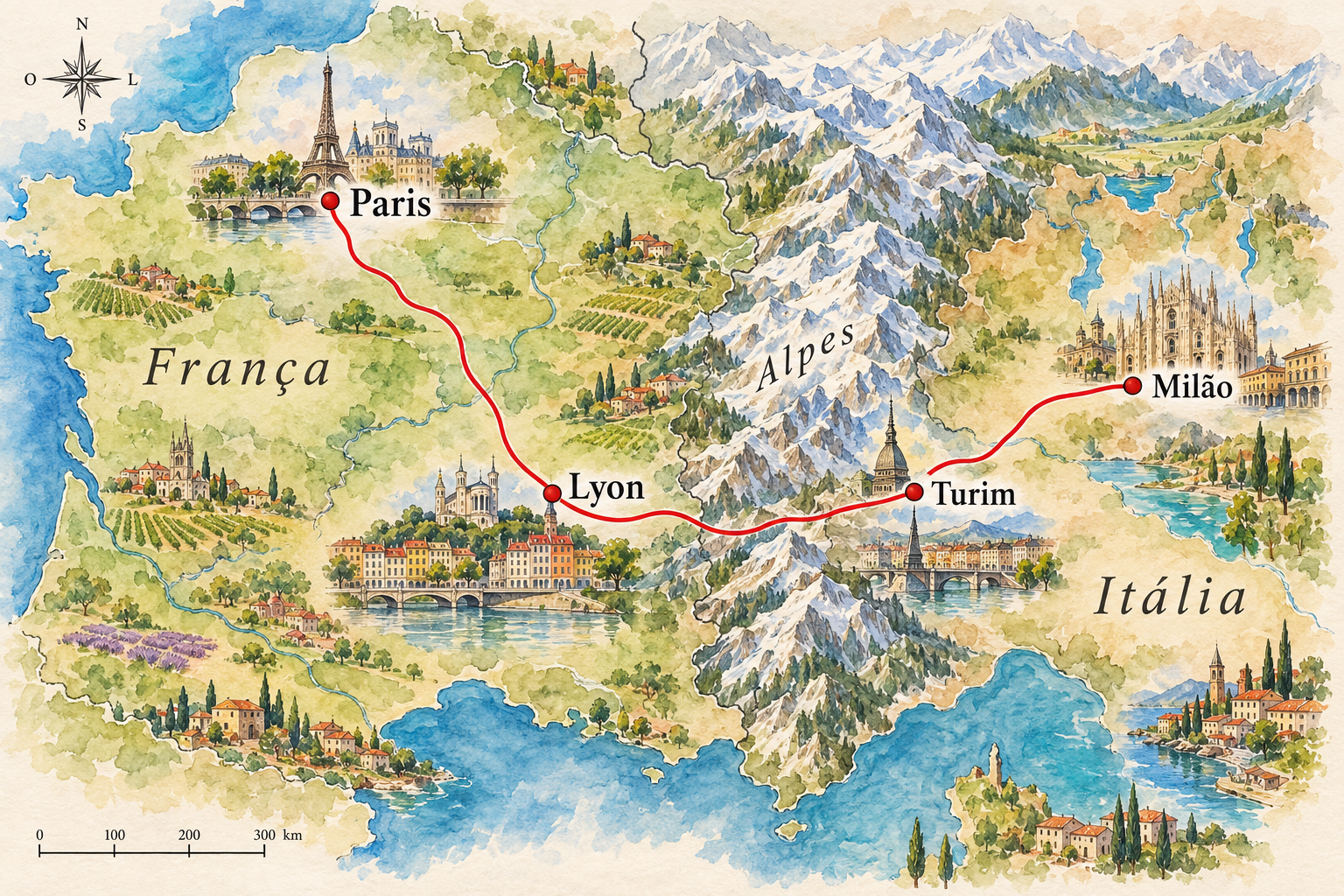
By train from Italy to France through the Alps: Milan, Turin, the Maurienne valley, Lyon and Paris in about seven hours, without changing trains.
Cross-border routes
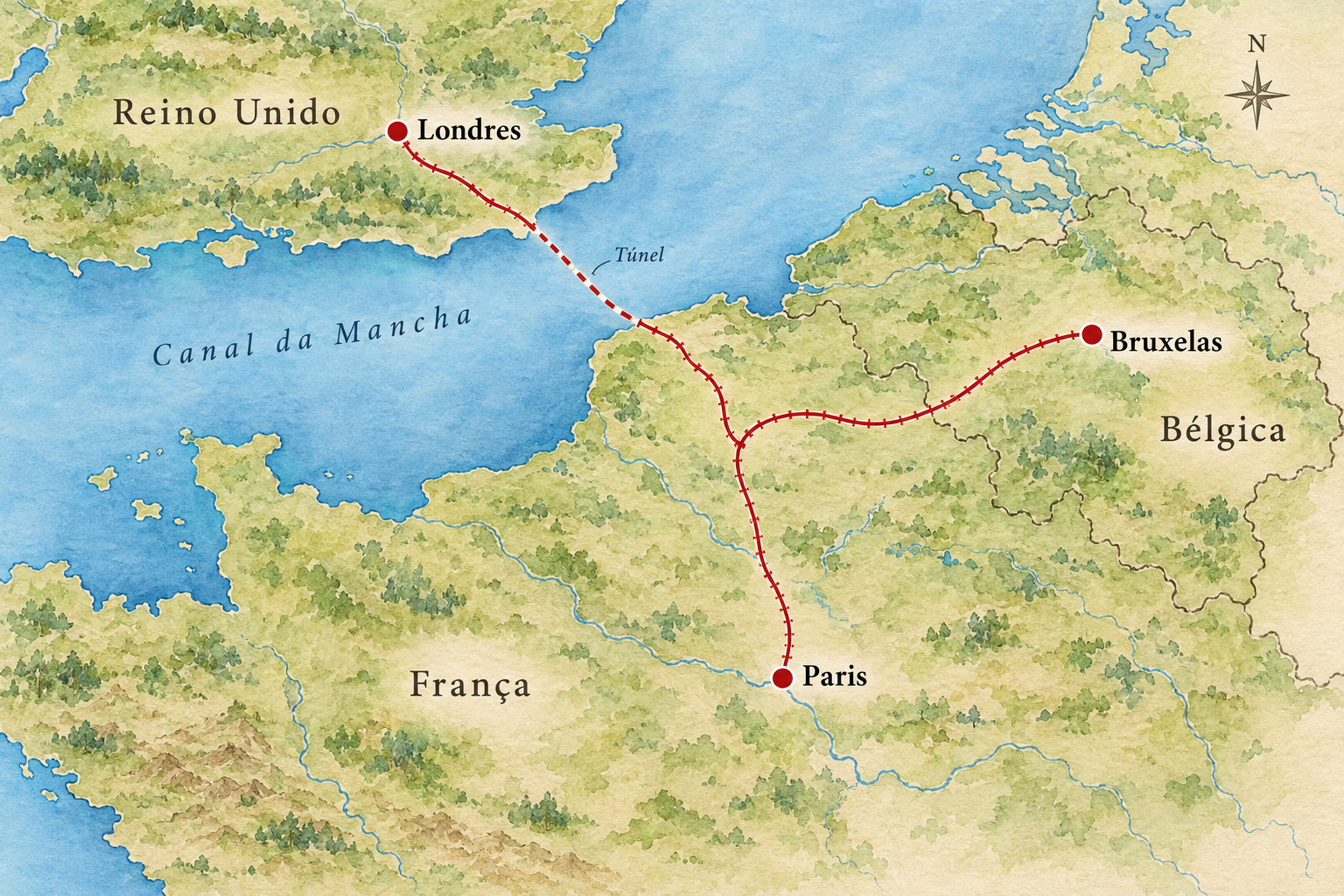
By train under the English Channel: from St Pancras in central London to central Paris or Brussels in a little over two hours.