

 Brazil
 Antarctica
 Argentina
 Bolivia
 Chile
 Colombia
 Ecuador
 Falkland Islands (Malvinas)
 French Guiana
 Guyana
 Paraguay
 Peru
 Suriname
 Uruguay
 Venezuela
 Austria
 Belgium
 Croatia
 Denmark
 Finland
 Germany
 Greece
 Hungary
 Iceland
 Ireland
 Italy
 Luxembourg
 Norway
 Poland
 Portugal
 Slovakia
 Slovenia
 Spain
 Sweden
 Switzerland
 the Czech Republic
 the Netherlands
 the United Kingdom
 Turkey
 Bermuda
 Canada
 Greenland
 Mexico
 Saint Pierre and Miquelon
 the United States
 the Dominican Republic
 Japan
 Egypt
 South Africa
 Australia
 Fiji
 New Zealand
 Papua New Guinea
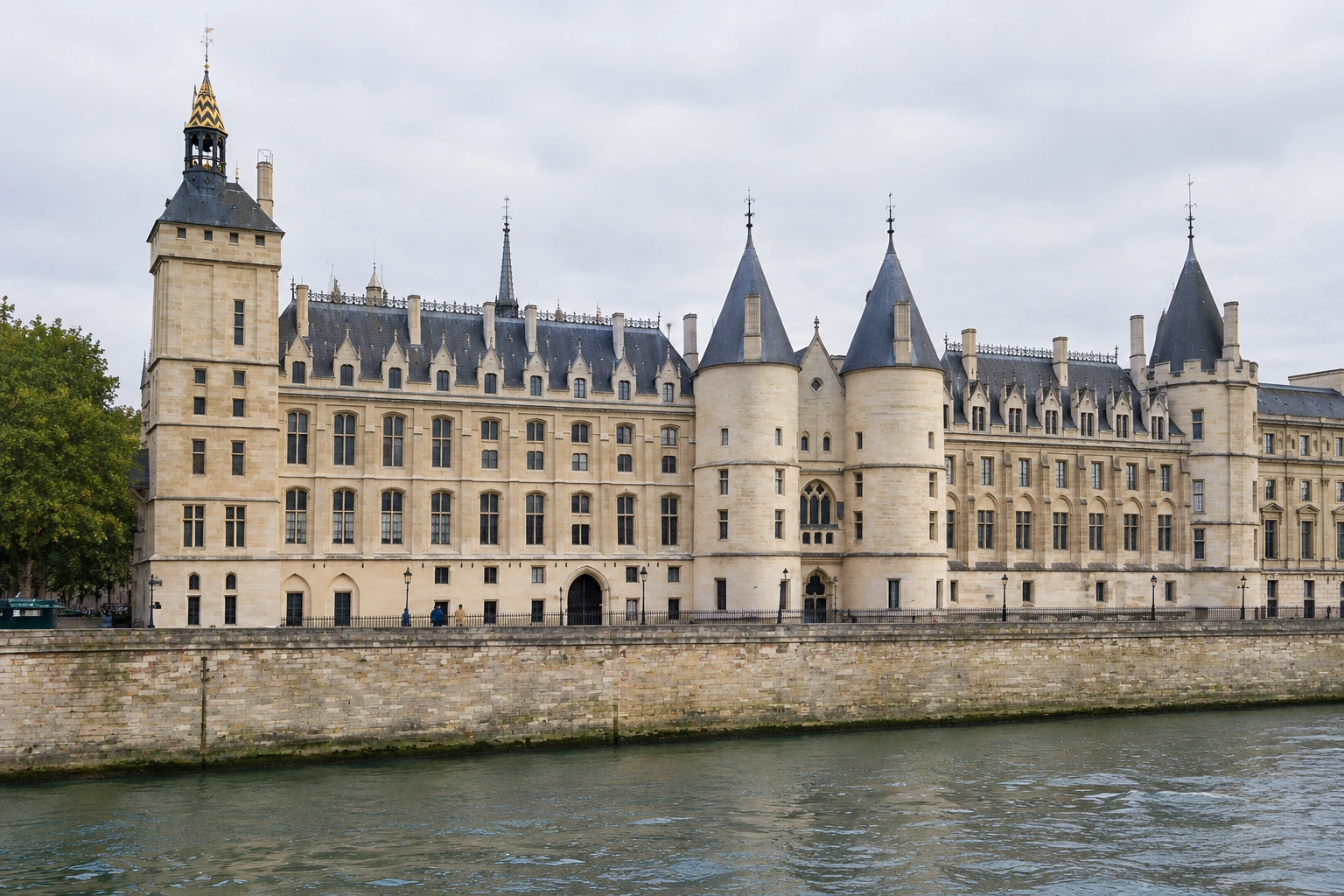
Palace · Paris, France
Conciergerie
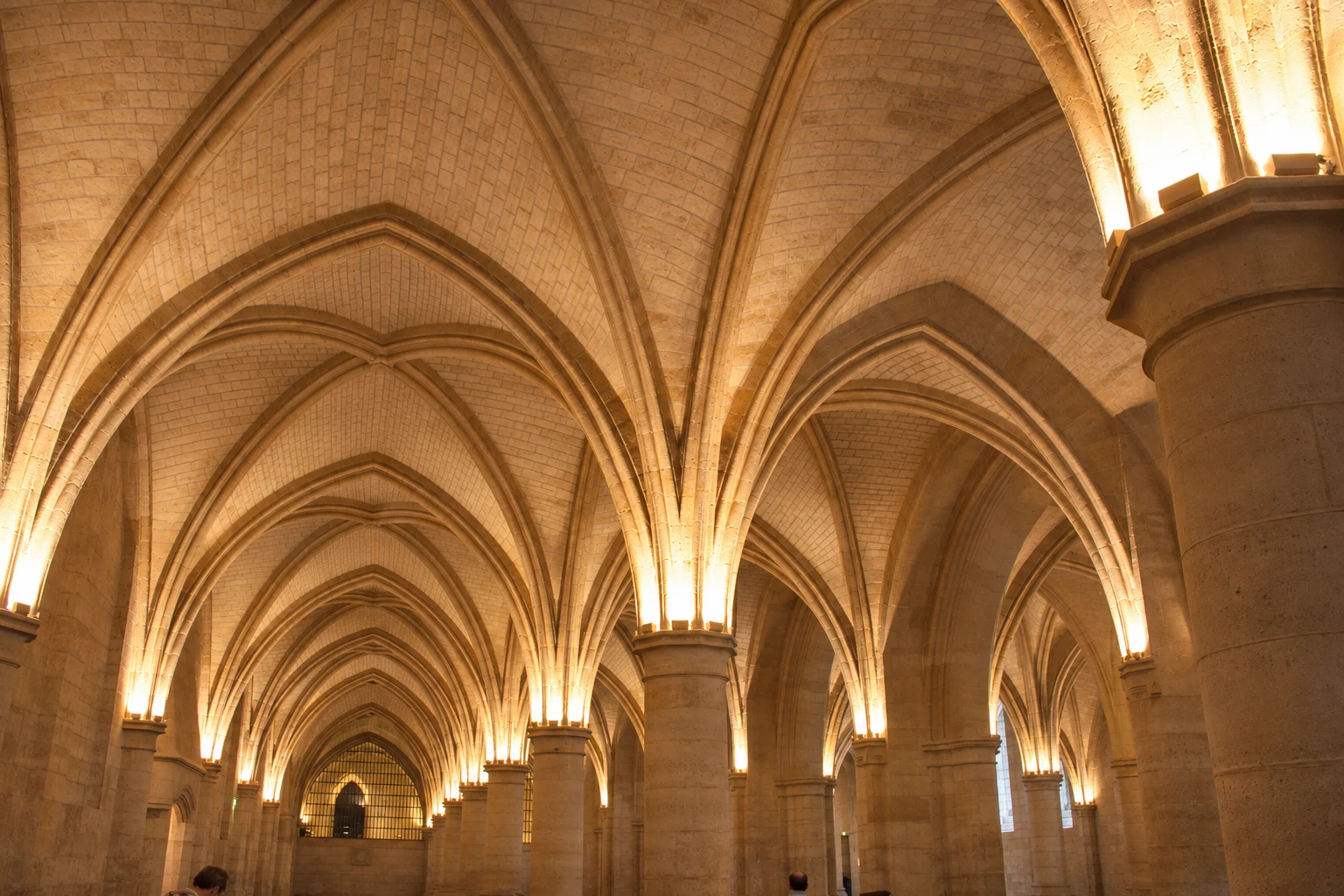
Part of the former royal palace on the Île de la Cité that became a prison during the French Revolution. It features the enormous Salle des Gens d'Armes, a Gothic hall, and a chapel in the place of Marie Antoinette's cell.
Illustrative images. The pictures in this guide are illustrations based on the real place, not photographs, and may differ from it.

A look at the place
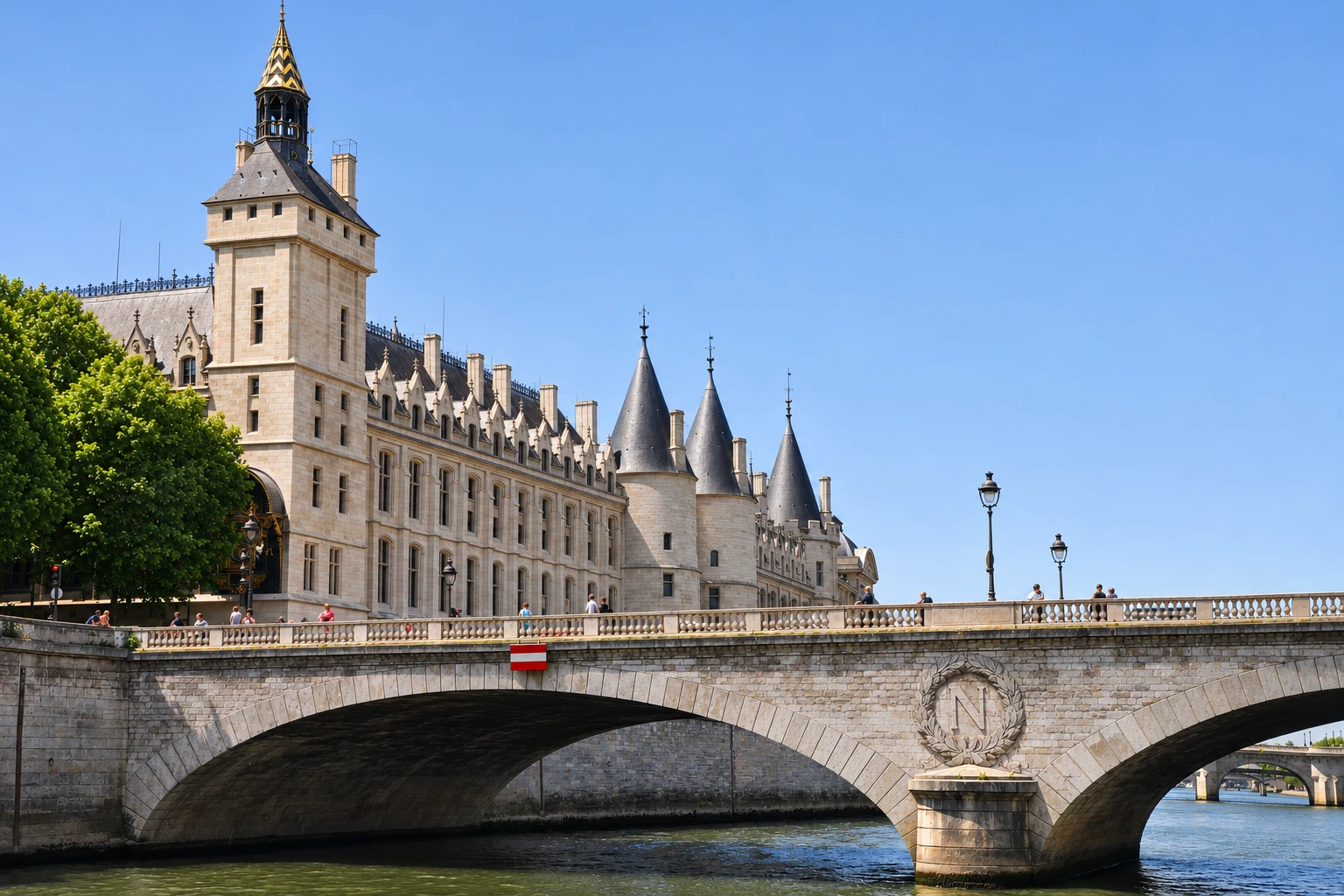
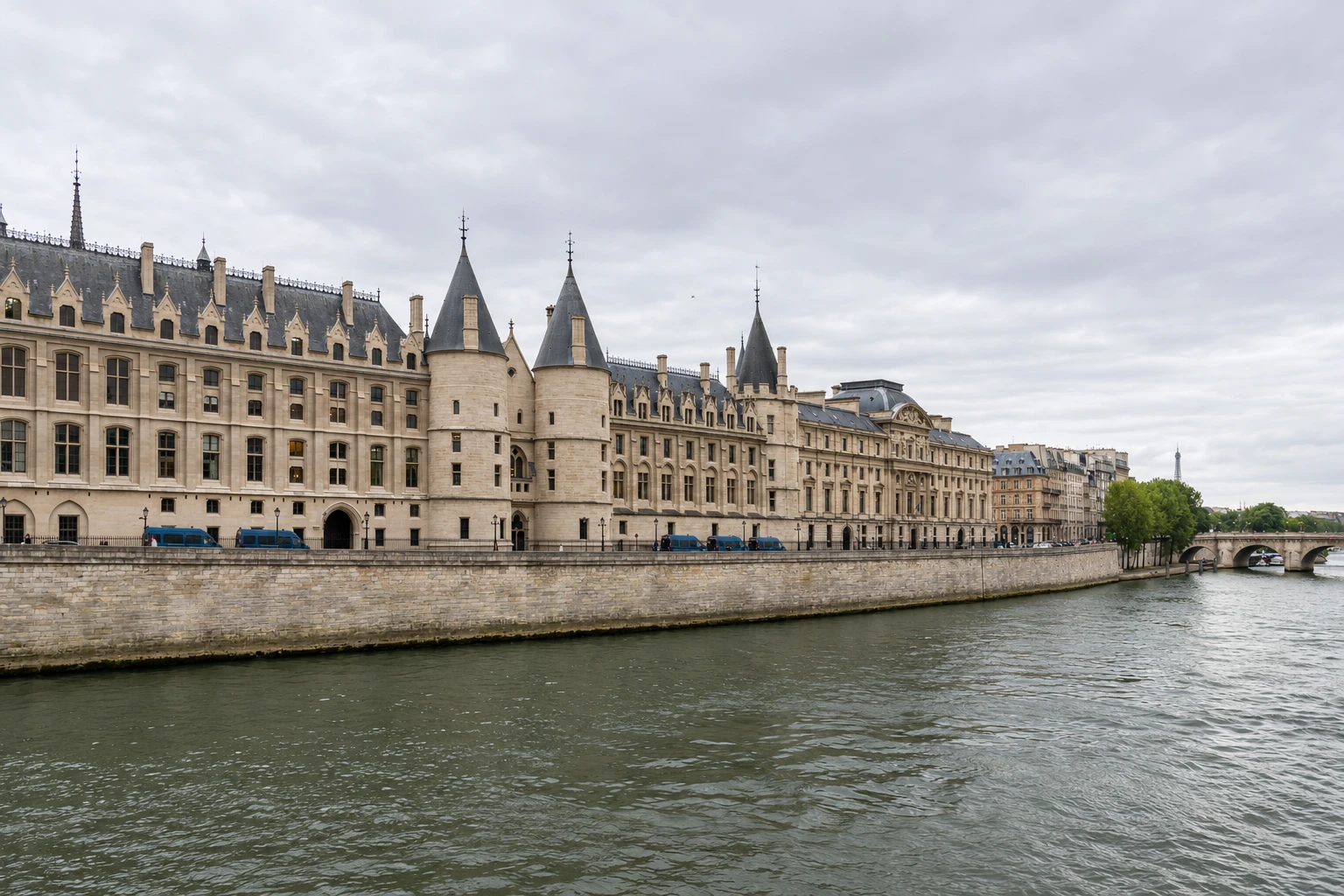
Conciergerie in pictures
These pictures are illustrations based on the real place, not photographs. They may differ from the place.
Click the picture to enlarge it.
Discover
About Conciergerie
The Conciergerie is what remains of the Palais de la Cité, the royal palace of the kings of France in the Middle Ages, at the northern tip of the Île de la Cité. When the kings moved to the Louvre, part of the building became a prison. During the Terror in 1793 and 1794 the Revolutionary Tribunal operated there and prisoners awaited trial in the cells.
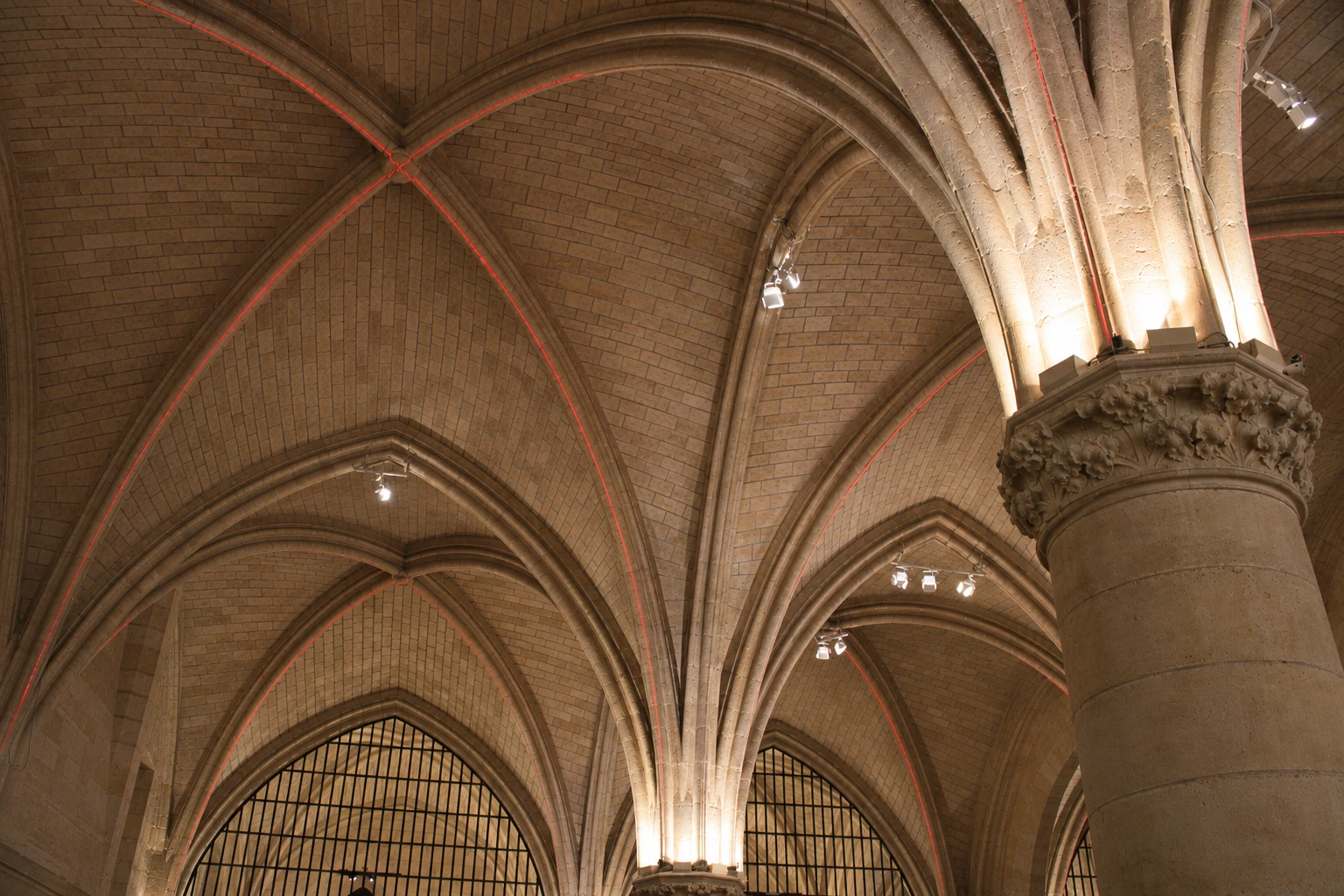
The highlight is the Salle des Gens d'Armes, built in the early 14th century by Philip IV. It is one of the largest non-religious Gothic halls in Europe, with vaults supported by rows of columns. The medieval kitchens are located alongside.
Marie Antoinette was held in the Conciergerie in 1793 before being tried and executed. In place of her cell there is an expiatory chapel commissioned by Louis XVIII in 1815. The visit also shows reconstructions of cells and a list of those condemned by the Revolutionary Tribunal.
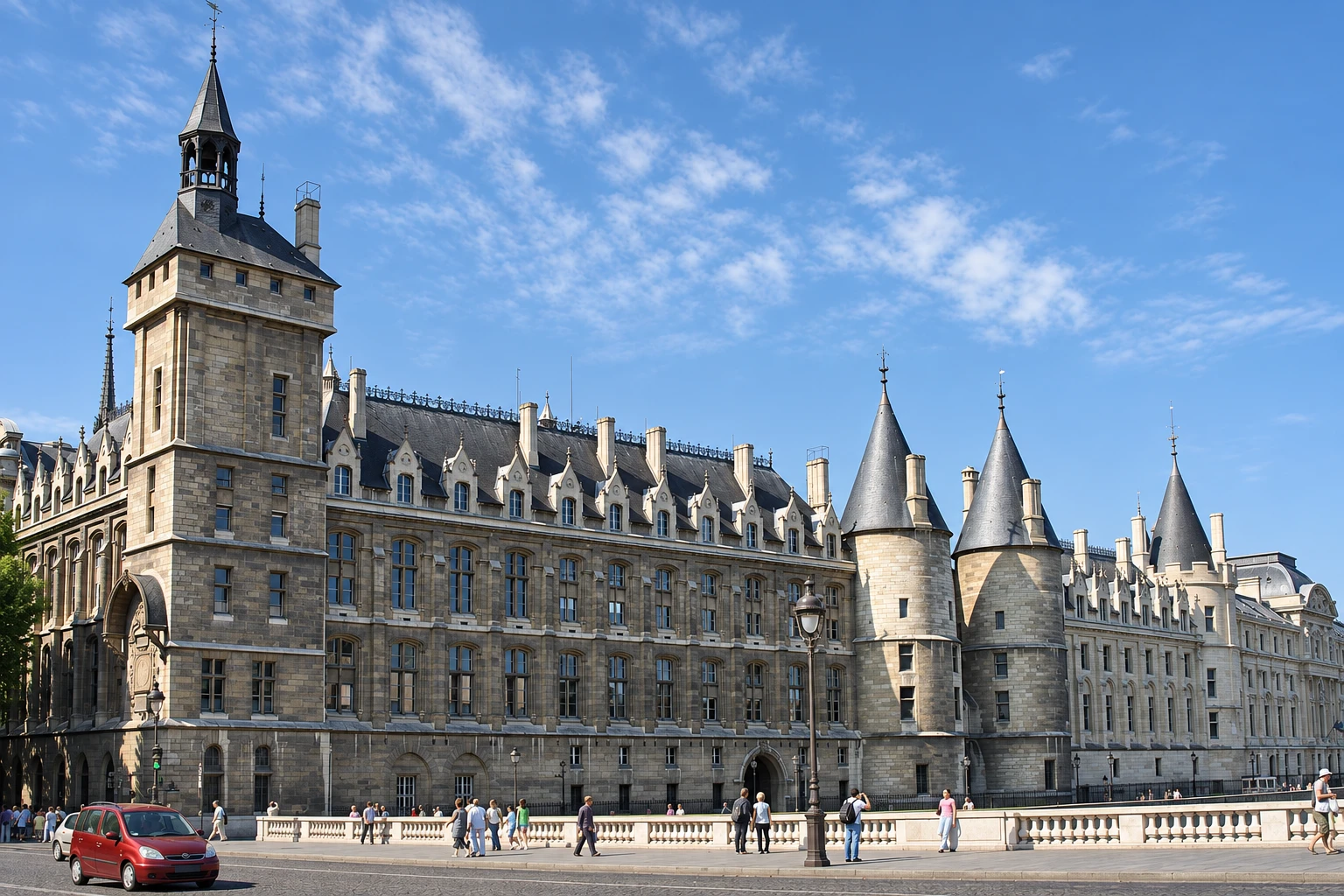
Outside, on the corner of the Boulevard du Palais and the Quai de l'Horloge, the Tour de l'Horloge houses Paris's first public clock from the 14th century. The round turrets seen from the right bank of the Seine are part of the same building.
Before you go
Practical information
Cidade Turismo reviews its information regularly, but something may have changed. Check with the place before planning your trip.
How much time to set aside
About 1 hour. Combined with the Sainte-Chapelle, allow 2 hours.
Best time
In the morning or mid-afternoon, at any time of year. It's a good option for a rainy day. To photograph the turrets, the view from the Quai de la Mégisserie on the right bank works best in the late afternoon.
How to get there
Metro Cité (line 4) or Châtelet (various lines), crossing the Pont au Change. Entrance is on the Boulevard du Palais, next to the Sainte-Chapelle.
Tip
Do the Sainte-Chapelle first while the light is good for the stained glass, and leave the Conciergerie for afterwards. There is a combined ticket for both: check the official website.
Official website
Your questions
Frequently asked questions about Conciergerie
What can you see in the Conciergerie?
The Salle des Gens d'Armes, a 14th‑century Gothic hall, the medieval kitchens, the Revolution-era cells and the chapel located where Marie Antoinette's cell stood.
Is the Conciergerie good for visitors with children?
Yes. The route is short and tells the story of the French Revolution in a visual way. It takes about 1 hour.
Is it worth visiting the Conciergerie and Sainte-Chapelle on the same day?
Yes. They are next to each other, there is a combined ticket, and together they take about 2 hours. Notre-Dame is a 5‑minute walk away.