French Basque Country

Nouvelle-Aquitaine

French Basque Country

Biarritz, Bayonne and Saint-Jean-de-Luz on the Atlantic coast next to Spain: surfing, Basque culture, white houses with red-painted wood, piment d'Espelette and San Sebastián on the other side of the border.

West

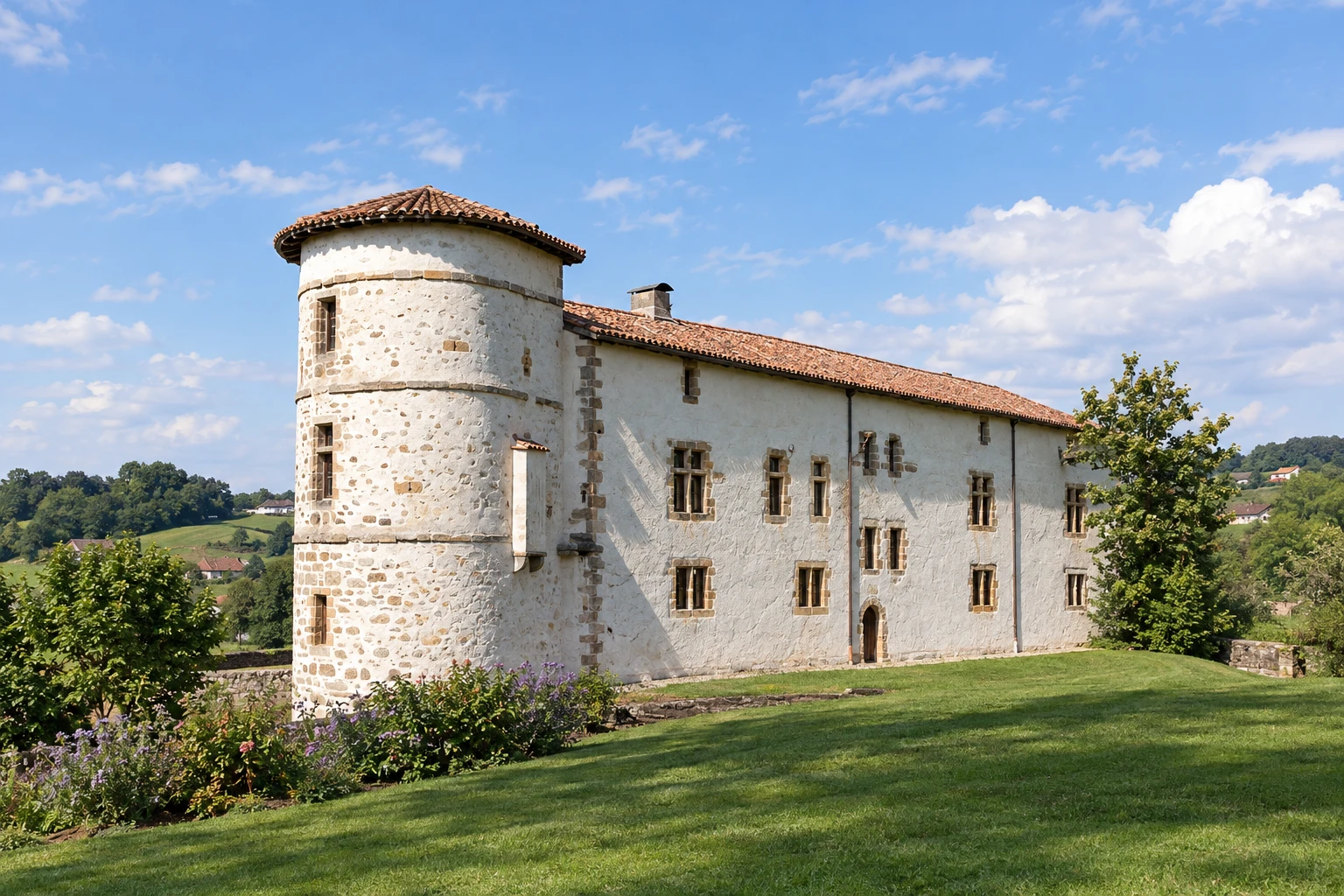
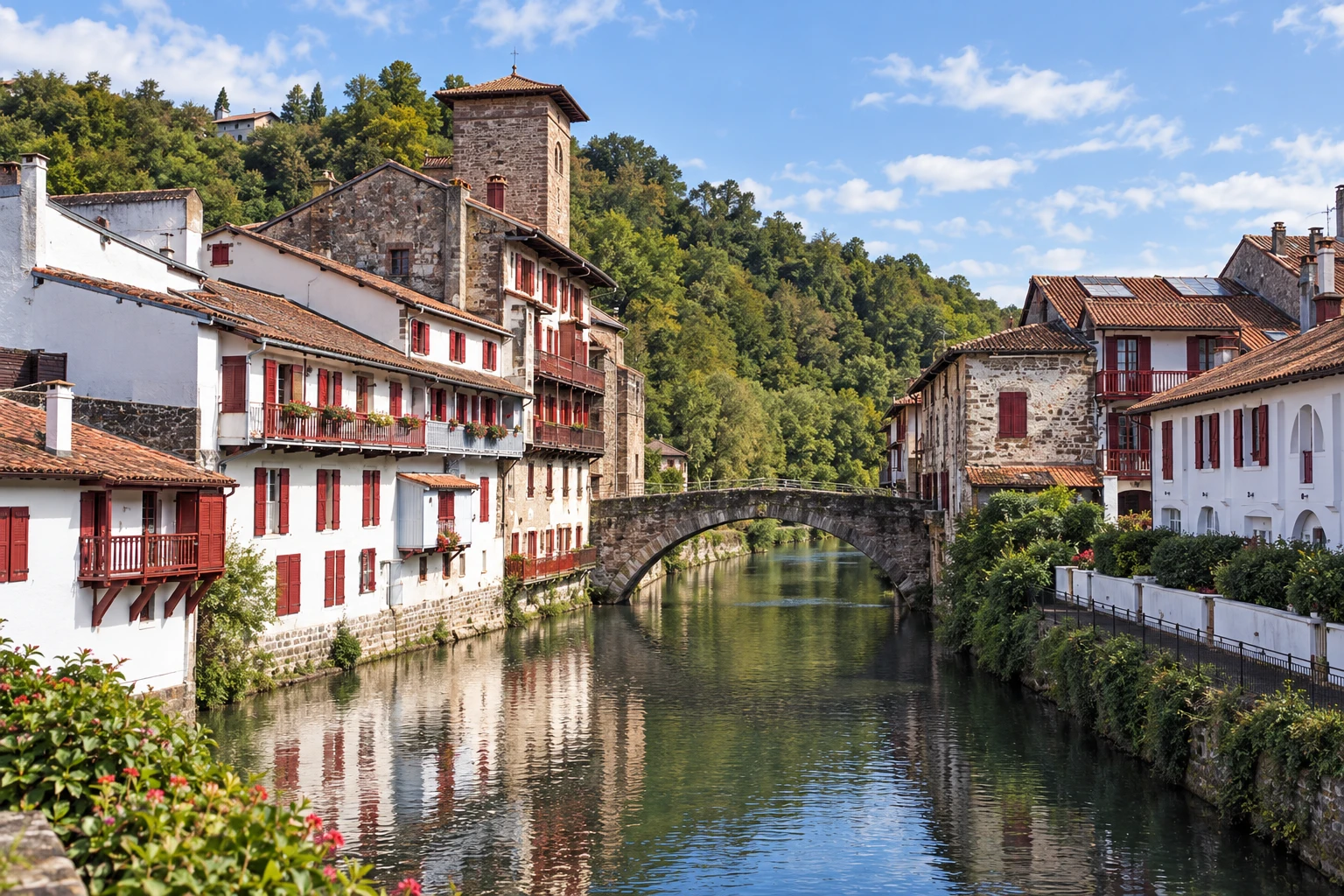
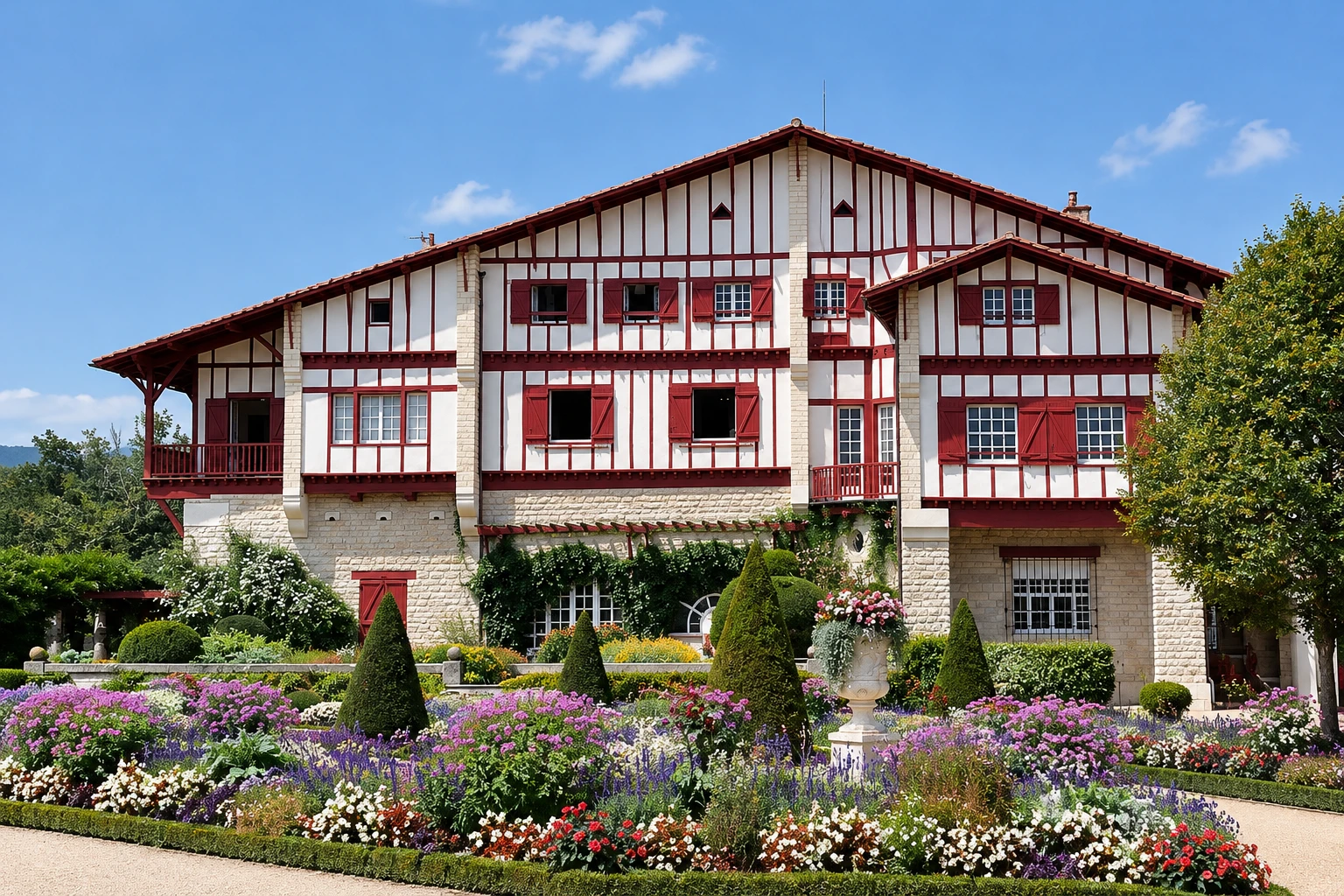
In the photo: Château des Barons d’Espelette

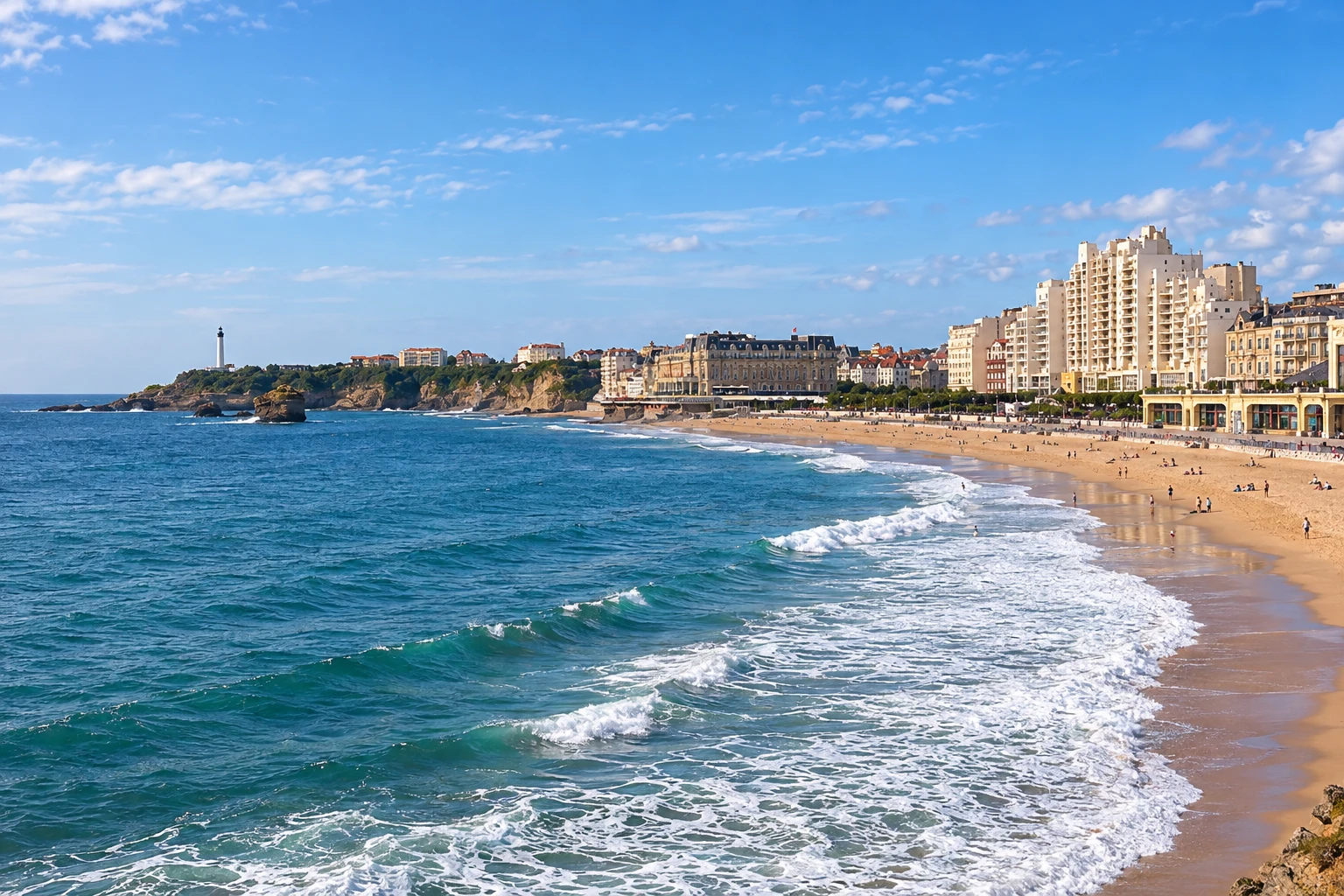
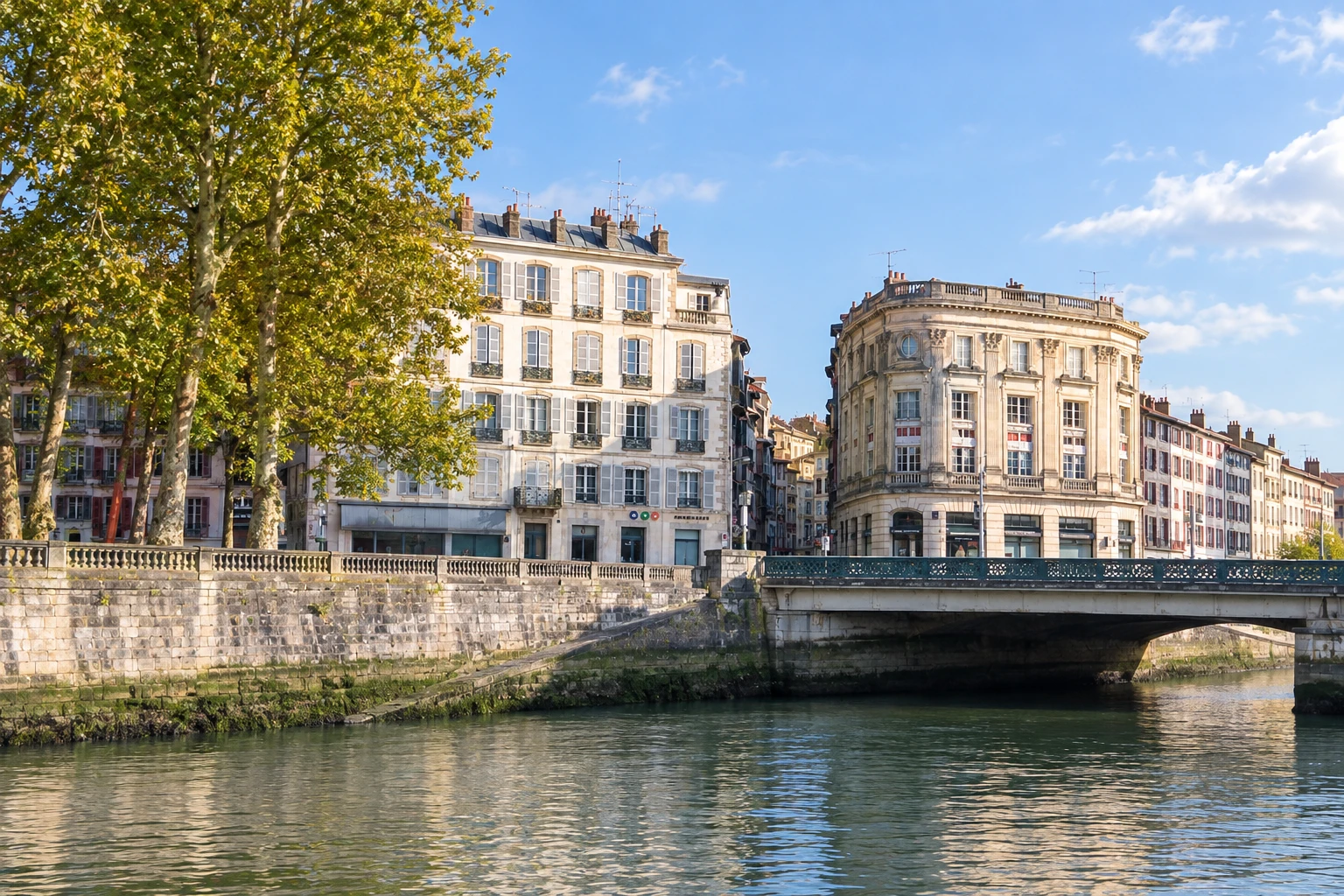
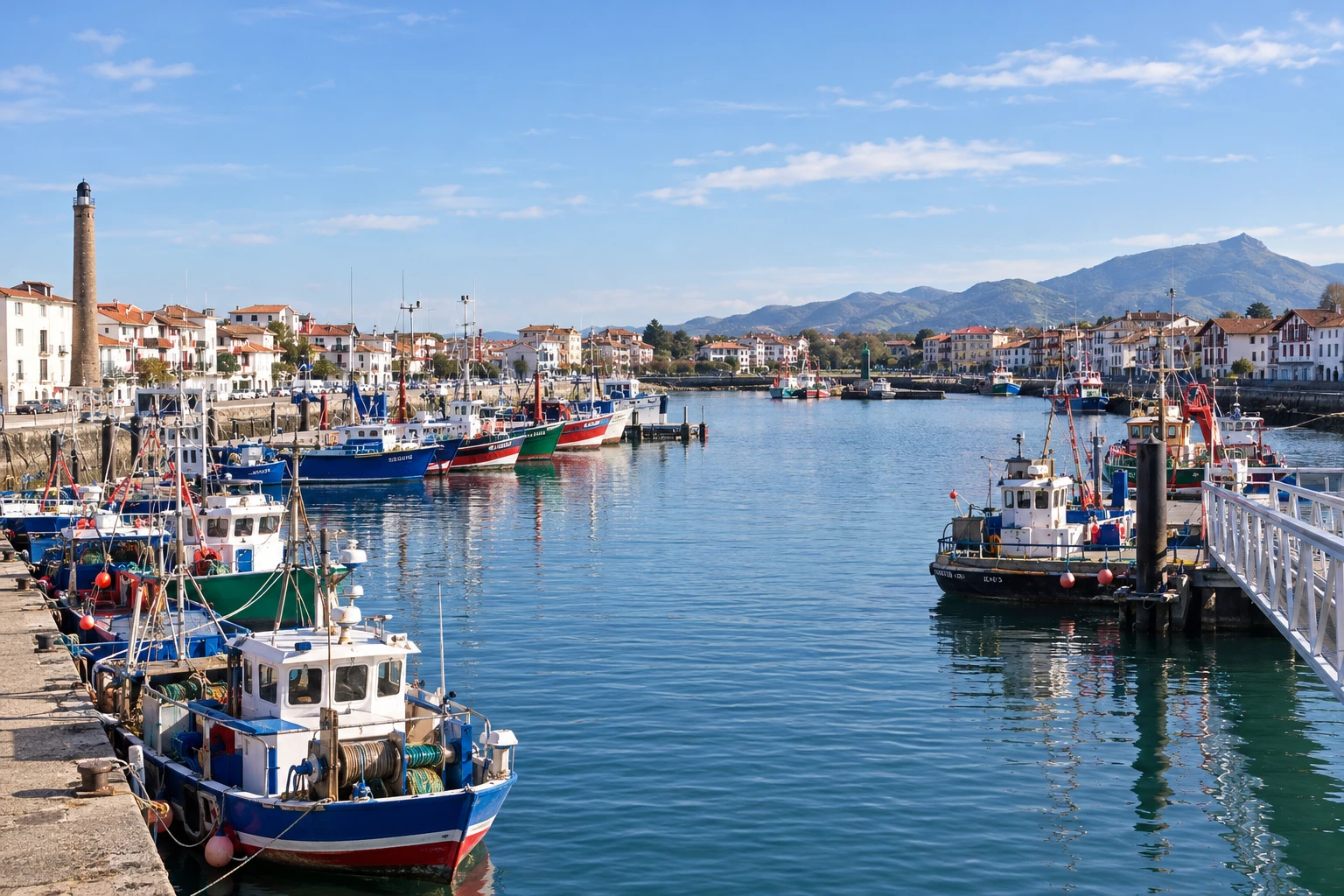
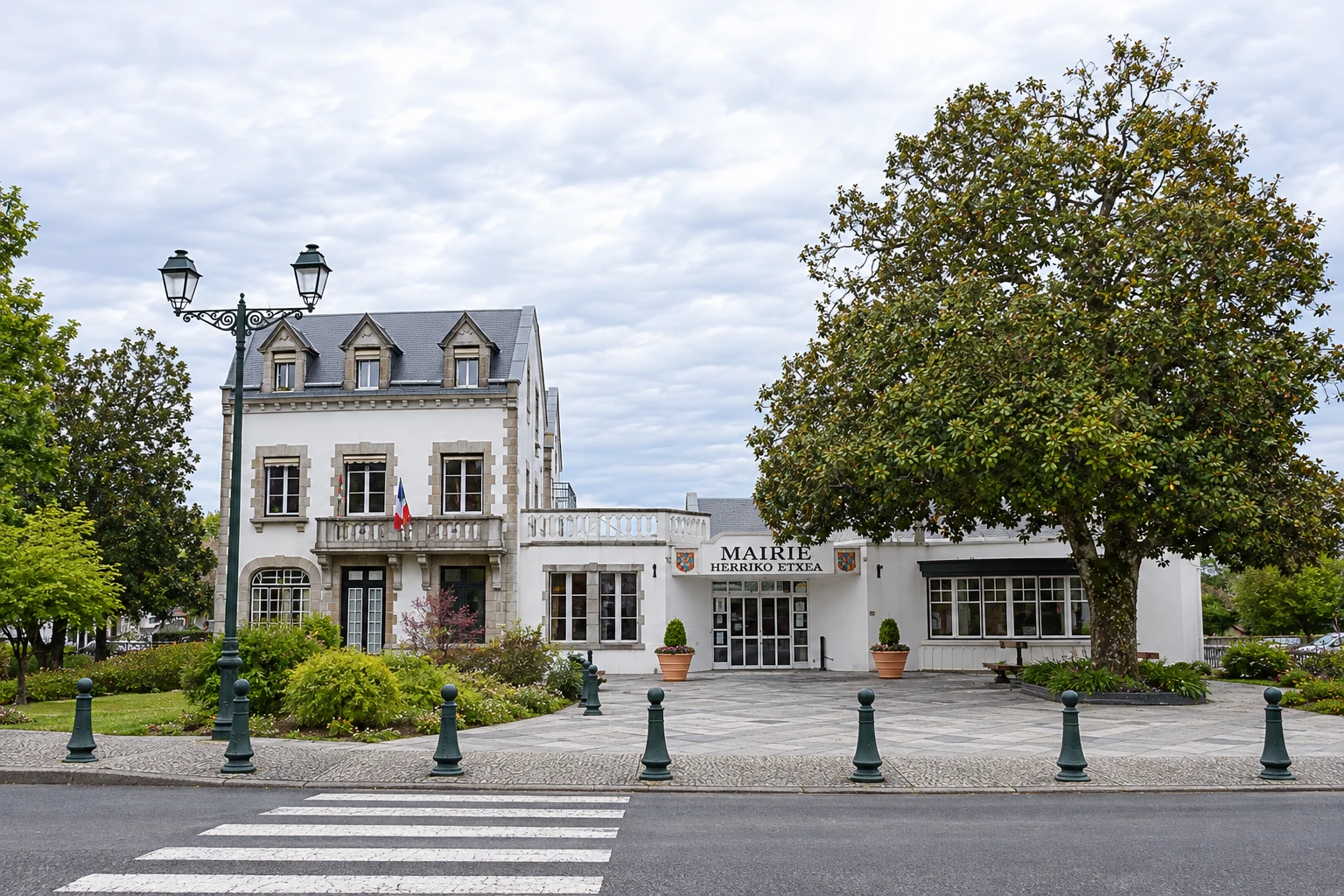
Illustrative images. The pictures in this guide are illustrations based on the real place, not photographs, and may differ from it.

Get it on Google Play

Get to know the place

A region to enjoy
at your own pace.

The French Basque Country occupies the southwest corner of France, where the Atlantic coast meets the Pyrenees and the border with Spain. It is the Iparralde, the northern part of the Basque territory, which continues across the border to Bilbao. Here euskara, the Basque language, coexists with French: signs show both names, and Bayonne is also Baiona, Biarritz is Miarritze and Saint-Jean-de-Luz is Donibane Lohizune.

Three towns make up the itinerary, all less than half an hour from each other. Biarritz, the arrival city, was a whaling port and became a seaside resort for the court of Napoleon III and Empress Eugénie in the 19th century; today it is known for surfing, which reached Europe on its beaches at the end of the 1950s. Bayonne, at the junction of the Adour and Nive rivers, has a Gothic cathedral, ramparts, quays with timber-framed houses and colorful windows, and traditions of chocolate and ham. Saint-Jean-de-Luz, in a sheltered bay, is a fishing port where Louis XIV married in 1660. Inland, Saint-Jean-Pied-de-Port, at the foot of the Pyrenees, is the starting point of the French Way of St. James and the end of the route coming from Le Puy-en-Velay.

Basque culture appears everywhere: the pelota fronton in every village, white houses with wood painted red or green, berets, summer festivals and the cuisine with piment d'Espelette, the protected-designation pepper that is dried in strings on the façades in Espelette. On the other side of the border, San Sebastián is about 30 km from Saint-Jean-de-Luz, and you can get there by car, bus or train via Hendaye.

For Brazilians, it is worth remembering that the climate is Atlantic: it can rain at any time of year, the summer from June to September (winter in Brazil) is usually mild, without the heat of the Mediterranean, and the sea is cold even in August. The train links the three towns in a few minutes, and the inland villages require a car or regional bus.

This destination brings together 5 cities: Biarritz, Bayonne, Saint-Jean-de-Luz, Saint-Jean-Pied-de-Port, Cambo-les-Bains.


Share: WhatsApp
Traveler, share your experiences through photos Up to 5 photos of each place you visited.

One destination, many paths

The cities on this trip

Start with one city or combine several in your itinerary.

Where French Basque Country is The star marks the nearest capital, Bordeaux.
BordeauxBiarritzBayonneSaint-Jean-de-LuzSaint-Jean-Pied-de-PortCambo-les-Bains

Outlines: © IGN, ADMIN EXPRESS, Licence Ouverte 2.0. Adapted by Cidade Turismo.

How to get there: French Basque Country

Aéroport de Biarritz-Pays Basque (BIQ), in Anglet · 3 km to Biarritz

Connections with Brazil usually involve a stopover in another city. Check before you buy. Biarritz-Pays Basque Airport (BIQ) receives flights from Paris and other European cities. By train, the TGV departs from Paris-Montparnasse and takes about four hours to Bayonne, continuing to Biarritz, Saint-Jean-de-Luz and Hendaye. On the Spanish side, the train from Hendaye connects to San Sebastián.

Suggested arrival point: Biarritz

Biarritz
Nouvelle-Aquitaine · French Basque Country Suggested arrival point

Biarritz

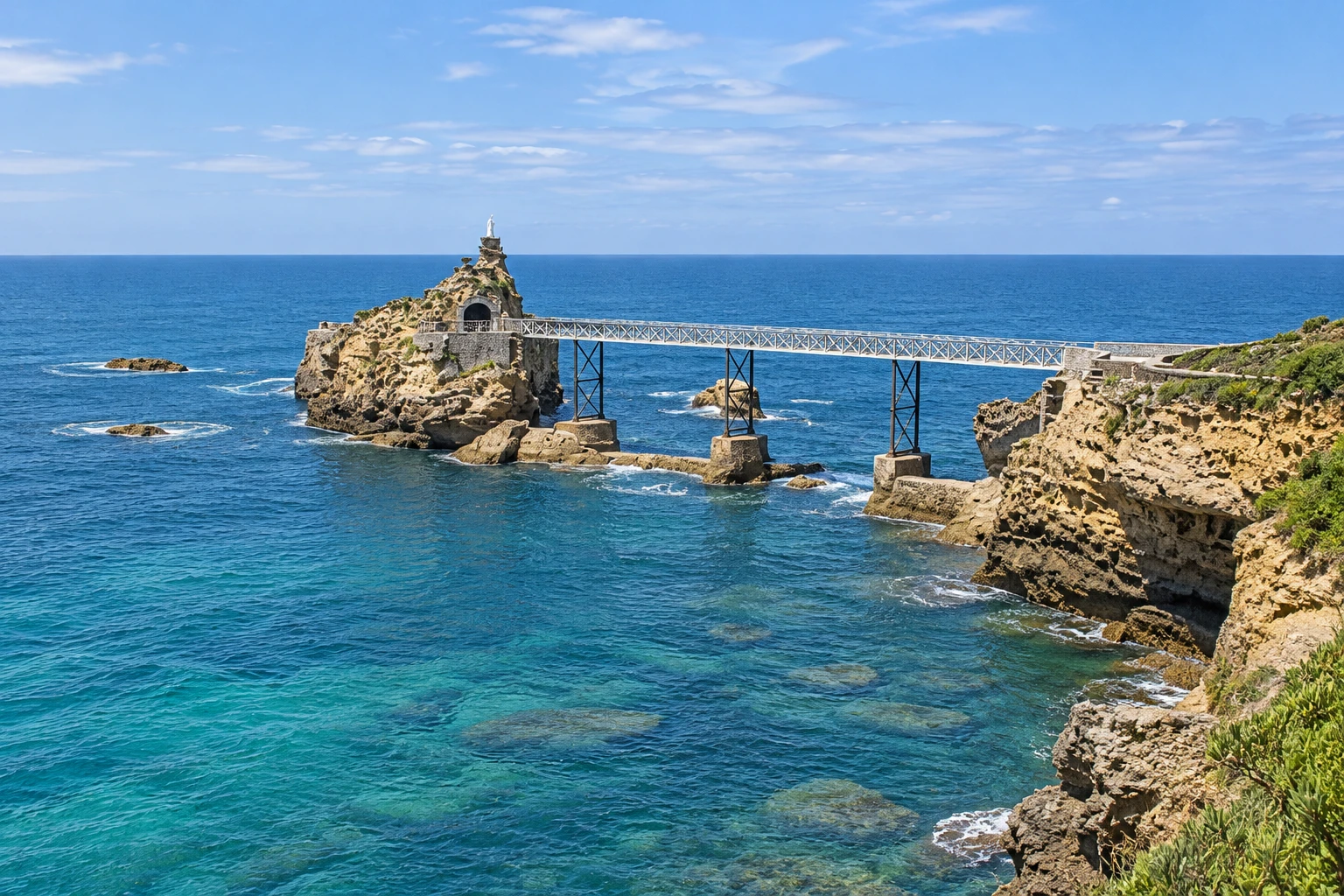
Biarritz was a Basque whaling port and became, from the 1850s, the preferred seaside resort of Napoleon III and Empress Eugénie, who had her summer house built here, now the Hôtel du Palais. The town stretches along about 4 km of beaches and cliffs: the Grande Plage, the Rocher de la Vierge with its footbridge over the sea, the fishermen's harbour, the lighthouse on the Saint-Martin headland and the Côte des Basques, one of the beaches where surfing began in Europe. It has the region's airport and is ten minutes from Bayonne.

Bayonne
Nouvelle-Aquitaine · French Basque Country

Bayonne

Bayonne (Baiona, in Basque) is the largest city in the French Basque Country and sits where the Nive flows into the Adour, about 6 km from the sea. The Grand Bayonne, around the Gothic cathedral of Sainte-Marie, and the Petit Bayonne, on the other side of the Nive, have quays with tall timber-framed houses and colorful windows, surrounded by the ramparts strengthened by Vauban in the 17th century. The city has the Musée Basque, the Musée Bonnat-Helleu of fine arts, the chocolate and ham traditions and the Fêtes de Bayonne at the end of July, when the city dresses in white and red.

Saint-Jean-de-Luz
Nouvelle-Aquitaine · French Basque Country

Saint-Jean-de-Luz

Saint-Jean-de-Luz (Donibane Lohizune, in Basque) is a fishing port in a bay protected by three breakwaters, shared with Ciboure on the other side of the river Nivelle. Fishermen from here sailed to Newfoundland for cod and whales, and privateers left the port in the king's service. In 1660 Louis XIV married the Infanta Maria Theresa of Spain in the church of Saint-Jean-Baptiste, and the houses where they stayed are still standing. Today the pedestrian center links the port to the beach, and the town is a base for the La Rhune train, for Espelette and for San Sebastián across the border.

Saint-Jean-Pied-de-Port
Nouvelle-Aquitaine · French Basque Country

Saint-Jean-Pied-de-Port

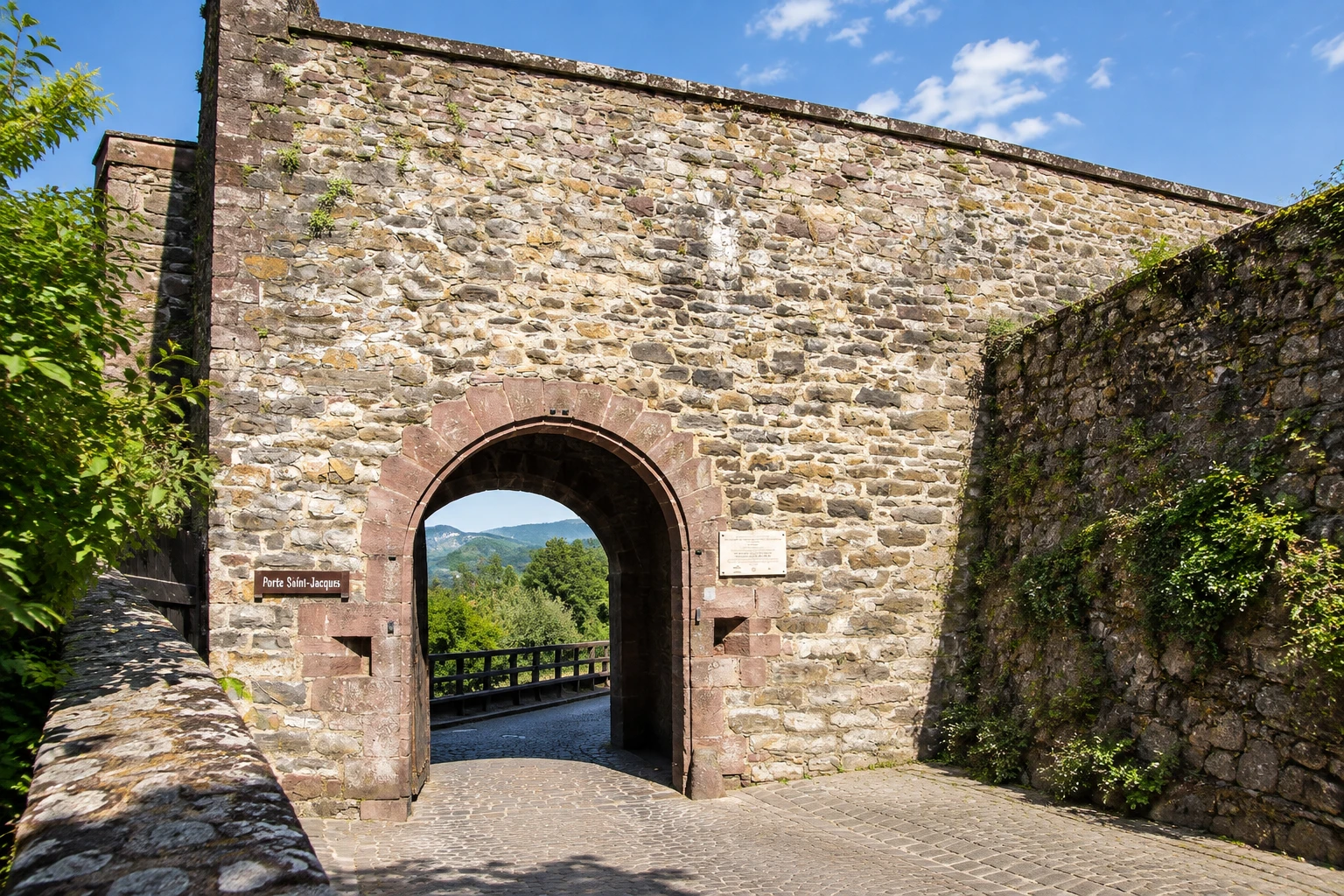
Saint-Jean-Pied-de-Port, Donibane Garazi in Basque, is a village in the French Basque Country, the former capital of Lower Navarre, on the banks of the rio Nive and at the foot of the Pyrenean pass. The medieval village has walls and gates, like the Porte Saint-Jacques, through which pilgrims enter, and the rua da Cidadela rises to the 17th-century fortress. It is the most common starting point of the Caminho Francês to Santiago, and the first stage crosses the Pyrenees via the Route Napoléon to Roncesvalles in Spain. French and Basque are spoken.

The local experience

Things to do in French Basque Country

Bayonne · Nouvelle-Aquitaine · Church

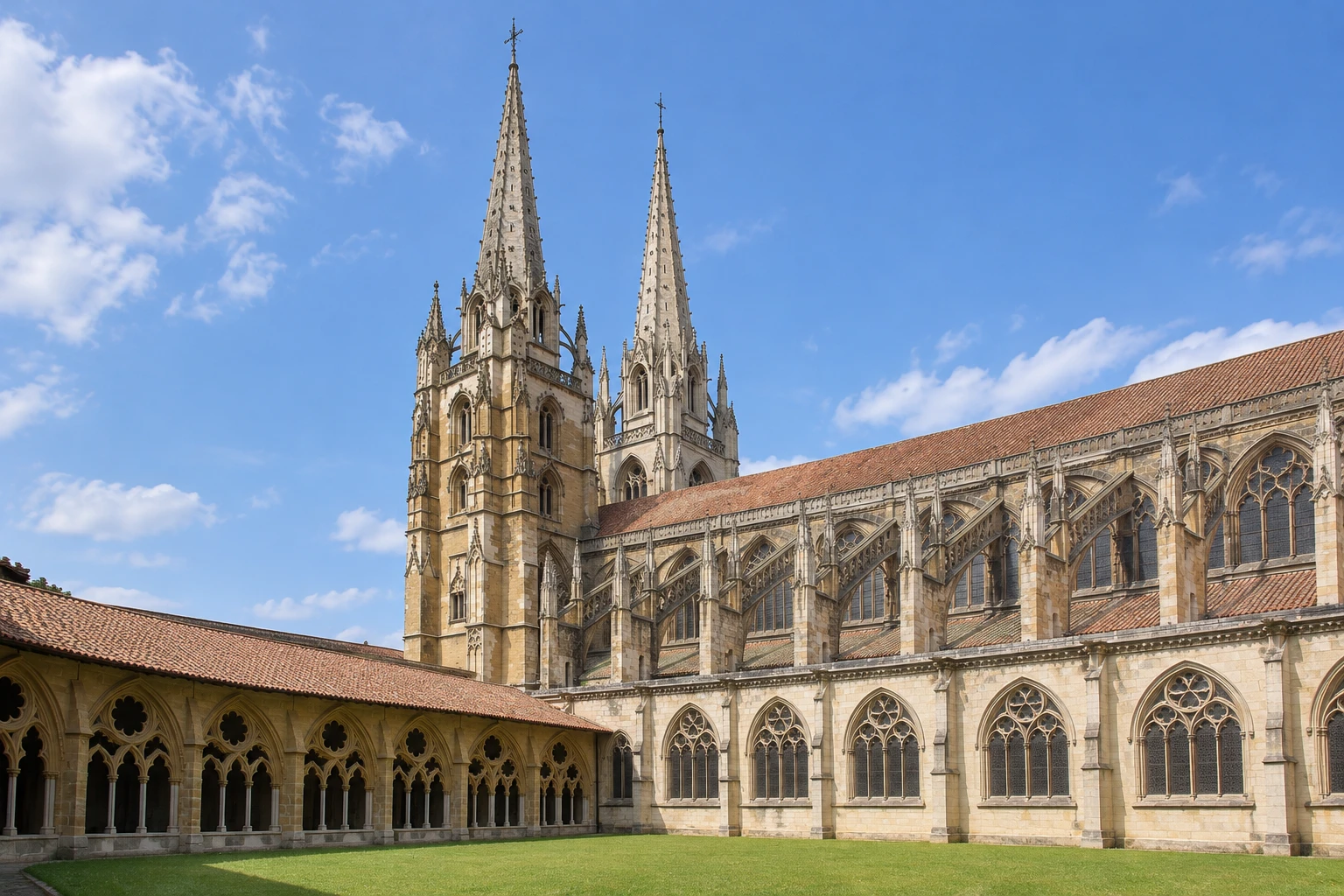
Bayonne Cathedral

The Gothic cathedral of Bayonne, with the two pointed towers visible from afar, Renaissance stained glass and one of the largest cloisters in France, a World Heritage site for the Routes of Santiago.

Explore Bayonne Cathedral

Biarritz · Nouvelle-Aquitaine · Lookout

Rock of the Virgin

The rock with the statue of the Virgin, linked to the shore by an iron footbridge over the sea, between the fishermen's harbour and the Port-Vieux: the most iconic image of Biarritz.

Explore Rock of the Virgin

Cambo-les-Bains · Nouvelle-Aquitaine · Museum

Villa Arnaga

House built from 1903 by writer Edmond Rostand, author of Cyrano de Bergerac, in the style of Basque houses, with French and English gardens. It is a museum, a listed historic monument and a Remarkable Garden.

Explore Villa Arnaga

See 20 more places in French Basque Country

Before you go

Practical information

A little planning leaves more time to enjoy the journey.

When to go

From June to September the days are long and summer is usually mild, with the sea more pleasant for swimming and surfing; July and August are the busiest months, with the Fêtes de Bayonne at the end of July. May and September usually have fewer people. Rain can appear in any month, and autumn and winter are wetter, with big waves. In October, Espelette holds its pepper festival.

The seasons shown are the most usual ones; nature doesn't always follow the calendar.

How many days to stay

Three days cover the essentials: one in Biarritz, one in Bayonne and one in Saint-Jean-de-Luz. With five days you can include the La Rhune train, Espelette and the inland villages, plus a day in San Sebastián on the other side of the border. Those walking the Way of St. James often pass through Bayonne on the way to Saint-Jean-Pied-de-Port.

Which city to stay in

Biarritz is the base for those who want beach, surfing and the waterfront, with accommodation near the Grande Plage, the town center and the Côte des Basques. Bayonne has accommodations closest to the train station and is convenient for getting around the region; Grand Bayonne, around the cathedral, and Petit Bayonne, on the banks of the Nive, make everything walkable. Saint-Jean-de-Luz is quieter, with a pedestrian center between the port and the beach, and is close to La Rhune, Espelette and the border.

Respect the place

Take your trash with you, follow the signs and support local businesses. In natural areas, follow the visiting guidelines.

Beyond the guide

Your questions

Frequently asked questions about French Basque Country

How to get to the French Basque Country from Brazil?

Connections with Brazil usually involve a stopover in another city. Check before you buy. One option is to fly to Paris and continue by TGV to Bayonne in about four hours, or take a short flight to Biarritz airport. Another is to arrive via Bilbao or San Sebastián on the Spanish side and cross the border by car or train through Hendaye.

How many days to stay in the French Basque Country?

Three days for Biarritz, Bayonne and Saint-Jean-de-Luz. Five days allow you to include the La Rhune train, Espelette and a day in San Sebastián. A week makes it possible to add Saint-Jean-Pied-de-Port and the Pyrenean villages.

Do you need to rent a car in the French Basque Country?

Not for the three coastal towns: the train links Bayonne, Biarritz and Saint-Jean-de-Luz in a few minutes, and there are buses between them. For La Rhune, Espelette, Ainhoa, Sare and the interior, a car gives more freedom; regional buses reach them but with fewer departures.

What is the best time to go to the French Basque Country?

From June to September, which is winter in Brazil, for beach and surfing, with July and August the busiest. May, September and October usually have fewer visitors. Always bring a light jacket and a raincoat: the climate is Atlantic and changes quickly.

Can you go to San Sebastián from the French Basque Country?

Yes. San Sebastián is about 30 km from Saint-Jean-de-Luz and about 50 km from Biarritz. By train you change in Hendaye to the Basque train that goes to central San Sebastián; by car the trip takes less than an hour.

Is Basque spoken in the French Basque Country?

French is the everyday language, and euskara, the Basque language, appears on signs, in city names and in many schools and festivals. In shops and tourism, French is sufficient; English and Spanish also tend to help.

Cross-border routes

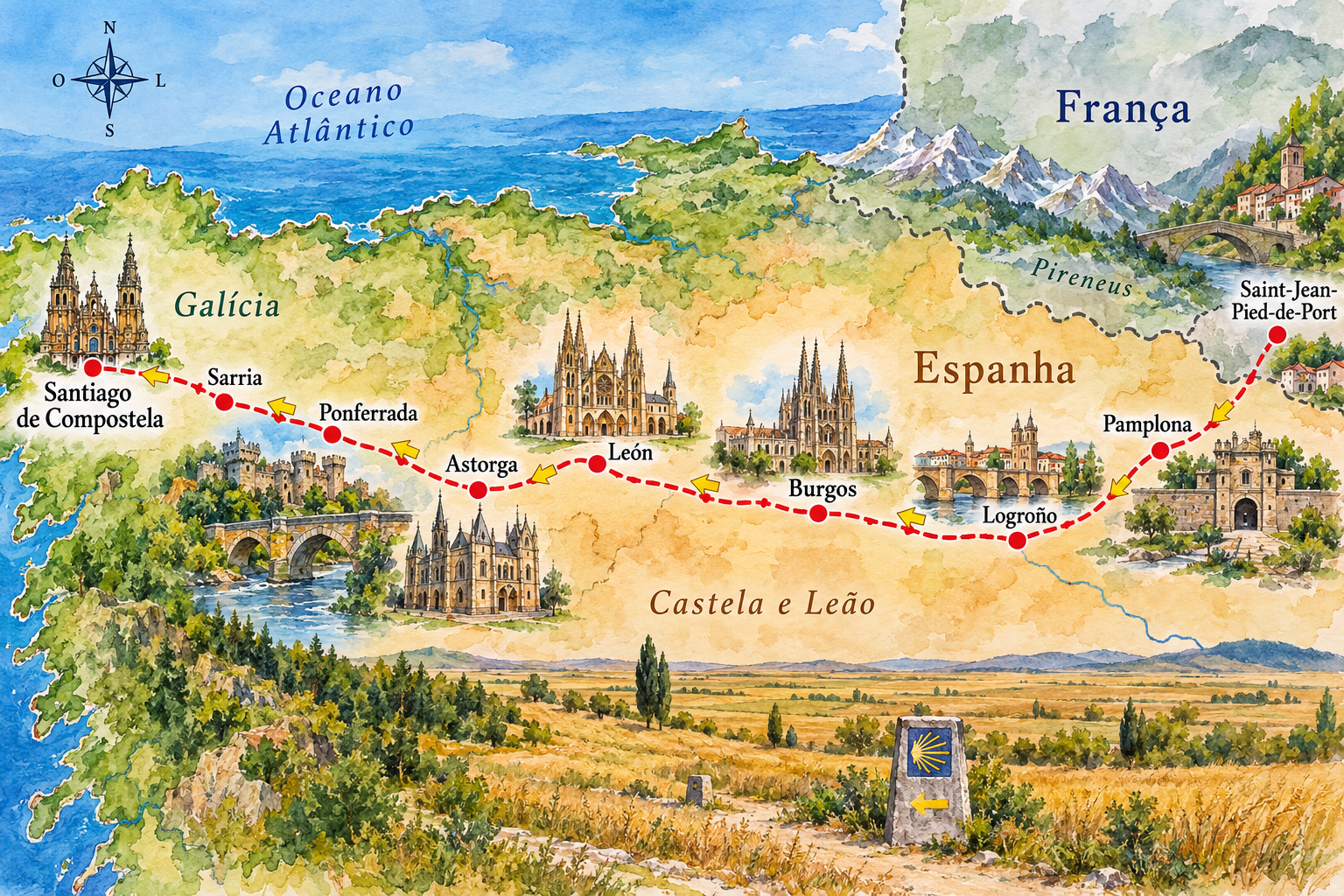
French Basque Country is on the French Way (Camino Francés) to Santiago on foot

The most travelled pilgrimage route to Santiago de Compostela: from the French Pyrenees to Galicia, on foot, via Pamplona, Burgos and León, following the yellow arrows.

Illustrative map, not to scale. Tap a city to open its page.
Illustrated map of French Way (Camino Francés) to Santiago on foot

Routes in France

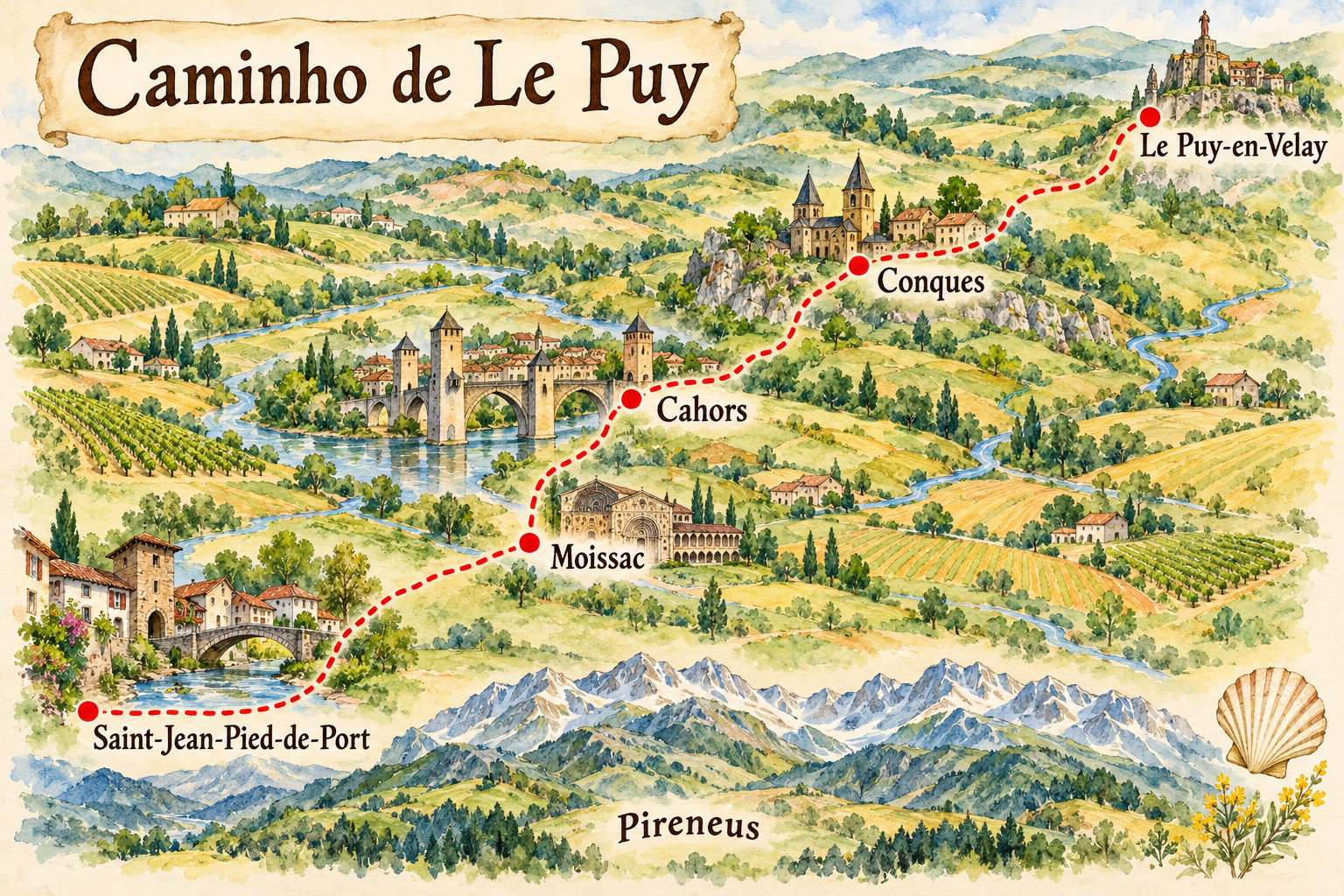
French Basque Country is on the Le Puy Way on foot

The most walked Camino de Santiago route in France: from Le Puy-en-Velay to the Pyrenees on foot, across the Aubrac plateau, Conques, Cahors and Moissac, to Saint-Jean-Pied-de-Port, where the French Way begins.

Illustrative map, not to scale. Tap a city to open its page.
Illustrated map of Le Puy Way on foot
Explore the Le Puy Way on foot
Explore other destinations Search by state and city