18 places to visit and 17 tours, chosen by the Cidade Turismo guide.
Updated
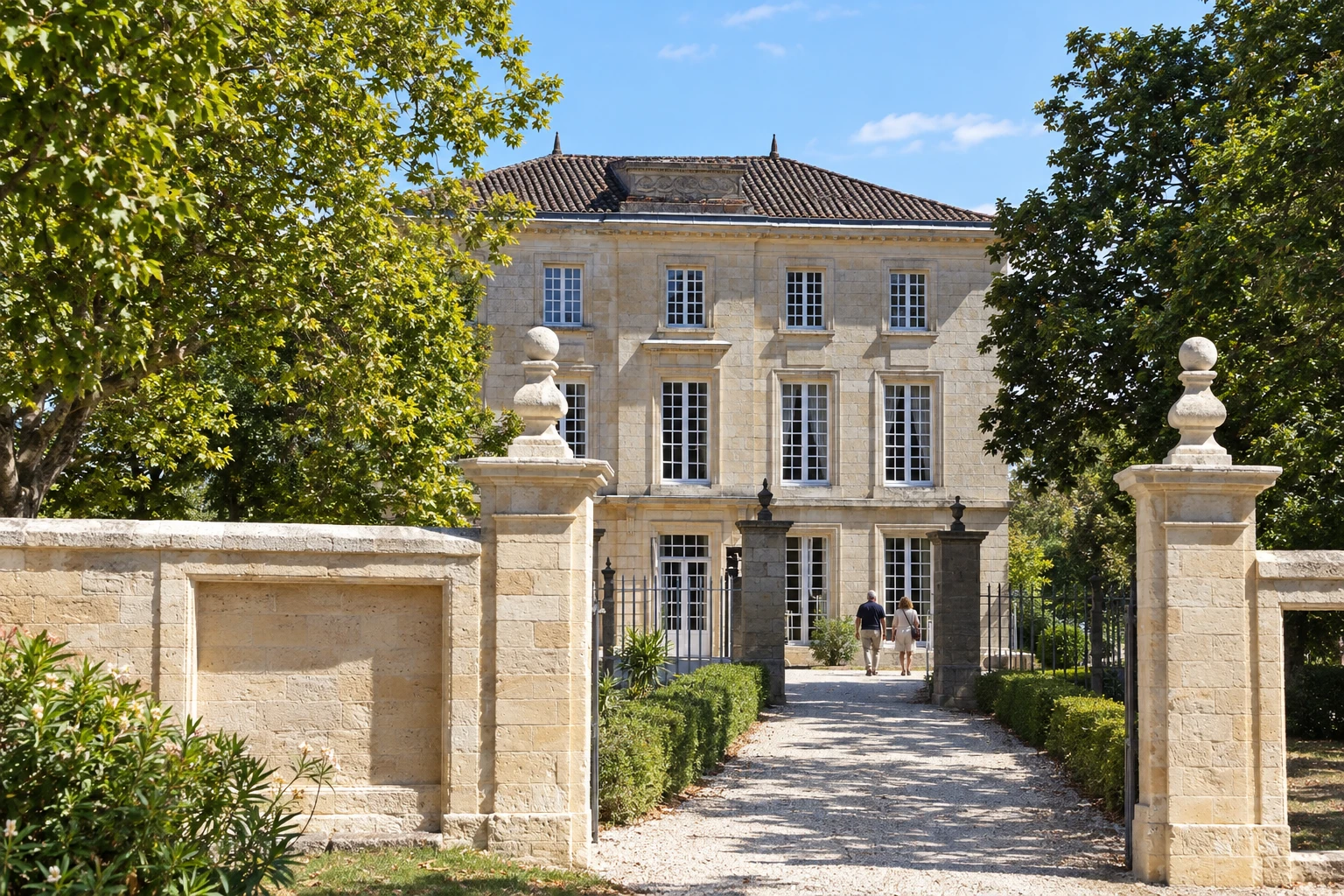
Illustrative images. The pictures in this guide are illustrations based on the real place, not photographs, and may differ from it.
To start
The 10 main places Bordeaux and Its Vineyards
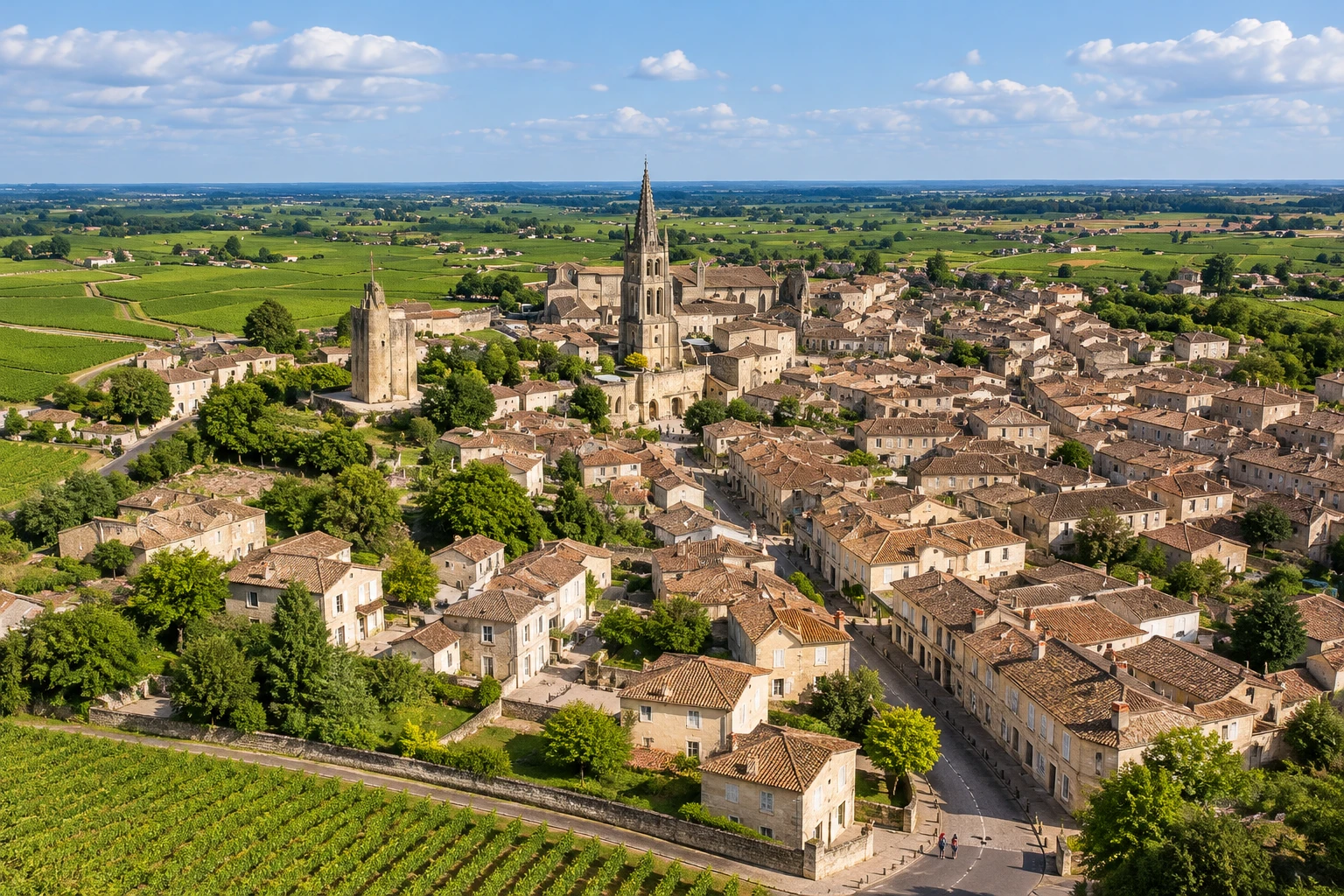
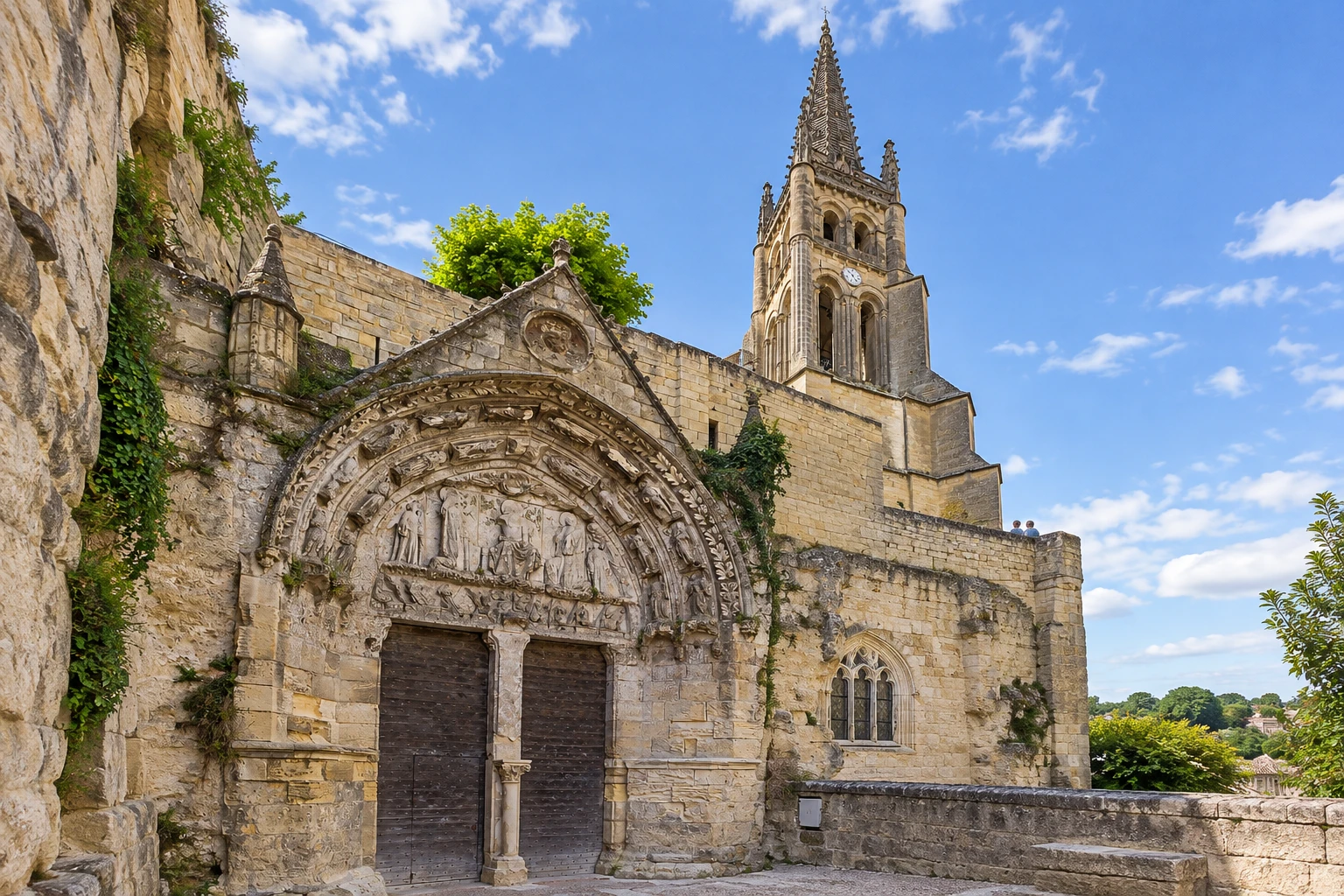
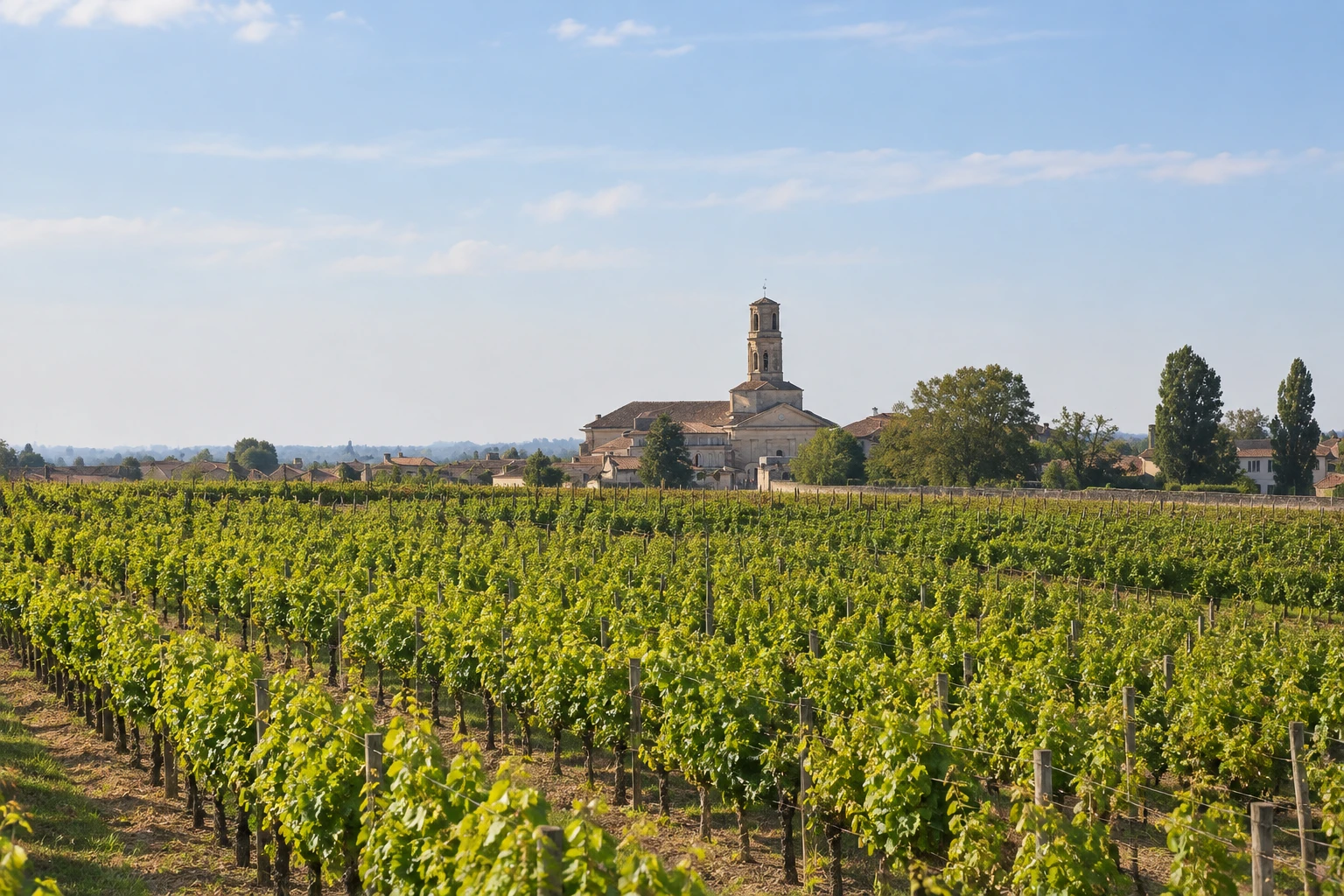
Medieval Town of Saint-Émilion · Saint-ÉmilionMedieval limestone village on a hill above the vineyards, with sloping streets called tertres, ramparts and monuments from the 12th to the 15th centuries.
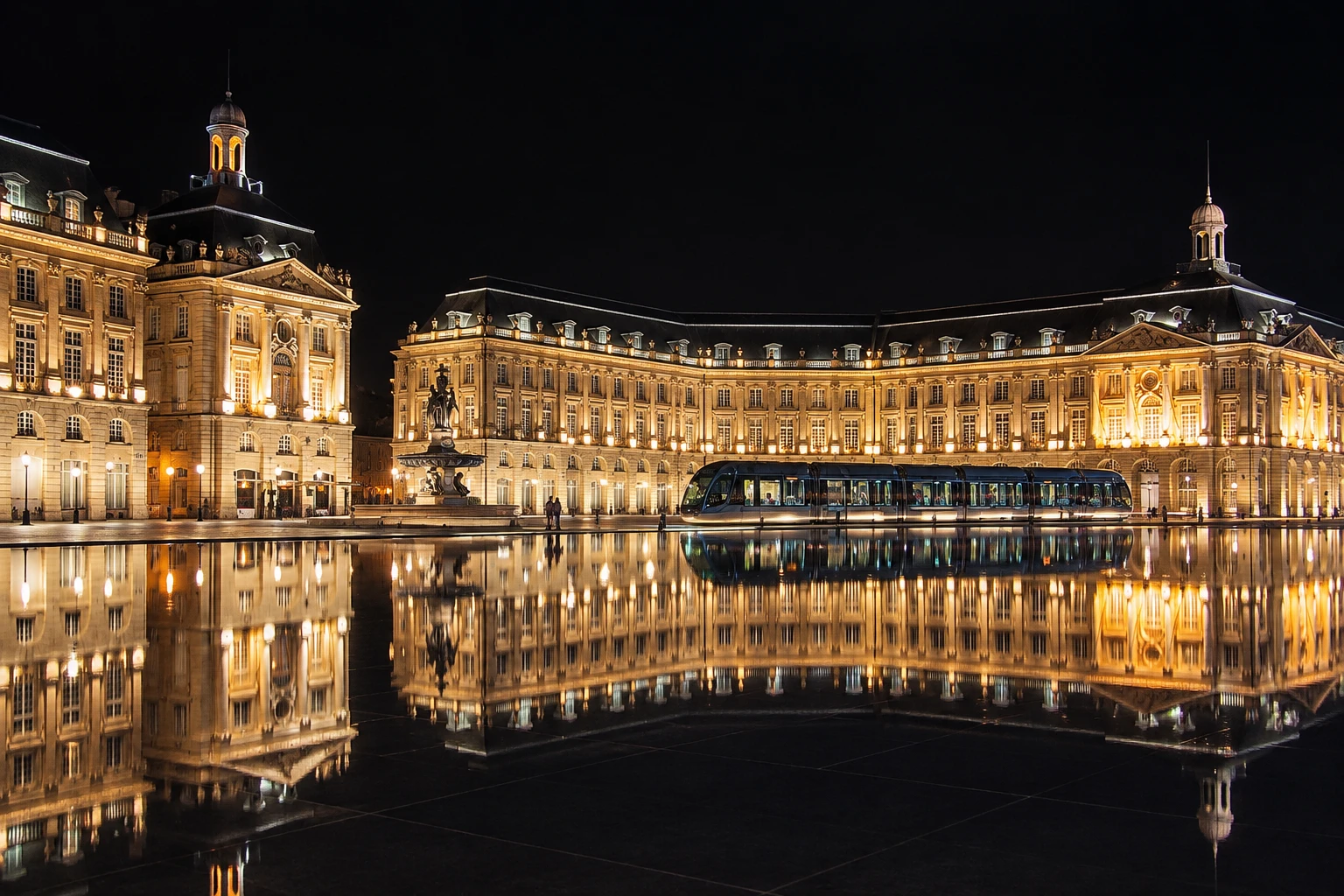
Place de la Bourse and the Water Mirror · Bordeaux18th-century square open to the Garonne, framed by two palaces, with the Miroir d'eau in front: a shallow sheet of water that reflects the façades and emits mist.
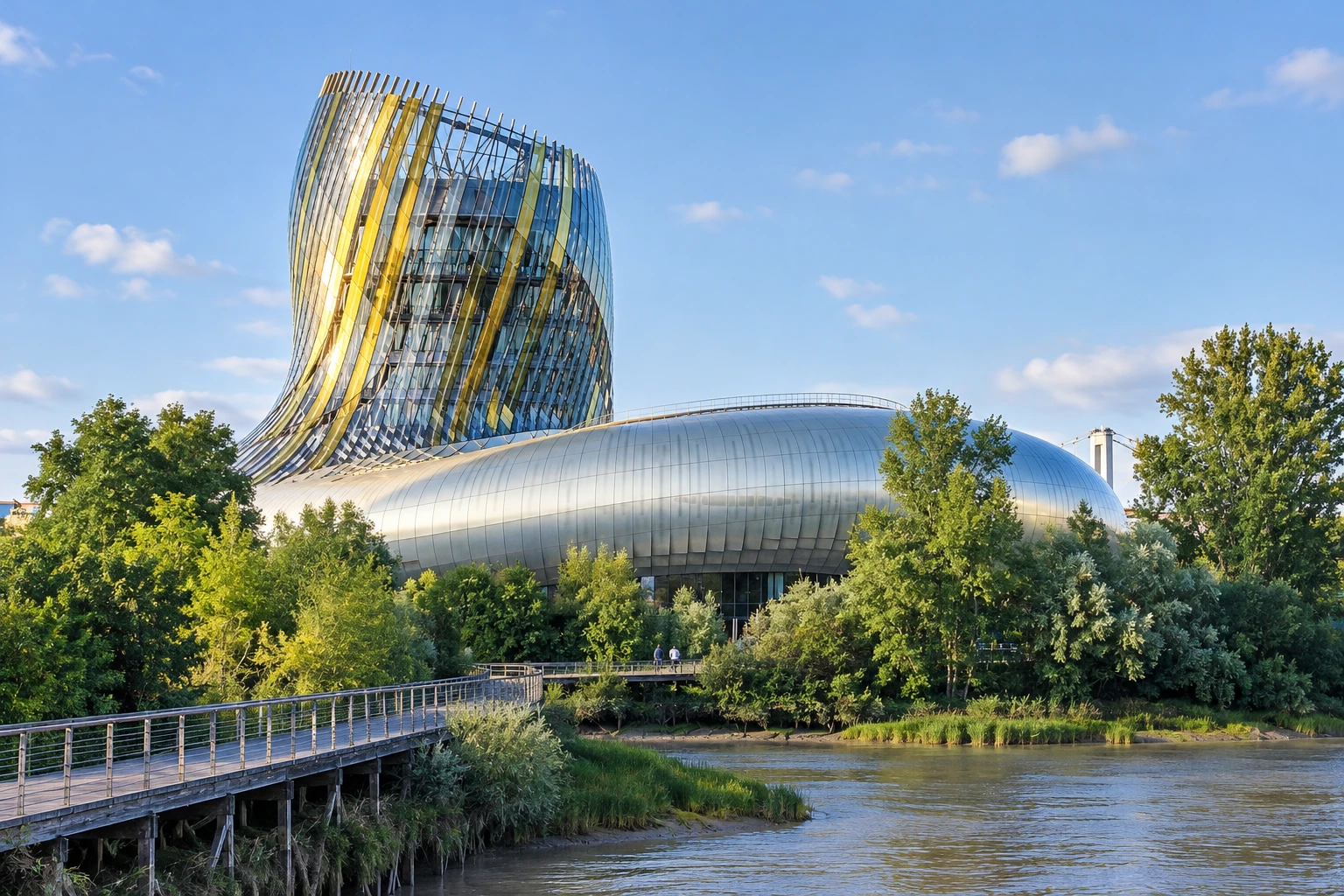
La Cité du Vin · BordeauxCultural centre dedicated to wine worldwide, on the banks of the Garonne, with an interactive permanent exhibition, tasting workshops and a belvedere on the 8th floor.
Monolithic Church of Saint-Émilion · Saint-Émilion12th-century church carved into limestone, the largest underground church in Europe, visitable only with a guide from the tourist office.
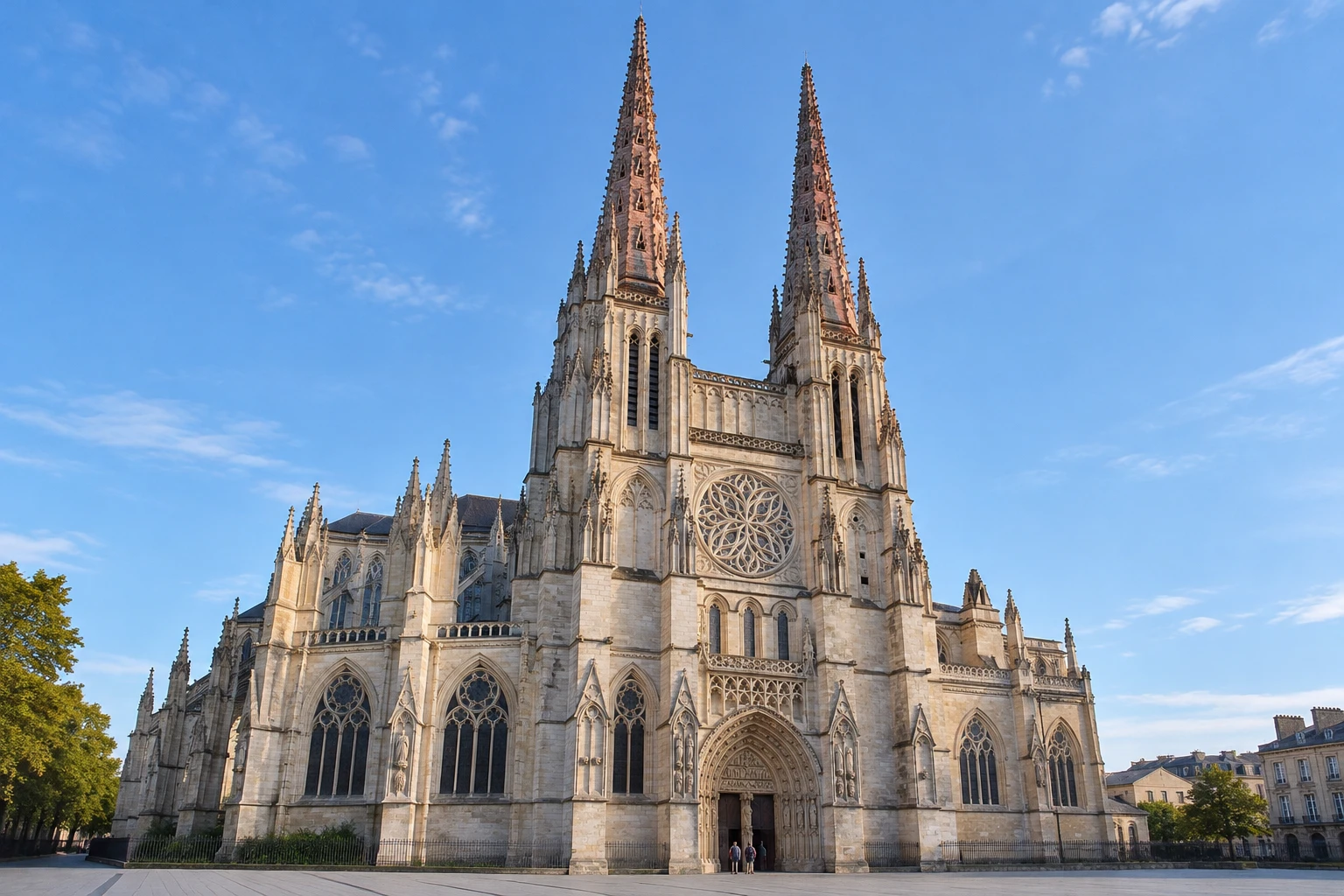
Bordeaux Cathedral · BordeauxGothic cathedral where Eleanor of Aquitaine was married in 1137, with a separate bell tower, the Tour Pey-Berland, which has a viewpoint over the centre.
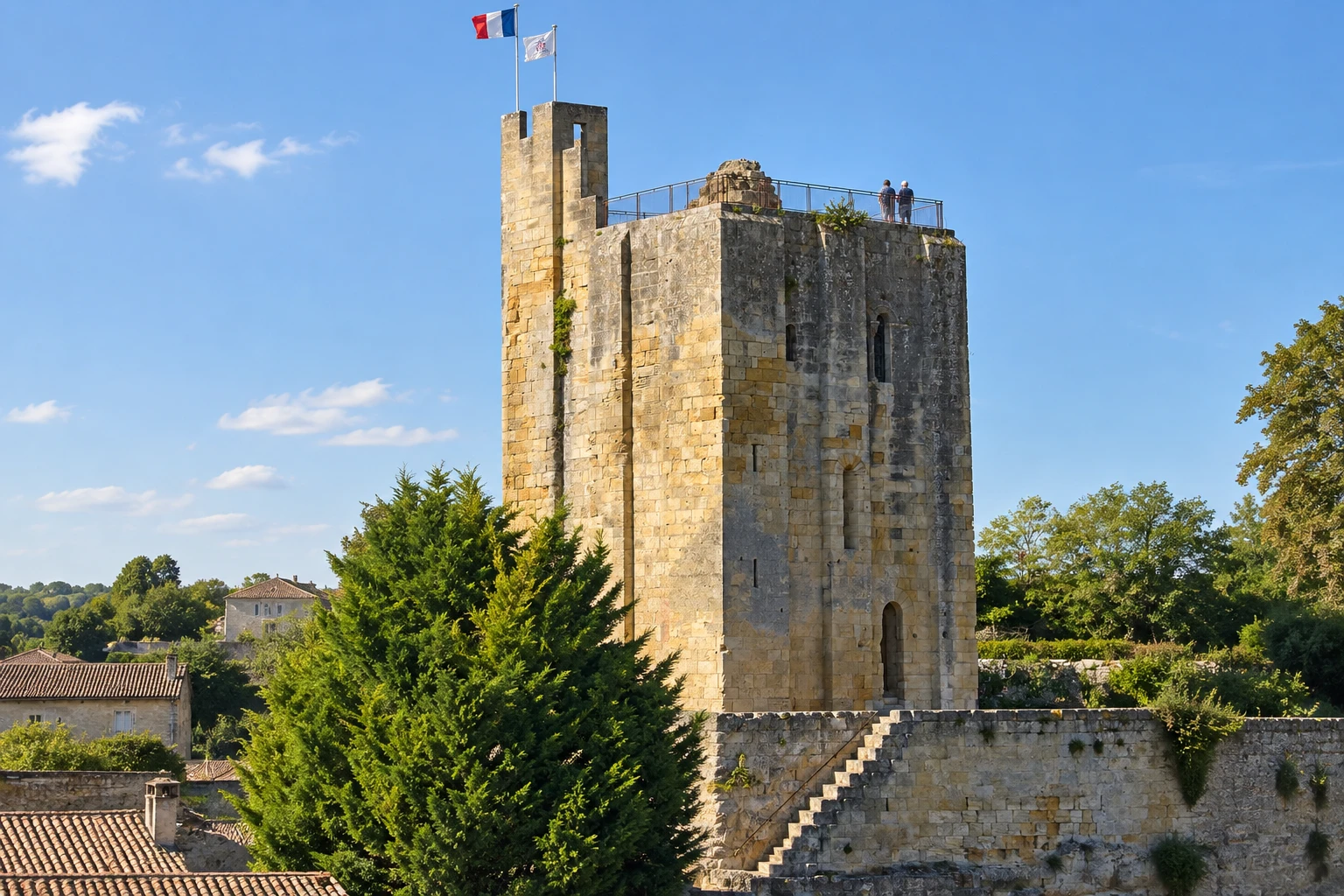
King's Keep · Saint-ÉmilionRomanesque keep tower from the 13th century, the only intact one in the Gironde, with a panoramic terrace overlooking the village and the vineyards.
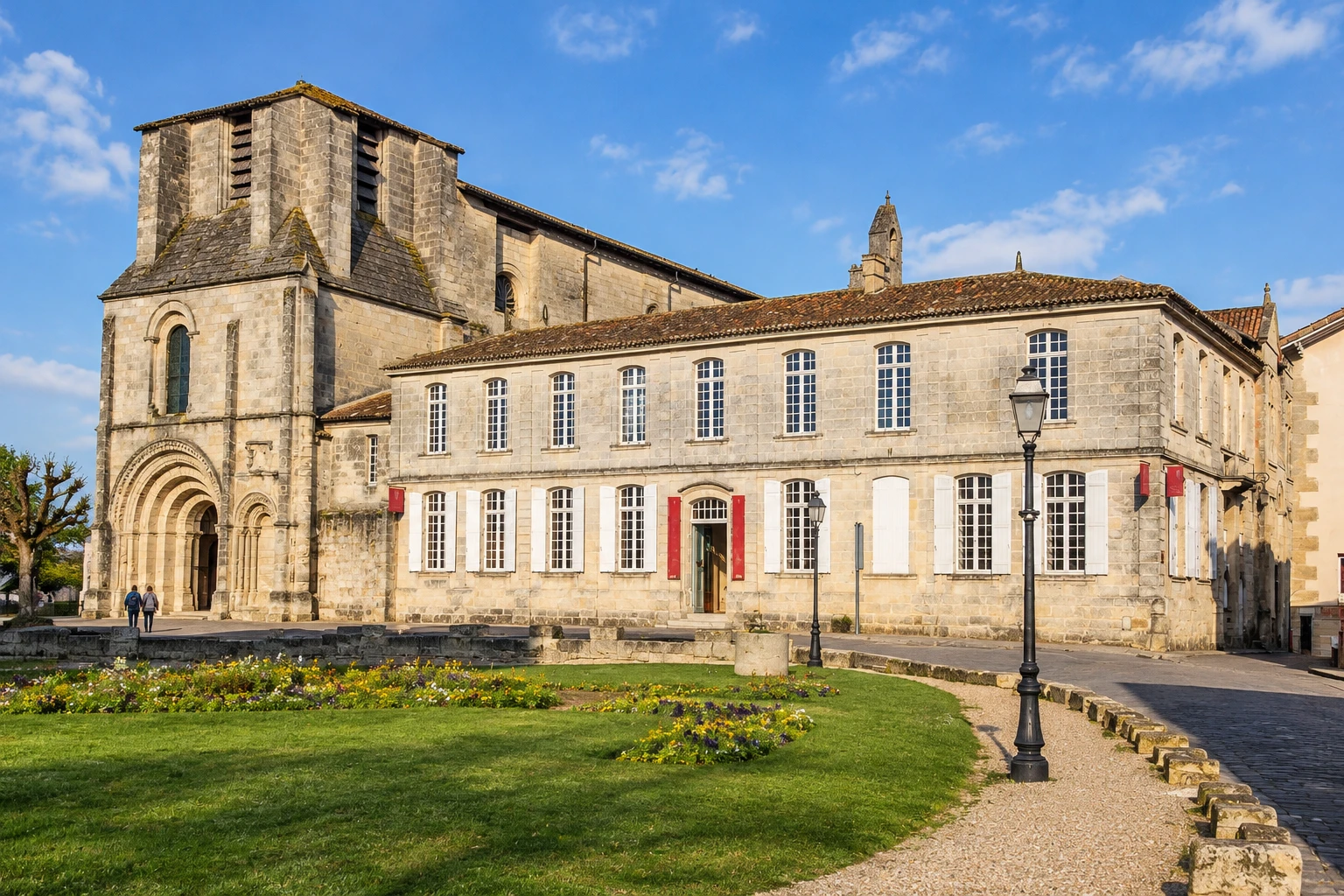
Collegiate Church of Saint-Émilion · Saint-ÉmilionA 12th-century Romanesque and Gothic church, the largest in the upper part of the village, with a cloister housing the tourist office.
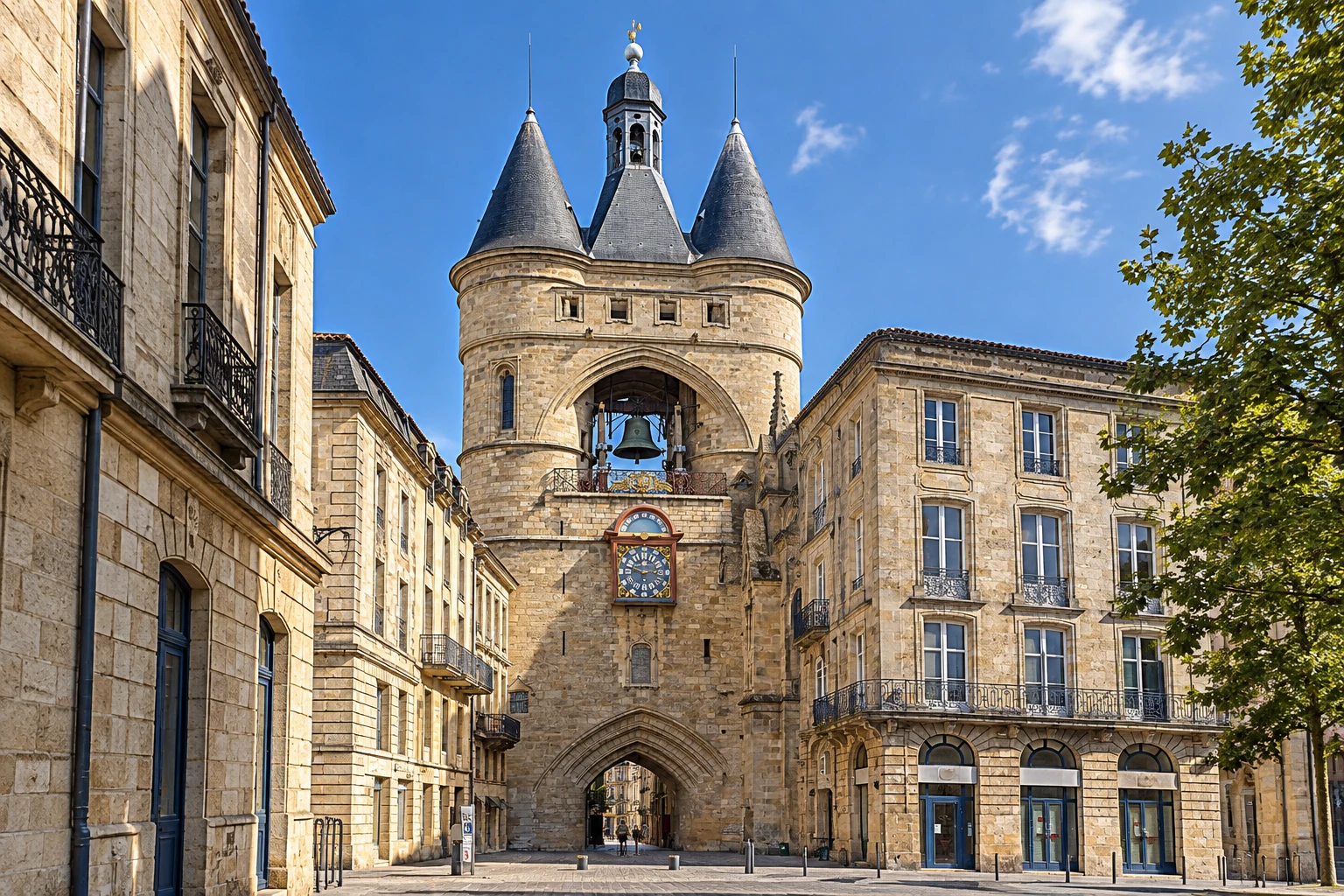
Grosse Cloche · BordeauxFormer gate of the medieval wall and bell tower of the old town hall, with a bell of almost 8 tons that rings only on special dates.
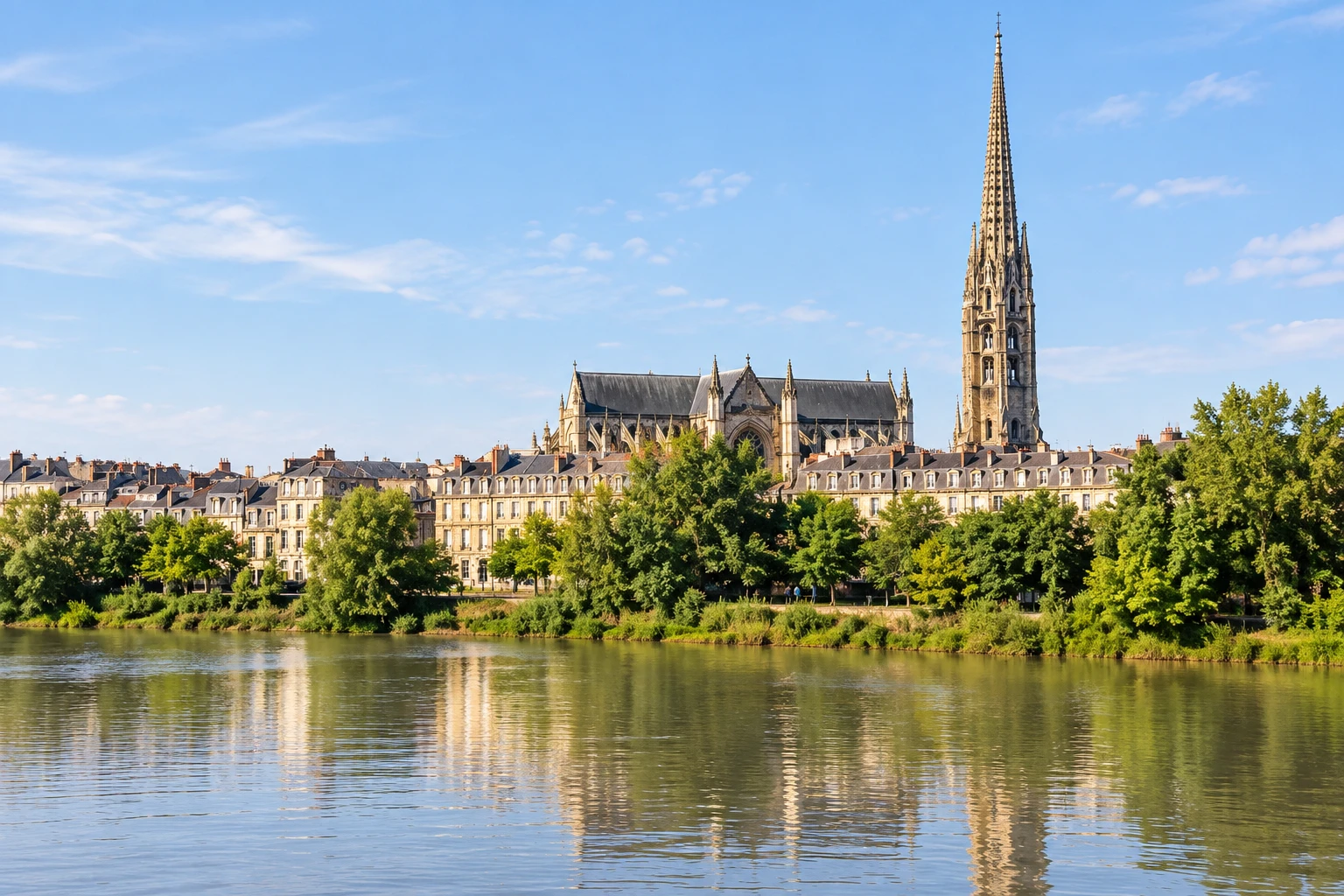
Basilica of Saint Michael, Bordeaux · BordeauxFlamboyant Gothic basilica with a separate 114-metre bell tower, the Flèche Saint-Michel, which has a viewpoint over the city and the Garonne.
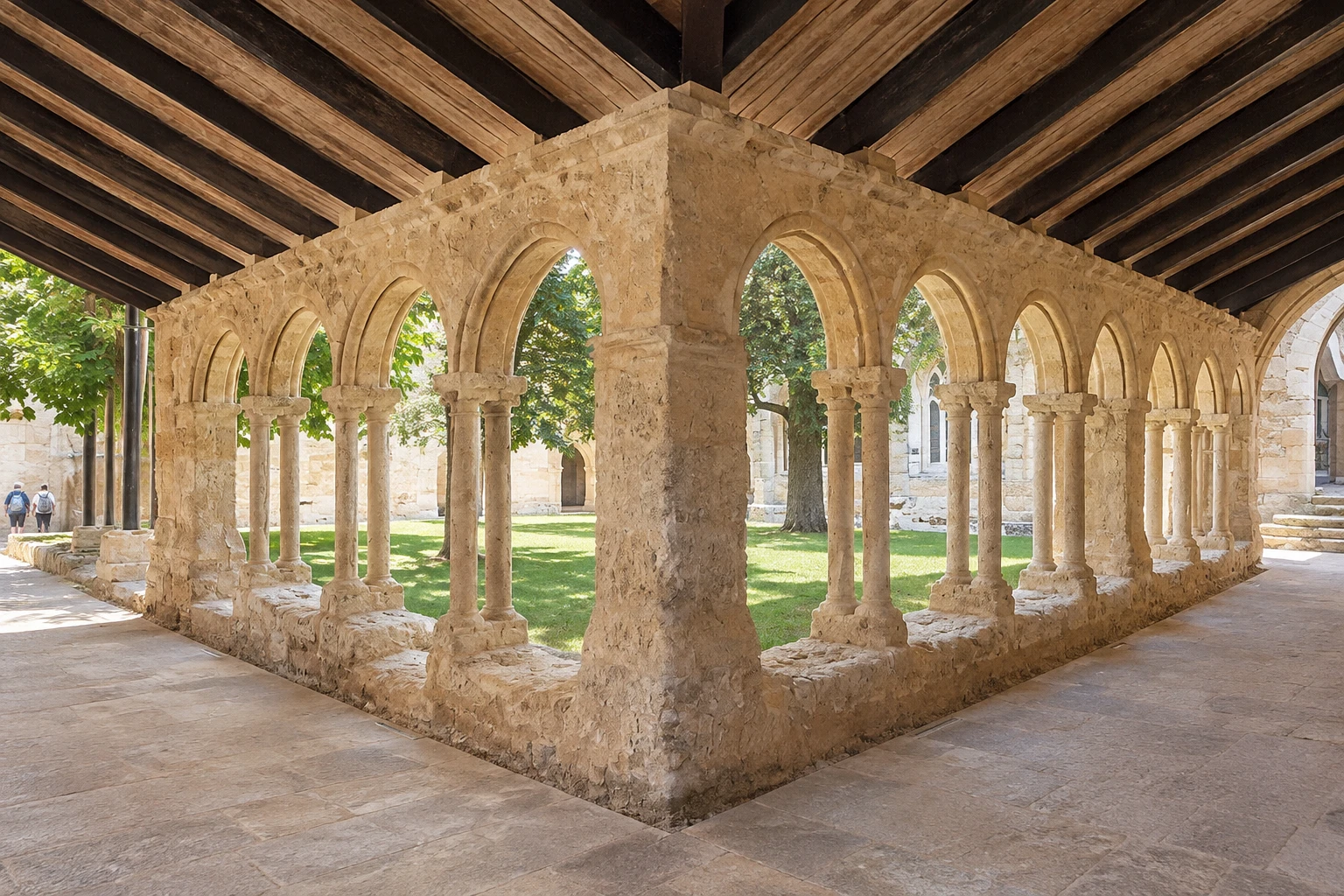
Cordeliers Cloister · Saint-ÉmilionRuins of the 14th-century Franciscan convent, with a columned cloister, garden and rock-cut cellars where sparkling wine is produced.
One by one
All the places, with photos
Saint-Émilion · Nouvelle-Aquitaine · Historic district
Medieval limestone village on a hill above the vineyards, with sloping streets called tertres, ramparts and monuments from the 12th to the 15th centuries.
18th-century square open to the Garonne, framed by two palaces, with the Miroir d'eau in front: a shallow sheet of water that reflects the façades and emits mist.
Cultural centre dedicated to wine worldwide, on the banks of the Garonne, with an interactive permanent exhibition, tasting workshops and a belvedere on the 8th floor.
Gothic cathedral where Eleanor of Aquitaine was married in 1137, with a separate bell tower, the Tour Pey-Berland, which has a viewpoint over the centre.
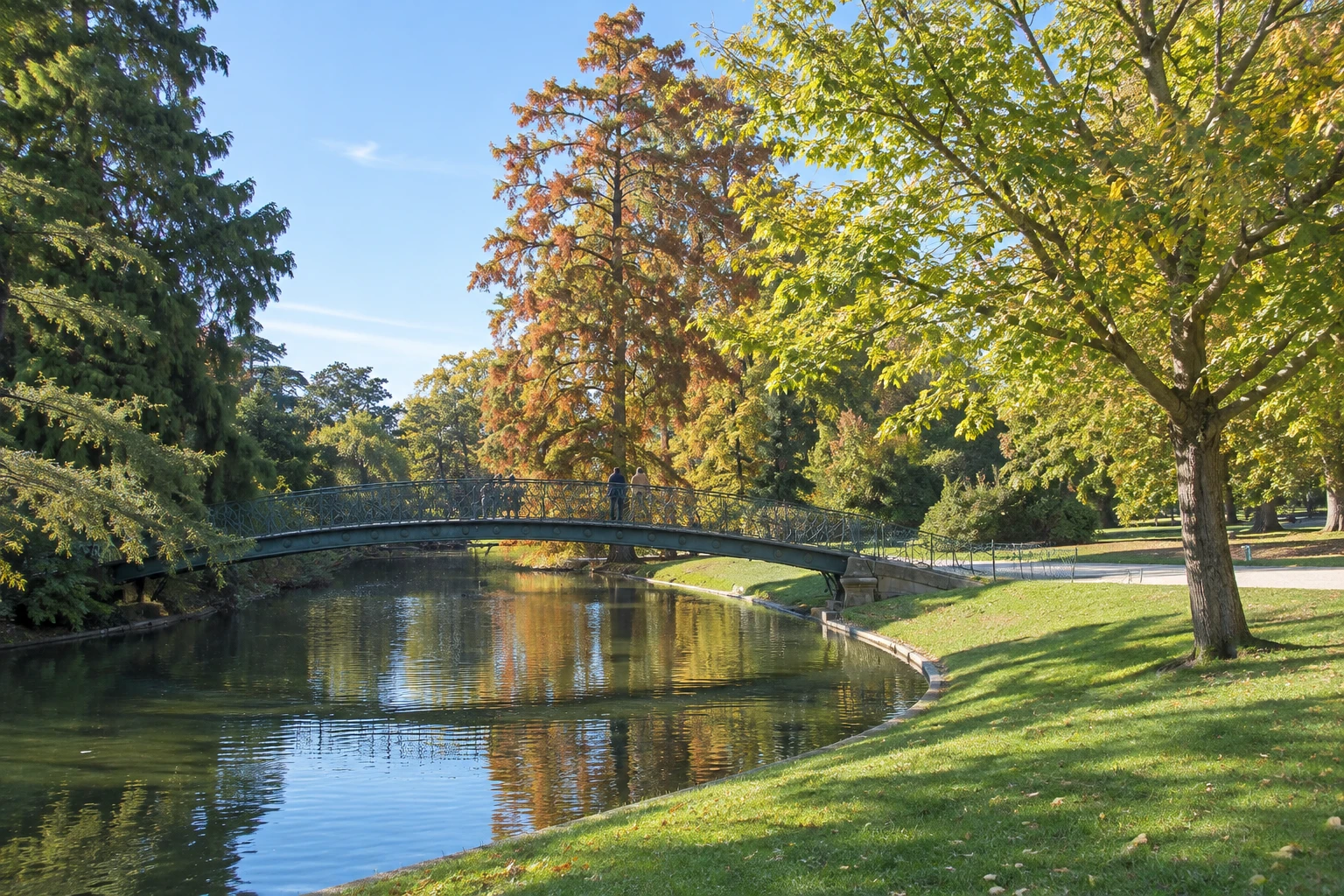
18th-century park in the city centre, redesigned in the English style in the 19th century, with a lake, century-old trees and the Muséum of natural history.
How many days should you set aside to see Bordeaux and Its Vineyards?
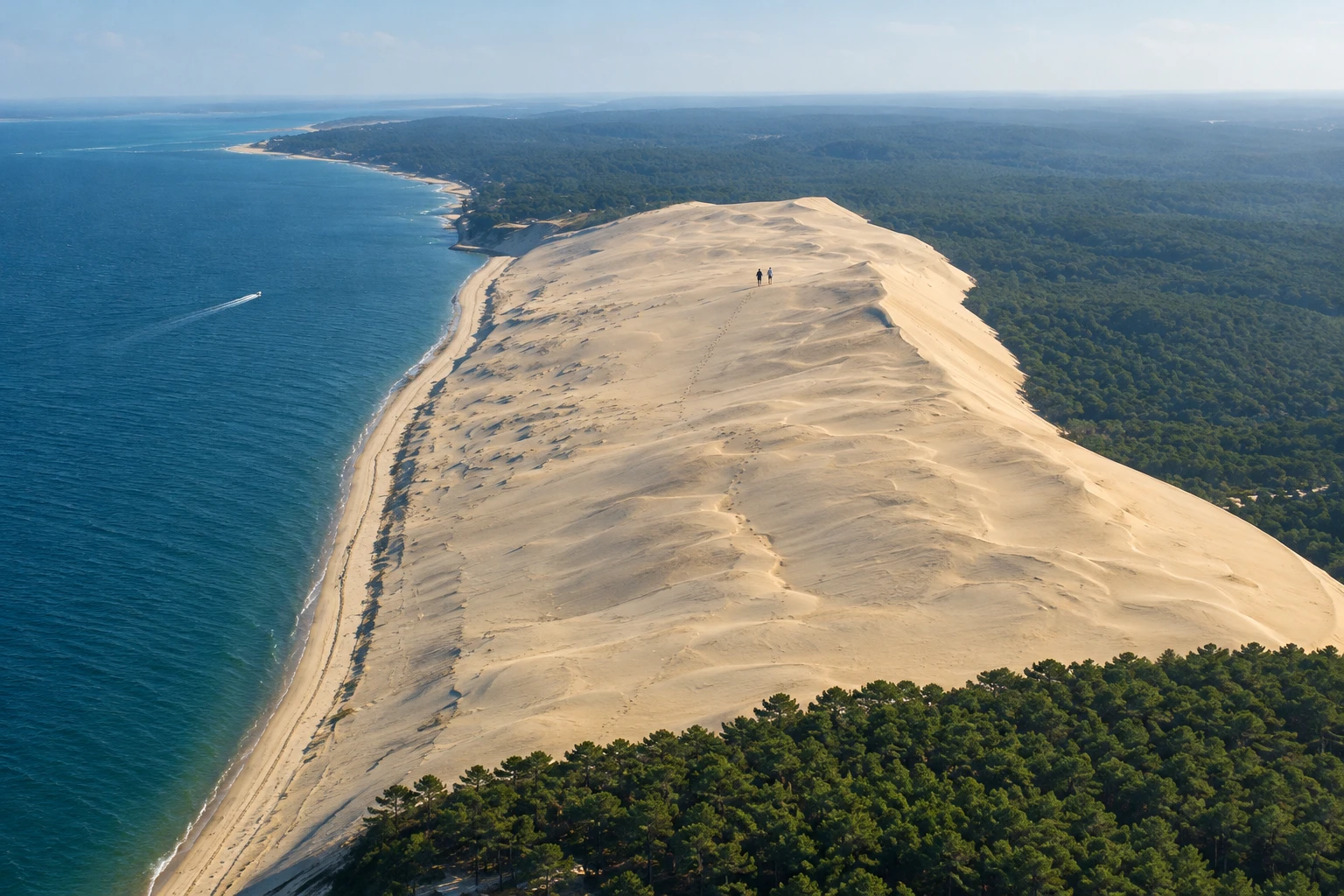
The guide's itineraries cover 2, 3 and 5 days: in 2 days, historic center, Cité du Vin and Saint-Émilion; in 3 days, city, Saint-Émilion and Médoc; Bordeaux and the vineyards in 5 days, with the Dune du Pilat and Arcachon.
What to do Bordeaux and Its Vineyards in one day?
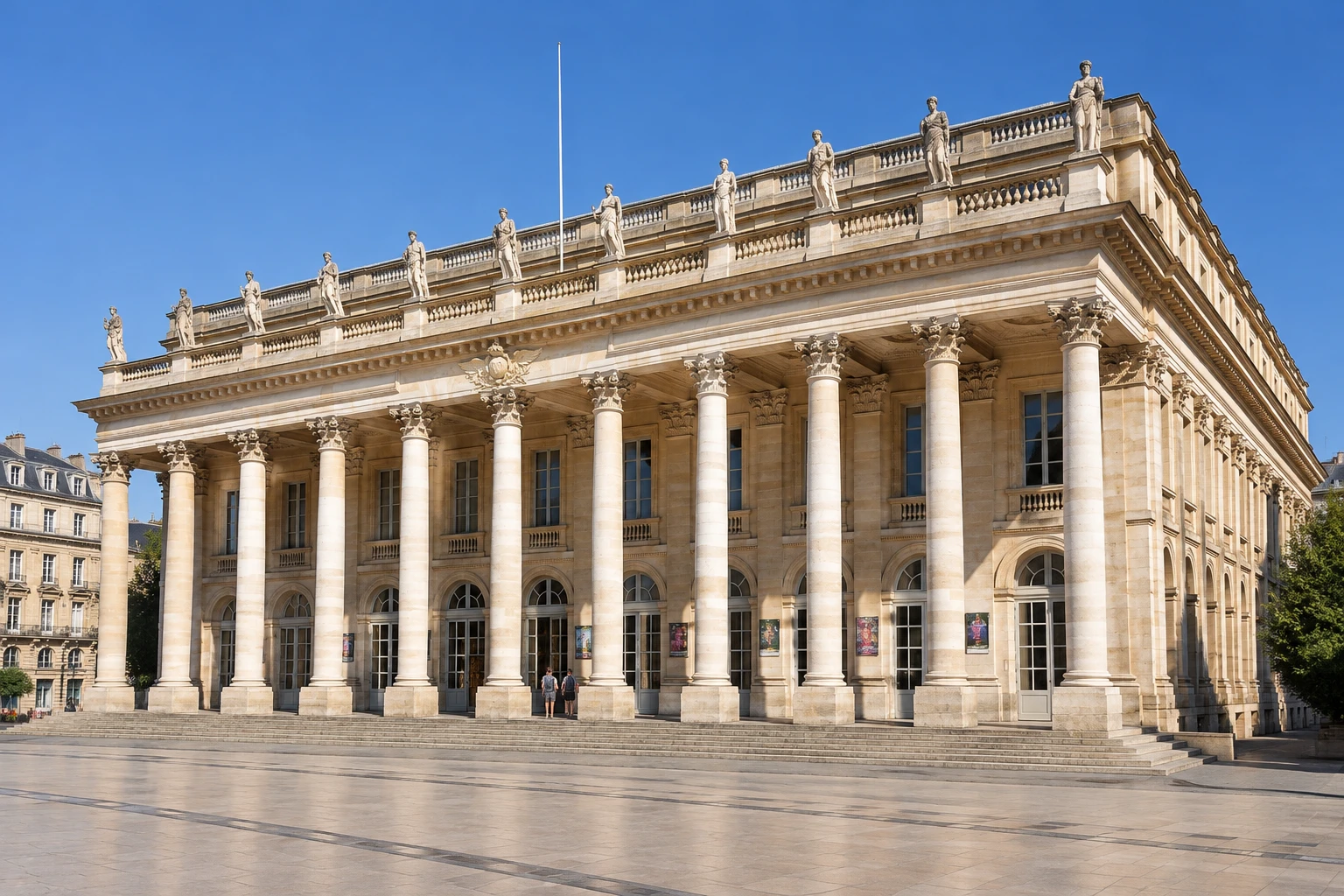
Arrival and historic center. If you come from Brazil you arrive in Paris in the morning on the overnight flight. From Charles de Gaulle there are some direct TGVs to Bordeaux, about 3 hours and 40 minutes; the other option is to go to Paris-Montparnasse and take a direct TGV, about 2 hours. Arriving in the early afternoon, leave your bags and do the walk at Place de la Bourse, Miroir d'eau and the quays of the Port de la Lune. Continue on foot through the historic center to the Grand-Théâtre and the Grosse Cloche. At the end of the day, return to the quays to see the façade lit up. Sleep early: the time difference hits on the first day.
When is the best time to go to Bordeaux and Its Vineyards?
It generally rains less from June to August. The rainiest months are usually from November to January. The guide covers each month, with the weather and what changes on the tours.


 Brazil
 Antarctica
 Argentina
 Bolivia
 Chile
 Colombia
 Ecuador
 Falkland Islands (Malvinas)
 French Guiana
 Guyana
 Paraguay
 Peru
 Suriname
 Uruguay
 Venezuela
 Austria
 Belgium
 Croatia
 Denmark
 Finland
 Germany
 Greece
 Hungary
 Iceland
 Ireland
 Italy
 Luxembourg
 Norway
 Poland
 Portugal
 Slovakia
 Slovenia
 Spain
 Sweden
 Switzerland
 the Czech Republic
 the Netherlands
 the United Kingdom
 Turkey
 Bermuda
 Canada
 Greenland
 Mexico
 Saint Pierre and Miquelon
 the United States
 the Dominican Republic
 Japan
 Egypt
 South Africa
 Australia
 Fiji
 New Zealand
 Papua New Guinea