Modernist complex
City of Arts and Sciences
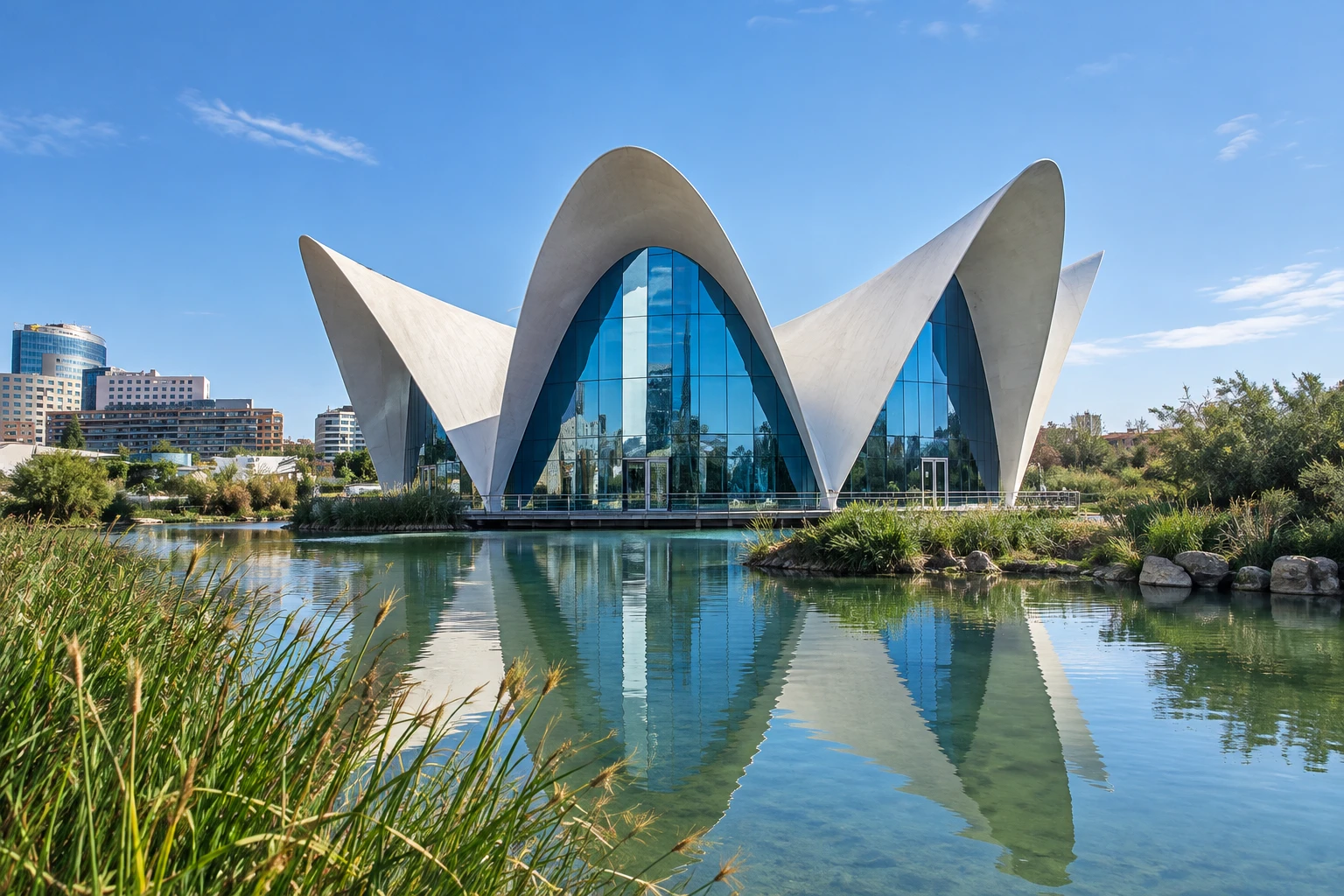
Group of white buildings by Santiago Calatrava and Félix Candela at the end of the Jardí del Túria, with a science museum, planetarium, opera house, Oceanogràfic and water mirrors.

 Search
 Brazil
 Antarctica
 Argentina
 Bolivia
 Chile
 Colombia
 Ecuador
 Falkland Islands (Malvinas)
 French Guiana
 Guyana
 Paraguay
 Peru
 Suriname
 Uruguay
 Venezuela
 Austria
 Belgium
 Croatia
 Denmark
 Finland
 France
 Germany
 Greece
 Hungary
 Iceland
 Ireland
 Italy
 Luxembourg
 Norway
 Poland
 Portugal
 Slovakia
 SloveniaSpain
 Sweden
 Switzerland
 the Czech Republic
 the Netherlands
 the United Kingdom
 Turkey
 Bermuda
 Canada
 Greenland
 Mexico
 Saint Pierre and Miquelon
 the United States
 the Dominican Republic
 JapanTurkey
 Egypt
 South Africa
 Australia
 Fiji
 New Zealand
 Papua New Guinea
Valencian Community
16 places to visit Valencia (Spain), chosen by the Cidade Turismo guide.
Illustrative images. The pictures in this guide are illustrations based on the real place, not photographs, and may differ from it.
To start
One by one
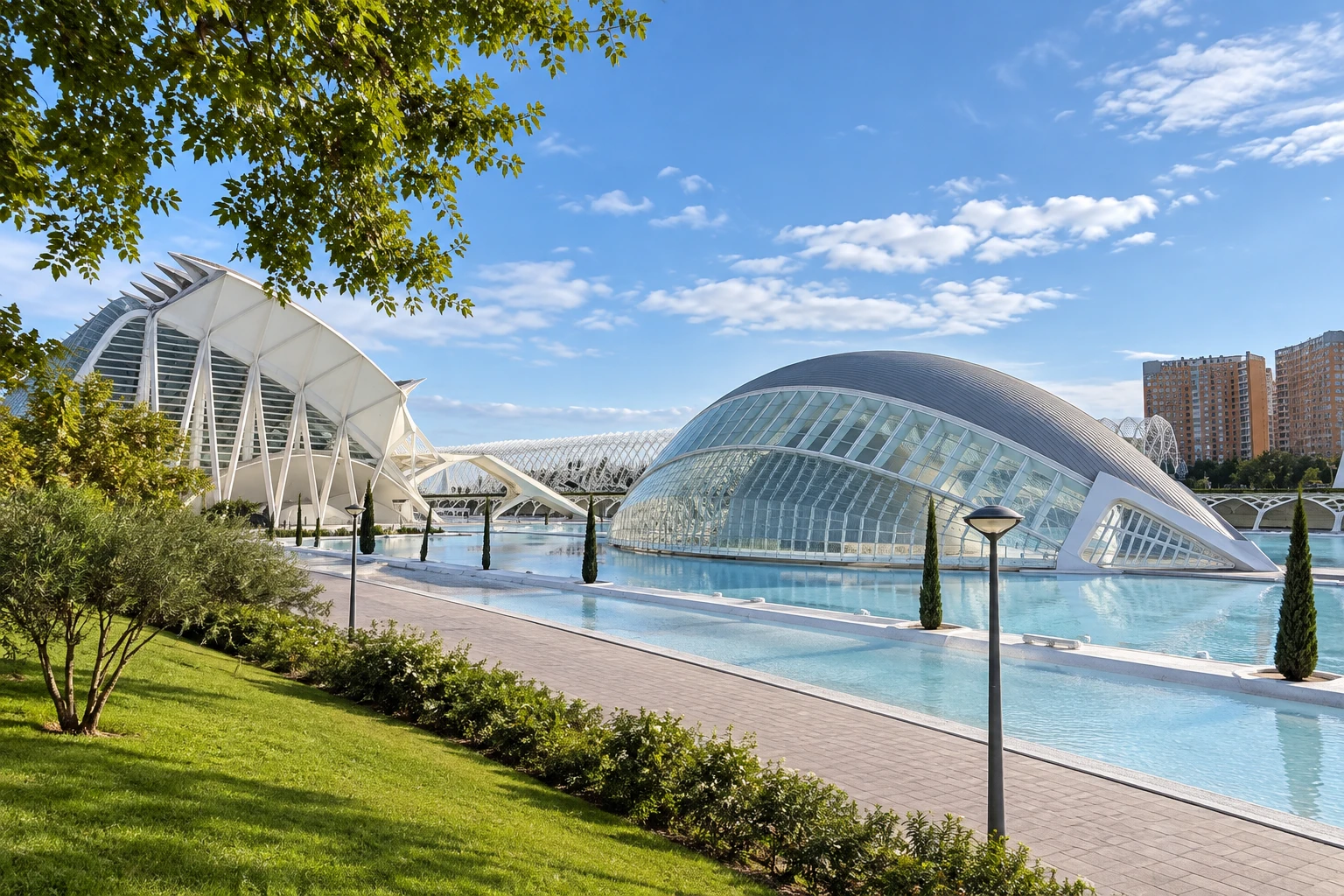
Group of white buildings by Santiago Calatrava and Félix Candela at the end of the Jardí del Túria, with a science museum, planetarium, opera house, Oceanogràfic and water mirrors.
Aquarium inside the Ciutat de les Arts i les Ciències, with pavilions of marine ecosystems, an underwater shark tunnel, a dolphinarium and the wave-shaped roof by Félix Candela.
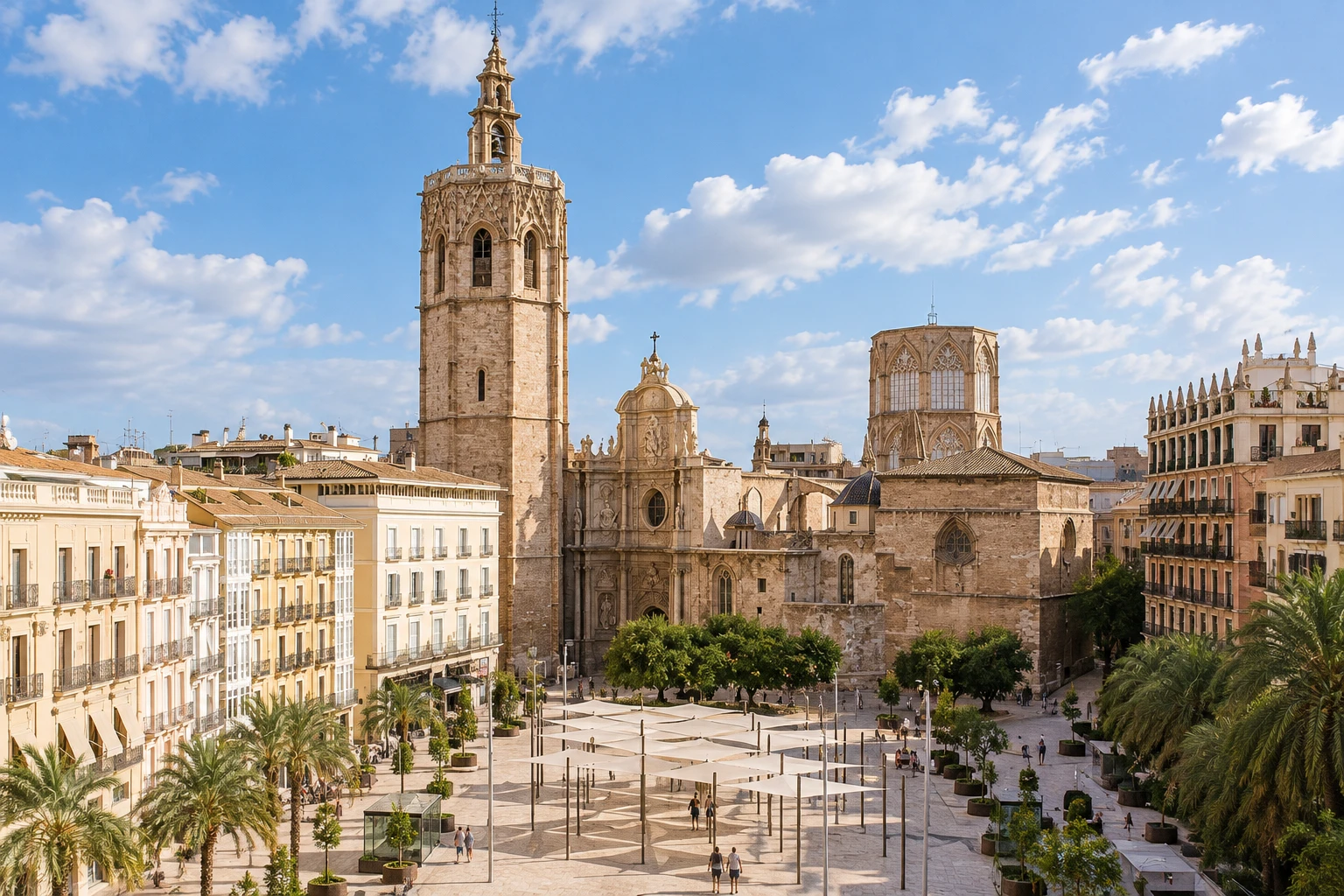
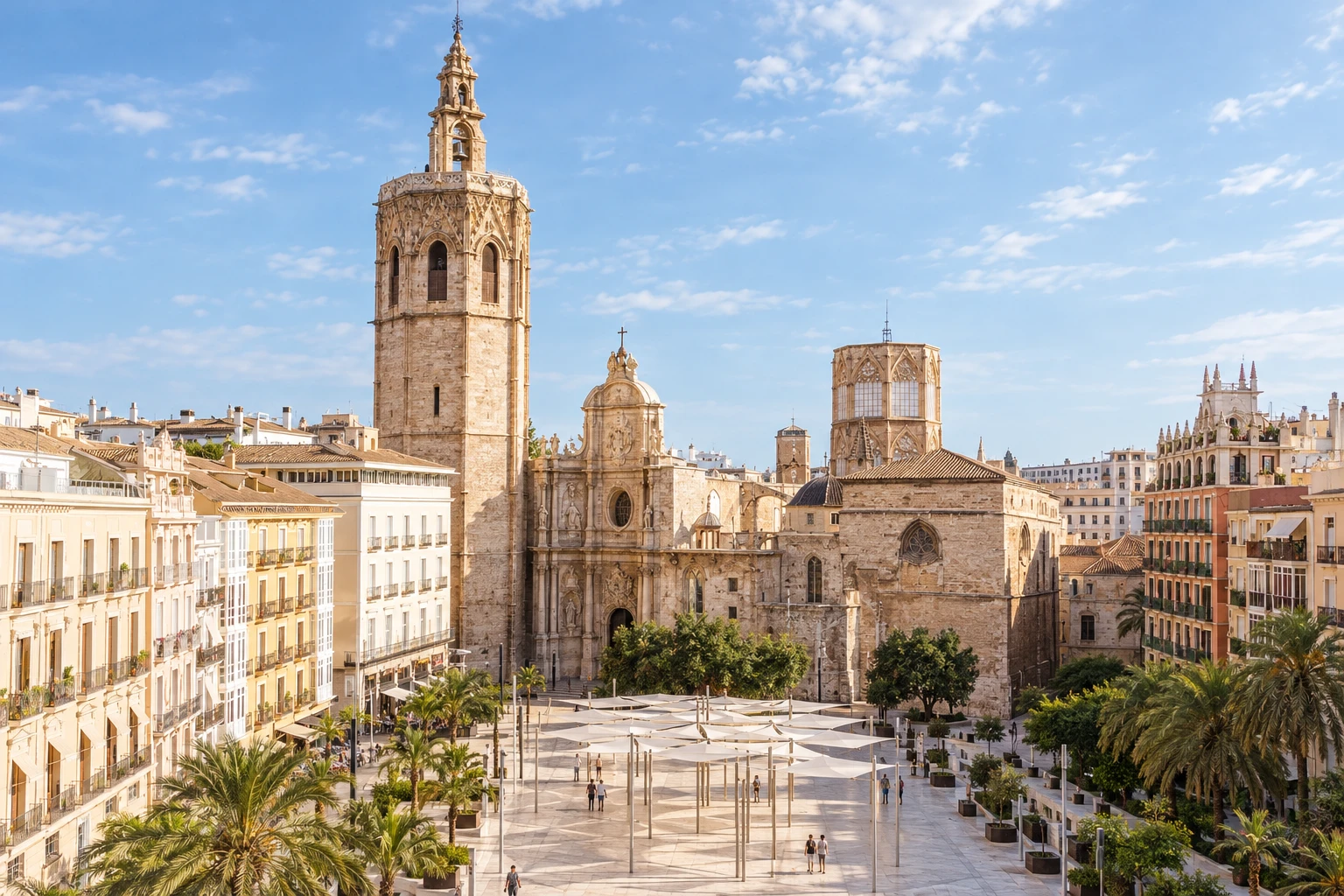
Gothic cathedral begun in 1262 on the site of the former mosque, with three doors of different styles, the Micalet bell tower and a chapel that houses a chalice venerated as the Holy Grail.
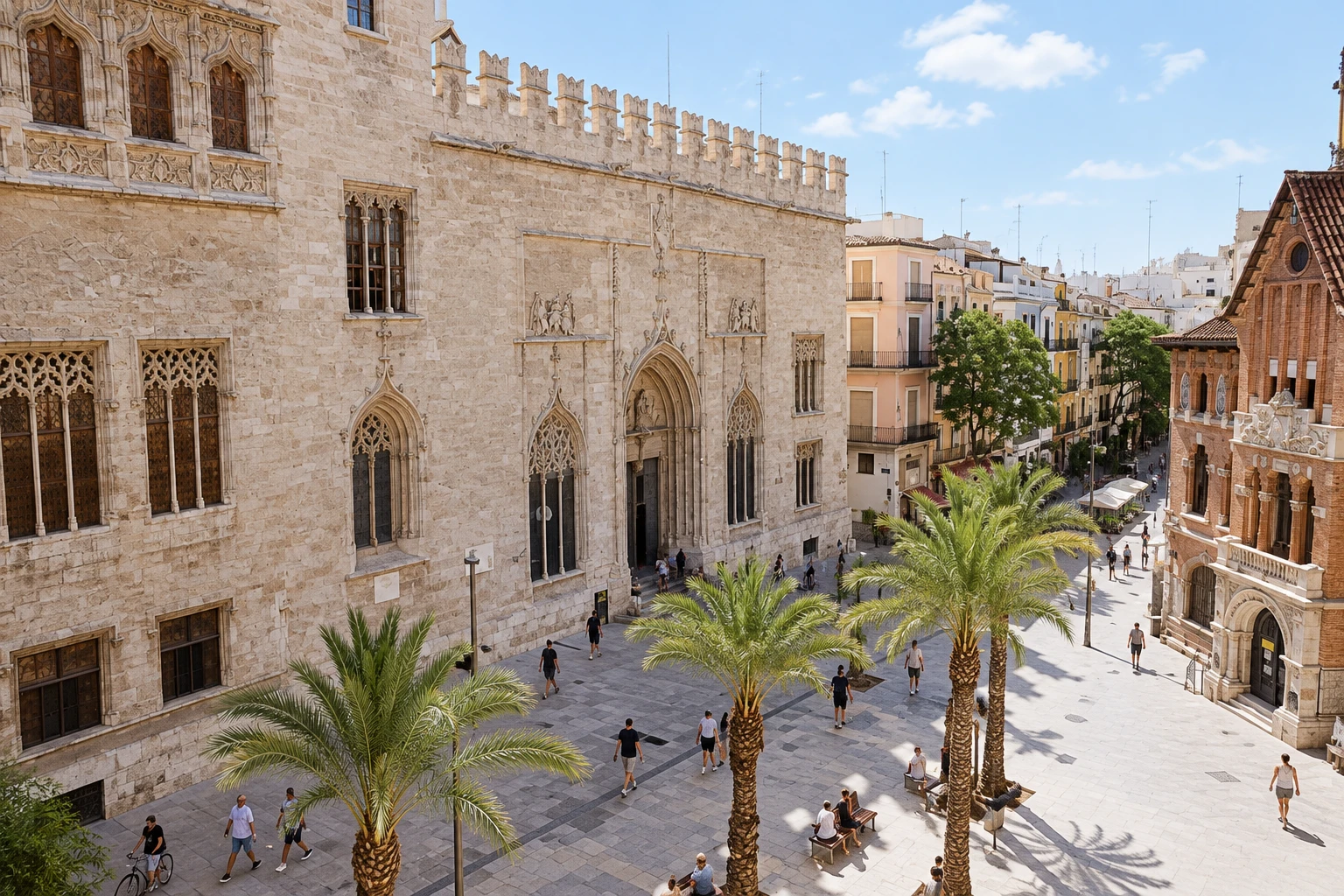
Former silk exchange from the late 15th century, featuring the Hall of Columns with twisted trunks, the Orange Courtyard and gargoyles on the façade. UNESCO World Heritage.
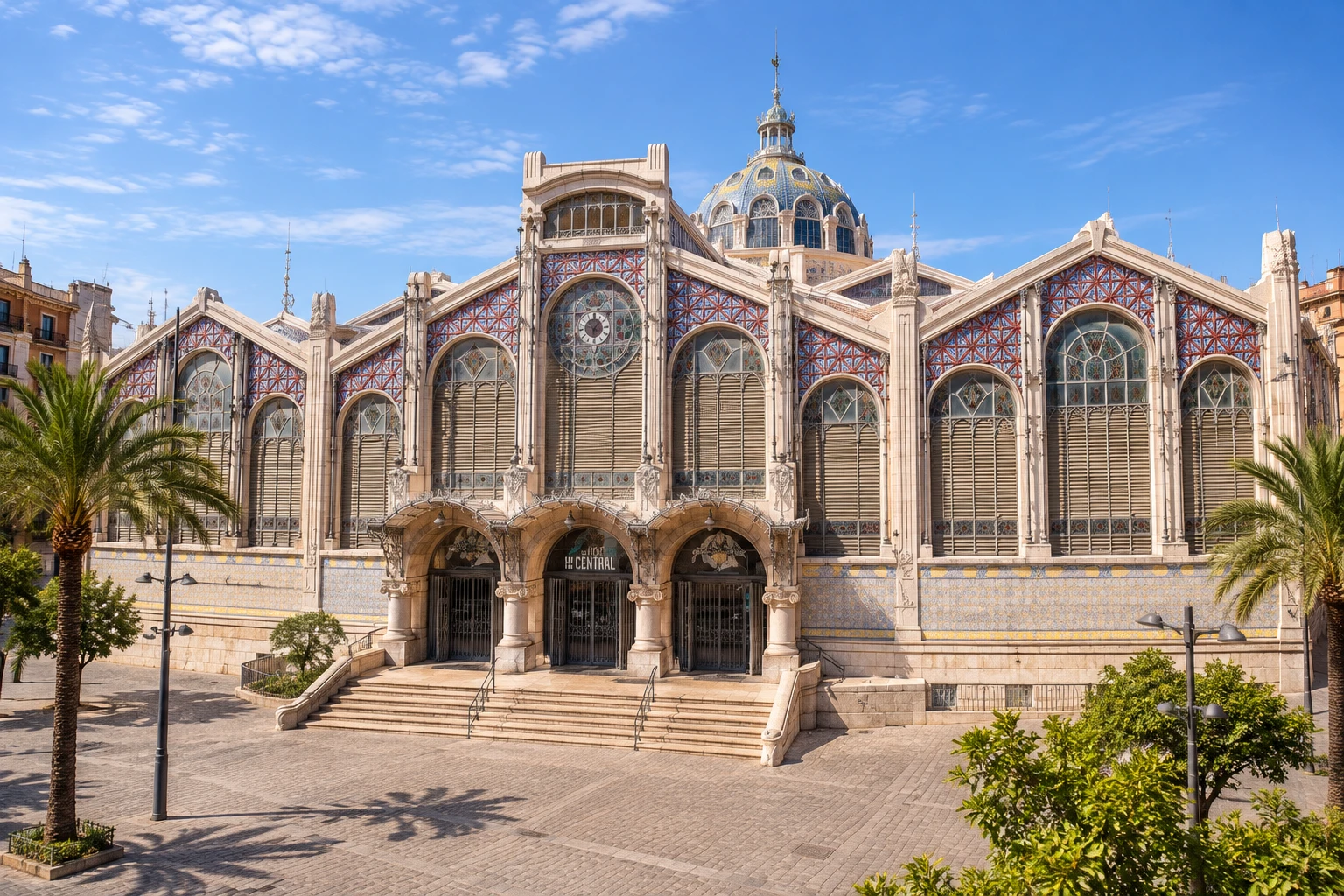
Modernist market from 1928, built of iron, glass and tiles, with hundreds of stalls selling fruit, seafood, ham, rice and the region's horchatas.
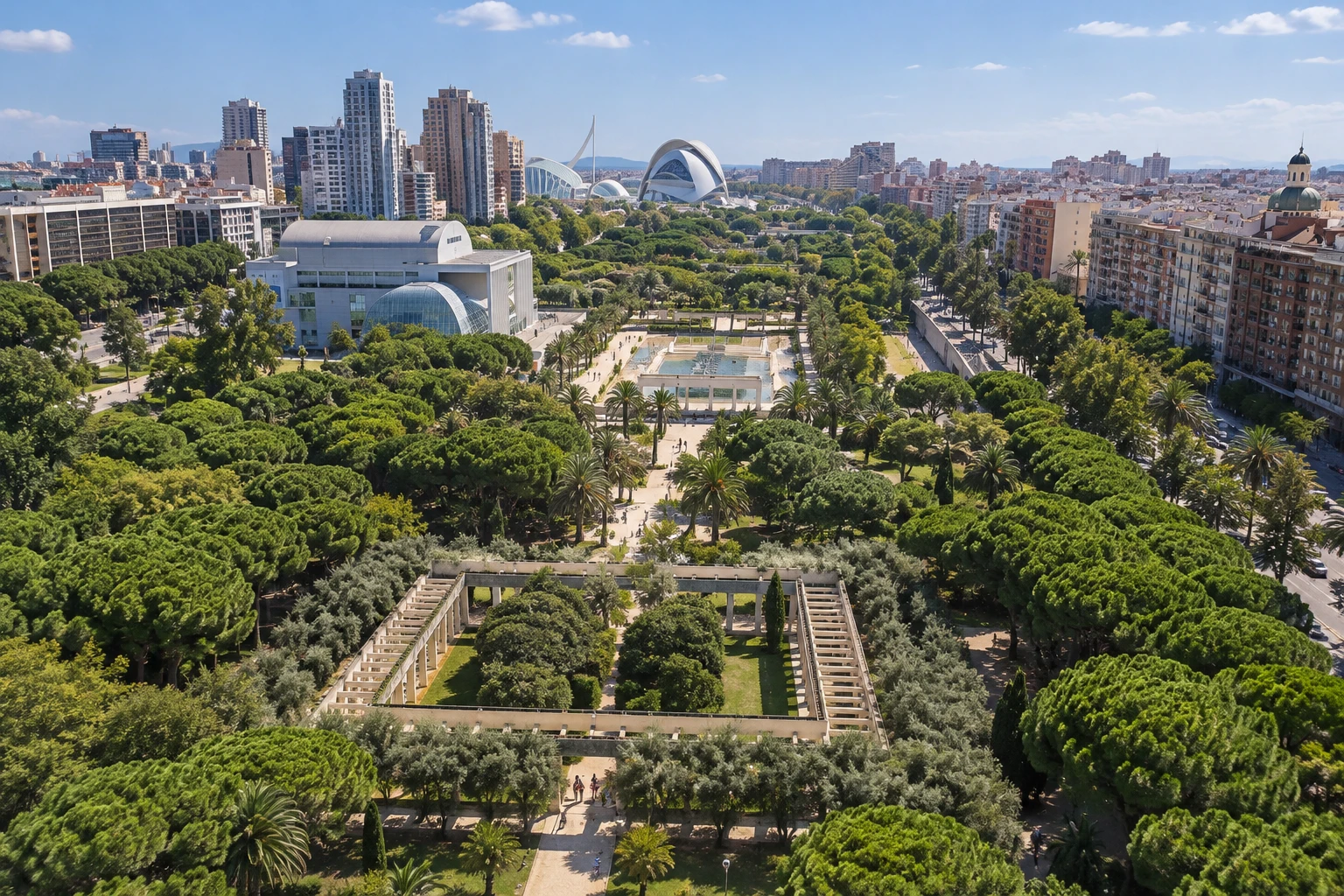
A park of about 9 km in the former riverbed of the Túria, diverted after the 1957 flood, with gardens, bike paths, sports fields and medieval bridges crossing it.
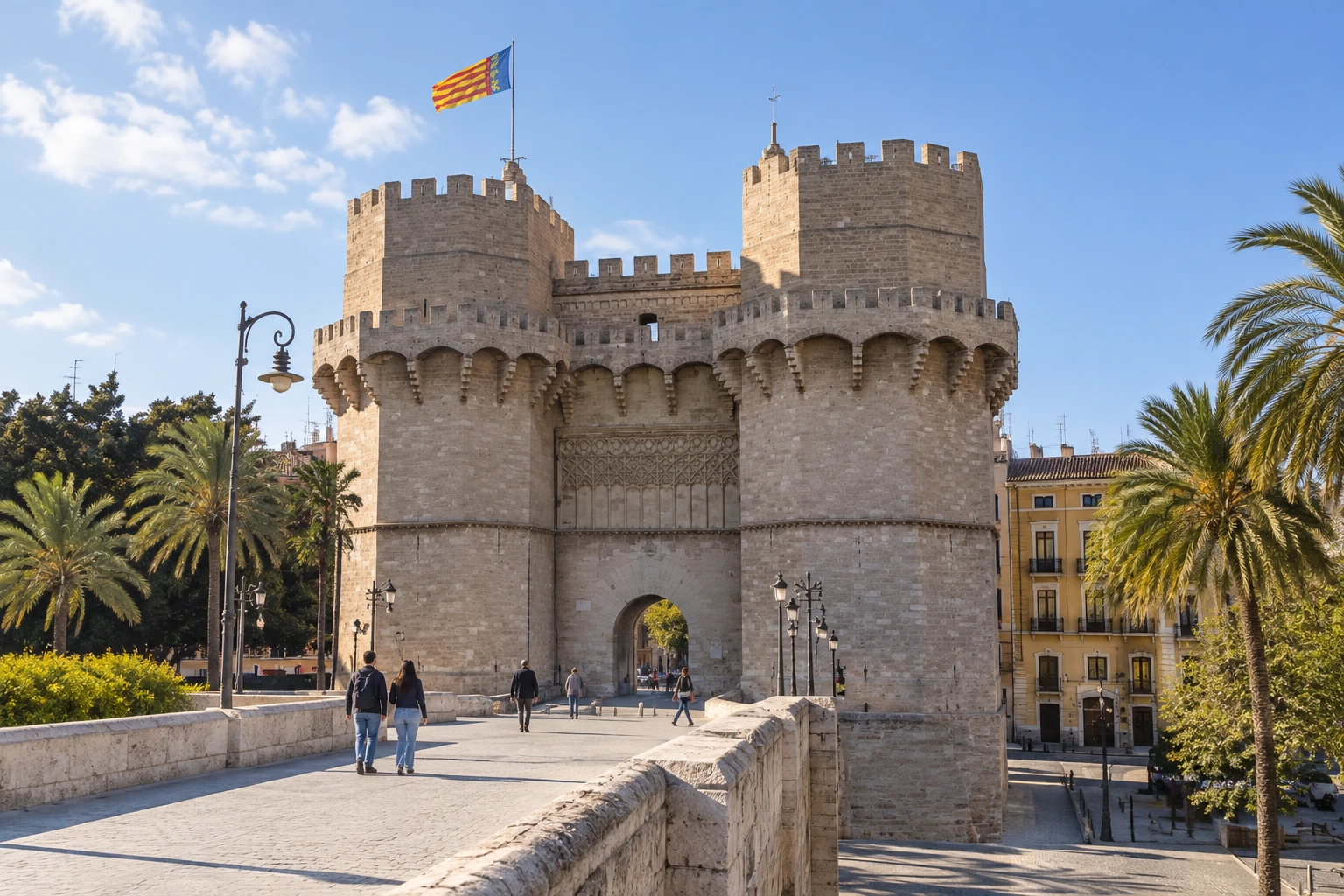
A 1392 gate of Valencia's former Christian wall, with two polygonal towers over the bed of the Túria. The climb offers views of the center and the garden.
15th-century gate at the western exit of the medieval wall, with two cylindrical towers that still bear cannonball marks from the war against Napoleon.
Ceramics and decorative arts museum in the Palau del Marquès de Dos Aigües, with a baroque alabaster façade, period salons, carriages, and Valencian tiles.
Explore González Martí National Museum of Ceramics and Decorative Arts
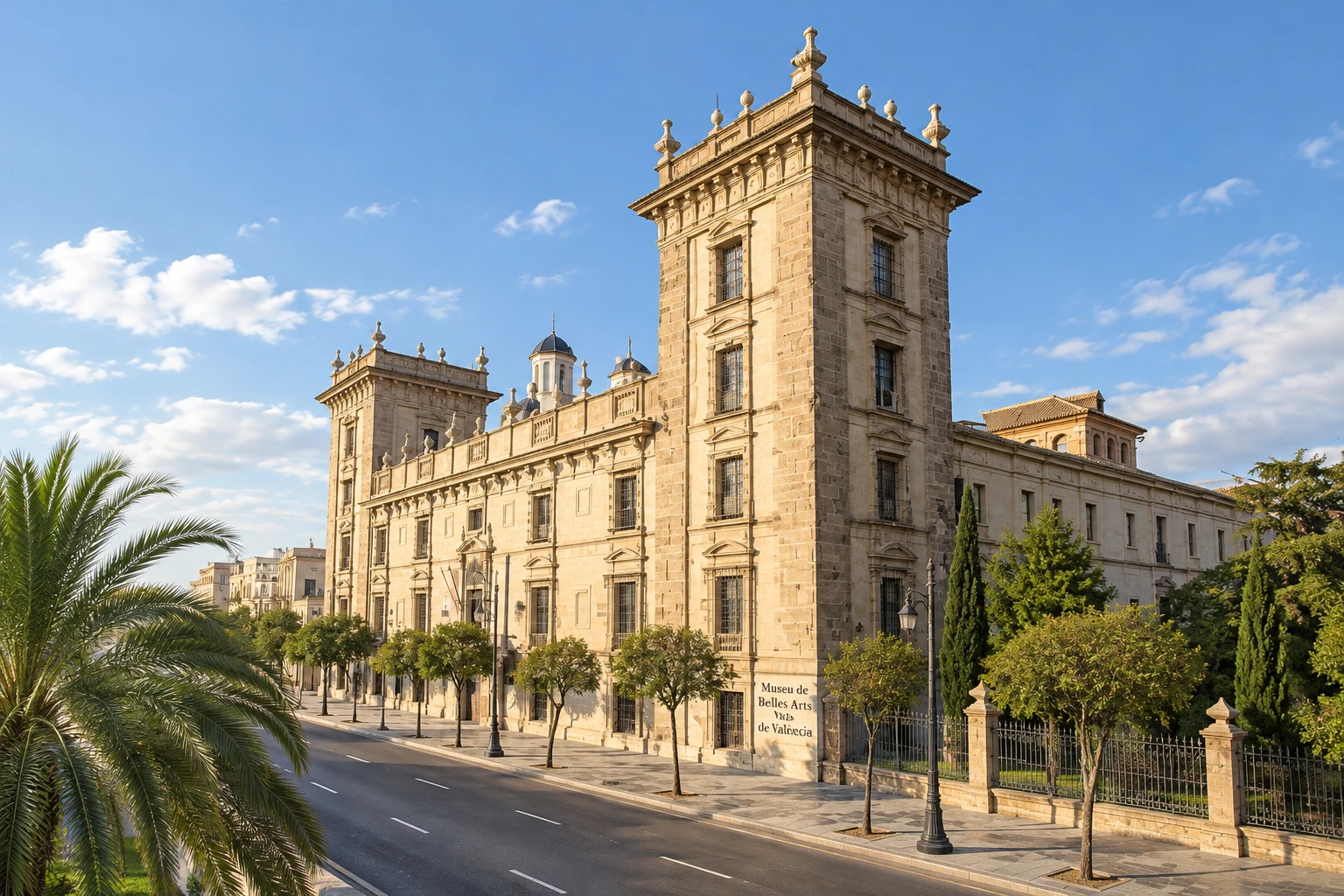
Picture gallery in the former Colegio de San Pío V, next to the Turia, with Valencian Gothic altarpieces, Velázquez, Goya, El Greco and a large Joaquín Sorolla room.
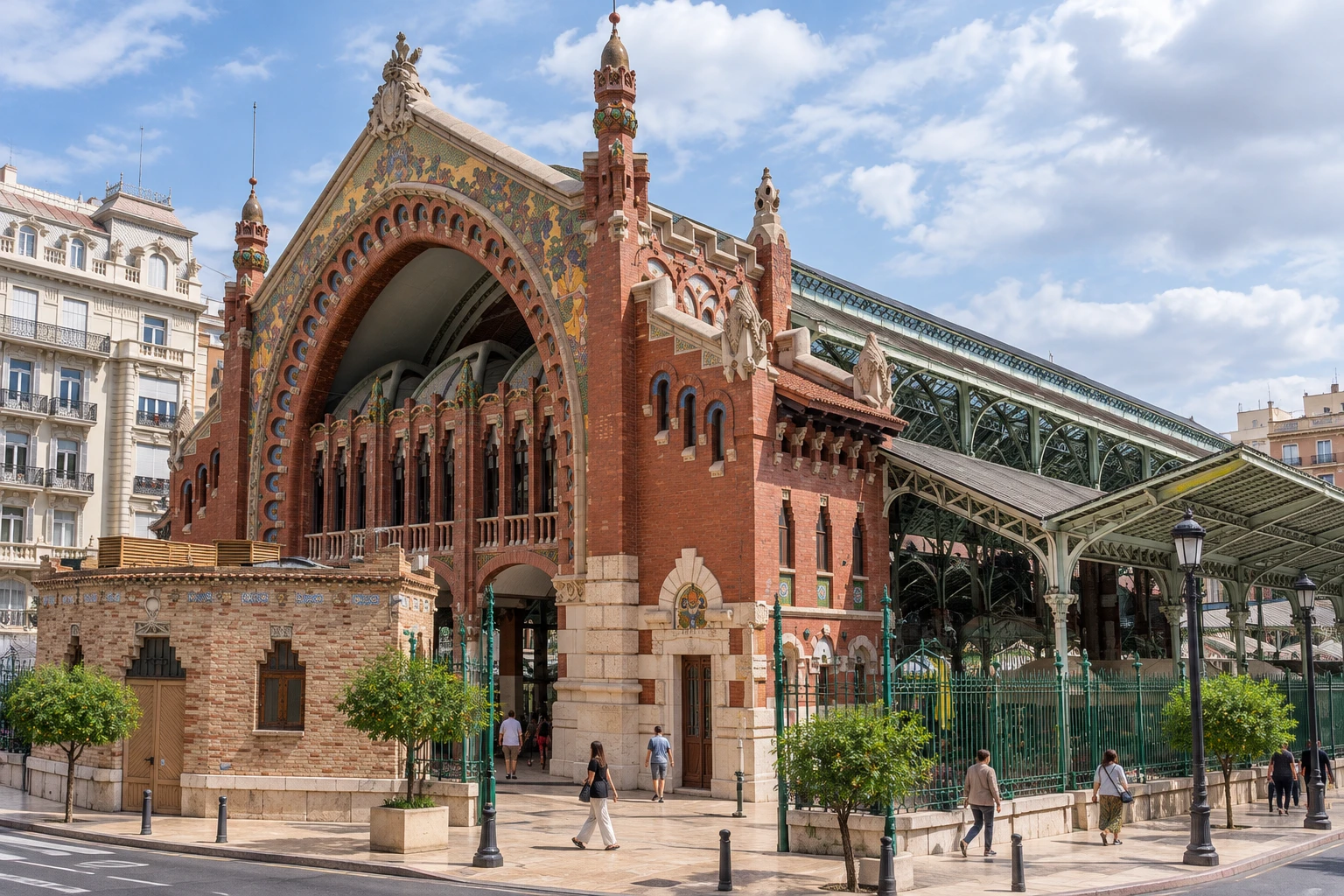
Modernist market from 1916 in the Eixample neighborhood, with ceramic and iron facades, now occupied by cafés, horchaterías and restaurants.
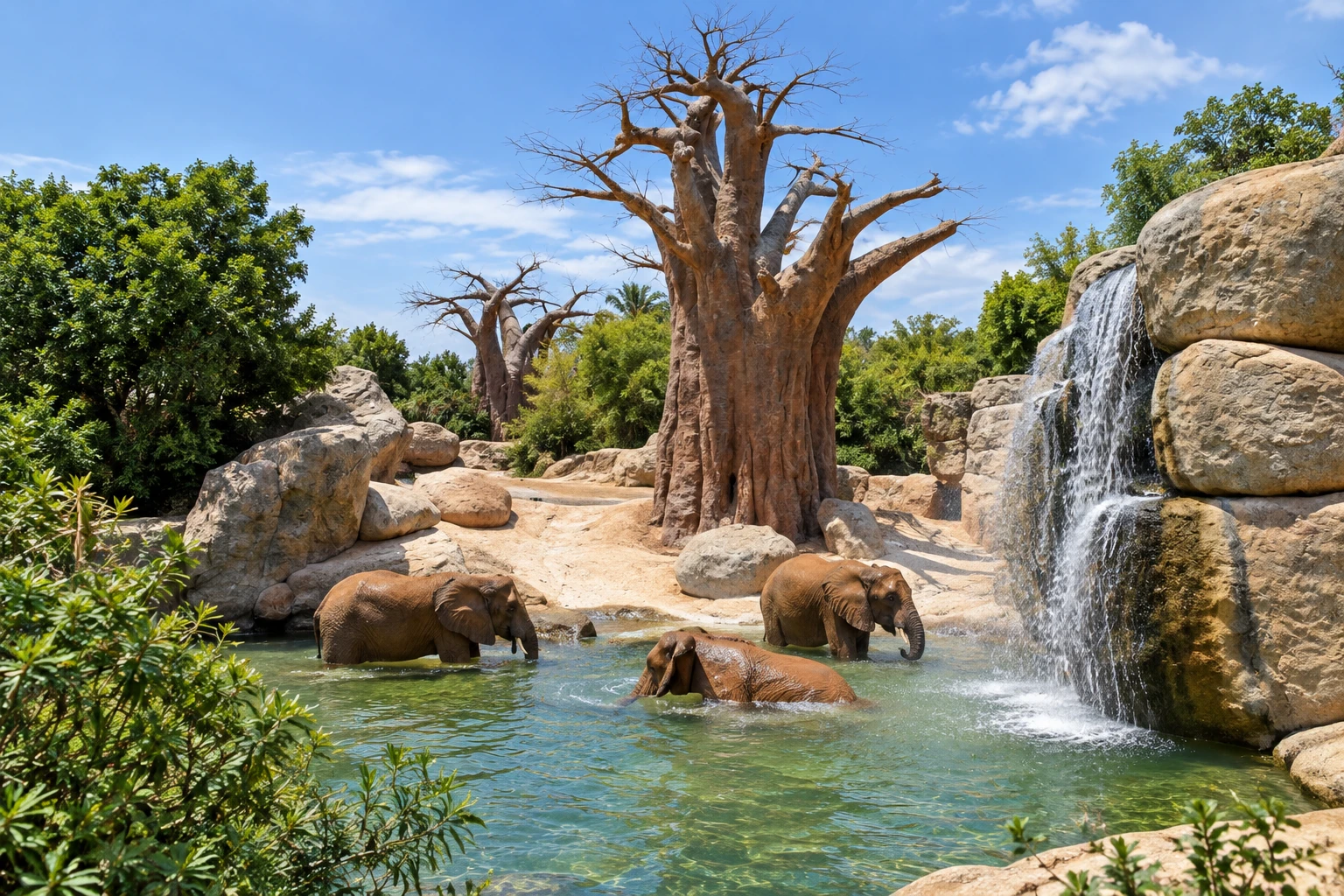
Immersive zoo dedicated to Africa, next to Parque de Cabecera, where animals are kept in enclosures that recreate savanna, equatorial forest and Madagascar, with no visible bars.
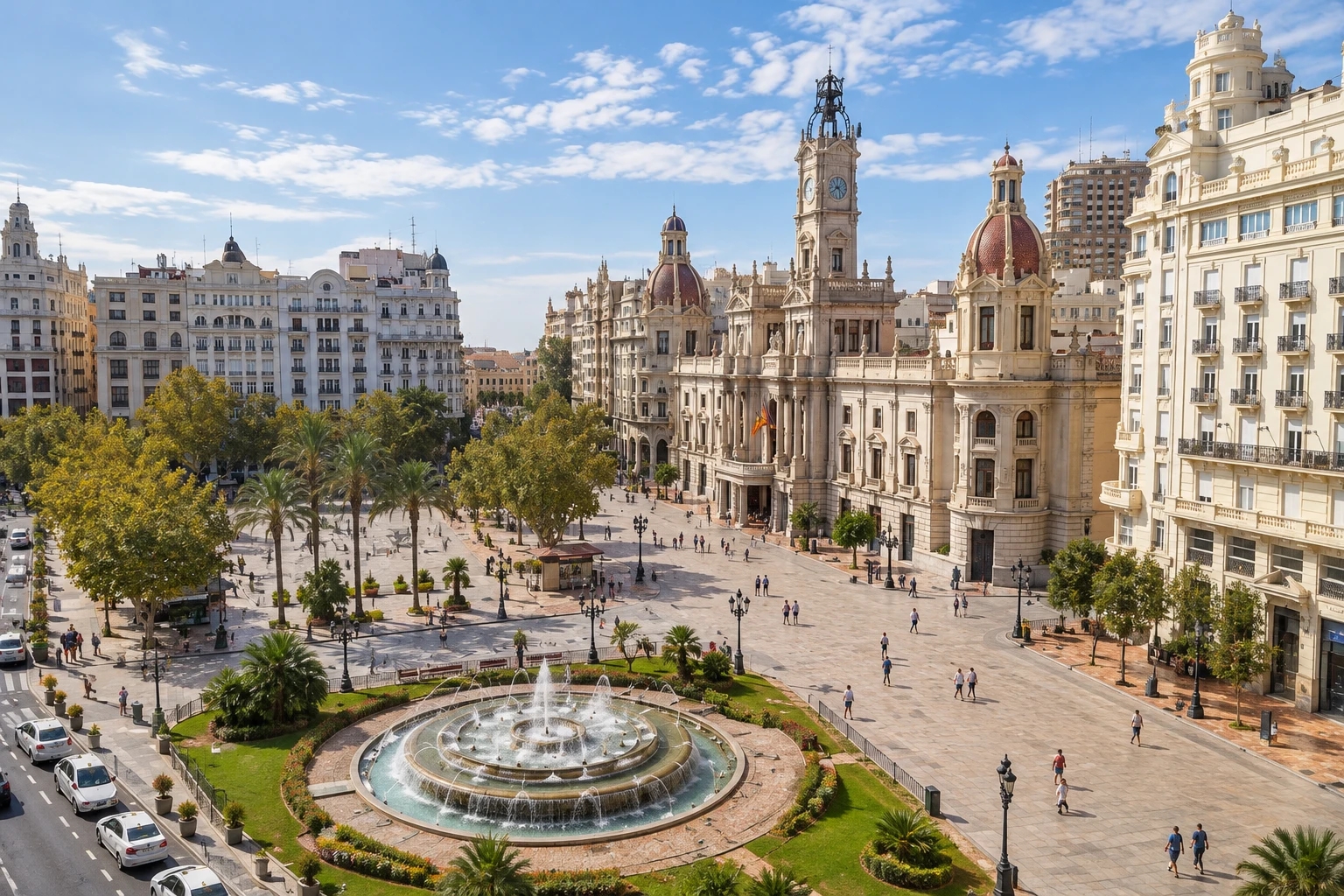
Central square of Valencia, surrounded by early‑20th‑century buildings, including the city hall and the post office. During Las Fallas it hosts the daily mascletà and the city’s largest falla.
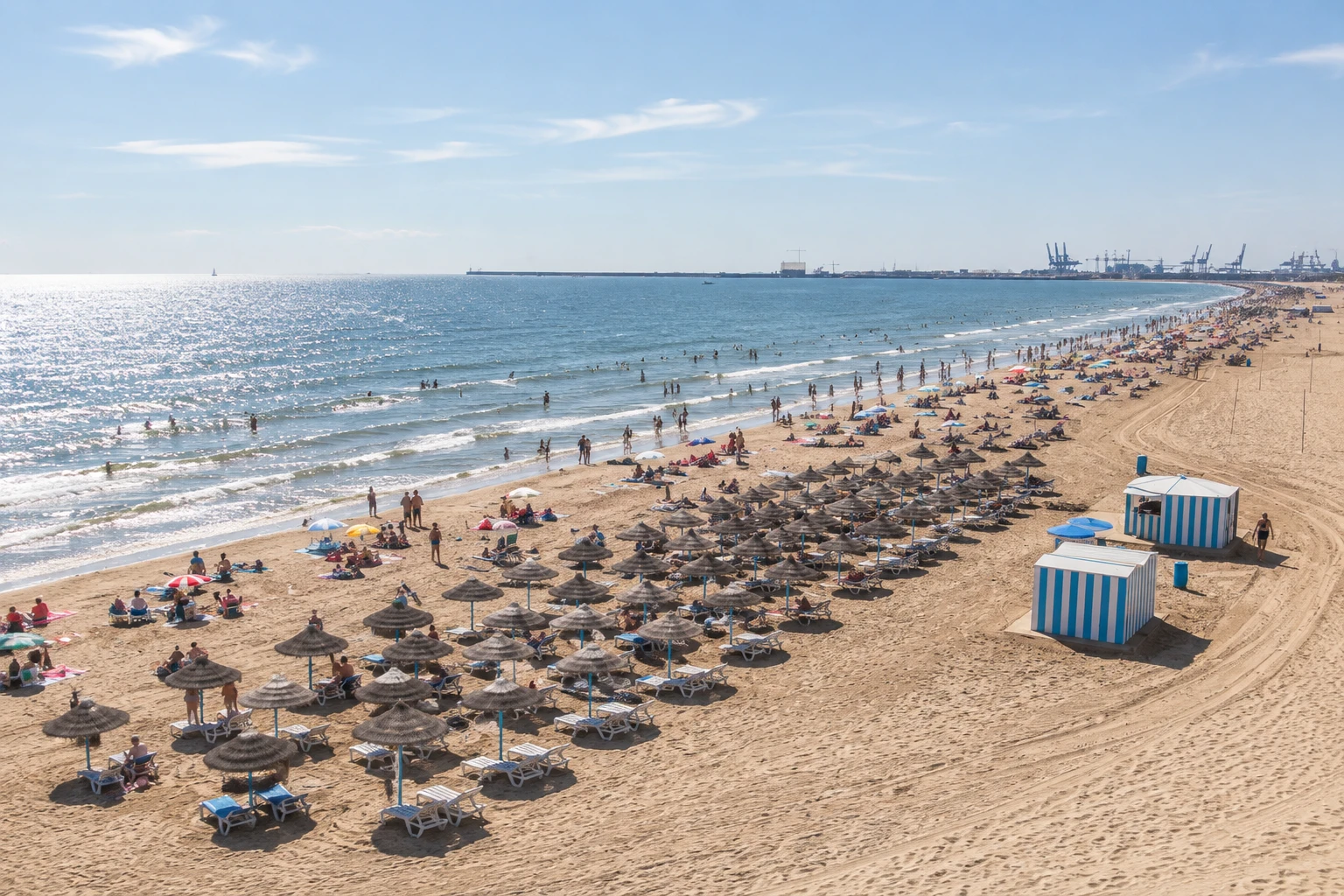
Urban beach with light, wide sand north of the port, with a promenade, rice restaurants and the house-museum of the writer Blasco Ibáñez.
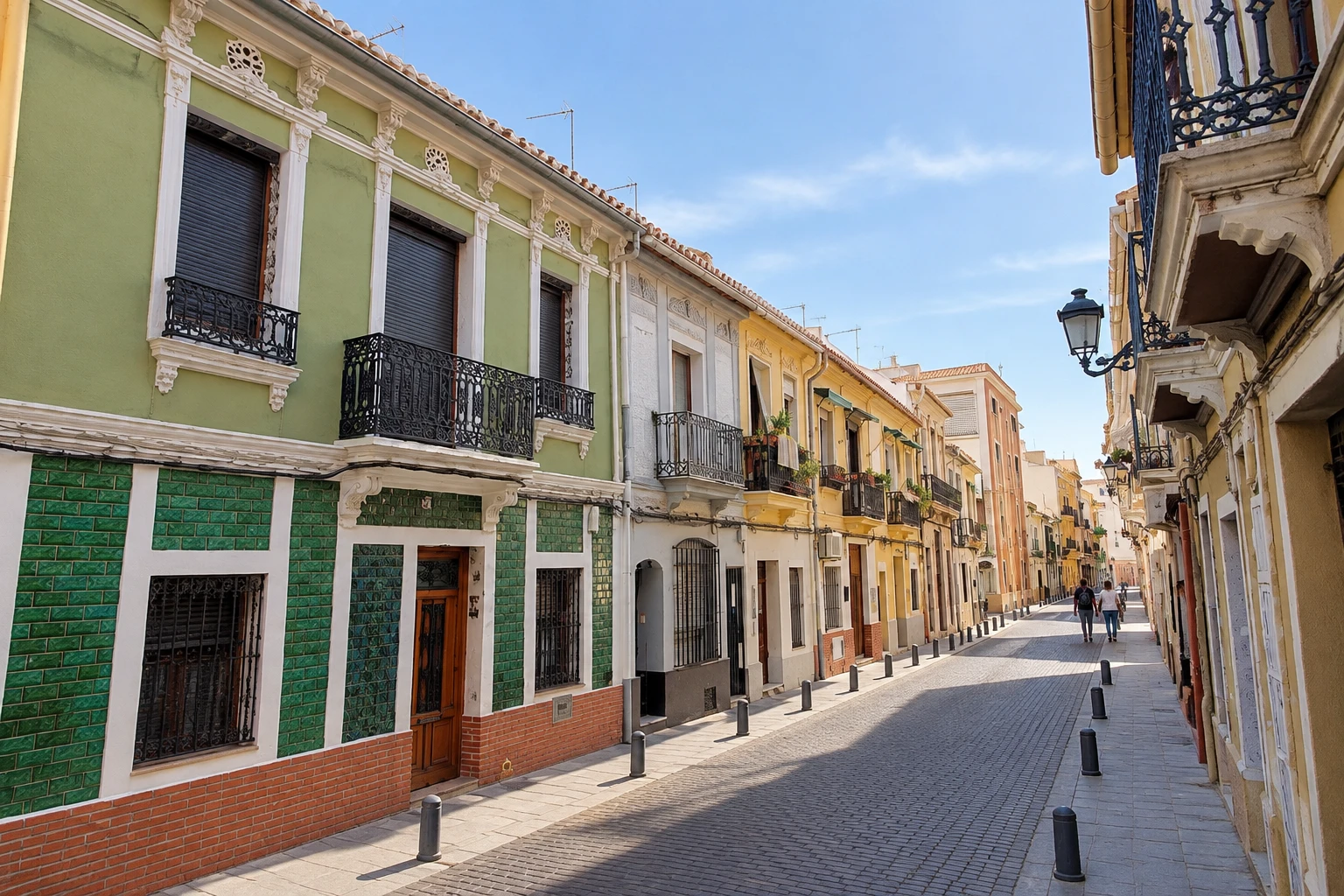
Former fishing neighborhood by the beach, with streets running parallel to the sea and low houses with façades covered in colorful tiles; today it has bars and restaurants.
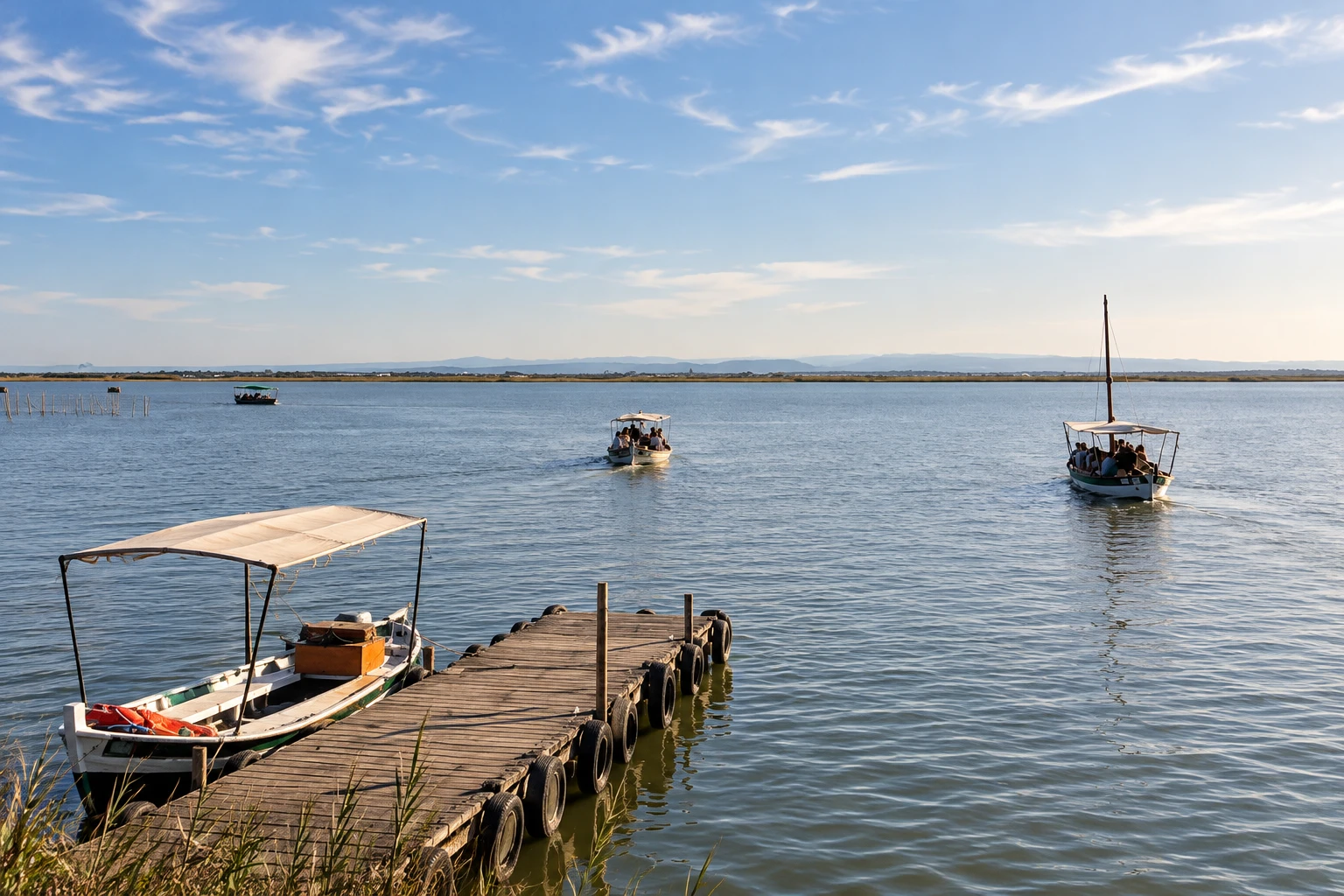
Freshwater lagoon 10 km south of Valencia, surrounded by rice fields, where paella originated. Traditional boat rides and the village of El Palmar, with rice restaurants.
To plan