Cochinillo asado
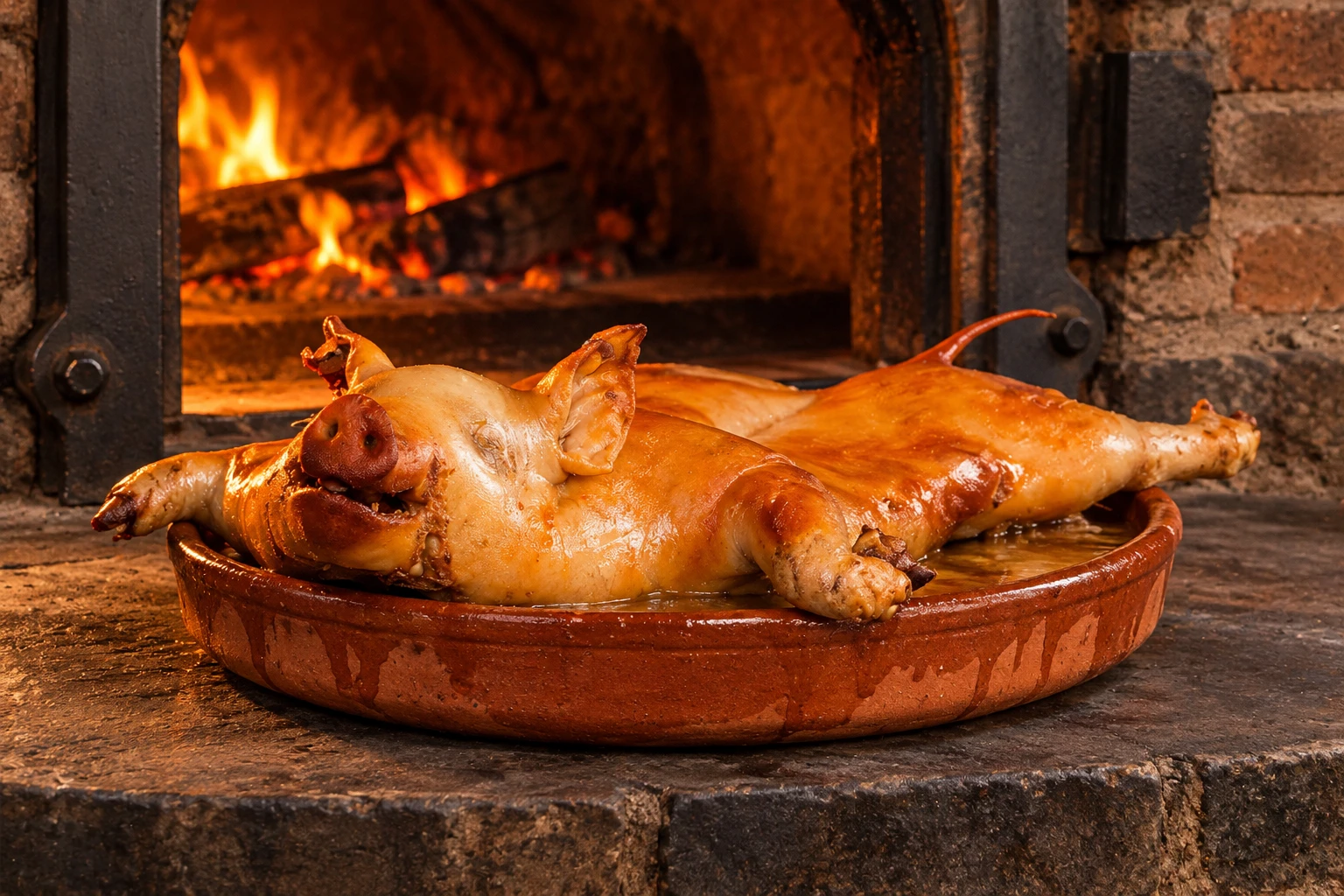
Suckling pig fed only on mother's milk, roasted whole in a wood-fired oven until the skin is crispy. It is Segovia’s signature dish, with a quality mark since 2002, and is often carved with the edge of a plate.
Antarctica
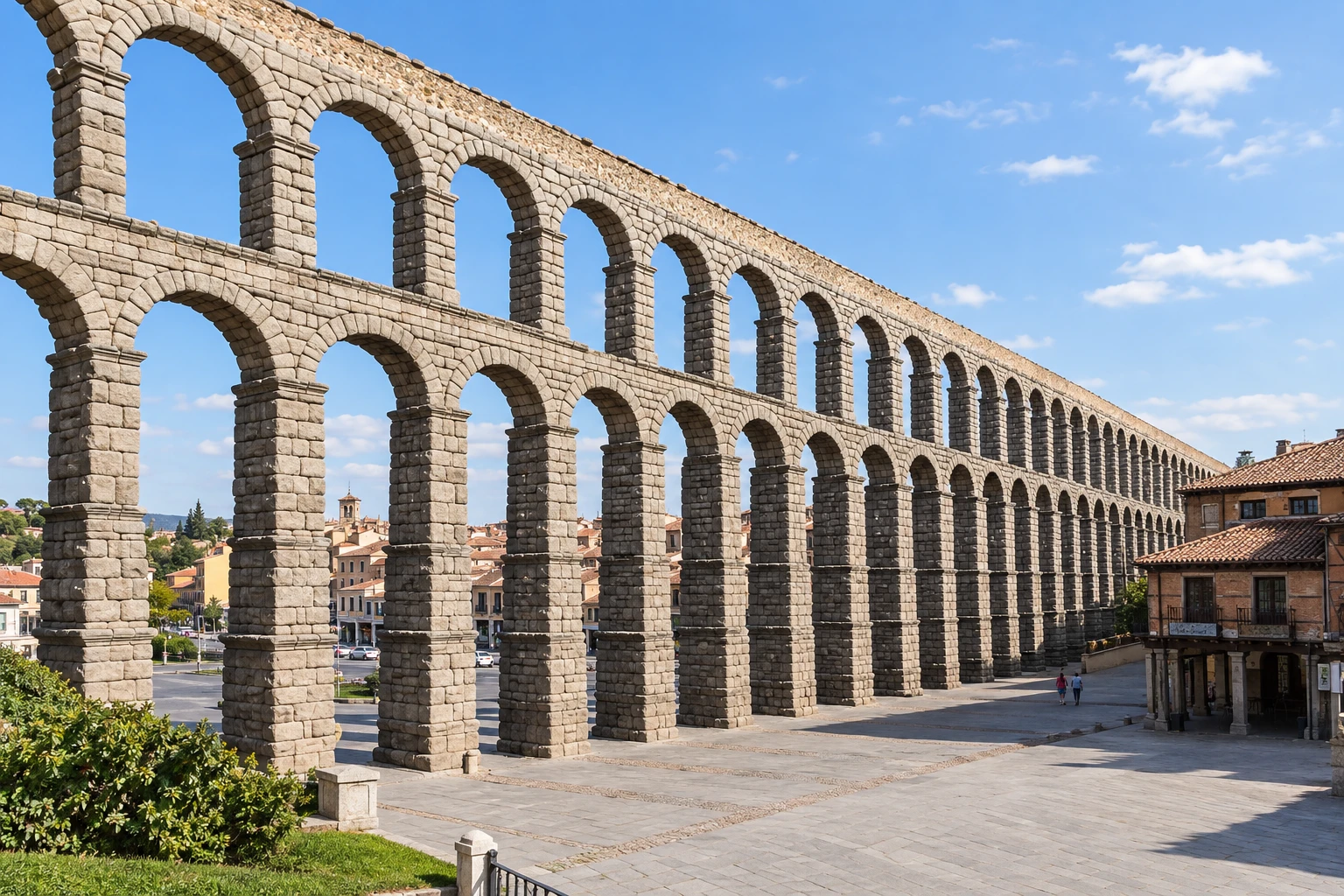
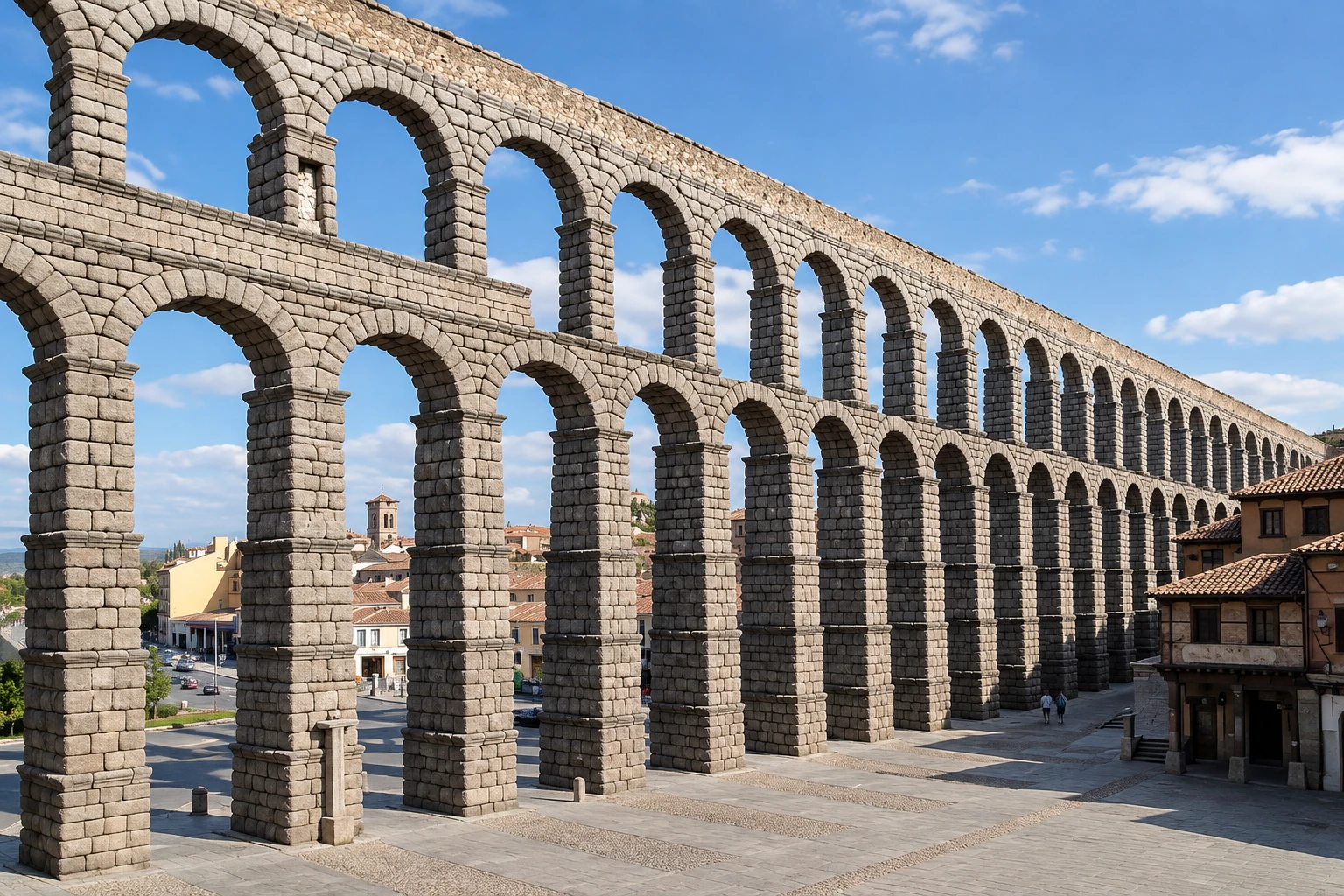
In the photo: Aqueduto de Segóvia
Illustrative images. The pictures in this guide are illustrations based on the real place, not photographs, and may differ from it.
The city
Segóvia, in Castela e Leão, sits on a rocky outcrop about 1,000 meters above sea level, north of the serra de Guadarrama. The historic center and the Aqueduto romano are a World Heritage Site. Besides the Aqueduto, the city has the Alcázar, the Gothic Cathedral, the Plaza Mayor, the Judería and Romanesque churches such as San Millán. In the valley lie the monastery of El Parral, the Casa de Moneda and the Vera Cruz; 13 km away is the Palácio de La Granja. The language is Spanish.
There's no accommodation in the guide yet in Segovia.
Tem hotel, pousada ou casa de temporada aqui? Cadastre a suaThere are no restaurants in the guide yet in Segovia.
Know a good one? Recommend it to usHotéis e restaurantes da cidade no mapa.
how to get there · how many days · itinerary · questions
Flavors of Spain
The local experience
Roman Aqueduto from the early 2nd century, with 167 granite arches assembled without mortar. The arcade crosses the Plaza del Azoguejo and reaches 28 meters at its highest point.
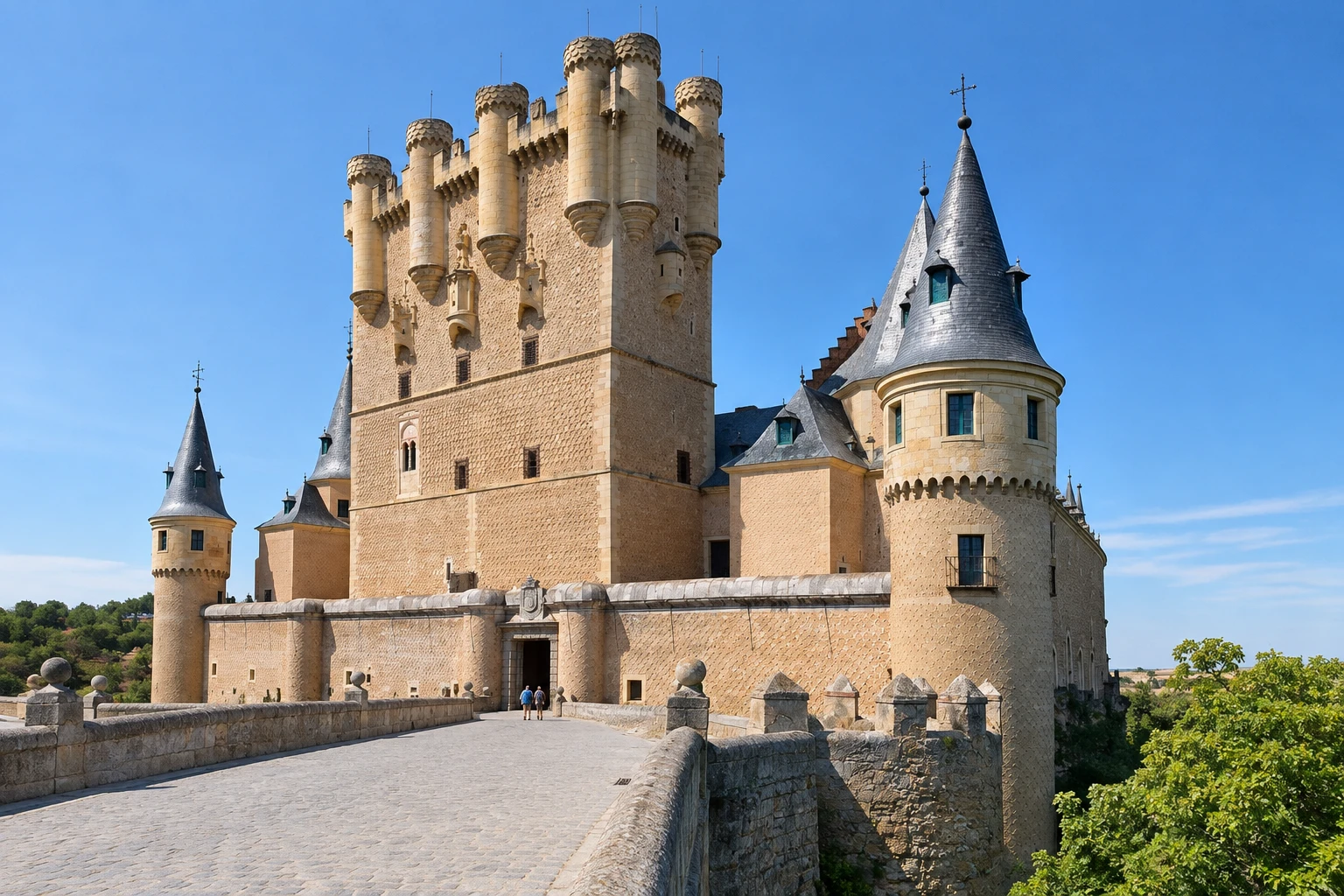
Castle-palace on the rocky spur of Segóvia, between the Eresma and Clamores valleys. It was a residence of the kings of Castile, a state prison and the Real Colegio de Artillería, and it has the Torre de Juan II open to visitors.
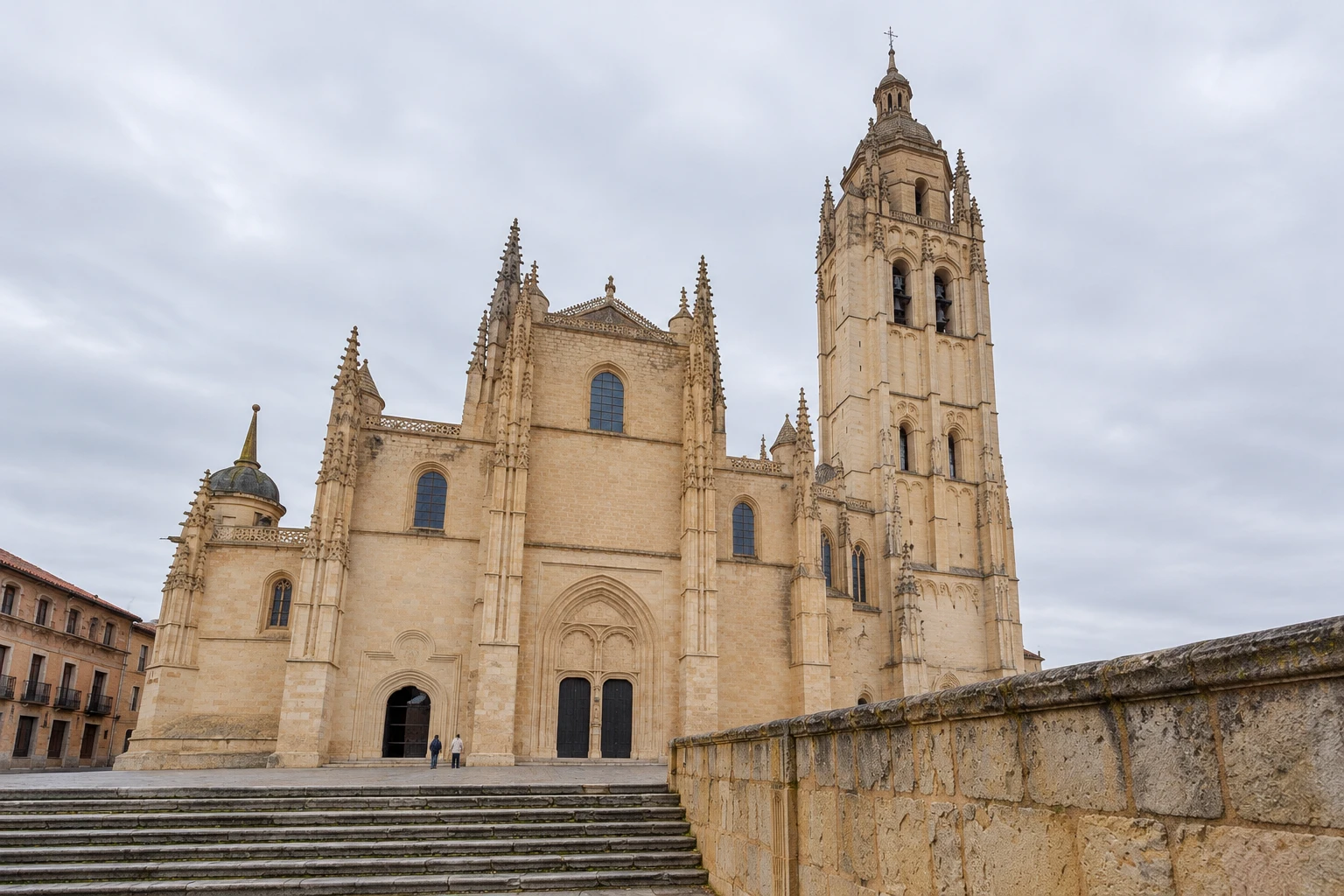
Late Gothic cathedral begun in 1525 by Juan Gil de Hontañón, at the highest point of the city. It has a tower of about 88 metres with guided visits and a cloister brought from the old cathedral.
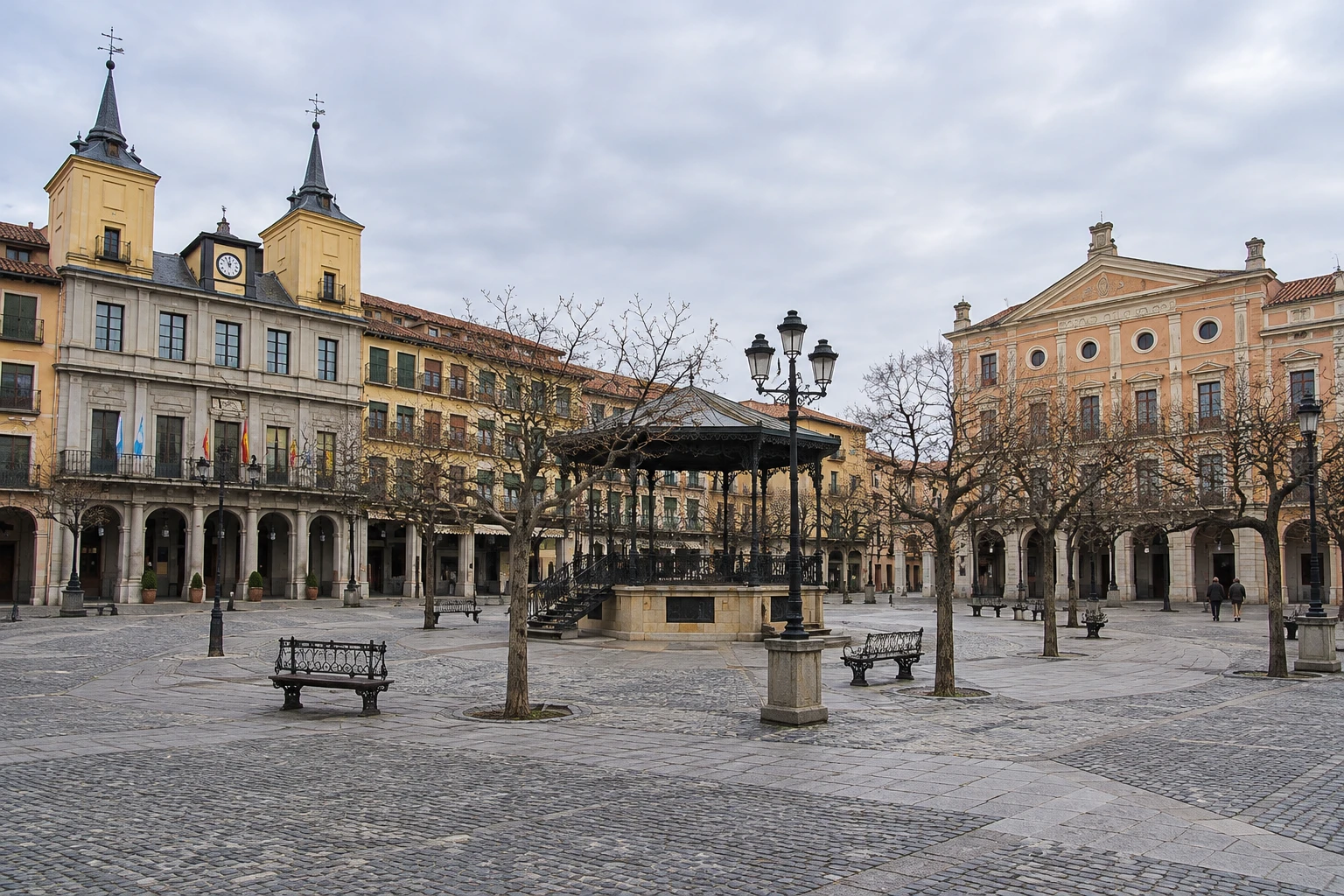
Main square of the old town, with the Cathedral's apse in the background, the town hall, the Teatro Juan Bravo and the Iglesia de San Miguel. It was there that Isabella the Catholic was proclaimed Queen of Castile in 1474.
Before you go
Segovia – Spain Destination Toledo, Segovia, and Ávila
Approximate distances. Check flights and bus, train or boat schedules before you travel.
From Madri, the high-speed train takes about 30 minutes to Segovia-Guiomar station, roughly 7 km from the center, connected to the Aqueduto by urban bus. There are also direct buses from Madri that arrive at the bus station near the center. The nearest airport is Madri-Barajas, about 110 km away. Flights to/from Brazil usually involve a connection in another city. Confirm before buying.
One day is enough for the Aqueduto, the Plaza Mayor, the Cathedral, the Judería and the Alcázar, as a day trip from Madri. With two days you can include the Eresma valley (El Parral, Casa de Moneda, Vera Cruz and the viewpoint at the Pradera de San Marcos) and the Palácio de La Granja.
April to June and September to October usually have the most pleasant weather. In the Spanish summer, from June to August (winter in Brazil), days are warm and nights cool due to the altitude. From December to February it is very cold, sometimes with snow, and it gets dark early. A Espanha is usually 4 or 5 hours ahead of Brasília, depending on the time of year.
The seasons shown are the most usual ones; nature doesn't always follow the calendar.
You don't need a car for the city: the center is walked on foot, and there is an urban bus between the train station and the Aqueduto. A car helps to get to La Granja and Riofrío, or to continue on to Ávila, about 75 km away. On-street parking in the historic center is paid and limited.
Suggested itinerary
Built with the places on this page. No rush: it's paced so you have time to see them.
Start at the Aqueduto, in the Plaza del Azoguejo, and climb the side stairs to see the channel. Follow Calle Real, passing the Casa de los Picos and the Iglesia de San Martín, to the Plaza Mayor.
Visit the Cathedral and the cloister of Juan Guas. Have lunch near the Plaza Mayor, noting that lunch starts around 14:00. Afterwards, go down through the Judería to the Puerta de San Andrés.
Proceed to the Alcázar, see the rooms and, if you have the stamina, climb the 152 steps of the Torre de Juan II. From the small square in front you can see the Eresma valley and the Vera Cruz.
Dine in the area of the Plaza Mayor or the Azoguejo; dinner usually starts after 21:00. Anyone returning to Madri the same day should check the time of the last train at Guiomar and the bus to the station.
Day 1
See the Aqueduto at a relaxed pace and walk to the Iglesia de San Millán. Return to the Azoguejo and go up Calle Real to the Plaza Mayor, stopping at the Casa de los Picos and San Martín.
After lunch, enter the Cathedral; if you have a reservation, go up the tower with the guide. Finish the afternoon in the streets of the Judería and at the Puerta de San Andrés.
Visit the Alcázar in the late afternoon, when tour groups have decreased, and climb the Torre de Juan II to see the city from above.
Dine near the Plaza Mayor and then walk by the illuminated Aqueduto.
Day 2
Take the bus early or drive to San Ildefonso. Visit the palácio and walk through the gardens; in season, see the fountains. Remember that the palácio is closed on Mondays.
Back in Segóvia, descend to the Eresma valley for the afternoon guided tour of El Parral. Then head to the Real Casa de Moneda and the Centro de Interpretación del Acueducto.
Walk to the Iglesia de la Vera Cruz and descend to the Pradera de San Marcos to see the Alcázar from below, in the late-day light.
Ascend into the city via the Puerta de Santiago and dine in the center. Try the roast suckling pig (cochinillo) or at least the ponche segoviano for dessert.
Check before you go. Opening hours and days change, and places may close for renovations, holidays or events. This itinerary is a suggestion from Cidade Turismo, not a commitment: plan yours by checking directly with each place you intend to visit.
Before you go
The quickest option is the high-speed train from Madri, about 30 minutes to Segovia-Guiomar. The station is outside the city, and urban buses connect to the Aqueduto. There are also direct buses from Madri that arrive at the bus station near the center.
Yes. In one day you can see the Aqueduto, the Plaza Mayor, the Cathedral, the Judería and the Alcázar. Leave early and buy your return train ticket in advance.
Yes, in winter, from December to February: the city is at about 1,000 meters altitude and can have snow. Even in summer, from June to August, nights are usually cool.
The roast suckling pig (leitão assado / cochinillo) is the best-known dish, and roast lamb is also traditional. The typical sweet is the ponche segoviano. Restaurants usually serve lunch after 14:00 and dinner after 21:00.
Yes, but with little time in each. The two are about 75 km apart by road, just over an hour by car. Without a car, the simplest is to visit each on a separate day from Madri.