Ávila · Spain · Wall
Walls of Ávila
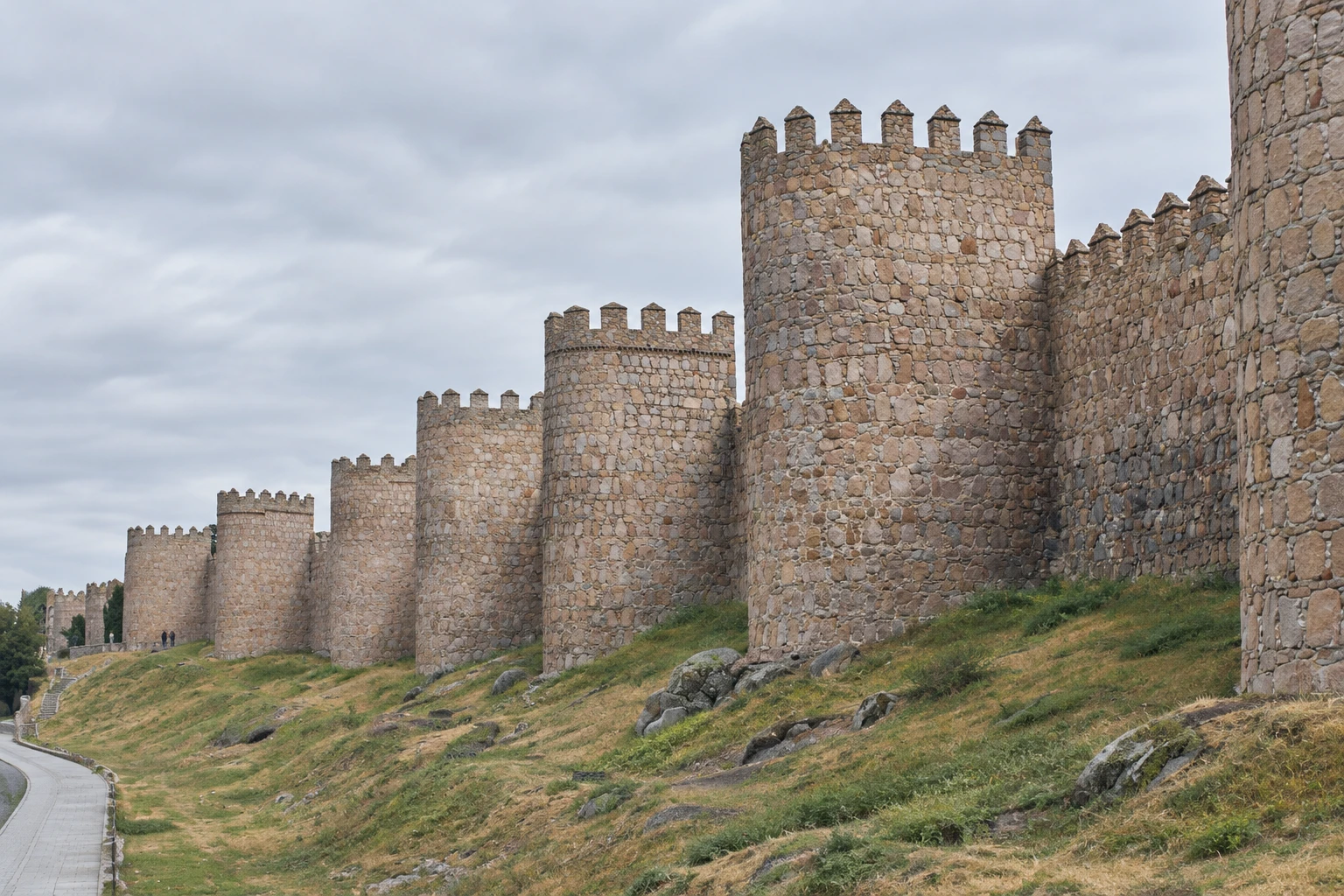
Medieval wall enclosing the historic center, with 2,515 meters of perimeter, 87 towers and 9 gates. Several sections of the adarve, the walkway along the top of the wall, are open to visitors.

 Search
 Brazil
 Antarctica
 Argentina
 Bolivia
 Chile
 Colombia
 Ecuador
 Falkland Islands (Malvinas)
 French Guiana
 Guyana
 Paraguay
 Peru
 Suriname
 Uruguay
 Venezuela
 Austria
 Belgium
 Croatia
 Denmark
 Finland
 France
 Germany
 Greece
 Hungary
 Iceland
 Ireland
 Italy
 Luxembourg
 Norway
 Poland
 Portugal
 Slovakia
 SloveniaSpain
 Sweden
 Switzerland
 the Czech Republic
 the Netherlands
 the United Kingdom
 Turkey
 Bermuda
 Canada
 Greenland
 Mexico
 Saint Pierre and Miquelon
 the United States
 the Dominican Republic
 JapanTurkey
 Egypt
 South Africa
 Australia
 Fiji
 New Zealand
 Papua New Guinea
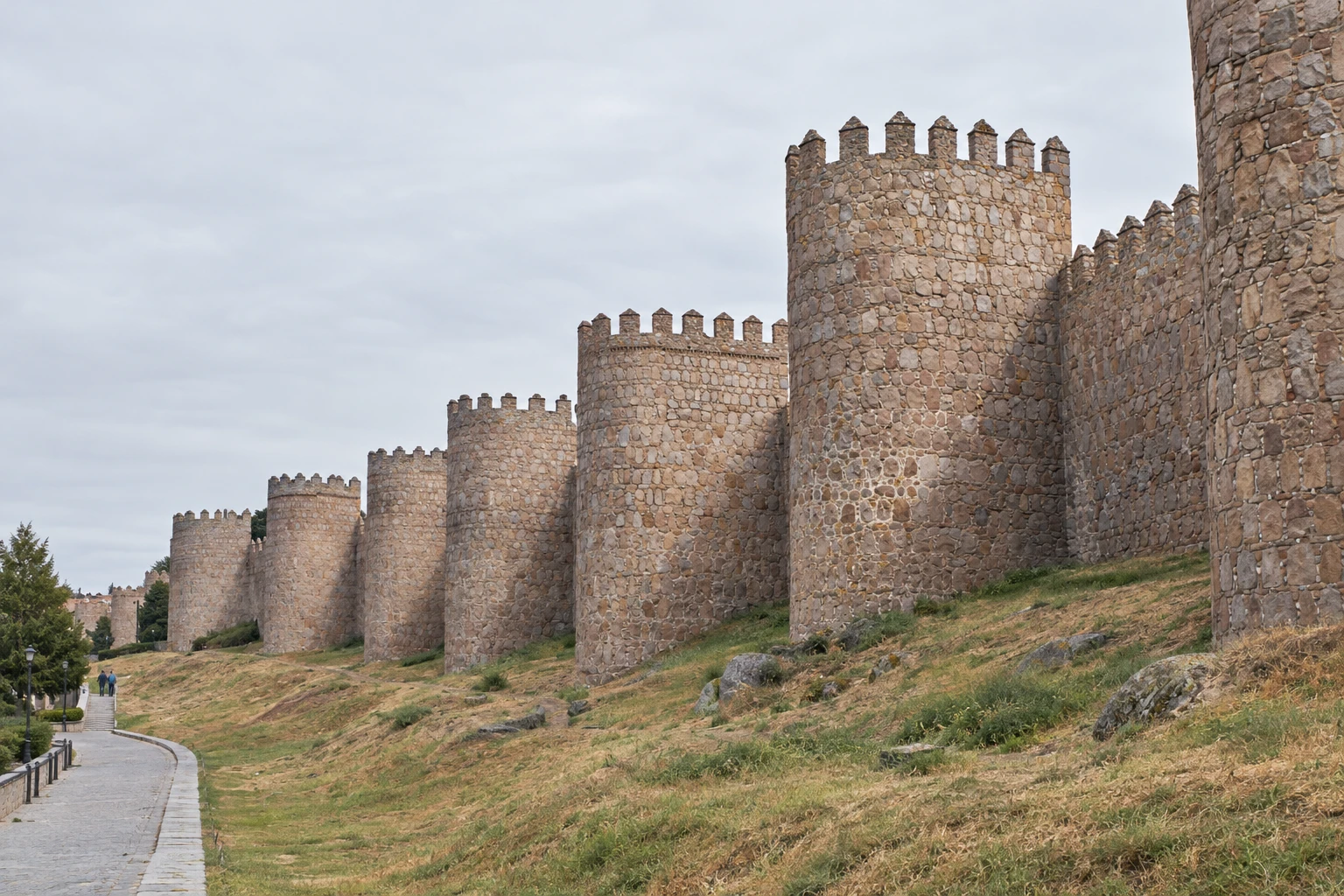
In the photo: Walls of Ávila
Illustrative images. The pictures in this guide are illustrations based on the real place, not photographs, and may differ from it.

The city
Ávila, in Castela y Leão, is the highest provincial capital in Spain, over 1,100 metres above sea level. The old town is enclosed by a complete medieval wall, with 87 towers, and is a World Heritage site. Inside and around it are the Cathedral, the Basilica of San Vicente, the Monastery of Santo Tomás and the places associated with Santa Teresa: the convent where she was born and the Convent of the Encarnación. The language is Spanish.
There's no accommodation in the guide yet in Ávila.
Tem hotel, pousada ou casa de temporada aqui? Cadastre a suaThere are no restaurants in the guide yet in Ávila.
Know a good one? Recommend it to usHotéis e restaurantes da cidade no mapa.
how to get there · how many days · itinerary · questions
The local experience
Medieval wall enclosing the historic center, with 2,515 meters of perimeter, 87 towers and 9 gates. Several sections of the adarve, the walkway along the top of the wall, are open to visitors.
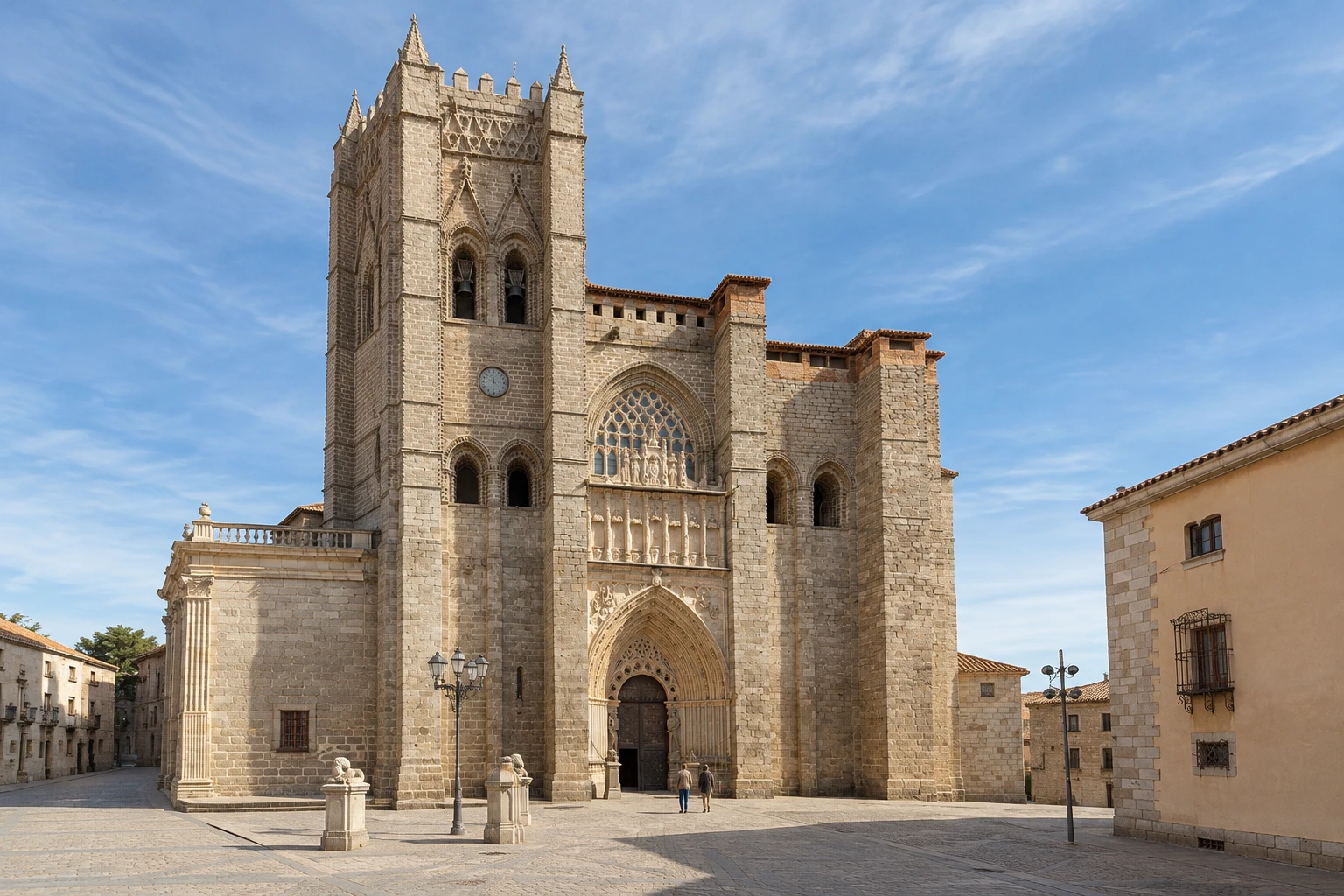
Cathedral-fortress whose apse, the cimorro, is one of the towers of the wall. It is considered the first Gothic cathedral in Spain, with works beginning in 1172 under the French master Fruchel.
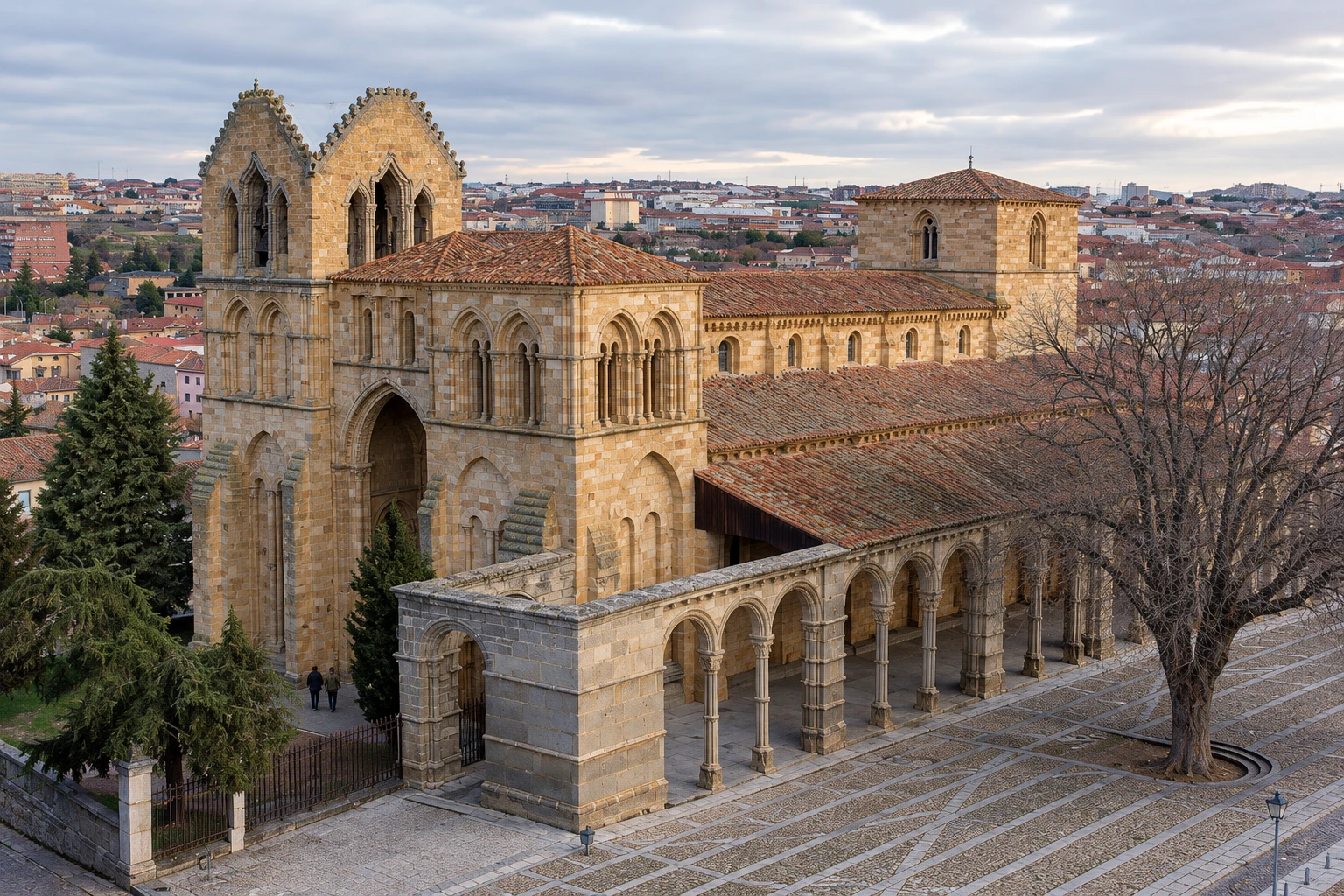
Large Romanesque church outside the wall, begun around 1120 on the site where, by tradition, the siblings Vicente, Sabina and Cristeta were martyred. It houses the sculpted cenotaph of the saints.
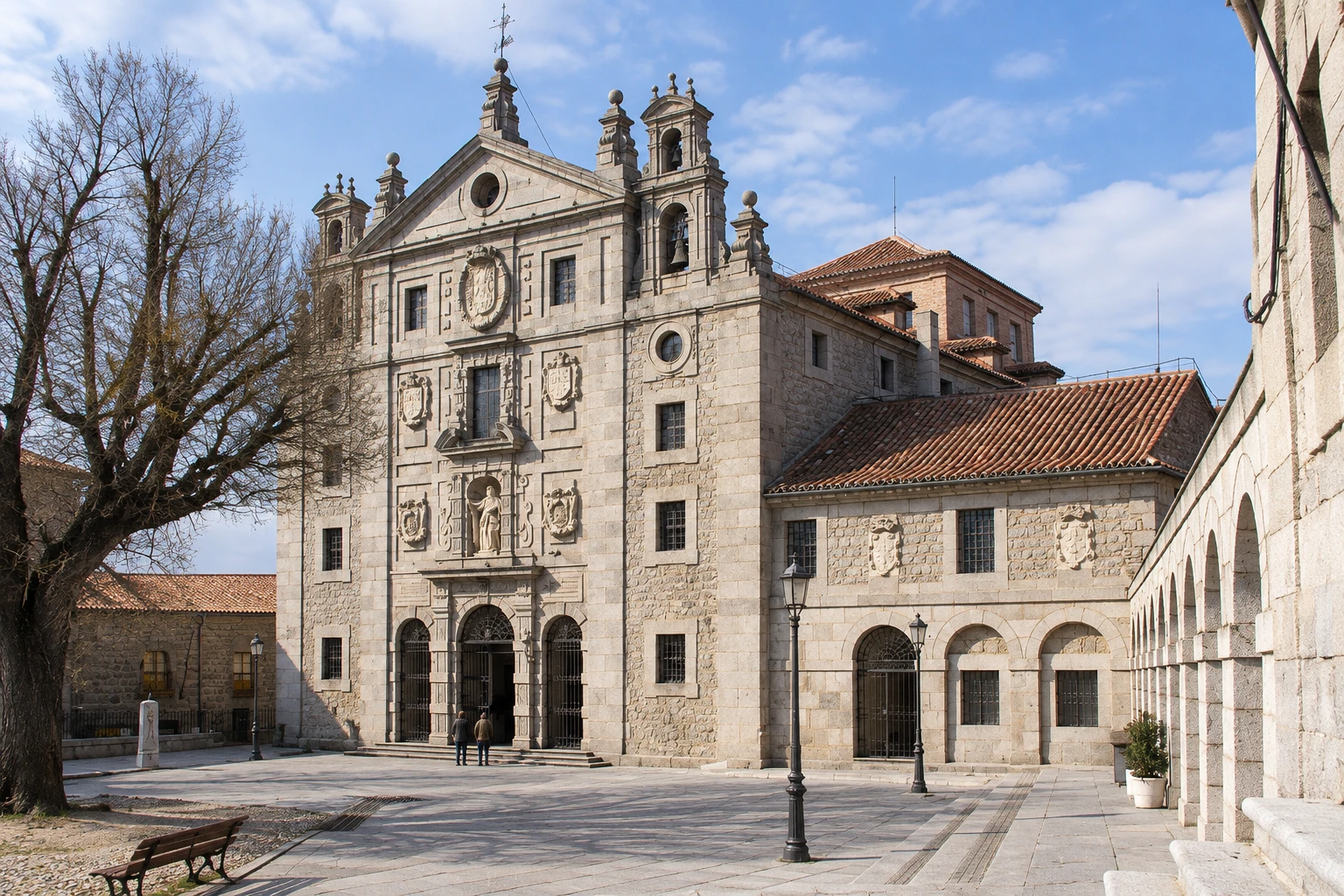
Baroque Carmelite church and convent built between 1629 and 1636 over the house where Santa Teresa de Jesús was born. It has the chapel on the site of the saint's room and a Teresian museum in the crypt.
Before you go
Ávila – Spain Destination Toledo, Segovia, and Ávila
Approximate distances. Check flights and bus, train or boat schedules before you travel.
From Madri there is a conventional, non-high-speed train to Ávila station, about 2 km from the centre, and buses to the coach station near the railway station. The journey is longer than to Toledo or Segóvia: check the duration when buying tickets. The nearest airport is Madri-Barajas, about 130 km away. Connections with Brazil are usually via a stopover in another city. Check before purchasing.
One day is enough for the wall walk, the Cathedral, San Vicente, the Convent of Santa Teresa and the view from the Cuatro Postes. Two days allow you to include the Monastery of Santo Tomás and the Encarnación at a relaxed pace and to see the wall illuminated at night.
May to June and September to October are usually the most pleasant months. From June to August (winter in Brazil) the days are hot and the nights cool. From December to February it is very cold, with frosts and sometimes snow, and it gets dark early. In mid-October the festivities of Santa Teresa take place.
The seasons shown are the most usual ones; nature doesn't always follow the calendar.
No. The walled center is explored on foot, and the train station and bus terminal are a 20-minute walk away. A car is only useful to link Ávila to Segóvia, about 75 km, or to Salamanca, or to explore the serra de Gredos.
Suggested itinerary
Built with the places on this page. No rush: it's paced so you have time to see them.
Start at the Plaza de Santa Teresa and climb onto the adarve at the Puerta del Alcázar. Walk the open sections along the top of the wall and go down to view the Puerta de San Vicente from the outside.
Visit the Cathedral and the museum. Have lunch at the Mercado Chico, bearing in mind that lunch begins around 14:00. Afterwards, leave the wall to go to the Basílica de San Vicente and the crypt.
Pass by the Convento de Santa Teresa on the south side of the wall. Exit through the Puerta del Puente, cross the Adaja and climb up to Los Cuatro Postes to see the wall in the low light.
Return to the center and have dinner near the Mercado Chico; dinner service begins after 21:00. Those returning to Madri the same day should check the last train or bus.
Day 1
Climb onto the adarve at the Puerta del Alcázar and walk the open sections at a leisurely pace. See the Iglesia de San Pedro, in the Plaza de Santa Teresa.
Have lunch at the Mercado Chico. Afterwards, visit the Cathedral, the cloister and the museum, which houses works by El Greco and Ribera.
Exit via the Puerta de San Vicente and enter the basilica to see the cenotaph of the saints and the crypt of the Soterraña.
Take a walk outside the illuminated wall before dinner.
Day 2
Go down to the Mosteiro de Santo Tomás and explore the three cloisters, the church with the tomb of Prince Dom João, and the museums.
Visit the Convento de Santa Teresa and the crypt museum. Then walk to the Monasterio de la Encarnación, outside the wall to the north.
Cross the river Adaja and climb up to Cuatro Postes to see the entire wall at the end of the day.
Dine at the Mercado Chico. Order the chuletón de Ávila and yemas de Santa Teresa for dessert.
Check before you go. Opening hours and days change, and places may close for renovations, holidays or events. This itinerary is a suggestion from Cidade Turismo, not a commitment: plan yours by checking directly with each place you intend to visit.
Before you go
There is a conventional train from Madri to the Ávila station and buses to the bus terminal, which is near the station. There is no high-speed train, and the journey takes longer than to Segóvia or Toledo. Check the duration and schedules when buying.
Yes. In one day you can walk the adarve of the wall and visit the Cathedral, San Vicente and the Convento de Santa Teresa. Leave early, because the outbound trip is long.
The city is over 1,100 meters above sea level; it is the highest provincial capital in Spain. In winter, from December to February, frosts are common and it sometimes snows.
Teresa of Jesus was born in Ávila in 1515 and lived for nearly forty years at the Monasterio de la Encarnación, from where she prepared the reform of the Carmelites. The convent built over her birthplace and the Encarnação are the main sites associated with her.
Yes. The two are about 75 km apart by road. By car the link is straightforward; by public transport there are buses between the two cities. To see them properly, ideally spend a day in each.