Historic district
Vegueta
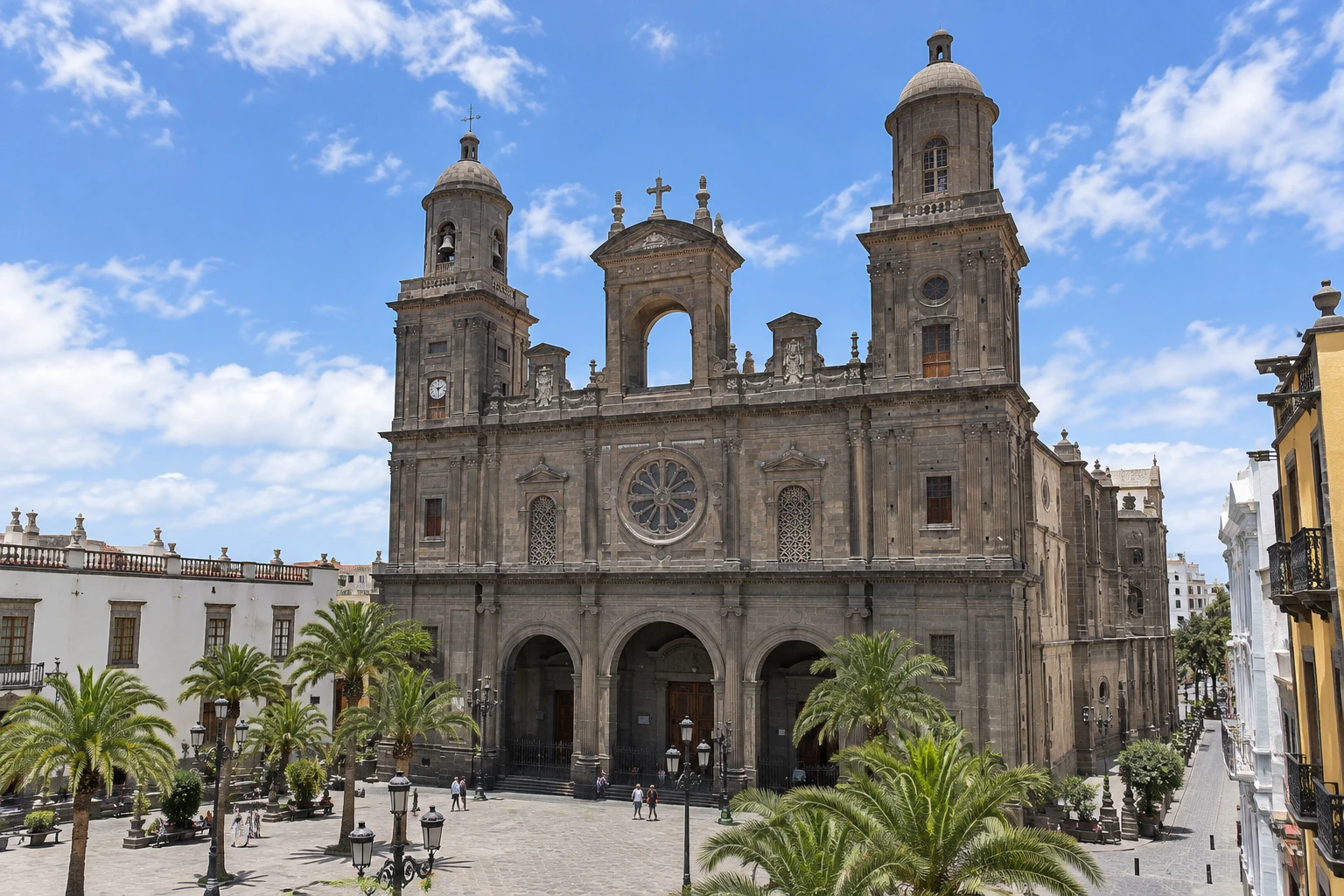
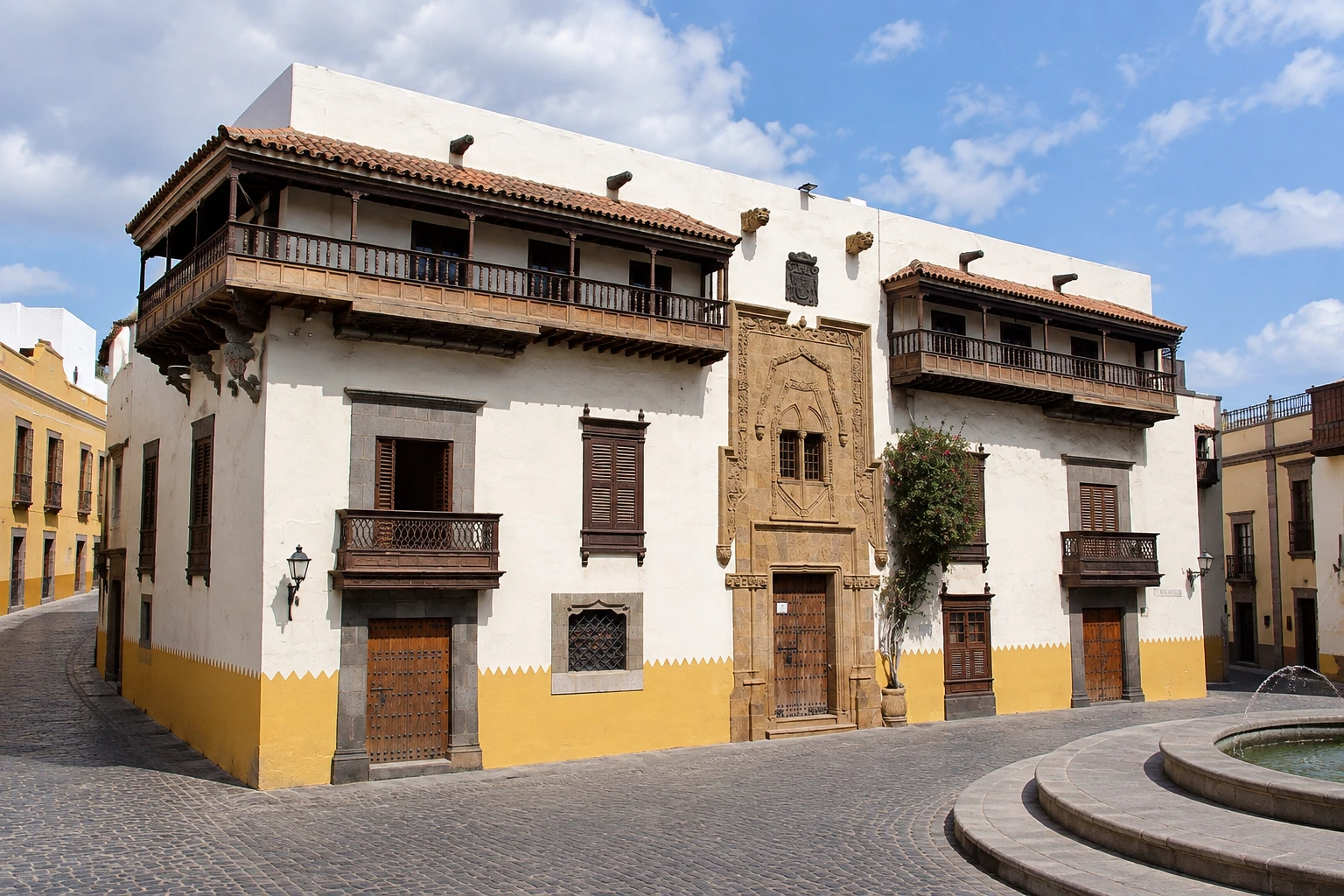
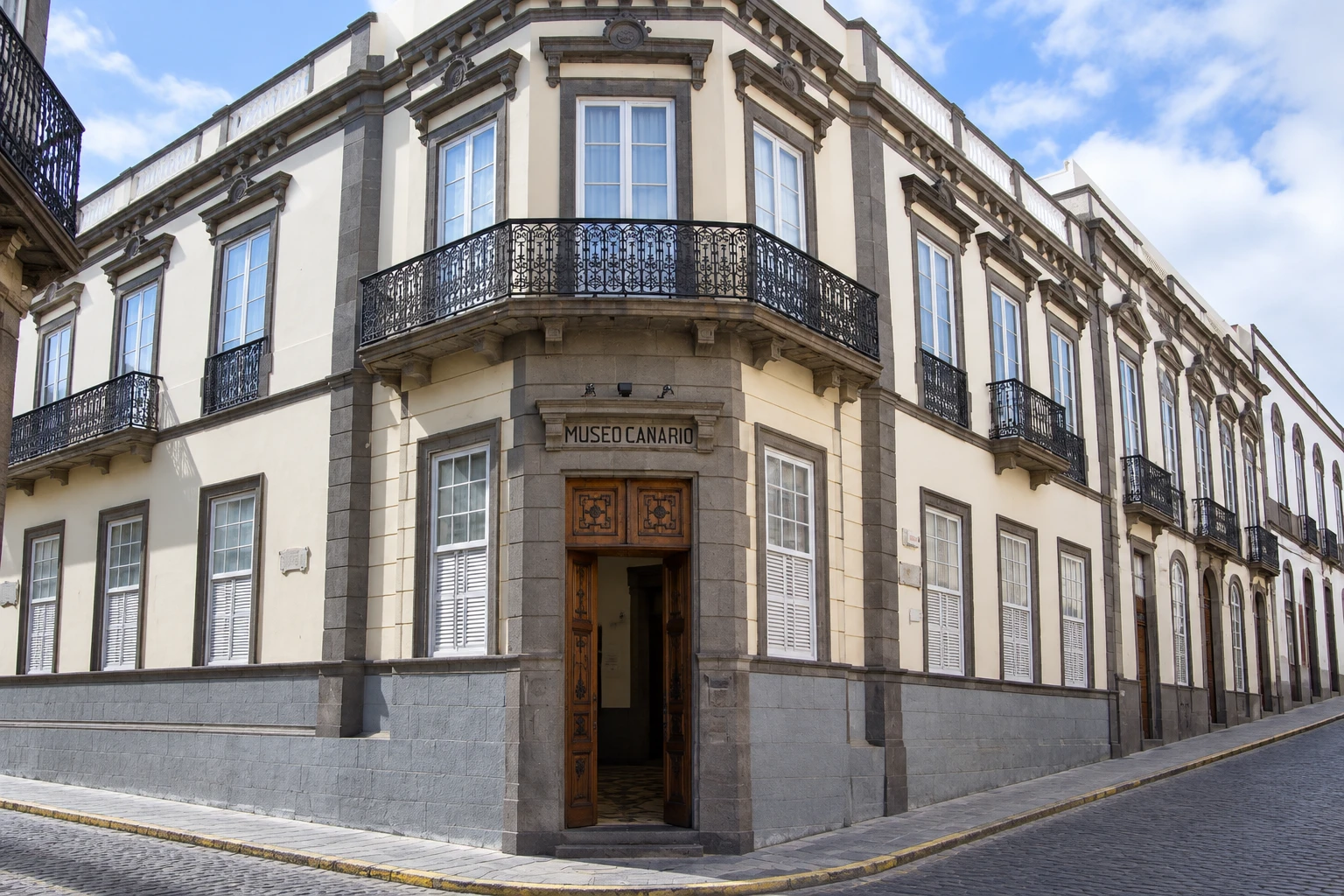
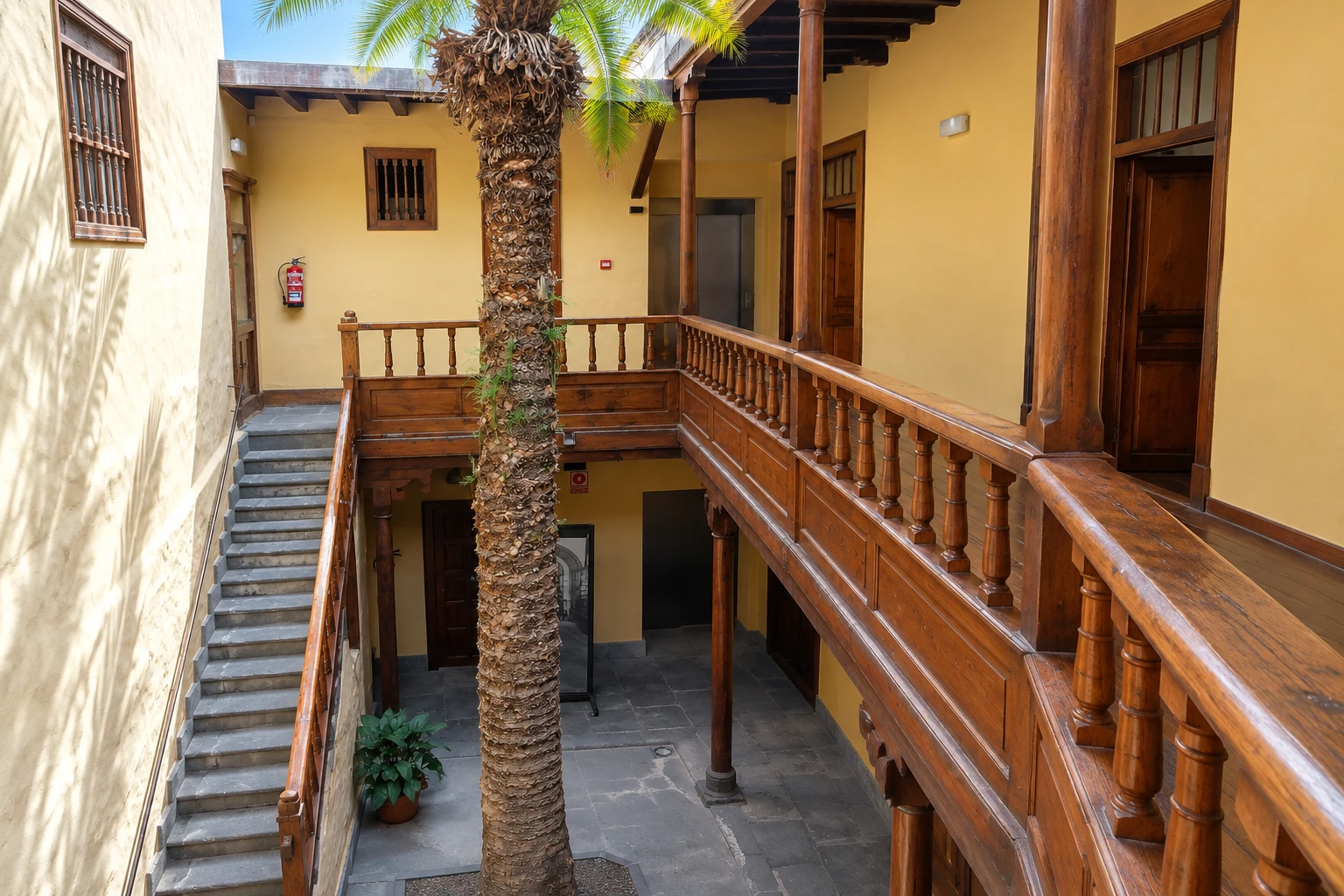
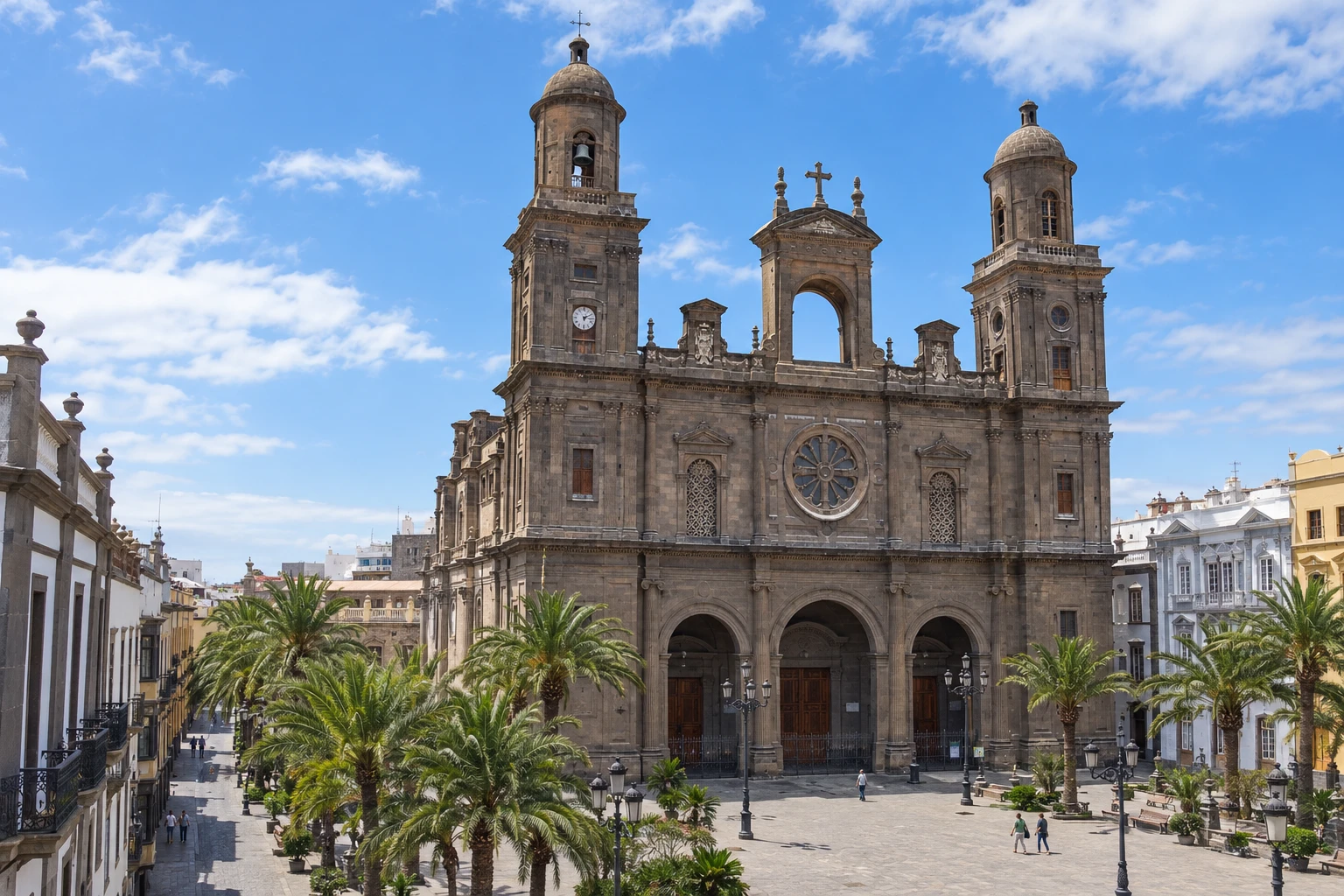
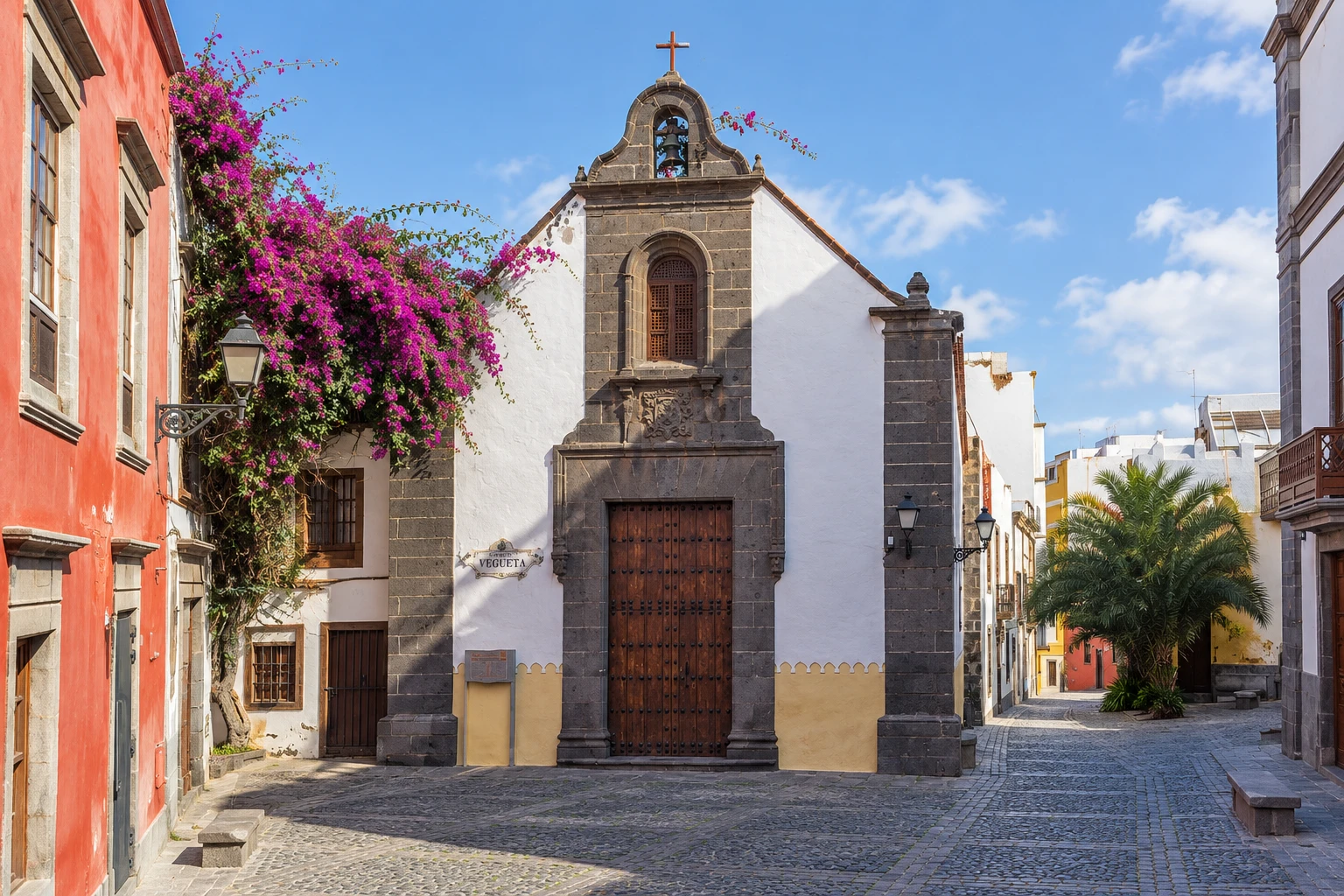
Founding neighborhood of Las Palmas, from 1478, with stone streets, colonial houses with wooden balconies, the cathedral, the Casa de Colón, the Museu Canário and the market.

 Search
 Brazil
 Antarctica
 Argentina
 Bolivia
 Chile
 Colombia
 Ecuador
 Falkland Islands (Malvinas)
 French Guiana
 Guyana
 Paraguay
 Peru
 Suriname
 Uruguay
 Venezuela
 Albania
 Austria
 Belgium
 Croatia
 Denmark
 Finland
 France
 Germany
 Greece
 Hungary
 Iceland
 Ireland
 Italy
 Luxembourg
 Norway
 Poland
 Portugal
 Slovakia
 SloveniaSpain
 Sweden
 Switzerland
 the Czech Republic
 the Netherlands
 the United Kingdom
 Turkey
 Bermuda
 Canada
 Greenland
 Mexico
 Saint Pierre and Miquelon
 the United States
 the Dominican Republic
 JapanTurkey
 Egypt
 South Africa
 Australia
 Fiji
 New Zealand
 Papua New Guinea
Canary Islands
10 places to visit Las Palmas de Gran Canaria (Spain), chosen by the Cidade Turismo guide.
Illustrative images. The pictures in this guide are illustrations based on the real place, not photographs, and may differ from it.
To start
One by one
Founding neighborhood of Las Palmas, from 1478, with stone streets, colonial houses with wooden balconies, the cathedral, the Casa de Colón, the Museu Canário and the market.
Catedral de Las Palmas, begun in 1500 and completed in the 19th century, with a Gothic interior of palm-shaped columns, a neoclassical façade and a tower with an elevator and viewpoint.
Former house of the island's governors, in Vegueta, where according to tradition Columbus stayed in 1492, today a museum about voyages to America, with courtyards and Gothic portals.
Archaeology museum founded in 1879 in Vegueta, with a collection about the ancient Canarians, such as pintaderas, ceramics, mummies and a room with hundreds of skulls.
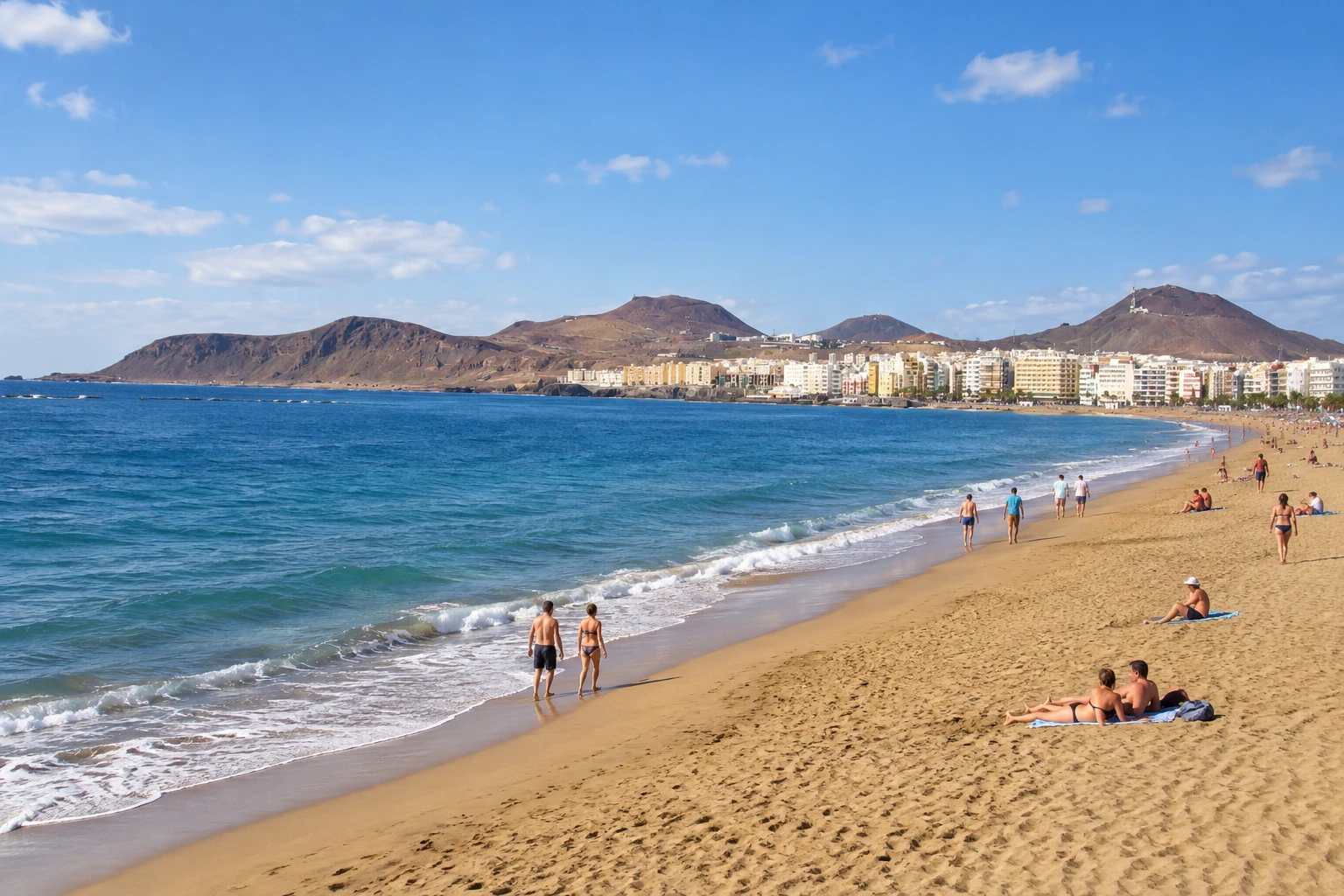
Urban beach of about 3 km of light sand on the isthmus of Las Palmas, protected by the La Barra reef, with a promenade, restaurants and snorkeling.
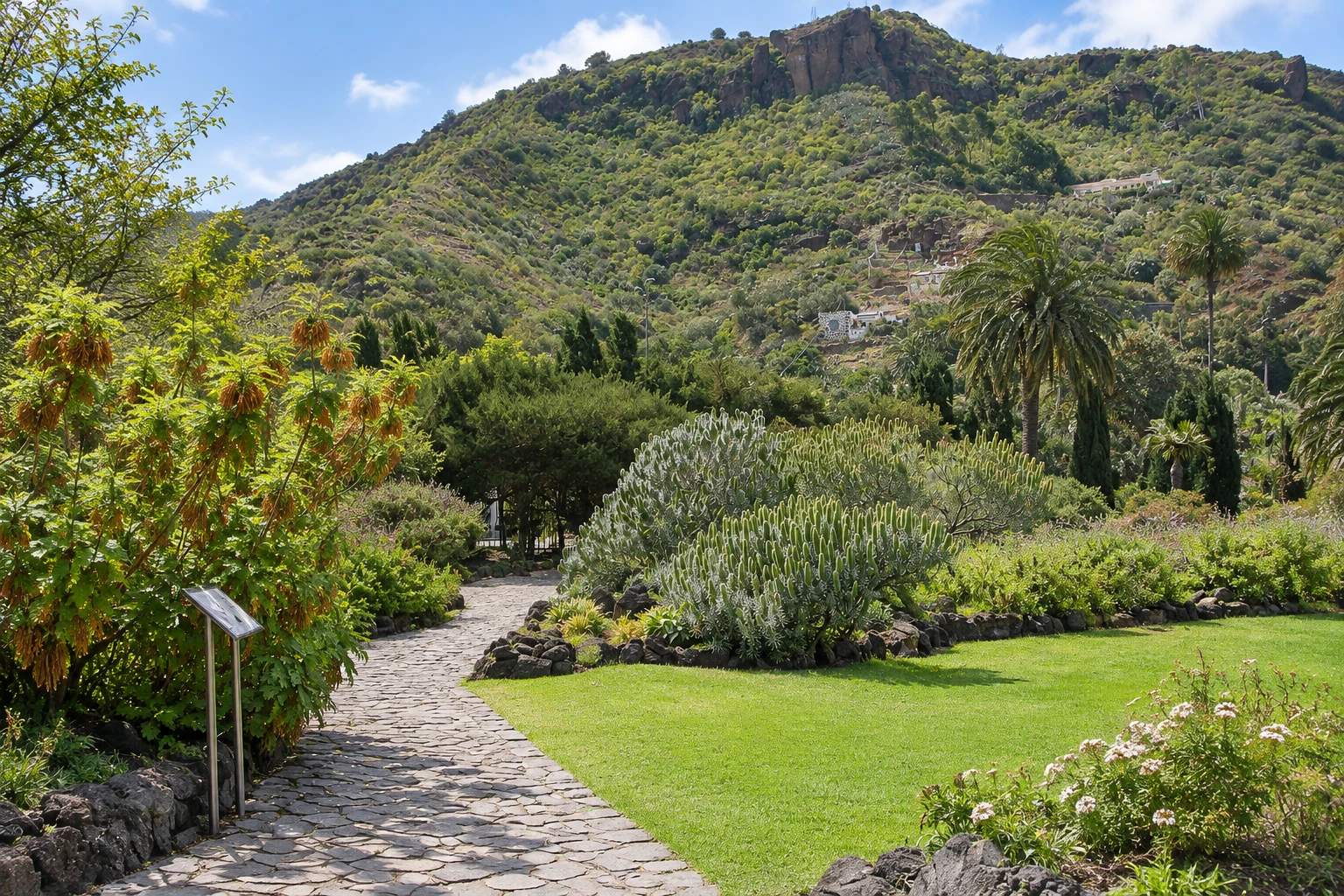
Botanical garden of Canarian flora in Tafira, 8 km from the center, opened in 1959 on a barranco slope, with dragon trees, cardones, laurel forest and Canary Island palms.
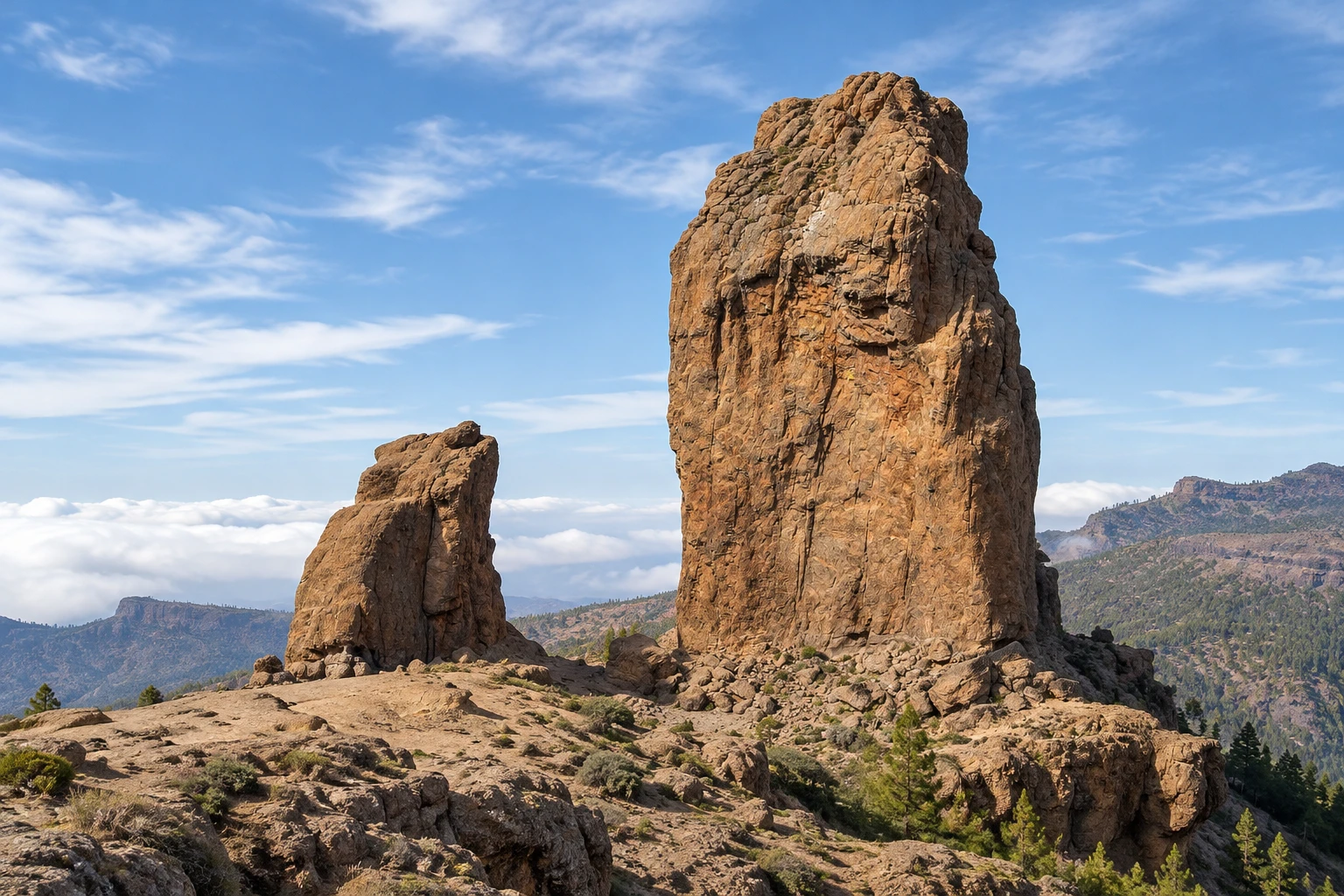
Monolith of volcanic rock about 80 meters high on the highlands of Gran Canaria, at 1,813 meters altitude, symbol of the island, reached by a short trail.
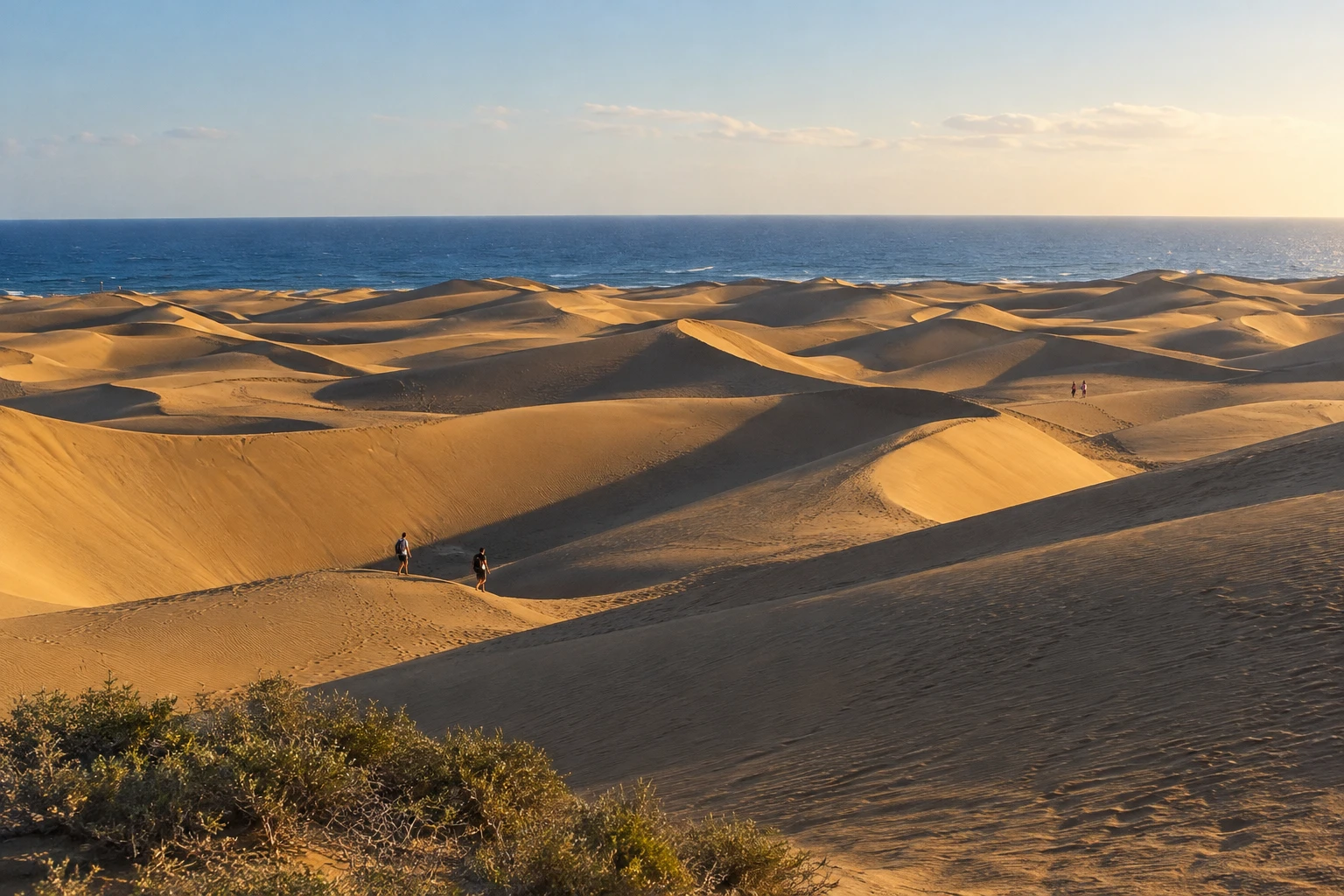
Natural reserve of golden sand dunes in the south of the island, covering about 400 hectares between Playa del Inglés and the Maspalomas lighthouse, including a palm grove and the lagoon La Charca.
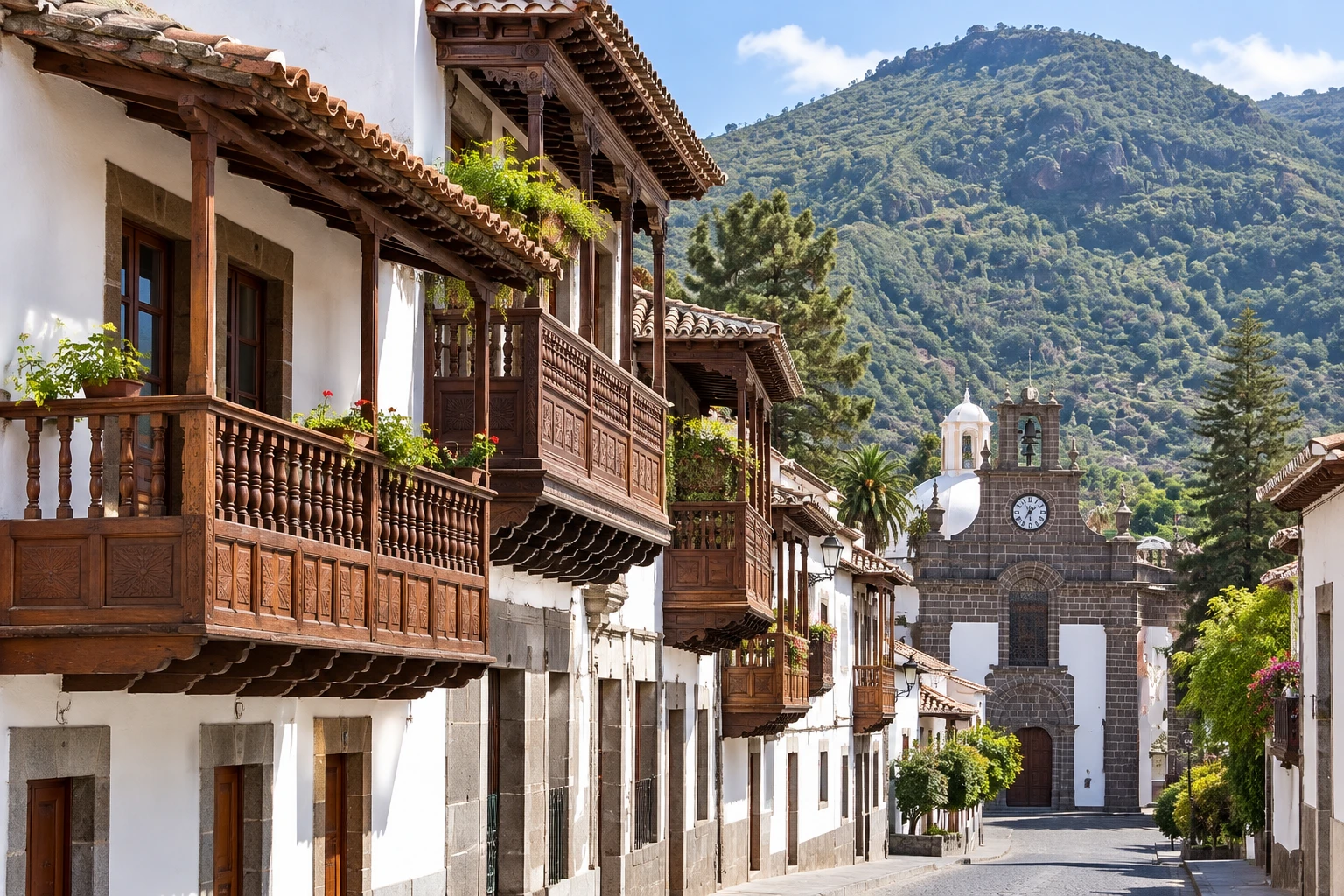
Inland village 20 km from Las Palmas, with Canarian houses featuring wooden balconies, the Basilica of the Virgen del Pino, the island's patron saint, and a Sunday market.
Birthplace of the writer Benito Pérez Galdós, in Triana, with a Canarian courtyard, furniture, personal items and manuscripts by the author of Fortunata y Jacinta and the Episodios Nacionales.
To plan