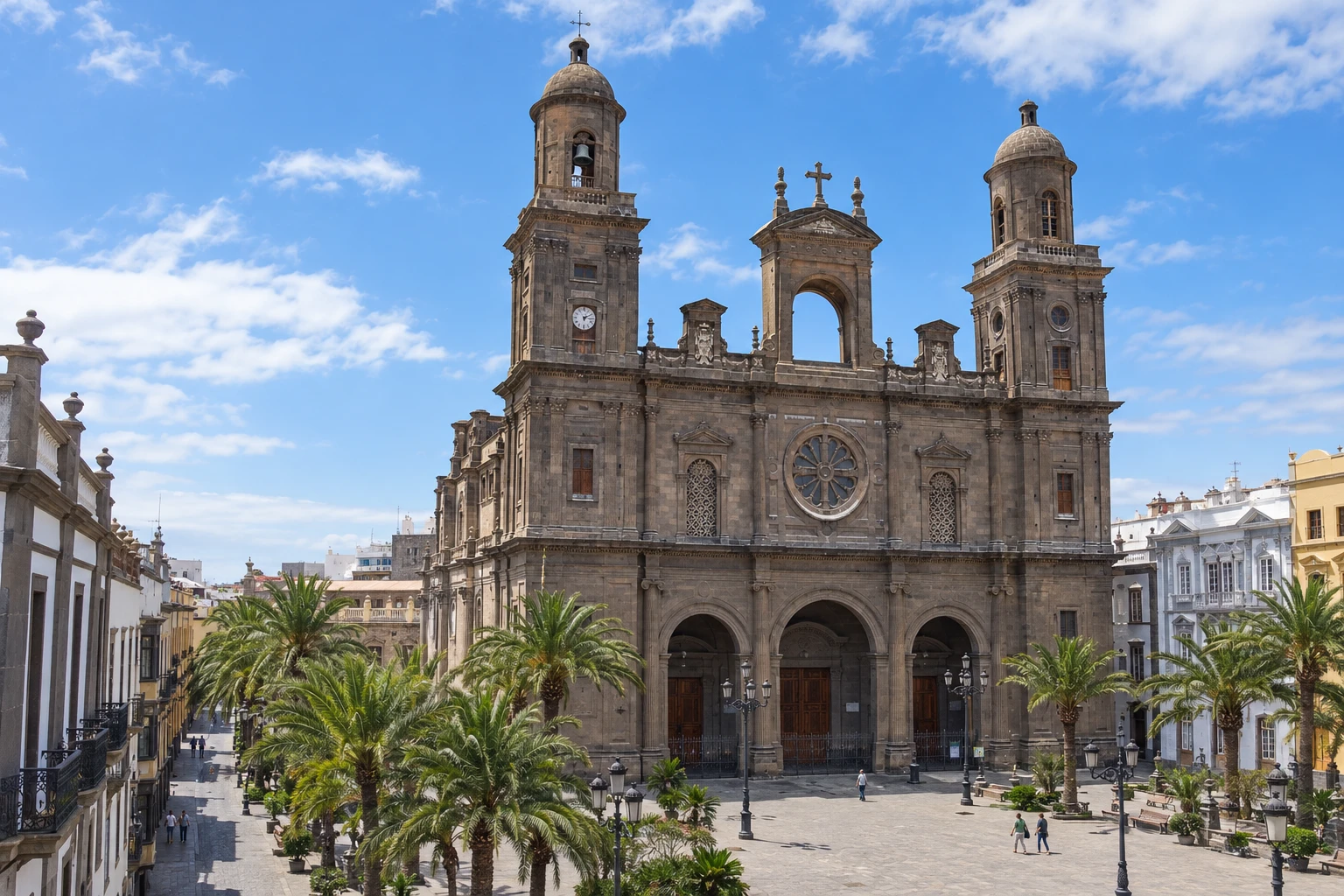
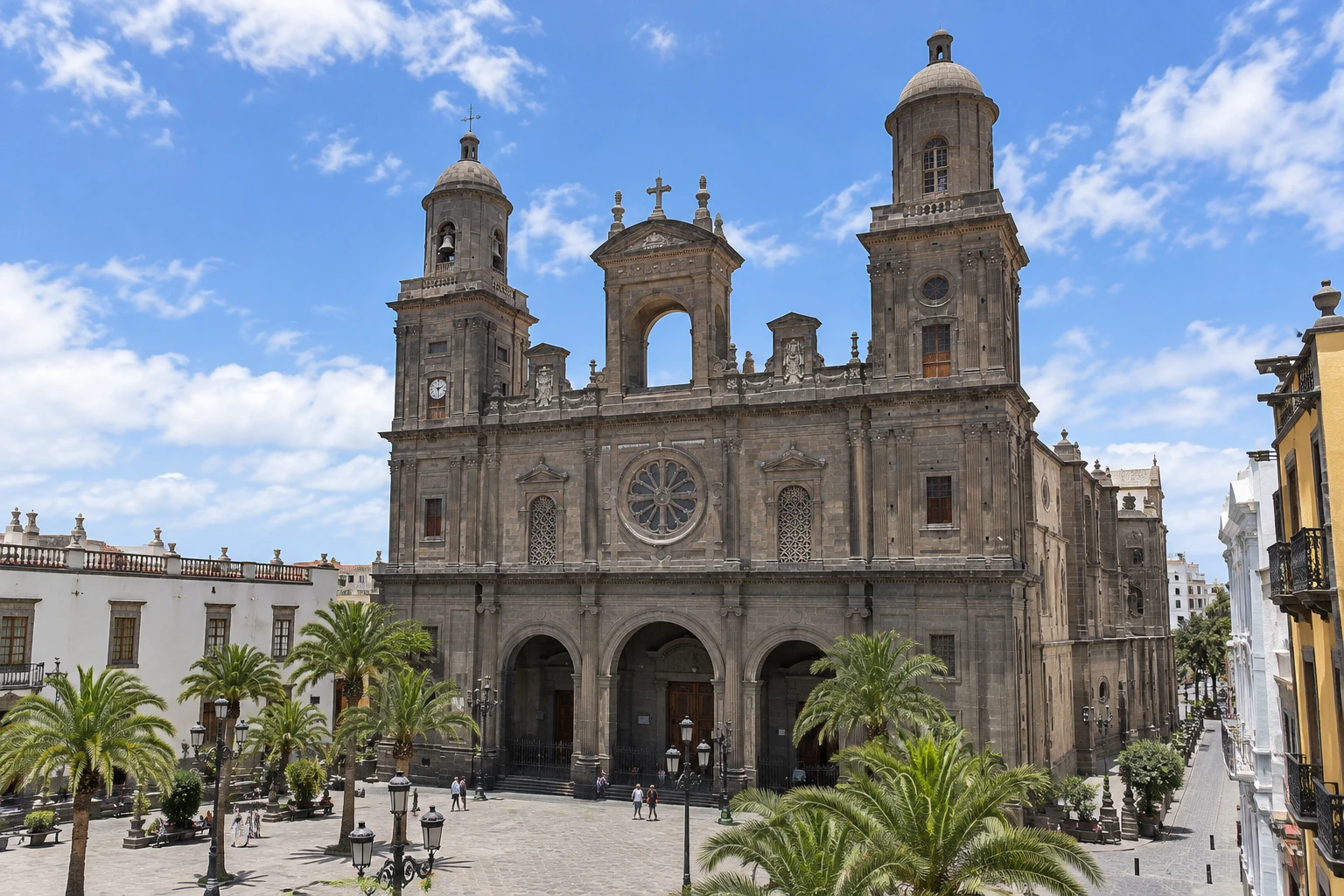
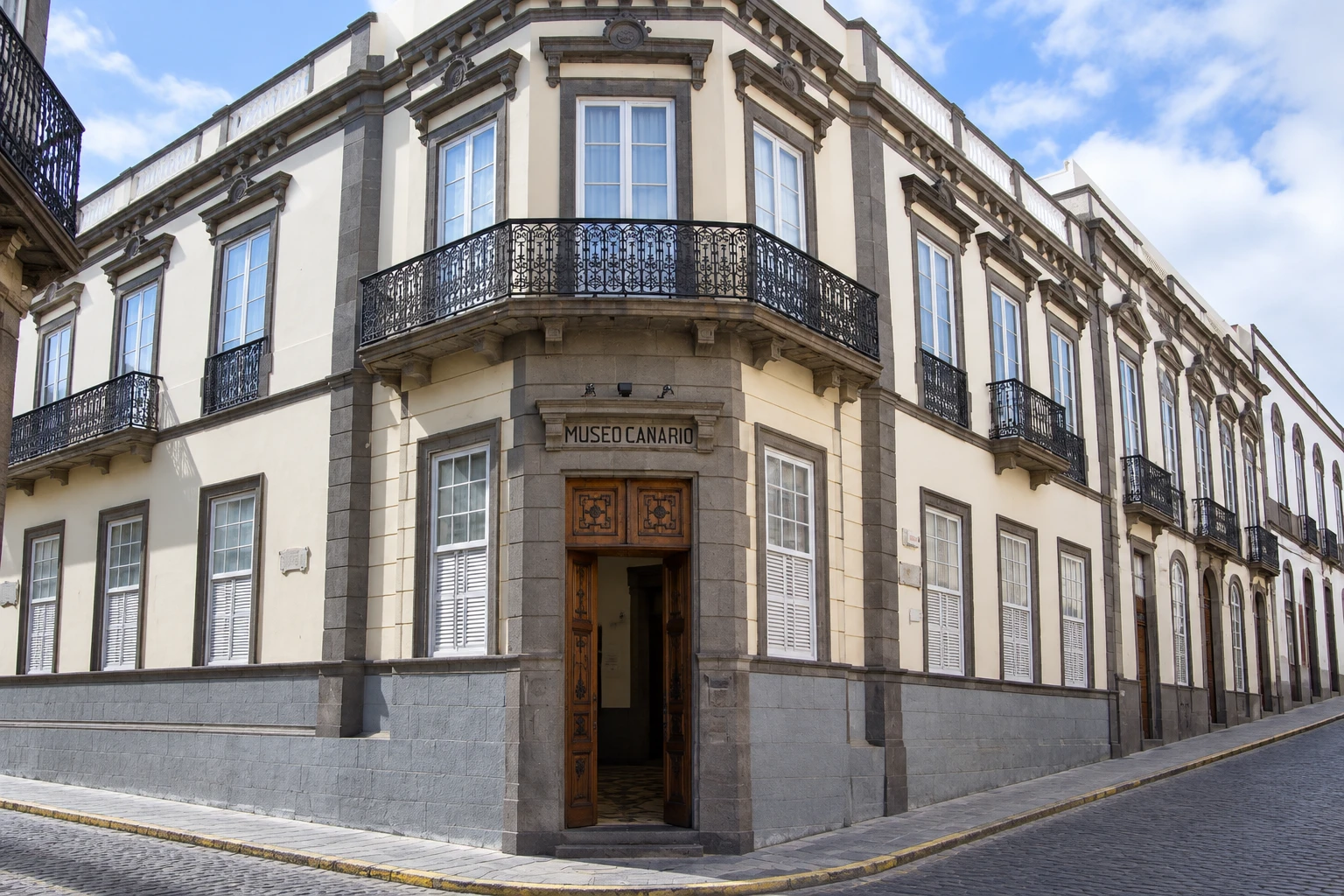
In the photo: Catedral de Santa Ana, Las Palmas de Gran Canaria
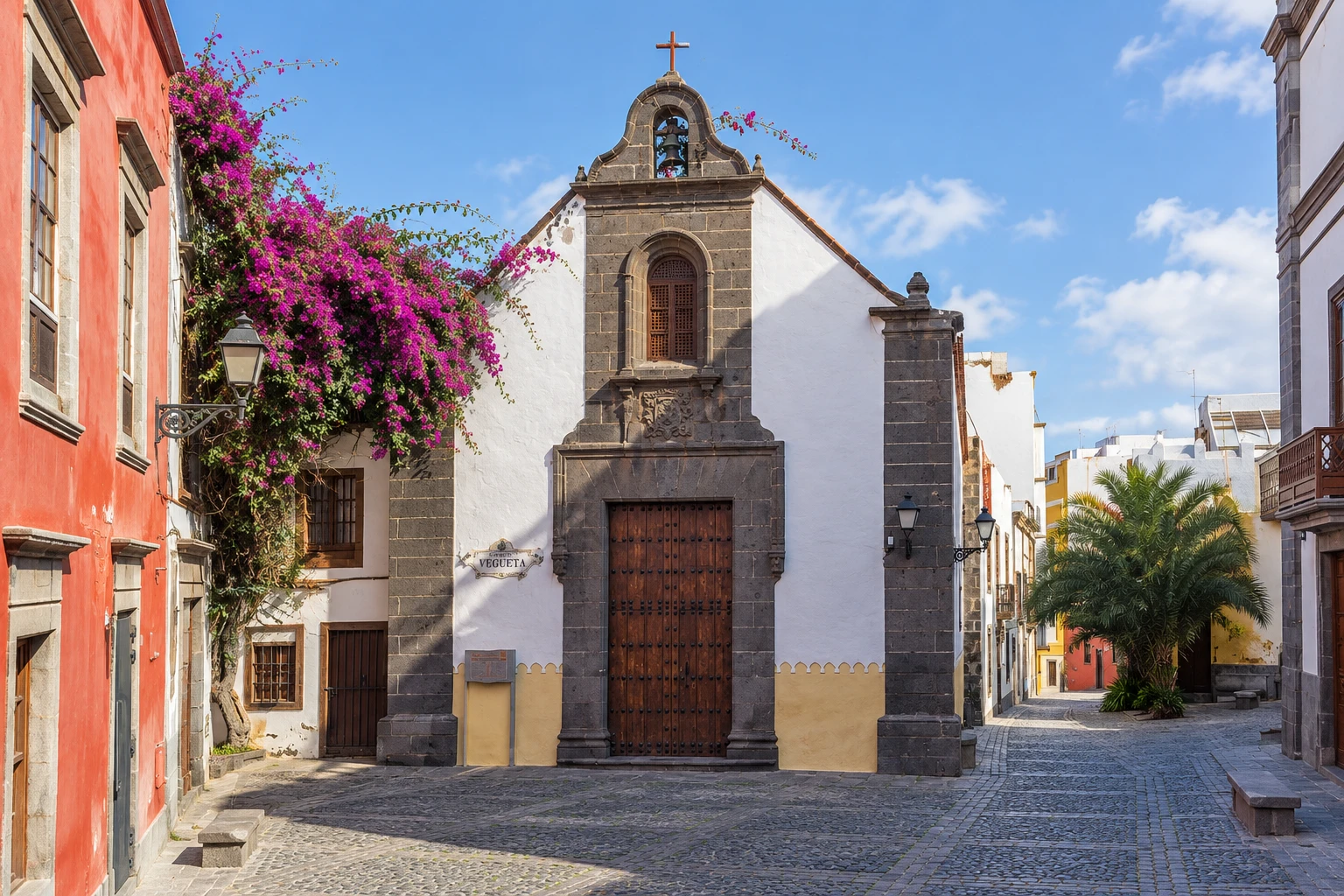
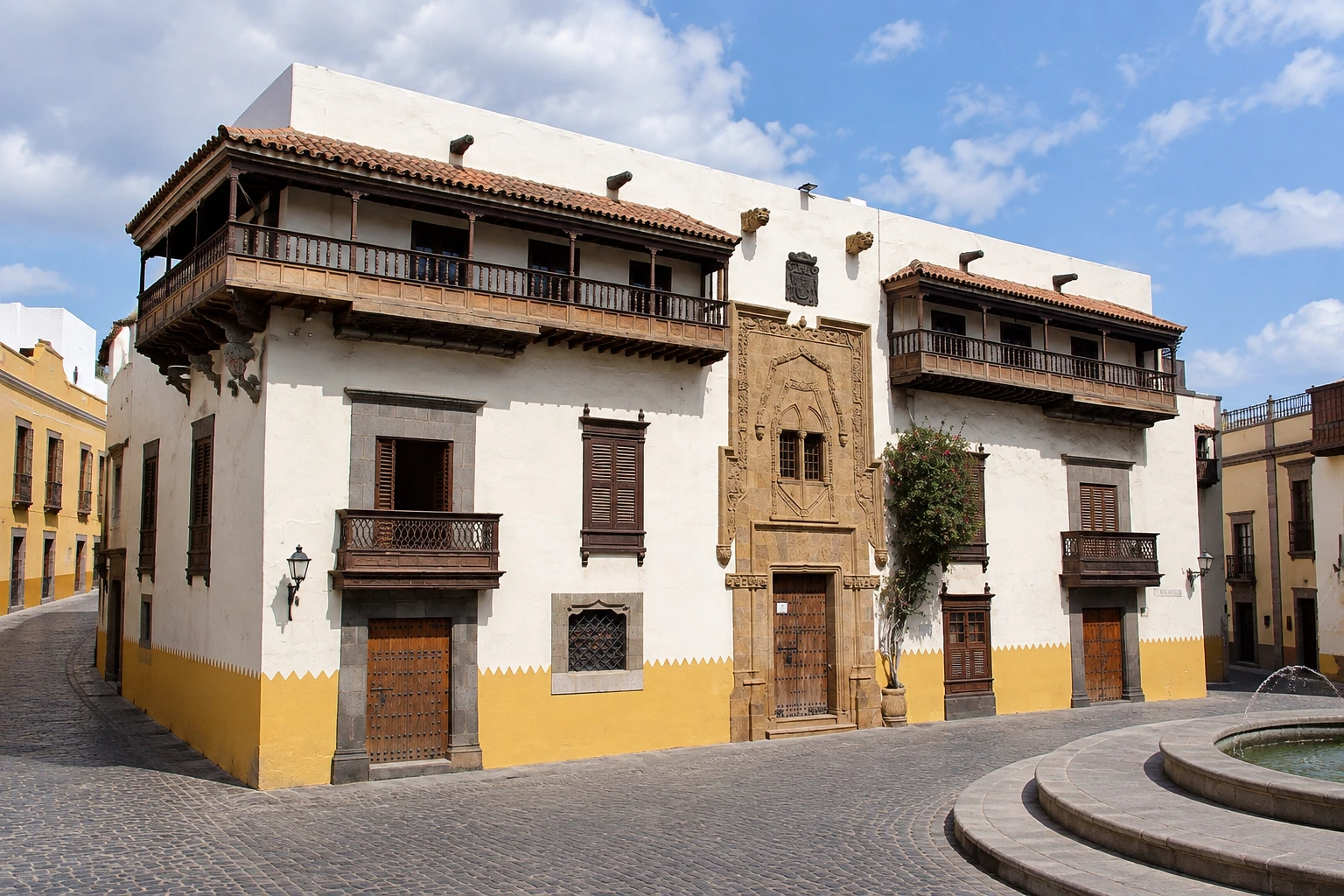
Illustrative images. The pictures in this guide are illustrations based on the real place, not photographs, and may differ from it.
The city
What to expect from Las Palmas de Gran Canaria.
Las Palmas de Gran Canaria is the largest city of the Ilhas Canárias and shares with Santa Cruz de Tenerife the seat of the archipelago's government. The Vegueta neighborhood preserves the colonial center, with the Catedral de Santa Ana, the Casa de Colón and the Museu Canário. On the other side, the urban beach of Las Canteras has about 3 km of light sand protected by a reef.
Founding neighborhood of Las Palmas, from 1478, with stone streets, colonial houses with wooden balconies, the cathedral, the Casa de Colón, the Museu Canário and the market.
Catedral de Las Palmas, begun in 1500 and completed in the 19th century, with a Gothic interior of palm-shaped columns, a neoclassical façade and a tower with an elevator and viewpoint.
Former house of the island's governors, in Vegueta, where according to tradition Columbus stayed in 1492, today a museum about voyages to America, with courtyards and Gothic portals.
Archaeology museum founded in 1879 in Vegueta, with a collection about the ancient Canarians, such as pintaderas, ceramics, mummies and a room with hundreds of skulls.
Approximate distances. Check flights and bus, train or boat schedules before you travel.
Connections with Brazil are usually via a stopover in another city. Check before buying. Gran Canaria airport is 18 km away, with buses to the San Telmo and Santa Catalina stations in about 30 minutes. Ferries from Tenerife and from Cádis arrive at the Puerto de La Luz. From Madri the flight takes about 2h45.
How many days
Two days for Vegueta, the cathedral, the Casa de Colón, the Museu Canário, Triana and Las Canteras. The third day is for the Jardín Botánico Canario and Teror, and with more time you can add Roque Nublo and Maspalomas.
When to go
The climate is usually mild year-round. In summer, low clouds known as la panza de burro cover the city many mornings, while the south stays sunny. Carnival is usually in February or March. Winter is pleasant for the beach and outings.
The seasons shown are the most usual ones; nature doesn't always follow the calendar.
Do you need a car?
Not for the city: urban buses connect Vegueta, Triana and Las Canteras, and the San Telmo station has guaguas for the whole island. For Roque Nublo, Tejeda and Teror, a car helps, but there are buses with fewer departures.
Suggested itinerary
An order that works
Built with the places on this page. No rush: it's paced so you have time to see them.
One day in Las Palmas de Gran Canaria
manhã
Vegueta and cathedral
Start at the Catedral de Santa Ana and take the elevator up the tower to see Vegueta from above.
tarde
Casa de Colón
Casa de Colón and lunch in the streets of Vegueta.
fim de tarde
Triana
Cross over to Triana, a shopping street with modernist buildings, up to Parque San Telmo.
noite
Las Canteras
Sunset on the promenade of Las Canteras and dinner on the seafront.
2 days in Las Palmas de Gran Canaria
Day 1
manhã
Cathedral
Catedral de Santa Ana and the climb to the tower.
tarde
Casa de Colón
Casa de Colón and the Mercado de Vegueta.
fim de tarde
Museu Canário
Museu Canário, with the collection about the island's first inhabitants.
noite
Triana
Dinner and a stroll in Triana.
Day 2
manhã
Las Canteras
Morning at the beach in Las Canteras, with a mask to see the fish near the reef.
tarde
Pérez Galdós
Lunch on the seafront and an afternoon at the Casa-Museo Pérez Galdós in Triana.
fim de tarde
Jardim Botânico
Or, for those who prefer nature, the Jardim Botânico Canário, in Tafira.
noite
Promenade
Sunset and dinner on the promenade of Las Canteras.
3 days in Las Palmas de Gran Canaria
Day 1
manhã
Cathedral
Catedral de Santa Ana and the elevator ascent to the tower.
tarde
Casa de Colón
Casa de Colón and lunch in Vegueta.
fim de tarde
Museu Canário
Museu Canário and the streets of Vegueta.
noite
Triana
Dinner in Triana, near the Teatro Pérez Galdós.
Day 2
manhã
Las Canteras
Beach and snorkeling at Las Canteras.
tarde
Pérez Galdós
Casa-Museo Pérez Galdós and Triana's Calle Mayor.
fim de tarde
Santa Catalina
Parque de Santa Catalina and the port.
noite
Orla
Sunset and dinner on the promenade of Las Canteras.
Day 3
manhã
Teror
Bus or car to Teror, with the basilica and wooden balconies.
tarde
Roque Nublo
Continue to Roque Nublo and take the short trail to the rock.
fim de tarde
Tejeda
Late afternoon in Tejeda, with views of the caldera and almond sweets.
noite
Return
Return to Las Palmas and dinner on the seafront.
Check before you go. Opening hours and days change, and places may close for renovations, holidays or events. This itinerary is a suggestion from Cidade Turismo, not a commitment: plan yours by checking directly with each place you intend to visit.
Before you go
Frequently asked questions
How to get from Gran Canaria airport to Las Palmas?
Buses run from the airport to San Telmo station and to Santa Catalina, near Las Canteras, in about 30 minutes. Taxis are available at the exit.
Is Las Canteras good for swimming?
Yes. A natural reef, La Barra, protects much of the beach and keeps the sea calm. With a mask you can see fish near the rocks.
What is the panza de burro?
The layer of low clouds that covers Las Palmas on many summer mornings, caused by the trade winds. The south of the island is usually sunny.
What is the Las Palmas carnival like?
It usually takes place in February or March, in Parque de Santa Catalina, with contests, the drag gala and parades. The city gets very crowded.
Can you go from Las Palmas to Maspalomas by bus?
Yes. Buses from San Telmo station take about 50 minutes to Maspalomas and Playa del Inglés, with frequent departures.


 Brazil
 Antarctica
 Argentina
 Bolivia
 Chile
 Colombia
 Ecuador
 Falkland Islands (Malvinas)
 French Guiana
 Guyana
 Paraguay
 Peru
 Suriname
 Uruguay
 Venezuela
 Austria
 Belgium
 Croatia
 Denmark
 Finland
 France
 Germany
 Greece
 Hungary
 Iceland
 Ireland
 Italy
 Luxembourg
 Norway
 Poland
 Portugal
 Slovakia
 Slovenia
 Sweden
 Switzerland
 the Czech Republic
 the Netherlands
 the United Kingdom
 Turkey
 Bermuda
 Canada
 Greenland
 Mexico
 Saint Pierre and Miquelon
 the United States
 the Dominican Republic
 Japan
 Egypt
 South Africa
 Australia
 Fiji
 New Zealand
 Papua New Guinea