Illustrative images. The pictures in this guide are illustrations based on the real place, not photographs, and may differ from it.
The city
What to expect from Oviedo.
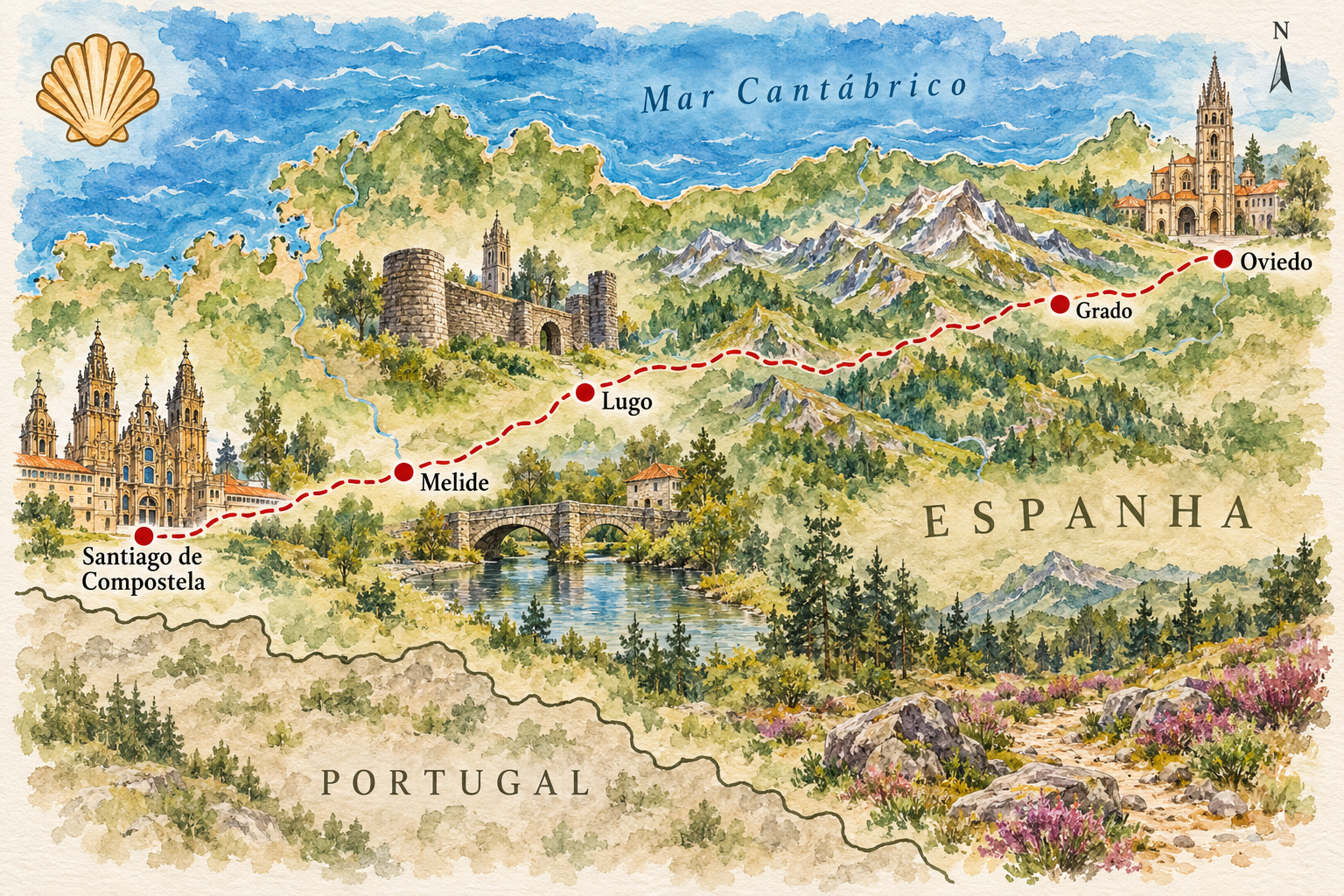
Oviedo is the capital of Asturias and was the capital of the former Kingdom of Asturias in the 9th and 10th centuries. From that time remain the monuments of Asturian pre-Romanesque, a World Heritage: the Cámara Santa, inside the Gothic cathedral, the church of San Julián de los Prados and, on Monte Naranco, Santa María del Naranco and San Miguel de Lillo. The old town has the square and market of Fontán, the street Gascona, known for its cider bars, with the Foncalada fountain, the Museo de Bellas Artes and the Museo Arqueológico. The Parque de San Francisco lies next to the teatro Campoamor. It is the starting point of the Caminho Primitivo.
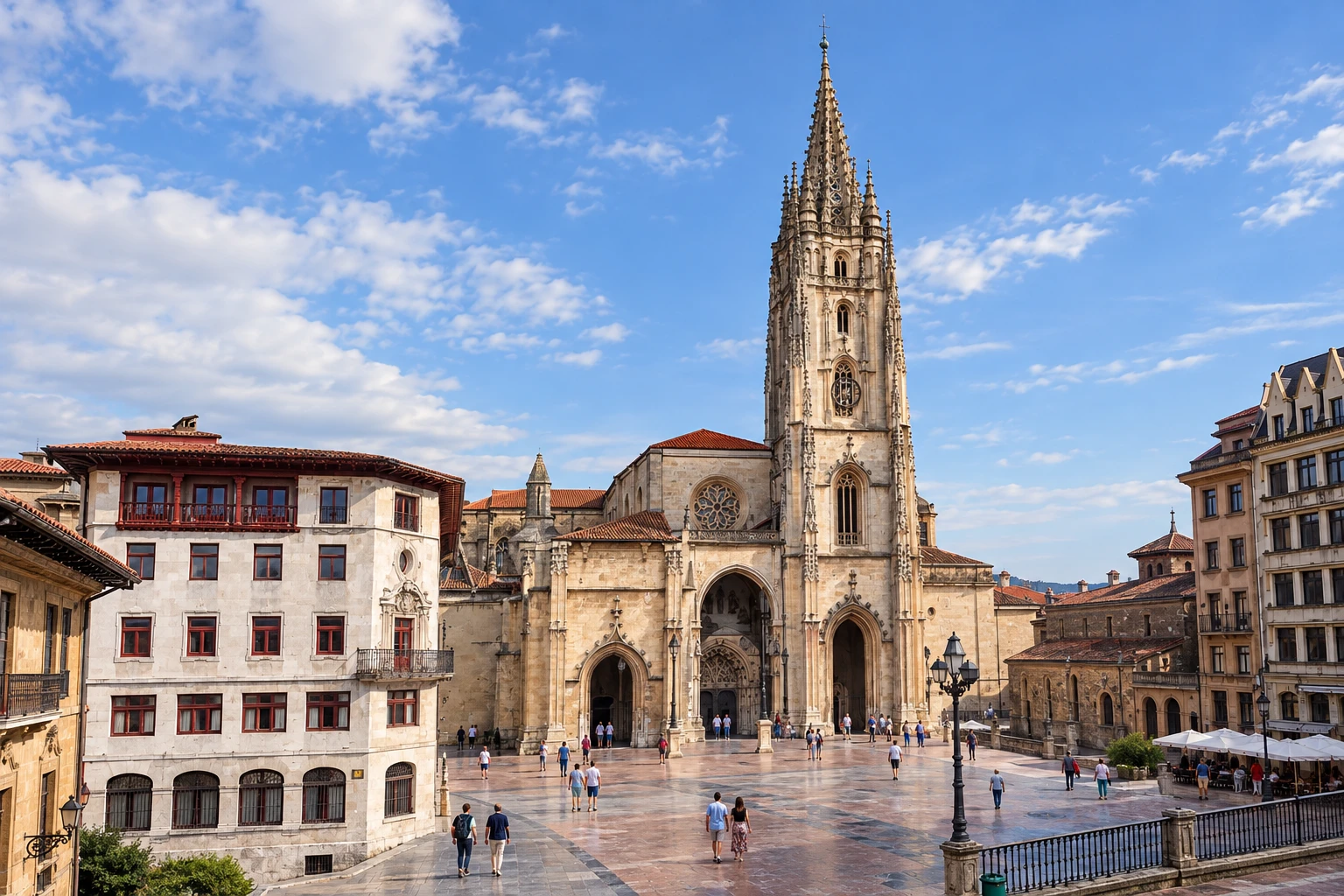
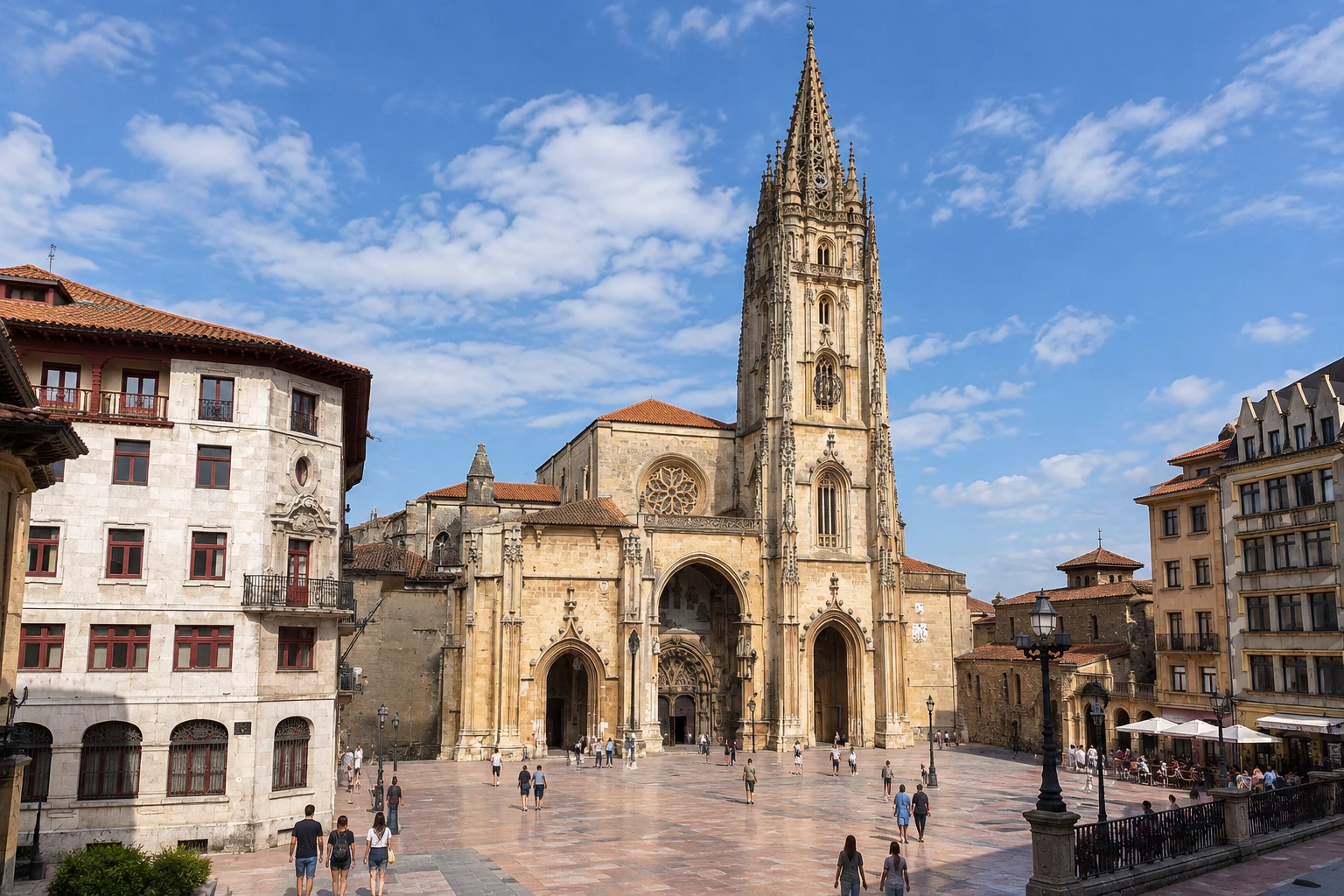
Gothic Catedral de San Salvador, built from the 13th to the 16th century, with the 9th-century Cámara Santa, a World Heritage, which houses the Cruz de los Ángeles, the Cruz de la Victoria and the Arca Santa.
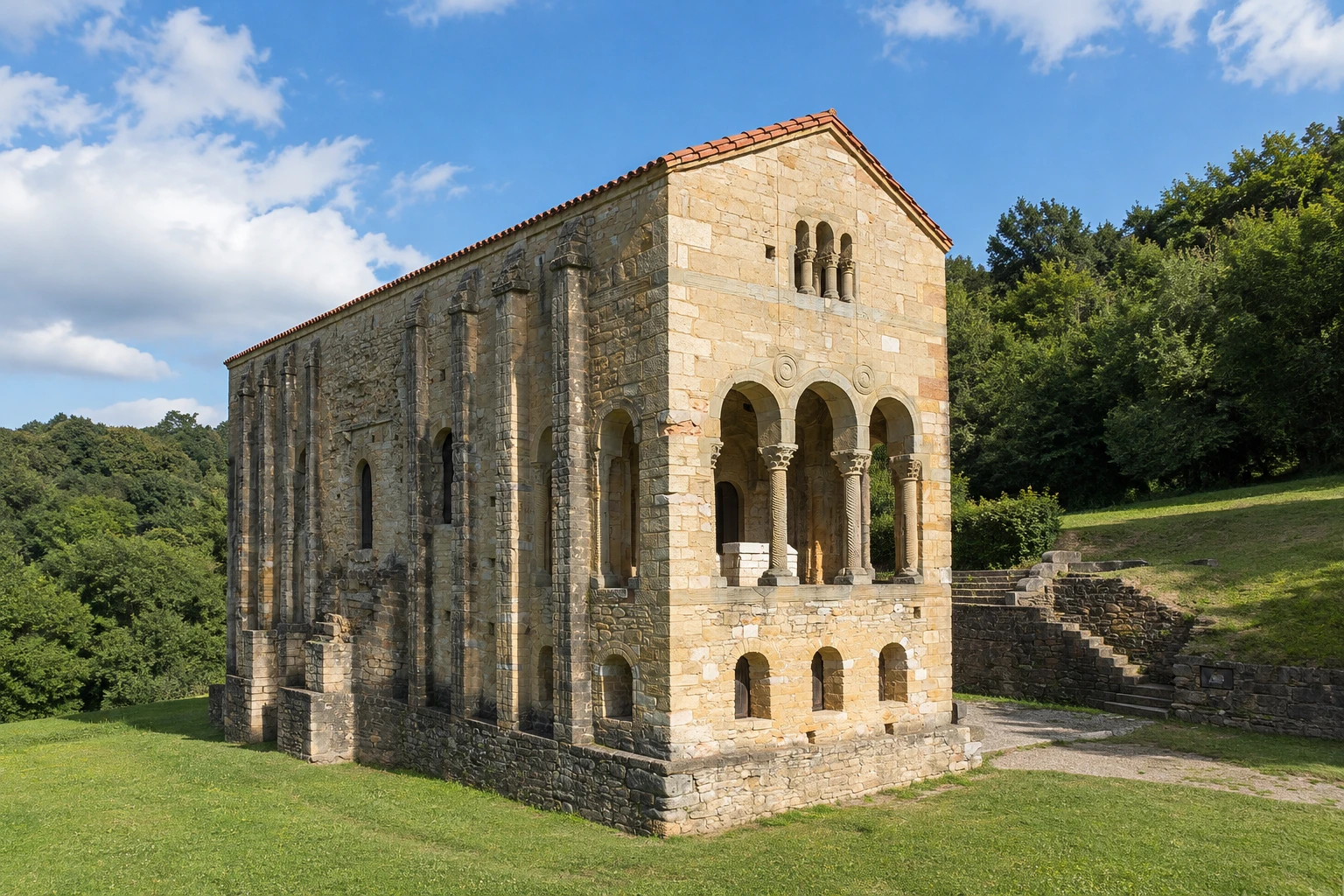
Old palace of King Ramiro I, built around 842 on Monte Naranco and later converted into a church; a masterpiece of Asturian pre‑Romanesque and a World Heritage site.
Palatine church of King Ramiro I on monte Naranco, from the 9th century, of which one third remains, with reliefs of acrobats and mural paintings; World Heritage.
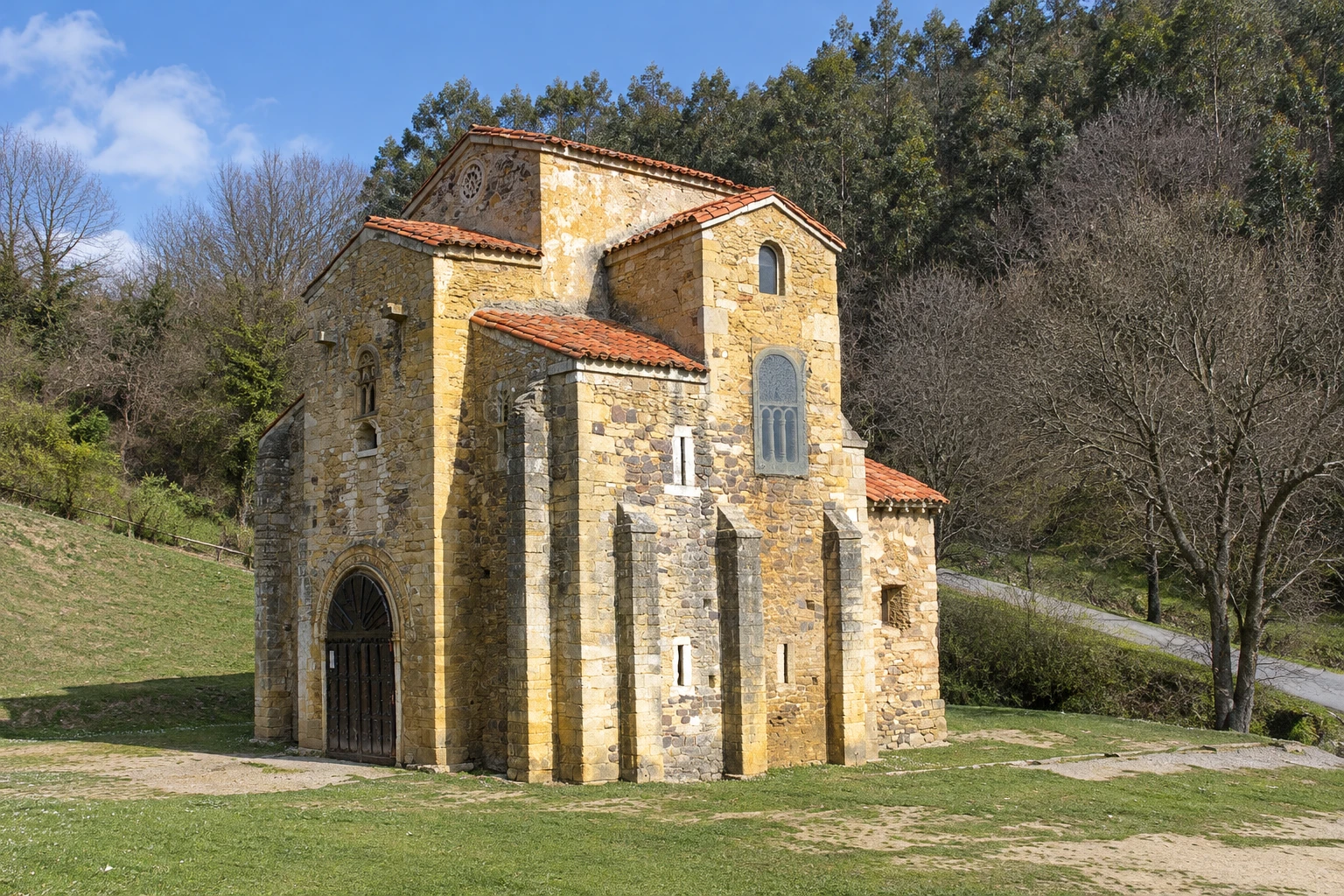
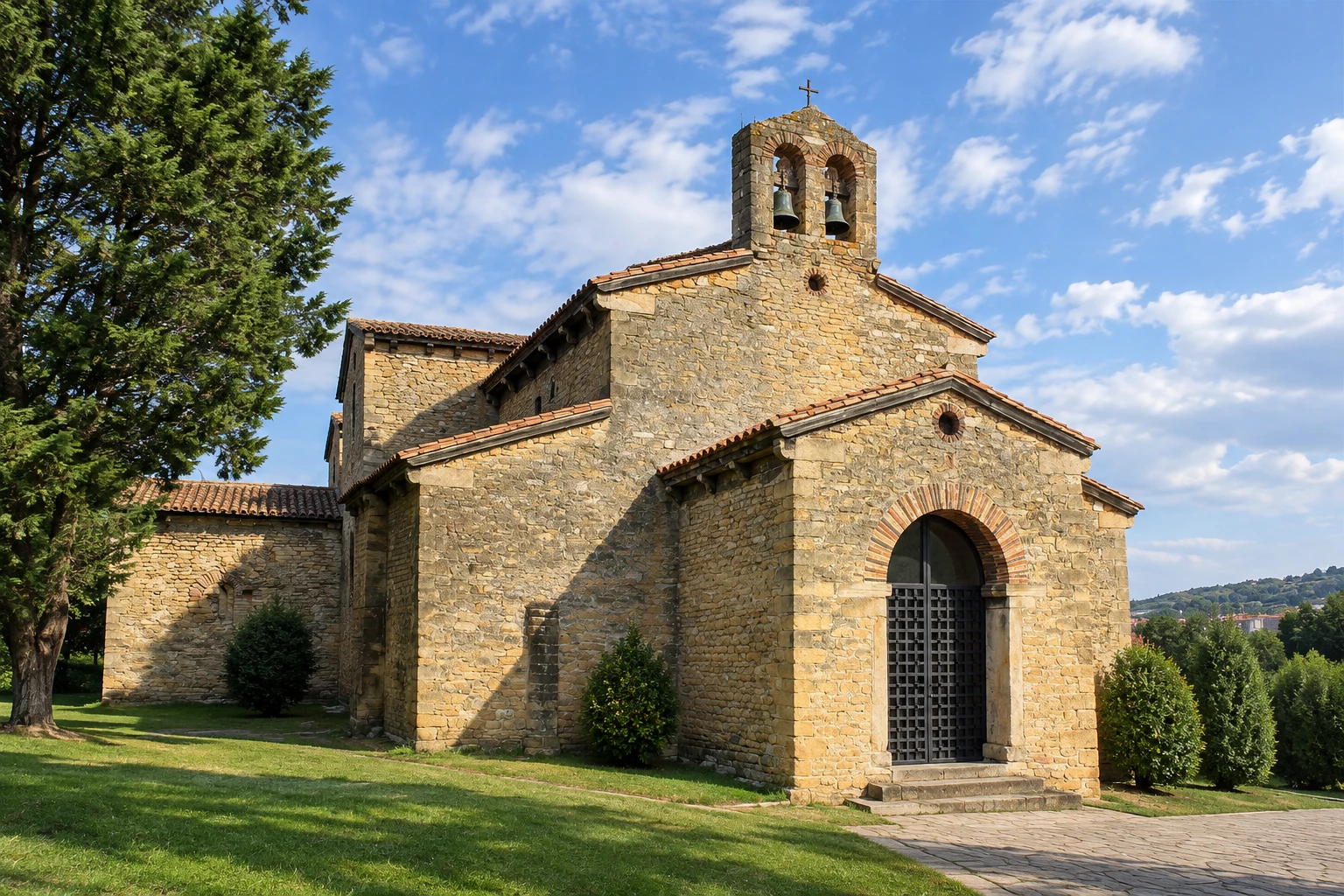
Pre-Romanesque church from the early 9th century, commissioned by Afonso II, the largest preserved from the period, with mural paintings of architectural motifs inspired by Roman art; World Heritage.
Aeroporto das Astúrias (Aeropuerto de Asturias) (OVD)45 km
Estação de trem de Oviedo (Estación de Oviedo)1 km
Approximate distances. Check flights and bus, train or boat schedules before you travel.
The connection to Brazil is usually via a stop in another city. Check before buying. Asturias airport is about 45 km away, with buses to Oviedo. Oviedo station has trains from Madrid, regional trains to Gijón and Avilés, and narrow-gauge trains to Santander and the coast. There are buses to northern towns. By car, via the A-66 and A-63 motorways.
How many days
Two days are enough for the cathedral with the Cámara Santa, the old town, the museums and the monuments on Monte Naranco and San Julián de los Prados. Oviedo pairs well with Gijón, 30 minutes away, and serves as a base for the mountains and the Asturias coast.
When to go
From May to October it usually rains less and is less cold; July and August are the warmest months. In October the Princess of Asturias Awards (Prêmios Princesa das Astúrias) are presented at the teatro Campoamor. Rain is frequent year-round, with more rainy days from October to March. The seasons are opposite to those in Brazil; Spain is 4 to 5 hours ahead of Brasília depending on the time of year, and meals take place later than in Brazil.
The seasons shown are the most usual ones; nature doesn't always follow the calendar.
Do you need a car?
No. The center is walkable, and there are city buses to Monte Naranco, about 3 km away. Trains and buses connect Oviedo with Gijón and other towns. A car helps for the mountains and the coast.
Suggested itinerary
An order that works
Built with the places on this page. No rush: it's paced so you have time to see them.
One day in Oviedo
manhã
Cathedral and Cámara Santa
Start with the Catedral de San Salvador, including the cloister and the Cámara Santa, where the crosses of the Asturian kings are kept.
tarde
Museums and old town
Visit the Museo de Bellas Artes or the Museo Arqueológico next to the cathedral, and walk to the square and market of Fontán.
fim de tarde
Parque de San Francisco
Cross the Parque de San Francisco and pass by the teatro Campoamor.
noite
Rua Gascona
Dine in a cider house on Rua Gascona, with cider poured from a height and fabada, and see the Foncalada fountain at the end of the street.
2 days in Oviedo
Day 2
manhã
Monte Naranco
Go up Monte Naranco to visit Santa María del Naranco and San Miguel de Lillo, with views over the city.
tarde
San Julián de los Prados
Visit the church of San Julián de los Prados, with 9th-century mural paintings.
Check before you go. Opening hours and days change, and places may close for renovations, holidays or events. This itinerary is a suggestion from Cidade Turismo, not a commitment: plan yours by checking directly with each place you intend to visit.
Before you go
Frequently asked questions
What is Asturian pre-Romanesque?
The art of the kings of Asturias in the 9th and 10th centuries, with stone churches and palaces predating the Romanesque. Oviedo's main monuments are World Heritage.
Is Oviedo the start of the Caminho Primitivo?
Yes. The Caminho Primitivo starts at Oviedo cathedral, following by tradition the route of King Alfonso II to Santiago.
How to get from Oviedo to Gijón?
By regional train or by bus, in about 30 minutes.
Do you need a car for Monte Naranco?
No. There are city buses, and the walk up takes about 40 minutes from the train station.
What language is spoken in Oviedo?
Spanish and Asturian. Many signs display the name in Asturian, such as Uviéu.


 Brazil
 Antarctica
 Argentina
 Bolivia
 Chile
 Colombia
 Ecuador
 Falkland Islands (Malvinas)
 French Guiana
 Guyana
 Paraguay
 Peru
 Suriname
 Uruguay
 Venezuela
 Austria
 Belgium
 Croatia
 Denmark
 Finland
 France
 Germany
 Greece
 Hungary
 Iceland
 Ireland
 Italy
 Luxembourg
 Norway
 Poland
 Portugal
 Slovakia
 Slovenia
 Sweden
 Switzerland
 the Czech Republic
 the Netherlands
 the United Kingdom
 Turkey
 Bermuda
 Canada
 Greenland
 Mexico
 Saint Pierre and Miquelon
 the United States
 the Dominican Republic
 Japan
 Egypt
 South Africa
 Australia
 Fiji
 New Zealand
 Papua New Guinea