Illustrative images. The pictures in this guide are illustrations based on the real place, not photographs, and may differ from it.
The city
What to expect from Grado.
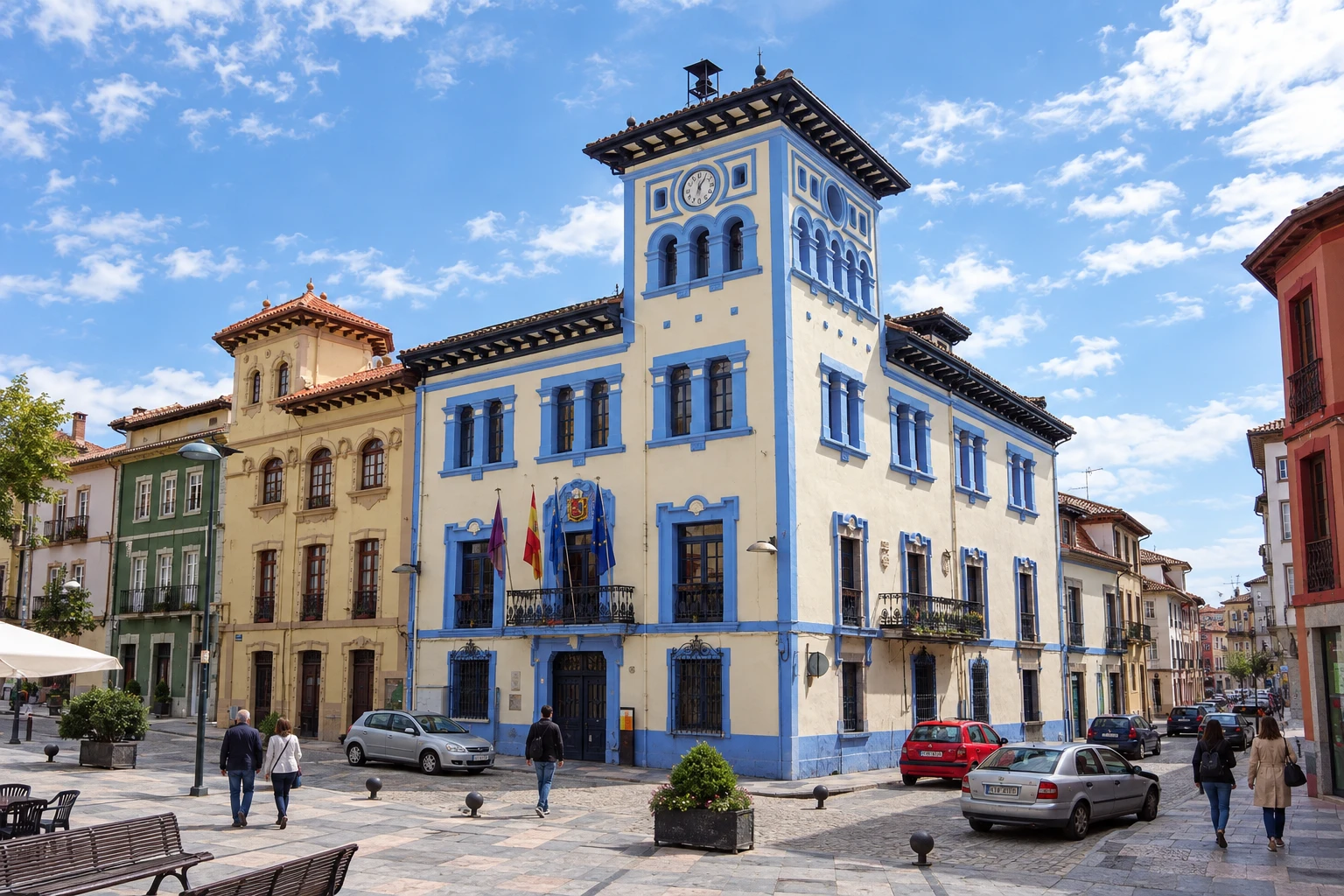
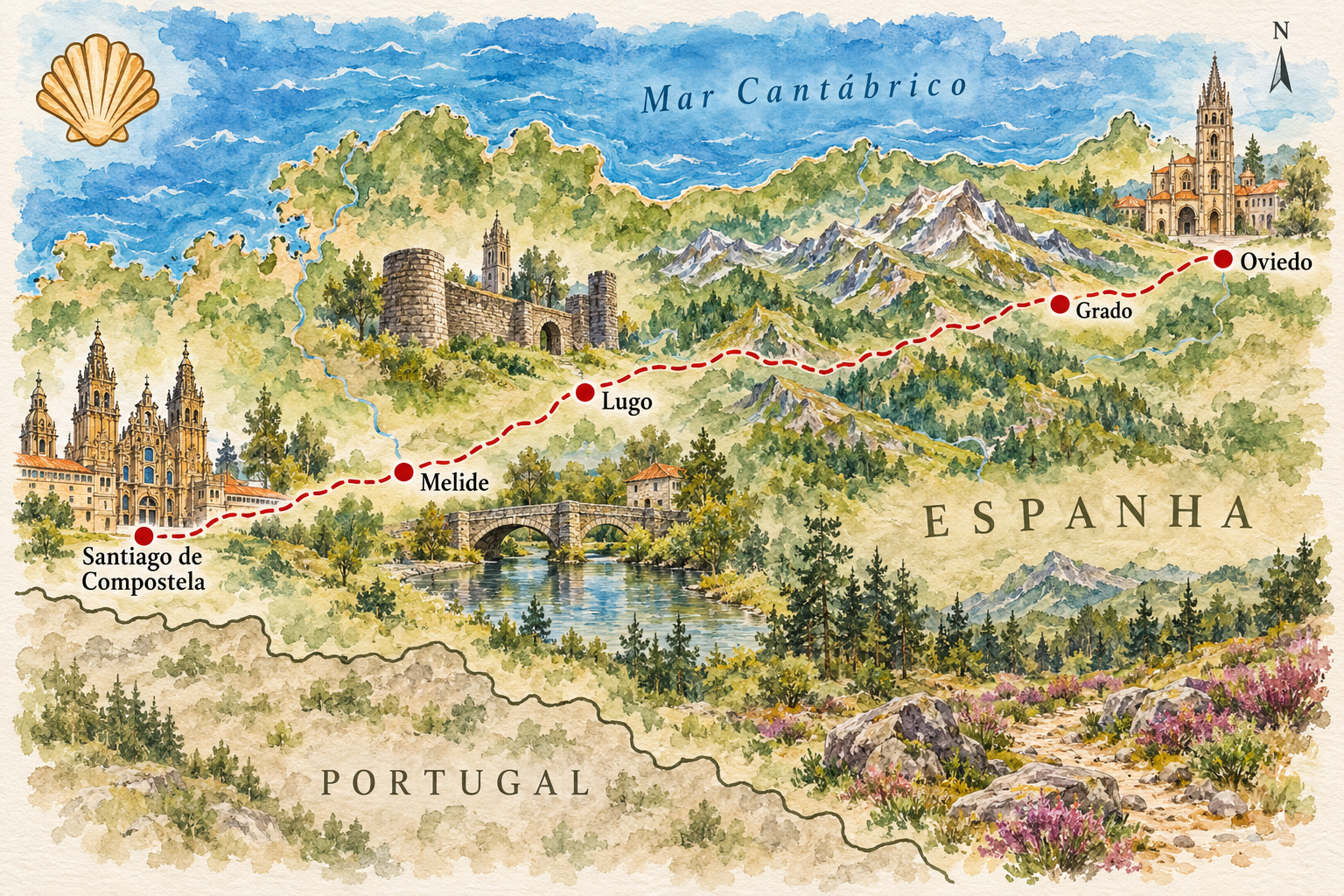
Grado, Grau in Asturian, is a village in the center of the Astúrias, about 25 km from Oviedo, in the Cubia river valley. It is known for the traditional market that fills the streets of the center on Wednesdays and Sundays, with products from the Asturian countryside. The protected historic center includes the baroque palace of Miranda-Valdecarzana, now a library, and the chapel of Dolores, from the early 18th century. On the outskirts of the village, the Museu Etnográfico shows rural life in the central Astúrias. It is the first major village on the Caminho Primitivo after Oviedo. Spanish and Asturian are spoken.
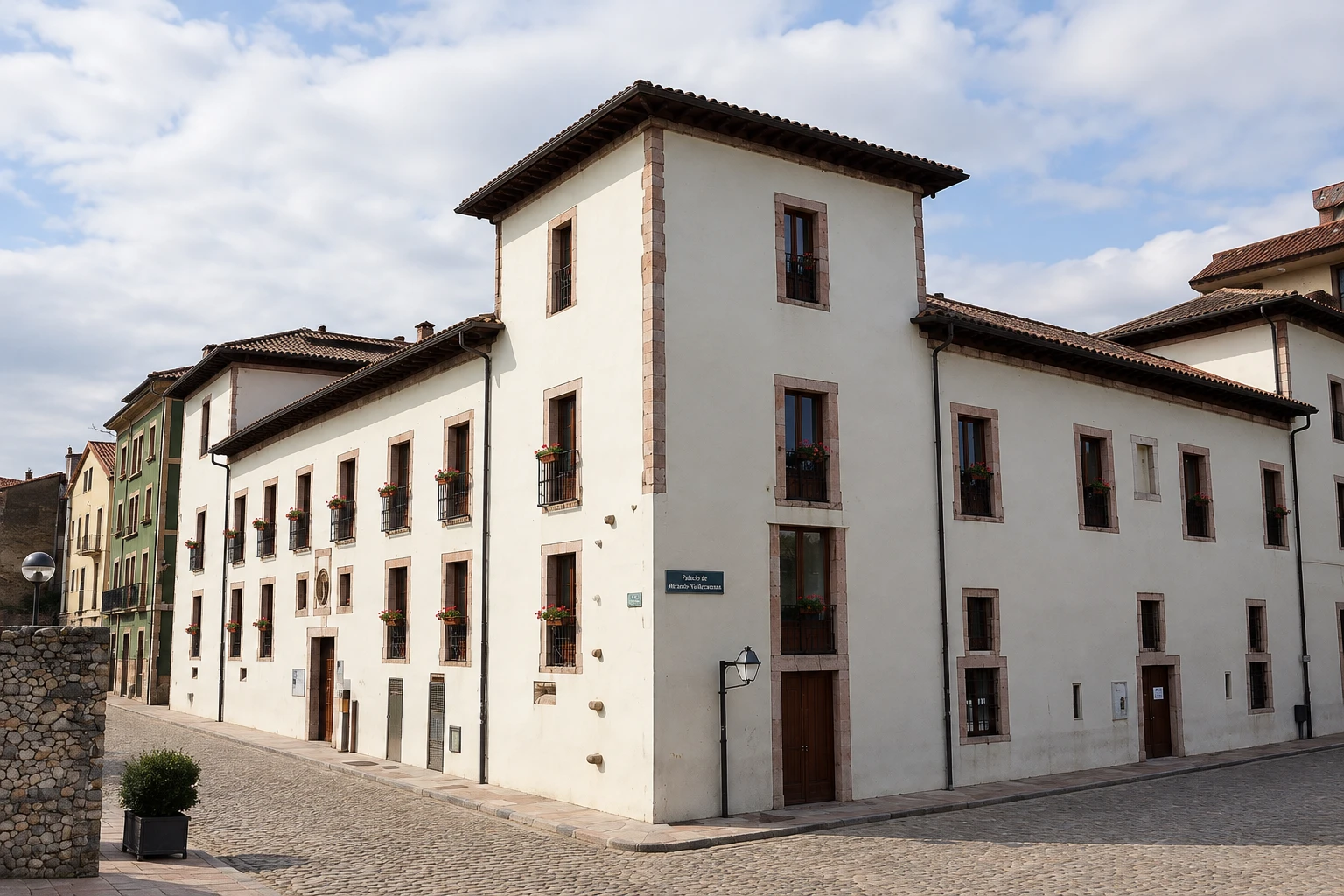
Palace of medieval origin remodeled in the baroque style in the 17th and 18th centuries, with a columned courtyard, and the chapel of Dolores, dating from 1713, beside it; a historic-artistic monument in the center of Grado.
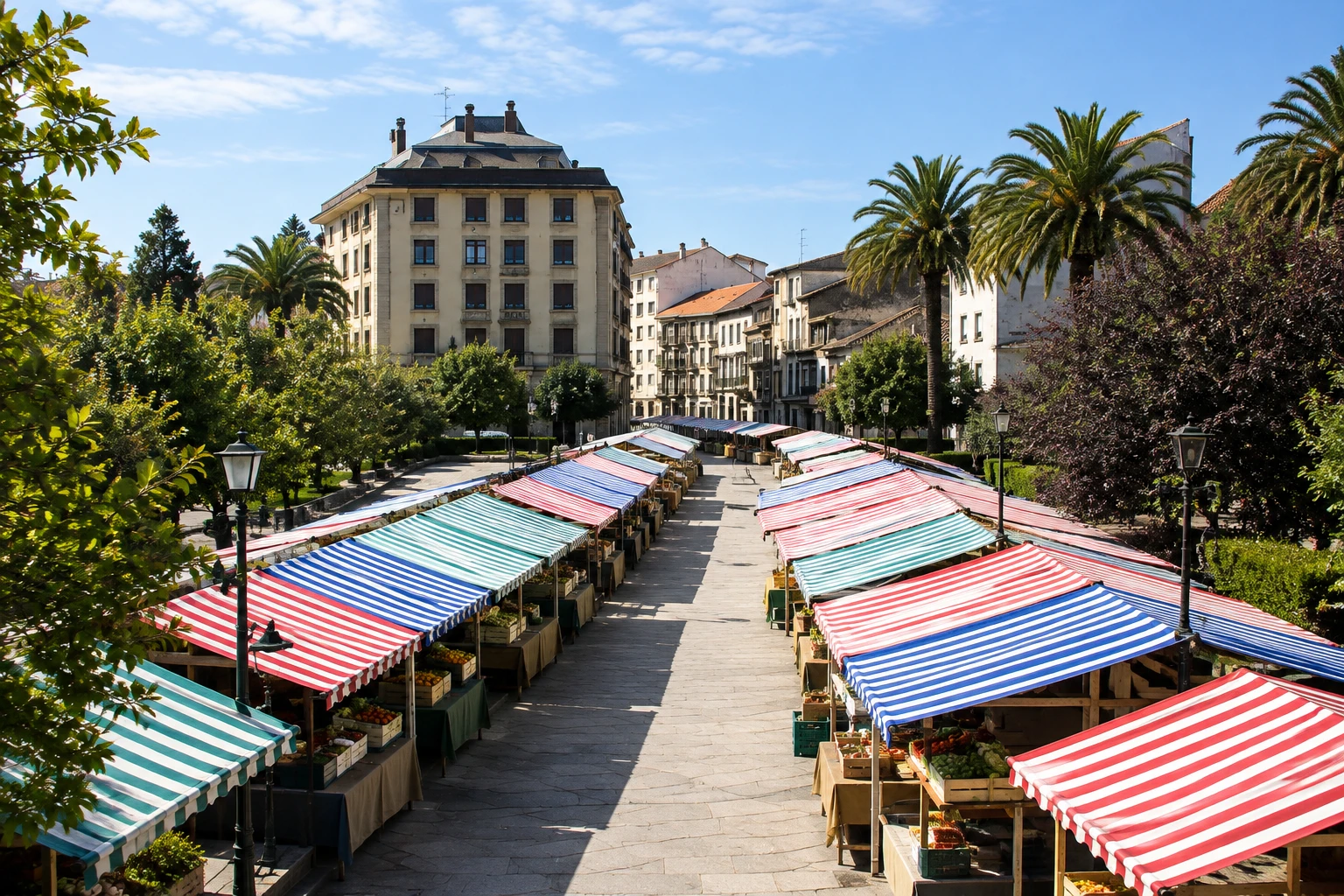
Traditional market that fills the streets and squares of Grado’s historic center on Wednesdays and Sundays, with cheeses, bread, cured meats, fruits, vegetables and products from the Asturian countryside.
Museum of rural life in the center of the Astúrias, opened in 1982, with the mill for hulling spelt, the traditional house with a central kitchen, the cider press and workshops of old trades.
Aeroporto das Astúrias (Aeropuerto de Asturias) (OVD)40 km
Estação de ônibus de Grado (Estación de autobuses de Grado)1 km
Approximate distances. Check flights and bus, train or boat schedules before you travel.
Connections with Brazil usually require a transfer in another city. Confirm before buying. The Aeropuerto das Astúrias is about 40 km away. There are buses from Oviedo, about 30 minutes, and narrow-gauge trains with few schedules. By car, take the A-63 motorway from Oviedo.
How many days
Half a day is enough for the historic center, the palace of Miranda-Valdecarzana, the chapel of Dolores and the Museu Etnográfico. It's worth going on a Sunday or Wednesday, market day. For pilgrims on the Caminho Primitivo, Grado is a stop on the first stage from Oviedo.
When to go
From May to October it usually rains less and is less cold. The market runs year-round, on Wednesdays and Sundays. Inland Astúrias is humid, with rain more common from autumn through late winter. The seasons are reversed compared with Brazil; Spain is 4 to 5 hours ahead of Brasília depending on the time of year, and meals are eaten later than in Brazil.
The seasons shown are the most usual ones; nature doesn't always follow the calendar.
Do you need a car?
No. There are buses from Oviedo, and the center is walkable. The Museu Etnográfico is about 1 km from the center.
Suggested itinerary
An order that works
Built with the places on this page. No rush: it's paced so you have time to see them.
One day in Grado
manhã
Mercado de Grado
On a Sunday or Wednesday, wander through the market in the streets of the center, with cheeses, bread, cured meats, fruits and vegetables from the region.
tarde
Palace and chapel of Dolores
See the palace of Miranda-Valdecarzana, with its columned courtyard, and the chapel of Dolores next door.
fim de tarde
Museu Etnográfico
Finish at the Museu Etnográfico, with the spelt hulling mill, the traditional house and the cider press.
noite
Asturian cuisine
Have dinner of fabada, cachopo or local meat dishes in the restaurants of the center, accompanied by sidra.
Check before you go. Opening hours and days change, and places may close for renovations, holidays or events. This itinerary is a suggestion from Cidade Turismo, not a commitment: plan yours by checking directly with each place you intend to visit.
Before you go
Frequently asked questions
When is the Grado market?
On Wednesdays and Sundays, in the streets of the center, year-round.
How to get from Oviedo to Grado?
By bus, about 30 minutes, or by car via the A-63.
Does the Caminho Primitivo pass through Grado?
Yes, Grado is the first major village on the Caminho Primitivo after Oviedo.
What language is spoken in Grado?
Spanish and Asturian. The official name of the village is bilingual, Grau/Grado.


 Brazil
 Antarctica
 Argentina
 Bolivia
 Chile
 Colombia
 Ecuador
 Falkland Islands (Malvinas)
 French Guiana
 Guyana
 Paraguay
 Peru
 Suriname
 Uruguay
 Venezuela
 Austria
 Belgium
 Croatia
 Denmark
 Finland
 France
 Germany
 Greece
 Hungary
 Iceland
 Ireland
 Italy
 Luxembourg
 Norway
 Poland
 Portugal
 Slovakia
 Slovenia
 Sweden
 Switzerland
 the Czech Republic
 the Netherlands
 the United Kingdom
 Turkey
 Bermuda
 Canada
 Greenland
 Mexico
 Saint Pierre and Miquelon
 the United States
 the Dominican Republic
 Japan
 Egypt
 South Africa
 Australia
 Fiji
 New Zealand
 Papua New Guinea