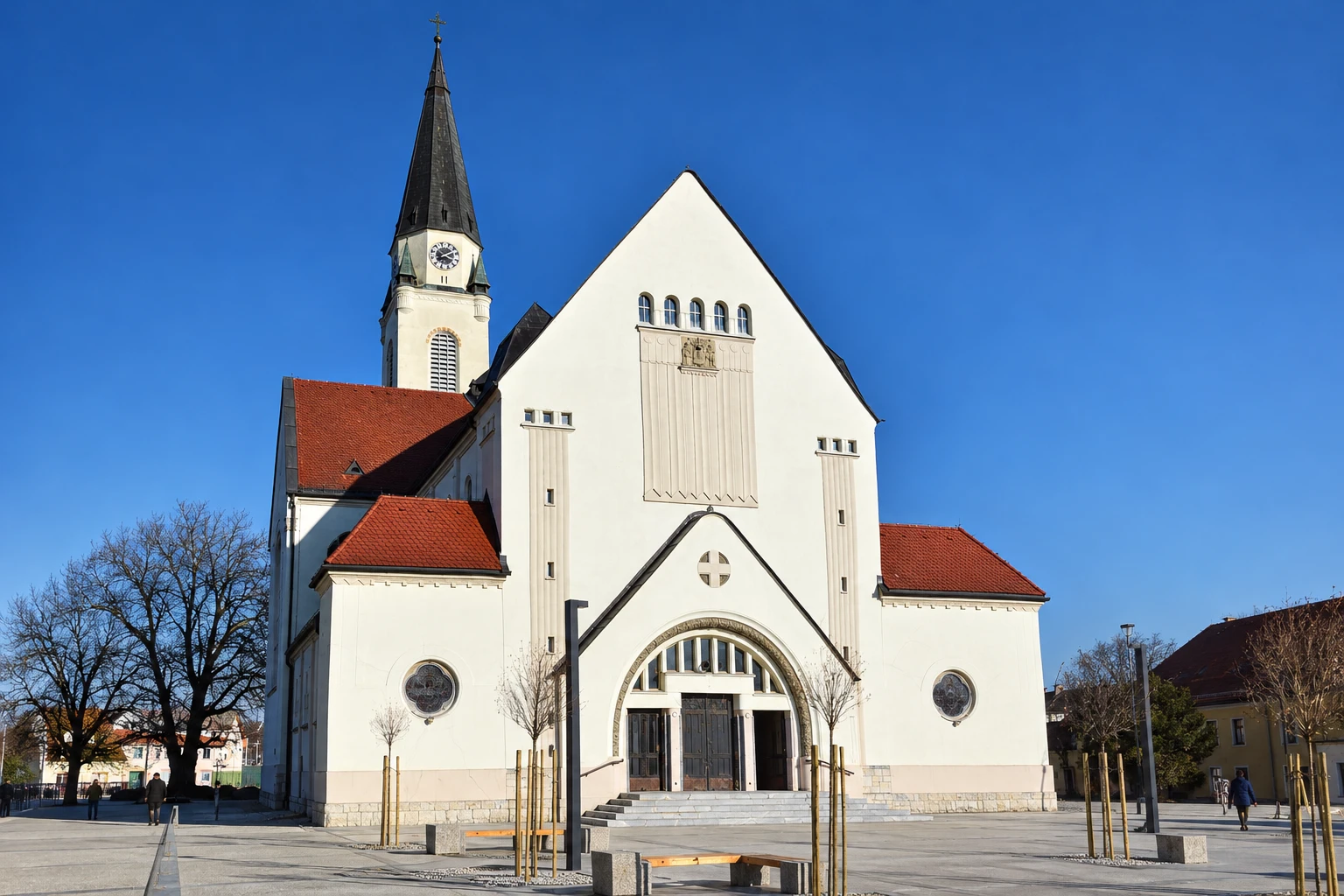
In the photo: Cathedral of Saint Nicholas, in Murska Sobota
Illustrative images. The pictures in this guide are illustrations based on the real place, not photographs, and may differ from it.
The city
What to expect from Murska Sobota.
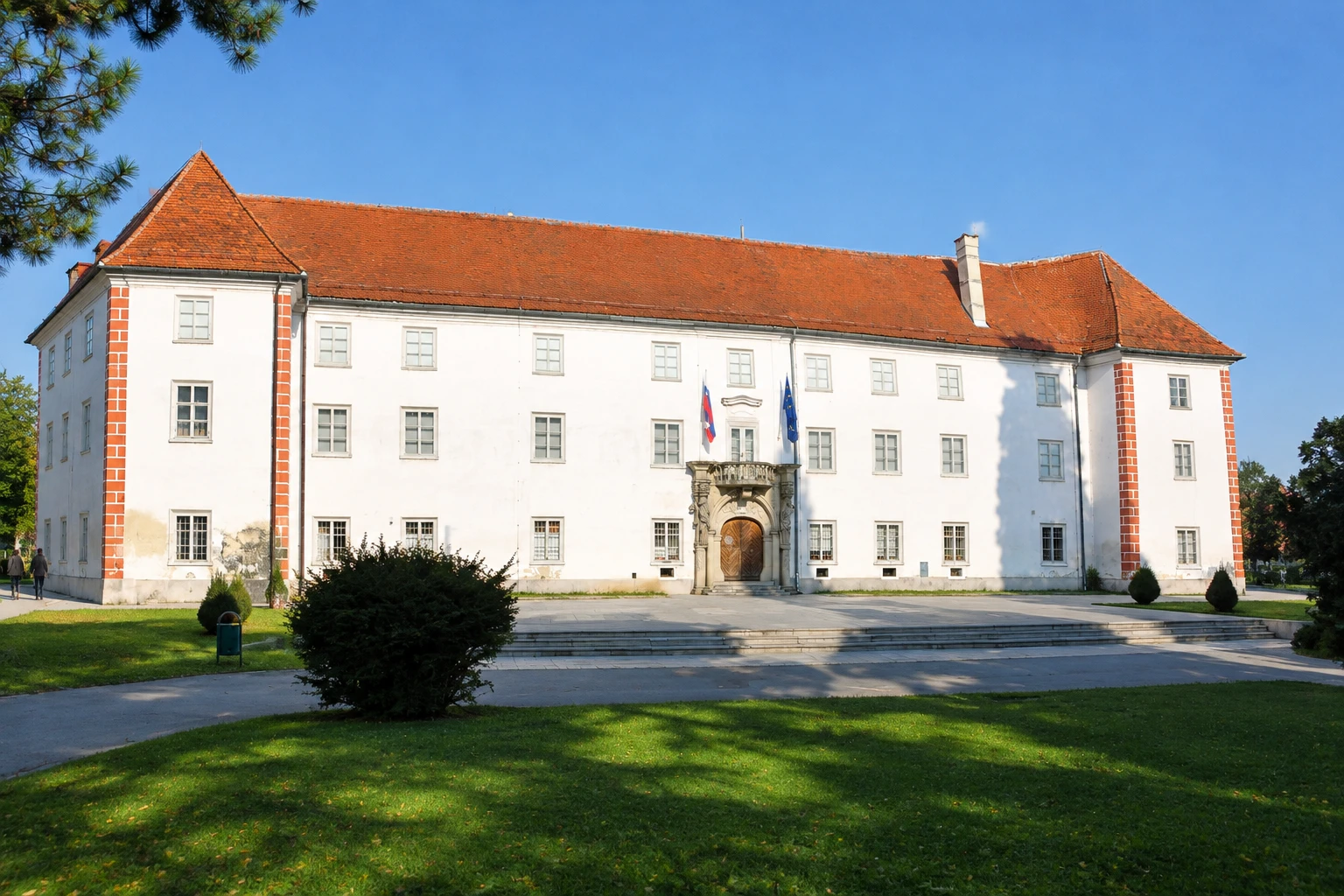
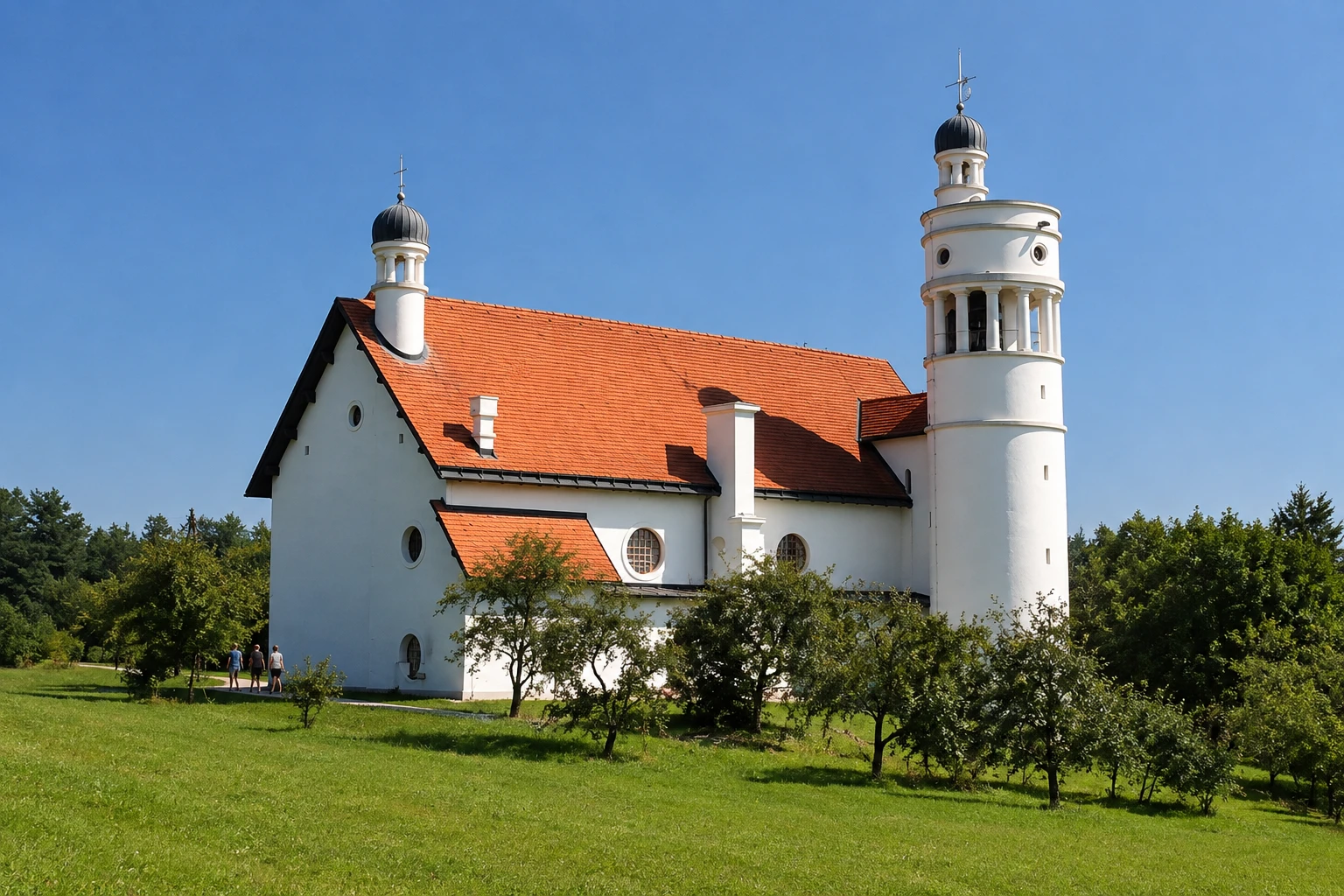
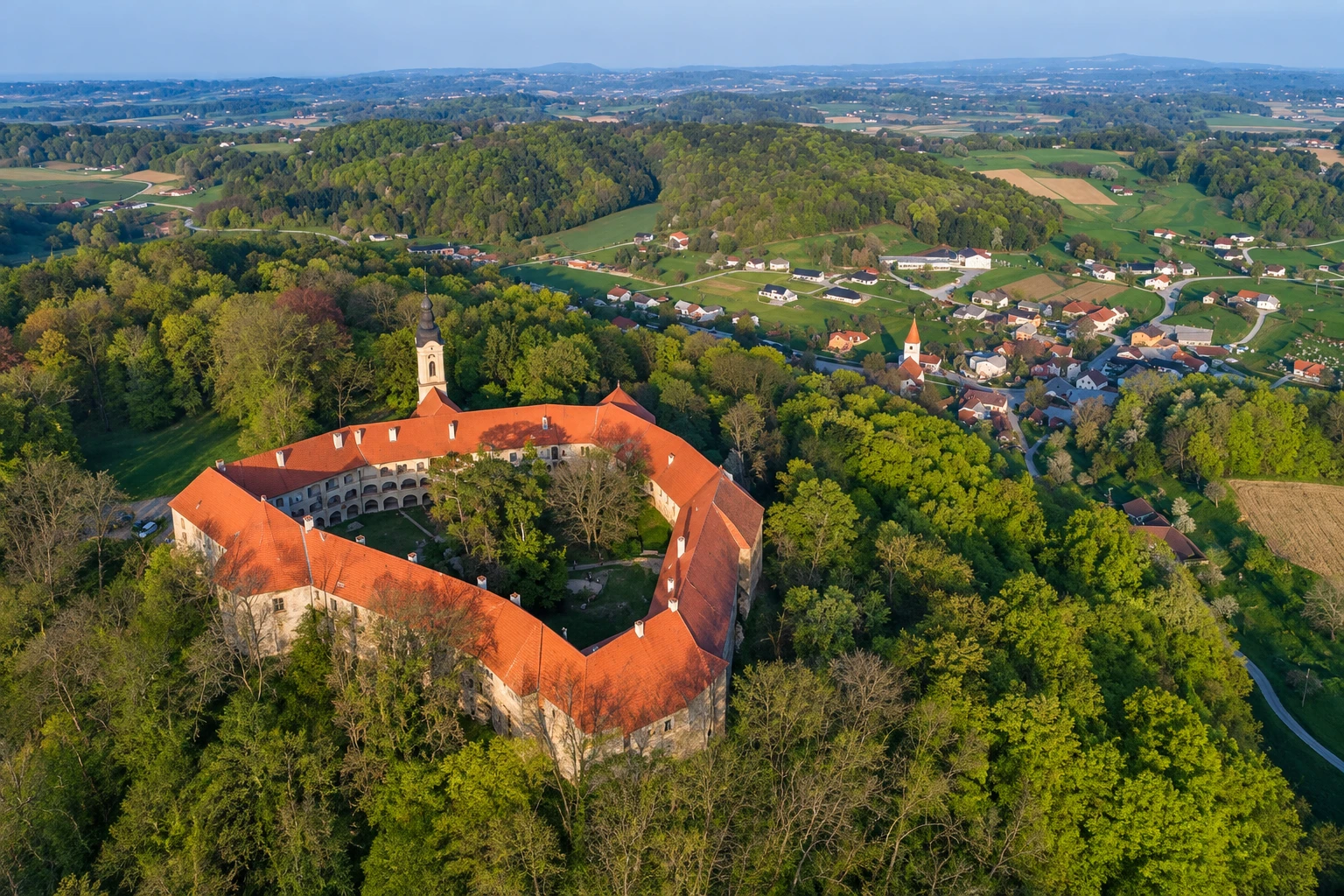
Main town of Prekmurje, on the Mura plain. The Renaissance castle, set in a park of century-old oaks, houses the Pomurje Museum, with the history of life along the river. Near the town are the church of Bogojina, renovated by Jože Plečnik, and, to the north, Grad Castle, the largest in the country, in the Goričko Nature Park.
16th-century Renaissance mansion, mentioned since 1255 as Bel Mura, in a park of old oaks in the center of Murska Sobota. It houses the Pomurje Museum, with an exhibition about life along the Mura, awarded at European level.
Church in the village of Bogojina, about 10 km from Murska Sobota, enlarged by architect Jože Plečnik in the 1920s. The nave ceiling of the new section is decorated with ceramic plates and jugs from the region attached to the wood.
The castle with the largest built area in Slovenia, mentioned since 1214, on a hill in the village of Grad, in Goričko. Legend says it has 365 rooms. It houses the Goričko Nature Park center, with exhibitions and a cellar of local wines.
Approximate distances. Check flights and bus, train or boat schedules before you travel.
Murska Sobota station is close to the center, with trains connecting at Pragersko or Ormož for Maribor and Ljubljana. The A5 motorway runs south of the town. For flights, use Graz Airport in Austria, about 95 km away.
How many days
Half a day is enough for the center, the castle and the museum. With a full day you can include the church of Bogojina and Grad Castle by car.
When to go
From April to October, when the castle park is green and the roads on the Goričko hills are good for cycling. In summer there are events in the castle courtyard.
The seasons shown are the most usual ones; nature doesn't always follow the calendar.
Do you need a car?
Not to reach the center. For Bogojina, about 10 km, and Grad Castle, roughly 25 km, you need a car or bicycle, since there are few buses.
Suggested itinerary
An order that works
Built with the places on this page. No rush: it's paced so you have time to see them.
One day in Murska Sobota
manhã
Castle and Pomurje Museum
Start with the castle park, with its ancient oaks, and visit the Pomurje Museum exhibition about life along the Mura. Then walk through the center and see the Protestant church and the cathedral.
tarde
Bogojina and Grad Castle
Drive to Bogojina to see Plečnik’s church and the nave ceiling decorated with ceramic plates. Continue north across the Goričko hills to Grad Castle and the nature park’s center.
Check before you go. Opening hours and days change, and places may close for renovations, holidays or events. This itinerary is a suggestion from Cidade Turismo, not a commitment: plan yours by checking directly with each place you intend to visit.
Before you go
Frequently asked questions
What to see in Murska Sobota?
The Renaissance castle with the Pomurje Museum, the surrounding park and the town center. In the surroundings, Plečnik’s church in Bogojina and Grad Castle in Goričko.
How to get from Ljubljana to Murska Sobota?
By car, about two hours via the A1 and A5, passing Maribor. By train, with a connection at Pragersko or Ormož.
Is Murska Sobota train station near the center?
Yes. The walk to the castle and the center takes about 15 minutes.
Is Murska Sobota a good base to explore Prekmurje?
For those traveling by train or bus, yes. For nearby villages and churches, Moravske Toplice, 8 km away, is also a common base, offering thermal spas.


 Brazil
 Antarctica
 Argentina
 Bolivia
 Chile
 Colombia
 Ecuador
 Falkland Islands (Malvinas)
 French Guiana
 Guyana
 Paraguay
 Peru
 Suriname
 Uruguay
 Venezuela
 Austria
 Belgium
 Croatia
 Denmark
 Finland
 France
 Germany
 Greece
 Hungary
 Iceland
 Ireland
 Italy
 Luxembourg
 Norway
 Poland
 Portugal
 Slovakia
 Spain
 Sweden
 Switzerland
 the Czech Republic
 the Netherlands
 the United Kingdom
 Turkey
 Bermuda
 Canada
 Greenland
 Mexico
 Saint Pierre and Miquelon
 the United States
 the Dominican Republic
 Japan
 Egypt
 South Africa
 Australia
 Fiji
 New Zealand
 Papua New Guinea