Prekmurje

Pomurska

Prekmurje

The plain of the Mura River in the far northeast: thermal spas, storks, the hills of Goričko, a floating mill and medieval churches with frescoes, plus Plečnik’s church in Bogojina.

Thermal Pannonian Slovenia

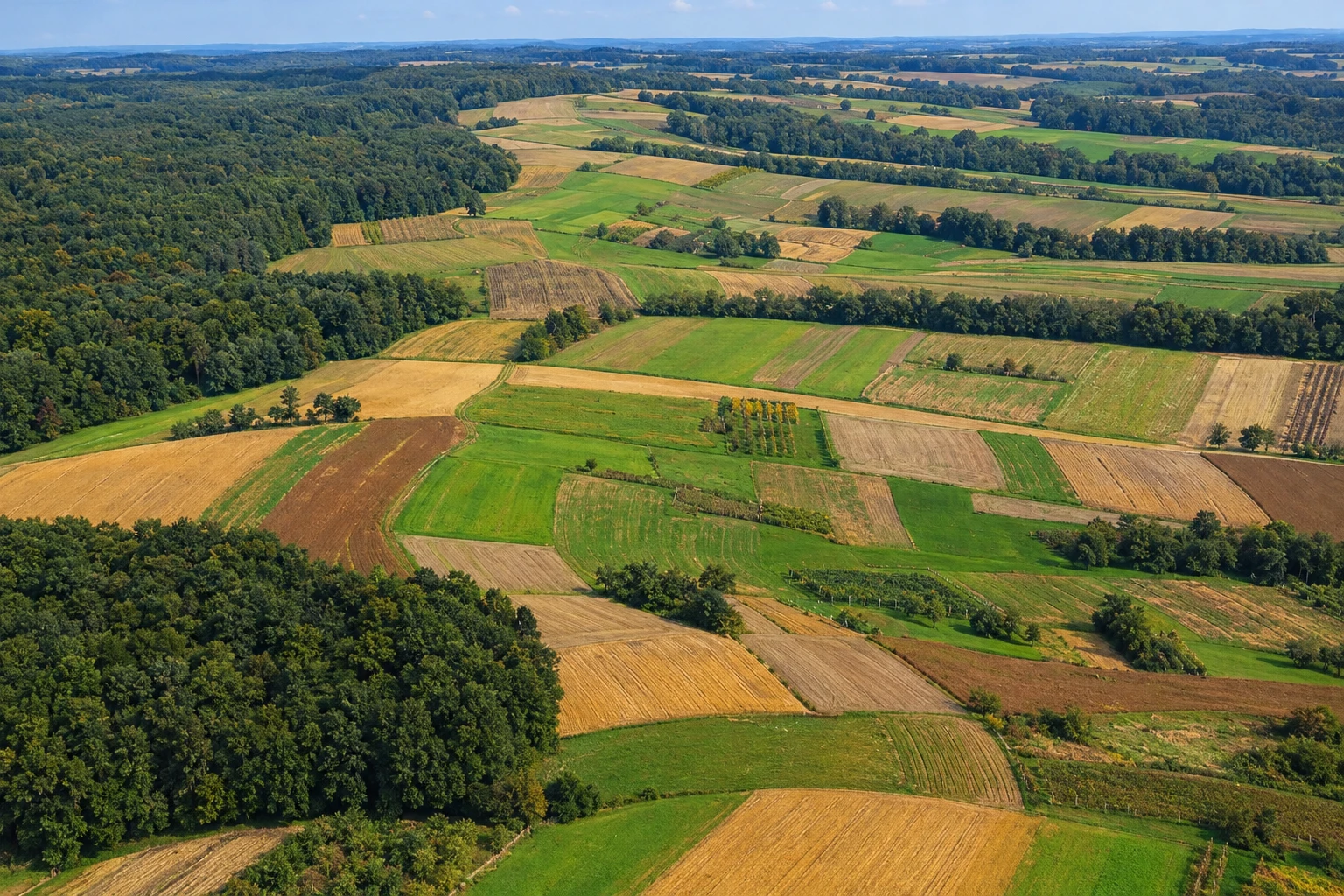
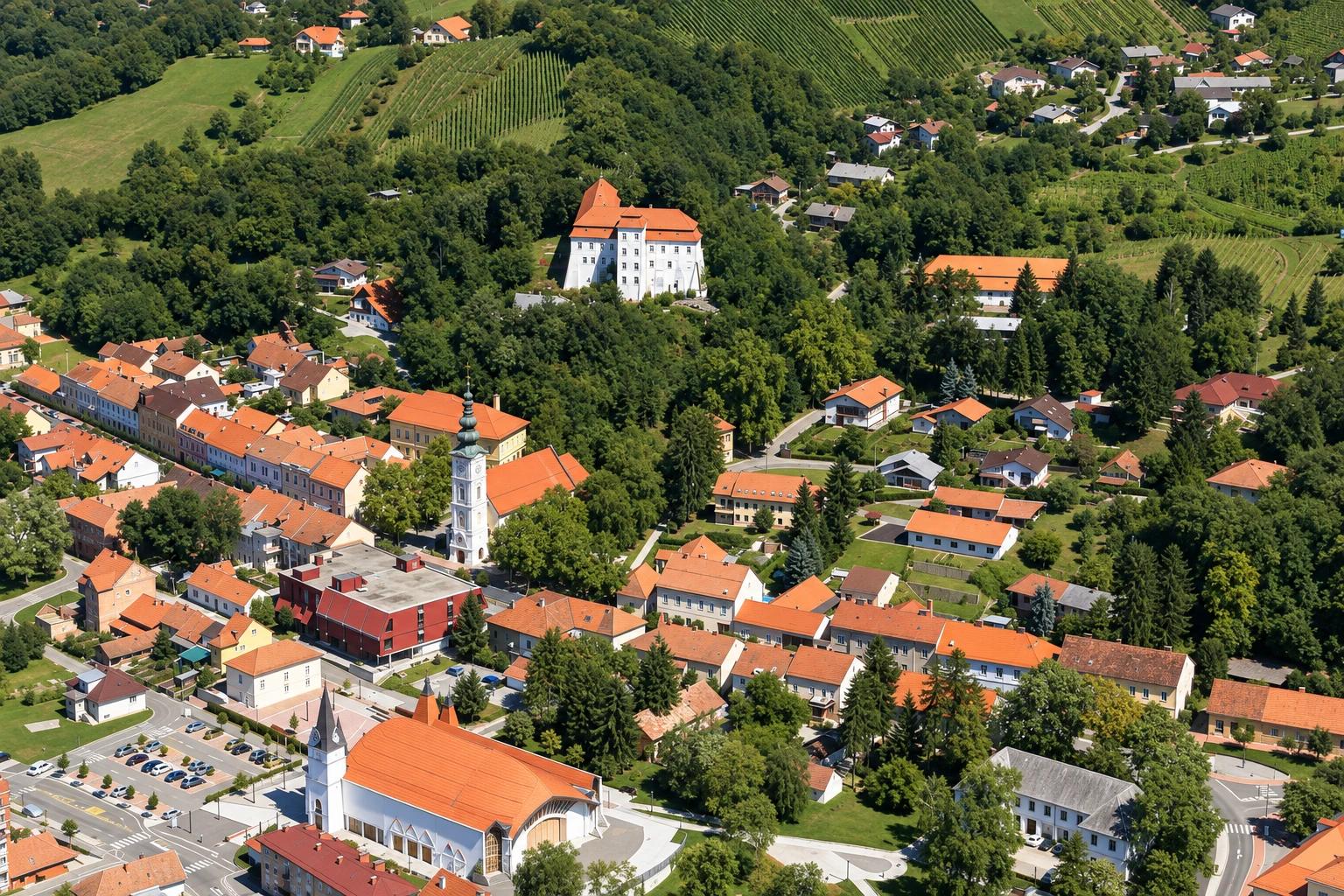
In the photo: Fields and woods of Goričko Park, in Prekmurje

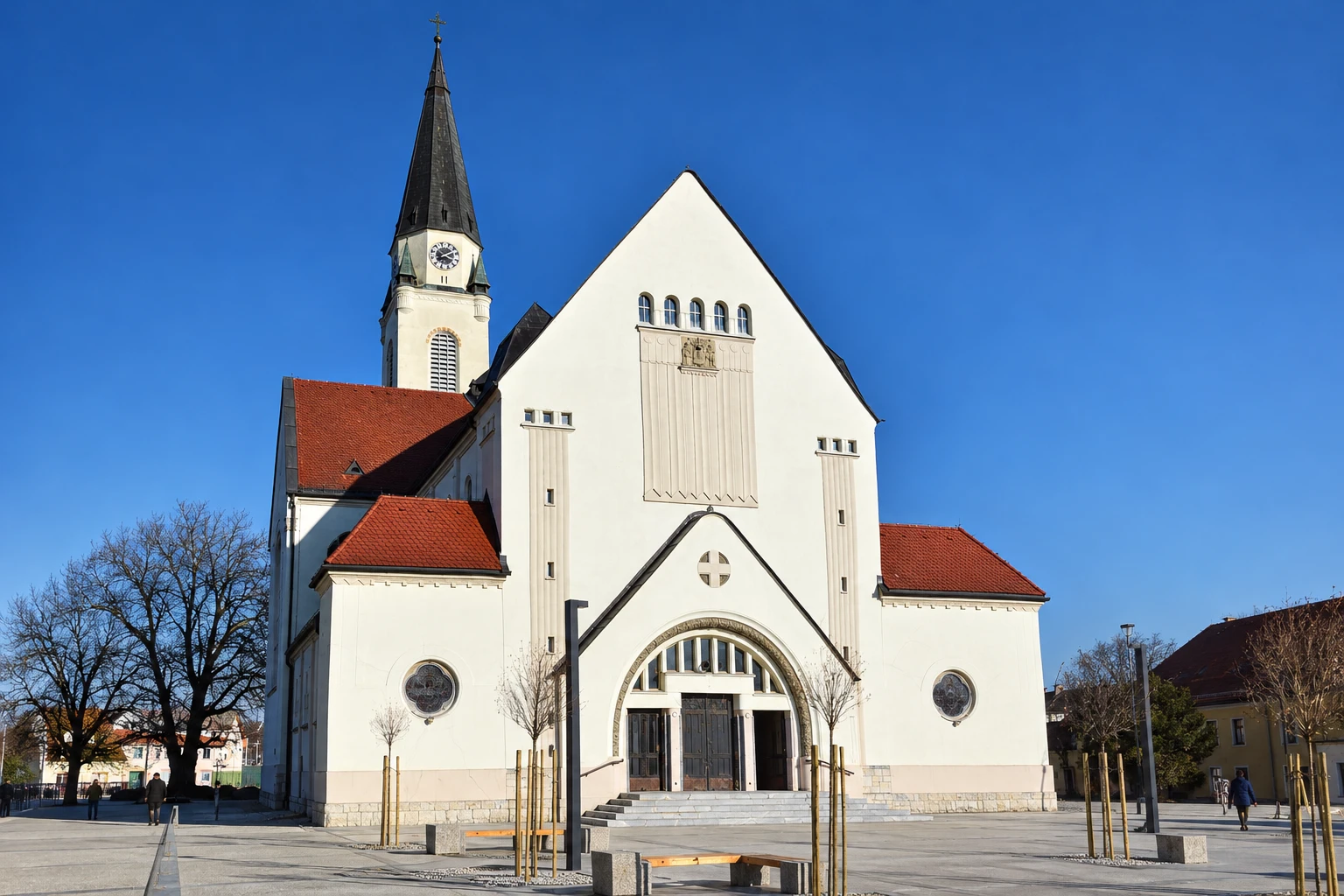
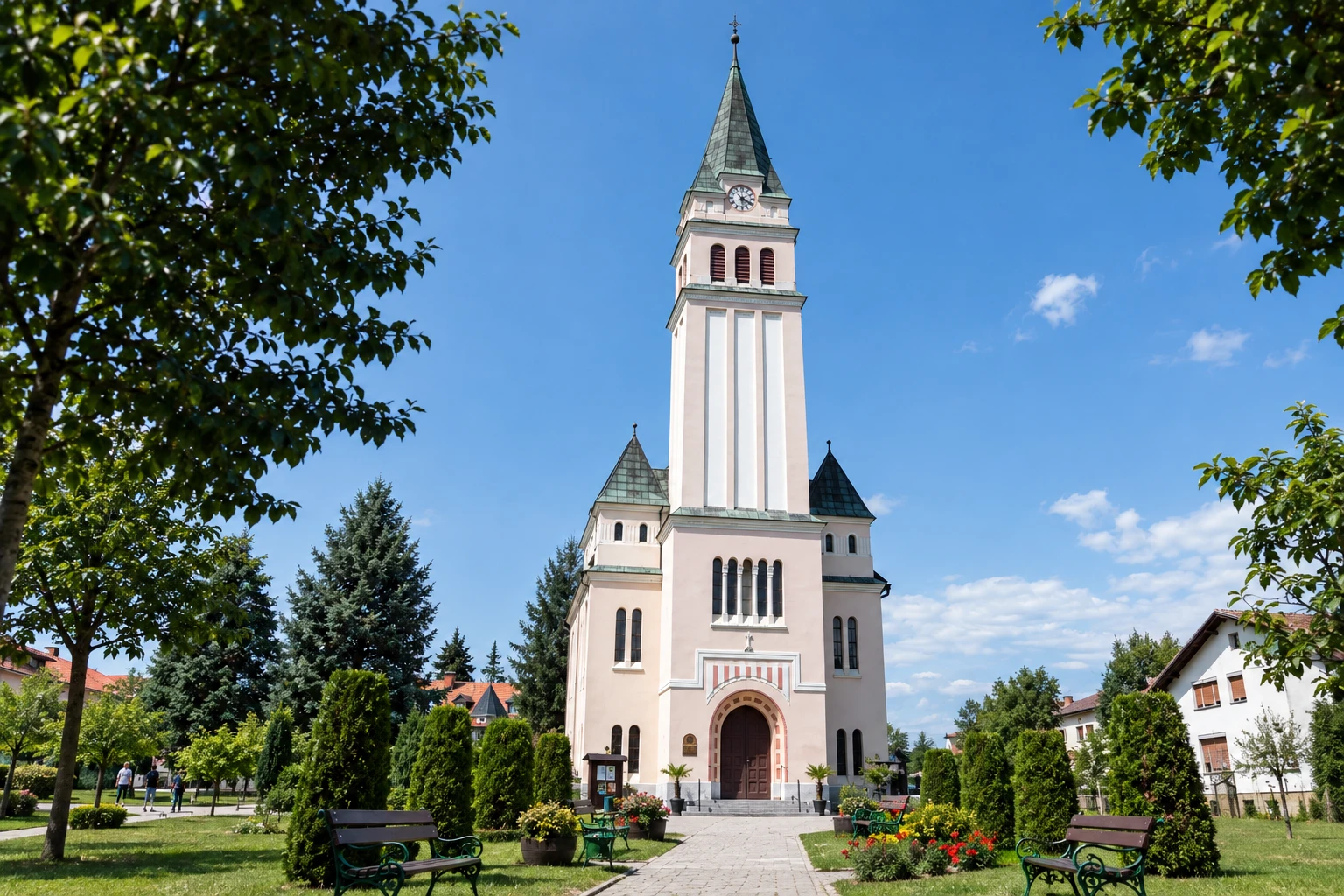
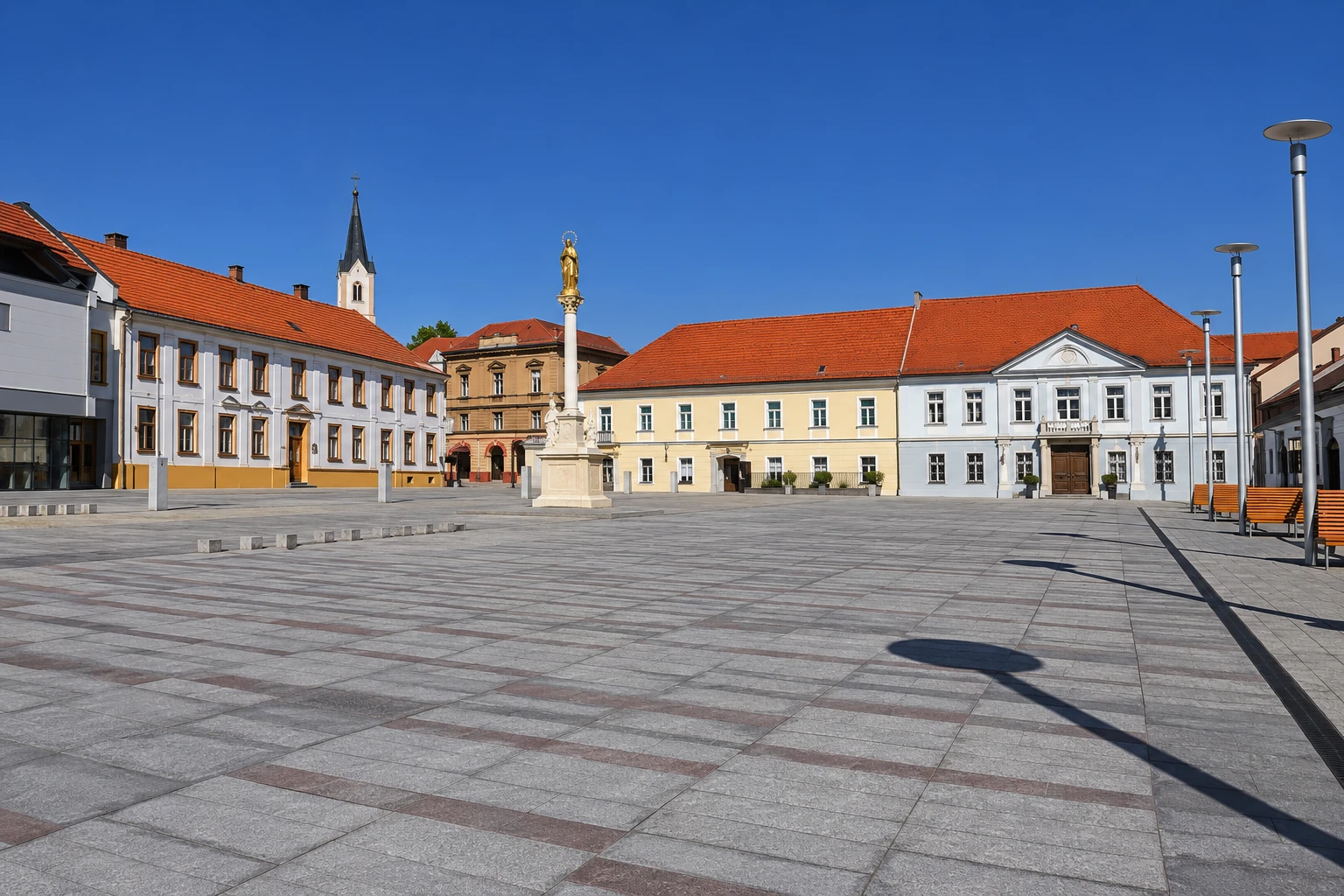
Illustrative images. The pictures in this guide are illustrations based on the real place, not photographs, and may differ from it.

Get it on Google Play

Get to know the place

A region to enjoy
at your own pace.

Prekmurje is the land “beyond the Mura,” in the far northeast of Slovenia, between the river and the borders with Austria and Hungary. For many centuries it was part of the Kingdom of Hungary, and that shaped the landscape, the architecture of the villages and the cuisine. Hungarian has official status in some municipalities near the border, and the region also has a Protestant tradition, with evangelical churches alongside Catholic ones.

The south is a plain of cultivated fields, woods along the Mura and villages of long houses. Near Ižakovci, an island on the Mura called the Island of Love preserves a floating mill and a cable ferry, reminders of a time when dozens of mills worked on the river. To the north, the hills of Goričko form a natural park, with vineyards, forests, villages where storks nest and Grad Castle, the largest castle in the country by area.

Murska Sobota, the main town, has a Renaissance castle housing the regional museum. Nearby are gems of religious architecture: the church of Martjanci, with 14th-century frescoes, the Romanesque rotunda of Selo and the church in Bogojina, redesigned by the architect Jože Plečnik. Moravske Toplice and other villages have warm thermal waters that attract visitors year-round.

The flat terrain favors cycling, and the local cuisine, with dishes of Hungarian influence and gibanica, a layered cake, is part of the experience.

This destination brings together 4 cities: Murska Sobota, Moravske Toplice, Ljutomer, Lendava.

Share: WhatsApp
Traveler, share your experiences through photos Up to 5 photos of each place you visited.

One destination, many paths

The cities on this trip

Start with one city or combine several in your itinerary.

Where Prekmurje is The star marks the capital, Murska Sobota.
Murska SobotaMoravske TopliceLjutomerLendava

Boundaries: Geodetska uprava Republike Slovenije (GURS), Register prostorskih enot, 28/02/2024, license CC BY 4.0. Adapted by Cidade Turismo.

How to get there: Prekmurje

Flughafen Graz (GRZ), in Graz (Áustria) · 95 km to Murska Sobota

Murska Sobota is about a two-hour drive from Ljubljana, via the A1 to Maribor and then the A5, which continues toward Hungary. There are trains with connections at Pragersko or Ormož. Graz airport, in Austria, is about 95 km away; Ljubljana’s airport is roughly 190 km.

Suggested arrival point: Murska Sobota

Lendava
Pomurska · Prekmurje

Lendava

Lendava is the easternmost town in Slovenia, on the border with Hungary and near Croatia, at the foot of the vineyard hills of Lendavske gorice. It is bilingual: signs and city life are in Slovenian and Hungarian. Overlooking the center is the Baroque castle, home to the Galerija-Muzej Lendava; in the center, the 1866 synagogue, one of the two that remain in the country; and in the hills, the Vinarium tower, with views over four countries. It is also the capital of bograč, with the Bogračfest in August.

The local experience

Things to do in Prekmurje

Lendava · Pomurska · Castle and museum

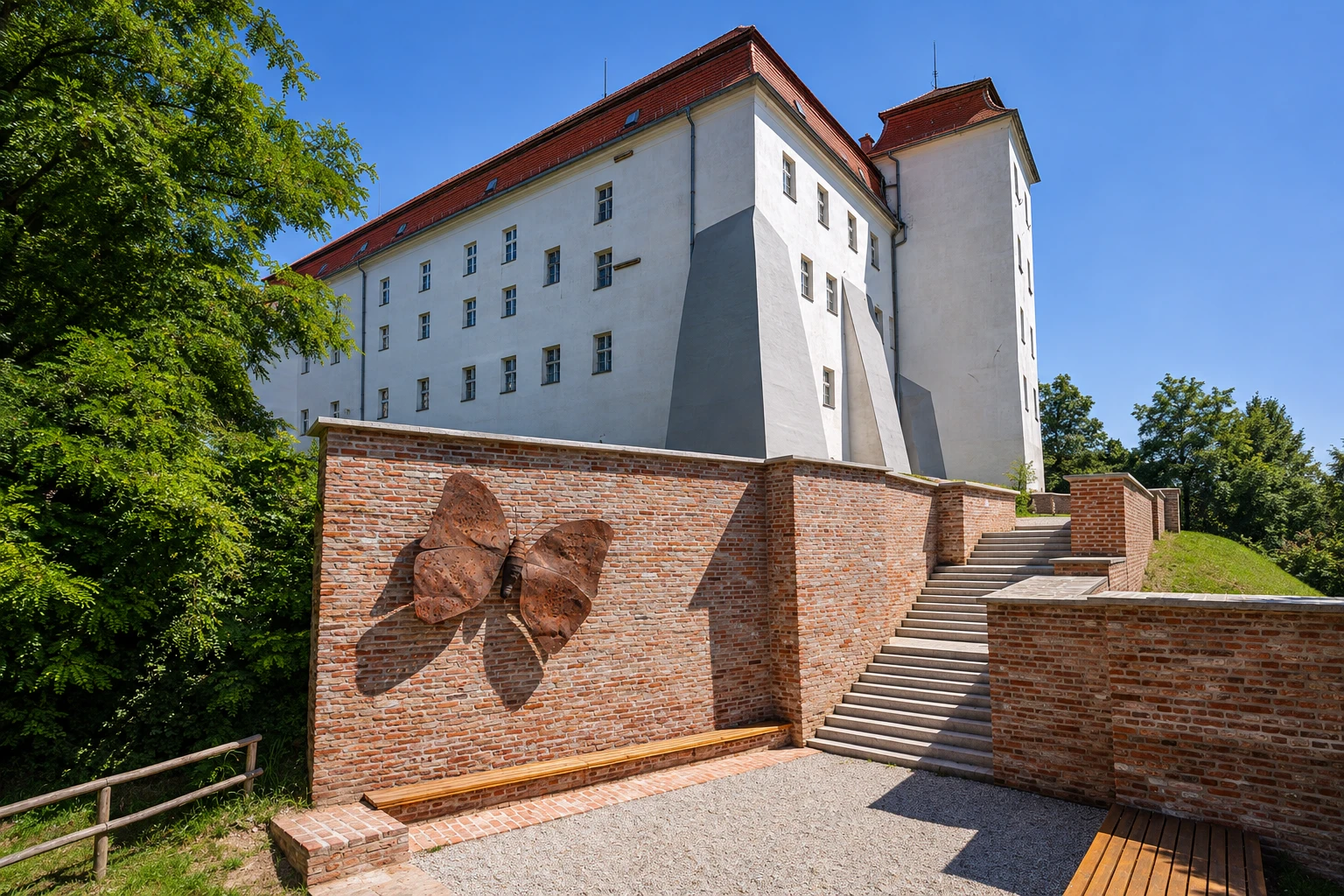
Lendava Castle

Baroque castle above Lendava’s center, at the foot of the vineyards, with the Galerija-Muzej Lendava’s exhibitions about the town and region’s history.

Explore Lendava Castle

Murska Sobota · Pomurska · Museum

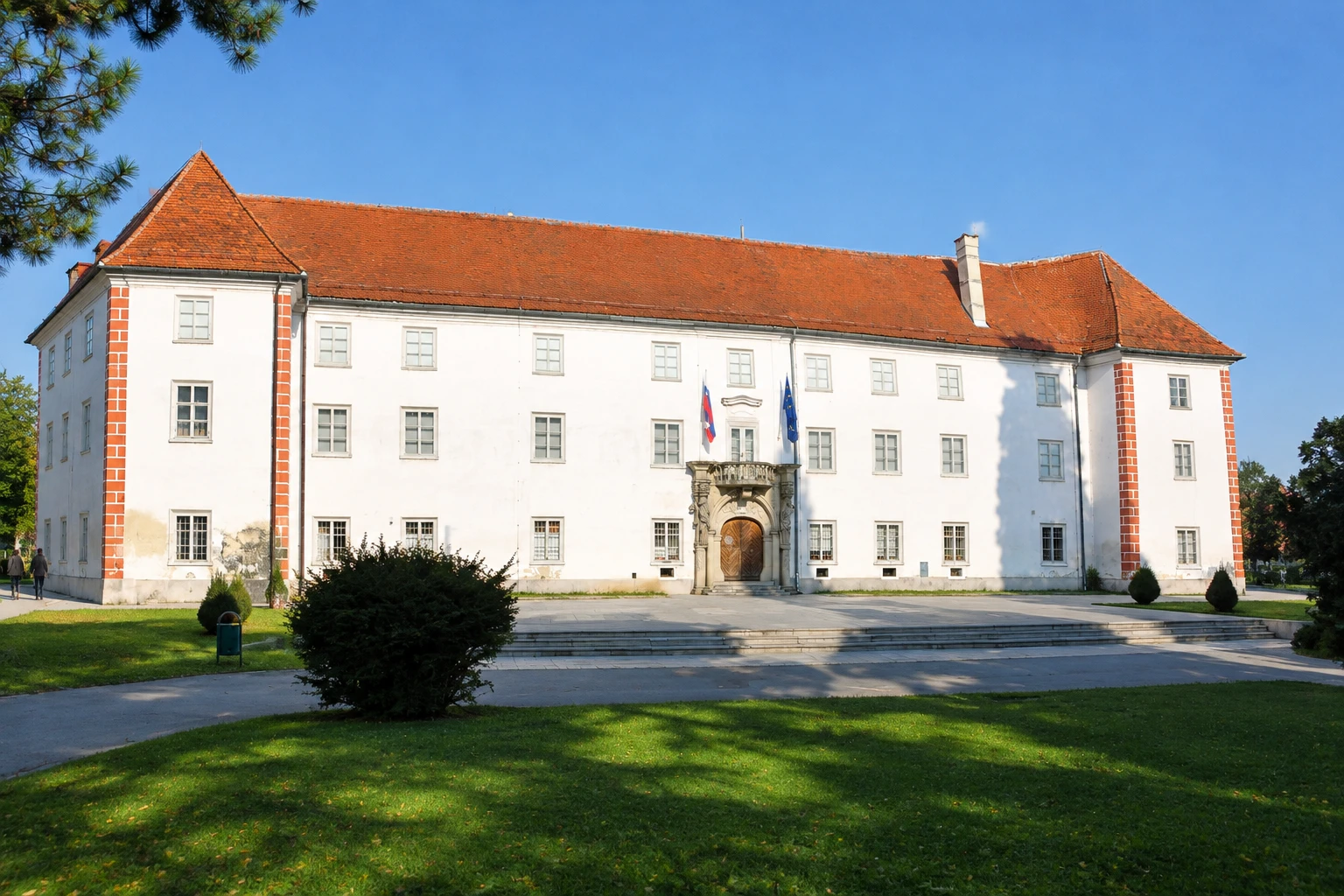
Murska Sobota Castle

16th-century Renaissance mansion, mentioned since 1255 as Bel Mura, in a park of old oaks in the center of Murska Sobota. It houses the Pomurje Museum, with an exhibition about life along the Mura, awarded at European level.

Explore Murska Sobota Castle

Moravske Toplice · Pomurska · Nature

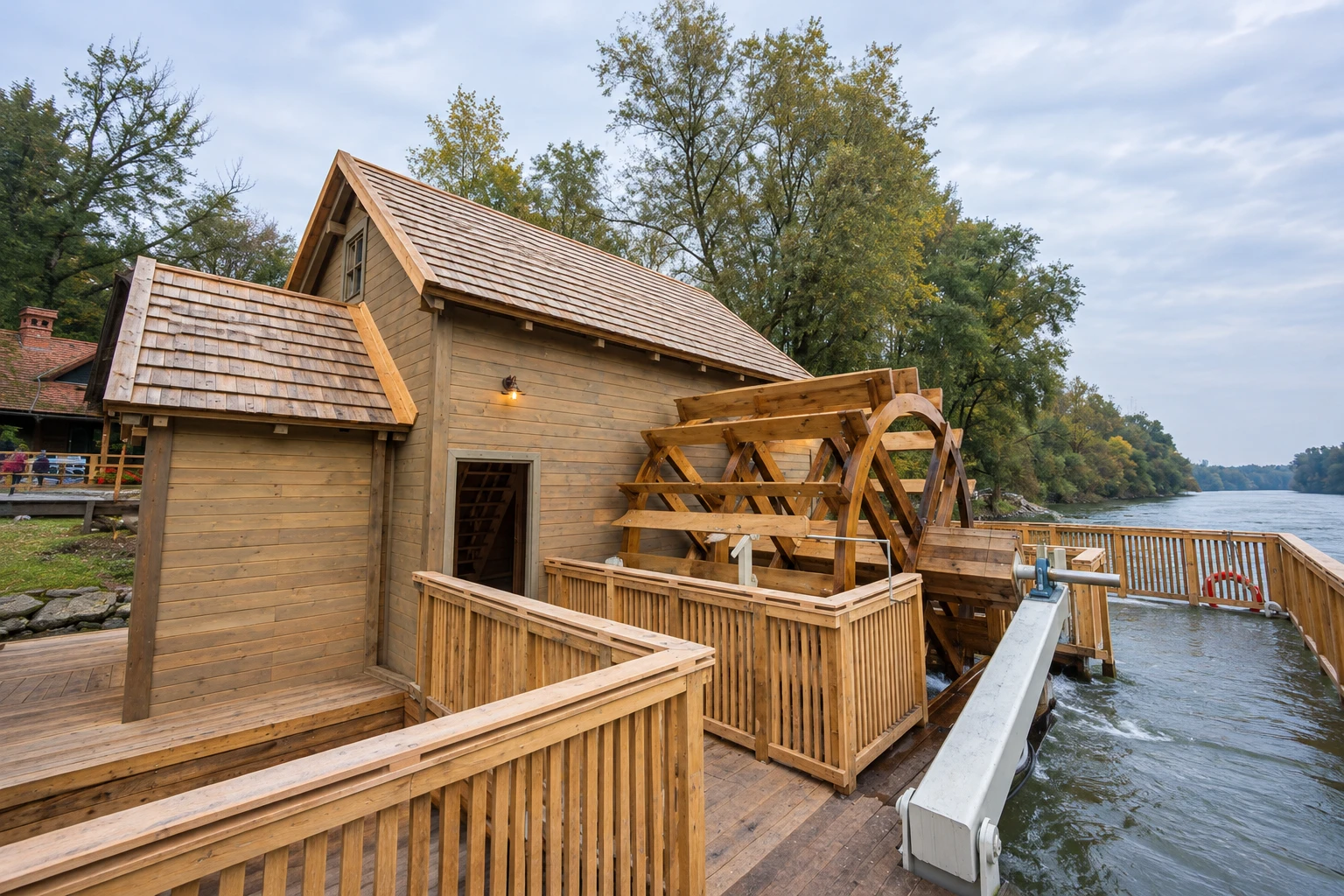
Island of Love

An island in the Mura River near Ižakovci, with a wooden floating mill reconstructed according to old designs, a small museum about river work and a cable ferry between the banks.

Explore Island of Love

Ljutomer · Pomurska · Museum

Ljutomer General Museum

Museum in the Ljutomer town hall with three permanent collections. The section dedicated to Karol Grossmann brings together photographs and films made in the town in the early 20th century.

Explore Ljutomer General Museum

See 7 more places in Prekmurje

To choose before you go

Tours in Prekmurje

Where each tour starts, how long it takes, how it is done, what is included and the price range.

Murska Sobota Castle, Pomurje Museum and the city park

From Murska Sobota center On foot about 2 hours morning or afternoon easy

Murska Sobota Castle is a Renaissance manor in the middle of the city park, one of the best-preserved castle parks in Slovenia, with nine and a half hectares and centenary oaks. It houses the Pomurje Museum (Pomurski muzej), the regional museum for the lands along the Mura River. The permanent exhibition, Ljudje ob Muri ("People by the Mura"), occupies 15 rooms and traces the region from prehistory to the 20th century: archaeological finds, the Roman period and the arrival of the Slavs, the three religions that shaped the area (Catholic, Protestant and Jewish), the Mura’s mills, trades, fairs and the wars. One room is a Baroque hall of the castle itself. In 1999 the museum received an award from the European Museum Forum. On leaving, Trubar Avenue links the castle to the Evangelical church in Neo-Gothic style. Murska Sobota is the main center of Protestantism in the country, and Martin Luther Avenue beside the church becomes a meeting point in the cold months, with an ice skating rink.

Stops: Murska Sobota Castle, Pomurje Museum (Pomurski muzej), City park, Evangelical church.

Includes: Entrance to the museum with the permanent exhibition. The ticket is paid separately; check the current rates. Guided tours for groups require prior notice.

Tip: The museum is closed on Mondays and public holidays, and on Saturdays and Sundays it opens only part of the day: check before you go. The castle has no elevator, and the exhibition is on the upper floor.

Best time: All year. From May to September the park hosts outdoor events.

Expano Pavilion and Soboško jezero

From Murska Sobota On foot, by bicycle or by city bus 2 to 3 hours morning or afternoon easy

Expano is the pavilion that introduces the Pomurje region to visitors: it sits on the shore of Soboško jezero, the lake of Murska Sobota, next to the A5 motorway exit. Inside, an interactive park presents the region using digital resources. In the Panofilm, 3D projections surround the room and tell the story of the plain since the time of the Pannonian Sea. The Panoscope is a giant image of Pomurje that can be enlarged down to fine detail. There is also a room about thermal and mineral waters and a forest with holographic animals from the Mura woodlands. The pavilion also houses the regional tourist information centre, a shop of local products and a bar. Outside, the lake was created by human intervention and today serves leisure activities: stand up paddle, boards and small boats, a picnic area, a playground and an exercise park with 35 stations. The lake is not classified as bathing water; anyone entering the water does so at their own risk.

Stops: Expano, Soboško jezero.

Includes: Admission to Expano’s interactive park is paid separately; check the current price list. Access to the lake and the exercise park is free of charge.

Tip: Expano is closed on Mondays, and the last admission to the interactive park is more than an hour before closing. It’s about a 25-minute walk from the train station or bus station; the Sobočanec city bus heading toward Bakovci stops at the entrance.

Best time: The pavilion is open year-round, with longer hours from April to October. The lake is most rewarding from May to September.

Bathing in the black thermal water of Moravske Toplice

From Moravske Toplice On foot, within the village 3 to 4 hours morning, afternoon or evening easy

Moravske Toplice became a resort by chance: in the early 1960s a drilling operation searching for oil struck hot water. It comes from 967 to 1,467 meters deep, where it is about 54 °C, and emerges dark, saline and with a faint smell of oil. Locals call it “black gold,” and in 1964 it was officially recognized as a natural healing resource. The village’s two thermal complexes, Terme 3000 and Terme Vivat, use this water. In the unfiltered black-water pools the temperature is about 37 °C; in the filtered pools it ranges from 32 to 34 °C. The water has been used for more than 50 years in programs for the locomotor system and rheumatic conditions. Terme 3000 also has the largest water park in Pomurje, with water slides. The village is small and flat, and everything is within walking distance: the spas, the tourist information centre, bike rental and the golf course are all close to each other.

Stops: Moravske Toplice, Terme 3000, Terme Vivat.

Includes: Day-entry to the pools is paid separately at each complex; check the current price list. Saunas and treatments are usually charged separately.

Tip: Start with the filtered pools, which are less hot, and leave the black water for last. Very hot baths require breaks; anyone with health issues should consult a doctor first.

Best time: All year; in winter the hot bath is the main activity in the area.

By bicycle to Plečnik’s church in Bogojina

From Moravske Toplice By bicycle 2 to 3 hours morning easy (17 km, mostly flat)

Marked route number 3 from Moravske Toplice, “Visit Plečnik’s dove,” is a 17 km loop with about 50 m of elevation gain, rated easy. It crosses the plain among cultivated fields to the village of Bogojina, 6 km from Moravske Toplice by road. The destination is the Church of the Ascension in Bogojina, built between 1924 and 1927 to a design by architect Jože Plečnik, the same architect who left his mark on Ljubljana, Vienna and Prague. Plečnik preserved part of the old church and added a new nave beside it, with stone columns, a flat wooden ceiling and a round tower visible from afar. On the ceiling, ceramic plates and jugs made by local potters are hung from the beams. Because it is entirely white, locals call it the white dove. The Moravske Toplice network totals about 250 km of marked circuits, from 2 to 52 km, so the outing can be shortened or extended.

Stops: Moravske Toplice, Bogojina, Church of the Ascension, Bogojina.

Includes: Nothing included: the route is self-guided and signposted. Rental of a standard or electric bicycle at the Moravske Toplice tourist information center is paid separately; check the rates.

Tip: The church opens for visits only by arrangement at the Bogojina parish house: ask the tourist information center for help before you set out. There is a virtual visit for those who find the door closed.

Best time: From April to October. In summer, start early: the plain has little shade.

Selo Rotunda and the church of Martjanci: the medieval frescoes

From Moravske Toplice By car or by bicycle about 3 hours morning or afternoon easy by car; moderate by bicycle

Two small churches house Prekmurje’s most important medieval paintings. The first is in Martjanci, 2 km from Moravske Toplice on the road to Murska Sobota: the Gothic Church of Saint Martin, from the 14th century, with the presbytery covered in frescoes. The second is the Selo Rotunda, 11 km from Moravske Toplice, already in the first hills of Goričko. It is a Romanesque round church, built in the first half of the 13th century, standing alone in a meadow. A legend says it belonged to the Templars. Inside there are two layers of painting: the oldest, from the first part of the 14th century, shows the procession and adoration of the three kings; the other, from around 1400, depicts the Passion of Christ. The guided tour is run by the Selo information center next to the church, lasts 30 to 45 minutes and can be complemented by a digital experience that reconstructs the paintings. By bike, the signed circuit number 8, “Rotunda,” is 31 km with about 130 meters of elevation gain, with climbs of up to 10%.

Stops: Selo Rotunda, Church of Saint Martin of Martjanci.

Includes: Guided tour of the Selo Rotunda, paid separately; check the current price list. There is no ticket office in Martjanci.

Tip: Book the guided visit to the rotunda in advance at the information centre in Selo or at the one in Moravske Toplice. Martjanci church opens by prior arrangement at the parish house.

Best time: From April to October. In late May, the meadow next to the rotunda hosts the international scything competition.

Filovci potters’ village

From Moravske Toplice By car or by bike about 1 hour and 30 minutes morning or afternoon easy

In Filovci, 8 km from Moravske Toplice, almost every house used to have a potter. Today a single family keeps the craft alive and receives visitors at Lončarska vas, the potters’ village, an open-air museum. The site brings together two traditional Pannonian plain houses, with wattle-and-daub walls and thatched roofs, the cimprače, listed as cultural monuments: the Potter’s House and the Culinary House. The visit explains the history of the craft, the typical pieces of the region and the operation of the kiln. In the demonstration, the potter works at the wheel, and anyone who wants can sit and try to shape their first piece. There is also a ceramic-painting workshop, which usually pleases children. The handmade pottery by the region’s potters decorates the ceiling of Jože Plečnik’s church in neighboring Bogojina, which makes it easy to combine both visits in one outing.

Stops: Filovci, Lončarska vas Filovci.

Includes: Guided tour of the open-air museum, paid separately; check the current price list. Wheel-throwing and painting workshops are charged separately.

Tip: Guided tours run at two times of the day, one in the morning and one in the afternoon; workshops depend on prior arrangement. Confirm before you go.

Best time: From April to October, when the courtyard and the outdoor kiln are in more frequent use.


See 4 more tours

Grad Castle and the Vulkanija park, in Goričko

From Murska Sobota By car 5 to 6 hours full day easy

North of Murska Sobota the plain ends and the hills of Goričko begin, declared a nature park (krajinski park) in 2003, the largest in Slovenia. The village of Grad is about 21 km from Murska Sobota by secondary roads. Grad Castle stands atop a hill of basalt tuff. The estate is mentioned in 1208 and the building in 1275; its present form dates from the 16th and 17th centuries, with later Baroque alterations. It was abandoned from the 1960s until 1995 and has been under restoration since then. The visit includes the knights’ hall, with exhibits on the castle’s history and restoration, the gallery, the chapel installed in 1751 in an old defensive tower, and rooms about the nature of Goričko. The castle is the headquarters of the nature park. In the same village, Vulkanija tells the story of the volcano that was active there about 3 million years ago. The visit is guided, lasts about 1 hour 30 minutes, and includes a 3D cinema, an elevator that simulates a descent to the volcano’s core, an underground little train, and a mineral collection with olivine crystals.

Stops: Grad Castle, Vulkanija, Goričko Nature Park.

Includes: Entries to the castle and to Vulkanija are paid separately; a combined ticket exists. Check the current price list.

Tip: The castle is closed in January to individual visitors and, outside July and August, also on Mondays. Vulkanija is closed on Mondays; the English-language tour must be reserved at least one day in advance.

Best time: From April to October, when both sites stay open later and the Goričko roads are dry.

Island of Love: the floating mill and the Mura river ferry

From Murska Sobota or Moravske Toplice By car or by bicycle about 2 hours morning or afternoon easy

The Island of Love (Otok ljubezni) is in Ižakovci, about 14 km from Murska Sobota. It is not an island in the middle of the river: it is a piece of land that the Mura has isolated over centuries with its channels and floods. The name comes from a legend about Countess Marija Zichy of Beltinci, who is said to have found her great love there. The site preserves what remains of the old river life. The wooden floating mill turns with the current, like the many that used to grind grain on the Mura. The ferry (brod) crosses the river without a motor, guided by a cable; it is one of the few still operating on the Mura. A permanent exhibition explains the work of the büjraši, the men who protected the banks against floods. On the bridge over the river’s old arm, the Stara Müra, couples hang padlocks. Around it there are paths among poplars along the bank, an information point with local products and the büjraška malica, the river workers’ snack.

Stops: Island of Love (Otok ljubezni), Ižakovci, Mura River.

Includes: The exhibition about the büjraši has a separate admission fee, as does the ferry crossing; check the current price list.

Tip: The exhibition is open on weekdays; on weekends, and for the ferry crossing, check ahead before you go. An information point operates on site.

Best time: From April to October.

Bukovniško jezero and Dobrovnik Tropical Garden

From Moravske Toplice By car or by bike 3 to 4 hours morning or afternoon easy

Bukovniško jezero is a reservoir lake surrounded by forest, about 11 km from Moravske Toplice, in the municipality of Dobrovnik. It was formed between 1947 and 1948 when the Bukovniški potok stream was dammed to protect Dobrovnik from floods. It covers roughly seven hectares and is two to three metres deep. The lake is known for 26 marked points in the woods that local tradition associates with a beneficial earth energy. Nearby are the Chapel of Saint Vitus, dating to around 1828, and the Saint Vitus spring, whose water, locals say, is good for the eyesight. A circular educational trail of about 1,700 metres and 42 metres of elevation gain circles through the forest. There is also a treetop adventure park with six routes and 66 obstacles, and a storytelling park for children. In Dobrovnik, Tropski vrt is a tropical garden in a greenhouse, with more than 400 plant species and varieties, adjacent to an orchid production facility heated with geothermal energy. Dobrovnik is one of the places in Prekmurje where Hungarian is an official language alongside Slovenian.

Stops: Bukovniško jezero, Chapel of Saint Vitus, Tropski vrt (Dobrovnik).

Includes: The walk around the lake has no entrance fee. The adventure park and the tropical garden have separate paid entries; check the current price list.

Tip: The lake information centre operates from February to November and rents electric bicycles. The adventure park depends on the weather and the season: confirm before you go.

Best time: From April to October for the lake; the tropical garden is an option for rainy or cold days.

Lendava: the Vinarium tower and the castle

From Murska Sobota or Moravske Toplice By car 4 to 5 hours afternoon easy; moderate because of the stairway

Lendava (Lendva in Hungarian) lies at the far eastern edge of Prekmurje, about 31 km from Murska Sobota, near the borders with Hungary and Croatia. It is a bilingual town, backed by the Lendavske gorice, hills covered in vineyards. On top of those hills stands the Vinarium tower, 53.5 meters high, the tallest observation tower in Slovenia. The viewing platform is 42 meters above the ground, at 302 meters elevation, and offers a 360-degree view over the Mura basin and the lands of four countries: Slovenia, Hungary, Croatia and Austria. You can climb the 240 steps of the spiral staircase that wraps the steel structure or take the panoramic elevator. Just below the platform, the dome hosts art exhibitions. In town, Lendava Castle rises above the old centre. The original building dates from the 12th century, and its current form results from successive renovations, many during the Bánffy family era. Inside is the Galerija-Muzej Lendava, with works by local artists and by international art colonies. Lendava presents itself as the capital of bograč, a stew of various meats cooked in a cauldron.

Stops: Lendava, Vinarium Tower, Lendava Castle, Lendavske gorice.

Includes: Admissions for the tower and the castle are charged separately; check the current price list.

Tip: Go up at late afternoon with a clear sky, when the horizon is usually sharper. Castle opening hours change on weekends and public holidays: check before you go.

Best time: From April to October. At the end of August and the beginning of September the Vinarium Festival takes place, featuring the Bogračfest and Lendava’s grape harvest.

Day by day

2, 3 and 5-day itinerary in Prekmurje

Suggestions to plan the trip. Change the order of the days according to the weather and tour availability.

2 days · Prekmurje in two days: Murska Sobota, the thermal baths and the churches

For For those passing through the region for a weekend by car or bicycle who want the town, a thermal bath and Plečnik’s work. · Based in Moravske Toplice
  1. Day 1 · Murska Sobota and the first bath

    Start in Murska Sobota, with the town park and Murska Sobota Castle, where the Pomurje Museum tells the history of the Mura lands. Walk along Trubar promenade to the evangelical church and have lunch in the centre. In the afternoon, go to the Expano pavilion and circle Soboško jezero. Continue to Moravske Toplice, about 7 km away, and end the day in the black thermal water pools.

  2. Day 2 · Martjanci, Bogojina, Filovci and the Island of Love

    In the morning, see the frescoes in the church of Martjanci and continue to Bogojina for Plečnik’s church with its ceramic roof; visits to both require prior arrangement. In nearby Filovci, visit the potters’ village. After lunch, go down to Ižakovci on the bank of the Mura: the floating mill, the büjraši exhibition and the ferry crossing will fill the afternoon.

3 days · Three days between the plain and the Goričko hills
For For those who want to add Grad Castle and the Selo Rotunda to the plain, without hurry and by car. · Based in Moravske Toplice
  1. Day 1 · Murska Sobota and the Expano

    Spend the morning at Murska Sobota Castle and the Pomurje Museum, with a walk through the park and along Trubar promenade. After lunch, visit the interactive Expano park and walk along Soboško jezero. In the late afternoon, settle in at Moravske Toplice and try the black water.

  2. Day 2 · Goričko: Selo, Grad and Vulkanija

    Leave early for the Selo Rotunda, 11 km from Moravske Toplice, with a guided visit reserved. Continue on the Goričko roads to the village of Grad. Visit Grad Castle, the seat of the nature park, and have lunch in the area. In the afternoon, do the guided visit to Vulkanija, which lasts about 1 hour 30 minutes.

  3. Day 3 · Bogojina by bike and the Mura River

    Rent a bike in Moravske Toplice and do the 17 km loop to Plečnik’s church in Bogojina, stopping at the potters’ village of Filovci. After lunch, drive to the Island of Love in Ižakovci for the floating mill and the Mura ferry. End the trip with one last thermal bath.

5 days · Five days in Prekmurje, from Goričko to Lendava
For For those who want to see the whole region, alternating cycling, thermal baths and villages, up to the Hungarian border. · Based in Moravske Toplice
  1. Day 1 · Arrival and Murska Sobota

    Arrive via Murska Sobota by train, bus or car. Visit Murska Sobota Castle with the Pomurje Museum and stroll through the town park. At Expano, ask at the information centre for maps of the region’s bicycle routes. Head to Moravske Toplice in the late afternoon.

  2. Day 2 · Thermal baths and the churches of the plain

    Spend the morning in the black thermal water pools. In the afternoon, cycle the 17 km circuit to Bogojina to see Plečnik’s church and, on the return, stop in Martjanci for the frescoes of St Martin’s Church. Both churches require prior arrangement.

  3. Day 3 · Goričko: Selo, Grad and Vulkanija

    A day by car through the hills. Start at the Selo Rotunda with a guided tour, then continue to Grad for the castle and Vulkanija. If you still have energy, go on to Trdkova at the northern tip, where a marker denotes the meeting point of the borders of Slovenia, Austria and Hungary.

  4. Day 4 · Filovci, Bukovniško jezero and Dobrovnik

    In the morning, visit the potters’ village of Filovci. Continue to Bukovniško jezero: the forest trail, the chapel and the Saint Vitus spring and, for those traveling with children, the adventure park. In the afternoon, enter the tropical garden in Dobrovnik and return to Moravske Toplice for the thermal baths.

  5. Day 5 · Island of Love and Lendava

    In the morning, go to the Island of Love in Ižakovci for the floating mill and the Mura ferry. Continue to Lendava, about 31 km from Murska Sobota: have a bograč for lunch, visit the castle and climb the Vinarium tower in the late afternoon to see the plain and the hills of four countries.

Best time to go

When to go: Prekmurje month by month

From April to October, to cycle across the plain and the hills of Goričko; in spring and early summer the storks are usually in their nests. The mill on the Island of Love and the ferry operate in season. The thermal spas are open year-round and are very popular in the cold months.

The seasons shown are the most usual ones; nature doesn't always follow the calendar.

January Low rain

cold, dry winter · thermal baths

The coldest month. In Murska Sobota, average highs are near 4 °C and lows near -4 °C, with little precipitation and snow on about 13 days. It’s thermal-bathing season: indoor pools operate normally. Grad Castle closes in January to individual visitors, and the Bukovniško jezero information centre only reopens in February.

February Low rain

cold · longer days

Still winter: average highs near 7 °C and lows of -3 °C, with precipitation on about 8 days and snow possible on many of them. Days lengthen and the sun appears more often. The thermal baths remain the main activity; Grad Castle reopens with shortened hours. Museums and the Expano operate on winter schedules.

March Low rain

start of spring

Spring begins slowly: average highs near 12 °C and lows of 1 °C, with cold mornings and limited rain on about 9 days. It can still snow on some days. Sunny days already allow the first short bike rides across the plain, and Grad Castle remains on the shortened winter schedule.

April Low rain

storks on nests · cycling

Average highs around 17 °C and lows around 5 °C, with rain on about 11 days, generally light. The cycling season really begins, and white storks often occupy village nests in spring. The Expano and the Vulkanija switch to the longer timetable, and the ferry and the mill on Love Island start receiving more visitors again.

May Some rain

scything with a scythe in Selo (end of May)

Mild days, with average highs around 22 °C and lows around 10 °C. Rain increases and falls in showers, on about 13 days. The meadows of Goričko are tall and in bloom. At the end of May, the meadow beside Selo Rotunda hosts the international scything competition.

June Some rain

summer · long days

Early summer: average highs around 26 °C and lows around 13 °C. It’s one of the rainier months, with late-afternoon thunderstorms on about 13 days that pass quickly. The days are the longest of the year, good for cycling early and leaving bathing for later. At the start of summer storks are often in the nests.

July Some rain

high summer · water park

The warmest month: average highs around 27 °C and lows around 15 °C, and the plain has little shade. It rains on about 12 days, almost always in thunderstorms. Grad Castle is open every day in July and August. The thermal baths fill with families; book in advance.

August Some rain

Vinarium Festival and Bogračfest in Lendava (end of August)

Heat similar to July: average highs around 27 °C and lows around 15 °C, with rain on about 11 days. At the end of the month Lendava begins its Vinarium Festival, which includes Bogračfest, the competition for bograč cooked in a cauldron, and the town’s grape harvest.

September Some rain

harvest · early autumn

Average highs around 22 °C and lows around 10 °C. By volume, it’s the wettest month of the year, concentrated in about 11 days; between fronts the days are clear and mild. It’s harvest time in the hills of Lendava and Goričko, and the Vinarium Festival continues at the beginning of the month. A good time for cycling and for the Vinarium tower.

October Some rain

autumn · forest colours

Average highs around 16 °C and lows of 6 °C, with rain on about 10 days. The forests of Goričko and Bukovniško jezero change colour. October is the last month of long opening hours at the Expano, at Vulkanija and at Grad Castle; winter hours begin in November.

November Some rain

Saint Martin (November 11)

Average highs near 10 °C and lows of 2 °C, with rain on about 12 days and few hours of sunshine. Around November 11, Saint Martin’s Day, the villages celebrate the new wine with walks, fairs and dinners; Moravske Toplice organises the Saint Martin Walk. Bukovniško jezero ends its season, and the thermal baths once again become the main focus of the trip.

December Low rain

Christmas lights and markets

Winter: average highs near 4 °C and lows of -3 °C, with snow on about 9 days. Days are short and it gets dark in the mid-afternoon. Murska Sobota puts together a December programme with an ice rink next to the evangelical church, and Moravske Toplice lights the decorations and opens a Christmas market throughout the month. Several attractions close on December 25 and 26 and on January 1.

Plan the journey

How to get there: Prekmurje

By plane: the nearest airports

Prekmurje has no airport with regular flights. The most used ones are outside the region: Graz in Austria, about 100 km from Murska Sobota; Zagreb in Croatia, about 170 km; and Ljubljana Jože Pučnik Airport in Brnik, about 180 km. Vienna and Budapest, less than three hours’ drive away, have larger airports with more long-distance connections. Travelers from other continents usually connect through a major European airport and complete the trip overland by rental car, train or bus. Compare routes and confirm before buying tickets.

By train to Murska Sobota

Murska Sobota is one of the stations on the rail line linking Ljubljana to Budapest, operated in Slovenia by Slovenske železnice (SŽ). From Ljubljana the trains pass through Celje and Pragersko, and the trip takes about three hours; some services require a train change. From Hungary, international trains enter via the Hodoš border and stop at Murska Sobota. Tickets must be bought before boarding, at the ticket office, in the app or on SŽ’s online shop. During track works some sections are served by replacement buses. Moravske Toplice has no station: you get off at Murska Sobota and continue by bus or taxi for about 7 km. Confirm schedules before traveling.

By bus

Long‑distance buses arrive at Murska Sobota’s central bus station, the administrative centre of the region, from where regional lines run to Moravske Toplice, Lendava and the villages. Smaller villages have only a few departures per day. Check the regional operator’s timetables before you set out, especially at weekends and on public holidays.

By car

The A5 motorway crosses Prekmurje on the Ljubljana–Budapest axis; exit number 7 is for Murska Sobota. The town is about 180 km from Ljubljana, 100 km from Graz, 230 km from Vienna and 280 km from Budapest. From Ljubljana the drive takes under two hours; from Graz, about one hour; from Zagreb, about one and a half hours; from Vienna and Budapest, under three hours. Maribor is about 60 km away. Slovenia’s motorways and expressways require the electronic vignette (e-vinjeta), which must be paid before entering the road; regional and local roads have no toll. If crossing the border in a rental car, check whether the contract permits it.

How to get around Prekmurje

The plain is bicycle country. Moravske Toplice has a network of about 250 km of waymarked circuits, from 2 to 52 km, and the tourist information centre rents ordinary and electric bikes. Murska Sobota’s bike-sharing system, Soboški biciklin, has an e-bike station also in Moravske Toplice. Within Murska Sobota the city bus Sobočanec runs two lines, Monday through Saturday. For Goričko (Selo, Grad), Bukovniško jezero and Lendava, a car is the practical option: attractions are spread across villages and buses are few. It’s about 7 km between Murska Sobota and Moravske Toplice.

Language, currency and documents

The official language is Slovenian; in the mixed‑population areas of Prekmurje, such as Lendava and Dobrovnik, Hungarian is also official and the signs are bilingual. The currency is the euro. Slovenia is a member of the European Union and the Schengen Area and observes Central European Time, with daylight saving time. Entry requirements depend on your nationality, travel documents and the purpose and conditions of your trip. Requirements can change: confirm them before you travel.

Your base to explore

Where to stay and where to eat

Before you go

Practical information

A little planning leaves more time to enjoy the journey.

When to go

From April to October, to cycle across the plain and the hills of Goričko; in spring and early summer the storks are usually in their nests. The mill on the Island of Love and the ferry operate in season. The thermal spas are open year-round and are very popular in the cold months.

The seasons shown are the most usual ones; nature doesn't always follow the calendar.

How many days to stay

Two days allow you to see Murska Sobota, the churches of Martjanci, Bogojina and Selo and the Island of Love. With three days you can add Grad Castle, the hills of Goričko and a day at the thermal spas.

Which city to stay in

Moravske Toplice concentrates the accommodations tied to the spas and is close to the churches of Martjanci, Bogojina and Selo. Murska Sobota is convenient for those arriving by train or bus. In the hills of Goričko and on the plain there are farms and rural houses that host guests.

Respect the place

Take your trash with you, follow the signs and support local businesses. In natural areas, follow the visiting guidelines.

Beyond the guide

Your questions

Frequently asked questions about Prekmurje

How many days to stay in Prekmurje?

Two days cover Murska Sobota, the churches of Martjanci, Bogojina and Selo, and the Island of Love. A third day lets you include Grad Castle, the Goričko hills and the thermal spas.

Do you need a car in Prekmurje?

Yes, or a bicycle. Attractions are spread across villages and buses are infrequent. The plain is good for cycling, and there are bike rentals in the spa towns.

Which airport is closest to Prekmurje?

Graz Airport in Austria, about 95 km from Murska Sobota. Ljubljana Airport is around 190 km away, roughly two hours by car.

Is Prekmurje different from the rest of Slovenia?

Yes. The region was part of the Kingdom of Hungary for centuries, has a Hungarian minority, a Protestant tradition and its own cuisine, with dishes influenced by Hungary and the gibanica, a layered cake.

What is the best time to visit Prekmurje?

April to October, for cycling and seeing the villages; in spring and early summer storks are usually on the nests. The thermal spas operate year-round.

How to get to Prekmurje from Brazil?

There are no direct flights from Brazil to the region. The common route combines a flight with a European stopover to Graz, Vienna, Zagreb or Ljubljana and the rest by land to Murska Sobota. Confirm routes before booking.

What is the black water of Moravske Toplice?

It is the village’s thermal mineral water, which emerges from dark, salty earth with a faint smell of oil. It comes from 967 to 1,467 meters depth, where it is about 54 °C, and was discovered by chance in the early 1960s during a drill searching for oil. In the unfiltered black-water pools the temperature is about 37 °C; in filtered pools it is between 32 and 34 °C.

How to go from Murska Sobota to Moravske Toplice?

It’s about 7 km. There are regional buses from Murska Sobota bus station, with fewer departures on weekends, and taxis. By bike the route is flat, and Moravske Toplice has a station of Murska Sobota’s shared electric-bike system. Moravske Toplice does not have a train station.

How to visit Plečnik’s church in Bogojina and the Rotunda of Selo?

Bogojina church opens for visits by prior arrangement at the village parish house. The Rotunda of Selo has a guided tour of 30 to 45 minutes run by the Selo information center beside the church; book in advance. The tourist information center in Moravske Toplice can help arrange both.

Is Grad Castle open year-round?

No. The castle usually closes in January to individual visitors and only receives groups by prior notice. From February to December it’s open Tuesday to Sunday, and in July and August also on Mondays, with longer hours from May to October. Check before you go.

Can you visit Prekmurje on a day trip from Ljubljana or Maribor?

From Maribor, yes: it’s about 60 km via the A5 motorway. From Ljubljana it’s about 180 km, under two hours by car or roughly three hours by train to Murska Sobota, which leaves little time for the villages; it’s better to stay one or two nights.

What to eat in Prekmurje?

The region’s sweet specialty is prekmurska gibanica, a layered cake with poppy seeds, curd cheese, walnuts and apple, protected by a European traditional speciality seal. Among savory dishes, the best known is bograč, a stew of several meats cooked in a cauldron; Lendava hosts a festival called Bogračfest. Dark pumpkin seed oil is used to dress salads and soups.

What languages are spoken in Prekmurje?

Slovene. In Lendava, Dobrovnik and other towns near the Hungarian border, Hungarian is also an official language and signs are bilingual. English is common in tourist areas, and many people speak German near the borders.

What’s the climb like to the Vinarium tower in Lendava?

The tower is 53.5 meters high, and the observation platform is 42 meters above ground. You can take the panoramic elevator or climb a 240-step staircase that winds around the structure. From the top, you can see parts of Slovenia, Hungary, Croatia and Austria. Entrance is paid; check the current price list.

Routes in Slovenia

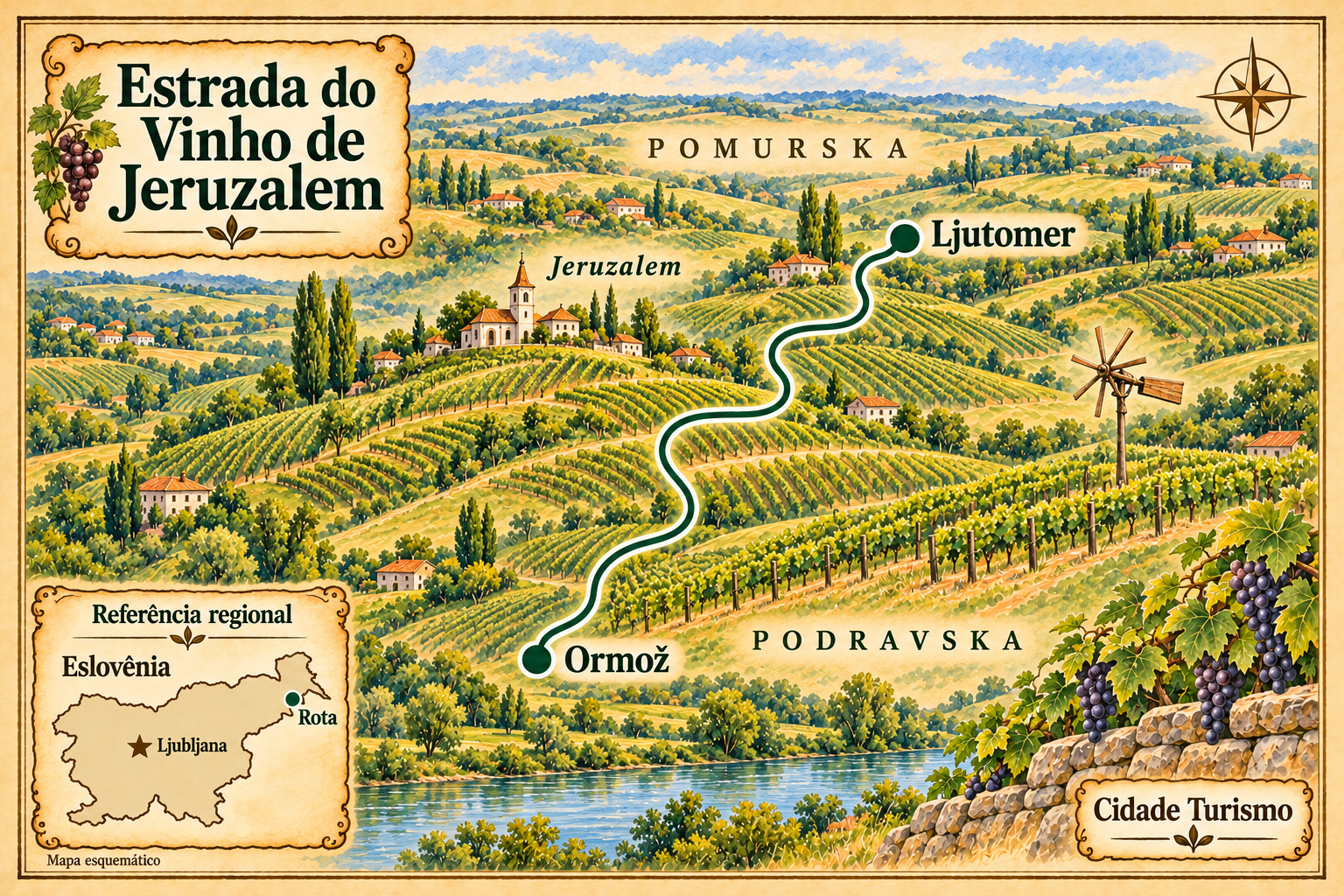
Prekmurje is on the Jeruzalem Wine Road

From Ljutomer to Ormož, rural roads cross vineyards terraced on the hills of Prlekija and run along the ridge of Jeruzalem.

Illustrative map, not to scale. Tap a city to open its page.
Illustrated map of Jeruzalem Wine Road
Explore the Jeruzalem Wine Road
Explore other destinations Search by state and city