Ptuj

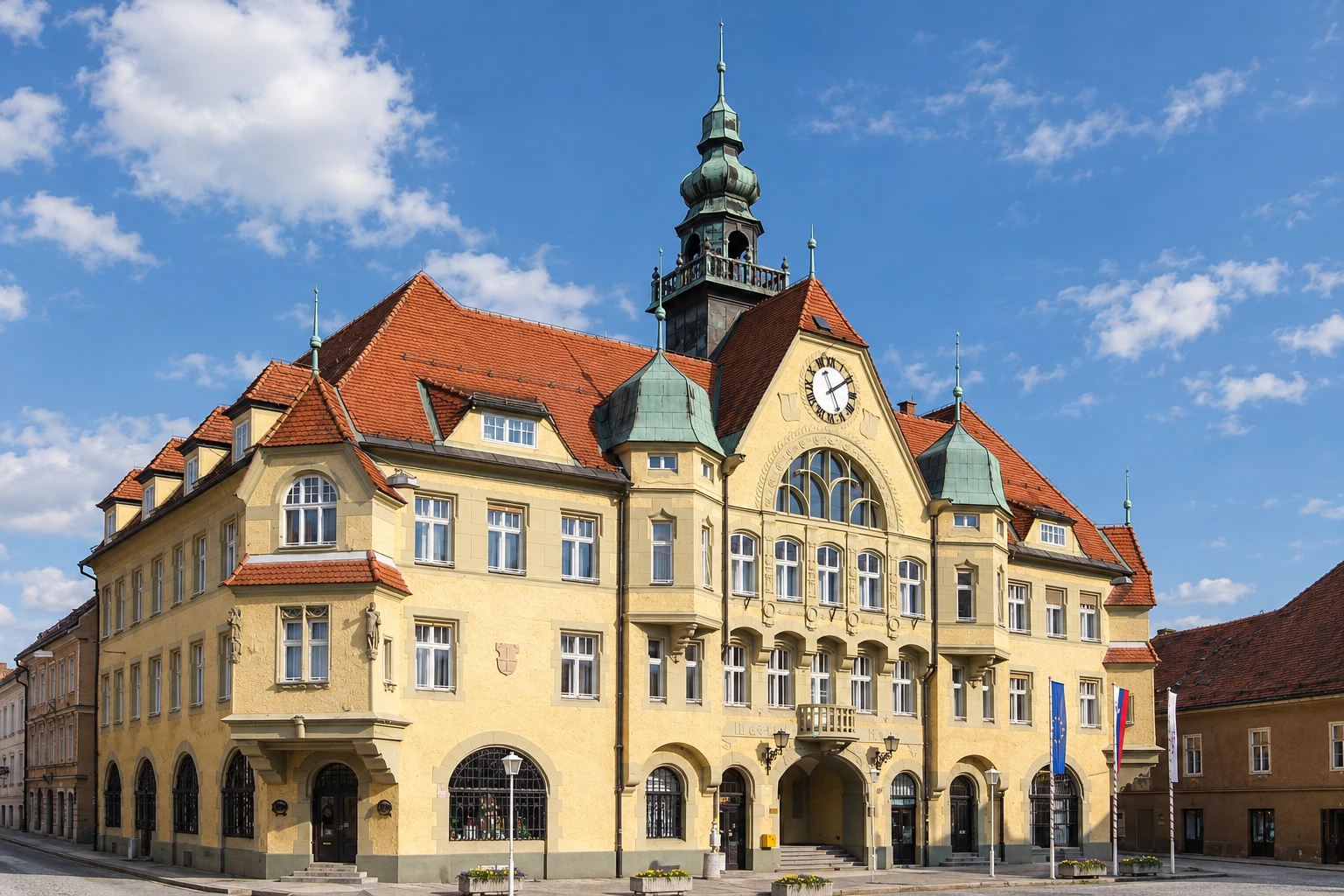
In the photo: Ptuj Town Hall, in the historic center

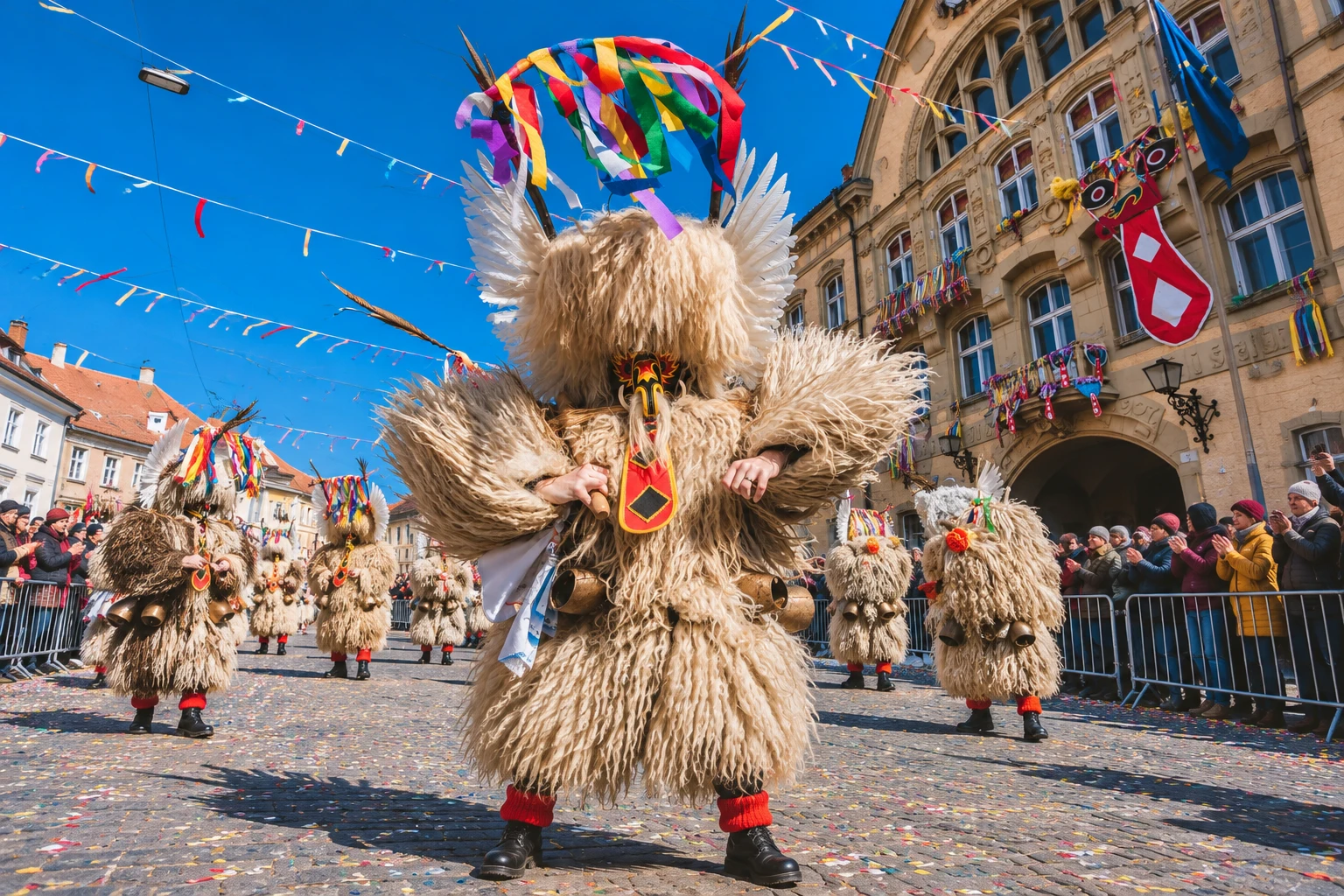
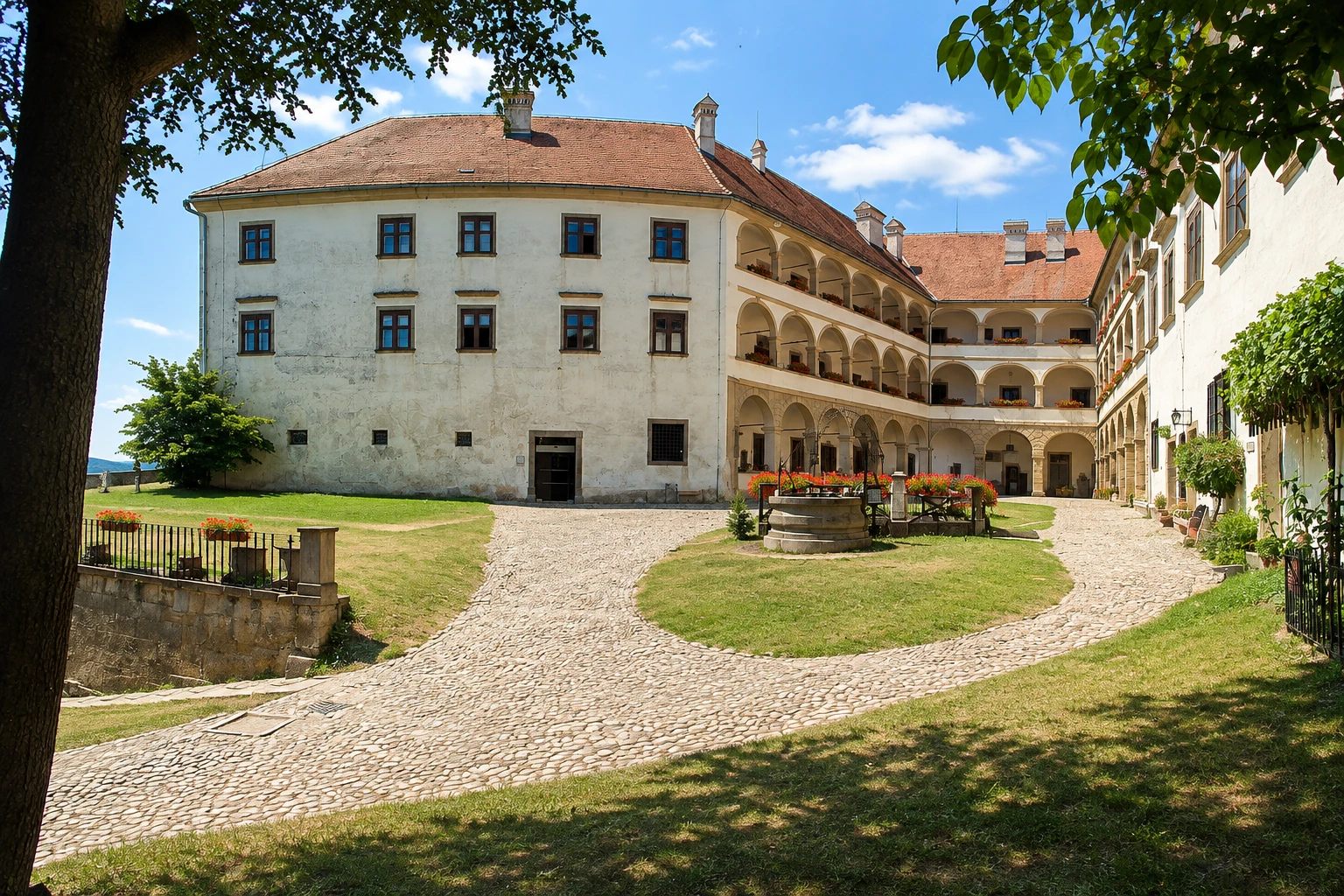
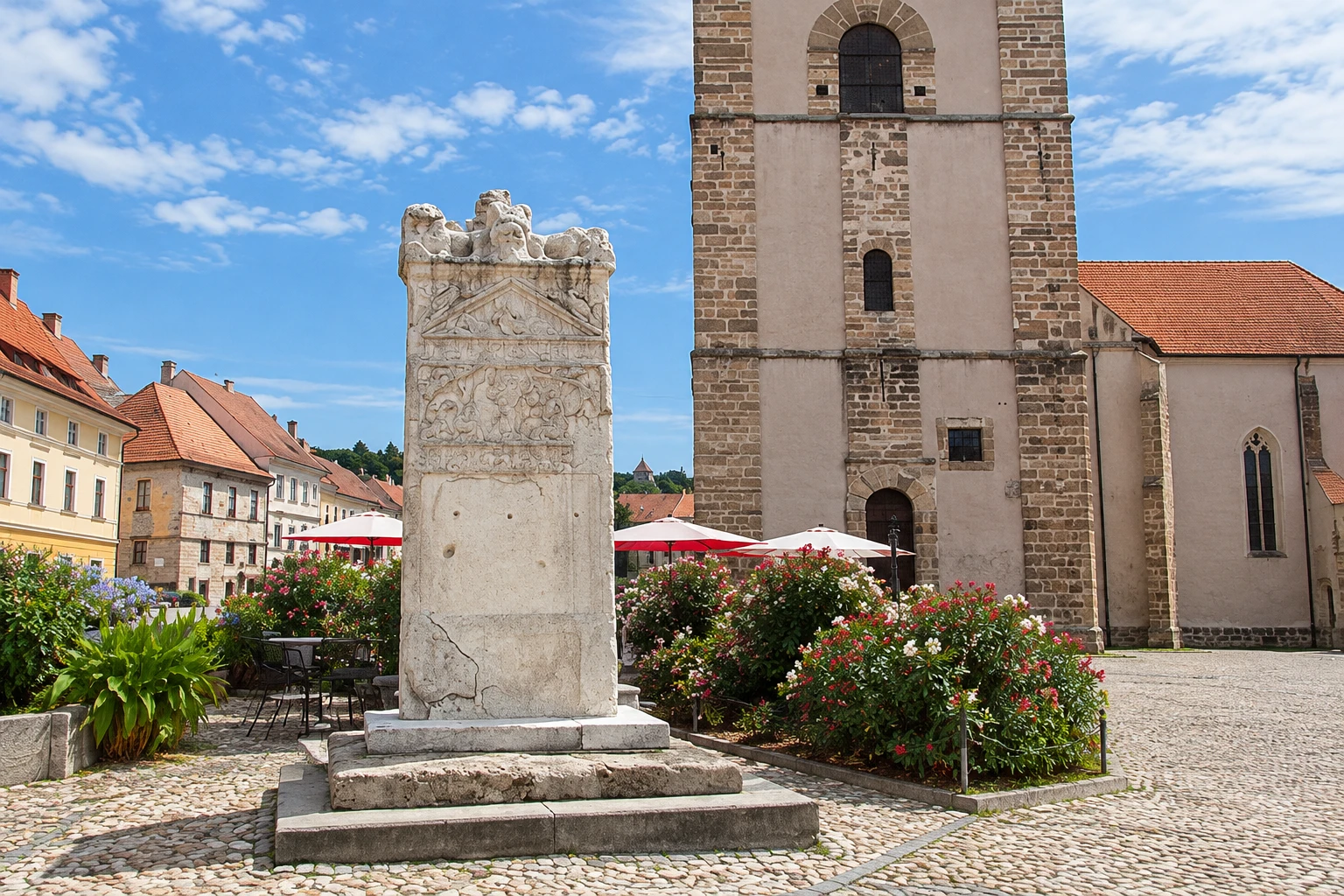
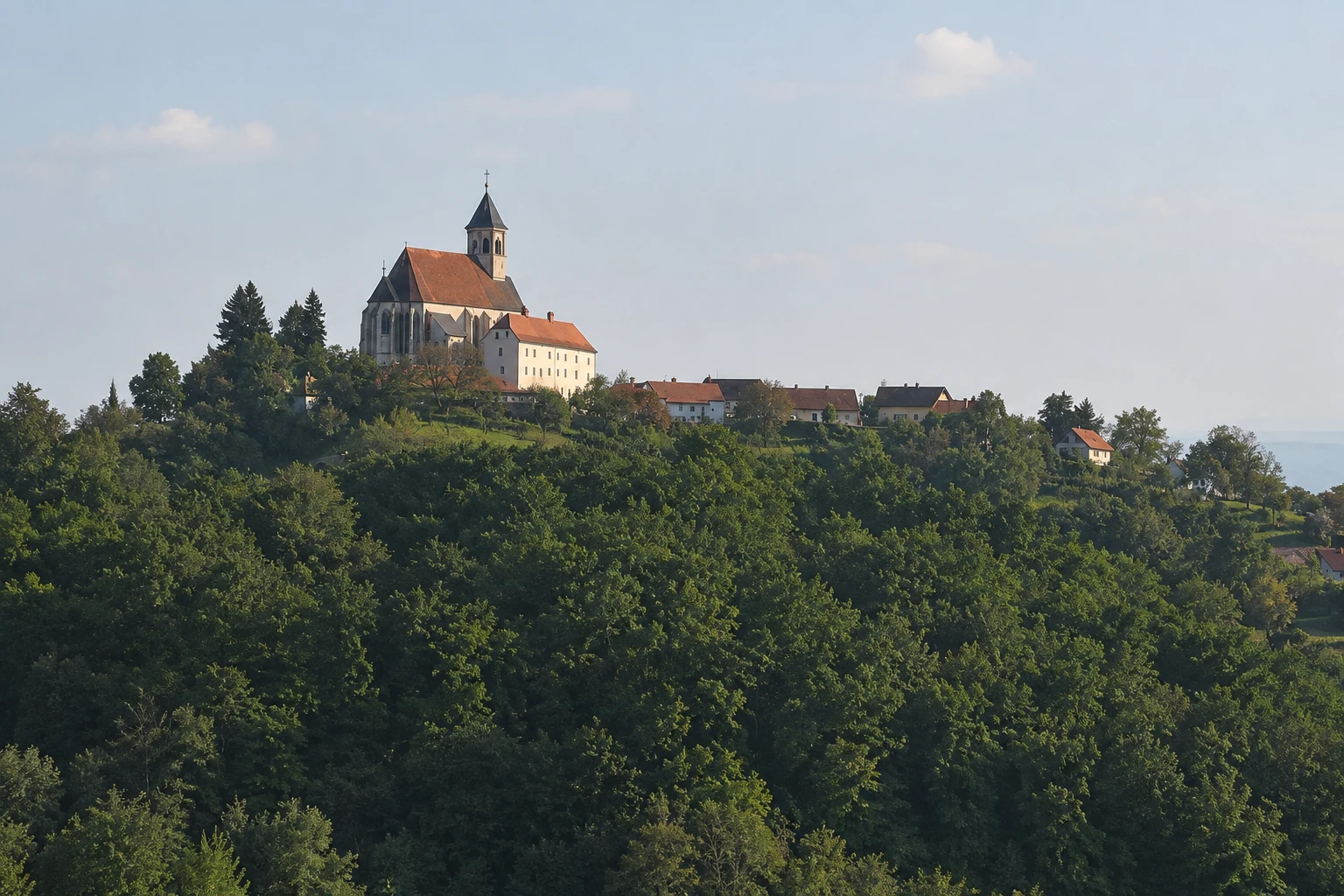
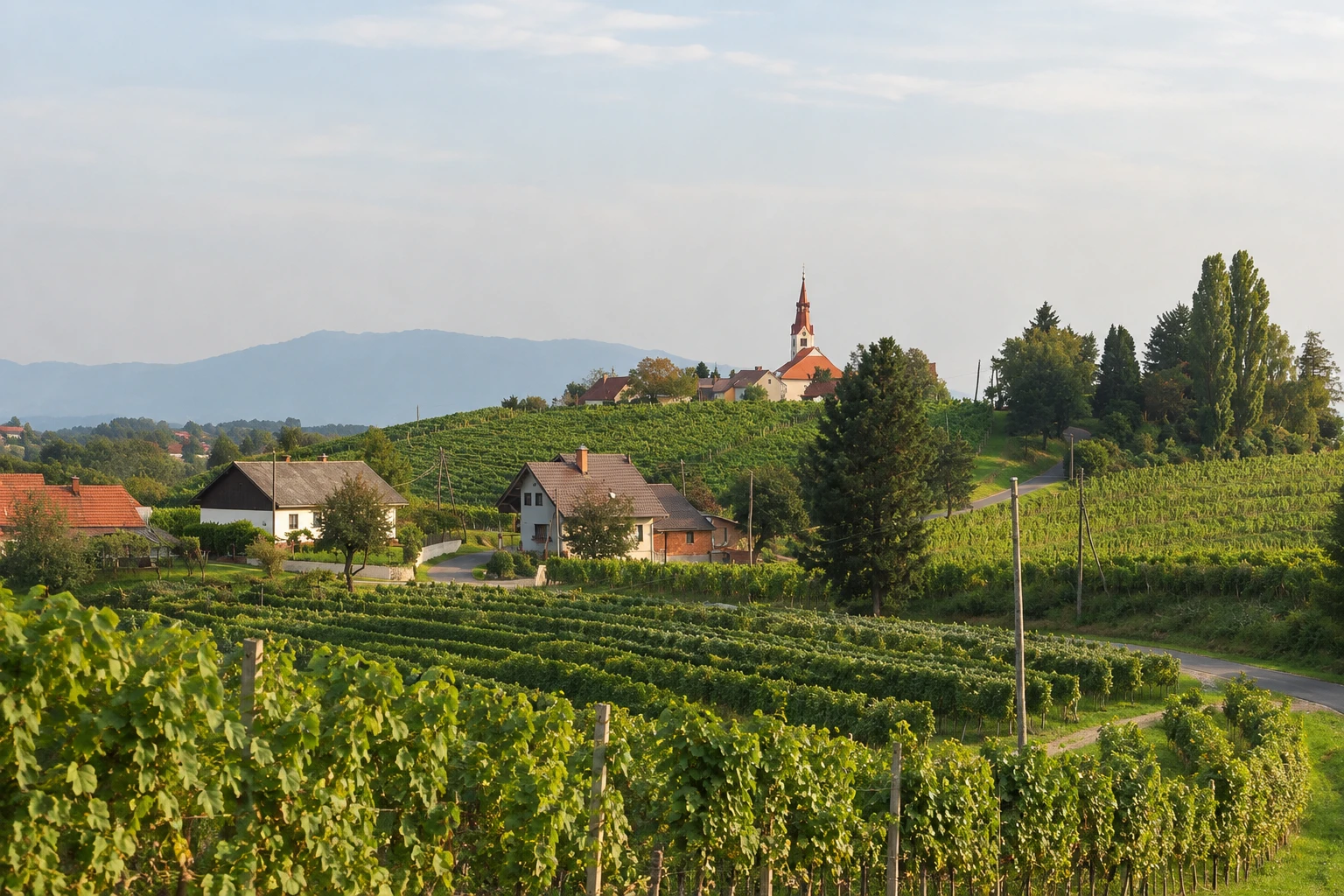
Illustrative images. The pictures in this guide are illustrations based on the real place, not photographs, and may differ from it.

Get it on Google Play

The city

What to expect from Ptuj.

A town of about 18,000 on the Drava, considered the oldest with a written record in Slovenia. It was the Roman Poetovio, which received city status from Emperor Trajan in the year 103. The castle on the hill houses the regional museum; on Slovenski trg stands the Orfejev spomenik, a Roman tombstone nearly 5 meters tall. At the end of winter the town hosts the Kurentovanje carnival.

Ptuj stands on the Drava at a spot where the river could be crossed safely as far back as the late 3rd millennium BC. Trade routes met at the crossing. Under the Romans, Poetovio became the largest Roman settlement in what is now Slovenia, home to troops and customs and tax offices. Archaeologists estimate that about 30,000 people lived in and around Poetovio, giving Ptuj its reputation as the country’s oldest town.

What you see today is chiefly the medieval town, tucked between the castle and the river. Trade grew again under the Lords of Ptuj in the 11th century. By the first half of the 13th century the hilltop fortress, Dominican and Minorite monasteries and St. George’s Church were already standing. Around the middle of that century Ptuj received town rights and permission to build walls. The street plan survives.

Three landmarks help you navigate the old town. The hilltop castle holds the regional museum collections and overlooks the rooftops and the Drava. Slovenski trg, a funnel-shaped square paved with pebbles, brings together the Orpheus Monument, a Roman tombstone nearly 5 m tall, the City Tower and the church. Mestni trg, with its early 20th-century town hall, is where residents sit down for coffee. You can walk between them on stone streets.

Ptuj is also a wine town. Its cellar founded under the Minorite monastery in 1239 is described as Slovenia’s oldest. There’s another beneath the castle halls, and the wine hills of Haloze and Slovenske gorice surround the town.

Across the river are the thermal baths, supplied with water from 1,100 m underground. Downstream, Lake Ptuj has more than 230 bird species and a 13 km path around it.

In late winter the town’s rhythm changes for Kurentovanje. This carnival celebrates the kurenti, figures dressed in sheepskins and bells who, according to ancient belief, drive winter away. Their house-to-house rounds are on UNESCO’s Intangible Cultural Heritage list. Accommodation fills up early. Summer brings music and contemporary art festivals and the Roman Games, fall brings wine festivals, and December brings Advent on Mestni trg.

The climate is continental. Summers are warm, with highs of 24°C to 27°C and late-afternoon thunderstorms. Winters are cold, with temperatures averaging near 0°C and frequent fog on the plain. Spring and early fall are the mildest times for walking.

One day covers the castle and old town. With two, add the monasteries, Roman sites, wine cellar and thermal baths. Maribor is about 30 km away by train or bus. The basilica at Ptujska Gora, about 14 km away, and the wine hills of Jeruzalem lie outside town and are best reached by car.

Share: WhatsApp

Where to stay

30 places to stay in Ptuj.

Where to eat

11 places to eat in Ptuj.

Mapa de Ptuj

15 lugares no mapa: onde ficar e onde comer, por bairro.

Festivals and events

Festivals Ptuj

Dates change every year: check this year's date before you travel.

Festival calendar in Slovenia

The local experience

Things to do in Ptuj

Ptuj · Slovenia · Castle and museum

Ptuj Castle

Castle on the hill above the Drava, with the regional museum of Ptuj–Ormož: furnished halls, an armory, 17th‑century Turquerie paintings, carnival masks and the largest collection of historical musical instruments in Slovenia.

Explore Ptuj Castle

Ptuj · Slovenia · Roman monument

Orpheus Monument

A 2nd‑century Roman tombstone of Pohorje marble, nearly 5 meters tall, on Slovenski trg. The reliefs with the myth of Orpheus gave the monument its name, symbol of Ptuj.

Explore Orpheus Monument

Ptuj · Slovenia · Pilgrimage church

Basilica of Ptujska Gora

Gothic basilica from the early 15th century on top of a hill about 14 km from Ptuj, featuring the Relief of the Virgin of the Mantle, which shelters 82 figures of people from the period beneath the cloak.

Explore Basilica of Ptujska Gora

To choose before you go

Tours in Ptuj

Where each tour starts, how long it takes, how it is done, what is included and the price range.

Ptuj Castle, its museum collections and views over the rooftops

From Slovenski trg, in the old town On foot 2 to 3 hours Morning Easy, with a short climb

The castle occupies the hill above the old town. People lived here in the Neolithic period from the 5th millennium BC onward. In Roman Poetovio the hill held public buildings, and in the early Middle Ages it served as a cemetery. The surviving medieval fortress dates from the 11th century when the archbishopric of Salzburg owned the castle and town. In 1132 the archbishops granted it as a fief to the Lords of Ptuj, who managed it for over 300 years. From 1656 to 1802 it belonged to the Leslies, a Scottish noble family who turned it into a Baroque residence. Its last owners, the Counts of Herberstein, held it from 1873 until 1945, when the castle and all its furnishings passed to the museum. The rooms now house the Ptuj–Ormož Regional Museum collections. The 12th-century Romanesque hall holds more than 500 weapons dating from the 15th to the 20th centuries, with 16th-century armor and five of the oldest surviving cannons in Slovenia. The musical instrument collection, the country’s largest, has about 300 pieces. Its rarest is a Roman tibia from the 2nd or 3rd century, a double pipe made of bone sheathed in bronze and brass. The residential rooms display furniture from the 16th to the 20th centuries, Brussels tapestries and 17th-century paintings of Turkish subjects. Other collections include Gothic and Baroque art, paintings on glass that once decorated country homes, and carnival masks of the kurent and other regional figures. Roman stones set into the castle walls feature lions’ heads, the face of Serapis and dedications to Jupiter and the nymphs. The courtyard overlooks tiled rooftops, the river and the hills. Beneath the halls, the castle cellar serves wines that won its competition, displays old winemakers’ tools and holds a 40,410-liter barrel.

Stops: Ptuj Castle (Ptujski grad), Ptuj–Ormož Regional Museum, Musical instrument collection, Carnival mask collection, Castle wine cellar.

Includes: Museum admission and wine tasting at the castle cellar are charged separately. Check current rates.

Tip: The museum usually closes on Mondays except in July and August, and keeps shorter winter hours. The lower courtyard opens daily. Check before climbing up.

Best time: Year-round. Hours are longer from mid-April to mid-October.

The old town, from Slovenski trg and the Orpheus Monument to Mestni trg

From Mestni trg, in the old town On foot About 2 hours Morning or afternoon Easy

Mestni trg is a favorite square with locals. Viennese architect Max Ferstl designed the town hall in the German neo-Gothic style in the early 20th century. Statues of Emperor Trajan and St. Victorinus of Ptuj stand on the facade. On Saturdays, people drinking coffee on the square can watch couples arriving for weddings in the hall. The statue of St. Florian, protector against fire, is on the same square, as is the tourist information center, where you can see a kurent. A few streets away is Slovenski trg, the former main square, paved with pebbles and funnel-shaped in medieval fashion. The Orpheus Monument in front of the City Tower is a Roman tombstone almost 5 m high, carved from a single block of marble weighing about 7 metric tons. The largest of its kind in the province of Pannonia, it stands where the Romans erected it. Its central relief shows Orpheus playing the lyre, surrounded by animals listening. In the Middle Ages it served as a pillory. The City Tower, a former watchtower mentioned in the town statutes of 1376, has a Baroque onion dome and Roman stones embedded in its walls. The clock appears on only three sides. According to local lore, the townspeople left the castle-facing side blank because the lords refused to pay their share. Nearby are the country’s oldest open-air collection of stone monuments, the theater and the 12th-century Church of St. George. Enlarged several times, the church holds Laib’s three-panel altarpiece, 15th-century choir stalls and a Gothic image of the saint defeating the dragon. On Murkova ulica, the Kurent House introduces the carnival figure through interactive exhibits, with hourly tours for small groups.

Stops: Mestni trg, Ptuj Town Hall, Slovenski trg, Orpheus Monument (Orfejev spomenik), City Tower, St. George’s Church, Kurent House (Kurentova hiša).

Includes: Self-guided walk. The Kurent House charges separate admission. Buy tickets on site or online.

Tip: The Kurent House opens on certain afternoons, with different days in summer and winter. Check before visiting. In summer, red flowers decorate Slovenski trg.

Best time: Year-round. On April 23, St. George’s Day, Slovenski trg hosts a medieval fair.

Monasteries and the Drava waterfront, including the Dominican and Minorite monasteries and Drava Tower

From Pedestrian bridge over the Drava On foot 2 to 3 hours Afternoon Easy

The local tourism office’s one-day itinerary starts on the footbridge across the Drava. From here you get the classic view of Ptuj, with riverside houses below the castle. At the western end of the center stands the Dominican Monastery, founded in 1230 by Methildis, widow of Frederick III of Ptuj. The Dominicans stayed until the monastery was dissolved in 1785 and the complex became a barracks. In the early 20th century its finest rooms became a museum. Today it hosts cultural events and welcomes visitors during the warmer months. Gothic and Baroque architecture meet in the Gothic cloister, the chapter house with Romanesque and Gothic windows, and the Baroque refectory with stucco and paintings. The monastery park overlooks the Drava. Beside the river, the 16th-century Drava Tower is the largest of the six towers that defended Ptuj. Its roof once served as a gun platform. Above the entrance is the town’s coat of arms with St. George’s cross. Cannonballs are embedded in the wall, and two plaques south of the tower mark the heights of the Drava floods of 1567 and 1857. The tower gained a new roof in the 19th century and became a home and later a wine museum. It now houses the Mihelič Gallery, which has free admission. The 13th-century Minorite Monastery was restored after fires and a bombing, and its Baroque facade was rebuilt. The library holds more than 5,000 books, some from the 16th century. Its arcaded courtyard hosts summer events. Beneath this monastery in 1239 the friars opened the cellar that became the Ptuj Wine Cellar.

Stops: Drava footbridge, Dominican Monastery, Drava Tower, Mihelič Gallery, Minorite Monastery.

Includes: Self-guided walk. The Dominican Monastery charges admission. Visit the Minorite Monastery by appointment.

Tip: The Dominican Monastery usually opens from April to early fall and closes on Mondays. At the Minorite Monastery, ring the bell at the entrance or arrange a visit ahead of time. The tower gallery closes on Mondays.

Best time: April to September, when the Dominican Monastery is open.

Roman Ptuj, from Panorama hill to the shrines of Mithras

From Ptuj old town Walk on Panorama hill, then drive, cycle or take a taxi to the shrines About 3 hours Morning or afternoon Easy

Poetovio began as a military base and later became a town of traders and craftspeople. Poetovio Archaeological Park brings together its surviving remains across Ptuj and the surrounding area, from the castle to Roman stones set into buildings downtown. Panorama hill, a green space in the middle of town, has long been known for the Roman stones found here. Geophysical surveys confirmed what excavations had only suggested. Beneath the grass lies an entire well-preserved district of Poetovio, with houses, warehouses, shrines, workshops and streets. Paths follow the old Roman street plan, with panels at points of interest and views of the castle along the way. Poetovio was also one of Europe’s major centers of the cult of Mithras. Soldiers from the east brought this religion of Persian origin, whose rites were reserved for men. Five shrines have been found. The largest, Mithraeum III, is in Zgornji Breg, once a Roman residential district. Discovered in 1913, the 3rd-century shrine now stands under a protective shelter. Its altars were dedicated by soldiers of the XIII Gemina and V Macedonica legions. Mithraeum I, west of town in Spodnja Hajdina, is the oldest in the Roman Danube provinces. Built in the mid-2nd century by Illyrian customs officials, it survives on its original site. It contains dedication stones, a sculpture of Mithras being born from a rock and an altar showing the sacrifice of the bull, one of only two surviving pieces of its kind. In August the Roman Games recall this period with a Roman camp and hundreds of costumed participants.

Stops: Panorama hill, Mithraeum III (Zgornji Breg), Mithraeum I (Spodnja Hajdina), Roman stones in the old town.

Includes: Panorama hill is free. Guided visits to the shrines are arranged with the regional museum and paid for separately.

Tip: Both shrines can be visited only on guided tours arranged through the museum at least three days ahead. If time is short, focus on Panorama hill and the Orpheus Monument on Slovenski trg.

Best time: April to October.

Ptuj Wine Cellar (Ptujska klet), the country’s oldest cellar

From Vinarski trg, central Ptuj Guided walking tour 1 to 2 hours Afternoon Easy

The Ptuj Wine Cellar is described as Slovenia’s oldest. Its story begins in 1239, when Minorite friars built a cellar beneath their monastery. Behind its thick underground walls is a large collection of historic vintages. The most famous bottle is the 1917 Zlata trta, or Golden Vine, considered Slovenia’s oldest wine. The cellar still produces wines from the Ptuj region, many of them award winners. A guide takes you down into the corridors to see the collection of old vintages, finishing with a tasting of selected wines. You can also buy bottles to take home. The visit fits neatly into a late afternoon in the old town. For more wine, the castle cellar beneath the state rooms serves winners from the castle’s wine competition.

Stops: Ptuj Wine Cellar (Ptujska klet), Historic wine collection.

Includes: Guided cellar tour with wine tasting, booked and paid for separately.

Tip: Book ahead and ask which languages are available that day. If you’re driving afterward, enjoy the tour and skip the tasting.

Best time: Year-round. On November 11, the feast of St. Martin celebrates the new wine in the old town.

Lake Ptuj, the Drava riverbank, birdwatching and the Čigra boat

From City park beside the Drava On foot or by bike, with a sightseeing boat in summer 2 hours to half a day Morning or afternoon Easy, with a full circuit of 13 km

The city park beside the Drava has a playground and outdoor exercise area. It’s the starting point for a popular local walk along the river to Lake Ptuj. The lake formed on the Drava beside the town and is described by the local tourism office as Slovenia’s largest. Its protected surroundings attract more than 230 bird species, including rarities among the cormorants, terns and gulls, as well as birdwatchers from several countries. A 13 km path circles the lake and passes a birdwatching station. Nearby Šturmovci Landscape Park is part of the Natura 2000 network. For a seated view of the scenery, take the Čigra sightseeing boat. The trip lasts about 60 minutes and carries up to 20 passengers. It leaves from Ranca harbor, with stops by the thermal baths. From the water you can see the town and surrounding hills. It does not sail in bad weather or when the river is high. On the bank opposite the old town, the Forest Beach is a quiet spot with wooden platforms shaded by birches where a Roman bridge once stood. You can see the houses across the river. The thermal baths are nearby. The town’s bike-sharing system has stations in the center and at the thermal baths, making it easier to combine the center, lake and pools in one day.

Stops: City park, Lake Ptuj (Ptujsko jezero), Birdwatching station, Ranca harbor, Forest Beach.

Includes: The walk is free. The boat charges a separate fare. Check current rates.

Tip: For birdwatching, bring binoculars and go early or late in the afternoon. The boat usually runs on summer weekend afternoons. Check departures before setting out.

Best time: May to September.

See 2 more tours

Terme Ptuj thermal pools across the Drava

From Ptuj old town On foot, by bike or by city bus Half a day Afternoon or evening Easy

The Ptuj thermal baths draw 56°C water from a depth of 1,100 m. The mildly mineralized water is used particularly for sports-related muscle pain and injuries, and for respiratory treatments. Athletes are among the regular visitors. The large thermal park has indoor and outdoor pools, water slides, a lazy river, a wave pool, a diving tower and an Olympic-size pool. It suits both families with children and swimmers looking to do laps. The wellness center offers saunas and massages. Ptuj’s official one-day itinerary ends here, with an evening in the pools after exploring the castle and old town. The free circular city bus connects the old town, the Zadružni trg parking lot and the baths. There’s also a bike-sharing station on site.

Stops: Terme Ptuj Thermal Park.

Includes: Thermal park admission, saunas and massages are charged separately. Check current rates.

Tip: Check which pools will be open during your visit. Bring a swimsuit, towel and flip-flops.

Best time: Indoor pools open year-round, outdoor pools in the warmer months.

Mestni Vrh vineyards and views over Ptuj

From Central Ptuj On foot or by bike, preferably an e-bike Half a day Morning or afternoon Moderate, with uphill sections

Mestni Vrh is the hilly area beside Ptuj. A trail from town winds through vineyards and orchards with open views of the rooftops and castle. It’s a way to explore the countryside without driving. Along the route are places to try regional wine and food, plus a Roman camp, the Stara Preša wine museum and a railway park. There are hills to climb. The local tourism office recommends an e-bike, which you can rent in town. The tourist information center also arranges walks with a local guide for small groups. Hear stories of the town, visit the Stara Preša museum and taste local wines, juices and gibanica, the region’s layered pastry.

Stops: Mestni Vrh, Stara Preša wine museum.

Includes: Free, self-guided route. Book the guided outing and tasting separately at the tourist information center.

Tip: Bring water and sun protection. Arrange guided outings ahead of time. The price depends on group size.

Best time: April to October. The vineyards change color in fall.

Day by day

1, 2 and 3-day itinerary in Ptuj

Suggestions to plan the trip. Change the order of the days according to the weather and tour availability.

1 day · 1 day in Ptuj for the castle, old town and thermal baths

For Day visitors from Maribor or travelers passing through · Based in Ptuj old town
  1. Day 1 · From the footbridge to the pools

    Start on the Drava footbridge for a view of the whole town with the castle above it. Walk through the old town to the Dominican Monastery, then climb to the castle. Give the morning to the museum’s weapons, musical instruments, furnished rooms and carnival masks. Step into the courtyard for views of the rooftops and river. Descend to Slovenski trg for the Orpheus Monument, City Tower and St. George’s Church, then stop at the Kurent House. Have lunch at a restaurant in the center. Afterward, sit down for coffee on Mestni trg opposite the town hall. Art lovers can visit the Mihelič Gallery in the Drava Tower. If you’ve booked ahead, visit the Ptuj Wine Cellar. End the day in the thermal pools across the river.

2 days · 2 days in Ptuj exploring the medieval and Roman town
For A car-free weekend on foot · Based in Ptuj old town
  1. Day 1 · The castle and old town

    Spend the morning at the castle, browsing the regional museum collections and enjoying the courtyard view. Walk down to Slovenski trg for the Orpheus Monument, City Tower and St. George’s Church. Visit the Kurent House if it’s open. After lunch, see the town hall and the statue of St. Florian on Mestni trg. Late in the afternoon, take a guided tour of the Ptuj Wine Cellar by reservation, or taste wines at the castle cellar.

  2. Day 2 · Panorama hill, monasteries and the riverbank

    Climb Panorama hill in the morning and follow paths tracing the Roman town’s streets, with views of the castle. If you’ve arranged a visit through the museum, include Mithraeum III in Zgornji Breg. In the afternoon, visit the Dominican Monastery in the warmer months, the Drava Tower and the Minorite Monastery by appointment. Walk along the Drava from the city park or visit the Forest Beach on the opposite bank. Finish at the thermal baths. On summer weekend afternoons, the Čigra boat cruises around the lake.

3 days · 3 days in Ptuj exploring the town, lake and wine hills
For Visitors staying longer who want to explore beyond the center by bike or car · Based in Ptuj old town
  1. Day 1 · The castle, Slovenski trg and wine cellar

    Cross the Drava footbridge, climb to the castle and spend the morning with the museum collections. In the afternoon, visit Slovenski trg, the Orpheus Monument, City Tower, St. George’s Church and the Kurent House. Stop for coffee on Mestni trg and, if you’ve booked, visit the Ptuj Wine Cellar.

  2. Day 2 · Roman Ptuj, the monasteries and thermal baths

    Explore Panorama hill in the morning and visit Mithraeum III if you’ve booked. After lunch, see the Dominican Monastery, Drava Tower and Minorite Monastery. Spend late afternoon and evening at the thermal pools.

  3. Day 3 · Lake Ptuj and Mestni Vrh

    Spend the day outdoors. Pick up a city bike and ride from the city park to Lake Ptuj, stopping at the birdwatching station. The full circuit is 13 km. In summer, take the Čigra boat for part of the outing. In the afternoon, head up to Mestni Vrh through vineyards and orchards, preferably by e-bike, to see the town from above. If you have a car, you can spend the day at the basilica in Ptujska Gora, about 14 km away, and in the wine hills of Haloze or Jeruzalem outside Ptuj.

Best time to go

When to go: Ptuj month by month

The seasons shown are the most usual ones; nature doesn't always follow the calendar.

January Low rain

Winter · castle and thermal baths

This is the coldest and driest month. At the nearest weather station, in Maribor about 30 km away, 1981–2010 averages show a mean of −0.2°C, lows below freezing, about 35 mm of precipitation and snow on the ground about half the days. Fog is common on the plain. Visit the castle collections during their shorter winter hours and swim in the indoor thermal pools. Bring a heavy coat, gloves and closed-toe shoes.

February Low rain

Kurentovanje, Ptuj’s carnival, in the days before Lent

It’s still cold. At the nearest weather station in Maribor, about 30 km away (1981–2010 averages), the mean is 1.7°C, with about 38 mm of precipitation and frost most mornings. This is the month of Kurentovanje. The Kurent’s Leap opens the celebrations at midnight on February 2 as February 3 begins. The main program takes place before Lent, with traditional mask parades, the international Sunday parade and the burial of Carnival on Tuesday. Dates change each year and accommodation fills early.

March Some rain

Late winter · end of Kurentovanje in years when Easter falls late

As spring approaches, at the nearest weather station in Maribor, about 30 km away (1981–2010 averages), the mean is 6.0°C, with highs near 11°C, about 57 mm of rain and possible morning frost. In years with a late Easter, the final days of Kurentovanje fall early this month. Longer days bring more time for walks through the old town and on Panorama hill. Bring a coat and a waterproof layer.

April Some rain

St. George’s Fair on the 23rd · Dominican Monastery reopens

In spring, at the nearest weather station in Maribor, about 30 km away (1981–2010 averages), the mean is 10.8°C, with highs around 16°C and about 60 mm of rain. The Dominican Monastery reopens to visitors and the castle switches to longer hours in midmonth. On April 23, the patron saint’s day, St. George’s Fair, one of the town’s three traditional fairs, includes a medieval market on Slovenski trg. Bring a warm layer for mornings and evenings.

May Some rain

Spring · Lake Ptuj circuit · Mestni Vrh

In late spring, at the nearest weather station in Maribor, about 30 km away (1981–2010 averages), the mean is 15.8°C, with highs near 21°C and about 83 mm of rain, more often in the afternoon. The long days make this one of the best months to cycle around Lake Ptuj and climb through vineyards to Mestni Vrh. Spring also brings shows featuring wine and produce from Slovenian farms. Light layers and a raincoat are enough.

June High rain

Early summer · Arsana Festival from June to August

In early summer, at the nearest weather station in Maribor, about 30 km away (1981–2010 averages), the mean is 19.0°C, with highs above 24°C and about 107 mm of rain, much of it in late-afternoon thunderstorms. Festival season begins. From June to August, Arsana brings classical music, jazz and world music to the town market and other old town stages. The Lake Ptuj boat usually begins its season. Pack light clothes and a waterproof layer.

July High rain

Summer · Art Stays contemporary art festival · pools and lake

This is the hottest month. At the nearest weather station in Maribor, about 30 km away (1981–2010 averages), the mean is 21.0°C, with highs near 27°C, some days above 30°C and about 94 mm of rain. Art Stays opens contemporary art exhibitions at the Dominican Monastery and town galleries. It’s the season for outdoor thermal pools and boat trips on the lake. Visit the castle and center in the morning. Bring sunscreen and a hat.

August High rain

St. Oswald’s Fair on the 5th · Roman Games in the second half of the month

In summer, at the nearest weather station in Maribor, about 30 km away (1981–2010 averages), the mean is 20.3°C, with highs around 26°C and about 112 mm of rain. Thunderstorms make this the wettest month. St. Oswald’s Fair, the oldest of Ptuj’s three fairs, takes place on August 5. In the second half of the month, the Roman Games bring legionaries, gladiators and senators to the old town and a Roman camp for several days. Book accommodation ahead.

September High rain

Early fall · harvest in the wine hills

In early fall, at the nearest weather station in Maribor, about 30 km away (1981–2010 averages), the mean is 15.7°C, with highs near 21°C and about 99 mm of rain. It’s harvest month in the hills around town, a good time for an outing to Mestni Vrh. The Dominican Monastery and lake boat usually end their season late in the month. The weather still suits a circuit of the lake and a walk on Panorama hill.

October Some rain

Fall · vineyard colors · winter hours at the castle

At the nearest weather station, in Maribor about 30 km away, fall temperatures this month average 10.7°C, with highs around 16°C, misty mornings and about 78 mm of rain (1981–2010 averages). Hillside vineyards change color. The castle switches to shorter winter hours in midmonth. It’s a good time to enjoy the old town at leisure, visit the cellar and swim in the indoor thermal pools. Bring a coat.

November Some rain

St. Martin’s Day on the 11th · St. Catherine’s Fair on the 25th

At the nearest weather station, in Maribor about 30 km away, late fall brings a mean of 5.1°C this month, with short days, overcast skies and about 69 mm of rain (1981–2010 averages). On November 11 the old town celebrates St. Martin’s Day, the festival of new wine. On the 25th, St. Catherine’s Fair, the largest of the three traditional fairs, brings stalls to the streets and squares and draws vendors from afar.

December Some rain

Advent in Ptuj throughout the month on Mestni trg

In early winter, at the nearest weather station in Maribor, about 30 km away (1981–2010 averages), the mean is 0.9°C, with about 61 mm of precipitation, some of it snow, and snow on the ground about ten days this month. Advent celebrations run all month. They begin with the lights on Mestni trg and include a food and craft market, children’s events, evening music and an ice rink at the town market. The program ends with an outdoor New Year’s Eve celebration. Bring a heavy coat and shoes with good grip.

Plan the journey

How to get there: Ptuj

Flying via Graz, Zagreb or Ljubljana

Ptuj has no airport with scheduled flights, and the one in neighboring Maribor serves general aviation. The town lies between three international airports. Graz in Austria and Zagreb in Croatia are each 95 km away, and Ljubljana is 130 km away. Vienna is 280 km away and Budapest 330 km.

Public transportation from Graz and Ljubljana involves a train. From Graz take the international service to Maribor and continue by regional train to Ptuj. From Ljubljana change at Pragersko. From Zagreb, the driving route follows the A4 motorway past Ptuj, and some international buses stop in town.

Some connections run only on certain days. Check schedules and connections before buying tickets.

Taking the train from Maribor and Ljubljana

Ptuj station is on Osojnikova cesta, a few hundred meters from the old town and within walking distance.

From Maribor, the ride takes less than an hour, usually about half an hour. From Ljubljana, change at Pragersko. From Austria, take the international service from Graz to Maribor and continue by regional train.

Slovenske železnice operates the trains. Schedules vary by day of the week, with fewer trains in the evening and on weekends. Check before setting out.

By bus

Ptuj bus station is on Osojnikova cesta near the train station and center. It serves regional buses, including those from Maribor, and some low-cost international routes.

The bus is an alternative to the train from Maribor. Services are less frequent in the evenings and on weekends. Check schedules before traveling.

Driving to Ptuj, buying a vignette and parking

Ptuj lies at the junction of two European routes, Vienna–Graz–Zagreb and Trieste–Ljubljana–Budapest. It’s about 30 km from Maribor, 130 km from Ljubljana and 95 km from either Zagreb or Graz. The A4 motorway between Maribor and the Croatian border passes the town.

Vehicles weighing up to 3.5 metric tons need an electronic vignette (e-vinjeta) linked to their license plate for Slovenian motorways and expressways. Buy it before entering the road. No vignette is needed if you use only regional and local roads.

Ptuj has many public parking areas. The local tourism office highlights 19 larger lots around the center, some paid and some free, on a map on its official website. The Zadružni trg lot connects with the city bus. Several lots have electric car charging points.

You won’t need a car in the old town, but one is useful for the basilica at Ptujska Gora and the wine hills of Haloze and Jeruzalem, where public transport is limited.

Getting around Ptuj

You can explore the old town on foot, and the climb to the castle is short.

The Zapeljivec, a small three-seat electric vehicle, operates free of charge in the old town every day during daylight hours. Call or wave it down. It doesn’t run in bad weather.

City buses are also free. Line 1 runs year-round on a loop between the bus station and the Zadružni trg parking lot. Other routes serving residential areas operate from September to June.

The Pecikl system has 40 bikes, including 16 e-bikes, at 8 stations, among them Mestni trg, the baths and the Zadružni trg lot. Register for a fee and rent through the app. For the wine hills, a shop on Osojnikova cesta rents electric city and mountain bikes.

In summer, the Čigra sails on Lake Ptuj from Ranca harbor, with stops beside the baths.

Your questions

Frequently asked questions about Ptuj

What to do in Ptuj?

Visit the castle with the regional museum, see the Orfejev spomenik on Slovenski trg, walk the old town and, in the surroundings, go to the basilica of Ptujska Gora and the wine hills of Jeruzalem.

Is Ptuj the oldest town in Slovenia?

It is considered the oldest with a written record. It was the Roman Poetovio, which received city status from Emperor Trajan in the year 103.

What is Kurentovanje?

Ptuj’s carnival, held at the end of winter since 1960. Its main characters, the kurenti, wear sheepskins, masks and large bells that, according to tradition, chase away winter.

How to get from Maribor to Ptuj?

By train, in about half an hour, or by car, about 30 km. There are also buses.

How many days should I spend in Ptuj?

One day gives you time for the castle, old town and a late afternoon at the thermal baths. With two, add Panorama hill, the monasteries, the wine cellar and the Drava riverfront. Spend a third day at Lake Ptuj and in the wine hills around town.

Can I explore Ptuj on foot?

Yes. The old town is compact, with the castle, squares, monasteries and wine cellar just minutes apart. The train and bus stations are a few hundred meters from the center. For the thermal baths across the Drava and the lake downstream, use the free city bus or the city’s bike-sharing system.

What happens during Kurentovanje?

The festival opens with the Kurent’s Leap at midnight on February 2, as February 3 begins. The main events take place in the old town in the days before Lent. There are nightly displays of traditional masks, a children’s parade, a Saturday carnival walk, an international folk and carnival parade on Sunday and, on Tuesday, the handover of power and burial of Carnival. Masked balls, concerts and exhibitions round out the festivities. Dates change each year, so check the program.

Where can I see the kurenti outside carnival season?

Visit the Kurent House on Murkova ulica, which introduces the figure through interactive displays on hourly tours. You can also see a kurent at the tourist information center on Mestni trg and carnival masks in the regional museum’s castle collection. The costume weighs up to 40 kg. There are two kinds of kurent, one with feathers and one with horns.

Is Ptuj Castle open every day?

The castle museum usually closes on Mondays except in July and August, and on certain holidays. Hours are longer from mid-April to mid-October and shorter in winter. The lower courtyard opens daily. Check the schedule before climbing up.

What is the Orpheus Monument?

It’s a Roman tombstone nearly 5 m tall, carved from a single block of marble weighing about 7 metric tons. The largest of its kind in the Roman province of Pannonia, it stands on Slovenski trg in front of the City Tower, where the Romans erected it. The central relief shows Orpheus playing the lyre, surrounded by animals. In the Middle Ages it served as a pillory.

What are the Ptuj thermal baths like?

The thermal park uses water that rises from a depth of 1,100 m at 56°C. It has indoor and outdoor pools, water slides, a lazy river, a wave pool, a diving tower and an Olympic-size pool, plus saunas and massages. It’s across the Drava, with city bus service and a bike-sharing station. Admission is charged separately. Check current rates.

Can I go all the way around Lake Ptuj?

Yes, on foot or by bike. The 13 km route around the lake passes a birdwatching station. More than 230 bird species visit the protected area. In summer, the Čigra boat offers trips of about 60 minutes from Ranca harbor. It usually runs on weekend afternoons and stays in port in bad weather.

How can I visit the Ptuj Wine Cellar?

Book a guided visit. The route takes you underground to the collection of historic vintages, including the 1917 Zlata trta, considered Slovenia’s oldest wine. Finish with a tasting of selected wines. The cellar dates from 1239, when the Minorite friars opened it beneath their monastery. The visit carries a separate fee.

How do I get from Ljubljana to Ptuj?

It’s 130 km by car. By train, change in Pragersko. Another option is to take a train or bus to Maribor, then continue to Ptuj by regional train or bus in under an hour. Check the day’s schedule, as departures are less frequent in the evenings and on weekends.

What are the Ptuj Roman Games?

Held in August, this historical reenactment recalls 1st-century Poetovio, where Roman generals decided to support Vespasian as emperor. For several days, more than 700 participants dressed as legionaries, gladiators, senators and Vestal Virgins fill the old town and a Roman camp. Dates change each year.

When are Ptuj’s traditional fairs?

There are three, dating from the Middle Ages when the town won the right to hold them. St. George’s Fair takes place on April 23, the patron saint’s day. St. Oswald’s Fair on August 5 is the oldest, mentioned in records from 1300. St. Catherine’s Fair on November 25 is the largest. They fill streets and squares in the historic center from early morning.

What should I eat and drink in Ptuj?

Štajerska cooking features vegetables, meats and herbs from nearby farms. Several restaurants serve their chefs’ versions of a three-course local-ingredient menu developed by the tourism office. Try gibanica, a layered pastry, for dessert. Wines come from the Haloze and Slovenske gorice hills. Two cellars in town offer tastings, the Ptuj Wine Cellar and the castle cellar.

What is Advent like in Ptuj?

Celebrations run throughout December, centered on Mestni trg. They begin when the lights come on and include a food and craft market, an ice rink at the town market, a carousel, children’s activities, themed guided tours and evening music. The program closes with an outdoor New Year’s Eve celebration.

Traveler, share your experiences through photos Up to 5 photos of each place you visited.
See the destination Maribor and Ptuj Find another city