Koper · Slovenia · Square
Tito Square
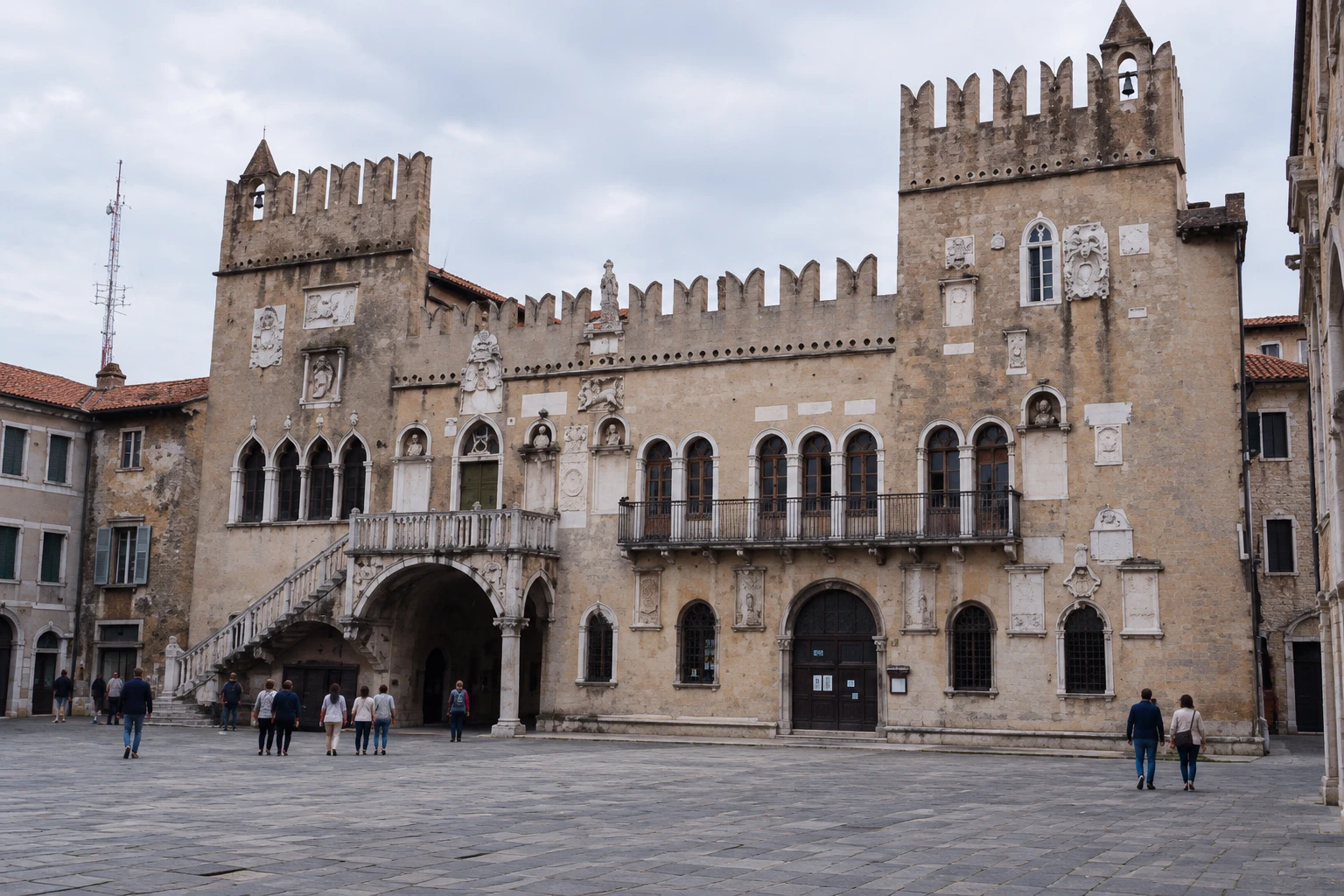
The main square of Koper's historic center, Venetian in appearance, with the Praetor's Palace, the Gothic Loggia of 1463, the cathedral and the bell tower. Closed to cars.

 Search
 Brazil
 Antarctica
 Argentina
 Bolivia
 Chile
 Colombia
 Ecuador
 Falkland Islands (Malvinas)
 French Guiana
 Guyana
 Paraguay
 Peru
 Suriname
 Uruguay
 Venezuela
 Austria
 Belgium
 Croatia
 Denmark
 Finland
 France
 Germany
 Greece
 Hungary
 Iceland
 Ireland
 Italy
 Luxembourg
 Norway
 Poland
 Portugal
 SlovakiaSlovenia
 Spain
 Sweden
 Switzerland
 the Czech Republic
 the Netherlands
 the United Kingdom
 Turkey
 Bermuda
 Canada
 Greenland
 Mexico
 Saint Pierre and Miquelon
 the United States
 the Dominican Republic
 JapanTurkey
 Egypt
 South Africa
 Australia
 Fiji
 New Zealand
 Papua New Guinea
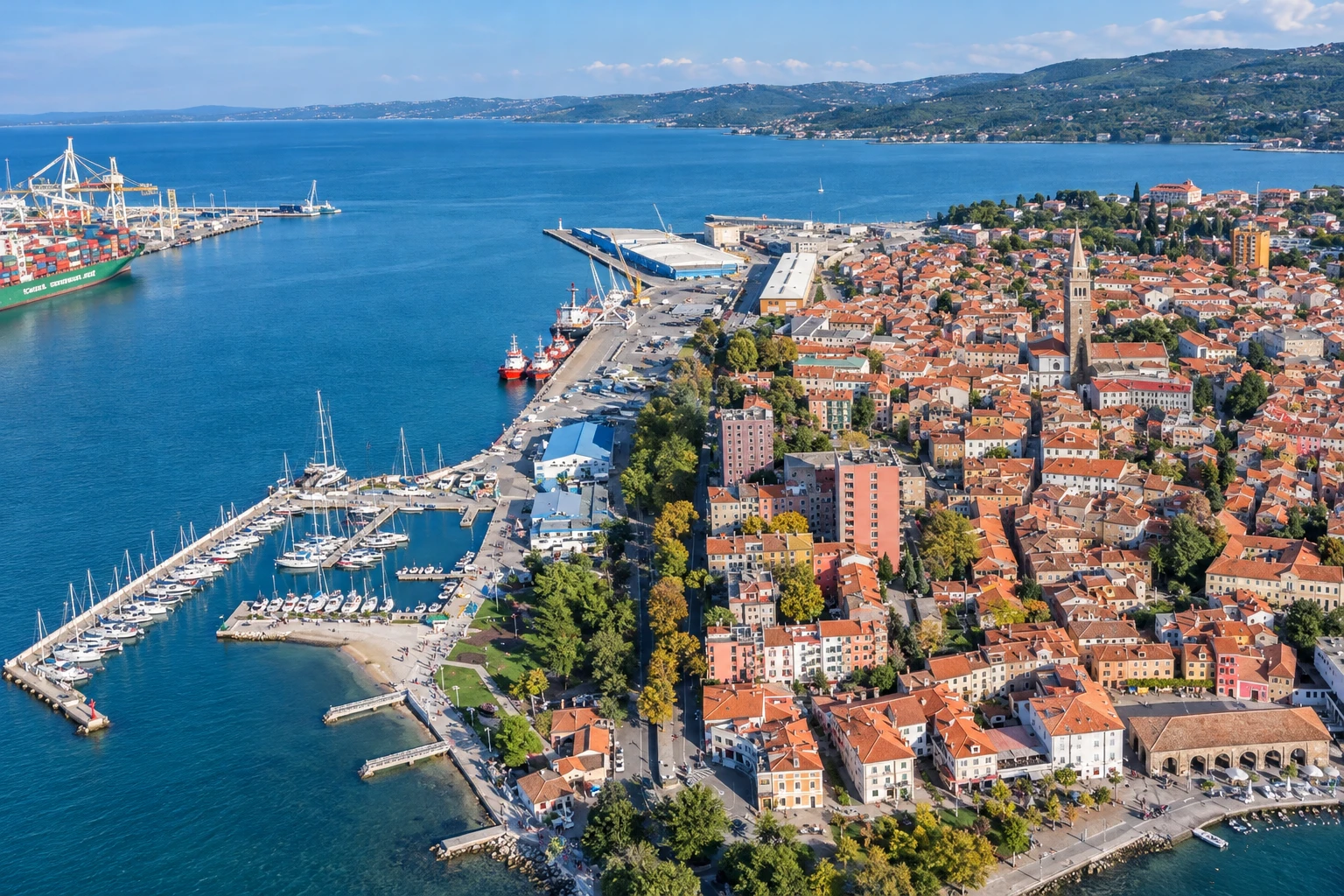
In the photo: Koper town center and port.
Illustrative images. The pictures in this guide are illustrations based on the real place, not photographs, and may differ from it.

The city
The largest city on the Slovenian coast and home to the country's main port. The historic center, on a former island, surrounds Tito Square with the Venetian Praetor's Palace, the Loggia and the cathedral with its bell tower, as well as the regional museum. Inland is the fortified church of Hrastovlje.
Koper is the largest city on the Slovenian coast and the country’s seaport. The historic center stands on a former island. It was only in 1827 that a road on a causeway linked the city to the mainland on the Semedela side. The Romans called it Capris, the Byzantines Justinopolis and the Venetians Capo d’Istria, the “head of Istria.” This gave the city its Italian name, Capodistria, still used alongside the Slovenian name. Koper is officially bilingual and signs use both languages.
Venetian architecture shapes the city. Titov trg, the main square, retains its layout from the days when it was the seat of power. Around it stand the Praetorian Palace, with its outside staircase and facade covered in coats of arms, the Loggia, the Cathedral of the Assumption and the 54 m city tower overlooking the Gulf of Trieste. Narrow lanes such as Čevljarska ulica, once a street of workshops, lead to smaller squares. Brolo has two Gothic cisterns, Prešernov trg has the Da Ponte Fountain and Muda Gate, and Carpacciov trg stands beside the Taverna, a former salt warehouse.
Three distinct areas make up the city. You can cover the entire old town on foot in half a day. The waterfront from Semedela to Žusterna has a promenade, swimming spots and the start of the old coast road, now a seaside route to Izola for walkers and cyclists. At the entrance to the city, between the port and the road, Škocjanski zatok Nature Reserve protects a 122-hectare brackish lagoon with a trail and birdwatching points.
Koper also serves as a gateway to the municipality’s inland villages in Slovenian Istria. In Marezige, high among the vineyards, a lookout overlooks the bay and a wine fountain serves Refošk, the local red. At Hrastovlje, a small walled church houses the Dance of Death frescoes. On the Karst Edge, the rocky escarpment separating the plateau from the coast, you’ll find Socerb Castle, the climbing cliffs at Osp and the leaning tower of Črni Kal.
The port sets its own rhythm. The passenger terminal is a few steps from the historic center. On cruise ship days, visitors fill the squares for a few hours. At other times, locals outnumber tourists on the streets, with a market, a university and cafés full of residents.
Koper has Slovenia’s mildest climate. Summers are hot and sunny, with average highs of 29°C in July and August and swimming usually possible from June through September. Spring and early fall temperatures of 17°C to 24°C suit walking and cycling. Rainfall increases from September to November. Winters are cool, with highs around 10°C and little snow by the sea. The city stays lively, though beach services and summer boats stop for the season.
Istrian cooking features Adriatic fish and seafood, fuži pasta with truffles, olive oil from the municipality’s hills and Refošk and Malvazija wines.
Coastal buses connect Koper with Izola, 7 km away, Portorož, 15 km away, and Piran, 17 km away. Trieste in Italy is about 20 km away. These cities have their own guides.
45 places to stay in Koper.
18 places to eat in Koper.
24 lugares no mapa: onde ficar e onde comer, por bairro.
The local experience
The main square of Koper's historic center, Venetian in appearance, with the Praetor's Palace, the Gothic Loggia of 1463, the cathedral and the bell tower. Closed to cars.
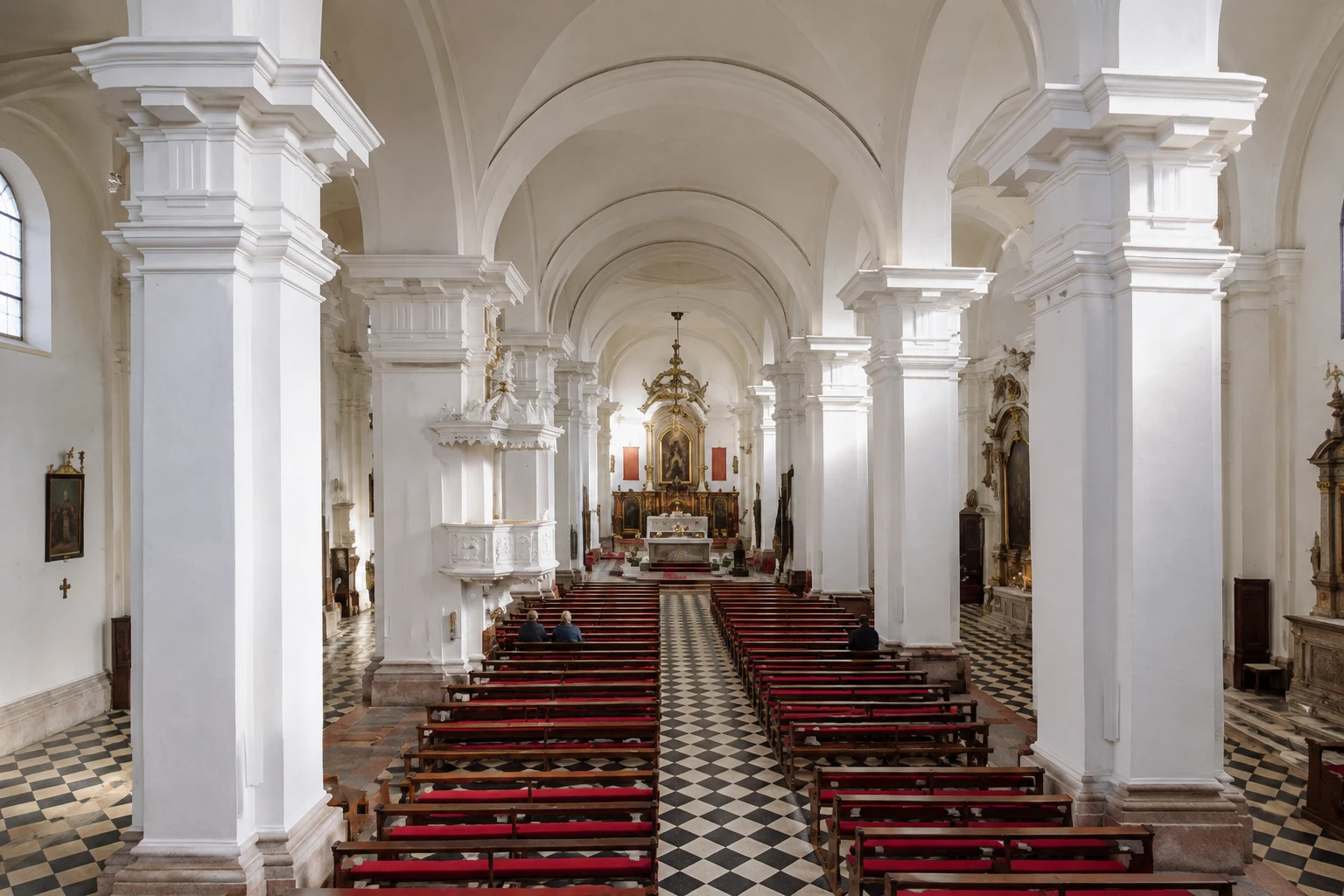
The Assumption Cathedral of Koper, on Tito Square, with Gothic and Renaissance façade, a painting by Vittore Carpaccio and the 204-step bell tower, from which you can see the whole gulf.
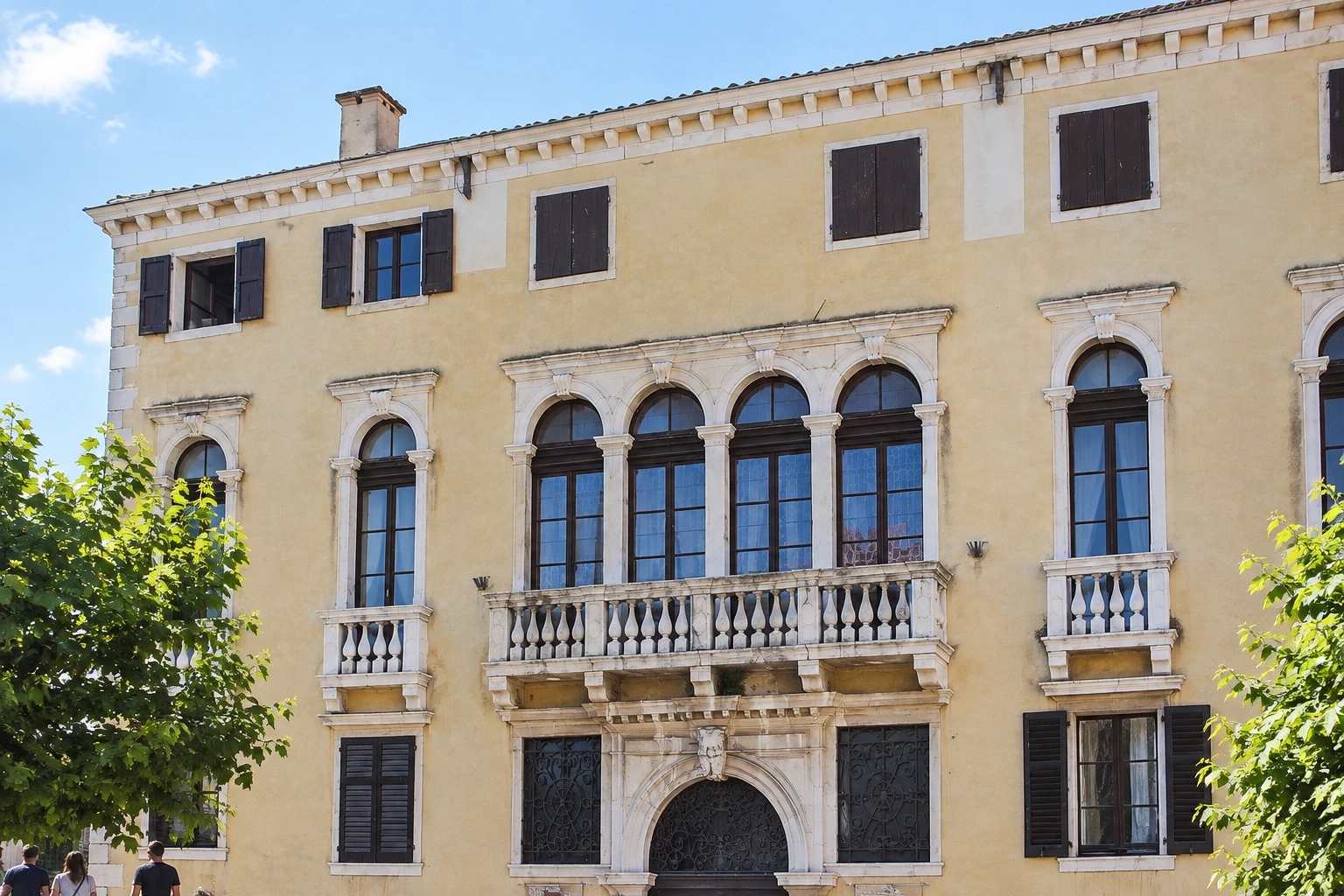
The Koper regional museum, housed in the early 17th-century Belgramoni Tacco Palace, covering the history of Slovenian Istria from prehistory to Venetian rule, as well as sculptures, paintings and weapons.
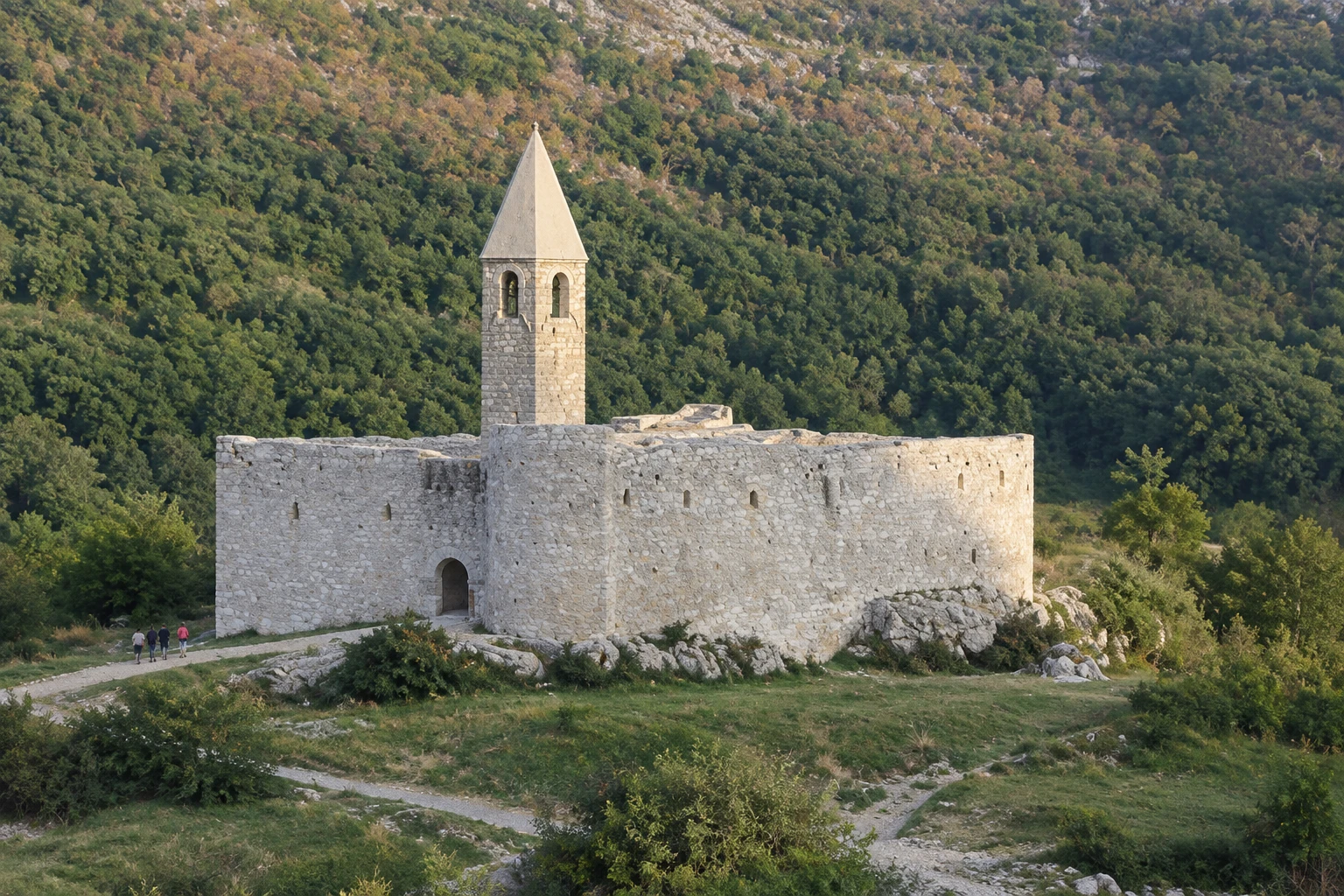
The small fortified church of Hrastovlje, about 20 km from Koper, is surrounded by 16th-century walls and is covered inside with 1490 frescoes, including a Dance of Death.
To choose before you go
Where each tour starts, how long it takes, how it is done, what is included and the price range.
Titov trg, or Tito Square, retains its layout from the days when it was the seat of Venetian government in Istria. The Praetorian Palace (Pretorska palača) lines its south side. Built in the 13th century, it took on its present form in the mid-15th century, blending late Gothic, Venetian Gothic and Renaissance styles. It housed the podestà, the captains and the Great Council. Its facade has an outside staircase, a balcony, a sword-bearing statue of Justice and dozens of stone coats of arms. Around the corner, the “bocca del leone” is a plaque with a slot where people once submitted anonymous accusations. The palace is now the municipality’s ceremonial seat and houses the tourist information center and a historic pharmacy. Guided tours of the interior run on scheduled dates. Also on the square are the Gothic Loggia, now an art gallery, and, on the west side, the Armerija and Foresterija. Once the arsenal and the podestà’s guesthouse, they now belong to the University of Primorska. The Cathedral of the Assumption, Stolnica Marijinega vnebovzetja, is among Slovenia’s largest churches, measuring 70 m long by 25 m wide. Its lower facade is Gothic and its upper section Renaissance. Inside are paintings by Vittore Carpaccio, the marble tombstone of the city’s patron St. Nazarius, a gift from Venice, and the country’s largest church organ. On the north side, the rotunda of St. John the Baptist, the Romanesque baptistery, was built between the 10th and 12th centuries. The 54 m city tower began as a freestanding defensive tower and was joined to the church in 1488. It houses the bell of St. Nazarius, cast in Venice in 1333 and the oldest working bell in Slovenia. An exhibition on Koper’s history lines the 204 steps leading to views over the city, port and gulf.
Stops: Titov trg, Pretorska palača, Stolnica Marijinega vnebovzetja, Koper city tower, Rotunda of St. John the Baptist, Loggia.
Includes: Free access to the square and cathedral. The tower climb and guided palace visit charge separate admission. Check current rates.
Tip: The tower keeps the same hours as the tourist information center inside the Praetorian Palace. Book ahead for a guided visit to the palace, as tours do not run during ceremonies. Choose a clear day to climb the tower.
Best time: Year-round. In summer, go early in the morning or late in the afternoon.
Around Koper’s main square are smaller squares, each with a historic purpose. Beside the cathedral, Trg Brolo was a place for provisions and fairs. Rainwater collected in a reservoir here, commemorated by two Gothic cisterns from 1485. Noble families built houses around it. Today the square is a garden surrounded by Bruti Palace, Vissich-Nardi Palace and the Fontico, the former grain store. From Titov trg, Čevljarska ulica, or Shoemakers’ Street, descends past shops and cafés. For centuries this was the city’s street of crafts and trades. At its foot, Prešernov trg has the Da Ponte Fountain. First mentioned in 1423, it marked the end of the aqueduct that carried water from the hills when Koper was an island and supplied the city until the late 19th century. Its present Baroque form, an eight-sided basin topped by an arch, dates from the mid-17th century under the podestà Lorenzo Da Ponte. At the far end of the square is the 16th-century Muda Gate, the city’s only surviving gate. Head back toward the sea to reach Carpacciov trg, once the city harbor. Here stands the house attributed to painter Vittore Carpaccio or his son Benedetto, the Column of St. Justina commemorating the victory at Lepanto, and the Taverna. Built as a salt warehouse around the turn of the 17th century, the Taverna now hosts concerts and events. Head up Kidričeva ulica to see the “a gheffo” houses, whose upper stories project on wooden beams, and the Church of St. Nicholas, built in 1594 for sailors and fishermen. Also in the old town, the Pokrajinski muzej Koper, or regional museum, occupies the 17th-century Belgramoni Tacco Palace, with collections spanning prehistory through Venetian rule.
Stops: Trg Brolo, Čevljarska ulica, Prešernov trg, Da Ponte Fountain, Muda Gate, Carpacciov trg, Taverna, Kidričeva ulica, Pokrajinski muzej Koper.
Includes: Explore the streets and squares freely. The regional museum charges admission. Check current rates.
Tip: The Kurjerca, a small electric public shuttle, runs through the old town free of charge. Flag it down to board. It’s handy if you find the stone streets difficult to walk on.
Best time: Year-round. In summer, Carpacciov trg and the Taverna have outdoor tables and evening concerts.
Škocjanski zatok Nature Reserve lies where land meets sea, at the former mouths of the Rižana and Badaševica rivers. Sediment from the two rivers gradually closed off what was once a bay, turning it into a wetland. At 122 hectares, it’s Slovenia’s largest brackish wetland and part of Europe’s Natura 2000 network of protected areas. Lagoons where seawater mixes with river water make up nearly three quarters of the reserve, alongside salt marshes and plants adapted to salty soil. More than 240 bird species have been recorded here, well over half the species seen in Slovenia. A fenced, circular gravel trail around the lagoon suits all ages, including children in strollers. Along the way are six observation points and a multistory central observatory, with panels to help you identify birds. You can also see Istrian Podolian cattle and Camargue horses grazing to keep the vegetation low. The visitor center at the main entrance offers information, rents binoculars and sells admission to the central tower. The reserve is right beside the city and port. You can watch herons with harbor cranes rising behind them.
Stops: Naravni rezervat Škocjanski zatok, Visitor center, Central observatory.
Includes: Free entry for individual visitors. The central observation tower and binocular rentals cost extra. Groups of more than 10 must book a guided visit.
Tip: The visitor center closes on Mondays and reserve hours vary by season. Check before you go. Bikes aren’t allowed on the trails, and dogs must stay on a short leash. There’s parking opposite the center.
Best time: Year-round. In summer, go early or late in the afternoon because the trail has little shade.
Koper’s waterfront begins at the foot of the historic center and heads south, facing the Gulf of Trieste all the way. The city beach, known as Mokra mačka, lies beside the center. Its shade and playgrounds make it popular with families with small children. From there, the Semedela promenade passes beach volleyball courts on the way to Žusterna, the municipality’s main swimming area, where you can rent paddleboards, kayaks and other equipment. Beside it is Žusterna’s waterfront park, a quieter, greener spot with access to the sea and a cove for visitors with dogs. As on much of the Slovenian coast, you enter the water from quays, steps and platforms. All three areas have bars and snack stands. Beyond Žusterna, the old coast road between Koper and Izola is closed to cars and reserved for walkers and cyclists. This flat stretch follows the water. It’s part of the Parenzana cycle trail along a former narrow-gauge railway and leads to Izola harbor, 7 km from Koper. In summer, a passenger boat connects Ankaran, Koper, Izola and Piran and carries bikes, so you can cycle out and return by sea.
Stops: Koper city beach (Mokra mačka), Semedela promenade, Žusterna, Koper–Izola coast road.
Includes: Free, self-guided outing. Bike rentals, beach and water sports equipment, and the summer boat cost extra.
Tip: There are public restrooms on the coast road and in Žusterna park, and several bike rental shops near the center. The route has no shade. In summer, bring water and avoid midday.
Best time: Year-round for walking and cycling. June to September for swimming.
Refošk is the deep ruby red wine of Slovenian Istria, and the hills behind Koper are its home. You can begin in the city at Vinakoper, the region’s largest winery and one of the largest in Slovenia, home to the country’s largest wine barrel. The winery shop has a self-service corner where you can taste most of its wines without a reservation. Guided cellar tours require a group booking. Across the street stands a former station of the Parenzana narrow-gauge railway between Trieste and Poreč, with a locomotive from 1908 on display beside it. Marezige sits high in the hills about a 20-minute drive away. A panoramic terrace in the village center looks over inland Istria and Koper Bay. Two giant wooden wineglasses are a favorite photo stop. The terrace is home to Slovenia’s first wine fountain. Buy a tasting package that includes a glass, then pour regional wines, including those of Marezige producers and the winner of that year’s Refošk festival. There’s a local produce shop next door and you can pair the wine with Istrian snacks. Nearby, the Lunčevec vineyard was planted in 1880 and is described as the region’s oldest. Wine from its vines ages for at least a year in oak barrels. Book ahead for a family cellar tasting and marenda, the Istrian snack of cured meats and homemade bread. The village also has the late medieval Church of the Holy Cross with a detached bell tower.
Stops: Marezige, Marezige wine fountain, Lunčevec vineyard, Vinakoper, Former Parenzana station.
Includes: Free access to the viewpoint. Tastings at the wine fountain, winery and village cellars cost extra. Check current rates.
Tip: Agree on a designated driver before tasting, or take a taxi. In May, Marezige holds its Refošk festival, with a winning wine selected and a parade of wagons. Late afternoon brings low light over the bay.
Best time: April to October. In late August, inland villages hold harvest festivals.
Hrastovlje is a village in the inland part of Koper municipality at the foot of the Karst Edge, about 20 km from the city. Cerkev sv. Trojice, or Holy Trinity Church, is a small stone church with a vaulted ceiling and tall bell tower. In the 16th century, villagers surrounded it with a high stone wall and two defensive towers to shelter from Ottoman attacks. The main reason to visit lies inside. Earth-toned frescoes, completed in 1490 by painter Janez of Kastav, cover the walls and vaults. The scenes follow familiar medieval church themes, including the Creation, the expulsion of Adam and Eve, the apostles, the Coronation of the Virgin, the Three Magi and the Passion of Christ. The best known is the Dance of Death, where people from every social class walk beside skeletons toward the death that awaits them all. It is considered one of the world’s best-preserved depictions of this theme. The frescoes lay hidden under layers of plaster until their rediscovery and restoration in the mid-20th century. A marked cycling route from Hrastovlje winds through the villages of the Karst Edge and climbs to St. Stephen’s Church in Zanigrad, with views of the valley and the sea.
Stops: Hrastovlje, Cerkev sv. Trojice Hrastovlje.
Includes: The church charges admission. Check current rates.
Tip: The church opens by prior arrangement. Call before setting out using the number on Koper’s official tourism website. Public transportation to the village is impractical, so drive or take a taxi.
Best time: Year-round.
The Karst Edge, or Kraški rob, is a line of limestone cliffs separating the Karst Plateau from Istria’s flysch hills. Within Koper municipality, it brings together stone villages, viewpoints, walking trails and some of the country’s most popular climbing walls. Socerb Castle, also called Strmec, stands on the edge of a cliff more than 350 m high, a few kilometers from the Italian border. Dating back to the 9th century, the fortress was a strategic lookout over the sea that changed hands over the centuries. In the 16th century it was central to the conflict between Austria and Venice over the local salt pans. A fire started by lightning in 1780 left the castle in ruins. Restoration came in the 20th century. From the courtyard you can see the Gulf of Trieste, Koper Bay and the coast as far as Piran. Hidden in woods near the castle is the entrance to Sveta jama, the Holy Cave. It is 231 m long and 44 m deep, with a stream at the bottom. It holds Slovenia’s only underground church, once a pilgrimage site. Legend says St. Socerb lived here as a hermit for two years. The return road passes through Črni Kal, a medieval village with the leaning tower of St. Valentine’s Church and the Karst Edge visitor center, and Osp, said to be Slovenia’s oldest village, beneath a world-famous climbing wall. The area has more than 800 climbing routes. For walkers, the municipality’s highest point is 1,028 m Slavnik. On clear days its viewpoint looks across to the Julian Alps and the Dolomites.
Stops: Socerb Castle, Sveta jama, Črni Kal, Osp, Karst Edge.
Includes: Free access to the castle and viewpoints. The guided cave visit costs extra.
Tip: Guided cave visits run Sunday afternoons or by prior arrangement. Confirm before setting out. Bring a warm layer as the clifftop can be windy even in summer.
Best time: April to October for longer days and clearer views.
Day by day
Suggestions to plan the trip. Change the order of the days according to the weather and tour availability.
Start on Titov trg. Look for the coats of arms and “bocca del leone” on the Praetorian Palace facade, step inside the Cathedral of the Assumption to see Carpaccio’s paintings, then climb the 204 steps of the city tower. The view helps you picture the old island, the port and the gulf. Walk down Čevljarska ulica to Prešernov trg for the Da Ponte Fountain and Muda Gate. Return via Trg Brolo with its Gothic cisterns. For an hour indoors, stop at the regional museum in Belgramoni Tacco Palace. Have lunch in the center or by the fishing harbor. Try Adriatic fish or fuži pasta with truffles. In the afternoon, pass Carpacciov trg and the Taverna, the former salt warehouse, then follow the waterfront to the city beach and Semedela promenade. In summer, there’s time for a swim at Žusterna. For an afternoon of birdlife, take the trail at Škocjanski zatok Nature Reserve at the entrance to town instead. If you’re here on a cruise, you can reach all of these places on foot from the passenger terminal.
Devote the morning to Titov trg, with the Praetorian Palace, Loggia, cathedral, baptistery and city tower climb. After lunch, explore the smaller squares. Follow Brolo and Čevljarska ulica to Prešernov trg, with the Da Ponte Fountain and Muda Gate, then visit Carpacciov trg and the Taverna. Walk up Kidričeva ulica to see the “a gheffo” houses and spend an hour at the regional museum. End the day on the waterfront between the city beach and Semedela.
Early in the morning, when the birds are most active, walk the circular trail at Škocjanski zatok Nature Reserve and stop at the central observatory. Return to the center for lunch. In the afternoon drive or take a taxi to Marezige, about 20 minutes away. Visit the bay lookout and wine fountain and book ahead to see the Lunčevec vineyard, planted in 1880. On the way, the Vinakoper winery shop in town offers self-service tastings. Make sure your driver skips the wine. Without a car, spend the afternoon on the old coast road. Walk or cycle to Izola, 7 km away, and take the bus back.
Visit the Praetorian Palace and Cathedral of the Assumption and climb the city tower in the morning. In the afternoon, explore Brolo, the Da Ponte Fountain, Muda Gate, Carpacciov trg and the Taverna. If you enjoy history, spend an hour at the regional museum. Have dinner in the old town.
Start early at Škocjanski zatok Nature Reserve. Then rent a bike and follow the waterfront past the city beach, Semedela and Žusterna to the old coast road. Ride to Izola, 7 km away, and have fish for lunch by the harbor. Return the same way or, in summer, take the passenger boat that carries bikes. From June to September, end the afternoon with a swim at Žusterna.
Spend the day driving through the municipality’s hinterland. Start in Hrastovlje, about 20 km away, having arranged a visit to the walled church and its Dance of Death frescoes. Follow the Karst Edge to Socerb Castle for views of the Gulf of Trieste and Koper Bay. Guided visits to the Holy Cave usually run on Sunday afternoons. Finish the afternoon in Marezige at the lookout and the wine fountain, with Refošk and Istrian snacks. Without a car, take the coastal bus to Piran, 17 km away, and spend the day there.
Best time to go
The seasons shown are the most usual ones; nature doesn't always follow the calendar.
Winter · city tower exhibition · museums
Winter highs average 9°C and lows hover near 1°C, with about 60 mm of rain. Snow is rare along the sea. The days are short and locals have the city to themselves. It’s a good month to explore the historic center without lines, visit the tower and regional museum, or walk the trail at Škocjanski zatok Nature Reserve.
Winter · driest month · longer days
Winter highs average 10°C and lows are close to 0°C. With about 54 mm of rain, this is the driest month of the year. There’s more sunshine than in December and January, and Semedela promenade fills up again on clear afternoons. Beach services are closed and some attractions have shorter hours. Check before you go.
Late winter · cycling the coast road
Late winter highs average 13°C and lows 3°C, with about 62 mm of rain. Longer days are good for cycling the coast road to Izola and walking through the inland villages. The sea is still cold. Bring a jacket for the wind.
Spring · wild asparagus in Istrian cooking
Spring highs average 17°C and lows 7°C, with about 66 mm of rain. In spring, wild asparagus from the hills goes into fritaja, an Istrian omelet made with olive oil. Temperatures are comfortable for Hrastovlje, Socerb and trails along the Karst Edge.
Spring · Refošk festival in Marezige
Spring highs average 22°C and lows 11°C, with about 75 mm of rain. Marezige celebrates Refošk and Slovenian Istria by choosing a winning wine, crowning the “King of Refošk” and holding a wagon parade. Days are long and still free of summer crowds. Beach services begin opening.
Early summer · swimming season · cruise ships
Early summer highs average 26°C and lows 15°C, with about 86 mm of rain, usually in brief showers. The water is warm enough for swimming at Žusterna and the city beach. Cruise season is underway. On days when a ship is in port, Titov trg and the tower are busiest around midday.
Summer · street theater and puppetry · films on Prešernov trg · coastal boat
Summer highs average 29°C and lows 17°C, with about 56 mm of rain and the most sunshine hours of the year. Evenings bring an outdoor street theater and puppet festival, film screenings on Prešernov trg and concerts at the Taverna. The passenger boat between Ankaran, Koper, Izola and Piran usually begins running this month. Save walks for early morning or late afternoon.
Summer · concerts at the Taverna · village harvest festivals
Summer highs average 29°C and lows 17°C, with about 86 mm of rain, much of it in late-afternoon thunderstorms. Outdoor film screenings and concerts continue, along with the coastal boat, which usually runs to the end of the month. Inland villages hold harvest festivals in late August. The beaches are at their busiest.
Late summer · Sladka Istra sweets festival · Istrian Cycling Marathon
Late summer highs average 24°C and lows 13°C. Rainfall rises to about 118 mm, the highest total of the year. The water is usually still warm enough for swimming. Early in the month Koper hosts Sladka Istra, a sweets festival featuring fritule, crostoli and pastry chefs’ creations. The Istrian Cycling Marathon follows at the end of the month.
Fall · olive harvest · last cruise ships of the season
Fall highs average 19°C and lows 10°C, with about 112 mm of rain. The olive harvest begins inland, and fall colors reach Marezige’s vineyards. Cruise ships are still calling. Bring a raincoat and a warm layer for the evening.
Fall · Martinovanje, the feast of St. Martin · new olive oil days
Fall highs average 14°C and lows 6°C, with about 106 mm of rain. Koper and Marezige celebrate Martinovanje, the feast of St. Martin associated with the new wine. At the end of the month the city devotes several days to fresh olive oil, with special restaurant menus. It’s low season, with reduced opening hours.
Winter · Fantazima holiday events
Winter highs average 10°C and lows 2°C, with about 88 mm of rain. The city center hosts Fantazima, the holiday program with lights and an ice rink. Away from the festivities, the city is quiet and the sea is cold. It’s a good time for museums, cafés and Istrian winter cooking.
Plan the journey
Koper has no airport with scheduled commercial flights. The nearest airport is Portorož, about 25 minutes away by car, which handles only light aircraft. For commercial flights, Trieste (Ronchi dei Legionari) in Italy is about a 40-minute drive away. Ljubljana (Jože Pučnik) and Pula in Croatia are about 1 hour 20 minutes away, and Venice Marco Polo and Treviso about 1 hour 50 minutes. Driving times vary with traffic and weather.
Continue from the airports by bus, taxi, rental car or a shared transfer booked in advance that drops you at your accommodation.
If you’re flying from Brazil, the trip to Slovenia requires a connection in a European city. Check routes and schedules before buying tickets.
Koper has good bus connections within Slovenia and to nearby cities in Italy and Croatia. The trip from Ljubljana takes about 1 hour 20 minutes. Other routes connect Koper with Postojna, Nova Gorica, Celje and Novo mesto. A regular international service runs from Trieste, about 20 km away, and summer buses also serve Croatian Istria. Long-distance coaches stop in Koper, with advance booking online.
The bus station is beside the train station, about a 20-minute walk from the historic center, with city buses into town, a taxi stand and a park-and-ride. Coastal buses leave from here for Izola, Portorož and Piran. Check schedules before traveling.
The Slovenian railway ends at Koper, the only town on the coast with a station. Trains serve Koper from Ljubljana, Maribor, Celje, Jesenice and Postojna.
The station is beside the bus station, about a 20-minute walk from the historic center. City buses and taxis are available outside. If you’re arriving from abroad, you can also get off at Trieste in Italy and continue by bus. Schedules vary by season. Check the Slovenian Railways website before traveling.
The A1 motorway connects Ljubljana and Koper, about 100 km or an hour’s drive. Trieste is about 20 km (25 minutes) away by road and Umag in Croatia about 30 km (35 minutes). Venice is just over two hours away. From Croatia, cross at Sečovlje, Dragonja or Sočerga and follow regional roads.
Slovenian motorways and expressways require a vignette, an electronic toll linked to the car’s license plate. A section of the expressway between Koper and Izola is exempt. Other roads require no vignette.
The narrow streets of the historic center have little room for cars. The municipal operator manages most lots, with paid spaces around the old town and a park-and-ride beside the bus station. Electric car charging is available at several locations. Traffic approaching the coast is heavy in summer and on holidays, so travel outside peak hours.
Koper is Slovenia’s cruise port. The passenger terminal lies a few steps from the historic center, so you can walk from the ship to Titov trg. The port receives 60 to 80 ships and 100,000 to 120,000 passengers a year. The official tourism website publishes the cruise schedule, and there’s a tourist information desk in the terminal.
If you arrive in your own boat, Marina Koper is the northernmost marina on the Adriatic and takes vessels up to 18 m long.
A summer passenger boat runs a circuit between Ankaran, Koper, Izola and Piran, boarding near Ukmarjev trg, and carries bikes. It generally runs on certain days of the week in July and August. Check dates and times before making plans.
The historic center is small enough to explore on foot. If you prefer a ride, the Kurjerca, a small electric public shuttle, runs through the streets and squares of the old town during the day, with extended hours from June to September. It’s free and has no fixed stops. Flag it down or call the service to request a pickup.
City buses connect the bus and train stations with the center and residential neighborhoods. Regional buses serve Izola (7 km), Portorož (15 km) and Piran (17 km). Several shops near the center rent regular and electric bikes, and you can ride the old coast road to Izola. Taxis are available by phone.
For Marezige, Hrastovlje, Socerb and other inland villages, driving is easiest. If you don’t drive, arrange a taxi or a tour with a local agency.
Your questions
Yes, for the Venetian historic center around Tito Square, for the tower view, and as a base for Hrastovlje and the rest of the coast.
Yes, it is the terminus of the line from Ljubljana. From the terminal to the historic center it is about a 20-minute walk.
About 20 km, with buses and road connections across the border.
There are bathing areas with lawns and piers near the center. The most sought-after beaches on the coast are in Izola and Portorož.
One day gives you time for the historic center, the tower and a walk along part of the waterfront. With two days, add Škocjanski zatok Nature Reserve and the wine village of Marezige, known for Refošk. With three, you can spend a day driving inland to Hrastovlje and Socerb Castle, or use Koper as a base for Izola and Piran.
The passenger terminal is steps from the historic center, which you can explore on foot. In half a day, you can visit Titov trg, the Praetorian Palace and the cathedral, climb the city tower and see the Da Ponte Fountain, Muda Gate and the Taverna. With more time, walk along the waterfront to Semedela or take a bus to Izola, 7 km away. There’s a tourist information desk at the terminal.
Yes. The 54 m tower on Titov trg has 204 steps, with exhibits on the city’s history along the way and views of the old town, port and Gulf of Trieste from the top. Its hours follow those of the tourist information center in the Praetorian Palace. Admission is charged separately. Check opening times before you go.
By car, it’s about 100 km on the A1 motorway. The drive takes around an hour and you’ll need a toll vignette. By bus, the journey takes about 1 hour 20 minutes. By train, Koper is the last stop on the line from Ljubljana. The bus and train stations stand side by side, about a 20-minute walk from the historic center.
Take a regional bus from Koper bus station via Izola and Portorož. Piran is 17 km away. If you drive, access to central Piran is restricted, so leave your car in a garage at the entrance to town. In summer, a passenger boat connects Koper, Izola and Piran on certain days of the week. Check the schedule before you set out.
Yes. The old coast road between the two towns is now reserved for walkers and cyclists. The flat route runs along the sea for a few kilometers. Izola is 7 km from Koper. It’s part of the Parenzana trail, which continues beyond Izola to Portorož. You can rent a bike near central Koper.
The historic center has narrow streets and is best explored on foot. Paid parking lots surround the old town. Most are run by the municipal operator, which lists locations and rates. There’s a park-and-ride lot beside the bus and train stations. From there, take a city bus or walk to the center in about 20 minutes.
In town, the Vinakoper winery shop has a self-service tasting area you can visit without a reservation. In Marezige, about a 20-minute drive away, the wine fountain serves regional wines on a terrace overlooking the bay. Village winemakers also welcome visitors by appointment. Marezige holds its Refošk festival in May. Tastings carry a separate charge.
The village is about 20 km inland from Koper, within the municipality, and driving is the easiest way to get there. To visit Holy Trinity Church and its Dance of Death frescoes, call ahead to arrange entry. There is an admission fee. Allow about two and a half hours, including the round trip.
Yes. Koper is the Slovenian name. Capodistria is the Italian name, dating back to Venetian rule when the city was the “head of Istria.” The municipality is officially bilingual, so signs, transport schedules and many maps use both names.
Individual visitors can use the trail and viewing points free of charge. There are separate fees to climb the central observation tower and rent binoculars. Groups of more than 10 must book a guided visit. The visitor center is closed on Mondays.