Škofja Loka

Gorenjska

Škofja Loka

In the destination Kranj and Škofja Loka.

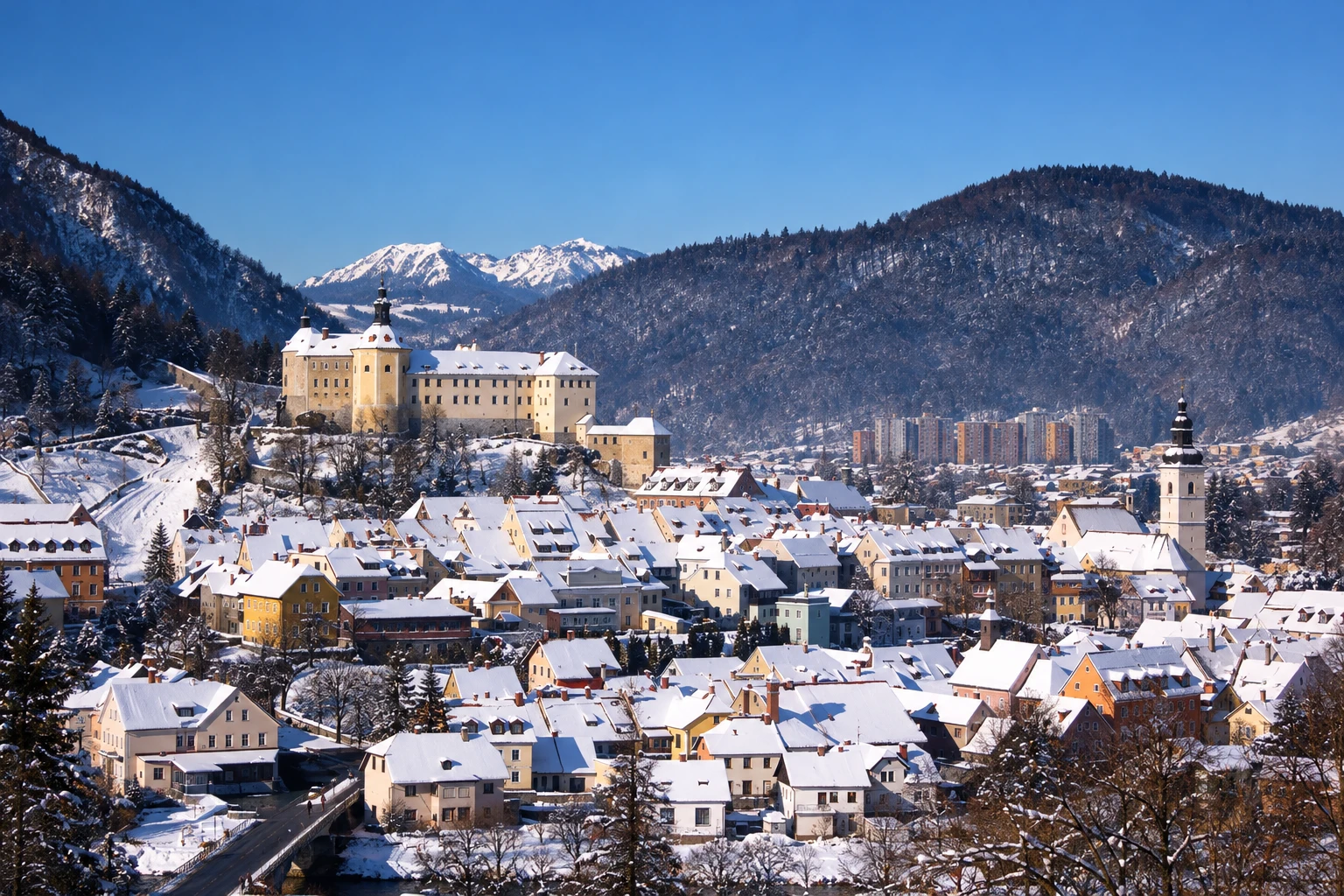
In the photo: Škofja Loka under snow, with the castle in the background

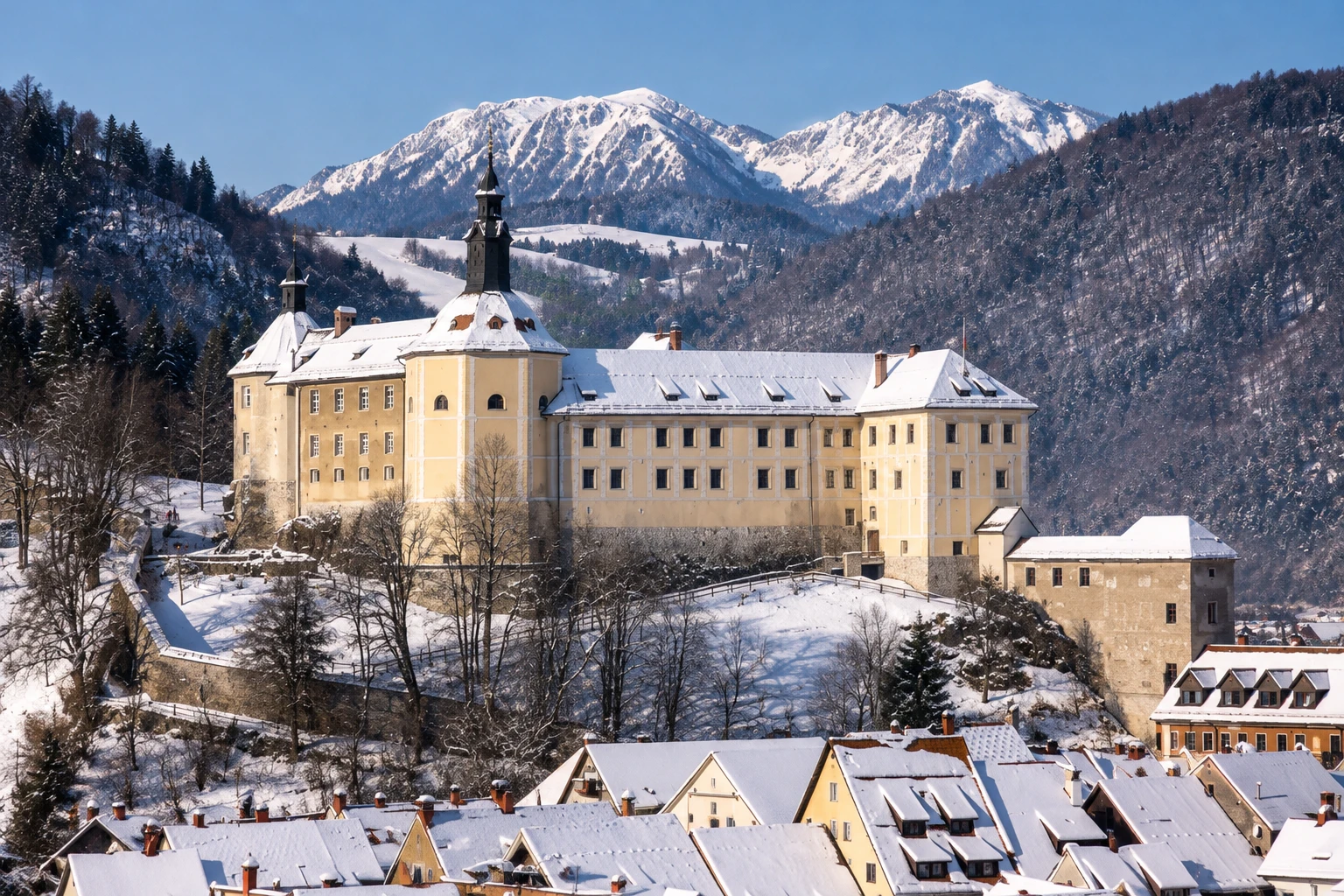
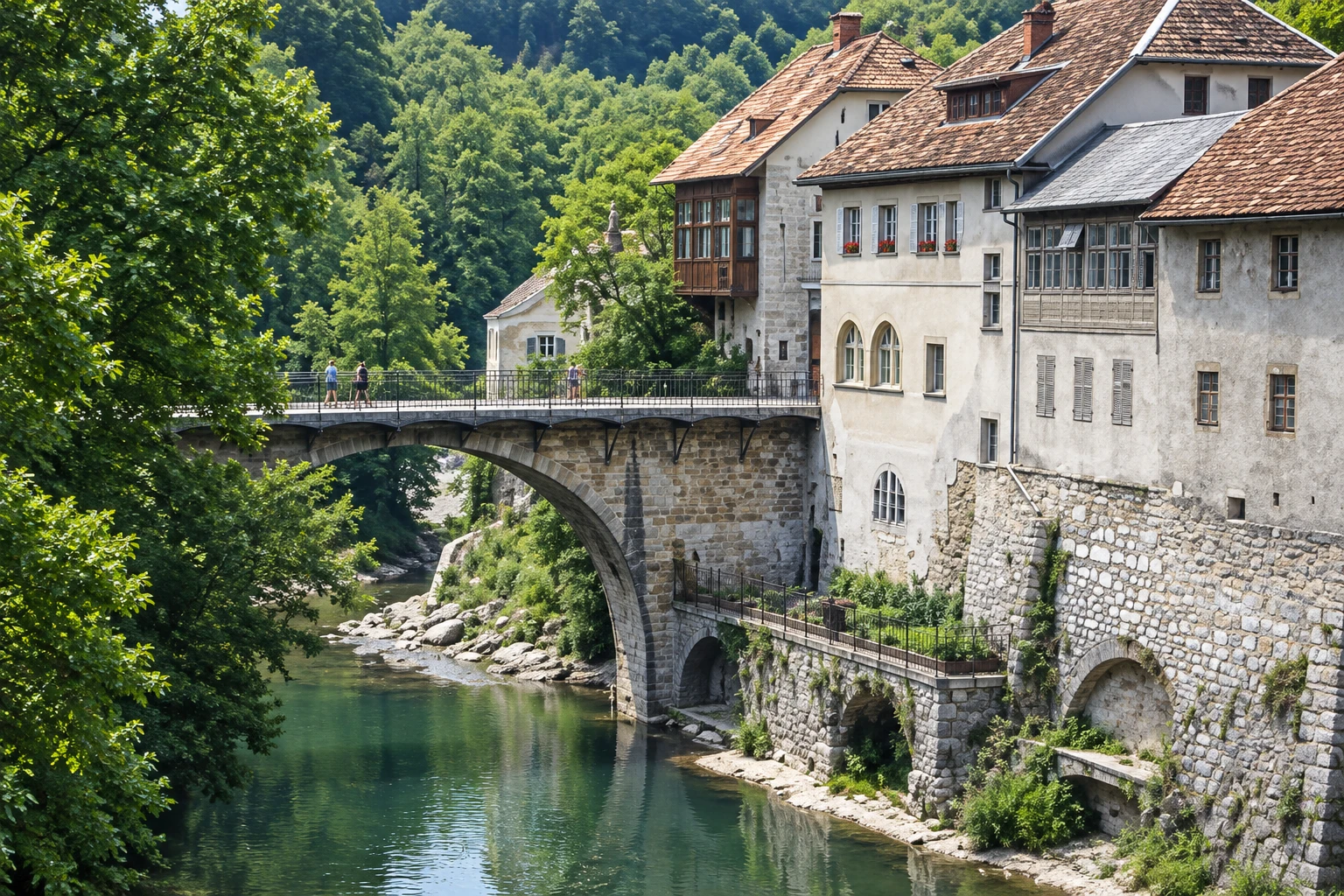
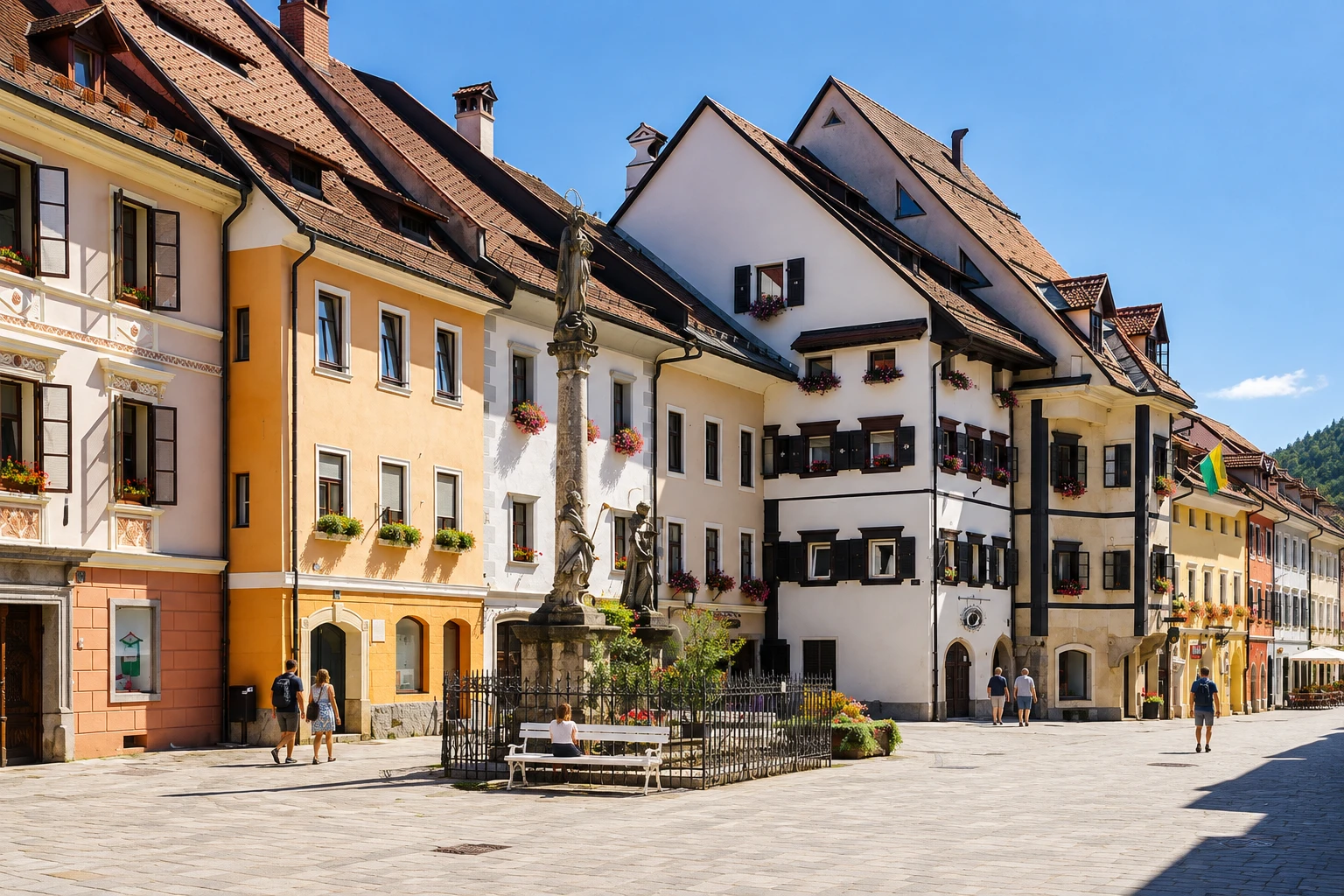
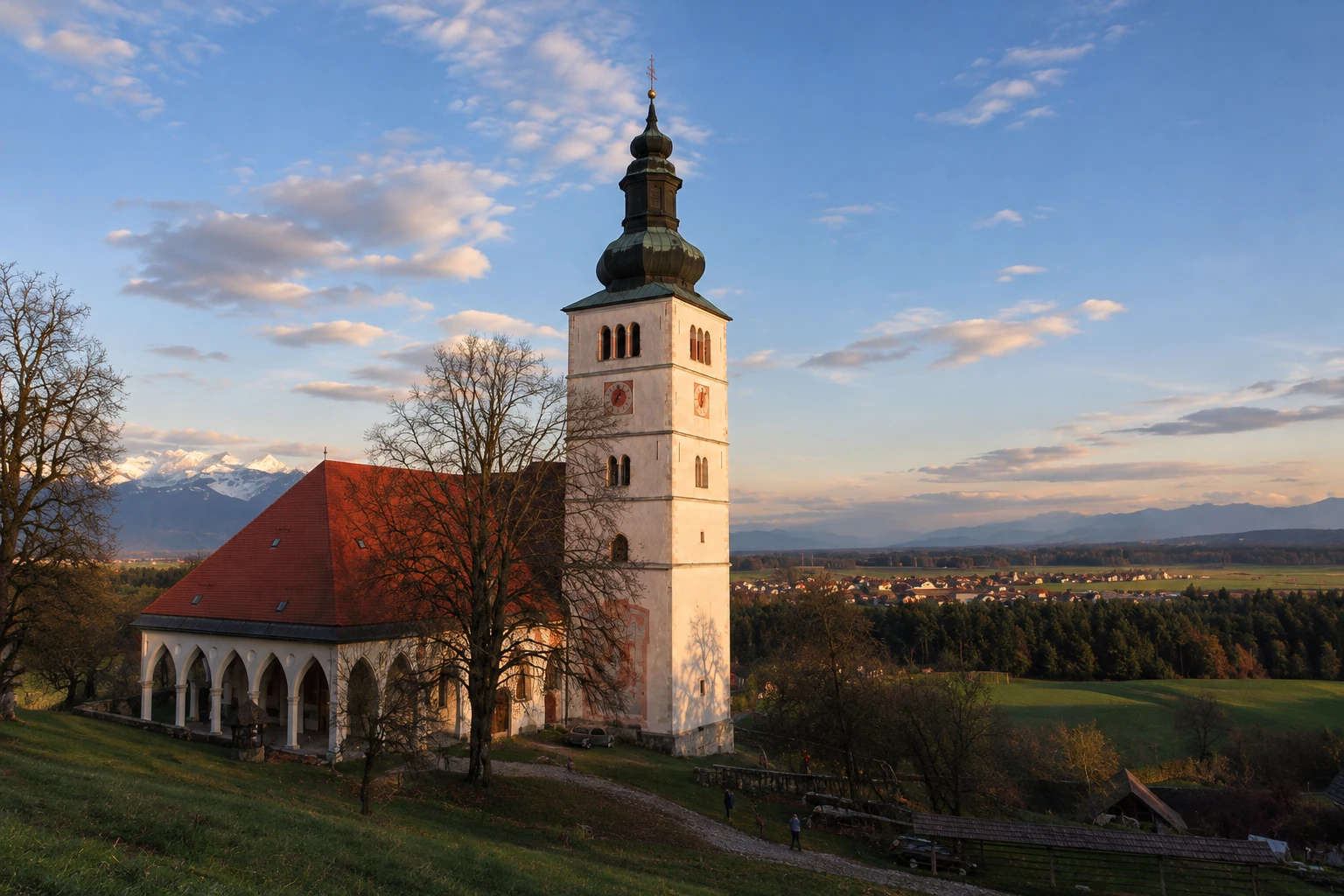
Illustrative images. The pictures in this guide are illustrations based on the real place, not photographs, and may differ from it.

Get it on Google Play

The city

What to expect from Škofja Loka.

Medieval town at the confluence of the Selška Sora and Poljanska Sora rivers, ruled for almost eight centuries by the bishops of Freising. It has two squares of painted houses, the Kapucinski most, a 14th-century bridge, and a museum housed in the castle. The Passion procession, staged in some years, is on UNESCO’s list. Four km away is the church of Crngrob, with the fresco of Saint Dominic.

Škofja Loka lies where two mountain rivers, the Selca Sora and the Poljane Sora, meet. Here the Alpine foothills give way to the plain stretching toward Ljubljana, about 23 km away. For centuries the town belonged to the bishops of Freising in Bavaria, who built the castle above its rooftops. The great earthquake of 1511 destroyed almost everything. Rebuilding began soon afterward, giving the old town its harmonious rows of painted facades and stone doorways.

You can explore the old town's three levels on foot. Down by the river lies Spodnji trg, known locally as Lontrg, with the bishops' former granary and the little almshouse church. Halfway up is Mestni trg, or Plac, an elongated square lined with merchants' houses, the frescoed old town hall, and a monument to Mary. At the top is the castle with the Loka Museum and its garden. The best-known approach to town crosses Kapucinski most, the stone arch bridge over the Selca Sora beside the Capuchin monastery.

It was in this monastery in 1721 that Friar Romuald wrote the Škofja Loka Passion Play, the oldest surviving dramatic text in Slovenian. The Baroque procession he directed returned to the streets in 1999 and was staged again in 2000, 2009, 2015, and 2026, always around Lent and Easter, with hundreds of local residents acting. In other years, a smartphone-guided route follows the same streets, and the castle museum has an exhibition on the Passion Play.

Across the Poljane Sora is Puštal, once a rival settlement, with a wooden footbridge, a castle, a hilltop church, and a river swimming spot. Stara Loka, now a neighborhood, is the oldest settlement and home to St. George's Church. The train station is in Trata, a newer neighborhood about 2 km from the center. The municipality also takes in farming and hillside villages, including Crngrob, with its frescoed pilgrimage church, and Suha, surrounded by fields. From the castle you can hike the slopes of Lubnik to its 1,025-meter summit.

The town has a tradition of craftsmanship and painting. The Slovenian Impressionist group formed here, and the Arts and Crafts Centre brings together masters of bobbin lace, wool, and woodwork. The traditional souvenir is the local loški kruhek, a small decorated bread.

The climate reflects the Alpine foothills. Winter is cold, with January averages near 0°C and snow on the ground for much of the month. Spring arrives in April with 15°C afternoons. Summer highs reach 25°C to 26°C, and late-afternoon thunderstorms help make June through November the wetter months. Fall brings color to the forests of Lubnik and Crngrob.

Kranj, about 12 km away, and towns in the two valleys such as Železniki, Poljane, and Žiri are separate municipalities. They make half-day trips from here by bus, train, or car.

Share: WhatsApp

Where to stay

19 places to stay in Škofja Loka.

Where to eat

8 places to eat in Škofja Loka.

Map of Škofja Loka

11 places on the map: where to stay and where to eat, by neighborhood.

The local experience

Things to do in Škofja Loka

Škofja Loka · Slovenia · Museum

Škofja Loka Castle

Castle above the old town, first mentioned in 1215, housing the Museum of Loka, with collections of history, archaeology, ethnology, art and natural history of the Sora valleys and an exhibition about the Passion of Škofja Loka.

Explore Škofja Loka Castle

Škofja Loka · Slovenia · Bridge

Capuchin Bridge

Stone arched bridge over the Selška Sora River, built in the mid-14th century, with the statue of Saint John of Nepomuk. It is considered the oldest preserved bridge in Slovenia and one of Škofja Loka’s symbols.

Explore Capuchin Bridge

To choose before you go

Tours in Škofja Loka

Where each tour starts, how long it takes, how it is done, what is included and the price range.

From Kapucinski most to Mestni trg: the merchants' upper town

From Kapucinski most, by the bus station On foot About 1 hour 30 minutes Morning Easy

If you arrive by bus, you'll get off facing the bridge, the natural place to start. Kapucinski most, or Stone Bridge, crosses the Selca Sora in a single arch of cut stone built in the mid-14th century. The local tourist office describes it as the only one of its kind in Central Europe. Iron railings date from the 1888 restoration. A statue of St. John of Nepomuk stands in the middle, with the town coat of arms on its pedestal. In the Middle Ages, the Selca Gate and its watchtower guarded the crossing. Beside the bridge stand the Capuchin church and monastery, dating to 1709. A painting of St. Anne from the 18th-century Venetian school adorns the high altar. Head uphill to Mestni trg, the long square locals call Plac. At the entrance, Homan House was rebuilt after the 1511 earthquake in Gothic style with Renaissance features. Frescoes of St. Christopher and medieval soldiers decorate the facade, and a café and pastry shop occupies the ground floor. The 16th-century old town hall, where the town judge held office, has a facade covered with Baroque frescoes of columns and flowers. Two houses were joined between 1740 and 1760 to form the former rectory. It retains a 1513 Renaissance plaque with a wealthy citizen's coat of arms. Žigon House, once the home of a 16th-century merchant, closes off the wide part of the square with its pointed upper story. It houses the town administration and can be seen only from the outside. The townspeople erected the monument to Mary, with St. Roch and St. Anthony, in 1751 in thanks for protection against plague and fire. Farther along, Martin House is the last of a once-common type, built against the city wall commissioned by Bishop Conrad III in the 14th century. The Poljane Gate once stood beside it, and you can still make out the defensive ditch.

Stops: Kapucinski most, Capuchin Church, Mestni trg, Homan House, Old Town Hall, Martin House.

Includes: Free, self-guided outing. Book paid guided walks of the center through the information center.

Tip: Pick up the map at the tourist information center on Cankarjev trg, beside St. James's Church.

Best time: Year-round. The Historial history festival usually takes over Mestni trg in June.

Škofja Loka Castle: Loka Museum, Škopar House, and the Nuns' Church

From Mestni trg, up the slope beside Homan House On foot, with a short climb 1 hour 30 minutes to 2 hours 30 minutes Morning or afternoon Easy, with an uphill section

Two paths lead up to the castle, a few minutes above the square. One starts beside Homan House, the other at the administration building. The bishops of Freising built the first fortress in 1202. The 1511 earthquake almost completely destroyed it, and Bishop Filip had it rebuilt. The outline of the former square tower is marked on the courtyard floor. Inside is the Loka Museum, one of the country's most visited. Its collections cover archaeology, history, cultural history, art, ethnology, and natural science, telling the story of life in the Sora valleys. A permanent exhibition is devoted to the Škofja Loka Passion Play. In the middle of the castle garden stands Škopar House (Škoparjeva hiša), a 16th-century farmhouse with a smoke kitchen, an open hearth with no chimney. One of Slovenia's first open-air museums, it shows how small farmers lived in the region from the 16th through the late 19th century. Below and connected to the castle is the Nuns' Church, dedicated to Mary Immaculate. Built in 1358, it took its Baroque form in 1669 after a fire. Inside are old tombs and a Baroque stone pulpit. A relief of the Crucifixion adorns the facade. The Poor Clares' convent closed in 1782. Ursuline sisters later opened a girls' school in the castle. On selected evenings the museum offers a theatrical tour. Meet the castle caretaker in a black hood and cloak at sunset and follow him through the darkened rooms.

Stops: Škofja Loka Castle, Loka Museum, Škopar House, Nuns’ Church.

Includes: The museum charges admission. Check current prices. To visit Škopar House during museum hours, contact the museum in advance. Night tours require a separate ticket and reservation.

Tip: The museum has shorter hours from November to April and usually closes on Mondays outside summer. Check before climbing. The Three Castles Trail and the Lubnik trail also start at the castle entrance.

Best time: Year-round. From May to October the hours are longer and the garden is green.

Spodnji trg and St. James's Church: the bishops' granary, the almshouse, and the galleries

From Cankarjev trg, in front of St. James's Church On foot 1 hour 30 minutes to 2 hours Afternoon Easy

The lower old town preserves buildings linked to the bishops' government and the lives of the town's poor. Begin at St. James's, the parish church built in 1471 on the foundations of a smaller church at least two centuries older. Look for reliefs depicting the craft guilds and the saints of the altars. Jernej of Loka painted the ceiling in the 16th century. The black marble altar of St. Catherine dates to 1694, and architect Jože Plečnik redesigned the altars and chandeliers. Near the church is the old school, with a stone plaque bearing a coat of arms on its facade. A school has stood here since 1538. On Šolska ulica, an avenue honoring notable townspeople displays bronze busts on bases made from different Slovenian stones. Descend to Spodnji trg, or Lontrg. The Kašča, the granary, stood here before the earthquake of 1511 and was completely rebuilt afterward. Along with the castle, this was the most important building belonging to the lords of Loka. A bishop's official looked after the taxes brought in by farmers in the form of produce. Today it houses the permanent gallery of painter Franc Mihelič, with prints, drawings, and paintings. The Špital was built in 1547 to house poor and disabled townspeople. A fire that swept through Lontrg in 1698 damaged the building, which was renovated in 1720. Inside is a modest Baroque church dating to 1710 with a richly ornamented interior. The 17th-century Grohec House is built half of brick and half of timber. Back on Mestni trg, the Ivan Grohar Gallery shows contemporary art, and the Arts and Crafts Centre displays and sells the work of local craftspeople.

Stops: Church of St. James, Spodnji trg, Kašča, Špital, Ivan Grohar Gallery, Franc Mihelič Gallery.

Includes: Self-guided outing. Contact Loka Museum ahead to visit the Franc Mihelič Gallery. Any gallery admission fees are separate.

Tip: Arrange a visit to the Mihelič Gallery in advance through Loka Museum. The tourist information center is on Cankarjev trg, beside the church.

Best time: Year-round.

In the footsteps of the Passion Play: Romuald's Trail and the Capuchin monastery

From Passion Play Room, on Mestni trg On foot, using a guide on your phone About 1 hour 30 minutes Morning or afternoon Easy

The Škofja Loka Passion Play (Škofjeloški pasijon) originated in the Capuchin monastery. The friars, who arrived in 1709, encouraged meditation on Christ's suffering and organized penitential processions. Father Romuald, born Lovrenc Marušič, lived here from 1715 to 1727 as preacher and procession master. In 1721 he wrote down the text: 865 lines in Slovenian, with passages in Latin and German and directions for staging. The manuscript remains in the monastery library and is considered Europe's only complete surviving production book for an early 18th-century Passion play. The procession has thirteen scenes, from Paradise to the Holy Sepulchre, performed by groups of actors in the streets and squares. After a long interruption, it returned to the old town in 1999, with further performances during Lent and Easter in 2000, 2009, 2015, and 2026. It joined UNESCO's intangible cultural heritage list in 2016. Between performances, Romuald's Trail follows the same setting. This circular walk starts and ends in the Passion Room on Mestni trg. Numbers and Passion Play symbols set into the ground mark its thirteen stations. A phone app uses the friar's voice to lead you from stop to stop, telling local legends and posing challenges. Complete all thirteen and you can mint a gold-colored coin in the Passion Room. The Capuchin library holds incunabula, books printed before 1500, and a copy of the Dalmatin Bible. To visit, the local tourist office suggests ringing the monastery doorbell or arranging a visit through the information center.

Stops: Passion Play Room, Mestni trg, Capuchin Monastery, Capuchin Library.

Includes: The street route is free. Install the app recommended by the information center. The Passion Play exhibition is in Loka Museum, which charges separate admission.

Tip: Download the app and route before setting out while you have a reliable connection. Performances are usually six years apart, but the interval has varied. Confirm the next date with the organizers.

Best time: The trail is open year-round. Škofja Loka Passion Days usually brings cultural events in March.

Three Castles Trail: Krancelj, Divja Loka, and the Vincarje ravine

From Entrance to Škofja Loka Castle On foot along a marked forest trail About 2 hours Morning Easy to moderate, with 153 m of climbing

Three fortresses once formed a single defense system around Škofja Loka: the town castle, the High Tower of Krancelj just above it, and the Old Castle hidden in the Lubnik forest. The 1511 earthquake ruined all three. Only the town castle was rebuilt. The circuit linking them is also called the Flis Trail after Slavko Flis, who led the town beautification society in the late 19th century and laid out its first recreational paths. Start at the information board by the castle entrance and follow the medieval page symbols. About a hundred meters on, beside the wall, a stone bearing the page's image directs you left uphill. Soon you reach the remains of the Krancelj tower. Built before the 12th century, it had a square footprint, several stories, and a height of about 30 meters, with a surrounding wall and deep moat. Cross the top of Štajgrof, where a panorama table names the peaks, and descend past a farm near two natural chasms. The monument to Flis stands at the forest edge. Follow the woods to Kobila Pass, then turn right at the page symbol. After about 15 minutes, the ruins of the Old Castle, or Divja Loka (“Wild Loka”), appear through the branches. Dating to the early 12th century, it's the oldest castle in the area. Documents tell of robber knights who lived here. Descend through the Vincarje ravine, named for the vine growers who tended grapes for the bishops. From the settlement, follow the Selca Sora for ten minutes to return to the starting point.

Stops: Škofja Loka Castle, Krancelj Tower, Old Castle (Divja Loka), Vincarje.

Includes: The trail is free.

Tip: Wear hiking shoes. The ravine is slippery after rain. Bring water. To extend the walk, take the trail up Lubnik from Kobila Pass.

Best time: April to October. In winter, watch for ice in shaded sections.

Climbing Lubnik, Škofja Loka's local mountain

From Downtown Škofja Loka via the uphill path to the castle On foot along a marked mountain trail 3 to 4 hours Full day Strenuous, with 677 m of climbing

Lubnik, 1,025 meters high, is the mountain you see behind the castle, and you can start the climb right in town. The summit looks out across the Julian Alps, the Karawanks, and the Kamnik–Savinja Alps. In the other direction are Škofja Loka and the Sora plain stretching toward Ljubljana. Follow the marked trail to the castle and continue uphill beside the wall to the information board and lookout above Grebenar farm, where the surrounding hills come into view. This stretch follows the Three Castles Trail past the opening of a natural chasm and through the woods to Kobila Pass. Here you have three options: the road, the path via the Old Castle, and the steep čez Luža trail through Gabrovo and over the top of Repela. The local tourist office recommends the last of these. Allow about an hour from the pass to the summit. At the top, the Dom na Lubniku mountain hut offers meals and overnight stays. The suggested descent takes you back through Gabrovo and along the road to Kobila Pass. From there, choose the Old Castle path down to Vincarje or return to the town castle on the Flis Trail. Lubnik and Kevderc caves, known for their archaeological finds, are also on the mountain, off this route.

Stops: Lubnik, Škofja Loka Castle, Kobila Pass, Dom na Lubniku.

Includes: The trail is free. Meals at the mountain hut cost extra.

Tip: Start early in summer, before afternoon storms. Bring water, a warm layer, and hiking shoes. Check that the hut is open.

Best time: May to October. In winter, snow and ice on the trail may require equipment.

See 4 more tours

Puštal: Devil's Bridge, the castle, Nace's House, and Hribec Church

From Mestni trg, in front of Martin House On foot along a themed trail 1 hour 30 minutes to 2 hours Afternoon Easy

Puštal lies just across the Poljane Sora, a few steps from the center, yet for centuries it was a world apart. In the 13th century its lands passed from the bishops of Freising to another lordship. Residents lived in barns and cottages and earned a living outside farming by making combs and catching frogs to sell, drawing ridicule from their town neighbors. The Puštal Trail starts on Mestni trg in front of Martin House and crosses the suburb of Karlovec. On Kopališka Street, Firbar House was a dye works until 1907. The rack for drying dyed fabric still hangs high on the facade. A few steps farther stands the birthplace of botanist Fran Jesenko, a founder of Triglav National Park. On a corner is a masonry shrine from 1826 with a well beside it. Markings on the ground lead to the Devil's Bridge (Hudičeva brv), a wooden footbridge. Legend says the devil used to appear in the middle until a shrine was erected to St. John of Nepomuk, patron saint of bridges. On the far side stand two 18th-century houses. A mark on one facade records where floodwaters reached on September 27, 1926. Nace House, at the edge of the settlement, took its Baroque form in 1755 and has hardly changed since. Puštal Castle, first mentioned in the 13th century, has a chapel with Giulio Quaglio's 1706 fresco The Descent from the Cross. The privately owned castle houses a music school, and the courtyard is closed to visitors. The trail ends at Hribec, a low hill. A short climb past the Stations of the Cross leads to the early 18th-century Baroque Church of the Holy Cross.

Stops: Karlovec, Devil’s Bridge, Puštal Castle, Nace House, Church of the Holy Cross on Hribec Hill.

Includes: The path is free. Nace's House opens by appointment. Swimming at the Puštal river access point is free.

Tip: Arrange a visit to Nace's House through the information center a few days ahead. In summer, bring swimwear. Puštal's swimming area on the right bank has a wooden pier.

Best time: May to September, with July and August best for river swimming.

Stara Loka and Crngrob: the pilgrims' way

From Information board opposite Škofja Loka bus station On foot, by bike, or by car Half a day for the round-trip walk Morning Easy

The Crngrob heritage trail starts at the information board opposite the bus station and passes through Stara Loka and the settlements of Papirnica and Pevno. It's about 4 km to the church. Stara Loka, or Old Loka, is home to St. George's, one of the oldest churches in Carniola. Rebuilt several times, most recently in 1863, it retains tombstones from the 16th and 17th centuries. Here too are 15th-century Stara Loka Castle, with part of its round defensive tower, and a park dedicated to bishops connected with the region's history. Beyond the houses the path passes a Pietà shrine painted in 1896 by Ivan Grohar and enters the woods. At a crossroads stands the early 16th-century Red Shrine, a memorial to the plague and one of the country's oldest shrines. Farther on, two stones mark the spot where Mary is said to have rested on her way to her sanctuary. The Church of the Annunciation at Crngrob was built in stages from the late 13th to the mid-19th century. Its size makes sense when you realize it served pilgrims as well as the small village. A large St. Christopher adorns the facade. Under the porch, the mid-15th-century Holy Sunday fresco depicts work forbidden on Sundays and preserves a record of crafts and clothing of the time. Look for a horseshoe mark on the base of a porch column. Legend says a Turkish commander tried to ride in and plunder the church and was struck blind. Inside, the high altar of Mary is the largest gilded altar in Upper Carniola. A hanging rib is said to belong to the ajdovska deklica, the pagan maiden who helped build the church. For a longer walk, continue on the marked trail to Planica and Križna gora for a five- to six-hour circuit.

Stops: Stara Loka, St. George’s Church, Red Shrine, Church of the Annunciation in Crngrob.

Includes: The path is free. Arrange a paid guided visit inside the church with the Škofja Loka tourist office.

Tip: Crngrob church opens only for arranged visits. The St. Christopher and Holy Sunday frescoes are outside and can be seen anytime. Look for signatures left on the walls by pilgrims centuries ago.

Best time: April to October, when the path is dry.

Loka's food and crafts: a tasting tour and visits to artisans' workshops

From Tourist information center on Cankarjev trg Guided walk About 4 hours for the food tour Morning or afternoon Easy

Škofja Loka was a town of craft guilds, and visitors can still see some of those traditions at work in local workshops. The guided food walk through the old town, Okusni loški koraki, brings food and crafts together. Groups of 4 to 16 meet a guide at the information center for a leisurely walk with stops at selected businesses. Each offers a taste of regional food or drink and a story, from modern takes on traditional dishes to skills passed down through generations. Tours are in Slovenian or English and must be booked ahead. The Arts and Crafts Centre on Mestni trg showcases local artisans. A new exhibition opens each month, and the center sells certified Slovenian handicrafts and runs workshops and courses. With a few hours' notice, you can spend a morning or afternoon learning from a master craftsperson at the center or in a workshop in or around town. Local crafts include bobbin lacemaking, part of Slovenia's UNESCO-listed intangible heritage, as well as blacksmithing, linen weaving, hat making, and comb making. Two local specialties give a taste of the region. You can make loški kruhek, Škofja Loka's little bread, and Dražgoše honey bread at a workshop. Look in the display cupboards at local inns and farms for products bearing the Škofja Loka hills label: preserves, juices, cheeses, cured meats, pasta, honey, and teas.

Stops: Škofja Loka Old Town, Arts and Crafts Center, Mestni trg.

Includes: The food tour costs extra and includes the guide and tastings. Workshops are priced per person. Check current rates.

Tip: Reserve the food tour through the information center in advance. Workshops usually run Wednesday through Sunday. Check the days and season before going.

Best time: Year-round, depending on the artisans' schedules.

Suha and the Sora countryside: cycling to the church with the frescoes

From Škofja Loka train station in Trata Bike or car 1 to 2 hours Morning or afternoon Easy

Beyond town lies Sorško polje, the flat farmland stretching toward Ljubljana. It's ideal cycling country. One of the thirteen stages of the Loka Cycling Route crosses the plain. The signed network covers 390 km of hills and fields, with checkpoint stamps for anyone riding the whole route. Suha stands amid the crops. Its Church of St. John the Baptist, set apart in the fields, is known for its medieval paintings. The star-vaulted chancel dates to the mid-15th century and is covered in well-preserved paintings. The gilded early Baroque altar dates to 1672. In the same village, Špan House is an 18th-century country manor. A sundial survives on the courtyard side and a fresco of the Holy Family with St. Florian on the facade. In front stands a three-sided late Baroque shrine with frescoes from 1794. At Godešič, the meadows along the Sora are of natural interest for their preserved riverside woods and gravel banks. You'll find public bike-share bikes beside the train station, so you can do the ride on arrival or before catching your train.

Stops: Suha, Church of St. John the Baptist, Špan House, Sorško polje.

Includes: Self-guided outing. Public bike rental costs extra.

Tip: At the information center, ask whether the church in Suha can open that day and pick up the Loka Cycling Route map. You can register for the public bikes through the app or at the center.

Best time: April through October, on dry days.

Day by day

1, 2 and 3-day itinerary in Škofja Loka

Suggestions to plan the trip. Change the order of the days according to the weather and tour availability.

1 day · One day in Škofja Loka: the bridge, square, castle and Puštal

For Day-trippers from Ljubljana, Kranj or Bled · Based in Škofja Loka Old Town
  1. Day 1 · From the Selca Sora to the Poljane Sora

    If you arrive by train, take the city bus from the station to the bus terminal. Intercity buses drop you there directly. Enter town over Kapucinski most and stop at the Capuchin church. Head up to Mestni trg and walk the length of the square past Homan House, the old town hall, the column of Mary, and Martin House by the city wall. Continue uphill to the castle. Allow an hour and a half to two hours for the Loka Museum, including the Passion Play room, and the garden with Škopar House. Have lunch in town. In the afternoon, descend to St. James's Church and Spodnji trg for the bishops' granary and the Špital. Finish on the Puštal Trail, taking in Karlovec, the Devil's Bridge, the castle, and the climb up Hribec. In summer, end with a swim in the Poljane Sora. Pick up a loški kruhek before you leave.

2 days · Two days in Škofja Loka: the town and surrounding paths
For Travelers who want time to explore downtown and walk to the ruined castles and the church at Crngrob · Based in Škofja Loka (1 or 2 nights)
  1. Day 1 · The medieval center and the castle

    In the morning, visit Kapucinski most, the Capuchin church, and Mestni trg. Climb to the castle for the Loka Museum and Škopar House. On the way down, visit the Nuns' Church. In the afternoon, follow Romuald's Trail, a smartphone-guided Passion Play walk that revisits the squares with different stories. Allow about an hour and a half. Fit St. James's Church and Spodnji trg into the walk. End the day by crossing the Devil's Bridge to Puštal.

  2. Day 2 · Three Castles and Crngrob

    Start early at the castle gate and follow the Three Castles Trail to the Krancelj ruins, Kobila Pass, and the Old Castle, returning through the Vincarje ravine in about two hours. Fit hikers can swap the loop for the three- to four-hour Lubnik hike, with lunch at the summit hut. Spend the afternoon in Crngrob. The pilgrims' trail is about 4 km on foot through Stara Loka and the forest, or it's a few minutes by bike or car. Look for St. Christopher on the church facade and the Holy Sunday fresco beneath the porch. Stop at St. George's Church in Stara Loka on the way back.

3 days · Three days in Škofja Loka: the old town, mountains and countryside
For Travelers using the city as a base who enjoy mixing museum visits, hiking and cycling · Based in Škofja Loka (3 nights)
  1. Day 1 · The old town

    Spend the morning at Kapucinski most, Mestni trg, the castle, and the Loka Museum. In the afternoon, visit St. James's Church, Spodnji trg, and the galleries, and follow Romuald's Trail through the Passion Play stations. If places are available, book a guided food walk through the center or a workshop with a local craftsperson for one of your days here.

  2. Day 2 · Mount Lubnik and the river

    From the castle, climb Lubnik via Kobila Pass and the čez Luža trail. Allow three to four hours in total, with 677 meters of climbing and views of the Alps from the summit. Descend via the Old Castle and Vincarje to complete the Three Castles Trail. Relax in Puštal in the afternoon. Visit the Devil's Bridge and, by appointment, Nace House. From June through August, you can swim in the Poljane Sora.

  3. Day 3 · Crngrob, Suha and an optional valley visit

    In the morning, follow the pilgrims' trail to the Church of the Annunciation in Crngrob, stopping in Stara Loka. Then cycle across the fields to Suha for the Church of St. John the Baptist and Špan House. For trips beyond the municipality, explore the two Sora valleys. Visoko Manor in the Poljane valley is about 12 km away, and Železniki in the Selca valley is about 15 km away. Both are accessible by car or scheduled bus. Kranj, about 12 km away, is accessible by train. These municipalities have their own guide pages.

Best time to go

When to go: Škofja Loka month by month

The seasons shown are the most usual ones; nature doesn't always follow the calendar.

January Low rain

Winter · Quiet city

The coldest month. The weather station at Ljubljana Airport, about 20 km away, recorded a 1981–2010 average of −1.7°C, nights of −5°C, about 66 mm of precipitation, and snow on the ground on 16 days. The center is quiet, a good time for the Loka Museum on its winter schedule. The Three Castles and Lubnik trails can be snowy and icy. When there's snow, the Stari vrh ski area operates in the Poljane valley.

February Low rain

Winter

It's still winter, with temperatures averaging around 0°C, highs of 5°C to 6°C, and about 65 mm of precipitation. Days are short and visitor numbers low. Spend time at the museum, in galleries, and in pastry shops. Walks are generally limited to the center, Puštal, and, if the ground is firm, Stara Loka. The Loka Museum keeps winter hours and usually closes on Mondays.

March Some rain

Late winter · Škofja Loka Passion Play Days · In performance years, the procession during Lent and Easter

The transition to spring brings 10°C afternoons, early mornings still below freezing, and about 90 mm of rain or snow. March usually brings Škofja Loka Passion Days, with a program of cultural events. In performance years, the procession takes to the streets during Lent and Easter, between March and April, drawing thousands of spectators. Book everything well in advance for those dates.

April Some rain

Spring · Low-elevation hikes

Spring brings average highs of 15°C, lows near 3°C, and about 95 mm of rain, with showers roughly every other day. The woods around the castle and Crngrob come into leaf. It's a good time for the Three Castles Trail, the Puštal Trail, and the walk to Crngrob. Patches of snow can linger on the Lubnik summit early in the month. Bring a raincoat.

May Some rain

Spring · Summer hours at the Loka Museum · Countryside Week between May and June

Long, mild days bring 20°C afternoons and about 107 mm of rain, some in showers. The Loka Museum switches to summer hours. Cycling across the Sora plain and hiking Lubnik are pleasant. Between May and June, the region usually holds Countryside Week, with food events on farms. Town is still quiet.

June High rain

Early summer · Historial on Mestni trg · St. John’s Eve

Early summer brings one of the wettest months, with about 145 mm of rain, usually in late-afternoon thunderstorms, and highs of 23°C. Historial, the town's history festival, usually fills Mestni trg in June with a fair, crafts, early music, games, and local cooking. St. John's Eve has its own program. From June through September, the Loka Museum also opens on Mondays.

July High rain

High season · Pisana Loka · Swimming in the Sora

The warmest month averages 19.4°C, with highs of 26°C, occasional days above 30°C, and around 122 mm of rain in showers. Pisana Loka events fill the summer evenings. Escape the heat at Puštal's swimming spot on the Poljane Sora. Climb Lubnik in the morning before thunderstorms develop. Craft workshops usually offer more dates in summer.

August High rain

High season · Pisana Loka

Summer is in full swing, with highs of 25°C to 26°C, nights around 13°C, and about 135 mm of rain, mostly in thunderstorms. Pisana Loka continues on August evenings. It's a good time to hike Lubnik early and swim in the river in the afternoon. The Loka Museum opens every day of the week.

September High rain

Late summer · European Heritage Days in September and October

Late summer brings 20°C afternoons, cool mornings, and around 140 mm of rain in longer spells. Visitor numbers fall and trails grow quiet. Between September and October, European Heritage Days open houses and collections across the region. This is the last month the Loka Museum opens on Mondays.

October High rain

Fall · Autumn colors on Mount Lubnik and in Crngrob

Fall brings average highs of 15°C, lows of 5°C, and about 137 mm of rain. The forests of Lubnik, the Old Castle, and Crngrob change color, and clear days bring good views from the summit. The Loka Museum keeps summer hours through the end of the month. As the days shorten, hike in the morning and explore town in the afternoon.

November High rain

Low season · Winter hours at the Loka Museum

A gray, damp month with about 145 mm of precipitation, highs of 8°C, and the possibility of the first snow. The Loka Museum switches to winter hours and visitor numbers are low. The center, castle, galleries, and St. James's Church still make a good day's outing. The Vincarje ravine and Lubnik trail get slippery.

December Some rain

Winter · Gift displays in downtown shop windows

Early winter brings temperatures averaging close to 0°C, highs of 3°C, and around 116 mm of rain or snow. Snow lies on the ground on an average of 12 days. Downtown shop windows feature local crafts for holiday gifts. The Arts and Crafts Centre sells lace and other work by local artisans. The Loka Museum closes early on the 24th and 31st.

Plan the journey

How to get there: Škofja Loka

By air via Ljubljana Airport

Ljubljana Jože Pučnik Airport is in Brnik, about 20 km from Škofja Loka and closer to this town than to central Ljubljana. By car, the route passes through Šenčur and Kranj. For public transportation, take a bus from the airport to Kranj, then change to a train or bus for Škofja Loka. There is no direct service. Taxis, prebooked transfers, and rental cars are available at the terminal.

For travelers combining the area with a longer trip, the tourist office lists several other airports: Klagenfurt in Austria, 71 km away, Trieste in Italy, 134 km, Zagreb in Croatia, 172 km, and Venice, 240 km.

From Brazil there are no nonstop flights to Slovenia. You'll need to connect in a European city. Routes vary by season and departure city, so check before booking.

By train: Trata station and connections to the town center

Škofja Loka lies on the Ljubljana–Jesenice line. Regional trains link it to Ljubljana in one direction and to Kranj, Lesce-Bled, and Jesenice in the other. The trip from Ljubljana takes about half an hour. International trains on the Zagreb–Ljubljana–Salzburg–Munich route use the same line. Check with the operator to see which stop here.

The station is in Trata, about 2 km from the old town. A city bus links it to the bus terminal, just across the Selca Sora bridge from the old town. It runs every 15 minutes on weekdays and every 30 minutes on Saturdays and charges a fare. Public bikes are available at the station, with a bike path to the center. On foot allow about half an hour.

On Sundays, check ahead whether the city bus is running. Cycling, taking a taxi, and walking are alternatives. Schedules and stops change, so confirm before traveling.

By bus from Ljubljana, Kranj, and the valleys

From Ljubljana or Kranj, the bus drops you closer to the old town than the train. The bus terminal is on Kapucinski trg beside the stone bridge, steps from the old center. Frequent direct buses connect with Ljubljana and Kranj. Other routes head up the valleys to Železniki in the Selca valley and Poljane, Gorenja vas, and Žiri in the Poljane valley.

The information board marking the start of the Crngrob heritage trail stands opposite the bus station.

Service is less frequent in the evenings and on weekends, especially in the valleys. Buy tickets on board or through the operators' sales channels. Check the day's timetable before setting out.

By car via Medvode or Kranj, with parking information

From Ljubljana, drive about 23 km along Celovška cesta via Medno, Medvode, and Jeprca. You can make the trip without using a highway. From Austria, Bled, Bohinj, or Kranjska Gora, leave the A2 at exit 8, Kranj-zahod, and follow signs through Kranj, about 12 km from Škofja Loka. From the coast and Postojna, take the A1 to Ljubljana, then the A2 to exit 14, Ljubljana–Šentvid, inside the Šentvid tunnel, and continue on the Medvode road.

There are also mountain routes: from Bled via Kropa, Dražgoše, and Železniki, from Bohinj via Soriška planina and Sorica, and from Idrija via Žiri and Gorenja vas.

Slovenian highways require an electronic vignette, which you must buy before entering.

Leave your car outside the small, narrow streets of the old town. The tourist office suggests the lot opposite the bus station, free for the first two hours, the paid lot by the administration building, or the free lot at the Puštal soccer field, a walk from the center over the Devil's Bridge. Check the signs, as rules can change.

Getting around Škofja Loka

Explore the old town on foot. Mestni trg is a few minutes from the bus station, with a short climb from there to the castle. Puštal is a few minutes away across the river, and Stara Loka is on the way to Crngrob.

The city bus runs between the Lipica neighborhood, train station, bus terminal, and Podlubnik every 15 minutes on weekdays and every 30 minutes on Saturdays.

Two electric minibuses, Agata and Jurij, circulate in the center on weekdays and Saturday mornings. Each seats six, with space for a wheelchair or stroller. They're designed for older people and those with limited mobility, but visitors can also use them. Just wave one down. The service started out free, so check whether a fare now applies.

The public bike-share system has a station by the railway. Register in the app or at the tourist information center on Cankarjev trg.

Walk or cycle to Crngrob, Suha, or Lubnik. For the Poljane and Selca valleys, a car saves time, as buses run infrequently.


Your questions

Frequently asked questions about Škofja Loka

What to see in Škofja Loka?

The old town with the squares Mestni trg and Spodnji trg, the stone Capuchin bridge, the Church of Saint James and the castle with the Museum of Loka. In the surroundings, the church of Crngrob.

Is Škofja Loka train station near the centre?

No. It is in Trata, a newer neighborhood, and the old town is about a 40-minute walk away. There are city buses.

Where to see the Passion of Škofja Loka if it is not being staged?

The Museum of Loka, in the castle, has a permanent exhibition about the Passion. The original manuscript is kept in the library of the Capuchin monastery.

How long to stay in Škofja Loka?

Half a day for the centre and the castle. With a full day you can include the church of Crngrob, 4 km away, on foot or by bicycle.

In which years was the Škofja Loka Passion Play performed?

It took place in the streets of the old town in 1999, 2000, 2009, 2015 and 2026, always during Lent and Easter. The text dates to 1721, and there was a long break before the tradition was revived in 1999. Performances are generally six years apart, but the interval has varied. Check the next dates with the organizers before planning your trip.

How do I get from Ljubljana Airport to Škofja Loka?

The distance is about 20 km. By car or taxi, the route passes through Šenčur and Kranj. There’s no direct public transit service. Take the airport bus to Kranj, then change to a train or bus to Škofja Loka. Check schedules, especially in the evening and on weekends.

How do I get from Ljubljana to Škofja Loka?

Regular direct buses go to the bus station beside the stone bridge and old town. The train takes about half an hour, but the station is 2 km from downtown, with a connecting city bus. By car, take the road through Medvode for about 23 km without using the highway.

Where should I park in Škofja Loka?

Park outside the old town and its narrow streets. The local tourist office suggests the lot opposite the bus station, free for the first two hours, the paid lot by the administrative building, or the free lot at the Puštal soccer field. From Puštal, walk across the Devil’s Bridge to reach downtown. Check the parking signs.

What can I do in Škofja Loka on a rainy day?

The Loka Museum in the castle can easily fill two hours with its regional collections and Passion Play room. Downtown, visit the Ivan Grohar Gallery, the Arts and Crafts Center with exhibitions and workshops, St. James’ Church and the cafés on Mestni trg. Arrange ahead for the Franc Mihelič Gallery in the old granary and the Capuchin Library. The town also has a firefighting museum with historic equipment.

Can I swim in the river in Škofja Loka?

Yes, in summer. The Puštal swimming spot is on the right bank of the Poljane Sora, a short walk from downtown, with a wooden dock and an inn beside it. Locals come here to cool off in the warmer months. Admission is free. Farther upstream in the Poljane Valley, there are other swimming spots in a neighboring municipality.

How do I hike Mount Lubnik from Škofja Loka?

The marked trail starts downtown, passes the castle and follows the Three Castles Trail to Kobila Pass. From there, the recommended ascent is the čez Luža trail via Gabrovo, about an hour to the 1,025-meter summit. The local tourist office estimates 3 to 4 hours for the outing, with 677 meters of ascent, and gives it the highest difficulty rating on its list. A hut at the top serves meals.

Can I visit the Capuchin Library in Škofja Loka?

Yes, by arrangement. The library is in the monastery beside the stone bridge. It holds early printed books, a copy of the Dalmatin Bible and the 1721 manuscript of the Škofja Loka Passion Play. The local tourist office suggests going to the monastery and ringing the bell. The visitor information center can also arrange a visit.

What should I buy in Škofja Loka?

Loški kruhek, the little bread of Škofja Loka, is the traditional souvenir. The Arts and Crafts Center on Mestni trg sells bobbin lace, certified Slovenian wooden and woolen crafts and Passion Play souvenirs. Inns and farms in the surrounding hills sell local jams, honey, teas, cheeses and cured meats.

What can I do in Škofja Loka with children?

Romuald’s Trail turns the old town into a game. An app guides you through thirteen challenges, and children who finish can mint a gold-colored coin. The castle has a museum and Škopar House, with its open-hearth kitchen. In summer there’s river swimming at Puštal. The Arts and Crafts Center runs workshops where children make their own pieces. The Three Castles Trail takes about two hours and suits children who are used to walking.

Does Škofja Loka have a bike-share system?

Yes. The public bike-share system has a station beside the railway, making it easy to ride the bike path between the train station and downtown. Bikes rent by the day. Register through the app or at the tourist information center on Cankarjev trg. Check current rates.

Traveler, share your experiences through photos Up to 5 photos of each place you visited.
See the destination Kranj and Škofja Loka Find another city